
Minions & Monsters Nearly Revealed How The Characters Were Born, And The Scrapped Idea Sounds Wild
Each Minion movie takes things expands the universe a little bit further, but the newest…
Each Minion movie takes things expands the universe a little bit further, but the newest…

Expanding technology and resale options were supposed to make obtaining tickets to sporting events easier than ever, but instead it’s become a hellscape. Scalpers dominate online platforms, ensuring that desirable events sell out immediately, causing local sports fans to miss out unless they’re willing to pay exorbitant prices for fear of missing out.
It’s now been revealed that one of the biggest stakeholders in online ticket sales is helping fund the very people ruining ticket sales for sports fans. An investigative report by the CBC uncovered information inside StubHub’s IPO filing from last November, which revealed that CEO Eric Baker also runs a hedge fund which scalps tickets, and provides funding to scalpers.
When asked for comment, StubHub reiterated its public-facing comment that the company doesn’t own or hold any tickets itself.
“StubHub does not own, possess, or sell tickets. We are a technology platform that connects independent buyers and sellers. (Think: eBay).”
This comment conveniently ignores that some of these “independent buyers” are being directly aided by the CEO of the company. Of course, the devil is in the details. Nobody is accusing StubHub of owning the tickets for their own sale, but it’s now clear that the top of the company is heavily invested in inflating its own marketplace. We discussed this fundamental issue late in the NBA and NHL playoffs, with how reselling sites like StubHub have a vested interest in scalpers, because their percentage-based resale fees are better for the company when event tickets soar — while also giving them multiple bites of the apple if the tickets are sold multiple times on the platform.
Baker, the StubHub CEO, reportedly is a large stakeholder in “Andro Capital,” a hedge fund based out of Los Angeles, which offers loan funding to large scale ticket purchasing operates which have the express purpose of buying tickets and reselling them for profit on platforms like StubHub.
Filing documents for Andro Capital show the hedge fund was formed in March of 2024, 18 months before StubHub announced it was going public in an IPO filing. In that filing to the SEC StubHub revealed its deep relationship with Andro, including this key detail from 2024:
On April 15, 2024, as part of our ongoing relationship with Andro, we entered into an agreement with the Andro Fund under which we agreed to cover certain costs incurred by Andro in connection with ticket management services.
StubHub was not required to divulge the totality of this agreement with Andro Fund, but having the company “cover certain costs incurred” raises mammoth red flags. That theoretically means that the hedge fund could have waived reselling feels on the seller side of the transaction, thereby incentivizing the fund to scalping operations. In short, the business flow could look like this:
That’s not all. The filing also lists “Colloquy LLC,” a subsidiary of Andro Capital, which serves as a loan servicing arm for tickets sellers — offering financing to mass buy tickets, which they resell on StubHub directly.
Under the terms of the Program Agreement, we refer certain of our sellers to Colloquy for the opportunity to enter into separate financing arrangements with Colloquy. Under such arrangements, it is anticipated that Colloquy may provide short-term financing to sellers based on those sellers’ existing and/or future expected proceeds generated through ticket sales on our platform.
Not only is Andro Capital its own ticket buyer, but it also runs an arm of the company that gives funding to sellers, based on referrals from StubHub itself. Essentially, the entire scalping business is fully intertwined with StubHub, from the CEO being involved in a large-scale seller AND offering funding to sellers.
The only person who loses out in this whole transaction are sports fans. The consumers who use the platform are being held hostage by ticket prices, which fundamentally wouldn’t be inflated to the same level without the input of StubHub. This is all legal from the SEC’s perspective due to a lack of oversight when it comes to hedge funds. There are few other industries in which a publicly traded company could be legally allowed to price fix to the level that is happening on StubHub, while trying to pretend with its public face that it’s just a platform for fans to sell to other fans.
There should be an immediate investigation into ticket pricing, as well as outlawing the kinds of predatory practices designed to inflate the wealth of StubHub and Andro Capital at the expense of consumers.
Expanding technology and resale options were supposed to make obtaining tickets to sporting events easier than ever, but instead it’s become a hellscape. Scalpers dominate online platforms, ensuring that desirable events sell out immediately, causing local sports fans to miss out unless they’re willing to pay exorbitant prices for fear of missing out.
It’s now been revealed that one of the biggest stakeholders in online ticket sales is helping fund the very people ruining ticket sales for sports fans. An investigative report by the CBC uncovered information inside StubHub’s IPO filing from last November, which revealed that CEO Eric Baker also runs a hedge fund which scalps tickets, and provides funding to scalpers.
When asked for comment, StubHub reiterated its public-facing comment that the company doesn’t own or hold any tickets itself.
“StubHub does not own, possess, or sell tickets. We are a technology platform that connects independent buyers and sellers. (Think: eBay).”
This comment conveniently ignores that some of these “independent buyers” are being directly aided by the CEO of the company. Of course, the devil is in the details. Nobody is accusing StubHub of owning the tickets for their own sale, but it’s now clear that the top of the company is heavily invested in inflating its own marketplace. We discussed this fundamental issue late in the NBA and NHL playoffs, with how reselling sites like StubHub have a vested interest in scalpers, because their percentage-based resale fees are better for the company when event tickets soar — while also giving them multiple bites of the apple if the tickets are sold multiple times on the platform.
Baker, the StubHub CEO, reportedly is a large stakeholder in “Andro Capital,” a hedge fund based out of Los Angeles, which offers loan funding to large scale ticket purchasing operates which have the express purpose of buying tickets and reselling them for profit on platforms like StubHub.
Filing documents for Andro Capital show the hedge fund was formed in March of 2024, 18 months before StubHub announced it was going public in an IPO filing. In that filing to the SEC StubHub revealed its deep relationship with Andro, including this key detail from 2024:
On April 15, 2024, as part of our ongoing relationship with Andro, we entered into an agreement with the Andro Fund under which we agreed to cover certain costs incurred by Andro in connection with ticket management services.
StubHub was not required to divulge the totality of this agreement with Andro Fund, but having the company “cover certain costs incurred” raises mammoth red flags. That theoretically means that the hedge fund could have waived reselling feels on the seller side of the transaction, thereby incentivizing the fund to scalping operations. In short, the business flow could look like this:
That’s not all. The filing also lists “Colloquy LLC,” a subsidiary of Andro Capital, which serves as a loan servicing arm for tickets sellers — offering financing to mass buy tickets, which they resell on StubHub directly.
Under the terms of the Program Agreement, we refer certain of our sellers to Colloquy for the opportunity to enter into separate financing arrangements with Colloquy. Under such arrangements, it is anticipated that Colloquy may provide short-term financing to sellers based on those sellers’ existing and/or future expected proceeds generated through ticket sales on our platform.
Not only is Andro Capital its own ticket buyer, but it also runs an arm of the company that gives funding to sellers, based on referrals from StubHub itself. Essentially, the entire scalping business is fully intertwined with StubHub, from the CEO being involved in a large-scale seller AND offering funding to sellers.
The only person who loses out in this whole transaction are sports fans. The consumers who use the platform are being held hostage by ticket prices, which fundamentally wouldn’t be inflated to the same level without the input of StubHub. This is all legal from the SEC’s perspective due to a lack of oversight when it comes to hedge funds. There are few other industries in which a publicly traded company could be legally allowed to price fix to the level that is happening on StubHub, while trying to pretend with its public face that it’s just a platform for fans to sell to other fans.
There should be an immediate investigation into ticket pricing, as well as outlawing the kinds of predatory practices designed to inflate the wealth of StubHub and Andro Capital at the expense of consumers.
Expanding technology and resale options were supposed to make obtaining tickets to sporting events easier…
西日本では猛烈な暑さが続いていますが、14日は東日本でも35度以上の猛暑日が予想されています。エアコンを適切に使い、こまめに水分補給するなど、熱中症対策を徹底してください。 Source link #西日本に続き #きょう東日本でも猛暑日予想 #熱中症対策の徹底を #NHKニュース

हॉलीवुड हीरो टॉम क्रूज अपनी आगामी फिल्म ‘डिगर’ को लेकर सुर्खियों में हैं। इसका ट्रेलर रिलीज हो चुका है। इस फिल्म में टॉम क्रूज काफी अलग अंदाज में दिखे हैं। अभिनेता का एक ऐसा अवतार, जैसे उन्हें पहले कभी पर्दे पर नहीं देखा गया।
हॉलीवुड हीरो टॉम क्रूज अपनी आगामी फिल्म 'डिगर' को लेकर सुर्खियों में हैं। इसका ट्रेलर…
Disclaimer हम डाटा संग्रह टूल्स, जैसे की कुकीज के माध्यम से आपकी जानकारी एकत्र करते…
The comedian and actor said people are blaming the president for the US loss in…
प्रदेश कांग्रेस अध्यक्ष जीतू पटवारी के भाई कुलभूषण उर्फ नाना पटवारी की मुश्किलें कम होने…
अमेरिकी अंतरिक्ष एजेंसी नासा के भारतीय मूल के अंतरिक्ष यात्री अनिल मेनन मंगलवार को अंतरराष्ट्रीय…
We are in the middle of a collectibles craze in which people are increasingly looking for things that help them feel connected with their passions and a community, but we’re really gotta do better than this. According to a report from CBS News, people paid $25 a pop for literal trash that came from Taylor Swift and Travis Kelce’s wedding at Madison Square Garden.
To be fair, it’s not loose garbage that people paid for. Instead, it’s a 1 by 1 by 0.75-inch cube filled with bits of refuse pulled from outside of the venue on July 3, the day of the pop star’s somehow very secretive and very public wedding. The trash was collected and ultimately curated by artist Justin Gignac, who said he picked up most of it from around the Garden’s perimeter.
According to CBS News, he had some interesting finds: a Ring Pop, presumably not fully eaten, a single AirPod, and an ovulation test kit, among other things. He took his findings, divided it up, and preserved it in the cubes before selling them for $25 a pop—though he did also make some larger cubes, 3.5 by 3.5 by 4.5 inches, that went for $100. He made 50 of the small cubes, and they reportedly sold out on the first day he made them available, because we as a society are sick and broken in ways that are difficult to describe.
While Gigac was certainly capitalizing on the matrimony, it was also kind of just any other day for the artist, who has been collecting, packaging, and selling trash from around New York City for 25 years now as part of an art project/side hustle. Per an interview with Fast Company, Gigac has sold more than 1,700 garbage cubes to patrons around the world who just want a part of the Big Apple.
There’s no authentication process for ensuring the trash in the cubes came from Swift’s wedding, but Gigac seems like a man of his word. Plus, Swifties apparently dined on pastries that they believed but could not confirm came from the wedding, so it’s not like they’re being a particularly discerning bunch about this whole thing. They just want to feel like they’ve gotten a piece of the action, real or imagined.
People can do whatever they want with their time and money, obviously, and Gigac is certainly not at fault here at all for finding an opportunity to make a little money off a thing he’s been doing for decades anyway—and frankly, there’s something cool about the whole concept of his garbage reclamation project in a “one person’s trash is another person’s treasure” kind of way. But paying money for literal scraps from a wedding of an ultra-wealthy celebrity just feels so incredibly on the nose.
But hey, let them eat cake.

We are in the middle of a collectibles craze in which people are increasingly looking for things that help them feel connected with their passions and a community, but we’re really gotta do better than this. According to a report from CBS News, people paid $25 a pop for literal trash that came from Taylor Swift and Travis Kelce’s wedding at Madison Square Garden.
To be fair, it’s not loose garbage that people paid for. Instead, it’s a 1 by 1 by 0.75-inch cube filled with bits of refuse pulled from outside of the venue on July 3, the day of the pop star’s somehow very secretive and very public wedding. The trash was collected and ultimately curated by artist Justin Gignac, who said he picked up most of it from around the Garden’s perimeter.
According to CBS News, he had some interesting finds: a Ring Pop, presumably not fully eaten, a single AirPod, and an ovulation test kit, among other things. He took his findings, divided it up, and preserved it in the cubes before selling them for $25 a pop—though he did also make some larger cubes, 3.5 by 3.5 by 4.5 inches, that went for $100. He made 50 of the small cubes, and they reportedly sold out on the first day he made them available, because we as a society are sick and broken in ways that are difficult to describe.
While Gigac was certainly capitalizing on the matrimony, it was also kind of just any other day for the artist, who has been collecting, packaging, and selling trash from around New York City for 25 years now as part of an art project/side hustle. Per an interview with Fast Company, Gigac has sold more than 1,700 garbage cubes to patrons around the world who just want a part of the Big Apple.
There’s no authentication process for ensuring the trash in the cubes came from Swift’s wedding, but Gigac seems like a man of his word. Plus, Swifties apparently dined on pastries that they believed but could not confirm came from the wedding, so it’s not like they’re being a particularly discerning bunch about this whole thing. They just want to feel like they’ve gotten a piece of the action, real or imagined.
People can do whatever they want with their time and money, obviously, and Gigac is certainly not at fault here at all for finding an opportunity to make a little money off a thing he’s been doing for decades anyway—and frankly, there’s something cool about the whole concept of his garbage reclamation project in a “one person’s trash is another person’s treasure” kind of way. But paying money for literal scraps from a wedding of an ultra-wealthy celebrity just feels so incredibly on the nose.
But hey, let them eat cake.
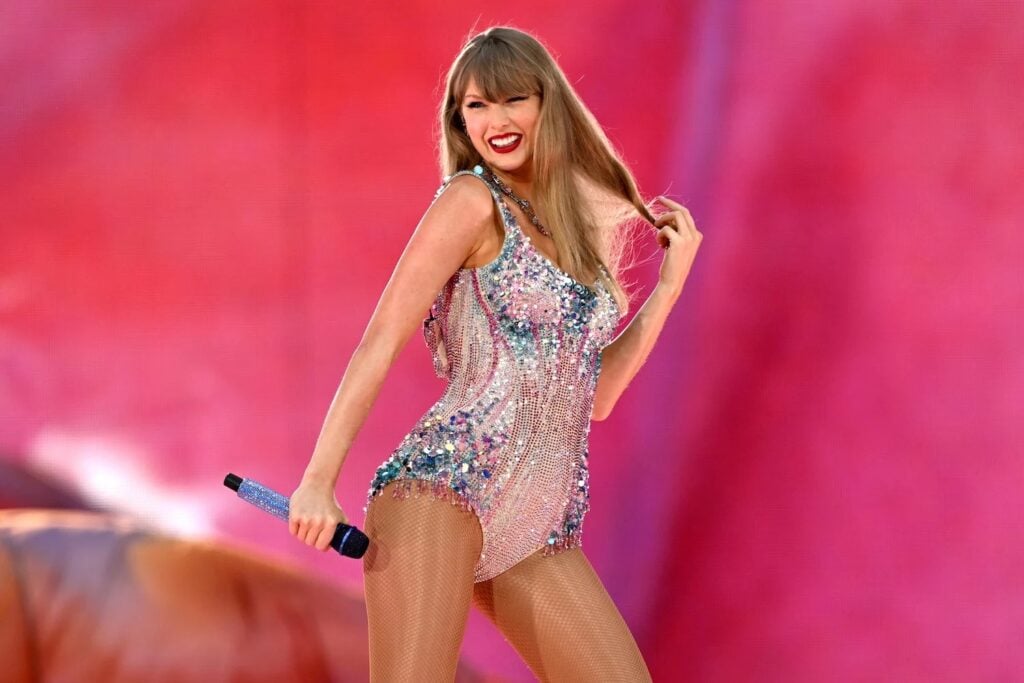
We are in the middle of a collectibles craze in which people are increasingly looking for things that help them feel connected with their passions and a community, but we’re really gotta do better than this. According to a report from CBS News, people paid $25 a pop for literal trash that came from Taylor Swift and Travis Kelce’s wedding at Madison Square Garden.
To be fair, it’s not loose garbage that people paid for. Instead, it’s a 1 by 1 by 0.75-inch cube filled with bits of refuse pulled from outside of the venue on July 3, the day of the pop star’s somehow very secretive and very public wedding. The trash was collected and ultimately curated by artist Justin Gignac, who said he picked up most of it from around the Garden’s perimeter.
According to CBS News, he had some interesting finds: a Ring Pop, presumably not fully eaten, a single AirPod, and an ovulation test kit, among other things. He took his findings, divided it up, and preserved it in the cubes before selling them for $25 a pop—though he did also make some larger cubes, 3.5 by 3.5 by 4.5 inches, that went for $100. He made 50 of the small cubes, and they reportedly sold out on the first day he made them available, because we as a society are sick and broken in ways that are difficult to describe.
While Gigac was certainly capitalizing on the matrimony, it was also kind of just any other day for the artist, who has been collecting, packaging, and selling trash from around New York City for 25 years now as part of an art project/side hustle. Per an interview with Fast Company, Gigac has sold more than 1,700 garbage cubes to patrons around the world who just want a part of the Big Apple.
There’s no authentication process for ensuring the trash in the cubes came from Swift’s wedding, but Gigac seems like a man of his word. Plus, Swifties apparently dined on pastries that they believed but could not confirm came from the wedding, so it’s not like they’re being a particularly discerning bunch about this whole thing. They just want to feel like they’ve gotten a piece of the action, real or imagined.
People can do whatever they want with their time and money, obviously, and Gigac is certainly not at fault here at all for finding an opportunity to make a little money off a thing he’s been doing for decades anyway—and frankly, there’s something cool about the whole concept of his garbage reclamation project in a “one person’s trash is another person’s treasure” kind of way. But paying money for literal scraps from a wedding of an ultra-wealthy celebrity just feels so incredibly on the nose.
But hey, let them eat cake.
We are in the middle of a collectibles craze in which people are increasingly looking…
Ana Navarro is not impressed with those rejoicing over Sen. Lindsey Graham’s sudden death. “I…


