Solana Community Lead Enters UK By-Election With Onchain Transparency Pledge
Stephen “Cap” Newnham, who leads the Solana community group Superteam UK, said he will run…
Stephen “Cap” Newnham, who leads the Solana community group Superteam UK, said he will run…
©IMDb The Imitation Game (2014) Alan Turing really did help crack Germany’s Enigma code during…
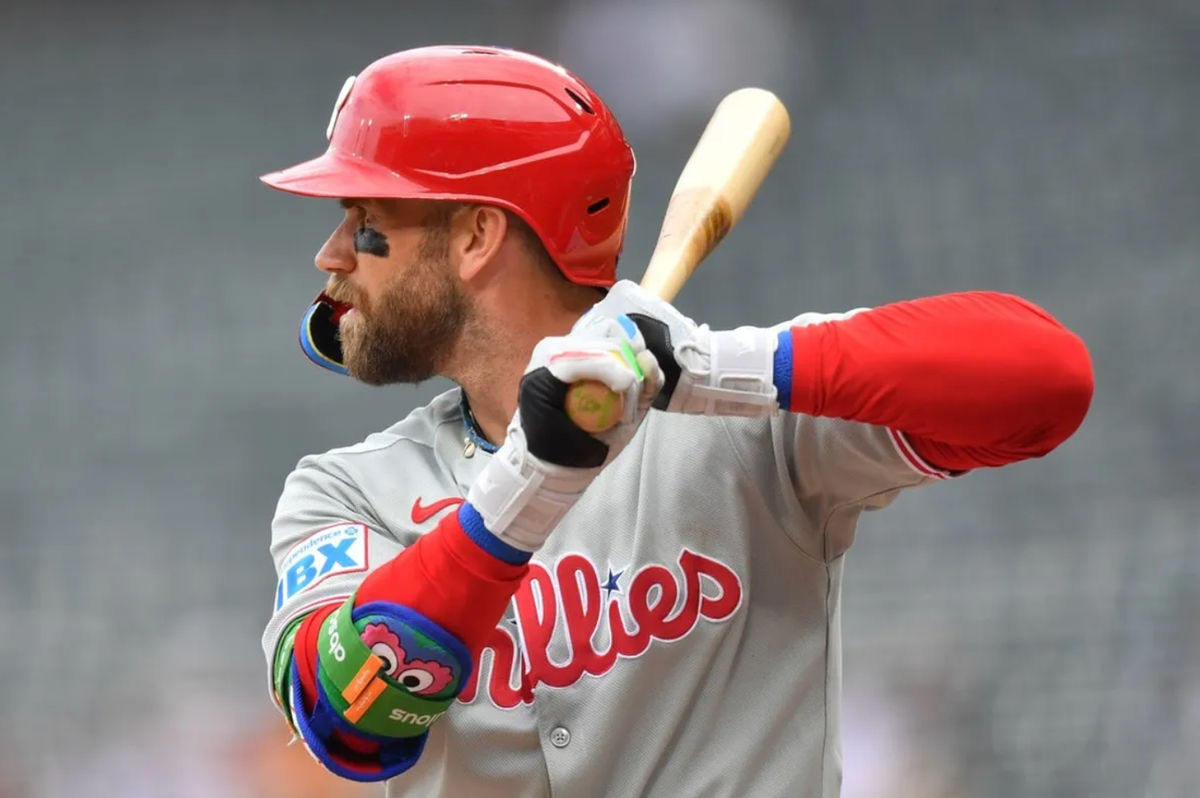 Jul 30, 2025; Chicago, Illinois, USA; Philadelphia Phillies first baseman Bryce Harper (3) at bat during a game against the Chicago White Sox at Rate Field. Mandatory Credit: Patrick Gorski-Imagn Images
 The American League and National League clash in the 96th Major League Baseball All-Star Game at Citizens Bank Park in Philadelphia, Pennsylvania on Tuesday. First pitch is set for 8 p.m. ET, and the game can be viewed or streamed on FOX.
The AL holds a slight 48-45-2 series advantage, although the NL has won two of the past three installments, including last season’s 7-6 victory at Truist Park in Atlanta. Philadelphia Phillies DH Kyle Schwarber, the runner-up in Monday’s Home Run Derby, was the MVP after leading the NL to a win in the first-ever “swing-off”, deciding a winner with a HR Derby, the equivalent of penalties in a World Cup matchup.
Schwarber will be in the starting lineup for the NL, batting leadoff and serving as the designated hitter. Teammate Brandon Marsh will start in right field, and he bats seventh for Los Angeles Dodgers manager Dave Roberts, who leads the NL. And, on the bump, Phillies LHP Cristopher Sanchez gets the starting nod.
Sanchez is 7-1 with a 0.86 ERA across 73 IP in 11 home starts this season, posting a 0.93 WHIP, while surrendering just two home runs at his home park. That’s pretty impressive. However, Sanchez just started Saturday, so don’t expect him to get a ton of work.
Toronto Blue Jays manager John Schneider leads the American League, and he gives the ball to Blue Jays RHP Dylan Cease for his first-ever All-Star appearance. He is the first Jays starter since 2009, when the late Roy Halladay was the starting pitcher. Oddly enough, Sanchez is the first Phillies starting pitcher since…Halladay, in 2011.
As far as weather, temperatures are forecasted to still be at 90 degrees at first pitch, which is very hot for Philadelphia. A hot wind from 11-14 MPH will be blowing from the southwest, which means we’ll have a bit of a jet stream to the right-center field power alley.
It wouldn’t be surprising to see the likes Houston Astros DH Yordan Alvarez, batting second, and Tampa Bay Rays 3B Junior Caminero, jump on Sanchez in the first. He isn’t likely to go far after working just three days ago. In fact, betting OVER 0.5 RUNS (-105) – FIRST INNING is a strong play. We have Cease, who gives up plenty of walks, which is not great, and Sanchez, who might not be at 100 percent rest.
Our Current Best Offers
Channel debug: betting
As far as the entire game, I like the NL (-140) to get the job done. The National League has won two of the past three meetings, and historically, the NL has won three straight meetings when Philadelphia has hosted, dating back to July 8, 1952 at Shibe Park.
For years, especially in the 1990s and early 2000s, it seemed that the pitching was overpowering in these games. However, since 2018 in Washington D.C., we’ve seen a total of 59 combined runs in the past seven mid-summer classics. That’s 8.4 runs per game (RPG) in the span, so the lean is to the OVER 8 (-105) for the total.
Lastly, if you’re trying to bet the MVP, that’s a crapshoot. It literally can be any late-innings hero. Last season, Schwarber was 0-for-2 in the game, but he won MVP thanks to the silly swing-off thing. Anyway, while he didn’t have a great Home Run Derby showing, BRYCE HARPER (+1300) – MVP could come on in the middle to late innings, making for a storybook finish.
Our Current Best Offers
Channel debug: betting
 Jul 30, 2025; Chicago, Illinois, USA; Philadelphia Phillies first baseman Bryce Harper (3) at bat during a game against the Chicago White Sox at Rate Field. Mandatory Credit: Patrick Gorski-Imagn Images
 The American League and National League clash in the 96th Major League Baseball All-Star Game at Citizens Bank Park in Philadelphia, Pennsylvania on Tuesday. First pitch is set for 8 p.m. ET, and the game can be viewed or streamed on FOX.
The AL holds a slight 48-45-2 series advantage, although the NL has won two of the past three installments, including last season’s 7-6 victory at Truist Park in Atlanta. Philadelphia Phillies DH Kyle Schwarber, the runner-up in Monday’s Home Run Derby, was the MVP after leading the NL to a win in the first-ever “swing-off”, deciding a winner with a HR Derby, the equivalent of penalties in a World Cup matchup.
Schwarber will be in the starting lineup for the NL, batting leadoff and serving as the designated hitter. Teammate Brandon Marsh will start in right field, and he bats seventh for Los Angeles Dodgers manager Dave Roberts, who leads the NL. And, on the bump, Phillies LHP Cristopher Sanchez gets the starting nod.
Sanchez is 7-1 with a 0.86 ERA across 73 IP in 11 home starts this season, posting a 0.93 WHIP, while surrendering just two home runs at his home park. That’s pretty impressive. However, Sanchez just started Saturday, so don’t expect him to get a ton of work.
Toronto Blue Jays manager John Schneider leads the American League, and he gives the ball to Blue Jays RHP Dylan Cease for his first-ever All-Star appearance. He is the first Jays starter since 2009, when the late Roy Halladay was the starting pitcher. Oddly enough, Sanchez is the first Phillies starting pitcher since…Halladay, in 2011.
As far as weather, temperatures are forecasted to still be at 90 degrees at first pitch, which is very hot for Philadelphia. A hot wind from 11-14 MPH will be blowing from the southwest, which means we’ll have a bit of a jet stream to the right-center field power alley.
It wouldn’t be surprising to see the likes Houston Astros DH Yordan Alvarez, batting second, and Tampa Bay Rays 3B Junior Caminero, jump on Sanchez in the first. He isn’t likely to go far after working just three days ago. In fact, betting OVER 0.5 RUNS (-105) – FIRST INNING is a strong play. We have Cease, who gives up plenty of walks, which is not great, and Sanchez, who might not be at 100 percent rest.
Our Current Best Offers
Channel debug: betting
As far as the entire game, I like the NL (-140) to get the job done. The National League has won two of the past three meetings, and historically, the NL has won three straight meetings when Philadelphia has hosted, dating back to July 8, 1952 at Shibe Park.
For years, especially in the 1990s and early 2000s, it seemed that the pitching was overpowering in these games. However, since 2018 in Washington D.C., we’ve seen a total of 59 combined runs in the past seven mid-summer classics. That’s 8.4 runs per game (RPG) in the span, so the lean is to the OVER 8 (-105) for the total.
Lastly, if you’re trying to bet the MVP, that’s a crapshoot. It literally can be any late-innings hero. Last season, Schwarber was 0-for-2 in the game, but he won MVP thanks to the silly swing-off thing. Anyway, while he didn’t have a great Home Run Derby showing, BRYCE HARPER (+1300) – MVP could come on in the middle to late innings, making for a storybook finish.
Our Current Best Offers
Channel debug: betting
Jul 30, 2025; Chicago, Illinois, USA; Philadelphia Phillies first baseman Bryce Harper (3) at bat during a game against the Chicago White Sox at Rate Field. Mandatory Credit: Patrick Gorski-Imagn Images The American League and National League clash in the 96th Major League Baseball All-Star Game at Citizens Bank Park in Philadelphia, Pennsylvania on Tuesday. First pitch is set for 8 p.m. ET, and the game can be viewed or streamed on FOX.
The AL holds a slight 48-45-2 series advantage, although the NL has won two of the past three installments, including last season’s 7-6 victory at Truist Park in Atlanta. Philadelphia Phillies DH Kyle Schwarber, the runner-up in Monday’s Home Run Derby, was the MVP after leading the NL to a win in the first-ever “swing-off”, deciding a winner with a HR Derby, the equivalent of penalties in a World Cup matchup.
Schwarber will be in the starting lineup for the NL, batting leadoff and serving as the designated hitter. Teammate Brandon Marsh will start in right field, and he bats seventh for Los Angeles Dodgers manager Dave Roberts, who leads the NL. And, on the bump, Phillies LHP Cristopher Sanchez gets the starting nod.
Sanchez is 7-1 with a 0.86 ERA across 73 IP in 11 home starts this season, posting a 0.93 WHIP, while surrendering just two home runs at his home park. That’s pretty impressive. However, Sanchez just started Saturday, so don’t expect him to get a ton of work.
Toronto Blue Jays manager John Schneider leads the American League, and he gives the ball to Blue Jays RHP Dylan Cease for his first-ever All-Star appearance. He is the first Jays starter since 2009, when the late Roy Halladay was the starting pitcher. Oddly enough, Sanchez is the first Phillies starting pitcher since…Halladay, in 2011.
As far as weather, temperatures are forecasted to still be at 90 degrees at first pitch, which is very hot for Philadelphia. A hot wind from 11-14 MPH will be blowing from the southwest, which means we’ll have a bit of a jet stream to the right-center field power alley.
It wouldn’t be surprising to see the likes Houston Astros DH Yordan Alvarez, batting second, and Tampa Bay Rays 3B Junior Caminero, jump on Sanchez in the first. He isn’t likely to go far after working just three days ago. In fact, betting OVER 0.5 RUNS (-105) – FIRST INNING is a strong play. We have Cease, who gives up plenty of walks, which is not great, and Sanchez, who might not be at 100 percent rest.
Our Current Best Offers
Channel debug: betting
As far as the entire game, I like the NL (-140) to get the job done. The National League has won two of the past three meetings, and historically, the NL has won three straight meetings when Philadelphia has hosted, dating back to July 8, 1952 at Shibe Park.
For years, especially in the 1990s and early 2000s, it seemed that the pitching was overpowering in these games. However, since 2018 in Washington D.C., we’ve seen a total of 59 combined runs in the past seven mid-summer classics. That’s 8.4 runs per game (RPG) in the span, so the lean is to the OVER 8 (-105) for the total.
Lastly, if you’re trying to bet the MVP, that’s a crapshoot. It literally can be any late-innings hero. Last season, Schwarber was 0-for-2 in the game, but he won MVP thanks to the silly swing-off thing. Anyway, while he didn’t have a great Home Run Derby showing, BRYCE HARPER (+1300) – MVP could come on in the middle to late innings, making for a storybook finish.
Our Current Best Offers
Channel debug: betting
Jul 30, 2025; Chicago, Illinois, USA; Philadelphia Phillies first baseman Bryce Harper (3) at bat…
इंदौर के कलेक्टर कार्यलय पर छात्रों ने किया उग्र प्रदर्शन , प्रदर्शन के दौरान छात्रों…
A brand-new 35mm print of Ôtomo Katsuhiro’s “Akira” – struck from the 4K master and…
That's half of the children legally opting for just "Jolie."View Entire Post › #Brad #Pitt…
राजेंद्र नगर के सुनील मंडलोई साइबर ठगी का शिकार हुए हैं। हाईटेक अपराधियों ने खाते…
छिंदवाड़ा शहर के इमलीखेड़ा स्थित शिव आदित्य रेजिडेंसी में चोरों ने सूने मकानों को निशाना…
{"_id":"6a564845a22c5b7648043c2f","slug":"sports-ministry-directed-hockey-india-to-investigate-allegations-by-former-india-captain-asunta-lakra-2026-07-14","type":"feature-story","status":"publish","title_hn":"खेल मंत्रालय का हॉकी इंडिया को निर्देश: असुंता लाकड़ा के आरोपों की हो जांच, आंतरिक…
When it comes to the 2027 quarterback class, hope springs eternal. Especially after a 2026 class that produced two first-rounders in Fernando Mendoza and Ty Simpson, and a 2025 class that produced two in Cam Ward and Jaxson Dart, the NFL prayer is that the 2027 group of signal-callers is more like the 2024 version, when there were three taken with the first three picks, six in the top 12, and four legit NFL starters in Caleb Williams, Jayden Daniels, Drake Maye, and Bo Nix. Even the relative stragglers (Michael Penix Jr. and J.J. McCarthy) haven’t run entirely out of road when it comes to their NFL potential.
Ostensibly, the 2027 class looks absolutely ridiculous from a tools and potential perspective. We could have Texas’ Arch Manning, Oregon’s Dante Moore, Ohio State’s Julian Sayin, Ole Miss’ Trinidad Chambliss, South Carolina’s LaNorris Sellers, Oklahoma State’s Drew Mestemaker, Notre Dame’s C.J. Carr, and Texas Tech’s Brendan Sorsby (depending on how Sorsby is affected by recent gambling allegations) all fighting to rest atop next year’s QB draft listings, and there are ways in which each one could do it. Not to mention the fact that there will be a surprise interloper who comes out of nowhere to show NFL potential.
That’s at least eight quarterbacks for NFL teams to consider next year. Of course, we also know that not every sure-thing prospect will ultimately become that even before he’s drafted; we’ve all seen the super-hyped guys fall down when they get hit without a plan.
The idea with this series is to evaluate each of the prominent future prospects with one eye on what they’ve already done, and the other on what they need to do in order to reach their ultimate ceiling. We continue the deep dive with Ole Miss’ Trinidad Chambliss, who fought to stay in school despite a 2025 season that had him as a more than credible NFL prospect.
Last season, Chambliss completed 294 of 448 passes (65.6%) for 3,934 yards (8.8 YPA), 22 touchdowns, three interceptions, and a passer rating of 106.9. He also ran the ball 130 times for 585 yards (4.5 YPA), eight touchdowns and three fumbles.
After that, Chambliss filed a lawsuit to contend the NCAA denying him an extra year of eligibility, and he won that case. Now that he has another developmental year before he tries the NFL on for size, what’s already on the ball, and what does he need to refine?
Let’s dive into the tape.

One of the most interesting things about Chambliss as a smaller, inherently mobile quarterback, is that he doesn’t need to leave the pocket to hit the middle of the field. Last season, when throwing to the middle of the field (directly to the middle; not middle left or middle right), Chambliss completed 46 of 70 passes for 825 yards, eight touchdowns, no interceptions, and a passer rating of 144.0.
His 44.45 EPA on such throws was the NCAA’s 11th-best (minimum 50 attempts), and it’s one of the more NFL-ready parts of his game. Teams at the next level that work their passing games over the middle of the field (or want to do so) won’t have to take leave of that notion with Chambliss as their quarterback.

On throws outside the pocket last season, Chambliss completed 37 of 64 passes for 500 yards, four touchdowns, one interception, and a passer rating of 97.1. Chambliss has a good sense of his own mechanics when he’s throwing on the move — the arm strength is enough for him to hit his targets when he has to throw off-platform, and when he rights his shoulders to the target, he’s capable of making some really nice downfield passes from a moving pocket.

Chambliss has learned to deal with pressure very well — in 2025, he completed 44 of 81 passes when disrupted for 649 yards, one touchdown, no interceptions, and a passer rating of 84.9. Chambliss’ yards per attempt average of 8.0 under pressure also tells you that he doesn’t automatically become Captain Checkdown when pressured. The aforementioned pocket movement helps him a lot in an NFL-conversant sense, and Chambliss has already served notice to defenses that if you blitz him, you will regret it.
Against five or more pass rushers last season, whether pressured or not, Chambliss completed 119 of 194 passes for 1,521 yards, 14 touchdowns, no interceptions, and a passer rating of 109.9, which has higher than his passer rating of 104.7 when he wasn’t blitzed.
You don’t see THAT too often. Chambliss will be relatively ready for an NFL that now looks to test quarterbacks with all kinds of stunts, games, and line movement, and he has anther year in college to refine that mastery.

And while Chambliss did have the NCAA’s second-most RPO passing attempts last season with 94, behind only that Fernando Mendoza guy (who had 103 such attempts), Chambliss is similar to Mendoza in that he isn’t over-reliant on quick one-two RPO reads to get things done in the passing game.
On the kinds of throws that define the best quarterbacks at any level — the dig, corner, post, over, seam, and go routes — Chambliss completed 63 of 112 passes for 1,504 yards, eight touchdowns, one interception, and a passer rating of 121.1, which ranked fourth in the NCAA among quarterbacks with at least 100 such attempts in the 2025 season. Chambliss can read through his second and third progressions with no problem; he won’t need his NFL coaches to break him down to the studs and start all over.

As you would expect, Chambliss’ mobility extends to his ability to make important plays as a runner, whether on designed plays or scrambles. Overall, he ran the ball 130 times for 585 yards, eight touchdowns, and three fumbles. Chambliss had 15 designed QB draw runs last season, and he averaged 4.9 yards per play with a touchdown.
I wouldn’t necessarily want to put Chambliss in the teeth of NFL defensive lines too often as a pure runner at his size — his coaches will need to be judicious about such things — but the rushing ability is just as good by design as it is when the play breaks down.

Overall, I would have placed Chambliss high on my list of 2026 quarterback prospect list had he made himself available for the draft — most likely an early second
But I would not be at all surprised if Chambliss comes out of the 2026 season higher on the 2027 QB draft list than people may imagine at this point in time.

When it comes to the 2027 quarterback class, hope springs eternal. Especially after a 2026 class that produced two first-rounders in Fernando Mendoza and Ty Simpson, and a 2025 class that produced two in Cam Ward and Jaxson Dart, the NFL prayer is that the 2027 group of signal-callers is more like the 2024 version, when there were three taken with the first three picks, six in the top 12, and four legit NFL starters in Caleb Williams, Jayden Daniels, Drake Maye, and Bo Nix. Even the relative stragglers (Michael Penix Jr. and J.J. McCarthy) haven’t run entirely out of road when it comes to their NFL potential.
Ostensibly, the 2027 class looks absolutely ridiculous from a tools and potential perspective. We could have Texas’ Arch Manning, Oregon’s Dante Moore, Ohio State’s Julian Sayin, Ole Miss’ Trinidad Chambliss, South Carolina’s LaNorris Sellers, Oklahoma State’s Drew Mestemaker, Notre Dame’s C.J. Carr, and Texas Tech’s Brendan Sorsby (depending on how Sorsby is affected by recent gambling allegations) all fighting to rest atop next year’s QB draft listings, and there are ways in which each one could do it. Not to mention the fact that there will be a surprise interloper who comes out of nowhere to show NFL potential.
That’s at least eight quarterbacks for NFL teams to consider next year. Of course, we also know that not every sure-thing prospect will ultimately become that even before he’s drafted; we’ve all seen the super-hyped guys fall down when they get hit without a plan.
The idea with this series is to evaluate each of the prominent future prospects with one eye on what they’ve already done, and the other on what they need to do in order to reach their ultimate ceiling. We continue the deep dive with Ole Miss’ Trinidad Chambliss, who fought to stay in school despite a 2025 season that had him as a more than credible NFL prospect.
Last season, Chambliss completed 294 of 448 passes (65.6%) for 3,934 yards (8.8 YPA), 22 touchdowns, three interceptions, and a passer rating of 106.9. He also ran the ball 130 times for 585 yards (4.5 YPA), eight touchdowns and three fumbles.
After that, Chambliss filed a lawsuit to contend the NCAA denying him an extra year of eligibility, and he won that case. Now that he has another developmental year before he tries the NFL on for size, what’s already on the ball, and what does he need to refine?
Let’s dive into the tape.
One of the most interesting things about Chambliss as a smaller, inherently mobile quarterback, is that he doesn’t need to leave the pocket to hit the middle of the field. Last season, when throwing to the middle of the field (directly to the middle; not middle left or middle right), Chambliss completed 46 of 70 passes for 825 yards, eight touchdowns, no interceptions, and a passer rating of 144.0.
His 44.45 EPA on such throws was the NCAA’s 11th-best (minimum 50 attempts), and it’s one of the more NFL-ready parts of his game. Teams at the next level that work their passing games over the middle of the field (or want to do so) won’t have to take leave of that notion with Chambliss as their quarterback.
On throws outside the pocket last season, Chambliss completed 37 of 64 passes for 500 yards, four touchdowns, one interception, and a passer rating of 97.1. Chambliss has a good sense of his own mechanics when he’s throwing on the move — the arm strength is enough for him to hit his targets when he has to throw off-platform, and when he rights his shoulders to the target, he’s capable of making some really nice downfield passes from a moving pocket.
Chambliss has learned to deal with pressure very well — in 2025, he completed 44 of 81 passes when disrupted for 649 yards, one touchdown, no interceptions, and a passer rating of 84.9. Chambliss’ yards per attempt average of 8.0 under pressure also tells you that he doesn’t automatically become Captain Checkdown when pressured. The aforementioned pocket movement helps him a lot in an NFL-conversant sense, and Chambliss has already served notice to defenses that if you blitz him, you will regret it.
Against five or more pass rushers last season, whether pressured or not, Chambliss completed 119 of 194 passes for 1,521 yards, 14 touchdowns, no interceptions, and a passer rating of 109.9, which has higher than his passer rating of 104.7 when he wasn’t blitzed.
You don’t see THAT too often. Chambliss will be relatively ready for an NFL that now looks to test quarterbacks with all kinds of stunts, games, and line movement, and he has anther year in college to refine that mastery.
And while Chambliss did have the NCAA’s second-most RPO passing attempts last season with 94, behind only that Fernando Mendoza guy (who had 103 such attempts), Chambliss is similar to Mendoza in that he isn’t over-reliant on quick one-two RPO reads to get things done in the passing game.
On the kinds of throws that define the best quarterbacks at any level — the dig, corner, post, over, seam, and go routes — Chambliss completed 63 of 112 passes for 1,504 yards, eight touchdowns, one interception, and a passer rating of 121.1, which ranked fourth in the NCAA among quarterbacks with at least 100 such attempts in the 2025 season. Chambliss can read through his second and third progressions with no problem; he won’t need his NFL coaches to break him down to the studs and start all over.
As you would expect, Chambliss’ mobility extends to his ability to make important plays as a runner, whether on designed plays or scrambles. Overall, he ran the ball 130 times for 585 yards, eight touchdowns, and three fumbles. Chambliss had 15 designed QB draw runs last season, and he averaged 4.9 yards per play with a touchdown.
I wouldn’t necessarily want to put Chambliss in the teeth of NFL defensive lines too often as a pure runner at his size — his coaches will need to be judicious about such things — but the rushing ability is just as good by design as it is when the play breaks down.
Overall, I would have placed Chambliss high on my list of 2026 quarterback prospect list had he made himself available for the draft — most likely an early second
But I would not be at all surprised if Chambliss comes out of the 2026 season higher on the 2027 QB draft list than people may imagine at this point in time.
When it comes to the 2027 quarterback class, hope springs eternal. Especially after a 2026 class that produced two first-rounders in Fernando Mendoza and Ty Simpson, and a 2025 class that produced two in Cam Ward and Jaxson Dart, the NFL prayer is that the 2027 group of signal-callers is more like the 2024 version, when there were three taken with the first three picks, six in the top 12, and four legit NFL starters in Caleb Williams, Jayden Daniels, Drake Maye, and Bo Nix. Even the relative stragglers (Michael Penix Jr. and J.J. McCarthy) haven’t run entirely out of road when it comes to their NFL potential.
Ostensibly, the 2027 class looks absolutely ridiculous from a tools and potential perspective. We could have Texas’ Arch Manning, Oregon’s Dante Moore, Ohio State’s Julian Sayin, Ole Miss’ Trinidad Chambliss, South Carolina’s LaNorris Sellers, Oklahoma State’s Drew Mestemaker, Notre Dame’s C.J. Carr, and Texas Tech’s Brendan Sorsby (depending on how Sorsby is affected by recent gambling allegations) all fighting to rest atop next year’s QB draft listings, and there are ways in which each one could do it. Not to mention the fact that there will be a surprise interloper who comes out of nowhere to show NFL potential.
That’s at least eight quarterbacks for NFL teams to consider next year. Of course, we also know that not every sure-thing prospect will ultimately become that even before he’s drafted; we’ve all seen the super-hyped guys fall down when they get hit without a plan.
The idea with this series is to evaluate each of the prominent future prospects with one eye on what they’ve already done, and the other on what they need to do in order to reach their ultimate ceiling. We continue the deep dive with Ole Miss’ Trinidad Chambliss, who fought to stay in school despite a 2025 season that had him as a more than credible NFL prospect.
Last season, Chambliss completed 294 of 448 passes (65.6%) for 3,934 yards (8.8 YPA), 22 touchdowns, three interceptions, and a passer rating of 106.9. He also ran the ball 130 times for 585 yards (4.5 YPA), eight touchdowns and three fumbles.
After that, Chambliss filed a lawsuit to contend the NCAA denying him an extra year of eligibility, and he won that case. Now that he has another developmental year before he tries the NFL on for size, what’s already on the ball, and what does he need to refine?
Let’s dive into the tape.

One of the most interesting things about Chambliss as a smaller, inherently mobile quarterback, is that he doesn’t need to leave the pocket to hit the middle of the field. Last season, when throwing to the middle of the field (directly to the middle; not middle left or middle right), Chambliss completed 46 of 70 passes for 825 yards, eight touchdowns, no interceptions, and a passer rating of 144.0.
His 44.45 EPA on such throws was the NCAA’s 11th-best (minimum 50 attempts), and it’s one of the more NFL-ready parts of his game. Teams at the next level that work their passing games over the middle of the field (or want to do so) won’t have to take leave of that notion with Chambliss as their quarterback.

On throws outside the pocket last season, Chambliss completed 37 of 64 passes for 500 yards, four touchdowns, one interception, and a passer rating of 97.1. Chambliss has a good sense of his own mechanics when he’s throwing on the move — the arm strength is enough for him to hit his targets when he has to throw off-platform, and when he rights his shoulders to the target, he’s capable of making some really nice downfield passes from a moving pocket.

Chambliss has learned to deal with pressure very well — in 2025, he completed 44 of 81 passes when disrupted for 649 yards, one touchdown, no interceptions, and a passer rating of 84.9. Chambliss’ yards per attempt average of 8.0 under pressure also tells you that he doesn’t automatically become Captain Checkdown when pressured. The aforementioned pocket movement helps him a lot in an NFL-conversant sense, and Chambliss has already served notice to defenses that if you blitz him, you will regret it.
Against five or more pass rushers last season, whether pressured or not, Chambliss completed 119 of 194 passes for 1,521 yards, 14 touchdowns, no interceptions, and a passer rating of 109.9, which has higher than his passer rating of 104.7 when he wasn’t blitzed.
You don’t see THAT too often. Chambliss will be relatively ready for an NFL that now looks to test quarterbacks with all kinds of stunts, games, and line movement, and he has anther year in college to refine that mastery.

And while Chambliss did have the NCAA’s second-most RPO passing attempts last season with 94, behind only that Fernando Mendoza guy (who had 103 such attempts), Chambliss is similar to Mendoza in that he isn’t over-reliant on quick one-two RPO reads to get things done in the passing game.
On the kinds of throws that define the best quarterbacks at any level — the dig, corner, post, over, seam, and go routes — Chambliss completed 63 of 112 passes for 1,504 yards, eight touchdowns, one interception, and a passer rating of 121.1, which ranked fourth in the NCAA among quarterbacks with at least 100 such attempts in the 2025 season. Chambliss can read through his second and third progressions with no problem; he won’t need his NFL coaches to break him down to the studs and start all over.

As you would expect, Chambliss’ mobility extends to his ability to make important plays as a runner, whether on designed plays or scrambles. Overall, he ran the ball 130 times for 585 yards, eight touchdowns, and three fumbles. Chambliss had 15 designed QB draw runs last season, and he averaged 4.9 yards per play with a touchdown.
I wouldn’t necessarily want to put Chambliss in the teeth of NFL defensive lines too often as a pure runner at his size — his coaches will need to be judicious about such things — but the rushing ability is just as good by design as it is when the play breaks down.

Overall, I would have placed Chambliss high on my list of 2026 quarterback prospect list had he made himself available for the draft — most likely an early second
But I would not be at all surprised if Chambliss comes out of the 2026 season higher on the 2027 QB draft list than people may imagine at this point in time.
When it comes to the 2027 quarterback class, hope springs eternal. Especially after a 2026…