×
vivo T5x Review: The Budget Phone That Refuses to Die

vivo T5x Review: The Budget Phone That Refuses to Die

“Good phones are getting cheap, and cheap phones are getting good” is the saying we’ve all heard from our good friend MKBHD. It’s a statement that’s stood the test of time, simply because budget phones have improved in performance, camera quality, and overall usability every year. Unfortunately, 2026 feels like a bit of an outlier. It’s the year of AI consequences, with rising component costs that have wreaked havoc in the smartphone world. As you may have already guessed, budget phones are the most affected. They already have razor-thin margins, and these new costs have driven prices up significantly. vivo’s T-series was one of my favourite budget phones of last year, because they understood the formula well. This year, vivo is back again with the T5x.

So, what is the new vivo T5x about? It’s about a new processor, the Dimensity 7400, a full HD+ display with a 120Hz refresh rate, and the ability to record 4K videos. All this at a price of ₹18,999 made me wonder where vivo has cut corners? To find out, I got the new T5x, swapped my SIM to it, and tested it for a couple of weeks. Here’s my experience.

vivo T5x Review

Hisan Kidwai

Summary

The vivo T5x surprisingly gets a lot of things right. The design looks great, especially in the silver finish. The display, while not OLED, is serviceable and bright in all conditions, and the performance is more than good enough. Not to mention the stellar battery life that lasts more than a day, and cameras that actually capture good photos.

Design & Hardware

The previous T4x was a handsome phone, with a big camera module and a pretty design. And I can pretty much say the same things about the T5x, except for the fact that its design is more mature. vivo’s T-series phones were some of my favourite budget phones. The back captures the light at different angles, making a wavy pattern. This matte finish picks up zero fingerprints, so you don’t have to spend hours cleaning the phone.

In 2026, everyone’s making phones with flat sides. That’s the trend, but people like me do miss the way backs melted into the frames, which was super comfortable. Well, vivo has apparently listened to us, since the back of the T5x has a subtle curve that blends into the frame. It’s a small touch that pays dividends in the comfort department. I had no issues using the phone for long hours or holding it while taking my evening walks. The back also houses the dual-camera setup, and its design resembles the V70’s, with a square camera island, and I quite like it.
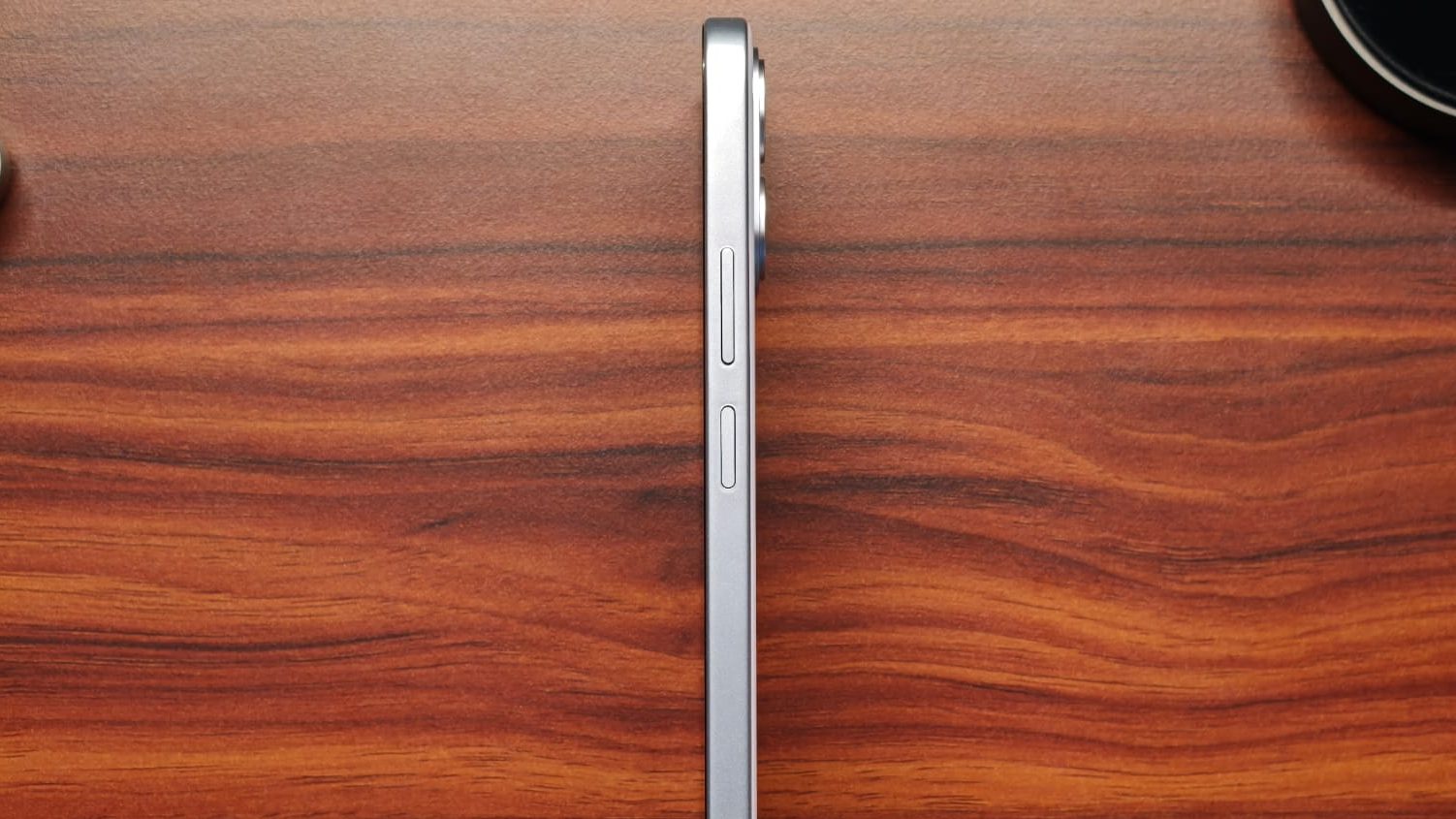
Side profile of the T5x

The frame is plastic, of course, but that’s not necessarily a bad thing. They are flat, which is good, but the corners are rounded, so they do not dig into your palms. The 215g weight is surprisingly low for a 7,000 mAh battery, and the center of gravity is perfectly centered.

Beyond the basics, the vivo T5x features a side-mounted fingerprint scanner that works well with both dirty and wet fingers. Another major selling point of the T5x is the IP ratings. The device supports IP68, IP69, and IP69+. All these fancy terms mean that you can submerge your phone underwater for over 30 minutes. As always, I’d warn against doing so, since water damage isn’t covered under warranty and nobody wants a dead phone.

Display & Speakers
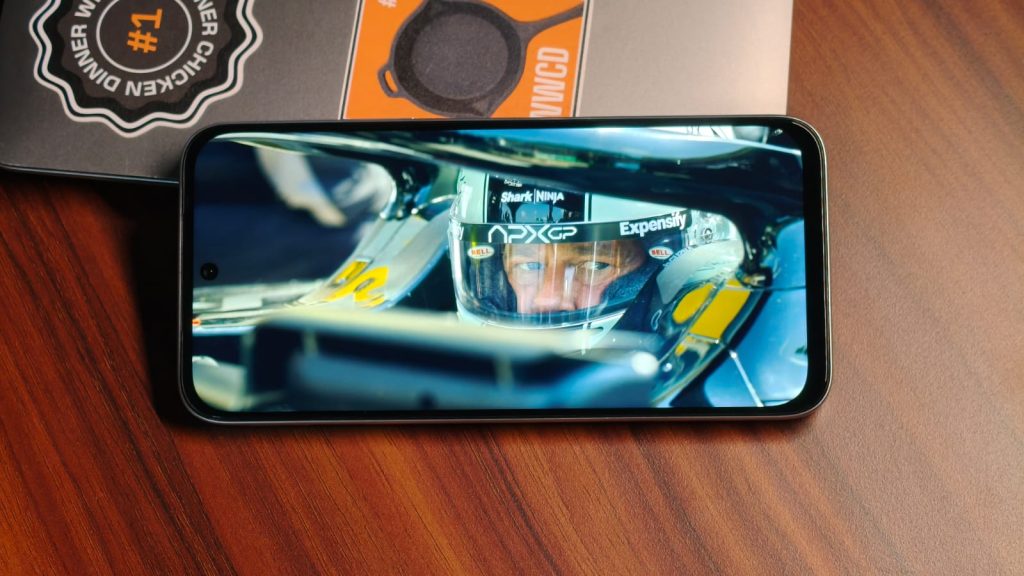
F1 movie trailer running on the t5x

The vivo T5x features a 6.76-inch 2344×1080 FHD+ display with a 120Hz refresh rate. Yes, the panel is LCD, meaning you won’t get the inky deep blacks, but it fared pretty well in my testing. I used the phone both indoors and outdoors, where the 1200-nit peak brightness kept everything legible without me needing to squint. The panel covers about 83% of the NTSC color gamut, which means plenty of accurate colors for watching Netflix or YouTube. Speaking of the speakers, they are decent. I wouldn’t describe the audio quality as full, but it’s okay if you just want to listen to something on the go.

What I’m not a big fan of, though, are the bezels. They are uneven, and the chin at the bottom is fairly large for the price. In other news, vivo hasn’t stated the type of glass used for protection. Fortunately, there’s a pre-installed screen protector, so I’d recommend keeping that on.

Performance
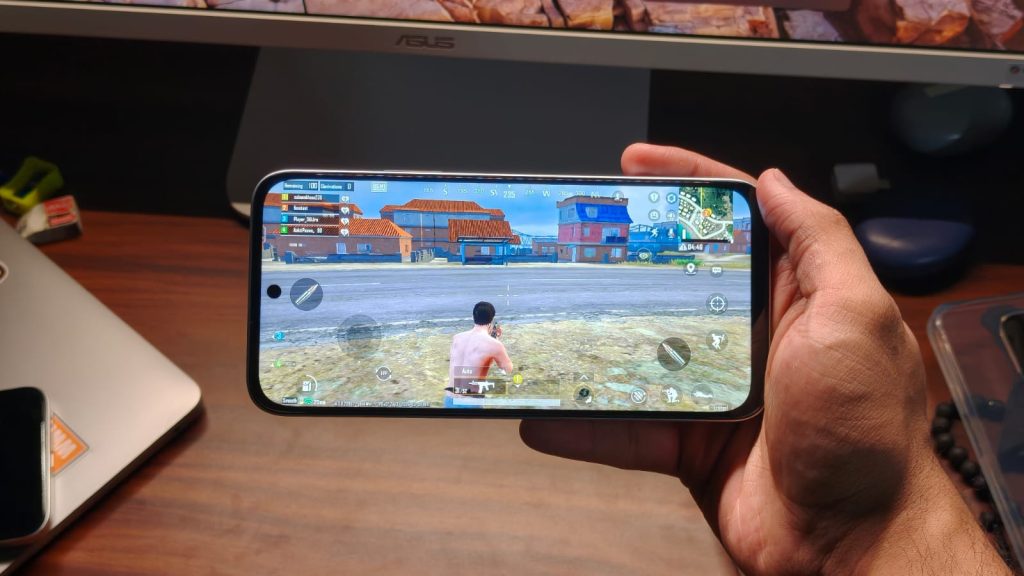
A person playing BGMI

Performance is what makes or breaks the experience on many budget phones. Fortunately, vivo hasn’t fumbled this with the T5x. Under the hood, the T5x houses the MediaTek Dimensity 7400-Turbo processor, an octa-core chip built on the 4-nanometer process technology. Beyond that, my review unit came with 8GB of LPDDR4X RAM and 256GB of UFS 3.1 storage.

I’ve enjoyed using the new OriginOS skin on several vivo phones this year. Interestingly, none of them have been budget smartphones, so I was quite excited to see how vivo has optimized its UI. The answer? Pretty well. The T5x, coupled with the 120Hz refresh rate, breezes through opening and closing multiple apps without a hitch. The animations, while not as smooth as on the X300 Pro, are still fluid enough. The 8GB of RAM is also enough to hold multiple apps in memory. There’s also the AI eraser that helps effectively remove people from the shot.
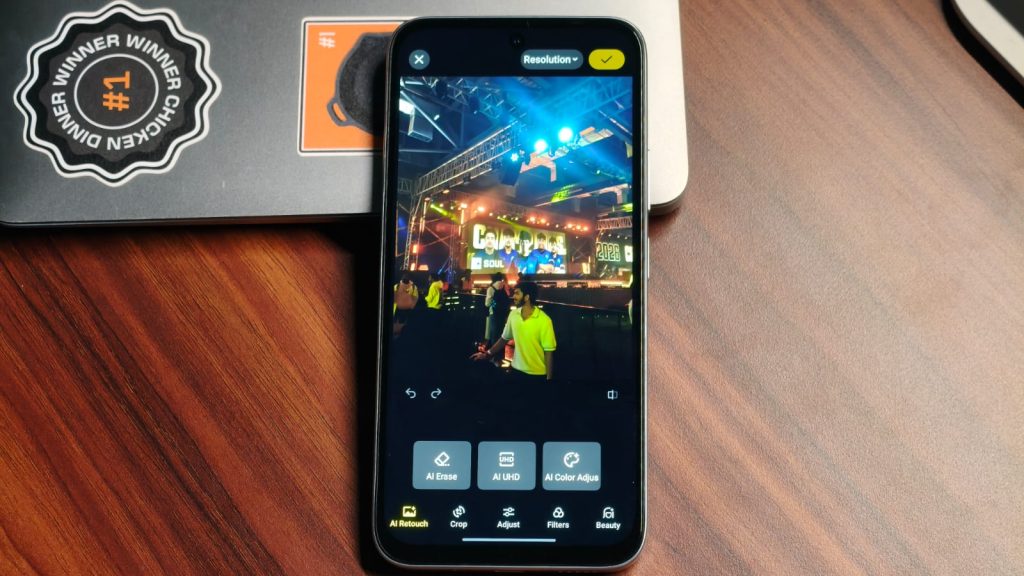
Different AI features

That being said, there are some pre-installed apps and the infamous “Hot Apps” folder, though everything can be removed in a matter of minutes. vivo has promised two years of major Android updates and four years of security patches.

To push the Dimensity 7400-Turbo to the limits, I also ran a series of benchmarks. The T5x scored 1,039 on Geekbench’s single-core test and 2,833 on the multi-core test. On the flip side, in AnTuTu, the device scored 1,189,871 points. But benchmarks rarely tell the full story, so I also ran a series of games, including BGMI. In Smooth+Extreme settings, the phone maintained a steady 60 fps gameplay without dropping frames. The phone also includes gaming-centric features such as 4D vibration (exclusive to BGMI), bypass charging, and the ability to cycle through different performance modes.

Battery & Charging
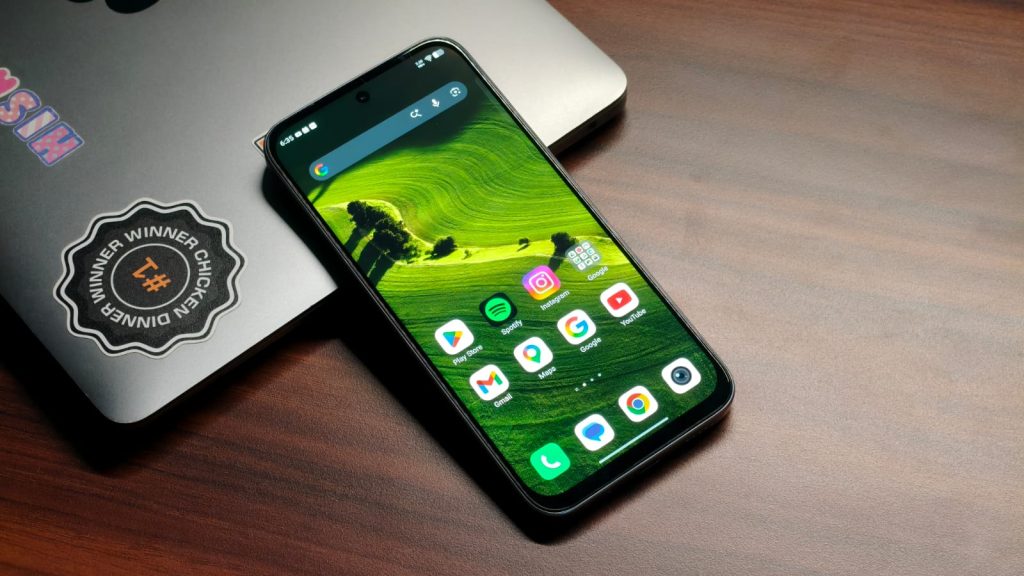
T5x lying on a table

If you need one reason to buy the vivo T5x, it’s probably the mammoth 7,200 mAh battery. It’s a phone that’s impossible to kill in a day. Trust me, I’ve tried. On the first day after I charged the phone to full, I went shopping with my family, where I took about 15-20 photos and left the camera running for more than 30 minutes. After I got home, I played a couple of BGMI games with my friends for an hour, then did a gym session with my Bluetooth earbuds connected to my phone. I ended the day with my favourite activity — doomscrolling on Instagram — and still had about 45% of the charge remaining.

When I ran out of juice, the 44W fast charging came to the rescue. It helped recharge the battery from 20% to 80% in just under an hour, which is plenty fast.

Cameras
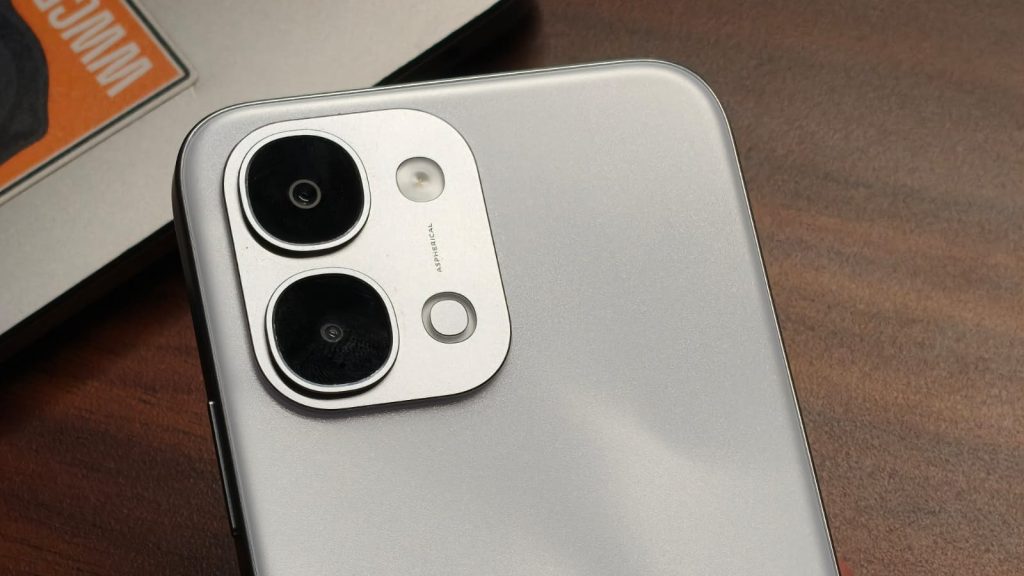
Closeup of the cameras on the T5x

Given the current situation, I honestly didn’t expect much from the T5x’s cameras, since corners have to be cut to accommodate the high RAM prices. But the T5x’s cameras are more than good enough for the price. The camera setup includes a 50MP Sony IMX852 main sensor paired with a 2MP depth sensor. Selfies are handled by a 32MP shooter.

As evident from the samples, the sensor produces pleasing images with ample details, accurate colors, and good-enough HDR in daylight. vivo’s portrait mastery also shines on the T5x, with photos that look aesthetic and fairly accurate edge detection in both daytime and nighttime conditions. There were a few situations where highlights were slightly blown out, but that isn’t a big issue.

Speaking of nighttime, I did notice some noise creeping in when capturing the night sky. There’s also a shutter delay at night, so capturing moving subjects could be an issue. That said, after giving the sensor enough time, the results were detailed enough, and the colors weren’t washed out. Selfies, on the other hand, were solid in both daytime and nighttime scenarios, and I had no complaints. Beyond that, I love the 4K video support on both the front and back cameras. The video quality isn’t the best when compared to more expensive phones, but it’s decent enough to capture a family gathering.

Verdict
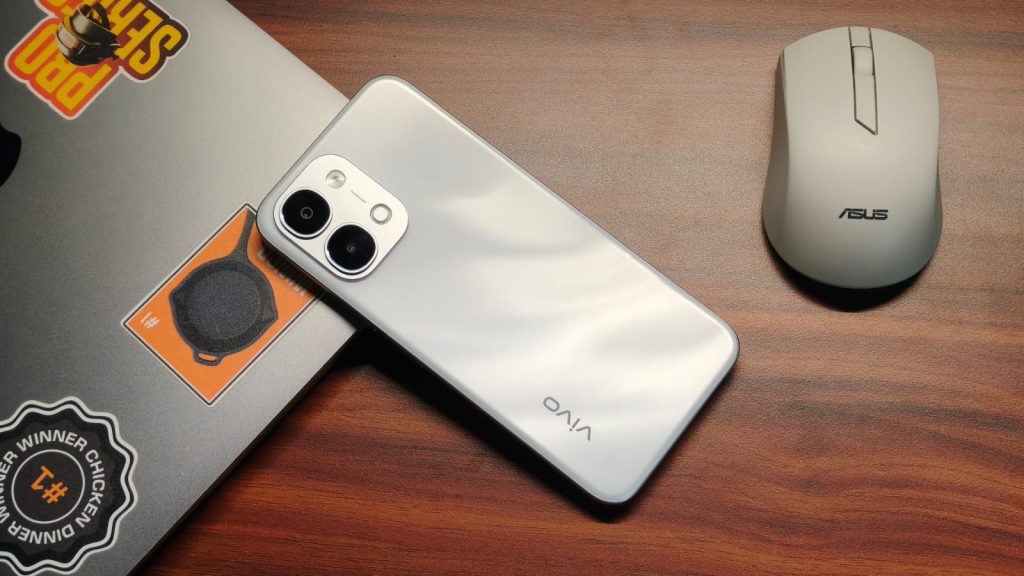
vivo T5x lying on the side of a macbook

At ₹18,999, the vivo T5x surprisingly gets a lot of things right. The design looks great, especially in the silver finish. The display, while not OLED, is serviceable and bright in all conditions, and the performance is more than good enough. Not to mention the stellar battery life that lasts more than a day, and cameras that actually capture good photos. Sure, it’s not all perfect, but given the current market conditions, it’s certainly one of the better budget phones I’ve tested this year. And if you’re shopping in the segment, you should check it out.

Source link
#vivo #T5x #Review #Budget #Phone #Refuses #Die

Lovable and Google announced an expanded multiyear collaboration on Wednesday. Lovable, the fast-growing Stockholm vibe-coding startup, has long been a Google Cloud user. Under the new agreement, it will be a much bigger one.

While the companies did not disclose the dollar figure, a person with knowledge of the deal tells TechCrunch it involves a fivefold increase in Lovable’s footprint on Google Cloud, including AI usage. As part of the deal, this individual tells us, Lovable will gain expanded access to both Anthropic’s Claude — the AI model widely used for coding tasks — and Google’s own Gemini models.

The Anthropic piece in particular is interesting. Google invested $10 billion in Anthropic in cash and compute credits in April, promising another $30 billion if Anthropic hits certain performance targets. It made that investment at a $350 billion valuation — just one month before Anthropic raised a staggering $65 billion round that valued the company at nearly $1 trillion. This deal stands to help Anthropic hit those targets, because Lovable is one of Europe’s fastest-growing startups on record. According to Lovable, it crossed $400 million in annualized revenue in February, having added $100 million in a single month with just 146 employees. The company claims that more than half of Fortune 500 companies use its product in some fashion.

The deal also plugs Lovable into several other parts of Google’s ecosystem. Lovable’s new agent will be available through Google Cloud’s enterprise agent marketplace, the Gemini Enterprise Agent Gallery — an arrangement the two companies first telegraphed at Google’s major U.S. cloud conference in April. And to help secure the code that both humans and agents write, Lovable will integrate with Wiz, Google’s biggest ever acquisition at $32 billion, which officially closed in March, a year after it was announced. The integration will allow Wiz to identify and remediate security problems in real time.

By selling Lovable’s agents through Google’s marketplace, the cloud giant says enterprise procurement and billing will be simplified, making it easier for Lovable to land more enterprise customers.

The calculus for Google is simple enough. If it can keep both Lovable and Anthropic growing by attracting deep-pocketed enterprises, the revenue helps fund the $180 billion to $190 billion in capital expenditures Google plans to spend this year. The company is already in the process of selling a record-breaking $85 billion in equity to cover some of that, so only another $100 billion or so to go.

When you purchase through links in our articles, we may earn a small commission. This doesn’t affect our editorial independence.

#Lovable #signs #multiyear #deal #Google #Cloud #usage #source #TechCrunchAnthropic,google cloud,Lovable">Lovable signs multiyear deal with Google Cloud to up usage 5x, source says | TechCrunch
Lovable and Google announced an expanded multiyear collaboration on Wednesday. Lovable, the fast-growing Stockholm vibe-coding startup, has long been a Google Cloud user. Under the new agreement, it will be a much bigger one.

While the companies did not disclose the dollar figure, a person with knowledge of the deal tells TechCrunch it involves a fivefold increase in Lovable’s footprint on Google Cloud, including AI usage. As part of the deal, this individual tells us, Lovable will gain expanded access to both Anthropic’s Claude — the AI model widely used for coding tasks — and Google’s own Gemini models.


The Anthropic piece in particular is interesting. Google invested  billion in Anthropic in cash and compute credits in April, promising another  billion if Anthropic hits certain performance targets. It made that investment at a 0 billion valuation — just one month before Anthropic raised a staggering  billion round that valued the company at nearly  trillion. This deal stands to help Anthropic hit those targets, because Lovable is one of Europe’s fastest-growing startups on record. According to Lovable, it crossed 0 million in annualized revenue in February, having added 0 million in a single month with just 146 employees. The company claims that more than half of Fortune 500 companies use its product in some fashion.

The deal also plugs Lovable into several other parts of Google’s ecosystem. Lovable’s new agent will be available through Google Cloud’s enterprise agent marketplace, the Gemini Enterprise Agent Gallery — an arrangement the two companies first telegraphed at Google’s major U.S. cloud conference in April. And to help secure the code that both humans and agents write, Lovable will integrate with Wiz, Google’s biggest ever acquisition at  billion, which officially closed in March, a year after it was announced. The integration will allow Wiz to identify and remediate security problems in real time.

By selling Lovable’s agents through Google’s marketplace, the cloud giant says enterprise procurement and billing will be simplified, making it easier for Lovable to land more enterprise customers.

The calculus for Google is simple enough. If it can keep both Lovable and Anthropic growing by attracting deep-pocketed enterprises, the revenue helps fund the 0 billion to 0 billion in capital expenditures Google plans to spend this year. The company is already in the process of selling a record-breaking  billion in equity to cover some of that, so only another 0 billion or so to go.


When you purchase through links in our articles, we may earn a small commission. This doesn’t affect our editorial independence.#Lovable #signs #multiyear #deal #Google #Cloud #usage #source #TechCrunchAnthropic,google cloud,Lovable

announced an expanded multiyear collaboration on Wednesday. Lovable, the fast-growing Stockholm vibe-coding startup, has long been a Google Cloud user. Under the new agreement, it will be a much bigger one.

While the companies did not disclose the dollar figure, a person with knowledge of the deal tells TechCrunch it involves a fivefold increase in Lovable’s footprint on Google Cloud, including AI usage. As part of the deal, this individual tells us, Lovable will gain expanded access to both Anthropic’s Claude — the AI model widely used for coding tasks — and Google’s own Gemini models.

The Anthropic piece in particular is interesting. Google invested $10 billion in Anthropic in cash and compute credits in April, promising another $30 billion if Anthropic hits certain performance targets. It made that investment at a $350 billion valuation — just one month before Anthropic raised a staggering $65 billion round that valued the company at nearly $1 trillion. This deal stands to help Anthropic hit those targets, because Lovable is one of Europe’s fastest-growing startups on record. According to Lovable, it crossed $400 million in annualized revenue in February, having added $100 million in a single month with just 146 employees. The company claims that more than half of Fortune 500 companies use its product in some fashion.

The deal also plugs Lovable into several other parts of Google’s ecosystem. Lovable’s new agent will be available through Google Cloud’s enterprise agent marketplace, the Gemini Enterprise Agent Gallery — an arrangement the two companies first telegraphed at Google’s major U.S. cloud conference in April. And to help secure the code that both humans and agents write, Lovable will integrate with Wiz, Google’s biggest ever acquisition at $32 billion, which officially closed in March, a year after it was announced. The integration will allow Wiz to identify and remediate security problems in real time.

By selling Lovable’s agents through Google’s marketplace, the cloud giant says enterprise procurement and billing will be simplified, making it easier for Lovable to land more enterprise customers.

The calculus for Google is simple enough. If it can keep both Lovable and Anthropic growing by attracting deep-pocketed enterprises, the revenue helps fund the $180 billion to $190 billion in capital expenditures Google plans to spend this year. The company is already in the process of selling a record-breaking $85 billion in equity to cover some of that, so only another $100 billion or so to go.

When you purchase through links in our articles, we may earn a small commission. This doesn’t affect our editorial independence.

#Lovable #signs #multiyear #deal #Google #Cloud #usage #source #TechCrunchAnthropic,google cloud,Lovable">Lovable signs multiyear deal with Google Cloud to up usage 5x, source says | TechCrunch

Lovable and Google announced an expanded multiyear collaboration on Wednesday. Lovable, the fast-growing Stockholm vibe-coding startup, has long been a Google Cloud user. Under the new agreement, it will be a much bigger one.

While the companies did not disclose the dollar figure, a person with knowledge of the deal tells TechCrunch it involves a fivefold increase in Lovable’s footprint on Google Cloud, including AI usage. As part of the deal, this individual tells us, Lovable will gain expanded access to both Anthropic’s Claude — the AI model widely used for coding tasks — and Google’s own Gemini models.

The Anthropic piece in particular is interesting. Google invested $10 billion in Anthropic in cash and compute credits in April, promising another $30 billion if Anthropic hits certain performance targets. It made that investment at a $350 billion valuation — just one month before Anthropic raised a staggering $65 billion round that valued the company at nearly $1 trillion. This deal stands to help Anthropic hit those targets, because Lovable is one of Europe’s fastest-growing startups on record. According to Lovable, it crossed $400 million in annualized revenue in February, having added $100 million in a single month with just 146 employees. The company claims that more than half of Fortune 500 companies use its product in some fashion.

The deal also plugs Lovable into several other parts of Google’s ecosystem. Lovable’s new agent will be available through Google Cloud’s enterprise agent marketplace, the Gemini Enterprise Agent Gallery — an arrangement the two companies first telegraphed at Google’s major U.S. cloud conference in April. And to help secure the code that both humans and agents write, Lovable will integrate with Wiz, Google’s biggest ever acquisition at $32 billion, which officially closed in March, a year after it was announced. The integration will allow Wiz to identify and remediate security problems in real time.

By selling Lovable’s agents through Google’s marketplace, the cloud giant says enterprise procurement and billing will be simplified, making it easier for Lovable to land more enterprise customers.

The calculus for Google is simple enough. If it can keep both Lovable and Anthropic growing by attracting deep-pocketed enterprises, the revenue helps fund the $180 billion to $190 billion in capital expenditures Google plans to spend this year. The company is already in the process of selling a record-breaking $85 billion in equity to cover some of that, so only another $100 billion or so to go.

When you purchase through links in our articles, we may earn a small commission. This doesn’t affect our editorial independence.

#Lovable #signs #multiyear #deal #Google #Cloud #usage #source #TechCrunchAnthropic,google cloud,Lovable
ASUS has unveiled the Ascent QN10, a new mini PC that brings premium desktop capabilities into a compact form factor. This device comes equipped with all the benefits of a desktop computer, packed in a compact design. ASUS has managed to pack the device with all the essential functionalities through its integration with the powerful Snapdragon X2 Elite processor. The compact size of the product also allows users to use it in any residential or office setting.

Asus Ascent QN10 Specifications

As for the hardware specifications, the ASUS Ascent QN10 comes with the powerful Snapdragon X2 Elite processor from Qualcomm to deliver contemporary computing capabilities. The on-board NPU offers up to 80 TOPS computing capabilities. The processing unit also performs various tasks and runs everyday applications easily. ASUS calls this device the first mini PC to feature this chipset and run both versions of Windows 11.

It supports a range of AI models, agents, and orchestration tools. Compatible applications include OpenClaw, Hermes, Cursor, Claude Desktop, OpenAI Codex, and OpenCode. Running AI tasks locally helps reduce delays and keeps more data on the device. This can benefit users who work with coding, content creation, and AI development.

ASUS Unveils Ascent QN10 Mini PC Powered by Snapdragon X2 Elite
	
ASUS has unveiled the Ascent QN10, a new mini PC that brings premium desktop capabilities into a compact form factor. This device comes equipped with all the benefits of a desktop computer, packed in a compact design. ASUS has managed to pack the device with all the essential functionalities through its integration with the powerful Snapdragon X2 Elite processor. The compact size of the product also allows users to use it in any residential or office setting.


Asus Ascent QN10 Specifications


As for the hardware specifications, the ASUS Ascent QN10 comes with the powerful Snapdragon X2 Elite processor from Qualcomm to deliver contemporary computing capabilities. The on-board NPU offers up to 80 TOPS computing capabilities. The processing unit also performs various tasks and runs everyday applications easily. ASUS calls this device the first mini PC to feature this chipset and run both versions of Windows 11.


It supports a range of AI models, agents, and orchestration tools. Compatible applications include OpenClaw, Hermes, Cursor, Claude Desktop, OpenAI Codex, and OpenCode. Running AI tasks locally helps reduce delays and keeps more data on the device. This can benefit users who work with coding, content creation, and AI development.


The mini PC features a silver finish and a space-saving 0.75L chassis. ASUS says the design is 86% smaller than a conventional 5L mini PC. The front section includes the ASUS branding and power button, while side vents support cooling. The mini PC measures around 130×130×39.96mm and weighs only 0.75kg, along with ventilation vents along the side to improve cooling.


ASUS places multiple USB Type-A and Type-C ports on the device, including USB 4 Gen 2 connections. The front panel provides easy access to frequently used ports. The mini PC also features an HDMI port, Ethernet connection, and a 3.5 mm audio connector. ASUS provides the Ascent QN10 with an 180W power supply along with a sleek design. The mini PC is ideal for use in offices, content creation, coding, and AI-based tasks. The small form factor not only decreases desktop clutter but also ensures desktop-like performance.


Price And Availability


The ASUS Ascent QN10 has yet to be officially announced regarding pricing and availability. ASUS is expected to provide more details about the mini PC’s launch in the coming days. As of today, ASUS has simply introduced it as part of their mini PC range.

#ASUS #Unveils #Ascent #QN10 #Mini #Powered #Snapdragon #EliteAsus

The mini PC features a silver finish and a space-saving 0.75L chassis. ASUS says the design is 86% smaller than a conventional 5L mini PC. The front section includes the ASUS branding and power button, while side vents support cooling. The mini PC measures around 130×130×39.96mm and weighs only 0.75kg, along with ventilation vents along the side to improve cooling.

ASUS places multiple USB Type-A and Type-C ports on the device, including USB 4 Gen 2 connections. The front panel provides easy access to frequently used ports. The mini PC also features an HDMI port, Ethernet connection, and a 3.5 mm audio connector. ASUS provides the Ascent QN10 with an 180W power supply along with a sleek design. The mini PC is ideal for use in offices, content creation, coding, and AI-based tasks. The small form factor not only decreases desktop clutter but also ensures desktop-like performance.

Price And Availability

The ASUS Ascent QN10 has yet to be officially announced regarding pricing and availability. ASUS is expected to provide more details about the mini PC’s launch in the coming days. As of today, ASUS has simply introduced it as part of their mini PC range.

#ASUS #Unveils #Ascent #QN10 #Mini #Powered #Snapdragon #EliteAsus">ASUS Unveils Ascent QN10 Mini PC Powered by Snapdragon X2 Elite
	
ASUS has unveiled the Ascent QN10, a new mini PC that brings premium desktop capabilities into a compact form factor. This device comes equipped with all the benefits of a desktop computer, packed in a compact design. ASUS has managed to pack the device with all the essential functionalities through its integration with the powerful Snapdragon X2 Elite processor. The compact size of the product also allows users to use it in any residential or office setting.


Asus Ascent QN10 Specifications


As for the hardware specifications, the ASUS Ascent QN10 comes with the powerful Snapdragon X2 Elite processor from Qualcomm to deliver contemporary computing capabilities. The on-board NPU offers up to 80 TOPS computing capabilities. The processing unit also performs various tasks and runs everyday applications easily. ASUS calls this device the first mini PC to feature this chipset and run both versions of Windows 11.


It supports a range of AI models, agents, and orchestration tools. Compatible applications include OpenClaw, Hermes, Cursor, Claude Desktop, OpenAI Codex, and OpenCode. Running AI tasks locally helps reduce delays and keeps more data on the device. This can benefit users who work with coding, content creation, and AI development.


The mini PC features a silver finish and a space-saving 0.75L chassis. ASUS says the design is 86% smaller than a conventional 5L mini PC. The front section includes the ASUS branding and power button, while side vents support cooling. The mini PC measures around 130×130×39.96mm and weighs only 0.75kg, along with ventilation vents along the side to improve cooling.


ASUS places multiple USB Type-A and Type-C ports on the device, including USB 4 Gen 2 connections. The front panel provides easy access to frequently used ports. The mini PC also features an HDMI port, Ethernet connection, and a 3.5 mm audio connector. ASUS provides the Ascent QN10 with an 180W power supply along with a sleek design. The mini PC is ideal for use in offices, content creation, coding, and AI-based tasks. The small form factor not only decreases desktop clutter but also ensures desktop-like performance.


Price And Availability


The ASUS Ascent QN10 has yet to be officially announced regarding pricing and availability. ASUS is expected to provide more details about the mini PC’s launch in the coming days. As of today, ASUS has simply introduced it as part of their mini PC range.

#ASUS #Unveils #Ascent #QN10 #Mini #Powered #Snapdragon #EliteAsus

has unveiled the Ascent QN10, a new mini PC that brings premium desktop capabilities into a compact form factor. This device comes equipped with all the benefits of a desktop computer, packed in a compact design. ASUS has managed to pack the device with all the essential functionalities through its integration with the powerful Snapdragon X2 Elite processor. The compact size of the product also allows users to use it in any residential or office setting.

Asus Ascent QN10 Specifications

As for the hardware specifications, the ASUS Ascent QN10 comes with the powerful Snapdragon X2 Elite processor from Qualcomm to deliver contemporary computing capabilities. The on-board NPU offers up to 80 TOPS computing capabilities. The processing unit also performs various tasks and runs everyday applications easily. ASUS calls this device the first mini PC to feature this chipset and run both versions of Windows 11.

It supports a range of AI models, agents, and orchestration tools. Compatible applications include OpenClaw, Hermes, Cursor, Claude Desktop, OpenAI Codex, and OpenCode. Running AI tasks locally helps reduce delays and keeps more data on the device. This can benefit users who work with coding, content creation, and AI development.

ASUS Unveils Ascent QN10 Mini PC Powered by Snapdragon X2 Elite
	
ASUS has unveiled the Ascent QN10, a new mini PC that brings premium desktop capabilities into a compact form factor. This device comes equipped with all the benefits of a desktop computer, packed in a compact design. ASUS has managed to pack the device with all the essential functionalities through its integration with the powerful Snapdragon X2 Elite processor. The compact size of the product also allows users to use it in any residential or office setting.


Asus Ascent QN10 Specifications


As for the hardware specifications, the ASUS Ascent QN10 comes with the powerful Snapdragon X2 Elite processor from Qualcomm to deliver contemporary computing capabilities. The on-board NPU offers up to 80 TOPS computing capabilities. The processing unit also performs various tasks and runs everyday applications easily. ASUS calls this device the first mini PC to feature this chipset and run both versions of Windows 11.


It supports a range of AI models, agents, and orchestration tools. Compatible applications include OpenClaw, Hermes, Cursor, Claude Desktop, OpenAI Codex, and OpenCode. Running AI tasks locally helps reduce delays and keeps more data on the device. This can benefit users who work with coding, content creation, and AI development.


The mini PC features a silver finish and a space-saving 0.75L chassis. ASUS says the design is 86% smaller than a conventional 5L mini PC. The front section includes the ASUS branding and power button, while side vents support cooling. The mini PC measures around 130×130×39.96mm and weighs only 0.75kg, along with ventilation vents along the side to improve cooling.


ASUS places multiple USB Type-A and Type-C ports on the device, including USB 4 Gen 2 connections. The front panel provides easy access to frequently used ports. The mini PC also features an HDMI port, Ethernet connection, and a 3.5 mm audio connector. ASUS provides the Ascent QN10 with an 180W power supply along with a sleek design. The mini PC is ideal for use in offices, content creation, coding, and AI-based tasks. The small form factor not only decreases desktop clutter but also ensures desktop-like performance.


Price And Availability


The ASUS Ascent QN10 has yet to be officially announced regarding pricing and availability. ASUS is expected to provide more details about the mini PC’s launch in the coming days. As of today, ASUS has simply introduced it as part of their mini PC range.

#ASUS #Unveils #Ascent #QN10 #Mini #Powered #Snapdragon #EliteAsus

The mini PC features a silver finish and a space-saving 0.75L chassis. ASUS says the design is 86% smaller than a conventional 5L mini PC. The front section includes the ASUS branding and power button, while side vents support cooling. The mini PC measures around 130×130×39.96mm and weighs only 0.75kg, along with ventilation vents along the side to improve cooling.

ASUS places multiple USB Type-A and Type-C ports on the device, including USB 4 Gen 2 connections. The front panel provides easy access to frequently used ports. The mini PC also features an HDMI port, Ethernet connection, and a 3.5 mm audio connector. ASUS provides the Ascent QN10 with an 180W power supply along with a sleek design. The mini PC is ideal for use in offices, content creation, coding, and AI-based tasks. The small form factor not only decreases desktop clutter but also ensures desktop-like performance.

Price And Availability

The ASUS Ascent QN10 has yet to be officially announced regarding pricing and availability. ASUS is expected to provide more details about the mini PC’s launch in the coming days. As of today, ASUS has simply introduced it as part of their mini PC range.

#ASUS #Unveils #Ascent #QN10 #Mini #Powered #Snapdragon #EliteAsus">ASUS Unveils Ascent QN10 Mini PC Powered by Snapdragon X2 Elite

ASUS has unveiled the Ascent QN10, a new mini PC that brings premium desktop capabilities into a compact form factor. This device comes equipped with all the benefits of a desktop computer, packed in a compact design. ASUS has managed to pack the device with all the essential functionalities through its integration with the powerful Snapdragon X2 Elite processor. The compact size of the product also allows users to use it in any residential or office setting.

Asus Ascent QN10 Specifications

As for the hardware specifications, the ASUS Ascent QN10 comes with the powerful Snapdragon X2 Elite processor from Qualcomm to deliver contemporary computing capabilities. The on-board NPU offers up to 80 TOPS computing capabilities. The processing unit also performs various tasks and runs everyday applications easily. ASUS calls this device the first mini PC to feature this chipset and run both versions of Windows 11.

It supports a range of AI models, agents, and orchestration tools. Compatible applications include OpenClaw, Hermes, Cursor, Claude Desktop, OpenAI Codex, and OpenCode. Running AI tasks locally helps reduce delays and keeps more data on the device. This can benefit users who work with coding, content creation, and AI development.

ASUS Unveils Ascent QN10 Mini PC Powered by Snapdragon X2 Elite
	
ASUS has unveiled the Ascent QN10, a new mini PC that brings premium desktop capabilities into a compact form factor. This device comes equipped with all the benefits of a desktop computer, packed in a compact design. ASUS has managed to pack the device with all the essential functionalities through its integration with the powerful Snapdragon X2 Elite processor. The compact size of the product also allows users to use it in any residential or office setting.


Asus Ascent QN10 Specifications


As for the hardware specifications, the ASUS Ascent QN10 comes with the powerful Snapdragon X2 Elite processor from Qualcomm to deliver contemporary computing capabilities. The on-board NPU offers up to 80 TOPS computing capabilities. The processing unit also performs various tasks and runs everyday applications easily. ASUS calls this device the first mini PC to feature this chipset and run both versions of Windows 11.


It supports a range of AI models, agents, and orchestration tools. Compatible applications include OpenClaw, Hermes, Cursor, Claude Desktop, OpenAI Codex, and OpenCode. Running AI tasks locally helps reduce delays and keeps more data on the device. This can benefit users who work with coding, content creation, and AI development.


The mini PC features a silver finish and a space-saving 0.75L chassis. ASUS says the design is 86% smaller than a conventional 5L mini PC. The front section includes the ASUS branding and power button, while side vents support cooling. The mini PC measures around 130×130×39.96mm and weighs only 0.75kg, along with ventilation vents along the side to improve cooling.


ASUS places multiple USB Type-A and Type-C ports on the device, including USB 4 Gen 2 connections. The front panel provides easy access to frequently used ports. The mini PC also features an HDMI port, Ethernet connection, and a 3.5 mm audio connector. ASUS provides the Ascent QN10 with an 180W power supply along with a sleek design. The mini PC is ideal for use in offices, content creation, coding, and AI-based tasks. The small form factor not only decreases desktop clutter but also ensures desktop-like performance.


Price And Availability


The ASUS Ascent QN10 has yet to be officially announced regarding pricing and availability. ASUS is expected to provide more details about the mini PC’s launch in the coming days. As of today, ASUS has simply introduced it as part of their mini PC range.

#ASUS #Unveils #Ascent #QN10 #Mini #Powered #Snapdragon #EliteAsus

The mini PC features a silver finish and a space-saving 0.75L chassis. ASUS says the design is 86% smaller than a conventional 5L mini PC. The front section includes the ASUS branding and power button, while side vents support cooling. The mini PC measures around 130×130×39.96mm and weighs only 0.75kg, along with ventilation vents along the side to improve cooling.

ASUS places multiple USB Type-A and Type-C ports on the device, including USB 4 Gen 2 connections. The front panel provides easy access to frequently used ports. The mini PC also features an HDMI port, Ethernet connection, and a 3.5 mm audio connector. ASUS provides the Ascent QN10 with an 180W power supply along with a sleek design. The mini PC is ideal for use in offices, content creation, coding, and AI-based tasks. The small form factor not only decreases desktop clutter but also ensures desktop-like performance.

Price And Availability

The ASUS Ascent QN10 has yet to be officially announced regarding pricing and availability. ASUS is expected to provide more details about the mini PC’s launch in the coming days. As of today, ASUS has simply introduced it as part of their mini PC range.

#ASUS #Unveils #Ascent #QN10 #Mini #Powered #Snapdragon #EliteAsus

Post Comment