×
vivo T5x Review: The Budget Phone That Refuses to Die

vivo T5x Review: The Budget Phone That Refuses to Die

“Good phones are getting cheap, and cheap phones are getting good” is the saying we’ve all heard from our good friend MKBHD. It’s a statement that’s stood the test of time, simply because budget phones have improved in performance, camera quality, and overall usability every year. Unfortunately, 2026 feels like a bit of an outlier. It’s the year of AI consequences, with rising component costs that have wreaked havoc in the smartphone world. As you may have already guessed, budget phones are the most affected. They already have razor-thin margins, and these new costs have driven prices up significantly. vivo’s T-series was one of my favourite budget phones of last year, because they understood the formula well. This year, vivo is back again with the T5x.

So, what is the new vivo T5x about? It’s about a new processor, the Dimensity 7400, a full HD+ display with a 120Hz refresh rate, and the ability to record 4K videos. All this at a price of ₹18,999 made me wonder where vivo has cut corners? To find out, I got the new T5x, swapped my SIM to it, and tested it for a couple of weeks. Here’s my experience.

vivo T5x Review

Hisan Kidwai

Summary

The vivo T5x surprisingly gets a lot of things right. The design looks great, especially in the silver finish. The display, while not OLED, is serviceable and bright in all conditions, and the performance is more than good enough. Not to mention the stellar battery life that lasts more than a day, and cameras that actually capture good photos.

Design & Hardware

The previous T4x was a handsome phone, with a big camera module and a pretty design. And I can pretty much say the same things about the T5x, except for the fact that its design is more mature. vivo’s T-series phones were some of my favourite budget phones. The back captures the light at different angles, making a wavy pattern. This matte finish picks up zero fingerprints, so you don’t have to spend hours cleaning the phone.

In 2026, everyone’s making phones with flat sides. That’s the trend, but people like me do miss the way backs melted into the frames, which was super comfortable. Well, vivo has apparently listened to us, since the back of the T5x has a subtle curve that blends into the frame. It’s a small touch that pays dividends in the comfort department. I had no issues using the phone for long hours or holding it while taking my evening walks. The back also houses the dual-camera setup, and its design resembles the V70’s, with a square camera island, and I quite like it.
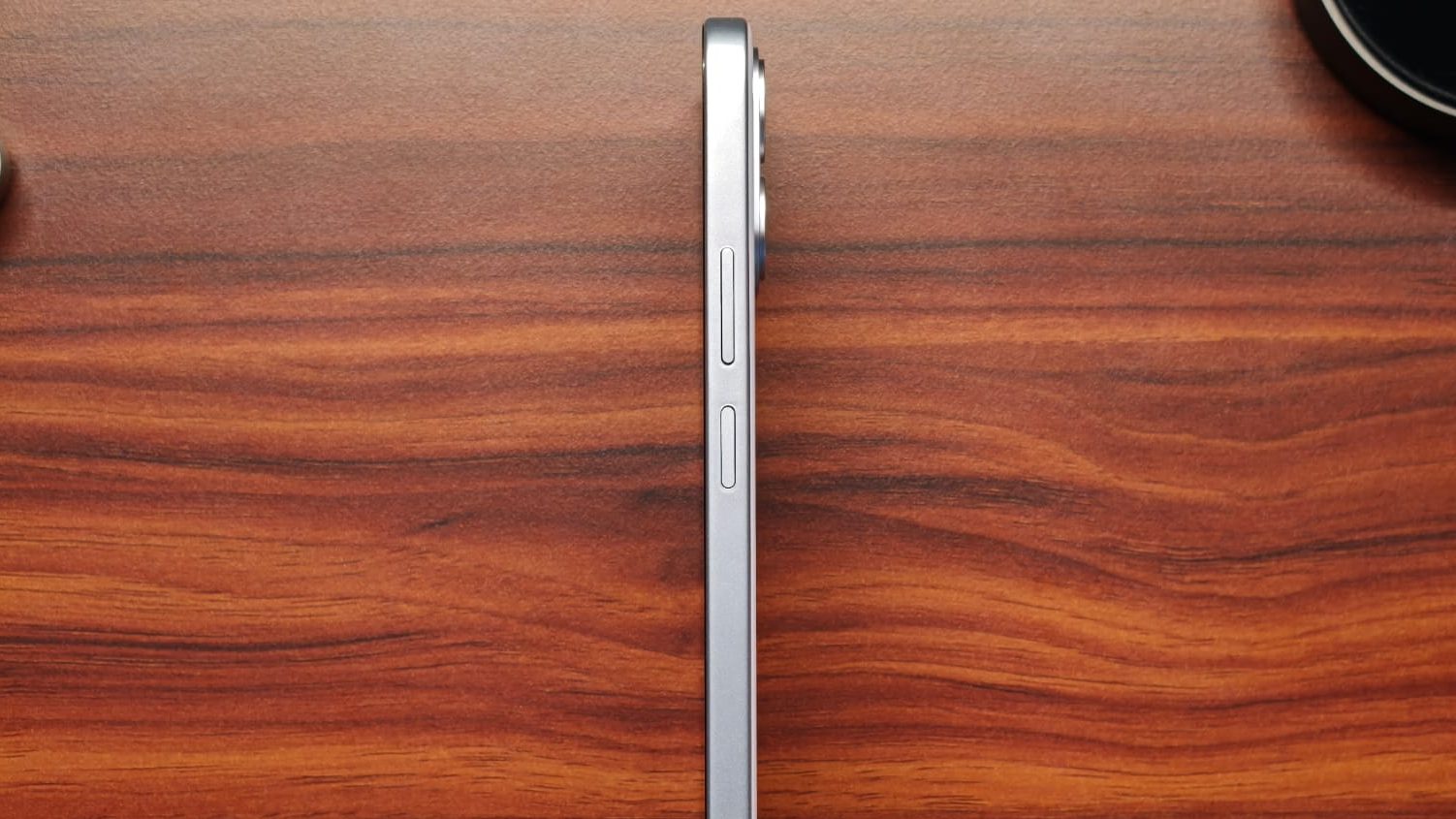
Side profile of the T5x

The frame is plastic, of course, but that’s not necessarily a bad thing. They are flat, which is good, but the corners are rounded, so they do not dig into your palms. The 215g weight is surprisingly low for a 7,000 mAh battery, and the center of gravity is perfectly centered.

Beyond the basics, the vivo T5x features a side-mounted fingerprint scanner that works well with both dirty and wet fingers. Another major selling point of the T5x is the IP ratings. The device supports IP68, IP69, and IP69+. All these fancy terms mean that you can submerge your phone underwater for over 30 minutes. As always, I’d warn against doing so, since water damage isn’t covered under warranty and nobody wants a dead phone.

Display & Speakers

F1 movie trailer running on the t5x

The vivo T5x features a 6.76-inch 2344×1080 FHD+ display with a 120Hz refresh rate. Yes, the panel is LCD, meaning you won’t get the inky deep blacks, but it fared pretty well in my testing. I used the phone both indoors and outdoors, where the 1200-nit peak brightness kept everything legible without me needing to squint. The panel covers about 83% of the NTSC color gamut, which means plenty of accurate colors for watching Netflix or YouTube. Speaking of the speakers, they are decent. I wouldn’t describe the audio quality as full, but it’s okay if you just want to listen to something on the go.

What I’m not a big fan of, though, are the bezels. They are uneven, and the chin at the bottom is fairly large for the price. In other news, vivo hasn’t stated the type of glass used for protection. Fortunately, there’s a pre-installed screen protector, so I’d recommend keeping that on.

Performance
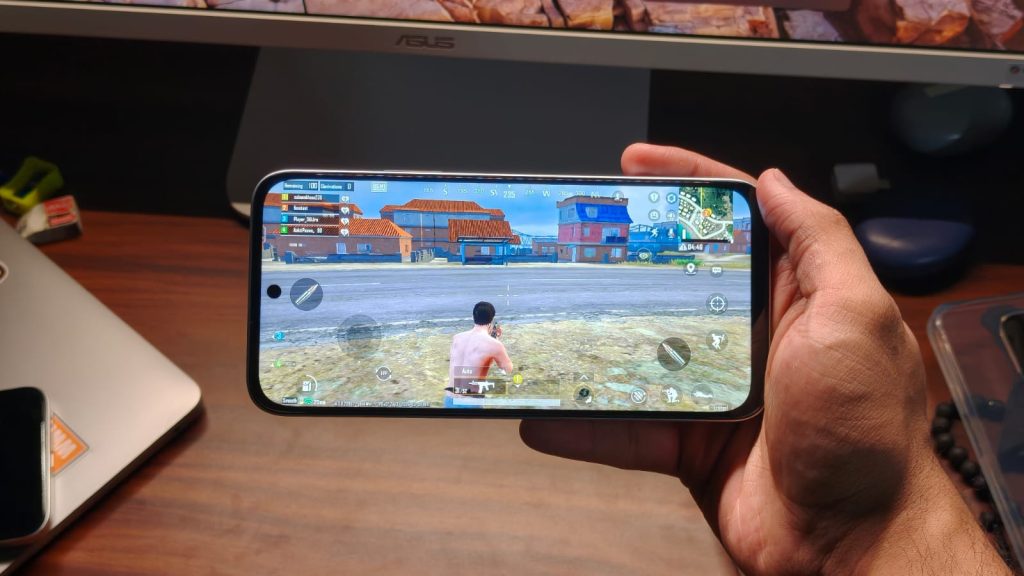
A person playing BGMI

Performance is what makes or breaks the experience on many budget phones. Fortunately, vivo hasn’t fumbled this with the T5x. Under the hood, the T5x houses the MediaTek Dimensity 7400-Turbo processor, an octa-core chip built on the 4-nanometer process technology. Beyond that, my review unit came with 8GB of LPDDR4X RAM and 256GB of UFS 3.1 storage.

I’ve enjoyed using the new OriginOS skin on several vivo phones this year. Interestingly, none of them have been budget smartphones, so I was quite excited to see how vivo has optimized its UI. The answer? Pretty well. The T5x, coupled with the 120Hz refresh rate, breezes through opening and closing multiple apps without a hitch. The animations, while not as smooth as on the X300 Pro, are still fluid enough. The 8GB of RAM is also enough to hold multiple apps in memory. There’s also the AI eraser that helps effectively remove people from the shot.
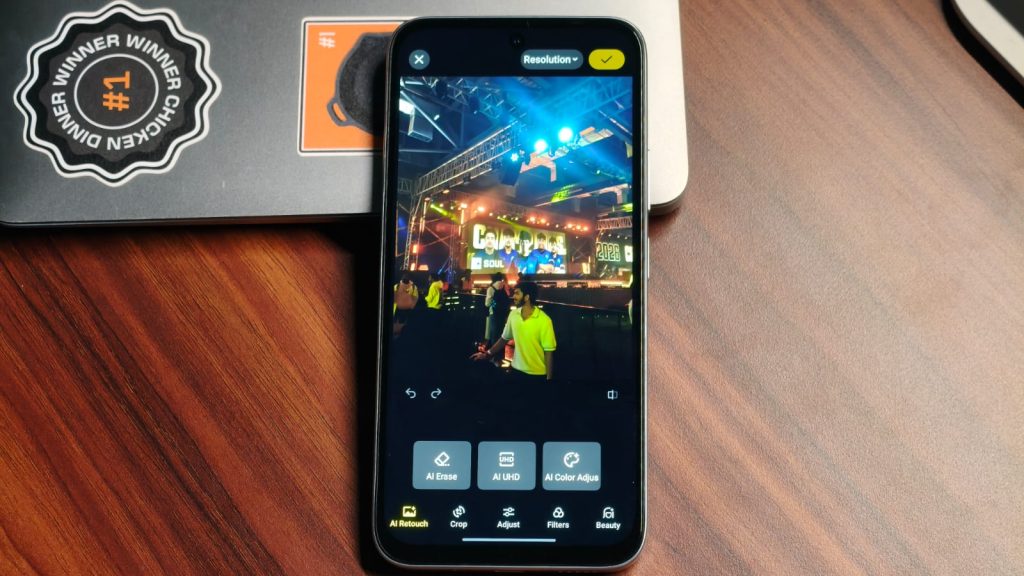
Different AI features

That being said, there are some pre-installed apps and the infamous “Hot Apps” folder, though everything can be removed in a matter of minutes. vivo has promised two years of major Android updates and four years of security patches.

To push the Dimensity 7400-Turbo to the limits, I also ran a series of benchmarks. The T5x scored 1,039 on Geekbench’s single-core test and 2,833 on the multi-core test. On the flip side, in AnTuTu, the device scored 1,189,871 points. But benchmarks rarely tell the full story, so I also ran a series of games, including BGMI. In Smooth+Extreme settings, the phone maintained a steady 60 fps gameplay without dropping frames. The phone also includes gaming-centric features such as 4D vibration (exclusive to BGMI), bypass charging, and the ability to cycle through different performance modes.

Battery & Charging
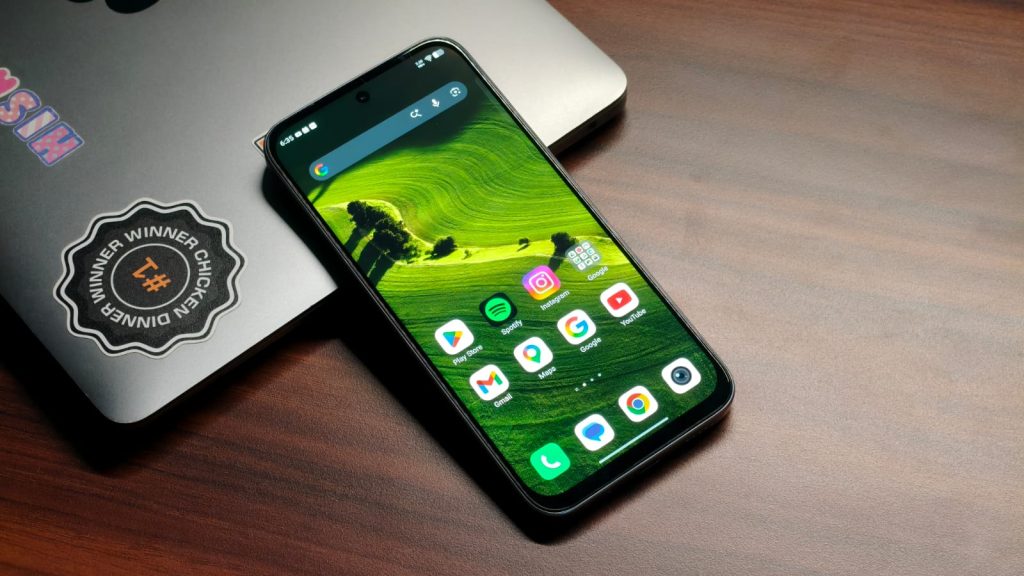
T5x lying on a table

If you need one reason to buy the vivo T5x, it’s probably the mammoth 7,200 mAh battery. It’s a phone that’s impossible to kill in a day. Trust me, I’ve tried. On the first day after I charged the phone to full, I went shopping with my family, where I took about 15-20 photos and left the camera running for more than 30 minutes. After I got home, I played a couple of BGMI games with my friends for an hour, then did a gym session with my Bluetooth earbuds connected to my phone. I ended the day with my favourite activity — doomscrolling on Instagram — and still had about 45% of the charge remaining.

When I ran out of juice, the 44W fast charging came to the rescue. It helped recharge the battery from 20% to 80% in just under an hour, which is plenty fast.

Cameras
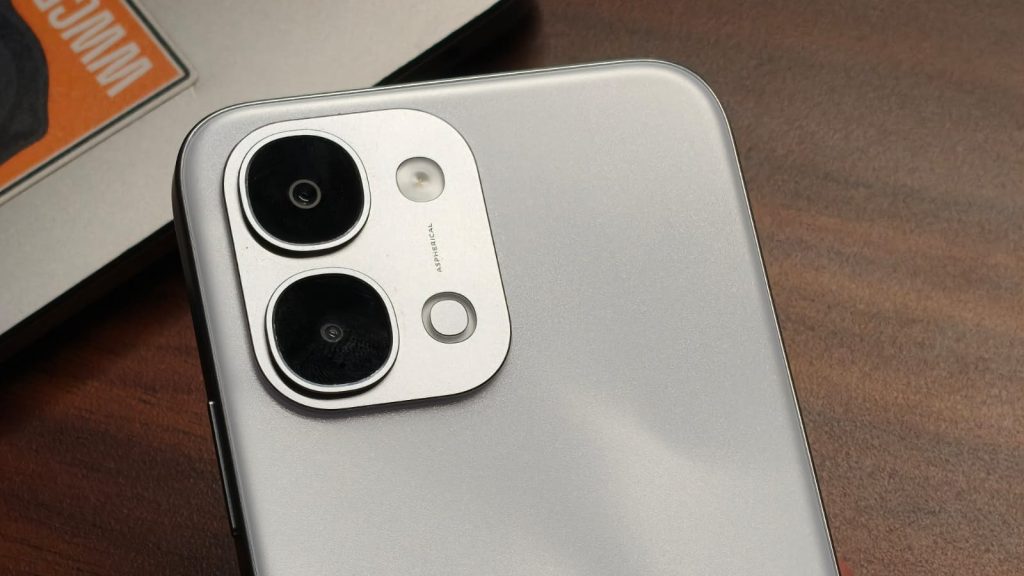
Closeup of the cameras on the T5x

Given the current situation, I honestly didn’t expect much from the T5x’s cameras, since corners have to be cut to accommodate the high RAM prices. But the T5x’s cameras are more than good enough for the price. The camera setup includes a 50MP Sony IMX852 main sensor paired with a 2MP depth sensor. Selfies are handled by a 32MP shooter.

As evident from the samples, the sensor produces pleasing images with ample details, accurate colors, and good-enough HDR in daylight. vivo’s portrait mastery also shines on the T5x, with photos that look aesthetic and fairly accurate edge detection in both daytime and nighttime conditions. There were a few situations where highlights were slightly blown out, but that isn’t a big issue.

Speaking of nighttime, I did notice some noise creeping in when capturing the night sky. There’s also a shutter delay at night, so capturing moving subjects could be an issue. That said, after giving the sensor enough time, the results were detailed enough, and the colors weren’t washed out. Selfies, on the other hand, were solid in both daytime and nighttime scenarios, and I had no complaints. Beyond that, I love the 4K video support on both the front and back cameras. The video quality isn’t the best when compared to more expensive phones, but it’s decent enough to capture a family gathering.

Verdict
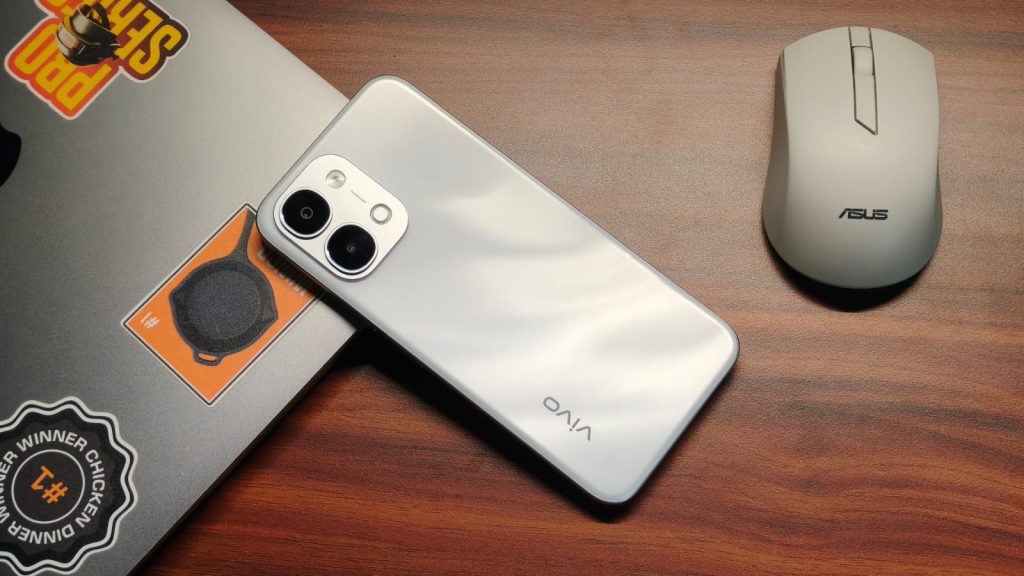
vivo T5x lying on the side of a macbook

At ₹18,999, the vivo T5x surprisingly gets a lot of things right. The design looks great, especially in the silver finish. The display, while not OLED, is serviceable and bright in all conditions, and the performance is more than good enough. Not to mention the stellar battery life that lasts more than a day, and cameras that actually capture good photos. Sure, it’s not all perfect, but given the current market conditions, it’s certainly one of the better budget phones I’ve tested this year. And if you’re shopping in the segment, you should check it out.

Source link
#vivo #T5x #Review #Budget #Phone #Refuses #Die

On top of that, almost immediately after Trump’s announcement, Mizan, an Iranian state news agency, called the president a liar. “Last night, Donald Trump, citing a completely false news story, called on Iran to overturn the death sentences of eight women.” Mizan said that some of the women had already been released and others were facing prison time but not execution, and furthermore said that Tehran had made no concessions — presumably, the status of the women has not changed.

The X account for the Iranian embassy in South Africa, perhaps the most relentless shitposter among Iran’s state-affiliated accounts, was quick to pile on by generating its own set of eight women:

The collage that Trump posted is, at the very least, AI-modified, Mahsa Alimardani, the associate director of the Technology Threats & Opportunities program at WITNESS, told The Verge. But the women themselves are real. The woman in the top right corner of the collage is Bita Hemmati, whose photograph appeared in several news stories in various right-leaning news outlets last week. Hemmati is confirmed to have received a death sentence issued by Branch 26 of the Tehran Revolutionary Court for “operational action for the hostile government of the United States and hostile groups.”

Alimardani named six of the women (Bita Hemmati, Mahboubeh Shabani, Venus Hossein-Nejad, Golnaz Naraghi, Diana Taherabadi, Ghazal Ghalandri), and said that the identities of the final two (said to be Panah Movahedi and Ensieh Nejati) were still unverified. The six verified women participated in protests against the government in January. Aside from Hemmati, none of the other women are reported to have received death sentences.

It’s not surprising that Trump has a careless disregard for the truth; it’s not surprising, either, for the Iranian regime to fudge the details to suit its own narrative, or to make light of real political prisoners in order to dunk on the United States.

The additional wrinkle is that the account mocking Trump for coming to the rescue of “8 AI-generated women” is the very same one that landed South Korean president Lee Jae-myung in hot water when he quoted a misleading labeled video posted by that account. Israeli officials have accused the account of being “well-known for spreading disinformation.” The case of the sketchy Lee Jae-myung quote-post is a story of mingled truth and misinformation, where the post got facts very wrong, but the video — of Israeli Defense Forces soldiers shoving a limp body off a rooftop in Gaza — was real, documenting an event that possibly implicates Israeli forces in a violation of international law.

The case of the eight Iranian protesters also features that same mingling of fact and fiction into a fuzzy distortion that fuels an endless disputation of real human rights violations. Their lives have been reduced to glossy pixels and quote-dunks, the stuff of propaganda and parody. While known liars fight with each other on the internet about who these women are and what will happen to them, they — verifiably six of them, at least — remain real people who exist beyond the Iranian internet blackout.

#Iranian #women #Trump #saved #execution #simultaneously #real #AImanipulatedPolicy,Politics">The Iranian women Trump ‘saved’ from execution are simultaneously real and AI-manipulatedOnly the night before, he had posted on Truth Social about the imminent executions of these women, quoting a screenshot that included a collage of eight glamorously backlit, soft-focus portraits. The photos of the women were immediately accused of being AI-generated. “Trump is begging Iranian leaders to not execute 8 AI-generated women. This is the funniest thing I’ve ever seen,” said one viral X post.On top of that, almost immediately after Trump’s announcement, Mizan, an Iranian state news agency, called the president a liar. “Last night, Donald Trump, citing a completely false news story, called on Iran to overturn the death sentences of eight women.” Mizan said that some of the women had already been released and others were facing prison time but not execution, and furthermore said that Tehran had made no concessions — presumably, the status of the women has not changed.The X account for the Iranian embassy in South Africa, perhaps the most relentless shitposter among Iran’s state-affiliated accounts, was quick to pile on by generating its own set of eight women:The collage that Trump posted is, at the very least, AI-modified, Mahsa Alimardani, the associate director of the Technology Threats & Opportunities program at WITNESS, told The Verge. But the women themselves are real. The woman in the top right corner of the collage is Bita Hemmati, whose photograph appeared in several news stories in various right-leaning news outlets last week. Hemmati is confirmed to have received a death sentence issued by Branch 26 of the Tehran Revolutionary Court for “operational action for the hostile government of the United States and hostile groups.”Alimardani named six of the women (Bita Hemmati, Mahboubeh Shabani, Venus Hossein-Nejad, Golnaz Naraghi, Diana Taherabadi, Ghazal Ghalandri), and said that the identities of the final two (said to be Panah Movahedi and Ensieh Nejati) were still unverified. The six verified women participated in protests against the government in January. Aside from Hemmati, none of the other women are reported to have received death sentences.It’s not surprising that Trump has a careless disregard for the truth; it’s not surprising, either, for the Iranian regime to fudge the details to suit its own narrative, or to make light of real political prisoners in order to dunk on the United States.The additional wrinkle is that the account mocking Trump for coming to the rescue of “8 AI-generated women” is the very same one that landed South Korean president Lee Jae-myung in hot water when he quoted a misleading labeled video posted by that account. Israeli officials have accused the account of being “well-known for spreading disinformation.” The case of the sketchy Lee Jae-myung quote-post is a story of mingled truth and misinformation, where the post got facts very wrong, but the video — of Israeli Defense Forces soldiers shoving a limp body off a rooftop in Gaza — was real, documenting an event that possibly implicates Israeli forces in a violation of international law.The case of the eight Iranian protesters also features that same mingling of fact and fiction into a fuzzy distortion that fuels an endless disputation of real human rights violations. Their lives have been reduced to glossy pixels and quote-dunks, the stuff of propaganda and parody. While known liars fight with each other on the internet about who these women are and what will happen to them, they — verifiably six of them, at least — remain real people who exist beyond the Iranian internet blackout.#Iranian #women #Trump #saved #execution #simultaneously #real #AImanipulatedPolicy,Politics

called the president a liar. “Last night, Donald Trump, citing a completely false news story, called on Iran to overturn the death sentences of eight women.” Mizan said that some of the women had already been released and others were facing prison time but not execution, and furthermore said that Tehran had made no concessions — presumably, the status of the women has not changed.

The X account for the Iranian embassy in South Africa, perhaps the most relentless shitposter among Iran’s state-affiliated accounts, was quick to pile on by generating its own set of eight women:

The collage that Trump posted is, at the very least, AI-modified, Mahsa Alimardani, the associate director of the Technology Threats & Opportunities program at WITNESS, told The Verge. But the women themselves are real. The woman in the top right corner of the collage is Bita Hemmati, whose photograph appeared in several news stories in various right-leaning news outlets last week. Hemmati is confirmed to have received a death sentence issued by Branch 26 of the Tehran Revolutionary Court for “operational action for the hostile government of the United States and hostile groups.”

Alimardani named six of the women (Bita Hemmati, Mahboubeh Shabani, Venus Hossein-Nejad, Golnaz Naraghi, Diana Taherabadi, Ghazal Ghalandri), and said that the identities of the final two (said to be Panah Movahedi and Ensieh Nejati) were still unverified. The six verified women participated in protests against the government in January. Aside from Hemmati, none of the other women are reported to have received death sentences.

It’s not surprising that Trump has a careless disregard for the truth; it’s not surprising, either, for the Iranian regime to fudge the details to suit its own narrative, or to make light of real political prisoners in order to dunk on the United States.

The additional wrinkle is that the account mocking Trump for coming to the rescue of “8 AI-generated women” is the very same one that landed South Korean president Lee Jae-myung in hot water when he quoted a misleading labeled video posted by that account. Israeli officials have accused the account of being “well-known for spreading disinformation.” The case of the sketchy Lee Jae-myung quote-post is a story of mingled truth and misinformation, where the post got facts very wrong, but the video — of Israeli Defense Forces soldiers shoving a limp body off a rooftop in Gaza — was real, documenting an event that possibly implicates Israeli forces in a violation of international law.

The case of the eight Iranian protesters also features that same mingling of fact and fiction into a fuzzy distortion that fuels an endless disputation of real human rights violations. Their lives have been reduced to glossy pixels and quote-dunks, the stuff of propaganda and parody. While known liars fight with each other on the internet about who these women are and what will happen to them, they — verifiably six of them, at least — remain real people who exist beyond the Iranian internet blackout.

#Iranian #women #Trump #saved #execution #simultaneously #real #AImanipulatedPolicy,Politics">The Iranian women Trump ‘saved’ from execution are simultaneously real and AI-manipulated

Only the night before, he had posted on Truth Social about the imminent executions of these women, quoting a screenshot that included a collage of eight glamorously backlit, soft-focus portraits. The photos of the women were immediately accused of being AI-generated. “Trump is begging Iranian leaders to not execute 8 AI-generated women. This is the funniest thing I’ve ever seen,” said one viral X post.

On top of that, almost immediately after Trump’s announcement, Mizan, an Iranian state news agency, called the president a liar. “Last night, Donald Trump, citing a completely false news story, called on Iran to overturn the death sentences of eight women.” Mizan said that some of the women had already been released and others were facing prison time but not execution, and furthermore said that Tehran had made no concessions — presumably, the status of the women has not changed.

The X account for the Iranian embassy in South Africa, perhaps the most relentless shitposter among Iran’s state-affiliated accounts, was quick to pile on by generating its own set of eight women:

The collage that Trump posted is, at the very least, AI-modified, Mahsa Alimardani, the associate director of the Technology Threats & Opportunities program at WITNESS, told The Verge. But the women themselves are real. The woman in the top right corner of the collage is Bita Hemmati, whose photograph appeared in several news stories in various right-leaning news outlets last week. Hemmati is confirmed to have received a death sentence issued by Branch 26 of the Tehran Revolutionary Court for “operational action for the hostile government of the United States and hostile groups.”

Alimardani named six of the women (Bita Hemmati, Mahboubeh Shabani, Venus Hossein-Nejad, Golnaz Naraghi, Diana Taherabadi, Ghazal Ghalandri), and said that the identities of the final two (said to be Panah Movahedi and Ensieh Nejati) were still unverified. The six verified women participated in protests against the government in January. Aside from Hemmati, none of the other women are reported to have received death sentences.

It’s not surprising that Trump has a careless disregard for the truth; it’s not surprising, either, for the Iranian regime to fudge the details to suit its own narrative, or to make light of real political prisoners in order to dunk on the United States.

The additional wrinkle is that the account mocking Trump for coming to the rescue of “8 AI-generated women” is the very same one that landed South Korean president Lee Jae-myung in hot water when he quoted a misleading labeled video posted by that account. Israeli officials have accused the account of being “well-known for spreading disinformation.” The case of the sketchy Lee Jae-myung quote-post is a story of mingled truth and misinformation, where the post got facts very wrong, but the video — of Israeli Defense Forces soldiers shoving a limp body off a rooftop in Gaza — was real, documenting an event that possibly implicates Israeli forces in a violation of international law.

The case of the eight Iranian protesters also features that same mingling of fact and fiction into a fuzzy distortion that fuels an endless disputation of real human rights violations. Their lives have been reduced to glossy pixels and quote-dunks, the stuff of propaganda and parody. While known liars fight with each other on the internet about who these women are and what will happen to them, they — verifiably six of them, at least — remain real people who exist beyond the Iranian internet blackout.

#Iranian #women #Trump #saved #execution #simultaneously #real #AImanipulatedPolicy,Politics
Tesla CEO Elon Musk kicked off the company’s first-quarter earnings call with a monetary heads-up — or depending on the mindset of the investor, a warning. Tesla’s capital expenditures will skyrocket to $25 billion in 2026, far outpacing its previous annual spend as it races to stay ahead of the competition and transitions to an AI and robotics company, according to its first-quarter earnings report.

That figure, which covers what Tesla plans to spend on physical assets outside of its day-to-day operating expenditures, is three times higher than its annual capex budget in previous years. For comparison, Tesla’s annual capital expenditures were $8.5 billion in 2025, $11.3 billion in 2024, and $8.9 billion in 2023.

Tesla had announced in January that it expected capital expenditures to be in excess of $20 billion in 2026, already a substantial increase meant to cover its AI initiatives, including investments in compute infrastructure and data centers, and the expansion and ramp of its manufacturing and R&D production lines, among other items.

This $5 billion uptick suggests these initiatives will require more money than previously planned. But so far, its quarterly capital expenditure, which was $2.5 billion, was in line with previous quarters, the report shows.

Of course, Musk views this as a positive, a sentiment many other shareholders will likely also share since it positions Tesla as a company investing in its future, namely AI and robotics.

“With 2026 we’re going to be substantially increasing our investments in the future,” Musk said in the earnings call Wednesday. “So you should expect to see significant, a very significant increase in capital expenditures, but I think well justified for a substantially increased future revenue stream.”

Musk was quick to note that Tesla isn’t the only company raising its capital expenditure budget. Amazon, for instance, has projected $200 billion in capital expenditures in 2026, across “AI, chips, robotics, and low earth orbit satellites.” Google is slated to spend between $175 billion and $185 billion in capital expenditures in 2026, up from $91.4 billion the previous year.

Techcrunch event

San Francisco, CA | October 13-15, 2026

The increase in Tesla’s capital expenditures is linked to Musk’s desire and ambition to evolve the company beyond building and selling EVs, solar, and energy storage.

Some of the capex spend will go toward Tesla’s core technologies such as its battery and AI software, according to Musk. The company plans to invest in AI training, chip design, and “laying the groundwork” for increasing manufacturing production, as well as invest in its robotaxi operations and its new semiconductor research fab in Austin.

The Fremont, California, factory will likely suck up some of that capital as the company ends production of the Tesla Model S and Model X and begins building its Optimus humanoid robot at scale. The company said Wednesday it has also cleared ground outside its Austin factory for a dedicated Optimus manufacturing facility.

Tesla plans to increase its internal production of Optimus for testing and then “probably” make Optimus “useful outside of Tesla sometime next year,” he said.

Tesla is also putting money toward strengthening its supply chain “across the board,” Musk said, adding that this covers batteries, energy, and AI silicon.

All of this spending, which CFO Vaibhav Taneja said will last a couple of years, comes with a literal cost. The company — which enjoyed a brief 4% share price bump due, in part, to an unexpected $1.4 billion in free cash flow — will head into negative territory later this year, Taneja said.

Tesla shares erased their gains in after-hours trading as Musk and Taneja laid out these plans to investors. Still, Tesla is sitting on loads of cash. At the end of the first quarter, Tesla reported $44.7 billion in cash, cash equivalents, and short-term investments.

“While this may seem like a lot, and we will have the impact of negative free cash flow for the rest of the year, we believe this is the right strategy to position the company for the next era,” Taneja said.

When you purchase through links in our articles, we may earn a small commission. This doesn’t affect our editorial independence.

#Tesla #increased #spending #plan #25B #heres #money #TechCrunchElon Musk,Tesla">Tesla just increased its spending plan to B — here’s where the money is going | TechCrunch
Tesla CEO Elon Musk kicked off the company’s first-quarter earnings call with a monetary heads-up — or depending on the mindset of the investor, a warning. Tesla’s capital expenditures will skyrocket to  billion in 2026, far outpacing its previous annual spend as it races to stay ahead of the competition and transitions to an AI and robotics company, according to its first-quarter earnings report.

That figure, which covers what Tesla plans to spend on physical assets outside of its day-to-day operating expenditures, is three times higher than its annual capex budget in previous years. For comparison, Tesla’s annual capital expenditures were .5 billion in 2025, .3 billion in 2024, and .9 billion in 2023. 


Tesla had announced in January that it expected capital expenditures to be in excess of  billion in 2026, already a substantial increase meant to cover its AI initiatives, including investments in compute infrastructure and data centers, and the expansion and ramp of its manufacturing and R&D production lines, among other items. 

This  billion uptick suggests these initiatives will require more money than previously planned. But so far, its quarterly capital expenditure, which was .5 billion, was in line with previous quarters, the report shows.

Of course, Musk views this as a positive, a sentiment many other shareholders will likely also share since it positions Tesla as a company investing in its future, namely AI and robotics. 

“With 2026 we’re going to be substantially increasing our investments in the future,” Musk said in the earnings call Wednesday. “So you should expect to see significant, a very significant increase in capital expenditures, but I think well justified for a substantially increased future revenue stream.”

Musk was quick to note that Tesla isn’t the only company raising its capital expenditure budget. Amazon, for instance, has projected 0 billion in capital expenditures in 2026, across “AI, chips, robotics, and low earth orbit satellites.” Google is slated to spend between 5 billion and 5 billion in capital expenditures in 2026, up from .4 billion the previous year.


		Techcrunch event


									San Francisco, CA
													|
													October 13-15, 2026


The increase in Tesla’s capital expenditures is linked to Musk’s desire and ambition to evolve the company beyond building and selling EVs, solar, and energy storage. 

Some of the capex spend will go toward Tesla’s core technologies such as its battery and AI software, according to Musk. The company plans to invest in AI training, chip design, and “laying the groundwork” for increasing manufacturing production, as well as invest in its robotaxi operations and its new semiconductor research fab in Austin.

The Fremont, California, factory will likely suck up some of that capital as the company ends production of the Tesla Model S and Model X and begins building its Optimus humanoid robot at scale. The company said Wednesday it has also cleared ground outside its Austin factory for a dedicated Optimus manufacturing facility.


Tesla plans to increase its internal production of Optimus for testing and then “probably” make Optimus “useful outside of Tesla sometime next year,” he said. 

Tesla is also putting money toward strengthening its supply chain “across the board,” Musk said, adding that this covers batteries, energy, and AI silicon.

All of this spending, which CFO Vaibhav Taneja said will last a couple of years, comes with a literal cost. The company — which enjoyed a brief 4% share price bump due, in part, to an unexpected .4 billion in free cash flow — will head into negative territory later this year, Taneja said.

Tesla shares erased their gains in after-hours trading as Musk and Taneja laid out these plans to investors. Still, Tesla is sitting on loads of cash. At the end of the first quarter, Tesla reported .7 billion in cash, cash equivalents, and short-term investments.

“While this may seem like a lot, and we will have the impact of negative free cash flow for the rest of the year, we believe this is the right strategy to position the company for the next era,”  Taneja said. 
When you purchase through links in our articles, we may earn a small commission. This doesn’t affect our editorial independence.#Tesla #increased #spending #plan #25B #heres #money #TechCrunchElon Musk,Tesla

first-quarter earnings report.

That figure, which covers what Tesla plans to spend on physical assets outside of its day-to-day operating expenditures, is three times higher than its annual capex budget in previous years. For comparison, Tesla’s annual capital expenditures were $8.5 billion in 2025, $11.3 billion in 2024, and $8.9 billion in 2023.

Tesla had announced in January that it expected capital expenditures to be in excess of $20 billion in 2026, already a substantial increase meant to cover its AI initiatives, including investments in compute infrastructure and data centers, and the expansion and ramp of its manufacturing and R&D production lines, among other items.

This $5 billion uptick suggests these initiatives will require more money than previously planned. But so far, its quarterly capital expenditure, which was $2.5 billion, was in line with previous quarters, the report shows.

Of course, Musk views this as a positive, a sentiment many other shareholders will likely also share since it positions Tesla as a company investing in its future, namely AI and robotics.

“With 2026 we’re going to be substantially increasing our investments in the future,” Musk said in the earnings call Wednesday. “So you should expect to see significant, a very significant increase in capital expenditures, but I think well justified for a substantially increased future revenue stream.”

Musk was quick to note that Tesla isn’t the only company raising its capital expenditure budget. Amazon, for instance, has projected $200 billion in capital expenditures in 2026, across “AI, chips, robotics, and low earth orbit satellites.” Google is slated to spend between $175 billion and $185 billion in capital expenditures in 2026, up from $91.4 billion the previous year.

Techcrunch event

San Francisco, CA | October 13-15, 2026

The increase in Tesla’s capital expenditures is linked to Musk’s desire and ambition to evolve the company beyond building and selling EVs, solar, and energy storage.

Some of the capex spend will go toward Tesla’s core technologies such as its battery and AI software, according to Musk. The company plans to invest in AI training, chip design, and “laying the groundwork” for increasing manufacturing production, as well as invest in its robotaxi operations and its new semiconductor research fab in Austin.

The Fremont, California, factory will likely suck up some of that capital as the company ends production of the Tesla Model S and Model X and begins building its Optimus humanoid robot at scale. The company said Wednesday it has also cleared ground outside its Austin factory for a dedicated Optimus manufacturing facility.

Tesla plans to increase its internal production of Optimus for testing and then “probably” make Optimus “useful outside of Tesla sometime next year,” he said.

Tesla is also putting money toward strengthening its supply chain “across the board,” Musk said, adding that this covers batteries, energy, and AI silicon.

All of this spending, which CFO Vaibhav Taneja said will last a couple of years, comes with a literal cost. The company — which enjoyed a brief 4% share price bump due, in part, to an unexpected $1.4 billion in free cash flow — will head into negative territory later this year, Taneja said.

Tesla shares erased their gains in after-hours trading as Musk and Taneja laid out these plans to investors. Still, Tesla is sitting on loads of cash. At the end of the first quarter, Tesla reported $44.7 billion in cash, cash equivalents, and short-term investments.

“While this may seem like a lot, and we will have the impact of negative free cash flow for the rest of the year, we believe this is the right strategy to position the company for the next era,” Taneja said.

When you purchase through links in our articles, we may earn a small commission. This doesn’t affect our editorial independence.

#Tesla #increased #spending #plan #25B #heres #money #TechCrunchElon Musk,Tesla">Tesla just increased its spending plan to $25B — here’s where the money is going | TechCrunch

Tesla CEO Elon Musk kicked off the company’s first-quarter earnings call with a monetary heads-up — or depending on the mindset of the investor, a warning. Tesla’s capital expenditures will skyrocket to $25 billion in 2026, far outpacing its previous annual spend as it races to stay ahead of the competition and transitions to an AI and robotics company, according to its first-quarter earnings report.

That figure, which covers what Tesla plans to spend on physical assets outside of its day-to-day operating expenditures, is three times higher than its annual capex budget in previous years. For comparison, Tesla’s annual capital expenditures were $8.5 billion in 2025, $11.3 billion in 2024, and $8.9 billion in 2023.

Tesla had announced in January that it expected capital expenditures to be in excess of $20 billion in 2026, already a substantial increase meant to cover its AI initiatives, including investments in compute infrastructure and data centers, and the expansion and ramp of its manufacturing and R&D production lines, among other items.

This $5 billion uptick suggests these initiatives will require more money than previously planned. But so far, its quarterly capital expenditure, which was $2.5 billion, was in line with previous quarters, the report shows.

Of course, Musk views this as a positive, a sentiment many other shareholders will likely also share since it positions Tesla as a company investing in its future, namely AI and robotics.

“With 2026 we’re going to be substantially increasing our investments in the future,” Musk said in the earnings call Wednesday. “So you should expect to see significant, a very significant increase in capital expenditures, but I think well justified for a substantially increased future revenue stream.”

Musk was quick to note that Tesla isn’t the only company raising its capital expenditure budget. Amazon, for instance, has projected $200 billion in capital expenditures in 2026, across “AI, chips, robotics, and low earth orbit satellites.” Google is slated to spend between $175 billion and $185 billion in capital expenditures in 2026, up from $91.4 billion the previous year.

Techcrunch event

San Francisco, CA | October 13-15, 2026

The increase in Tesla’s capital expenditures is linked to Musk’s desire and ambition to evolve the company beyond building and selling EVs, solar, and energy storage.

Some of the capex spend will go toward Tesla’s core technologies such as its battery and AI software, according to Musk. The company plans to invest in AI training, chip design, and “laying the groundwork” for increasing manufacturing production, as well as invest in its robotaxi operations and its new semiconductor research fab in Austin.

The Fremont, California, factory will likely suck up some of that capital as the company ends production of the Tesla Model S and Model X and begins building its Optimus humanoid robot at scale. The company said Wednesday it has also cleared ground outside its Austin factory for a dedicated Optimus manufacturing facility.

Tesla plans to increase its internal production of Optimus for testing and then “probably” make Optimus “useful outside of Tesla sometime next year,” he said.

Tesla is also putting money toward strengthening its supply chain “across the board,” Musk said, adding that this covers batteries, energy, and AI silicon.

All of this spending, which CFO Vaibhav Taneja said will last a couple of years, comes with a literal cost. The company — which enjoyed a brief 4% share price bump due, in part, to an unexpected $1.4 billion in free cash flow — will head into negative territory later this year, Taneja said.

Tesla shares erased their gains in after-hours trading as Musk and Taneja laid out these plans to investors. Still, Tesla is sitting on loads of cash. At the end of the first quarter, Tesla reported $44.7 billion in cash, cash equivalents, and short-term investments.

“While this may seem like a lot, and we will have the impact of negative free cash flow for the rest of the year, we believe this is the right strategy to position the company for the next era,” Taneja said.

When you purchase through links in our articles, we may earn a small commission. This doesn’t affect our editorial independence.

#Tesla #increased #spending #plan #25B #heres #money #TechCrunchElon Musk,Tesla

Post Comment