×
IPL 2026: Wide yorkers or hard lengths? CSK might have found a template to solve death-over issues  In the IPL 2026 game against Delhi Capitals on Saturday, at the M.A. Chidambaram Stadium in Chennai, as Anshul Kamboj ran in to bowl the 18th over from around the wicket, aiming for wide yorkers, it was hard not to think back to Chennai Super Kings’ previous game against Royal Challengers Bengaluru, where Tim David had taken apart the death overs.The aftermath of that defeat had triggered comparisons across leagues, pointing to a familiar pattern in the Super Kings setup: a one-dimensional death-overs plan built around wide yorkers from around the wicket, seen across the SA20, MLC and IPL.The idea is simple. Keep the ball out of the batter’s reach. But it is also a narrow-margin method. Miss even slightly, and the same delivery becomes a scoring option, as RCB showed.After losing Nathan Ellis in the pre-season, CSK’s approach took shape quickly. Matt Henry and Khaleel Ahmed were tasked with making early inroads, using seam movement and inswing. The middle overs were about control, before returning to wide yorkers at the death, regardless of personnel.The returns were poor. Henry leaked runs at 13 an over across three games, Noor Ahmed went wicketless till the contest against DC, and the predictability at the death allowed RCB to score over 85 in the last five overs, including a 30-run over off Jamie Overton. Punjab Kings had earlier chased down 200-plus in Chepauk without much resistance.The game against Delhi, however, hinted at a shift. CSK brought in Akeal Hosein for Henry and handed a debut to the left-armer Gurjapneet Singh.What went right for CSK’s bowling against DC?Set 213 after a Sanju Samson hundred, Delhi was off the block in a jiffy, racing to 61 in 4.5 overs.The first check came through Khaleel, who removed KL Rahul, with Pathum Nissanka following soon after. At 66/2 at the end of the PowerPlay, the chase was still on track.The expected move was Noor in the seventh over, in line with CSK’s usual pattern. Instead, Ruturaj Gaikwad turned to Gurjapneet, reading the assistance for seam off the red soil surface. The debutant responded immediately, striking with his first ball.ALSO READ | Phone in IPL dugout — RR manager Bhinder under scrutiny from Anti-Corruption UnitMore than the wicket, it was the method that stood out. Gurjapneet went hard into the pitch, using chest-high, bodyline deliveries to push David Miller onto the back foot. This was not containment. It was an attempt to disrupt.With two new batters at the crease, Overton followed with a similar approach. Having been expensive earlier while chasing wide yorkers, he shifted back to his strengths, hitting the deck at pace and extracting uncomfortable bounce. Strokeplay became restrictive, and the pressure told. Overton finished with 4/18, breaking the chase open.At the death, there was also a subtle adjustment. Kamboj ran in with a field set for the wide yorker, but targeted middle stump instead. The line change, combined with the visual cue of the field, forced indecision. Execution, rather than variation alone, made the difference.This time, the plan held.Whether this marks a lasting shift is still uncertain. But for the first time this season, CSK’s bowling looked less like a fixed template and more like a set of options.Published on Apr 12, 2026  #IPL #Wide #yorkers #hard #lengths #CSK #template #solve #deathover #issues

IPL 2026: Wide yorkers or hard lengths? CSK might have found a template to solve death-over issues

In the IPL 2026 game against Delhi Capitals on Saturday, at the M.A. Chidambaram Stadium in Chennai, as Anshul Kamboj ran in to bowl the 18th over from around the wicket, aiming for wide yorkers, it was hard not to think back to Chennai Super Kings’ previous game against Royal Challengers Bengaluru, where Tim David had taken apart the death overs.

The aftermath of that defeat had triggered comparisons across leagues, pointing to a familiar pattern in the Super Kings setup: a one-dimensional death-overs plan built around wide yorkers from around the wicket, seen across the SA20, MLC and IPL.

The idea is simple. Keep the ball out of the batter’s reach. But it is also a narrow-margin method. Miss even slightly, and the same delivery becomes a scoring option, as RCB showed.

After losing Nathan Ellis in the pre-season, CSK’s approach took shape quickly. Matt Henry and Khaleel Ahmed were tasked with making early inroads, using seam movement and inswing. The middle overs were about control, before returning to wide yorkers at the death, regardless of personnel.

The returns were poor. Henry leaked runs at 13 an over across three games, Noor Ahmed went wicketless till the contest against DC, and the predictability at the death allowed RCB to score over 85 in the last five overs, including a 30-run over off Jamie Overton. Punjab Kings had earlier chased down 200-plus in Chepauk without much resistance.

The game against Delhi, however, hinted at a shift. CSK brought in Akeal Hosein for Henry and handed a debut to the left-armer Gurjapneet Singh.

What went right for CSK’s bowling against DC?

Set 213 after a Sanju Samson hundred, Delhi was off the block in a jiffy, racing to 61 in 4.5 overs.

The first check came through Khaleel, who removed KL Rahul, with Pathum Nissanka following soon after. At 66/2 at the end of the PowerPlay, the chase was still on track.

The expected move was Noor in the seventh over, in line with CSK’s usual pattern. Instead, Ruturaj Gaikwad turned to Gurjapneet, reading the assistance for seam off the red soil surface. The debutant responded immediately, striking with his first ball.

ALSO READ | Phone in IPL dugout — RR manager Bhinder under scrutiny from Anti-Corruption Unit

More than the wicket, it was the method that stood out. Gurjapneet went hard into the pitch, using chest-high, bodyline deliveries to push David Miller onto the back foot. This was not containment. It was an attempt to disrupt.

With two new batters at the crease, Overton followed with a similar approach. Having been expensive earlier while chasing wide yorkers, he shifted back to his strengths, hitting the deck at pace and extracting uncomfortable bounce. Strokeplay became restrictive, and the pressure told. Overton finished with 4/18, breaking the chase open.

At the death, there was also a subtle adjustment. Kamboj ran in with a field set for the wide yorker, but targeted middle stump instead. The line change, combined with the visual cue of the field, forced indecision. Execution, rather than variation alone, made the difference.

This time, the plan held.

Whether this marks a lasting shift is still uncertain. But for the first time this season, CSK’s bowling looked less like a fixed template and more like a set of options.

Published on Apr 12, 2026
#IPL #Wide #yorkers #hard #lengths #CSK #template #solve #deathover #issues

In the IPL 2026 game against Delhi Capitals on Saturday, at the M.A. Chidambaram Stadium in Chennai, as Anshul Kamboj ran in to bowl the 18th over from around the wicket, aiming for wide yorkers, it was hard not to think back to Chennai Super Kings’ previous game against Royal Challengers Bengaluru, where Tim David had taken apart the death overs.

The aftermath of that defeat had triggered comparisons across leagues, pointing to a familiar pattern in the Super Kings setup: a one-dimensional death-overs plan built around wide yorkers from around the wicket, seen across the SA20, MLC and IPL.

The idea is simple. Keep the ball out of the batter’s reach. But it is also a narrow-margin method. Miss even slightly, and the same delivery becomes a scoring option, as RCB showed.

After losing Nathan Ellis in the pre-season, CSK’s approach took shape quickly. Matt Henry and Khaleel Ahmed were tasked with making early inroads, using seam movement and inswing. The middle overs were about control, before returning to wide yorkers at the death, regardless of personnel.

The returns were poor. Henry leaked runs at 13 an over across three games, Noor Ahmed went wicketless till the contest against DC, and the predictability at the death allowed RCB to score over 85 in the last five overs, including a 30-run over off Jamie Overton. Punjab Kings had earlier chased down 200-plus in Chepauk without much resistance.

The game against Delhi, however, hinted at a shift. CSK brought in Akeal Hosein for Henry and handed a debut to the left-armer Gurjapneet Singh.

What went right for CSK’s bowling against DC?

Set 213 after a Sanju Samson hundred, Delhi was off the block in a jiffy, racing to 61 in 4.5 overs.

The first check came through Khaleel, who removed KL Rahul, with Pathum Nissanka following soon after. At 66/2 at the end of the PowerPlay, the chase was still on track.

The expected move was Noor in the seventh over, in line with CSK’s usual pattern. Instead, Ruturaj Gaikwad turned to Gurjapneet, reading the assistance for seam off the red soil surface. The debutant responded immediately, striking with his first ball.

ALSO READ | Phone in IPL dugout — RR manager Bhinder under scrutiny from Anti-Corruption Unit

More than the wicket, it was the method that stood out. Gurjapneet went hard into the pitch, using chest-high, bodyline deliveries to push David Miller onto the back foot. This was not containment. It was an attempt to disrupt.

With two new batters at the crease, Overton followed with a similar approach. Having been expensive earlier while chasing wide yorkers, he shifted back to his strengths, hitting the deck at pace and extracting uncomfortable bounce. Strokeplay became restrictive, and the pressure told. Overton finished with 4/18, breaking the chase open.

At the death, there was also a subtle adjustment. Kamboj ran in with a field set for the wide yorker, but targeted middle stump instead. The line change, combined with the visual cue of the field, forced indecision. Execution, rather than variation alone, made the difference.

This time, the plan held.

Whether this marks a lasting shift is still uncertain. But for the first time this season, CSK’s bowling looked less like a fixed template and more like a set of options.

Published on Apr 12, 2026

Source link
#IPL #Wide #yorkers #hard #lengths #CSK #template #solve #deathover #issues

When I arrived to cover the Minnesota Vikings for the St. Paul Pioneer Press in 2000, it was clear I was dealing with a star-studded roster.

The team boasted future Pro Football Hall of Famers; wide receivers Cris Carter and Randy Moss and defensive tackle John Randle. Plus, there were a ton of other stars including quarterback Daunte Culpepper, center Matt Birk and running back Robert Smith. The Vikings were loaded with star power.

The talent around the team wasn’t relegated simply to the roster, however.

That summer I first laid my eyes on a 16-year-old high school junior named Larry Fitzgerald Jr. The son of a local media member and close friend of Vikings’ head coach Dennis Green, Little Fitzy was a ball boy during training camp and on game days. It turns out, Larry Fitzgerald Jr. is very likely the most famous former NFL ball boy in history.

On reporting date, fellow reporter Kevin Seifert pointed out Fitzgerald to me and said “that’s a bad man.” Seifert didn’t say that about any of the actual Vikings that day.

Fitzgerald was already known as the best Minnesota high school prospect in years and he was considered one of the best high school players in the country. Seifert told me the buzz was that the kid was, no doubt, headed to the NFL in a half decade or so. Seifert was on the money. I’m not sure the Hall of Fame was mentioned or not.

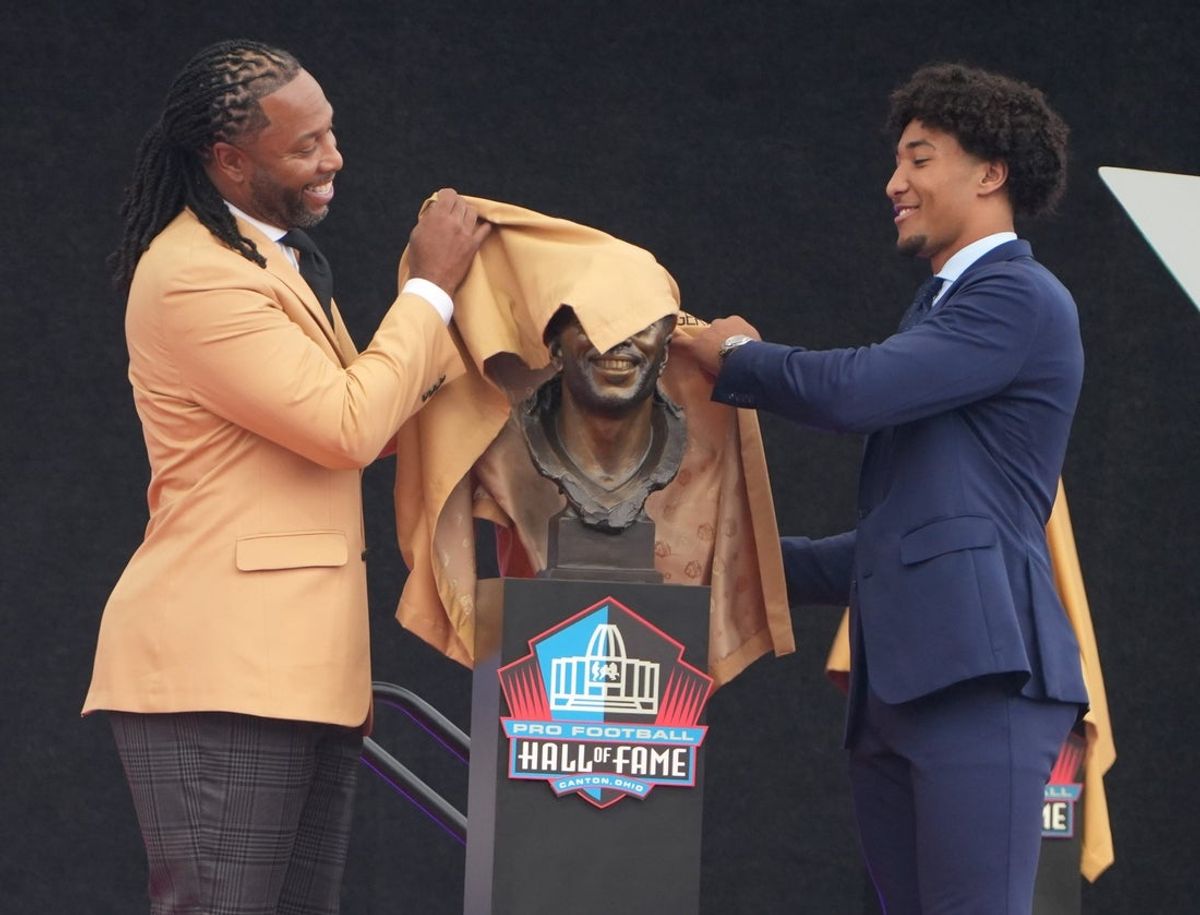
But this weekend of course, that’s exactly where Little Fitzy is headed. He will be enshrined into the Pro Football Hall of Fame in Canton, Ohio, on Saturday as a first-ballot Hall of Famer.

Fitzgerald will be remembered as one of the best and most productive wide receivers in league history after an incredible 17-season career with the Arizona Cardinals.

I have a ton of memories of being around Fitzgerald, but there’s one that stands out among them all.

One day after training camp, a nameless Vikings’ wide receiver camp body was getting extra work on a JUGS machine, catching balls. He was being tutored by Fitzgerald, who was showing this player how to properly approach the incoming ball. This was a child instructing a grown man an NFL team deemed good enough to attend training camp.

Larry Fitzgerald Jr. was special even back then.

In addition to his incredible natural football ability, Larry Fitzgerald Jr. stood out for his politeness and good nature. You could tell he was a good kid from the first time you met him.

There was no I’m-going-to-be-a-star attitude. He was genuine and he worked his tail off with the rest of the ball boys. There was no entitlement. It was as if he was using his time around an NFL camp as an internship for his future. He passed with flying colors.

I’ve always cherished following his career from his days at Pittsburgh in college to his days of dominating the NFL and I’ve enjoyed running into him over the years now and again.

Enjoy Canton, Little Fitzy, you’ve earned it.

#Larry #Fitzgeralds #Hall #Fame #induction #years #making">Larry Fitzgerald’s Hall of Fame induction is 25 years in the making  When I arrived to cover the Minnesota Vikings for the St. Paul Pioneer Press in 2000, it was clear I was dealing with a star-studded roster.The team boasted future Pro Football Hall of Famers; wide receivers Cris Carter and Randy Moss and defensive tackle John Randle. Plus, there were a ton of other stars including quarterback Daunte Culpepper, center Matt Birk and running back Robert Smith. The Vikings were loaded with star power.The talent around the team wasn’t relegated simply to the roster, however.That summer I first laid my eyes on a 16-year-old high school junior named Larry Fitzgerald Jr. The son of a local media member and close friend of Vikings’ head coach Dennis Green, Little Fitzy was a ball boy during training camp and on game days. It turns out, Larry Fitzgerald Jr. is very likely the most famous former NFL ball boy in history.On reporting date, fellow reporter Kevin Seifert pointed out Fitzgerald to me and said “that’s a bad man.” Seifert didn’t say that about any of the actual Vikings that day.Fitzgerald was already known as the best Minnesota high school prospect in years and he was considered one of the best high school players in the country. Seifert told me the buzz was that the kid was, no doubt, headed to the NFL in a half decade or so. Seifert was on the money. I’m not sure the Hall of Fame was mentioned or not.But this weekend of course, that’s exactly where Little Fitzy is headed. He will be enshrined into the Pro Football Hall of Fame in Canton, Ohio, on Saturday as a first-ballot Hall of Famer.Fitzgerald will be remembered as one of the best and most productive wide receivers in league history after an incredible 17-season career with the Arizona Cardinals.I have a ton of memories of being around Fitzgerald, but there’s one that stands out among them all.One day after training camp, a nameless Vikings’ wide receiver camp body was getting extra work on a JUGS machine, catching balls. He was being tutored by Fitzgerald, who was showing this player how to properly approach the incoming ball. This was a child instructing a grown man an NFL team deemed good enough to attend training camp.Larry Fitzgerald Jr. was special even back then.In addition to his incredible natural football ability, Larry Fitzgerald Jr. stood out for his politeness and good nature. You could tell he was a good kid from the first time you met him.There was no I’m-going-to-be-a-star attitude. He was genuine and he worked his tail off with the rest of the ball boys. There was no entitlement. It was as if he was using his time around an NFL camp as an internship for his future. He passed with flying colors.I’ve always cherished following his career from his days at Pittsburgh in college to his days of dominating the NFL and I’ve enjoyed running into him over the years now and again.Enjoy Canton, Little Fitzy, you’ve earned it.  #Larry #Fitzgeralds #Hall #Fame #induction #years #making

Follow Sportstar for extensive coverage of the tenth edition of the TNPL, from live scores and match reports to exclusive analysis and features.

TOSS

Tiruppur Tamizhans won the toss and chose to bowl first.

PLAYING XIs

Nellai Royal Kings: Athish SR(w), D Santhosh Kumar, Ajitesh Guruswamy, U Mukilesh, Rithik Easwaran, Sonu Yadav(c), Muhammed Adnan Khan, Ramalingam Rohit, Emmanuel Cherian, NS Harish, Rocky Bhasker

Tiruppur Tamizhans: Tushar Raheja(w), Amit Sathvik, Pradosh Ranjan Paul, Mohamed Ali, Uthirasamy Sasidev, Ravisrinivasan Sai Kishore(c), M Mathivannan, S Mohan Prasath, R Silambarasan, Esakkimuthu A, T Natarajan

Published on Aug 09, 2026

#TNPL #Live #Allround #batting #display #propels #Nellai #Royal #Kings">TNPL 2026 Live: All-round batting display propels Nellai Royal Kings to 206/8  Follow Sportstar for extensive coverage of the tenth edition of the TNPL, from live scores and match reports to exclusive analysis and features.TOSSTiruppur Tamizhans won the toss and chose to bowl first.PLAYING XIsNellai Royal Kings: Athish SR(w), D Santhosh Kumar, Ajitesh Guruswamy, U Mukilesh, Rithik Easwaran, Sonu Yadav(c), Muhammed Adnan Khan, Ramalingam Rohit, Emmanuel Cherian, NS Harish, Rocky BhaskerTiruppur Tamizhans: Tushar Raheja(w), Amit Sathvik, Pradosh Ranjan Paul, Mohamed Ali, Uthirasamy Sasidev, Ravisrinivasan Sai Kishore(c), M Mathivannan, S Mohan Prasath, R Silambarasan, Esakkimuthu A, T NatarajanPublished on Aug 09, 2026  #TNPL #Live #Allround #batting #display #propels #Nellai #Royal #Kings

Post Comment