×
Deadspin | FURIA, Team Falcons riding high going into IEM Rio playoffs  YMCA member Austin Manengu works the keyboard as he plays a game of Fortnite during the unveiling of the new gaming lab at the Maplewood Family YMCA in Rochester Thursday, June 20, 2024. YMCA of Greater Rochester in partnership with Metro Sports & Entertainment Group will open two gaming labs for youth and teens this year.   Team Falcons and FURIA earned byes to the semifinals with group-stage victories on Wednesday at the 0,000 Intel Extreme Masters Rio event in Brazil.  MOUZ, Team Spirit, Team Vitality and Natus Vincere also made the quarterfinals on Friday in Rio de Janeiro.  Sixteen Counter-Strike 2 teams are competing in this week’s competition for a top prize of 5,000.  The double-elimination group stage began with two groups of eight teams, with all matches best-of-three. The group winners advanced to the playoff semifinals, with the group runners-up entering the quarterfinals as high seeds and the third-place teams entering the quarterfinals as low seeds.  The single-elimination playoffs start Friday with all matches best-of-three until Sunday’s best-of-five grand final.  Team Falcons edged Team Vitality 2-1 in the Group A upper-bracket final on Wednesday. Falcons won 13-10 on Mirage, then Vitality drew even with a 13-6 decision on Dust II before the Falcons took the match with a 16-14 victory on Nuke. Ilya “m0NESY” Osipov of Russia was the player of the match, pacing the Falcons with a 59-45 kill-death differential.  Team Spirit topped RED Canids 2-1 in one Group A lower-bracket semifinal. After Canids opened with a 13-8 win on Mirage, Spirit rallied with a 13-8 victory on Ancient and a 13-2 rout on Overpass to take the match. Russia’s Danil “donk” Krushkovets was player of the match, leading Spirit with a 55-38 K-D differential.  In the other Group A lower-bracket semifinal, G2 Esports swept 3DMAX 2-0, winning 13-6 on Inferno and 13-1 on Dust II. Spain’s Alvaro “SunPayus” Garcia was the player of the match with a 27-12 K-D differential, and teammate Matus “MATYS” Simko of Slovakia had a 36-17 K-D.  Team Spirit then knocked out G2 Esports 2-0 in the lower-bracket final to qualify for the playoff stage, winning 13-7 on Mirage and 13-11 on Dust II. Andrey “tN1R” Tatarinovich of Belarus paced Spirit with a 39-30 K-D differential.  FURIA had little problem with MOUZ, winning 2-0 in the Group B upper-bracket final. FURIA triumphed 13-5 on Mirage and 13-9 on Dust II. Kazakhstan’s Danil “molodoy” Golubenko, the player of the match, led the way for FURIA with a 33-16 K-D differential.  The all-Turkish Aurora Gaming swept B8 2-0 in the Group B lower-bracket semifinals, winning 13-7 on Mirage and 13-6 on Overpass. Ismailcan “XANDARES” Dortkardes, the player of the match, led Aurora with a 44-19 K-D differential.  Natus Vincere swept HOTU in the other lower-bracket semifinal, winning 13-7 on Dust II and 13-9 on Ancient. Kosovo’s Drin “makazze” Shaqiri was the player of the match with a 40-24 K-D differential for the winning side.   Natus Vincere then eliminated Aurora Gaming 2-1 to qualify for the playoffs. NAVI won 13-4 on Inferno, lost 13-11 on Mirage and won 13-4 on Dust II. Shaqiri again was the player of the match with a 50-38 K-D differential.  MOUZ and Team Spirit meet in one quarterfinal on Friday, with the winner facing Team Falcons in the semifinals on Saturday. Team Vitality and Natus Vincere battle on Friday, with the winner advancing to the semifinals against FURIA.  IEM Rio prize pool:  1. 5,000  2. ,000  3. ,000  4. ,000  5-6. ,500  7-8. ,000 — G2 Esports, Aurora Gaming  9-12. ,000 — RED Canids, 3DMAX, B8, HOTU  13-16. ,000 — Gentle Mates, Team Liquid, Passion UA, Legacy  –Field Level Media    #Deadspin #FURIA #Team #Falcons #riding #high #IEM #Rio #playoffs
Deadspin | FURIA, Team Falcons riding high going into IEM Rio playoffs
Deadspin | FURIA, Team Falcons riding high going into IEM Rio playoffs  YMCA member Austin Manengu works the keyboard as he plays a game of Fortnite during the unveiling of the new gaming lab at the Maplewood Family YMCA in Rochester Thursday, June 20, 2024. YMCA of Greater Rochester in partnership with Metro Sports & Entertainment Group will open two gaming labs for youth and teens this year.   Team Falcons and FURIA earned byes to the semifinals with group-stage victories on Wednesday at the 0,000 Intel Extreme Masters Rio event in Brazil.  MOUZ, Team Spirit, Team Vitality and Natus Vincere also made the quarterfinals on Friday in Rio de Janeiro.  Sixteen Counter-Strike 2 teams are competing in this week’s competition for a top prize of 5,000.  The double-elimination group stage began with two groups of eight teams, with all matches best-of-three. The group winners advanced to the playoff semifinals, with the group runners-up entering the quarterfinals as high seeds and the third-place teams entering the quarterfinals as low seeds.  The single-elimination playoffs start Friday with all matches best-of-three until Sunday’s best-of-five grand final.  Team Falcons edged Team Vitality 2-1 in the Group A upper-bracket final on Wednesday. Falcons won 13-10 on Mirage, then Vitality drew even with a 13-6 decision on Dust II before the Falcons took the match with a 16-14 victory on Nuke. Ilya “m0NESY” Osipov of Russia was the player of the match, pacing the Falcons with a 59-45 kill-death differential.  Team Spirit topped RED Canids 2-1 in one Group A lower-bracket semifinal. After Canids opened with a 13-8 win on Mirage, Spirit rallied with a 13-8 victory on Ancient and a 13-2 rout on Overpass to take the match. Russia’s Danil “donk” Krushkovets was player of the match, leading Spirit with a 55-38 K-D differential.  In the other Group A lower-bracket semifinal, G2 Esports swept 3DMAX 2-0, winning 13-6 on Inferno and 13-1 on Dust II. Spain’s Alvaro “SunPayus” Garcia was the player of the match with a 27-12 K-D differential, and teammate Matus “MATYS” Simko of Slovakia had a 36-17 K-D.  Team Spirit then knocked out G2 Esports 2-0 in the lower-bracket final to qualify for the playoff stage, winning 13-7 on Mirage and 13-11 on Dust II. Andrey “tN1R” Tatarinovich of Belarus paced Spirit with a 39-30 K-D differential.  FURIA had little problem with MOUZ, winning 2-0 in the Group B upper-bracket final. FURIA triumphed 13-5 on Mirage and 13-9 on Dust II. Kazakhstan’s Danil “molodoy” Golubenko, the player of the match, led the way for FURIA with a 33-16 K-D differential.  The all-Turkish Aurora Gaming swept B8 2-0 in the Group B lower-bracket semifinals, winning 13-7 on Mirage and 13-6 on Overpass. Ismailcan “XANDARES” Dortkardes, the player of the match, led Aurora with a 44-19 K-D differential.  Natus Vincere swept HOTU in the other lower-bracket semifinal, winning 13-7 on Dust II and 13-9 on Ancient. Kosovo’s Drin “makazze” Shaqiri was the player of the match with a 40-24 K-D differential for the winning side.   Natus Vincere then eliminated Aurora Gaming 2-1 to qualify for the playoffs. NAVI won 13-4 on Inferno, lost 13-11 on Mirage and won 13-4 on Dust II. Shaqiri again was the player of the match with a 50-38 K-D differential.  MOUZ and Team Spirit meet in one quarterfinal on Friday, with the winner facing Team Falcons in the semifinals on Saturday. Team Vitality and Natus Vincere battle on Friday, with the winner advancing to the semifinals against FURIA.  IEM Rio prize pool:  1. 5,000  2. ,000  3. ,000  4. ,000  5-6. ,500  7-8. ,000 — G2 Esports, Aurora Gaming  9-12. ,000 — RED Canids, 3DMAX, B8, HOTU  13-16. ,000 — Gentle Mates, Team Liquid, Passion UA, Legacy  –Field Level Media    #Deadspin #FURIA #Team #Falcons #riding #high #IEM #Rio #playoffsYMCA member Austin Manengu works the keyboard as he plays a game of Fortnite during the unveiling of the new gaming lab at the Maplewood Family YMCA in Rochester Thursday, June 20, 2024. YMCA of Greater Rochester in partnership with Metro Sports & Entertainment Group will open two gaming labs for youth and teens this year.

Team Falcons and FURIA earned byes to the semifinals with group-stage victories on Wednesday at the $300,000 Intel Extreme Masters Rio event in Brazil.

MOUZ, Team Spirit, Team Vitality and Natus Vincere also made the quarterfinals on Friday in Rio de Janeiro.

Sixteen Counter-Strike 2 teams are competing in this week’s competition for a top prize of $125,000.

The double-elimination group stage began with two groups of eight teams, with all matches best-of-three. The group winners advanced to the playoff semifinals, with the group runners-up entering the quarterfinals as high seeds and the third-place teams entering the quarterfinals as low seeds.

The single-elimination playoffs start Friday with all matches best-of-three until Sunday’s best-of-five grand final.

Team Falcons edged Team Vitality 2-1 in the Group A upper-bracket final on Wednesday. Falcons won 13-10 on Mirage, then Vitality drew even with a 13-6 decision on Dust II before the Falcons took the match with a 16-14 victory on Nuke. Ilya “m0NESY” Osipov of Russia was the player of the match, pacing the Falcons with a 59-45 kill-death differential.

Team Spirit topped RED Canids 2-1 in one Group A lower-bracket semifinal. After Canids opened with a 13-8 win on Mirage, Spirit rallied with a 13-8 victory on Ancient and a 13-2 rout on Overpass to take the match. Russia’s Danil “donk” Krushkovets was player of the match, leading Spirit with a 55-38 K-D differential.

In the other Group A lower-bracket semifinal, G2 Esports swept 3DMAX 2-0, winning 13-6 on Inferno and 13-1 on Dust II. Spain’s Alvaro “SunPayus” Garcia was the player of the match with a 27-12 K-D differential, and teammate Matus “MATYS” Simko of Slovakia had a 36-17 K-D.

Team Spirit then knocked out G2 Esports 2-0 in the lower-bracket final to qualify for the playoff stage, winning 13-7 on Mirage and 13-11 on Dust II. Andrey “tN1R” Tatarinovich of Belarus paced Spirit with a 39-30 K-D differential.

FURIA had little problem with MOUZ, winning 2-0 in the Group B upper-bracket final. FURIA triumphed 13-5 on Mirage and 13-9 on Dust II. Kazakhstan’s Danil “molodoy” Golubenko, the player of the match, led the way for FURIA with a 33-16 K-D differential.

The all-Turkish Aurora Gaming swept B8 2-0 in the Group B lower-bracket semifinals, winning 13-7 on Mirage and 13-6 on Overpass. Ismailcan “XANDARES” Dortkardes, the player of the match, led Aurora with a 44-19 K-D differential.


Natus Vincere swept HOTU in the other lower-bracket semifinal, winning 13-7 on Dust II and 13-9 on Ancient. Kosovo’s Drin “makazze” Shaqiri was the player of the match with a 40-24 K-D differential for the winning side.

Natus Vincere then eliminated Aurora Gaming 2-1 to qualify for the playoffs. NAVI won 13-4 on Inferno, lost 13-11 on Mirage and won 13-4 on Dust II. Shaqiri again was the player of the match with a 50-38 K-D differential.

MOUZ and Team Spirit meet in one quarterfinal on Friday, with the winner facing Team Falcons in the semifinals on Saturday. Team Vitality and Natus Vincere battle on Friday, with the winner advancing to the semifinals against FURIA.

IEM Rio prize pool:

1. $125,000

2. $50,000

3. $30,000

4. $20,000

5-6. $12,500

7-8. $7,000 — G2 Esports, Aurora Gaming

9-12. $5,000 — RED Canids, 3DMAX, B8, HOTU

13-16. $4,000 — Gentle Mates, Team Liquid, Passion UA, Legacy


–Field Level Media
#Deadspin #FURIA #Team #Falcons #riding #high #IEM #Rio #playoffs

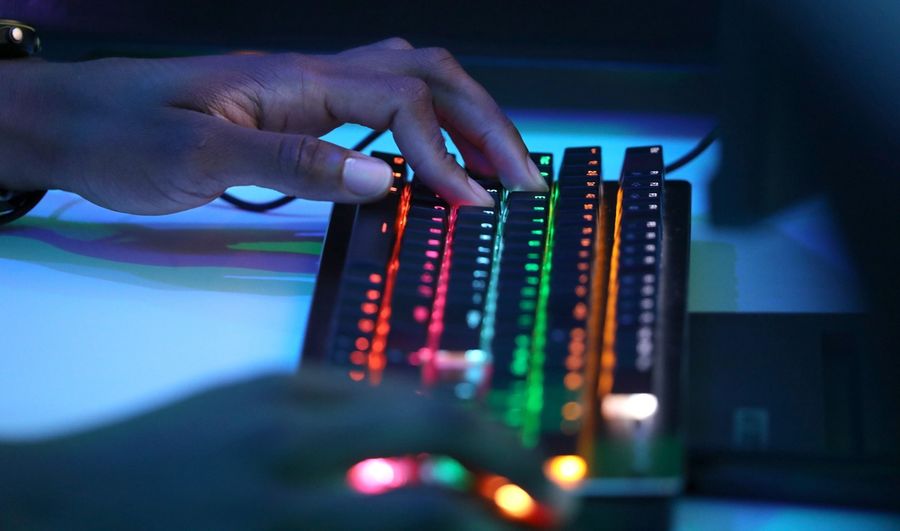
YMCA member Austin Manengu works the keyboard as he plays a game of Fortnite during the unveiling of the new gaming lab at the Maplewood Family YMCA in Rochester Thursday, June 20, 2024. YMCA of Greater Rochester in partnership with Metro Sports & Entertainment Group will open two gaming labs for youth and teens this year.

Team Falcons and FURIA earned byes to the semifinals with group-stage victories on Wednesday at the $300,000 Intel Extreme Masters Rio event in Brazil.

MOUZ, Team Spirit, Team Vitality and Natus Vincere also made the quarterfinals on Friday in Rio de Janeiro.

Sixteen Counter-Strike 2 teams are competing in this week’s competition for a top prize of $125,000.

The double-elimination group stage began with two groups of eight teams, with all matches best-of-three. The group winners advanced to the playoff semifinals, with the group runners-up entering the quarterfinals as high seeds and the third-place teams entering the quarterfinals as low seeds.

The single-elimination playoffs start Friday with all matches best-of-three until Sunday’s best-of-five grand final.

Team Falcons edged Team Vitality 2-1 in the Group A upper-bracket final on Wednesday. Falcons won 13-10 on Mirage, then Vitality drew even with a 13-6 decision on Dust II before the Falcons took the match with a 16-14 victory on Nuke. Ilya “m0NESY” Osipov of Russia was the player of the match, pacing the Falcons with a 59-45 kill-death differential.

Team Spirit topped RED Canids 2-1 in one Group A lower-bracket semifinal. After Canids opened with a 13-8 win on Mirage, Spirit rallied with a 13-8 victory on Ancient and a 13-2 rout on Overpass to take the match. Russia’s Danil “donk” Krushkovets was player of the match, leading Spirit with a 55-38 K-D differential.

In the other Group A lower-bracket semifinal, G2 Esports swept 3DMAX 2-0, winning 13-6 on Inferno and 13-1 on Dust II. Spain’s Alvaro “SunPayus” Garcia was the player of the match with a 27-12 K-D differential, and teammate Matus “MATYS” Simko of Slovakia had a 36-17 K-D.

Team Spirit then knocked out G2 Esports 2-0 in the lower-bracket final to qualify for the playoff stage, winning 13-7 on Mirage and 13-11 on Dust II. Andrey “tN1R” Tatarinovich of Belarus paced Spirit with a 39-30 K-D differential.

FURIA had little problem with MOUZ, winning 2-0 in the Group B upper-bracket final. FURIA triumphed 13-5 on Mirage and 13-9 on Dust II. Kazakhstan’s Danil “molodoy” Golubenko, the player of the match, led the way for FURIA with a 33-16 K-D differential.

The all-Turkish Aurora Gaming swept B8 2-0 in the Group B lower-bracket semifinals, winning 13-7 on Mirage and 13-6 on Overpass. Ismailcan “XANDARES” Dortkardes, the player of the match, led Aurora with a 44-19 K-D differential.

Natus Vincere swept HOTU in the other lower-bracket semifinal, winning 13-7 on Dust II and 13-9 on Ancient. Kosovo’s Drin “makazze” Shaqiri was the player of the match with a 40-24 K-D differential for the winning side.

Natus Vincere then eliminated Aurora Gaming 2-1 to qualify for the playoffs. NAVI won 13-4 on Inferno, lost 13-11 on Mirage and won 13-4 on Dust II. Shaqiri again was the player of the match with a 50-38 K-D differential.

MOUZ and Team Spirit meet in one quarterfinal on Friday, with the winner facing Team Falcons in the semifinals on Saturday. Team Vitality and Natus Vincere battle on Friday, with the winner advancing to the semifinals against FURIA.

IEM Rio prize pool:

1. $125,000

2. $50,000

3. $30,000

4. $20,000

5-6. $12,500

7-8. $7,000 — G2 Esports, Aurora Gaming

9-12. $5,000 — RED Canids, 3DMAX, B8, HOTU

13-16. $4,000 — Gentle Mates, Team Liquid, Passion UA, Legacy

–Field Level Media

Source link
#Deadspin #FURIA #Team #Falcons #riding #high #IEM #Rio #playoffs

Previous post

Mumbai Cricket Association announces player contract system ahead of 2026-2027 season <div id="content-body-70869587" itemprop="articleBody"><p>The Mumbai Cricket Association has formalised its long-mooted player contract system, outlining the structure and framework of what it hopes will be a cornerstone in strengthening its domestic ecosystem.</p><p>The decision, approved in principle by the MCA Apex Council on January 15, now has its details in place. The contracts will be awarded based on performance, fitness benchmarks and recommendations of the selection committee, with an eye on players on the cusp of higher honours.</p><p>Under the new system, players will be slotted into three grades — Grade A (₹12-20 lakh), Grade B (₹8-12 lakh) and Grade C (₹8 lakh) annually — in addition to match fees, daily allowances and performance-linked incentives. The move is aimed at providing financial stability and a more structured professional environment, while also ensuring a steady pipeline to higher levels of cricket. The list of players will be drawn up closer to the season in consultation with the selection panel and the cricket improvement committee.</p><p>MCA president Ajinkya Naik termed it a “new era” for Mumbai cricket, adding that the initiative would “provide greater security, structure, and growth opportunities” and help “strengthen the foundation” of the system.</p><p>While the intent marks a progressive step, the MCA is not the first state association to introduce player contracts. Associations like Maharashtra, Punjab and Uttarakhand have experimented with similar models over the past two decades, though none has managed to sustain it over the long term.</p><p>That context makes MCA’s implementation significant. For the past two domestic seasons, instead of central contracts, the association had opted to top up BCCI match fees for its senior men’s players with an equal contribution from its own coffers.</p><p>The shift to a structured contract system signals a move towards long-term planning rather than ad-hoc support. Having taken the lead for the upcoming season, the MCA will hope the model not only endures but also safeguards and incentivises its senior men’s cricketers while nurturing the next generation.</p><p class="publish-time" id="end-of-article">Published on Apr 16, 2026</p></div> #Mumbai #Cricket #Association #announces #player #contract #system #ahead #season

Next post

अब इस फिल्म में भी देखने को मिलेगा Sunny Deol का अभिनय, हो गया है ऐलान<p><img src="https://static.samacharjagatlive.com/newscdn/resources/uploads/ALL-NEWS/16042026/1776312211.jpg" width="600px" /> </p> <p><strong>इंटरनेट डेस्क। </strong>बॉर्डर, बॉर्डर 2 के बाद अब बॉर्डर 3 भी दर्शकों को देखने को मिलेगी। जेपी फिल्म्स ने अगली फिल्म की तैयारी शुरू कर दी है। इस फिल्म में एक बार सनी देओल का अभिनय देखने को मिलेगा। आपको बात दे कि बॉलीवुड अभिनेता सनी देओल और वरुण धवन स्टारर फिल्म बॉर्डर 2 ने 450 करोड़ वर्ल्डवाइड की सफल कमाई की थी।</p> <p>इस फिल्म की सफलता को देखते हुए जेपी फिल्म्स ने बॉर्डर के तीसरे पार्ट को बनाने की तैयारी कर ली है। खबरों के अनुसार, बॉर्डर 3 तक लोगों में रियल-लाइफ हीरोइज्म वाले क्रेज़ को बरकरार देख प्रोड्यूसर निधि दत्ता ने एक अगली फिल्म को लेकर एक बड़ा प्लान बनाया है।</p> <p>इस फिल्म की कहानी में लीड रोल में फिर से सनी देओल ही नजर आएंगे। इस फिल्म को साल 2027 का सबसे बड़ा प्रोजेक्ट माना जा रहा है। दर्शकों में अभी से इस फिर के प्रति उत्सुकता बढ़ गई है। बॉर्डर और बॉर्डर 2 में शानदार अभिनय से सनी देओल से सभी का दिल जीता है।</p> <p>PC:ndtv<br /> अपडेट खबरों के लिए हमारा<a href="https://whatsapp.com/channel/0029VaHJjbnAjPXVBcdtHk0P">वॉट्सएप चैनल</a><a href="https://whatsapp.com/channel/0029VaBgLMfGU3BO99EQv62t"></a>फोलो करें</p> <p></p> Sunny Deol, Bollywood news, Hindi news

Prabhsimran Singh brought up his second half-century of the season as Punjab Kings aced another tall chase, this time against Mumbai Indians, to maintain its unbeaten run in the IPL 2026 on Thursday

Despite the cheers of a packed Wankhede Stadium for the home team, the in-form Prabhsimran continued his dream run with an unbeaten 80 off 39 balls, forging a crucial 139-run partnership with captain Shreyas Iyer (66, 35b, 5×4, 4×6) for the third wicket to ensure that Punjab Kings chased down Mumbai Indians’ 195 for 6 with seven wickets in hand and silence the crowd.

Quinton de Kock, stepping in for the injured Rohit Sharma, smashed an unbeaten 112 off 60 balls and Naman Dhir made the most of a reprieve to score a fifty and stitch a 122-run stand off 68 balls for the third wicket, helping Mumbai recover from 12 for 2.

Punjab began the chase briskly. The visitors raced to 21 in the opening over before Allah Ghazanfar struck twice to remove Priyansh Arya and Cooper Connolly, briefly checking the momentum.

However, Prabhsimran quickly took charge and ensured there were no further hiccups. Keeping the required rate under control, he played freely and punished anything loose, while rotating strike effectively.

At the other end, Shreyas complemented him perfectly, playing the sheet-anchor role, before eventually clearing the ropes. The duo mixed caution with aggression, steadily closing in on the target with a composed approach.

Also read | Train smarter, not harder — Ramji Srinivasan decodes how IPL’s OG superstars can stave off injuries

As the partnership blossomed, Mumbai’s bowlers struggled to make an impact, as none could find a breakthrough. It turned into another wicketless outing for Jasprit Bumrah, adding to Mumbai’s concerns.

Earlier, Arshdeep Singh gave Punjab the perfect start by removing Ryan Rickelton and Suryakumar Yadav off successive deliveries, becoming the first Punjab Kings bowler to claim 100 IPL wickets.

Though Mumbai recovered through Dhir and de Kock’s counterattack, the total proved insufficient on a good batting surface, as Punjab’s clinical chase underlined its dominance and consistency this season.

With the chase executed with authority and calm, Punjab Kings once again showcased its depth and balance, leaving MI with plenty to ponder as its campaign continued to stutter.

Published on Apr 16, 2026

#PBKS #IPL #Kock #ton #vain #Prabhsimran #Shreyas #extend #Punjab #Kings #unbeaten #run">MI vs PBKS, IPL 2026: De Kock ton in vain as Prabhsimran, Shreyas extend Punjab Kings’ unbeaten run  Prabhsimran Singh brought up his second half-century of the season as Punjab Kings aced another tall chase, this time against Mumbai Indians, to maintain its unbeaten run in the IPL 2026 on ThursdayDespite the cheers of a packed Wankhede Stadium for the home team, the in-form Prabhsimran continued his dream run with an unbeaten 80 off 39 balls, forging a crucial 139-run partnership with captain Shreyas Iyer (66, 35b, 5×4, 4×6) for the third wicket to ensure that Punjab Kings chased down Mumbai Indians’ 195 for 6 with seven wickets in hand and silence the crowd.Quinton de Kock, stepping in for the injured Rohit Sharma, smashed an unbeaten 112 off 60 balls and Naman Dhir made the most of a reprieve to score a fifty and stitch a 122-run stand off 68 balls for the third wicket, helping Mumbai recover from 12 for 2.Punjab began the chase briskly. The visitors raced to 21 in the opening over before Allah Ghazanfar struck twice to remove Priyansh Arya and Cooper Connolly, briefly checking the momentum.However, Prabhsimran quickly took charge and ensured there were no further hiccups. Keeping the required rate under control, he played freely and punished anything loose, while rotating strike effectively.At the other end, Shreyas complemented him perfectly, playing the sheet-anchor role, before eventually clearing the ropes. The duo mixed caution with aggression, steadily closing in on the target with a composed approach.Also read | Train smarter, not harder — Ramji Srinivasan decodes how IPL’s OG superstars can stave off injuriesAs the partnership blossomed, Mumbai’s bowlers struggled to make an impact, as none could find a breakthrough. It turned into another wicketless outing for Jasprit Bumrah, adding to Mumbai’s concerns.Earlier, Arshdeep Singh gave Punjab the perfect start by removing Ryan Rickelton and Suryakumar Yadav off successive deliveries, becoming the first Punjab Kings bowler to claim 100 IPL wickets.Though Mumbai recovered through Dhir and de Kock’s counterattack, the total proved insufficient on a good batting surface, as Punjab’s clinical chase underlined its dominance and consistency this season.With the chase executed with authority and calm, Punjab Kings once again showcased its depth and balance, leaving MI with plenty to ponder as its campaign continued to stutter.Published on Apr 16, 2026  #PBKS #IPL #Kock #ton #vain #Prabhsimran #Shreyas #extend #Punjab #Kings #unbeaten #run

Train smarter, not harder — Ramji Srinivasan decodes how IPL’s OG superstars can stave off injuries

As the partnership blossomed, Mumbai’s bowlers struggled to make an impact, as none could find a breakthrough. It turned into another wicketless outing for Jasprit Bumrah, adding to Mumbai’s concerns.

Earlier, Arshdeep Singh gave Punjab the perfect start by removing Ryan Rickelton and Suryakumar Yadav off successive deliveries, becoming the first Punjab Kings bowler to claim 100 IPL wickets.

Though Mumbai recovered through Dhir and de Kock’s counterattack, the total proved insufficient on a good batting surface, as Punjab’s clinical chase underlined its dominance and consistency this season.

With the chase executed with authority and calm, Punjab Kings once again showcased its depth and balance, leaving MI with plenty to ponder as its campaign continued to stutter.

Published on Apr 16, 2026

#PBKS #IPL #Kock #ton #vain #Prabhsimran #Shreyas #extend #Punjab #Kings #unbeaten #run">MI vs PBKS, IPL 2026: De Kock ton in vain as Prabhsimran, Shreyas extend Punjab Kings’ unbeaten run

Prabhsimran Singh brought up his second half-century of the season as Punjab Kings aced another tall chase, this time against Mumbai Indians, to maintain its unbeaten run in the IPL 2026 on Thursday

Despite the cheers of a packed Wankhede Stadium for the home team, the in-form Prabhsimran continued his dream run with an unbeaten 80 off 39 balls, forging a crucial 139-run partnership with captain Shreyas Iyer (66, 35b, 5×4, 4×6) for the third wicket to ensure that Punjab Kings chased down Mumbai Indians’ 195 for 6 with seven wickets in hand and silence the crowd.

Quinton de Kock, stepping in for the injured Rohit Sharma, smashed an unbeaten 112 off 60 balls and Naman Dhir made the most of a reprieve to score a fifty and stitch a 122-run stand off 68 balls for the third wicket, helping Mumbai recover from 12 for 2.

Punjab began the chase briskly. The visitors raced to 21 in the opening over before Allah Ghazanfar struck twice to remove Priyansh Arya and Cooper Connolly, briefly checking the momentum.

However, Prabhsimran quickly took charge and ensured there were no further hiccups. Keeping the required rate under control, he played freely and punished anything loose, while rotating strike effectively.

At the other end, Shreyas complemented him perfectly, playing the sheet-anchor role, before eventually clearing the ropes. The duo mixed caution with aggression, steadily closing in on the target with a composed approach.

Also read | Train smarter, not harder — Ramji Srinivasan decodes how IPL’s OG superstars can stave off injuries

As the partnership blossomed, Mumbai’s bowlers struggled to make an impact, as none could find a breakthrough. It turned into another wicketless outing for Jasprit Bumrah, adding to Mumbai’s concerns.

Earlier, Arshdeep Singh gave Punjab the perfect start by removing Ryan Rickelton and Suryakumar Yadav off successive deliveries, becoming the first Punjab Kings bowler to claim 100 IPL wickets.

Though Mumbai recovered through Dhir and de Kock’s counterattack, the total proved insufficient on a good batting surface, as Punjab’s clinical chase underlined its dominance and consistency this season.

With the chase executed with authority and calm, Punjab Kings once again showcased its depth and balance, leaving MI with plenty to ponder as its campaign continued to stutter.

Published on Apr 16, 2026

#PBKS #IPL #Kock #ton #vain #Prabhsimran #Shreyas #extend #Punjab #Kings #unbeaten #run

The World Anti-Doping Agency (WADA) has been aggressively pursuing a policy to eliminate the spread of steroids and performance enhancing drugs across the world with its Operation Upstream since 2022. In these efforts, its Director of Intelligence and Investigations (I&I), Gunter Younger, has been the key figure behind the project’s success.

According to WADA’s own admission, the operation under its Global Anti-Doping Intelligence and Investigations Network (GAIIN) initiative has so far managed to dismantle 88 illicit laboratories and seize almost 90 tons of performance-enhancing drugs – or 1.8 billion doses – involving more than 20 countries and several law-enforcement agencies including the INTERPOL and Europol.

Younger spoke to Sportstar on a range of subjects on the sidelines of the GAIIN conference in New Delhi.

Excerpts:

Q: If we purely look at the Indian context, there are always athletes that get caught and are penalised. However, there is never a deterrence or action against the coaches who actually supply the Performance Enhancing Drugs substances. Is the WADA looking at bringing the coaches and officials also into the ambit of investigations?

A: Yes. It’s been a concern for many years on how to get to the coaches and the doctors involved. The issue we have is that we focus on the athletes, test them. If they test positive, we have a voluntary interview and that’s all we can do. The athlete is actually the victim of the system. The only way to change that is not to go from bottom up. We want a top down impact. We now target the supply chains because the doctors and the coaches need to get the PEDs somewhere. And then we go down and target the coaches, the doctors and protect the athletes, because that is our ultimate goal.

ALSO READ | WADA admits to doping concerns in India, indicates close monitoring of process

Q: A cynic would say, if at all an athlete does dope, at least there should be commensurate results to justify it. But India is a strange paradox because despite topping the doping charts repeatedly, there is little by way of sporting achievements. How do you look at this?

A: The thing is, there are two categories of athletes who dope and we have to distinguish between them. One who come into the doping net because of using a contaminated supplement or substance that they are not aware of. There are a lot of reasons, it’s not intentional. These are the ones we would address first through education. That’s always a pity and these are not the ones we want to target. Countries which have a strong education programme have less of these kinds of cases.

I think a big issue in India is education. You have 22 languages, it’s very complex and I think this is where you need to improve and we want to help. The second type is the sophisticated doper. These are far more high-level, far more advanced, and these are usually the ones hard to get. These are the ones we want to target.

Q: It will always be tempting for officials to look for shortcuts. There’ll always be those more interested in protecting the offenders because it gives them short term results. In such a scenario, can you explain WADA’s working and equations with the different agencies, not just the National Anti-Doping Organisations (NADOs) but others as well, whether it’s the enforcement agencies or the different sports federations?

A: Many international federations now have relations or partnerships with the International Testing Agency, which gives them the independence of testing programmes. It also protects the federations from being accused of perhaps protecting their elite athletes because yes, it’s a conflict. So I think we’re going the right way. And we are also trying, from the other side, through the NADOs, because an athlete can be tested both by a NADO and an international federation. On one hand, they cannot just protect the athletes because the NADO might test them as well. I think the most important way to avoid this conflict is to have a multi-faceted testing process.

ALSO READ | Doping is no longer an individual act but an organised multinational enterprise: Sports Minister Mansukh Mandaviya

The most dangerous part is always the perception. For example, in the case of the Chinese swimmers a few years ago, we from the I&I are focusing on facts. It was clear from our side that it was a contamination case. It was not something they wanted to protect. So we always have to be careful.

We are not naive. If there are any issues or suspicions, we will go after every country, as we did with Russia.

Q: Every time there’s talk of doping and performance enhancing, talk veers around to the Enhanced Games. How do you look at it?

A: That’s always the ultimate question. Should we let everyone dope? My counter question would be, which age do we start? Do you want a 12-year-old to get doped? Eight-year-old? But for cheaters, it’s in their nature. If you start with 12, they will start doping with nine and eight. I think that’s not the solution. We are completely against it because sport is not just about the elite athletes. Sport is what we are as a society. And we are categorically against any kind of approval or legal recognition for something like that.

Q: With increased advancements in testing, is there a trade-off to be made between correcting the violations of the past and protecting the future?

A: It’s an interesting question because when you look at our sophisticated dopers, they know how to bypass the rules. They use methods and substances that are not known, it’s not always easy to be ahead of these guys because they know exactly what we’re looking for. So this is why we from the I&I are big supporters of long-term storage of samples. Not just because we can catch those dopers a couple of years later. Sometimes it’s painful, especially for the athletes, like with the Russians, after 10 years, they get their medals back.

But information isn’t always available. Methods of detecting substances is getting better and better. We use them to not only catch the dopers who weren’t detected earlier but also to calibrate the systems in a way that we can detect these kind of things in the future. From an I&I point of view, we push back as much as we can. It’s a circle. Of course, there’s a statute of limitations after 10 years but we try to be better for the future.

Published on Apr 16, 2026

#big #issue #India #education #WADA #director #Younger #Indias #doping #problem">A big issue in India is education: WADA I&I director Younger on India’s doping problem  The World Anti-Doping Agency (WADA) has been aggressively pursuing a policy to eliminate the spread of steroids and performance enhancing drugs across the world with its Operation Upstream since 2022. In these efforts, its Director of Intelligence and Investigations (I&I), Gunter Younger, has been the key figure behind the project’s success.According to WADA’s own admission, the operation under its Global Anti-Doping Intelligence and Investigations Network (GAIIN) initiative has so far managed to dismantle 88 illicit laboratories and seize almost 90 tons of performance-enhancing drugs – or 1.8 billion doses – involving more than 20 countries and several law-enforcement agencies including the INTERPOL and Europol.Younger spoke to        Sportstar on a range of subjects on the sidelines of the GAIIN conference in New Delhi.Excerpts:Q: If we purely look at the Indian context, there are always athletes that get caught and are penalised. However, there is never a deterrence or action against the coaches who actually supply the Performance Enhancing Drugs substances. Is the WADA looking at bringing the coaches and officials also into the ambit of investigations?A: Yes. It’s been a concern for many years on how to get to the coaches and the doctors involved. The issue we have is that we focus on the athletes, test them. If they test positive, we have a voluntary interview and that’s all we can do. The athlete is actually the victim of the system. The only way to change that is not to go from bottom up. We want a top down impact. We now target the supply chains because the doctors and the coaches need to get the PEDs somewhere. And then we go down and target the coaches, the doctors and protect the athletes, because that is our ultimate goal.ALSO READ | WADA admits to doping concerns in India, indicates close monitoring of processQ: A cynic would say, if at all an athlete does dope, at least there should be commensurate results to justify it. But India is a strange paradox because despite topping the doping charts repeatedly, there is little by way of sporting achievements. How do you look at this?A: The thing is, there are two categories of athletes who dope and we have to distinguish between them. One who come into the doping net because of using a contaminated supplement or substance that they are not aware of. There are a lot of reasons, it’s not intentional. These are the ones we would address first through education. That’s always a pity and these are not the ones we want to target. Countries which have a strong education programme have less of these kinds of cases.I think a big issue in India is education. You have 22 languages, it’s very complex and I think this is where you need to improve and we want to help. The second type is the sophisticated doper. These are far more high-level, far more advanced, and these are usually the ones hard to get. These are the ones we want to target.Q: It will always be tempting for officials to look for shortcuts. There’ll always be those more interested in protecting the offenders because it gives them short term results. In such a scenario, can you explain WADA’s working and equations with the different agencies, not just the National Anti-Doping Organisations (NADOs) but others as well, whether it’s the enforcement agencies or the different sports federations?A: Many international federations now have relations or partnerships with the International Testing Agency, which gives them the independence of testing programmes. It also protects the federations from being accused of perhaps protecting their elite athletes because yes, it’s a conflict. So I think we’re going the right way. And we are also trying, from the other side, through the NADOs, because an athlete can be tested both by a NADO and an international federation. On one hand, they cannot just protect the athletes because the NADO might test them as well. I think the most important way to avoid this conflict is to have a multi-faceted testing process.ALSO READ | Doping is no longer an individual act but an organised multinational enterprise: Sports Minister Mansukh MandaviyaThe most dangerous part is always the perception. For example, in the case of the Chinese swimmers a few years ago, we from the I&I are focusing on facts. It was clear from our side that it was a contamination case. It was not something they wanted to protect. So we always have to be careful.We are not naive. If there are any issues or suspicions, we will go after every country, as we did with Russia.Q: Every time there’s talk of doping and performance enhancing, talk veers around to the Enhanced Games. How do you look at it?A: That’s always the ultimate question. Should we let everyone dope? My counter question would be, which age do we start? Do you want a 12-year-old to get doped? Eight-year-old? But for cheaters, it’s in their nature. If you start with 12, they will start doping with nine and eight. I think that’s not the solution. We are completely against it because sport is not just about the elite athletes. Sport is what we are as a society. And we are categorically against any kind of approval or legal recognition for something like that.Q: With increased advancements in testing, is there a trade-off to be made between correcting the violations of the past and protecting the future?A: It’s an interesting question because when you look at our sophisticated dopers, they know how to bypass the rules. They use methods and substances that are not known, it’s not always easy to be ahead of these guys because they know exactly what we’re looking for. So this is why we from the I&I are big supporters of long-term storage of samples. Not just because we can catch those dopers a couple of years later. Sometimes it’s painful, especially for the athletes, like with the Russians, after 10 years, they get their medals back.But information isn’t always available. Methods of detecting substances is getting better and better. We use them to not only catch the dopers who weren’t detected earlier but also to calibrate the systems in a way that we can detect these kind of things in the future. From an I&I point of view, we push back as much as we can. It’s a circle. Of course, there’s a statute of limitations after 10 years but we try to be better for the future.Published on Apr 16, 2026  #big #issue #India #education #WADA #director #Younger #Indias #doping #problem

WADA admits to doping concerns in India, indicates close monitoring of process

Q: A cynic would say, if at all an athlete does dope, at least there should be commensurate results to justify it. But India is a strange paradox because despite topping the doping charts repeatedly, there is little by way of sporting achievements. How do you look at this?

A: The thing is, there are two categories of athletes who dope and we have to distinguish between them. One who come into the doping net because of using a contaminated supplement or substance that they are not aware of. There are a lot of reasons, it’s not intentional. These are the ones we would address first through education. That’s always a pity and these are not the ones we want to target. Countries which have a strong education programme have less of these kinds of cases.

I think a big issue in India is education. You have 22 languages, it’s very complex and I think this is where you need to improve and we want to help. The second type is the sophisticated doper. These are far more high-level, far more advanced, and these are usually the ones hard to get. These are the ones we want to target.

Q: It will always be tempting for officials to look for shortcuts. There’ll always be those more interested in protecting the offenders because it gives them short term results. In such a scenario, can you explain WADA’s working and equations with the different agencies, not just the National Anti-Doping Organisations (NADOs) but others as well, whether it’s the enforcement agencies or the different sports federations?

A: Many international federations now have relations or partnerships with the International Testing Agency, which gives them the independence of testing programmes. It also protects the federations from being accused of perhaps protecting their elite athletes because yes, it’s a conflict. So I think we’re going the right way. And we are also trying, from the other side, through the NADOs, because an athlete can be tested both by a NADO and an international federation. On one hand, they cannot just protect the athletes because the NADO might test them as well. I think the most important way to avoid this conflict is to have a multi-faceted testing process.

ALSO READ | Doping is no longer an individual act but an organised multinational enterprise: Sports Minister Mansukh Mandaviya

The most dangerous part is always the perception. For example, in the case of the Chinese swimmers a few years ago, we from the I&I are focusing on facts. It was clear from our side that it was a contamination case. It was not something they wanted to protect. So we always have to be careful.

We are not naive. If there are any issues or suspicions, we will go after every country, as we did with Russia.

Q: Every time there’s talk of doping and performance enhancing, talk veers around to the Enhanced Games. How do you look at it?

A: That’s always the ultimate question. Should we let everyone dope? My counter question would be, which age do we start? Do you want a 12-year-old to get doped? Eight-year-old? But for cheaters, it’s in their nature. If you start with 12, they will start doping with nine and eight. I think that’s not the solution. We are completely against it because sport is not just about the elite athletes. Sport is what we are as a society. And we are categorically against any kind of approval or legal recognition for something like that.

Q: With increased advancements in testing, is there a trade-off to be made between correcting the violations of the past and protecting the future?

A: It’s an interesting question because when you look at our sophisticated dopers, they know how to bypass the rules. They use methods and substances that are not known, it’s not always easy to be ahead of these guys because they know exactly what we’re looking for. So this is why we from the I&I are big supporters of long-term storage of samples. Not just because we can catch those dopers a couple of years later. Sometimes it’s painful, especially for the athletes, like with the Russians, after 10 years, they get their medals back.

But information isn’t always available. Methods of detecting substances is getting better and better. We use them to not only catch the dopers who weren’t detected earlier but also to calibrate the systems in a way that we can detect these kind of things in the future. From an I&I point of view, we push back as much as we can. It’s a circle. Of course, there’s a statute of limitations after 10 years but we try to be better for the future.

Published on Apr 16, 2026

#big #issue #India #education #WADA #director #Younger #Indias #doping #problem">A big issue in India is education: WADA I&I director Younger on India’s doping problem

The World Anti-Doping Agency (WADA) has been aggressively pursuing a policy to eliminate the spread of steroids and performance enhancing drugs across the world with its Operation Upstream since 2022. In these efforts, its Director of Intelligence and Investigations (I&I), Gunter Younger, has been the key figure behind the project’s success.

According to WADA’s own admission, the operation under its Global Anti-Doping Intelligence and Investigations Network (GAIIN) initiative has so far managed to dismantle 88 illicit laboratories and seize almost 90 tons of performance-enhancing drugs – or 1.8 billion doses – involving more than 20 countries and several law-enforcement agencies including the INTERPOL and Europol.

Younger spoke to Sportstar on a range of subjects on the sidelines of the GAIIN conference in New Delhi.

Excerpts:

Q: If we purely look at the Indian context, there are always athletes that get caught and are penalised. However, there is never a deterrence or action against the coaches who actually supply the Performance Enhancing Drugs substances. Is the WADA looking at bringing the coaches and officials also into the ambit of investigations?

A: Yes. It’s been a concern for many years on how to get to the coaches and the doctors involved. The issue we have is that we focus on the athletes, test them. If they test positive, we have a voluntary interview and that’s all we can do. The athlete is actually the victim of the system. The only way to change that is not to go from bottom up. We want a top down impact. We now target the supply chains because the doctors and the coaches need to get the PEDs somewhere. And then we go down and target the coaches, the doctors and protect the athletes, because that is our ultimate goal.

ALSO READ | WADA admits to doping concerns in India, indicates close monitoring of process

Q: A cynic would say, if at all an athlete does dope, at least there should be commensurate results to justify it. But India is a strange paradox because despite topping the doping charts repeatedly, there is little by way of sporting achievements. How do you look at this?

A: The thing is, there are two categories of athletes who dope and we have to distinguish between them. One who come into the doping net because of using a contaminated supplement or substance that they are not aware of. There are a lot of reasons, it’s not intentional. These are the ones we would address first through education. That’s always a pity and these are not the ones we want to target. Countries which have a strong education programme have less of these kinds of cases.

I think a big issue in India is education. You have 22 languages, it’s very complex and I think this is where you need to improve and we want to help. The second type is the sophisticated doper. These are far more high-level, far more advanced, and these are usually the ones hard to get. These are the ones we want to target.

Q: It will always be tempting for officials to look for shortcuts. There’ll always be those more interested in protecting the offenders because it gives them short term results. In such a scenario, can you explain WADA’s working and equations with the different agencies, not just the National Anti-Doping Organisations (NADOs) but others as well, whether it’s the enforcement agencies or the different sports federations?

A: Many international federations now have relations or partnerships with the International Testing Agency, which gives them the independence of testing programmes. It also protects the federations from being accused of perhaps protecting their elite athletes because yes, it’s a conflict. So I think we’re going the right way. And we are also trying, from the other side, through the NADOs, because an athlete can be tested both by a NADO and an international federation. On one hand, they cannot just protect the athletes because the NADO might test them as well. I think the most important way to avoid this conflict is to have a multi-faceted testing process.

ALSO READ | Doping is no longer an individual act but an organised multinational enterprise: Sports Minister Mansukh Mandaviya

The most dangerous part is always the perception. For example, in the case of the Chinese swimmers a few years ago, we from the I&I are focusing on facts. It was clear from our side that it was a contamination case. It was not something they wanted to protect. So we always have to be careful.

We are not naive. If there are any issues or suspicions, we will go after every country, as we did with Russia.

Q: Every time there’s talk of doping and performance enhancing, talk veers around to the Enhanced Games. How do you look at it?

A: That’s always the ultimate question. Should we let everyone dope? My counter question would be, which age do we start? Do you want a 12-year-old to get doped? Eight-year-old? But for cheaters, it’s in their nature. If you start with 12, they will start doping with nine and eight. I think that’s not the solution. We are completely against it because sport is not just about the elite athletes. Sport is what we are as a society. And we are categorically against any kind of approval or legal recognition for something like that.

Q: With increased advancements in testing, is there a trade-off to be made between correcting the violations of the past and protecting the future?

A: It’s an interesting question because when you look at our sophisticated dopers, they know how to bypass the rules. They use methods and substances that are not known, it’s not always easy to be ahead of these guys because they know exactly what we’re looking for. So this is why we from the I&I are big supporters of long-term storage of samples. Not just because we can catch those dopers a couple of years later. Sometimes it’s painful, especially for the athletes, like with the Russians, after 10 years, they get their medals back.

But information isn’t always available. Methods of detecting substances is getting better and better. We use them to not only catch the dopers who weren’t detected earlier but also to calibrate the systems in a way that we can detect these kind of things in the future. From an I&I point of view, we push back as much as we can. It’s a circle. Of course, there’s a statute of limitations after 10 years but we try to be better for the future.

Published on Apr 16, 2026

#big #issue #India #education #WADA #director #Younger #Indias #doping #problem

Post Comment