×
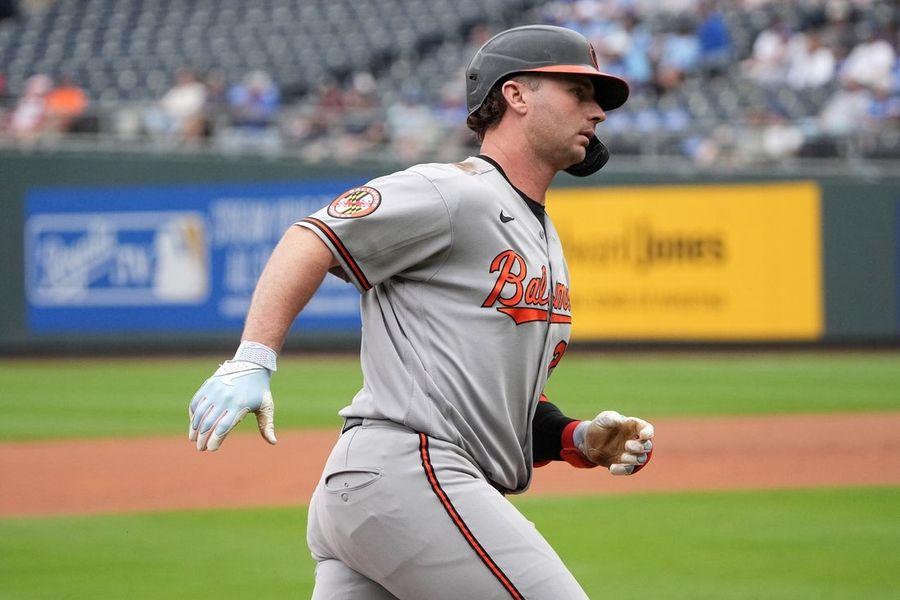
Deadspin | Orioles get first look at AL East as slumping Red Sox visit  Apr 22, 2026; Kansas City, Missouri, USA; Baltimore Orioles first baseman Pete Alonso (25) runs the bases after hitting a two run home run against against the Kansas City Royals during the first inning at Kauffman Stadium. Mandatory Credit: Denny Medley-Imagn Images   The Baltimore Orioles will face an American League East rival for the first time this season when the Boston Red Sox visit to begin a three-game series Friday night.  Baltimore is 3-6 across its past nine games, so the Orioles are looking for consistency. Manager Craig Albernaz believes his players have the right approach.  “How we take hits and keep bouncing back whether it be injuries, whether it be tough games, whether it be falling behind, our guys keep competing,” Albernaz said.  The Orioles had Thursday off following a 3-4 road trip that concluded with an 8-6 victory at Kansas City on Wednesday. Baltimore matched its season-high run total in that contest.  “I’d say that’s what our offense is capable of,” Albernaz said.  Of particular note was first baseman Pete Alonso’s third home run of the season. The shot went to right-center field, a good sign for the right-handed slugger who is still trying to get untracked in his first season with the team.  “That’s Pete, he has power to all fields, especially to right-center,” Albernaz said. “It just opens up everything for him.”  The Red Sox are coming off getting swept in three games by the visiting New York Yankees, including a 4-2 setback in the finale on Thursday. Boston gave up four runs in each game and scored a total of three runs in the series.  “We’ve just got to keep playing,” Red Sox manager Alex Cora said. “It’s still early. It’s April. We’ve just got to play.”   Boston, which has lost five of its past six games overall, owns a 4-8 road record.  The potential Baltimore starter for the series opener was right-hander Dean Kremer, but he went on the injured list Thursday due to a strained right quadriceps. The Orioles recalled right-hander Brandon Young from Triple-A Norfolk, and he is slated to throw the first pitch on Friday.  Young (1-0, 0.00 ERA) fired five shutout innings on April 6 in a road victory against the Chicago White Sox before a roster shift resulted in him returning to the minor leagues. In 12 big-league outings last year and the one this year, he has yet to face the Red Sox.  Young pitched well for Norfolk, giving up two runs in 16 2/3 innings across three starts (1.08 ERA). He struck out 10 in 5 2/3 innings of no-hit, one-run ball on Saturday against Durham.  The Orioles placed reliever Ryan Helsley on the bereavement/family emergency list prior to the Wednesday, so he won’t be eligible to return before Sunday.  Baltimore catcher Adley Rutschman came off the injured list earlier this week and went 2-for-4 on Tuesday before sitting out on Wednesday.  Brayan Bello (1-2, 6.75 ERA) will start for Boston in the series opener. The right-hander has reached the five-inning mark in only one of four starts this season, last working Saturday, when he gave up four runs in four innings during a loss to the visiting Detroit Tigers.  Bello started against Baltimore last Aug. 27, and he yielded two runs (one earned) in 6 2/3 innings during a no-decision. For his career, he is 4-2 with a 3.26 ERA in seven outings, all starts, vs. the Orioles.  –Field Level Media    #Deadspin #Orioles #East #slumping #Red #Sox #visit
Deadspin | Orioles get first look at AL East as slumping Red Sox visit
Deadspin | Orioles get first look at AL East as slumping Red Sox visit  Apr 22, 2026; Kansas City, Missouri, USA; Baltimore Orioles first baseman Pete Alonso (25) runs the bases after hitting a two run home run against against the Kansas City Royals during the first inning at Kauffman Stadium. Mandatory Credit: Denny Medley-Imagn Images   The Baltimore Orioles will face an American League East rival for the first time this season when the Boston Red Sox visit to begin a three-game series Friday night.  Baltimore is 3-6 across its past nine games, so the Orioles are looking for consistency. Manager Craig Albernaz believes his players have the right approach.  “How we take hits and keep bouncing back whether it be injuries, whether it be tough games, whether it be falling behind, our guys keep competing,” Albernaz said.  The Orioles had Thursday off following a 3-4 road trip that concluded with an 8-6 victory at Kansas City on Wednesday. Baltimore matched its season-high run total in that contest.  “I’d say that’s what our offense is capable of,” Albernaz said.  Of particular note was first baseman Pete Alonso’s third home run of the season. The shot went to right-center field, a good sign for the right-handed slugger who is still trying to get untracked in his first season with the team.  “That’s Pete, he has power to all fields, especially to right-center,” Albernaz said. “It just opens up everything for him.”  The Red Sox are coming off getting swept in three games by the visiting New York Yankees, including a 4-2 setback in the finale on Thursday. Boston gave up four runs in each game and scored a total of three runs in the series.  “We’ve just got to keep playing,” Red Sox manager Alex Cora said. “It’s still early. It’s April. We’ve just got to play.”   Boston, which has lost five of its past six games overall, owns a 4-8 road record.  The potential Baltimore starter for the series opener was right-hander Dean Kremer, but he went on the injured list Thursday due to a strained right quadriceps. The Orioles recalled right-hander Brandon Young from Triple-A Norfolk, and he is slated to throw the first pitch on Friday.  Young (1-0, 0.00 ERA) fired five shutout innings on April 6 in a road victory against the Chicago White Sox before a roster shift resulted in him returning to the minor leagues. In 12 big-league outings last year and the one this year, he has yet to face the Red Sox.  Young pitched well for Norfolk, giving up two runs in 16 2/3 innings across three starts (1.08 ERA). He struck out 10 in 5 2/3 innings of no-hit, one-run ball on Saturday against Durham.  The Orioles placed reliever Ryan Helsley on the bereavement/family emergency list prior to the Wednesday, so he won’t be eligible to return before Sunday.  Baltimore catcher Adley Rutschman came off the injured list earlier this week and went 2-for-4 on Tuesday before sitting out on Wednesday.  Brayan Bello (1-2, 6.75 ERA) will start for Boston in the series opener. The right-hander has reached the five-inning mark in only one of four starts this season, last working Saturday, when he gave up four runs in four innings during a loss to the visiting Detroit Tigers.  Bello started against Baltimore last Aug. 27, and he yielded two runs (one earned) in 6 2/3 innings during a no-decision. For his career, he is 4-2 with a 3.26 ERA in seven outings, all starts, vs. the Orioles.  –Field Level Media    #Deadspin #Orioles #East #slumping #Red #Sox #visitApr 22, 2026; Kansas City, Missouri, USA; Baltimore Orioles first baseman Pete Alonso (25) runs the bases after hitting a two run home run against against the Kansas City Royals during the first inning at Kauffman Stadium. Mandatory Credit: Denny Medley-Imagn Images

The Baltimore Orioles will face an American League East rival for the first time this season when the Boston Red Sox visit to begin a three-game series Friday night.

Baltimore is 3-6 across its past nine games, so the Orioles are looking for consistency. Manager Craig Albernaz believes his players have the right approach.

“How we take hits and keep bouncing back whether it be injuries, whether it be tough games, whether it be falling behind, our guys keep competing,” Albernaz said.

The Orioles had Thursday off following a 3-4 road trip that concluded with an 8-6 victory at Kansas City on Wednesday. Baltimore matched its season-high run total in that contest.

“I’d say that’s what our offense is capable of,” Albernaz said.

Of particular note was first baseman Pete Alonso’s third home run of the season. The shot went to right-center field, a good sign for the right-handed slugger who is still trying to get untracked in his first season with the team.

“That’s Pete, he has power to all fields, especially to right-center,” Albernaz said. “It just opens up everything for him.”

The Red Sox are coming off getting swept in three games by the visiting New York Yankees, including a 4-2 setback in the finale on Thursday. Boston gave up four runs in each game and scored a total of three runs in the series.


“We’ve just got to keep playing,” Red Sox manager Alex Cora said. “It’s still early. It’s April. We’ve just got to play.”

Boston, which has lost five of its past six games overall, owns a 4-8 road record.

The potential Baltimore starter for the series opener was right-hander Dean Kremer, but he went on the injured list Thursday due to a strained right quadriceps. The Orioles recalled right-hander Brandon Young from Triple-A Norfolk, and he is slated to throw the first pitch on Friday.

Young (1-0, 0.00 ERA) fired five shutout innings on April 6 in a road victory against the Chicago White Sox before a roster shift resulted in him returning to the minor leagues. In 12 big-league outings last year and the one this year, he has yet to face the Red Sox.

Young pitched well for Norfolk, giving up two runs in 16 2/3 innings across three starts (1.08 ERA). He struck out 10 in 5 2/3 innings of no-hit, one-run ball on Saturday against Durham.

The Orioles placed reliever Ryan Helsley on the bereavement/family emergency list prior to the Wednesday, so he won’t be eligible to return before Sunday.

Baltimore catcher Adley Rutschman came off the injured list earlier this week and went 2-for-4 on Tuesday before sitting out on Wednesday.

Brayan Bello (1-2, 6.75 ERA) will start for Boston in the series opener. The right-hander has reached the five-inning mark in only one of four starts this season, last working Saturday, when he gave up four runs in four innings during a loss to the visiting Detroit Tigers.

Bello started against Baltimore last Aug. 27, and he yielded two runs (one earned) in 6 2/3 innings during a no-decision. For his career, he is 4-2 with a 3.26 ERA in seven outings, all starts, vs. the Orioles.


–Field Level Media

#Deadspin #Orioles #East #slumping #Red #Sox #visit

Apr 22, 2026; Kansas City, Missouri, USA; Baltimore Orioles first baseman Pete Alonso (25) runs the bases after hitting a two run home run against against the Kansas City Royals during the first inning at Kauffman Stadium. Mandatory Credit: Denny Medley-Imagn Images

The Baltimore Orioles will face an American League East rival for the first time this season when the Boston Red Sox visit to begin a three-game series Friday night.

Baltimore is 3-6 across its past nine games, so the Orioles are looking for consistency. Manager Craig Albernaz believes his players have the right approach.

“How we take hits and keep bouncing back whether it be injuries, whether it be tough games, whether it be falling behind, our guys keep competing,” Albernaz said.

The Orioles had Thursday off following a 3-4 road trip that concluded with an 8-6 victory at Kansas City on Wednesday. Baltimore matched its season-high run total in that contest.

“I’d say that’s what our offense is capable of,” Albernaz said.

Of particular note was first baseman Pete Alonso’s third home run of the season. The shot went to right-center field, a good sign for the right-handed slugger who is still trying to get untracked in his first season with the team.

“That’s Pete, he has power to all fields, especially to right-center,” Albernaz said. “It just opens up everything for him.”

The Red Sox are coming off getting swept in three games by the visiting New York Yankees, including a 4-2 setback in the finale on Thursday. Boston gave up four runs in each game and scored a total of three runs in the series.

“We’ve just got to keep playing,” Red Sox manager Alex Cora said. “It’s still early. It’s April. We’ve just got to play.”

Boston, which has lost five of its past six games overall, owns a 4-8 road record.

The potential Baltimore starter for the series opener was right-hander Dean Kremer, but he went on the injured list Thursday due to a strained right quadriceps. The Orioles recalled right-hander Brandon Young from Triple-A Norfolk, and he is slated to throw the first pitch on Friday.

Young (1-0, 0.00 ERA) fired five shutout innings on April 6 in a road victory against the Chicago White Sox before a roster shift resulted in him returning to the minor leagues. In 12 big-league outings last year and the one this year, he has yet to face the Red Sox.

Young pitched well for Norfolk, giving up two runs in 16 2/3 innings across three starts (1.08 ERA). He struck out 10 in 5 2/3 innings of no-hit, one-run ball on Saturday against Durham.

The Orioles placed reliever Ryan Helsley on the bereavement/family emergency list prior to the Wednesday, so he won’t be eligible to return before Sunday.

Baltimore catcher Adley Rutschman came off the injured list earlier this week and went 2-for-4 on Tuesday before sitting out on Wednesday.

Brayan Bello (1-2, 6.75 ERA) will start for Boston in the series opener. The right-hander has reached the five-inning mark in only one of four starts this season, last working Saturday, when he gave up four runs in four innings during a loss to the visiting Detroit Tigers.

Bello started against Baltimore last Aug. 27, and he yielded two runs (one earned) in 6 2/3 innings during a no-decision. For his career, he is 4-2 with a 3.26 ERA in seven outings, all starts, vs. the Orioles.

–Field Level Media

Source link
#Deadspin #Orioles #East #slumping #Red #Sox #visit

Previous post

Cricket Bengal invites applications for coaching roles, begins process to find Shukla’s successor <div id="content-body-70901627" itemprop="articleBody"><p>The Cricket Association of Bengal has begun the process of finding a successor to Laxmi Ratan Shukla, who has been coaching the state senior team since 2022, by issuing a public advertisement for coaching and support staff roles for the first time in its history.</p><p>The advertisement, released on Friday through CAB’s official Facebook page with the message “We are hiring… join our team,” signals a shift towards a more structured and transparent system.</p><p>While the move is effectively aimed at identifying the next head coach of the senior side, the advertisement also invites applications for a broader set of roles, including the women’s and age-group teams (under-16, under-19 and under-23).</p><p>The CAB step takes a cue from the BCCI’s coaching staff appointment process, which involves issuing advertisements, reviewing applications and conducting interviews before finalising candidates.</p><p>Applicants for the senior team coaching role will have to meet specific eligibility criteria laid down by the CAB.</p><p>They must have played at least 30 first-class matches or one Test or 30 ODIs or 45 T20 Internationals, along with recognised coaching qualifications such as BCCI Level 2 or Level 3 certifications.</p><p>In case they do not meet the prescribed playing criteria, candidates must have a minimum of three to five years of coaching experience with senior or age-group teams.</p><p>The upper age limit for applicants has been set at 60 years. The deadline for submission of applications has been set for May 1 at 5 pm, after which the selection process will move to screening and interviews.</p><p>The notice, issued by CAB secretary Bablu Koley, also outlines key responsibilities, including “developing, managing and delivering high-performance Bengal teams across age groups, building competitive and consistent sides across formats, focusing on long-term player development rather than just results, preparing players for progression from state to zonal and national levels, and ensuring smooth transition across age groups”.</p><p>The same process is expected to be followed for age-group teams as well.</p><p>Wriddhiman Saha, who has been associated with the under-23 side, was earlier seen as a potential candidate for the senior role, but CAB has made it clear that no names are being considered in advance and all appointments will be made strictly through the aforementioned process.</p><p>As per CAB’s constitution, a selection committee will interview applicants and recommend names, after which the final decision will be taken.</p><p><b>ALSO READ: <a href="https://sportstar.thehindu.com/cricket/indian/harbhajan-singh-test-cricket-priority-bcci-make-five-day-pitches/article70901341.ece" target="_blank" rel="nofollow">‘Make Test cricket priority’: Harbhajan Singh urges BCCI to make pitches that last five days</a></b></p><p>CAB president Sourav Ganguly is expected to have a significant say in the final appointment, with the board aiming to attract candidates from across the country and ensure a transparent, merit-based selection process.</p><p>The social media post that called for applications from coaches, physiotherapists, strength and conditioning (S&C) coaches, and performance analysts has not specified the teams.</p><p>“Join the team shaping the future of cricket with the Cricket Association of Bengal. We are looking for passionate coaches, physiotherapists, S&C coaches, and performance analysts for the senior Bengal and age-group teams,” the post stated.</p><p>Shukla, a former India all-rounder, took over from Arun Lal in 2022 after the latter guided Bengal to the Ranji Trophy final in the 2019–20 season, where it lost to Saurashtra in Rajkot.</p><p>Under Shukla, Bengal remained a consistent performer in red-ball cricket, reaching the 2025-26 Ranji Trophy semifinals, and it also finished runner-up in the 2022–23 season.</p><p>However, despite consistent performances, Bengal has struggled in crucial knockout matches and has not lifted the Ranji Trophy since the 1989–90 season.</p><p>The contracts of Shukla and his support staff — Shivshankar Pal, Arup Bhattacharya and Charanjit Singh — have now expired.</p><p>CAB sources maintained that the board is not dissatisfied with Shukla’s performance but is looking to bring in a “more structured system to improve results in crucial matches”.</p><p class="publish-time" id="end-of-article">Published on Apr 24, 2026</p></div> #Cricket #Bengal #invites #applications #coaching #roles #begins #process #find #Shuklas #successor

Next post

Shambhavi, Divyanshu, clinch mixed team air rifle gold with ISSF junior world record score <div id="content-body-70901705" itemprop="articleBody"><p>India’s 10m air rifle mixed team pairing of Shambhavi Kshirsagar and Divyanshu Dewangan won the competition with a junior world record score of 499.9, as India claimed a fourth gold at the International Shooting Sport Federation (ISSF) Junior World Cup Rifle/Pistol/Shotgun in Cairo, Egypt on Friday.</p><p>The pair had earlier topped the qualification round with a combined 632.0. Chinese Taipei’s Tsai Chieh-Ying and Chen You-An won silver with 498.3, while the French pairing of Tifenn Pomes and Gaspard Lesieur took bronze with 434.4.</p><p>In the 25m rapid-fire pistol men’s junior event, Sameer made the final with a score of 573 in qualifying, which placed him second. France’s Arnaud Gamaleri posted a table-topping 589, equalling the junior world record. Sameer eventually finished seventh, scoring seven hits in the first three five-shot series of the eight-series final. Gamaleri went on to take gold with 29 hits.</p><p>India now has 12 medals from the Cairo Junior World Cup and leads the medal tally with four gold, five silver and three bronze medals, with two days of competition remaining and six gold medals yet to be decided.</p><p class="publish-time" id="end-of-article">Published on Apr 24, 2026</p></div> #Shambhavi #Divyanshu #clinch #mixed #team #air #rifle #gold #ISSF #junior #world #record #score

The NBA may or may not have an officiating crisis. But it definitely has a crisis of confidence, which is the only kind that matters.

Even in the age of big data and AI-generated LeBron songs, we still do not have a reliable way to track if an NBA game was officiated well. This isn’t automatic balls and strikes; we’re talking about whether Giannis Antetokounmpo’s elbow intentionally struck Al Horford in the head during that poster dunk, if Shai Gilgeous-Alexander initiated contact when his defender stupidly jumped at a pump fake for the 19th time, whether Jaden McDaniels gave Jamal Murray adequate landing space on his shot despite every player jumping different distances when they shoot and McDaniels understandably is not staring at Murray’s feet when he’s shooting a three. That kind of stuff.

So people clamor for accountability. Players freak out, including Devin Booker saying in a press conference that Alex Caruso asked the ref to call a technical on Booker and he just did for some reason? Fans of teams that feel they got jobbed lose it, demanding changes (what changes?), oversight (how?) and to please please please stop allowing Gilgeous-Alexander to magnet-pull himself to a defender and get two free throws!

But refereeing is such a stupid concept that there is no possibility to improve, only to complicate. Sure, we have Last Two Minutes reports, but those are simply compiled by other referees offering a different interpretation with the assistance of slow-motion replay — or as I like to call them, completely useless since no referee could ever review every single call of the last two minutes in slow-mo in real time lest they want to make the game completely unwatchable.

Refereeing basketball games is not an exact science; in fact, it’s probably not a science at all. When you consider all the contact, all the dust-ups, all the arm-flailing, all the pump-fake magnetism and all the floppity flops, officiating this environment is far closer to oil painting than it is mathematical proofs. Fouls are interpretations of a fluid game in which contact is legal, and referees must use words like “wind-up,” “follow-through,” “incidental,” and “reckless” (what does any of that mean?) to determine if something is a foul, a flagrant, a technical or nothing at all.

In short, there is really no way to officiate a sport where contact is kind of legal. It’s not like football and hockey (which have plenty of officiating problems), where contact is mostly legal and something has to be fairly heinous to result in a foul for being too physical; basketball allows contact to a certain extent. What that extent is has evolved over time, such as throwing elbows, hand checking, the block-charge and more fun stuff we all complain about. All NBA refs are really doing is trying to keep the game safe and reasonably fair; an impossible task, but one they are heroically trusted with anyway.

The NBA has thus complicated officiating to no end, only watering the roots of an issue that have continued to grow. A blatantly incorrect reading of this situation is that the Oklahoma City Thunder foul-bait more than any other team — they were 17th in free throw attempts per game this season. Nor is it statistically provable to say that teams foul-bait more than ever, as team fouls-per-game has gone down sharply in recent NBA history.

But teams have exploited the infinite complication of officiating to great effect, notably how pace, size and explosive super-athletes can create impossibly subjective interactions. Gilgeous-Alexander bears the brunt of this criticism, given that he’s likely about to be the league’s back-to-back MVP winner, but he wasn’t even first in free-throw attempts this season. Everyone does it, and I think we really peaked with 2022 Giannis Antetokounmpo, who, for two playoff rounds, barreled into Nikola Vucevic and Grant Williams and whoever else dared to oppose him with impossible speed, power and extreme arm-angles that were always some kind of foul. On who? On Giannis? Who knew.

The root problem is that a shooting foul is the most valuable offensive action in basketball. With league-average shooting percentages, two free throws have an expected point-value of 1.57, while a three-pointer is worth 1.08 points and an at-rim look worth 1.20 points (shoutout to Ian Levy for pointing this out to me; it changed my life). If you can get your free-throw percentage up above average (>78 percent), now we’re really cooking something spicy. Gilgeous-Alexander shoots 88 percent from the line, so by far his best option on every possession is to get to the line.

Like with tanking and the draft lottery, if the NBA’s rules provide a clear best option to succeed, smart players and teams will always figure out how to maximize their return. It’s like when the MLB figured out walks were actually good — whatever macho man mentality (and steroids) sustained the “always swing and swing for power” world died in the darkness wrought by sabermetrics and taking a 3-1 fastball that’s a little high.

The NBA public freaking out about officiating these playoffs doesn’t actually want fewer fouls, they just want fouls to feel like fouls — you know, things that aren’t allowed, rather than the calculated, orchestrated manipulations of a subjective rule set and mathematical reality that they have become. A fix would be a point of emphasis from officials that radically expands the scope of “who initiated contact” and categorically refuse to call fouls when the offensive player visually initiates the interaction.

But we all know how that would end: teams and players would reset, take some time to analyze the situation and then find whatever the new best way to get to the free-throw line is. Short of a literal free-throw quota, an insane idea that would turn the game into gladiatorial combat, teams will figure out how to foul-bait even if foul-baiting is outlawed. But an emphasis against offensive player-initiated defensive fouls would be a good start, given that this is all a visual question anyway — as said before, the total number of fouls has decreased in recent years. We’re solving a crisis of confidence, not an actual crisis.

Sports have their own built-in honor codes that are unique and deeply personal, but not flopping is generally agreed upon as lame by the people of the world. And those same people will shed blood, sweat and tearful Tweets when they believe the sanctity of the game they love is under assault. Maybe it isn’t, but it looks like it is. And keeping up appearances is key.

#NBA #officiating #crisis #mode #players #point">NBA officiating is in crisis mode, and the players have a point  The NBA may or may not have an officiating crisis. But it definitely has a crisis of confidence, which is the only kind that matters.Even in the age of big data and AI-generated LeBron songs, we still do not have a reliable way to track if an NBA game was officiated well. This isn’t automatic balls and strikes; we’re talking about whether Giannis Antetokounmpo’s elbow intentionally struck Al Horford in the head during that poster dunk, if Shai Gilgeous-Alexander initiated contact when his defender stupidly jumped at a pump fake for the 19th time, whether Jaden McDaniels gave Jamal Murray adequate landing space on his shot despite every player jumping different distances when they shoot and McDaniels understandably is not staring at Murray’s feet when he’s shooting a three. That kind of stuff.So people clamor for accountability. Players freak out, including Devin Booker saying in a press conference that Alex Caruso asked the ref to call a technical on Booker and he just did for some reason? Fans of teams that feel they got jobbed lose it, demanding changes (what changes?), oversight (how?) and to please please please stop allowing Gilgeous-Alexander to magnet-pull himself to a defender and get two free throws!But refereeing is such a stupid concept that there is no possibility to improve, only to complicate. Sure, we have Last Two Minutes reports, but those are simply compiled by other referees offering a different interpretation with the assistance of slow-motion replay — or as I like to call them, completely useless since no referee could ever review every single call of the last two minutes in slow-mo in real time lest they want to make the game completely unwatchable.Refereeing basketball games is not an exact science; in fact, it’s probably not a science at all. When you consider all the contact, all the dust-ups, all the arm-flailing, all the pump-fake magnetism and all the floppity flops, officiating this environment is far closer to oil painting than it is mathematical proofs. Fouls are interpretations of a fluid game in which contact is legal, and referees must use words like “wind-up,” “follow-through,” “incidental,” and “reckless” (what does any of that mean?) to determine if something is a foul, a flagrant, a technical or nothing at all.In short, there is really no way to officiate a sport where contact is kind of legal. It’s not like football and hockey (which have plenty of officiating problems), where contact is mostly legal and something has to be fairly heinous to result in a foul for being too physical; basketball allows contact to a certain extent. What that extent is has evolved over time, such as throwing elbows, hand checking, the block-charge and more fun stuff we all complain about. All NBA refs are really doing is trying to keep the game safe and reasonably fair; an impossible task, but one they are heroically trusted with anyway.The NBA has thus complicated officiating to no end, only watering the roots of an issue that have continued to grow. A blatantly incorrect reading of this situation is that the Oklahoma City Thunder foul-bait more than any other team — they were 17th in free throw attempts per game this season. Nor is it statistically provable to say that teams foul-bait more than ever, as team fouls-per-game has gone down sharply in recent NBA history. But teams have exploited the infinite complication of officiating to great effect, notably how pace, size and explosive super-athletes can create impossibly subjective interactions. Gilgeous-Alexander bears the brunt of this criticism, given that he’s likely about to be the league’s back-to-back MVP winner, but he wasn’t even first in free-throw attempts this season. Everyone does it, and I think we really peaked with 2022 Giannis Antetokounmpo, who, for two playoff rounds, barreled into Nikola Vucevic and Grant Williams and whoever else dared to oppose him with impossible speed, power and extreme arm-angles that were always some kind of foul. On who? On Giannis? Who knew.The root problem is that a shooting foul is the most valuable offensive action in basketball. With league-average shooting percentages, two free throws have an expected point-value of 1.57, while a three-pointer is worth 1.08 points and an at-rim look worth 1.20 points (shoutout to Ian Levy for pointing this out to me; it changed my life). If you can get your free-throw percentage up above average (>78 percent), now we’re really cooking something spicy. Gilgeous-Alexander shoots 88 percent from the line, so by far his best option on every possession is to get to the line.Like with tanking and the draft lottery, if the NBA’s rules provide a clear best option to succeed, smart players and teams will always figure out how to maximize their return. It’s like when the MLB figured out walks were actually good — whatever macho man mentality (and steroids) sustained the “always swing and swing for power” world died in the darkness wrought by sabermetrics and taking a 3-1 fastball that’s a little high.The NBA public freaking out about officiating these playoffs doesn’t actually want fewer fouls, they just want fouls to feel like fouls — you know, things that aren’t allowed, rather than the calculated, orchestrated manipulations of a subjective rule set and mathematical reality that they have become. A fix would be a point of emphasis from officials that radically expands the scope of “who initiated contact” and categorically refuse to call fouls when the offensive player visually initiates the interaction.But we all know how that would end: teams and players would reset, take some time to analyze the situation and then find whatever the new best way to get to the free-throw line is. Short of a literal free-throw quota, an insane idea that would turn the game into gladiatorial combat, teams will figure out how to foul-bait even if foul-baiting is outlawed. But an emphasis against offensive player-initiated defensive fouls would be a good start, given that this is all a visual question anyway — as said before, the total number of fouls has decreased in recent years. We’re solving a crisis of confidence, not an actual crisis.Sports have their own built-in honor codes that are unique and deeply personal, but not flopping is generally agreed upon as lame by the people of the world. And those same people will shed blood, sweat and tearful Tweets when they believe the sanctity of the game they love is under assault. Maybe it isn’t, but it looks like it is. And keeping up appearances is key.  #NBA #officiating #crisis #mode #players #point

AI-generated LeBron songs, we still do not have a reliable way to track if an NBA game was officiated well. This isn’t automatic balls and strikes; we’re talking about whether Giannis Antetokounmpo’s elbow intentionally struck Al Horford in the head during that poster dunk, if Shai Gilgeous-Alexander initiated contact when his defender stupidly jumped at a pump fake for the 19th time, whether Jaden McDaniels gave Jamal Murray adequate landing space on his shot despite every player jumping different distances when they shoot and McDaniels understandably is not staring at Murray’s feet when he’s shooting a three. That kind of stuff.

So people clamor for accountability. Players freak out, including Devin Booker saying in a press conference that Alex Caruso asked the ref to call a technical on Booker and he just did for some reason? Fans of teams that feel they got jobbed lose it, demanding changes (what changes?), oversight (how?) and to please please please stop allowing Gilgeous-Alexander to magnet-pull himself to a defender and get two free throws!

But refereeing is such a stupid concept that there is no possibility to improve, only to complicate. Sure, we have Last Two Minutes reports, but those are simply compiled by other referees offering a different interpretation with the assistance of slow-motion replay — or as I like to call them, completely useless since no referee could ever review every single call of the last two minutes in slow-mo in real time lest they want to make the game completely unwatchable.

Refereeing basketball games is not an exact science; in fact, it’s probably not a science at all. When you consider all the contact, all the dust-ups, all the arm-flailing, all the pump-fake magnetism and all the floppity flops, officiating this environment is far closer to oil painting than it is mathematical proofs. Fouls are interpretations of a fluid game in which contact is legal, and referees must use words like “wind-up,” “follow-through,” “incidental,” and “reckless” (what does any of that mean?) to determine if something is a foul, a flagrant, a technical or nothing at all.

In short, there is really no way to officiate a sport where contact is kind of legal. It’s not like football and hockey (which have plenty of officiating problems), where contact is mostly legal and something has to be fairly heinous to result in a foul for being too physical; basketball allows contact to a certain extent. What that extent is has evolved over time, such as throwing elbows, hand checking, the block-charge and more fun stuff we all complain about. All NBA refs are really doing is trying to keep the game safe and reasonably fair; an impossible task, but one they are heroically trusted with anyway.

The NBA has thus complicated officiating to no end, only watering the roots of an issue that have continued to grow. A blatantly incorrect reading of this situation is that the Oklahoma City Thunder foul-bait more than any other team — they were 17th in free throw attempts per game this season. Nor is it statistically provable to say that teams foul-bait more than ever, as team fouls-per-game has gone down sharply in recent NBA history.

But teams have exploited the infinite complication of officiating to great effect, notably how pace, size and explosive super-athletes can create impossibly subjective interactions. Gilgeous-Alexander bears the brunt of this criticism, given that he’s likely about to be the league’s back-to-back MVP winner, but he wasn’t even first in free-throw attempts this season. Everyone does it, and I think we really peaked with 2022 Giannis Antetokounmpo, who, for two playoff rounds, barreled into Nikola Vucevic and Grant Williams and whoever else dared to oppose him with impossible speed, power and extreme arm-angles that were always some kind of foul. On who? On Giannis? Who knew.

The root problem is that a shooting foul is the most valuable offensive action in basketball. With league-average shooting percentages, two free throws have an expected point-value of 1.57, while a three-pointer is worth 1.08 points and an at-rim look worth 1.20 points (shoutout to Ian Levy for pointing this out to me; it changed my life). If you can get your free-throw percentage up above average (>78 percent), now we’re really cooking something spicy. Gilgeous-Alexander shoots 88 percent from the line, so by far his best option on every possession is to get to the line.

Like with tanking and the draft lottery, if the NBA’s rules provide a clear best option to succeed, smart players and teams will always figure out how to maximize their return. It’s like when the MLB figured out walks were actually good — whatever macho man mentality (and steroids) sustained the “always swing and swing for power” world died in the darkness wrought by sabermetrics and taking a 3-1 fastball that’s a little high.

The NBA public freaking out about officiating these playoffs doesn’t actually want fewer fouls, they just want fouls to feel like fouls — you know, things that aren’t allowed, rather than the calculated, orchestrated manipulations of a subjective rule set and mathematical reality that they have become. A fix would be a point of emphasis from officials that radically expands the scope of “who initiated contact” and categorically refuse to call fouls when the offensive player visually initiates the interaction.

But we all know how that would end: teams and players would reset, take some time to analyze the situation and then find whatever the new best way to get to the free-throw line is. Short of a literal free-throw quota, an insane idea that would turn the game into gladiatorial combat, teams will figure out how to foul-bait even if foul-baiting is outlawed. But an emphasis against offensive player-initiated defensive fouls would be a good start, given that this is all a visual question anyway — as said before, the total number of fouls has decreased in recent years. We’re solving a crisis of confidence, not an actual crisis.

Sports have their own built-in honor codes that are unique and deeply personal, but not flopping is generally agreed upon as lame by the people of the world. And those same people will shed blood, sweat and tearful Tweets when they believe the sanctity of the game they love is under assault. Maybe it isn’t, but it looks like it is. And keeping up appearances is key.

#NBA #officiating #crisis #mode #players #point">NBA officiating is in crisis mode, and the players have a point

The NBA may or may not have an officiating crisis. But it definitely has a crisis of confidence, which is the only kind that matters.

Even in the age of big data and AI-generated LeBron songs, we still do not have a reliable way to track if an NBA game was officiated well. This isn’t automatic balls and strikes; we’re talking about whether Giannis Antetokounmpo’s elbow intentionally struck Al Horford in the head during that poster dunk, if Shai Gilgeous-Alexander initiated contact when his defender stupidly jumped at a pump fake for the 19th time, whether Jaden McDaniels gave Jamal Murray adequate landing space on his shot despite every player jumping different distances when they shoot and McDaniels understandably is not staring at Murray’s feet when he’s shooting a three. That kind of stuff.

So people clamor for accountability. Players freak out, including Devin Booker saying in a press conference that Alex Caruso asked the ref to call a technical on Booker and he just did for some reason? Fans of teams that feel they got jobbed lose it, demanding changes (what changes?), oversight (how?) and to please please please stop allowing Gilgeous-Alexander to magnet-pull himself to a defender and get two free throws!

But refereeing is such a stupid concept that there is no possibility to improve, only to complicate. Sure, we have Last Two Minutes reports, but those are simply compiled by other referees offering a different interpretation with the assistance of slow-motion replay — or as I like to call them, completely useless since no referee could ever review every single call of the last two minutes in slow-mo in real time lest they want to make the game completely unwatchable.

Refereeing basketball games is not an exact science; in fact, it’s probably not a science at all. When you consider all the contact, all the dust-ups, all the arm-flailing, all the pump-fake magnetism and all the floppity flops, officiating this environment is far closer to oil painting than it is mathematical proofs. Fouls are interpretations of a fluid game in which contact is legal, and referees must use words like “wind-up,” “follow-through,” “incidental,” and “reckless” (what does any of that mean?) to determine if something is a foul, a flagrant, a technical or nothing at all.

In short, there is really no way to officiate a sport where contact is kind of legal. It’s not like football and hockey (which have plenty of officiating problems), where contact is mostly legal and something has to be fairly heinous to result in a foul for being too physical; basketball allows contact to a certain extent. What that extent is has evolved over time, such as throwing elbows, hand checking, the block-charge and more fun stuff we all complain about. All NBA refs are really doing is trying to keep the game safe and reasonably fair; an impossible task, but one they are heroically trusted with anyway.

The NBA has thus complicated officiating to no end, only watering the roots of an issue that have continued to grow. A blatantly incorrect reading of this situation is that the Oklahoma City Thunder foul-bait more than any other team — they were 17th in free throw attempts per game this season. Nor is it statistically provable to say that teams foul-bait more than ever, as team fouls-per-game has gone down sharply in recent NBA history.

But teams have exploited the infinite complication of officiating to great effect, notably how pace, size and explosive super-athletes can create impossibly subjective interactions. Gilgeous-Alexander bears the brunt of this criticism, given that he’s likely about to be the league’s back-to-back MVP winner, but he wasn’t even first in free-throw attempts this season. Everyone does it, and I think we really peaked with 2022 Giannis Antetokounmpo, who, for two playoff rounds, barreled into Nikola Vucevic and Grant Williams and whoever else dared to oppose him with impossible speed, power and extreme arm-angles that were always some kind of foul. On who? On Giannis? Who knew.

The root problem is that a shooting foul is the most valuable offensive action in basketball. With league-average shooting percentages, two free throws have an expected point-value of 1.57, while a three-pointer is worth 1.08 points and an at-rim look worth 1.20 points (shoutout to Ian Levy for pointing this out to me; it changed my life). If you can get your free-throw percentage up above average (>78 percent), now we’re really cooking something spicy. Gilgeous-Alexander shoots 88 percent from the line, so by far his best option on every possession is to get to the line.

Like with tanking and the draft lottery, if the NBA’s rules provide a clear best option to succeed, smart players and teams will always figure out how to maximize their return. It’s like when the MLB figured out walks were actually good — whatever macho man mentality (and steroids) sustained the “always swing and swing for power” world died in the darkness wrought by sabermetrics and taking a 3-1 fastball that’s a little high.

The NBA public freaking out about officiating these playoffs doesn’t actually want fewer fouls, they just want fouls to feel like fouls — you know, things that aren’t allowed, rather than the calculated, orchestrated manipulations of a subjective rule set and mathematical reality that they have become. A fix would be a point of emphasis from officials that radically expands the scope of “who initiated contact” and categorically refuse to call fouls when the offensive player visually initiates the interaction.

But we all know how that would end: teams and players would reset, take some time to analyze the situation and then find whatever the new best way to get to the free-throw line is. Short of a literal free-throw quota, an insane idea that would turn the game into gladiatorial combat, teams will figure out how to foul-bait even if foul-baiting is outlawed. But an emphasis against offensive player-initiated defensive fouls would be a good start, given that this is all a visual question anyway — as said before, the total number of fouls has decreased in recent years. We’re solving a crisis of confidence, not an actual crisis.

Sports have their own built-in honor codes that are unique and deeply personal, but not flopping is generally agreed upon as lame by the people of the world. And those same people will shed blood, sweat and tearful Tweets when they believe the sanctity of the game they love is under assault. Maybe it isn’t, but it looks like it is. And keeping up appearances is key.

#NBA #officiating #crisis #mode #players #point

Post Comment