Where 8K TVs Flopped, Samsung Hopes 6K Monitors Will Push Screens Forward
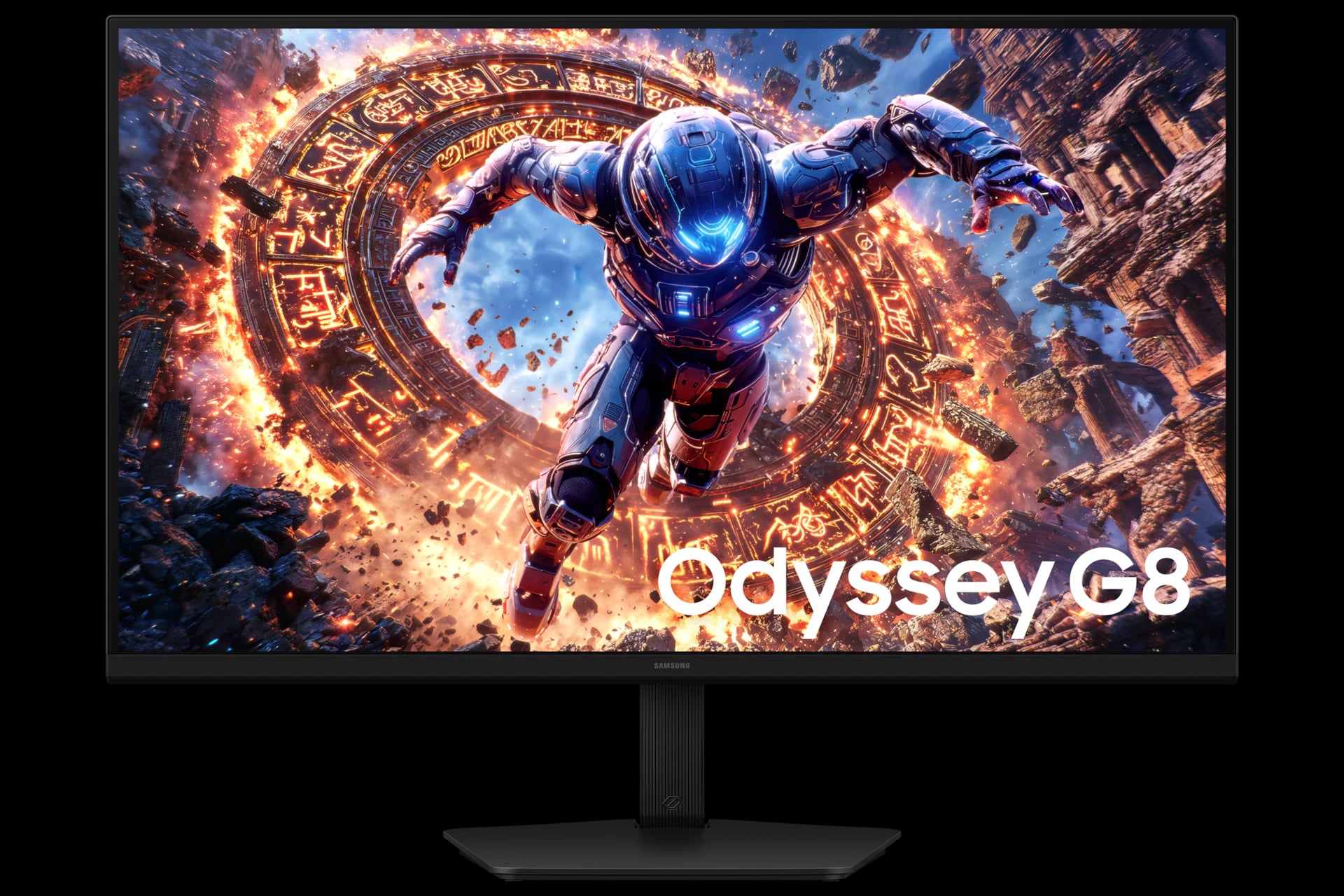
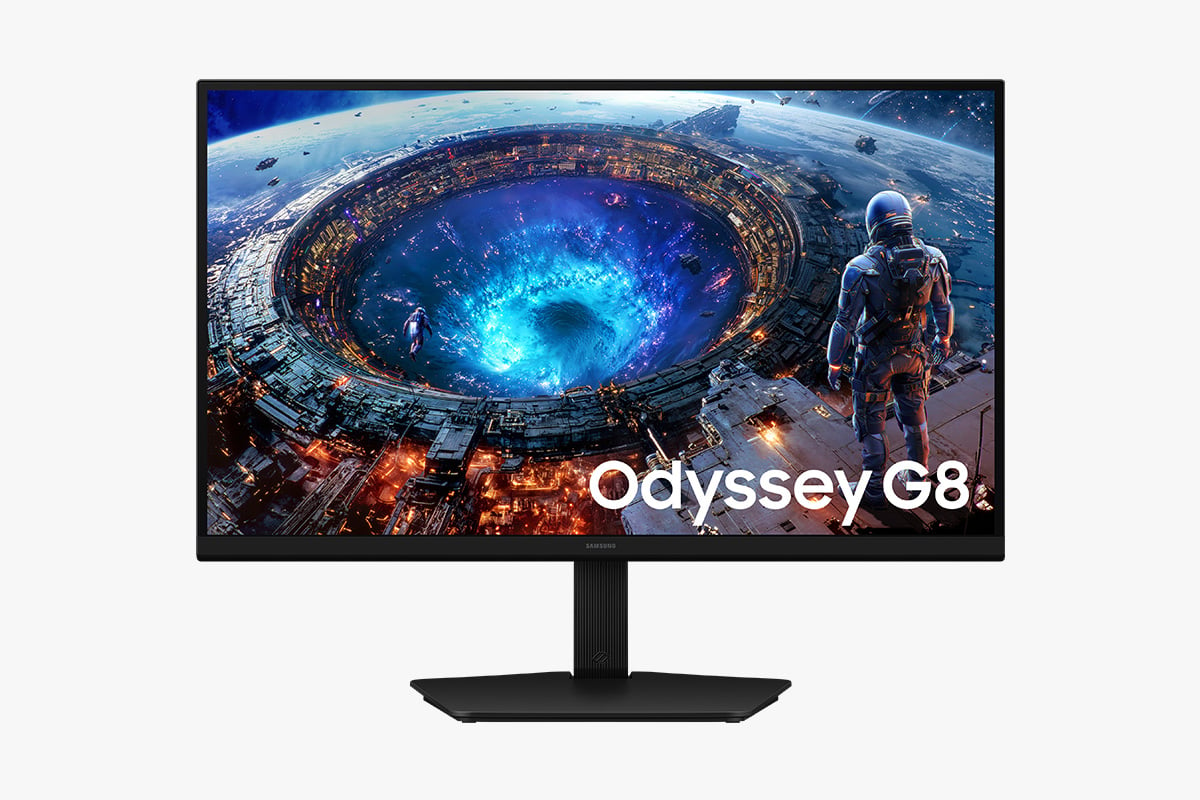
While 8K resolutions on TVs didn’t change the game for big screens, Samsung still imagines a future where 4K is seen as old hat. We now have to consider the latest Odyssey G8 gaming monitor with support for 6K resolutions, promising sharper detail and crisper visuals in the paltry few games that support such high pixel counts.
The new Samsung Odyssey G80HS is a 32-inch IPS LCD monitor that pushes the fabled 6K (6,144 x 3,456) resolution at 165Hz. With a flip of a switch, the monitor can drop its pixel count down to 3K (3,072 x 1,728) and 330Hz if you’re hoping for faster gaming scenarios. Higher resolutions will necessitate higher pixel counts, and the new G8 can max out at 224 PPI (pixels per inch). Visual clarity is less about resolution and more about maximizing the pixels on screen, which is where 6K resolution may make more sense for a 32-inch monitor.
Samsung’s Odyssey monitors are gaming-focused first and foremost, so you may be wondering what’s the point of a $1,600 non-OLED monitor like the G80HS. Samsung does promise a relatively wide viewing angle for LCDs at 178 degrees without losing visual quality. It also meets a 1ms pixel-to-pixel response time, meaning the monitor can change images relatively quickly. But, in reality, it’s to see content at an even higher pixel density.
For comparison, 6K is nearly 2.5 times the number of pixels as 4K, often referred to as UHD. The problem with 8K TVs was less the technology and more the dearth of content that could support that scale of resolution. Some titles, like Cyberpunk 2077 and Ghost of Tsushima, should manage to hit 6K resolution. Samsung’s latest monitors still support its own HDR10+ standard but not Dolby Vision for high dynamic range content.
The Odyssey G80HS promises to hit a typical brightness of 350 nits and a peak luminance of 400 nits. It doesn’t exactly seem very bright for an IPS monitor that demands such a premium price.
If you were looking for something more standard, the $1,300 Odyssey G80SH (don’t get confused now) is the 32-inch 4K OLED variant that promises 300 nits typical and 1,000 nits with HDR.
Samsung is also pushing another G80HF (okay, seriously…) 27-inch monitor that tops out at 5K resolution and has an IPS display, though this one only costs $950.
Whether you can hit playable frame rates at that top resolution and still push graphics settings or ray tracing to the max will depend on your PC’s capabilities. There are reasons why 5K or even 6K monitors exist. Those working in creative fields who need ultra-high-end, pixel-perfect screens like Apple’s Studio Display XDR can make use of those higher resolutions, though mostly when editing video or 3D objects that require higher resolutions.
Compared to 4K, 6K is relatively untested in gaming circles. At the very least, you’ll likely avoid a situation like what occurred with the PlayStation 5 that promised it was 8K-capable. Sony eventually removed all mentions of 8K from its console packaging when it became clear few games supported the resolution. Things may be different with 5K and 6K, though we can’t promise you’ll be able to tell the difference between UHD and the new hotness of high-resolution monitors.
While 8K resolutions on TVs didn’t change the game for big screens, Samsung still imagines a future where 4K is seen as old hat. We now have to consider the latest Odyssey G8 gaming monitor with support for 6K resolutions, promising sharper detail and crisper visuals in the paltry few games that support such high pixel counts.
The new Samsung Odyssey G80HS is a 32-inch IPS LCD monitor that pushes the fabled 6K (6,144 x 3,456) resolution at 165Hz. With a flip of a switch, the monitor can drop its pixel count down to 3K (3,072 x 1,728) and 330Hz if you’re hoping for faster gaming scenarios. Higher resolutions will necessitate higher pixel counts, and the new G8 can max out at 224 PPI (pixels per inch). Visual clarity is less about resolution and more about maximizing the pixels on screen, which is where 6K resolution may make more sense for a 32-inch monitor.
Samsung’s Odyssey monitors are gaming-focused first and foremost, so you may be wondering what’s the point of a $1,600 non-OLED monitor like the G80HS. Samsung does promise a relatively wide viewing angle for LCDs at 178 degrees without losing visual quality. It also meets a 1ms pixel-to-pixel response time, meaning the monitor can change images relatively quickly. But, in reality, it’s to see content at an even higher pixel density.
For comparison, 6K is nearly 2.5 times the number of pixels as 4K, often referred to as UHD. The problem with 8K TVs was less the technology and more the dearth of content that could support that scale of resolution. Some titles, like Cyberpunk 2077 and Ghost of Tsushima, should manage to hit 6K resolution. Samsung’s latest monitors still support its own HDR10+ standard but not Dolby Vision for high dynamic range content.
The Odyssey G80HS promises to hit a typical brightness of 350 nits and a peak luminance of 400 nits. It doesn’t exactly seem very bright for an IPS monitor that demands such a premium price.
If you were looking for something more standard, the $1,300 Odyssey G80SH (don’t get confused now) is the 32-inch 4K OLED variant that promises 300 nits typical and 1,000 nits with HDR.
Samsung is also pushing another G80HF (okay, seriously…) 27-inch monitor that tops out at 5K resolution and has an IPS display, though this one only costs $950.
Whether you can hit playable frame rates at that top resolution and still push graphics settings or ray tracing to the max will depend on your PC’s capabilities. There are reasons why 5K or even 6K monitors exist. Those working in creative fields who need ultra-high-end, pixel-perfect screens like Apple’s Studio Display XDR can make use of those higher resolutions, though mostly when editing video or 3D objects that require higher resolutions.
Compared to 4K, 6K is relatively untested in gaming circles. At the very least, you’ll likely avoid a situation like what occurred with the PlayStation 5 that promised it was 8K-capable. Sony eventually removed all mentions of 8K from its console packaging when it became clear few games supported the resolution. Things may be different with 5K and 6K, though we can’t promise you’ll be able to tell the difference between UHD and the new hotness of high-resolution monitors.
See Odyssey G8 (G80HS) at Amazon
See Odyssey G8 (G80HS) at Samsung.com
Source link
#TVs #Flopped #Samsung #Hopes #Monitors #Push #Screens
Galaxy Store, which provides apps created especially for the Galaxy smartphones. These apps can make your smartphone work faster, let you use additional camera options, and give you more customization options for your device. In this article, we look at five essential apps every Samsung user should know about and why they’re worth trying.
1. Good Lock
Good Lock is Samsung’s own customization app for Galaxy smartphones. With Good Lock, users get access to various settings that aren’t available in the default One UI interface. Rather than installing a third-party launcher to change your smartphone, Good Lock lets you personalize various aspects of your Galaxy device through official Samsung applications. Here are some of the most helpful modules from Good Lock:
Home Up: The Home Up module provides additional settings for the home screen. In particular, it allows users to resize folders, choose new layouts, use stickers, and activate looping for home screens.
Camera Assistant: With the Camera Assistant module, users can control extra features of the Samsung camera app. These include activating a 2x zoom shortcut, changing shutter button actions, and accessing such Samsung camera features as Single Take and Dual Recording.
One Hand Operation+: This module makes large Galaxy phones easier to use with one hand. Users can create custom swipe gestures, open an app switcher, and access quick tools with simple movements.
QuickStar: QuickStar lets users personalize the Quick Settings panel. It also allows them to hide selected status bar icons, change the panel’s appearance, and adjust the button layout.
Routines+: This is an expanded version of Samsung’s Modes and Routines feature. Users can create more automations and touch macros for daily tasks.
MultiStar: The MultiStar module provides more efficient usage of split-screen mode. Also, it enables additional cover screen features on Galaxy Z Flip models.
2. Good Guardians
Good Guardians is another helpful Samsung app that can be downloaded from the Galaxy Store. Similar to Good Lock, it comes with a number of downloadable modules. However, while Good Lock enhances customization options, Good Guardians helps enhance your phone’s performance and optimize its battery usage. These are some of the most helpful Good Guardians modules:
Battery Tracker: This module shows which apps have used the most battery over the last 24 hours or seven days. It also displays battery usage percentages and screen time for each app.
Battery Guardian: It provides users with a number of options to increase battery life, such as enabling power-saving mode at bedtime, optimizing display, and minimizing network usage for chosen apps.
Galaxy App Booster: This feature boosts app performance at just one click. According to Samsung, it should be run once a week and after any software update.
Thermal Guardian: The feature allows you to check your smartphone’s temperature and tells you why the phone heated up. Moreover, it monitors CPU utilization and lists apps that use maximum resources.
Memory Guardian: This tool clears unused RAM with one tap, helping free memory and improve overall performance.
Media File Guardian: It allows you to control media files stored on your phone, including files created by banking, shopping, and social media apps.
3. Expert RAW
For Galaxy smartphone users who want professional-grade control options for their camera, Samsung provides Expert RAW. Though it can be used with the Camera app, it is not automatically downloaded from the start. The user will need to install it either from the Galaxy Store or the More tab of the Camera app.
The app targets photography enthusiasts who want greater control over their camera settings. With this application, users can change settings such as ISO, shutter speed, focusing, exposure, and more before capturing images. Images can be captured using the app in two different file formats: JPEG and RAW. Certain Galaxy flagships offer functions such as astrophotography and multiple-exposure images. Expert RAW is available only on selected Galaxy flagship models, so it may not appear on every Samsung phone.
4. Galaxy Enhance-X
Galaxy Enhance-X is Samsung’s AI-powered editing app designed for Galaxy devices. It makes image and video editing easy regardless of your level of expertise. Its one-click improvement capability ensures you don’t need advanced knowledge to edit your images.
Along with AI enhancement, the app includes tools to eliminate shadows and reflections, enhance facial features, crop photos, and adjust brightness. Users can also restore vintage photos and even create GIFs. Video editing functions encompass cutting videos, muting the sound, and applying various video effects.
Other options include plugins such as FilmStyle, Cinematic Glow, SkyGuide, and SpeedShuffle, which offer additional editing options. But please keep in mind that the available features may differ depending on the Galaxy model.
5. Edge Panel Apps
Samsung’s Edge Panel gives Galaxy users quick access to apps and useful tools from the side of the screen. The feature already includes shortcuts for apps, contacts, weather, reminders, clipboard, and other utilities. Galaxy phones include several built-in panel options, but users can expand them with additional downloads.
The Galaxy Store offers additional Edge Panels that add more functionality. The Galaxy Store offers additional Edge Panels that add more functionality. Samsung provides panels such as the Calculator Panel, Calendar Panel, Edge QuickNotes, and Direct Call Panel. The Calculator Panel lets users perform quick calculations without opening the Calculator app. The Calendar Panel displays a scrollable calendar, while Edge QuickNotes makes it easy to view or create notes. With the Direct Call Panel, you can make a call from your contact list with just one tap. Third-party Edge Panels are also available on Samsung through the Galaxy Store. These panels offer additional options that let users perform daily tasks without opening apps.
Galaxy Store, which provides apps created especially for the Galaxy smartphones. These apps can make your smartphone work faster, let you use additional camera options, and give you more customization options for your device. In this article, we look at five essential apps every Samsung user should know about and why they’re worth trying.
1. Good Lock
Good Lock is Samsung’s own customization app for Galaxy smartphones. With Good Lock, users get access to various settings that aren’t available in the default One UI interface. Rather than installing a third-party launcher to change your smartphone, Good Lock lets you personalize various aspects of your Galaxy device through official Samsung applications. Here are some of the most helpful modules from Good Lock:
Home Up: The Home Up module provides additional settings for the home screen. In particular, it allows users to resize folders, choose new layouts, use stickers, and activate looping for home screens.
Camera Assistant: With the Camera Assistant module, users can control extra features of the Samsung camera app. These include activating a 2x zoom shortcut, changing shutter button actions, and accessing such Samsung camera features as Single Take and Dual Recording.
One Hand Operation+: This module makes large Galaxy phones easier to use with one hand. Users can create custom swipe gestures, open an app switcher, and access quick tools with simple movements.
QuickStar: QuickStar lets users personalize the Quick Settings panel. It also allows them to hide selected status bar icons, change the panel’s appearance, and adjust the button layout.
Routines+: This is an expanded version of Samsung’s Modes and Routines feature. Users can create more automations and touch macros for daily tasks.
MultiStar: The MultiStar module provides more efficient usage of split-screen mode. Also, it enables additional cover screen features on Galaxy Z Flip models.
2. Good Guardians
Good Guardians is another helpful Samsung app that can be downloaded from the Galaxy Store. Similar to Good Lock, it comes with a number of downloadable modules. However, while Good Lock enhances customization options, Good Guardians helps enhance your phone’s performance and optimize its battery usage. These are some of the most helpful Good Guardians modules:
Battery Tracker: This module shows which apps have used the most battery over the last 24 hours or seven days. It also displays battery usage percentages and screen time for each app.
Battery Guardian: It provides users with a number of options to increase battery life, such as enabling power-saving mode at bedtime, optimizing display, and minimizing network usage for chosen apps.
Galaxy App Booster: This feature boosts app performance at just one click. According to Samsung, it should be run once a week and after any software update.
Thermal Guardian: The feature allows you to check your smartphone’s temperature and tells you why the phone heated up. Moreover, it monitors CPU utilization and lists apps that use maximum resources.
Memory Guardian: This tool clears unused RAM with one tap, helping free memory and improve overall performance.
Media File Guardian: It allows you to control media files stored on your phone, including files created by banking, shopping, and social media apps.
3. Expert RAW
For Galaxy smartphone users who want professional-grade control options for their camera, Samsung provides Expert RAW. Though it can be used with the Camera app, it is not automatically downloaded from the start. The user will need to install it either from the Galaxy Store or the More tab of the Camera app.
The app targets photography enthusiasts who want greater control over their camera settings. With this application, users can change settings such as ISO, shutter speed, focusing, exposure, and more before capturing images. Images can be captured using the app in two different file formats: JPEG and RAW. Certain Galaxy flagships offer functions such as astrophotography and multiple-exposure images. Expert RAW is available only on selected Galaxy flagship models, so it may not appear on every Samsung phone.
4. Galaxy Enhance-X
Galaxy Enhance-X is Samsung’s AI-powered editing app designed for Galaxy devices. It makes image and video editing easy regardless of your level of expertise. Its one-click improvement capability ensures you don’t need advanced knowledge to edit your images.
Along with AI enhancement, the app includes tools to eliminate shadows and reflections, enhance facial features, crop photos, and adjust brightness. Users can also restore vintage photos and even create GIFs. Video editing functions encompass cutting videos, muting the sound, and applying various video effects.
Other options include plugins such as FilmStyle, Cinematic Glow, SkyGuide, and SpeedShuffle, which offer additional editing options. But please keep in mind that the available features may differ depending on the Galaxy model.
5. Edge Panel Apps
Samsung’s Edge Panel gives Galaxy users quick access to apps and useful tools from the side of the screen. The feature already includes shortcuts for apps, contacts, weather, reminders, clipboard, and other utilities. Galaxy phones include several built-in panel options, but users can expand them with additional downloads.
The Galaxy Store offers additional Edge Panels that add more functionality. The Galaxy Store offers additional Edge Panels that add more functionality. Samsung provides panels such as the Calculator Panel, Calendar Panel, Edge QuickNotes, and Direct Call Panel. The Calculator Panel lets users perform quick calculations without opening the Calculator app. The Calendar Panel displays a scrollable calendar, while Edge QuickNotes makes it easy to view or create notes. With the Direct Call Panel, you can make a call from your contact list with just one tap. Third-party Edge Panels are also available on Samsung through the Galaxy Store. These panels offer additional options that let users perform daily tasks without opening apps.
#Essential #Apps #Samsung #UserSamsung">5 Essential Apps Every Samsung User Should Know About
Most Samsung Galaxy users download apps from the Google Play Store, but that’s not the only place to find useful apps. Samsung has its own store, called Galaxy Store, which provides apps created especially for the Galaxy smartphones. These apps can make your smartphone work faster, let you use additional camera options, and give you more customization options for your device. In this article, we look at five essential apps every Samsung user should know about and why they’re worth trying.
1. Good Lock
Good Lock is Samsung’s own customization app for Galaxy smartphones. With Good Lock, users get access to various settings that aren’t available in the default One UI interface. Rather than installing a third-party launcher to change your smartphone, Good Lock lets you personalize various aspects of your Galaxy device through official Samsung applications. Here are some of the most helpful modules from Good Lock:
Home Up: The Home Up module provides additional settings for the home screen. In particular, it allows users to resize folders, choose new layouts, use stickers, and activate looping for home screens.
Camera Assistant: With the Camera Assistant module, users can control extra features of the Samsung camera app. These include activating a 2x zoom shortcut, changing shutter button actions, and accessing such Samsung camera features as Single Take and Dual Recording.
One Hand Operation+: This module makes large Galaxy phones easier to use with one hand. Users can create custom swipe gestures, open an app switcher, and access quick tools with simple movements.
QuickStar: QuickStar lets users personalize the Quick Settings panel. It also allows them to hide selected status bar icons, change the panel’s appearance, and adjust the button layout.
Routines+: This is an expanded version of Samsung’s Modes and Routines feature. Users can create more automations and touch macros for daily tasks.
MultiStar: The MultiStar module provides more efficient usage of split-screen mode. Also, it enables additional cover screen features on Galaxy Z Flip models.
2. Good Guardians
Good Guardians is another helpful Samsung app that can be downloaded from the Galaxy Store. Similar to Good Lock, it comes with a number of downloadable modules. However, while Good Lock enhances customization options, Good Guardians helps enhance your phone’s performance and optimize its battery usage. These are some of the most helpful Good Guardians modules:
Battery Tracker: This module shows which apps have used the most battery over the last 24 hours or seven days. It also displays battery usage percentages and screen time for each app.
Battery Guardian: It provides users with a number of options to increase battery life, such as enabling power-saving mode at bedtime, optimizing display, and minimizing network usage for chosen apps.
Galaxy App Booster: This feature boosts app performance at just one click. According to Samsung, it should be run once a week and after any software update.
Thermal Guardian: The feature allows you to check your smartphone’s temperature and tells you why the phone heated up. Moreover, it monitors CPU utilization and lists apps that use maximum resources.
Memory Guardian: This tool clears unused RAM with one tap, helping free memory and improve overall performance.
Media File Guardian: It allows you to control media files stored on your phone, including files created by banking, shopping, and social media apps.
3. Expert RAW
For Galaxy smartphone users who want professional-grade control options for their camera, Samsung provides Expert RAW. Though it can be used with the Camera app, it is not automatically downloaded from the start. The user will need to install it either from the Galaxy Store or the More tab of the Camera app.
The app targets photography enthusiasts who want greater control over their camera settings. With this application, users can change settings such as ISO, shutter speed, focusing, exposure, and more before capturing images. Images can be captured using the app in two different file formats: JPEG and RAW. Certain Galaxy flagships offer functions such as astrophotography and multiple-exposure images. Expert RAW is available only on selected Galaxy flagship models, so it may not appear on every Samsung phone.
4. Galaxy Enhance-X
Galaxy Enhance-X is Samsung’s AI-powered editing app designed for Galaxy devices. It makes image and video editing easy regardless of your level of expertise. Its one-click improvement capability ensures you don’t need advanced knowledge to edit your images.
Along with AI enhancement, the app includes tools to eliminate shadows and reflections, enhance facial features, crop photos, and adjust brightness. Users can also restore vintage photos and even create GIFs. Video editing functions encompass cutting videos, muting the sound, and applying various video effects.
Other options include plugins such as FilmStyle, Cinematic Glow, SkyGuide, and SpeedShuffle, which offer additional editing options. But please keep in mind that the available features may differ depending on the Galaxy model.
5. Edge Panel Apps
Samsung’s Edge Panel gives Galaxy users quick access to apps and useful tools from the side of the screen. The feature already includes shortcuts for apps, contacts, weather, reminders, clipboard, and other utilities. Galaxy phones include several built-in panel options, but users can expand them with additional downloads.
The Galaxy Store offers additional Edge Panels that add more functionality. The Galaxy Store offers additional Edge Panels that add more functionality. Samsung provides panels such as the Calculator Panel, Calendar Panel, Edge QuickNotes, and Direct Call Panel. The Calculator Panel lets users perform quick calculations without opening the Calculator app. The Calendar Panel displays a scrollable calendar, while Edge QuickNotes makes it easy to view or create notes. With the Direct Call Panel, you can make a call from your contact list with just one tap. Third-party Edge Panels are also available on Samsung through the Galaxy Store. These panels offer additional options that let users perform daily tasks without opening apps.
#Essential #Apps #Samsung #UserSamsung
Hollywood ain’t big enough for two ‘Nightmare on Elm Street’ revivals, and WB and Paramount are fighting over who can make it.#Begun #Nightmare #Elm #Street #WarNightmare on Elm Steet,Paramount+,Warner Bros.,Wes Craven">
Hollywood ain’t big enough for two ‘Nightmare on Elm Street’ revivals, and WB and Paramount are fighting over who can make it.#Begun #Nightmare #Elm #Street #WarNightmare on Elm Steet,Paramount+,Warner Bros.,Wes Craven">Begun, the ‘Nightmare on Elm Street’ War Has Hollywood ain’t big enough for two ‘Nightmare on Elm Street’ revivals, and WB and Paramount are fighting over who can make it.#Begun #Nightmare #Elm #Street #WarNightmare on Elm Steet,Paramount+,Warner Bros.,Wes Craven
Coyuchi Natural REM ranges from $1,400 for a twin to $2,400 for a California king.
The Best Kids Organic Mattress
Courtesy of My Green Mattress
Courtesy of My Green Mattress
My Green Mattress
Kiwi Children’s (Twin)
Beds for my kids are what started me down the organic mattress road. I care a lot more about what they’re sleeping on than what I’m sleeping on. Still, as much as I love the Avocado Green mattress, it’s not cheap. For my kids, I bought the more affordable Kiwi Mattress by My Green Mattress. The Kiwi is similar to our top pick Avocado. It’s a hybrid model with pocketed springs and natural materials: certified organic cotton, wool, and latex. It’s also something of a rarity; organic twin mattresses are somewhat difficult to find.
One nice twist that makes the Kiwi appealing for kids is the two-sided option. It costs a little more upfront, but being able to flip it over extends its life, which is handy if your kids think beds are actually trampolines in disguise. The Kiwi is definitely a firmer style, but I think it’s comfortable, and my children loved it when they were younger.
As with our top pick Avocado, My Green Mattress’s Kiwi uses GOTS Certified cotton, GOLS Certified latex, and has both GreenGuard Gold certification and MadeSafe certification.
Coyuchi Natural REM ranges from $1,400 for a twin to $2,400 for a California king.
The Best Kids Organic Mattress
Courtesy of My Green Mattress
Courtesy of My Green Mattress
My Green Mattress
Kiwi Children’s (Twin)
Beds for my kids are what started me down the organic mattress road. I care a lot more about what they’re sleeping on than what I’m sleeping on. Still, as much as I love the Avocado Green mattress, it’s not cheap. For my kids, I bought the more affordable Kiwi Mattress by My Green Mattress. The Kiwi is similar to our top pick Avocado. It’s a hybrid model with pocketed springs and natural materials: certified organic cotton, wool, and latex. It’s also something of a rarity; organic twin mattresses are somewhat difficult to find.
One nice twist that makes the Kiwi appealing for kids is the two-sided option. It costs a little more upfront, but being able to flip it over extends its life, which is handy if your kids think beds are actually trampolines in disguise. The Kiwi is definitely a firmer style, but I think it’s comfortable, and my children loved it when they were younger.
As with our top pick Avocado, My Green Mattress’s Kiwi uses GOTS Certified cotton, GOLS Certified latex, and has both GreenGuard Gold certification and MadeSafe certification.
#Organic #Mattressesbuying guides,bedroom,home,sleep,mattresses,shopping">The Best Organic Mattresses
The cotton and wool layers are GOTS-certified organic, while the Dunlop latex carries the GOLS certification. The finished product does not have any certifications beyond Greenguard Gold, but the material is undyed, which is great for anyone bothered by industrial dyes. As with most of these organic options, the Coyuchi is made without chemicals, foam, or glues, and comes with a 100-night trial, which means you can get a full refund if it doesn’t work for you.
Coyuchi’s Natural REM organic mattress is made to order in the United States. The company offers a 100-night trial, up to an 180-day return policy (there is a restocking fee of $150 if you go over the 100-night trial), and a 25-year warranty.
Coyuchi Natural REM ranges from $1,400 for a twin to $2,400 for a California king.
The Best Kids Organic Mattress
Courtesy of My Green Mattress
Courtesy of My Green Mattress
My Green Mattress
Kiwi Children’s (Twin)
Beds for my kids are what started me down the organic mattress road. I care a lot more about what they’re sleeping on than what I’m sleeping on. Still, as much as I love the Avocado Green mattress, it’s not cheap. For my kids, I bought the more affordable Kiwi Mattress by My Green Mattress. The Kiwi is similar to our top pick Avocado. It’s a hybrid model with pocketed springs and natural materials: certified organic cotton, wool, and latex. It’s also something of a rarity; organic twin mattresses are somewhat difficult to find.
One nice twist that makes the Kiwi appealing for kids is the two-sided option. It costs a little more upfront, but being able to flip it over extends its life, which is handy if your kids think beds are actually trampolines in disguise. The Kiwi is definitely a firmer style, but I think it’s comfortable, and my children loved it when they were younger.
As with our top pick Avocado, My Green Mattress’s Kiwi uses GOTS Certified cotton, GOLS Certified latex, and has both GreenGuard Gold certification and MadeSafe certification.







Post Comment