×
Pronto’s 10-minute house help pitch sparked a 3.6x valuation jump in just 90 days | TechCrunch

Pronto’s 10-minute house help pitch sparked a 3.6x valuation jump in just 90 days | TechCrunch

In 2025, the average urban Indian no longer needs to wait very long for much (except at government offices and in traffic): They simply have to order what they need from an app, and it’ll be delivered within minutes. The explosion of quick-commerce in the country has meant that millions of Indians are getting increasingly used to not having to wait for deliveries, or step out of their homes, as startups vie to make almost everything, from food and groceries to smartphones and gaming consoles, available within minutes.

It seems investors, too, don’t want to wait long: A budding startup out of New Delhi called Pronto, which lets users book and avail cleaning, laundry and home services within 10 minutes, has tripled its valuation in less than 90 days.

It was only in May when Pronto raised a $2 million seed round at a $12.5 million valuation. The startup has now raised an $11 million Series A round at a post-money valuation of $45 million, co-led by General Catalyst and Glade Brook Capital. Existing investor Bain Capital Ventures also participated in this round.

The new funding comes in the wake of solid traction: Pronto claims its revenue has risen by nearly five times, founder and CEO Anjali Sardana told TechCrunch, since it came out of stealth barely three months ago.

The startup now has bookings numbering in the “four-digits” every day, and expects annual recurring revenue in the range of $750,000 to $1.5 million, Sardana said, though she declined to disclose exact figures.

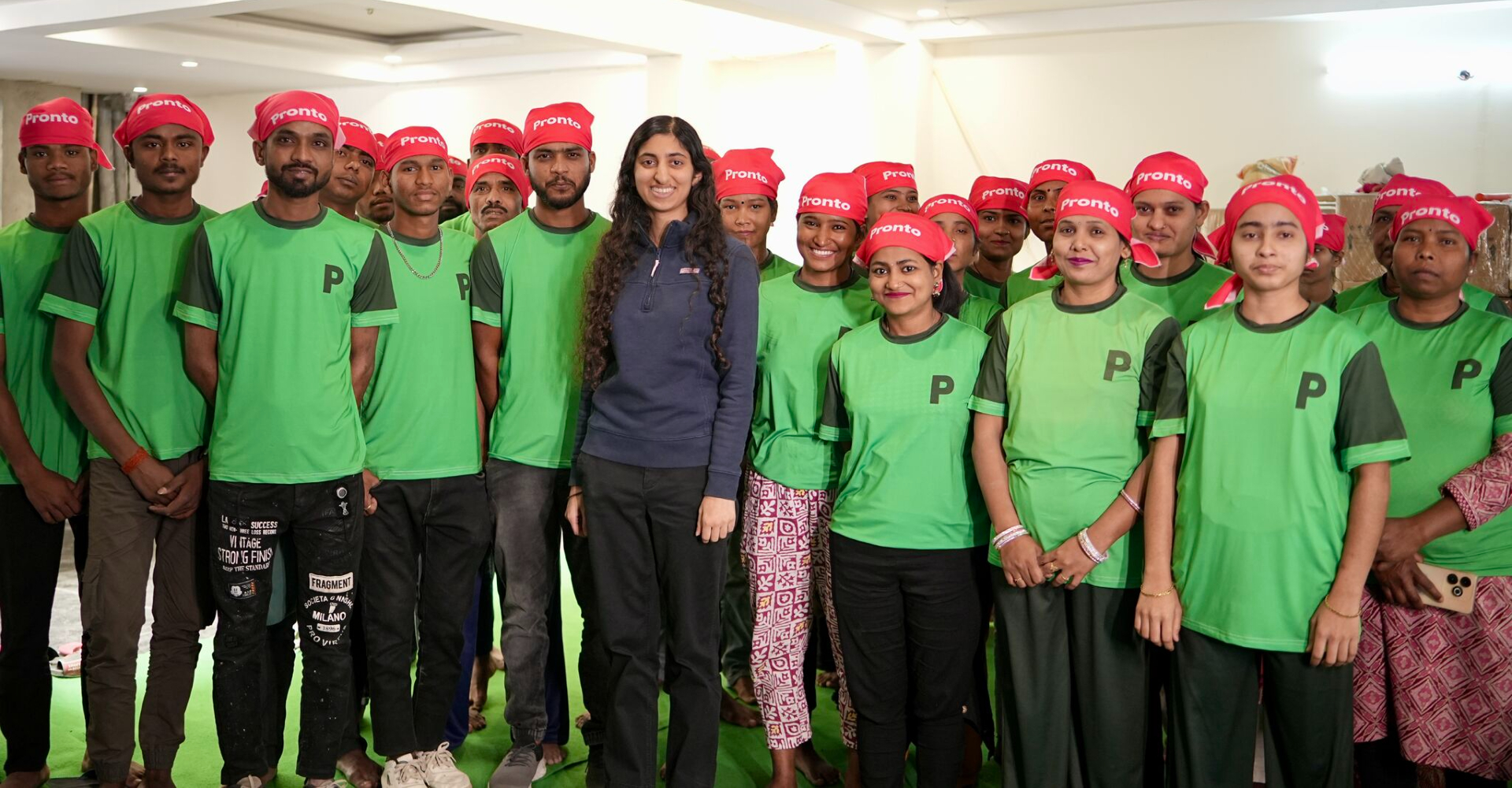
Pronto founder and CEO Anjali Sardana with workersImage Credits:Pronto

“It largely comes down to two things: one being momentum and the insane speed at which we were scaling, as well as just investors recognizing the quality of the team and how fast we were executing,” Sardana said, explaining what led investors to fund the Series A so soon after its seed round.

For investors, Sardana seems to be the primary reason they bet this early. “We were very impressed by Anjali,” said Rahul Garg, a partner at General Catalyst. “Given how young she is, given that she spent a lot of her time in the U.S. after she’s come to India, what she’s been able to achieve, the feedback from supply partners, the feedback from customers, her thought process, and how she wants to build and scale this business, we found it very inspiring.”

Techcrunch event

San Francisco
|
October 27-29, 2025

Pronto is not the only startup connecting domestic workers with consumers. Lightspeed Venture Partners recently backed Snabbit, and IPO-bound Urban Company also offers a similar service.

Garg told TechCrunch that India has 180–190 million nuclear families who are potential customers for household services, and a semi-skilled and unskilled workforce of 35 million that could tap a $35 billion cumulative wage pool in this space.

“Whichever way you look at the market, this is large enough for multiple players to build an endurable business,” he said.

Expansion plans

Pronto now has six hubs in Gurugram, a satellite city of New Delhi, up from two in May. Each of these hubs serves customers within 1.5 miles.

The startup initially met 70% to 80% of demand from within 500 meters of households, as its first two hubs were located in densely populated residential areas. It has now set up hubs at intersections so its workers can reach multiple smaller, spread-out sectors quickly.

Pronto
Pronto AppImage Credits:Pronto

Pronto’s primary customers are working professionals, and it is seeing high demand. “Household help is very prevalent in India. And therefore, these are use cases where demand is quite concentrated, even in small catchment areas,” Garg said.

The startup now plans to expand both within Gurugram and into new markets, including Mumbai, Bengaluru, and other major cities, in the next 12–18 months.

Pronto has a headcount of 33 people and has around 750 workers signed up on its platform.

Source link
#Prontos #10minute #house #pitch #sparked #3.6x #valuation #jump #days #TechCrunch

The video game disc is dead, and Sony’s been planning to kill it for some time, according to a report out of Austria. The man who leads Sony’s discmaking operations, Sony DADC president Dietmar Tanzer, told ORF Salzburg that the company’s Thalgau plant produces 600,000 discs every day, half of which are for PlayStation. But since it’ll only be making 10 percent of that volume in 2028, it’s planning to retrain all 300 employees to work on optical microlenses instead.

Thalgau isn’t just one of Sony’s disc plants. It’s where the disc-making division is headquartered, and appears to be its only remaining wholly owned disc manufacturing facility. Sony made discs in the United States for decades, originally in Terre Haute, Indiana and later in New Jersey, but it closed the latter plant in 2011 and moved all manufacturing from Indiana to Thalgau in 2022. Today, the Indiana facility markets itself to automakers who need help packaging and assembling headlights and the like instead.

This transition didn’t happen overnight. A behind-the-scenes video from December 2024 shows that the Thalgau plant was already working on microlenses as of then:

Those lenses, too, are created using discs:

ORF Salzburg writes that Sony has now invested €30 million to manufacture these microlenses, and that mass production may begin “as early as next year.”

Microlenses are theoretically used in all kinds of emerging applications where you might want to bend light, including headsets, but it appears that Sony may cater to automakers here, too. The head of Sony’s micro optics division gave ORF Salzburg the example of “a car turn signal that is projected onto asphalt.”

All of this is to say: Sony didn’t make this decision in a hurry, and it isn’t likely to change its mind despite the predictable backlash. It’s been winding down disc manufacturing for decades, and it’s ripping off one last band-aid with PlayStation.

According to Sony DADC’s website, it has produced over 26.4 billion discs to date — the vast majority, 23 billion of them, were made between 1983 and 2022 in Terre Haute, Indiana.

#Sonys #PlayStation #disc #factory #repurposedGaming,News,PlayStation">Sony’s PlayStation disc factory is already being repurposedThe video game disc is dead, and Sony’s been planning to kill it for some time, according to a report out of Austria. The man who leads Sony’s discmaking operations, Sony DADC president Dietmar Tanzer, told ORF Salzburg that the company’s Thalgau plant produces 600,000 discs every day, half of which are for PlayStation. But since it’ll only be making 10 percent of that volume in 2028, it’s planning to retrain all 300 employees to work on optical microlenses instead.Thalgau isn’t just one of Sony’s disc plants. It’s where the disc-making division is headquartered, and appears to be its only remaining wholly owned disc manufacturing facility. Sony made discs in the United States for decades, originally in Terre Haute, Indiana and later in New Jersey, but it closed the latter plant in 2011 and moved all manufacturing from Indiana to Thalgau in 2022. Today, the Indiana facility markets itself to automakers who need help packaging and assembling headlights and the like instead.This transition didn’t happen overnight. A behind-the-scenes video from December 2024 shows that the Thalgau plant was already working on microlenses as of then:Those lenses, too, are created using discs:ORF Salzburg writes that Sony has now invested €30 million to manufacture these microlenses, and that mass production may begin “as early as next year.”Microlenses are theoretically used in all kinds of emerging applications where you might want to bend light, including headsets, but it appears that Sony may cater to automakers here, too. The head of Sony’s micro optics division gave ORF Salzburg the example of “a car turn signal that is projected onto asphalt.”All of this is to say: Sony didn’t make this decision in a hurry, and it isn’t likely to change its mind despite the predictable backlash. It’s been winding down disc manufacturing for decades, and it’s ripping off one last band-aid with PlayStation.According to Sony DADC’s website, it has produced over 26.4 billion discs to date — the vast majority, 23 billion of them, were made between 1983 and 2022 in Terre Haute, Indiana.#Sonys #PlayStation #disc #factory #repurposedGaming,News,PlayStation

video game disc is dead, and Sony’s been planning to kill it for some time, according to a report out of Austria. The man who leads Sony’s discmaking operations, Sony DADC president Dietmar Tanzer, told ORF Salzburg that the company’s Thalgau plant produces 600,000 discs every day, half of which are for PlayStation. But since it’ll only be making 10 percent of that volume in 2028, it’s planning to retrain all 300 employees to work on optical microlenses instead.

Thalgau isn’t just one of Sony’s disc plants. It’s where the disc-making division is headquartered, and appears to be its only remaining wholly owned disc manufacturing facility. Sony made discs in the United States for decades, originally in Terre Haute, Indiana and later in New Jersey, but it closed the latter plant in 2011 and moved all manufacturing from Indiana to Thalgau in 2022. Today, the Indiana facility markets itself to automakers who need help packaging and assembling headlights and the like instead.

This transition didn’t happen overnight. A behind-the-scenes video from December 2024 shows that the Thalgau plant was already working on microlenses as of then:

Those lenses, too, are created using discs:

ORF Salzburg writes that Sony has now invested €30 million to manufacture these microlenses, and that mass production may begin “as early as next year.”

Microlenses are theoretically used in all kinds of emerging applications where you might want to bend light, including headsets, but it appears that Sony may cater to automakers here, too. The head of Sony’s micro optics division gave ORF Salzburg the example of “a car turn signal that is projected onto asphalt.”

All of this is to say: Sony didn’t make this decision in a hurry, and it isn’t likely to change its mind despite the predictable backlash. It’s been winding down disc manufacturing for decades, and it’s ripping off one last band-aid with PlayStation.

According to Sony DADC’s website, it has produced over 26.4 billion discs to date — the vast majority, 23 billion of them, were made between 1983 and 2022 in Terre Haute, Indiana.

#Sonys #PlayStation #disc #factory #repurposedGaming,News,PlayStation">Sony’s PlayStation disc factory is already being repurposed

The video game disc is dead, and Sony’s been planning to kill it for some time, according to a report out of Austria. The man who leads Sony’s discmaking operations, Sony DADC president Dietmar Tanzer, told ORF Salzburg that the company’s Thalgau plant produces 600,000 discs every day, half of which are for PlayStation. But since it’ll only be making 10 percent of that volume in 2028, it’s planning to retrain all 300 employees to work on optical microlenses instead.

Thalgau isn’t just one of Sony’s disc plants. It’s where the disc-making division is headquartered, and appears to be its only remaining wholly owned disc manufacturing facility. Sony made discs in the United States for decades, originally in Terre Haute, Indiana and later in New Jersey, but it closed the latter plant in 2011 and moved all manufacturing from Indiana to Thalgau in 2022. Today, the Indiana facility markets itself to automakers who need help packaging and assembling headlights and the like instead.

This transition didn’t happen overnight. A behind-the-scenes video from December 2024 shows that the Thalgau plant was already working on microlenses as of then:

Those lenses, too, are created using discs:

ORF Salzburg writes that Sony has now invested €30 million to manufacture these microlenses, and that mass production may begin “as early as next year.”

Microlenses are theoretically used in all kinds of emerging applications where you might want to bend light, including headsets, but it appears that Sony may cater to automakers here, too. The head of Sony’s micro optics division gave ORF Salzburg the example of “a car turn signal that is projected onto asphalt.”

All of this is to say: Sony didn’t make this decision in a hurry, and it isn’t likely to change its mind despite the predictable backlash. It’s been winding down disc manufacturing for decades, and it’s ripping off one last band-aid with PlayStation.

According to Sony DADC’s website, it has produced over 26.4 billion discs to date — the vast majority, 23 billion of them, were made between 1983 and 2022 in Terre Haute, Indiana.

#Sonys #PlayStation #disc #factory #repurposedGaming,News,PlayStation
Security researchers have confirmed that a European politician had his phone hacked with the Pegasus spyware while serving on an investigatory committee probing abuses of the notorious surveillance tool. This has reigniting fresh controversy over governments abusing spyware to collect information about their critics.

The researchers at the University of Toronto’s digital rights unit The Citizen Lab say the confirmed phone hacking of Greek journalist and former politician Stelios Kouloglou during 2022 and 2023 marks the first time that a member of the European Parliament’s PEGA committee, tasked with investigating phone spyware attacks by European governments, has been publicly identified as a victim of spyware.

Kouloglou told TechCrunch in a phone call that the deliberate compromise of his phone was “reckless.” One serving European lawmaker described the hacking of Kouloglou’s phone as a “direct attack on the rule of law,” and called on the European Commission to take concrete action by imposing strict limits on the use of spyware across the 27 member-state bloc.

While spyware attacks on lawmakers are rare, the timing and targeting of a committee investigator by way of the very spyware under his investigation suggests an intense focus on the committee’s inner workings ahead of a widely anticipated report detailing its findings. The hacks open fresh questions about how governments use spyware ostensibly needed for identifying serious crime, but then caught spying on the communications of journalists, lawmakers, and critics.

Citizen Lab’s researchers did not attribute the phone hacking to a specific country, but said that the government customer used the same Pegasus-loaded email address that was used in a previous campaign that hacked into the phones of journalists across Europe. The customer’s identity is not known, but the reuse of the same attacking email address implies that the customer had NSO Group’s authorization to use its Pegasus spyware to snoop on phones across multiple countries in Europe.

A spokesperson for the European Commission did not respond to TechCrunch’s request for comment. NSO Group also did not respond to a request for comment about the Citizen Lab report prior to publication.

In its report out Friday, Citizen Lab said Kouloglou was hacked in October 2022 and at least twice during March 2023 using an exploit that compromised a security vulnerability in Apple’s iPhone software. This vulnerability had been patched but the fix was not yet installed on Kouloglou’s phone. The exploit was a “zero-click” bug, meaning the spyware broke in and stole his data without needing any interaction on his part.

The bug abused a previously discovered flaw in Apple’s smart home software used in iPhones. It allowed the spyware to grab private data from Kouloglou’s phone without his knowledge, such as his text messages and other correspondence, location data, and photos.

The timing of the October 2022 hack coincides with intense discussions over email and text message throughout October and November 2022, ahead of the delivery of a first draft describing spyware abuses focusing in Cyprus, Greece, Hungary, Poland, and Spain. 

The hack also lines up at the exact time that Kouloglou was in the hospital at the time for a pre-scheduled surgery, which may have allowed the spyware operators to listen in to ambient audio discussing his healthcare or other conversations he had with visitors at the time.

Months later on March 6 and 7, Citizen Lab said Kouloglou’s phone was hacked again by the same Pegasus operator while Kouloglou traveled from Athens to Brussels, during a period of committee hearings and months prior to the committee finalizing and adopting their written draft report.

In a call, Kouloglou told TechCrunch that he didn’t know why he was specifically targeted but that he believes it was due to his work on the European Parliament’s committee investigating Pegasus abuses.

He described anger when he learned that his phone had been hacked. 

“You realize that all of your personal data [was taken] — not all the professional exchanges or messages with ministers — but also the very private things, like the happy moments and the sad moments,” he told TechCrunch.

Kouloglou said he plans to sue NSO Group, the Israeli-headquartered spyware maker. NSO remains largely banned from use in the United States following a Biden-era executive order that outlawed the government’s use of spyware that could violate people’s human rights. 

Last year, the spyware maker confirmed an unnamed American investment group funneled tens of millions of dollars into the company, likely as part of an effort to rehabilitate NSO’s beleaguered brand associated with enabling human rights abuses.

Kouloglou said he was going public with his story “for democracy, human rights, and the fight against corruption.”

“Corruption concerns everybody,” he said.

When you purchase through links in our articles, we may earn a small commission. This doesn’t affect our editorial independence.

#Politician #investigated #spyware #abuses #phone #hacked #Pegasus #spyware #TechCrunchSpyware,Pegasus,cybersecurity,NSO Group">Politician who investigated spyware abuses had his phone hacked with Pegasus spyware | TechCrunch
Security researchers have confirmed that a European politician had his phone hacked with the Pegasus spyware while serving on an investigatory committee probing abuses of the notorious surveillance tool. This has reigniting fresh controversy over governments abusing spyware to collect information about their critics.

The researchers at the University of Toronto’s digital rights unit The Citizen Lab say the confirmed phone hacking of Greek journalist and former politician Stelios Kouloglou during 2022 and 2023 marks the first time that a member of the European Parliament’s PEGA committee, tasked with investigating phone spyware attacks by European governments, has been publicly identified as a victim of spyware.


Kouloglou told TechCrunch in a phone call that the deliberate compromise of his phone was “reckless.” One serving European lawmaker described the hacking of Kouloglou’s phone as a “direct attack on the rule of law,” and called on the European Commission to take concrete action by imposing strict limits on the use of spyware across the 27 member-state bloc.

While spyware attacks on lawmakers are rare, the timing and targeting of a committee investigator by way of the very spyware under his investigation suggests an intense focus on the committee’s inner workings ahead of a widely anticipated report detailing its findings. The hacks open fresh questions about how governments use spyware ostensibly needed for identifying serious crime, but then caught spying on the communications of journalists, lawmakers, and critics.

Citizen Lab’s researchers did not attribute the phone hacking to a specific country, but said that the government customer used the same Pegasus-loaded email address that was used in a previous campaign that hacked into the phones of journalists across Europe. The customer’s identity is not known, but the reuse of the same attacking email address implies that the customer had NSO Group’s authorization to use its Pegasus spyware to snoop on phones across multiple countries in Europe.

A spokesperson for the European Commission did not respond to TechCrunch’s request for comment. NSO Group also did not respond to a request for comment about the Citizen Lab report prior to publication.

In its report out Friday, Citizen Lab said Kouloglou was hacked in October 2022 and at least twice during March 2023 using an exploit that compromised a security vulnerability in Apple’s iPhone software. This vulnerability had been patched but the fix was not yet installed on Kouloglou’s phone. The exploit was a “zero-click” bug, meaning the spyware broke in and stole his data without needing any interaction on his part.

The bug abused a previously discovered flaw in Apple’s smart home software used in iPhones. It allowed the spyware to grab private data from Kouloglou’s phone without his knowledge, such as his text messages and other correspondence, location data, and photos.

The timing of the October 2022 hack coincides with intense discussions over email and text message throughout October and November 2022, ahead of the delivery of a first draft describing spyware abuses focusing in Cyprus, Greece, Hungary, Poland, and Spain. 

The hack also lines up at the exact time that Kouloglou was in the hospital at the time for a pre-scheduled surgery, which may have allowed the spyware operators to listen in to ambient audio discussing his healthcare or other conversations he had with visitors at the time.


Months later on March 6 and 7, Citizen Lab said Kouloglou’s phone was hacked again by the same Pegasus operator while Kouloglou traveled from Athens to Brussels, during a period of committee hearings and months prior to the committee finalizing and adopting their written draft report.

In a call, Kouloglou told TechCrunch that he didn’t know why he was specifically targeted but that he believes it was due to his work on the European Parliament’s committee investigating Pegasus abuses.

He described anger when he learned that his phone had been hacked. 

“You realize that all of your personal data [was taken] — not all the professional exchanges or messages with ministers — but also the very private things, like the happy moments and the sad moments,” he told TechCrunch.

Kouloglou said he plans to sue NSO Group, the Israeli-headquartered spyware maker. NSO remains largely banned from use in the United States following a Biden-era executive order that outlawed the government’s use of spyware that could violate people’s human rights. 

Last year, the spyware maker confirmed an unnamed American investment group funneled tens of millions of dollars into the company, likely as part of an effort to rehabilitate NSO’s beleaguered brand associated with enabling human rights abuses.

Kouloglou said he was going public with his story “for democracy, human rights, and the fight against corruption.”

“Corruption concerns everybody,” he said.
When you purchase through links in our articles, we may earn a small commission. This doesn’t affect our editorial independence.#Politician #investigated #spyware #abuses #phone #hacked #Pegasus #spyware #TechCrunchSpyware,Pegasus,cybersecurity,NSO Group

tasked with investigating phone spyware attacks by European governments, has been publicly identified as a victim of spyware.

Kouloglou told TechCrunch in a phone call that the deliberate compromise of his phone was “reckless.” One serving European lawmaker described the hacking of Kouloglou’s phone as a “direct attack on the rule of law,” and called on the European Commission to take concrete action by imposing strict limits on the use of spyware across the 27 member-state bloc.

While spyware attacks on lawmakers are rare, the timing and targeting of a committee investigator by way of the very spyware under his investigation suggests an intense focus on the committee’s inner workings ahead of a widely anticipated report detailing its findings. The hacks open fresh questions about how governments use spyware ostensibly needed for identifying serious crime, but then caught spying on the communications of journalists, lawmakers, and critics.

Citizen Lab’s researchers did not attribute the phone hacking to a specific country, but said that the government customer used the same Pegasus-loaded email address that was used in a previous campaign that hacked into the phones of journalists across Europe. The customer’s identity is not known, but the reuse of the same attacking email address implies that the customer had NSO Group’s authorization to use its Pegasus spyware to snoop on phones across multiple countries in Europe.

A spokesperson for the European Commission did not respond to TechCrunch’s request for comment. NSO Group also did not respond to a request for comment about the Citizen Lab report prior to publication.

In its report out Friday, Citizen Lab said Kouloglou was hacked in October 2022 and at least twice during March 2023 using an exploit that compromised a security vulnerability in Apple’s iPhone software. This vulnerability had been patched but the fix was not yet installed on Kouloglou’s phone. The exploit was a “zero-click” bug, meaning the spyware broke in and stole his data without needing any interaction on his part.

The bug abused a previously discovered flaw in Apple’s smart home software used in iPhones. It allowed the spyware to grab private data from Kouloglou’s phone without his knowledge, such as his text messages and other correspondence, location data, and photos.

The timing of the October 2022 hack coincides with intense discussions over email and text message throughout October and November 2022, ahead of the delivery of a first draft describing spyware abuses focusing in Cyprus, Greece, Hungary, Poland, and Spain. 

The hack also lines up at the exact time that Kouloglou was in the hospital at the time for a pre-scheduled surgery, which may have allowed the spyware operators to listen in to ambient audio discussing his healthcare or other conversations he had with visitors at the time.

Months later on March 6 and 7, Citizen Lab said Kouloglou’s phone was hacked again by the same Pegasus operator while Kouloglou traveled from Athens to Brussels, during a period of committee hearings and months prior to the committee finalizing and adopting their written draft report.

In a call, Kouloglou told TechCrunch that he didn’t know why he was specifically targeted but that he believes it was due to his work on the European Parliament’s committee investigating Pegasus abuses.

He described anger when he learned that his phone had been hacked. 

“You realize that all of your personal data [was taken] — not all the professional exchanges or messages with ministers — but also the very private things, like the happy moments and the sad moments,” he told TechCrunch.

Kouloglou said he plans to sue NSO Group, the Israeli-headquartered spyware maker. NSO remains largely banned from use in the United States following a Biden-era executive order that outlawed the government’s use of spyware that could violate people’s human rights. 

Last year, the spyware maker confirmed an unnamed American investment group funneled tens of millions of dollars into the company, likely as part of an effort to rehabilitate NSO’s beleaguered brand associated with enabling human rights abuses.

Kouloglou said he was going public with his story “for democracy, human rights, and the fight against corruption.”

“Corruption concerns everybody,” he said.

When you purchase through links in our articles, we may earn a small commission. This doesn’t affect our editorial independence.

#Politician #investigated #spyware #abuses #phone #hacked #Pegasus #spyware #TechCrunchSpyware,Pegasus,cybersecurity,NSO Group">Politician who investigated spyware abuses had his phone hacked with Pegasus spyware | TechCrunch

Security researchers have confirmed that a European politician had his phone hacked with the Pegasus spyware while serving on an investigatory committee probing abuses of the notorious surveillance tool. This has reigniting fresh controversy over governments abusing spyware to collect information about their critics.

The researchers at the University of Toronto’s digital rights unit The Citizen Lab say the confirmed phone hacking of Greek journalist and former politician Stelios Kouloglou during 2022 and 2023 marks the first time that a member of the European Parliament’s PEGA committee, tasked with investigating phone spyware attacks by European governments, has been publicly identified as a victim of spyware.

Kouloglou told TechCrunch in a phone call that the deliberate compromise of his phone was “reckless.” One serving European lawmaker described the hacking of Kouloglou’s phone as a “direct attack on the rule of law,” and called on the European Commission to take concrete action by imposing strict limits on the use of spyware across the 27 member-state bloc.

While spyware attacks on lawmakers are rare, the timing and targeting of a committee investigator by way of the very spyware under his investigation suggests an intense focus on the committee’s inner workings ahead of a widely anticipated report detailing its findings. The hacks open fresh questions about how governments use spyware ostensibly needed for identifying serious crime, but then caught spying on the communications of journalists, lawmakers, and critics.

Citizen Lab’s researchers did not attribute the phone hacking to a specific country, but said that the government customer used the same Pegasus-loaded email address that was used in a previous campaign that hacked into the phones of journalists across Europe. The customer’s identity is not known, but the reuse of the same attacking email address implies that the customer had NSO Group’s authorization to use its Pegasus spyware to snoop on phones across multiple countries in Europe.

A spokesperson for the European Commission did not respond to TechCrunch’s request for comment. NSO Group also did not respond to a request for comment about the Citizen Lab report prior to publication.

In its report out Friday, Citizen Lab said Kouloglou was hacked in October 2022 and at least twice during March 2023 using an exploit that compromised a security vulnerability in Apple’s iPhone software. This vulnerability had been patched but the fix was not yet installed on Kouloglou’s phone. The exploit was a “zero-click” bug, meaning the spyware broke in and stole his data without needing any interaction on his part.

The bug abused a previously discovered flaw in Apple’s smart home software used in iPhones. It allowed the spyware to grab private data from Kouloglou’s phone without his knowledge, such as his text messages and other correspondence, location data, and photos.

The timing of the October 2022 hack coincides with intense discussions over email and text message throughout October and November 2022, ahead of the delivery of a first draft describing spyware abuses focusing in Cyprus, Greece, Hungary, Poland, and Spain. 

The hack also lines up at the exact time that Kouloglou was in the hospital at the time for a pre-scheduled surgery, which may have allowed the spyware operators to listen in to ambient audio discussing his healthcare or other conversations he had with visitors at the time.

Months later on March 6 and 7, Citizen Lab said Kouloglou’s phone was hacked again by the same Pegasus operator while Kouloglou traveled from Athens to Brussels, during a period of committee hearings and months prior to the committee finalizing and adopting their written draft report.

In a call, Kouloglou told TechCrunch that he didn’t know why he was specifically targeted but that he believes it was due to his work on the European Parliament’s committee investigating Pegasus abuses.

He described anger when he learned that his phone had been hacked. 

“You realize that all of your personal data [was taken] — not all the professional exchanges or messages with ministers — but also the very private things, like the happy moments and the sad moments,” he told TechCrunch.

Kouloglou said he plans to sue NSO Group, the Israeli-headquartered spyware maker. NSO remains largely banned from use in the United States following a Biden-era executive order that outlawed the government’s use of spyware that could violate people’s human rights. 

Last year, the spyware maker confirmed an unnamed American investment group funneled tens of millions of dollars into the company, likely as part of an effort to rehabilitate NSO’s beleaguered brand associated with enabling human rights abuses.

Kouloglou said he was going public with his story “for democracy, human rights, and the fight against corruption.”

“Corruption concerns everybody,” he said.

When you purchase through links in our articles, we may earn a small commission. This doesn’t affect our editorial independence.

#Politician #investigated #spyware #abuses #phone #hacked #Pegasus #spyware #TechCrunchSpyware,Pegasus,cybersecurity,NSO Group

Post Comment