Russia’s Wagner group accused of killing civilians in cold-blood in Mali

Russia’s Wagner group accused of killing civilians in cold-blood in Mali

Thomas NaadiBBC Africa, M’berra

BBC Silhouettes of two people from Mali at M'berra refugee camp in Mauritania as the sun is low in the skyBBC

Warning: This story contains descriptions of torture and physical violence. Some readers may find it distressing.

A shopkeeper has told the BBC how Russian mercenaries fighting jihadists in Mali carried out the cold-blooded murder of two men in front of him and then threatened to chop off his fingers and kill him too.

This is one of several similar testimonies collected by the BBC showing the tactics used by the Russian fighters as they waged a brutal counter-insurgency operation against Islamist militants in the West African nation – methods widely condemned by human rights groups.

A military junta seized power in Mali in 2021, forcing French troops to leave after accusing them of failing to stem the insurgency. The junta pivoted towards Russia, enlisting the help of the Wagner mercenary group, which was at the time linked to the Kremlin.

Wagner has since pulled out of the country, and its operations have been taken over by Africa Corps, which falls under Russia’s defence ministry.

Some of the Wagner mercenaries highlighted their atrocities on an invitation-only Telegram group until it was shut down in the middle of this year, said a report released by the European Council on Foreign Relations last month.

They “regularly shared photos and videos of murder, rape, torture, cannibalism and desecration of corpses against alleged insurgents and civilians”, the report added.

In June, the Africa Report publication said it had “infiltrated” the Wagner-linked Telegram channel, finding 322 videos and 647 photographs of atrocities, including severed heads and gouged-out eyes, and posts “laced with racism”.

The shopkeeper we spoke to has fled Mali and is now living in a refugee camp across the border in Mauritania. We have named him Ahmed, and have changed the names of all the victims quoted in this article for their own safety.

He told the BBC his ordeal started when the Wagner combatants drove up to the big store that he ran in the central town of Nampala in August 2024.

Despite being regular customers, the Wagner fighters wanted to detain his boss, and accused him of colluding with the jihadists who have a strong presence in the region, Ahmed said.

“They took me to the vehicle and pushed me inside and tied my hands,” he added.

“A Wagner soldier took a knife and placed it on my finger, and asked me: ‘Where is the shop owner?’ I told him he is in [the capital] Bamako, but he replied: ‘Wrong answer’.”

Ahmed said the Wagner men, who spoke through an interpreter, then took him to a well-fortified Malian military base, and put him in a hangar.

“I and three Wagner guys were in the hangar. They filled a tank with water and asked me to take off my clothes. I did. They dipped my head in the water until I was almost suffocating and I fell. Then they put their feet on my chest and I started to breathe [heavily].

“Then they dipped my head in the water again and asked me for the second time about the shop owner and I told them he is in Bamako,” Ahmed said, adding that the torture was repeated for a third time, and he gave the same answer.

After this ordeal, Ahmed said he was thrown into a small toilet block, where there were other local people he knew – including Hussein, who had been so badly beaten that he could not recognise him at first.

“About 40 minutes later, they brought Umar [another acquaintance]. He too was in a terrible situation. They had tortured him. We slept in that toilet and the next morning they brought a piece of bread and a small cup of coffee,” Ahmed said.

He said he was taken back to the hangar, where the Russian fighters wrapped a bandage around his face and head.

“I couldn’t see. I couldn’t talk. I couldn’t hear. They put a knife on my throat and told the interpreter to tell me that this is the last chance. If I didn’t tell them the truth, they would behead me. I told the interpreter I had given them all the information I had.”

Ahmed said his Russian interrogators then removed the bandage and threw him into a kitchen where he spent the night with two strangers – an ethnic Tuareg man who told him he had been detained without being told why while grazing cattle, and an Arab man who said he was picked up while looking for his camels.

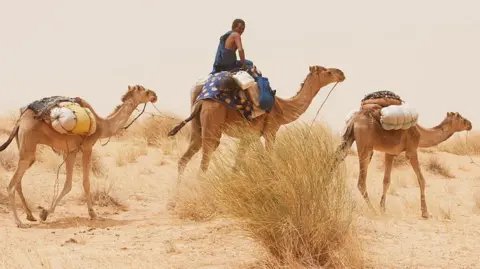
AFP via Getty Images A Tuareg man rides a camel with some goods on it, with another camel in front and at the back, in Mali (archive shot)AFP via Getty Images

Nomads criss-cross the desert terrain of northern Mali with their camels

The nomadic Tuareg and Arab communities who roam the vast deserts of northern Mali are often treated with suspicion, especially since a Tuareg separatist uprising more than a decade ago was hijacked by jihadist groups, who now operate mainly under the banner of an al-Qaeda affiliate, Jama’at Nusrat al-Islam wal-Muslimin (JNIM).

After spending the night with them, Ahmed said he was taken back to the hangar.

“They brought the two men [the Tuareg and Arab] and beheaded them in my presence,” Ahmed said.

Looking terrified, Ahmed tried to beat back tears as he told the BBC what happened next.

“They brought one of the bodies closer to me to smell the fresh blood, and said: ‘If you don’t tell us the whereabouts of the shop owner, you will suffer a similar fate.'”

Ahmed said his life was only spared after a Wagner commander made a call to a Malian army officer, who assured him that the shop owner was not colluding with the jihadists.

Ahmed said the commander then went to the base to release him, as well as another shop owner and Umar.

“I spent 15 days there. Then I decided to leave for Mauritania with my wife and children,” Ahmed said.

The BBC has approached Russia’s and Mali’s defence ministries for comment, but they have not yet responded.

The Sentry, a campaign group co-founded by actor George Clooney and former US government official John Prendergast, said in a report released in August that Wagner fighters had not only carried out abuses against civilians, but it had also created “chaos and fear” within the Malian military hierarchy, forcing commanders to remain silent.

It quoted a Malian official as saying that Wagner operatives were “worse than the French. They think my men are more stupid than them. We have gone from the frying pan to the fire.”

Declaring its mission “accomplished” despite the worsening security situation, Wagner announced its withdrawal from Mali in June this year, with analysts saying that most of its fighters had been absorbed into Africa Corps.

The Senegal-based Timbuktu Institute think-tank estimates that 70 to 80% of Africa Corps fighters were formerly in Wagner.

“In reality, Africa Corps inherits Wagner’s legacy of human rights violations, including extrajudicial killings and acts of torture,” it said in a report released in July.

However, violence-monitoring group Acled said that early trends suggested that the conduct of Africa Corps was “less predatory” than Wagner’s.

“The number of incidents involving deliberate civilian killings or mass atrocities has fallen noticeably,” Acled’s senior West Africa analyst Héni Nsaibia told the BBC.

The conflict has forced nearly 50,000 people to flee to M’berra refugee camp in Mauritania, according to the UN refugee agency.

They include Bintu, who told the BBC she ran away from her village last year with her five children after her husband’s bullet-riddled body was dumped in a river. Local people told her that he had been repeatedly shot while riding his horse.

“Who is going to look after my children? Who is going to look after me?” she asked as she swept the small plot of land outside her home at the camp.

“When I hear the name Wagner, I feel traumatised. I feel afraid. I hate the word Wagner because they have brought sadness to me.”

Wearing a navy blue outfit and white turban, another refugee, Youssouf, was sitting under a shed, his eyes reflecting the trauma of his experiences, when the BBC met him.

He recalled that he and his friends had been herding cattle near the Mauritanian border, and had stopped by a well to get fresh water when they saw a cloud of dust in the distance.

Youssouf said a vehicle raced towards them, and it turned out to be Wagner fighters, who started beating them for no apparent reason – an experience several refugees recounted to the BBC.

Youssouf recalled that one Wagner fighter “grabbed me and threatened to throw me into the well”, but another intervened to prevent him from doing so.

He said he and his friends were then bundled into different vehicles, each carrying three Wagner operatives.

“While they drove, they beat me the entire way, kicking me, pressing their boots into my face and head, and hitting me in the chest. I don’t know what happened to our cattle.”
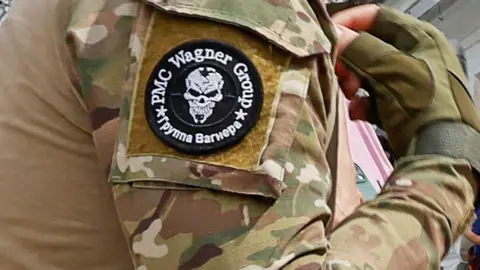
Reuters A close-up of a gloved hand and arm of a Wagner soldier, showing his camouflaged fatigues and the black and white Wagner logo featuring a white skullReuters

Wagner was deployed to Mali after the military junta pivoted towards Russia

Along with his friends, he was taken to a military camp north of the town of Léré, where he says they were tortured.

“A man came with a metal rod. He beat us so badly I felt like I was going to die. They tied our arms apart so we couldn’t move, hitting us hard on our thighs and legs to stop us from escaping.”

Youssouf said they were then dragged into an office, with the beatings continuing until they fainted.

He added that when he regained consciousness, he found his hands tied to the motionless hands of one of his friends.

“They then brought a motorbike close to my face, revved the engine, and blew exhaust into my nose to wake me up fully. They did the same to my friend, but he didn’t respond. That’s when they realised he was dead.”

Youssouf said he did not know what happened to his friend’s body, but he and his other friends were released – again, with no explanation.
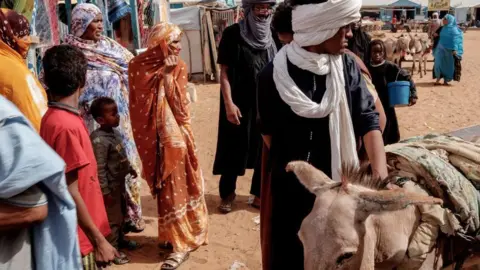
AFP via Getty Images Men, women and children are seen at a refugee camp in Mauritania, with their livestock (7 June 2022)AFP via Getty Images

Mauritania has become a safe haven for people fleeing conflict in Mali

Ahmed, the former shopkeeper, said that before his own torturous experience, he saw how Wagner was committing atrocities on a mass scale, once placing the entire town of Nampala and surrounding villages under siege.

He said he was among residents who were forced to gather on a football field, with the mercenaries trying to identify the person whom, they alleged, was using a satellite phone.

“They called Sikou Cissey. He was just a random man wearing a traditional hat. They took off his clothes and filled a barrel with water and held him by the legs. They then dipped his head in the barrel until he was unable to breathe,” Ahmed said.

With Malian soldiers looking on, the Wagner fighters later brought shovels and pickaxes to the football field to scare people into thinking they were going to dig their own graves unless they pin-pointed the person whom they alleged was using the satellite phone, Ahmed added.

He said that after being in the scorching sun the whole day, the residents were released – except for one who was taken away by the mercenaries and whose fate he does not know.

Ahmed said he wanted the Wagner fighters to be brought to justice, and to be held accountable for their atrocities.

“The experience haunts me. It gives me nightmares,” he said as he sat in his all-black outfit at the camp, unsure whether he would ever return to his ordinary life as a shopkeeper.

Additional reporting by the BBC’s Favour Nunoo
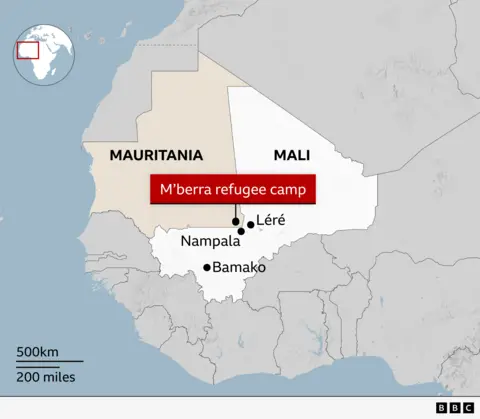
A map showing Mali and Mauritania and the locations of Lere, Bamako, Nampala and the M'berra refugee camp.

You may also be interested in:

Getty Images/BBC A woman looking at her mobile phone and the graphic BBC News AfricaGetty Images/BBC

Source link
#Russias #Wagner #group #accused #killing #civilians #coldblood #Mali


Cuba and the United States say officials recently held talks on the island as tensions remain high over the US energy blockade on the Caribbean nation. A US State Department official said the meeting took place on April 10th, while Cuba identified lifting the blockade as a key priority. Morgan Ayre reports.#held #secret #talks #Cuba">US held secret talks with CubaCuba and the United States say officials recently held talks on the island as tensions remain high over the US energy blockade on the Caribbean nation. A US State Department official said the meeting took place on April 10th, while Cuba identified lifting the blockade as a key priority. Morgan Ayre reports.#held #secret #talks #Cuba
 

Greek firm warns ships of “fraudulent messages” offering safe Strait of Hormuz passage for cryptocurrency

The Greek maritime risk management firm MARISKS has warned mariners in the Middle East of fraudulent messages being issued to shipping companies offering vessels safe passage through the Strait of Hormuz in exchange for cryptocurrency, according to the Reuters news agency.

After a brief reopening of the vital waterway, Iran reimposed restrictions on vessels transiting the strait in response to the U.S. naval blockade of its own ships and ports over the weekend. As of now, Iran demands that any commercial vessel seeking passage do so in direct coordination with its military authorities, and that it use a designated route that passes close to its Larak Island in the far north of the narrow strait.

MARISKS issued an alert to shipowners on Monday warning that unknown actors claiming to represent Iranian authorities were sending some shipping companies messages demanding fees payable in cryptocurrencies such as Bitcoin for permission to transit the strait.

“These specific messages are a scam,” and not actually sent by Iranian authorities, the firm warned.

Reuters said there was no comment from Tehran about the messages, noting that hundreds of ships, with about 20,000 seafarers on board, remained stranded in the Gulf as of Tuesday. 

CBS News has seen the gridlock first-hand. Journalists are not meant to be on the waters of the strait, so correspondent Imtiaz Tyab and producer Sohel Uddin posed as tourists to get a short journey into the choked waterway on a pleasure boat. 

They saw dozens of cargo ships and tankers, all of which have sat idle for weeks, waiting and hoping for passage through the strait.


Iranian state TV says nobody sent to Pakistan yet, participation in talks requires change in U.S. “behavior”

Iranian state TV on Tuesday rejected reports suggesting a lower-level preliminary delegation had arrived in Pakistan’s capital ahead of possible peace talks with Trump administration officials.

“Since Saturday, numerous reports have circulated about the ‘departure’ or ‘arrival’ of an Iranian delegation to Pakistan, and even announcements of the meeting time as ‘Monday afternoon’ or ‘Tuesday morning’ by international and regional media — all of which are inaccurate,” the state TV broadcast said.

The report then reiterated a remark by the speaker of Iran’s parliament, Mohammad-Bagher Ghalibaf, who said Monday: “We do not accept negotiations under the shadow of threats.”

“Continuing participation in the talks depends on a change in the behavior and positions of the Americans,” the state TV report said. 

PAKISTAN-WAR-IRAN-US-ISRAEL-DIPLOMACY
Security personnel stand guard at a checkpoint near the Serena Hotel in Islamabad, Pakistan, April 21, 2026, amid heightened security measures ahead of anticipated U.S.-Iran peace talks. Aamir QURESHI/AFP/Getty
 

Trump says recovering Iran’s uranium will be “long and difficult process”

President Trump said late Monday that obtaining uranium from Iran would be “long” and “difficult” in the aftermath of last year’s U.S. strikes on Tehran’s nuclear sites.

“Operation Midnight Hammer was a complete and total obliteration of the Nuclear Dust sites in Iran,” he wrote on his Truth Social platform, adding: “Therefore, digging it out will be a long and difficult process.”

Mr. Trump regularly uses the term “nuclear dust” to refer to Iran’s stock of enriched uranium, which the United States accuses Iran of hoarding in order to use in a nuclear bomb. But he has also sometimes used it to refer to material left over from U.S. strikes on Iran’s nuclear facilities in June last year.

Mr. Trump has said Iran’s stockpile of enriched uranium will ultimately be transferred to U.S. territory, despite Iran’s foreign ministry disputing any such plans.

Israeli officials say Tehran had stepped up efforts to acquire a nuclear weapon since the end of the 12-day war last June, which was launched by Israel and included U.S. bombings of three nuclear facilities, including an enrichment plant.  


Trump warns Iran will “see problems like they’ve never seen before” if they don’t negotiate

Speaking on the John Fredericks radio show, President Trump predicted Monday that Iran will negotiate with the U.S., but “if they don’t, they’re going to see problems like they’ve never seen before.”

He also reiterated that he believes the Iran war is “very close to being over.”

Mr. Trump has said his Vice President JD Vance, senior envoy Steve Witkoff and son-in-law Jared Kushner will travel to Pakistan for another possible round of U.S.-Iran peace talks, as a two-week ceasefire between the two countries is set to expire this week. It’s not clear whether Iran plans to send a delegation to Islamabad.


Iran’s parliament speaker casts more doubt on further negotiations with U.S.

Iran’s parliament speaker, Mohammad-Bagher Ghalibaf, cast further doubt on future negotiations with the U.S. on Monday, saying: “We do not accept negotiations under the shadow of threats.”

“Trump, by imposing a siege and violating the ceasefire, seeks to turn this negotiating table — in his own imagination — into a table of surrender or to justify renewed warmongering,” Ghalibaf said on X.

“In the past two weeks, we have prepared to reveal new cards on the battlefield.”

Ghalibaf was among the Iranian officials who met with Vice President JD Vance, President Trump’s son-in-law Jared Kushner, and special envoy Steve Witkoff earlier this month for direct talks in Pakistan that did not result in a breakthrough.


How Trump’s messaging on Iran has shifted since saying they “agreed to everything”

In less than 48 hours this weekend, President Trump went from saying Iran has “agreed to everything,” including working with the U.S. to remove its enriched uranium, to warning that if Iran doesn’t sign a U.S.-backed deal, the “whole country is getting blown up.” 

The president’s rapid shifts in messaging, expressed in phone calls with individual reporters and on Truth Social, come as the two-week ceasefire in the war with Iran enters its final days, and as the state of negotiations with Iran is uncertain. 

Read more here.


Trump says “time is not my adversary” in reaching a deal with Iran

Only a day after threatening that Iran would be “getting blown up” unless the regime signed a U.S.-backed deal, the president on Monday said he’s in no rush to reach an agreement with Tehran. 

“The Democrats are doing everything possible to hurt the very strong position we are in with respect to Iran,” Mr. Trump wrote on Truth Social, noting that Democrats “like to say that I promised 6 weeks to defeat Iran.”

The president insisted that from a military standpoint, it was “far faster” than six weeks to defeat Iran. Still, he said, “I’m not going to let them rush the United States into making a deal that is not as good as it could have been.” 

“I read the Fake News saying that I am under ‘pressure’ to make a Deal,” he wrote. “THIS IS NOT TRUE! I am under no pressure whatsoever, although, it will all happen, relatively quickly! Time is not my adversary, the only thing that matters is that we finally, after 47 years, straighten out the MESS that other Presidents let happen because they didn’t have the Courage or Foresight to do what had to be done with respect to Iran.”

#Live #Updates #Unclear #U.S.Iran #peace #talks #happen #day #Trumps #latest #ultimatum #expiresWar, Pakistan, Iran, Israel, Nuclear Weapons, Ceasefire, Donald Trump, Middle East, Strait of Hormuz">Live Updates: Unclear if U.S.-Iran peace talks will happen one day before Trump’s latest ultimatum expires


              23m ago
            

                          Greek firm warns ships of “fraudulent messages” offering safe Strait of Hormuz passage for cryptocurrency
            
                          
                The Greek maritime risk management firm MARISKS has warned mariners in the Middle East of fraudulent messages being issued to shipping companies offering vessels safe passage through the Strait of Hormuz in exchange for cryptocurrency, according to the Reuters news agency.After a brief reopening of the vital waterway, Iran reimposed restrictions on vessels transiting the strait in response to the U.S. naval blockade of its own ships and ports over the weekend. As of now, Iran demands that any commercial vessel seeking passage do so in direct coordination with its military authorities, and that it use a designated route that passes close to its Larak Island in the far north of the narrow strait.MARISKS issued an alert to shipowners on Monday warning that unknown actors claiming to represent Iranian authorities were sending some shipping companies messages demanding fees payable in cryptocurrencies such as Bitcoin for permission to transit the strait.“These specific messages are a scam,” and not actually sent by Iranian authorities, the firm warned.Reuters said there was no comment from Tehran about the messages, noting that hundreds of ships, with about 20,000 seafarers on board, remained stranded in the Gulf as of Tuesday. CBS News has seen the gridlock first-hand. Journalists are not meant to be on the waters of the strait, so correspondent Imtiaz Tyab and producer Sohel Uddin posed as tourists to get a short journey into the choked waterway on a pleasure boat. They saw dozens of cargo ships and tankers, all of which have sat idle for weeks, waiting and hoping for passage through the strait.


              43m ago
            

                          Iranian state TV says nobody sent to Pakistan yet, participation in talks requires change in U.S. “behavior”
            
                          
                Iranian state TV on Tuesday rejected reports suggesting a lower-level preliminary delegation had arrived in Pakistan’s capital ahead of possible peace talks with Trump administration officials.“Since Saturday, numerous reports have circulated about the ‘departure’ or ‘arrival’ of an Iranian delegation to Pakistan, and even announcements of the meeting time as ‘Monday afternoon’ or ‘Tuesday morning’ by international and regional media — all of which are inaccurate,” the state TV broadcast said.The report then reiterated a remark by the speaker of Iran’s parliament, Mohammad-Bagher Ghalibaf, who said Monday: “We do not accept negotiations under the shadow of threats.”“Continuing participation in the talks depends on a change in the behavior and positions of the Americans,” the state TV report said. 


                  Security personnel stand guard at a checkpoint near the Serena Hotel in Islamabad, Pakistan, April 21, 2026, amid heightened security measures ahead of anticipated U.S.-Iran peace talks.


                Aamir QURESHI/AFP/Getty


              43m ago
            

                          Trump says recovering Iran’s uranium will be “long and difficult process”
            
                          
                President Trump said late Monday that obtaining uranium from Iran would be “long” and “difficult” in the aftermath of last year’s U.S. strikes on Tehran’s nuclear sites.“Operation Midnight Hammer was a complete and total obliteration of the Nuclear Dust sites in Iran,” he wrote on his Truth Social platform, adding: “Therefore, digging it out will be a long and difficult process.”Mr. Trump regularly uses the term “nuclear dust” to refer to Iran’s stock of enriched uranium, which the United States accuses Iran of hoarding in order to use in a nuclear bomb. But he has also sometimes used it to refer to material left over from U.S. strikes on Iran’s nuclear facilities in June last year.Mr. Trump has said Iran’s stockpile of enriched uranium will ultimately be transferred to U.S. territory, despite Iran’s foreign ministry disputing any such plans.Israeli officials say Tehran had stepped up efforts to acquire a nuclear weapon since the end of the 12-day war last June, which was launched by Israel and included U.S. bombings of three nuclear facilities, including an enrichment plant.  


              43m ago
            

                          Trump warns Iran will “see problems like they’ve never seen before” if they don’t negotiate
            
                          
                Speaking on the John Fredericks radio show, President Trump predicted Monday that Iran will negotiate with the U.S., but “if they don’t, they’re going to see problems like they’ve never seen before.”He also reiterated that he believes the Iran war is “very close to being over.”Mr. Trump has said his Vice President JD Vance, senior envoy Steve Witkoff and son-in-law Jared Kushner will travel to Pakistan for another possible round of U.S.-Iran peace talks, as a two-week ceasefire between the two countries is set to expire this week. It’s not clear whether Iran plans to send a delegation to Islamabad.


              43m ago
            

                          Iran’s parliament speaker casts more doubt on further negotiations with U.S.
            
                          
                Iran’s parliament speaker, Mohammad-Bagher Ghalibaf, cast further doubt on future negotiations with the U.S. on Monday, saying: “We do not accept negotiations under the shadow of threats.”“Trump, by imposing a siege and violating the ceasefire, seeks to turn this negotiating table — in his own imagination — into a table of surrender or to justify renewed warmongering,” Ghalibaf said on X.“In the past two weeks, we have prepared to reveal new cards on the battlefield.”Ghalibaf was among the Iranian officials who met with Vice President JD Vance, President Trump’s son-in-law Jared Kushner, and special envoy Steve Witkoff earlier this month for direct talks in Pakistan that did not result in a breakthrough.


              43m ago
            

                          How Trump’s messaging on Iran has shifted since saying they “agreed to everything”
            
                          
                In less than 48 hours this weekend, President Trump went from saying Iran has “agreed to everything,” including working with the U.S. to remove its enriched uranium, to warning that if Iran doesn’t sign a U.S.-backed deal, the “whole country is getting blown up.” The president’s rapid shifts in messaging, expressed in phone calls with individual reporters and on Truth Social, come as the two-week ceasefire in the war with Iran enters its final days, and as the state of negotiations with Iran is uncertain. Read more here.


              43m ago
            

                          Trump says “time is not my adversary” in reaching a deal with Iran
            
                          
                Only a day after threatening that Iran would be “getting blown up” unless the regime signed a U.S.-backed deal, the president on Monday said he’s in no rush to reach an agreement with Tehran. “The Democrats are doing everything possible to hurt the very strong position we are in with respect to Iran,” Mr. Trump wrote on Truth Social, noting that Democrats “like to say that I promised 6 weeks to defeat Iran.”The president insisted that from a military standpoint, it was “far faster” than six weeks to defeat Iran. Still, he said, “I’m not going to let them rush the United States into making a deal that is not as good as it could have been.” “I read the Fake News saying that I am under ‘pressure’ to make a Deal,” he wrote. “THIS IS NOT TRUE! I am under no pressure whatsoever, although, it will all happen, relatively quickly! Time is not my adversary, the only thing that matters is that we finally, after 47 years, straighten out the MESS that other Presidents let happen because they didn’t have the Courage or Foresight to do what had to be done with respect to Iran.”


          #Live #Updates #Unclear #U.S.Iran #peace #talks #happen #day #Trumps #latest #ultimatum #expiresWar, Pakistan, Iran, Israel, Nuclear Weapons, Ceasefire, Donald Trump, Middle East, Strait of Hormuz


Greek firm warns ships of “fraudulent messages” offering safe Strait of Hormuz passage for cryptocurrency

The Greek maritime risk management firm MARISKS has warned mariners in the Middle East of fraudulent messages being issued to shipping companies offering vessels safe passage through the Strait of Hormuz in exchange for cryptocurrency, according to the Reuters news agency.

After a brief reopening of the vital waterway, Iran reimposed restrictions on vessels transiting the strait in response to the U.S. naval blockade of its own ships and ports over the weekend. As of now, Iran demands that any commercial vessel seeking passage do so in direct coordination with its military authorities, and that it use a designated route that passes close to its Larak Island in the far north of the narrow strait.

MARISKS issued an alert to shipowners on Monday warning that unknown actors claiming to represent Iranian authorities were sending some shipping companies messages demanding fees payable in cryptocurrencies such as Bitcoin for permission to transit the strait.

“These specific messages are a scam,” and not actually sent by Iranian authorities, the firm warned.

Reuters said there was no comment from Tehran about the messages, noting that hundreds of ships, with about 20,000 seafarers on board, remained stranded in the Gulf as of Tuesday. 

CBS News has seen the gridlock first-hand. Journalists are not meant to be on the waters of the strait, so correspondent Imtiaz Tyab and producer Sohel Uddin posed as tourists to get a short journey into the choked waterway on a pleasure boat. 

They saw dozens of cargo ships and tankers, all of which have sat idle for weeks, waiting and hoping for passage through the strait.


Iranian state TV says nobody sent to Pakistan yet, participation in talks requires change in U.S. “behavior”

Iranian state TV on Tuesday rejected reports suggesting a lower-level preliminary delegation had arrived in Pakistan’s capital ahead of possible peace talks with Trump administration officials.

“Since Saturday, numerous reports have circulated about the ‘departure’ or ‘arrival’ of an Iranian delegation to Pakistan, and even announcements of the meeting time as ‘Monday afternoon’ or ‘Tuesday morning’ by international and regional media — all of which are inaccurate,” the state TV broadcast said.

The report then reiterated a remark by the speaker of Iran’s parliament, Mohammad-Bagher Ghalibaf, who said Monday: “We do not accept negotiations under the shadow of threats.”

“Continuing participation in the talks depends on a change in the behavior and positions of the Americans,” the state TV report said. 

PAKISTAN-WAR-IRAN-US-ISRAEL-DIPLOMACY
Security personnel stand guard at a checkpoint near the Serena Hotel in Islamabad, Pakistan, April 21, 2026, amid heightened security measures ahead of anticipated U.S.-Iran peace talks. Aamir QURESHI/AFP/Getty
 

Trump says recovering Iran’s uranium will be “long and difficult process”

President Trump said late Monday that obtaining uranium from Iran would be “long” and “difficult” in the aftermath of last year’s U.S. strikes on Tehran’s nuclear sites.

“Operation Midnight Hammer was a complete and total obliteration of the Nuclear Dust sites in Iran,” he wrote on his Truth Social platform, adding: “Therefore, digging it out will be a long and difficult process.”

Mr. Trump regularly uses the term “nuclear dust” to refer to Iran’s stock of enriched uranium, which the United States accuses Iran of hoarding in order to use in a nuclear bomb. But he has also sometimes used it to refer to material left over from U.S. strikes on Iran’s nuclear facilities in June last year.

Mr. Trump has said Iran’s stockpile of enriched uranium will ultimately be transferred to U.S. territory, despite Iran’s foreign ministry disputing any such plans.

Israeli officials say Tehran had stepped up efforts to acquire a nuclear weapon since the end of the 12-day war last June, which was launched by Israel and included U.S. bombings of three nuclear facilities, including an enrichment plant.  


Trump warns Iran will “see problems like they’ve never seen before” if they don’t negotiate

Speaking on the John Fredericks radio show, President Trump predicted Monday that Iran will negotiate with the U.S., but “if they don’t, they’re going to see problems like they’ve never seen before.”

He also reiterated that he believes the Iran war is “very close to being over.”

Mr. Trump has said his Vice President JD Vance, senior envoy Steve Witkoff and son-in-law Jared Kushner will travel to Pakistan for another possible round of U.S.-Iran peace talks, as a two-week ceasefire between the two countries is set to expire this week. It’s not clear whether Iran plans to send a delegation to Islamabad.


Iran’s parliament speaker casts more doubt on further negotiations with U.S.

Iran’s parliament speaker, Mohammad-Bagher Ghalibaf, cast further doubt on future negotiations with the U.S. on Monday, saying: “We do not accept negotiations under the shadow of threats.”

“Trump, by imposing a siege and violating the ceasefire, seeks to turn this negotiating table — in his own imagination — into a table of surrender or to justify renewed warmongering,” Ghalibaf said on X.

“In the past two weeks, we have prepared to reveal new cards on the battlefield.”

Ghalibaf was among the Iranian officials who met with Vice President JD Vance, President Trump’s son-in-law Jared Kushner, and special envoy Steve Witkoff earlier this month for direct talks in Pakistan that did not result in a breakthrough.


How Trump’s messaging on Iran has shifted since saying they “agreed to everything”

In less than 48 hours this weekend, President Trump went from saying Iran has “agreed to everything,” including working with the U.S. to remove its enriched uranium, to warning that if Iran doesn’t sign a U.S.-backed deal, the “whole country is getting blown up.” 

The president’s rapid shifts in messaging, expressed in phone calls with individual reporters and on Truth Social, come as the two-week ceasefire in the war with Iran enters its final days, and as the state of negotiations with Iran is uncertain. 

Read more here.


Trump says “time is not my adversary” in reaching a deal with Iran

Only a day after threatening that Iran would be “getting blown up” unless the regime signed a U.S.-backed deal, the president on Monday said he’s in no rush to reach an agreement with Tehran. 

“The Democrats are doing everything possible to hurt the very strong position we are in with respect to Iran,” Mr. Trump wrote on Truth Social, noting that Democrats “like to say that I promised 6 weeks to defeat Iran.”

The president insisted that from a military standpoint, it was “far faster” than six weeks to defeat Iran. Still, he said, “I’m not going to let them rush the United States into making a deal that is not as good as it could have been.” 

“I read the Fake News saying that I am under ‘pressure’ to make a Deal,” he wrote. “THIS IS NOT TRUE! I am under no pressure whatsoever, although, it will all happen, relatively quickly! Time is not my adversary, the only thing that matters is that we finally, after 47 years, straighten out the MESS that other Presidents let happen because they didn’t have the Courage or Foresight to do what had to be done with respect to Iran.”

#Live #Updates #Unclear #U.S.Iran #peace #talks #happen #day #Trumps #latest #ultimatum #expiresWar, Pakistan, Iran, Israel, Nuclear Weapons, Ceasefire, Donald Trump, Middle East, Strait of Hormuz">Live Updates: Unclear if U.S.-Iran peace talks will happen one day before Trump’s latest ultimatum expires
 

Greek firm warns ships of “fraudulent messages” offering safe Strait of Hormuz passage for cryptocurrency

The Greek maritime risk management firm MARISKS has warned mariners in the Middle East of fraudulent messages being issued to shipping companies offering vessels safe passage through the Strait of Hormuz in exchange for cryptocurrency, according to the Reuters news agency.

After a brief reopening of the vital waterway, Iran reimposed restrictions on vessels transiting the strait in response to the U.S. naval blockade of its own ships and ports over the weekend. As of now, Iran demands that any commercial vessel seeking passage do so in direct coordination with its military authorities, and that it use a designated route that passes close to its Larak Island in the far north of the narrow strait.

MARISKS issued an alert to shipowners on Monday warning that unknown actors claiming to represent Iranian authorities were sending some shipping companies messages demanding fees payable in cryptocurrencies such as Bitcoin for permission to transit the strait.

“These specific messages are a scam,” and not actually sent by Iranian authorities, the firm warned.

Reuters said there was no comment from Tehran about the messages, noting that hundreds of ships, with about 20,000 seafarers on board, remained stranded in the Gulf as of Tuesday. 

CBS News has seen the gridlock first-hand. Journalists are not meant to be on the waters of the strait, so correspondent Imtiaz Tyab and producer Sohel Uddin posed as tourists to get a short journey into the choked waterway on a pleasure boat. 

They saw dozens of cargo ships and tankers, all of which have sat idle for weeks, waiting and hoping for passage through the strait.


Iranian state TV says nobody sent to Pakistan yet, participation in talks requires change in U.S. “behavior”

Iranian state TV on Tuesday rejected reports suggesting a lower-level preliminary delegation had arrived in Pakistan’s capital ahead of possible peace talks with Trump administration officials.

“Since Saturday, numerous reports have circulated about the ‘departure’ or ‘arrival’ of an Iranian delegation to Pakistan, and even announcements of the meeting time as ‘Monday afternoon’ or ‘Tuesday morning’ by international and regional media — all of which are inaccurate,” the state TV broadcast said.

The report then reiterated a remark by the speaker of Iran’s parliament, Mohammad-Bagher Ghalibaf, who said Monday: “We do not accept negotiations under the shadow of threats.”

“Continuing participation in the talks depends on a change in the behavior and positions of the Americans,” the state TV report said. 

PAKISTAN-WAR-IRAN-US-ISRAEL-DIPLOMACY
Security personnel stand guard at a checkpoint near the Serena Hotel in Islamabad, Pakistan, April 21, 2026, amid heightened security measures ahead of anticipated U.S.-Iran peace talks. Aamir QURESHI/AFP/Getty
 

Trump says recovering Iran’s uranium will be “long and difficult process”

President Trump said late Monday that obtaining uranium from Iran would be “long” and “difficult” in the aftermath of last year’s U.S. strikes on Tehran’s nuclear sites.

“Operation Midnight Hammer was a complete and total obliteration of the Nuclear Dust sites in Iran,” he wrote on his Truth Social platform, adding: “Therefore, digging it out will be a long and difficult process.”

Mr. Trump regularly uses the term “nuclear dust” to refer to Iran’s stock of enriched uranium, which the United States accuses Iran of hoarding in order to use in a nuclear bomb. But he has also sometimes used it to refer to material left over from U.S. strikes on Iran’s nuclear facilities in June last year.

Mr. Trump has said Iran’s stockpile of enriched uranium will ultimately be transferred to U.S. territory, despite Iran’s foreign ministry disputing any such plans.

Israeli officials say Tehran had stepped up efforts to acquire a nuclear weapon since the end of the 12-day war last June, which was launched by Israel and included U.S. bombings of three nuclear facilities, including an enrichment plant.  


Trump warns Iran will “see problems like they’ve never seen before” if they don’t negotiate

Speaking on the John Fredericks radio show, President Trump predicted Monday that Iran will negotiate with the U.S., but “if they don’t, they’re going to see problems like they’ve never seen before.”

He also reiterated that he believes the Iran war is “very close to being over.”

Mr. Trump has said his Vice President JD Vance, senior envoy Steve Witkoff and son-in-law Jared Kushner will travel to Pakistan for another possible round of U.S.-Iran peace talks, as a two-week ceasefire between the two countries is set to expire this week. It’s not clear whether Iran plans to send a delegation to Islamabad.


Iran’s parliament speaker casts more doubt on further negotiations with U.S.

Iran’s parliament speaker, Mohammad-Bagher Ghalibaf, cast further doubt on future negotiations with the U.S. on Monday, saying: “We do not accept negotiations under the shadow of threats.”

“Trump, by imposing a siege and violating the ceasefire, seeks to turn this negotiating table — in his own imagination — into a table of surrender or to justify renewed warmongering,” Ghalibaf said on X.

“In the past two weeks, we have prepared to reveal new cards on the battlefield.”

Ghalibaf was among the Iranian officials who met with Vice President JD Vance, President Trump’s son-in-law Jared Kushner, and special envoy Steve Witkoff earlier this month for direct talks in Pakistan that did not result in a breakthrough.


How Trump’s messaging on Iran has shifted since saying they “agreed to everything”

In less than 48 hours this weekend, President Trump went from saying Iran has “agreed to everything,” including working with the U.S. to remove its enriched uranium, to warning that if Iran doesn’t sign a U.S.-backed deal, the “whole country is getting blown up.” 

The president’s rapid shifts in messaging, expressed in phone calls with individual reporters and on Truth Social, come as the two-week ceasefire in the war with Iran enters its final days, and as the state of negotiations with Iran is uncertain. 

Read more here.


Trump says “time is not my adversary” in reaching a deal with Iran

Only a day after threatening that Iran would be “getting blown up” unless the regime signed a U.S.-backed deal, the president on Monday said he’s in no rush to reach an agreement with Tehran. 

“The Democrats are doing everything possible to hurt the very strong position we are in with respect to Iran,” Mr. Trump wrote on Truth Social, noting that Democrats “like to say that I promised 6 weeks to defeat Iran.”

The president insisted that from a military standpoint, it was “far faster” than six weeks to defeat Iran. Still, he said, “I’m not going to let them rush the United States into making a deal that is not as good as it could have been.” 

“I read the Fake News saying that I am under ‘pressure’ to make a Deal,” he wrote. “THIS IS NOT TRUE! I am under no pressure whatsoever, although, it will all happen, relatively quickly! Time is not my adversary, the only thing that matters is that we finally, after 47 years, straighten out the MESS that other Presidents let happen because they didn’t have the Courage or Foresight to do what had to be done with respect to Iran.”

#Live #Updates #Unclear #U.S.Iran #peace #talks #happen #day #Trumps #latest #ultimatum #expiresWar, Pakistan, Iran, Israel, Nuclear Weapons, Ceasefire, Donald Trump, Middle East, Strait of Hormuz

Post Comment
