×
School killings leave stunned Austria and France searching for answers

School killings leave stunned Austria and France searching for answers

Bethany Bell & Hugh Schofield

In Graz and Paris
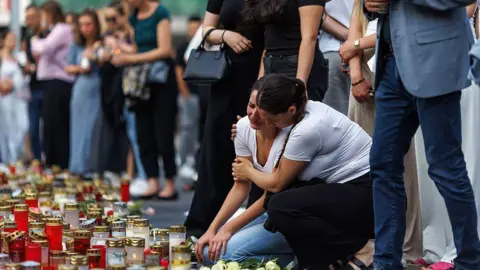
Matej Povse/Getty Images Two women in white T-shirts comfort each other amid a group of people and candles on the groundMatej Povse/Getty Images

The attacks within two hours of each other in Graz and Nogent have left two countries in shock

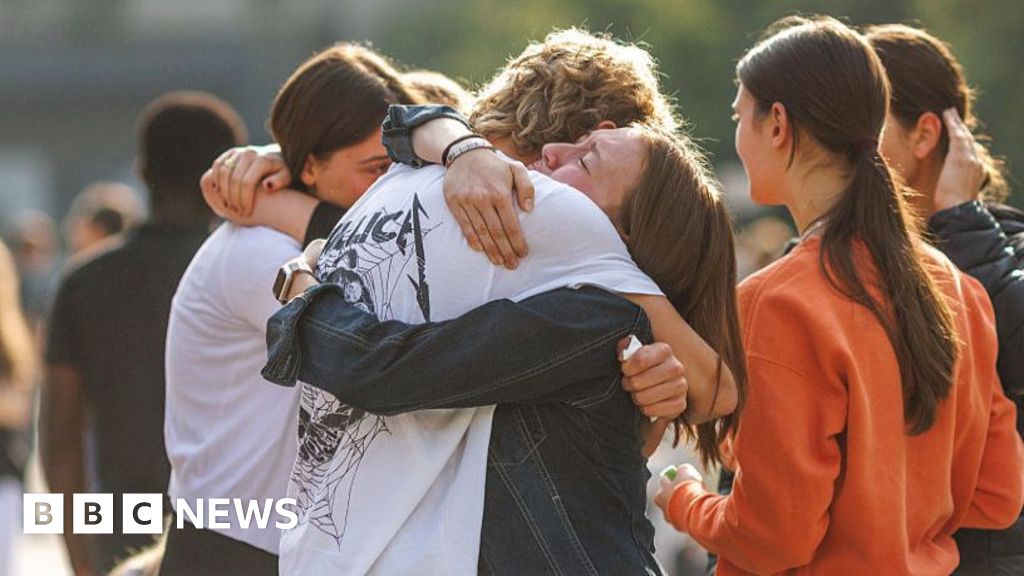
Two shocking attacks within two hours of each other, in France and Austria, have left parents and governments reeling and at a loss how to protect school students from random, deadly violence.

At about 08:15 on Tuesday, a 14-year-old boy from an ordinary family in Nogent, eastern France, drew out a kitchen knife during a school bag check and fatally stabbed a school assistant.

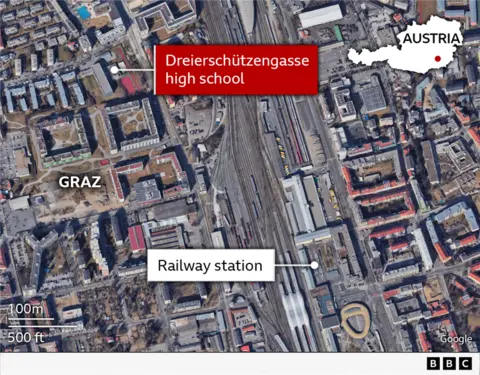
Not long afterwards in south-east Austria, a 21-year-old who had dropped out of school three years earlier, walked into Dreierschützengasse high school in Graz at 09:43, and shot dead nine students and a teacher with a Glock 19 handgun and a sawn-off shotgun.

In both countries there is a demand for solutions and for a greater focus on young people who resort to such violence.

Austria has never seen a school attack on this scale, but the French stabbing took place during a government programme aimed at tackling the growth in knife crime.

Austrians ask about gun laws and a failed system

The Graz shooter, named by Austrian media as Arthur A, has been described by police as a very introverted person, who had retreated to the virtual world.

His “great passion” was online first-person shooter games, and he had social contacts with other gamers over the internet, according to Michael Lohnegger, the criminal investigation chief in Styria, the state where it happened.

A former student at the Dreierschützengasse school, Arthur A had failed to complete his studies.

Arriving at the school, he put on a headset and shooting glasses, before going on a deadly seven-minute shooting spree. He then killed himself in a school bathroom.

He owned the two guns legally, had passed a psychological test to own a licence and had several sessions of weapons training earlier this year at a Graz shooting club.

This has sparked a big debate in Austria about whether its gun laws need to be tightened – and about the level of care available for troubled young people.

It has emerged that the shooter was rejected from the country’s compulsory military service in July 2021.

Defence ministry spokesman Michael Bauer told the BBC that Arthur A was found to be “psychologically unfit” for service after he underwent tests. But he said Austria’s legal system prevented the army from passing on the results of such tests.

There are now calls for that law to be changed.

Map showing centre of Graz and where the school is located in relations to the railway station, which is over a lot of railway lines and about 4 blocks down.

Alex, the mother of a 17-year-old boy who survived the shooting, told the BBC that more should have been done to prevent people like Arthur A from dropping out of school in the first place.

“We know… that when people shoot each other like this, it’s mostly when they feel alone and drop out and be outside. And we don’t know how to get them back in, into society, into the groups, into their peer groups,” she said.

“We, as grown-ups, have got the responsibility for that, and we have to take it now.”

President Alexander Van der Bellen raised the possibility of tightening Austria’s gun laws, on a visit to Graz after the attack: “If we come to the conclusion that Austria’s gun laws need to be changed to ensure greater safety, then we will do so.”

Austria has one of the most heavily armed civilian populations in Europe, with an estimated 30 firearms per 100 people.

Although there have been school shootings here before, they have been far smaller and involved far fewer casualties.

The mayor of Graz, Elke Kahr, believes no private person should be able to have weapons at all. “Weapons licences are issued too quickly,” she told Austria’s ORF TV. “Only the police should carry weapons, not private individuals.”

French focus on mental health as well as security
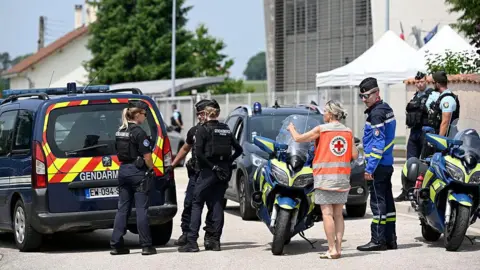
JEAN-CHRISTOPHE VERHAEGEN/AFP French gendarmes control the access to a secondary school after a 31-year-old teaching assistant was stabbed with a knife by a 15-year-old pupil during a bag search in Nogent, eastern France, on June 10, 2025JEAN-CHRISTOPHE VERHAEGEN/AFP

Security was tight at the school in Nogent and the attack took place during a bag search

Armed gendarmes were present at the entrance to the Françoise Dolto middle school in Nogent, 100km (62 miles) east of Paris, when a teenager pulled out a 20cm kitchen knife and repeatedly stabbed Mélanie G, who was 31 and had a four-year-old son.

The boy accused of carrying out the murder told police that he had been reprimanded on Friday by another school assistant for kissing his girlfriend.

As a result he had a grudge against school assistants in general, and apparently had made up his mind to kill one. Schools were closed on Monday for a bank holiday, and Tuesday was his first day back.

The state prosecutor’s initial assessment was that the boy, called Quentin, came from a normal functioning family, and had no criminal or mental health record.

However, the child also appeared detached and emotionless. Adept at violent video games, he showed a “fascination with death” and an “absence of reference-points relating to the value of human life”.

The Nogent attack does not fit the template of anti-social youth crime or gang violence seen in France until now.

Nor is there any suggestion of indoctrination over social media.

According to the prosecutor, the boy did little of that. He had been violent on two occasions against fellow pupils, and was suspended for a day each time.

There is no family breakdown or deprivation and school officials described him as “sociable, a pretty good student, well-integrated into the life of the establishment”.

This year he had even been named the class “ambassador” on bullying.

For all the calls for greater security at schools, this crime took place literally under the noses of armed gendarmes. As Interior Minister Bruno Retailleau put it, some crimes will happen no matter how many police you deploy.

For more information on the boy’s state of mind, we must wait for the full psychologist’s report, and it may well be that there were signs missed, or there are family details we do not yet know about.

On the face of it, he is perhaps more a middle-class loner, and his apparent normality suggests a crime triggered by internalised mental processes, rather than by peer-driven association or emulation.
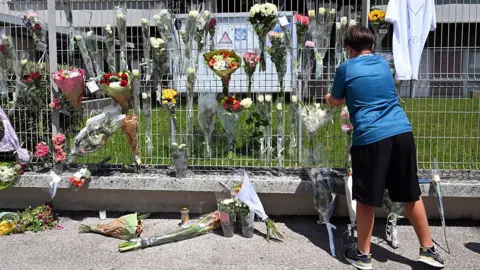
AFP A boy hangs flowers on the fence of his schoolAFP

The killing of Mélanie G in Nogent has stunned the whole of France

That is what strikes the chord in France. If an ordinary boy can turn out like this from watching too many violent videos, then who is next?

Significantly, the French government had only just approved showing the British Netflix series Adolescence as an aid in schools.

There are differences, of course.

The boy arrested for the killing of a teenage girl in the TV series yields to evil “toxic male” influences on social media – but there is the same question of teenagers being made vulnerable by isolation online.

Across the political spectrum, there are calls for action but little agreement on what should be the priority, nor hope that anything can make much difference.

Before the killing, President Emmanuel Macron had angered the right by saying they were too obsessed with crime, and not sufficiently interested in other issues like the environment.

The Nogent attack put him on the back foot, and he has repeated his pledge to ban social media to under 15-year-olds.

But there are two difficulties. One is the practicality of the measure, which in theory is being dealt with by the EU but is succumbing to endless procrastination.

The other is that, according to the prosecutor, the boy was not especially interested in social media. It was violent video games that were his thing.

Prime Minister François Bayrou has said that sales of knives to under-15s will be banned. But the boy took his from home.

Bayrou says airport-style metal-detectors should be tested at schools, but most heads are opposed.

The populist right wants tougher sentences for teenagers carrying knives, and the exclusion of disruptive pupils from regular classes.

But the boy in Nogent was not a problem child.

About the only measure everyone says is needed is more provision of school doctors, nurses and psychologists in order to detect early signs of pupils going off the rails.

That of course will require a lot of money, which is another thing France does not have a lot of.

Source link
#School #killings #leave #stunned #Austria #France #searching #answers

Previous post

WTC Final 2025: मिचेल स्टार्क और जोश हेजलवुड की जोड़ी ने किया कमाल, ICC फाइनल में रच दिया इतिहास

Next post

WTC फाइनल जीतने से 69 रन दूर साउथ अफ्रीका:मार्करम का शतक, बावुमा फिफ्टी बनाकर नॉटआउट; ऑस्ट्रेलिया ने 282 का टारगेट दिया

Catch up with the most important stories from around Europe and beyond this April 18th, 2026 – latest news, breaking news, World, Business, Entertainment, Politics, Culture, Travel.

#Video #Latest #news #bulletin #April #18th #Midday{id:11940,slug:news,urlSafeValue:news,title:news},{id:12984,slug:world-news,urlSafeValue:world-news,title:World News},{id:25926,slug:top-stories,urlSafeValue:top-stories,title:Latest News},{id:26778,slug:euronews-live,urlSafeValue:euronews-live,title:euronews live}">Video. Latest news bulletin | April 18th, 2026 – Midday
      
                  
              Updated: 18/04/2026 – 12:00 GMT+2
          
              
                    Catch up with the most important stories from around Europe and beyond this April 18th, 2026 – latest news, breaking news, World, Business, Entertainment, Politics, Culture, Travel.
              
                … More


    #Video #Latest #news #bulletin #April #18th #Midday{id:11940,slug:news,urlSafeValue:news,title:news},{id:12984,slug:world-news,urlSafeValue:world-news,title:World News},{id:25926,slug:top-stories,urlSafeValue:top-stories,title:Latest News},{id:26778,slug:euronews-live,urlSafeValue:euronews-live,title:euronews live}

It was the shelling that drove Syrian man Imad Omar Qashit from his home again. Fourteen years ago, he fled from Syria to Lebanon. This time, it was the other way round.

“When Israeli missiles destroyed entire homes in my neighborhood in southern Lebanon’s city of Tyre, we decided it was time to save our lives again,” the 52-year-old told DW.

In early March, Lebanon was drawn into the wider Middle East war after local group Hezbollah, which is backed by Iran, fired rockets into Israel, ostensibly in retaliation for the Israeli killing of Iran’s leader.

On Thursday, a 10-day ceasefire between Israel and Lebanon was brokered by the US but before that, more than 227,549 people had crossed the three official border points from Lebanon into Syria, according to the latest numbers from the United Nation’s International Organization for Migration (IOM). The vast majority, 95%, were Syrians, while 5% were Lebanese nationals.

Lebanon’s health authorities say the death toll from Israel’s attacks on the Hezbollah militia is around 2,196. The ministry does not provide a breakdown by nationality and estimates of how many Syrians are among the killed and injured range widely, from 39 to 315. According to the UN refugee agency UNHCR, more than 1 million Syrian refugees are still registered in Lebanon, with hundreds of thousands more believed to be in the country without registration.

Syrians wait at a border crossing as refugees
More than 270,000 Syrians returned from Lebanon since March even though observers warn the country is not ready to host them Image: Izz Aldien Alqasem/Anadolu Agency/IMAGO

Protracted crisis

Once Qashit and his family arrived back in their home town Maarat al-Numan near Aleppo, they found their house completely destroyed as a result of Syria’s civil war, which only ended in December 2024 after a coalition of rebel groups ousted Syria’s longtime dictator, Bashar Assad.

“There are no houses for rent as the whole city is destroyed,” Qashit told DW. For the time being, they are staying with his sister. 

Another Syrian, Mohammad Jassem al-Brouk, fled Israeli strikes in Lebanon two weeks ago. “It was extremely crowded at the border crossing and it took an entire day to get through,” he told DW.

When he eventually arrived at his family home in the city of Qusair near Homs, he only found remnants of the house. With no other option, he unpacked his tent from the refugee camp in Lebanon, set it up, and is now living in it. Despite his lack of housing, he has no intention of returning to Lebanon. 

Earlier in April, a survey by the UN’s refugee agency, the UNHCR, found that around half of the Syrians they had interviewed also said that they intend to remain permanently in Syria despite economic challenges and limited state services.

“Syrians are returning because Lebanon has become unlivable, rather than Syria being ready to receive them,” Nanar Hawach, senior Syria analyst at the International Crisis Group, confirms. “The government can manage the border but it has no answer for what happens after that,” he said. In his view, the hundreds of thousands of returnees should not be read as a sign that conditions inside Syria have improved.

A boy jumps off the back of the rusted and charred remains of abandoned military vehicles
Areas that were contested during the Syrian civil war are often contaminated with unexploded devices that pose a danger to returning SyriansImage: Arif Hudaverdi Yaman/Anadolu/picture alliance

Legacy of war

Syria continues to struggle with the legacy of more than a decade of conflict. Despite sanctions being lifted and Syria’s return to the international fold, sectarian clashes and political instability still compound the country’s problems.

The World Bank’s damage assessment estimates total reconstruction costs at about $216 billion (€200 billion). Basic services, including education, health care and infrastructure, remain limited and the humanitarian situation for the around 26 million people is  dire.

According to the UN, around 15.6 million Syrians require humanitarian assistance and 13.3 million Syrians are food-insecure. A severe drought in 2025 devastated 95% of rainfed crops, the UN 2025 food security assessment report notes.

“Syria was already in a protracted humanitarian crisis before this new wave of returns,” Hiba Zayadin, senior researcher in the Middle East and North Africa division at Human Rights Watch, told DW. “The infrastructure simply isn’t there to absorb large numbers of people, many of whom left with nothing and are returning to the same.” 

A woman walks next to an ambulance
Before the US-brokered ceasefire, Israel demolished large parts of southern Lebanon and Tyre, prompting Syrian refugees to pack up and leaveImage: Louisa Gouliamaki/REUTERS

Risk of unexploded devices

These are not the only issues. Syria is also one of the most contaminated countries in the world when it comes to explosive remnants. “Years of aerial bombardment, ground fighting and the use of cluster munitions across multiple governorates have left vast areas littered with unexploded ordnance, or UXO, landmines and improvised explosive devices,” Zayadin continued.

“The danger is very real,” Iain Overton confirmed. He’s the executive director of the UK-based organization, Action on Armed Violence (AOAV) which records evidence of armed violence against civilians worldwide.

He also warned that UXO contamination remains particularly acute in areas that have seen sustained fighting and shifting frontlines, including parts of Raqqa, Deir el-Zour, Aleppo, Idlib and rural Homs and Hama. “These are precisely the areas to which many refugees are returning,” he told DW, adding that children and returnees unfamiliar with contaminated environments are especially vulnerable.

“Even in the absence of active hostilities, the legacy of explosive violence continues to kill and injure,” Overton said, adding that the trend is worsening. In 2024, AOAV recorded 238 UXO incidents causing 508 casualties. Of these, 479 were civilians. By 2025, this had risen sharply to 794 incidents and 1,537 casualties, including 1,424 civilians.

For Qashit and his family, recently returned from Lebanon, these is just one more thing to worry about. “My children would not recognize unexploded mines when they are playing outside,” he said, concerned. 

Back to Yarmouk: A Syrian family rebuilds and seeks justice

Edited by: C. Schaer

#Displaced #Iran #war #Lebanon #Syrian #crisis">Displaced by Iran war: out of Lebanon, into Syrian crisisIt was the shelling that drove Syrian man Imad Omar Qashit from his home again. Fourteen years ago, he fled from Syria to Lebanon. This time, it was the other way round.

“When Israeli missiles destroyed entire homes in my neighborhood in southern Lebanon’s city of Tyre, we decided it was time to save our lives again,” the 52-year-old told DW.

In early March, Lebanon was drawn into the wider Middle East war after local group Hezbollah, which is backed by Iran, fired rockets into Israel, ostensibly in retaliation for the Israeli killing of Iran’s leader.

On Thursday, a 10-day ceasefire between Israel and Lebanon was brokered by the US but before that, more than 227,549 people had crossed the three official border points from Lebanon into Syria, according to the latest numbers from the United Nation’s International Organization for Migration (IOM). The vast majority, 95%, were Syrians, while 5% were Lebanese nationals.

Lebanon’s health authorities say the death toll from Israel’s attacks on the Hezbollah militia is around 2,196. The ministry does not provide a breakdown by nationality and estimates of how many Syrians are among the killed and injured range widely, from 39 to 315. According to the UN refugee agency UNHCR, more than 1 million Syrian refugees are still registered in Lebanon, with hundreds of thousands more believed to be in the country without registration.More than 270,000 Syrians returned from Lebanon since March even though observers warn the country is not ready to host them Image: Izz Aldien Alqasem/Anadolu Agency/IMAGO

Protracted crisis

Once Qashit and his family arrived back in their home town Maarat al-Numan near Aleppo, they found their house completely destroyed as a result of Syria’s civil war, which only ended in December 2024 after a coalition of rebel groups ousted Syria’s longtime dictator, Bashar Assad.

“There are no houses for rent as the whole city is destroyed,” Qashit told DW. For the time being, they are staying with his sister. 

Another Syrian, Mohammad Jassem al-Brouk, fled Israeli strikes in Lebanon two weeks ago. “It was extremely crowded at the border crossing and it took an entire day to get through,” he told DW.

When he eventually arrived at his family home in the city of Qusair near Homs, he only found remnants of the house. With no other option, he unpacked his tent from the refugee camp in Lebanon, set it up, and is now living in it. Despite his lack of housing, he has no intention of returning to Lebanon. 

Earlier in April, a survey by the UN’s refugee agency, the UNHCR, found that around half of the Syrians they had interviewed also said that they intend to remain permanently in Syria despite economic challenges and limited state services.

“Syrians are returning because Lebanon has become unlivable, rather than Syria being ready to receive them,” Nanar Hawach, senior Syria analyst at the International Crisis Group, confirms. “The government can manage the border but it has no answer for what happens after that,” he said. In his view, the hundreds of thousands of returnees should not be read as a sign that conditions inside Syria have improved.Areas that were contested during the Syrian civil war are often contaminated with unexploded devices that pose a danger to returning SyriansImage: Arif Hudaverdi Yaman/Anadolu/picture alliance

Legacy of war

Syria continues to struggle with the legacy of more than a decade of conflict. Despite sanctions being lifted and Syria’s return to the international fold, sectarian clashes and political instability still compound the country’s problems.

The World Bank’s damage assessment estimates total reconstruction costs at about 6 billion (€200 billion). Basic services, including education, health care and infrastructure, remain limited and the humanitarian situation for the around 26 million people is  dire.

According to the UN, around 15.6 million Syrians require humanitarian assistance and 13.3 million Syrians are food-insecure. A severe drought in 2025 devastated 95% of rainfed crops, the UN 2025 food security assessment report notes.

“Syria was already in a protracted humanitarian crisis before this new wave of returns,” Hiba Zayadin, senior researcher in the Middle East and North Africa division at Human Rights Watch, told DW. “The infrastructure simply isn’t there to absorb large numbers of people, many of whom left with nothing and are returning to the same.”  Before the US-brokered ceasefire, Israel demolished large parts of southern Lebanon and Tyre, prompting Syrian refugees to pack up and leaveImage: Louisa Gouliamaki/REUTERS

Risk of unexploded devices

These are not the only issues. Syria is also one of the most contaminated countries in the world when it comes to explosive remnants. “Years of aerial bombardment, ground fighting and the use of cluster munitions across multiple governorates have left vast areas littered with unexploded ordnance, or UXO, landmines and improvised explosive devices,” Zayadin continued.

“The danger is very real,” Iain Overton confirmed. He’s the executive director of the UK-based organization, Action on Armed Violence (AOAV) which records evidence of armed violence against civilians worldwide.

He also warned that UXO contamination remains particularly acute in areas that have seen sustained fighting and shifting frontlines, including parts of Raqqa, Deir el-Zour, Aleppo, Idlib and rural Homs and Hama. “These are precisely the areas to which many refugees are returning,” he told DW, adding that children and returnees unfamiliar with contaminated environments are especially vulnerable.

“Even in the absence of active hostilities, the legacy of explosive violence continues to kill and injure,” Overton said, adding that the trend is worsening. In 2024, AOAV recorded 238 UXO incidents causing 508 casualties. Of these, 479 were civilians. By 2025, this had risen sharply to 794 incidents and 1,537 casualties, including 1,424 civilians.

For Qashit and his family, recently returned from Lebanon, these is just one more thing to worry about. “My children would not recognize unexploded mines when they are playing outside,” he said, concerned. 

Back to Yarmouk: A Syrian family rebuilds and seeks justice To view this video please enable JavaScript, and consider upgrading to a web browser that supports HTML5 video

Edited by: C. Schaer
#Displaced #Iran #war #Lebanon #Syrian #crisis

Syria to Lebanon. This time, it was the other way round.

“When Israeli missiles destroyed entire homes in my neighborhood in southern Lebanon’s city of Tyre, we decided it was time to save our lives again,” the 52-year-old told DW.

In early March, Lebanon was drawn into the wider Middle East war after local group Hezbollah, which is backed by Iran, fired rockets into Israel, ostensibly in retaliation for the Israeli killing of Iran’s leader.

On Thursday, a 10-day ceasefire between Israel and Lebanon was brokered by the US but before that, more than 227,549 people had crossed the three official border points from Lebanon into Syria, according to the latest numbers from the United Nation’s International Organization for Migration (IOM). The vast majority, 95%, were Syrians, while 5% were Lebanese nationals.

Lebanon’s health authorities say the death toll from Israel’s attacks on the Hezbollah militia is around 2,196. The ministry does not provide a breakdown by nationality and estimates of how many Syrians are among the killed and injured range widely, from 39 to 315. According to the UN refugee agency UNHCR, more than 1 million Syrian refugees are still registered in Lebanon, with hundreds of thousands more believed to be in the country without registration.

Syrians wait at a border crossing as refugees
More than 270,000 Syrians returned from Lebanon since March even though observers warn the country is not ready to host them Image: Izz Aldien Alqasem/Anadolu Agency/IMAGO

Protracted crisis

Once Qashit and his family arrived back in their home town Maarat al-Numan near Aleppo, they found their house completely destroyed as a result of Syria’s civil war, which only ended in December 2024 after a coalition of rebel groups ousted Syria’s longtime dictator, Bashar Assad.

“There are no houses for rent as the whole city is destroyed,” Qashit told DW. For the time being, they are staying with his sister. 

Another Syrian, Mohammad Jassem al-Brouk, fled Israeli strikes in Lebanon two weeks ago. “It was extremely crowded at the border crossing and it took an entire day to get through,” he told DW.

When he eventually arrived at his family home in the city of Qusair near Homs, he only found remnants of the house. With no other option, he unpacked his tent from the refugee camp in Lebanon, set it up, and is now living in it. Despite his lack of housing, he has no intention of returning to Lebanon. 

Earlier in April, a survey by the UN’s refugee agency, the UNHCR, found that around half of the Syrians they had interviewed also said that they intend to remain permanently in Syria despite economic challenges and limited state services.

“Syrians are returning because Lebanon has become unlivable, rather than Syria being ready to receive them,” Nanar Hawach, senior Syria analyst at the International Crisis Group, confirms. “The government can manage the border but it has no answer for what happens after that,” he said. In his view, the hundreds of thousands of returnees should not be read as a sign that conditions inside Syria have improved.

A boy jumps off the back of the rusted and charred remains of abandoned military vehicles
Areas that were contested during the Syrian civil war are often contaminated with unexploded devices that pose a danger to returning SyriansImage: Arif Hudaverdi Yaman/Anadolu/picture alliance

Legacy of war

Syria continues to struggle with the legacy of more than a decade of conflict. Despite sanctions being lifted and Syria’s return to the international fold, sectarian clashes and political instability still compound the country’s problems.

The World Bank’s damage assessment estimates total reconstruction costs at about $216 billion (€200 billion). Basic services, including education, health care and infrastructure, remain limited and the humanitarian situation for the around 26 million people is  dire.

According to the UN, around 15.6 million Syrians require humanitarian assistance and 13.3 million Syrians are food-insecure. A severe drought in 2025 devastated 95% of rainfed crops, the UN 2025 food security assessment report notes.

“Syria was already in a protracted humanitarian crisis before this new wave of returns,” Hiba Zayadin, senior researcher in the Middle East and North Africa division at Human Rights Watch, told DW. “The infrastructure simply isn’t there to absorb large numbers of people, many of whom left with nothing and are returning to the same.” 

A woman walks next to an ambulance
Before the US-brokered ceasefire, Israel demolished large parts of southern Lebanon and Tyre, prompting Syrian refugees to pack up and leaveImage: Louisa Gouliamaki/REUTERS

Risk of unexploded devices

These are not the only issues. Syria is also one of the most contaminated countries in the world when it comes to explosive remnants. “Years of aerial bombardment, ground fighting and the use of cluster munitions across multiple governorates have left vast areas littered with unexploded ordnance, or UXO, landmines and improvised explosive devices,” Zayadin continued.

“The danger is very real,” Iain Overton confirmed. He’s the executive director of the UK-based organization, Action on Armed Violence (AOAV) which records evidence of armed violence against civilians worldwide.

He also warned that UXO contamination remains particularly acute in areas that have seen sustained fighting and shifting frontlines, including parts of Raqqa, Deir el-Zour, Aleppo, Idlib and rural Homs and Hama. “These are precisely the areas to which many refugees are returning,” he told DW, adding that children and returnees unfamiliar with contaminated environments are especially vulnerable.

“Even in the absence of active hostilities, the legacy of explosive violence continues to kill and injure,” Overton said, adding that the trend is worsening. In 2024, AOAV recorded 238 UXO incidents causing 508 casualties. Of these, 479 were civilians. By 2025, this had risen sharply to 794 incidents and 1,537 casualties, including 1,424 civilians.

For Qashit and his family, recently returned from Lebanon, these is just one more thing to worry about. “My children would not recognize unexploded mines when they are playing outside,” he said, concerned. 

Back to Yarmouk: A Syrian family rebuilds and seeks justice

Edited by: C. Schaer

#Displaced #Iran #war #Lebanon #Syrian #crisis">Displaced by Iran war: out of Lebanon, into Syrian crisis

It was the shelling that drove Syrian man Imad Omar Qashit from his home again. Fourteen years ago, he fled from Syria to Lebanon. This time, it was the other way round.

“When Israeli missiles destroyed entire homes in my neighborhood in southern Lebanon’s city of Tyre, we decided it was time to save our lives again,” the 52-year-old told DW.

In early March, Lebanon was drawn into the wider Middle East war after local group Hezbollah, which is backed by Iran, fired rockets into Israel, ostensibly in retaliation for the Israeli killing of Iran’s leader.

On Thursday, a 10-day ceasefire between Israel and Lebanon was brokered by the US but before that, more than 227,549 people had crossed the three official border points from Lebanon into Syria, according to the latest numbers from the United Nation’s International Organization for Migration (IOM). The vast majority, 95%, were Syrians, while 5% were Lebanese nationals.

Lebanon’s health authorities say the death toll from Israel’s attacks on the Hezbollah militia is around 2,196. The ministry does not provide a breakdown by nationality and estimates of how many Syrians are among the killed and injured range widely, from 39 to 315. According to the UN refugee agency UNHCR, more than 1 million Syrian refugees are still registered in Lebanon, with hundreds of thousands more believed to be in the country without registration.

Syrians wait at a border crossing as refugees
More than 270,000 Syrians returned from Lebanon since March even though observers warn the country is not ready to host them Image: Izz Aldien Alqasem/Anadolu Agency/IMAGO

Protracted crisis

Once Qashit and his family arrived back in their home town Maarat al-Numan near Aleppo, they found their house completely destroyed as a result of Syria’s civil war, which only ended in December 2024 after a coalition of rebel groups ousted Syria’s longtime dictator, Bashar Assad.

“There are no houses for rent as the whole city is destroyed,” Qashit told DW. For the time being, they are staying with his sister. 

Another Syrian, Mohammad Jassem al-Brouk, fled Israeli strikes in Lebanon two weeks ago. “It was extremely crowded at the border crossing and it took an entire day to get through,” he told DW.

When he eventually arrived at his family home in the city of Qusair near Homs, he only found remnants of the house. With no other option, he unpacked his tent from the refugee camp in Lebanon, set it up, and is now living in it. Despite his lack of housing, he has no intention of returning to Lebanon. 

Earlier in April, a survey by the UN’s refugee agency, the UNHCR, found that around half of the Syrians they had interviewed also said that they intend to remain permanently in Syria despite economic challenges and limited state services.

“Syrians are returning because Lebanon has become unlivable, rather than Syria being ready to receive them,” Nanar Hawach, senior Syria analyst at the International Crisis Group, confirms. “The government can manage the border but it has no answer for what happens after that,” he said. In his view, the hundreds of thousands of returnees should not be read as a sign that conditions inside Syria have improved.

A boy jumps off the back of the rusted and charred remains of abandoned military vehicles
Areas that were contested during the Syrian civil war are often contaminated with unexploded devices that pose a danger to returning SyriansImage: Arif Hudaverdi Yaman/Anadolu/picture alliance

Legacy of war

Syria continues to struggle with the legacy of more than a decade of conflict. Despite sanctions being lifted and Syria’s return to the international fold, sectarian clashes and political instability still compound the country’s problems.

The World Bank’s damage assessment estimates total reconstruction costs at about $216 billion (€200 billion). Basic services, including education, health care and infrastructure, remain limited and the humanitarian situation for the around 26 million people is  dire.

According to the UN, around 15.6 million Syrians require humanitarian assistance and 13.3 million Syrians are food-insecure. A severe drought in 2025 devastated 95% of rainfed crops, the UN 2025 food security assessment report notes.

“Syria was already in a protracted humanitarian crisis before this new wave of returns,” Hiba Zayadin, senior researcher in the Middle East and North Africa division at Human Rights Watch, told DW. “The infrastructure simply isn’t there to absorb large numbers of people, many of whom left with nothing and are returning to the same.” 

A woman walks next to an ambulance
Before the US-brokered ceasefire, Israel demolished large parts of southern Lebanon and Tyre, prompting Syrian refugees to pack up and leaveImage: Louisa Gouliamaki/REUTERS

Risk of unexploded devices

These are not the only issues. Syria is also one of the most contaminated countries in the world when it comes to explosive remnants. “Years of aerial bombardment, ground fighting and the use of cluster munitions across multiple governorates have left vast areas littered with unexploded ordnance, or UXO, landmines and improvised explosive devices,” Zayadin continued.

“The danger is very real,” Iain Overton confirmed. He’s the executive director of the UK-based organization, Action on Armed Violence (AOAV) which records evidence of armed violence against civilians worldwide.

He also warned that UXO contamination remains particularly acute in areas that have seen sustained fighting and shifting frontlines, including parts of Raqqa, Deir el-Zour, Aleppo, Idlib and rural Homs and Hama. “These are precisely the areas to which many refugees are returning,” he told DW, adding that children and returnees unfamiliar with contaminated environments are especially vulnerable.

“Even in the absence of active hostilities, the legacy of explosive violence continues to kill and injure,” Overton said, adding that the trend is worsening. In 2024, AOAV recorded 238 UXO incidents causing 508 casualties. Of these, 479 were civilians. By 2025, this had risen sharply to 794 incidents and 1,537 casualties, including 1,424 civilians.

For Qashit and his family, recently returned from Lebanon, these is just one more thing to worry about. “My children would not recognize unexploded mines when they are playing outside,” he said, concerned. 

Back to Yarmouk: A Syrian family rebuilds and seeks justice

Edited by: C. Schaer

#Displaced #Iran #war #Lebanon #Syrian #crisis

Post Comment