
Broken blueprints: How Italy and Nigeria failed to qualify for 2026 FIFA World Cup As you read this, teams are taking shape, players are pushing to make it to their national sides, and coaches are scratching their heads to get strategies in place before the greatest show on earth rolls into town.
Amid the noise, there is silence in two prominent parts of the world — countries that, not so long ago, were part of this carnival: Italy and Nigeria.
Italy, the more decorated of the two, missed out on its third consecutive World Cup appearance — a phenomenon termed an ‘apocalypse’ by local media — as the four-time World Cup winner lost 1-4 on penalties to Bosnia and Herzegovina in its final qualifier.
The Germans offer a relevant precedent here. When Germany — then a three-time World Cup winner — was knocked out of the 2004 European Championships, it decided to tear its existing blueprint apart and build another from scratch.
Its youth programme, called the Nachwuchsleistungszentrum, churned out stars like Toni Kroos, Thomas Müller, Manuel Neuer and Mario Götze. A decade later, Götze — a product of Borussia Dortmund’s youth academy — volleyed his name into immortality as Germany became world champion yet again.
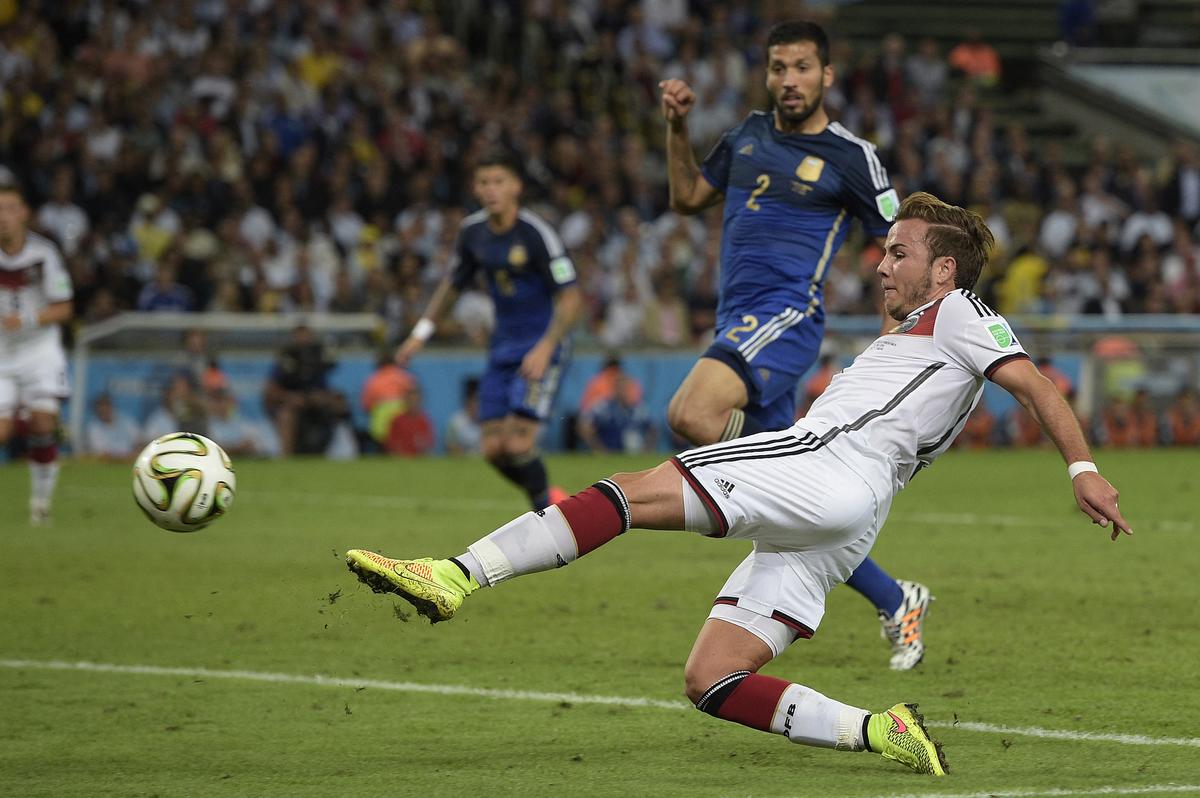
Fantastic finish: Mario Göetze scored the winner in the 2014 FIFA World Cup final, putting up a fine example of a finished product of Germany’s youth development programs.
| Photo Credit:
AFP

Fantastic finish: Mario Göetze scored the winner in the 2014 FIFA World Cup final, putting up a fine example of a finished product of Germany’s youth development programs.
| Photo Credit:
AFP
A similar plan was conceptualised by Italy legend Roberto Baggio in his project ‘Renewing the Future’ after the Azzurri, then defending champions, crashed out of the 2010 World Cup in the group stage.
But within 17 months, he chose to walk away.
“A 900-page program was presented in December 2011, but it remained a dead letter for a year. So I drew my conclusions: I don’t like sitting in positions, but rather getting things done,” Baggio, resigning from the post of president of the technical sector of the Italian Football Federation, said.
The years that followed still yielded some fruits of Baggio’s vision.
Italy won Euro 2020, produced prominent European stars in Gianluigi Donnarumma — a treble winner with Paris Saint-Germain — Nicolò Barella, a two-time Champions League runner-up, and even Sandro Tonali, who helped Newcastle United win its first trophy in nearly half a century. Yet, with all of them in the squad, the ship could not be steadied against Bosnia and Herzegovina.
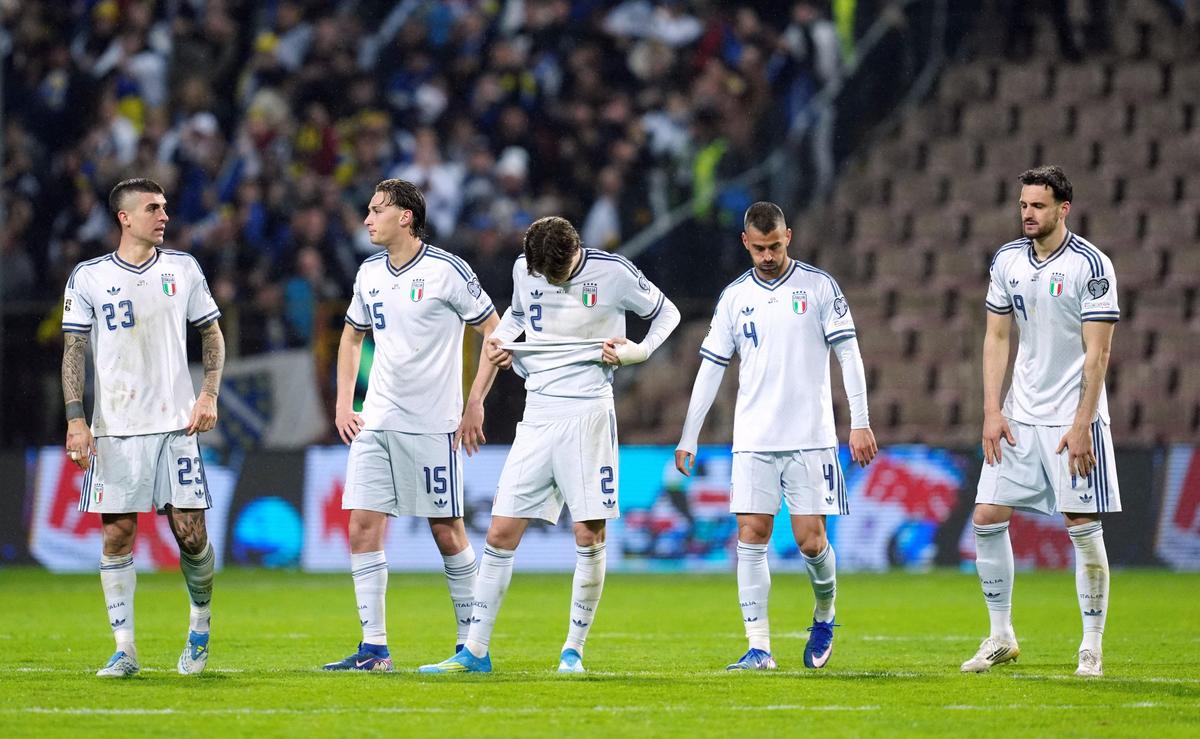
A night to forget: Italy fell to Bosnia and Herzegovina on penalties to fall short in the race to qualify for FIFA World Cup 2026.
| Photo Credit:
REUTERS
A night to forget: Italy fell to Bosnia and Herzegovina on penalties to fall short in the race to qualify for FIFA World Cup 2026.
| Photo Credit:
REUTERS
Marcello Lippi, the last World Cup-winning coach of Italy, had once said, “A group of the best players does not necessarily make for the best team.”
Italy had developed a DNA influenced by Giovanni Trapattoni’s zona mista (an Italian style of football prevalent in the 1960-70s) and Arrigo Sacchi’s 4-4-2 — both that were built on a simple creed: defence wins titles.
That cathedral now looks to be crumbling — neglected and abandoned.
Other major teams that missed the cut
No encore for Sánchez
Chile, which reached the round of 16 in each of its last three World Cup appearances, missed out on the 2026 edition — the third consecutive time it has fallen short — potentially ending Alexis Sánchez’s chances of playing in the tournament again.
Curtain call cut short
Poland legend Robert Lewandowski broke down after a 2-3 loss to Sweden in the playoffs saw his team miss out on a World Cup spot for the first time since 2014, denying the star striker a final dance on the biggest stage.
Mbeumo misses the party
Bryan Mbeumo will miss his first chance to play in a World Cup as his team, Cameroon — the 1990 quarterfinalist — failed to qualify for the expanded 48-team 2026 edition, set to be played in the USA, Mexico and Canada.
Italian players are moving to foreign leagues, and the last time an Italian club won the Champions League was 16 years ago — the same year Italy last won the World Cup.
In the current national team, four of the 11 regular starters — Donnarumma, Riccardo Calafiori, Tonali and Mateo Retegui — play outside Italy, with its main striker (Retegui) playing in Asia. In contrast, in the 2010 World Cup-winning squad, all players featured in Serie A.
Off the field, the rot runs deeper. Gabriele Gravina clung to the Italian FA presidency despite Italy failing to qualify for Qatar 2022, until he was forced to walk the plank after the 2026 qualifying debacle.
Who did Italy turn to as coach? Gennaro Gattuso — a fine player who, as a manager, had fallen short of expectations at nine clubs.
For a country trying to return to the World Cup after 12 years, was that really the best step forward? Questions will arise and Italy will need answers, or risk going around in circles.
For Nigeria, chaos has been the only constant. Too many cooks spoiled the broth for the African giant, as the Super Eagles were grounded before takeoff for the second World Cup cycle in succession.
In the 2022 qualifying campaign, Nigeria replaced Gernot Rohr, who coached in the initial qualifiers, with Augustine Eguavoen before the penultimate round. The team fell to Ghana on the away goals rule.
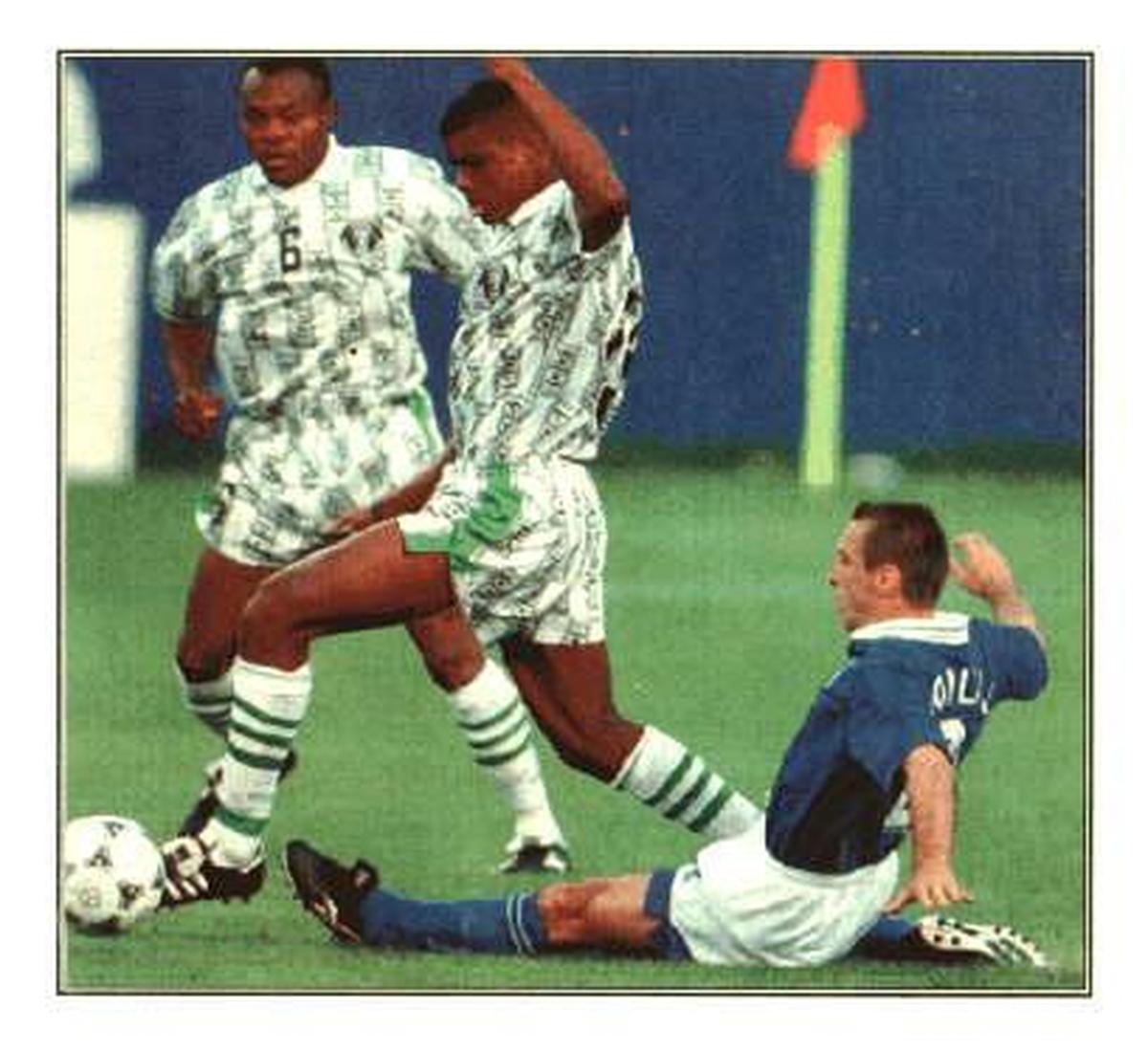
Not an American dream anymore: Nigeria had made a prominent mark when the USA hosted the FIFA World Cup for the first time, in 1994. When the tournament returns to the same country this year, the Golden Eagles will only be able to watch in silence.
| Photo Credit:
The Hindu Photo Library
Not an American dream anymore: Nigeria had made a prominent mark when the USA hosted the FIFA World Cup for the first time, in 1994. When the tournament returns to the same country this year, the Golden Eagles will only be able to watch in silence.
| Photo Credit:
The Hindu Photo Library
In the next World Cup cycle, the inconsistency gave way to further drama. Several players from the team that finished runner-up in the 2023 African Cup of Nations (AFCON) were promised real estate rewards, which reportedly never arrived.
The team even boycotted the AFCON 2025 qualifier against Libya after being stranded at the airport for 12 hours.
The following month, just two days before the World Cup African playoff semifinal against Gabon, the entire squad downed tools due to unresolved wage issues. Though the matter was eventually resolved — and Nigeria dragged itself past the finish line with a 4-1 extra-time win — the cracks were clear.
Then came the revolving door of head coaches: José Peseiro, Finidi George, Augustine Eguavoen and Eric Chelle — four men in two years. Chelle remained in charge for the final stages of qualification, where Nigeria lost on penalties to the Democratic Republic of Congo, with the coach blaming voodoo for the exit. Talk about analysis.
Beyond the quagmire of administration, the harshest blow came from the treatment table — Victor Osimhen’s injury ruled him out of several matches. The former Napoli forward even fell out of favour with George, who claimed Osimhen was faking his injury, before missing clashes against South Africa and Benin.
The result: three matches, no wins. Nigeria drew twice with South Africa and lost to Benin. Without Osimhen, it earned only four points from a possible 15.
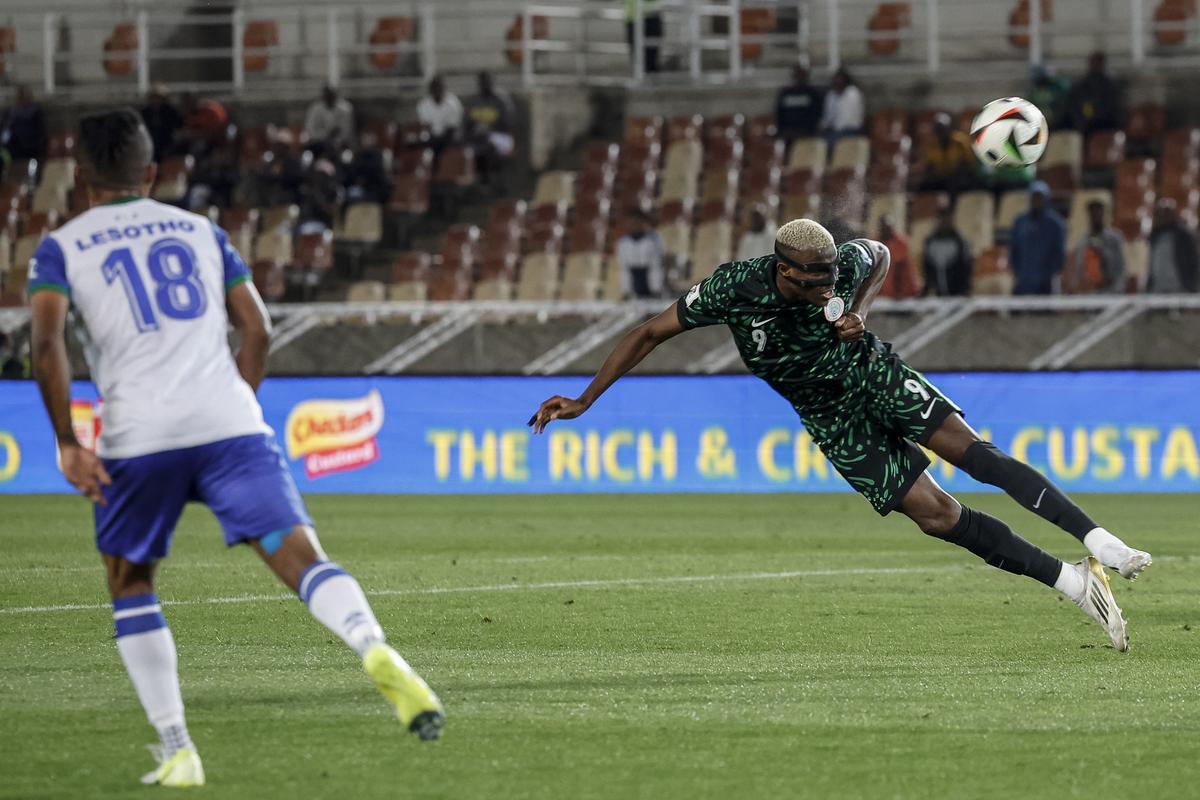
Lost roar: Nigeria looked a different side with an without Osimhen, who missed several matches with injury in the qualification campaign.
| Photo Credit:
AFP
Lost roar: Nigeria looked a different side with an without Osimhen, who missed several matches with injury in the qualification campaign.
| Photo Credit:
AFP
His injury in the playoff final against DR Congo forced an early substitution, and Ademola Lookman followed 10 minutes later — leaving Nigeria to play most of the match without two of its most important strikers.
DR Congo, on the other hand, was a study in stability.
After failing to qualify for Qatar 2022, it offered a second roll of the dice to Sébastien Desabre as coach — and he repaid that faith by guiding the team to the World Cup after 52 years, beating Cameroon and Nigeria.
When the FIFA World Cup was first conducted in the United States in 1994, Nigeria and Italy had some of the loudest fans, with the former reaching the round of 16, and the latter making the final.
This time around, it will be their silence that rings loudest — a reminder that in football, failure is rarely accidental.
Published on Apr 23, 2026
#Broken #blueprints #Italy #Nigeria #failed #qualify #FIFA #World #Cup
As you read this, teams are taking shape, players are pushing to make it to their national sides, and coaches are scratching their heads to get strategies in place before the greatest show on earth rolls into town.
Amid the noise, there is silence in two prominent parts of the world — countries that, not so long ago, were part of this carnival: Italy and Nigeria.
Italy, the more decorated of the two, missed out on its third consecutive World Cup appearance — a phenomenon termed an ‘apocalypse’ by local media — as the four-time World Cup winner lost 1-4 on penalties to Bosnia and Herzegovina in its final qualifier.
The Germans offer a relevant precedent here. When Germany — then a three-time World Cup winner — was knocked out of the 2004 European Championships, it decided to tear its existing blueprint apart and build another from scratch.
Its youth programme, called the Nachwuchsleistungszentrum, churned out stars like Toni Kroos, Thomas Müller, Manuel Neuer and Mario Götze. A decade later, Götze — a product of Borussia Dortmund’s youth academy — volleyed his name into immortality as Germany became world champion yet again.
Fantastic finish: Mario Göetze scored the winner in the 2014 FIFA World Cup final, putting up a fine example of a finished product of Germany’s youth development programs. | Photo Credit: AFP
Fantastic finish: Mario Göetze scored the winner in the 2014 FIFA World Cup final, putting up a fine example of a finished product of Germany’s youth development programs. | Photo Credit: AFP
A similar plan was conceptualised by Italy legend Roberto Baggio in his project ‘Renewing the Future’ after the Azzurri, then defending champions, crashed out of the 2010 World Cup in the group stage.
But within 17 months, he chose to walk away.
“A 900-page program was presented in December 2011, but it remained a dead letter for a year. So I drew my conclusions: I don’t like sitting in positions, but rather getting things done,” Baggio, resigning from the post of president of the technical sector of the Italian Football Federation, said.
The years that followed still yielded some fruits of Baggio’s vision.
Italy won Euro 2020, produced prominent European stars in Gianluigi Donnarumma — a treble winner with Paris Saint-Germain — Nicolò Barella, a two-time Champions League runner-up, and even Sandro Tonali, who helped Newcastle United win its first trophy in nearly half a century. Yet, with all of them in the squad, the ship could not be steadied against Bosnia and Herzegovina.
A night to forget: Italy fell to Bosnia and Herzegovina on penalties to fall short in the race to qualify for FIFA World Cup 2026. | Photo Credit: REUTERS
A night to forget: Italy fell to Bosnia and Herzegovina on penalties to fall short in the race to qualify for FIFA World Cup 2026. | Photo Credit: REUTERS
Marcello Lippi, the last World Cup-winning coach of Italy, had once said, “A group of the best players does not necessarily make for the best team.”
Italy had developed a DNA influenced by Giovanni Trapattoni’s zona mista (an Italian style of football prevalent in the 1960-70s) and Arrigo Sacchi’s 4-4-2 — both that were built on a simple creed: defence wins titles.
That cathedral now looks to be crumbling — neglected and abandoned.
Other major teams that missed the cut
No encore for Sánchez
Chile, which reached the round of 16 in each of its last three World Cup appearances, missed out on the 2026 edition — the third consecutive time it has fallen short — potentially ending Alexis Sánchez’s chances of playing in the tournament again.
Curtain call cut short
Poland legend Robert Lewandowski broke down after a 2-3 loss to Sweden in the playoffs saw his team miss out on a World Cup spot for the first time since 2014, denying the star striker a final dance on the biggest stage.
Mbeumo misses the party
Bryan Mbeumo will miss his first chance to play in a World Cup as his team, Cameroon — the 1990 quarterfinalist — failed to qualify for the expanded 48-team 2026 edition, set to be played in the USA, Mexico and Canada.
Italian players are moving to foreign leagues, and the last time an Italian club won the Champions League was 16 years ago — the same year Italy last won the World Cup.
In the current national team, four of the 11 regular starters — Donnarumma, Riccardo Calafiori, Tonali and Mateo Retegui — play outside Italy, with its main striker (Retegui) playing in Asia. In contrast, in the 2010 World Cup-winning squad, all players featured in Serie A.
Off the field, the rot runs deeper. Gabriele Gravina clung to the Italian FA presidency despite Italy failing to qualify for Qatar 2022, until he was forced to walk the plank after the 2026 qualifying debacle.
Who did Italy turn to as coach? Gennaro Gattuso — a fine player who, as a manager, had fallen short of expectations at nine clubs.
For a country trying to return to the World Cup after 12 years, was that really the best step forward? Questions will arise and Italy will need answers, or risk going around in circles.
For Nigeria, chaos has been the only constant. Too many cooks spoiled the broth for the African giant, as the Super Eagles were grounded before takeoff for the second World Cup cycle in succession.
In the 2022 qualifying campaign, Nigeria replaced Gernot Rohr, who coached in the initial qualifiers, with Augustine Eguavoen before the penultimate round. The team fell to Ghana on the away goals rule.
Not an American dream anymore: Nigeria had made a prominent mark when the USA hosted the FIFA World Cup for the first time, in 1994. When the tournament returns to the same country this year, the Golden Eagles will only be able to watch in silence. | Photo Credit: The Hindu Photo Library
Not an American dream anymore: Nigeria had made a prominent mark when the USA hosted the FIFA World Cup for the first time, in 1994. When the tournament returns to the same country this year, the Golden Eagles will only be able to watch in silence. | Photo Credit: The Hindu Photo Library
In the next World Cup cycle, the inconsistency gave way to further drama. Several players from the team that finished runner-up in the 2023 African Cup of Nations (AFCON) were promised real estate rewards, which reportedly never arrived.
The team even boycotted the AFCON 2025 qualifier against Libya after being stranded at the airport for 12 hours.
The following month, just two days before the World Cup African playoff semifinal against Gabon, the entire squad downed tools due to unresolved wage issues. Though the matter was eventually resolved — and Nigeria dragged itself past the finish line with a 4-1 extra-time win — the cracks were clear.
Then came the revolving door of head coaches: José Peseiro, Finidi George, Augustine Eguavoen and Eric Chelle — four men in two years. Chelle remained in charge for the final stages of qualification, where Nigeria lost on penalties to the Democratic Republic of Congo, with the coach blaming voodoo for the exit. Talk about analysis.
Beyond the quagmire of administration, the harshest blow came from the treatment table — Victor Osimhen’s injury ruled him out of several matches. The former Napoli forward even fell out of favour with George, who claimed Osimhen was faking his injury, before missing clashes against South Africa and Benin.
The result: three matches, no wins. Nigeria drew twice with South Africa and lost to Benin. Without Osimhen, it earned only four points from a possible 15.
Lost roar: Nigeria looked a different side with an without Osimhen, who missed several matches with injury in the qualification campaign. | Photo Credit: AFP
Lost roar: Nigeria looked a different side with an without Osimhen, who missed several matches with injury in the qualification campaign. | Photo Credit: AFP
His injury in the playoff final against DR Congo forced an early substitution, and Ademola Lookman followed 10 minutes later — leaving Nigeria to play most of the match without two of its most important strikers.
DR Congo, on the other hand, was a study in stability.
After failing to qualify for Qatar 2022, it offered a second roll of the dice to Sébastien Desabre as coach — and he repaid that faith by guiding the team to the World Cup after 52 years, beating Cameroon and Nigeria.
When the FIFA World Cup was first conducted in the United States in 1994, Nigeria and Italy had some of the loudest fans, with the former reaching the round of 16, and the latter making the final.
This time around, it will be their silence that rings loudest — a reminder that in football, failure is rarely accidental.
Published on Apr 23, 2026


Post Comment