×
Can Europe Really Defend Itself?

Can Europe Really Defend Itself?

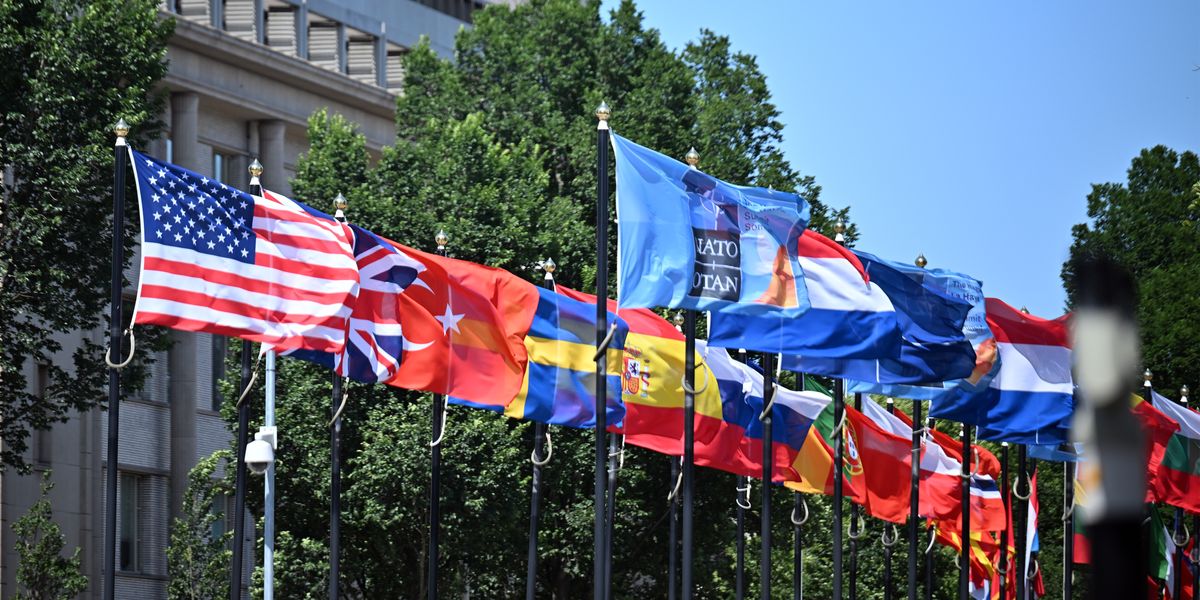
These developments have led to a sea change in European security and defense policy – what Lt. Gen. Sean Clancy, head of the European Union’s military committee, recently called a “global reset.” NATO members have agreed ahead of this week’s summit to boost defense spending to 5% of GDP, a huge jump from a 2% target that many in the alliance had struggled to meet. That change is an acknowledgement of both the growing Russian menace and Trump’s threat to withhold support from NATO nations who miss the 5 % mark.

Trump has also made clear that the U.S. plans to reduce its financial and troop commitments to NATO, and he has shown disdain for the alliance’s European members. Last week, Trump argued that the 5 % NATO target wouldn’t apply to the U.S. – “I don’t think we should,” he said, “but I think they should.” And as Europe worked a diplomatic channel to bring Iran to the negotiating table, Trump said Friday that “Iran doesn’t want to speak to Europe. They want to speak to us. Europe is not going to be able to help in this one.”

“Europe is facing a decision point, a crossroads,” Doug Lute, a former U.S. Ambassador to NATO, told The Cipher Brief. “And the decision is, will Europe stand up as one of the poles in this new multipolar international system?”

Another former U.S. Ambassador to NATO, Kurt Volker, said he believes the U.S. commitment to Europe will remain strong, but only if NATO’s European members make good on their new pledges to boost defense spending.

“What I see is a tremendous U.S. push to strengthen NATO,” Amb. Volker said. “The U.S. has responsibilities globally and especially in Asia and wants to be able to dedicate more resources there. But it can only dedicate more resources and attention if Europe steps up to do more of its own role in securing Europe and in preparing for the defense of Europe, which they are doing.”

The question, then, for Europe, as the NATO leaders meet: When it comes to defense and security, can Europe go it alone? Or, as Amb. Lute put it, “Can [Europe] assemble the hard power it needs in a rapid, emergency basis under the pressure of time? Can it assemble the hard power required to stand by itself?”

What Europe is saying – and doing

Recent European pledges and military budgets would suggest that at a minimum, the European “reset” is underway – and that the continent is taking significant first steps to bolster its own defenses.

To win consensus on the new 5 % spending target, NATO Secretary General Mark Rutte split the commitments into 3.5% for core defense and 1.5% for “defense-related” items including infrastructure and cybersecurity.

5 % may seem a small figure, but it represents a quantum leap for the alliance. Today only 23 of the alliance’s 32 members have met the previous 2% target. (NATO estimates that the U.S. spent around 3.4% of its GDP on defense in 2024.) The percentages of defense spending were higher during the Cold War, when the Soviet Union posed a clear and regular threat to Western Europe from its side of the Iron Curtain. The numbers dropped precipitously after the Soviet state met its demise in 1991.

“After the fall of the Soviet Union, everybody cashed in and defense spending in Europe fell,” Amb. Volker said. Today, he added, “everyone recognizes that Europe has taken too much of a peace dividend and they’re not prepared. So that’s why they’re willing to agree to this 5 % target now.”

NATO has also pledged to boost its surface-to-air defense capabilities, an area in which the alliance has depended heavily on the U.S. And in March, the European Union took steps of its own to boost military spending, creating a 150 billion Euro ($170 billion) “combat readiness” fund for weapons procurement.

Meanwhile, that 1.5 % allotment for infrastructure and cybersecurity is an “underappreciated component” of the European commitment, according to Rear Admiral (Ret.) Mark Montgomery, a senior director at the Center on Cyber and Technology Innovation (CCTI) at the Foundation for Defense of Democracies. In a piece for The Cipher Brief titled “Nato’s Critical 1.5 %,” Montgomery said those funds would be “fundamental to NATO’s ability to project power and sustain forces to fight and win wars.”

Everyone needs a good nightcap. Ours happens to come in the form of a M-F newsletter that keeps you up to speed on national security. Sign up today.

“I actually see a lot of very good progress,” former NATO Supreme Allied Commander Gen. Philip Breedlove told The Cipher Brief. He said that a recent tour of eight European countries had convinced him of a broad commitment to spending for “long-term readiness” on defense.

“Most capitals have determined [that] Mr. Putin is not a partner, he’s an enemy,” Gen. Breedlove said. “He has now three times amassed an army and marched across internationally recognized borders and invaded his neighbors, and we’re going to have to deal with him.”

Beyond the alliance-wide hikes in defense spending, several European countries have made dramatic moves to bolster their own militaries. Earlier this month the British Defense Ministry announced an overhaul of its procurement approach, shifting from a focus on heavy armor to smaller, high-tech weaponry. Germany’s chancellor Friedrich Merz has promised to build “the strongest conventional army in Europe,” and earlier this year Germany made its first permanent foreign deployment since World War II, stationing a 5,000-strong brigade in Lithuania.

“Germany’s economy has awakened to this new military-industrial demand signal, especially under new Chancellor Merz,” Amb. Lute said. “There are step-by-step indicators that Europe has changed its perception of the threat, the direct threat to Europe, but also this change in the transatlantic relationship.”

For all the pledges, problems abound. Experts warn that a morass of national and continent-wide regulations may thwart or delay efforts to build a potent European defense force. Overall strategy and standards have traditionally been set by NATO commanders, but national military budgets, planning and purchasing are the purview of individual nations. And Amb. Lute warned that European political swings may also hamper efforts to jump-start military production.

“The government [in Germany] can’t simply demand that Rheinmetall, for example, begin to produce where it hasn’t produced in the last 30 years,” he said. “You actually have to enter into the capital marketplace. And that counts on a significant and reliable year-after-year demand signal, which has not been the case over the last three decades.”

Geography matters

The most concrete signs of a continent on a war footing can be found along the eastern edges of NATO, in places where proximity to Russia has driven defense policy. While Spain, which sits in southwest Europe, far from any Russian border, spent only 1.3 % on defense last year, Poland – which shares a long border with Ukraine as well as a powerful enmity towards Moscow – has nearly reached the 5 % threshold already. Meanwhile, NATO’s two biggest military spenders per capita are the Baltic nations of Estonia and Lithuania; Latvia is close behind.

“The most fundamental observation here is that geography still counts,” Amb. Lute said. “So the closer you are with a land border to Russia and now a newly aggressive, revanchist, neo-imperialist Putin’s Russia, the more these hard defensive measures count.”

Such measures reach beyond military spending. This month NATO held its annual Baltops military exercises, with troops from 20 NATO nations including newly-minted alliance members Sweden and Finland. This year’s drills carried two main aims, NATO officials said: to test NATO’s readiness for a Russian attack, and put on a show of force that might deter the Kremlin from future aggression.

Meanwhile, five European nations—Finland, Poland, Latvia, Estonia, and Lithuania—are withdrawing from the international treaty that bans the use or production of anti-personnel landmines, again citing the Russia threat. And Poland has gone so far as to request that NATO nuclear weapons be stationed on its soil.

“Doesn’t surprise me at all,” Gen. Breedlove said of the landmine decision and Poland’s remarks about nuclear weapons.

“Remember, these nations now are really trying to decide, is America a reliable ally or not?” he said. “And if they’re going to have to go it alone, they’re going to have to take some pretty tough measures to make sure that they can hold, should Russia do what they seem to be continuing to do…and they’re going to start taking these more drastic measures because you just can’t bet your national sovereignty and existence on a hope.”

The missing pieces in a European defense

A recent report from the International Institute for Strategic Studies estimates that it would take Europe 25 years and nearly $1 trillion to replace U.S. military support if Washington withdrew from the continent.

The report found that key gaps for NATO members would involve aircraft, naval forces, and command infrastructure. NATO officials have also warned that current air defenses may be inadequate to protect against the range of threats that have featured prominently in the Ukraine war – high-tech drones, missiles, and fighter aircraft.

The IISS report makes clear – and many experts agree – that for all the commitments to boost European defenses, the continent remains heavily reliant on U.S. capabilities.

“Where America is absolutely the key is all of the enablers, all of the things that make an army potent – long-range precise fires, deep technical intelligence, developing kill chains and target folders in order to strike,” Gen. Breedlove said. He said he sees minimal immediate risk to Europe, given a badly weakened Russian military, but that in the longer term, the Europeans will need to manufacture or obtain a long list of high-end hardware on their own.

“There are a few things that really only America can do,” Gen. Breedlove said, listing rapid aerial transport, high-performing air defenses such as Patriot missile batteries, and sophisticated intelligence systems. “They really don’t have the kind of strategic lift that America brings.”

“We’re not talking about tank brigades or ships at sea and so forth,” Amb. Lute said. “We’re talking about things like a high-end missile and air defense. Think of the Patriot missile system, which really doesn’t have a European rival…the intelligence surveillance and reconnaissance capabilities, and in particular, space-based ISR capabilities. We’re talking about air-to-air refueling and that strategic mobility, which is the combination of air-to-air refueling and large-body transport aircraft. So systems like that, for which Europe has relied on the United States, are going to have to become increasingly European owned and operated.”

Lute and others say a fundamental problem for Europe will be that even if the will and funding are there, none of these systems can be produced quickly. It may be that in the short term, while manufacturers in Europe reboot, they will need to spend their money on purchases from American defense firms.

Amb. Volker said he remains optimistic about Europe’s defense future, provided it maintains its current level of resolve.

Filling the gap “is not rocket science, it’s easy to do,” he said. “Europe needs to be strategic about this.”

Volker said that while those high-end “enablers” should be a long-term aspiration, Europe’s near-term focus should be on more nuts-and-bolts defense capabilities — troops, armor, artillery, ammunition, aircraft, and so forth.

Ultimately, he said, while some countries will reach the 5 % spending target more quickly than others, the consensus on the gravity of the threat is a good sign.

“The fact that they are agreeing to the target means that there is a recognition that it’s needed,” Volker said. “That means there will also be movement toward that target. It will be an iterative process as to how we get there. But no one in Europe is contesting the notion that we need to get there.”

Read more expert-driven national security insights, perspective and analysis in The Cipher Brief because National Security is Everyone’s Business.

Source link
#Europe #Defend

Skip next section Oil prices up, stocks down amid Strait of Hormuz standoff

April 20, 2026

Oil prices up, stocks down amid Strait of Hormuz standoff

Crude prices jumped and the US dollar rose but equity futures fell in early Asian trading on Monday.

The price of Brent crude, the international benchmark, soared as much as 7% to $96.85 a barrel.

The S&P 500 futures, meanwhile, fell about 0.9%, while the US dollar appreciated against several other currencies, including the euro and the Japanese yen.

The market movements signal investor concern over the Middle East situation, with Iran shutting the Strait of Hormuz once again amid the continuing US blockade of Iranian ports and ships.

Will the Iran war cause a global recession?

https://p.dw.com/p/5CSfx

Skip next section Iran ‘will soon respond’ to US seizure of Iranian-flagged ship, military says

April 20, 2026

Iran ‘will soon respond’ to US seizure of Iranian-flagged ship, military says

Iranian authorities have accused the US of ‌violating ⁠the ⁠ceasefire agreement between the two sides by firing at one of ​Iran’s commercial ships in ​the Gulf of ​Oman.

Iran’s top joint military command, the Hazrat Khatam al-Anbiya Central Headquarters, vowed to respond swiftly to the US actions.

“We warn that the ⁠armed ​forces of ​the Islamic Republic ​of Iran will ‌soon respond and retaliate against ​this ⁠armed piracy by the US military,” ⁠the ​spokesperson said.

Earlier, US naval forces stationed in the region intercepted and seized an Iranian-flagged cargo vessel, which they said had tried to sail through the waters of the Gulf of Oman, in violation of the US blockade of Iranian ports and shipping.

Iranian state media quoted a military ‌spokesperson as saying that the vessel was en route from ​China to Iran.

https://p.dw.com/p/5CSfn

Skip next section Why is Iran not planning to join new round of talks with US?

April 19, 2026

Why is Iran not planning to join new round of talks with US?

Billboards for the Islamabad talks on April 11, 2026
Pakistan said it was ready to host a new round of talks, but Iran appears unwilling to attendImage: Qamar Zaman/dpa/picture alliance

Hours after Donald Trump announced he was dispatching US negotiators for a fresh round of talks in Islamabad, Iran said it has no intention of joining.

So far, engagement between Washington and Tehran has been limited to a single 21-hour negotiating session in Islamabad on April 11 that ended without any breakthrough.

Iranian parliament speaker Mohammad Bagher Ghalibaf said afterwards that the US side “ultimately failed to gain the trust of the Iranian delegation in this round of negotiation.”

Washington’s hardline stance further complicates matters

A major sticking point is the US blockade of Iranian ports, which continues to overshadow diplomacy just days before the two-week ceasefire is due to expire.

Trump’s announcement that US Marines had seized an Iranian ship attempting to evade the blockade is likely to fuel tensions further.

Although Iran briefly reopened the Strait of Hormuz following a ceasefire in Lebanon, it quickly reversed course in response to the ongoing US blockade.

Earlier, the Fars and Tasnim news agencies, citing anonymous sources, reported that lifting the US blockade was a precondition for any renewed talks.

Another point of contention: Iran’s enrichment program

Trump said on Friday that Iran had agreed to give up its stock of around 440 kilograms of enriched uranium. 

However, Iran’s Foreign Ministry later said the stockpile was “not going to be transferred anywhere.”

Foreign Ministry Spokesman Esmaeil Baghaei told state TV that the “transfer of Iran’s enriched uranium to the US has never been raised in negotiations.”

https://p.dw.com/p/5CSf6

Skip next section Iran has ‘no plans’ to join talks in Islamabad: state media
April 19, 2026

Iran has ‘no plans’ to join talks in Islamabad: state media

Tehran was not planning to take part in a new round of negotiations with the United States in Islamabad, Iranian state media reported on Sunday

“There are currently no plans to participate in the next round of Iran-US talks,” state broadcaster IRIB reported, in English, on X.

It was not immediately clear who was behind the announcement.

https://p.dw.com/p/5CSWZ

Skip next section Trump: US Marines seized Iranian-flagged cargo ship

April 19, 2026

Trump: US Marines seized Iranian-flagged cargo ship

President Donald Trump said US forces seized an Iranian-flagged cargo ship on Sunday. The vessel was trying to evade a US naval blockade near the Strait of Hormuz, he wrote in a post on his Truth Social platform.

“Our Navy ship stopped them right in their tracks by blowing a hole in the engineroom,” Trump wrote.

He added that US Marines had taken custody of the ship, named Touska, and were “seeing what’s on board!”

https://p.dw.com/p/5CSMs

Skip next section Pakistani PM assures Iranian president of committment as mediator of peace

April 19, 2026

Pakistani PM assures Iranian president of committment as mediator of peace

Pakistani Prime Minister Shehbaz Sharif said he discussed the conflict in the Gulf with Iranian President ⁠Masoud Pezeshkian on Sunday.

Sharif wrote in a post on X that he “shared insights from my recent engagements with leaders of Saudi Arabia, Qatar and Türkiye.”

“I appreciated Iran’s engagement, including its high-level delegation to Islamabad for the historic talks, ⁠and recent discussions with Field Marshal Syed Asim Munir,” Sharif said.

Sharif told Pezeshkian that Pakistan remains ⁠committed to its role as a ⁠facilitator of peace and regional stability.

https://p.dw.com/p/5CSBl

Skip next section Unclear if Iran will join second round of Islamabad talks

April 19, 2026

Unclear if Iran will join second round of Islamabad talks

It is still unclear whether Iran will ultimately join the second round of talks in Islamabad with the United States.

State-run Iranian news agency Irna reported Sunday that “there is no clear prospect of fruitful negotiations.”

Irna also pointed to Washington’s “maximalism and unreasonable and unrealistic demands, frequent changes of positions, constant contradictions and the continuation of the so-called naval blockade.”

Meanwhile, the Fars and Tasnim news agencies, quoting anonymous sources, said, “The overall atmosphere cannot be assessed as very positive.” 

Fars cited one source as saying that the lifting of a US blockade on Iranian ports was a precondition for continued talks.

https://p.dw.com/p/5CS5v

Skip next section IN DEPTH: Mines in the Strait of Hormuz: How dangerous are they?

April 19, 2026

IN DEPTH: Mines in the Strait of Hormuz: How dangerous are they?

Bulgarian navy personnel destroy a naval mine in the Black Sea, Bulgaria, in this handout image released on July 1, 2022
Underwater mines can pose a threat in infested areas for decades to come [FILE: Black Sea, Bulgaria on July 1, 2022]Image: BULGARIAN MINISTRY OF DEFENCE Via REUTERS

On Friday, German Chancellor Friedrich Merz said his country was prepared to supply mine clearance and maritime reconnaissance to help secure the Strait of Hormuz.

The same day, Iran’s top diplomat Abbas Araghchi declared the critical waterway “completely open” for the duration of the Israel-Lebanon ceasefire, and US President Donald Trump likewise said it was “ready for full passage.”

The following day, Iran reversed its decision, shutting the strait again.

Either way, maritime traffic might still be at risk, given that Iranian authorities had previously indicated there may be underwater mines in the strait.

How dangerous are naval mines, and what can be done to clear them? Find out here.

https://p.dw.com/p/5CS5K

Skip next section Vance to return to Islamabad for new round of talks

April 19, 2026

Vance to return to Islamabad for new round of talks

JD Vance (right), Jared Kushner (left) and Steve Witkoff (middle) after meeting with with representatives from Pakistan and Iran on April 12, 2026
The trio — JD Vance (right), Jared Kushner (left) and Steve Witkoff (middle) — were in Islambad during the first round of talks [FILE: April 12, 2026]Image: Jacquelyn Martin/AP Photo/picture alliance

US Vice President JD Vance, who led the first round of talks between the US and Iran last weekend, will return to Islamabad for the negotiations, according to a White House official.

Trump’s envoy Steve Witkoff and son-in-law Jared Kushner will also be part of the delegation.

Earlier, Trump had said Vance would not go to the Pakistani capital. “It’s only because of security,” Trump told ABC News. “JD’s great.”

Last Sunday, Vance left Islamabad after 21 hours of talks with Iranian officials ended without a breakthrough. 

Iran war: What’s next after Islamabad talks fail?

https://p.dw.com/p/5CRyr

Skip next section Two cruise ships pass through Hormuz

April 19, 2026

Two cruise ships pass through Hormuz

Deutschland, Kiel | AIDA prima und Mein Schiff 4
The Mein Schiff 4, seen here on the right in 2020, passed through the Strait of Hormuz on Sunday (File photo: July 2020)Image: Petra Nowack/penofoto/imago images

Germany-based TUI Cruises said ‌that ⁠its ⁠Mein Schiff 4 and Mein Schiff ​5 ships passed through the ​Strait of Hormuz on Sunday.

According to the maritime data service MarineTraffic, only one other cruise ship, the Celestial Discovery, formerly known as the Aida aura, had been able to pass the strait since the start of the Iran war on February 28, when the US and Israel attacked Iran.

Tui ​said that all passengers ​had previously been ‌brought home and both ships were ​operating ⁠with reduced crews, adding that it had obtained approvals ‌from ​relevant authorities to cross the strait, under careful consideration of the security situation.

It said ​the ships would now continue on to the Mediterranean ⁠Sea.

https://p.dw.com/p/5CRvS

Skip next section Macron to meet with Lebanese PM

April 19, 2026

Macron to meet with Lebanese PM

French President Emmanuel Macron attends a meeting of France's defence and security council following the Iran war ceasefire announcement and to address the return of Cecile Kohler and Jacques Paris, two French nationals freed by Iran after three and a half years in detention, at the Elysee Palace in Paris, France, on April 8, 2026
Macron has demanded that the Lebanese government arrest those responsible for the attack [FILE: April 8, 2026]Image: Tom Nicholson/REUTERS

French President Emmanuel Macron is expected to meet with Lebanese Prime Minister Nawaf Salam in Paris this week, his office announced.

The meeting comes amid a fragile 10-day ceasefire between Israel and the Iran-backed militant group Hezbollah.

The visit was announced a day after France blamed Hezbollah for an ambush on UN peacekeepers that left one French soldier dead and three others wounded.

Macron is expected to urge Lebanese authorities to “shed full light on the incident” and “identify and prosecute those responsible without delay,” his office added.

With the move, the French government will highlight Macron’s commitment to seeing “full and complete respect for the ceasefire in Lebanon” as well as France’s support for Lebanon’s “territorial integrity,” the president’s office said on Sunday.

https://p.dw.com/p/5CRvR

Skip next section Iran not sending negotiating delegation to Pakistan, Tasnim reports

April 19, 2026

Iran not sending negotiating delegation to Pakistan, Tasnim reports

Iran is not sending a ​negotiating ​delegation ‌to Pakistan “as long ‌as there is ‌a ​naval blockade,” Iran’s Tasnim ​news agency ⁠reported on ​Sunday.

The development came after Pakistani Foreign Minister Ishaq Dar, who spoke by phone with his Iranian counterpart Abbas Araghchi on Sunday, had said his country was working to “bridge” differences between Washington and Tehran.

Earlier, US President Donald Trump had announced that US negotiators were due in Islamabad on Monday evening.

Late Saturday, Parliament Speaker Mohammed Bagher Ghalibaf, who has emerged as Iran’s main negotiator, said in an interview on state television that “there will be no retreat in the field of diplomacy.” 

[embed]https://www.youtube.com/watch?v=0TDeUMPkqbE[/embed]

https://p.dw.com/p/5CRvE

Skip next section Trump accuses Iran of ceasefire violations

April 19, 2026

Trump accuses Iran of ceasefire violations

US President Donald Trump speaks to members of the media before boarding Marine One on the South Lawn of the White House en route to Las Vegas, Nevada on April 16, 2026
Trump has said he won’t let Tehran ‘blackmail us’ over the Strait of Hormuz [April 16, 2026]Image: Mehmet Eser/SOPA Images/ZUMA/picture alliance

US President Donald Trump accused the Iranian regime of violating the current ceasefire agreement and threatened to “to knock out every single Power Plant, and every single Bridge,” if Iran does not make a deal with the US.

Tehran said on Saturday it would keep the Strait of Hormuz closed. ​At least two ships ⁠reported they had been fired upon while approaching the strait on Saturday. 

“Iran decided to ⁠fire bullets yesterday ​in the Strait of Hormuz — A Total Violation of our Ceasefire Agreement!” Trump wrote in a post Sunday on his Truth Social platform. “That wasn’t nice, was it?”

https://p.dw.com/p/5CRlK

Skip next section Iran accuses US of violating ceasefire via blockade

April 19, 2026

Iran accuses US of violating ceasefire via blockade

Iran has called the US blockade on its ports a “violation” of the ceasefire agreement mediated by Pakistan some 10-days ago, which paused over six weeks of fighting.

“The United States’ so-called ‘blockade’ of Iran’s ports or coastline is not only a violation of Pakistani-mediated ceasefire but also both unlawful and criminal,” Iranian Foreign Ministry spokesman Ismaeil Baqaei said Sunday on X.

He cited a United Nations General Assembly resolution to argue that the blockade was an “act of aggression” against Iran.

“Moreover, by deliberately inflicting collective punishment on the Iranian population, it amounts to war crime and crime against humanity,” the Foreign Ministry spokesman went on to say.

Iran has reverted to shuttering the critical Strait of Hormuz after Trump refused to lift the blockade.

https://p.dw.com/p/5CRlf

Skip next section US negotiators due in Pakistan early next week, Trump says

April 19, 2026

US negotiators due in Pakistan early next week, Trump says

US negotiators are due in the Pakistani capital on Monday evening, US President Donald Trump announced on Sunday, as Islamabad mediates efforts aimed at ending the US-Israeli war on Iran.

“My Representatives are going to Islamabad, Pakistan — They will be there tomorrow evening, for Negotiations,” Trump said in a lengthy post on his Truth Social platform.

He then strayed into criticism and threats against Iran, which he accused of violating the ceasefire agreement by attacking ships attempting to pass through the strategic Strait of Hormuz on Saturday.

Iran had briefly reopened the critical waterway on Friday, only to announce closing it again less than 24 hours later after Trump refused to lift a blockade on its ports.

Questioning Iran’s closure of the strait, Trump called it “strange” because “our BLOCKADE has already closed it.”

Without mentioning any of the terms, he also said the US proposed a peace agreement.

“We’re offering a very fair and reasonable DEAL, and I hope they take it because, if they don’t, the United States is going to knock out every single Power Plant, and every single Bridge, in Iran. NO MORE MR. NICE GUY!” Trump went on to say.

https://p.dw.com/p/5CRiQ

#Iran #war #Tehran #vows #response #seizure #cargo #ship">Iran war: Tehran vows response to US seizure of cargo shipSkip next section Oil prices up, stocks down amid Strait of Hormuz standoff04/20/2026April 20, 2026Oil prices up, stocks down amid Strait of Hormuz standoffCrude prices jumped and the US dollar rose but equity futures fell in early Asian trading on Monday.

The price of Brent crude, the international benchmark, soared as much as 7% to .85 a barrel.

The S&P 500 futures, meanwhile, fell about 0.9%, while the US dollar appreciated against several other currencies, including the euro and the Japanese yen.

The market movements signal investor concern over the Middle East situation, with Iran shutting the Strait of Hormuz once again amid the continuing US blockade of Iranian ports and ships.

Will the Iran war cause a global recession?To view this video please enable JavaScript, and consider upgrading to a web browser that supports HTML5 video
https://p.dw.com/p/5CSfxSkip next section Iran ‘will soon respond’ to US seizure of Iranian-flagged ship, military says04/20/2026April 20, 2026Iran ‘will soon respond’ to US seizure of Iranian-flagged ship, military saysIranian authorities have accused the US of ‌violating ⁠the ⁠ceasefire agreement between the two sides by firing at one of ​Iran’s commercial ships in ​the Gulf of ​Oman.

Iran’s top joint military command, the Hazrat Khatam al-Anbiya Central Headquarters, vowed to respond swiftly to the US actions.

“We warn that the ⁠armed ​forces of ​the Islamic Republic ​of Iran will ‌soon respond and retaliate against ​this ⁠armed piracy by the US military,” ⁠the ​spokesperson said.

Earlier, US naval forces stationed in the region intercepted and seized an Iranian-flagged cargo vessel, which they said had tried to sail through the waters of the Gulf of Oman, in violation of the US blockade of Iranian ports and shipping.

Iranian state media quoted a military ‌spokesperson as saying that the vessel was en route from ​China to Iran.
https://p.dw.com/p/5CSfnSkip next section Why is Iran not planning to join new round of talks with US?04/19/2026April 19, 2026Why is Iran not planning to join new round of talks with US?Pakistan said it was ready to host a new round of talks, but Iran appears unwilling to attendImage: Qamar Zaman/dpa/picture allianceHours after Donald Trump announced he was dispatching US negotiators for a fresh round of talks in Islamabad, Iran said it has no intention of joining.

So far, engagement between Washington and Tehran has been limited to a single 21-hour negotiating session in Islamabad on April 11 that ended without any breakthrough.

Iranian parliament speaker Mohammad Bagher Ghalibaf said afterwards that the US side “ultimately failed to gain the trust of the Iranian delegation in this round of negotiation.”

Washington’s hardline stance further complicates matters

A major sticking point is the US blockade of Iranian ports, which continues to overshadow diplomacy just days before the two-week ceasefire is due to expire.

Trump’s announcement that US Marines had seized an Iranian ship attempting to evade the blockade is likely to fuel tensions further.

Although Iran briefly reopened the Strait of Hormuz following a ceasefire in Lebanon, it quickly reversed course in response to the ongoing US blockade.

Earlier, the Fars and Tasnim news agencies, citing anonymous sources, reported that lifting the US blockade was a precondition for any renewed talks.

Another point of contention: Iran’s enrichment program

Trump said on Friday that Iran had agreed to give up its stock of around 440 kilograms of enriched uranium. 

However, Iran’s Foreign Ministry later said the stockpile was “not going to be transferred anywhere.”

Foreign Ministry Spokesman Esmaeil Baghaei told state TV that the “transfer of Iran’s enriched uranium to the US has never been raised in negotiations.”
https://p.dw.com/p/5CSf6Skip next section Iran has ‘no plans’ to join talks in Islamabad: state media04/19/2026April 19, 2026Iran has ‘no plans’ to join talks in Islamabad: state mediaTehran was not planning to take part in a new round of negotiations with the United States in Islamabad, Iranian state media reported on Sunday

“There are currently no plans to participate in the next round of Iran-US talks,” state broadcaster IRIB reported, in English, on X.


It was not immediately clear who was behind the announcement.
https://p.dw.com/p/5CSWZSkip next section Trump: US Marines seized Iranian-flagged cargo ship04/19/2026April 19, 2026Trump: US Marines seized Iranian-flagged cargo shipPresident Donald Trump said US forces seized an Iranian-flagged cargo ship on Sunday. The vessel was trying to evade a US naval blockade near the Strait of Hormuz, he wrote in a post on his Truth Social platform.

“Our Navy ship stopped them right in their tracks by blowing a hole in the engineroom,” Trump wrote.

He added that US Marines had taken custody of the ship, named Touska, and were “seeing what’s on board!”
https://p.dw.com/p/5CSMsSkip next section Pakistani PM assures Iranian president of committment as mediator of peace04/19/2026April 19, 2026Pakistani PM assures Iranian president of committment as mediator of peacePakistani Prime Minister Shehbaz Sharif said he discussed the conflict in the Gulf with Iranian President ⁠Masoud Pezeshkian on Sunday.

Sharif wrote in a post on X that he “shared insights from my recent engagements with leaders of Saudi Arabia, Qatar and Türkiye.”

“I appreciated Iran’s engagement, including its high-level delegation to Islamabad for the historic talks, ⁠and recent discussions with Field Marshal Syed Asim Munir,” Sharif said.

Sharif told Pezeshkian that Pakistan remains ⁠committed to its role as a ⁠facilitator of peace and regional stability.
https://p.dw.com/p/5CSBlSkip next section Unclear if Iran will join second round of Islamabad talks04/19/2026April 19, 2026Unclear if Iran will join second round of Islamabad talksIt is still unclear whether Iran will ultimately join the second round of talks in Islamabad with the United States.

State-run Iranian news agency Irna reported Sunday that “there is no clear prospect of fruitful negotiations.”

Irna also pointed to Washington’s “maximalism and unreasonable and unrealistic demands, frequent changes of positions, constant contradictions and the continuation of the so-called naval blockade.”

Meanwhile, the Fars and Tasnim news agencies, quoting anonymous sources, said, “The overall atmosphere cannot be assessed as very positive.” 

Fars cited one source as saying that the lifting of a US blockade on Iranian ports was a precondition for continued talks.
https://p.dw.com/p/5CS5vSkip next section IN DEPTH: Mines in the Strait of Hormuz: How dangerous are they?04/19/2026April 19, 2026IN DEPTH: Mines in the Strait of Hormuz: How dangerous are they?Underwater mines can pose a threat in infested areas for decades to come [FILE: Black Sea, Bulgaria on July 1, 2022]Image: BULGARIAN MINISTRY OF DEFENCE Via REUTERSOn Friday, German Chancellor Friedrich Merz said his country was prepared to supply mine clearance and maritime reconnaissance to help secure the Strait of Hormuz.

The same day, Iran’s top diplomat Abbas Araghchi declared the critical waterway “completely open” for the duration of the Israel-Lebanon ceasefire, and US President Donald Trump likewise said it was “ready for full passage.”

The following day, Iran reversed its decision, shutting the strait again.

Either way, maritime traffic might still be at risk, given that Iranian authorities had previously indicated there may be underwater mines in the strait.

How dangerous are naval mines, and what can be done to clear them? Find out here.
https://p.dw.com/p/5CS5KSkip next section Vance to return to Islamabad for new round of talks04/19/2026April 19, 2026Vance to return to Islamabad for new round of talksThe trio — JD Vance (right), Jared Kushner (left) and Steve Witkoff (middle) — were in Islambad during the first round of talks [FILE: April 12, 2026]Image: Jacquelyn Martin/AP Photo/picture allianceUS Vice President JD Vance, who led the first round of talks between the US and Iran last weekend, will return to Islamabad for the negotiations, according to a White House official.

Trump’s envoy Steve Witkoff and son-in-law Jared Kushner will also be part of the delegation.

Earlier, Trump had said Vance would not go to the Pakistani capital. “It’s only because of security,” Trump told ABC News. “JD’s great.”

Last Sunday, Vance left Islamabad after 21 hours of talks with Iranian officials ended without a breakthrough. Iran war: What’s next after Islamabad talks fail?To view this video please enable JavaScript, and consider upgrading to a web browser that supports HTML5 video
https://p.dw.com/p/5CRyrSkip next section Two cruise ships pass through Hormuz04/19/2026April 19, 2026Two cruise ships pass through HormuzThe Mein Schiff 4, seen here on the right in 2020, passed through the Strait of Hormuz on Sunday (File photo: July 2020)Image: Petra Nowack/penofoto/imago imagesGermany-based TUI Cruises said ‌that ⁠its ⁠Mein Schiff 4 and Mein Schiff ​5 ships passed through the ​Strait of Hormuz on Sunday.

According to the maritime data service MarineTraffic, only one other cruise ship, the Celestial Discovery, formerly known as the Aida aura, had been able to pass the strait since the start of the Iran war on February 28, when the US and Israel attacked Iran.

Tui ​said that all passengers ​had previously been ‌brought home and both ships were ​operating ⁠with reduced crews, adding that it had obtained approvals ‌from ​relevant authorities to cross the strait, under careful consideration of the security situation.

It said ​the ships would now continue on to the Mediterranean ⁠Sea.
https://p.dw.com/p/5CRvSSkip next section Macron to meet with Lebanese PM04/19/2026April 19, 2026Macron to meet with Lebanese PMMacron has demanded that the Lebanese government arrest those responsible for the attack [FILE: April 8, 2026]Image: Tom Nicholson/REUTERSFrench President Emmanuel Macron is expected to meet with Lebanese Prime Minister Nawaf Salam in Paris this week, his office announced.

The meeting comes amid a fragile 10-day ceasefire between Israel and the Iran-backed militant group Hezbollah.

The visit was announced a day after France blamed Hezbollah for an ambush on UN peacekeepers that left one French soldier dead and three others wounded.

Macron is expected to urge Lebanese authorities to “shed full light on the incident” and “identify and prosecute those responsible without delay,” his office added.

With the move, the French government will highlight Macron’s commitment to seeing “full and complete respect for the ceasefire in Lebanon” as well as France’s support for Lebanon’s “territorial integrity,” the president’s office said on Sunday.
https://p.dw.com/p/5CRvRSkip next section Iran not sending negotiating delegation to Pakistan, Tasnim reports04/19/2026April 19, 2026Iran not sending negotiating delegation to Pakistan, Tasnim reportsIran is not sending a ​negotiating ​delegation ‌to Pakistan “as long ‌as there is ‌a ​naval blockade,” Iran’s Tasnim ​news agency ⁠reported on ​Sunday.

The development came after Pakistani Foreign Minister Ishaq Dar, who spoke by phone with his Iranian counterpart Abbas Araghchi on Sunday, had said his country was working to “bridge” differences between Washington and Tehran.

Earlier, US President Donald Trump had announced that US negotiators were due in Islamabad on Monday evening.

Late Saturday, Parliament Speaker Mohammed Bagher Ghalibaf, who has emerged as Iran’s main negotiator, said in an interview on state television that “there will be no retreat in the field of diplomacy.” [embed]https://www.youtube.com/watch?v=0TDeUMPkqbE[/embed]
https://p.dw.com/p/5CRvESkip next section Trump accuses Iran of ceasefire violations04/19/2026April 19, 2026Trump accuses Iran of ceasefire violationsTrump has said he won’t let Tehran ‘blackmail us’ over the Strait of Hormuz [April 16, 2026]Image: Mehmet Eser/SOPA Images/ZUMA/picture allianceUS President Donald Trump accused the Iranian regime of violating the current ceasefire agreement and threatened to “to knock out every single Power Plant, and every single Bridge,” if Iran does not make a deal with the US.

Tehran said on Saturday it would keep the Strait of Hormuz closed. ​At least two ships ⁠reported they had been fired upon while approaching the strait on Saturday. 

“Iran decided to ⁠fire bullets yesterday ​in the Strait of Hormuz — A Total Violation of our Ceasefire Agreement!” Trump wrote in a post Sunday on his Truth Social platform. “That wasn’t nice, was it?”
https://p.dw.com/p/5CRlKSkip next section Iran accuses US of violating ceasefire via blockade04/19/2026April 19, 2026Iran accuses US of violating ceasefire via blockadeIran has called the US blockade on its ports a “violation” of the ceasefire agreement mediated by Pakistan some 10-days ago, which paused over six weeks of fighting.

“The United States’ so-called ‘blockade’ of Iran’s ports or coastline is not only a violation of Pakistani-mediated ceasefire but also both unlawful and criminal,” Iranian Foreign Ministry spokesman Ismaeil Baqaei said Sunday on X.

He cited a United Nations General Assembly resolution to argue that the blockade was an “act of aggression” against Iran.

“Moreover, by deliberately inflicting collective punishment on the Iranian population, it amounts to war crime and crime against humanity,” the Foreign Ministry spokesman went on to say.

Iran has reverted to shuttering the critical Strait of Hormuz after Trump refused to lift the blockade.
https://p.dw.com/p/5CRlfSkip next section US negotiators due in Pakistan early next week, Trump says04/19/2026April 19, 2026US negotiators due in Pakistan early next week, Trump saysUS negotiators are due in the Pakistani capital on Monday evening, US President Donald Trump announced on Sunday, as Islamabad mediates efforts aimed at ending the US-Israeli war on Iran.

“My Representatives are going to Islamabad, Pakistan — They will be there tomorrow evening, for Negotiations,” Trump said in a lengthy post on his Truth Social platform.

He then strayed into criticism and threats against Iran, which he accused of violating the ceasefire agreement by attacking ships attempting to pass through the strategic Strait of Hormuz on Saturday.

Iran had briefly reopened the critical waterway on Friday, only to announce closing it again less than 24 hours later after Trump refused to lift a blockade on its ports.

Questioning Iran’s closure of the strait, Trump called it “strange” because “our BLOCKADE has already closed it.”

Without mentioning any of the terms, he also said the US proposed a peace agreement.

“We’re offering a very fair and reasonable DEAL, and I hope they take it because, if they don’t, the United States is going to knock out every single Power Plant, and every single Bridge, in Iran. NO MORE MR. NICE GUY!” Trump went on to say.
https://p.dw.com/p/5CRiQ#Iran #war #Tehran #vows #response #seizure #cargo #ship

Skip next section Oil prices up, stocks down amid Strait of Hormuz standoff

April 20, 2026

Oil prices up, stocks down amid Strait of Hormuz standoff

Crude prices jumped and the US dollar rose but equity futures fell in early Asian trading on Monday.

The price of Brent crude, the international benchmark, soared as much as 7% to $96.85 a barrel.

The S&P 500 futures, meanwhile, fell about 0.9%, while the US dollar appreciated against several other currencies, including the euro and the Japanese yen.

The market movements signal investor concern over the Middle East situation, with Iran shutting the Strait of Hormuz once again amid the continuing US blockade of Iranian ports and ships.

Will the Iran war cause a global recession?

https://p.dw.com/p/5CSfx

Skip next section Iran ‘will soon respond’ to US seizure of Iranian-flagged ship, military says

April 20, 2026

Iran ‘will soon respond’ to US seizure of Iranian-flagged ship, military says

Iranian authorities have accused the US of ‌violating ⁠the ⁠ceasefire agreement between the two sides by firing at one of ​Iran’s commercial ships in ​the Gulf of ​Oman.

Iran’s top joint military command, the Hazrat Khatam al-Anbiya Central Headquarters, vowed to respond swiftly to the US actions.

“We warn that the ⁠armed ​forces of ​the Islamic Republic ​of Iran will ‌soon respond and retaliate against ​this ⁠armed piracy by the US military,” ⁠the ​spokesperson said.

Earlier, US naval forces stationed in the region intercepted and seized an Iranian-flagged cargo vessel, which they said had tried to sail through the waters of the Gulf of Oman, in violation of the US blockade of Iranian ports and shipping.

Iranian state media quoted a military ‌spokesperson as saying that the vessel was en route from ​China to Iran.

https://p.dw.com/p/5CSfn

Skip next section Why is Iran not planning to join new round of talks with US?

April 19, 2026

Why is Iran not planning to join new round of talks with US?

Billboards for the Islamabad talks on April 11, 2026
Pakistan said it was ready to host a new round of talks, but Iran appears unwilling to attendImage: Qamar Zaman/dpa/picture alliance

Hours after Donald Trump announced he was dispatching US negotiators for a fresh round of talks in Islamabad, Iran said it has no intention of joining.

So far, engagement between Washington and Tehran has been limited to a single 21-hour negotiating session in Islamabad on April 11 that ended without any breakthrough.

Iranian parliament speaker Mohammad Bagher Ghalibaf said afterwards that the US side “ultimately failed to gain the trust of the Iranian delegation in this round of negotiation.”

Washington’s hardline stance further complicates matters

A major sticking point is the US blockade of Iranian ports, which continues to overshadow diplomacy just days before the two-week ceasefire is due to expire.

Trump’s announcement that US Marines had seized an Iranian ship attempting to evade the blockade is likely to fuel tensions further.

Although Iran briefly reopened the Strait of Hormuz following a ceasefire in Lebanon, it quickly reversed course in response to the ongoing US blockade.

Earlier, the Fars and Tasnim news agencies, citing anonymous sources, reported that lifting the US blockade was a precondition for any renewed talks.

Another point of contention: Iran’s enrichment program

Trump said on Friday that Iran had agreed to give up its stock of around 440 kilograms of enriched uranium. 

However, Iran’s Foreign Ministry later said the stockpile was “not going to be transferred anywhere.”

Foreign Ministry Spokesman Esmaeil Baghaei told state TV that the “transfer of Iran’s enriched uranium to the US has never been raised in negotiations.”

https://p.dw.com/p/5CSf6

Skip next section Iran has ‘no plans’ to join talks in Islamabad: state media
April 19, 2026

Iran has ‘no plans’ to join talks in Islamabad: state media

Tehran was not planning to take part in a new round of negotiations with the United States in Islamabad, Iranian state media reported on Sunday

“There are currently no plans to participate in the next round of Iran-US talks,” state broadcaster IRIB reported, in English, on X.

It was not immediately clear who was behind the announcement.

https://p.dw.com/p/5CSWZ

Skip next section Trump: US Marines seized Iranian-flagged cargo ship

April 19, 2026

Trump: US Marines seized Iranian-flagged cargo ship

President Donald Trump said US forces seized an Iranian-flagged cargo ship on Sunday. The vessel was trying to evade a US naval blockade near the Strait of Hormuz, he wrote in a post on his Truth Social platform.

“Our Navy ship stopped them right in their tracks by blowing a hole in the engineroom,” Trump wrote.

He added that US Marines had taken custody of the ship, named Touska, and were “seeing what’s on board!”

https://p.dw.com/p/5CSMs

Skip next section Pakistani PM assures Iranian president of committment as mediator of peace

April 19, 2026

Pakistani PM assures Iranian president of committment as mediator of peace

Pakistani Prime Minister Shehbaz Sharif said he discussed the conflict in the Gulf with Iranian President ⁠Masoud Pezeshkian on Sunday.

Sharif wrote in a post on X that he “shared insights from my recent engagements with leaders of Saudi Arabia, Qatar and Türkiye.”

“I appreciated Iran’s engagement, including its high-level delegation to Islamabad for the historic talks, ⁠and recent discussions with Field Marshal Syed Asim Munir,” Sharif said.

Sharif told Pezeshkian that Pakistan remains ⁠committed to its role as a ⁠facilitator of peace and regional stability.

https://p.dw.com/p/5CSBl

Skip next section Unclear if Iran will join second round of Islamabad talks

April 19, 2026

Unclear if Iran will join second round of Islamabad talks

It is still unclear whether Iran will ultimately join the second round of talks in Islamabad with the United States.

State-run Iranian news agency Irna reported Sunday that “there is no clear prospect of fruitful negotiations.”

Irna also pointed to Washington’s “maximalism and unreasonable and unrealistic demands, frequent changes of positions, constant contradictions and the continuation of the so-called naval blockade.”

Meanwhile, the Fars and Tasnim news agencies, quoting anonymous sources, said, “The overall atmosphere cannot be assessed as very positive.” 

Fars cited one source as saying that the lifting of a US blockade on Iranian ports was a precondition for continued talks.

https://p.dw.com/p/5CS5v

Skip next section IN DEPTH: Mines in the Strait of Hormuz: How dangerous are they?

April 19, 2026

IN DEPTH: Mines in the Strait of Hormuz: How dangerous are they?

Bulgarian navy personnel destroy a naval mine in the Black Sea, Bulgaria, in this handout image released on July 1, 2022
Underwater mines can pose a threat in infested areas for decades to come [FILE: Black Sea, Bulgaria on July 1, 2022]Image: BULGARIAN MINISTRY OF DEFENCE Via REUTERS

On Friday, German Chancellor Friedrich Merz said his country was prepared to supply mine clearance and maritime reconnaissance to help secure the Strait of Hormuz.

The same day, Iran’s top diplomat Abbas Araghchi declared the critical waterway “completely open” for the duration of the Israel-Lebanon ceasefire, and US President Donald Trump likewise said it was “ready for full passage.”

The following day, Iran reversed its decision, shutting the strait again.

Either way, maritime traffic might still be at risk, given that Iranian authorities had previously indicated there may be underwater mines in the strait.

How dangerous are naval mines, and what can be done to clear them? Find out here.

https://p.dw.com/p/5CS5K

Skip next section Vance to return to Islamabad for new round of talks

April 19, 2026

Vance to return to Islamabad for new round of talks

JD Vance (right), Jared Kushner (left) and Steve Witkoff (middle) after meeting with with representatives from Pakistan and Iran on April 12, 2026
The trio — JD Vance (right), Jared Kushner (left) and Steve Witkoff (middle) — were in Islambad during the first round of talks [FILE: April 12, 2026]Image: Jacquelyn Martin/AP Photo/picture alliance

US Vice President JD Vance, who led the first round of talks between the US and Iran last weekend, will return to Islamabad for the negotiations, according to a White House official.

Trump’s envoy Steve Witkoff and son-in-law Jared Kushner will also be part of the delegation.

Earlier, Trump had said Vance would not go to the Pakistani capital. “It’s only because of security,” Trump told ABC News. “JD’s great.”

Last Sunday, Vance left Islamabad after 21 hours of talks with Iranian officials ended without a breakthrough. 

Iran war: What’s next after Islamabad talks fail?

https://p.dw.com/p/5CRyr

Skip next section Two cruise ships pass through Hormuz

April 19, 2026

Two cruise ships pass through Hormuz

Deutschland, Kiel | AIDA prima und Mein Schiff 4
The Mein Schiff 4, seen here on the right in 2020, passed through the Strait of Hormuz on Sunday (File photo: July 2020)Image: Petra Nowack/penofoto/imago images

Germany-based TUI Cruises said ‌that ⁠its ⁠Mein Schiff 4 and Mein Schiff ​5 ships passed through the ​Strait of Hormuz on Sunday.

According to the maritime data service MarineTraffic, only one other cruise ship, the Celestial Discovery, formerly known as the Aida aura, had been able to pass the strait since the start of the Iran war on February 28, when the US and Israel attacked Iran.

Tui ​said that all passengers ​had previously been ‌brought home and both ships were ​operating ⁠with reduced crews, adding that it had obtained approvals ‌from ​relevant authorities to cross the strait, under careful consideration of the security situation.

It said ​the ships would now continue on to the Mediterranean ⁠Sea.

https://p.dw.com/p/5CRvS

Skip next section Macron to meet with Lebanese PM

April 19, 2026

Macron to meet with Lebanese PM

French President Emmanuel Macron attends a meeting of France's defence and security council following the Iran war ceasefire announcement and to address the return of Cecile Kohler and Jacques Paris, two French nationals freed by Iran after three and a half years in detention, at the Elysee Palace in Paris, France, on April 8, 2026
Macron has demanded that the Lebanese government arrest those responsible for the attack [FILE: April 8, 2026]Image: Tom Nicholson/REUTERS

French President Emmanuel Macron is expected to meet with Lebanese Prime Minister Nawaf Salam in Paris this week, his office announced.

The meeting comes amid a fragile 10-day ceasefire between Israel and the Iran-backed militant group Hezbollah.

The visit was announced a day after France blamed Hezbollah for an ambush on UN peacekeepers that left one French soldier dead and three others wounded.

Macron is expected to urge Lebanese authorities to “shed full light on the incident” and “identify and prosecute those responsible without delay,” his office added.

With the move, the French government will highlight Macron’s commitment to seeing “full and complete respect for the ceasefire in Lebanon” as well as France’s support for Lebanon’s “territorial integrity,” the president’s office said on Sunday.

https://p.dw.com/p/5CRvR

Skip next section Iran not sending negotiating delegation to Pakistan, Tasnim reports

April 19, 2026

Iran not sending negotiating delegation to Pakistan, Tasnim reports

Iran is not sending a ​negotiating ​delegation ‌to Pakistan “as long ‌as there is ‌a ​naval blockade,” Iran’s Tasnim ​news agency ⁠reported on ​Sunday.

The development came after Pakistani Foreign Minister Ishaq Dar, who spoke by phone with his Iranian counterpart Abbas Araghchi on Sunday, had said his country was working to “bridge” differences between Washington and Tehran.

Earlier, US President Donald Trump had announced that US negotiators were due in Islamabad on Monday evening.

Late Saturday, Parliament Speaker Mohammed Bagher Ghalibaf, who has emerged as Iran’s main negotiator, said in an interview on state television that “there will be no retreat in the field of diplomacy.” 

[embed]https://www.youtube.com/watch?v=0TDeUMPkqbE[/embed]

https://p.dw.com/p/5CRvE

Skip next section Trump accuses Iran of ceasefire violations

April 19, 2026

Trump accuses Iran of ceasefire violations

US President Donald Trump speaks to members of the media before boarding Marine One on the South Lawn of the White House en route to Las Vegas, Nevada on April 16, 2026
Trump has said he won’t let Tehran ‘blackmail us’ over the Strait of Hormuz [April 16, 2026]Image: Mehmet Eser/SOPA Images/ZUMA/picture alliance

US President Donald Trump accused the Iranian regime of violating the current ceasefire agreement and threatened to “to knock out every single Power Plant, and every single Bridge,” if Iran does not make a deal with the US.

Tehran said on Saturday it would keep the Strait of Hormuz closed. ​At least two ships ⁠reported they had been fired upon while approaching the strait on Saturday. 

“Iran decided to ⁠fire bullets yesterday ​in the Strait of Hormuz — A Total Violation of our Ceasefire Agreement!” Trump wrote in a post Sunday on his Truth Social platform. “That wasn’t nice, was it?”

https://p.dw.com/p/5CRlK

Skip next section Iran accuses US of violating ceasefire via blockade

April 19, 2026

Iran accuses US of violating ceasefire via blockade

Iran has called the US blockade on its ports a “violation” of the ceasefire agreement mediated by Pakistan some 10-days ago, which paused over six weeks of fighting.

“The United States’ so-called ‘blockade’ of Iran’s ports or coastline is not only a violation of Pakistani-mediated ceasefire but also both unlawful and criminal,” Iranian Foreign Ministry spokesman Ismaeil Baqaei said Sunday on X.

He cited a United Nations General Assembly resolution to argue that the blockade was an “act of aggression” against Iran.

“Moreover, by deliberately inflicting collective punishment on the Iranian population, it amounts to war crime and crime against humanity,” the Foreign Ministry spokesman went on to say.

Iran has reverted to shuttering the critical Strait of Hormuz after Trump refused to lift the blockade.

https://p.dw.com/p/5CRlf

Skip next section US negotiators due in Pakistan early next week, Trump says

April 19, 2026

US negotiators due in Pakistan early next week, Trump says

US negotiators are due in the Pakistani capital on Monday evening, US President Donald Trump announced on Sunday, as Islamabad mediates efforts aimed at ending the US-Israeli war on Iran.

“My Representatives are going to Islamabad, Pakistan — They will be there tomorrow evening, for Negotiations,” Trump said in a lengthy post on his Truth Social platform.

He then strayed into criticism and threats against Iran, which he accused of violating the ceasefire agreement by attacking ships attempting to pass through the strategic Strait of Hormuz on Saturday.

Iran had briefly reopened the critical waterway on Friday, only to announce closing it again less than 24 hours later after Trump refused to lift a blockade on its ports.

Questioning Iran’s closure of the strait, Trump called it “strange” because “our BLOCKADE has already closed it.”

Without mentioning any of the terms, he also said the US proposed a peace agreement.

“We’re offering a very fair and reasonable DEAL, and I hope they take it because, if they don’t, the United States is going to knock out every single Power Plant, and every single Bridge, in Iran. NO MORE MR. NICE GUY!” Trump went on to say.

https://p.dw.com/p/5CRiQ

#Iran #war #Tehran #vows #response #seizure #cargo #ship">Iran war: Tehran vows response to US seizure of cargo ship
Skip next section Oil prices up, stocks down amid Strait of Hormuz standoff

April 20, 2026

Oil prices up, stocks down amid Strait of Hormuz standoff

Crude prices jumped and the US dollar rose but equity futures fell in early Asian trading on Monday.

The price of Brent crude, the international benchmark, soared as much as 7% to $96.85 a barrel.

The S&P 500 futures, meanwhile, fell about 0.9%, while the US dollar appreciated against several other currencies, including the euro and the Japanese yen.

The market movements signal investor concern over the Middle East situation, with Iran shutting the Strait of Hormuz once again amid the continuing US blockade of Iranian ports and ships.

Will the Iran war cause a global recession?

https://p.dw.com/p/5CSfx

Skip next section Iran ‘will soon respond’ to US seizure of Iranian-flagged ship, military says

April 20, 2026

Iran ‘will soon respond’ to US seizure of Iranian-flagged ship, military says

Iranian authorities have accused the US of ‌violating ⁠the ⁠ceasefire agreement between the two sides by firing at one of ​Iran’s commercial ships in ​the Gulf of ​Oman.

Iran’s top joint military command, the Hazrat Khatam al-Anbiya Central Headquarters, vowed to respond swiftly to the US actions.

“We warn that the ⁠armed ​forces of ​the Islamic Republic ​of Iran will ‌soon respond and retaliate against ​this ⁠armed piracy by the US military,” ⁠the ​spokesperson said.

Earlier, US naval forces stationed in the region intercepted and seized an Iranian-flagged cargo vessel, which they said had tried to sail through the waters of the Gulf of Oman, in violation of the US blockade of Iranian ports and shipping.

Iranian state media quoted a military ‌spokesperson as saying that the vessel was en route from ​China to Iran.

https://p.dw.com/p/5CSfn

Skip next section Why is Iran not planning to join new round of talks with US?

April 19, 2026

Why is Iran not planning to join new round of talks with US?

Billboards for the Islamabad talks on April 11, 2026
Pakistan said it was ready to host a new round of talks, but Iran appears unwilling to attendImage: Qamar Zaman/dpa/picture alliance

Hours after Donald Trump announced he was dispatching US negotiators for a fresh round of talks in Islamabad, Iran said it has no intention of joining.

So far, engagement between Washington and Tehran has been limited to a single 21-hour negotiating session in Islamabad on April 11 that ended without any breakthrough.

Iranian parliament speaker Mohammad Bagher Ghalibaf said afterwards that the US side “ultimately failed to gain the trust of the Iranian delegation in this round of negotiation.”

Washington’s hardline stance further complicates matters

A major sticking point is the US blockade of Iranian ports, which continues to overshadow diplomacy just days before the two-week ceasefire is due to expire.

Trump’s announcement that US Marines had seized an Iranian ship attempting to evade the blockade is likely to fuel tensions further.

Although Iran briefly reopened the Strait of Hormuz following a ceasefire in Lebanon, it quickly reversed course in response to the ongoing US blockade.

Earlier, the Fars and Tasnim news agencies, citing anonymous sources, reported that lifting the US blockade was a precondition for any renewed talks.

Another point of contention: Iran’s enrichment program

Trump said on Friday that Iran had agreed to give up its stock of around 440 kilograms of enriched uranium. 

However, Iran’s Foreign Ministry later said the stockpile was “not going to be transferred anywhere.”

Foreign Ministry Spokesman Esmaeil Baghaei told state TV that the “transfer of Iran’s enriched uranium to the US has never been raised in negotiations.”

https://p.dw.com/p/5CSf6

Skip next section Iran has ‘no plans’ to join talks in Islamabad: state media
April 19, 2026

Iran has ‘no plans’ to join talks in Islamabad: state media

Tehran was not planning to take part in a new round of negotiations with the United States in Islamabad, Iranian state media reported on Sunday

“There are currently no plans to participate in the next round of Iran-US talks,” state broadcaster IRIB reported, in English, on X.

It was not immediately clear who was behind the announcement.

https://p.dw.com/p/5CSWZ

Skip next section Trump: US Marines seized Iranian-flagged cargo ship

April 19, 2026

Trump: US Marines seized Iranian-flagged cargo ship

President Donald Trump said US forces seized an Iranian-flagged cargo ship on Sunday. The vessel was trying to evade a US naval blockade near the Strait of Hormuz, he wrote in a post on his Truth Social platform.

“Our Navy ship stopped them right in their tracks by blowing a hole in the engineroom,” Trump wrote.

He added that US Marines had taken custody of the ship, named Touska, and were “seeing what’s on board!”

https://p.dw.com/p/5CSMs

Skip next section Pakistani PM assures Iranian president of committment as mediator of peace

April 19, 2026

Pakistani PM assures Iranian president of committment as mediator of peace

Pakistani Prime Minister Shehbaz Sharif said he discussed the conflict in the Gulf with Iranian President ⁠Masoud Pezeshkian on Sunday.

Sharif wrote in a post on X that he “shared insights from my recent engagements with leaders of Saudi Arabia, Qatar and Türkiye.”

“I appreciated Iran’s engagement, including its high-level delegation to Islamabad for the historic talks, ⁠and recent discussions with Field Marshal Syed Asim Munir,” Sharif said.

Sharif told Pezeshkian that Pakistan remains ⁠committed to its role as a ⁠facilitator of peace and regional stability.

https://p.dw.com/p/5CSBl

Skip next section Unclear if Iran will join second round of Islamabad talks

April 19, 2026

Unclear if Iran will join second round of Islamabad talks

It is still unclear whether Iran will ultimately join the second round of talks in Islamabad with the United States.

State-run Iranian news agency Irna reported Sunday that “there is no clear prospect of fruitful negotiations.”

Irna also pointed to Washington’s “maximalism and unreasonable and unrealistic demands, frequent changes of positions, constant contradictions and the continuation of the so-called naval blockade.”

Meanwhile, the Fars and Tasnim news agencies, quoting anonymous sources, said, “The overall atmosphere cannot be assessed as very positive.” 

Fars cited one source as saying that the lifting of a US blockade on Iranian ports was a precondition for continued talks.

https://p.dw.com/p/5CS5v

Skip next section IN DEPTH: Mines in the Strait of Hormuz: How dangerous are they?

April 19, 2026

IN DEPTH: Mines in the Strait of Hormuz: How dangerous are they?

Bulgarian navy personnel destroy a naval mine in the Black Sea, Bulgaria, in this handout image released on July 1, 2022
Underwater mines can pose a threat in infested areas for decades to come [FILE: Black Sea, Bulgaria on July 1, 2022]Image: BULGARIAN MINISTRY OF DEFENCE Via REUTERS

On Friday, German Chancellor Friedrich Merz said his country was prepared to supply mine clearance and maritime reconnaissance to help secure the Strait of Hormuz.

The same day, Iran’s top diplomat Abbas Araghchi declared the critical waterway “completely open” for the duration of the Israel-Lebanon ceasefire, and US President Donald Trump likewise said it was “ready for full passage.”

The following day, Iran reversed its decision, shutting the strait again.

Either way, maritime traffic might still be at risk, given that Iranian authorities had previously indicated there may be underwater mines in the strait.

How dangerous are naval mines, and what can be done to clear them? Find out here.

https://p.dw.com/p/5CS5K

Skip next section Vance to return to Islamabad for new round of talks

April 19, 2026

Vance to return to Islamabad for new round of talks

JD Vance (right), Jared Kushner (left) and Steve Witkoff (middle) after meeting with with representatives from Pakistan and Iran on April 12, 2026
The trio — JD Vance (right), Jared Kushner (left) and Steve Witkoff (middle) — were in Islambad during the first round of talks [FILE: April 12, 2026]Image: Jacquelyn Martin/AP Photo/picture alliance

US Vice President JD Vance, who led the first round of talks between the US and Iran last weekend, will return to Islamabad for the negotiations, according to a White House official.

Trump’s envoy Steve Witkoff and son-in-law Jared Kushner will also be part of the delegation.

Earlier, Trump had said Vance would not go to the Pakistani capital. “It’s only because of security,” Trump told ABC News. “JD’s great.”

Last Sunday, Vance left Islamabad after 21 hours of talks with Iranian officials ended without a breakthrough. 

Iran war: What’s next after Islamabad talks fail?

https://p.dw.com/p/5CRyr

Skip next section Two cruise ships pass through Hormuz

April 19, 2026

Two cruise ships pass through Hormuz

Deutschland, Kiel | AIDA prima und Mein Schiff 4
The Mein Schiff 4, seen here on the right in 2020, passed through the Strait of Hormuz on Sunday (File photo: July 2020)Image: Petra Nowack/penofoto/imago images

Germany-based TUI Cruises said ‌that ⁠its ⁠Mein Schiff 4 and Mein Schiff ​5 ships passed through the ​Strait of Hormuz on Sunday.

According to the maritime data service MarineTraffic, only one other cruise ship, the Celestial Discovery, formerly known as the Aida aura, had been able to pass the strait since the start of the Iran war on February 28, when the US and Israel attacked Iran.

Tui ​said that all passengers ​had previously been ‌brought home and both ships were ​operating ⁠with reduced crews, adding that it had obtained approvals ‌from ​relevant authorities to cross the strait, under careful consideration of the security situation.

It said ​the ships would now continue on to the Mediterranean ⁠Sea.

https://p.dw.com/p/5CRvS

Skip next section Macron to meet with Lebanese PM

April 19, 2026

Macron to meet with Lebanese PM

French President Emmanuel Macron attends a meeting of France's defence and security council following the Iran war ceasefire announcement and to address the return of Cecile Kohler and Jacques Paris, two French nationals freed by Iran after three and a half years in detention, at the Elysee Palace in Paris, France, on April 8, 2026
Macron has demanded that the Lebanese government arrest those responsible for the attack [FILE: April 8, 2026]Image: Tom Nicholson/REUTERS

French President Emmanuel Macron is expected to meet with Lebanese Prime Minister Nawaf Salam in Paris this week, his office announced.

The meeting comes amid a fragile 10-day ceasefire between Israel and the Iran-backed militant group Hezbollah.

The visit was announced a day after France blamed Hezbollah for an ambush on UN peacekeepers that left one French soldier dead and three others wounded.

Macron is expected to urge Lebanese authorities to “shed full light on the incident” and “identify and prosecute those responsible without delay,” his office added.

With the move, the French government will highlight Macron’s commitment to seeing “full and complete respect for the ceasefire in Lebanon” as well as France’s support for Lebanon’s “territorial integrity,” the president’s office said on Sunday.

https://p.dw.com/p/5CRvR

Skip next section Iran not sending negotiating delegation to Pakistan, Tasnim reports

April 19, 2026

Iran not sending negotiating delegation to Pakistan, Tasnim reports

Iran is not sending a ​negotiating ​delegation ‌to Pakistan “as long ‌as there is ‌a ​naval blockade,” Iran’s Tasnim ​news agency ⁠reported on ​Sunday.

The development came after Pakistani Foreign Minister Ishaq Dar, who spoke by phone with his Iranian counterpart Abbas Araghchi on Sunday, had said his country was working to “bridge” differences between Washington and Tehran.

Earlier, US President Donald Trump had announced that US negotiators were due in Islamabad on Monday evening.

Late Saturday, Parliament Speaker Mohammed Bagher Ghalibaf, who has emerged as Iran’s main negotiator, said in an interview on state television that “there will be no retreat in the field of diplomacy.” 

[embed]https://www.youtube.com/watch?v=0TDeUMPkqbE[/embed]

https://p.dw.com/p/5CRvE

Skip next section Trump accuses Iran of ceasefire violations

April 19, 2026

Trump accuses Iran of ceasefire violations

US President Donald Trump speaks to members of the media before boarding Marine One on the South Lawn of the White House en route to Las Vegas, Nevada on April 16, 2026
Trump has said he won’t let Tehran ‘blackmail us’ over the Strait of Hormuz [April 16, 2026]Image: Mehmet Eser/SOPA Images/ZUMA/picture alliance

US President Donald Trump accused the Iranian regime of violating the current ceasefire agreement and threatened to “to knock out every single Power Plant, and every single Bridge,” if Iran does not make a deal with the US.

Tehran said on Saturday it would keep the Strait of Hormuz closed. ​At least two ships ⁠reported they had been fired upon while approaching the strait on Saturday. 

“Iran decided to ⁠fire bullets yesterday ​in the Strait of Hormuz — A Total Violation of our Ceasefire Agreement!” Trump wrote in a post Sunday on his Truth Social platform. “That wasn’t nice, was it?”

https://p.dw.com/p/5CRlK

Skip next section Iran accuses US of violating ceasefire via blockade

April 19, 2026

Iran accuses US of violating ceasefire via blockade

Iran has called the US blockade on its ports a “violation” of the ceasefire agreement mediated by Pakistan some 10-days ago, which paused over six weeks of fighting.

“The United States’ so-called ‘blockade’ of Iran’s ports or coastline is not only a violation of Pakistani-mediated ceasefire but also both unlawful and criminal,” Iranian Foreign Ministry spokesman Ismaeil Baqaei said Sunday on X.

He cited a United Nations General Assembly resolution to argue that the blockade was an “act of aggression” against Iran.

“Moreover, by deliberately inflicting collective punishment on the Iranian population, it amounts to war crime and crime against humanity,” the Foreign Ministry spokesman went on to say.

Iran has reverted to shuttering the critical Strait of Hormuz after Trump refused to lift the blockade.

https://p.dw.com/p/5CRlf

Skip next section US negotiators due in Pakistan early next week, Trump says

April 19, 2026

US negotiators due in Pakistan early next week, Trump says

US negotiators are due in the Pakistani capital on Monday evening, US President Donald Trump announced on Sunday, as Islamabad mediates efforts aimed at ending the US-Israeli war on Iran.

“My Representatives are going to Islamabad, Pakistan — They will be there tomorrow evening, for Negotiations,” Trump said in a lengthy post on his Truth Social platform.

He then strayed into criticism and threats against Iran, which he accused of violating the ceasefire agreement by attacking ships attempting to pass through the strategic Strait of Hormuz on Saturday.

Iran had briefly reopened the critical waterway on Friday, only to announce closing it again less than 24 hours later after Trump refused to lift a blockade on its ports.

Questioning Iran’s closure of the strait, Trump called it “strange” because “our BLOCKADE has already closed it.”

Without mentioning any of the terms, he also said the US proposed a peace agreement.

“We’re offering a very fair and reasonable DEAL, and I hope they take it because, if they don’t, the United States is going to knock out every single Power Plant, and every single Bridge, in Iran. NO MORE MR. NICE GUY!” Trump went on to say.

https://p.dw.com/p/5CRiQ

#Iran #war #Tehran #vows #response #seizure #cargo #ship

Access Denied You don’t have permission to access “http://news.sky.com/story/rat-poison-found-in-jars-of-baby-food-in-austria-police-say-13533756” on this server.

Reference #18.f78ce17.1776629356.185ad004

https://errors.edgesuite.net/18.f78ce17.1776629356.185ad004

#Access #Denied">Access Denied
Access Denied


You don’t have permission to access “http://news.sky.com/story/rat-poison-found-in-jars-of-baby-food-in-austria-police-say-13533756” on this server.
Reference #18.f78ce17.1776629356.185ad004
https://errors.edgesuite.net/18.f78ce17.1776629356.185ad004

#Access #Denied

Post Comment