×
Deadspin | Aaron Rai emerges to win first major; 1st Englishman to win PGA since 1919  May 17, 2026; Newtown Square, Pennsylvania, USA; Aaron Rai reacts on the first green during the final round of the PGA Championship golf tournament. Mandatory Credit: Bill Streicher-Imagn Images   NEWTOWN SQUARE, Pa. — Aaron Rai drained a series of increasingly long putts to write himself into the history books and win his first major title Sunday at the PGA Championship at Aronimink Golf Club.  Rai made a 40-foot eagle putt at the par-5 ninth hole to cap an uneven first nine, then pulled away with four birdies on the back and converted a remarkable 68 1/2-foot birdie at the par-3 17th to remove any doubt.  Rai, 31, is the first Englishman to win the PGA Championship since Jim Barnes in 1919. Americans had claimed this major each of the last 10 years.  Rai’s 5-under-par 65 put him 9-under 271 and three strokes ahead of Jon Rahm of Spain (68) and Alex Smalley. He had started the day in a five-way tie for second behind Smalley.  The first English major winner since Matt Fitzpatrick took the 2022 U.S. Open title, Rai was one of several less familiar names on the 54-hole leaderboard. But he was ranked No. 44 in the world entering the week, with one win on the PGA Tour and three more on the DP World Tour for his career.  He previously had not finished better than T19 at a major.  Rai’s putter was far from the only club working for him. He gave himself 4-foot birdies with tight approaches at Nos. 1 and 11, though he overshot the greens at Nos. 3 and 6 to lead to two of his three front-nine bogeys.  Everything turned when Rai lined up his eagle putt at No. 9. He left in the pin for the downhill, left-to-right putt and it tracked perfectly into the hole.   The birdie at No. 11 drew Rai even with Germany’s Matti Schmid, and he became the first player to touch 7 under all week at the short par-4 13th. Rai’s tee shot went in the front-right bunker, but he got his 39-yard sand shot to stop inside 7 feet to set up birdie.  Justin Thomas went into the clubhouse at 5-under 275 at about 3:05 p.m. local time, and that held up for most of the afternoon as players battled Aronimink’s more demanding back nine.  Smalley, Rahm, Rai and Schmid each held at least a share of the lead at 6 under at some point. Smalley — seeking his first professional win of any kind — irreparably harmed his chances with a messy double bogey at the par-4 sixth and a bogey at No. 8.  Schmid, playing in the final pairing with Smalley and also winless on the PGA Tour, took the lead from him at No. 6 when he got a 19 1/2-foot birdie to fall. But his bogey on No. 10 opened the door for Rai.  Rai was one of the only players who managed to tame the back nine. Northern Ireland star Rory McIlroy could not muster a late rally, posting 69 and landing at 4 under.  Reigning champion and World No. 1 Scottie Scheffler had a ho-hum 69 and finished seven behind Rai at 2 under.  –Adam Zielonka, Field Level Media   #Deadspin #Aaron #Rai #emerges #win #major #1st #Englishman #win #PGA
Deadspin | Aaron Rai emerges to win first major; 1st Englishman to win PGA since 1919
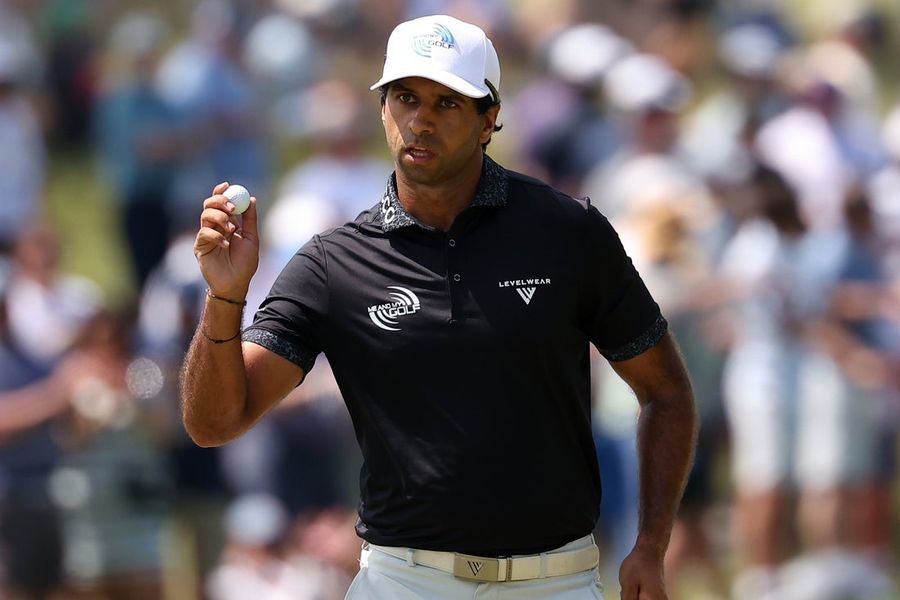
Deadspin | Aaron Rai emerges to win first major; 1st Englishman to win PGA since 1919  May 17, 2026; Newtown Square, Pennsylvania, USA; Aaron Rai reacts on the first green during the final round of the PGA Championship golf tournament. Mandatory Credit: Bill Streicher-Imagn Images   NEWTOWN SQUARE, Pa. — Aaron Rai drained a series of increasingly long putts to write himself into the history books and win his first major title Sunday at the PGA Championship at Aronimink Golf Club.  Rai made a 40-foot eagle putt at the par-5 ninth hole to cap an uneven first nine, then pulled away with four birdies on the back and converted a remarkable 68 1/2-foot birdie at the par-3 17th to remove any doubt.  Rai, 31, is the first Englishman to win the PGA Championship since Jim Barnes in 1919. Americans had claimed this major each of the last 10 years.  Rai’s 5-under-par 65 put him 9-under 271 and three strokes ahead of Jon Rahm of Spain (68) and Alex Smalley. He had started the day in a five-way tie for second behind Smalley.  The first English major winner since Matt Fitzpatrick took the 2022 U.S. Open title, Rai was one of several less familiar names on the 54-hole leaderboard. But he was ranked No. 44 in the world entering the week, with one win on the PGA Tour and three more on the DP World Tour for his career.  He previously had not finished better than T19 at a major.  Rai’s putter was far from the only club working for him. He gave himself 4-foot birdies with tight approaches at Nos. 1 and 11, though he overshot the greens at Nos. 3 and 6 to lead to two of his three front-nine bogeys.  Everything turned when Rai lined up his eagle putt at No. 9. He left in the pin for the downhill, left-to-right putt and it tracked perfectly into the hole.   The birdie at No. 11 drew Rai even with Germany’s Matti Schmid, and he became the first player to touch 7 under all week at the short par-4 13th. Rai’s tee shot went in the front-right bunker, but he got his 39-yard sand shot to stop inside 7 feet to set up birdie.  Justin Thomas went into the clubhouse at 5-under 275 at about 3:05 p.m. local time, and that held up for most of the afternoon as players battled Aronimink’s more demanding back nine.  Smalley, Rahm, Rai and Schmid each held at least a share of the lead at 6 under at some point. Smalley — seeking his first professional win of any kind — irreparably harmed his chances with a messy double bogey at the par-4 sixth and a bogey at No. 8.  Schmid, playing in the final pairing with Smalley and also winless on the PGA Tour, took the lead from him at No. 6 when he got a 19 1/2-foot birdie to fall. But his bogey on No. 10 opened the door for Rai.  Rai was one of the only players who managed to tame the back nine. Northern Ireland star Rory McIlroy could not muster a late rally, posting 69 and landing at 4 under.  Reigning champion and World No. 1 Scottie Scheffler had a ho-hum 69 and finished seven behind Rai at 2 under.  –Adam Zielonka, Field Level Media   #Deadspin #Aaron #Rai #emerges #win #major #1st #Englishman #win #PGAMay 17, 2026; Newtown Square, Pennsylvania, USA; Aaron Rai reacts on the first green during the final round of the PGA Championship golf tournament. Mandatory Credit: Bill Streicher-Imagn Images

NEWTOWN SQUARE, Pa. — Aaron Rai drained a series of increasingly long putts to write himself into the history books and win his first major title Sunday at the PGA Championship at Aronimink Golf Club.

Rai made a 40-foot eagle putt at the par-5 ninth hole to cap an uneven first nine, then pulled away with four birdies on the back and converted a remarkable 68 1/2-foot birdie at the par-3 17th to remove any doubt.

Rai, 31, is the first Englishman to win the PGA Championship since Jim Barnes in 1919. Americans had claimed this major each of the last 10 years.

Rai’s 5-under-par 65 put him 9-under 271 and three strokes ahead of Jon Rahm of Spain (68) and Alex Smalley. He had started the day in a five-way tie for second behind Smalley.

The first English major winner since Matt Fitzpatrick took the 2022 U.S. Open title, Rai was one of several less familiar names on the 54-hole leaderboard. But he was ranked No. 44 in the world entering the week, with one win on the PGA Tour and three more on the DP World Tour for his career.

He previously had not finished better than T19 at a major.

Rai’s putter was far from the only club working for him. He gave himself 4-foot birdies with tight approaches at Nos. 1 and 11, though he overshot the greens at Nos. 3 and 6 to lead to two of his three front-nine bogeys.


Everything turned when Rai lined up his eagle putt at No. 9. He left in the pin for the downhill, left-to-right putt and it tracked perfectly into the hole.

The birdie at No. 11 drew Rai even with Germany’s Matti Schmid, and he became the first player to touch 7 under all week at the short par-4 13th. Rai’s tee shot went in the front-right bunker, but he got his 39-yard sand shot to stop inside 7 feet to set up birdie.

Justin Thomas went into the clubhouse at 5-under 275 at about 3:05 p.m. local time, and that held up for most of the afternoon as players battled Aronimink’s more demanding back nine.

Smalley, Rahm, Rai and Schmid each held at least a share of the lead at 6 under at some point. Smalley — seeking his first professional win of any kind — irreparably harmed his chances with a messy double bogey at the par-4 sixth and a bogey at No. 8.

Schmid, playing in the final pairing with Smalley and also winless on the PGA Tour, took the lead from him at No. 6 when he got a 19 1/2-foot birdie to fall. But his bogey on No. 10 opened the door for Rai.

Rai was one of the only players who managed to tame the back nine. Northern Ireland star Rory McIlroy could not muster a late rally, posting 69 and landing at 4 under.

Reigning champion and World No. 1 Scottie Scheffler had a ho-hum 69 and finished seven behind Rai at 2 under.

–Adam Zielonka, Field Level Media

#Deadspin #Aaron #Rai #emerges #win #major #1st #Englishman #win #PGA

May 17, 2026; Newtown Square, Pennsylvania, USA; Aaron Rai reacts on the first green during the final round of the PGA Championship golf tournament. Mandatory Credit: Bill Streicher-Imagn Images

NEWTOWN SQUARE, Pa. — Aaron Rai drained a series of increasingly long putts to write himself into the history books and win his first major title Sunday at the PGA Championship at Aronimink Golf Club.

Rai made a 40-foot eagle putt at the par-5 ninth hole to cap an uneven first nine, then pulled away with four birdies on the back and converted a remarkable 68 1/2-foot birdie at the par-3 17th to remove any doubt.

Rai, 31, is the first Englishman to win the PGA Championship since Jim Barnes in 1919. Americans had claimed this major each of the last 10 years.

Rai’s 5-under-par 65 put him 9-under 271 and three strokes ahead of Jon Rahm of Spain (68) and Alex Smalley. He had started the day in a five-way tie for second behind Smalley.

The first English major winner since Matt Fitzpatrick took the 2022 U.S. Open title, Rai was one of several less familiar names on the 54-hole leaderboard. But he was ranked No. 44 in the world entering the week, with one win on the PGA Tour and three more on the DP World Tour for his career.

He previously had not finished better than T19 at a major.

Rai’s putter was far from the only club working for him. He gave himself 4-foot birdies with tight approaches at Nos. 1 and 11, though he overshot the greens at Nos. 3 and 6 to lead to two of his three front-nine bogeys.

Everything turned when Rai lined up his eagle putt at No. 9. He left in the pin for the downhill, left-to-right putt and it tracked perfectly into the hole.

The birdie at No. 11 drew Rai even with Germany’s Matti Schmid, and he became the first player to touch 7 under all week at the short par-4 13th. Rai’s tee shot went in the front-right bunker, but he got his 39-yard sand shot to stop inside 7 feet to set up birdie.

Justin Thomas went into the clubhouse at 5-under 275 at about 3:05 p.m. local time, and that held up for most of the afternoon as players battled Aronimink’s more demanding back nine.

Smalley, Rahm, Rai and Schmid each held at least a share of the lead at 6 under at some point. Smalley — seeking his first professional win of any kind — irreparably harmed his chances with a messy double bogey at the par-4 sixth and a bogey at No. 8.

Schmid, playing in the final pairing with Smalley and also winless on the PGA Tour, took the lead from him at No. 6 when he got a 19 1/2-foot birdie to fall. But his bogey on No. 10 opened the door for Rai.

Rai was one of the only players who managed to tame the back nine. Northern Ireland star Rory McIlroy could not muster a late rally, posting 69 and landing at 4 under.

Reigning champion and World No. 1 Scottie Scheffler had a ho-hum 69 and finished seven behind Rai at 2 under.

–Adam Zielonka, Field Level Media

Source link
#Deadspin #Aaron #Rai #emerges #win #major #1st #Englishman #win #PGA

Ellyse Perry’s masterful 64 helped Australia secure a five-wicket warm-up win over ICC Women’s T20 World Cup 2026 hosts England.

In the second of two matches in Cardiff, the six-time champions chased down 158 with an impressive performance ahead of their opening game against South Africa on Saturday.

Earlier in the day, Radha Yadav took three wickets in an over to help India to a 26-run victory over the West Indies.

ALSO READ | Women’s T20 World Cup warm-up wrap Day 1: Athpaththu misses ton; business as usual for NZ, SA

India spin to Windies win

India is bidding to add the T20 crown to their ICC Women’s Cricket World Cup win last year, and on this evidence, it is shaping up nicely for Sunday’s opening game against Pakistan.

Smriti Mandhana and Shafali Verma made a fast start having been put into bat, with Mandhana departing for 39 from 23 balls inside the powerplay.

Verma fell one over later for 29 with a strike rate of 223.07 and India were then reduced to 85 for three when Jemimah Rodrigues became the first of Afy Fletcher’s four victims.

Women’s T20 World Cup warm-up day 2: India, Australia warm up with straightforward wins over West Indies, England  Ellyse Perry’s masterful 64 helped Australia secure a five-wicket warm-up win over ICC Women’s T20 World Cup 2026 hosts England.In the second of two matches in Cardiff, the six-time champions chased down 158 with an impressive performance ahead of their opening game against South Africa on Saturday.Earlier in the day, Radha Yadav took three wickets in an over to help India to a 26-run victory over the West Indies.ALSO READ | Women’s T20 World Cup warm-up wrap Day 1: Athpaththu misses ton; business as usual for NZ, SAIndia spin to Windies winIndia is bidding to add the T20 crown to their ICC Women’s Cricket World Cup win last year, and on this evidence, it is shaping up nicely for Sunday’s opening game against Pakistan.Smriti Mandhana and Shafali Verma made a fast start having been put into bat, with Mandhana departing for 39 from 23 balls inside the powerplay.Verma fell one over later for 29 with a strike rate of 223.07 and India were then reduced to 85 for three when Jemimah Rodrigues became the first of Afy Fletcher’s four victims. Bharti Fulmali resisted the Afy Fletcher-led middle order squeeze, helping India to a score that West Indies eventually failed to chase down.
                                                            | Photo Credit: 
                                Getty Images
                            

                            Bharti Fulmali resisted the Afy Fletcher-led middle order squeeze, helping India to a score that West Indies eventually failed to chase down.
                                                            | Photo Credit: 
                                Getty Images
                                                    The middle and lower order wobbled but Bharti Fulmali top scored with 56 not out from 40 balls to set the West Indies 180 to win.Without skipper Hayley Matthews, who was not in the team in Cardiff, the West Indies made a strong start but tailed off.Shemaine Campbelle retired out on 25 and Deandra Dottin was dismissed one run short of a half-century.The middle order struggled for consistency and their hopes of victory suffered a major dent when Yadav took three wickets in the 14th over, while Shreyanka Patil posted four for 36 as the Windies fell 26 runs short.Perry powers Australia to simple winAfter choosing to bowl, Australia decimated England’s opening order with the returning Nat Sciver-Brunt departing for three runs to leave her side 19 for three in the fifth over.Alice Capsey and Heather Knight steadied England with the former making 45 off 36 before being dismissed lbw by Megan Schutt.Freya Kemp (41) and Danielle Gibson (27 not out) powered the hosts to a competitive total of 157 for six but Australia always looked comfortable in the chase and scored runs freely.Beth Mooney departed for 43 from 26, while Perry showed she is still an elite player to swiftly move Australia above the run-rate.The legend departed for 64 just before Australia completed its chase with 10 balls to spare.
Scores in brief
West Indies v India – Sophia Gardens, Cardiff
India 179/8 in 20 overs (Bharti Fulmali 56 not out, Smriti Mandhana 39; Afy Fletcher 4/23, Aaliyah Alleyne 1/17)

West Indies 153/8 in 20 overs (Deandra Dottin 49, Shemaine Campbelle 25; Shreyanka Patil 4/36, Radha Yadav 3/25)
Result: India win by 26 runsEngland v Australia – Sophia Gardens, Cardiff
England 157/6 in 20 overs (Alice Capsey 45, Freya Kemp 41; Alana King 2/10, Megan Schutt 2/20)

Australia 158/5 in 18.2 overs (Ellyse Perry 64, Beth Mooney 43; Lauren Bell 2/22, Alice Capsey 1/4)
Result: Australia win by five wicketsPublished on Jun 09, 2026  #Womens #T20 #World #Cup #warmup #day #India #Australia #warm #straightforward #wins #West #Indies #England

Bharti Fulmali resisted the Afy Fletcher-led middle order squeeze, helping India to a score that West Indies eventually failed to chase down. | Photo Credit: Getty Images

lightbox-info

Bharti Fulmali resisted the Afy Fletcher-led middle order squeeze, helping India to a score that West Indies eventually failed to chase down. | Photo Credit: Getty Images

The middle and lower order wobbled but Bharti Fulmali top scored with 56 not out from 40 balls to set the West Indies 180 to win.

Without skipper Hayley Matthews, who was not in the team in Cardiff, the West Indies made a strong start but tailed off.

Shemaine Campbelle retired out on 25 and Deandra Dottin was dismissed one run short of a half-century.

The middle order struggled for consistency and their hopes of victory suffered a major dent when Yadav took three wickets in the 14th over, while Shreyanka Patil posted four for 36 as the Windies fell 26 runs short.

Perry powers Australia to simple win

After choosing to bowl, Australia decimated England’s opening order with the returning Nat Sciver-Brunt departing for three runs to leave her side 19 for three in the fifth over.

Alice Capsey and Heather Knight steadied England with the former making 45 off 36 before being dismissed lbw by Megan Schutt.

Freya Kemp (41) and Danielle Gibson (27 not out) powered the hosts to a competitive total of 157 for six but Australia always looked comfortable in the chase and scored runs freely.

Beth Mooney departed for 43 from 26, while Perry showed she is still an elite player to swiftly move Australia above the run-rate.

The legend departed for 64 just before Australia completed its chase with 10 balls to spare.

Scores in brief
West Indies v India – Sophia Gardens, Cardiff

India 179/8 in 20 overs (Bharti Fulmali 56 not out, Smriti Mandhana 39; Afy Fletcher 4/23, Aaliyah Alleyne 1/17)

West Indies 153/8 in 20 overs (Deandra Dottin 49, Shemaine Campbelle 25; Shreyanka Patil 4/36, Radha Yadav 3/25)

Result: India win by 26 runs

England v Australia – Sophia Gardens, Cardiff

England 157/6 in 20 overs (Alice Capsey 45, Freya Kemp 41; Alana King 2/10, Megan Schutt 2/20)

Australia 158/5 in 18.2 overs (Ellyse Perry 64, Beth Mooney 43; Lauren Bell 2/22, Alice Capsey 1/4)

Result: Australia win by five wickets

Published on Jun 09, 2026

#Womens #T20 #World #Cup #warmup #day #India #Australia #warm #straightforward #wins #West #Indies #England">Women’s T20 World Cup warm-up day 2: India, Australia warm up with straightforward wins over West Indies, England  Ellyse Perry’s masterful 64 helped Australia secure a five-wicket warm-up win over ICC Women’s T20 World Cup 2026 hosts England.In the second of two matches in Cardiff, the six-time champions chased down 158 with an impressive performance ahead of their opening game against South Africa on Saturday.Earlier in the day, Radha Yadav took three wickets in an over to help India to a 26-run victory over the West Indies.ALSO READ | Women’s T20 World Cup warm-up wrap Day 1: Athpaththu misses ton; business as usual for NZ, SAIndia spin to Windies winIndia is bidding to add the T20 crown to their ICC Women’s Cricket World Cup win last year, and on this evidence, it is shaping up nicely for Sunday’s opening game against Pakistan.Smriti Mandhana and Shafali Verma made a fast start having been put into bat, with Mandhana departing for 39 from 23 balls inside the powerplay.Verma fell one over later for 29 with a strike rate of 223.07 and India were then reduced to 85 for three when Jemimah Rodrigues became the first of Afy Fletcher’s four victims. Bharti Fulmali resisted the Afy Fletcher-led middle order squeeze, helping India to a score that West Indies eventually failed to chase down.
                                                            | Photo Credit: 
                                Getty Images
                            

                            Bharti Fulmali resisted the Afy Fletcher-led middle order squeeze, helping India to a score that West Indies eventually failed to chase down.
                                                            | Photo Credit: 
                                Getty Images
                                                    The middle and lower order wobbled but Bharti Fulmali top scored with 56 not out from 40 balls to set the West Indies 180 to win.Without skipper Hayley Matthews, who was not in the team in Cardiff, the West Indies made a strong start but tailed off.Shemaine Campbelle retired out on 25 and Deandra Dottin was dismissed one run short of a half-century.The middle order struggled for consistency and their hopes of victory suffered a major dent when Yadav took three wickets in the 14th over, while Shreyanka Patil posted four for 36 as the Windies fell 26 runs short.Perry powers Australia to simple winAfter choosing to bowl, Australia decimated England’s opening order with the returning Nat Sciver-Brunt departing for three runs to leave her side 19 for three in the fifth over.Alice Capsey and Heather Knight steadied England with the former making 45 off 36 before being dismissed lbw by Megan Schutt.Freya Kemp (41) and Danielle Gibson (27 not out) powered the hosts to a competitive total of 157 for six but Australia always looked comfortable in the chase and scored runs freely.Beth Mooney departed for 43 from 26, while Perry showed she is still an elite player to swiftly move Australia above the run-rate.The legend departed for 64 just before Australia completed its chase with 10 balls to spare.
Scores in brief
West Indies v India – Sophia Gardens, Cardiff
India 179/8 in 20 overs (Bharti Fulmali 56 not out, Smriti Mandhana 39; Afy Fletcher 4/23, Aaliyah Alleyne 1/17)

West Indies 153/8 in 20 overs (Deandra Dottin 49, Shemaine Campbelle 25; Shreyanka Patil 4/36, Radha Yadav 3/25)
Result: India win by 26 runsEngland v Australia – Sophia Gardens, Cardiff
England 157/6 in 20 overs (Alice Capsey 45, Freya Kemp 41; Alana King 2/10, Megan Schutt 2/20)

Australia 158/5 in 18.2 overs (Ellyse Perry 64, Beth Mooney 43; Lauren Bell 2/22, Alice Capsey 1/4)
Result: Australia win by five wicketsPublished on Jun 09, 2026  #Womens #T20 #World #Cup #warmup #day #India #Australia #warm #straightforward #wins #West #Indies #England

Women’s T20 World Cup warm-up wrap Day 1: Athpaththu misses ton; business as usual for NZ, SA

India spin to Windies win

India is bidding to add the T20 crown to their ICC Women’s Cricket World Cup win last year, and on this evidence, it is shaping up nicely for Sunday’s opening game against Pakistan.

Smriti Mandhana and Shafali Verma made a fast start having been put into bat, with Mandhana departing for 39 from 23 balls inside the powerplay.

Verma fell one over later for 29 with a strike rate of 223.07 and India were then reduced to 85 for three when Jemimah Rodrigues became the first of Afy Fletcher’s four victims.

Women’s T20 World Cup warm-up day 2: India, Australia warm up with straightforward wins over West Indies, England  Ellyse Perry’s masterful 64 helped Australia secure a five-wicket warm-up win over ICC Women’s T20 World Cup 2026 hosts England.In the second of two matches in Cardiff, the six-time champions chased down 158 with an impressive performance ahead of their opening game against South Africa on Saturday.Earlier in the day, Radha Yadav took three wickets in an over to help India to a 26-run victory over the West Indies.ALSO READ | Women’s T20 World Cup warm-up wrap Day 1: Athpaththu misses ton; business as usual for NZ, SAIndia spin to Windies winIndia is bidding to add the T20 crown to their ICC Women’s Cricket World Cup win last year, and on this evidence, it is shaping up nicely for Sunday’s opening game against Pakistan.Smriti Mandhana and Shafali Verma made a fast start having been put into bat, with Mandhana departing for 39 from 23 balls inside the powerplay.Verma fell one over later for 29 with a strike rate of 223.07 and India were then reduced to 85 for three when Jemimah Rodrigues became the first of Afy Fletcher’s four victims. Bharti Fulmali resisted the Afy Fletcher-led middle order squeeze, helping India to a score that West Indies eventually failed to chase down.
                                                            | Photo Credit: 
                                Getty Images
                            

                            Bharti Fulmali resisted the Afy Fletcher-led middle order squeeze, helping India to a score that West Indies eventually failed to chase down.
                                                            | Photo Credit: 
                                Getty Images
                                                    The middle and lower order wobbled but Bharti Fulmali top scored with 56 not out from 40 balls to set the West Indies 180 to win.Without skipper Hayley Matthews, who was not in the team in Cardiff, the West Indies made a strong start but tailed off.Shemaine Campbelle retired out on 25 and Deandra Dottin was dismissed one run short of a half-century.The middle order struggled for consistency and their hopes of victory suffered a major dent when Yadav took three wickets in the 14th over, while Shreyanka Patil posted four for 36 as the Windies fell 26 runs short.Perry powers Australia to simple winAfter choosing to bowl, Australia decimated England’s opening order with the returning Nat Sciver-Brunt departing for three runs to leave her side 19 for three in the fifth over.Alice Capsey and Heather Knight steadied England with the former making 45 off 36 before being dismissed lbw by Megan Schutt.Freya Kemp (41) and Danielle Gibson (27 not out) powered the hosts to a competitive total of 157 for six but Australia always looked comfortable in the chase and scored runs freely.Beth Mooney departed for 43 from 26, while Perry showed she is still an elite player to swiftly move Australia above the run-rate.The legend departed for 64 just before Australia completed its chase with 10 balls to spare.
Scores in brief
West Indies v India – Sophia Gardens, Cardiff
India 179/8 in 20 overs (Bharti Fulmali 56 not out, Smriti Mandhana 39; Afy Fletcher 4/23, Aaliyah Alleyne 1/17)

West Indies 153/8 in 20 overs (Deandra Dottin 49, Shemaine Campbelle 25; Shreyanka Patil 4/36, Radha Yadav 3/25)
Result: India win by 26 runsEngland v Australia – Sophia Gardens, Cardiff
England 157/6 in 20 overs (Alice Capsey 45, Freya Kemp 41; Alana King 2/10, Megan Schutt 2/20)

Australia 158/5 in 18.2 overs (Ellyse Perry 64, Beth Mooney 43; Lauren Bell 2/22, Alice Capsey 1/4)
Result: Australia win by five wicketsPublished on Jun 09, 2026  #Womens #T20 #World #Cup #warmup #day #India #Australia #warm #straightforward #wins #West #Indies #England

Bharti Fulmali resisted the Afy Fletcher-led middle order squeeze, helping India to a score that West Indies eventually failed to chase down. | Photo Credit: Getty Images

lightbox-info

Bharti Fulmali resisted the Afy Fletcher-led middle order squeeze, helping India to a score that West Indies eventually failed to chase down. | Photo Credit: Getty Images

The middle and lower order wobbled but Bharti Fulmali top scored with 56 not out from 40 balls to set the West Indies 180 to win.

Without skipper Hayley Matthews, who was not in the team in Cardiff, the West Indies made a strong start but tailed off.

Shemaine Campbelle retired out on 25 and Deandra Dottin was dismissed one run short of a half-century.

The middle order struggled for consistency and their hopes of victory suffered a major dent when Yadav took three wickets in the 14th over, while Shreyanka Patil posted four for 36 as the Windies fell 26 runs short.

Perry powers Australia to simple win

After choosing to bowl, Australia decimated England’s opening order with the returning Nat Sciver-Brunt departing for three runs to leave her side 19 for three in the fifth over.

Alice Capsey and Heather Knight steadied England with the former making 45 off 36 before being dismissed lbw by Megan Schutt.

Freya Kemp (41) and Danielle Gibson (27 not out) powered the hosts to a competitive total of 157 for six but Australia always looked comfortable in the chase and scored runs freely.

Beth Mooney departed for 43 from 26, while Perry showed she is still an elite player to swiftly move Australia above the run-rate.

The legend departed for 64 just before Australia completed its chase with 10 balls to spare.

Scores in brief
West Indies v India – Sophia Gardens, Cardiff

India 179/8 in 20 overs (Bharti Fulmali 56 not out, Smriti Mandhana 39; Afy Fletcher 4/23, Aaliyah Alleyne 1/17)

West Indies 153/8 in 20 overs (Deandra Dottin 49, Shemaine Campbelle 25; Shreyanka Patil 4/36, Radha Yadav 3/25)

Result: India win by 26 runs

England v Australia – Sophia Gardens, Cardiff

England 157/6 in 20 overs (Alice Capsey 45, Freya Kemp 41; Alana King 2/10, Megan Schutt 2/20)

Australia 158/5 in 18.2 overs (Ellyse Perry 64, Beth Mooney 43; Lauren Bell 2/22, Alice Capsey 1/4)

Result: Australia win by five wickets

Published on Jun 09, 2026

#Womens #T20 #World #Cup #warmup #day #India #Australia #warm #straightforward #wins #West #Indies #England">Women’s T20 World Cup warm-up day 2: India, Australia warm up with straightforward wins over West Indies, England

Ellyse Perry’s masterful 64 helped Australia secure a five-wicket warm-up win over ICC Women’s T20 World Cup 2026 hosts England.

In the second of two matches in Cardiff, the six-time champions chased down 158 with an impressive performance ahead of their opening game against South Africa on Saturday.

Earlier in the day, Radha Yadav took three wickets in an over to help India to a 26-run victory over the West Indies.

ALSO READ | Women’s T20 World Cup warm-up wrap Day 1: Athpaththu misses ton; business as usual for NZ, SA

India spin to Windies win

India is bidding to add the T20 crown to their ICC Women’s Cricket World Cup win last year, and on this evidence, it is shaping up nicely for Sunday’s opening game against Pakistan.

Smriti Mandhana and Shafali Verma made a fast start having been put into bat, with Mandhana departing for 39 from 23 balls inside the powerplay.

Verma fell one over later for 29 with a strike rate of 223.07 and India were then reduced to 85 for three when Jemimah Rodrigues became the first of Afy Fletcher’s four victims.

Women’s T20 World Cup warm-up day 2: India, Australia warm up with straightforward wins over West Indies, England  Ellyse Perry’s masterful 64 helped Australia secure a five-wicket warm-up win over ICC Women’s T20 World Cup 2026 hosts England.In the second of two matches in Cardiff, the six-time champions chased down 158 with an impressive performance ahead of their opening game against South Africa on Saturday.Earlier in the day, Radha Yadav took three wickets in an over to help India to a 26-run victory over the West Indies.ALSO READ | Women’s T20 World Cup warm-up wrap Day 1: Athpaththu misses ton; business as usual for NZ, SAIndia spin to Windies winIndia is bidding to add the T20 crown to their ICC Women’s Cricket World Cup win last year, and on this evidence, it is shaping up nicely for Sunday’s opening game against Pakistan.Smriti Mandhana and Shafali Verma made a fast start having been put into bat, with Mandhana departing for 39 from 23 balls inside the powerplay.Verma fell one over later for 29 with a strike rate of 223.07 and India were then reduced to 85 for three when Jemimah Rodrigues became the first of Afy Fletcher’s four victims. Bharti Fulmali resisted the Afy Fletcher-led middle order squeeze, helping India to a score that West Indies eventually failed to chase down.
                                                            | Photo Credit: 
                                Getty Images
                            

                            Bharti Fulmali resisted the Afy Fletcher-led middle order squeeze, helping India to a score that West Indies eventually failed to chase down.
                                                            | Photo Credit: 
                                Getty Images
                                                    The middle and lower order wobbled but Bharti Fulmali top scored with 56 not out from 40 balls to set the West Indies 180 to win.Without skipper Hayley Matthews, who was not in the team in Cardiff, the West Indies made a strong start but tailed off.Shemaine Campbelle retired out on 25 and Deandra Dottin was dismissed one run short of a half-century.The middle order struggled for consistency and their hopes of victory suffered a major dent when Yadav took three wickets in the 14th over, while Shreyanka Patil posted four for 36 as the Windies fell 26 runs short.Perry powers Australia to simple winAfter choosing to bowl, Australia decimated England’s opening order with the returning Nat Sciver-Brunt departing for three runs to leave her side 19 for three in the fifth over.Alice Capsey and Heather Knight steadied England with the former making 45 off 36 before being dismissed lbw by Megan Schutt.Freya Kemp (41) and Danielle Gibson (27 not out) powered the hosts to a competitive total of 157 for six but Australia always looked comfortable in the chase and scored runs freely.Beth Mooney departed for 43 from 26, while Perry showed she is still an elite player to swiftly move Australia above the run-rate.The legend departed for 64 just before Australia completed its chase with 10 balls to spare.
Scores in brief
West Indies v India – Sophia Gardens, Cardiff
India 179/8 in 20 overs (Bharti Fulmali 56 not out, Smriti Mandhana 39; Afy Fletcher 4/23, Aaliyah Alleyne 1/17)

West Indies 153/8 in 20 overs (Deandra Dottin 49, Shemaine Campbelle 25; Shreyanka Patil 4/36, Radha Yadav 3/25)
Result: India win by 26 runsEngland v Australia – Sophia Gardens, Cardiff
England 157/6 in 20 overs (Alice Capsey 45, Freya Kemp 41; Alana King 2/10, Megan Schutt 2/20)

Australia 158/5 in 18.2 overs (Ellyse Perry 64, Beth Mooney 43; Lauren Bell 2/22, Alice Capsey 1/4)
Result: Australia win by five wicketsPublished on Jun 09, 2026  #Womens #T20 #World #Cup #warmup #day #India #Australia #warm #straightforward #wins #West #Indies #England

Bharti Fulmali resisted the Afy Fletcher-led middle order squeeze, helping India to a score that West Indies eventually failed to chase down. | Photo Credit: Getty Images

lightbox-info

Bharti Fulmali resisted the Afy Fletcher-led middle order squeeze, helping India to a score that West Indies eventually failed to chase down. | Photo Credit: Getty Images

The middle and lower order wobbled but Bharti Fulmali top scored with 56 not out from 40 balls to set the West Indies 180 to win.

Without skipper Hayley Matthews, who was not in the team in Cardiff, the West Indies made a strong start but tailed off.

Shemaine Campbelle retired out on 25 and Deandra Dottin was dismissed one run short of a half-century.

The middle order struggled for consistency and their hopes of victory suffered a major dent when Yadav took three wickets in the 14th over, while Shreyanka Patil posted four for 36 as the Windies fell 26 runs short.

Perry powers Australia to simple win

After choosing to bowl, Australia decimated England’s opening order with the returning Nat Sciver-Brunt departing for three runs to leave her side 19 for three in the fifth over.

Alice Capsey and Heather Knight steadied England with the former making 45 off 36 before being dismissed lbw by Megan Schutt.

Freya Kemp (41) and Danielle Gibson (27 not out) powered the hosts to a competitive total of 157 for six but Australia always looked comfortable in the chase and scored runs freely.

Beth Mooney departed for 43 from 26, while Perry showed she is still an elite player to swiftly move Australia above the run-rate.

The legend departed for 64 just before Australia completed its chase with 10 balls to spare.

Scores in brief
West Indies v India – Sophia Gardens, Cardiff

India 179/8 in 20 overs (Bharti Fulmali 56 not out, Smriti Mandhana 39; Afy Fletcher 4/23, Aaliyah Alleyne 1/17)

West Indies 153/8 in 20 overs (Deandra Dottin 49, Shemaine Campbelle 25; Shreyanka Patil 4/36, Radha Yadav 3/25)

Result: India win by 26 runs

England v Australia – Sophia Gardens, Cardiff

England 157/6 in 20 overs (Alice Capsey 45, Freya Kemp 41; Alana King 2/10, Megan Schutt 2/20)

Australia 158/5 in 18.2 overs (Ellyse Perry 64, Beth Mooney 43; Lauren Bell 2/22, Alice Capsey 1/4)

Result: Australia win by five wickets

Published on Jun 09, 2026

#Womens #T20 #World #Cup #warmup #day #India #Australia #warm #straightforward #wins #West #Indies #England

Texas Tech quarterback Brendan Sorsby has won a temporary injunction in his fight with the NCAA, and under the terms of the order issued by Judge Ken Curry in the District Court of Texas for Lubbock County, he is eligible to play for the Red Raiders during the 2026 season. Sorsby sought the injunction after the NCAA stripped the quarterback of his remaining collegiate eligibility due to multiple violations of the governing body’s gambling policy.

However, there are some caveats to that statement. Several, in fact.

The decision comes in the wake of a hearing held in the District Court of Texas for Lubbock County at the start of June. As outlined in Judge Curry’s four-page order, finding that Sorsby would suffer “a probable, imminent, and irreparable injury” if his eligibility was not reinstated, Judge Curry held that Sorsby “demonstrated a probable right to the relief he seeks on his claims for breach of contract, declaratory judgment, breach of duty of good faith and fair dealing, and breach of fiduciary duty.”

Judge Curry further ruled that Sorsby “demonstrated that the balance of equities is in his favor because of the hardship he would face in the absence of a temporary injunction.”

In the ruling, Judge Curry declared that the NCAA is barred from:

  1. Prohibiting [Sorsby] from practicing, playing, or otherwise participating on Texas Tech’s football team for the 2026 football season.
  2. Enforcing its Bylaw 12.9.4.2 (Rule of Restitution) against [Sorsby], Texas Tech, any affiliate of Texas Tech, any university that competes against Texas Tech during the 2026 college football season, or any affiliate of any such university for complying with, and relying on this Order.

First, Sorsby — through his attorneys — sought a temporary injunction, which Judge Curry granted. As Judge Curry noted in the order, the temporary injunction will be in place until the final judgment in this matter, and “until a full trial on the merits of this matter” is conducted.

Second, Judge Curry imposed six conditions that Sorsby is required to meet during the period of time the temporary injunction is in place. These include: (1) Commencing and continuing clinical counseling with a credentialed provider, focusing on relapse prevention, (2) Commencing and participating in peer support through Gamblers Anonymous or a comparable aid community, (3) Commencing and continuing treatment for Adjustment Disorder with Anxiety, to address the “underlying anxiety that served as the primary driver of [Sorsby’s] gambling behavior,” (4) Commencing and participating in athlete-specific recovery resources, (5) Not participating in game-day activities for the first two games of the Texas Tech season, and (6) Serving on the NCAA a report detailing compliance with the five previous conditions, on or before the fifth of each month during the order, to cover the previous month of compliance.

Failure of Sorsby to comply with those conditions would allow the NCAA to “apply for emergency relief from this injunction.”

The NCAA does have the right to appeal this ruling (more on that in a moment), but for now, Sorsby is reinstated, with a two-game suspension. That would mean the transfer quarterback would miss the season opener against Abilene Christian, and the game against Oregon State on September 12.

In response to Judge Curry’s order, the NCAA released this brief statement:

“The NCAA strongly disagrees with the court’s ruling in Sorsby’s case and is deeply concerned about the damaging, far-reaching and broadly destabilizing ramifications of this outcome — which undermines and corrupts the integrity of sports. The NCAA is committed to supporting student-athlete mental health but must continue to aggressively defend against actions that defraud college athletics and threaten competitive integrity, such as betting on one’s own sport.”

As to whether the NCAA would appeal this temporary injunction, it is worth noting that the governing body would face a significant hurdle with such an appeal. Specifically, the standard of review from the appellate court. In 1919 the Texas Legislature codified the right to an appeal of a temporary injunction, declaring that a party “may appeal from an interlocutory order of a district court, county court at law, statutory probate court, or county court that … grants or refuses a temporary injunction or grants or overrules a motion to dissolve a temporary injunction.” See Texas Civil Practices and Remedies Code Section 51.014(a)(4).

So while the NCAA has the right to an appeal, the problem they will face is the standard of review. Appeals of these decisions are reviewed on one standard: Abuse of discretion. Judges in temporary injunction cases are given substantial deference in deciding those matters, and to overturn the order in this case, the NCAA must convince the appellate court that Judge Curry abused that discretion, and that the ruling was arbitrary, capricious, or failed to apply the law correctly in reaching the decision.

Texas courts have defined this standard as follows: A trial court abuses its discretion if its decision is “arbitrary, unreasonable, and without reference to [any] guiding [rules and] principles” or is “so arbitrary and unreasonable as to amount to a clear and prejudicial error of law.” See Mercedes-Benz Credit Corp. v. Rhyne, 925 S.W. 2d 664 (Texas 1996) and Walker v. Packer, 827 S.W.2d 833 (Texas 1992).

To find such an abuse, the reviewing court must “determine that the facts and circumstances presented [to the trial judge] ‘extinguish any discretion [or choice] in the matter.’” See F.A. Richard & Assoc. v. Millard, 856 S.W.3d 419 (Texas App. 1993). The appellate court cannot simply substitute its own judgment for that of the trial court.

When reviewing such a case, the appellate court asks two questions: Did the trial court have sufficient information to exercise such discretion, and did the trial court err in the application of that discretion?

Simply put, an appeal by the NCAA of this ruling, given the great deference appellate courts show trial courts in these matters, seems unlikely to succeed.

Still, the ruling has many wondering if the NCAA should still appeal, even given the difficult standard the governing body would face with such an appeal:

Plus, there is the matter of precedent. If the NCAA ultimately loses on this matter, it would essentially become the “first and only American sports league to allow an athlete to compete after betting on his own games,” a point the NCAA argued in front of Judge Curry.

Sorsby admitted to placing wagers of at least $90,000 on more than 9,000 bets during his time in college, including 40 bets of at least $850 on Indiana football while he was a member of the Hoosiers. Under NCAA rules, the penalty for a player gambling on their own team is permanent ineligibility.

The NCAA could appeal and argue that the fact Sorsby admitted to those bets, in clear violation of stated NCAA rules, and yet has been reinstated under Judge Curry’s order amounts to a decision that is “legally unreasonable in the factual-legal context in which it [was] made.” See Landon v. Jean-Paul Budinger, Inc., 724 S.W.2d 931. That language has been held in Texas to overturn a trial court’s decision under the abuse of discretion standard.

Given the precedent set by this decision, the NCAA likely appeals.

But whether they succeeded on that appeal is a different story.

And while the underlying case will ultimately go to trial, that might not occur until after the 2026 season is completed.

So, for now at least, Sorsby is back on the Red Raiders for the upcoming season.

#NCAA #appeal #Brendan #Sorsbys #shocking #reinstatement #Texas #law #isnt #side">The NCAA can appeal Brendan Sorsby’s shocking reinstatement, but Texas law isn’t on their side  Texas Tech quarterback Brendan Sorsby has won a temporary injunction in his fight with the NCAA, and under the terms of the order issued by Judge Ken Curry in the District Court of Texas for Lubbock County, he is eligible to play for the Red Raiders during the 2026 season. Sorsby sought the injunction after the NCAA stripped the quarterback of his remaining collegiate eligibility due to multiple violations of the governing body’s gambling policy.However, there are some caveats to that statement. Several, in fact.The decision comes in the wake of a hearing held in the District Court of Texas for Lubbock County at the start of June. As outlined in Judge Curry’s four-page order, finding that Sorsby would suffer “a probable, imminent, and irreparable injury” if his eligibility was not reinstated, Judge Curry held that Sorsby “demonstrated a probable right to the relief he seeks on his claims for breach of contract, declaratory judgment, breach of duty of good faith and fair dealing, and breach of fiduciary duty.”Judge Curry further ruled that Sorsby “demonstrated that the balance of equities is in his favor because of the hardship he would face in the absence of a temporary injunction.”In the ruling, Judge Curry declared that the NCAA is barred from:Prohibiting [Sorsby] from practicing, playing, or otherwise participating on Texas Tech’s football team for the 2026 football season.Enforcing its Bylaw 12.9.4.2 (Rule of Restitution) against [Sorsby], Texas Tech, any affiliate of Texas Tech, any university that competes against Texas Tech during the 2026 college football season, or any affiliate of any such university for complying with, and relying on this Order.First, Sorsby — through his attorneys — sought a temporary injunction, which Judge Curry granted. As Judge Curry noted in the order, the temporary injunction will be in place until the final judgment in this matter, and “until a full trial on the merits of this matter” is conducted.Second, Judge Curry imposed six conditions that Sorsby is required to meet during the period of time the temporary injunction is in place. These include: (1) Commencing and continuing clinical counseling with a credentialed provider, focusing on relapse prevention, (2) Commencing and participating in peer support through Gamblers Anonymous or a comparable aid community, (3) Commencing and continuing treatment for Adjustment Disorder with Anxiety, to address the “underlying anxiety that served as the primary driver of [Sorsby’s] gambling behavior,” (4) Commencing and participating in athlete-specific recovery resources, (5) Not participating in game-day activities for the first two games of the Texas Tech season, and (6) Serving on the NCAA a report detailing compliance with the five previous conditions, on or before the fifth of each month during the order, to cover the previous month of compliance.Failure of Sorsby to comply with those conditions would allow the NCAA to “apply for emergency relief from this injunction.”The NCAA does have the right to appeal this ruling (more on that in a moment), but for now, Sorsby is reinstated, with a two-game suspension. That would mean the transfer quarterback would miss the season opener against Abilene Christian, and the game against Oregon State on September 12.In response to Judge Curry’s order, the NCAA released this brief statement:“The NCAA strongly disagrees with the court’s ruling in Sorsby’s case and is deeply concerned about the damaging, far-reaching and broadly destabilizing ramifications of this outcome — which undermines and corrupts the integrity of sports. The NCAA is committed to supporting student-athlete mental health but must continue to aggressively defend against actions that defraud college athletics and threaten competitive integrity, such as betting on one’s own sport.”As to whether the NCAA would appeal this temporary injunction, it is worth noting that the governing body would face a significant hurdle with such an appeal. Specifically, the standard of review from the appellate court. In 1919 the Texas Legislature codified the right to an appeal of a temporary injunction, declaring that a party “may appeal from an interlocutory order of a district court, county court at law, statutory probate court, or county court that … grants or refuses a temporary injunction or grants or overrules a motion to dissolve a temporary injunction.” See Texas Civil Practices and Remedies Code Section 51.014(a)(4).So while the NCAA has the right to an appeal, the problem they will face is the standard of review. Appeals of these decisions are reviewed on one standard: Abuse of discretion. Judges in temporary injunction cases are given substantial deference in deciding those matters, and to overturn the order in this case, the NCAA must convince the appellate court that Judge Curry abused that discretion, and that the ruling was arbitrary, capricious, or failed to apply the law correctly in reaching the decision.Texas courts have defined this standard as follows: A trial court abuses its discretion if its decision is “arbitrary, unreasonable, and without reference to [any] guiding [rules and] principles” or is “so arbitrary and unreasonable as to amount to a clear and prejudicial error of law.” See Mercedes-Benz Credit Corp. v. Rhyne, 925 S.W. 2d 664 (Texas 1996) and Walker v. Packer, 827 S.W.2d 833 (Texas 1992).To find such an abuse, the reviewing court must “determine that the facts and circumstances presented [to the trial judge] ‘extinguish any discretion [or choice] in the matter.’” See F.A. Richard & Assoc. v. Millard, 856 S.W.3d 419 (Texas App. 1993). The appellate court cannot simply substitute its own judgment for that of the trial court.When reviewing such a case, the appellate court asks two questions: Did the trial court have sufficient information to exercise such discretion, and did the trial court err in the application of that discretion?Simply put, an appeal by the NCAA of this ruling, given the great deference appellate courts show trial courts in these matters, seems unlikely to succeed.Still, the ruling has many wondering if the NCAA should still appeal, even given the difficult standard the governing body would face with such an appeal:Plus, there is the matter of precedent. If the NCAA ultimately loses on this matter, it would essentially become the “first and only American sports league to allow an athlete to compete after betting on his own games,” a point the NCAA argued in front of Judge Curry.Sorsby admitted to placing wagers of at least $90,000 on more than 9,000 bets during his time in college, including 40 bets of at least $850 on Indiana football while he was a member of the Hoosiers. Under NCAA rules, the penalty for a player gambling on their own team is permanent ineligibility.The NCAA could appeal and argue that the fact Sorsby admitted to those bets, in clear violation of stated NCAA rules, and yet has been reinstated under Judge Curry’s order amounts to a decision that is “legally unreasonable in the factual-legal context in which it [was] made.” See Landon v. Jean-Paul Budinger, Inc., 724 S.W.2d 931. That language has been held in Texas to overturn a trial court’s decision under the abuse of discretion standard.Given the precedent set by this decision, the NCAA likely appeals.But whether they succeeded on that appeal is a different story.And while the underlying case will ultimately go to trial, that might not occur until after the 2026 season is completed.So, for now at least, Sorsby is back on the Red Raiders for the upcoming season.  #NCAA #appeal #Brendan #Sorsbys #shocking #reinstatement #Texas #law #isnt #side

Brendan Sorsby has won a temporary injunction in his fight with the NCAA, and under the terms of the order issued by Judge Ken Curry in the District Court of Texas for Lubbock County, he is eligible to play for the Red Raiders during the 2026 season. Sorsby sought the injunction after the NCAA stripped the quarterback of his remaining collegiate eligibility due to multiple violations of the governing body’s gambling policy.

However, there are some caveats to that statement. Several, in fact.

The decision comes in the wake of a hearing held in the District Court of Texas for Lubbock County at the start of June. As outlined in Judge Curry’s four-page order, finding that Sorsby would suffer “a probable, imminent, and irreparable injury” if his eligibility was not reinstated, Judge Curry held that Sorsby “demonstrated a probable right to the relief he seeks on his claims for breach of contract, declaratory judgment, breach of duty of good faith and fair dealing, and breach of fiduciary duty.”

Judge Curry further ruled that Sorsby “demonstrated that the balance of equities is in his favor because of the hardship he would face in the absence of a temporary injunction.”

In the ruling, Judge Curry declared that the NCAA is barred from:

  1. Prohibiting [Sorsby] from practicing, playing, or otherwise participating on Texas Tech’s football team for the 2026 football season.
  2. Enforcing its Bylaw 12.9.4.2 (Rule of Restitution) against [Sorsby], Texas Tech, any affiliate of Texas Tech, any university that competes against Texas Tech during the 2026 college football season, or any affiliate of any such university for complying with, and relying on this Order.

First, Sorsby — through his attorneys — sought a temporary injunction, which Judge Curry granted. As Judge Curry noted in the order, the temporary injunction will be in place until the final judgment in this matter, and “until a full trial on the merits of this matter” is conducted.

Second, Judge Curry imposed six conditions that Sorsby is required to meet during the period of time the temporary injunction is in place. These include: (1) Commencing and continuing clinical counseling with a credentialed provider, focusing on relapse prevention, (2) Commencing and participating in peer support through Gamblers Anonymous or a comparable aid community, (3) Commencing and continuing treatment for Adjustment Disorder with Anxiety, to address the “underlying anxiety that served as the primary driver of [Sorsby’s] gambling behavior,” (4) Commencing and participating in athlete-specific recovery resources, (5) Not participating in game-day activities for the first two games of the Texas Tech season, and (6) Serving on the NCAA a report detailing compliance with the five previous conditions, on or before the fifth of each month during the order, to cover the previous month of compliance.

Failure of Sorsby to comply with those conditions would allow the NCAA to “apply for emergency relief from this injunction.”

The NCAA does have the right to appeal this ruling (more on that in a moment), but for now, Sorsby is reinstated, with a two-game suspension. That would mean the transfer quarterback would miss the season opener against Abilene Christian, and the game against Oregon State on September 12.

In response to Judge Curry’s order, the NCAA released this brief statement:

“The NCAA strongly disagrees with the court’s ruling in Sorsby’s case and is deeply concerned about the damaging, far-reaching and broadly destabilizing ramifications of this outcome — which undermines and corrupts the integrity of sports. The NCAA is committed to supporting student-athlete mental health but must continue to aggressively defend against actions that defraud college athletics and threaten competitive integrity, such as betting on one’s own sport.”

As to whether the NCAA would appeal this temporary injunction, it is worth noting that the governing body would face a significant hurdle with such an appeal. Specifically, the standard of review from the appellate court. In 1919 the Texas Legislature codified the right to an appeal of a temporary injunction, declaring that a party “may appeal from an interlocutory order of a district court, county court at law, statutory probate court, or county court that … grants or refuses a temporary injunction or grants or overrules a motion to dissolve a temporary injunction.” See Texas Civil Practices and Remedies Code Section 51.014(a)(4).

So while the NCAA has the right to an appeal, the problem they will face is the standard of review. Appeals of these decisions are reviewed on one standard: Abuse of discretion. Judges in temporary injunction cases are given substantial deference in deciding those matters, and to overturn the order in this case, the NCAA must convince the appellate court that Judge Curry abused that discretion, and that the ruling was arbitrary, capricious, or failed to apply the law correctly in reaching the decision.

Texas courts have defined this standard as follows: A trial court abuses its discretion if its decision is “arbitrary, unreasonable, and without reference to [any] guiding [rules and] principles” or is “so arbitrary and unreasonable as to amount to a clear and prejudicial error of law.” See Mercedes-Benz Credit Corp. v. Rhyne, 925 S.W. 2d 664 (Texas 1996) and Walker v. Packer, 827 S.W.2d 833 (Texas 1992).

To find such an abuse, the reviewing court must “determine that the facts and circumstances presented [to the trial judge] ‘extinguish any discretion [or choice] in the matter.’” See F.A. Richard & Assoc. v. Millard, 856 S.W.3d 419 (Texas App. 1993). The appellate court cannot simply substitute its own judgment for that of the trial court.

When reviewing such a case, the appellate court asks two questions: Did the trial court have sufficient information to exercise such discretion, and did the trial court err in the application of that discretion?

Simply put, an appeal by the NCAA of this ruling, given the great deference appellate courts show trial courts in these matters, seems unlikely to succeed.

Still, the ruling has many wondering if the NCAA should still appeal, even given the difficult standard the governing body would face with such an appeal:

Plus, there is the matter of precedent. If the NCAA ultimately loses on this matter, it would essentially become the “first and only American sports league to allow an athlete to compete after betting on his own games,” a point the NCAA argued in front of Judge Curry.

Sorsby admitted to placing wagers of at least $90,000 on more than 9,000 bets during his time in college, including 40 bets of at least $850 on Indiana football while he was a member of the Hoosiers. Under NCAA rules, the penalty for a player gambling on their own team is permanent ineligibility.

The NCAA could appeal and argue that the fact Sorsby admitted to those bets, in clear violation of stated NCAA rules, and yet has been reinstated under Judge Curry’s order amounts to a decision that is “legally unreasonable in the factual-legal context in which it [was] made.” See Landon v. Jean-Paul Budinger, Inc., 724 S.W.2d 931. That language has been held in Texas to overturn a trial court’s decision under the abuse of discretion standard.

Given the precedent set by this decision, the NCAA likely appeals.

But whether they succeeded on that appeal is a different story.

And while the underlying case will ultimately go to trial, that might not occur until after the 2026 season is completed.

So, for now at least, Sorsby is back on the Red Raiders for the upcoming season.

#NCAA #appeal #Brendan #Sorsbys #shocking #reinstatement #Texas #law #isnt #side">The NCAA can appeal Brendan Sorsby’s shocking reinstatement, but Texas law isn’t on their side

Texas Tech quarterback Brendan Sorsby has won a temporary injunction in his fight with the NCAA, and under the terms of the order issued by Judge Ken Curry in the District Court of Texas for Lubbock County, he is eligible to play for the Red Raiders during the 2026 season. Sorsby sought the injunction after the NCAA stripped the quarterback of his remaining collegiate eligibility due to multiple violations of the governing body’s gambling policy.

However, there are some caveats to that statement. Several, in fact.

The decision comes in the wake of a hearing held in the District Court of Texas for Lubbock County at the start of June. As outlined in Judge Curry’s four-page order, finding that Sorsby would suffer “a probable, imminent, and irreparable injury” if his eligibility was not reinstated, Judge Curry held that Sorsby “demonstrated a probable right to the relief he seeks on his claims for breach of contract, declaratory judgment, breach of duty of good faith and fair dealing, and breach of fiduciary duty.”

Judge Curry further ruled that Sorsby “demonstrated that the balance of equities is in his favor because of the hardship he would face in the absence of a temporary injunction.”

In the ruling, Judge Curry declared that the NCAA is barred from:

  1. Prohibiting [Sorsby] from practicing, playing, or otherwise participating on Texas Tech’s football team for the 2026 football season.
  2. Enforcing its Bylaw 12.9.4.2 (Rule of Restitution) against [Sorsby], Texas Tech, any affiliate of Texas Tech, any university that competes against Texas Tech during the 2026 college football season, or any affiliate of any such university for complying with, and relying on this Order.

First, Sorsby — through his attorneys — sought a temporary injunction, which Judge Curry granted. As Judge Curry noted in the order, the temporary injunction will be in place until the final judgment in this matter, and “until a full trial on the merits of this matter” is conducted.

Second, Judge Curry imposed six conditions that Sorsby is required to meet during the period of time the temporary injunction is in place. These include: (1) Commencing and continuing clinical counseling with a credentialed provider, focusing on relapse prevention, (2) Commencing and participating in peer support through Gamblers Anonymous or a comparable aid community, (3) Commencing and continuing treatment for Adjustment Disorder with Anxiety, to address the “underlying anxiety that served as the primary driver of [Sorsby’s] gambling behavior,” (4) Commencing and participating in athlete-specific recovery resources, (5) Not participating in game-day activities for the first two games of the Texas Tech season, and (6) Serving on the NCAA a report detailing compliance with the five previous conditions, on or before the fifth of each month during the order, to cover the previous month of compliance.

Failure of Sorsby to comply with those conditions would allow the NCAA to “apply for emergency relief from this injunction.”

The NCAA does have the right to appeal this ruling (more on that in a moment), but for now, Sorsby is reinstated, with a two-game suspension. That would mean the transfer quarterback would miss the season opener against Abilene Christian, and the game against Oregon State on September 12.

In response to Judge Curry’s order, the NCAA released this brief statement:

“The NCAA strongly disagrees with the court’s ruling in Sorsby’s case and is deeply concerned about the damaging, far-reaching and broadly destabilizing ramifications of this outcome — which undermines and corrupts the integrity of sports. The NCAA is committed to supporting student-athlete mental health but must continue to aggressively defend against actions that defraud college athletics and threaten competitive integrity, such as betting on one’s own sport.”

As to whether the NCAA would appeal this temporary injunction, it is worth noting that the governing body would face a significant hurdle with such an appeal. Specifically, the standard of review from the appellate court. In 1919 the Texas Legislature codified the right to an appeal of a temporary injunction, declaring that a party “may appeal from an interlocutory order of a district court, county court at law, statutory probate court, or county court that … grants or refuses a temporary injunction or grants or overrules a motion to dissolve a temporary injunction.” See Texas Civil Practices and Remedies Code Section 51.014(a)(4).

So while the NCAA has the right to an appeal, the problem they will face is the standard of review. Appeals of these decisions are reviewed on one standard: Abuse of discretion. Judges in temporary injunction cases are given substantial deference in deciding those matters, and to overturn the order in this case, the NCAA must convince the appellate court that Judge Curry abused that discretion, and that the ruling was arbitrary, capricious, or failed to apply the law correctly in reaching the decision.

Texas courts have defined this standard as follows: A trial court abuses its discretion if its decision is “arbitrary, unreasonable, and without reference to [any] guiding [rules and] principles” or is “so arbitrary and unreasonable as to amount to a clear and prejudicial error of law.” See Mercedes-Benz Credit Corp. v. Rhyne, 925 S.W. 2d 664 (Texas 1996) and Walker v. Packer, 827 S.W.2d 833 (Texas 1992).

To find such an abuse, the reviewing court must “determine that the facts and circumstances presented [to the trial judge] ‘extinguish any discretion [or choice] in the matter.’” See F.A. Richard & Assoc. v. Millard, 856 S.W.3d 419 (Texas App. 1993). The appellate court cannot simply substitute its own judgment for that of the trial court.

When reviewing such a case, the appellate court asks two questions: Did the trial court have sufficient information to exercise such discretion, and did the trial court err in the application of that discretion?

Simply put, an appeal by the NCAA of this ruling, given the great deference appellate courts show trial courts in these matters, seems unlikely to succeed.

Still, the ruling has many wondering if the NCAA should still appeal, even given the difficult standard the governing body would face with such an appeal:

Plus, there is the matter of precedent. If the NCAA ultimately loses on this matter, it would essentially become the “first and only American sports league to allow an athlete to compete after betting on his own games,” a point the NCAA argued in front of Judge Curry.

Sorsby admitted to placing wagers of at least $90,000 on more than 9,000 bets during his time in college, including 40 bets of at least $850 on Indiana football while he was a member of the Hoosiers. Under NCAA rules, the penalty for a player gambling on their own team is permanent ineligibility.

The NCAA could appeal and argue that the fact Sorsby admitted to those bets, in clear violation of stated NCAA rules, and yet has been reinstated under Judge Curry’s order amounts to a decision that is “legally unreasonable in the factual-legal context in which it [was] made.” See Landon v. Jean-Paul Budinger, Inc., 724 S.W.2d 931. That language has been held in Texas to overturn a trial court’s decision under the abuse of discretion standard.

Given the precedent set by this decision, the NCAA likely appeals.

But whether they succeeded on that appeal is a different story.

And while the underlying case will ultimately go to trial, that might not occur until after the 2026 season is completed.

So, for now at least, Sorsby is back on the Red Raiders for the upcoming season.

#NCAA #appeal #Brendan #Sorsbys #shocking #reinstatement #Texas #law #isnt #side

Post Comment