×
Deadspin | After winning first series against Astros since 2021, Rockies go for sweep   Apr 7, 2026; Denver, Colorado, USA; Colorado Rockies relief pitcher Antonio Senzatela (49) and catcher Brett Sullivan (26) celebrate defeating the Houston Astros in the inning at Coors Field. Mandatory Credit: Ron Chenoy-Imagn Images   Kyle Freeland became the first Rockies starter to pitch into the seventh inning this season in Colorado’s 5-1 win over Houston on Tuesday night.  Michael Lorenzen has a chance to make it two straight when he takes the mound against the Astros on Wednesday afternoon in Denver.   The improved Rockies already have guaranteed a series win, having beaten the Astros 9-7 on Monday in the series opener and then again on Tuesday.  It marks Colorado’s first series win against Houston since 2021.  Lorenzen (0-1, 14.73 ERA) is looking for a bounce-back start after he gave up nine runs over three innings on Friday in a 10-1 home loss to the Philadelphia Phillies. The veteran right-hander allowed seven runs in the first inning but stuck around to give Colorado some much-needed innings.  Lorenzen, 34, who signed a free-agent contract with the Rockies in the offseason, said he is not panicking after his bad outing.  “Three years ago, even two years ago, I’d have been super frustrated,” he said. “It’s not like I welcome losing and failing, but over my career it has been better for me, because you have to learn, grind it out and figure a way to get better. That’s how you improve.  “That gives me the ability to come to Colorado, knowing that I’m going to get my teeth kicked in every once in a while but be like, ‘I’m going to learn more about who I am and how to handle it.'”   Lorenzen has faced Houston six times — four of them starts — and is 0-3 with a 6.86 ERA in those outings. He started one game against the Astros last season as a member of the Kansas City Royals, allowing four runs on seven hits and struck out five over 7 1/3 innings. He was charged with the 4-3 loss.  Houston has lost three games in a row after winning six of the seven previous games, and the normally potent offense went silent in hitter-friendly Coors Field on Tuesday night. The Astros managed just three hits in the loss after scoring 28 runs in its previous three games — two of them losses.  Cristian Javier (0-1, 12.96 ERA) will try to salvage the last game of the series for Houston.  With the rotation already suffering key injuries, the Astros hope Javier can pitch deep into the game. The right-hander has faced the Rockies twice in his career (one start) and has a 4.76 ERA over 5 2/3 innings. He did not record a decision in either outing.  Houston was dealt a blow when ace Hunter Brown was diagnosed with a Grade 2 right shoulder strain and will be out for several weeks. Manager Joe Espada is piecing together his staff, relying on some relievers to give him extended innings.  The Astros could bring up pitchers from Triple-A Sugar Land to fill the void.  “I think there’ll be guys that can fill in for the amount of weeks that (Hunter Brown is) going to be out, whether it’s six or eight total when it’s all said and done,” general manager Dana Brown said. “We’ll have guys that can step up. Maybe this is a blessing in disguise where he gets a little bit of rest, we build him back up, and we get him for the rest of the season. So this break could be what he needs.”  –Field Level Media    #Deadspin #winning #series #Astros #Rockies #sweep
Deadspin | After winning first series against Astros since 2021, Rockies go for sweep
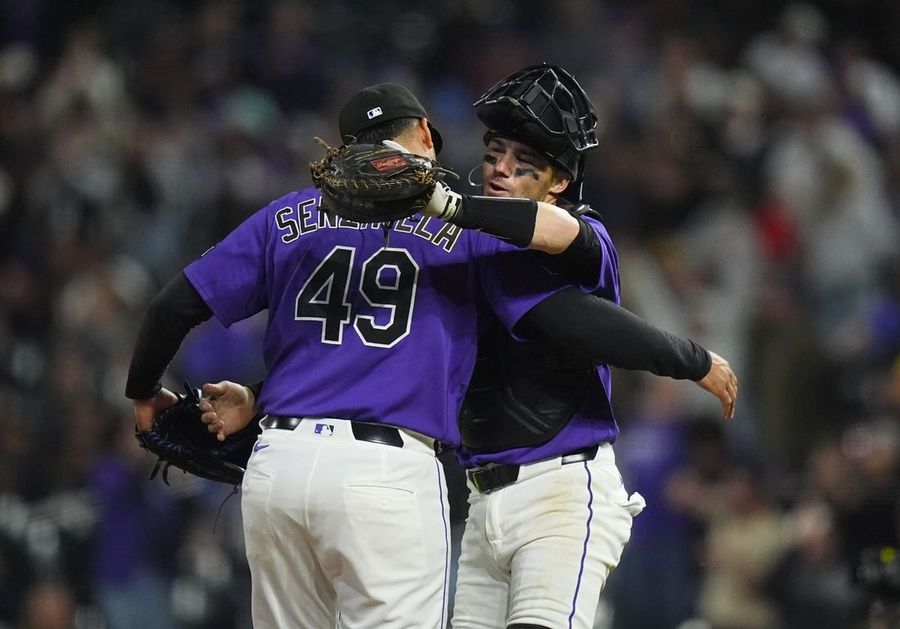
Deadspin | After winning first series against Astros since 2021, Rockies go for sweep   Apr 7, 2026; Denver, Colorado, USA; Colorado Rockies relief pitcher Antonio Senzatela (49) and catcher Brett Sullivan (26) celebrate defeating the Houston Astros in the inning at Coors Field. Mandatory Credit: Ron Chenoy-Imagn Images   Kyle Freeland became the first Rockies starter to pitch into the seventh inning this season in Colorado’s 5-1 win over Houston on Tuesday night.  Michael Lorenzen has a chance to make it two straight when he takes the mound against the Astros on Wednesday afternoon in Denver.   The improved Rockies already have guaranteed a series win, having beaten the Astros 9-7 on Monday in the series opener and then again on Tuesday.  It marks Colorado’s first series win against Houston since 2021.  Lorenzen (0-1, 14.73 ERA) is looking for a bounce-back start after he gave up nine runs over three innings on Friday in a 10-1 home loss to the Philadelphia Phillies. The veteran right-hander allowed seven runs in the first inning but stuck around to give Colorado some much-needed innings.  Lorenzen, 34, who signed a free-agent contract with the Rockies in the offseason, said he is not panicking after his bad outing.  “Three years ago, even two years ago, I’d have been super frustrated,” he said. “It’s not like I welcome losing and failing, but over my career it has been better for me, because you have to learn, grind it out and figure a way to get better. That’s how you improve.  “That gives me the ability to come to Colorado, knowing that I’m going to get my teeth kicked in every once in a while but be like, ‘I’m going to learn more about who I am and how to handle it.'”   Lorenzen has faced Houston six times — four of them starts — and is 0-3 with a 6.86 ERA in those outings. He started one game against the Astros last season as a member of the Kansas City Royals, allowing four runs on seven hits and struck out five over 7 1/3 innings. He was charged with the 4-3 loss.  Houston has lost three games in a row after winning six of the seven previous games, and the normally potent offense went silent in hitter-friendly Coors Field on Tuesday night. The Astros managed just three hits in the loss after scoring 28 runs in its previous three games — two of them losses.  Cristian Javier (0-1, 12.96 ERA) will try to salvage the last game of the series for Houston.  With the rotation already suffering key injuries, the Astros hope Javier can pitch deep into the game. The right-hander has faced the Rockies twice in his career (one start) and has a 4.76 ERA over 5 2/3 innings. He did not record a decision in either outing.  Houston was dealt a blow when ace Hunter Brown was diagnosed with a Grade 2 right shoulder strain and will be out for several weeks. Manager Joe Espada is piecing together his staff, relying on some relievers to give him extended innings.  The Astros could bring up pitchers from Triple-A Sugar Land to fill the void.  “I think there’ll be guys that can fill in for the amount of weeks that (Hunter Brown is) going to be out, whether it’s six or eight total when it’s all said and done,” general manager Dana Brown said. “We’ll have guys that can step up. Maybe this is a blessing in disguise where he gets a little bit of rest, we build him back up, and we get him for the rest of the season. So this break could be what he needs.”  –Field Level Media    #Deadspin #winning #series #Astros #Rockies #sweepApr 7, 2026; Denver, Colorado, USA; Colorado Rockies relief pitcher Antonio Senzatela (49) and catcher Brett Sullivan (26) celebrate defeating the Houston Astros in the inning at Coors Field. Mandatory Credit: Ron Chenoy-Imagn Images

Kyle Freeland became the first Rockies starter to pitch into the seventh inning this season in Colorado’s 5-1 win over Houston on Tuesday night.

Michael Lorenzen has a chance to make it two straight when he takes the mound against the Astros on Wednesday afternoon in Denver.

The improved Rockies already have guaranteed a series win, having beaten the Astros 9-7 on Monday in the series opener and then again on Tuesday.

It marks Colorado’s first series win against Houston since 2021.

Lorenzen (0-1, 14.73 ERA) is looking for a bounce-back start after he gave up nine runs over three innings on Friday in a 10-1 home loss to the Philadelphia Phillies. The veteran right-hander allowed seven runs in the first inning but stuck around to give Colorado some much-needed innings.

Lorenzen, 34, who signed a free-agent contract with the Rockies in the offseason, said he is not panicking after his bad outing.

“Three years ago, even two years ago, I’d have been super frustrated,” he said. “It’s not like I welcome losing and failing, but over my career it has been better for me, because you have to learn, grind it out and figure a way to get better. That’s how you improve.


“That gives me the ability to come to Colorado, knowing that I’m going to get my teeth kicked in every once in a while but be like, ‘I’m going to learn more about who I am and how to handle it.'”

Lorenzen has faced Houston six times — four of them starts — and is 0-3 with a 6.86 ERA in those outings. He started one game against the Astros last season as a member of the Kansas City Royals, allowing four runs on seven hits and struck out five over 7 1/3 innings. He was charged with the 4-3 loss.

Houston has lost three games in a row after winning six of the seven previous games, and the normally potent offense went silent in hitter-friendly Coors Field on Tuesday night. The Astros managed just three hits in the loss after scoring 28 runs in its previous three games — two of them losses.

Cristian Javier (0-1, 12.96 ERA) will try to salvage the last game of the series for Houston.

With the rotation already suffering key injuries, the Astros hope Javier can pitch deep into the game. The right-hander has faced the Rockies twice in his career (one start) and has a 4.76 ERA over 5 2/3 innings. He did not record a decision in either outing.

Houston was dealt a blow when ace Hunter Brown was diagnosed with a Grade 2 right shoulder strain and will be out for several weeks. Manager Joe Espada is piecing together his staff, relying on some relievers to give him extended innings.

The Astros could bring up pitchers from Triple-A Sugar Land to fill the void.

“I think there’ll be guys that can fill in for the amount of weeks that (Hunter Brown is) going to be out, whether it’s six or eight total when it’s all said and done,” general manager Dana Brown said. “We’ll have guys that can step up. Maybe this is a blessing in disguise where he gets a little bit of rest, we build him back up, and we get him for the rest of the season. So this break could be what he needs.”


–Field Level Media

#Deadspin #winning #series #Astros #Rockies #sweep

Apr 7, 2026; Denver, Colorado, USA; Colorado Rockies relief pitcher Antonio Senzatela (49) and catcher Brett Sullivan (26) celebrate defeating the Houston Astros in the inning at Coors Field. Mandatory Credit: Ron Chenoy-Imagn Images

Kyle Freeland became the first Rockies starter to pitch into the seventh inning this season in Colorado’s 5-1 win over Houston on Tuesday night.

Michael Lorenzen has a chance to make it two straight when he takes the mound against the Astros on Wednesday afternoon in Denver.

The improved Rockies already have guaranteed a series win, having beaten the Astros 9-7 on Monday in the series opener and then again on Tuesday.

It marks Colorado’s first series win against Houston since 2021.

Lorenzen (0-1, 14.73 ERA) is looking for a bounce-back start after he gave up nine runs over three innings on Friday in a 10-1 home loss to the Philadelphia Phillies. The veteran right-hander allowed seven runs in the first inning but stuck around to give Colorado some much-needed innings.

Lorenzen, 34, who signed a free-agent contract with the Rockies in the offseason, said he is not panicking after his bad outing.

“Three years ago, even two years ago, I’d have been super frustrated,” he said. “It’s not like I welcome losing and failing, but over my career it has been better for me, because you have to learn, grind it out and figure a way to get better. That’s how you improve.

“That gives me the ability to come to Colorado, knowing that I’m going to get my teeth kicked in every once in a while but be like, ‘I’m going to learn more about who I am and how to handle it.'”

Lorenzen has faced Houston six times — four of them starts — and is 0-3 with a 6.86 ERA in those outings. He started one game against the Astros last season as a member of the Kansas City Royals, allowing four runs on seven hits and struck out five over 7 1/3 innings. He was charged with the 4-3 loss.

Houston has lost three games in a row after winning six of the seven previous games, and the normally potent offense went silent in hitter-friendly Coors Field on Tuesday night. The Astros managed just three hits in the loss after scoring 28 runs in its previous three games — two of them losses.

Cristian Javier (0-1, 12.96 ERA) will try to salvage the last game of the series for Houston.

With the rotation already suffering key injuries, the Astros hope Javier can pitch deep into the game. The right-hander has faced the Rockies twice in his career (one start) and has a 4.76 ERA over 5 2/3 innings. He did not record a decision in either outing.

Houston was dealt a blow when ace Hunter Brown was diagnosed with a Grade 2 right shoulder strain and will be out for several weeks. Manager Joe Espada is piecing together his staff, relying on some relievers to give him extended innings.

The Astros could bring up pitchers from Triple-A Sugar Land to fill the void.

“I think there’ll be guys that can fill in for the amount of weeks that (Hunter Brown is) going to be out, whether it’s six or eight total when it’s all said and done,” general manager Dana Brown said. “We’ll have guys that can step up. Maybe this is a blessing in disguise where he gets a little bit of rest, we build him back up, and we get him for the rest of the season. So this break could be what he needs.”

–Field Level Media

Source link
#Deadspin #winning #series #Astros #Rockies #sweep

Previous post

KKR vs LSG, IPL 2026: Kolkata Knight Riders aims for turnaround in form against Lucknow Super Giants <div id="content-body-70838632" itemprop="articleBody"><p>Three-time champion Kolkata Knight Riders (KKR) has experienced its worst-ever start to an Indian Premier League (IPL) season after three matches and would like to record its first win in 2026 against Lucknow Super Giants (LSG) at the Eden Gardens on Thursday.</p><p>A season expected to pose a problem of plenty has turned out to be one with plenty of problems for the Ajinkya Rahane-led side, which is struggling to find the right bowling combination due to injuries to its key pacers and the lacklustre performance of its reliable spinners.</p><p>Without consistency in its batting, barring young Angkrish Raghuvanshi, KKR has found itself in a soup. Following two losses and a point from the washed-out match against Punjab Kings, KKR would look to overcome the odds.</p><p>Top wicket-taker Blessing Muzarabani should lead the attack with support from Vaibhav Arora and Kartik Tyagi. Sunil Narine, who recovered from his abdominal pain and trained on Wednesday, looked set to return, while there were doubts over an injured Varun Chakaravarthy.</p><p>In batting, Rahane, Finn Allen, and Rinku Singh may shoulder the responsibility, while the team will be keen to see its Aussie import Cameron Green getting back his touch.</p><p>While KKR will be eager to get off the blocks, LSG, at its owner Sanjiv Goenka’s home city, would like to carry forward its momentum after defeating Sunrisers Hyderabad.</p><p>LSG, studded with capable batters including captain Rishabh Pant, Aiden Markram, Mitchell Marsh, and Nicholas Pooran, will look to capitalise on KKR’s unsettled attack.</p><p>A resurgent Mohammed Shami on his ‘home’ ground, the effective Prince Yadav, Mohsin Khan, Avesh Khan, wily spinner Digvesh Rathi, and another ‘home’ boy Shahbaz Ahmed are capable of disturbing any batting line-up.</p><p>With both sides hoping to outsmart each other, LSG is likely to enjoy some advantage because of its effective bowling.</p><p class="publish-time" id="end-of-article">Published on Apr 08, 2026</p></div> #KKR #LSG #IPL #Kolkata #Knight #Riders #aims #turnaround #form #Lucknow #Super #Giants

Next post

The Lokesh Sathyanathan story: How the long jumper from Bangalore leapt into history with his maiden NCAA title <div id="content-body-70802992" itemprop="articleBody"><p>Few people had their eye on Lokesh Sathyanathan when he first arrived in Fayetteville, Arkansas, to take part in the men’s long jump competition at the NCAA Indoor Championships in March. The 26-year-old wasn’t expecting them to. The NCAA Indoor Championships are the highest level of competition in the indoor track and field calendar — considered the most prestigious form of collegiate sport in the world.</p><p>The standard of competition is nothing less than that of a world-level meet. Lokesh, competing for Tarleton State University — a relatively small college that had never won an individual track and field title at this competition — was, to put it mildly, not a favourite.</p><p>“One day before the competition, the only people who recognised me were the ones who already knew me — probably just my coach and teammates,” he recalls.</p><p>That’s not the case any longer. On March 13, Lokesh leapt a career-best 8.21m to win gold. The jump set a new Indian indoor national record and moved him to third on the all-time list of Indian long jumpers across all competitions. It also made him only the fourth Indian to win gold at the NCAA Championships — joining triple jumper M.S. Gill, discus thrower Vikas Gowda, and decathlete and high jumper Tejaswin Shankar.</p><p>Lokesh is unrecognised no more.</p><p>“The NCAA level is nothing short of the Olympic level. You are competing with Olympic champions, World Record holders, National Record holders of different countries, world medallists. To win gold at this level is special. After the competition, I’ve done multiple interviews, but even regular people want to speak to me. Wherever you walk, people know who you are. They compliment and congratulate you. There are people who follow you on social media. People are watching my jumps. They just want to start a conversation. It’s completely different from the day before your race to the day after,” he says.</p><p>Every conversation goes the same way. “People want to know where I’m from. They want to know how it feels to be an NCAA champion. They want to know how I motivate and hype myself and how I go for bigger jumps,” he says.</p><p>Motivation, Lokesh says, is easy. He thinks about the hard work his parents put in to start his journey in collegiate sport in the USA. He can’t help but think about how close a freak injury, a couple of years ago, came to ending that journey, and how hard he had to work just to get another chance to compete at this level. “When I’m jumping, I always think of where I came from. Before every competition, I look back at the challenges I’ve faced in my life and think about how lucky I am to get an opportunity to show my talent once again,” he says.</p><h4 class="sub_head">Journey begins</h4><p>The idea of competing in the collegiate system first came to Lokesh about eight years ago. Back in 2018, he was considered one of India’s most promising junior long jumpers, with a personal best of 7.74m that had won him gold at the Junior South Asian Championships in Colombo, Sri Lanka. After competing at the U-20 World Championships in Tampere, Finland, he attracted the attention of several coaches scouting for track and field programmes in the USA.</p><p>Born and raised in Bengaluru in a sports-mad family — his father John played football for the Bengaluru Police while his sister Monica was a national-level 400-metre runner — Lokesh wasn’t certain whether he wanted to leave familiar surroundings. Any plans to shift base were further pushed back after he suffered a serious road accident while travelling to a training session.</p><p>The physical and mental toll caused him to pull out of the qualifiers for the 2019 World Championships in Doha. “I would have panic attacks. I would stay by myself in a room, and eventually, my friends didn’t know what to do. I couldn’t even sleep. It was just me and my parents at that time. I had a lot of mental health issues that I was dealing with. I was on a lot of anxiety medication as a result,” he recalls.</p><p>After he recovered, others nudged him to consider college offers from the USA once again. He was still uncertain. “At that time, I felt if I did go, I’d just be seen as an average athlete who hadn’t accomplished anything. I didn’t think I was good enough,” he says.</p><p>As time passed, Lokesh’s enthusiasm to train abroad waned, even as he continued to improve. He won gold at the South Asian Games in Kathmandu and recorded a personal best of 7.93m at the selection trials for the World University Games in early 2021.</p><div class=" article-picture center"><img src="https://ss-i.thgim.com/public/magazine/ihegd2/article70838060.ece/alternates/FREE_1200/lokesh%202.jpeg" data-original="https://ss-i.thgim.com/public/magazine/ihegd2/article70838060.ece/alternates/FREE_1200/lokesh%202.jpeg" alt="At 35, Bobby Carter (left) is one of the youngest head coaches in Division I — the highest level of the NCAA system. He grew up in a family of high-level athletes, with his cousin Michelle Carter having won Olympic gold in shot put in 2016. In Lokesh (right), he saw something special — not just his build and physicality, but also the mindset." title="At 35, Bobby Carter (left) is one of the youngest head coaches in Division I — the highest level of the NCAA system. He grew up in a family of high-level athletes, with his cousin Michelle Carter having won Olympic gold in shot put in 2016. In Lokesh (right), he saw something special — not just his build and physicality, but also the mindset." class=" lazy" width="100%" height="100%"/><div class="pic-caption"><figcaption class="figure-caption align-text-bottom"><p> At 35, Bobby Carter (left) is one of the youngest head coaches in Division I — the highest level of the NCAA system. He grew up in a family of high-level athletes, with his cousin Michelle Carter having won Olympic gold in shot put in 2016. In Lokesh (right), he saw something special — not just his build and physicality, but also the mindset. | Photo Credit: Special Arrangement </p><img class="caption-image" src="https://assetsss.thehindu.com/theme/images/SSRX/lightbox-info.svg" alt="lightbox-info"/></figcaption></div><p class="caption"> At 35, Bobby Carter (left) is one of the youngest head coaches in Division I — the highest level of the NCAA system. He grew up in a family of high-level athletes, with his cousin Michelle Carter having won Olympic gold in shot put in 2016. In Lokesh (right), he saw something special — not just his build and physicality, but also the mindset. | Photo Credit: Special Arrangement </p></div><p>It was only rekindled in the most painful of circumstances during the second wave of the COVID-19 pandemic in India. When Lokesh’s mother fell ill, the family didn’t worry at first — until her condition deteriorated suddenly. With doctors preparing the family for the inevitable, Lokesh was permitted to visit her.</p><p>“When she was in the last stages of her life, she held my hand, kissed it, and started crying. She just said I had to make the most of whatever opportunity I had. That was the last thing she spoke to me,” he says.</p><p>Until then, Mary had never tried to influence her son in any way. “In my entire athletic career, she had been nothing but supportive. She was my biggest motivation. If I had a bad day or if I lost, she would tell me she was there for me, and then she would cook my favourite food so that I would feel better. When I lost her, it was as if I lost everything,” he says.</p><p>The shock sent him into a cycle of despair once again. “I was unable to come out of my room. I wasn’t meeting any of my friends. I was once again taking medication for my mental health issues,” he says.</p><p>But a conversation with his father changed things. “He told me how, without any warning, my mom was no longer with me. You never know when we won’t have time to fulfil our desires. Whatever time and opportunity we get, we have to grab it and work for what we want. I had to get up, start crawling, run, and move. I can’t be still in one place,” he says.</p><p>Two months after his mother passed away, Lokesh once again started applying to colleges in the USA. “I was essentially just sending cold emails to whoever I could. I asked coaches and athletes I had met to recommend me to others. I became very serious about it. I’d stay up late so I could reply to emails immediately,” he says.</p><p>As it turned out, coaches were still interested. Eventually, he was offered a full scholarship by the University of New Mexico.</p><h4 class="sub_head">Struggles and second chances</h4><p>At first, the move seemed to work out for him. In May 2023, Lokesh made his first jump over 8m — with a leap of 8.02m at the Mountain West Outdoor Track & Field Championships in Clovis. In his first year in the collegiate circuit, he even made it to the NCAA outdoor track and field finals.</p><p>Later that year, when his coach moved to the University of Louisville, Lokesh followed. He had built a base for his collegiate career. Now it was time for him to take off.</p><p>That didn’t happen.</p><p>Lokesh says he was taking part in an off-season gym session when a teammate dropped a weight on his right toe, fracturing it. “It came at the worst possible time. I was about six months away from the Olympic selection trials in India. I was really confident I would do well, but I ended up having to get surgery instead,” he recalls.</p><p>Things only got worse. One month after surgery, as he began rehabilitation, Lokesh realised something was very wrong. “One of the screws the doctors had placed inside my bone popped out the other side and started piercing through the flesh and bleeding,” he says.</p><p>His coaches didn’t take his concern seriously. “They felt it was an infection and I could treat it with antibiotics. Of course, it didn’t work. It only got worse. For 14 days, I couldn’t sleep because of the pain, but all the while people kept telling me these things were normal,” he recalls.</p><p>Eventually, Lokesh says he could take it no more. He left his college and flew back to India for a second opinion — and got one just in time. “The doctor told me I needed surgery immediately because the infection was about to reach the bone. They had to take out the screw. It was a very critical situation,” he says.</p><p>As he began rehabilitation in India, Lokesh wondered how he can return to jumping. “I never thought I would give up athletics because of what it meant to my parents and what my mother had told me before she passed away. But I was also uncertain about going back to the USA because of the experience I had there. I reached out to every possible person in India who I thought could help me — the state government, private institutes, even different states. I told them I just needed some support. But all I heard was ‘we can’t help you’. Everyone said they’d help only if I started jumping again,” he recalls.</p><p>Finally, Lokesh realised he had to give college in the USA another try. “I didn’t have any support in India, and at least in the USA I’d have support to continue my academics and training. In the collegiate system, at least my training would be taken care of by my school. That’s when I reached out to coach Bobby Carter and that’s when things started falling into place,” he says.</p><div class=" article-picture center"><img src="https://ss-i.thgim.com/public/magazine/as7lzm/article70838086.ece/alternates/FREE_1200/GettyImages-2219158127.jpg" data-original="https://ss-i.thgim.com/public/magazine/as7lzm/article70838086.ece/alternates/FREE_1200/GettyImages-2219158127.jpg" alt="A 7.92m jump early in the 2025 season qualified Lokesh for his first NCAA indoor championships. Later, he jumped a personal best of 8.14m at the Michael Johnson Invitational, which qualified him for the NCAA outdoor final, where he finished fifth. It was the high point of a solid, if not spectacular, comeback season." title="A 7.92m jump early in the 2025 season qualified Lokesh for his first NCAA indoor championships. Later, he jumped a personal best of 8.14m at the Michael Johnson Invitational, which qualified him for the NCAA outdoor final, where he finished fifth. It was the high point of a solid, if not spectacular, comeback season." class=" lazy" width="100%" height="100%"/><div class="pic-caption"><figcaption class="figure-caption align-text-bottom"><p> A 7.92m jump early in the 2025 season qualified Lokesh for his first NCAA indoor championships. Later, he jumped a personal best of 8.14m at the Michael Johnson Invitational, which qualified him for the NCAA outdoor final, where he finished fifth. It was the high point of a solid, if not spectacular, comeback season. | Photo Credit: Getty Images </p><img class="caption-image" src="https://assetsss.thehindu.com/theme/images/SSRX/lightbox-info.svg" alt="lightbox-info"/></figcaption></div><p class="caption"> A 7.92m jump early in the 2025 season qualified Lokesh for his first NCAA indoor championships. Later, he jumped a personal best of 8.14m at the Michael Johnson Invitational, which qualified him for the NCAA outdoor final, where he finished fifth. It was the high point of a solid, if not spectacular, comeback season. | Photo Credit: Getty Images </p></div><p>Before joining the University of New Mexico, Lokesh had got to know Carter while exploring different schools. The two had stayed in touch, and in 2024 Lokesh reached out again after Carter had taken over the track and field programme at Tarleton University. “I was a little nervous because I hadn’t competed for a year, but coach Carter simply said, ‘I’d love to have you over,’” he says.</p><p>At 35, Carter is one of the youngest head coaches in Division I — the highest level of the NCAA system. He grew up in a family of high-level athletes, with his cousin Michelle Carter having won Olympic gold in shot put in 2016. In Lokesh, he saw something special — not just his build and physicality, but also the mindset.</p><p>“I saw in his eyes all the things he had been through. But I also saw someone who didn’t want to give up. You can’t help but want to go out to bat for someone like that. From an athletics standpoint, I could tell he had the qualities of an athlete. But I could also tell this was a kid with a dream who just needed some help along the way. In my first conversation with him, he said, ‘Coach, I want to be the best.’ That’s all I needed. I took that and ran with it,” Carter says.</p><p>Lokesh is grateful for the support he got. “I consider myself really lucky that I could connect with coach Carter. He’s one of my biggest supporters. He’s my cheerleader, mentor, coach, best friend, and a father figure rolled into one. He never made me feel like a stranger or incapable. He always believed in me and told me I can achieve anything,” he says.</p><p>Although Tarleton didn’t have a particularly renowned track and field programme unlike the colleges Lokesh had previously trained at, he says the move suited him. “It’s a smaller school, about two hours from Dallas. But that was fine. There are fewer distractions. There’s nothing much to do but train. It has a track, it has a gym. Being smaller meant more focus on me and stronger support systems. It was the perfect place to recover,” he says.</p><p>Slowly, things fell into place.</p><p>A 7.92m jump early in the 2025 season qualified him for his first NCAA indoor championships. Later, he jumped a personal best of 8.14m at the Michael Johnson Invitational, which qualified him for the NCAA outdoor final, where he finished fifth. It was the high point of a solid, if not spectacular, comeback season.</p><p>At the start of 2026, however, Carter sensed that Lokesh was building towards something much more significant. “Early in the season, Lokesh competed in Oklahoma at the JD Martin Invitational. He won with 7.85m, but he also had a foul jump by a very narrow margin that I estimated was at least 8.20m. That gave him confidence that he had a really big jump in him,” says Carter. That would come at the biggest stage possible — at the NCAA Indoor Championships final.</p><p>Before the competition, Lokesh wasn’t thinking about his competitors. “I just thanked God that I had another opportunity to compete at this level,” he says.</p><p>In second place after three attempts, everything came together in his fourth jump. Running in hard, he hit the board square. Using the double hitch kick, he cycled his legs twice as he took off before landing near the far edge of the pit. The jump put him into the lead, which he never gave up.</p><p>When it ended, Lokesh leapt into his coach’s arms. He pointed to the sky in tribute to his mother, whose picture he carries everywhere. When he called his father, who had been following updates from India, both were in tears. “We were both crying but they were happy tears,” he says.</p><p>Coach Carter admitted he too was crying when he went home that day. “It was just a really emotional moment,” he says.</p><h4 class="sub_head">Bigger goals</h4><p>However, despite the magnitude of the win, neither has formally celebrated it. That’s because, as big as becoming NCAA champion feels, both believe Lokesh could have done even more. In his final attempt of the day, Lokesh had made another huge jump of 8.17m. When he came off the sand though he grimaced. “Everything was so good in the take-off that I got overexcited and dropped my hips on landing. It cost me 20–30 cm. It could have been 8.40m,” he says.</p><div class=" article-picture center"><img src="https://ss-i.thgim.com/public/magazine/yrolds/article70838097.ece/alternates/FREE_1200/IMG_9800.JPG.jpeg" data-original="https://ss-i.thgim.com/public/magazine/yrolds/article70838097.ece/alternates/FREE_1200/IMG_9800.JPG.jpeg" alt="Lokesh and Carter now aims for the Indian record currently standing at 8.42m (Jeswin Aldrin). But it won’t be easy." title="Lokesh and Carter now aims for the Indian record currently standing at 8.42m (Jeswin Aldrin). But it won’t be easy." class=" lazy" width="100%" height="100%"/><div class="pic-caption"><figcaption class="figure-caption align-text-bottom"><p> Lokesh and Carter now aims for the Indian record currently standing at 8.42m (Jeswin Aldrin). But it won’t be easy. | Photo Credit: Special Arrangement </p><img class="caption-image" src="https://assetsss.thehindu.com/theme/images/SSRX/lightbox-info.svg" alt="lightbox-info"/></figcaption></div><p class="caption"> Lokesh and Carter now aims for the Indian record currently standing at 8.42m (Jeswin Aldrin). But it won’t be easy. | Photo Credit: Special Arrangement </p></div><p>Carter hopes that the miss acts as a motivation. “Both of us have bigger goals that we want to accomplish. Lokesh’s goal is to jump over 8.50m outdoors,” he says.</p><p>With the Indian record currently standing at 8.42m (Jeswin Aldrin), that won’t be easy, but Carter is optimistic. “It’s very possible. He has the ability to be one of the best Indian jumpers of all time. Right now, our challenge is to stay consistent with technique. I know he has the technical ability to get to the 8.50m mark. It’s just about the little things — eating right and competing in the right events,” he says. There are also Lokesh’s own ambitions. “I want to compete on the biggest stages and win a major medal for India at the Commonwealth and Asian Games,” he says.</p><p>This, though, won’t be entirely up to him. To represent India, he will have to take part in selection tournaments in the country. That, in turn, means frequent travel between his base at Tarleton and India — adding up to a significant expense. Indeed, even competing in the USA will be challenging in the months to come. Having already competed in university-level competitions in India, he is no longer eligible for outdoor NCAA events and has only one year of eligibility left for indoor competitions. While he can still take part in them as a representative of Tarleton, it will be as an unattached athlete, meaning he would have to cover his own expenses. “So far, I don’t have a sponsor. If I get one, it would make my journey much easier,” he says.</p><p>Even so, Lokesh remains undeterred. “I think I’m meant to do something special. I’ve already come such a long way. I’ll keep pushing,” he says.</p><p class="publish-time" id="end-of-article">Published on Apr 08, 2026</p></div> #Lokesh #Sathyanathan #story #long #jumper #Bangalore #leapt #history #maiden #NCAA #title

If the race in Shanghai was a glimpse of Kimi Antonelli’s talent, the following Japanese Grand Prix was evidence that the prodigy will be a strong contender for the driver’s championship in the 2026 F1 season.

With more than a big slice of luck — a cheap pit stop during a Safety Car period propelling him to the top of the timesheet — the Italian recovered from a poor getaway at the start to take his second consecutive victory.

The records keep tumbling for Antonelli. He is now the first teenager to lead the championship standings since Lewis Hamilton in 2007 and the first Italian driver to win back-to-back races since Alberto Ascari in 1953.

Teammate George Russell endured a frustrating day out in Suzuka, failing to finish on the podium for the first time this season. Despite the pace advantage of the Mercedes, the Briton failed to get past the Ferrari of third-placed Charles Leclerc in the dying laps of the race, conceding the championship lead to his junior teammate.

McLaren’s Oscar Piastri, who had failed to start either of the first two races of the season, came home in second and could have even been on the top step if not for the untimely Safety Car.

The exciting three-team battle for the top six places is sure to have brought entertainment, but the Japanese Grand Prix highlighted a systemic fault line within the 2026 regulations, one that could have worse consequences than what played out on track. On lap 22, Haas’ Ollie Bearman was involved in a 50G crash (force fifty times the earth’s gravitational pull) when his car slammed into the barriers at the Spoon Curve (Turn 13). The incident occurred when the young English driver had to veer out of the way of a slow-moving Franco Colapinto, causing him to dip a tyre into the grass and lose control of the car.

Why the Alpine was moving slowly opened a Pandora’s box that F1 hoped to avoid with the new regulations. The crash was due to the high closing speed (the total speed at which two objects approach each other), which occurred due to Colapinto and Bearman’s opposing strategies. While the Argentinian was looking to harvest energy into the battery by going slower, Bearman had unlocked more speed by deploying battery power. While taking evasive action, the Haas car ran through a brake marker board before sliding into the barriers along the wall. Bearman was seen limping back to the service road after the high-impact crash.

Formula One: Antonelli wins Japanese GP as Bearman crash exposes dangerous differential issue  If the race in Shanghai was a glimpse of Kimi Antonelli’s talent, the following Japanese Grand Prix was evidence that the prodigy will be a strong contender for the driver’s championship in the 2026 F1 season.With more than a big slice of luck — a cheap pit stop during a Safety Car period propelling him to the top of the timesheet — the Italian recovered from a poor getaway at the start to take his second consecutive victory.The records keep tumbling for Antonelli. He is now the first teenager to lead the championship standings since Lewis Hamilton in 2007 and the first Italian driver to win back-to-back races since Alberto Ascari in 1953.Teammate George Russell endured a frustrating day out in Suzuka, failing to finish on the podium for the first time this season. Despite the pace advantage of the Mercedes, the Briton failed to get past the Ferrari of third-placed Charles Leclerc in the dying laps of the race, conceding the championship lead to his junior teammate.McLaren’s Oscar Piastri, who had failed to start either of the first two races of the season, came home in second and could have even been on the top step if not for the untimely Safety Car.The exciting three-team battle for the top six places is sure to have brought entertainment, but the Japanese Grand Prix highlighted a systemic fault line within the 2026 regulations, one that could have worse consequences than what played out on track. On lap 22, Haas’ Ollie Bearman was involved in a 50G crash (force fifty times the earth’s gravitational pull) when his car slammed into the barriers at the Spoon Curve (Turn 13). The incident occurred when the young English driver had to veer out of the way of a slow-moving Franco Colapinto, causing him to dip a tyre into the grass and lose control of the car.Why the Alpine was moving slowly opened a Pandora’s box that F1 hoped to avoid with the new regulations. The crash was due to the high closing speed (the total speed at which two objects approach each other), which occurred due to Colapinto and Bearman’s opposing strategies. While the Argentinian was looking to harvest energy into the battery by going slower, Bearman had unlocked more speed by deploying battery power. While taking evasive action, the Haas car ran through a brake marker board before sliding into the barriers along the wall. Bearman was seen limping back to the service road after the high-impact crash. Oliver Bearman’s mangled car after the crash. 
                                                            | Photo Credit: 
                                Getty Images
                            

                            Oliver Bearman’s mangled car after the crash. 
                                                            | Photo Credit: 
                                Getty Images
                                                    Williams driver and director of the Grand Prix Drivers’ Association, Carlos Sainz, called it an accident waiting to happen, suggesting that F1 and the FIA had not heeded the drivers’ safety concerns. “We’ve been warning them about this happening. I’m not very happy with what we’ve had up until now.Hopefully, we come up with a better solution that doesn’t create these massive closing speeds and [ensures] a safer way of going racing,” the Spaniard told reporters after the race. “Here, we were lucky there was an escape road. Now imagine going to Baku or going to Singapore or going to Vegas and having this kind of closing speeds and crashes next to the walls,” he added.The crash and the subsequent complaints from the drivers forced the FIA to put out a statement regarding prospective changes to the energy management system. “A number of meetings are scheduled in April to assess the operation of the new regulations and to determine whether any refinements are required. Any potential adjustments require careful simulation and detailed analysis. At this stage, any speculation regarding the nature of potential changes would be premature,” the statement read.With five weeks to go before the next Grand Prix in Miami, due to the cancellation of the races in Bahrain and Saudi Arabia, the FIA and F1 management will have to come up with a solution to tackle the issues of closing speeds, which are inherent in this generation of battery-powered racing. Safety should be priority number one, even if that entails taking a few steps back in the use of electrical energy.MotoGP Marco Bezzecchi celebrates with his United States Grand Prix trophy.
                                                            | Photo Credit: 
                                Reuters
                            

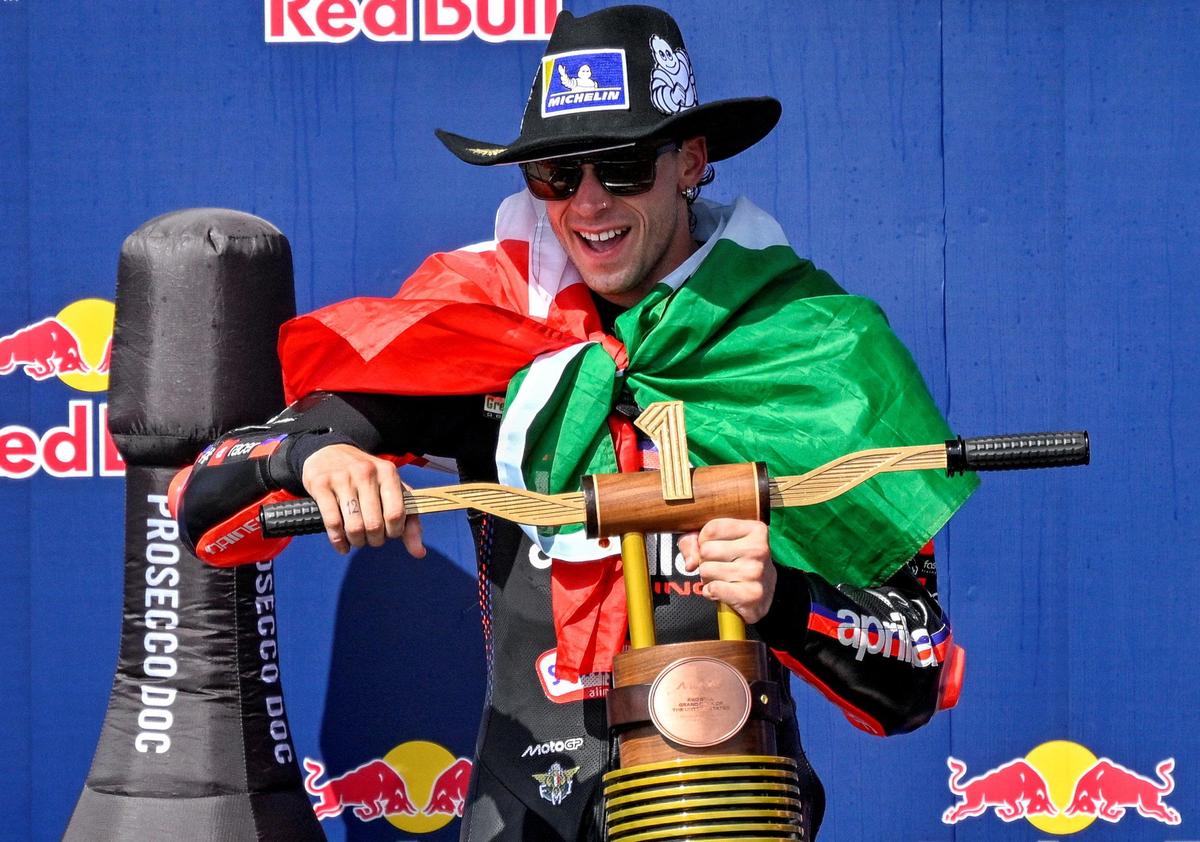
                            Marco Bezzecchi celebrates with his United States Grand Prix trophy.
                                                            | Photo Credit: 
                                Reuters
                                                    Marco Bezzecchi extended his winning streak to five races after victory at the United States Grand Prix at the Circuit of the Americas (COTA). He led an Aprilia 1-2 with teammate Jorge Martin, who had won the sprint race on Saturday but started seventh on the grid, ahead of KTM’s Pedro Acosta.Despite only starting on the second row, Bezzecchi surged into second place before the first corner, then overtook leader Acosta after a slight argy-bargy, which resulted in his seat padding flying off the bike. When he crossed the start-finish straight at the end of lap one, he broke Jorge Lorenzo’s record for the most consecutive MotoGP laps led.Pole-sitter Fabio Di Giannantonio finished fourth as the lead Ducati ahead of defending champion Marc Marquez, who responded after serving a long-lap penalty to round out the top five.Published on Apr 08, 2026  #Formula #Antonelli #wins #Japanese #Bearman #crash #exposes #dangerous #differential #issue

Oliver Bearman’s mangled car after the crash.  | Photo Credit: Getty Images

lightbox-info

Oliver Bearman’s mangled car after the crash.  | Photo Credit: Getty Images

Williams driver and director of the Grand Prix Drivers’ Association, Carlos Sainz, called it an accident waiting to happen, suggesting that F1 and the FIA had not heeded the drivers’ safety concerns. “We’ve been warning them about this happening. I’m not very happy with what we’ve had up until now.

Hopefully, we come up with a better solution that doesn’t create these massive closing speeds and [ensures] a safer way of going racing,” the Spaniard told reporters after the race. “Here, we were lucky there was an escape road. Now imagine going to Baku or going to Singapore or going to Vegas and having this kind of closing speeds and crashes next to the walls,” he added.

The crash and the subsequent complaints from the drivers forced the FIA to put out a statement regarding prospective changes to the energy management system. “A number of meetings are scheduled in April to assess the operation of the new regulations and to determine whether any refinements are required. Any potential adjustments require careful simulation and detailed analysis. At this stage, any speculation regarding the nature of potential changes would be premature,” the statement read.

With five weeks to go before the next Grand Prix in Miami, due to the cancellation of the races in Bahrain and Saudi Arabia, the FIA and F1 management will have to come up with a solution to tackle the issues of closing speeds, which are inherent in this generation of battery-powered racing. Safety should be priority number one, even if that entails taking a few steps back in the use of electrical energy.

MotoGP

Marco Bezzecchi celebrates with his United States Grand Prix trophy.

Marco Bezzecchi celebrates with his United States Grand Prix trophy. | Photo Credit: Reuters

lightbox-info

Marco Bezzecchi celebrates with his United States Grand Prix trophy. | Photo Credit: Reuters

Marco Bezzecchi extended his winning streak to five races after victory at the United States Grand Prix at the Circuit of the Americas (COTA). He led an Aprilia 1-2 with teammate Jorge Martin, who had won the sprint race on Saturday but started seventh on the grid, ahead of KTM’s Pedro Acosta.

Despite only starting on the second row, Bezzecchi surged into second place before the first corner, then overtook leader Acosta after a slight argy-bargy, which resulted in his seat padding flying off the bike. When he crossed the start-finish straight at the end of lap one, he broke Jorge Lorenzo’s record for the most consecutive MotoGP laps led.

Pole-sitter Fabio Di Giannantonio finished fourth as the lead Ducati ahead of defending champion Marc Marquez, who responded after serving a long-lap penalty to round out the top five.

Published on Apr 08, 2026

#Formula #Antonelli #wins #Japanese #Bearman #crash #exposes #dangerous #differential #issue">Formula One: Antonelli wins Japanese GP as Bearman crash exposes dangerous differential issue  If the race in Shanghai was a glimpse of Kimi Antonelli’s talent, the following Japanese Grand Prix was evidence that the prodigy will be a strong contender for the driver’s championship in the 2026 F1 season.With more than a big slice of luck — a cheap pit stop during a Safety Car period propelling him to the top of the timesheet — the Italian recovered from a poor getaway at the start to take his second consecutive victory.The records keep tumbling for Antonelli. He is now the first teenager to lead the championship standings since Lewis Hamilton in 2007 and the first Italian driver to win back-to-back races since Alberto Ascari in 1953.Teammate George Russell endured a frustrating day out in Suzuka, failing to finish on the podium for the first time this season. Despite the pace advantage of the Mercedes, the Briton failed to get past the Ferrari of third-placed Charles Leclerc in the dying laps of the race, conceding the championship lead to his junior teammate.McLaren’s Oscar Piastri, who had failed to start either of the first two races of the season, came home in second and could have even been on the top step if not for the untimely Safety Car.The exciting three-team battle for the top six places is sure to have brought entertainment, but the Japanese Grand Prix highlighted a systemic fault line within the 2026 regulations, one that could have worse consequences than what played out on track. On lap 22, Haas’ Ollie Bearman was involved in a 50G crash (force fifty times the earth’s gravitational pull) when his car slammed into the barriers at the Spoon Curve (Turn 13). The incident occurred when the young English driver had to veer out of the way of a slow-moving Franco Colapinto, causing him to dip a tyre into the grass and lose control of the car.Why the Alpine was moving slowly opened a Pandora’s box that F1 hoped to avoid with the new regulations. The crash was due to the high closing speed (the total speed at which two objects approach each other), which occurred due to Colapinto and Bearman’s opposing strategies. While the Argentinian was looking to harvest energy into the battery by going slower, Bearman had unlocked more speed by deploying battery power. While taking evasive action, the Haas car ran through a brake marker board before sliding into the barriers along the wall. Bearman was seen limping back to the service road after the high-impact crash. Oliver Bearman’s mangled car after the crash. 
                                                            | Photo Credit: 
                                Getty Images
                            

                            Oliver Bearman’s mangled car after the crash. 
                                                            | Photo Credit: 
                                Getty Images
                                                    Williams driver and director of the Grand Prix Drivers’ Association, Carlos Sainz, called it an accident waiting to happen, suggesting that F1 and the FIA had not heeded the drivers’ safety concerns. “We’ve been warning them about this happening. I’m not very happy with what we’ve had up until now.Hopefully, we come up with a better solution that doesn’t create these massive closing speeds and [ensures] a safer way of going racing,” the Spaniard told reporters after the race. “Here, we were lucky there was an escape road. Now imagine going to Baku or going to Singapore or going to Vegas and having this kind of closing speeds and crashes next to the walls,” he added.The crash and the subsequent complaints from the drivers forced the FIA to put out a statement regarding prospective changes to the energy management system. “A number of meetings are scheduled in April to assess the operation of the new regulations and to determine whether any refinements are required. Any potential adjustments require careful simulation and detailed analysis. At this stage, any speculation regarding the nature of potential changes would be premature,” the statement read.With five weeks to go before the next Grand Prix in Miami, due to the cancellation of the races in Bahrain and Saudi Arabia, the FIA and F1 management will have to come up with a solution to tackle the issues of closing speeds, which are inherent in this generation of battery-powered racing. Safety should be priority number one, even if that entails taking a few steps back in the use of electrical energy.MotoGP Marco Bezzecchi celebrates with his United States Grand Prix trophy.
                                                            | Photo Credit: 
                                Reuters
                            

                            Marco Bezzecchi celebrates with his United States Grand Prix trophy.
                                                            | Photo Credit: 
                                Reuters
                                                    Marco Bezzecchi extended his winning streak to five races after victory at the United States Grand Prix at the Circuit of the Americas (COTA). He led an Aprilia 1-2 with teammate Jorge Martin, who had won the sprint race on Saturday but started seventh on the grid, ahead of KTM’s Pedro Acosta.Despite only starting on the second row, Bezzecchi surged into second place before the first corner, then overtook leader Acosta after a slight argy-bargy, which resulted in his seat padding flying off the bike. When he crossed the start-finish straight at the end of lap one, he broke Jorge Lorenzo’s record for the most consecutive MotoGP laps led.Pole-sitter Fabio Di Giannantonio finished fourth as the lead Ducati ahead of defending champion Marc Marquez, who responded after serving a long-lap penalty to round out the top five.Published on Apr 08, 2026  #Formula #Antonelli #wins #Japanese #Bearman #crash #exposes #dangerous #differential #issue

Major League Baseball: Always up for a gimmick, especially if it means using a species that walks on more than two legs to the ballpark.

Brewers players came out of their shells to embrace the tortoise, which Murphy named Bobby Jr. after Royals star shortstop Bobby Witt Jr. Trevor Megill, the team’s closer, seemed enthusiastic as the critter crawled over a clubhouse rug toward right-hander Chad Patrick. If the players realized that Bobby Jr. had bitten Murphy “several times,” it didn’t worry them.

The tortoise is tiny now (and moves surprisingly fast despite stereotyping) but Murphy has since found out that sulcatas grow to 100-plus pounds and routinely live into their 70s. Like humans.

Bobby Jr. turns out to be much more complicated than Murphy’s “pocket pancake” made-for-TV gimmick of 2025. Those were just small pancakes you could store and pull from your pocket if you needed a quick bite. Caring for tortoises? There’s more to it.

Sulcatas are said to dislike loud noises, like those coming from stands with screaming fans, booming fireworks and clubhouses that play celebration music. And then there’s airplane travel, even if charter flights can sidestep potential security and quarantine/immigration issues.

Oops?

“Maybe I didn’t think ahead,” Murphy said at one point. He’s hoping to find a permanent home for Bobby Jr., because the tortoise won’t be a recurring member of the team’s traveling party.

Even if it was just for a weekend, the legend of Bobby Jr. the tortoise will live forever among other ballpark animals in MLB history.

• The tortoise was a call-back to the residency of Hank the “Ballpark Pup,” a stray who wandered into Brewers’ Spring Training in 2014 (and into our hearts), becoming a fixture for years. Hank, a Bichon Frisé mix, was of course named after MLB legend and Henry “Hank” Aaron.

• The modern inspiration of the living mascot trend was the Los Angeles Angels’ Rally Monkey in the early 2000s. The Chapuchin was known mostly for its appearances on the home video board, though it also appeared in person at ballgames.

• Bobby Jr. isn’t the first famous tortoise/turtle in major league history; New York Yankees left-hander Nestor Cortes Jr. brought in Bronxie, a red-eared slider turtle, in 2021.

• What has six legs and tried to help the Kansas City Royals repeat as World Series champions? A rally mantis, which became the team’s beloved insect and good-luck charm in August 2016. It first appeared on the hat of outfielder Billy Burns, and prompted a winning streak.

• Who knows how many different species the Oakland Coliseum hosted through the years? In 2014, a resident possum helped the Athletics win multiple ballgames, at least that’s the story. More recently, before the A’s moved to Sacramento on the way to Las Vegas, a possum nest prevented the New York Mets broadcast from using their usual booth at the Coliseum.

• Rally Squirrel! Squirrels live in about every ballpark, but only one — an eastern grey squirrel — got their own Topps baseball card, when the St. Louis Cardinals won the World Series in 2011.

• The Cincinnati Reds of the late 1980s had Schottzie, a St. Bernard dog owned by club owner Marge Schott. Schottzie was less beloved by the players when he pooped on the field at Riverfront Stadium.

• The Chicago Cubs might have the deepest MLB history of animal friends, mostly because of a goat named Murphy. Back in 1945, a local Greek restaurateur brought a pet goat to the World Series for good luck (as one does), but was denied entry to Wrigley Field. So he cursed the franchise, which failed to win the ’45 Series, or any World Series, until 2016.

• A Shea Stadium black cat in ‘69 killed the Cubs season and willed the Miracle Mets into existence. The Cubs also had an actual baby bear mascot that met a grisly end in the early 1900s.

Goats, cats, bears — oh my! This live mascot business can get tricky. If you’re a major league manager, be sure to think it all through before you commit to anything.

#MLBs #Memorable #Animal #Mascots #Featuring #Brewers #Bobby #Deadspin.com">MLB’s Most Memorable Animal Mascots, Featuring Brewers’ Bobby Jr. | Deadspin.com   Major League Baseball: Always up for a gimmick, especially if it means using a species that walks on more than two legs to the ballpark.Brewers players came out of their shells to embrace the tortoise, which Murphy named Bobby Jr. after Royals star shortstop Bobby Witt Jr. Trevor Megill, the team’s closer, seemed enthusiastic as the critter crawled over a clubhouse rug toward right-hander Chad Patrick. If the players realized that Bobby Jr. had bitten Murphy “several times,” it didn’t worry them.The tortoise is tiny now (and moves surprisingly fast despite stereotyping) but Murphy has since found out that sulcatas grow to 100-plus pounds and routinely live into their 70s. Like humans.Bobby Jr. turns out to be much more complicated than Murphy’s “pocket pancake” made-for-TV gimmick of 2025. Those were just small pancakes you could store and pull from your pocket if you needed a quick bite. Caring for tortoises? There’s more to it.Sulcatas are said to dislike loud noises, like those coming from stands with screaming fans, booming fireworks and clubhouses that play celebration music. And then there’s airplane travel, even if charter flights can sidestep potential security and quarantine/immigration issues.Oops?“Maybe I didn’t think ahead,” Murphy said at one point. He’s hoping to find a permanent home for Bobby Jr., because the tortoise won’t be a recurring member of the team’s traveling party.Even if it was just for a weekend, the legend of Bobby Jr. the tortoise will live forever among other ballpark animals in MLB history.• The tortoise was a call-back to the residency of Hank the “Ballpark Pup,” a stray who wandered into Brewers’ Spring Training in 2014 (and into our hearts), becoming a fixture for years. Hank, a Bichon Frisé mix, was of course named after MLB legend and Henry “Hank” Aaron.• The modern inspiration of the living mascot trend was the Los Angeles Angels’ Rally Monkey in the early 2000s. The Chapuchin was known mostly for its appearances on the home video board, though it also appeared in person at ballgames.• Bobby Jr. isn’t the first famous tortoise/turtle in major league history; New York Yankees left-hander Nestor Cortes Jr. brought in Bronxie, a red-eared slider turtle, in 2021.• What has six legs and tried to help the Kansas City Royals repeat as World Series champions? A rally mantis, which became the team’s beloved insect and good-luck charm in August 2016. It first appeared on the hat of outfielder Billy Burns, and prompted a winning streak.• Who knows how many different species the Oakland Coliseum hosted through the years? In 2014, a resident possum helped the Athletics win multiple ballgames, at least that’s the story. More recently, before the A’s moved to Sacramento on the way to Las Vegas, a possum nest prevented the New York Mets broadcast from using their usual booth at the Coliseum.• Rally Squirrel! Squirrels live in about every ballpark, but only one — an eastern grey squirrel — got their own Topps baseball card, when the St. Louis Cardinals won the World Series in 2011.• The Cincinnati Reds of the late 1980s had Schottzie, a St. Bernard dog owned by club owner Marge Schott. Schottzie was less beloved by the players when he pooped on the field at Riverfront Stadium.• The Chicago Cubs might have the deepest MLB history of animal friends, mostly because of a goat named Murphy. Back in 1945, a local Greek restaurateur brought a pet goat to the World Series for good luck (as one does), but was denied entry to Wrigley Field. So he cursed the franchise, which failed to win the ’45 Series, or any World Series, until 2016.• A Shea Stadium black cat in ‘69 killed the Cubs season and willed the Miracle Mets into existence. The Cubs also had an actual baby bear mascot that met a grisly end in the early 1900s.Goats, cats, bears — oh my! This live mascot business can get tricky. If you’re a major league manager, be sure to think it all through before you commit to anything.   #MLBs #Memorable #Animal #Mascots #Featuring #Brewers #Bobby #Deadspin.com

after Royals star shortstop Bobby Witt Jr. Trevor Megill, the team’s closer, seemed enthusiastic as the critter crawled over a clubhouse rug toward right-hander Chad Patrick. If the players realized that Bobby Jr. had bitten Murphy “several times,” it didn’t worry them.

The tortoise is tiny now (and moves surprisingly fast despite stereotyping) but Murphy has since found out that sulcatas grow to 100-plus pounds and routinely live into their 70s. Like humans.

Bobby Jr. turns out to be much more complicated than Murphy’s “pocket pancake” made-for-TV gimmick of 2025. Those were just small pancakes you could store and pull from your pocket if you needed a quick bite. Caring for tortoises? There’s more to it.

Sulcatas are said to dislike loud noises, like those coming from stands with screaming fans, booming fireworks and clubhouses that play celebration music. And then there’s airplane travel, even if charter flights can sidestep potential security and quarantine/immigration issues.

Oops?

“Maybe I didn’t think ahead,” Murphy said at one point. He’s hoping to find a permanent home for Bobby Jr., because the tortoise won’t be a recurring member of the team’s traveling party.

Even if it was just for a weekend, the legend of Bobby Jr. the tortoise will live forever among other ballpark animals in MLB history.

• The tortoise was a call-back to the residency of Hank the “Ballpark Pup,” a stray who wandered into Brewers’ Spring Training in 2014 (and into our hearts), becoming a fixture for years. Hank, a Bichon Frisé mix, was of course named after MLB legend and Henry “Hank” Aaron.

• The modern inspiration of the living mascot trend was the Los Angeles Angels’ Rally Monkey in the early 2000s. The Chapuchin was known mostly for its appearances on the home video board, though it also appeared in person at ballgames.

• Bobby Jr. isn’t the first famous tortoise/turtle in major league history; New York Yankees left-hander Nestor Cortes Jr. brought in Bronxie, a red-eared slider turtle, in 2021.

• What has six legs and tried to help the Kansas City Royals repeat as World Series champions? A rally mantis, which became the team’s beloved insect and good-luck charm in August 2016. It first appeared on the hat of outfielder Billy Burns, and prompted a winning streak.

• Who knows how many different species the Oakland Coliseum hosted through the years? In 2014, a resident possum helped the Athletics win multiple ballgames, at least that’s the story. More recently, before the A’s moved to Sacramento on the way to Las Vegas, a possum nest prevented the New York Mets broadcast from using their usual booth at the Coliseum.

• Rally Squirrel! Squirrels live in about every ballpark, but only one — an eastern grey squirrel — got their own Topps baseball card, when the St. Louis Cardinals won the World Series in 2011.

• The Cincinnati Reds of the late 1980s had Schottzie, a St. Bernard dog owned by club owner Marge Schott. Schottzie was less beloved by the players when he pooped on the field at Riverfront Stadium.

• The Chicago Cubs might have the deepest MLB history of animal friends, mostly because of a goat named Murphy. Back in 1945, a local Greek restaurateur brought a pet goat to the World Series for good luck (as one does), but was denied entry to Wrigley Field. So he cursed the franchise, which failed to win the ’45 Series, or any World Series, until 2016.

• A Shea Stadium black cat in ‘69 killed the Cubs season and willed the Miracle Mets into existence. The Cubs also had an actual baby bear mascot that met a grisly end in the early 1900s.

Goats, cats, bears — oh my! This live mascot business can get tricky. If you’re a major league manager, be sure to think it all through before you commit to anything.

#MLBs #Memorable #Animal #Mascots #Featuring #Brewers #Bobby #Deadspin.com">MLB’s Most Memorable Animal Mascots, Featuring Brewers’ Bobby Jr. | Deadspin.com

Major League Baseball: Always up for a gimmick, especially if it means using a species that walks on more than two legs to the ballpark.

Brewers players came out of their shells to embrace the tortoise, which Murphy named Bobby Jr. after Royals star shortstop Bobby Witt Jr. Trevor Megill, the team’s closer, seemed enthusiastic as the critter crawled over a clubhouse rug toward right-hander Chad Patrick. If the players realized that Bobby Jr. had bitten Murphy “several times,” it didn’t worry them.

The tortoise is tiny now (and moves surprisingly fast despite stereotyping) but Murphy has since found out that sulcatas grow to 100-plus pounds and routinely live into their 70s. Like humans.

Bobby Jr. turns out to be much more complicated than Murphy’s “pocket pancake” made-for-TV gimmick of 2025. Those were just small pancakes you could store and pull from your pocket if you needed a quick bite. Caring for tortoises? There’s more to it.

Sulcatas are said to dislike loud noises, like those coming from stands with screaming fans, booming fireworks and clubhouses that play celebration music. And then there’s airplane travel, even if charter flights can sidestep potential security and quarantine/immigration issues.

Oops?

“Maybe I didn’t think ahead,” Murphy said at one point. He’s hoping to find a permanent home for Bobby Jr., because the tortoise won’t be a recurring member of the team’s traveling party.

Even if it was just for a weekend, the legend of Bobby Jr. the tortoise will live forever among other ballpark animals in MLB history.

• The tortoise was a call-back to the residency of Hank the “Ballpark Pup,” a stray who wandered into Brewers’ Spring Training in 2014 (and into our hearts), becoming a fixture for years. Hank, a Bichon Frisé mix, was of course named after MLB legend and Henry “Hank” Aaron.

• The modern inspiration of the living mascot trend was the Los Angeles Angels’ Rally Monkey in the early 2000s. The Chapuchin was known mostly for its appearances on the home video board, though it also appeared in person at ballgames.

• Bobby Jr. isn’t the first famous tortoise/turtle in major league history; New York Yankees left-hander Nestor Cortes Jr. brought in Bronxie, a red-eared slider turtle, in 2021.

• What has six legs and tried to help the Kansas City Royals repeat as World Series champions? A rally mantis, which became the team’s beloved insect and good-luck charm in August 2016. It first appeared on the hat of outfielder Billy Burns, and prompted a winning streak.

• Who knows how many different species the Oakland Coliseum hosted through the years? In 2014, a resident possum helped the Athletics win multiple ballgames, at least that’s the story. More recently, before the A’s moved to Sacramento on the way to Las Vegas, a possum nest prevented the New York Mets broadcast from using their usual booth at the Coliseum.

• Rally Squirrel! Squirrels live in about every ballpark, but only one — an eastern grey squirrel — got their own Topps baseball card, when the St. Louis Cardinals won the World Series in 2011.

• The Cincinnati Reds of the late 1980s had Schottzie, a St. Bernard dog owned by club owner Marge Schott. Schottzie was less beloved by the players when he pooped on the field at Riverfront Stadium.

• The Chicago Cubs might have the deepest MLB history of animal friends, mostly because of a goat named Murphy. Back in 1945, a local Greek restaurateur brought a pet goat to the World Series for good luck (as one does), but was denied entry to Wrigley Field. So he cursed the franchise, which failed to win the ’45 Series, or any World Series, until 2016.

• A Shea Stadium black cat in ‘69 killed the Cubs season and willed the Miracle Mets into existence. The Cubs also had an actual baby bear mascot that met a grisly end in the early 1900s.

Goats, cats, bears — oh my! This live mascot business can get tricky. If you’re a major league manager, be sure to think it all through before you commit to anything.

#MLBs #Memorable #Animal #Mascots #Featuring #Brewers #Bobby #Deadspin.com

Post Comment