×
Deadspin | Brewers finally get shot against NL team, and it’s the struggling Nationals   Mar 28, 2026; Milwaukee, Wisconsin, USA;  Milwaukee Brewers starting pitcher Chad Patrick (39) throws a pitch in the first inning against the Chicago White Sox at American Family Field. Mandatory Credit: Benny Sieu-Imagn Images   The Milwaukee Brewers will look to bounce back from a pair of road losses behind right-hander Chad Patrick when they return home to face the Washington Nationals on Friday in the opener of a three-game series.  Patrick (1-0, 0.96 ERA) will be opposed by right-hander Jake Irvin (1-1, 8.00) as the Brewers face a National League opponent for the first time after opening with 12 games against American League teams.  The Brewers, who were idle Thursday, dropped the final two games in Boston, including a 5-0 defeat on Wednesday to lose their first series of the season. Milwaukee managed just four hits off veteran Sonny Gray and three relievers.  Washington, which also was off Thursday, lost at St. Louis 6-1 on Wednesday for its seventh loss in eight games.  Patrick has been effective in each of his first two starts, allowing one run on five hits in 4 1/3 innings his first time out as Milwaukee beat the visiting Chicago White Sox 6-1 on March 28. That was followed by four hits over five scoreless innings in his last start, a 5-2 win on Saturday at Kansas City.  “Five innings … he’ll be the first to admit he did not have his best location, he didn’t have his best stuff, but he battled,” Brewers manager Pat Murphy said following Patrick’s last start. “It’s more of a positive than anybody could know when you don’t have your best stuff and get through it.”  Patrick has struck out seven and walked four in 9 1/3 innings, allowing one home run.  Brewers veteran Christian Yelich is off to a hot start, hitting a team-leading .372 with two doubles, one triple, one homer and 10 RBIs. Speedy outfielder Garrett Mitchell, who missed almost all of last season with a left oblique strain, is hitting .310 with a team-high 13 RBI.  The Brewers also lead the majors with 23 stolen bases in 27 attempts.   Brewers second baseman Brice Turang missed the final two games of the Red Sox series with left ankle tendinitis.  “We’re just trying to get me off my feet for a couple days,” Turang said on Wednesday. “This rolls into an off day, so it will be three days and then I’ll be ready to roll on Friday. Just trying to get it knocked out, get it out of the foot.”  After a solid first start in defeating the host Chicago Cubs on March 29, Irvin struggled his last time out, allowing six runs on eight hits in four innings in a 10-5 home loss to the Los Angeles Dodgers on Saturday.  “Overall, these guys were jumping on him pretty early in counts,” Nationals manager Blake Butera said following Irvin’s last start. “He never seemed to be comfortable out there.”  Irvin has had little success against the Brewers, going 0-5 with a 6.59 ERA in six career starts against them, allowing five homers and 15 walks in 28 2/3 innings.  The Nationals have the worst team ERA in the majors at 6.06 over 12 games. On the offensive side, the Nationals are tied for third with 16 homers and fourth in team batting average at .266 as of Thursday afternoon.  Shortstop CJ Abrams is hitting .286 and leads Washington with four homers and 14 RBI. James Wood also has four homers with 10 RBI, but the outfielder is hitting just .216 with 18 strikeouts in 51 at-bats.  –Field Level Media   #Deadspin #Brewers #finally #shot #team #struggling #Nationals
Deadspin | Brewers finally get shot against NL team, and it’s the struggling Nationals
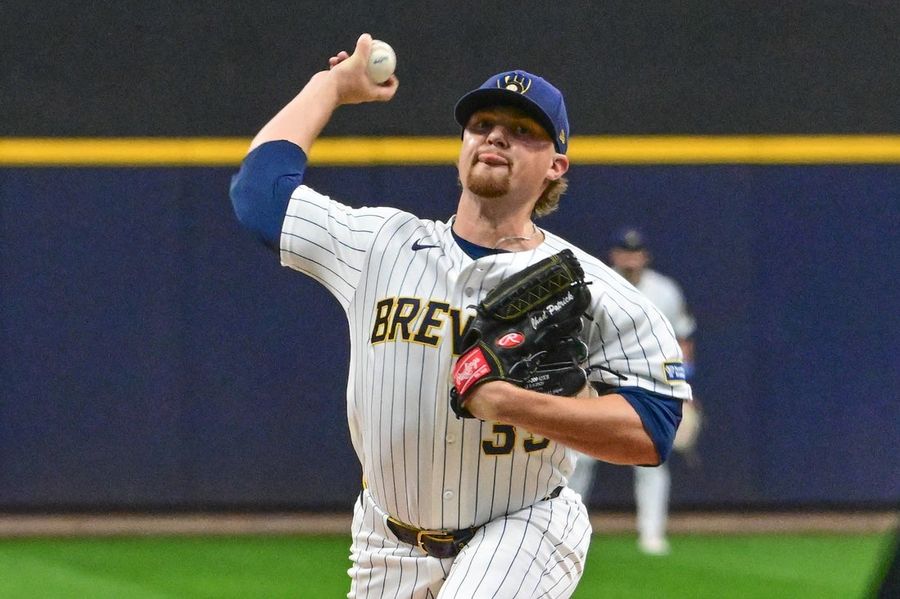
Deadspin | Brewers finally get shot against NL team, and it’s the struggling Nationals   Mar 28, 2026; Milwaukee, Wisconsin, USA;  Milwaukee Brewers starting pitcher Chad Patrick (39) throws a pitch in the first inning against the Chicago White Sox at American Family Field. Mandatory Credit: Benny Sieu-Imagn Images   The Milwaukee Brewers will look to bounce back from a pair of road losses behind right-hander Chad Patrick when they return home to face the Washington Nationals on Friday in the opener of a three-game series.  Patrick (1-0, 0.96 ERA) will be opposed by right-hander Jake Irvin (1-1, 8.00) as the Brewers face a National League opponent for the first time after opening with 12 games against American League teams.  The Brewers, who were idle Thursday, dropped the final two games in Boston, including a 5-0 defeat on Wednesday to lose their first series of the season. Milwaukee managed just four hits off veteran Sonny Gray and three relievers.  Washington, which also was off Thursday, lost at St. Louis 6-1 on Wednesday for its seventh loss in eight games.  Patrick has been effective in each of his first two starts, allowing one run on five hits in 4 1/3 innings his first time out as Milwaukee beat the visiting Chicago White Sox 6-1 on March 28. That was followed by four hits over five scoreless innings in his last start, a 5-2 win on Saturday at Kansas City.  “Five innings … he’ll be the first to admit he did not have his best location, he didn’t have his best stuff, but he battled,” Brewers manager Pat Murphy said following Patrick’s last start. “It’s more of a positive than anybody could know when you don’t have your best stuff and get through it.”  Patrick has struck out seven and walked four in 9 1/3 innings, allowing one home run.  Brewers veteran Christian Yelich is off to a hot start, hitting a team-leading .372 with two doubles, one triple, one homer and 10 RBIs. Speedy outfielder Garrett Mitchell, who missed almost all of last season with a left oblique strain, is hitting .310 with a team-high 13 RBI.  The Brewers also lead the majors with 23 stolen bases in 27 attempts.   Brewers second baseman Brice Turang missed the final two games of the Red Sox series with left ankle tendinitis.  “We’re just trying to get me off my feet for a couple days,” Turang said on Wednesday. “This rolls into an off day, so it will be three days and then I’ll be ready to roll on Friday. Just trying to get it knocked out, get it out of the foot.”  After a solid first start in defeating the host Chicago Cubs on March 29, Irvin struggled his last time out, allowing six runs on eight hits in four innings in a 10-5 home loss to the Los Angeles Dodgers on Saturday.  “Overall, these guys were jumping on him pretty early in counts,” Nationals manager Blake Butera said following Irvin’s last start. “He never seemed to be comfortable out there.”  Irvin has had little success against the Brewers, going 0-5 with a 6.59 ERA in six career starts against them, allowing five homers and 15 walks in 28 2/3 innings.  The Nationals have the worst team ERA in the majors at 6.06 over 12 games. On the offensive side, the Nationals are tied for third with 16 homers and fourth in team batting average at .266 as of Thursday afternoon.  Shortstop CJ Abrams is hitting .286 and leads Washington with four homers and 14 RBI. James Wood also has four homers with 10 RBI, but the outfielder is hitting just .216 with 18 strikeouts in 51 at-bats.  –Field Level Media   #Deadspin #Brewers #finally #shot #team #struggling #NationalsMar 28, 2026; Milwaukee, Wisconsin, USA; Milwaukee Brewers starting pitcher Chad Patrick (39) throws a pitch in the first inning against the Chicago White Sox at American Family Field. Mandatory Credit: Benny Sieu-Imagn Images

The Milwaukee Brewers will look to bounce back from a pair of road losses behind right-hander Chad Patrick when they return home to face the Washington Nationals on Friday in the opener of a three-game series.

Patrick (1-0, 0.96 ERA) will be opposed by right-hander Jake Irvin (1-1, 8.00) as the Brewers face a National League opponent for the first time after opening with 12 games against American League teams.

The Brewers, who were idle Thursday, dropped the final two games in Boston, including a 5-0 defeat on Wednesday to lose their first series of the season. Milwaukee managed just four hits off veteran Sonny Gray and three relievers.

Washington, which also was off Thursday, lost at St. Louis 6-1 on Wednesday for its seventh loss in eight games.

Patrick has been effective in each of his first two starts, allowing one run on five hits in 4 1/3 innings his first time out as Milwaukee beat the visiting Chicago White Sox 6-1 on March 28. That was followed by four hits over five scoreless innings in his last start, a 5-2 win on Saturday at Kansas City.

“Five innings … he’ll be the first to admit he did not have his best location, he didn’t have his best stuff, but he battled,” Brewers manager Pat Murphy said following Patrick’s last start. “It’s more of a positive than anybody could know when you don’t have your best stuff and get through it.”

Patrick has struck out seven and walked four in 9 1/3 innings, allowing one home run.

Brewers veteran Christian Yelich is off to a hot start, hitting a team-leading .372 with two doubles, one triple, one homer and 10 RBIs. Speedy outfielder Garrett Mitchell, who missed almost all of last season with a left oblique strain, is hitting .310 with a team-high 13 RBI.


The Brewers also lead the majors with 23 stolen bases in 27 attempts.

Brewers second baseman Brice Turang missed the final two games of the Red Sox series with left ankle tendinitis.

“We’re just trying to get me off my feet for a couple days,” Turang said on Wednesday. “This rolls into an off day, so it will be three days and then I’ll be ready to roll on Friday. Just trying to get it knocked out, get it out of the foot.”

After a solid first start in defeating the host Chicago Cubs on March 29, Irvin struggled his last time out, allowing six runs on eight hits in four innings in a 10-5 home loss to the Los Angeles Dodgers on Saturday.

“Overall, these guys were jumping on him pretty early in counts,” Nationals manager Blake Butera said following Irvin’s last start. “He never seemed to be comfortable out there.”

Irvin has had little success against the Brewers, going 0-5 with a 6.59 ERA in six career starts against them, allowing five homers and 15 walks in 28 2/3 innings.

The Nationals have the worst team ERA in the majors at 6.06 over 12 games. On the offensive side, the Nationals are tied for third with 16 homers and fourth in team batting average at .266 as of Thursday afternoon.

Shortstop CJ Abrams is hitting .286 and leads Washington with four homers and 14 RBI. James Wood also has four homers with 10 RBI, but the outfielder is hitting just .216 with 18 strikeouts in 51 at-bats.

–Field Level Media

#Deadspin #Brewers #finally #shot #team #struggling #Nationals

Mar 28, 2026; Milwaukee, Wisconsin, USA; Milwaukee Brewers starting pitcher Chad Patrick (39) throws a pitch in the first inning against the Chicago White Sox at American Family Field. Mandatory Credit: Benny Sieu-Imagn Images

The Milwaukee Brewers will look to bounce back from a pair of road losses behind right-hander Chad Patrick when they return home to face the Washington Nationals on Friday in the opener of a three-game series.

Patrick (1-0, 0.96 ERA) will be opposed by right-hander Jake Irvin (1-1, 8.00) as the Brewers face a National League opponent for the first time after opening with 12 games against American League teams.

The Brewers, who were idle Thursday, dropped the final two games in Boston, including a 5-0 defeat on Wednesday to lose their first series of the season. Milwaukee managed just four hits off veteran Sonny Gray and three relievers.

Washington, which also was off Thursday, lost at St. Louis 6-1 on Wednesday for its seventh loss in eight games.

Patrick has been effective in each of his first two starts, allowing one run on five hits in 4 1/3 innings his first time out as Milwaukee beat the visiting Chicago White Sox 6-1 on March 28. That was followed by four hits over five scoreless innings in his last start, a 5-2 win on Saturday at Kansas City.

“Five innings … he’ll be the first to admit he did not have his best location, he didn’t have his best stuff, but he battled,” Brewers manager Pat Murphy said following Patrick’s last start. “It’s more of a positive than anybody could know when you don’t have your best stuff and get through it.”

Patrick has struck out seven and walked four in 9 1/3 innings, allowing one home run.

Brewers veteran Christian Yelich is off to a hot start, hitting a team-leading .372 with two doubles, one triple, one homer and 10 RBIs. Speedy outfielder Garrett Mitchell, who missed almost all of last season with a left oblique strain, is hitting .310 with a team-high 13 RBI.

The Brewers also lead the majors with 23 stolen bases in 27 attempts.

Brewers second baseman Brice Turang missed the final two games of the Red Sox series with left ankle tendinitis.

“We’re just trying to get me off my feet for a couple days,” Turang said on Wednesday. “This rolls into an off day, so it will be three days and then I’ll be ready to roll on Friday. Just trying to get it knocked out, get it out of the foot.”

After a solid first start in defeating the host Chicago Cubs on March 29, Irvin struggled his last time out, allowing six runs on eight hits in four innings in a 10-5 home loss to the Los Angeles Dodgers on Saturday.

“Overall, these guys were jumping on him pretty early in counts,” Nationals manager Blake Butera said following Irvin’s last start. “He never seemed to be comfortable out there.”

Irvin has had little success against the Brewers, going 0-5 with a 6.59 ERA in six career starts against them, allowing five homers and 15 walks in 28 2/3 innings.

The Nationals have the worst team ERA in the majors at 6.06 over 12 games. On the offensive side, the Nationals are tied for third with 16 homers and fourth in team batting average at .266 as of Thursday afternoon.

Shortstop CJ Abrams is hitting .286 and leads Washington with four homers and 14 RBI. James Wood also has four homers with 10 RBI, but the outfielder is hitting just .216 with 18 strikeouts in 51 at-bats.

–Field Level Media

Source link
#Deadspin #Brewers #finally #shot #team #struggling #Nationals

Previous post

Grading Jackie Young’s decision to sign with the the Aces in 2026 free agency <div><div class="g6j1tz1 g6j1tz2"><div class="_1nfb3k4n _1nfb3k4x"><img alt="2025 Las Vegas Aces Victory Parade And Rally" data-chromatic="ignore" fetchpriority="high" decoding="async" data-nimg="fill" class="w91vxg0" style="position:absolute;height:100%;width:100%;left:0;top:0;right:0;bottom:0;color:transparent;background-size:cover;background-position:50% 50%;background-repeat:no-repeat;background-image:url("data:image/svg+xml;charset=utf-8,%3Csvg xmlns='http://www.w3.org/2000/svg' %3E%3Cfilter id='b' color-interpolation-filters='sRGB'%3E%3CfeGaussianBlur stdDeviation='20'/%3E%3CfeColorMatrix values='1 0 0 0 0 0 1 0 0 0 0 0 1 0 0 0 0 0 100 -1' result='s'/%3E%3CfeFlood x='0' y='0' width='100%25' height='100%25'/%3E%3CfeComposite operator='out' in='s'/%3E%3CfeComposite in2='SourceGraphic'/%3E%3CfeGaussianBlur stdDeviation='20'/%3E%3C/filter%3E%3Cimage width='100%25' height='100%25' x='0' y='0' preserveAspectRatio='none' style='filter: url(%23b);' href='data:image/png;base64,iVBORw0KGgoAAAANSUhEUgAAAAEAAAABCAQAAAC1HAwCAAAAC0lEQVR42mN8+R8AAtcB6oaHtZcAAAAASUVORK5CYII='/%3E%3C/svg%3E")" sizes="(max-width: 768px) 100vw, 700px" srcset="https://platform.sbnation.com/wp-content/uploads/sites/2/2026/04/gettyimages-2241886106.jpg?quality=90&strip=all&crop=0%2C0.0045450413598758%2C100%2C99.99090991728&w=376 376w, https://platform.sbnation.com/wp-content/uploads/sites/2/2026/04/gettyimages-2241886106.jpg?quality=90&strip=all&crop=0%2C0.0045450413598758%2C100%2C99.99090991728&w=384 384w, https://platform.sbnation.com/wp-content/uploads/sites/2/2026/04/gettyimages-2241886106.jpg?quality=90&strip=all&crop=0%2C0.0045450413598758%2C100%2C99.99090991728&w=415 415w, https://platform.sbnation.com/wp-content/uploads/sites/2/2026/04/gettyimages-2241886106.jpg?quality=90&strip=all&crop=0%2C0.0045450413598758%2C100%2C99.99090991728&w=480 480w, https://platform.sbnation.com/wp-content/uploads/sites/2/2026/04/gettyimages-2241886106.jpg?quality=90&strip=all&crop=0%2C0.0045450413598758%2C100%2C99.99090991728&w=540 540w, https://platform.sbnation.com/wp-content/uploads/sites/2/2026/04/gettyimages-2241886106.jpg?quality=90&strip=all&crop=0%2C0.0045450413598758%2C100%2C99.99090991728&w=640 640w, https://platform.sbnation.com/wp-content/uploads/sites/2/2026/04/gettyimages-2241886106.jpg?quality=90&strip=all&crop=0%2C0.0045450413598758%2C100%2C99.99090991728&w=750 750w, https://platform.sbnation.com/wp-content/uploads/sites/2/2026/04/gettyimages-2241886106.jpg?quality=90&strip=all&crop=0%2C0.0045450413598758%2C100%2C99.99090991728&w=828 828w, https://platform.sbnation.com/wp-content/uploads/sites/2/2026/04/gettyimages-2241886106.jpg?quality=90&strip=all&crop=0%2C0.0045450413598758%2C100%2C99.99090991728&w=1080 1080w, https://platform.sbnation.com/wp-content/uploads/sites/2/2026/04/gettyimages-2241886106.jpg?quality=90&strip=all&crop=0%2C0.0045450413598758%2C100%2C99.99090991728&w=1200 1200w, https://platform.sbnation.com/wp-content/uploads/sites/2/2026/04/gettyimages-2241886106.jpg?quality=90&strip=all&crop=0%2C0.0045450413598758%2C100%2C99.99090991728&w=1440 1440w, https://platform.sbnation.com/wp-content/uploads/sites/2/2026/04/gettyimages-2241886106.jpg?quality=90&strip=all&crop=0%2C0.0045450413598758%2C100%2C99.99090991728&w=1920 1920w, https://platform.sbnation.com/wp-content/uploads/sites/2/2026/04/gettyimages-2241886106.jpg?quality=90&strip=all&crop=0%2C0.0045450413598758%2C100%2C99.99090991728&w=2048 2048w, https://platform.sbnation.com/wp-content/uploads/sites/2/2026/04/gettyimages-2241886106.jpg?quality=90&strip=all&crop=0%2C0.0045450413598758%2C100%2C99.99090991728&w=2400 2400w" src="https://platform.sbnation.com/wp-content/uploads/sites/2/2026/04/gettyimages-2241886106.jpg?quality=90&strip=all&crop=0%2C0.0045450413598758%2C100%2C99.99090991728&w=2400"/></div><div class="_1nfb3k4m _1nfb3k4x"><img alt="2025 Las Vegas Aces Victory Parade And Rally" data-chromatic="ignore" fetchpriority="high" decoding="async" data-nimg="fill" class="w91vxg0" style="position:absolute;height:100%;width:100%;left:0;top:0;right:0;bottom:0;color:transparent;background-size:cover;background-position:50% 50%;background-repeat:no-repeat;background-image:url("data:image/svg+xml;charset=utf-8,%3Csvg xmlns='http://www.w3.org/2000/svg' %3E%3Cfilter id='b' color-interpolation-filters='sRGB'%3E%3CfeGaussianBlur stdDeviation='20'/%3E%3CfeColorMatrix values='1 0 0 0 0 0 1 0 0 0 0 0 1 0 0 0 0 0 100 -1' result='s'/%3E%3CfeFlood x='0' y='0' width='100%25' height='100%25'/%3E%3CfeComposite operator='out' in='s'/%3E%3CfeComposite in2='SourceGraphic'/%3E%3CfeGaussianBlur stdDeviation='20'/%3E%3C/filter%3E%3Cimage width='100%25' height='100%25' x='0' y='0' preserveAspectRatio='none' style='filter: url(%23b);' href='data:image/png;base64,iVBORw0KGgoAAAANSUhEUgAAAAEAAAABCAQAAAC1HAwCAAAAC0lEQVR42mN8+R8AAtcB6oaHtZcAAAAASUVORK5CYII='/%3E%3C/svg%3E")" sizes="(max-width: 768px) 100vw, 700px" srcset="https://platform.sbnation.com/wp-content/uploads/sites/2/2026/04/gettyimages-2241886106.jpg?quality=90&strip=all&crop=0%2C0.0045450413598758%2C100%2C99.99090991728&w=376 376w, https://platform.sbnation.com/wp-content/uploads/sites/2/2026/04/gettyimages-2241886106.jpg?quality=90&strip=all&crop=0%2C0.0045450413598758%2C100%2C99.99090991728&w=384 384w, https://platform.sbnation.com/wp-content/uploads/sites/2/2026/04/gettyimages-2241886106.jpg?quality=90&strip=all&crop=0%2C0.0045450413598758%2C100%2C99.99090991728&w=415 415w, https://platform.sbnation.com/wp-content/uploads/sites/2/2026/04/gettyimages-2241886106.jpg?quality=90&strip=all&crop=0%2C0.0045450413598758%2C100%2C99.99090991728&w=480 480w, https://platform.sbnation.com/wp-content/uploads/sites/2/2026/04/gettyimages-2241886106.jpg?quality=90&strip=all&crop=0%2C0.0045450413598758%2C100%2C99.99090991728&w=540 540w, https://platform.sbnation.com/wp-content/uploads/sites/2/2026/04/gettyimages-2241886106.jpg?quality=90&strip=all&crop=0%2C0.0045450413598758%2C100%2C99.99090991728&w=640 640w, https://platform.sbnation.com/wp-content/uploads/sites/2/2026/04/gettyimages-2241886106.jpg?quality=90&strip=all&crop=0%2C0.0045450413598758%2C100%2C99.99090991728&w=750 750w, https://platform.sbnation.com/wp-content/uploads/sites/2/2026/04/gettyimages-2241886106.jpg?quality=90&strip=all&crop=0%2C0.0045450413598758%2C100%2C99.99090991728&w=828 828w, https://platform.sbnation.com/wp-content/uploads/sites/2/2026/04/gettyimages-2241886106.jpg?quality=90&strip=all&crop=0%2C0.0045450413598758%2C100%2C99.99090991728&w=1080 1080w, https://platform.sbnation.com/wp-content/uploads/sites/2/2026/04/gettyimages-2241886106.jpg?quality=90&strip=all&crop=0%2C0.0045450413598758%2C100%2C99.99090991728&w=1200 1200w, https://platform.sbnation.com/wp-content/uploads/sites/2/2026/04/gettyimages-2241886106.jpg?quality=90&strip=all&crop=0%2C0.0045450413598758%2C100%2C99.99090991728&w=1440 1440w, https://platform.sbnation.com/wp-content/uploads/sites/2/2026/04/gettyimages-2241886106.jpg?quality=90&strip=all&crop=0%2C0.0045450413598758%2C100%2C99.99090991728&w=1920 1920w, https://platform.sbnation.com/wp-content/uploads/sites/2/2026/04/gettyimages-2241886106.jpg?quality=90&strip=all&crop=0%2C0.0045450413598758%2C100%2C99.99090991728&w=2048 2048w, https://platform.sbnation.com/wp-content/uploads/sites/2/2026/04/gettyimages-2241886106.jpg?quality=90&strip=all&crop=0%2C0.0045450413598758%2C100%2C99.99090991728&w=2400 2400w" src="https://platform.sbnation.com/wp-content/uploads/sites/2/2026/04/gettyimages-2241886106.jpg?quality=90&strip=all&crop=0%2C0.0045450413598758%2C100%2C99.99090991728&w=2400"/></div></div><p><figcaption class="duet--article--dangerously-set-cms-markup ls9zuh2 rzoxl5a">LAS VEGAS, NEVADA – OCTOBER 17: Jackie Young #0 of the Las Vegas Aces smiles with the trophy during the Las Vegas Aces’ WNBA championship victory parade and rally on the Las Vegas Strip on October 17, 2025 in Las Vegas, Nevada. The Aces defeated the Phoenix Mercury on Friday in Game Four of the 2025 WNBA Playoffs finals to win the 2025 title. NOTE TO USER: User expressly acknowledges and agrees that, by downloading and or using this photograph, User is consenting to the terms and conditions of the Getty Images License Agreement. (Photo by David Becker/Getty Images)</figcaption> <cite class="duet--article--dangerously-set-cms-markup ls9zuh2 rzoxl55">NBAE via Getty Images</cite></p></div> #Grading #Jackie #Youngs #decision #sign #Aces #free #agency

Next post

レバノンへの攻撃続く イラン大統領「交渉を無意味なものに」 | NHKニュースアメリカとイランが停戦に合意したあとも、イスラエルが隣国レバノンへの攻撃を続けていることについて、イランのペゼシュキアン大統領は9日、「こうした侵略の継続は交渉を無意味なものにする」と反発していて、戦闘の終結に向けて11日に予定されているアメリカとイランの協議への影響が懸念されています。#レバノンへの攻撃続く #イラン大統領交渉を無意味なものに #NHKニュースNHK,ニュース,NHK ONE,イラン情勢,イラン,アメリカ,パキスタン,イスラエル,レバノン,中東,ホルムズ海峡,一覧

Deadspin | Mariners reinstate RHP Matt Brash from injured list  Oct 16, 2025; Seattle, Washington, USA; Seattle Mariners pitcher Matt Brash (47) throws in the fifth inning against the Toronto Blue Jays during game four of the ALCS round for the 2025 MLB playoffs at T-Mobile Park. Mandatory Credit: Kevin Ng-Imagn Images   The Seattle Mariners reinstated right-hander Matt Brash from the injured list and optioned left-hander Robinson Ortiz to Triple-A Tacoma on Wednesday.  Brash, 28, landed on the 15-day IL on May 1 with inflammation in his right lat. He is 2-0 with a 0.00 ERA in 14 relief appearances this season with Seattle, which is 12-2 when he appears in a game.  Brash is 16-11 with a 3.10 ERA and eight saves in 184 games (five starts) since making his major league debut with the Mariners in 2022. He missed the 2024 season following Tommy John surgery.   Ortiz, 26, was recalled from Tacoma on Monday but has yet to make his MLB debut. He is 0-1 with a 2.81 ERA in 15 relief appearances in Triple-A this season.  –Field Level Media   #Deadspin #Mariners #reinstate #RHP #Matt #Brash #injured #listOct 16, 2025; Seattle, Washington, USA; Seattle Mariners pitcher Matt Brash (47) throws in the fifth inning against the Toronto Blue Jays during game four of the ALCS round for the 2025 MLB playoffs at T-Mobile Park. Mandatory Credit: Kevin Ng-Imagn Images

The Seattle Mariners reinstated right-hander Matt Brash from the injured list and optioned left-hander Robinson Ortiz to Triple-A Tacoma on Wednesday.

Brash, 28, landed on the 15-day IL on May 1 with inflammation in his right lat. He is 2-0 with a 0.00 ERA in 14 relief appearances this season with Seattle, which is 12-2 when he appears in a game.


Brash is 16-11 with a 3.10 ERA and eight saves in 184 games (five starts) since making his major league debut with the Mariners in 2022. He missed the 2024 season following Tommy John surgery.

Ortiz, 26, was recalled from Tacoma on Monday but has yet to make his MLB debut. He is 0-1 with a 2.81 ERA in 15 relief appearances in Triple-A this season.

–Field Level Media

#Deadspin #Mariners #reinstate #RHP #Matt #Brash #injured #list">Deadspin | Mariners reinstate RHP Matt Brash from injured list  Oct 16, 2025; Seattle, Washington, USA; Seattle Mariners pitcher Matt Brash (47) throws in the fifth inning against the Toronto Blue Jays during game four of the ALCS round for the 2025 MLB playoffs at T-Mobile Park. Mandatory Credit: Kevin Ng-Imagn Images   The Seattle Mariners reinstated right-hander Matt Brash from the injured list and optioned left-hander Robinson Ortiz to Triple-A Tacoma on Wednesday.  Brash, 28, landed on the 15-day IL on May 1 with inflammation in his right lat. He is 2-0 with a 0.00 ERA in 14 relief appearances this season with Seattle, which is 12-2 when he appears in a game.  Brash is 16-11 with a 3.10 ERA and eight saves in 184 games (five starts) since making his major league debut with the Mariners in 2022. He missed the 2024 season following Tommy John surgery.   Ortiz, 26, was recalled from Tacoma on Monday but has yet to make his MLB debut. He is 0-1 with a 2.81 ERA in 15 relief appearances in Triple-A this season.  –Field Level Media   #Deadspin #Mariners #reinstate #RHP #Matt #Brash #injured #list

Bunting in Major League Baseball is the ultimate tool of confirmation bias, stretching from the most anti-analytics “he’s got a great swing” truthers to those who watch baseball on a spreadsheet — all of them can love the bunt.

Traditionalists will enjoy the old-school approach of bunting as a way to advance runners into scoring position. Some who hate the pitcher-dominant game will delight in the refusal to indulge the swing-and-miss world by just not swinging. Others, who love analytics and Moneyball, will point out that bunting in 2026 could be the ultimate edge in a world that has embraced strikeout-embracing power hitting. There’s something for everyone with the bunt.

But is that something actually there? With the 2026 MLB Bunting Revolution very much taking place, we must investigate if the success of the American League-leading Tampa Bay Rays is actually due to a statistically significant increase in bunts, or if the Buntassiance is actually a Bunt Mirage. In short: I’m team Bunt Mirage.

First, some rudimentary statistics about bunting in our postmodern society: bunting has increased overall this year, though it would be incorrect to say teams are bunting more across the board. Plenty of MLB teams have actually been bunting less than in 2025, including some powerhouses like the New York Yankees, Atlanta Braves and the sport’s hottest team: the Philadelphia Phillies. All three essentially never bunt. Meanwhile, the San Diego Padres, who were the MLB’s top bunting team last year at .30 sacrifice bunts per game, have cut that down by two-thirds amid their bid to win the National League West over the Los Angeles Dodgers. It is, however, true that the Tampa Bay Rays are bunting more than any team since pitchers stopped hitting in 2021 and the most period since the 2017 Colorado Rockies.

As of this writing, the Rays are 32-15, and hold a three game lead over the bunt-avoidant Yankees in the American League East. This has led to some discussions about if high-contact teams that skimp on power might be the next thing, and it has been heralded with much rejoicing by the bunt community. But I am supremely skeptical.

First and foremost, we are talking about 17 bunts here. Tampa Bay is fourth in the MLB in hits with 416, so right off the bat (pun moderately intended) we are hit with a sample size problem: any suggestion that bunts are correlated with wins relies on a problematically low number of events relative to other data we could be using. Saying “bunting” is why the Tampa Bay Rays are winning is like saying you and your neighbor’s lawn signs specifically swung the local school committee race. Like … maybe, but there were probably more powerful forces at work.

Using data that is sufficiently large, the Rays simply do not have the underlying analytics of the best team in the American League. Offensively, they have the largest positive difference between expected and actual average, slugging, and contact quality. Their pitching has enjoyed similar aberrations, with the best of those expected versus actual metrics from opposing hitters save for slugging, in which they are second-best.

That’s a mouthful, but all any of that really means is that the Rays have been hitting far better and their opponents have been hitting far worse than the data suggests they should be. In short, they’ve been lucky with whatever cosmic, intergalactic soup controls how baseballs fly on any given day. None of those metrics are influenced significantly by their 17 sacrifice bunts, which do not actually count against the hitters on base percentage for some completely unknown reason.

As for bunting itself, I’m not breaking new ground here when I tell you that bunting is almost-always bad for your baseball team. Using fancy-schmancy, albeit a tad-outmoded run-expectancy metrics, we find that all but the most specific sacrifice bunts reduce your chances of scoring runs. When Brad Pitt said “no bunting whatsoever” in Moneyball, that’s what he was talking about.

Using slightly more in-moded win probability metrics and this wonderful thing call the Game Strategy explorer on BaseballSavant.com, we discover that there are sacrifice bunts that increase your win probability, but only hyper specific ones: if there is a runner on second with zero outs and the game is tied in the bottom of the 8th, top of the 9th, bottom of the ninth or bottom of the 10th inning, a sacrifice bunt increases your probability of winning. That is it. It is literally never good when you are winning, it is literally never good if you are losing, it is literally never good anytime before the 8th inning or with more than zero outs, heck it is literally never good when the game is tied in the top of 10th inning. And all of that still implies that the bunt is successful, which is by no means a guarantee. Are you starting to see where I’m coming from?

Most notably, the beloved “bunt with a man on first with no outs” is never a good idea under any circumstances, but I think it’s better to unpack this one intuitively rather than just tell you it’s bad. Why would a manager bunt with a man on first? Because it puts a runner in scoring position roughly 65 percent of the time (the success rate of your average sac bunt attempt). Seems good right? Sure, but that also implies there is a radically better chance of getting an RBI hit in the next at bat rather than the current one, often why you see nine-hole hitters bunt to bring up the top of the order.

And perhaps there is, under extremely specific circumstances, an opportunity to raise your chances of an RBI hit by five to eight percent by bringing up a hitter with a better batting average. But it does not raise your chances of scoring a run, just that of an RBI hit in the next at-bat. And that is not, under any circumstances, worth an entire out. Bunting with a man on first with no outs is an effort by managers to control a game that often feels like a progression of random events. But no data or intuitive explanation supports that strategy.

Much has been written about the specific situations when bunting is good (tied, man on second, no outs, late innings), but just because those situations exist does not mean bunting is broadly a good strategy. In the big picture, laying down these ultra-specific bunts is too rare an occurrence to suggest they are the reasons for wins and losses. It’s just too small a data set and too specific an ask.

I concede that the Rays are constructed basically to ignore power hitting in favor of making contact to keep runners moving, but I do not concede that has anything to do with bunting now being a good idea. The argument for bunting put forth by Rays Manager Kevin Cash that “hitting is (bad word) hard” does not mean bunting has somehow gotten easier — sac bunt success rates has improved since pitchers stopped hitting, but only marginally.

There are specific instances when bunting is good, but I do not believe those instances are common enough nor statistically significant to suggest that bunting is somehow the great edge in Major League Baseball and everyone needs to follow the Rays to bunting Valhalla. It can be surprising and even effective if it results in a bunt-hit, but the skill set required to do that is so rare and esoteric that it is never worthwhile to invest in. I’d rather my hitters just swing the bat, which is cooler, more exciting and, wonderfully, just analytically better.

#MLBs #bunting #boom #mirage">Why MLB’s bunting boom is a mirage  Bunting in Major League Baseball is the ultimate tool of confirmation bias, stretching from the most anti-analytics “he’s got a great swing” truthers to those who watch baseball on a spreadsheet — all of them can love the bunt.Traditionalists will enjoy the old-school approach of bunting as a way to advance runners into scoring position. Some who hate the pitcher-dominant game will delight in the refusal to indulge the swing-and-miss world by just not swinging. Others, who love analytics and Moneyball, will point out that bunting in 2026 could be the ultimate edge in a world that has embraced strikeout-embracing power hitting. There’s something for everyone with the bunt.But is that something actually there? With the 2026 MLB Bunting Revolution very much taking place, we must investigate if the success of the American League-leading Tampa Bay Rays is actually due to a statistically significant increase in bunts, or if the Buntassiance is actually a Bunt Mirage. In short: I’m team Bunt Mirage.First, some rudimentary statistics about bunting in our postmodern society: bunting has increased overall this year, though it would be incorrect to say teams are bunting more across the board. Plenty of MLB teams have actually been bunting less than in 2025, including some powerhouses like the New York Yankees, Atlanta Braves and the sport’s hottest team: the Philadelphia Phillies. All three essentially never bunt. Meanwhile, the San Diego Padres, who were the MLB’s top bunting team last year at .30 sacrifice bunts per game, have cut that down by two-thirds amid their bid to win the National League West over the Los Angeles Dodgers. It is, however, true that the Tampa Bay Rays are bunting more than any team since pitchers stopped hitting in 2021 and the most period since the 2017 Colorado Rockies.As of this writing, the Rays are 32-15, and hold a three game lead over the bunt-avoidant Yankees in the American League East. This has led to some discussions about if high-contact teams that skimp on power might be the next thing, and it has been heralded with much rejoicing by the bunt community. But I am supremely skeptical.First and foremost, we are talking about 17 bunts here. Tampa Bay is fourth in the MLB in hits with 416, so right off the bat (pun moderately intended) we are hit with a sample size problem: any suggestion that bunts are correlated with wins relies on a problematically low number of events relative to other data we could be using. Saying “bunting” is why the Tampa Bay Rays are winning is like saying you and your neighbor’s lawn signs specifically swung the local school committee race. Like … maybe, but there were probably more powerful forces at work.Using data that is sufficiently large, the Rays simply do not have the underlying analytics of the best team in the American League. Offensively, they have the largest positive difference between expected and actual average, slugging, and contact quality. Their pitching has enjoyed similar aberrations, with the best of those expected versus actual metrics from opposing hitters save for slugging, in which they are second-best.That’s a mouthful, but all any of that really means is that the Rays have been hitting far better and their opponents have been hitting far worse than the data suggests they should be. In short, they’ve been lucky with whatever cosmic, intergalactic soup controls how baseballs fly on any given day. None of those metrics are influenced significantly by their 17 sacrifice bunts, which do not actually count against the hitters on base percentage for some completely unknown reason.As for bunting itself, I’m not breaking new ground here when I tell you that bunting is almost-always bad for your baseball team. Using fancy-schmancy, albeit a tad-outmoded run-expectancy metrics, we find that all but the most specific sacrifice bunts reduce your chances of scoring runs. When Brad Pitt said “no bunting whatsoever” in Moneyball, that’s what he was talking about.Using slightly more in-moded win probability metrics and this wonderful thing call the Game Strategy explorer on BaseballSavant.com, we discover that there are sacrifice bunts that increase your win probability, but only hyper specific ones: if there is a runner on second with zero outs and the game is tied in the bottom of the 8th, top of the 9th, bottom of the ninth or bottom of the 10th inning, a sacrifice bunt increases your probability of winning. That is it. It is literally never good when you are winning, it is literally never good if you are losing, it is literally never good anytime before the 8th inning or with more than zero outs, heck it is literally never good when the game is tied in the top of 10th inning. And all of that still implies that the bunt is successful, which is by no means a guarantee. Are you starting to see where I’m coming from?Most notably, the beloved “bunt with a man on first with no outs” is never a good idea under any circumstances, but I think it’s better to unpack this one intuitively rather than just tell you it’s bad. Why would a manager bunt with a man on first? Because it puts a runner in scoring position roughly 65 percent of the time (the success rate of your average sac bunt attempt). Seems good right? Sure, but that also implies there is a radically better chance of getting an RBI hit in the next at bat rather than the current one, often why you see nine-hole hitters bunt to bring up the top of the order.And perhaps there is, under extremely specific circumstances, an opportunity to raise your chances of an RBI hit by five to eight percent by bringing up a hitter with a better batting average. But it does not raise your chances of scoring a run, just that of an RBI hit in the next at-bat. And that is not, under any circumstances, worth an entire out. Bunting with a man on first with no outs is an effort by managers to control a game that often feels like a progression of random events. But no data or intuitive explanation supports that strategy.Much has been written about the specific situations when bunting is good (tied, man on second, no outs, late innings), but just because those situations exist does not mean bunting is broadly a good strategy. In the big picture, laying down these ultra-specific bunts is too rare an occurrence to suggest they are the reasons for wins and losses. It’s just too small a data set and too specific an ask.I concede that the Rays are constructed basically to ignore power hitting in favor of making contact to keep runners moving, but I do not concede that has anything to do with bunting now being a good idea. The argument for bunting put forth by Rays Manager Kevin Cash that “hitting is (bad word) hard” does not mean bunting has somehow gotten easier — sac bunt success rates has improved since pitchers stopped hitting, but only marginally. There are specific instances when bunting is good, but I do not believe those instances are common enough nor statistically significant to suggest that bunting is somehow the great edge in Major League Baseball and everyone needs to follow the Rays to bunting Valhalla. It can be surprising and even effective if it results in a bunt-hit, but the skill set required to do that is so rare and esoteric that it is never worthwhile to invest in. I’d rather my hitters just swing the bat, which is cooler, more exciting and, wonderfully, just analytically better.  #MLBs #bunting #boom #mirage

that bunting in 2026 could be the ultimate edge in a world that has embraced strikeout-embracing power hitting. There’s something for everyone with the bunt.

But is that something actually there? With the 2026 MLB Bunting Revolution very much taking place, we must investigate if the success of the American League-leading Tampa Bay Rays is actually due to a statistically significant increase in bunts, or if the Buntassiance is actually a Bunt Mirage. In short: I’m team Bunt Mirage.

First, some rudimentary statistics about bunting in our postmodern society: bunting has increased overall this year, though it would be incorrect to say teams are bunting more across the board. Plenty of MLB teams have actually been bunting less than in 2025, including some powerhouses like the New York Yankees, Atlanta Braves and the sport’s hottest team: the Philadelphia Phillies. All three essentially never bunt. Meanwhile, the San Diego Padres, who were the MLB’s top bunting team last year at .30 sacrifice bunts per game, have cut that down by two-thirds amid their bid to win the National League West over the Los Angeles Dodgers. It is, however, true that the Tampa Bay Rays are bunting more than any team since pitchers stopped hitting in 2021 and the most period since the 2017 Colorado Rockies.

As of this writing, the Rays are 32-15, and hold a three game lead over the bunt-avoidant Yankees in the American League East. This has led to some discussions about if high-contact teams that skimp on power might be the next thing, and it has been heralded with much rejoicing by the bunt community. But I am supremely skeptical.

First and foremost, we are talking about 17 bunts here. Tampa Bay is fourth in the MLB in hits with 416, so right off the bat (pun moderately intended) we are hit with a sample size problem: any suggestion that bunts are correlated with wins relies on a problematically low number of events relative to other data we could be using. Saying “bunting” is why the Tampa Bay Rays are winning is like saying you and your neighbor’s lawn signs specifically swung the local school committee race. Like … maybe, but there were probably more powerful forces at work.

Using data that is sufficiently large, the Rays simply do not have the underlying analytics of the best team in the American League. Offensively, they have the largest positive difference between expected and actual average, slugging, and contact quality. Their pitching has enjoyed similar aberrations, with the best of those expected versus actual metrics from opposing hitters save for slugging, in which they are second-best.

That’s a mouthful, but all any of that really means is that the Rays have been hitting far better and their opponents have been hitting far worse than the data suggests they should be. In short, they’ve been lucky with whatever cosmic, intergalactic soup controls how baseballs fly on any given day. None of those metrics are influenced significantly by their 17 sacrifice bunts, which do not actually count against the hitters on base percentage for some completely unknown reason.

As for bunting itself, I’m not breaking new ground here when I tell you that bunting is almost-always bad for your baseball team. Using fancy-schmancy, albeit a tad-outmoded run-expectancy metrics, we find that all but the most specific sacrifice bunts reduce your chances of scoring runs. When Brad Pitt said “no bunting whatsoever” in Moneyball, that’s what he was talking about.

Using slightly more in-moded win probability metrics and this wonderful thing call the Game Strategy explorer on BaseballSavant.com, we discover that there are sacrifice bunts that increase your win probability, but only hyper specific ones: if there is a runner on second with zero outs and the game is tied in the bottom of the 8th, top of the 9th, bottom of the ninth or bottom of the 10th inning, a sacrifice bunt increases your probability of winning. That is it. It is literally never good when you are winning, it is literally never good if you are losing, it is literally never good anytime before the 8th inning or with more than zero outs, heck it is literally never good when the game is tied in the top of 10th inning. And all of that still implies that the bunt is successful, which is by no means a guarantee. Are you starting to see where I’m coming from?

Most notably, the beloved “bunt with a man on first with no outs” is never a good idea under any circumstances, but I think it’s better to unpack this one intuitively rather than just tell you it’s bad. Why would a manager bunt with a man on first? Because it puts a runner in scoring position roughly 65 percent of the time (the success rate of your average sac bunt attempt). Seems good right? Sure, but that also implies there is a radically better chance of getting an RBI hit in the next at bat rather than the current one, often why you see nine-hole hitters bunt to bring up the top of the order.

And perhaps there is, under extremely specific circumstances, an opportunity to raise your chances of an RBI hit by five to eight percent by bringing up a hitter with a better batting average. But it does not raise your chances of scoring a run, just that of an RBI hit in the next at-bat. And that is not, under any circumstances, worth an entire out. Bunting with a man on first with no outs is an effort by managers to control a game that often feels like a progression of random events. But no data or intuitive explanation supports that strategy.

Much has been written about the specific situations when bunting is good (tied, man on second, no outs, late innings), but just because those situations exist does not mean bunting is broadly a good strategy. In the big picture, laying down these ultra-specific bunts is too rare an occurrence to suggest they are the reasons for wins and losses. It’s just too small a data set and too specific an ask.

I concede that the Rays are constructed basically to ignore power hitting in favor of making contact to keep runners moving, but I do not concede that has anything to do with bunting now being a good idea. The argument for bunting put forth by Rays Manager Kevin Cash that “hitting is (bad word) hard” does not mean bunting has somehow gotten easier — sac bunt success rates has improved since pitchers stopped hitting, but only marginally.

There are specific instances when bunting is good, but I do not believe those instances are common enough nor statistically significant to suggest that bunting is somehow the great edge in Major League Baseball and everyone needs to follow the Rays to bunting Valhalla. It can be surprising and even effective if it results in a bunt-hit, but the skill set required to do that is so rare and esoteric that it is never worthwhile to invest in. I’d rather my hitters just swing the bat, which is cooler, more exciting and, wonderfully, just analytically better.

#MLBs #bunting #boom #mirage">Why MLB’s bunting boom is a mirage

Bunting in Major League Baseball is the ultimate tool of confirmation bias, stretching from the most anti-analytics “he’s got a great swing” truthers to those who watch baseball on a spreadsheet — all of them can love the bunt.

Traditionalists will enjoy the old-school approach of bunting as a way to advance runners into scoring position. Some who hate the pitcher-dominant game will delight in the refusal to indulge the swing-and-miss world by just not swinging. Others, who love analytics and Moneyball, will point out that bunting in 2026 could be the ultimate edge in a world that has embraced strikeout-embracing power hitting. There’s something for everyone with the bunt.

But is that something actually there? With the 2026 MLB Bunting Revolution very much taking place, we must investigate if the success of the American League-leading Tampa Bay Rays is actually due to a statistically significant increase in bunts, or if the Buntassiance is actually a Bunt Mirage. In short: I’m team Bunt Mirage.

First, some rudimentary statistics about bunting in our postmodern society: bunting has increased overall this year, though it would be incorrect to say teams are bunting more across the board. Plenty of MLB teams have actually been bunting less than in 2025, including some powerhouses like the New York Yankees, Atlanta Braves and the sport’s hottest team: the Philadelphia Phillies. All three essentially never bunt. Meanwhile, the San Diego Padres, who were the MLB’s top bunting team last year at .30 sacrifice bunts per game, have cut that down by two-thirds amid their bid to win the National League West over the Los Angeles Dodgers. It is, however, true that the Tampa Bay Rays are bunting more than any team since pitchers stopped hitting in 2021 and the most period since the 2017 Colorado Rockies.

As of this writing, the Rays are 32-15, and hold a three game lead over the bunt-avoidant Yankees in the American League East. This has led to some discussions about if high-contact teams that skimp on power might be the next thing, and it has been heralded with much rejoicing by the bunt community. But I am supremely skeptical.

First and foremost, we are talking about 17 bunts here. Tampa Bay is fourth in the MLB in hits with 416, so right off the bat (pun moderately intended) we are hit with a sample size problem: any suggestion that bunts are correlated with wins relies on a problematically low number of events relative to other data we could be using. Saying “bunting” is why the Tampa Bay Rays are winning is like saying you and your neighbor’s lawn signs specifically swung the local school committee race. Like … maybe, but there were probably more powerful forces at work.

Using data that is sufficiently large, the Rays simply do not have the underlying analytics of the best team in the American League. Offensively, they have the largest positive difference between expected and actual average, slugging, and contact quality. Their pitching has enjoyed similar aberrations, with the best of those expected versus actual metrics from opposing hitters save for slugging, in which they are second-best.

That’s a mouthful, but all any of that really means is that the Rays have been hitting far better and their opponents have been hitting far worse than the data suggests they should be. In short, they’ve been lucky with whatever cosmic, intergalactic soup controls how baseballs fly on any given day. None of those metrics are influenced significantly by their 17 sacrifice bunts, which do not actually count against the hitters on base percentage for some completely unknown reason.

As for bunting itself, I’m not breaking new ground here when I tell you that bunting is almost-always bad for your baseball team. Using fancy-schmancy, albeit a tad-outmoded run-expectancy metrics, we find that all but the most specific sacrifice bunts reduce your chances of scoring runs. When Brad Pitt said “no bunting whatsoever” in Moneyball, that’s what he was talking about.

Using slightly more in-moded win probability metrics and this wonderful thing call the Game Strategy explorer on BaseballSavant.com, we discover that there are sacrifice bunts that increase your win probability, but only hyper specific ones: if there is a runner on second with zero outs and the game is tied in the bottom of the 8th, top of the 9th, bottom of the ninth or bottom of the 10th inning, a sacrifice bunt increases your probability of winning. That is it. It is literally never good when you are winning, it is literally never good if you are losing, it is literally never good anytime before the 8th inning or with more than zero outs, heck it is literally never good when the game is tied in the top of 10th inning. And all of that still implies that the bunt is successful, which is by no means a guarantee. Are you starting to see where I’m coming from?

Most notably, the beloved “bunt with a man on first with no outs” is never a good idea under any circumstances, but I think it’s better to unpack this one intuitively rather than just tell you it’s bad. Why would a manager bunt with a man on first? Because it puts a runner in scoring position roughly 65 percent of the time (the success rate of your average sac bunt attempt). Seems good right? Sure, but that also implies there is a radically better chance of getting an RBI hit in the next at bat rather than the current one, often why you see nine-hole hitters bunt to bring up the top of the order.

And perhaps there is, under extremely specific circumstances, an opportunity to raise your chances of an RBI hit by five to eight percent by bringing up a hitter with a better batting average. But it does not raise your chances of scoring a run, just that of an RBI hit in the next at-bat. And that is not, under any circumstances, worth an entire out. Bunting with a man on first with no outs is an effort by managers to control a game that often feels like a progression of random events. But no data or intuitive explanation supports that strategy.

Much has been written about the specific situations when bunting is good (tied, man on second, no outs, late innings), but just because those situations exist does not mean bunting is broadly a good strategy. In the big picture, laying down these ultra-specific bunts is too rare an occurrence to suggest they are the reasons for wins and losses. It’s just too small a data set and too specific an ask.

I concede that the Rays are constructed basically to ignore power hitting in favor of making contact to keep runners moving, but I do not concede that has anything to do with bunting now being a good idea. The argument for bunting put forth by Rays Manager Kevin Cash that “hitting is (bad word) hard” does not mean bunting has somehow gotten easier — sac bunt success rates has improved since pitchers stopped hitting, but only marginally.

There are specific instances when bunting is good, but I do not believe those instances are common enough nor statistically significant to suggest that bunting is somehow the great edge in Major League Baseball and everyone needs to follow the Rays to bunting Valhalla. It can be surprising and even effective if it results in a bunt-hit, but the skill set required to do that is so rare and esoteric that it is never worthwhile to invest in. I’d rather my hitters just swing the bat, which is cooler, more exciting and, wonderfully, just analytically better.

#MLBs #bunting #boom #mirage

Post Comment