×
Deadspin | Carlos Alcaraz, Novak Djokovic withdraw from Madrid Open  Feb 01, 2026; Melbourne, Victoria, Australia; Carlos Alcaraz of Spain and Novak Djokovic of Serbia during the trophy presentation after the final of the menís singles at the Australian Open at Rod Laver Arena in Melbourne Park. Mandatory Credit: Mike Frey-Imagn Images   World No. 2 Carlos Alcaraz and No. 4 Novak Djokovic both withdrew Friday from next week’s Madrid Open because of injuries.  Alcaraz is dealing with a right wrist injury that forced the 22-year-old Spaniard to pull out of the Barcelona Open on Wednesday before his second-round match.  Djokovic is bothered by a right shoulder injury. The 38-year-old Serbian has not played since losing in the fourth round at Indian Wells on March 11.  Alcaraz, who could have regained the No. 1 ranking from Italy’s Jannik Sinner by winning the title in Barcelona, will sit out the ATP 1000-level clay-court tournament in Madrid for the second consecutive year due to injury.  “There is some news that is incredibly hard to share,” Alcaraz posted on X in Spanish on Friday. “Madrid is home, one of the most special places on my calendar, and that’s why it hurts so much not to be able to play here for the second year in a row.  “It hurts especially not to be in front of my people, in a tournament that means so much. Thank you for the unwavering affection, and I hope we see each other soon.”  Djokovic also shared his bad news on social media on Friday.   “Madrid, unfortunately I won’t be able to compete this year,” he posted on X. “I am continuing my recovery in order to be back soon. Hasta pronto!”  Djokovic won the Madrid Open in 2011, 2016, and 2019. Alcaraz won the tournament in the Spanish capital in 2022 and 2023.  The next event on the calendar for both players is the Italian Open in Rome, starting on May 5.  Alcaraz is 22-3 this season, including his 25th and 26th career titles at the Australian Open and Qatar Open. The seven-time grand slam winner is the two-time defending champion at the French Open, which begins May 24.  Djokovic is 7-2 this season, losing to Alcaraz in the final in Melbourne. He has won 101 career titles, including a record 24 grand slam championships.  –Field Level Media   #Deadspin #Carlos #Alcaraz #Novak #Djokovic #withdraw #Madrid #Open
Deadspin | Carlos Alcaraz, Novak Djokovic withdraw from Madrid Open
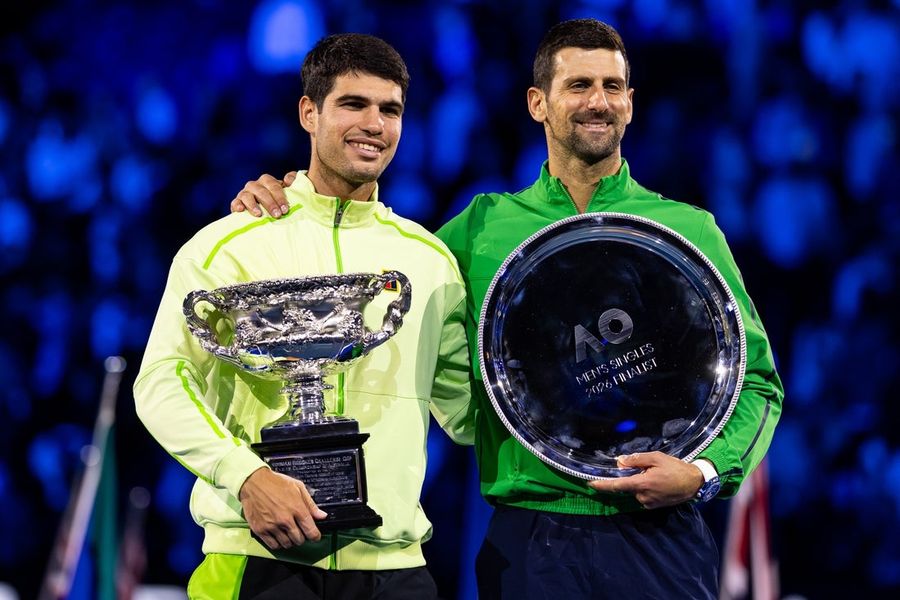
Deadspin | Carlos Alcaraz, Novak Djokovic withdraw from Madrid Open  Feb 01, 2026; Melbourne, Victoria, Australia; Carlos Alcaraz of Spain and Novak Djokovic of Serbia during the trophy presentation after the final of the menís singles at the Australian Open at Rod Laver Arena in Melbourne Park. Mandatory Credit: Mike Frey-Imagn Images   World No. 2 Carlos Alcaraz and No. 4 Novak Djokovic both withdrew Friday from next week’s Madrid Open because of injuries.  Alcaraz is dealing with a right wrist injury that forced the 22-year-old Spaniard to pull out of the Barcelona Open on Wednesday before his second-round match.  Djokovic is bothered by a right shoulder injury. The 38-year-old Serbian has not played since losing in the fourth round at Indian Wells on March 11.  Alcaraz, who could have regained the No. 1 ranking from Italy’s Jannik Sinner by winning the title in Barcelona, will sit out the ATP 1000-level clay-court tournament in Madrid for the second consecutive year due to injury.  “There is some news that is incredibly hard to share,” Alcaraz posted on X in Spanish on Friday. “Madrid is home, one of the most special places on my calendar, and that’s why it hurts so much not to be able to play here for the second year in a row.  “It hurts especially not to be in front of my people, in a tournament that means so much. Thank you for the unwavering affection, and I hope we see each other soon.”  Djokovic also shared his bad news on social media on Friday.   “Madrid, unfortunately I won’t be able to compete this year,” he posted on X. “I am continuing my recovery in order to be back soon. Hasta pronto!”  Djokovic won the Madrid Open in 2011, 2016, and 2019. Alcaraz won the tournament in the Spanish capital in 2022 and 2023.  The next event on the calendar for both players is the Italian Open in Rome, starting on May 5.  Alcaraz is 22-3 this season, including his 25th and 26th career titles at the Australian Open and Qatar Open. The seven-time grand slam winner is the two-time defending champion at the French Open, which begins May 24.  Djokovic is 7-2 this season, losing to Alcaraz in the final in Melbourne. He has won 101 career titles, including a record 24 grand slam championships.  –Field Level Media   #Deadspin #Carlos #Alcaraz #Novak #Djokovic #withdraw #Madrid #OpenFeb 01, 2026; Melbourne, Victoria, Australia; Carlos Alcaraz of Spain and Novak Djokovic of Serbia during the trophy presentation after the final of the menís singles at the Australian Open at Rod Laver Arena in Melbourne Park. Mandatory Credit: Mike Frey-Imagn Images

World No. 2 Carlos Alcaraz and No. 4 Novak Djokovic both withdrew Friday from next week’s Madrid Open because of injuries.

Alcaraz is dealing with a right wrist injury that forced the 22-year-old Spaniard to pull out of the Barcelona Open on Wednesday before his second-round match.

Djokovic is bothered by a right shoulder injury. The 38-year-old Serbian has not played since losing in the fourth round at Indian Wells on March 11.

Alcaraz, who could have regained the No. 1 ranking from Italy’s Jannik Sinner by winning the title in Barcelona, will sit out the ATP 1000-level clay-court tournament in Madrid for the second consecutive year due to injury.

“There is some news that is incredibly hard to share,” Alcaraz posted on X in Spanish on Friday. “Madrid is home, one of the most special places on my calendar, and that’s why it hurts so much not to be able to play here for the second year in a row.

“It hurts especially not to be in front of my people, in a tournament that means so much. Thank you for the unwavering affection, and I hope we see each other soon.”


Djokovic also shared his bad news on social media on Friday.

“Madrid, unfortunately I won’t be able to compete this year,” he posted on X. “I am continuing my recovery in order to be back soon. Hasta pronto!”

Djokovic won the Madrid Open in 2011, 2016, and 2019. Alcaraz won the tournament in the Spanish capital in 2022 and 2023.

The next event on the calendar for both players is the Italian Open in Rome, starting on May 5.

Alcaraz is 22-3 this season, including his 25th and 26th career titles at the Australian Open and Qatar Open. The seven-time grand slam winner is the two-time defending champion at the French Open, which begins May 24.

Djokovic is 7-2 this season, losing to Alcaraz in the final in Melbourne. He has won 101 career titles, including a record 24 grand slam championships.

–Field Level Media

#Deadspin #Carlos #Alcaraz #Novak #Djokovic #withdraw #Madrid #Open

Feb 01, 2026; Melbourne, Victoria, Australia; Carlos Alcaraz of Spain and Novak Djokovic of Serbia during the trophy presentation after the final of the menís singles at the Australian Open at Rod Laver Arena in Melbourne Park. Mandatory Credit: Mike Frey-Imagn Images

World No. 2 Carlos Alcaraz and No. 4 Novak Djokovic both withdrew Friday from next week’s Madrid Open because of injuries.

Alcaraz is dealing with a right wrist injury that forced the 22-year-old Spaniard to pull out of the Barcelona Open on Wednesday before his second-round match.

Djokovic is bothered by a right shoulder injury. The 38-year-old Serbian has not played since losing in the fourth round at Indian Wells on March 11.

Alcaraz, who could have regained the No. 1 ranking from Italy’s Jannik Sinner by winning the title in Barcelona, will sit out the ATP 1000-level clay-court tournament in Madrid for the second consecutive year due to injury.

“There is some news that is incredibly hard to share,” Alcaraz posted on X in Spanish on Friday. “Madrid is home, one of the most special places on my calendar, and that’s why it hurts so much not to be able to play here for the second year in a row.

“It hurts especially not to be in front of my people, in a tournament that means so much. Thank you for the unwavering affection, and I hope we see each other soon.”

Djokovic also shared his bad news on social media on Friday.

“Madrid, unfortunately I won’t be able to compete this year,” he posted on X. “I am continuing my recovery in order to be back soon. Hasta pronto!”

Djokovic won the Madrid Open in 2011, 2016, and 2019. Alcaraz won the tournament in the Spanish capital in 2022 and 2023.

The next event on the calendar for both players is the Italian Open in Rome, starting on May 5.

Alcaraz is 22-3 this season, including his 25th and 26th career titles at the Australian Open and Qatar Open. The seven-time grand slam winner is the two-time defending champion at the French Open, which begins May 24.

Djokovic is 7-2 this season, losing to Alcaraz in the final in Melbourne. He has won 101 career titles, including a record 24 grand slam championships.

–Field Level Media

Source link
#Deadspin #Carlos #Alcaraz #Novak #Djokovic #withdraw #Madrid #Open

Previous post

‘समय जल्दी बीत जाता है…’, अमिताभ बच्चन ने क्यों कही ये बात? पिता हरिवंश राय बच्चन की कविताओं का किया जिक्र<p style="text-align: justify;">सदी के महानायक कहे जाने वाले अमिताभ बच्चन 83 साल की उम्र में भी फिल्मों के साथ-साथ सोशल मीडिया और ब्लॉग पर भी लगातार सक्रिय हैं। वो अक्सर अपने ब्लॉग्स के जरिए भी लोगों को प्रेरित करते रहते हैं और प्रेरणादायक बातें साझा करते रहते हैं। हाल ही में उन्होंने अपने ब्लॉग पोस्ट में सक्रिय और प्रेरित रहने के महत्व पर विचार व्यक्त किया। इसके लिए उन्होंने अपने पिता व रचनाकार हरिवंश राय बच्चन की पंक्तियों का भी जिक्र किया।</p><div> <!-- removed read more from here --> <!-- removed read more from here --> <!-- removed read more from here --> <p style="text-align: justify;"><strong>शरीर को गतिशील रखें</strong> <!-- removed read more from here --> <br/><!-- removed read more from here --> <!-- removed read more from here --> <!-- removed read more from here --> अपने पिता हरिवंश राय बच्चन की रचनाओं से प्रेरणा लेते हुए अमिताभ ने समय की अस्थिरता और शारीरिक एवं मानसिक रूप से सक्रिय रहने के महत्व के बारे में बात की। अपने ब्लॉग में उन्होंने लिखा, ‘बाबूजी की रचनाओं से कुछ विचार और दिन बीतते जा रहे हैं। अभी कुछ दिन पहले ही बीता था और अगला महीना शुरू होने वाला है। यह हमें याद दिलाता है कि समय कितनी जल्दी बीत जाता है। गतिशीलता ही कुंजी है। शरीर को गतिशील रखें, मन को गतिशील रखें और गतिशीलता की शक्ति अचानक स्पष्ट हो जाएगी, न कि बिना किसी कारण के बैठे रहने से।’</p> <!-- removed read more from here --> <!-- removed read more from here --> <!-- removed read more from here --> <!-- removed read more from here --> <p style="text-align: justify;"><strong>धैर्य और ज्ञान का बताया महत्व</strong> <!-- removed read more from here --> <br/><!-- removed read more from here --> <!-- removed read more from here --> <!-- removed read more from here --> बिग बी ने धैर्य और ज्ञान के महत्व पर भी बात की। उन्होंने लिखा, ‘धैर्य उस पहेली की तरह है, जिसका हल हर पल चाहिए। एक पल भी धैर्य की परीक्षा है। लेकिन इसका फल मिलता है और बहुत अच्छा मिलता है। आर्थिक दृष्टि से नहीं, बल्कि दार्शनिक दृष्टि से।’ उन्होंने ज्ञान के महत्व पर प्रकाश डालते हुए उन्होंने कहा, ‘किसी भी विषय का अध्ययन युद्ध के संदर्भ में धनुष से कई तीर निकालने जैसा है। <!-- removed read more from here --> <br/><!-- removed read more from here --> </p> <!-- removed read more from here --> <!-- removed read more from here --> <br/> <!-- removed read more from here --> <!-- removed read more from here --> <!-- removed read more from here --> धनुष और बाण, इन्हें कितना महत्व दिया जाता है। यह हमारे जीवन में भीतर और बाहर दोनों जगह मौजूद है।’ युद्ध के बदलते स्वरूप धनुष और बाण से लेकर मिसाइलों तक का उदाहरण देते हुए बिग बी ने बताया कि कैसे तरीकों में बदलाव के बावजूद संघर्ष का सार कभी नहीं बदलता। </div>Amitabh bachchan, big b, amitabh bachchan on motivation, amitabh bachchan wisdom on mobility, amitabh bachchan wisdom on time, amitabh bachchan thoughts, amitabh bachchan blogs, amitabh bachchan movies, amitabh bachchan career, amitabh bachchan as big b, amitabh bachchan in kalki 2, amitabh bachchan in kalki 2898 ad sequel, amitabh bachchan upcoming movie, amitabh bachchan shooting kalki 2, Entertainment News in Hindi, Bollywood News in Hindi, Bollywood Hindi News, अमिताभ बच्चन, बिग बी, प्रेरणा पर अमिताभ बच्चन, गतिशीलता पर अमिताभ बच्चन के ज्ञान, समय पर अमिताभ बच्चन के ज्ञान, अमिताभ बच्चन के विचार, अमिताभ बच्चन के ब्लॉग, अमिताभ बच्चन की फिल्में, अमिताभ बच्चन का करियर, बिग बी के रूप में अमिताभ बच्चन

Next post

महिलाओं को प्रतिनिधित्व देने में एमपी आगे, 50% आरक्षण पर 52.84% महिलाएं चला रही हैं ग्रामीण सरकार

Los Angeles Lakers v Golden State Warriors

SAN FRANCISCO, CALIFORNIA – OCTOBER 18: Anthony Davis #3 and LeBron James #23 of the Los Angeles Lakers sit on the bench during their preseason game against the Golden State Warriors at Chase Center on October 18, 2024 in San Francisco, California. NOTE TO USER: User expressly acknowledges and agrees that, by downloading and/or using this photograph, user is consenting to the terms and conditions of the Getty Images License Agreement. (Photo by Ezra Shaw/Getty Images)
Getty Images

#Warriors #LeBron #James #sweepstakes #bailing #Anthony #Davis #trade #report">Warriors out of LeBron James sweepstakes after bailing on Anthony Davis trade, per report  SAN FRANCISCO, CALIFORNIA – OCTOBER 18: Anthony Davis #3 and LeBron James #23 of the Los Angeles Lakers sit on the bench during their preseason game against the Golden State Warriors at Chase Center on October 18, 2024 in San Francisco, California. NOTE TO USER: User expressly acknowledges and agrees that, by downloading and/or using this photograph, user is consenting to the terms and conditions of the Getty Images License Agreement. (Photo by Ezra Shaw/Getty Images) Getty Images  #Warriors #LeBron #James #sweepstakes #bailing #Anthony #Davis #trade #report

There is a particular kind of grief in sport that has little to do with defeat. It arrives not when a team loses, but when time finally catches up with the players who once seemed beyond its reach.

This FIFA World Cup has felt full of those moments. Luka Modric leaving with Croatia gone. Cristiano Ronaldo, who for so long bent matches to his will, walking away from another one. Manuel Neuer, for years football’s last great illusionist in goal, no longer carrying the same aura of permanence.

These were not just elite footballers; they were part of the architecture of the sport, figures so omnipresent for so long that they came to feel less like athletes and more like fixed points in our own lives.

Every major tournament had them somewhere in the frame. Modric gliding through the midfield with that strange combination of delicacy and defiance, Ronaldo summoning goals and drama with the force of habit, Neuer redrawing what a sweeper-goalkeeper could be. Their brilliance stretched across so many summers that it began to feel normal, and that was perhaps the greatest trick of all. Greatness, repeated often enough, starts to masquerade as permanence.

But sport, with its occasional cruelty, has a way of reminding us that permanence was never part of the bargain. This World Cup has exposed the mortality of men who once seemed immune to it. The legs do not always obey. The recovery takes a little longer. The moments still come, but not always on command. The body, eventually, begins to negotiate with the mind. And so, one by one, the stars who seemed to live outside time have begun to look what they always were underneath the myth: mere mortals.

Perhaps that is why Lionel Messi’s presence in this tournament feels so affecting. He is still here, still resisting and still playing as if he has found a private loophole in the laws of ageing. Around him, Argentina carries the urgency of men who know exactly what this moment means.

In Messi’s defiance, a generation watches its heroes grow old – FIFA World Cup 2026  There is a particular kind of grief in sport that has little to do with defeat. It arrives not when a team loses, but when time finally catches up with the players who once seemed beyond its reach.This FIFA World Cup has felt full of those moments. Luka Modric leaving with Croatia gone. Cristiano Ronaldo, who for so long bent matches to his will, walking away from another one. Manuel Neuer, for years football’s last great illusionist in goal, no longer carrying the same aura of permanence.These were not just elite footballers; they were part of the architecture of the sport, figures so omnipresent for so long that they came to feel less like athletes and more like fixed points in our own lives.Every major tournament had them somewhere in the frame. Modric gliding through the midfield with that strange combination of delicacy and defiance, Ronaldo summoning goals and drama with the force of habit, Neuer redrawing what a sweeper-goalkeeper could be. Their brilliance stretched across so many summers that it began to feel normal, and that was perhaps the greatest trick of all. Greatness, repeated often enough, starts to masquerade as permanence.But sport, with its occasional cruelty, has a way of reminding us that permanence was never part of the bargain. This World Cup has exposed the mortality of men who once seemed immune to it. The legs do not always obey. The recovery takes a little longer. The moments still come, but not always on command. The body, eventually, begins to negotiate with the mind. And so, one by one, the stars who seemed to live outside time have begun to look what they always were underneath the myth: mere mortals.Perhaps that is why Lionel Messi’s presence in this tournament feels so affecting. He is still here, still resisting and still playing as if he has found a private loophole in the laws of ageing. Around him, Argentina carries the urgency of men who know exactly what this moment means.Against time: Lionel Messi remains the old giant still holding back the inevitable with that familiar left foot and stubborn shrug of genius.
                                                            | Photo Credit: 
                                AFP
                            Against time: Lionel Messi remains the old giant still holding back the inevitable with that familiar left foot and stubborn shrug of genius.
                                                            | Photo Credit: 
                                AFP
                                                    There is something faintly familiar in the way his teammates seem to be fighting not only for a trophy but for the dignity of a farewell, for the chance to make sure that when their great man finally walks away, he does so with his head held high. It recalls, in its own way, those late-career years of Sachin Tendulkar, when Indian cricket seemed to understand that every innings, every tour, every knock might be one of the last chances to honour a figure who had towered over its imagination for a generation.The runs still mattered, but so did the ceremony of care around him, the collective desire to protect the ending of someone who had given so much. Maybe that is why these exits land differently as we get older. When we were younger, sporting heroes felt eternal. Tendulkar seemed as though he had always existed and somehow always would.ALSO READ: Europe holds firm grip over World Cup destiny with Messi’s Argentina offering resistanceThen came Roger Federer, making tennis look too graceful to be real; Rafael Nadal, with his fury, faith and wounded endurance; Novak Djokovic, the last great disruptor who has also now reached the stage where each tournament is shadowed by the thought of how many more are left.In cricket, Virat Kohli has moved from prodigy to elder statesman, playing just one format. And now football’s old gods, too, are being claimed by time. Their ageing has a way of confronting us with our own. You notice the greying beard in the mirror. The stiffness in your back after a long flight. The niggling pain in the knee after a walk up to the stadium media centre.Passing seasons: Virat Kohli, Roger Federer, and Rafael Nadal, who once felt eternal, now stand as reminders that even the brightest eras must eventually yield to time.
                                                            | Photo Credit: 
                                AFP, GETTY IMAGES, AP
                            Passing seasons: Virat Kohli, Roger Federer, and Rafael Nadal, who once felt eternal, now stand as reminders that even the brightest eras must eventually yield to time.
                                                            | Photo Credit: 
                                AFP, GETTY IMAGES, AP
                                                    You tell yourself these are manageable, that life is carrying on, that the body can be bargained with. But then you watch Modric labour where once he floated, or Ronaldo rage against the limits of legs that no longer answer every call, and that illusion breaks a little. If they can fade, then what chance do the rest of us have? These men were supposed to outlast ordinary rules. We were the mortals.That, perhaps, is why sport’s greatest stars matter beyond medals and numbers. They do not simply entertain us; they become markers of our own passage through life. We remember where we were when Tendulkar made that hundred, when Federer glided through another Wimbledon fortnight, when Nadal clawed through another five-set war, when Ronaldo leapt above defenders as though gravity could be compromised, when Messi finally won a World Cup.They become companions to our years. Their careers are the thread that stitches together school and work, first love and heartbreak, new cities and old friendships, parents growing older and children growing up. And so, when they begin to disappear, it is never only their ending we are mourning. It is the passing of our own seasons too.Maybe that is the ache running through this World Cup. Beneath the tactics and scorelines, beneath the noise of a new generation arriving, there is the unmistakable sense of an era loosening its grip. The old giants are not all gone yet. Messi remains, still defiant, holding back the inevitable with that familiar left foot and that stubborn little shrug of genius. But even his survival sharpens the feeling rather than easing it. It reminds us that the ending is near.And perhaps that is enough for now. One last run. One last attempt to hold the darkness off a little longer. One last tournament in which the old gods can still be glimpsed in the light, even if the light is beginning to fade.Published on Jul 08, 2026  #Messis #defiance #generation #watches #heroes #grow #FIFA #World #Cup

Against time: Lionel Messi remains the old giant still holding back the inevitable with that familiar left foot and stubborn shrug of genius. | Photo Credit: AFP

lightbox-info

Against time: Lionel Messi remains the old giant still holding back the inevitable with that familiar left foot and stubborn shrug of genius. | Photo Credit: AFP

There is something faintly familiar in the way his teammates seem to be fighting not only for a trophy but for the dignity of a farewell, for the chance to make sure that when their great man finally walks away, he does so with his head held high. It recalls, in its own way, those late-career years of Sachin Tendulkar, when Indian cricket seemed to understand that every innings, every tour, every knock might be one of the last chances to honour a figure who had towered over its imagination for a generation.

The runs still mattered, but so did the ceremony of care around him, the collective desire to protect the ending of someone who had given so much. Maybe that is why these exits land differently as we get older. When we were younger, sporting heroes felt eternal. Tendulkar seemed as though he had always existed and somehow always would.

ALSO READ: Europe holds firm grip over World Cup destiny with Messi’s Argentina offering resistance

Then came Roger Federer, making tennis look too graceful to be real; Rafael Nadal, with his fury, faith and wounded endurance; Novak Djokovic, the last great disruptor who has also now reached the stage where each tournament is shadowed by the thought of how many more are left.

In cricket, Virat Kohli has moved from prodigy to elder statesman, playing just one format. And now football’s old gods, too, are being claimed by time. Their ageing has a way of confronting us with our own. You notice the greying beard in the mirror. The stiffness in your back after a long flight. The niggling pain in the knee after a walk up to the stadium media centre.

Passing seasons: Virat Kohli, Roger Federer, and Rafael Nadal, who once felt eternal, now stand as reminders that even the brightest eras must eventually yield to time.

Passing seasons: Virat Kohli, Roger Federer, and Rafael Nadal, who once felt eternal, now stand as reminders that even the brightest eras must eventually yield to time. | Photo Credit: AFP, GETTY IMAGES, AP

lightbox-info

Passing seasons: Virat Kohli, Roger Federer, and Rafael Nadal, who once felt eternal, now stand as reminders that even the brightest eras must eventually yield to time. | Photo Credit: AFP, GETTY IMAGES, AP

You tell yourself these are manageable, that life is carrying on, that the body can be bargained with. But then you watch Modric labour where once he floated, or Ronaldo rage against the limits of legs that no longer answer every call, and that illusion breaks a little. If they can fade, then what chance do the rest of us have? These men were supposed to outlast ordinary rules. We were the mortals.

That, perhaps, is why sport’s greatest stars matter beyond medals and numbers. They do not simply entertain us; they become markers of our own passage through life. We remember where we were when Tendulkar made that hundred, when Federer glided through another Wimbledon fortnight, when Nadal clawed through another five-set war, when Ronaldo leapt above defenders as though gravity could be compromised, when Messi finally won a World Cup.

They become companions to our years. Their careers are the thread that stitches together school and work, first love and heartbreak, new cities and old friendships, parents growing older and children growing up. And so, when they begin to disappear, it is never only their ending we are mourning. It is the passing of our own seasons too.

Maybe that is the ache running through this World Cup. Beneath the tactics and scorelines, beneath the noise of a new generation arriving, there is the unmistakable sense of an era loosening its grip. The old giants are not all gone yet. Messi remains, still defiant, holding back the inevitable with that familiar left foot and that stubborn little shrug of genius. But even his survival sharpens the feeling rather than easing it. It reminds us that the ending is near.

And perhaps that is enough for now. One last run. One last attempt to hold the darkness off a little longer. One last tournament in which the old gods can still be glimpsed in the light, even if the light is beginning to fade.

Published on Jul 08, 2026

#Messis #defiance #generation #watches #heroes #grow #FIFA #World #Cup">In Messi’s defiance, a generation watches its heroes grow old – FIFA World Cup 2026  There is a particular kind of grief in sport that has little to do with defeat. It arrives not when a team loses, but when time finally catches up with the players who once seemed beyond its reach.This FIFA World Cup has felt full of those moments. Luka Modric leaving with Croatia gone. Cristiano Ronaldo, who for so long bent matches to his will, walking away from another one. Manuel Neuer, for years football’s last great illusionist in goal, no longer carrying the same aura of permanence.These were not just elite footballers; they were part of the architecture of the sport, figures so omnipresent for so long that they came to feel less like athletes and more like fixed points in our own lives.Every major tournament had them somewhere in the frame. Modric gliding through the midfield with that strange combination of delicacy and defiance, Ronaldo summoning goals and drama with the force of habit, Neuer redrawing what a sweeper-goalkeeper could be. Their brilliance stretched across so many summers that it began to feel normal, and that was perhaps the greatest trick of all. Greatness, repeated often enough, starts to masquerade as permanence.But sport, with its occasional cruelty, has a way of reminding us that permanence was never part of the bargain. This World Cup has exposed the mortality of men who once seemed immune to it. The legs do not always obey. The recovery takes a little longer. The moments still come, but not always on command. The body, eventually, begins to negotiate with the mind. And so, one by one, the stars who seemed to live outside time have begun to look what they always were underneath the myth: mere mortals.Perhaps that is why Lionel Messi’s presence in this tournament feels so affecting. He is still here, still resisting and still playing as if he has found a private loophole in the laws of ageing. Around him, Argentina carries the urgency of men who know exactly what this moment means.Against time: Lionel Messi remains the old giant still holding back the inevitable with that familiar left foot and stubborn shrug of genius.
                                                            | Photo Credit: 
                                AFP
                            Against time: Lionel Messi remains the old giant still holding back the inevitable with that familiar left foot and stubborn shrug of genius.
                                                            | Photo Credit: 
                                AFP
                                                    There is something faintly familiar in the way his teammates seem to be fighting not only for a trophy but for the dignity of a farewell, for the chance to make sure that when their great man finally walks away, he does so with his head held high. It recalls, in its own way, those late-career years of Sachin Tendulkar, when Indian cricket seemed to understand that every innings, every tour, every knock might be one of the last chances to honour a figure who had towered over its imagination for a generation.The runs still mattered, but so did the ceremony of care around him, the collective desire to protect the ending of someone who had given so much. Maybe that is why these exits land differently as we get older. When we were younger, sporting heroes felt eternal. Tendulkar seemed as though he had always existed and somehow always would.ALSO READ: Europe holds firm grip over World Cup destiny with Messi’s Argentina offering resistanceThen came Roger Federer, making tennis look too graceful to be real; Rafael Nadal, with his fury, faith and wounded endurance; Novak Djokovic, the last great disruptor who has also now reached the stage where each tournament is shadowed by the thought of how many more are left.In cricket, Virat Kohli has moved from prodigy to elder statesman, playing just one format. And now football’s old gods, too, are being claimed by time. Their ageing has a way of confronting us with our own. You notice the greying beard in the mirror. The stiffness in your back after a long flight. The niggling pain in the knee after a walk up to the stadium media centre.Passing seasons: Virat Kohli, Roger Federer, and Rafael Nadal, who once felt eternal, now stand as reminders that even the brightest eras must eventually yield to time.
                                                            | Photo Credit: 
                                AFP, GETTY IMAGES, AP
                            Passing seasons: Virat Kohli, Roger Federer, and Rafael Nadal, who once felt eternal, now stand as reminders that even the brightest eras must eventually yield to time.
                                                            | Photo Credit: 
                                AFP, GETTY IMAGES, AP
                                                    You tell yourself these are manageable, that life is carrying on, that the body can be bargained with. But then you watch Modric labour where once he floated, or Ronaldo rage against the limits of legs that no longer answer every call, and that illusion breaks a little. If they can fade, then what chance do the rest of us have? These men were supposed to outlast ordinary rules. We were the mortals.That, perhaps, is why sport’s greatest stars matter beyond medals and numbers. They do not simply entertain us; they become markers of our own passage through life. We remember where we were when Tendulkar made that hundred, when Federer glided through another Wimbledon fortnight, when Nadal clawed through another five-set war, when Ronaldo leapt above defenders as though gravity could be compromised, when Messi finally won a World Cup.They become companions to our years. Their careers are the thread that stitches together school and work, first love and heartbreak, new cities and old friendships, parents growing older and children growing up. And so, when they begin to disappear, it is never only their ending we are mourning. It is the passing of our own seasons too.Maybe that is the ache running through this World Cup. Beneath the tactics and scorelines, beneath the noise of a new generation arriving, there is the unmistakable sense of an era loosening its grip. The old giants are not all gone yet. Messi remains, still defiant, holding back the inevitable with that familiar left foot and that stubborn little shrug of genius. But even his survival sharpens the feeling rather than easing it. It reminds us that the ending is near.And perhaps that is enough for now. One last run. One last attempt to hold the darkness off a little longer. One last tournament in which the old gods can still be glimpsed in the light, even if the light is beginning to fade.Published on Jul 08, 2026  #Messis #defiance #generation #watches #heroes #grow #FIFA #World #Cup

Europe holds firm grip over World Cup destiny with Messi’s Argentina offering resistance

Then came Roger Federer, making tennis look too graceful to be real; Rafael Nadal, with his fury, faith and wounded endurance; Novak Djokovic, the last great disruptor who has also now reached the stage where each tournament is shadowed by the thought of how many more are left.

In cricket, Virat Kohli has moved from prodigy to elder statesman, playing just one format. And now football’s old gods, too, are being claimed by time. Their ageing has a way of confronting us with our own. You notice the greying beard in the mirror. The stiffness in your back after a long flight. The niggling pain in the knee after a walk up to the stadium media centre.

Passing seasons: Virat Kohli, Roger Federer, and Rafael Nadal, who once felt eternal, now stand as reminders that even the brightest eras must eventually yield to time.

Passing seasons: Virat Kohli, Roger Federer, and Rafael Nadal, who once felt eternal, now stand as reminders that even the brightest eras must eventually yield to time. | Photo Credit: AFP, GETTY IMAGES, AP

lightbox-info

Passing seasons: Virat Kohli, Roger Federer, and Rafael Nadal, who once felt eternal, now stand as reminders that even the brightest eras must eventually yield to time. | Photo Credit: AFP, GETTY IMAGES, AP

You tell yourself these are manageable, that life is carrying on, that the body can be bargained with. But then you watch Modric labour where once he floated, or Ronaldo rage against the limits of legs that no longer answer every call, and that illusion breaks a little. If they can fade, then what chance do the rest of us have? These men were supposed to outlast ordinary rules. We were the mortals.

That, perhaps, is why sport’s greatest stars matter beyond medals and numbers. They do not simply entertain us; they become markers of our own passage through life. We remember where we were when Tendulkar made that hundred, when Federer glided through another Wimbledon fortnight, when Nadal clawed through another five-set war, when Ronaldo leapt above defenders as though gravity could be compromised, when Messi finally won a World Cup.

They become companions to our years. Their careers are the thread that stitches together school and work, first love and heartbreak, new cities and old friendships, parents growing older and children growing up. And so, when they begin to disappear, it is never only their ending we are mourning. It is the passing of our own seasons too.

Maybe that is the ache running through this World Cup. Beneath the tactics and scorelines, beneath the noise of a new generation arriving, there is the unmistakable sense of an era loosening its grip. The old giants are not all gone yet. Messi remains, still defiant, holding back the inevitable with that familiar left foot and that stubborn little shrug of genius. But even his survival sharpens the feeling rather than easing it. It reminds us that the ending is near.

And perhaps that is enough for now. One last run. One last attempt to hold the darkness off a little longer. One last tournament in which the old gods can still be glimpsed in the light, even if the light is beginning to fade.

Published on Jul 08, 2026

#Messis #defiance #generation #watches #heroes #grow #FIFA #World #Cup">In Messi’s defiance, a generation watches its heroes grow old – FIFA World Cup 2026

There is a particular kind of grief in sport that has little to do with defeat. It arrives not when a team loses, but when time finally catches up with the players who once seemed beyond its reach.

This FIFA World Cup has felt full of those moments. Luka Modric leaving with Croatia gone. Cristiano Ronaldo, who for so long bent matches to his will, walking away from another one. Manuel Neuer, for years football’s last great illusionist in goal, no longer carrying the same aura of permanence.

These were not just elite footballers; they were part of the architecture of the sport, figures so omnipresent for so long that they came to feel less like athletes and more like fixed points in our own lives.

Every major tournament had them somewhere in the frame. Modric gliding through the midfield with that strange combination of delicacy and defiance, Ronaldo summoning goals and drama with the force of habit, Neuer redrawing what a sweeper-goalkeeper could be. Their brilliance stretched across so many summers that it began to feel normal, and that was perhaps the greatest trick of all. Greatness, repeated often enough, starts to masquerade as permanence.

But sport, with its occasional cruelty, has a way of reminding us that permanence was never part of the bargain. This World Cup has exposed the mortality of men who once seemed immune to it. The legs do not always obey. The recovery takes a little longer. The moments still come, but not always on command. The body, eventually, begins to negotiate with the mind. And so, one by one, the stars who seemed to live outside time have begun to look what they always were underneath the myth: mere mortals.

Perhaps that is why Lionel Messi’s presence in this tournament feels so affecting. He is still here, still resisting and still playing as if he has found a private loophole in the laws of ageing. Around him, Argentina carries the urgency of men who know exactly what this moment means.

In Messi’s defiance, a generation watches its heroes grow old – FIFA World Cup 2026  There is a particular kind of grief in sport that has little to do with defeat. It arrives not when a team loses, but when time finally catches up with the players who once seemed beyond its reach.This FIFA World Cup has felt full of those moments. Luka Modric leaving with Croatia gone. Cristiano Ronaldo, who for so long bent matches to his will, walking away from another one. Manuel Neuer, for years football’s last great illusionist in goal, no longer carrying the same aura of permanence.These were not just elite footballers; they were part of the architecture of the sport, figures so omnipresent for so long that they came to feel less like athletes and more like fixed points in our own lives.Every major tournament had them somewhere in the frame. Modric gliding through the midfield with that strange combination of delicacy and defiance, Ronaldo summoning goals and drama with the force of habit, Neuer redrawing what a sweeper-goalkeeper could be. Their brilliance stretched across so many summers that it began to feel normal, and that was perhaps the greatest trick of all. Greatness, repeated often enough, starts to masquerade as permanence.But sport, with its occasional cruelty, has a way of reminding us that permanence was never part of the bargain. This World Cup has exposed the mortality of men who once seemed immune to it. The legs do not always obey. The recovery takes a little longer. The moments still come, but not always on command. The body, eventually, begins to negotiate with the mind. And so, one by one, the stars who seemed to live outside time have begun to look what they always were underneath the myth: mere mortals.Perhaps that is why Lionel Messi’s presence in this tournament feels so affecting. He is still here, still resisting and still playing as if he has found a private loophole in the laws of ageing. Around him, Argentina carries the urgency of men who know exactly what this moment means.Against time: Lionel Messi remains the old giant still holding back the inevitable with that familiar left foot and stubborn shrug of genius.
                                                            | Photo Credit: 
                                AFP
                            Against time: Lionel Messi remains the old giant still holding back the inevitable with that familiar left foot and stubborn shrug of genius.
                                                            | Photo Credit: 
                                AFP
                                                    There is something faintly familiar in the way his teammates seem to be fighting not only for a trophy but for the dignity of a farewell, for the chance to make sure that when their great man finally walks away, he does so with his head held high. It recalls, in its own way, those late-career years of Sachin Tendulkar, when Indian cricket seemed to understand that every innings, every tour, every knock might be one of the last chances to honour a figure who had towered over its imagination for a generation.The runs still mattered, but so did the ceremony of care around him, the collective desire to protect the ending of someone who had given so much. Maybe that is why these exits land differently as we get older. When we were younger, sporting heroes felt eternal. Tendulkar seemed as though he had always existed and somehow always would.ALSO READ: Europe holds firm grip over World Cup destiny with Messi’s Argentina offering resistanceThen came Roger Federer, making tennis look too graceful to be real; Rafael Nadal, with his fury, faith and wounded endurance; Novak Djokovic, the last great disruptor who has also now reached the stage where each tournament is shadowed by the thought of how many more are left.In cricket, Virat Kohli has moved from prodigy to elder statesman, playing just one format. And now football’s old gods, too, are being claimed by time. Their ageing has a way of confronting us with our own. You notice the greying beard in the mirror. The stiffness in your back after a long flight. The niggling pain in the knee after a walk up to the stadium media centre.Passing seasons: Virat Kohli, Roger Federer, and Rafael Nadal, who once felt eternal, now stand as reminders that even the brightest eras must eventually yield to time.
                                                            | Photo Credit: 
                                AFP, GETTY IMAGES, AP
                            Passing seasons: Virat Kohli, Roger Federer, and Rafael Nadal, who once felt eternal, now stand as reminders that even the brightest eras must eventually yield to time.
                                                            | Photo Credit: 
                                AFP, GETTY IMAGES, AP
                                                    You tell yourself these are manageable, that life is carrying on, that the body can be bargained with. But then you watch Modric labour where once he floated, or Ronaldo rage against the limits of legs that no longer answer every call, and that illusion breaks a little. If they can fade, then what chance do the rest of us have? These men were supposed to outlast ordinary rules. We were the mortals.That, perhaps, is why sport’s greatest stars matter beyond medals and numbers. They do not simply entertain us; they become markers of our own passage through life. We remember where we were when Tendulkar made that hundred, when Federer glided through another Wimbledon fortnight, when Nadal clawed through another five-set war, when Ronaldo leapt above defenders as though gravity could be compromised, when Messi finally won a World Cup.They become companions to our years. Their careers are the thread that stitches together school and work, first love and heartbreak, new cities and old friendships, parents growing older and children growing up. And so, when they begin to disappear, it is never only their ending we are mourning. It is the passing of our own seasons too.Maybe that is the ache running through this World Cup. Beneath the tactics and scorelines, beneath the noise of a new generation arriving, there is the unmistakable sense of an era loosening its grip. The old giants are not all gone yet. Messi remains, still defiant, holding back the inevitable with that familiar left foot and that stubborn little shrug of genius. But even his survival sharpens the feeling rather than easing it. It reminds us that the ending is near.And perhaps that is enough for now. One last run. One last attempt to hold the darkness off a little longer. One last tournament in which the old gods can still be glimpsed in the light, even if the light is beginning to fade.Published on Jul 08, 2026  #Messis #defiance #generation #watches #heroes #grow #FIFA #World #Cup

Against time: Lionel Messi remains the old giant still holding back the inevitable with that familiar left foot and stubborn shrug of genius. | Photo Credit: AFP

lightbox-info

Against time: Lionel Messi remains the old giant still holding back the inevitable with that familiar left foot and stubborn shrug of genius. | Photo Credit: AFP

There is something faintly familiar in the way his teammates seem to be fighting not only for a trophy but for the dignity of a farewell, for the chance to make sure that when their great man finally walks away, he does so with his head held high. It recalls, in its own way, those late-career years of Sachin Tendulkar, when Indian cricket seemed to understand that every innings, every tour, every knock might be one of the last chances to honour a figure who had towered over its imagination for a generation.

The runs still mattered, but so did the ceremony of care around him, the collective desire to protect the ending of someone who had given so much. Maybe that is why these exits land differently as we get older. When we were younger, sporting heroes felt eternal. Tendulkar seemed as though he had always existed and somehow always would.

ALSO READ: Europe holds firm grip over World Cup destiny with Messi’s Argentina offering resistance

Then came Roger Federer, making tennis look too graceful to be real; Rafael Nadal, with his fury, faith and wounded endurance; Novak Djokovic, the last great disruptor who has also now reached the stage where each tournament is shadowed by the thought of how many more are left.

In cricket, Virat Kohli has moved from prodigy to elder statesman, playing just one format. And now football’s old gods, too, are being claimed by time. Their ageing has a way of confronting us with our own. You notice the greying beard in the mirror. The stiffness in your back after a long flight. The niggling pain in the knee after a walk up to the stadium media centre.

Passing seasons: Virat Kohli, Roger Federer, and Rafael Nadal, who once felt eternal, now stand as reminders that even the brightest eras must eventually yield to time.

Passing seasons: Virat Kohli, Roger Federer, and Rafael Nadal, who once felt eternal, now stand as reminders that even the brightest eras must eventually yield to time. | Photo Credit: AFP, GETTY IMAGES, AP

lightbox-info

Passing seasons: Virat Kohli, Roger Federer, and Rafael Nadal, who once felt eternal, now stand as reminders that even the brightest eras must eventually yield to time. | Photo Credit: AFP, GETTY IMAGES, AP

You tell yourself these are manageable, that life is carrying on, that the body can be bargained with. But then you watch Modric labour where once he floated, or Ronaldo rage against the limits of legs that no longer answer every call, and that illusion breaks a little. If they can fade, then what chance do the rest of us have? These men were supposed to outlast ordinary rules. We were the mortals.

That, perhaps, is why sport’s greatest stars matter beyond medals and numbers. They do not simply entertain us; they become markers of our own passage through life. We remember where we were when Tendulkar made that hundred, when Federer glided through another Wimbledon fortnight, when Nadal clawed through another five-set war, when Ronaldo leapt above defenders as though gravity could be compromised, when Messi finally won a World Cup.

They become companions to our years. Their careers are the thread that stitches together school and work, first love and heartbreak, new cities and old friendships, parents growing older and children growing up. And so, when they begin to disappear, it is never only their ending we are mourning. It is the passing of our own seasons too.

Maybe that is the ache running through this World Cup. Beneath the tactics and scorelines, beneath the noise of a new generation arriving, there is the unmistakable sense of an era loosening its grip. The old giants are not all gone yet. Messi remains, still defiant, holding back the inevitable with that familiar left foot and that stubborn little shrug of genius. But even his survival sharpens the feeling rather than easing it. It reminds us that the ending is near.

And perhaps that is enough for now. One last run. One last attempt to hold the darkness off a little longer. One last tournament in which the old gods can still be glimpsed in the light, even if the light is beginning to fade.

Published on Jul 08, 2026

#Messis #defiance #generation #watches #heroes #grow #FIFA #World #Cup

Post Comment