×
Deadspin | Commanding stretch gets No. 2 Arizona past No. 14 Kansas

Deadspin | Commanding stretch gets No. 2 Arizona past No. 14 Kansas

Feb 28, 2026; Tucson, Arizona, USA; Arizona Wildcats forward Koa Peat (10) dunks the ball during the first half of the game against the Kansas Jayhawks at McKale Memorial Center. Mandatory Credit: Aryanna Frank-Imagn Images

Jaden Bradley scored six of his 10 points in a 16-0 scoring run as No. 2 Arizona took charge to deliver an 84-61 victory over No. 14 Kansas on Saturday at Tucson, Ariz.

The Wildcats (27-2, 14-2 Big 12) avenged their loss at Kansas on Feb. 9, which was their first of the season after a program-record 23-0 start. The victory also clinched at least a tie for the regular-season Big 12 title for Arizona.

Brayden Burries led Arizona with 20 points, 12 rebounds and five assists. Koa Peat, who missed the Wildcats’ last three games with a lower-leg muscle strain, had 12 points, seven rebounds and five assists.

Motiejus Krivas finished with 13 points and 10 rebounds for Arizona and Ivan Kharchenkov had 11 points and six rebounds. The Wildcats outrebounded Kansas 48-26 and outscored the Jayhawks 30-20 in the paint and 16-8 in second-chance points.

Darryn Peterson, out with flu-like symptoms when Kansas beat Arizona in the previous meeting, finished with 24 points for the Jayhawks (21-8, 11-5). Tre White and Melvin Council Jr. each had 13 points for the Jayhawks.

After Arizona took a 47-35 lead with 14:45 remaining, Kansas went on a 12-2 run. Council, who made a 3-pointer early in the run, culminated it with a jumper to cut the Jayhawks’ deficit to 49-47 with 12:07 remaining.

Arizona responded with a commanding 16-0 run to go ahead 65-47 with 8:52 left. Kansas missed seven consecutive shots from the field in the stretch after making five straight.

The Wildcats’ string of seven straight made field goals pushed the lead to 76-56 with 4:42 left.

Arizona went on a 21-2 run to build a 21-5 lead with 13:35 left in the half. During that run, Kansas missed nine consecutive shots from the field.

Arizona scored six unanswered points to take its biggest lead of the first half, 37-19, with 3:52 remaining until halftime. The Wildcats failed to make a shot from the field thereafter in the half, missing five attempts, and Kansas closed with a 9-2 run to cut the lead to 39-28.

Flory Bidunga, who had 23 points and 10 rebounds in the previous matchup with Arizona, did not score and had two rebounds in the first half. He finished with two points and four rebounds.

Arizona outscored Kansas by 20 points at the free-throw line. The Wildcats were 30 of 34 at the line while Kansas was 10 of 11.

–Field Level Media

Source link
#Deadspin #Commanding #stretch #Arizona #Kansas

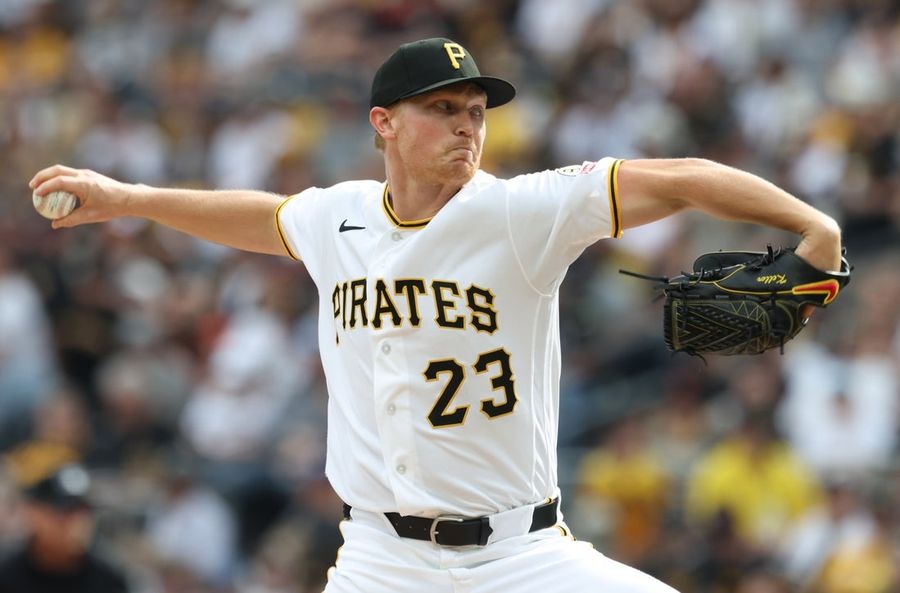
Deadspin | Off to fast start, Pirates’ Mitch Keller takes aim at Nationals  Apr 3, 2026; Pittsburgh, Pennsylvania, USA;  Pittsburgh Pirates starting pitcher Mitch Keller (23) delivers a pitch against the Baltimore Orioles during the first inning at PNC Park. Mandatory Credit: Charles LeClaire-Imagn Images   Mitch Keller is off to the best start of his career with the Pittsburgh Pirates, while fellow right-hander Miles Mikolas’ first season with the Washington Nationals has been a disaster.  The next chapter for the two veteran starters will play out on Tuesday night when their teams meet in the second contest of a four-game series in Pittsburgh. The Pirates erupted for 10 runs in the sixth inning and cruised to a 16-5 victory on Monday.  Keller (1-0, 1.00 ERA) has allowed only two earned runs through his first 18 innings. He scattered three hits and struck out four over six scoreless innings in a no-decision against the San Diego Padres last Wednesday. The Pirates lost 8-2.  Meanwhile, Mikolas (0-3, 12.41 ERA) lasted only three innings and 55 pitches last Wednesday against his former team, the St. Louis Cardinals. He yielded two runs on five hits and three walks while striking out three. That followed a woeful start against the Los Angeles Dodgers, in which Mikolas allowed a club-record 11 earned runs — including four home runs — over 4 1/3 innings.  Mikolas has a 2.35 WHIP and has surrendered five home runs in 12 1/3 innings, with seven walks and 11 strikeouts.  “He got through the lineup twice, and his first couple of outings, we asked a lot of him, a lot of pitches and a lot of innings,” Nationals manager Blake Butera said. “It’s a long season, and we need him to be good all year.”  Mikolas, who is 5-6 with a 2.96 ERA in 25 appearances (22 starts) against the Pirates, could be replaced perhaps for a top prospect from Washington’s farm system should his struggles continue. Ongoing struggles also would compound the issue of a bullpen already depleted by injuries.  The Nationals have placed left-hander Ken Waldichuk on the 15-day injured list with left forearm tightness. Waldichuk exited Sunday’s game against the Milwaukee Brewers in the seventh inning after pointing to his pitching elbow during a medical mound visit.    Washington also has placed right-handed reliever Cole Henry on the 15-day IL with a right rotator cuff strain. The Nationals recalled right-handers Orlando Ribalta and Jackson Rutledge from Triple-A Rochester.  Keller, who is 1-3 with a 4.70 ERA in seven career starts vs. Washington, didn’t pick up his second win last season until his 17th start.  In his most recent outing, though, he was removed after only 75 pitches vs. San Diego after manager Don Kelly indicated he was on a pitch count. It’s been part of a strategy by the Pirates to keep their starters fresh for the duration of a long season.   Pittsburgh’s bullpen didn’t hold up last Wednesday, however, giving up eight runs in the loss after Keller’s exit.  “I’m not really looking at pitch count or anything like that … when they tell me my day is done, I’m done,” Keller said. “Just the time I’m out there, I give it everything I can.”  Before the game, the Pirates optioned Hunter Barco to Indianapolis and recalled fellow left-hander Evan Sisk to the Triple-A affiliate.  Sisk made his 2026 debut on Monday and threw two innings, allowing one hit and one walk and striking out three. Sisk nearly threw an immaculate ninth inning, striking out Keibert Ruiz and Joey Wiemer on three pitches each before needing four to fan Luis Garcia Jr.  –Field Level Media    #Deadspin #fast #start #Pirates #Mitch #Keller #takes #aim #NationalsApr 3, 2026; Pittsburgh, Pennsylvania, USA; Pittsburgh Pirates starting pitcher Mitch Keller (23) delivers a pitch against the Baltimore Orioles during the first inning at PNC Park. Mandatory Credit: Charles LeClaire-Imagn Images

Mitch Keller is off to the best start of his career with the Pittsburgh Pirates, while fellow right-hander Miles Mikolas’ first season with the Washington Nationals has been a disaster.

The next chapter for the two veteran starters will play out on Tuesday night when their teams meet in the second contest of a four-game series in Pittsburgh. The Pirates erupted for 10 runs in the sixth inning and cruised to a 16-5 victory on Monday.

Keller (1-0, 1.00 ERA) has allowed only two earned runs through his first 18 innings. He scattered three hits and struck out four over six scoreless innings in a no-decision against the San Diego Padres last Wednesday. The Pirates lost 8-2.

Meanwhile, Mikolas (0-3, 12.41 ERA) lasted only three innings and 55 pitches last Wednesday against his former team, the St. Louis Cardinals. He yielded two runs on five hits and three walks while striking out three. That followed a woeful start against the Los Angeles Dodgers, in which Mikolas allowed a club-record 11 earned runs — including four home runs — over 4 1/3 innings.

Mikolas has a 2.35 WHIP and has surrendered five home runs in 12 1/3 innings, with seven walks and 11 strikeouts.

“He got through the lineup twice, and his first couple of outings, we asked a lot of him, a lot of pitches and a lot of innings,” Nationals manager Blake Butera said. “It’s a long season, and we need him to be good all year.”

Mikolas, who is 5-6 with a 2.96 ERA in 25 appearances (22 starts) against the Pirates, could be replaced perhaps for a top prospect from Washington’s farm system should his struggles continue. Ongoing struggles also would compound the issue of a bullpen already depleted by injuries.


The Nationals have placed left-hander Ken Waldichuk on the 15-day injured list with left forearm tightness. Waldichuk exited Sunday’s game against the Milwaukee Brewers in the seventh inning after pointing to his pitching elbow during a medical mound visit.

Washington also has placed right-handed reliever Cole Henry on the 15-day IL with a right rotator cuff strain. The Nationals recalled right-handers Orlando Ribalta and Jackson Rutledge from Triple-A Rochester.

Keller, who is 1-3 with a 4.70 ERA in seven career starts vs. Washington, didn’t pick up his second win last season until his 17th start.

In his most recent outing, though, he was removed after only 75 pitches vs. San Diego after manager Don Kelly indicated he was on a pitch count. It’s been part of a strategy by the Pirates to keep their starters fresh for the duration of a long season.

Pittsburgh’s bullpen didn’t hold up last Wednesday, however, giving up eight runs in the loss after Keller’s exit.

“I’m not really looking at pitch count or anything like that … when they tell me my day is done, I’m done,” Keller said. “Just the time I’m out there, I give it everything I can.”

Before the game, the Pirates optioned Hunter Barco to Indianapolis and recalled fellow left-hander Evan Sisk to the Triple-A affiliate.

Sisk made his 2026 debut on Monday and threw two innings, allowing one hit and one walk and striking out three. Sisk nearly threw an immaculate ninth inning, striking out Keibert Ruiz and Joey Wiemer on three pitches each before needing four to fan Luis Garcia Jr.


–Field Level Media

#Deadspin #fast #start #Pirates #Mitch #Keller #takes #aim #Nationals">Deadspin | Off to fast start, Pirates’ Mitch Keller takes aim at Nationals  Apr 3, 2026; Pittsburgh, Pennsylvania, USA;  Pittsburgh Pirates starting pitcher Mitch Keller (23) delivers a pitch against the Baltimore Orioles during the first inning at PNC Park. Mandatory Credit: Charles LeClaire-Imagn Images   Mitch Keller is off to the best start of his career with the Pittsburgh Pirates, while fellow right-hander Miles Mikolas’ first season with the Washington Nationals has been a disaster.  The next chapter for the two veteran starters will play out on Tuesday night when their teams meet in the second contest of a four-game series in Pittsburgh. The Pirates erupted for 10 runs in the sixth inning and cruised to a 16-5 victory on Monday.  Keller (1-0, 1.00 ERA) has allowed only two earned runs through his first 18 innings. He scattered three hits and struck out four over six scoreless innings in a no-decision against the San Diego Padres last Wednesday. The Pirates lost 8-2.  Meanwhile, Mikolas (0-3, 12.41 ERA) lasted only three innings and 55 pitches last Wednesday against his former team, the St. Louis Cardinals. He yielded two runs on five hits and three walks while striking out three. That followed a woeful start against the Los Angeles Dodgers, in which Mikolas allowed a club-record 11 earned runs — including four home runs — over 4 1/3 innings.  Mikolas has a 2.35 WHIP and has surrendered five home runs in 12 1/3 innings, with seven walks and 11 strikeouts.  “He got through the lineup twice, and his first couple of outings, we asked a lot of him, a lot of pitches and a lot of innings,” Nationals manager Blake Butera said. “It’s a long season, and we need him to be good all year.”  Mikolas, who is 5-6 with a 2.96 ERA in 25 appearances (22 starts) against the Pirates, could be replaced perhaps for a top prospect from Washington’s farm system should his struggles continue. Ongoing struggles also would compound the issue of a bullpen already depleted by injuries.  The Nationals have placed left-hander Ken Waldichuk on the 15-day injured list with left forearm tightness. Waldichuk exited Sunday’s game against the Milwaukee Brewers in the seventh inning after pointing to his pitching elbow during a medical mound visit.    Washington also has placed right-handed reliever Cole Henry on the 15-day IL with a right rotator cuff strain. The Nationals recalled right-handers Orlando Ribalta and Jackson Rutledge from Triple-A Rochester.  Keller, who is 1-3 with a 4.70 ERA in seven career starts vs. Washington, didn’t pick up his second win last season until his 17th start.  In his most recent outing, though, he was removed after only 75 pitches vs. San Diego after manager Don Kelly indicated he was on a pitch count. It’s been part of a strategy by the Pirates to keep their starters fresh for the duration of a long season.   Pittsburgh’s bullpen didn’t hold up last Wednesday, however, giving up eight runs in the loss after Keller’s exit.  “I’m not really looking at pitch count or anything like that … when they tell me my day is done, I’m done,” Keller said. “Just the time I’m out there, I give it everything I can.”  Before the game, the Pirates optioned Hunter Barco to Indianapolis and recalled fellow left-hander Evan Sisk to the Triple-A affiliate.  Sisk made his 2026 debut on Monday and threw two innings, allowing one hit and one walk and striking out three. Sisk nearly threw an immaculate ninth inning, striking out Keibert Ruiz and Joey Wiemer on three pitches each before needing four to fan Luis Garcia Jr.  –Field Level Media    #Deadspin #fast #start #Pirates #Mitch #Keller #takes #aim #Nationals

No matter what you think of NIL and the transfer portal — and your opinion is probably valid as long as it isn’t, say, Tommy Tuberville’s — there’s one thing for certain about college football’s changing landscape, and that’s the relative lack of smaller-school players in every draft class. Per ESPN’s Kalyn Kahler, the rate of prospects who transferred to bigger schools rose from 5.4% in 2018 to 38.2% in 2025. Better players are often moving to bigger schools for more money, yes, but also the opportunity to show their skills against a higher level of competition, in order to blot out that particular question mark in the eyes of NFL shot-callers.

In 2025, Las Vegas Raiders running back Ashton Jeanty (by way of Boise State) and Seattle left guard Grey Zabel (by way of North Dakota State) were the only first-round picks from non-major conferences, and that trend looks to continue in 2026. Toledo safety Emmanuel McNeil-Warren should be a lead-pipe lock as a first-round pick, but outside of that, it doesn’t look great for those guys outside of the bigger schools and conferences. Maybe San Diego State cornerback Chris Johnson sneaks into the back of the first round (which he should, based on performance; more on him later), and after that, we’re grasping at straws.

Still, there are smaller-school prospects whose tape reveals NFL starting potential in the right system, and here are my favorites in this particular draft class. Could these guys line up to be the next Joe Flacco (Delaware), Shannon Sharpe (Savannah State), Sam Mills (Montclair State), or Dave Krieg (Milton College — which no longer exists)? It’s entirely possible.

Here are five defensive prospects who I believe can start in the NFL sooner or later.

Malachi Lawrence, EDGE, UCF

UCF defensive end Malachi Lawrence (51) tackles ASU quarterback Sam Leavitt (10) as he scrambles during a game at Mountain America Stadium in Tempe on Nov. 9, 2024.

UCF defensive end Malachi Lawrence (51) tackles ASU quarterback Sam Leavitt (10) as he scrambles during a game at Mountain America Stadium in Tempe on Nov. 9, 2024.
Patrick Breen/The Republic / USA TODAY NETWORK via Imagn Images

The 2026 EDGE class is very deep, but also interesting in that there isn’t a consensus outside pass-rusher who has already shown it on the field. Ohio State’s Arvell Reese is EDGE1 in the minds of most, but only 58% of his snaps last season came on the edge (34% as an off-ball linebacker, and the rest as an inside blitzer/spinner), so there’s some projection there. Beyond David Bailey, Rueben Bain Jr., Keldric Faulk, Akheem Mesidor, and the rest of the top-tier disruptors, I could see NFL teams warming to UCF’s Malachi Lawrence sooner than later when the draft begins, and if he leapfrogs some of those guys when the picks are made, don’t be too surprised.

In 2025, the 6’4”, 253-pound Lawrence had seven sacks, 40 total pressures, 19 solo tackles, 18 stops, four tackles for loss, and two forced fumbles. He then amplified his profile with a scouting combine that gave him a spider chart for the ages, and the good thing is, all that athleticism shows up on tape. Lawrence is a relentless rusher who has the moves to deal with NFL tackles, he can kick inside in certain packages, and he can run and chase quarterbacks and running backs all the way to the boundary. You’re never really safe when Lawrence is out there, and I think that will transfer to the NFL.

Michael Heldman, EDGE, Central Michigan

Sep 6, 2025; Pittsburgh, Pennsylvania, USA; Pittsburgh Panthers quarterback Eli Holstein (10) runs the ball as Central Michigan Chippewas defensive lineman Michael Heldman (97) chases during the first quarter at Acrisure Stadium. Mandatory Credit: Charles LeClaire-Imagn Images

Sep 6, 2025; Pittsburgh, Pennsylvania, USA; Pittsburgh Panthers quarterback Eli Holstein (10) runs the ball as Central Michigan Chippewas defensive lineman Michael Heldman (97) chases during the first quarter at Acrisure Stadium. Mandatory Credit: Charles LeClaire-Imagn Images
Charles LeClaire-Imagn Images

The 6’4”, 268-pound Heldman, whose choice to wear No. 97 makes me think he wants people to see one of the Bosa brothers when they watch his tape, improved in each of his five seasons with the Chippewas, but 2025 was when he really put it all together. He had 12 sacks, 53 total pressures, 25 solo tackles, 29 stops, five tackles for loss, and two forced fumbles, and while he did all that mostly on the edge, he also kicked inside on 13% of his snaps, showing the requisite strength and leverage to blow up run fits.

I don’t see a Bosa brother when I watch Heldman’s tape, but from the size to the power/speed combination to the four-point stance, he brings to mind Ryan Kerrigan, who the then-Washington Redskins took with the 16th overall pick in the 2011 draft out of Purdue. Kerrigan developed into a great power-rocked pass rusher with more than credible run defense and the ability to line up over and inside the tackles. When you watch Heldman against Central Michigan’s toughest opponents in 2025, it’s not hard to see the NFL transition.

Kaleb Proctor, DI, Southeastern Louisiana

INDIANAPOLIS, INDIANA - FEBRUARY 26: Kaleb Proctor of the Southeastern Louisiana Lions participtates in a drill during the 2026 NFL Scouting Combine at Lucas Oil Stadium on February 26, 2026 in Indianapolis, Indiana. (Photo by Stacy Revere/Getty Images)

INDIANAPOLIS, INDIANA – FEBRUARY 26: Kaleb Proctor of the Southeastern Louisiana Lions participtates in a drill during the 2026 NFL Scouting Combine at Lucas Oil Stadium on February 26, 2026 in Indianapolis, Indiana. (Photo by Stacy Revere/Getty Images)
Getty Images

And now, the guy I just won’t shut up about. Of all the small-school prospects I’ve watched in this year’s process, Southeastern Louisiana’s Kaleb Proctor shot out of my laptop and got right in my face more than any other. In 2025, the 6’2”, 291-pound Proctor totaled nine sacks, 39 pressures, 18 solo tackles, 22 stops, and two tackles for loss. If you’re worried about strength of competition, hit the tape tweet below, and watch his two sacks against LSU.

Oh. And then, he completely killed it at the combine.

I’ve had a thing for smaller defensive tackles that goes all the way back to John Randle, and has served me well in evaluation from Grady Jarrett through to that Aaron Donald guy. Proctor could be the next in line. The gap quickness is off the charts, and that plays well in an NFL where stunts and line games are more important than ever, because defenses want more and better ways to mess with protections and create pressure without blitzing. Proctor has no real bad weight on his frame, and adding another 10 pounds of muscle might prevent him from getting washed out by the occasional double-team, but it’s not an epic problem — Proctor was double-teamed on 168 of his 564 snaps last season, and his ability to knife through doubles was evident.

If you get Proctor on the second day of the draft, and you turn him loose as a one-gap penetrator and move tackle with some spice on the edges as well, he’s going to be a force.

As always, tape don’t lie.

Domonique Orange, DI, Iowa State

Sep 6, 2025; Ames, Iowa, USA; Iowa State Cyclones defensive lineman Domonique Orange (95) celebrates after a play against the Iowa Hawkeyes during the second half at Jack Trice Stadium. Mandatory Credit: Reese Strickland-Imagn Images

Sep 6, 2025; Ames, Iowa, USA; Iowa State Cyclones defensive lineman Domonique Orange (95) celebrates after a play against the Iowa Hawkeyes during the second half at Jack Trice Stadium. Mandatory Credit: Reese Strickland-Imagn Images
Reese Strickland-Imagn Images

Well… okay. There are times when tape does lie.

There are some college defenses that are tough to watch when you’re trying to figure out NFL transitions, because there’s so much stuff you’re seeing on tape that you simply won’t see at the next level. In the case of Iowa State, it’s the constant use of three-man fronts that make you pause and wonder how it all works out. This happened to me when I was watching Will McDonald IV back in 2023 — I loved his skill set, but it was incredibly frustrating to see the 6’3”, 241-pound McDonald lined up inside the tackles so often, and then see people bashing his pressure production. The New York Jets took McDonald 15th overall in the 2023 draft regardless, and McDonald has become a very good edge-rusher, which he was born to be.

Now, onto the 6’2”, 322-pound Domonique Orange. Last season for the Cyclones, “Big Citrus” had no sacks, 13 pressures, 20 solo tackles, 16 stops, and a pass breakup against BYU tight end Carsen Ryan that bordered on homicide.

Beyond that, and as was the case with Will McDonald, you can’t box-score scout Orange and expect to come away with a clear picture. In 2025, Orange played 84% of his snaps as a nose tackle, and he didn’t have the help most other NCAA nose tackles had, because of all those three-man fronts. What we do know is that Orange’s movement skills for his size are exceptional, and he was also able to pressure on the edge in those three-man fronts, which is pretty neat to see.

Put Big Citrus in NFL four- and five-man fronts, and let the big man eat. You will be rewarded beyond popular expectation.

Chris Johnson, CB, San Diego State

Jan 29, 2026; Mobile, AL, USA; National cornerback Chris Johnson (2) of San Diego State practices during National Senior Bowl practice at Hancock Whitney Stadium. Mandatory Credit: Vasha Hunt-Imagn Images

Jan 29, 2026; Mobile, AL, USA; National cornerback Chris Johnson (2) of San Diego State practices during National Senior Bowl practice at Hancock Whitney Stadium. Mandatory Credit: Vasha Hunt-Imagn Images
Vasha Hunt-Imagn Images

I mentioned Emmanuel McNeil-Warren in the intro to this piece, and I didn’t include him on the list because he’s going to be a first-round pick, and an early NFL starter. We don’t really need to goose that up to any degree. If you want more on McNeil-Warren, you can check this out. But Chris Johnson, who I also mentioned? Maybe he hits the back of the first round based on his tape, and maybe he doesn’t. But he should. There’s an easy argument to be made that after LSU’s Mansoor Delane and Tennessee’s Jermod McCoy, he’s the best cornerback in this class, and he does everything well.

Last season, the 6’0”, 193-pound Johnson allowed 18 catches on 43 targets for 185 yards, 79 yards after the catch, no touchdowns, four interceptions, five pass breakups, and an opponent passer rating of 16.1 — by far the lowest among FBS cornerbacks last season who played at least 50% of their teams’ snaps last season. Delane ranked second at 31.3.

Johnson’s targets were about equally distributed between press and off coverage in 2025, and there were no issues with either. He comes out of low stance to turn and run well with receivers, he will fight for the ball in creating contested-catch situations, and he’s got some juice as a blitzer.

To bring up another Toledo defensive back, I could see Johnson making a similar immediate impact for his NFL team that Quinyon Mitchell did for the Philadelphia Eagles when they took Mitchell with the 22nd overall pick in the 2022 draft. Mitchell had a few rookie struggles, but he put it together very well down the stretch in 2024, and now, he’s one of the NFL’s better cornerbacks. Johnson could well be on the same path.

#smallschool #NFL #Draft #prospects #big #impact #defense">5 small-school NFL Draft prospects who can have a big impact on defense  No matter what you think of NIL and the transfer portal — and your opinion is probably valid as long as it isn’t, say, Tommy Tuberville’s — there’s one thing for certain about college football’s changing landscape, and that’s the relative lack of smaller-school players in every draft class. Per ESPN’s Kalyn Kahler, the rate of prospects who transferred to bigger schools rose from 5.4% in 2018 to 38.2% in 2025. Better players are often moving to bigger schools for more money, yes, but also the opportunity to show their skills against a higher level of competition, in order to blot out that particular question mark in the eyes of NFL shot-callers.In 2025, Las Vegas Raiders running back Ashton Jeanty (by way of Boise State) and Seattle left guard Grey Zabel (by way of North Dakota State) were the only first-round picks from non-major conferences, and that trend looks to continue in 2026. Toledo safety Emmanuel McNeil-Warren should be a lead-pipe lock as a first-round pick, but outside of that, it doesn’t look great for those guys outside of the bigger schools and conferences. Maybe San Diego State cornerback Chris Johnson sneaks into the back of the first round (which he should, based on performance; more on him later), and after that, we’re grasping at straws.Still, there are smaller-school prospects whose tape reveals NFL starting potential in the right system, and here are my favorites in this particular draft class. Could these guys line up to be the next Joe Flacco (Delaware), Shannon Sharpe (Savannah State), Sam Mills (Montclair State), or Dave Krieg (Milton College — which no longer exists)? It’s entirely possible.Here are five defensive prospects who I believe can start in the NFL sooner or later.Malachi Lawrence, EDGE, UCFUCF defensive end Malachi Lawrence (51) tackles ASU quarterback Sam Leavitt (10) as he scrambles during a game at Mountain America Stadium in Tempe on Nov. 9, 2024. Patrick Breen/The Republic / USA TODAY NETWORK via Imagn ImagesThe 2026 EDGE class is very deep, but also interesting in that there isn’t a consensus outside pass-rusher who has already shown it on the field. Ohio State’s Arvell Reese is EDGE1 in the minds of most, but only 58% of his snaps last season came on the edge (34% as an off-ball linebacker, and the rest as an inside blitzer/spinner), so there’s some projection there. Beyond David Bailey, Rueben Bain Jr., Keldric Faulk, Akheem Mesidor, and the rest of the top-tier disruptors, I could see NFL teams warming to UCF’s Malachi Lawrence sooner than later when the draft begins, and if he leapfrogs some of those guys when the picks are made, don’t be too surprised.In 2025, the 6’4”, 253-pound Lawrence had seven sacks, 40 total pressures, 19 solo tackles, 18 stops, four tackles for loss, and two forced fumbles. He then amplified his profile with a scouting combine that gave him a spider chart for the ages, and the good thing is, all that athleticism shows up on tape. Lawrence is a relentless rusher who has the moves to deal with NFL tackles, he can kick inside in certain packages, and he can run and chase quarterbacks and running backs all the way to the boundary. You’re never really safe when Lawrence is out there, and I think that will transfer to the NFL.Michael Heldman, EDGE, Central MichiganSep 6, 2025; Pittsburgh, Pennsylvania, USA; Pittsburgh Panthers quarterback Eli Holstein (10) runs the ball as Central Michigan Chippewas defensive lineman Michael Heldman (97) chases during the first quarter at Acrisure Stadium. Mandatory Credit: Charles LeClaire-Imagn Images Charles LeClaire-Imagn ImagesThe 6’4”, 268-pound Heldman, whose choice to wear No. 97 makes me think he wants people to see one of the Bosa brothers when they watch his tape, improved in each of his five seasons with the Chippewas, but 2025 was when he really put it all together. He had 12 sacks, 53 total pressures, 25 solo tackles, 29 stops, five tackles for loss, and two forced fumbles, and while he did all that mostly on the edge, he also kicked inside on 13% of his snaps, showing the requisite strength and leverage to blow up run fits.I don’t see a Bosa brother when I watch Heldman’s tape, but from the size to the power/speed combination to the four-point stance, he brings to mind Ryan Kerrigan, who the then-Washington Redskins took with the 16th overall pick in the 2011 draft out of Purdue. Kerrigan developed into a great power-rocked pass rusher with more than credible run defense and the ability to line up over and inside the tackles. When you watch Heldman against Central Michigan’s toughest opponents in 2025, it’s not hard to see the NFL transition.Kaleb Proctor, DI, Southeastern LouisianaINDIANAPOLIS, INDIANA – FEBRUARY 26: Kaleb Proctor of the Southeastern Louisiana Lions participtates in a drill during the 2026 NFL Scouting Combine at Lucas Oil Stadium on February 26, 2026 in Indianapolis, Indiana. (Photo by Stacy Revere/Getty Images) Getty ImagesAnd now, the guy I just won’t shut up about. Of all the small-school prospects I’ve watched in this year’s process, Southeastern Louisiana’s Kaleb Proctor shot out of my laptop and got right in my face more than any other. In 2025, the 6’2”, 291-pound Proctor totaled nine sacks, 39 pressures, 18 solo tackles, 22 stops, and two tackles for loss. If you’re worried about strength of competition, hit the tape tweet below, and watch his two sacks against LSU.Oh. And then, he completely killed it at the combine.I’ve had a thing for smaller defensive tackles that goes all the way back to John Randle, and has served me well in evaluation from Grady Jarrett through to that Aaron Donald guy. Proctor could be the next in line. The gap quickness is off the charts, and that plays well in an NFL where stunts and line games are more important than ever, because defenses want more and better ways to mess with protections and create pressure without blitzing. Proctor has no real bad weight on his frame, and adding another 10 pounds of muscle might prevent him from getting washed out by the occasional double-team, but it’s not an epic problem — Proctor was double-teamed on 168 of his 564 snaps last season, and his ability to knife through doubles was evident.If you get Proctor on the second day of the draft, and you turn him loose as a one-gap penetrator and move tackle with some spice on the edges as well, he’s going to be a force.As always, tape don’t lie.Domonique Orange, DI, Iowa StateSep 6, 2025; Ames, Iowa, USA; Iowa State Cyclones defensive lineman Domonique Orange (95) celebrates after a play against the Iowa Hawkeyes during the second half at Jack Trice Stadium. Mandatory Credit: Reese Strickland-Imagn Images Reese Strickland-Imagn ImagesWell… okay. There are times when tape does lie.There are some college defenses that are tough to watch when you’re trying to figure out NFL transitions, because there’s so much stuff you’re seeing on tape that you simply won’t see at the next level. In the case of Iowa State, it’s the constant use of three-man fronts that make you pause and wonder how it all works out. This happened to me when I was watching Will McDonald IV back in 2023 — I loved his skill set, but it was incredibly frustrating to see the 6’3”, 241-pound McDonald lined up inside the tackles so often, and then see people bashing his pressure production. The New York Jets took McDonald 15th overall in the 2023 draft regardless, and McDonald has become a very good edge-rusher, which he was born to be.Now, onto the 6’2”, 322-pound Domonique Orange. Last season for the Cyclones, “Big Citrus” had no sacks, 13 pressures, 20 solo tackles, 16 stops, and a pass breakup against BYU tight end Carsen Ryan that bordered on homicide.Beyond that, and as was the case with Will McDonald, you can’t box-score scout Orange and expect to come away with a clear picture. In 2025, Orange played 84% of his snaps as a nose tackle, and he didn’t have the help most other NCAA nose tackles had, because of all those three-man fronts. What we do know is that Orange’s movement skills for his size are exceptional, and he was also able to pressure on the edge in those three-man fronts, which is pretty neat to see.Put Big Citrus in NFL four- and five-man fronts, and let the big man eat. You will be rewarded beyond popular expectation.Chris Johnson, CB, San Diego StateJan 29, 2026; Mobile, AL, USA; National cornerback Chris Johnson (2) of San Diego State practices during National Senior Bowl practice at Hancock Whitney Stadium. Mandatory Credit: Vasha Hunt-Imagn Images Vasha Hunt-Imagn ImagesI mentioned Emmanuel McNeil-Warren in the intro to this piece, and I didn’t include him on the list because he’s going to be a first-round pick, and an early NFL starter. We don’t really need to goose that up to any degree. If you want more on McNeil-Warren, you can check this out. But Chris Johnson, who I also mentioned? Maybe he hits the back of the first round based on his tape, and maybe he doesn’t. But he should. There’s an easy argument to be made that after LSU’s Mansoor Delane and Tennessee’s Jermod McCoy, he’s the best cornerback in this class, and he does everything well.Last season, the 6’0”, 193-pound Johnson allowed 18 catches on 43 targets for 185 yards, 79 yards after the catch, no touchdowns, four interceptions, five pass breakups, and an opponent passer rating of 16.1 — by far the lowest among FBS cornerbacks last season who played at least 50% of their teams’ snaps last season. Delane ranked second at 31.3.Johnson’s targets were about equally distributed between press and off coverage in 2025, and there were no issues with either. He comes out of low stance to turn and run well with receivers, he will fight for the ball in creating contested-catch situations, and he’s got some juice as a blitzer.To bring up another Toledo defensive back, I could see Johnson making a similar immediate impact for his NFL team that Quinyon Mitchell did for the Philadelphia Eagles when they took Mitchell with the 22nd overall pick in the 2022 draft. Mitchell had a few rookie struggles, but he put it together very well down the stretch in 2024, and now, he’s one of the NFL’s better cornerbacks. Johnson could well be on the same path.  #smallschool #NFL #Draft #prospects #big #impact #defense

Tommy Tuberville’s — there’s one thing for certain about college football’s changing landscape, and that’s the relative lack of smaller-school players in every draft class. Per ESPN’s Kalyn Kahler, the rate of prospects who transferred to bigger schools rose from 5.4% in 2018 to 38.2% in 2025. Better players are often moving to bigger schools for more money, yes, but also the opportunity to show their skills against a higher level of competition, in order to blot out that particular question mark in the eyes of NFL shot-callers.

In 2025, Las Vegas Raiders running back Ashton Jeanty (by way of Boise State) and Seattle left guard Grey Zabel (by way of North Dakota State) were the only first-round picks from non-major conferences, and that trend looks to continue in 2026. Toledo safety Emmanuel McNeil-Warren should be a lead-pipe lock as a first-round pick, but outside of that, it doesn’t look great for those guys outside of the bigger schools and conferences. Maybe San Diego State cornerback Chris Johnson sneaks into the back of the first round (which he should, based on performance; more on him later), and after that, we’re grasping at straws.

Still, there are smaller-school prospects whose tape reveals NFL starting potential in the right system, and here are my favorites in this particular draft class. Could these guys line up to be the next Joe Flacco (Delaware), Shannon Sharpe (Savannah State), Sam Mills (Montclair State), or Dave Krieg (Milton College — which no longer exists)? It’s entirely possible.

Here are five defensive prospects who I believe can start in the NFL sooner or later.

Malachi Lawrence, EDGE, UCF

UCF defensive end Malachi Lawrence (51) tackles ASU quarterback Sam Leavitt (10) as he scrambles during a game at Mountain America Stadium in Tempe on Nov. 9, 2024.

UCF defensive end Malachi Lawrence (51) tackles ASU quarterback Sam Leavitt (10) as he scrambles during a game at Mountain America Stadium in Tempe on Nov. 9, 2024.
Patrick Breen/The Republic / USA TODAY NETWORK via Imagn Images

The 2026 EDGE class is very deep, but also interesting in that there isn’t a consensus outside pass-rusher who has already shown it on the field. Ohio State’s Arvell Reese is EDGE1 in the minds of most, but only 58% of his snaps last season came on the edge (34% as an off-ball linebacker, and the rest as an inside blitzer/spinner), so there’s some projection there. Beyond David Bailey, Rueben Bain Jr., Keldric Faulk, Akheem Mesidor, and the rest of the top-tier disruptors, I could see NFL teams warming to UCF’s Malachi Lawrence sooner than later when the draft begins, and if he leapfrogs some of those guys when the picks are made, don’t be too surprised.

In 2025, the 6’4”, 253-pound Lawrence had seven sacks, 40 total pressures, 19 solo tackles, 18 stops, four tackles for loss, and two forced fumbles. He then amplified his profile with a scouting combine that gave him a spider chart for the ages, and the good thing is, all that athleticism shows up on tape. Lawrence is a relentless rusher who has the moves to deal with NFL tackles, he can kick inside in certain packages, and he can run and chase quarterbacks and running backs all the way to the boundary. You’re never really safe when Lawrence is out there, and I think that will transfer to the NFL.

Michael Heldman, EDGE, Central Michigan

Sep 6, 2025; Pittsburgh, Pennsylvania, USA; Pittsburgh Panthers quarterback Eli Holstein (10) runs the ball as Central Michigan Chippewas defensive lineman Michael Heldman (97) chases during the first quarter at Acrisure Stadium. Mandatory Credit: Charles LeClaire-Imagn Images

Sep 6, 2025; Pittsburgh, Pennsylvania, USA; Pittsburgh Panthers quarterback Eli Holstein (10) runs the ball as Central Michigan Chippewas defensive lineman Michael Heldman (97) chases during the first quarter at Acrisure Stadium. Mandatory Credit: Charles LeClaire-Imagn Images
Charles LeClaire-Imagn Images

The 6’4”, 268-pound Heldman, whose choice to wear No. 97 makes me think he wants people to see one of the Bosa brothers when they watch his tape, improved in each of his five seasons with the Chippewas, but 2025 was when he really put it all together. He had 12 sacks, 53 total pressures, 25 solo tackles, 29 stops, five tackles for loss, and two forced fumbles, and while he did all that mostly on the edge, he also kicked inside on 13% of his snaps, showing the requisite strength and leverage to blow up run fits.

I don’t see a Bosa brother when I watch Heldman’s tape, but from the size to the power/speed combination to the four-point stance, he brings to mind Ryan Kerrigan, who the then-Washington Redskins took with the 16th overall pick in the 2011 draft out of Purdue. Kerrigan developed into a great power-rocked pass rusher with more than credible run defense and the ability to line up over and inside the tackles. When you watch Heldman against Central Michigan’s toughest opponents in 2025, it’s not hard to see the NFL transition.

Kaleb Proctor, DI, Southeastern Louisiana

INDIANAPOLIS, INDIANA - FEBRUARY 26: Kaleb Proctor of the Southeastern Louisiana Lions participtates in a drill during the 2026 NFL Scouting Combine at Lucas Oil Stadium on February 26, 2026 in Indianapolis, Indiana. (Photo by Stacy Revere/Getty Images)

INDIANAPOLIS, INDIANA – FEBRUARY 26: Kaleb Proctor of the Southeastern Louisiana Lions participtates in a drill during the 2026 NFL Scouting Combine at Lucas Oil Stadium on February 26, 2026 in Indianapolis, Indiana. (Photo by Stacy Revere/Getty Images)
Getty Images

And now, the guy I just won’t shut up about. Of all the small-school prospects I’ve watched in this year’s process, Southeastern Louisiana’s Kaleb Proctor shot out of my laptop and got right in my face more than any other. In 2025, the 6’2”, 291-pound Proctor totaled nine sacks, 39 pressures, 18 solo tackles, 22 stops, and two tackles for loss. If you’re worried about strength of competition, hit the tape tweet below, and watch his two sacks against LSU.

Oh. And then, he completely killed it at the combine.

I’ve had a thing for smaller defensive tackles that goes all the way back to John Randle, and has served me well in evaluation from Grady Jarrett through to that Aaron Donald guy. Proctor could be the next in line. The gap quickness is off the charts, and that plays well in an NFL where stunts and line games are more important than ever, because defenses want more and better ways to mess with protections and create pressure without blitzing. Proctor has no real bad weight on his frame, and adding another 10 pounds of muscle might prevent him from getting washed out by the occasional double-team, but it’s not an epic problem — Proctor was double-teamed on 168 of his 564 snaps last season, and his ability to knife through doubles was evident.

If you get Proctor on the second day of the draft, and you turn him loose as a one-gap penetrator and move tackle with some spice on the edges as well, he’s going to be a force.

As always, tape don’t lie.

Domonique Orange, DI, Iowa State

Sep 6, 2025; Ames, Iowa, USA; Iowa State Cyclones defensive lineman Domonique Orange (95) celebrates after a play against the Iowa Hawkeyes during the second half at Jack Trice Stadium. Mandatory Credit: Reese Strickland-Imagn Images

Sep 6, 2025; Ames, Iowa, USA; Iowa State Cyclones defensive lineman Domonique Orange (95) celebrates after a play against the Iowa Hawkeyes during the second half at Jack Trice Stadium. Mandatory Credit: Reese Strickland-Imagn Images
Reese Strickland-Imagn Images

Well… okay. There are times when tape does lie.

There are some college defenses that are tough to watch when you’re trying to figure out NFL transitions, because there’s so much stuff you’re seeing on tape that you simply won’t see at the next level. In the case of Iowa State, it’s the constant use of three-man fronts that make you pause and wonder how it all works out. This happened to me when I was watching Will McDonald IV back in 2023 — I loved his skill set, but it was incredibly frustrating to see the 6’3”, 241-pound McDonald lined up inside the tackles so often, and then see people bashing his pressure production. The New York Jets took McDonald 15th overall in the 2023 draft regardless, and McDonald has become a very good edge-rusher, which he was born to be.

Now, onto the 6’2”, 322-pound Domonique Orange. Last season for the Cyclones, “Big Citrus” had no sacks, 13 pressures, 20 solo tackles, 16 stops, and a pass breakup against BYU tight end Carsen Ryan that bordered on homicide.

Beyond that, and as was the case with Will McDonald, you can’t box-score scout Orange and expect to come away with a clear picture. In 2025, Orange played 84% of his snaps as a nose tackle, and he didn’t have the help most other NCAA nose tackles had, because of all those three-man fronts. What we do know is that Orange’s movement skills for his size are exceptional, and he was also able to pressure on the edge in those three-man fronts, which is pretty neat to see.

Put Big Citrus in NFL four- and five-man fronts, and let the big man eat. You will be rewarded beyond popular expectation.

Chris Johnson, CB, San Diego State

Jan 29, 2026; Mobile, AL, USA; National cornerback Chris Johnson (2) of San Diego State practices during National Senior Bowl practice at Hancock Whitney Stadium. Mandatory Credit: Vasha Hunt-Imagn Images

Jan 29, 2026; Mobile, AL, USA; National cornerback Chris Johnson (2) of San Diego State practices during National Senior Bowl practice at Hancock Whitney Stadium. Mandatory Credit: Vasha Hunt-Imagn Images
Vasha Hunt-Imagn Images

I mentioned Emmanuel McNeil-Warren in the intro to this piece, and I didn’t include him on the list because he’s going to be a first-round pick, and an early NFL starter. We don’t really need to goose that up to any degree. If you want more on McNeil-Warren, you can check this out. But Chris Johnson, who I also mentioned? Maybe he hits the back of the first round based on his tape, and maybe he doesn’t. But he should. There’s an easy argument to be made that after LSU’s Mansoor Delane and Tennessee’s Jermod McCoy, he’s the best cornerback in this class, and he does everything well.

Last season, the 6’0”, 193-pound Johnson allowed 18 catches on 43 targets for 185 yards, 79 yards after the catch, no touchdowns, four interceptions, five pass breakups, and an opponent passer rating of 16.1 — by far the lowest among FBS cornerbacks last season who played at least 50% of their teams’ snaps last season. Delane ranked second at 31.3.

Johnson’s targets were about equally distributed between press and off coverage in 2025, and there were no issues with either. He comes out of low stance to turn and run well with receivers, he will fight for the ball in creating contested-catch situations, and he’s got some juice as a blitzer.

To bring up another Toledo defensive back, I could see Johnson making a similar immediate impact for his NFL team that Quinyon Mitchell did for the Philadelphia Eagles when they took Mitchell with the 22nd overall pick in the 2022 draft. Mitchell had a few rookie struggles, but he put it together very well down the stretch in 2024, and now, he’s one of the NFL’s better cornerbacks. Johnson could well be on the same path.

#smallschool #NFL #Draft #prospects #big #impact #defense">5 small-school NFL Draft prospects who can have a big impact on defense

No matter what you think of NIL and the transfer portal — and your opinion is probably valid as long as it isn’t, say, Tommy Tuberville’s — there’s one thing for certain about college football’s changing landscape, and that’s the relative lack of smaller-school players in every draft class. Per ESPN’s Kalyn Kahler, the rate of prospects who transferred to bigger schools rose from 5.4% in 2018 to 38.2% in 2025. Better players are often moving to bigger schools for more money, yes, but also the opportunity to show their skills against a higher level of competition, in order to blot out that particular question mark in the eyes of NFL shot-callers.

In 2025, Las Vegas Raiders running back Ashton Jeanty (by way of Boise State) and Seattle left guard Grey Zabel (by way of North Dakota State) were the only first-round picks from non-major conferences, and that trend looks to continue in 2026. Toledo safety Emmanuel McNeil-Warren should be a lead-pipe lock as a first-round pick, but outside of that, it doesn’t look great for those guys outside of the bigger schools and conferences. Maybe San Diego State cornerback Chris Johnson sneaks into the back of the first round (which he should, based on performance; more on him later), and after that, we’re grasping at straws.

Still, there are smaller-school prospects whose tape reveals NFL starting potential in the right system, and here are my favorites in this particular draft class. Could these guys line up to be the next Joe Flacco (Delaware), Shannon Sharpe (Savannah State), Sam Mills (Montclair State), or Dave Krieg (Milton College — which no longer exists)? It’s entirely possible.

Here are five defensive prospects who I believe can start in the NFL sooner or later.

Malachi Lawrence, EDGE, UCF

UCF defensive end Malachi Lawrence (51) tackles ASU quarterback Sam Leavitt (10) as he scrambles during a game at Mountain America Stadium in Tempe on Nov. 9, 2024.

UCF defensive end Malachi Lawrence (51) tackles ASU quarterback Sam Leavitt (10) as he scrambles during a game at Mountain America Stadium in Tempe on Nov. 9, 2024.
Patrick Breen/The Republic / USA TODAY NETWORK via Imagn Images

The 2026 EDGE class is very deep, but also interesting in that there isn’t a consensus outside pass-rusher who has already shown it on the field. Ohio State’s Arvell Reese is EDGE1 in the minds of most, but only 58% of his snaps last season came on the edge (34% as an off-ball linebacker, and the rest as an inside blitzer/spinner), so there’s some projection there. Beyond David Bailey, Rueben Bain Jr., Keldric Faulk, Akheem Mesidor, and the rest of the top-tier disruptors, I could see NFL teams warming to UCF’s Malachi Lawrence sooner than later when the draft begins, and if he leapfrogs some of those guys when the picks are made, don’t be too surprised.

In 2025, the 6’4”, 253-pound Lawrence had seven sacks, 40 total pressures, 19 solo tackles, 18 stops, four tackles for loss, and two forced fumbles. He then amplified his profile with a scouting combine that gave him a spider chart for the ages, and the good thing is, all that athleticism shows up on tape. Lawrence is a relentless rusher who has the moves to deal with NFL tackles, he can kick inside in certain packages, and he can run and chase quarterbacks and running backs all the way to the boundary. You’re never really safe when Lawrence is out there, and I think that will transfer to the NFL.

Michael Heldman, EDGE, Central Michigan

Sep 6, 2025; Pittsburgh, Pennsylvania, USA; Pittsburgh Panthers quarterback Eli Holstein (10) runs the ball as Central Michigan Chippewas defensive lineman Michael Heldman (97) chases during the first quarter at Acrisure Stadium. Mandatory Credit: Charles LeClaire-Imagn Images

Sep 6, 2025; Pittsburgh, Pennsylvania, USA; Pittsburgh Panthers quarterback Eli Holstein (10) runs the ball as Central Michigan Chippewas defensive lineman Michael Heldman (97) chases during the first quarter at Acrisure Stadium. Mandatory Credit: Charles LeClaire-Imagn Images
Charles LeClaire-Imagn Images

The 6’4”, 268-pound Heldman, whose choice to wear No. 97 makes me think he wants people to see one of the Bosa brothers when they watch his tape, improved in each of his five seasons with the Chippewas, but 2025 was when he really put it all together. He had 12 sacks, 53 total pressures, 25 solo tackles, 29 stops, five tackles for loss, and two forced fumbles, and while he did all that mostly on the edge, he also kicked inside on 13% of his snaps, showing the requisite strength and leverage to blow up run fits.

I don’t see a Bosa brother when I watch Heldman’s tape, but from the size to the power/speed combination to the four-point stance, he brings to mind Ryan Kerrigan, who the then-Washington Redskins took with the 16th overall pick in the 2011 draft out of Purdue. Kerrigan developed into a great power-rocked pass rusher with more than credible run defense and the ability to line up over and inside the tackles. When you watch Heldman against Central Michigan’s toughest opponents in 2025, it’s not hard to see the NFL transition.

Kaleb Proctor, DI, Southeastern Louisiana

INDIANAPOLIS, INDIANA - FEBRUARY 26: Kaleb Proctor of the Southeastern Louisiana Lions participtates in a drill during the 2026 NFL Scouting Combine at Lucas Oil Stadium on February 26, 2026 in Indianapolis, Indiana. (Photo by Stacy Revere/Getty Images)

INDIANAPOLIS, INDIANA – FEBRUARY 26: Kaleb Proctor of the Southeastern Louisiana Lions participtates in a drill during the 2026 NFL Scouting Combine at Lucas Oil Stadium on February 26, 2026 in Indianapolis, Indiana. (Photo by Stacy Revere/Getty Images)
Getty Images

And now, the guy I just won’t shut up about. Of all the small-school prospects I’ve watched in this year’s process, Southeastern Louisiana’s Kaleb Proctor shot out of my laptop and got right in my face more than any other. In 2025, the 6’2”, 291-pound Proctor totaled nine sacks, 39 pressures, 18 solo tackles, 22 stops, and two tackles for loss. If you’re worried about strength of competition, hit the tape tweet below, and watch his two sacks against LSU.

Oh. And then, he completely killed it at the combine.

I’ve had a thing for smaller defensive tackles that goes all the way back to John Randle, and has served me well in evaluation from Grady Jarrett through to that Aaron Donald guy. Proctor could be the next in line. The gap quickness is off the charts, and that plays well in an NFL where stunts and line games are more important than ever, because defenses want more and better ways to mess with protections and create pressure without blitzing. Proctor has no real bad weight on his frame, and adding another 10 pounds of muscle might prevent him from getting washed out by the occasional double-team, but it’s not an epic problem — Proctor was double-teamed on 168 of his 564 snaps last season, and his ability to knife through doubles was evident.

If you get Proctor on the second day of the draft, and you turn him loose as a one-gap penetrator and move tackle with some spice on the edges as well, he’s going to be a force.

As always, tape don’t lie.

Domonique Orange, DI, Iowa State

Sep 6, 2025; Ames, Iowa, USA; Iowa State Cyclones defensive lineman Domonique Orange (95) celebrates after a play against the Iowa Hawkeyes during the second half at Jack Trice Stadium. Mandatory Credit: Reese Strickland-Imagn Images

Sep 6, 2025; Ames, Iowa, USA; Iowa State Cyclones defensive lineman Domonique Orange (95) celebrates after a play against the Iowa Hawkeyes during the second half at Jack Trice Stadium. Mandatory Credit: Reese Strickland-Imagn Images
Reese Strickland-Imagn Images

Well… okay. There are times when tape does lie.

There are some college defenses that are tough to watch when you’re trying to figure out NFL transitions, because there’s so much stuff you’re seeing on tape that you simply won’t see at the next level. In the case of Iowa State, it’s the constant use of three-man fronts that make you pause and wonder how it all works out. This happened to me when I was watching Will McDonald IV back in 2023 — I loved his skill set, but it was incredibly frustrating to see the 6’3”, 241-pound McDonald lined up inside the tackles so often, and then see people bashing his pressure production. The New York Jets took McDonald 15th overall in the 2023 draft regardless, and McDonald has become a very good edge-rusher, which he was born to be.

Now, onto the 6’2”, 322-pound Domonique Orange. Last season for the Cyclones, “Big Citrus” had no sacks, 13 pressures, 20 solo tackles, 16 stops, and a pass breakup against BYU tight end Carsen Ryan that bordered on homicide.

Beyond that, and as was the case with Will McDonald, you can’t box-score scout Orange and expect to come away with a clear picture. In 2025, Orange played 84% of his snaps as a nose tackle, and he didn’t have the help most other NCAA nose tackles had, because of all those three-man fronts. What we do know is that Orange’s movement skills for his size are exceptional, and he was also able to pressure on the edge in those three-man fronts, which is pretty neat to see.

Put Big Citrus in NFL four- and five-man fronts, and let the big man eat. You will be rewarded beyond popular expectation.

Chris Johnson, CB, San Diego State

Jan 29, 2026; Mobile, AL, USA; National cornerback Chris Johnson (2) of San Diego State practices during National Senior Bowl practice at Hancock Whitney Stadium. Mandatory Credit: Vasha Hunt-Imagn Images

Jan 29, 2026; Mobile, AL, USA; National cornerback Chris Johnson (2) of San Diego State practices during National Senior Bowl practice at Hancock Whitney Stadium. Mandatory Credit: Vasha Hunt-Imagn Images
Vasha Hunt-Imagn Images

I mentioned Emmanuel McNeil-Warren in the intro to this piece, and I didn’t include him on the list because he’s going to be a first-round pick, and an early NFL starter. We don’t really need to goose that up to any degree. If you want more on McNeil-Warren, you can check this out. But Chris Johnson, who I also mentioned? Maybe he hits the back of the first round based on his tape, and maybe he doesn’t. But he should. There’s an easy argument to be made that after LSU’s Mansoor Delane and Tennessee’s Jermod McCoy, he’s the best cornerback in this class, and he does everything well.

Last season, the 6’0”, 193-pound Johnson allowed 18 catches on 43 targets for 185 yards, 79 yards after the catch, no touchdowns, four interceptions, five pass breakups, and an opponent passer rating of 16.1 — by far the lowest among FBS cornerbacks last season who played at least 50% of their teams’ snaps last season. Delane ranked second at 31.3.

Johnson’s targets were about equally distributed between press and off coverage in 2025, and there were no issues with either. He comes out of low stance to turn and run well with receivers, he will fight for the ball in creating contested-catch situations, and he’s got some juice as a blitzer.

To bring up another Toledo defensive back, I could see Johnson making a similar immediate impact for his NFL team that Quinyon Mitchell did for the Philadelphia Eagles when they took Mitchell with the 22nd overall pick in the 2022 draft. Mitchell had a few rookie struggles, but he put it together very well down the stretch in 2024, and now, he’s one of the NFL’s better cornerbacks. Johnson could well be on the same path.

#smallschool #NFL #Draft #prospects #big #impact #defense

Post Comment