×
Deadspin | Diamondbacks plate three in 10th, down Orioles 8-5  Apr 15, 2026; Baltimore, Maryland, USA; Arizona Diamondbacks pitcher Eduardo Rodriguez delivers a pitch against the Baltimore Orioles during the first inning at Oriole Park at Camden Yards. Mandatory Credit: Gregory Fisher-Imagn Images   Adrian Del Castillo drilled a two-run home run in the 10th inning as part of his five-RBI outing as the Arizona Diamondbacks beat the host Baltimore Orioles 8-5 on Wednesday afternoon.  Del Castillo’s one-out shot to center field was a rocket traveling an estimated 420 feet on the offering from Tyler Wells, a 94 mph fastball, and sparked the Diamondbacks to their second victory in a row as they claimed the rubber game of the three-game series.  Jeremiah Jackson homered and knocked in three runs for the Orioles.  There was never more than a one-run margin for either team until Del Castillo’s homer. Nolan Arenado singled in another run later in the 10th and Juan Morillo recorded his first save for Arizona.  Ryan Thompson (1-0) was the winning pitcher with one shutout inning in relief.   Del Castillo, who also had a two-run triple, matched his RBI total from his first six games of the season combined. Through nine innings, all nine players in Arizona’s batting order collected at least one hit, with Corbin Carroll singling twice.  Orioles starter Kyle Bradish lasted six innings. He was charged with four runs on eight hits in the longest of his four starts this season. Wells (0-1) had his first decision in eight outings this season.   Arizona starter Eduardo Rodriguez gave up four runs in five innings in his roughest outing this year. He allowed six hits and issued four walks as his pitch count climbed.  The Orioles opened the scoring with a second-inning run on Sam Huff’s double on his first big-league at-bat of the season.  Del Castillo’s two-out triple put the Diamondbacks ahead in the third inning. The Orioles pulled even on Jackson’s two-out single in the bottom of the inning.  Jorge Barrosa doubled in a run in the fourth. Jackson’s two-out blast provided the Orioles a 4-3 lead in the fifth.  The Diamondbacks were even again on Alek Thomas’ groundout in the sixth.  The Diamondbacks broke a 4-4 tie on Del Castillo’s groundout in the seventh inning. Pinch hitter Leondy Taveras singled to tie the game in the bottom of the inning.  –Field Level Media    #Deadspin #Diamondbacks #plate #10th #Orioles
Deadspin | Diamondbacks plate three in 10th, down Orioles 8-5
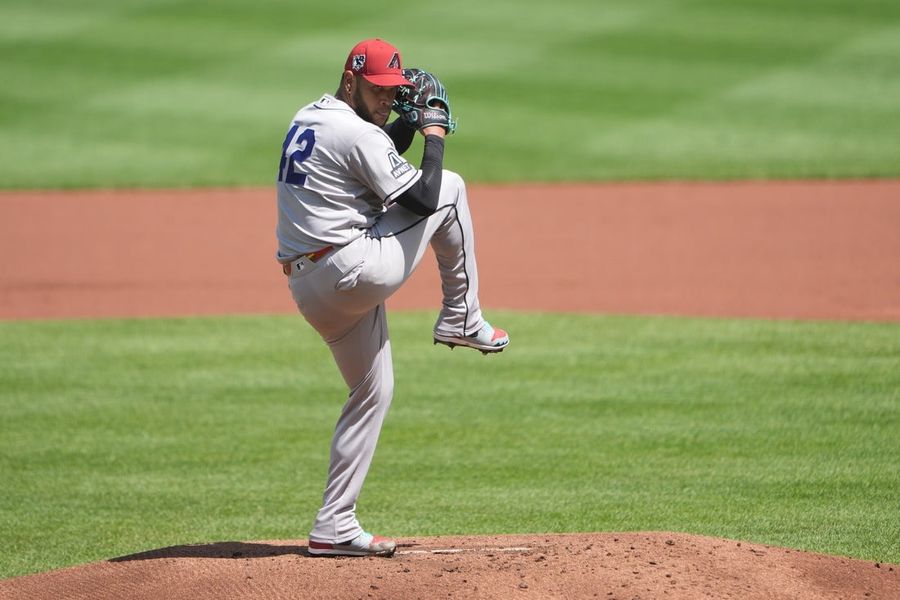
Deadspin | Diamondbacks plate three in 10th, down Orioles 8-5  Apr 15, 2026; Baltimore, Maryland, USA; Arizona Diamondbacks pitcher Eduardo Rodriguez delivers a pitch against the Baltimore Orioles during the first inning at Oriole Park at Camden Yards. Mandatory Credit: Gregory Fisher-Imagn Images   Adrian Del Castillo drilled a two-run home run in the 10th inning as part of his five-RBI outing as the Arizona Diamondbacks beat the host Baltimore Orioles 8-5 on Wednesday afternoon.  Del Castillo’s one-out shot to center field was a rocket traveling an estimated 420 feet on the offering from Tyler Wells, a 94 mph fastball, and sparked the Diamondbacks to their second victory in a row as they claimed the rubber game of the three-game series.  Jeremiah Jackson homered and knocked in three runs for the Orioles.  There was never more than a one-run margin for either team until Del Castillo’s homer. Nolan Arenado singled in another run later in the 10th and Juan Morillo recorded his first save for Arizona.  Ryan Thompson (1-0) was the winning pitcher with one shutout inning in relief.   Del Castillo, who also had a two-run triple, matched his RBI total from his first six games of the season combined. Through nine innings, all nine players in Arizona’s batting order collected at least one hit, with Corbin Carroll singling twice.  Orioles starter Kyle Bradish lasted six innings. He was charged with four runs on eight hits in the longest of his four starts this season. Wells (0-1) had his first decision in eight outings this season.   Arizona starter Eduardo Rodriguez gave up four runs in five innings in his roughest outing this year. He allowed six hits and issued four walks as his pitch count climbed.  The Orioles opened the scoring with a second-inning run on Sam Huff’s double on his first big-league at-bat of the season.  Del Castillo’s two-out triple put the Diamondbacks ahead in the third inning. The Orioles pulled even on Jackson’s two-out single in the bottom of the inning.  Jorge Barrosa doubled in a run in the fourth. Jackson’s two-out blast provided the Orioles a 4-3 lead in the fifth.  The Diamondbacks were even again on Alek Thomas’ groundout in the sixth.  The Diamondbacks broke a 4-4 tie on Del Castillo’s groundout in the seventh inning. Pinch hitter Leondy Taveras singled to tie the game in the bottom of the inning.  –Field Level Media    #Deadspin #Diamondbacks #plate #10th #OriolesApr 15, 2026; Baltimore, Maryland, USA; Arizona Diamondbacks pitcher Eduardo Rodriguez delivers a pitch against the Baltimore Orioles during the first inning at Oriole Park at Camden Yards. Mandatory Credit: Gregory Fisher-Imagn Images

Adrian Del Castillo drilled a two-run home run in the 10th inning as part of his five-RBI outing as the Arizona Diamondbacks beat the host Baltimore Orioles 8-5 on Wednesday afternoon.

Del Castillo’s one-out shot to center field was a rocket traveling an estimated 420 feet on the offering from Tyler Wells, a 94 mph fastball, and sparked the Diamondbacks to their second victory in a row as they claimed the rubber game of the three-game series.

Jeremiah Jackson homered and knocked in three runs for the Orioles.

There was never more than a one-run margin for either team until Del Castillo’s homer. Nolan Arenado singled in another run later in the 10th and Juan Morillo recorded his first save for Arizona.

Ryan Thompson (1-0) was the winning pitcher with one shutout inning in relief.

Del Castillo, who also had a two-run triple, matched his RBI total from his first six games of the season combined. Through nine innings, all nine players in Arizona’s batting order collected at least one hit, with Corbin Carroll singling twice.


Orioles starter Kyle Bradish lasted six innings. He was charged with four runs on eight hits in the longest of his four starts this season. Wells (0-1) had his first decision in eight outings this season.

Arizona starter Eduardo Rodriguez gave up four runs in five innings in his roughest outing this year. He allowed six hits and issued four walks as his pitch count climbed.

The Orioles opened the scoring with a second-inning run on Sam Huff’s double on his first big-league at-bat of the season.

Del Castillo’s two-out triple put the Diamondbacks ahead in the third inning. The Orioles pulled even on Jackson’s two-out single in the bottom of the inning.

Jorge Barrosa doubled in a run in the fourth. Jackson’s two-out blast provided the Orioles a 4-3 lead in the fifth.

The Diamondbacks were even again on Alek Thomas’ groundout in the sixth.

The Diamondbacks broke a 4-4 tie on Del Castillo’s groundout in the seventh inning. Pinch hitter Leondy Taveras singled to tie the game in the bottom of the inning.


–Field Level Media

#Deadspin #Diamondbacks #plate #10th #Orioles

Apr 15, 2026; Baltimore, Maryland, USA; Arizona Diamondbacks pitcher Eduardo Rodriguez delivers a pitch against the Baltimore Orioles during the first inning at Oriole Park at Camden Yards. Mandatory Credit: Gregory Fisher-Imagn Images

Adrian Del Castillo drilled a two-run home run in the 10th inning as part of his five-RBI outing as the Arizona Diamondbacks beat the host Baltimore Orioles 8-5 on Wednesday afternoon.

Del Castillo’s one-out shot to center field was a rocket traveling an estimated 420 feet on the offering from Tyler Wells, a 94 mph fastball, and sparked the Diamondbacks to their second victory in a row as they claimed the rubber game of the three-game series.

Jeremiah Jackson homered and knocked in three runs for the Orioles.

There was never more than a one-run margin for either team until Del Castillo’s homer. Nolan Arenado singled in another run later in the 10th and Juan Morillo recorded his first save for Arizona.

Ryan Thompson (1-0) was the winning pitcher with one shutout inning in relief.

Del Castillo, who also had a two-run triple, matched his RBI total from his first six games of the season combined. Through nine innings, all nine players in Arizona’s batting order collected at least one hit, with Corbin Carroll singling twice.

Orioles starter Kyle Bradish lasted six innings. He was charged with four runs on eight hits in the longest of his four starts this season. Wells (0-1) had his first decision in eight outings this season.

Arizona starter Eduardo Rodriguez gave up four runs in five innings in his roughest outing this year. He allowed six hits and issued four walks as his pitch count climbed.

The Orioles opened the scoring with a second-inning run on Sam Huff’s double on his first big-league at-bat of the season.

Del Castillo’s two-out triple put the Diamondbacks ahead in the third inning. The Orioles pulled even on Jackson’s two-out single in the bottom of the inning.

Jorge Barrosa doubled in a run in the fourth. Jackson’s two-out blast provided the Orioles a 4-3 lead in the fifth.

The Diamondbacks were even again on Alek Thomas’ groundout in the sixth.

The Diamondbacks broke a 4-4 tie on Del Castillo’s groundout in the seventh inning. Pinch hitter Leondy Taveras singled to tie the game in the bottom of the inning.

–Field Level Media

Source link
#Deadspin #Diamondbacks #plate #10th #Orioles

Previous post

Live Updates: Trump says Israel, Lebanon agree to ceasefire as Iran keeps Strait of Hormuz gridlocked<div> <p>Europe has “maybe 6 weeks or so (of) jet fuel left,” the head of the International Energy Agency said Thursday in an interview with The Associated Press, warning of possible flight cancellations “soon” if oil supplies remain blocked by the Iran war.</p><p>IEA Executive Director Fatih Birol painted a sobering picture of the global repercussions of what he called “the largest energy crisis we have ever faced” stemming from the pinch-off of oil, gas and other vital supplies through the Strait of Hormuz.</p><p>“In the past there was a group called ‘Dire Straits.’ It’s a dire strait now, and it is going to have major implications for the global economy. And the longer it goes, the worse it will be for the economic growth and inflation around the world,” he said.</p><p>The impact will be “higher petrol (gasoline) prices, higher gas prices, high electricity prices,” Birol told AP.</p><p>Economic pain will be felt unevenly, with some countries “hit worse than the others,” he said, naming Japan, Korea, India, China, Pakistan and Bangladesh as being on the front line of the energy crisis.</p><p>“The countries who will suffer the most will not be those whose voice are heard a lot. It will be mainly the developing countries. Poorer countries in Asia, in Africa, and in Latin America,” he said.</p><p>“Then it will come to Europe and the Americas,” he added, speaking from his Paris office looking out over the Eiffel Tower.</p><p>If the Strait of Hormuz isn’t reopened, he said that for Europe, “I can tell you soon we will hear the news that some of the flights from city A to city B might be canceled as a result of lack of jet fuel.”</p> </div>#Live #Updates #Trump #Israel #Lebanon #agree #ceasefire #Iran #Strait #Hormuz #gridlockedWar, Iran, Israel, Ceasefire, Donald Trump, Lebanon, Middle East, Oil and Gas, Benjamin Neta​nyahu, Strait of Hormuz

Next post

Being Viktor: How Axelsen fashioned himself into a serial winner <div id="content-body-70870591" itemprop="articleBody"><p>The conqueror. Serial winner. Absolute champion.</p><p>Viktor Axelsen lived up to his name. In his career, starting from 2009, the Dane pretty much won it all.</p><p>And so, his retirement from professional badminton should have been an occasion to celebrate one of the legends of the game. In reality, it was a bittersweet moment.</p><p>Such is the cruel nature of the sporting world that even the best do not get to finish on their own terms. Just three weeks ago, Only last month, Carolina Marin officially bid farewell through a social media post, having never returned to the court since a knee injury during the Paris Olympics semifinals, which left the Spaniard in tears.</p><p>On Wednesday, it was Axelsen’s turn. At 32, perhaps, he had a few good years left in him. But due to recurrent back issues, the Dane had to make the unfortunate decision to say goodbye. “Today is not an easy day for me. Due to my recurrent back issues, I am no longer able to compete and train at the highest level,” he wrote.</p><p>“Accepting this situation has been incredibly difficult. But I have now reached a point where my body won’t allow me to continue.”</p><p>Axelsen had been out of action since the French Open in October last year after the loss to compatriot Anders Antonsen in the quarterfinals when hardly anyone could have predicted to never see him competing again.</p><p>But those who know him completely understand the decision. For Axelsen, it was always about being the best in the world ever since his dad introduced him to the sport when he was six.</p><p><b>Being Viktor</b></p><p>“Since the day I picked up a racket, I knew my dream was to become the best in the world. I have given everything to this sport. It has never been just a career to me. It has been my life and I have left no stone unturned,” he said.</p><p>A young Axelsen would reach the hall at the Odense Badminton Klub in his hometown earlier than the coaches and other players and would repeatedly hit the shuttle vertically in the air.</p><p>There was something about him that made him stand out from the rest of his peers and Peter Gade, his first hero, could see that. “He had a fire in his eyes that I haven’t seen in the same way in other Danish players. I recognised Viktor’s fire from myself,” Gade told Danish outlet <i>Ud&Se</i> in an interview in August 2018.</p><p>Axelsen got the chance to train with Gade and the rest of the national team when he moved alone to Copenhagen at the age of 17, a year after becoming the first non-Asian boy to win the World Junior Championship in 2010.</p><p>The transition to the senior circuit wasn’t easy. At 6’4” with a broad body structure, he didn’t necessarily have what was considered to be the ideal shape and size to be a solid shuttler. But Axelsen did his research and found out about Bao Chunlai, a former World No. 1 from China who was 6’3”.</p><p>He studied how a player as tall as Bao moved on the court, made use of his massive wingspan and bent to retrieve the shots closer to the ground before returning to a neutral position. The duo met once, at the Singapore Open in 2011, where the apprentice won the battle in straight games.</p><p>Such was his dedication that Axelsen even took the daunting task of learning Mandarin to understand the mentality of the Chinese school of badminton, the ultimate powerhouse in the sport. When this fact came to the limelight, the Chinese players became cautious about discussing any tactics around Axelsen but at the same time, he endeared himself to the Chinese fans. So much so that they named him An Sai Long – ‘calm, competitive dragon.’ No wonder then that he also had a Mandarin version of his retirement post on social media.</p><p>Axelsen’s progression coincided with the latter stages of the career of Lin Dan, another idol of the Dane. He also had to face Lee Chong Wei, the Malaysian arch-rival of five-time World Champion from China. From his own generation, he had fierce competitors in Chen Long, Anthony Ginting, Kento Momota, Son Wan-ho, Chou Tien-chen and Shi Yuqi.</p><p>Amidst such competition, Axelsen continued on his own path in the pursuit of perfection, trying every possible method to gain an advantage. Sometimes, it worked. On a few occasions, it backfired too. But he never stopped hustling.</p><p>While he had won a bronze at the World Championships in 2014, he truly arrived on the big stage in 2016.</p><p>After winning the first of his three European Championships, he and his compatriots created history as Denmark lifted its maiden Thomas Cup title with a 3-2 victory over Indonesia in the final. Axelsen registered crucial wins over Chinese Taipei’s Chou (group stage), Japan’s Sho Sasaki (quarterfinals) and Indonesian Tommy Sugiarto (final). At the Rio Olympics, he came from behind to beat Lin Dan in a generational battle in the bronze medal play-off. And he finished the season with the first of his five titles at the BWF World Tour Finals.</p><p>A year later, Axelsen defeated Lin Dan in another major event – the World Championship final – to become only the third Danish man to win the gold after Flemming Delfs (1977) and Peter Rasmussen (1997).</p><p>On September 28, 2017, Axelsen was the only European player in the top 10 of the men’s BWF World Rankings – as the new No. 1, ending a 20-year-wait for Denmark.</p><p>Another major milestone for Axelsen came in 2020 when he added the prestigious All England Open title to his collection.</p><p>The pinnacle arrived in 2021 at the Tokyo Olympics. Postponed by a year due to the COVID-19 pandemic, the Summer Games in the Japanese capital took place with virtually no spectators in the arena. In the edition where top seed and home favourite Momota stunningly failed to make it past the group stage, and the No. 2 and 3 seeds fell in the quarterfinals, Axelsen avoided any such mishaps.</p><p>In the final, he avenged his loss from the Rio Olympics last-four battle as he took down Chen Long 21-15, 21-12, becoming the first non-Asian male Olympic champion since compatriot Poul-Erik Høyer Larsen (1996). Axelsen, who did not drop a single game in the entire tournament, burst into tears as Larsen, the then BWF President, watched from the stands. In a heartwarming gesture, Axelsen also exchanged jerseys with his Chinese opponent.</p><p>Soon after the Olympics, Axelsen left the national set up in Copenhagen and moved to Dubai. He had temporarily trained in Dubai earlier to alleviate his asthma and now, the plan was to set the base there permanently. He invited some of the world’s best upcoming shuttlers to train with him in camps at the NAS Sports Complex. Over the years, Indians such as Lakshya Sen and Ayush Shetty have got the opportunity to spar with the Dane.</p><div class="inline_embed article-block-item"><blockquote class="twitter-tweet"><p lang="en" dir="ltr"><a href="https://twitter.com/ViktorAxelsen?ref_src=twsrc%5Etfw">@ViktorAxelsen</a> Badminton is blessed to have you and it will remember you as one of the greatest to ever play the game, but what truly sets you apart isn’t just the champion you are, it’s the person you are, that stays far beyond matches and medals.</p><p>To go from training with you… <a href="https://t.co/btT42AIHi0">pic.twitter.com/btT42AIHi0</a></p>— Lakshya Sen (@lakshya_sen) <a href="https://twitter.com/lakshya_sen/status/2044318206975000624?ref_src=twsrc%5Etfw">April 15, 2026</a></blockquote></div><p>In 2022, Axelsen made winning a habit. During that season – in which he lost just three matches – the World No. 1, who already had the Olympic gold, also won the World Championship, the All England Open, the European Championship and the BWF World Tour Finals.</p><p>Despite minor injury setbacks, Axelsen had another successful season in 2023. Even though he lost to India’s H.S. Prannoy in the World Championship quarterfinals, he finished the year with another BWF World Tour Finals trophy, his third in a row.</p><p>The root cause of what feels like an early retirement for him began in 2024. At the Singapore Open, a few weeks before the Paris Olympics, he experienced back pain so severe that he needed an injection for treatment. The pain subsided and he didn’t require another injection as he had originally planned before the Summer Games. He survived a scare in the semifinals against Lakshya, saved three game points in the opener and came back from a 0-7 start in the second game, to reach the summit clash where he dominated Thailand’s Kunlavut Vitidsarn to bag his second straight gold medal, emulating Lin Dan.</p><p>But the back pain didn’t leave him for good. Axelsen won the India Open in 2025 while being on heavy painkillers and injections. A few weeks after a shock round-of-32 loss at the All England Open, he took the call to deal with the issue through endoscopic surgery.</p><p>The return to the circuit in September wasn’t smooth as he could not meet his own lofty standards. He also had a severely heated Denmark Open semifinal against Yuqi in front of home fans in Odense where the Chinese, not the first shuttler to do so, complained about the delay caused by Axelsen’s swaying serve. The Dane, who lost the match, also drew heavy backlash from Chinese fans for his on-court behaviour. A week later, the French Open marked the end of his journey as a player.</p><p>In his extraordinary journey to become a towering figure on the court – both literally and metaphorically – Axelsen was duly supported by his parents, Henrik and Gitte, despite their divorce when he was a child. His father was also his manager while Gitte helped him loosen up before big fixtures. His sister, Johanne, was responsible for his cooler bag and always ensured he had enough snacks between matches. He has two daughters – Vega and Aya – with his ex-wife Natalia, who looked after them while he was away at tournaments.</p><p>Axelsen, the player, is done. But the Dane is not leaving badminton anytime soon. “While this is a goodbye to Viktor Axelsen the badminton player, I am not saying goodbye to the sport infinitely. I will always be around one way or the other,” he wrote.</p><p>Chen Long is mentoring the next generation of Chinese male shuttlers. Liu Yang Ming Yu, his ward, won the Junior World Championship last year in Guwahati. A similar role for Axelsen in Denmark cannot be ruled out. And as per the Chinese star’s comment under Axelsen’s post – “Life is better after retirement.”</p><p class="publish-time" id="end-of-article">Published on Apr 16, 2026</p></div><script async src="https://platform.twitter.com/widgets.js" charset="utf-8"></script> #Viktor #Axelsen #fashioned #serial #winner

The World Anti-Doping Agency (WADA) has been aggressively pursuing a policy to eliminate the spread of steroids and performance enhancing drugs across the world with its Operation Upstream since 2022. In these efforts, its Director of Intelligence and Investigations (I&I), Gunter Younger, has been the key figure behind the project’s success.

According to WADA’s own admission, the operation under its Global Anti-Doping Intelligence and Investigations Network (GAIIN) initiative has so far managed to dismantle 88 illicit laboratories and seize almost 90 tons of performance-enhancing drugs – or 1.8 billion doses – involving more than 20 countries and several law-enforcement agencies including the INTERPOL and Europol.

Younger spoke to Sportstar on a range of subjects on the sidelines of the GAIIN conference in New Delhi.

Excerpts:

Q: If we purely look at the Indian context, there are always athletes that get caught and are penalised. However, there is never a deterrence or action against the coaches who actually supply the Performance Enhancing Drugs substances. Is the WADA looking at bringing the coaches and officials also into the ambit of investigations?

A: Yes. It’s been a concern for many years on how to get to the coaches and the doctors involved. The issue we have is that we focus on the athletes, test them. If they test positive, we have a voluntary interview and that’s all we can do. The athlete is actually the victim of the system. The only way to change that is not to go from bottom up. We want a top down impact. We now target the supply chains because the doctors and the coaches need to get the PEDs somewhere. And then we go down and target the coaches, the doctors and protect the athletes, because that is our ultimate goal.

ALSO READ | WADA admits to doping concerns in India, indicates close monitoring of process

Q: A cynic would say, if at all an athlete does dope, at least there should be commensurate results to justify it. But India is a strange paradox because despite topping the doping charts repeatedly, there is little by way of sporting achievements. How do you look at this?

A: The thing is, there are two categories of athletes who dope and we have to distinguish between them. One who come into the doping net because of using a contaminated supplement or substance that they are not aware of. There are a lot of reasons, it’s not intentional. These are the ones we would address first through education. That’s always a pity and these are not the ones we want to target. Countries which have a strong education programme have less of these kinds of cases.

I think a big issue in India is education. You have 22 languages, it’s very complex and I think this is where you need to improve and we want to help. The second type is the sophisticated doper. These are far more high-level, far more advanced, and these are usually the ones hard to get. These are the ones we want to target.

Q: It will always be tempting for officials to look for shortcuts. There’ll always be those more interested in protecting the offenders because it gives them short term results. In such a scenario, can you explain WADA’s working and equations with the different agencies, not just the National Anti-Doping Organisations (NADOs) but others as well, whether it’s the enforcement agencies or the different sports federations?

A: Many international federations now have relations or partnerships with the International Testing Agency, which gives them the independence of testing programmes. It also protects the federations from being accused of perhaps protecting their elite athletes because yes, it’s a conflict. So I think we’re going the right way. And we are also trying, from the other side, through the NADOs, because an athlete can be tested both by a NADO and an international federation. On one hand, they cannot just protect the athletes because the NADO might test them as well. I think the most important way to avoid this conflict is to have a multi-faceted testing process.

ALSO READ | Doping is no longer an individual act but an organised multinational enterprise: Sports Minister Mansukh Mandaviya

The most dangerous part is always the perception. For example, in the case of the Chinese swimmers a few years ago, we from the I&I are focusing on facts. It was clear from our side that it was a contamination case. It was not something they wanted to protect. So we always have to be careful.

We are not naive. If there are any issues or suspicions, we will go after every country, as we did with Russia.

Q: Every time there’s talk of doping and performance enhancing, talk veers around to the Enhanced Games. How do you look at it?

A: That’s always the ultimate question. Should we let everyone dope? My counter question would be, which age do we start? Do you want a 12-year-old to get doped? Eight-year-old? But for cheaters, it’s in their nature. If you start with 12, they will start doping with nine and eight. I think that’s not the solution. We are completely against it because sport is not just about the elite athletes. Sport is what we are as a society. And we are categorically against any kind of approval or legal recognition for something like that.

Q: With increased advancements in testing, is there a trade-off to be made between correcting the violations of the past and protecting the future?

A: It’s an interesting question because when you look at our sophisticated dopers, they know how to bypass the rules. They use methods and substances that are not known, it’s not always easy to be ahead of these guys because they know exactly what we’re looking for. So this is why we from the I&I are big supporters of long-term storage of samples. Not just because we can catch those dopers a couple of years later. Sometimes it’s painful, especially for the athletes, like with the Russians, after 10 years, they get their medals back.

But information isn’t always available. Methods of detecting substances is getting better and better. We use them to not only catch the dopers who weren’t detected earlier but also to calibrate the systems in a way that we can detect these kind of things in the future. From an I&I point of view, we push back as much as we can. It’s a circle. Of course, there’s a statute of limitations after 10 years but we try to be better for the future.

Published on Apr 16, 2026

#big #issue #India #education #WADA #director #Younger #Indias #doping #problem">A big issue in India is education: WADA I&I director Younger on India’s doping problem  The World Anti-Doping Agency (WADA) has been aggressively pursuing a policy to eliminate the spread of steroids and performance enhancing drugs across the world with its Operation Upstream since 2022. In these efforts, its Director of Intelligence and Investigations (I&I), Gunter Younger, has been the key figure behind the project’s success.According to WADA’s own admission, the operation under its Global Anti-Doping Intelligence and Investigations Network (GAIIN) initiative has so far managed to dismantle 88 illicit laboratories and seize almost 90 tons of performance-enhancing drugs – or 1.8 billion doses – involving more than 20 countries and several law-enforcement agencies including the INTERPOL and Europol.Younger spoke to        Sportstar on a range of subjects on the sidelines of the GAIIN conference in New Delhi.Excerpts:Q: If we purely look at the Indian context, there are always athletes that get caught and are penalised. However, there is never a deterrence or action against the coaches who actually supply the Performance Enhancing Drugs substances. Is the WADA looking at bringing the coaches and officials also into the ambit of investigations?A: Yes. It’s been a concern for many years on how to get to the coaches and the doctors involved. The issue we have is that we focus on the athletes, test them. If they test positive, we have a voluntary interview and that’s all we can do. The athlete is actually the victim of the system. The only way to change that is not to go from bottom up. We want a top down impact. We now target the supply chains because the doctors and the coaches need to get the PEDs somewhere. And then we go down and target the coaches, the doctors and protect the athletes, because that is our ultimate goal.ALSO READ | WADA admits to doping concerns in India, indicates close monitoring of processQ: A cynic would say, if at all an athlete does dope, at least there should be commensurate results to justify it. But India is a strange paradox because despite topping the doping charts repeatedly, there is little by way of sporting achievements. How do you look at this?A: The thing is, there are two categories of athletes who dope and we have to distinguish between them. One who come into the doping net because of using a contaminated supplement or substance that they are not aware of. There are a lot of reasons, it’s not intentional. These are the ones we would address first through education. That’s always a pity and these are not the ones we want to target. Countries which have a strong education programme have less of these kinds of cases.I think a big issue in India is education. You have 22 languages, it’s very complex and I think this is where you need to improve and we want to help. The second type is the sophisticated doper. These are far more high-level, far more advanced, and these are usually the ones hard to get. These are the ones we want to target.Q: It will always be tempting for officials to look for shortcuts. There’ll always be those more interested in protecting the offenders because it gives them short term results. In such a scenario, can you explain WADA’s working and equations with the different agencies, not just the National Anti-Doping Organisations (NADOs) but others as well, whether it’s the enforcement agencies or the different sports federations?A: Many international federations now have relations or partnerships with the International Testing Agency, which gives them the independence of testing programmes. It also protects the federations from being accused of perhaps protecting their elite athletes because yes, it’s a conflict. So I think we’re going the right way. And we are also trying, from the other side, through the NADOs, because an athlete can be tested both by a NADO and an international federation. On one hand, they cannot just protect the athletes because the NADO might test them as well. I think the most important way to avoid this conflict is to have a multi-faceted testing process.ALSO READ | Doping is no longer an individual act but an organised multinational enterprise: Sports Minister Mansukh MandaviyaThe most dangerous part is always the perception. For example, in the case of the Chinese swimmers a few years ago, we from the I&I are focusing on facts. It was clear from our side that it was a contamination case. It was not something they wanted to protect. So we always have to be careful.We are not naive. If there are any issues or suspicions, we will go after every country, as we did with Russia.Q: Every time there’s talk of doping and performance enhancing, talk veers around to the Enhanced Games. How do you look at it?A: That’s always the ultimate question. Should we let everyone dope? My counter question would be, which age do we start? Do you want a 12-year-old to get doped? Eight-year-old? But for cheaters, it’s in their nature. If you start with 12, they will start doping with nine and eight. I think that’s not the solution. We are completely against it because sport is not just about the elite athletes. Sport is what we are as a society. And we are categorically against any kind of approval or legal recognition for something like that.Q: With increased advancements in testing, is there a trade-off to be made between correcting the violations of the past and protecting the future?A: It’s an interesting question because when you look at our sophisticated dopers, they know how to bypass the rules. They use methods and substances that are not known, it’s not always easy to be ahead of these guys because they know exactly what we’re looking for. So this is why we from the I&I are big supporters of long-term storage of samples. Not just because we can catch those dopers a couple of years later. Sometimes it’s painful, especially for the athletes, like with the Russians, after 10 years, they get their medals back.But information isn’t always available. Methods of detecting substances is getting better and better. We use them to not only catch the dopers who weren’t detected earlier but also to calibrate the systems in a way that we can detect these kind of things in the future. From an I&I point of view, we push back as much as we can. It’s a circle. Of course, there’s a statute of limitations after 10 years but we try to be better for the future.Published on Apr 16, 2026  #big #issue #India #education #WADA #director #Younger #Indias #doping #problem

WADA admits to doping concerns in India, indicates close monitoring of process

Q: A cynic would say, if at all an athlete does dope, at least there should be commensurate results to justify it. But India is a strange paradox because despite topping the doping charts repeatedly, there is little by way of sporting achievements. How do you look at this?

A: The thing is, there are two categories of athletes who dope and we have to distinguish between them. One who come into the doping net because of using a contaminated supplement or substance that they are not aware of. There are a lot of reasons, it’s not intentional. These are the ones we would address first through education. That’s always a pity and these are not the ones we want to target. Countries which have a strong education programme have less of these kinds of cases.

I think a big issue in India is education. You have 22 languages, it’s very complex and I think this is where you need to improve and we want to help. The second type is the sophisticated doper. These are far more high-level, far more advanced, and these are usually the ones hard to get. These are the ones we want to target.

Q: It will always be tempting for officials to look for shortcuts. There’ll always be those more interested in protecting the offenders because it gives them short term results. In such a scenario, can you explain WADA’s working and equations with the different agencies, not just the National Anti-Doping Organisations (NADOs) but others as well, whether it’s the enforcement agencies or the different sports federations?

A: Many international federations now have relations or partnerships with the International Testing Agency, which gives them the independence of testing programmes. It also protects the federations from being accused of perhaps protecting their elite athletes because yes, it’s a conflict. So I think we’re going the right way. And we are also trying, from the other side, through the NADOs, because an athlete can be tested both by a NADO and an international federation. On one hand, they cannot just protect the athletes because the NADO might test them as well. I think the most important way to avoid this conflict is to have a multi-faceted testing process.

ALSO READ | Doping is no longer an individual act but an organised multinational enterprise: Sports Minister Mansukh Mandaviya

The most dangerous part is always the perception. For example, in the case of the Chinese swimmers a few years ago, we from the I&I are focusing on facts. It was clear from our side that it was a contamination case. It was not something they wanted to protect. So we always have to be careful.

We are not naive. If there are any issues or suspicions, we will go after every country, as we did with Russia.

Q: Every time there’s talk of doping and performance enhancing, talk veers around to the Enhanced Games. How do you look at it?

A: That’s always the ultimate question. Should we let everyone dope? My counter question would be, which age do we start? Do you want a 12-year-old to get doped? Eight-year-old? But for cheaters, it’s in their nature. If you start with 12, they will start doping with nine and eight. I think that’s not the solution. We are completely against it because sport is not just about the elite athletes. Sport is what we are as a society. And we are categorically against any kind of approval or legal recognition for something like that.

Q: With increased advancements in testing, is there a trade-off to be made between correcting the violations of the past and protecting the future?

A: It’s an interesting question because when you look at our sophisticated dopers, they know how to bypass the rules. They use methods and substances that are not known, it’s not always easy to be ahead of these guys because they know exactly what we’re looking for. So this is why we from the I&I are big supporters of long-term storage of samples. Not just because we can catch those dopers a couple of years later. Sometimes it’s painful, especially for the athletes, like with the Russians, after 10 years, they get their medals back.

But information isn’t always available. Methods of detecting substances is getting better and better. We use them to not only catch the dopers who weren’t detected earlier but also to calibrate the systems in a way that we can detect these kind of things in the future. From an I&I point of view, we push back as much as we can. It’s a circle. Of course, there’s a statute of limitations after 10 years but we try to be better for the future.

Published on Apr 16, 2026

#big #issue #India #education #WADA #director #Younger #Indias #doping #problem">A big issue in India is education: WADA I&I director Younger on India’s doping problem

The World Anti-Doping Agency (WADA) has been aggressively pursuing a policy to eliminate the spread of steroids and performance enhancing drugs across the world with its Operation Upstream since 2022. In these efforts, its Director of Intelligence and Investigations (I&I), Gunter Younger, has been the key figure behind the project’s success.

According to WADA’s own admission, the operation under its Global Anti-Doping Intelligence and Investigations Network (GAIIN) initiative has so far managed to dismantle 88 illicit laboratories and seize almost 90 tons of performance-enhancing drugs – or 1.8 billion doses – involving more than 20 countries and several law-enforcement agencies including the INTERPOL and Europol.

Younger spoke to Sportstar on a range of subjects on the sidelines of the GAIIN conference in New Delhi.

Excerpts:

Q: If we purely look at the Indian context, there are always athletes that get caught and are penalised. However, there is never a deterrence or action against the coaches who actually supply the Performance Enhancing Drugs substances. Is the WADA looking at bringing the coaches and officials also into the ambit of investigations?

A: Yes. It’s been a concern for many years on how to get to the coaches and the doctors involved. The issue we have is that we focus on the athletes, test them. If they test positive, we have a voluntary interview and that’s all we can do. The athlete is actually the victim of the system. The only way to change that is not to go from bottom up. We want a top down impact. We now target the supply chains because the doctors and the coaches need to get the PEDs somewhere. And then we go down and target the coaches, the doctors and protect the athletes, because that is our ultimate goal.

ALSO READ | WADA admits to doping concerns in India, indicates close monitoring of process

Q: A cynic would say, if at all an athlete does dope, at least there should be commensurate results to justify it. But India is a strange paradox because despite topping the doping charts repeatedly, there is little by way of sporting achievements. How do you look at this?

A: The thing is, there are two categories of athletes who dope and we have to distinguish between them. One who come into the doping net because of using a contaminated supplement or substance that they are not aware of. There are a lot of reasons, it’s not intentional. These are the ones we would address first through education. That’s always a pity and these are not the ones we want to target. Countries which have a strong education programme have less of these kinds of cases.

I think a big issue in India is education. You have 22 languages, it’s very complex and I think this is where you need to improve and we want to help. The second type is the sophisticated doper. These are far more high-level, far more advanced, and these are usually the ones hard to get. These are the ones we want to target.

Q: It will always be tempting for officials to look for shortcuts. There’ll always be those more interested in protecting the offenders because it gives them short term results. In such a scenario, can you explain WADA’s working and equations with the different agencies, not just the National Anti-Doping Organisations (NADOs) but others as well, whether it’s the enforcement agencies or the different sports federations?

A: Many international federations now have relations or partnerships with the International Testing Agency, which gives them the independence of testing programmes. It also protects the federations from being accused of perhaps protecting their elite athletes because yes, it’s a conflict. So I think we’re going the right way. And we are also trying, from the other side, through the NADOs, because an athlete can be tested both by a NADO and an international federation. On one hand, they cannot just protect the athletes because the NADO might test them as well. I think the most important way to avoid this conflict is to have a multi-faceted testing process.

ALSO READ | Doping is no longer an individual act but an organised multinational enterprise: Sports Minister Mansukh Mandaviya

The most dangerous part is always the perception. For example, in the case of the Chinese swimmers a few years ago, we from the I&I are focusing on facts. It was clear from our side that it was a contamination case. It was not something they wanted to protect. So we always have to be careful.

We are not naive. If there are any issues or suspicions, we will go after every country, as we did with Russia.

Q: Every time there’s talk of doping and performance enhancing, talk veers around to the Enhanced Games. How do you look at it?

A: That’s always the ultimate question. Should we let everyone dope? My counter question would be, which age do we start? Do you want a 12-year-old to get doped? Eight-year-old? But for cheaters, it’s in their nature. If you start with 12, they will start doping with nine and eight. I think that’s not the solution. We are completely against it because sport is not just about the elite athletes. Sport is what we are as a society. And we are categorically against any kind of approval or legal recognition for something like that.

Q: With increased advancements in testing, is there a trade-off to be made between correcting the violations of the past and protecting the future?

A: It’s an interesting question because when you look at our sophisticated dopers, they know how to bypass the rules. They use methods and substances that are not known, it’s not always easy to be ahead of these guys because they know exactly what we’re looking for. So this is why we from the I&I are big supporters of long-term storage of samples. Not just because we can catch those dopers a couple of years later. Sometimes it’s painful, especially for the athletes, like with the Russians, after 10 years, they get their medals back.

But information isn’t always available. Methods of detecting substances is getting better and better. We use them to not only catch the dopers who weren’t detected earlier but also to calibrate the systems in a way that we can detect these kind of things in the future. From an I&I point of view, we push back as much as we can. It’s a circle. Of course, there’s a statute of limitations after 10 years but we try to be better for the future.

Published on Apr 16, 2026

#big #issue #India #education #WADA #director #Younger #Indias #doping #problem
Deadspin | Phillies place RHP Zach Pop (calf) on injured list  Apr 12, 2026; Philadelphia, Pennsylvania, USA; Philadelphia Phillies relief pitcher Zach Pop (56) throws a pitch against the Arizona Diamondbacks in the first inning at Citizens Bank Park. Mandatory Credit: Kyle Ross-Imagn Images   The Phillies placed right-hander Zach Pop on the 15-day injured list Wednesday with a right calf strain.  The move is retroactive to Monday for the 29-year-old reliever, who has no decisions and a 3.68 ERA through seven appearances this season.  Pop is 8-6 with a 4.83 ERA in 170 career games (one start) with the Miami Marlins (2021-22), Toronto Blue Jays (2022-24), Seattle Mariners (2025), New York Mets (2025) and Phillies.   Philadelphia recalled left-hander Kyle Backhus from Triple-A Lehigh Valley in a corresponding move ahead of Wednesday’s game against the Chicago Cubs.  Backhus, 28, has appeared in four games this season for the Phillies, giving up three runs on four hits in three innings of work.  –Field Level Media    #Deadspin #Phillies #place #RHP #Zach #Pop #calf #injured #listApr 12, 2026; Philadelphia, Pennsylvania, USA; Philadelphia Phillies relief pitcher Zach Pop (56) throws a pitch against the Arizona Diamondbacks in the first inning at Citizens Bank Park. Mandatory Credit: Kyle Ross-Imagn Images

The Phillies placed right-hander Zach Pop on the 15-day injured list Wednesday with a right calf strain.

The move is retroactive to Monday for the 29-year-old reliever, who has no decisions and a 3.68 ERA through seven appearances this season.


Pop is 8-6 with a 4.83 ERA in 170 career games (one start) with the Miami Marlins (2021-22), Toronto Blue Jays (2022-24), Seattle Mariners (2025), New York Mets (2025) and Phillies.

Philadelphia recalled left-hander Kyle Backhus from Triple-A Lehigh Valley in a corresponding move ahead of Wednesday’s game against the Chicago Cubs.

Backhus, 28, has appeared in four games this season for the Phillies, giving up three runs on four hits in three innings of work.


–Field Level Media

#Deadspin #Phillies #place #RHP #Zach #Pop #calf #injured #list">Deadspin | Phillies place RHP Zach Pop (calf) on injured list  Apr 12, 2026; Philadelphia, Pennsylvania, USA; Philadelphia Phillies relief pitcher Zach Pop (56) throws a pitch against the Arizona Diamondbacks in the first inning at Citizens Bank Park. Mandatory Credit: Kyle Ross-Imagn Images   The Phillies placed right-hander Zach Pop on the 15-day injured list Wednesday with a right calf strain.  The move is retroactive to Monday for the 29-year-old reliever, who has no decisions and a 3.68 ERA through seven appearances this season.  Pop is 8-6 with a 4.83 ERA in 170 career games (one start) with the Miami Marlins (2021-22), Toronto Blue Jays (2022-24), Seattle Mariners (2025), New York Mets (2025) and Phillies.   Philadelphia recalled left-hander Kyle Backhus from Triple-A Lehigh Valley in a corresponding move ahead of Wednesday’s game against the Chicago Cubs.  Backhus, 28, has appeared in four games this season for the Phillies, giving up three runs on four hits in three innings of work.  –Field Level Media    #Deadspin #Phillies #place #RHP #Zach #Pop #calf #injured #list

Post Comment