×
Deadspin | Hannah Green heats up late, wins in playoff for third LA title  Aug 21, 2025; Mississauga, Ontario, CAN;  Hannah Green plays her tee shot at the third hole during first round play at the CPKC Women’s Open golf tournament. Mandatory Credit: Dan Hamilton-Imagn Images   Australia’s Hannah Green stormed back from a six-shot deficit on the back nine and won a three-way playoff with a birdie putt to capture her third title in four years at the JM Eagle LA Championship on Sunday in Tarzana, Calif.  Green defeated South Koreans Jin Hee Im and Sei Young Kim when the trio replayed the par-4 18th hole at El Caballero Country Club.  Before that, Green made a late charge with four straight birdies and five in a six-hole span, and she needed help in the form of a bogey by then-leader Kim at the par-3 17th hole to create a tie at 17 under par. Green signed for 68, Kim settled for a 70 and Im had a 67 in the fourth round before they returned to the tee box for the playoff.  While Im missed the fairway and the green, Green and Kim were in the fairway and Green stuck her approach reasonably closer than Kim. After Kim missed a long birdie try and cleaned up for par, Green’s putt in the 12-foot range curled right to left and dropped.  Green, 29, has won three of the four editions of the LA Championship and three of her eight LPGA victories have come at the event. She claimed the 2023 and 2024 editions that were played at Wilshire Country Club, the former coming in a three-way playoff as well.  “I’m definitely nervous,” Green said about experiencing nerves in a playoff. “I felt like that wedge (second shot) probably flew a little bit further because of the nerves from within. No, I don’t think I would be doing this or be in contention if I wasn’t nervous. Those are the feelings that you want when you’re out here. That’s what makes you want to just do it over and over again.”  Green was 12 under for the tournament while starting the 11th hole. Kim eagled that hole to push the lead to 18 under, but Green made birdie before getting on a white-hot run with birdies at Nos. 13-16.   “Felt like I was doing what I kind of said I wanted to do yesterday: Hit more greens,” Green said. “Felt like it was quite difficult to get it close to the green. I felt like I was giving myself good opportunities but I had so many downhill putts and you just can’t really be aggressive with them.  “I honestly didn’t think I was in the tournament still. I was just like, ‘Oh well, just go for as many pins as possible,’ and got on a nice stretch there. … I’m just fortunate enough that I at least got into the playoff.”  Green, Im and Kim all will benefit from Saturday’s surprise announcement that the CEO of JM Eagle, Walter Wang, was raising the purse by  million to a total of .75 million. Across women’s golf, only the major championships and the CME Group Tour Championship are more lucrative.  South Korea’s Ina Yoon (69) finished one shot out of the playoff at 16 under. Thailand’s Patty Tavatanakit (70) tied for fifth at 14 under with Haeran Ryu of South Korea (66).  With her second win of the season, Green rose into third in the season-long Race to CME Globe points standings, behind only Nelly Korda and South Korea’s Hyo Joo Kim.  –Field Level Media   #Deadspin #Hannah #Green #heats #late #wins #playoff #title
Deadspin | Hannah Green heats up late, wins in playoff for third LA title
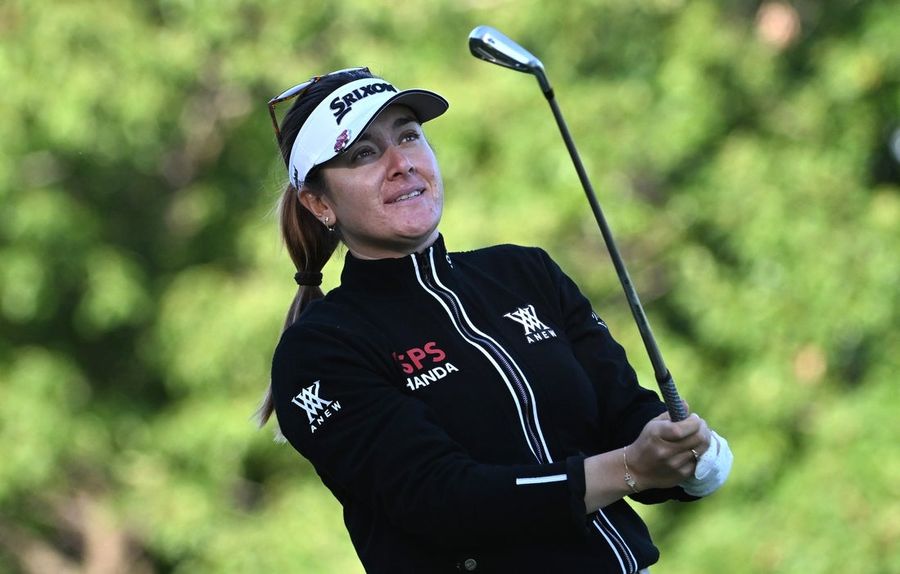
Deadspin | Hannah Green heats up late, wins in playoff for third LA title  Aug 21, 2025; Mississauga, Ontario, CAN;  Hannah Green plays her tee shot at the third hole during first round play at the CPKC Women’s Open golf tournament. Mandatory Credit: Dan Hamilton-Imagn Images   Australia’s Hannah Green stormed back from a six-shot deficit on the back nine and won a three-way playoff with a birdie putt to capture her third title in four years at the JM Eagle LA Championship on Sunday in Tarzana, Calif.  Green defeated South Koreans Jin Hee Im and Sei Young Kim when the trio replayed the par-4 18th hole at El Caballero Country Club.  Before that, Green made a late charge with four straight birdies and five in a six-hole span, and she needed help in the form of a bogey by then-leader Kim at the par-3 17th hole to create a tie at 17 under par. Green signed for 68, Kim settled for a 70 and Im had a 67 in the fourth round before they returned to the tee box for the playoff.  While Im missed the fairway and the green, Green and Kim were in the fairway and Green stuck her approach reasonably closer than Kim. After Kim missed a long birdie try and cleaned up for par, Green’s putt in the 12-foot range curled right to left and dropped.  Green, 29, has won three of the four editions of the LA Championship and three of her eight LPGA victories have come at the event. She claimed the 2023 and 2024 editions that were played at Wilshire Country Club, the former coming in a three-way playoff as well.  “I’m definitely nervous,” Green said about experiencing nerves in a playoff. “I felt like that wedge (second shot) probably flew a little bit further because of the nerves from within. No, I don’t think I would be doing this or be in contention if I wasn’t nervous. Those are the feelings that you want when you’re out here. That’s what makes you want to just do it over and over again.”  Green was 12 under for the tournament while starting the 11th hole. Kim eagled that hole to push the lead to 18 under, but Green made birdie before getting on a white-hot run with birdies at Nos. 13-16.   “Felt like I was doing what I kind of said I wanted to do yesterday: Hit more greens,” Green said. “Felt like it was quite difficult to get it close to the green. I felt like I was giving myself good opportunities but I had so many downhill putts and you just can’t really be aggressive with them.  “I honestly didn’t think I was in the tournament still. I was just like, ‘Oh well, just go for as many pins as possible,’ and got on a nice stretch there. … I’m just fortunate enough that I at least got into the playoff.”  Green, Im and Kim all will benefit from Saturday’s surprise announcement that the CEO of JM Eagle, Walter Wang, was raising the purse by  million to a total of .75 million. Across women’s golf, only the major championships and the CME Group Tour Championship are more lucrative.  South Korea’s Ina Yoon (69) finished one shot out of the playoff at 16 under. Thailand’s Patty Tavatanakit (70) tied for fifth at 14 under with Haeran Ryu of South Korea (66).  With her second win of the season, Green rose into third in the season-long Race to CME Globe points standings, behind only Nelly Korda and South Korea’s Hyo Joo Kim.  –Field Level Media   #Deadspin #Hannah #Green #heats #late #wins #playoff #titleAug 21, 2025; Mississauga, Ontario, CAN; Hannah Green plays her tee shot at the third hole during first round play at the CPKC Women’s Open golf tournament. Mandatory Credit: Dan Hamilton-Imagn Images

Australia’s Hannah Green stormed back from a six-shot deficit on the back nine and won a three-way playoff with a birdie putt to capture her third title in four years at the JM Eagle LA Championship on Sunday in Tarzana, Calif.

Green defeated South Koreans Jin Hee Im and Sei Young Kim when the trio replayed the par-4 18th hole at El Caballero Country Club.

Before that, Green made a late charge with four straight birdies and five in a six-hole span, and she needed help in the form of a bogey by then-leader Kim at the par-3 17th hole to create a tie at 17 under par. Green signed for 68, Kim settled for a 70 and Im had a 67 in the fourth round before they returned to the tee box for the playoff.

While Im missed the fairway and the green, Green and Kim were in the fairway and Green stuck her approach reasonably closer than Kim. After Kim missed a long birdie try and cleaned up for par, Green’s putt in the 12-foot range curled right to left and dropped.

Green, 29, has won three of the four editions of the LA Championship and three of her eight LPGA victories have come at the event. She claimed the 2023 and 2024 editions that were played at Wilshire Country Club, the former coming in a three-way playoff as well.

“I’m definitely nervous,” Green said about experiencing nerves in a playoff. “I felt like that wedge (second shot) probably flew a little bit further because of the nerves from within. No, I don’t think I would be doing this or be in contention if I wasn’t nervous. Those are the feelings that you want when you’re out here. That’s what makes you want to just do it over and over again.”


Green was 12 under for the tournament while starting the 11th hole. Kim eagled that hole to push the lead to 18 under, but Green made birdie before getting on a white-hot run with birdies at Nos. 13-16.

“Felt like I was doing what I kind of said I wanted to do yesterday: Hit more greens,” Green said. “Felt like it was quite difficult to get it close to the green. I felt like I was giving myself good opportunities but I had so many downhill putts and you just can’t really be aggressive with them.

“I honestly didn’t think I was in the tournament still. I was just like, ‘Oh well, just go for as many pins as possible,’ and got on a nice stretch there. … I’m just fortunate enough that I at least got into the playoff.”

Green, Im and Kim all will benefit from Saturday’s surprise announcement that the CEO of JM Eagle, Walter Wang, was raising the purse by $1 million to a total of $4.75 million. Across women’s golf, only the major championships and the CME Group Tour Championship are more lucrative.

South Korea’s Ina Yoon (69) finished one shot out of the playoff at 16 under. Thailand’s Patty Tavatanakit (70) tied for fifth at 14 under with Haeran Ryu of South Korea (66).

With her second win of the season, Green rose into third in the season-long Race to CME Globe points standings, behind only Nelly Korda and South Korea’s Hyo Joo Kim.

–Field Level Media

#Deadspin #Hannah #Green #heats #late #wins #playoff #title

Aug 21, 2025; Mississauga, Ontario, CAN; Hannah Green plays her tee shot at the third hole during first round play at the CPKC Women’s Open golf tournament. Mandatory Credit: Dan Hamilton-Imagn Images

Australia’s Hannah Green stormed back from a six-shot deficit on the back nine and won a three-way playoff with a birdie putt to capture her third title in four years at the JM Eagle LA Championship on Sunday in Tarzana, Calif.

Green defeated South Koreans Jin Hee Im and Sei Young Kim when the trio replayed the par-4 18th hole at El Caballero Country Club.

Before that, Green made a late charge with four straight birdies and five in a six-hole span, and she needed help in the form of a bogey by then-leader Kim at the par-3 17th hole to create a tie at 17 under par. Green signed for 68, Kim settled for a 70 and Im had a 67 in the fourth round before they returned to the tee box for the playoff.

While Im missed the fairway and the green, Green and Kim were in the fairway and Green stuck her approach reasonably closer than Kim. After Kim missed a long birdie try and cleaned up for par, Green’s putt in the 12-foot range curled right to left and dropped.

Green, 29, has won three of the four editions of the LA Championship and three of her eight LPGA victories have come at the event. She claimed the 2023 and 2024 editions that were played at Wilshire Country Club, the former coming in a three-way playoff as well.

“I’m definitely nervous,” Green said about experiencing nerves in a playoff. “I felt like that wedge (second shot) probably flew a little bit further because of the nerves from within. No, I don’t think I would be doing this or be in contention if I wasn’t nervous. Those are the feelings that you want when you’re out here. That’s what makes you want to just do it over and over again.”

Green was 12 under for the tournament while starting the 11th hole. Kim eagled that hole to push the lead to 18 under, but Green made birdie before getting on a white-hot run with birdies at Nos. 13-16.

“Felt like I was doing what I kind of said I wanted to do yesterday: Hit more greens,” Green said. “Felt like it was quite difficult to get it close to the green. I felt like I was giving myself good opportunities but I had so many downhill putts and you just can’t really be aggressive with them.

“I honestly didn’t think I was in the tournament still. I was just like, ‘Oh well, just go for as many pins as possible,’ and got on a nice stretch there. … I’m just fortunate enough that I at least got into the playoff.”

Green, Im and Kim all will benefit from Saturday’s surprise announcement that the CEO of JM Eagle, Walter Wang, was raising the purse by $1 million to a total of $4.75 million. Across women’s golf, only the major championships and the CME Group Tour Championship are more lucrative.

South Korea’s Ina Yoon (69) finished one shot out of the playoff at 16 under. Thailand’s Patty Tavatanakit (70) tied for fifth at 14 under with Haeran Ryu of South Korea (66).

With her second win of the season, Green rose into third in the season-long Race to CME Globe points standings, behind only Nelly Korda and South Korea’s Hyo Joo Kim.

–Field Level Media

Source link
#Deadspin #Hannah #Green #heats #late #wins #playoff #title

Previous post

Sanjay Manjrekar slams Dhoni fandom, CSK approach: “Sycophancy has seeped into cricket” <div id="content-body-70883748" itemprop="articleBody"><p>Chennai Super Kings has endured a poor start to IPL 2026, winning just two of its first six matches to sit seventh on the points table.</p><p>Skipper Ruturaj Gaikwad has come under scrutiny for the team’s struggles, with his own batting form also a concern. In six innings, he has managed only 82 runs.</p><p>Former India cricketer Sanjay Manjrekar, however, believes the CSK management must also shoulder the blame.</p><p>“This blame, I’m going to put at the doorstep of the owners and people who make the big decisions. Because Gaikwad, before he was captain, was phenomenal at the top of the order,” said Manjrekar on <i>Sportstar’s Insight Edge podcast</i>.</p><p>Manjrekar added that the overwhelming fandom surrounding CSK legend M.S. Dhoni has not helped Gaikwad’s situation.</p><p>“And then that thing with M.S Dhoni, whether he’s going to be playing, whether he’s going to be captain, they handled that very badly. And this is where you see the sycophancy of Indian culture that has seeped into cricket as well. I mean, there isn’t just a fan following of Dhoni, there is sycophancy around it,” he added.</p><p>He also recalled an incident that highlighted the intensity of Dhoni’s fandom.</p><p>“There was [this] one instance of Dhoni trying to put his bat into the crease, and it was a very close call. And I said, well, he is clearly short of the crease, and it should be run out. They [fans] got angry with me for saying that because it was anti-Dhoni. So somewhere they lost sight of the whole picture.”</p><p>Dhoni has not featured for CSK in IPL 2026 after suffering a calf strain in the lead-up to the season.</p><p>When asked if Dhoni’s return could ease Gaikwad’s burden, Manjrekar expressed doubts about how CSK would accommodate him in the XI.</p><p>“Maybe, but then you have to play Dhoni on the field. And how do you do that? I mean, increasingly, he’s finding it tough to deliver. So it was a bit of a joke when he used to come down the order and just play three or four balls. The coverage would hype that up as well – ‘What an innings.’ And it lasted four balls.</p><p>“So that’s not feasible anymore, and it was never going to be a long-term thing. So I can’t pretend to know how Ruturaj felt when M.S. was on the field, but not captaining, as opposed to M.S. not being there and he being solely in charge,” said Manjrekar.</p><p>Manjrekar also drew parallels between CSK and Mumbai Indians, pointing to an overreliance on big-name players.</p><p>“CSK and Mumbai Indians are slightly guilty of being emotionally connected and invested in the big-name, big-brand players a bit too much. CSK even more so with Dhoni. This means that you’re not getting people who are in their prime. It’s like living in the past a little bit. It’s just about getting guys who are in their prime in T20 cricket. It’s such a modern-day format, so it’s best to be current with everything that you do with your team,” he added.</p><p class="publish-time" id="end-of-article">Published on Apr 20, 2026</p></div> #Sanjay #Manjrekar #slams #Dhoni #fandom #CSK #approach #Sycophancy #seeped #cricket

Next post

India ‘extremely high’ doping risk: Athletics Integrity Unit <div id="content-body-70884018" itemprop="articleBody"><p>India has been elevated to a list of nations including Russia where there is an “extremely high” risk of doping, the Athletics Integrity Unit said on Monday.</p><p>The Athletics Federation of India (AFI) joins the likes of Russia, Belarus, Ethiopia, Kenya, Nigeria and Ukraine in the AIU’s highest rating of Category A after being moved up from Category B.</p><p>Category A means India’s athletes must now comply with more stringent anti-doping requirements.</p><p>The world’s most populous country ranked in the top two for the most anti-doping violations in athletics between 2022 and 2025, the AIU said.</p><p>“The doping situation in India has been high-risk for a long time and, unfortunately, the quality of the domestic anti-doping programme is simply not proportionate to the doping risk,” AIU chair David Howman said.</p><p>“While the AFI has advocated for anti-doping reforms within India, not enough has changed.</p><p>“The AIU will now work with the AFI to achieve reforms to safeguard the integrity of the sport of athletics, as we have done with other Category A member federations.”</p><p>The AIU is an independent body tasked with fighting corruption and wrongdoing, including doping, in athletics.</p><p>India is set to host the 2030 Commonwealth Games, seen as a stepping stone for its ambition of staging the 2036 Olympics.</p><p>World Anti-Doping Agency (WADA) chief Witold Banka was in New Delhi last week and said India is the biggest producer of performance-enhancing drugs.</p><p>However, he noted that India consistently leading the list of drug cheats will not hamper its chances of hosting prestigious global sporting events.</p><p class="publish-time" id="end-of-article">Published on Apr 20, 2026</p></div> #India #extremely #high #doping #risk #Athletics #Integrity #Unit

If we learned anything from this week’s NBA draft, it’s that this is not a good time to be unemployed.

Remember when free agency was a pot of gold at the end of the NBA rainbow? A draft class for the ages and a salary cap well past its expiration date have conspired to change that.

The genesis of this problem can be traced to the mutual “we were the winners” response by both the players and the owners in the NBA’s last collective bargaining agreement.

The star players got what they wanted – a rapidly escalating maximum-contract figure that allowed 14 players to earn more than $50 million last season and another 31 to pocket $35 million or more.

Meanwhile, the owners were able to slow inflation in the salary cap, which hasn’t come close to matching the increase in salaries.

The result: Remember all those teams accused of tanking? Well, 29 of them ended the 2025-26 season over the cap, and the one that didn’t – the Nets – barely snuck under it.

Owners don’t like being north of the NBA’s assigned budget because it comes at an additional cost. The loophole-less taxes married to the dreaded second apron are even more painful.

The outlook for the upcoming season is more of the same – higher prices for gas, but no additional disposable income with which to afford an electric car.

Suffice it to say, player agents are going to earn their money this summer. Or probably more likely, they’re going to get fired by free agents who were promised riches but will have to crawl back to their 2026 employer, begging that they re-sign a guy they were hoping to see walk so the team could pocket the savings.

Salary raises? More like pay cuts.

Now let’s mix in the draft results.

You start with four bad teams – the Wizards, Jazz, Grizzlies and Bulls – who might otherwise throw big bucks at overpriced former stars, which desperate franchises are renowned for doing.

Instead, they were able to latch onto four potential superstar players, which helps point them to the future rather than a win-now free agent.

That said, it’s hard to find any team that wasn’t happy with its draft result, whether it was landing a real nice prospect at pretty much any point of the first round, or trading out of the guaranteed contract for some nice second-round sleepers without taking a salary-cap hit.

So now reality sets in: Happy owners don’t go Christmas shopping in July.

If anybody stands to benefit from the penny-pinching off-season, it’s a college graduate with aspirations of being an NBA general manager someday. It’s going to be that kind of summer, where the smartest teams find a way to get better despite seemingly having no money to do so.

Script a gameplan and earn yourself a job. You know, like the guy who just earned the right to trade Giannis — Jon Horst.

It no doubt would start with the three most important letters of the NBA alphabet these days: TPE.

It’s why the Nets and Grizzlies were able to get big-name players for peanuts. Only these peanuts are macadamias — blank checks for the total amount of the Julius Randle and Isaiah Stewart contracts, available to use on free agency for Timberwolves and Pistons teams that would ordinarily not have any money to spend.

Sign-and-trades figure to be big as well. At this point, it appears like the only way LeBron James can get out of Los Angeles, presuming he wants a serious shot at another title.

But now that the Spurs have bulked up with Jayden Quaintance and Tarris Reed Jr., do they really need to sacrifice some of their precious young talent to get Victor Wembanyama a 40-something bodyguard?

Do the Warriors, having added a plug-and-play power forward in Yaxel Lendeborg, still have an interest in LeBron, short of the Lakers taking Kristaps Porzingis in a sign-and-trade?

Pity Porzingis, Jalen Duren, James Harden and Zach LaVine, let alone Peyton Watson, Norman Powell, Andrew Wiggins and Walker Kessler.

Take down those “For Sale” signs. They’re likely staying home.

Or can you say mid-level exception?

#NBA #Free #Agency #Tougher #Draft #Deadspin.com">NBA Free Agency Just Got Much Tougher After the Draft | Deadspin.com   If we learned anything from this week’s NBA draft, it’s that this is not a good time to be unemployed.Remember when free agency was a pot of gold at the end of the NBA rainbow? A draft class for the ages and a salary cap well past its expiration date have conspired to change that.The genesis of this problem can be traced to the mutual “we were the winners” response by both the players and the owners in the NBA’s last collective bargaining agreement.The star players got what they wanted – a rapidly escalating maximum-contract figure that allowed 14 players to earn more than  million last season and another 31 to pocket  million or more.Meanwhile, the owners were able to slow inflation in the salary cap, which hasn’t come close to matching the increase in salaries.The result: Remember all those teams accused of tanking? Well, 29 of them ended the 2025-26 season over the cap, and the one that didn’t – the Nets – barely snuck under it.Owners don’t like being north of the NBA’s assigned budget because it comes at an additional cost. The loophole-less taxes married to the dreaded second apron are even more painful.The outlook for the upcoming season is more of the same – higher prices for gas, but no additional disposable income with which to afford an electric car.Suffice it to say, player agents are going to earn their money this summer. Or probably more likely, they’re going to get fired by free agents who were promised riches but will have to crawl back to their 2026 employer, begging that they re-sign a guy they were hoping to see walk so the team could pocket the savings.Salary raises? More like pay cuts.Now let’s mix in the draft results.You start with four bad teams – the Wizards, Jazz, Grizzlies and Bulls – who might otherwise throw big bucks at overpriced former stars, which desperate franchises are renowned for doing.Instead, they were able to latch onto four potential superstar players, which helps point them to the future rather than a win-now free agent.That said, it’s hard to find any team that wasn’t happy with its draft result, whether it was landing a real nice prospect at pretty much any point of the first round, or trading out of the guaranteed contract for some nice second-round sleepers without taking a salary-cap hit.So now reality sets in: Happy owners don’t go Christmas shopping in July.If anybody stands to benefit from the penny-pinching off-season, it’s a college graduate with aspirations of being an NBA general manager someday. It’s going to be that kind of summer, where the smartest teams find a way to get better despite seemingly having no money to do so.Script a gameplan and earn yourself a job. You know, like the guy who just earned the right to trade Giannis — Jon Horst.It no doubt would start with the three most important letters of the NBA alphabet these days: TPE.It’s why the Nets and Grizzlies were able to get big-name players for peanuts. Only these peanuts are macadamias — blank checks for the total amount of the Julius Randle and Isaiah Stewart contracts, available to use on free agency for Timberwolves and Pistons teams that would ordinarily not have any money to spend.Sign-and-trades figure to be big as well. At this point, it appears like the only way LeBron James can get out of Los Angeles, presuming he wants a serious shot at another title.But now that the Spurs have bulked up with Jayden Quaintance and Tarris Reed Jr., do they really need to sacrifice some of their precious young talent to get Victor Wembanyama a 40-something bodyguard?Do the Warriors, having added a plug-and-play power forward in Yaxel Lendeborg, still have an interest in LeBron, short of the Lakers taking Kristaps Porzingis in a sign-and-trade?Pity Porzingis, Jalen Duren, James Harden and Zach LaVine, let alone Peyton Watson, Norman Powell, Andrew Wiggins and Walker Kessler.Take down those “For Sale” signs. They’re likely staying home.Or can you say mid-level exception?   #NBA #Free #Agency #Tougher #Draft #Deadspin.com

this week’s NBA draft, it’s that this is not a good time to be unemployed.

Remember when free agency was a pot of gold at the end of the NBA rainbow? A draft class for the ages and a salary cap well past its expiration date have conspired to change that.

The genesis of this problem can be traced to the mutual “we were the winners” response by both the players and the owners in the NBA’s last collective bargaining agreement.

The star players got what they wanted – a rapidly escalating maximum-contract figure that allowed 14 players to earn more than $50 million last season and another 31 to pocket $35 million or more.

Meanwhile, the owners were able to slow inflation in the salary cap, which hasn’t come close to matching the increase in salaries.

The result: Remember all those teams accused of tanking? Well, 29 of them ended the 2025-26 season over the cap, and the one that didn’t – the Nets – barely snuck under it.

Owners don’t like being north of the NBA’s assigned budget because it comes at an additional cost. The loophole-less taxes married to the dreaded second apron are even more painful.

The outlook for the upcoming season is more of the same – higher prices for gas, but no additional disposable income with which to afford an electric car.

Suffice it to say, player agents are going to earn their money this summer. Or probably more likely, they’re going to get fired by free agents who were promised riches but will have to crawl back to their 2026 employer, begging that they re-sign a guy they were hoping to see walk so the team could pocket the savings.

Salary raises? More like pay cuts.

Now let’s mix in the draft results.

You start with four bad teams – the Wizards, Jazz, Grizzlies and Bulls – who might otherwise throw big bucks at overpriced former stars, which desperate franchises are renowned for doing.

Instead, they were able to latch onto four potential superstar players, which helps point them to the future rather than a win-now free agent.

That said, it’s hard to find any team that wasn’t happy with its draft result, whether it was landing a real nice prospect at pretty much any point of the first round, or trading out of the guaranteed contract for some nice second-round sleepers without taking a salary-cap hit.

So now reality sets in: Happy owners don’t go Christmas shopping in July.

If anybody stands to benefit from the penny-pinching off-season, it’s a college graduate with aspirations of being an NBA general manager someday. It’s going to be that kind of summer, where the smartest teams find a way to get better despite seemingly having no money to do so.

Script a gameplan and earn yourself a job. You know, like the guy who just earned the right to trade Giannis — Jon Horst.

It no doubt would start with the three most important letters of the NBA alphabet these days: TPE.

It’s why the Nets and Grizzlies were able to get big-name players for peanuts. Only these peanuts are macadamias — blank checks for the total amount of the Julius Randle and Isaiah Stewart contracts, available to use on free agency for Timberwolves and Pistons teams that would ordinarily not have any money to spend.

Sign-and-trades figure to be big as well. At this point, it appears like the only way LeBron James can get out of Los Angeles, presuming he wants a serious shot at another title.

But now that the Spurs have bulked up with Jayden Quaintance and Tarris Reed Jr., do they really need to sacrifice some of their precious young talent to get Victor Wembanyama a 40-something bodyguard?

Do the Warriors, having added a plug-and-play power forward in Yaxel Lendeborg, still have an interest in LeBron, short of the Lakers taking Kristaps Porzingis in a sign-and-trade?

Pity Porzingis, Jalen Duren, James Harden and Zach LaVine, let alone Peyton Watson, Norman Powell, Andrew Wiggins and Walker Kessler.

Take down those “For Sale” signs. They’re likely staying home.

Or can you say mid-level exception?

#NBA #Free #Agency #Tougher #Draft #Deadspin.com">NBA Free Agency Just Got Much Tougher After the Draft | Deadspin.com

If we learned anything from this week’s NBA draft, it’s that this is not a good time to be unemployed.

Remember when free agency was a pot of gold at the end of the NBA rainbow? A draft class for the ages and a salary cap well past its expiration date have conspired to change that.

The genesis of this problem can be traced to the mutual “we were the winners” response by both the players and the owners in the NBA’s last collective bargaining agreement.

The star players got what they wanted – a rapidly escalating maximum-contract figure that allowed 14 players to earn more than $50 million last season and another 31 to pocket $35 million or more.

Meanwhile, the owners were able to slow inflation in the salary cap, which hasn’t come close to matching the increase in salaries.

The result: Remember all those teams accused of tanking? Well, 29 of them ended the 2025-26 season over the cap, and the one that didn’t – the Nets – barely snuck under it.

Owners don’t like being north of the NBA’s assigned budget because it comes at an additional cost. The loophole-less taxes married to the dreaded second apron are even more painful.

The outlook for the upcoming season is more of the same – higher prices for gas, but no additional disposable income with which to afford an electric car.

Suffice it to say, player agents are going to earn their money this summer. Or probably more likely, they’re going to get fired by free agents who were promised riches but will have to crawl back to their 2026 employer, begging that they re-sign a guy they were hoping to see walk so the team could pocket the savings.

Salary raises? More like pay cuts.

Now let’s mix in the draft results.

You start with four bad teams – the Wizards, Jazz, Grizzlies and Bulls – who might otherwise throw big bucks at overpriced former stars, which desperate franchises are renowned for doing.

Instead, they were able to latch onto four potential superstar players, which helps point them to the future rather than a win-now free agent.

That said, it’s hard to find any team that wasn’t happy with its draft result, whether it was landing a real nice prospect at pretty much any point of the first round, or trading out of the guaranteed contract for some nice second-round sleepers without taking a salary-cap hit.

So now reality sets in: Happy owners don’t go Christmas shopping in July.

If anybody stands to benefit from the penny-pinching off-season, it’s a college graduate with aspirations of being an NBA general manager someday. It’s going to be that kind of summer, where the smartest teams find a way to get better despite seemingly having no money to do so.

Script a gameplan and earn yourself a job. You know, like the guy who just earned the right to trade Giannis — Jon Horst.

It no doubt would start with the three most important letters of the NBA alphabet these days: TPE.

It’s why the Nets and Grizzlies were able to get big-name players for peanuts. Only these peanuts are macadamias — blank checks for the total amount of the Julius Randle and Isaiah Stewart contracts, available to use on free agency for Timberwolves and Pistons teams that would ordinarily not have any money to spend.

Sign-and-trades figure to be big as well. At this point, it appears like the only way LeBron James can get out of Los Angeles, presuming he wants a serious shot at another title.

But now that the Spurs have bulked up with Jayden Quaintance and Tarris Reed Jr., do they really need to sacrifice some of their precious young talent to get Victor Wembanyama a 40-something bodyguard?

Do the Warriors, having added a plug-and-play power forward in Yaxel Lendeborg, still have an interest in LeBron, short of the Lakers taking Kristaps Porzingis in a sign-and-trade?

Pity Porzingis, Jalen Duren, James Harden and Zach LaVine, let alone Peyton Watson, Norman Powell, Andrew Wiggins and Walker Kessler.

Take down those “For Sale” signs. They’re likely staying home.

Or can you say mid-level exception?

#NBA #Free #Agency #Tougher #Draft #Deadspin.com

Austria vs. Algeria isn’t exactly the kind of match that soccer fans have circled on their calendar when it comes to the World Cup. Set to take place at 10 p.m. ET on Saturday night, it’s not exactly a match brimming with star players, potential Golden Boot winners, or elite club talent — but it’s rich in historical hatred. That has transformed a relatively ho-hum Group Stage match into must-watch television when it comes to drama.

As it stands, both teams are tied with three points in Group J after beating Jordan and losing to Argentina. The only thing keeping Austria ahead is their 0 goal differential, to Algeria’s -2. This makes the math pretty darn easy for Saturday night: If Algeria wins, they’re through to the knockout round, if Austria either wins or ties, then they’re through. The drama comes from a similar scenario that happened in 1982 when Austria and Algeria shared a group, and an incident that’s so infamous it has its own title in three different languages, translating as: “The Disgrace of Gijón,” “The Shame of Gijón,” and “The Match of Shame.”

The 1982 World Cup in Spain was the first cup Algeria ever qualified for. Little was expected out of the debuting nation, especially when it was announced they would share Group 2 with Austria, Chile, and powerhouse West Germany. Written off by everyone outside of Algiers, things took a dramatic turn in the opening game when Algeria stunned West Germany in one of the biggest upsets in World Cup history. The 2-1 win was so unimaginable that it was compared to South Korea’s win over Italy at the 1966 World Cup for the greatest upset of all time.

It immediately made Algeria stand out, and it seemed plausible they might actually be able to put up a fight. The team lost 2-0 to Austria in their second game, but fought back to beat Chile 3-2. At the time a win was worth two points and a draw was one, which left Algeria second in the standings behind Austria with one game to play. They would need to wait to see what happened between West Germany and Austria to decide their fate.

We don’t need to hundreds of years of world history to understand the relationship with Austria and Germany outside of the fact they were allies for generations, and the two German-speaking nations faced off in the final match of the group. The group had four possible outcomes depending on what happened.

  1. Austria wins, meaning that Austria and Algeria advance
  2. Austria and Germany tie, meaning that Austria and Algeria advance
  3. West Germany wins by fewer than three goals, meaning Austria and West Germany advance
  4. West Germany wins by four goals or greater, meaning West Germany and Algeria advance

There was one scenario, No. 3, that would cause both nations to guarantee they would advance. West Germany had to win the game, but not beat Austria so badly that it took their goal differential below Algeria. The Disgrace of Gijón was on.

It’s unclear when the teams made a non-aggression pact, but it was clear from the kickoff that this wasn’t going to be a normal game. West Germany scored within the first 10 minutes with relative ease, then the game ground to a halt. For 80 minutes, the sides passed the ball inside their own half — often kicking back to the keeper who would then deliver a long ball into the other side of the field, at which point the other team would just pointlessly pass the ball around. If anyone found themselves close to a scoring opportunity they would wildly shoot the ball off target, just to preserve the 1-0 score until the final whistle.

There was so much disgust from everyone observing that there were in-game protests. Booing rang out through the stadium as fans realized what Austria and West Germany were doing, while German radio announcer Eberhard Stanjek refused to commentate the game any longer. It was similarly decried in Austria, where TV announcer Robert Seeger told viewers to turn off the game.

After 90 minutes it was over. West Germany won 1-0, meaning they would go through to the knockout round with Austria. Algeria was left holding the bag, being eliminated by goal differential. Algeria appealed to FIFA, but the governing body said that neither team had broken the rules — even if they had gone against the spirit of the game.

This brings us to Saturday night. 34 years of anger over “The Disgrace of Gijón” has a chance to be rectified with vengeance. If Algeria beats Austria, they will advance and eliminate the team that screwed them over in 1982. Sure, the players on both teams might not remember — but Algerians do, and this would be a small measure of justice. That mans the game on Saturday night means much, much more than a simple Group Stage game, it’s for national pride.

#Austria #Algeria #World #Cup #grudge #match #years #making">Austria vs. Algeria is a World Cup grudge match 34 years in the making  Austria vs. Algeria isn’t exactly the kind of match that soccer fans have circled on their calendar when it comes to the World Cup. Set to take place at 10 p.m. ET on Saturday night, it’s not exactly a match brimming with star players, potential Golden Boot winners, or elite club talent — but it’s rich in historical hatred. That has transformed a relatively ho-hum Group Stage match into must-watch television when it comes to drama.As it stands, both teams are tied with three points in Group J after beating Jordan and losing to Argentina. The only thing keeping Austria ahead is their 0 goal differential, to Algeria’s -2. This makes the math pretty darn easy for Saturday night: If Algeria wins, they’re through to the knockout round, if Austria either wins or ties, then they’re through. The drama comes from a similar scenario that happened in 1982 when Austria and Algeria shared a group, and an incident that’s so infamous it has its own title in three different languages, translating as: “The Disgrace of Gijón,” “The Shame of Gijón,” and “The Match of Shame.”The 1982 World Cup in Spain was the first cup Algeria ever qualified for. Little was expected out of the debuting nation, especially when it was announced they would share Group 2 with Austria, Chile, and powerhouse West Germany. Written off by everyone outside of Algiers, things took a dramatic turn in the opening game when Algeria stunned West Germany in one of the biggest upsets in World Cup history. The 2-1 win was so unimaginable that it was compared to South Korea’s win over Italy at the 1966 World Cup for the greatest upset of all time.It immediately made Algeria stand out, and it seemed plausible they might actually be able to put up a fight. The team lost 2-0 to Austria in their second game, but fought back to beat Chile 3-2. At the time a win was worth two points and a draw was one, which left Algeria second in the standings behind Austria with one game to play. They would need to wait to see what happened between West Germany and Austria to decide their fate.We don’t need to hundreds of years of world history to understand the relationship with Austria and Germany outside of the fact they were allies for generations, and the two German-speaking nations faced off in the final match of the group. The group had four possible outcomes depending on what happened.Austria wins, meaning that Austria and Algeria advanceAustria and Germany tie, meaning that Austria and Algeria advanceWest Germany wins by fewer than three goals, meaning Austria and West Germany advanceWest Germany wins by four goals or greater, meaning West Germany and Algeria advanceThere was one scenario, No. 3, that would cause both nations to guarantee they would advance. West Germany had to win the game, but not beat Austria so badly that it took their goal differential below Algeria. The Disgrace of Gijón was on.It’s unclear when the teams made a non-aggression pact, but it was clear from the kickoff that this wasn’t going to be a normal game. West Germany scored within the first 10 minutes with relative ease, then the game ground to a halt. For 80 minutes, the sides passed the ball inside their own half — often kicking back to the keeper who would then deliver a long ball into the other side of the field, at which point the other team would just pointlessly pass the ball around. If anyone found themselves close to a scoring opportunity they would wildly shoot the ball off target, just to preserve the 1-0 score until the final whistle.There was so much disgust from everyone observing that there were in-game protests. Booing rang out through the stadium as fans realized what Austria and West Germany were doing, while German radio announcer Eberhard Stanjek refused to commentate the game any longer. It was similarly decried in Austria, where TV announcer Robert Seeger told viewers to turn off the game.After 90 minutes it was over. West Germany won 1-0, meaning they would go through to the knockout round with Austria. Algeria was left holding the bag, being eliminated by goal differential. Algeria appealed to FIFA, but the governing body said that neither team had broken the rules — even if they had gone against the spirit of the game.This brings us to Saturday night. 34 years of anger over “The Disgrace of Gijón” has a chance to be rectified with vengeance. If Algeria beats Austria, they will advance and eliminate the team that screwed them over in 1982. Sure, the players on both teams might not remember — but Algerians do, and this would be a small measure of justice. That mans the game on Saturday night means much, much more than a simple Group Stage game, it’s for national pride.  #Austria #Algeria #World #Cup #grudge #match #years #making

Post Comment