×
Deadspin | LeBron James: Too soon to determine future plans  May 11, 2026; Los Angeles, California, USA; Los Angeles Lakers forward LeBron James (23) controls the ball against Oklahoma City Thunder guard Luguentz Dort (5) during the first half in game four of the second round of the 2026 NBA Playoffs at Crypto.com Arena. Mandatory Credit: Gary A. Vasquez-Imagn Images   LeBron James wasn’t ready to make a decision about his NBA future in the wake of the Los Angeles Lakers’ season-ending loss to the Oklahoma City Thunder on Monday.  The visiting Thunder prevailed 115-110 to sweep a Western Conference semifinal series despite James registering 24 points and a game-high 12 rebounds.  James, 41, just completed his record-setting 23rd NBA season, and the league’s all-time leading scorer is heading into unrestricted free agency.  “What my future (holds), I don’t know, obviously,” he said after the defeat. “I mean, this is obviously still fresh from obviously losing and I don’t know. I mean, I don’t know what the future holds for me obviously as it stands right now tonight.  “I got a lot of time to sit back like I think I said last year after we lost, I think to Minnesota, to go back and recalibrate with my family and talk with them and spend some time with them and then when the time comes, I’ll obviously you guys will know what I decide to do.”  James was selected to his 22nd consecutive All-Star Game as he thrived in an unfamiliar role for much of the season. Luka Doncic was the Lakers’ top offensive threat, and he led the league with an average of 33.5 points per game. Austin Reaves ranked second on the team at 23.3 ppg, with James third at 20.9 ppg.  James contributed 7.2 assists and 6.1 rebounds per contest.  Doncic missed all of the Lakers’ playoff games due to a hamstring injury. Reaves sat out the final five regular-season games and first four postseason games because of oblique strains.   In the playoffs, James averaged 23.2 points, 7.3 assists and 6.7 rebounds.  “Obviously we fell a little short, but I’m not looking at my year as a disappointment, that’s for damn sure,” James said. “I was put in some positions I never played in my career before, actually in my life. I’ve never been a third option in my life.  “So, to be able to thrive in that role for that period of time and then have to step back into the role that I’ve been accustomed with over my career or my life playing this sport and be able to thrive under that and then just my teammates allowing me to lead them under extreme circumstances, I thought that was pretty cool for me at this stage of my career.”  Reaves, 27, also has a decision to make about his future. The 27-year-old guard has a .9 million player option that he is expected to decline to become an unrestricted free agent.  “It’s been fun. It’s been a joy. It’s been a grind,” Reaves said after the Lakers’ Monday loss. “A lot of things didn’t go our way this season and there were a lot of opportunities for us to quit, and you know, that’s not who we got in the locker room or the organization. Everybody stuck together.  “I’ve been around the NBA for five years now. I know a lot of teams would have given up (due to late-season injuries), and that wasn’t the case with this team.”  –Field Level Media   #Deadspin #LeBron #James #determine #future #plans
Deadspin | LeBron James: Too soon to determine future plans
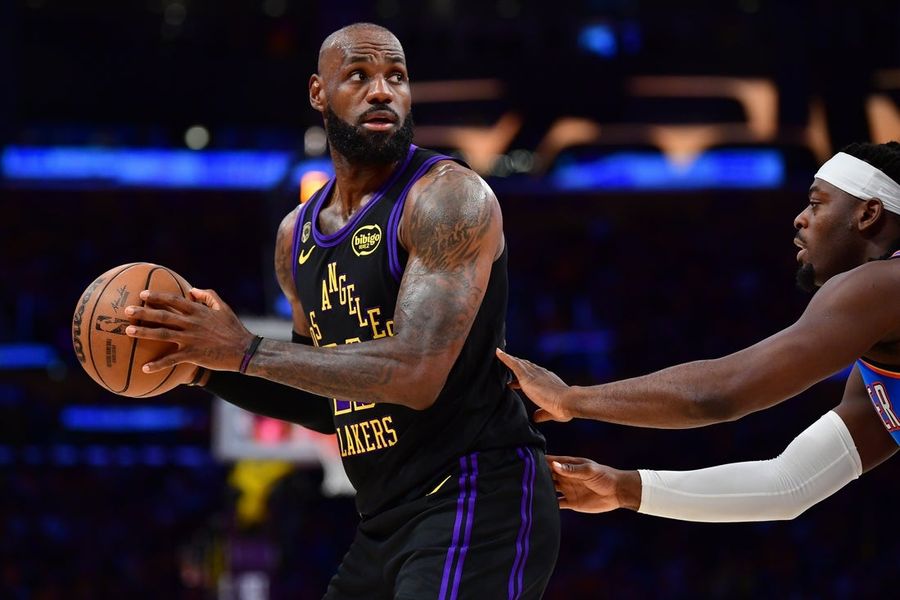
Deadspin | LeBron James: Too soon to determine future plans  May 11, 2026; Los Angeles, California, USA; Los Angeles Lakers forward LeBron James (23) controls the ball against Oklahoma City Thunder guard Luguentz Dort (5) during the first half in game four of the second round of the 2026 NBA Playoffs at Crypto.com Arena. Mandatory Credit: Gary A. Vasquez-Imagn Images   LeBron James wasn’t ready to make a decision about his NBA future in the wake of the Los Angeles Lakers’ season-ending loss to the Oklahoma City Thunder on Monday.  The visiting Thunder prevailed 115-110 to sweep a Western Conference semifinal series despite James registering 24 points and a game-high 12 rebounds.  James, 41, just completed his record-setting 23rd NBA season, and the league’s all-time leading scorer is heading into unrestricted free agency.  “What my future (holds), I don’t know, obviously,” he said after the defeat. “I mean, this is obviously still fresh from obviously losing and I don’t know. I mean, I don’t know what the future holds for me obviously as it stands right now tonight.  “I got a lot of time to sit back like I think I said last year after we lost, I think to Minnesota, to go back and recalibrate with my family and talk with them and spend some time with them and then when the time comes, I’ll obviously you guys will know what I decide to do.”  James was selected to his 22nd consecutive All-Star Game as he thrived in an unfamiliar role for much of the season. Luka Doncic was the Lakers’ top offensive threat, and he led the league with an average of 33.5 points per game. Austin Reaves ranked second on the team at 23.3 ppg, with James third at 20.9 ppg.  James contributed 7.2 assists and 6.1 rebounds per contest.  Doncic missed all of the Lakers’ playoff games due to a hamstring injury. Reaves sat out the final five regular-season games and first four postseason games because of oblique strains.   In the playoffs, James averaged 23.2 points, 7.3 assists and 6.7 rebounds.  “Obviously we fell a little short, but I’m not looking at my year as a disappointment, that’s for damn sure,” James said. “I was put in some positions I never played in my career before, actually in my life. I’ve never been a third option in my life.  “So, to be able to thrive in that role for that period of time and then have to step back into the role that I’ve been accustomed with over my career or my life playing this sport and be able to thrive under that and then just my teammates allowing me to lead them under extreme circumstances, I thought that was pretty cool for me at this stage of my career.”  Reaves, 27, also has a decision to make about his future. The 27-year-old guard has a .9 million player option that he is expected to decline to become an unrestricted free agent.  “It’s been fun. It’s been a joy. It’s been a grind,” Reaves said after the Lakers’ Monday loss. “A lot of things didn’t go our way this season and there were a lot of opportunities for us to quit, and you know, that’s not who we got in the locker room or the organization. Everybody stuck together.  “I’ve been around the NBA for five years now. I know a lot of teams would have given up (due to late-season injuries), and that wasn’t the case with this team.”  –Field Level Media   #Deadspin #LeBron #James #determine #future #plansMay 11, 2026; Los Angeles, California, USA; Los Angeles Lakers forward LeBron James (23) controls the ball against Oklahoma City Thunder guard Luguentz Dort (5) during the first half in game four of the second round of the 2026 NBA Playoffs at Crypto.com Arena. Mandatory Credit: Gary A. Vasquez-Imagn Images

LeBron James wasn’t ready to make a decision about his NBA future in the wake of the Los Angeles Lakers’ season-ending loss to the Oklahoma City Thunder on Monday.

The visiting Thunder prevailed 115-110 to sweep a Western Conference semifinal series despite James registering 24 points and a game-high 12 rebounds.

James, 41, just completed his record-setting 23rd NBA season, and the league’s all-time leading scorer is heading into unrestricted free agency.

“What my future (holds), I don’t know, obviously,” he said after the defeat. “I mean, this is obviously still fresh from obviously losing and I don’t know. I mean, I don’t know what the future holds for me obviously as it stands right now tonight.

“I got a lot of time to sit back like I think I said last year after we lost, I think to Minnesota, to go back and recalibrate with my family and talk with them and spend some time with them and then when the time comes, I’ll obviously you guys will know what I decide to do.”

James was selected to his 22nd consecutive All-Star Game as he thrived in an unfamiliar role for much of the season. Luka Doncic was the Lakers’ top offensive threat, and he led the league with an average of 33.5 points per game. Austin Reaves ranked second on the team at 23.3 ppg, with James third at 20.9 ppg.

James contributed 7.2 assists and 6.1 rebounds per contest.


Doncic missed all of the Lakers’ playoff games due to a hamstring injury. Reaves sat out the final five regular-season games and first four postseason games because of oblique strains.

In the playoffs, James averaged 23.2 points, 7.3 assists and 6.7 rebounds.

“Obviously we fell a little short, but I’m not looking at my year as a disappointment, that’s for damn sure,” James said. “I was put in some positions I never played in my career before, actually in my life. I’ve never been a third option in my life.

“So, to be able to thrive in that role for that period of time and then have to step back into the role that I’ve been accustomed with over my career or my life playing this sport and be able to thrive under that and then just my teammates allowing me to lead them under extreme circumstances, I thought that was pretty cool for me at this stage of my career.”

Reaves, 27, also has a decision to make about his future. The 27-year-old guard has a $14.9 million player option that he is expected to decline to become an unrestricted free agent.

“It’s been fun. It’s been a joy. It’s been a grind,” Reaves said after the Lakers’ Monday loss. “A lot of things didn’t go our way this season and there were a lot of opportunities for us to quit, and you know, that’s not who we got in the locker room or the organization. Everybody stuck together.

“I’ve been around the NBA for five years now. I know a lot of teams would have given up (due to late-season injuries), and that wasn’t the case with this team.”

–Field Level Media

#Deadspin #LeBron #James #determine #future #plans

May 11, 2026; Los Angeles, California, USA; Los Angeles Lakers forward LeBron James (23) controls the ball against Oklahoma City Thunder guard Luguentz Dort (5) during the first half in game four of the second round of the 2026 NBA Playoffs at Crypto.com Arena. Mandatory Credit: Gary A. Vasquez-Imagn Images

LeBron James wasn’t ready to make a decision about his NBA future in the wake of the Los Angeles Lakers’ season-ending loss to the Oklahoma City Thunder on Monday.

The visiting Thunder prevailed 115-110 to sweep a Western Conference semifinal series despite James registering 24 points and a game-high 12 rebounds.

James, 41, just completed his record-setting 23rd NBA season, and the league’s all-time leading scorer is heading into unrestricted free agency.

“What my future (holds), I don’t know, obviously,” he said after the defeat. “I mean, this is obviously still fresh from obviously losing and I don’t know. I mean, I don’t know what the future holds for me obviously as it stands right now tonight.

“I got a lot of time to sit back like I think I said last year after we lost, I think to Minnesota, to go back and recalibrate with my family and talk with them and spend some time with them and then when the time comes, I’ll obviously you guys will know what I decide to do.”

James was selected to his 22nd consecutive All-Star Game as he thrived in an unfamiliar role for much of the season. Luka Doncic was the Lakers’ top offensive threat, and he led the league with an average of 33.5 points per game. Austin Reaves ranked second on the team at 23.3 ppg, with James third at 20.9 ppg.

James contributed 7.2 assists and 6.1 rebounds per contest.

Doncic missed all of the Lakers’ playoff games due to a hamstring injury. Reaves sat out the final five regular-season games and first four postseason games because of oblique strains.

In the playoffs, James averaged 23.2 points, 7.3 assists and 6.7 rebounds.

“Obviously we fell a little short, but I’m not looking at my year as a disappointment, that’s for damn sure,” James said. “I was put in some positions I never played in my career before, actually in my life. I’ve never been a third option in my life.

“So, to be able to thrive in that role for that period of time and then have to step back into the role that I’ve been accustomed with over my career or my life playing this sport and be able to thrive under that and then just my teammates allowing me to lead them under extreme circumstances, I thought that was pretty cool for me at this stage of my career.”

Reaves, 27, also has a decision to make about his future. The 27-year-old guard has a $14.9 million player option that he is expected to decline to become an unrestricted free agent.

“It’s been fun. It’s been a joy. It’s been a grind,” Reaves said after the Lakers’ Monday loss. “A lot of things didn’t go our way this season and there were a lot of opportunities for us to quit, and you know, that’s not who we got in the locker room or the organization. Everybody stuck together.

“I’ve been around the NBA for five years now. I know a lot of teams would have given up (due to late-season injuries), and that wasn’t the case with this team.”

–Field Level Media

Source link
#Deadspin #LeBron #James #determine #future #plans

In sport, memory lives in numbers and often dominates discussions across eras. Scorecards eventually become history, though for many fans, they are much more.

Ardent baseball fans treat scorecards as precious collectibles, while cricket enthusiasts can swear by a legendary “ton” or a definitive “five-fer” in a specific Test match. Yet, truth often slips through the gaps, much like a cover drive imperiously threaded between point and mid-off.

Baseball offers a clinical verdict: a batter is retired, and the scorecard records the outcome with total indifference. It matters little whether a fielder hauls in the ball at full stretch in right field or if it settles comfortably into a waiting glove in centre. The act is completed, the moment fades, and the numbers move on—offering no room for the artistry of the effort.

A Lesson from the Hardwood

Basketball has always had an answer to this conundrum. For the Los Angeles Lakers, whenever Earvin “Magic” Johnson threaded a pass to Kareem Abdul-Jabbar, the finish was only half the act. The assist carried weight, etched into the record books as a vital statistic.

In basketball, the creator and the completer share the spotlight, ensuring that fans and history books alike acknowledge the setup as much as the score.

A case for the invisible assist — Why Cricket Needs an ‘Assist’ Column  In sport, memory lives in numbers and often dominates discussions across eras.  Scorecards eventually become history, though for many fans, they are much more.Ardent baseball fans treat scorecards as precious collectibles, while cricket enthusiasts can swear by a legendary “ton” or a definitive “five-fer” in a specific Test match. Yet, truth often slips through the gaps, much like a cover drive imperiously threaded between point and mid-off.Baseball offers a clinical verdict: a batter is retired, and the scorecard records the outcome with total indifference. It matters little whether a fielder hauls in the ball at full stretch in right field or if it settles comfortably into a waiting glove in centre. The act is completed, the moment fades, and the numbers move on—offering no room for the artistry of the effort.A Lesson from the HardwoodBasketball has always had an answer to this conundrum. For the Los Angeles Lakers, whenever Earvin “Magic” Johnson threaded a pass to Kareem Abdul-Jabbar, the finish was only half the act. The assist carried weight, etched into the record books as a vital statistic.In basketball, the creator and the completer share the spotlight, ensuring that fans and history books alike acknowledge the setup as much as the score.Brothers of destruction: Magic Johnson and Kareem Abdul-Jabbar formed one of the deadliest combinations in NBA, leading the attack for Los Angeles Lakers.
                                                            | Photo Credit: 
                                The Hindu Photo Library
                            Brothers of destruction: Magic Johnson and Kareem Abdul-Jabbar formed one of the deadliest combinations in NBA, leading the attack for Los Angeles Lakers.
                                                            | Photo Credit: 
                                The Hindu Photo Library
                                                    The Evolution of the GameStatisticians in cricket seemingly had a different idea. Perhaps pioneers like Bill Frindall, B.B. Mama, Anandji Dossa, and Sudhir Vaidya never anticipated the acrobatic artistry of a Suryakumar Yadav at the Kensington Oval in 2024 or a Shreyas Iyer in 2026.Cricket commentary celebrates the late swing and the diving stop; it applauds fielding brilliance with roars and endless replays. Yet, when the dust settles, the record often ignores this evolving dimension of the game. During a telecast, we are now accustomed to wagon wheels, Manhattan charts, and “the worm”—visual aids that add spice to an already well-made biryani—but the scorecard remains stubbornly static.The Wankhede MiracleA recent night at the Wankhede Stadium during the 2026 Indian Premier League (IPL) season provided a jarring reminder of this oversight. In the 24th match between the Punjab Kings and Mumbai Indians, the ball sailed toward the boundary in the 18th over. Shreyas Iyer produced a moment of pure theatre.Stationed at long-on, he sprinted to his left, launched himself into the air, and plucked the ball from the sky. Mid-flight, as gravity pulled him toward the rope, instinct took over. He flicked the ball back into play just as he crossed the boundary, where Xavier Bartlett completed the relay. Hardik Pandya was sent on his way, and the stadium erupted.Key architect: Shreyas Iyer did not really take the catch of Hardik Pandya, but he played the most significant role in the dismissal.
                                                            | Photo Credit: 
                                PTI
                            Key architect: Shreyas Iyer did not really take the catch of Hardik Pandya, but he played the most significant role in the dismissal.
                                                            | Photo Credit: 
                                PTI
                                                    Ask anyone who “took” that catch, and the name they say will be Iyer. Yet, look at the scorecard, and Iyer’s name is nowhere to be found. In the history books, he doesn’t even receive an asterisk for this breathtaking fusion of athleticism, awareness, and timing.Similarly, when a catch bursts from the grasp of a diving first-slip fielder and is safely completed by a teammate at second slip, the scorecard credits only the finisher, leaving the initial effort, often the defining act, without even a mention.A Call for ChangeThe typical line on a scorecard reads: “c Fielder b Bowler.” Even if a substitute or an “Impact Player” takes the catch, their name is recognised. But in a relay situation, the player who does the heavy lifting—the “creator”—is erased from the official narrative.Cricket has evolved in almost every other dimension. Technology provides mountains of data for batters, bowlers, and coaches, yet we lack the statistical language to preserve teamwork in motion. The boundary relay catch is the purest example of a collaborative effort; without the first player, the second does not exist. Cricket doesn’t lack appreciation for fielding; it lacks the language to preserve it. An assist column would change that.
                                                            | Photo Credit: 
                                AP
                            

                            Cricket doesn’t lack appreciation for fielding; it lacks the language to preserve it. An assist column would change that.
                                                            | Photo Credit: 
                                AP
                                                    Imagine a child twenty years from now speaking about their father’s legendary catch. They pull up the scorecard to prove it, only to find a name that isn’t his. What do they point to? The video might survive in fragments, but the numbers—sport’s most trusted storytellers—will remain silent.Cricket doesn’t lack appreciation for fielding; it lacks the language to preserve it. An assist column wouldn’t just change a statistic; it would honour the invisible hand that shapes the game’s most defining moments. In a sport that prides itself on detail, this is one detail that has waited long enough to be seen.Published on May 12, 2026  #case #invisible #assist #Cricket #Assist #Column

Brothers of destruction: Magic Johnson and Kareem Abdul-Jabbar formed one of the deadliest combinations in NBA, leading the attack for Los Angeles Lakers. | Photo Credit: The Hindu Photo Library

lightbox-info

Brothers of destruction: Magic Johnson and Kareem Abdul-Jabbar formed one of the deadliest combinations in NBA, leading the attack for Los Angeles Lakers. | Photo Credit: The Hindu Photo Library

The Evolution of the Game

Statisticians in cricket seemingly had a different idea. Perhaps pioneers like Bill Frindall, B.B. Mama, Anandji Dossa, and Sudhir Vaidya never anticipated the acrobatic artistry of a Suryakumar Yadav at the Kensington Oval in 2024 or a Shreyas Iyer in 2026.

Cricket commentary celebrates the late swing and the diving stop; it applauds fielding brilliance with roars and endless replays. Yet, when the dust settles, the record often ignores this evolving dimension of the game. During a telecast, we are now accustomed to wagon wheels, Manhattan charts, and “the worm”—visual aids that add spice to an already well-made biryani—but the scorecard remains stubbornly static.

The Wankhede Miracle

A recent night at the Wankhede Stadium during the 2026 Indian Premier League (IPL) season provided a jarring reminder of this oversight. In the 24th match between the Punjab Kings and Mumbai Indians, the ball sailed toward the boundary in the 18th over. Shreyas Iyer produced a moment of pure theatre.

Stationed at long-on, he sprinted to his left, launched himself into the air, and plucked the ball from the sky. Mid-flight, as gravity pulled him toward the rope, instinct took over. He flicked the ball back into play just as he crossed the boundary, where Xavier Bartlett completed the relay. Hardik Pandya was sent on his way, and the stadium erupted.

Key architect: Shreyas Iyer did not really take the catch of Hardik Pandya, but he played the most significant role in the dismissal.

Key architect: Shreyas Iyer did not really take the catch of Hardik Pandya, but he played the most significant role in the dismissal. | Photo Credit: PTI

lightbox-info

Key architect: Shreyas Iyer did not really take the catch of Hardik Pandya, but he played the most significant role in the dismissal. | Photo Credit: PTI

Ask anyone who “took” that catch, and the name they say will be Iyer. Yet, look at the scorecard, and Iyer’s name is nowhere to be found. In the history books, he doesn’t even receive an asterisk for this breathtaking fusion of athleticism, awareness, and timing.

Similarly, when a catch bursts from the grasp of a diving first-slip fielder and is safely completed by a teammate at second slip, the scorecard credits only the finisher, leaving the initial effort, often the defining act, without even a mention.

A Call for Change

The typical line on a scorecard reads: “c Fielder b Bowler.” Even if a substitute or an “Impact Player” takes the catch, their name is recognised. But in a relay situation, the player who does the heavy lifting—the “creator”—is erased from the official narrative.

Cricket has evolved in almost every other dimension. Technology provides mountains of data for batters, bowlers, and coaches, yet we lack the statistical language to preserve teamwork in motion. The boundary relay catch is the purest example of a collaborative effort; without the first player, the second does not exist.

Cricket doesn’t lack appreciation for fielding; it lacks the language to preserve it. An assist column would change that.

Cricket doesn’t lack appreciation for fielding; it lacks the language to preserve it. An assist column would change that. | Photo Credit: AP

lightbox-info

Cricket doesn’t lack appreciation for fielding; it lacks the language to preserve it. An assist column would change that. | Photo Credit: AP

Imagine a child twenty years from now speaking about their father’s legendary catch. They pull up the scorecard to prove it, only to find a name that isn’t his. What do they point to? The video might survive in fragments, but the numbers—sport’s most trusted storytellers—will remain silent.

Cricket doesn’t lack appreciation for fielding; it lacks the language to preserve it. An assist column wouldn’t just change a statistic; it would honour the invisible hand that shapes the game’s most defining moments. In a sport that prides itself on detail, this is one detail that has waited long enough to be seen.

Published on May 12, 2026

#case #invisible #assist #Cricket #Assist #Column">A case for the invisible assist — Why Cricket Needs an ‘Assist’ Column  In sport, memory lives in numbers and often dominates discussions across eras.  Scorecards eventually become history, though for many fans, they are much more.Ardent baseball fans treat scorecards as precious collectibles, while cricket enthusiasts can swear by a legendary “ton” or a definitive “five-fer” in a specific Test match. Yet, truth often slips through the gaps, much like a cover drive imperiously threaded between point and mid-off.Baseball offers a clinical verdict: a batter is retired, and the scorecard records the outcome with total indifference. It matters little whether a fielder hauls in the ball at full stretch in right field or if it settles comfortably into a waiting glove in centre. The act is completed, the moment fades, and the numbers move on—offering no room for the artistry of the effort.A Lesson from the HardwoodBasketball has always had an answer to this conundrum. For the Los Angeles Lakers, whenever Earvin “Magic” Johnson threaded a pass to Kareem Abdul-Jabbar, the finish was only half the act. The assist carried weight, etched into the record books as a vital statistic.In basketball, the creator and the completer share the spotlight, ensuring that fans and history books alike acknowledge the setup as much as the score.Brothers of destruction: Magic Johnson and Kareem Abdul-Jabbar formed one of the deadliest combinations in NBA, leading the attack for Los Angeles Lakers.
                                                            | Photo Credit: 
                                The Hindu Photo Library
                            Brothers of destruction: Magic Johnson and Kareem Abdul-Jabbar formed one of the deadliest combinations in NBA, leading the attack for Los Angeles Lakers.
                                                            | Photo Credit: 
                                The Hindu Photo Library
                                                    The Evolution of the GameStatisticians in cricket seemingly had a different idea. Perhaps pioneers like Bill Frindall, B.B. Mama, Anandji Dossa, and Sudhir Vaidya never anticipated the acrobatic artistry of a Suryakumar Yadav at the Kensington Oval in 2024 or a Shreyas Iyer in 2026.Cricket commentary celebrates the late swing and the diving stop; it applauds fielding brilliance with roars and endless replays. Yet, when the dust settles, the record often ignores this evolving dimension of the game. During a telecast, we are now accustomed to wagon wheels, Manhattan charts, and “the worm”—visual aids that add spice to an already well-made biryani—but the scorecard remains stubbornly static.The Wankhede MiracleA recent night at the Wankhede Stadium during the 2026 Indian Premier League (IPL) season provided a jarring reminder of this oversight. In the 24th match between the Punjab Kings and Mumbai Indians, the ball sailed toward the boundary in the 18th over. Shreyas Iyer produced a moment of pure theatre.Stationed at long-on, he sprinted to his left, launched himself into the air, and plucked the ball from the sky. Mid-flight, as gravity pulled him toward the rope, instinct took over. He flicked the ball back into play just as he crossed the boundary, where Xavier Bartlett completed the relay. Hardik Pandya was sent on his way, and the stadium erupted.Key architect: Shreyas Iyer did not really take the catch of Hardik Pandya, but he played the most significant role in the dismissal.
                                                            | Photo Credit: 
                                PTI
                            Key architect: Shreyas Iyer did not really take the catch of Hardik Pandya, but he played the most significant role in the dismissal.
                                                            | Photo Credit: 
                                PTI
                                                    Ask anyone who “took” that catch, and the name they say will be Iyer. Yet, look at the scorecard, and Iyer’s name is nowhere to be found. In the history books, he doesn’t even receive an asterisk for this breathtaking fusion of athleticism, awareness, and timing.Similarly, when a catch bursts from the grasp of a diving first-slip fielder and is safely completed by a teammate at second slip, the scorecard credits only the finisher, leaving the initial effort, often the defining act, without even a mention.A Call for ChangeThe typical line on a scorecard reads: “c Fielder b Bowler.” Even if a substitute or an “Impact Player” takes the catch, their name is recognised. But in a relay situation, the player who does the heavy lifting—the “creator”—is erased from the official narrative.Cricket has evolved in almost every other dimension. Technology provides mountains of data for batters, bowlers, and coaches, yet we lack the statistical language to preserve teamwork in motion. The boundary relay catch is the purest example of a collaborative effort; without the first player, the second does not exist. Cricket doesn’t lack appreciation for fielding; it lacks the language to preserve it. An assist column would change that.
                                                            | Photo Credit: 
                                AP
                            

                            Cricket doesn’t lack appreciation for fielding; it lacks the language to preserve it. An assist column would change that.
                                                            | Photo Credit: 
                                AP
                                                    Imagine a child twenty years from now speaking about their father’s legendary catch. They pull up the scorecard to prove it, only to find a name that isn’t his. What do they point to? The video might survive in fragments, but the numbers—sport’s most trusted storytellers—will remain silent.Cricket doesn’t lack appreciation for fielding; it lacks the language to preserve it. An assist column wouldn’t just change a statistic; it would honour the invisible hand that shapes the game’s most defining moments. In a sport that prides itself on detail, this is one detail that has waited long enough to be seen.Published on May 12, 2026  #case #invisible #assist #Cricket #Assist #Column

Deadspin | Jim Colbert, 35-time professional winner, dies at 85  May 13, 2006; Sandestin, FL, USA; Jim Colbert tees off on the 14th hole of the Raven course during the second round of the Boeing Championships at Sandestin. Mandatory Credit: Jason Parkhurst Copyright © 2006 Jason Parkhurst    Jim Colbert, an eight-time winner on the PGA Tour and a 35-time professional winner overall, died on Sunday at the age of 85.  From 1969 to 1983, Colbert won eight tournaments on the tour, earning two playoff victories (2-0) in the process. One of those came in 1983 — a high mark calendar year for Colbert, the only year he won two tournaments — against Fuzzy Zoeller in the Colonial National Invitation.  Constantly adorned in his signature bucket hat, Colbert made an even bigger splash on the senior circuit, earning 20 senior PGA tour wins over a 10-year span from 1991 to 2001.  On that hat, Colbert came to embrace his signature look, after finding that people wouldn’t recognize him without it.  “Lee Trevino has the sombrero. Jack Nicklaus has the bear,” Colbert said. “I have my hat.”   Born in New Jersey, Colbert played golf and football before earning a football scholarship to attend Kansas State University. Following an injury, Colbert re-dedicated himself to golf, finishing runner-up at the 1964 NCAA Championship. He turned professional shortly thereafter.   After his turn on the PGA Tour, Colbert served as a golf analyst on ESPN before re-entering the game on the PGA Tour Champions circuit. He was an instant success there, winning three times in 1991 to earn Rookie of the Year honors.  Colbert had a public battle with prostate cancer in the late 1990s, but he rebounded to win another tournament in 1998, which resulted in his being named Comeback Player of the Year.  His continued involvement with his alma mater led to a friendship with longtime Kansas State football coach Bill Snyder and the construction of a golf course named in his honor, Colbert Hills, located in Manhattan, Kan.   “Jim had a positive influence on many, many lives,” Snyder said. “He never failed to step up to help when he was in a position to help his community and people in need.”  Colbert has been enshrined in the Kansas State Athletic Hall of Fame, the Kansas Sports Hall of Fame and the Las Vegas Golf Hall of Fame, among other honors.  –Field Level Media    #Deadspin #Jim #Colbert #35time #professional #winner #diesMay 13, 2006; Sandestin, FL, USA; Jim Colbert tees off on the 14th hole of the Raven course during the second round of the Boeing Championships at Sandestin. Mandatory Credit: Jason Parkhurst Copyright © 2006 Jason Parkhurst

Jim Colbert, an eight-time winner on the PGA Tour and a 35-time professional winner overall, died on Sunday at the age of 85.

From 1969 to 1983, Colbert won eight tournaments on the tour, earning two playoff victories (2-0) in the process. One of those came in 1983 — a high mark calendar year for Colbert, the only year he won two tournaments — against Fuzzy Zoeller in the Colonial National Invitation.

Constantly adorned in his signature bucket hat, Colbert made an even bigger splash on the senior circuit, earning 20 senior PGA tour wins over a 10-year span from 1991 to 2001.

On that hat, Colbert came to embrace his signature look, after finding that people wouldn’t recognize him without it.

“Lee Trevino has the sombrero. Jack Nicklaus has the bear,” Colbert said. “I have my hat.”


Born in New Jersey, Colbert played golf and football before earning a football scholarship to attend Kansas State University. Following an injury, Colbert re-dedicated himself to golf, finishing runner-up at the 1964 NCAA Championship. He turned professional shortly thereafter.

After his turn on the PGA Tour, Colbert served as a golf analyst on ESPN before re-entering the game on the PGA Tour Champions circuit. He was an instant success there, winning three times in 1991 to earn Rookie of the Year honors.

Colbert had a public battle with prostate cancer in the late 1990s, but he rebounded to win another tournament in 1998, which resulted in his being named Comeback Player of the Year.

His continued involvement with his alma mater led to a friendship with longtime Kansas State football coach Bill Snyder and the construction of a golf course named in his honor, Colbert Hills, located in Manhattan, Kan.

“Jim had a positive influence on many, many lives,” Snyder said. “He never failed to step up to help when he was in a position to help his community and people in need.”

Colbert has been enshrined in the Kansas State Athletic Hall of Fame, the Kansas Sports Hall of Fame and the Las Vegas Golf Hall of Fame, among other honors.


–Field Level Media

#Deadspin #Jim #Colbert #35time #professional #winner #dies">Deadspin | Jim Colbert, 35-time professional winner, dies at 85  May 13, 2006; Sandestin, FL, USA; Jim Colbert tees off on the 14th hole of the Raven course during the second round of the Boeing Championships at Sandestin. Mandatory Credit: Jason Parkhurst Copyright © 2006 Jason Parkhurst    Jim Colbert, an eight-time winner on the PGA Tour and a 35-time professional winner overall, died on Sunday at the age of 85.  From 1969 to 1983, Colbert won eight tournaments on the tour, earning two playoff victories (2-0) in the process. One of those came in 1983 — a high mark calendar year for Colbert, the only year he won two tournaments — against Fuzzy Zoeller in the Colonial National Invitation.  Constantly adorned in his signature bucket hat, Colbert made an even bigger splash on the senior circuit, earning 20 senior PGA tour wins over a 10-year span from 1991 to 2001.  On that hat, Colbert came to embrace his signature look, after finding that people wouldn’t recognize him without it.  “Lee Trevino has the sombrero. Jack Nicklaus has the bear,” Colbert said. “I have my hat.”   Born in New Jersey, Colbert played golf and football before earning a football scholarship to attend Kansas State University. Following an injury, Colbert re-dedicated himself to golf, finishing runner-up at the 1964 NCAA Championship. He turned professional shortly thereafter.   After his turn on the PGA Tour, Colbert served as a golf analyst on ESPN before re-entering the game on the PGA Tour Champions circuit. He was an instant success there, winning three times in 1991 to earn Rookie of the Year honors.  Colbert had a public battle with prostate cancer in the late 1990s, but he rebounded to win another tournament in 1998, which resulted in his being named Comeback Player of the Year.  His continued involvement with his alma mater led to a friendship with longtime Kansas State football coach Bill Snyder and the construction of a golf course named in his honor, Colbert Hills, located in Manhattan, Kan.   “Jim had a positive influence on many, many lives,” Snyder said. “He never failed to step up to help when he was in a position to help his community and people in need.”  Colbert has been enshrined in the Kansas State Athletic Hall of Fame, the Kansas Sports Hall of Fame and the Las Vegas Golf Hall of Fame, among other honors.  –Field Level Media    #Deadspin #Jim #Colbert #35time #professional #winner #dies

Post Comment