×
Deadspin | Mercury re-sign Kahleah Copper, DeWanna Bonner, Alyssa Thomas  Oct 8, 2025; Phoenix, Arizona, USA; Phoenix Mercury guard Kahleah Copper (2) shoots the ball against the Las Vegas Aces in the second half during game three of the 2025 WNBA Finals at PHX Arena. Mandatory Credit: Mark J. Rebilas-Imagn Images   The Phoenix Mercury, after a run to the WNBA Finals in 2025, announced on Sunday the re-signing of core players Kahleah Copper, Alyssa Thomas, DeWanna Bonner and Sami Whitcomb.  Copper, 31, averaged 15.6 points, 2.9 rebounds, 1.5 assists, 1.1 steals and 26.9 minutes in 28 regular-season games (all starts) in her second season with Phoenix. The guard also averaged 17.8 points in starting 11 playoff games.  “Kahleah is a true leader, on and off the court, one of the most explosive athletes in our game and competes with a relentless edge and toughness,” general manager Nick U’Ren said in a statement. “Her impact on both ends of the court and ability to deliver in the biggest moments make her truly special.”  ESPN reported that Copper’s contract is for two years.  For her career, the four-time All-Star averages 12.8 points, 3.6 rebounds, 1.5 assists and 24.1 minutes in 319 games (203 starts) for the Washington Mystics (2016), Chicago Sky (2017-23) and Mercury (2024-present).  Washington selected Copper seventh overall in the 2016 WNBA Draft out of Rutgers. She was the WNBA Finals MVP for the 2021 champion Chicago Sky.  A six-time All-Star, Bonner, 38, won league titles with the Mercury in 2009 and 2014 and was All-WNBA first team in 2015 and second team in 2020. She was thr Sixth Player of the Year for three straight seasons (2009-11).  Bonner was waived by the Indiana Fever on June 25, 2025, and signed with the Mercury on July 8.  She posted combined averages of 9.8 points, 4.2 rebounds and 23.6 minutes in 33 games (four starts) last season, including 24 (one start) for the Mercury.  “Having DeWanna back in a Mercury uniform is incredibly meaningful to our organization,” U’Ren said. “She brings a championship mindset, elite skillset and the kind of leadership that defines winning teams.”   Bonner ranks third on the WNBA’s all-time scoring list (7,807 points) as well as in games played (535) and free throws (1,938).  For her career, Bonner averages 14.6 points, 6.0 rebounds, 2.2 assists, 1.2 steals and 30.0 minutes for the Mercury (2009-19, 2025), Connecticut Sun (2020-24) and Fever (2025).  Thomas, 34, averaged 15.4 points, 8.8 rebounds, 9.2 assists, 1.6 steals and 31.3 minutes in starting all 39 regular-season games she played in her first campaign with the Mercury in 2025. The forward also averaged 16.9 points, 9.0 rebounds and 8.8 assists in starting all 11 playoff games.  The six-time All-Star has been selected first-team All-WNBA three times and to the All-Defensive first or second team seven times.  Thomas recorded an WNBA single-season record eight triple-doubles in 2025 and set the league mark with 357 assists.  “Alyssa is a generational player, natural leader and one of the fiercest competitors our sport has seen, and we’re excited to have her back in Phoenix,” U’Ren said. “Her ability to control the game on both ends and elevate her teammates helped fuel our run to the finals last season.”  Whitcomb, 37, averaged 9.1 points while hitting 38.5% of her shots from the floor, including 36.1% from long range as she made a team-high 86 3-pointers in 43 games (20 starts) with Phoenix.  For her career, Whitcomb averages 7.2 points and makes 39.2% from the field and 36.1% from distance range in 307 games (89 starts) for the Seattle Storm (2017-20, 2023-24), Liberty (2021-22) and Mercury. The guard won league titles with the Storm in 2018 and 2020.  –Field Level Media   #Deadspin #Mercury #resign #Kahleah #Copper #DeWanna #Bonner #Alyssa #Thomas
Deadspin | Mercury re-sign Kahleah Copper, DeWanna Bonner, Alyssa Thomas
Deadspin | Mercury re-sign Kahleah Copper, DeWanna Bonner, Alyssa Thomas  Oct 8, 2025; Phoenix, Arizona, USA; Phoenix Mercury guard Kahleah Copper (2) shoots the ball against the Las Vegas Aces in the second half during game three of the 2025 WNBA Finals at PHX Arena. Mandatory Credit: Mark J. Rebilas-Imagn Images   The Phoenix Mercury, after a run to the WNBA Finals in 2025, announced on Sunday the re-signing of core players Kahleah Copper, Alyssa Thomas, DeWanna Bonner and Sami Whitcomb.  Copper, 31, averaged 15.6 points, 2.9 rebounds, 1.5 assists, 1.1 steals and 26.9 minutes in 28 regular-season games (all starts) in her second season with Phoenix. The guard also averaged 17.8 points in starting 11 playoff games.  “Kahleah is a true leader, on and off the court, one of the most explosive athletes in our game and competes with a relentless edge and toughness,” general manager Nick U’Ren said in a statement. “Her impact on both ends of the court and ability to deliver in the biggest moments make her truly special.”  ESPN reported that Copper’s contract is for two years.  For her career, the four-time All-Star averages 12.8 points, 3.6 rebounds, 1.5 assists and 24.1 minutes in 319 games (203 starts) for the Washington Mystics (2016), Chicago Sky (2017-23) and Mercury (2024-present).  Washington selected Copper seventh overall in the 2016 WNBA Draft out of Rutgers. She was the WNBA Finals MVP for the 2021 champion Chicago Sky.  A six-time All-Star, Bonner, 38, won league titles with the Mercury in 2009 and 2014 and was All-WNBA first team in 2015 and second team in 2020. She was thr Sixth Player of the Year for three straight seasons (2009-11).  Bonner was waived by the Indiana Fever on June 25, 2025, and signed with the Mercury on July 8.  She posted combined averages of 9.8 points, 4.2 rebounds and 23.6 minutes in 33 games (four starts) last season, including 24 (one start) for the Mercury.  “Having DeWanna back in a Mercury uniform is incredibly meaningful to our organization,” U’Ren said. “She brings a championship mindset, elite skillset and the kind of leadership that defines winning teams.”   Bonner ranks third on the WNBA’s all-time scoring list (7,807 points) as well as in games played (535) and free throws (1,938).  For her career, Bonner averages 14.6 points, 6.0 rebounds, 2.2 assists, 1.2 steals and 30.0 minutes for the Mercury (2009-19, 2025), Connecticut Sun (2020-24) and Fever (2025).  Thomas, 34, averaged 15.4 points, 8.8 rebounds, 9.2 assists, 1.6 steals and 31.3 minutes in starting all 39 regular-season games she played in her first campaign with the Mercury in 2025. The forward also averaged 16.9 points, 9.0 rebounds and 8.8 assists in starting all 11 playoff games.  The six-time All-Star has been selected first-team All-WNBA three times and to the All-Defensive first or second team seven times.  Thomas recorded an WNBA single-season record eight triple-doubles in 2025 and set the league mark with 357 assists.  “Alyssa is a generational player, natural leader and one of the fiercest competitors our sport has seen, and we’re excited to have her back in Phoenix,” U’Ren said. “Her ability to control the game on both ends and elevate her teammates helped fuel our run to the finals last season.”  Whitcomb, 37, averaged 9.1 points while hitting 38.5% of her shots from the floor, including 36.1% from long range as she made a team-high 86 3-pointers in 43 games (20 starts) with Phoenix.  For her career, Whitcomb averages 7.2 points and makes 39.2% from the field and 36.1% from distance range in 307 games (89 starts) for the Seattle Storm (2017-20, 2023-24), Liberty (2021-22) and Mercury. The guard won league titles with the Storm in 2018 and 2020.  –Field Level Media   #Deadspin #Mercury #resign #Kahleah #Copper #DeWanna #Bonner #Alyssa #ThomasOct 8, 2025; Phoenix, Arizona, USA; Phoenix Mercury guard Kahleah Copper (2) shoots the ball against the Las Vegas Aces in the second half during game three of the 2025 WNBA Finals at PHX Arena. Mandatory Credit: Mark J. Rebilas-Imagn Images

The Phoenix Mercury, after a run to the WNBA Finals in 2025, announced on Sunday the re-signing of core players Kahleah Copper, Alyssa Thomas, DeWanna Bonner and Sami Whitcomb.

Copper, 31, averaged 15.6 points, 2.9 rebounds, 1.5 assists, 1.1 steals and 26.9 minutes in 28 regular-season games (all starts) in her second season with Phoenix. The guard also averaged 17.8 points in starting 11 playoff games.

“Kahleah is a true leader, on and off the court, one of the most explosive athletes in our game and competes with a relentless edge and toughness,” general manager Nick U’Ren said in a statement. “Her impact on both ends of the court and ability to deliver in the biggest moments make her truly special.”

ESPN reported that Copper’s contract is for two years.

For her career, the four-time All-Star averages 12.8 points, 3.6 rebounds, 1.5 assists and 24.1 minutes in 319 games (203 starts) for the Washington Mystics (2016), Chicago Sky (2017-23) and Mercury (2024-present).

Washington selected Copper seventh overall in the 2016 WNBA Draft out of Rutgers. She was the WNBA Finals MVP for the 2021 champion Chicago Sky.

A six-time All-Star, Bonner, 38, won league titles with the Mercury in 2009 and 2014 and was All-WNBA first team in 2015 and second team in 2020. She was thr Sixth Player of the Year for three straight seasons (2009-11).

Bonner was waived by the Indiana Fever on June 25, 2025, and signed with the Mercury on July 8.

She posted combined averages of 9.8 points, 4.2 rebounds and 23.6 minutes in 33 games (four starts) last season, including 24 (one start) for the Mercury.


“Having DeWanna back in a Mercury uniform is incredibly meaningful to our organization,” U’Ren said. “She brings a championship mindset, elite skillset and the kind of leadership that defines winning teams.”

Bonner ranks third on the WNBA’s all-time scoring list (7,807 points) as well as in games played (535) and free throws (1,938).

For her career, Bonner averages 14.6 points, 6.0 rebounds, 2.2 assists, 1.2 steals and 30.0 minutes for the Mercury (2009-19, 2025), Connecticut Sun (2020-24) and Fever (2025).

Thomas, 34, averaged 15.4 points, 8.8 rebounds, 9.2 assists, 1.6 steals and 31.3 minutes in starting all 39 regular-season games she played in her first campaign with the Mercury in 2025. The forward also averaged 16.9 points, 9.0 rebounds and 8.8 assists in starting all 11 playoff games.

The six-time All-Star has been selected first-team All-WNBA three times and to the All-Defensive first or second team seven times.

Thomas recorded an WNBA single-season record eight triple-doubles in 2025 and set the league mark with 357 assists.

“Alyssa is a generational player, natural leader and one of the fiercest competitors our sport has seen, and we’re excited to have her back in Phoenix,” U’Ren said. “Her ability to control the game on both ends and elevate her teammates helped fuel our run to the finals last season.”

Whitcomb, 37, averaged 9.1 points while hitting 38.5% of her shots from the floor, including 36.1% from long range as she made a team-high 86 3-pointers in 43 games (20 starts) with Phoenix.

For her career, Whitcomb averages 7.2 points and makes 39.2% from the field and 36.1% from distance range in 307 games (89 starts) for the Seattle Storm (2017-20, 2023-24), Liberty (2021-22) and Mercury. The guard won league titles with the Storm in 2018 and 2020.

–Field Level Media

#Deadspin #Mercury #resign #Kahleah #Copper #DeWanna #Bonner #Alyssa #Thomas

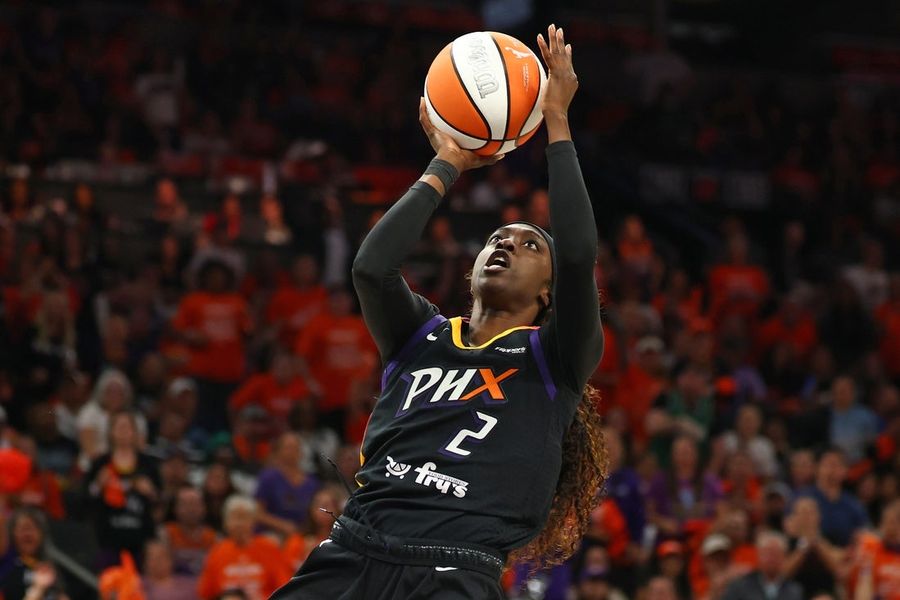
Oct 8, 2025; Phoenix, Arizona, USA; Phoenix Mercury guard Kahleah Copper (2) shoots the ball against the Las Vegas Aces in the second half during game three of the 2025 WNBA Finals at PHX Arena. Mandatory Credit: Mark J. Rebilas-Imagn Images

The Phoenix Mercury, after a run to the WNBA Finals in 2025, announced on Sunday the re-signing of core players Kahleah Copper, Alyssa Thomas, DeWanna Bonner and Sami Whitcomb.

Copper, 31, averaged 15.6 points, 2.9 rebounds, 1.5 assists, 1.1 steals and 26.9 minutes in 28 regular-season games (all starts) in her second season with Phoenix. The guard also averaged 17.8 points in starting 11 playoff games.

“Kahleah is a true leader, on and off the court, one of the most explosive athletes in our game and competes with a relentless edge and toughness,” general manager Nick U’Ren said in a statement. “Her impact on both ends of the court and ability to deliver in the biggest moments make her truly special.”

ESPN reported that Copper’s contract is for two years.

For her career, the four-time All-Star averages 12.8 points, 3.6 rebounds, 1.5 assists and 24.1 minutes in 319 games (203 starts) for the Washington Mystics (2016), Chicago Sky (2017-23) and Mercury (2024-present).

Washington selected Copper seventh overall in the 2016 WNBA Draft out of Rutgers. She was the WNBA Finals MVP for the 2021 champion Chicago Sky.

A six-time All-Star, Bonner, 38, won league titles with the Mercury in 2009 and 2014 and was All-WNBA first team in 2015 and second team in 2020. She was thr Sixth Player of the Year for three straight seasons (2009-11).

Bonner was waived by the Indiana Fever on June 25, 2025, and signed with the Mercury on July 8.

She posted combined averages of 9.8 points, 4.2 rebounds and 23.6 minutes in 33 games (four starts) last season, including 24 (one start) for the Mercury.

“Having DeWanna back in a Mercury uniform is incredibly meaningful to our organization,” U’Ren said. “She brings a championship mindset, elite skillset and the kind of leadership that defines winning teams.”

Bonner ranks third on the WNBA’s all-time scoring list (7,807 points) as well as in games played (535) and free throws (1,938).

For her career, Bonner averages 14.6 points, 6.0 rebounds, 2.2 assists, 1.2 steals and 30.0 minutes for the Mercury (2009-19, 2025), Connecticut Sun (2020-24) and Fever (2025).

Thomas, 34, averaged 15.4 points, 8.8 rebounds, 9.2 assists, 1.6 steals and 31.3 minutes in starting all 39 regular-season games she played in her first campaign with the Mercury in 2025. The forward also averaged 16.9 points, 9.0 rebounds and 8.8 assists in starting all 11 playoff games.

The six-time All-Star has been selected first-team All-WNBA three times and to the All-Defensive first or second team seven times.

Thomas recorded an WNBA single-season record eight triple-doubles in 2025 and set the league mark with 357 assists.

“Alyssa is a generational player, natural leader and one of the fiercest competitors our sport has seen, and we’re excited to have her back in Phoenix,” U’Ren said. “Her ability to control the game on both ends and elevate her teammates helped fuel our run to the finals last season.”

Whitcomb, 37, averaged 9.1 points while hitting 38.5% of her shots from the floor, including 36.1% from long range as she made a team-high 86 3-pointers in 43 games (20 starts) with Phoenix.

For her career, Whitcomb averages 7.2 points and makes 39.2% from the field and 36.1% from distance range in 307 games (89 starts) for the Seattle Storm (2017-20, 2023-24), Liberty (2021-22) and Mercury. The guard won league titles with the Storm in 2018 and 2020.

–Field Level Media

Source link
#Deadspin #Mercury #resign #Kahleah #Copper #DeWanna #Bonner #Alyssa #Thomas

Previous post

Krunal Pandya: I don’t pre-plan or practise my bouncers but rely on gut feeling <div id="content-body-70856360" itemprop="articleBody"><p>Soon after checking into the team hotel in Mumbai on Saturday, Krunal Pandya settled into a chair and briefed his hairstylist to “do something different”.</p><p>After all, the Royal Challengers Bengaluru all-rounder was gearing up to face his alma mater — and a side led by his younger brother.</p><p>The makeover took 90 minutes, and the result — call it what you will — certainly stood out. It drew curious glances from opponents and fans alike. But while the hairstyle grabbed eyeballs, it was Krunal’s on-field craft that truly made a statement.</p><p>Greeting Hardik Pandya with a surprise bouncer, mixing slinging deliveries with his conventional left-arm spin, and varying his pace cleverly, Krunal showcased his uncanny knack for improvisation. His spell of 4-0-26-1 ensured Mumbai Indians was never really in the hunt while chasing the stiff 241-run target set by RCB at the Wankhede Stadium on Sunday night.</p><p>“I have never shied away from trying different and new things. With the Impact Player rule, previously, without an impact player, you had No. 6 and No. 7 as all-rounders. Batsmanship was quite different, but now, having eight pure batters plus the skill set. You see young boys like Mukul (Choudhary), Vaibhav (Suryavanshi), so many of them are just coming and hitting from ball one consistently.”</p><p>Krunal admitted that evolving his skill set has helped him retain relevance in a format increasingly tilted towards the batters.</p><p>“As a bowler, I always want to be one step ahead with the skill set as well as with the mental battle. It (variation) has just purely come from that. Whether it is me bending my knee and bowling that ball or a bouncer,” Krunal said.</p><p>“I am glad that it is coming out well and hope that in this format, there are finger spinners who will survive and who can take something out of it and do well in this format. Because, for a finger spinner with flat tracks, eight batters, it has become very difficult. I am glad that I have been able to contribute in a nice way.”</p><p>The 35-year-old, the only cricketer to win the Player of the Match award in an IPL final twice, also revealed that the bouncer is more instinct than strategy.</p><p>“I am someone who follows my gut. I don’t pre-plan that I want to bowl a fourth or fifth, or sixth ball a bouncer. There are days when I will bowl two bouncers back-to-back, and suddenly I will bowl the first ball and the sixth ball. So, there are no such plans, but it is more sort of a gut feeling when to bowl which ball, and I just commit 100 per cent to that,” Krunal said.</p><p>“I don’t practise that much, where I go and practise bowling bouncers. It is just that I actually bowl in the game. But yeah, I have been bowling consistently for a long period of time.”</p><p>As long as Krunal continues to blend artistry with adaptability, RCB — and perhaps even the fans — won’t mind more “different” hairstyles.</p><p class="publish-time" id="end-of-article">Published on Apr 13, 2026</p></div> #Krunal #Pandya #dont #preplan #practise #bouncers #rely #gut #feeling

Next post

जलियांवाला बाग के बलिदानियों को नमन: राष्ट्रपति मूर्मु और पीएम मोदी ने दी श्रद्धांजलि, कहा- देश सदैव ऋणी रहेगा

The first round of the NBA was completed last night, and the top of the draft went as expected. We’ve known for about a month how the first four picks would land, with the consensus that these players could all be future All-Stars and immediately help whichever team they landed on.

To most, the draft truly started at pick five, so I’m here to grade my three winners of the draft outside of the teams who picked in the top four.

Golden State Warriors: Yaxel Lendeborg

Most people believe this iteration of the Warriors might be past their prime; however, if they can stay healthy, they might have found a big man who can help immediately.

I don’t love drafting a 23-year-old in the lottery, but Yaxel Lendeborg is so toolsy that I love the pick. He was one of the best two-way players in the country while helping to lead Michigan to a national title this past year.

He’s a guy who can do a little bit of everything. He defends well, and can float off-ball as a help defender, space the floor where he shot 37.2% this year from three, and even has potential to be a solid playmaker in an offense that has Steph Curry and Jimmy Butler.

Sometimes in a draft, you don’t overthink it, and take the best player available, and I believe that’s what the Warriors did with pick 11 in the draft.

Phoenix Suns: Koa Peat

The third pick in this draft, Cameron Boozer, is an old-school, high-IQ, undersized forward with a massive wingspan that is explosive on the block. He felt like one of the safest picks in the draft, especially with his above-average jump shot. Koa Peat feels like a watered-down Boozer to me.

The Suns desperately need to add some physicality to this team, and while they still didn’t add a ready-to-play center, Peat will bring immediate physicality to the Suns. He hustles, rebounds really well for his position, can guard multiple positions, and can drive and finish at an elite level.

He has a ton of tools despite not having an NBA-level jumper. You can never expect a player to develop a jump shot while in the league, but mechanically, I don’t think it would be impossible for Peat to do so. He has an incredibly high ceiling for the last pick in the draft, and a steal for a team that came into the night without a pick.

Charlotte Hornets: Christian Anderson Jr.

While I don’t love the Hornets’ first pick in Hannes Steinbach, I think their second pick of the night might have been the biggest steal of the evening.

The Hornets developed an identity as a great shooting team last year with Brandon Miller, LaMelo Ball, and Kon Knueppel. Now they’ve added what might be the best shooter in the class in Christian Anderson, making them one of the most dangerous teams to guard on the perimeter.

Charlotte was one of the most fun watches last season, and that got even better with this pick. Anderson has his weaknesses as a scorer, since he struggles to get to the hoop, and he will also be an undersized defender, but the team around him hides those weaknesses very well. He can mostly be a spot-up shooter with the Hornets, and will get a ton of open looks with the guys surrounding him. I expect him to have a long NBA career because shooting will always play in the modern NBA.

#Teams #Crushed #NBA #Draft #Deadspin.com">Three Teams That Crushed the NBA Draft First Round | Deadspin.com   The first round of the NBA was completed last night, and the top of the draft went as expected. We’ve known for about a month how the first four picks would land, with the consensus that these players could all be future All-Stars and immediately help whichever team they landed on.To most, the draft truly started at pick five, so I’m here to grade my three winners of the draft outside of the teams who picked in the top four.Golden State Warriors: Yaxel LendeborgMost people believe this iteration of the Warriors might be past their prime; however, if they can stay healthy, they might have found a big man who can help immediately.I don’t love drafting a 23-year-old in the lottery, but Yaxel Lendeborg is so toolsy that I love the pick. He was one of the best two-way players in the country while helping to lead Michigan to a national title this past year.He’s a guy who can do a little bit of everything. He defends well, and can float off-ball as a help defender, space the floor where he shot 37.2% this year from three, and even has potential to be a solid playmaker in an offense that has Steph Curry and Jimmy Butler.Sometimes in a draft, you don’t overthink it, and take the best player available, and I believe that’s what the Warriors did with pick 11 in the draft.Phoenix Suns: Koa PeatThe third pick in this draft, Cameron Boozer, is an old-school, high-IQ, undersized forward with a massive wingspan that is explosive on the block. He felt like one of the safest picks in the draft, especially with his above-average jump shot. Koa Peat feels like a watered-down Boozer to me.The Suns desperately need to add some physicality to this team, and while they still didn’t add a ready-to-play center, Peat will bring immediate physicality to the Suns. He hustles, rebounds really well for his position, can guard multiple positions, and can drive and finish at an elite level.He has a ton of tools despite not having an NBA-level jumper. You can never expect a player to develop a jump shot while in the league, but mechanically, I don’t think it would be impossible for Peat to do so. He has an incredibly high ceiling for the last pick in the draft, and a steal for a team that came into the night without a pick.Charlotte Hornets: Christian Anderson Jr.While I don’t love the Hornets’ first pick in Hannes Steinbach, I think their second pick of the night might have been the biggest steal of the evening.The Hornets developed an identity as a great shooting team last year with Brandon Miller, LaMelo Ball, and Kon Knueppel. Now they’ve added what might be the best shooter in the class in Christian Anderson, making them one of the most dangerous teams to guard on the perimeter.Charlotte was one of the most fun watches last season, and that got even better with this pick. Anderson has his weaknesses as a scorer, since he struggles to get to the hoop, and he will also be an undersized defender, but the team around him hides those weaknesses very well. He can mostly be a spot-up shooter with the Hornets, and will get a ton of open looks with the guys surrounding him. I expect him to have a long NBA career because shooting will always play in the modern NBA.   #Teams #Crushed #NBA #Draft #Deadspin.com

drafting a 23-year-old in the lottery, but Yaxel Lendeborg is so toolsy that I love the pick. He was one of the best two-way players in the country while helping to lead Michigan to a national title this past year.

He’s a guy who can do a little bit of everything. He defends well, and can float off-ball as a help defender, space the floor where he shot 37.2% this year from three, and even has potential to be a solid playmaker in an offense that has Steph Curry and Jimmy Butler.

Sometimes in a draft, you don’t overthink it, and take the best player available, and I believe that’s what the Warriors did with pick 11 in the draft.

Phoenix Suns: Koa Peat

The third pick in this draft, Cameron Boozer, is an old-school, high-IQ, undersized forward with a massive wingspan that is explosive on the block. He felt like one of the safest picks in the draft, especially with his above-average jump shot. Koa Peat feels like a watered-down Boozer to me.

The Suns desperately need to add some physicality to this team, and while they still didn’t add a ready-to-play center, Peat will bring immediate physicality to the Suns. He hustles, rebounds really well for his position, can guard multiple positions, and can drive and finish at an elite level.

He has a ton of tools despite not having an NBA-level jumper. You can never expect a player to develop a jump shot while in the league, but mechanically, I don’t think it would be impossible for Peat to do so. He has an incredibly high ceiling for the last pick in the draft, and a steal for a team that came into the night without a pick.

Charlotte Hornets: Christian Anderson Jr.

While I don’t love the Hornets’ first pick in Hannes Steinbach, I think their second pick of the night might have been the biggest steal of the evening.

The Hornets developed an identity as a great shooting team last year with Brandon Miller, LaMelo Ball, and Kon Knueppel. Now they’ve added what might be the best shooter in the class in Christian Anderson, making them one of the most dangerous teams to guard on the perimeter.

Charlotte was one of the most fun watches last season, and that got even better with this pick. Anderson has his weaknesses as a scorer, since he struggles to get to the hoop, and he will also be an undersized defender, but the team around him hides those weaknesses very well. He can mostly be a spot-up shooter with the Hornets, and will get a ton of open looks with the guys surrounding him. I expect him to have a long NBA career because shooting will always play in the modern NBA.

#Teams #Crushed #NBA #Draft #Deadspin.com">Three Teams That Crushed the NBA Draft First Round | Deadspin.com

The first round of the NBA was completed last night, and the top of the draft went as expected. We’ve known for about a month how the first four picks would land, with the consensus that these players could all be future All-Stars and immediately help whichever team they landed on.

To most, the draft truly started at pick five, so I’m here to grade my three winners of the draft outside of the teams who picked in the top four.

Golden State Warriors: Yaxel Lendeborg

Most people believe this iteration of the Warriors might be past their prime; however, if they can stay healthy, they might have found a big man who can help immediately.

I don’t love drafting a 23-year-old in the lottery, but Yaxel Lendeborg is so toolsy that I love the pick. He was one of the best two-way players in the country while helping to lead Michigan to a national title this past year.

He’s a guy who can do a little bit of everything. He defends well, and can float off-ball as a help defender, space the floor where he shot 37.2% this year from three, and even has potential to be a solid playmaker in an offense that has Steph Curry and Jimmy Butler.

Sometimes in a draft, you don’t overthink it, and take the best player available, and I believe that’s what the Warriors did with pick 11 in the draft.

Phoenix Suns: Koa Peat

The third pick in this draft, Cameron Boozer, is an old-school, high-IQ, undersized forward with a massive wingspan that is explosive on the block. He felt like one of the safest picks in the draft, especially with his above-average jump shot. Koa Peat feels like a watered-down Boozer to me.

The Suns desperately need to add some physicality to this team, and while they still didn’t add a ready-to-play center, Peat will bring immediate physicality to the Suns. He hustles, rebounds really well for his position, can guard multiple positions, and can drive and finish at an elite level.

He has a ton of tools despite not having an NBA-level jumper. You can never expect a player to develop a jump shot while in the league, but mechanically, I don’t think it would be impossible for Peat to do so. He has an incredibly high ceiling for the last pick in the draft, and a steal for a team that came into the night without a pick.

Charlotte Hornets: Christian Anderson Jr.

While I don’t love the Hornets’ first pick in Hannes Steinbach, I think their second pick of the night might have been the biggest steal of the evening.

The Hornets developed an identity as a great shooting team last year with Brandon Miller, LaMelo Ball, and Kon Knueppel. Now they’ve added what might be the best shooter in the class in Christian Anderson, making them one of the most dangerous teams to guard on the perimeter.

Charlotte was one of the most fun watches last season, and that got even better with this pick. Anderson has his weaknesses as a scorer, since he struggles to get to the hoop, and he will also be an undersized defender, but the team around him hides those weaknesses very well. He can mostly be a spot-up shooter with the Hornets, and will get a ton of open looks with the guys surrounding him. I expect him to have a long NBA career because shooting will always play in the modern NBA.

#Teams #Crushed #NBA #Draft #Deadspin.com

By winning Group D, the United States has already booked a spot in the Round of 32 at the 2026 World Cup.

So who will they play in the knockout round?

That … is a complicated question. A complicated question that involves brackets, Annex C of the FIFA Rules and Regulations, a matrix, and 495 potential combinations of the eight third-place teams advancing out of group play and into the knockout round.

So, let’s try to answer that question the best we can, starting with the World Cup bracket itself.

Wednesday could be pivotal for the United States at the 2026 World Cup. While the USMNT is not playing today, Wednesday is the final day of matches in Group B. Read on to see why that could determine who the United States plays in the Round of 32.

Update: And with Bosnia and Herzegovina clinching third in Group B, while it is not set in stone, they are the most likely opponent for the United States in the Round of 32. Read on for why.

The 2026 World Cup bracket

Let’s start here, with this World Cup bracket courtesy of USA Today.

If you look down to the bottom-left quadrant of this bracket, you will see where the United States will be slotted in when the Round of 32 is finalized. As the winners of Group D, they will slide into that “1D” spot, and play a third place team from Group B, E, F, I, or J.

With the expansion of the World Cup to 48 teams, the top two teams from each group advance to the Round of 32, plus the eight best third-place teams. More on that in a moment.

Who are the potential opponents for the US?

So, who might the United States see in the Round of 32?

Here are the teams in each potential group. For more on each group, you can visit the link, which takes you to the full standings and knockout-round scenarios for each of those groups.

  • Group B: Canada, Bosnia and Herzegovina, Qatar, and Switzerland
  • Group E: Germany, Curaçao, Ivory Coast, and Ecuador
  • Group F: Netherlands, Japan, Sweden, and Tunisia (Note, Tunisia has already been eliminated from knockout round contention)
  • Group I: France, Senegal, Norway, and Iraq
  • Group J: Argentina, Algeria, Austria, and Jordan

As of publication, these are the third-place teams in each of those groups: Bosnia and Herzegovina, Ecuador, Sweden, Senegal, and Jordan. However, only Ecuador and Sweden. However, Bosnia and Herzegovina, Senegal, and Jordan are not among the eight best third-place teams, so if the Round of 32 began today, the options for the United States would be down to Ecuador or Sweden. More on that in a second.

You can read more about the ranking of the third-place teams here, where we are updating the third-place standings after each match.

Prior to the World Cup, FIFA published Annex C to the FIFA Rules and Regulations, which outlines the 495 possible combinations for the third-place teams. That matrix, and those 495 possible combinations, dictate the matches involving the third-place teams.

At the time of publication, with Groups B, I, J, and L sitting at the bottom of the third-place standings, that combination is found in Annex C as combination 283. In that scenario, the United States would play … the third-place team from Group E.

Which right now is Ecuador.

Another good method of visualizing these combinations comes courtesy of Wikipedia.

So for the moment, the United States is set to take on Ecuador. But as the third-place standings shift, the combination will change, the matrix will be adjusted, and we will offer the updates accordingly.

In looking at the 495 possible combinations, it should be noted that 329 of those result in the United States playing Group B, 39 combinations result in the United States playing Group E, 11 combinations result in the United States playing Group F, 52 combinations result in the United States playing Group I, and 64 result in the United States playing Group J.

So it is no wonder that many believe that ultimately, the United States will play the third-place team from Group B, which could come down to the winner of Wednesday’s match between Bosnia and Herzegovina and Qatar.

Another way to look at the scenarios? According to the experts at Expecting Goals, there is a 60% chance that the United States plays Bosnia and Herzegovina in the Round of 32, and a 17% chance the United States plays Qatar:

Senegal and Ecuador round out the options, with Senegal at 6% and Ecuador at 4%.

We will know for sure in a few days.

Update: Following Monday night’s late match between Jordan and Algeria, Algeria has moved into third place in Group J, changing the matrix. As a result, as of Tuesday, June 23, the opponent for the United States in the Round of 32 would be … Algeria.

Again, this likely changes over the next few days. Stay tuned.

#play #knockout #World #Cup">Who will the US play in the knockout round of the World Cup?  By winning Group D, the United States has already booked a spot in the Round of 32 at the 2026 World Cup.So who will they play in the knockout round?That … is a complicated question. A complicated question that involves brackets, Annex C of the FIFA Rules and Regulations, a matrix, and 495 potential combinations of the eight third-place teams advancing out of group play and into the knockout round.So, let’s try to answer that question the best we can, starting with the World Cup bracket itself.Wednesday could be pivotal for the United States at the 2026 World Cup. While the USMNT is not playing today, Wednesday is the final day of matches in Group B. Read on to see why that could determine who the United States plays in the Round of 32.Update: And with Bosnia and Herzegovina clinching third in Group B, while it is not set in stone, they are the most likely opponent for the United States in the Round of 32. Read on for why.The 2026 World Cup bracketLet’s start here, with this World Cup bracket courtesy of USA Today.If you look down to the bottom-left quadrant of this bracket, you will see where the United States will be slotted in when the Round of 32 is finalized. As the winners of Group D, they will slide into that “1D” spot, and play a third place team from Group B, E, F, I, or J.With the expansion of the World Cup to 48 teams, the top two teams from each group advance to the Round of 32, plus the eight best third-place teams. More on that in a moment.Who are the potential opponents for the US?So, who might the United States see in the Round of 32?Here are the teams in each potential group. For more on each group, you can visit the link, which takes you to the full standings and knockout-round scenarios for each of those groups.Group B: Canada, Bosnia and Herzegovina, Qatar, and SwitzerlandGroup E: Germany, Curaçao, Ivory Coast, and EcuadorGroup F: Netherlands, Japan, Sweden, and Tunisia (Note, Tunisia has already been eliminated from knockout round contention)Group I: France, Senegal, Norway, and IraqGroup J: Argentina, Algeria, Austria, and JordanAs of publication, these are the third-place teams in each of those groups: Bosnia and Herzegovina, Ecuador, Sweden, Senegal, and Jordan. However, only Ecuador and Sweden. However, Bosnia and Herzegovina, Senegal, and Jordan are not among the eight best third-place teams, so if the Round of 32 began today, the options for the United States would be down to Ecuador or Sweden. More on that in a second.You can read more about the ranking of the third-place teams here, where we are updating the third-place standings after each match.Prior to the World Cup, FIFA published Annex C to the FIFA Rules and Regulations, which outlines the 495 possible combinations for the third-place teams. That matrix, and those 495 possible combinations, dictate the matches involving the third-place teams.At the time of publication, with Groups B, I, J, and L sitting at the bottom of the third-place standings, that combination is found in Annex C as combination 283. In that scenario, the United States would play … the third-place team from Group E.Which right now is Ecuador.Another good method of visualizing these combinations comes courtesy of Wikipedia. So for the moment, the United States is set to take on Ecuador. But as the third-place standings shift, the combination will change, the matrix will be adjusted, and we will offer the updates accordingly.In looking at the 495 possible combinations, it should be noted that 329 of those result in the United States playing Group B, 39 combinations result in the United States playing Group E, 11 combinations result in the United States playing Group F, 52 combinations result in the United States playing Group I, and 64 result in the United States playing Group J.So it is no wonder that many believe that ultimately, the United States will play the third-place team from Group B, which could come down to the winner of Wednesday’s match between Bosnia and Herzegovina and Qatar.Another way to look at the scenarios? According to the experts at Expecting Goals, there is a 60% chance that the United States plays Bosnia and Herzegovina in the Round of 32, and a 17% chance the United States plays Qatar:Senegal and Ecuador round out the options, with Senegal at 6% and Ecuador at 4%.We will know for sure in a few days.Update: Following Monday night’s late match between Jordan and Algeria, Algeria has moved into third place in Group J, changing the matrix. As a result, as of Tuesday, June 23, the opponent for the United States in the Round of 32 would be … Algeria.Again, this likely changes over the next few days. Stay tuned.  #play #knockout #World #Cup

If you look down to the bottom-left quadrant of this bracket, you will see where the United States will be slotted in when the Round of 32 is finalized. As the winners of Group D, they will slide into that “1D” spot, and play a third place team from Group B, E, F, I, or J.

With the expansion of the World Cup to 48 teams, the top two teams from each group advance to the Round of 32, plus the eight best third-place teams. More on that in a moment.

Who are the potential opponents for the US?

So, who might the United States see in the Round of 32?

Here are the teams in each potential group. For more on each group, you can visit the link, which takes you to the full standings and knockout-round scenarios for each of those groups.

  • Group B: Canada, Bosnia and Herzegovina, Qatar, and Switzerland
  • Group E: Germany, Curaçao, Ivory Coast, and Ecuador
  • Group F: Netherlands, Japan, Sweden, and Tunisia (Note, Tunisia has already been eliminated from knockout round contention)
  • Group I: France, Senegal, Norway, and Iraq
  • Group J: Argentina, Algeria, Austria, and Jordan

As of publication, these are the third-place teams in each of those groups: Bosnia and Herzegovina, Ecuador, Sweden, Senegal, and Jordan. However, only Ecuador and Sweden. However, Bosnia and Herzegovina, Senegal, and Jordan are not among the eight best third-place teams, so if the Round of 32 began today, the options for the United States would be down to Ecuador or Sweden. More on that in a second.

You can read more about the ranking of the third-place teams here, where we are updating the third-place standings after each match.

Prior to the World Cup, FIFA published Annex C to the FIFA Rules and Regulations, which outlines the 495 possible combinations for the third-place teams. That matrix, and those 495 possible combinations, dictate the matches involving the third-place teams.

At the time of publication, with Groups B, I, J, and L sitting at the bottom of the third-place standings, that combination is found in Annex C as combination 283. In that scenario, the United States would play … the third-place team from Group E.

Which right now is Ecuador.

Another good method of visualizing these combinations comes courtesy of Wikipedia.

So for the moment, the United States is set to take on Ecuador. But as the third-place standings shift, the combination will change, the matrix will be adjusted, and we will offer the updates accordingly.

In looking at the 495 possible combinations, it should be noted that 329 of those result in the United States playing Group B, 39 combinations result in the United States playing Group E, 11 combinations result in the United States playing Group F, 52 combinations result in the United States playing Group I, and 64 result in the United States playing Group J.

So it is no wonder that many believe that ultimately, the United States will play the third-place team from Group B, which could come down to the winner of Wednesday’s match between Bosnia and Herzegovina and Qatar.

Another way to look at the scenarios? According to the experts at Expecting Goals, there is a 60% chance that the United States plays Bosnia and Herzegovina in the Round of 32, and a 17% chance the United States plays Qatar:

Senegal and Ecuador round out the options, with Senegal at 6% and Ecuador at 4%.

We will know for sure in a few days.

Update: Following Monday night’s late match between Jordan and Algeria, Algeria has moved into third place in Group J, changing the matrix. As a result, as of Tuesday, June 23, the opponent for the United States in the Round of 32 would be … Algeria.

Again, this likely changes over the next few days. Stay tuned.

#play #knockout #World #Cup">Who will the US play in the knockout round of the World Cup?

By winning Group D, the United States has already booked a spot in the Round of 32 at the 2026 World Cup.

So who will they play in the knockout round?

That … is a complicated question. A complicated question that involves brackets, Annex C of the FIFA Rules and Regulations, a matrix, and 495 potential combinations of the eight third-place teams advancing out of group play and into the knockout round.

So, let’s try to answer that question the best we can, starting with the World Cup bracket itself.

Wednesday could be pivotal for the United States at the 2026 World Cup. While the USMNT is not playing today, Wednesday is the final day of matches in Group B. Read on to see why that could determine who the United States plays in the Round of 32.

Update: And with Bosnia and Herzegovina clinching third in Group B, while it is not set in stone, they are the most likely opponent for the United States in the Round of 32. Read on for why.

The 2026 World Cup bracket

Let’s start here, with this World Cup bracket courtesy of USA Today.

If you look down to the bottom-left quadrant of this bracket, you will see where the United States will be slotted in when the Round of 32 is finalized. As the winners of Group D, they will slide into that “1D” spot, and play a third place team from Group B, E, F, I, or J.

With the expansion of the World Cup to 48 teams, the top two teams from each group advance to the Round of 32, plus the eight best third-place teams. More on that in a moment.

Who are the potential opponents for the US?

So, who might the United States see in the Round of 32?

Here are the teams in each potential group. For more on each group, you can visit the link, which takes you to the full standings and knockout-round scenarios for each of those groups.

  • Group B: Canada, Bosnia and Herzegovina, Qatar, and Switzerland
  • Group E: Germany, Curaçao, Ivory Coast, and Ecuador
  • Group F: Netherlands, Japan, Sweden, and Tunisia (Note, Tunisia has already been eliminated from knockout round contention)
  • Group I: France, Senegal, Norway, and Iraq
  • Group J: Argentina, Algeria, Austria, and Jordan

As of publication, these are the third-place teams in each of those groups: Bosnia and Herzegovina, Ecuador, Sweden, Senegal, and Jordan. However, only Ecuador and Sweden. However, Bosnia and Herzegovina, Senegal, and Jordan are not among the eight best third-place teams, so if the Round of 32 began today, the options for the United States would be down to Ecuador or Sweden. More on that in a second.

You can read more about the ranking of the third-place teams here, where we are updating the third-place standings after each match.

Prior to the World Cup, FIFA published Annex C to the FIFA Rules and Regulations, which outlines the 495 possible combinations for the third-place teams. That matrix, and those 495 possible combinations, dictate the matches involving the third-place teams.

At the time of publication, with Groups B, I, J, and L sitting at the bottom of the third-place standings, that combination is found in Annex C as combination 283. In that scenario, the United States would play … the third-place team from Group E.

Which right now is Ecuador.

Another good method of visualizing these combinations comes courtesy of Wikipedia.

So for the moment, the United States is set to take on Ecuador. But as the third-place standings shift, the combination will change, the matrix will be adjusted, and we will offer the updates accordingly.

In looking at the 495 possible combinations, it should be noted that 329 of those result in the United States playing Group B, 39 combinations result in the United States playing Group E, 11 combinations result in the United States playing Group F, 52 combinations result in the United States playing Group I, and 64 result in the United States playing Group J.

So it is no wonder that many believe that ultimately, the United States will play the third-place team from Group B, which could come down to the winner of Wednesday’s match between Bosnia and Herzegovina and Qatar.

Another way to look at the scenarios? According to the experts at Expecting Goals, there is a 60% chance that the United States plays Bosnia and Herzegovina in the Round of 32, and a 17% chance the United States plays Qatar:

Senegal and Ecuador round out the options, with Senegal at 6% and Ecuador at 4%.

We will know for sure in a few days.

Update: Following Monday night’s late match between Jordan and Algeria, Algeria has moved into third place in Group J, changing the matrix. As a result, as of Tuesday, June 23, the opponent for the United States in the Round of 32 would be … Algeria.

Again, this likely changes over the next few days. Stay tuned.

#play #knockout #World #Cup

Post Comment