×
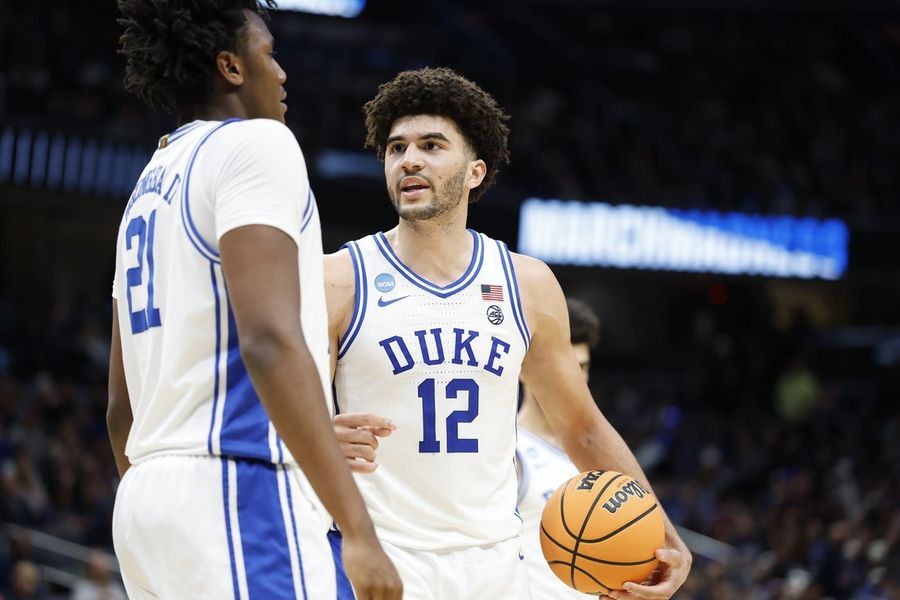
Deadspin | Patrick Ngongba II returning to Duke for junior season  Mar 29, 2026; Washington, DC, USA; Duke Blue Devils forward Cameron Boozer (12) talks to Blue Devils center Patrick Ngongba (21) during a stoppage in play against the UConn Huskies in the second half during an Elite Eight game of the East Regional of the men’s 2026 NCAA Tournament at Capital One Arena. Mandatory Credit: Amber Searls-Imagn Images   Patrick Ngongba II is coming back to Duke next season.   Ngongba confirmed his decision on Monday and the defensive anchor for the Blue Devils is certain for a prominent role in head coach Jon Scheyer’s altered rotation.   Ngongba (6-foot-11, 250 pounds) averaged 10.1 points and 5.8 rebounds per game last season playing alongside national Player of the Year Cameron Boozer.   While Boozer is bound for the NBA draft, his brother, Cayden, has also confirmed his return to Duke for the 2026-27 season.    If senior Caleb Foster decides to return, he’ll be Scheyer’s first player to arrive at Duke as a freshman and stay all four years through his senior season. Another guard, Isaiah Evans, could also return after each of his first two seasons ended in heartbreaking fashion in the NCAA Tournament.  Foster was a 39.8% 3-point shooter last season and averaged 8.3 points per game.   –Field Level Media   #Deadspin #Patrick #Ngongba #returning #Duke #junior #season
Deadspin | Patrick Ngongba II returning to Duke for junior season
Deadspin | Patrick Ngongba II returning to Duke for junior season  Mar 29, 2026; Washington, DC, USA; Duke Blue Devils forward Cameron Boozer (12) talks to Blue Devils center Patrick Ngongba (21) during a stoppage in play against the UConn Huskies in the second half during an Elite Eight game of the East Regional of the men’s 2026 NCAA Tournament at Capital One Arena. Mandatory Credit: Amber Searls-Imagn Images   Patrick Ngongba II is coming back to Duke next season.   Ngongba confirmed his decision on Monday and the defensive anchor for the Blue Devils is certain for a prominent role in head coach Jon Scheyer’s altered rotation.   Ngongba (6-foot-11, 250 pounds) averaged 10.1 points and 5.8 rebounds per game last season playing alongside national Player of the Year Cameron Boozer.   While Boozer is bound for the NBA draft, his brother, Cayden, has also confirmed his return to Duke for the 2026-27 season.    If senior Caleb Foster decides to return, he’ll be Scheyer’s first player to arrive at Duke as a freshman and stay all four years through his senior season. Another guard, Isaiah Evans, could also return after each of his first two seasons ended in heartbreaking fashion in the NCAA Tournament.  Foster was a 39.8% 3-point shooter last season and averaged 8.3 points per game.   –Field Level Media   #Deadspin #Patrick #Ngongba #returning #Duke #junior #seasonMar 29, 2026; Washington, DC, USA; Duke Blue Devils forward Cameron Boozer (12) talks to Blue Devils center Patrick Ngongba (21) during a stoppage in play against the UConn Huskies in the second half during an Elite Eight game of the East Regional of the men’s 2026 NCAA Tournament at Capital One Arena. Mandatory Credit: Amber Searls-Imagn Images

Patrick Ngongba II is coming back to Duke next season.

Ngongba confirmed his decision on Monday and the defensive anchor for the Blue Devils is certain for a prominent role in head coach Jon Scheyer’s altered rotation.

Ngongba (6-foot-11, 250 pounds) averaged 10.1 points and 5.8 rebounds per game last season playing alongside national Player of the Year Cameron Boozer.


While Boozer is bound for the NBA draft, his brother, Cayden, has also confirmed his return to Duke for the 2026-27 season.

If senior Caleb Foster decides to return, he’ll be Scheyer’s first player to arrive at Duke as a freshman and stay all four years through his senior season. Another guard, Isaiah Evans, could also return after each of his first two seasons ended in heartbreaking fashion in the NCAA Tournament.

Foster was a 39.8% 3-point shooter last season and averaged 8.3 points per game.

–Field Level Media

#Deadspin #Patrick #Ngongba #returning #Duke #junior #season

Mar 29, 2026; Washington, DC, USA; Duke Blue Devils forward Cameron Boozer (12) talks to Blue Devils center Patrick Ngongba (21) during a stoppage in play against the UConn Huskies in the second half during an Elite Eight game of the East Regional of the men’s 2026 NCAA Tournament at Capital One Arena. Mandatory Credit: Amber Searls-Imagn Images

Patrick Ngongba II is coming back to Duke next season.

Ngongba confirmed his decision on Monday and the defensive anchor for the Blue Devils is certain for a prominent role in head coach Jon Scheyer’s altered rotation.

Ngongba (6-foot-11, 250 pounds) averaged 10.1 points and 5.8 rebounds per game last season playing alongside national Player of the Year Cameron Boozer.

While Boozer is bound for the NBA draft, his brother, Cayden, has also confirmed his return to Duke for the 2026-27 season.

If senior Caleb Foster decides to return, he’ll be Scheyer’s first player to arrive at Duke as a freshman and stay all four years through his senior season. Another guard, Isaiah Evans, could also return after each of his first two seasons ended in heartbreaking fashion in the NCAA Tournament.

Foster was a 39.8% 3-point shooter last season and averaged 8.3 points per game.

–Field Level Media

Source link
#Deadspin #Patrick #Ngongba #returning #Duke #junior #season

Previous post

Why Garrett Nussmeier is about be the steal of the 2026 NFL Draft <div id="zephr-anchor"><div class="duet--article--article-body-component"><p class="duet--article--dangerously-set-cms-markup duet--article--standard-paragraph _1nfb3k4i _16w9vov1 _16w9vov0 ls9zuh1">The term “draft surprise” always has negative connotations. It tends to conjure reminders of leaked Wonderlic scores, the off-field concern that wasn’t reported, or the injury that wasn’t revealed until draft night. However, in the 2026 NFL Draft we had one hell of a draft surprise drop that could change a lot about what we thought about this class.</p></div><div class="duet--article--article-body-component"><p class="duet--article--dangerously-set-cms-markup duet--article--standard-paragraph _1nfb3k4i _16w9vov1 _16w9vov0 ls9zuh1">LSU quarterback Garrett Nussmeier, who was being slated as a mid-round pick after a tragic senior season might have a full justification for why he was so bad in 2025. <a href="https://x.com/TomPelissero/status/2046233646185468202">Tom Pellisero of the NFL Network is reporting that testing at the combine revealed that Nussmeier had a cyst on his spine</a>, which was pressing on a nerve, causing significant pain and discomfort in his oblique muscles. During the season it was reported that the quarterback was dealing with a “persistent abdominal injury,” though the reason for the injury was largely unknown.</p></div><div class="duet--article--article-body-component"><p class="duet--article--dangerously-set-cms-markup duet--article--standard-paragraph _1nfb3k4i _16w9vov1 _16w9vov0 ls9zuh1">It’s difficult to overstate what a huge problem it is to try to play quarterback through an oblique injury. Every element of having good throwing mechanics involves driving off your legs, through your core, and finally to the arm. With pain and poor muscle reaction in that area, it fundamentally breaks the chain in the throwing motion altogether. If we look at Nussmeier’s season through this lens then so much more comes into focus.</p></div><div class="duet--article--article-body-component"><p class="duet--article--dangerously-set-cms-markup duet--article--standard-paragraph _1nfb3k4i _16w9vov1 _16w9vov0 ls9zuh1">Nussmeier was very inconsistent with his throws. On one play he’d throw a perfect spiral to a tight window, and on the next miss his guy completely. There were also numerous times he’d use too much arm and lose his technique, particularly when working off platform. Both of these can be directly attributed to the injury. Furthermore, he was labeled an injury concern because of the missed games — but in reality in was one continuing, ever-present injury that altered everything about how he played the position.</p></div><div class="duet--article--article-body-component"><p class="duet--article--dangerously-set-cms-markup duet--article--standard-paragraph _1nfb3k4i _16w9vov1 _16w9vov0 ls9zuh1">The Pellisero report says that Nussmeier will have surgery to remove the cyst, which is minimally invasive — and he can resume working out in 2-3 weeks after it’s complete. As soon as the incision site pain is gone and his stitches are removed, he’s good to go. In addition, because this was a nerve-based injury, as soon as the pressure is gone, there won’t be any lingering issues.</p></div><div class="duet--article--article-body-component"><p class="duet--article--dangerously-set-cms-markup duet--article--standard-paragraph _1nfb3k4i _16w9vov1 _16w9vov0 ls9zuh1">That’s where this gets fascinating.</p></div><div class="duet--article--article-body-component"><p class="duet--article--dangerously-set-cms-markup duet--article--standard-paragraph _1nfb3k4i _16w9vov1 _16w9vov0 ls9zuh1">There was no shortage of disappointment when it came to this class of quarterbacks. Entering the 2025 college football season Fernando Mendoza was firmly sitting in the QB4 slot, trending to be a late 1st round pick or at best falling somewhere in the teens. The three guys ahead of him: Clemson’s Cade Klubnik, Garrett Nussmeier out of LSU, and LaNorris Sellers from South Carolina. It was basically Mendoza vs. Drew Allar for QB4.</p></div><div class="duet--article--article-body-component"><p class="duet--article--dangerously-set-cms-markup duet--article--standard-paragraph _1nfb3k4i _16w9vov1 _16w9vov0 ls9zuh1">Klubnik was abysmal and is almost undraftable at this point. Sellers returned to school to try and improve his draft stock. Allar will be a Day 3 pick. Mendoza is, and should be QB1, but if you’re now trying to work out QB2 there’s a real debate to be had inside your war room. Ty Simpson is QB2, all things being equal — but all things <em>aren’t equal</em>. This Nussmeier injury throws the entire process of scouting him into doubt, because now you really need to look back on 2024 and use that as the barometer, rather than his senior season.</p></div><div class="duet--article--article-body-component"><p class="duet--article--dangerously-set-cms-markup duet--article--standard-paragraph _1nfb3k4i _16w9vov1 _16w9vov0 ls9zuh1">There was real 1st round hype surrounding the LSU QB after his junior year. <a href="https://www.sbnation.com/nfl/2025/4/28/24418303/nfl-mock-draft-2026-first-look-quarterbacks-lanorris-sellers">In April of last year he was No. 16 on the big board</a>. There were definitely things Nussmeier needed to work on after his junior year, but those smaller mechanical fixes never got to take place. Regardless, in 2024 he finished the season with 4,052 yards passing on 64.2% completion, 29 touchdowns, and 12 interceptions. It was enough that <a href="https://www.sbnation.com/nfl/1080689/nfl-mock-draft-2026-new-no-1-pick-emerges-alongside-6-qbs">we thought he would be the No. 2 overall pick in our too early mock draft, and the first QB off the board</a> a few weeks into the college season. Nussmeier has huge arm talent, and above-average athleticism which leads to him having much more upside than Simpson, who might top out to be a Mac Jones-level QB at best.</p></div><div class="duet--article--article-body-component"><p class="duet--article--dangerously-set-cms-markup duet--article--standard-paragraph _1nfb3k4i _16w9vov1 _16w9vov0 ls9zuh1">That means if you’re sitting at the top of the 2nd round and debating on a QB there’s a real chance that the much better move is making Nussmeier QB2, trading up to the bottom of the 1st to get him with a fifth-year option. From where I sit this is still the kid who had all the promise in the world after his 2024 season at LSU. There are still concerns over his slight frame, but all things being equal there’s absolutely ludicrous bang-for-the-buck potential to get a guy who would have been a Top 5 pick at a total steal, all because he developed a cyst during last summer.</p></div><div class="duet--article--article-body-component"><p class="duet--article--dangerously-set-cms-markup duet--article--standard-paragraph _1nfb3k4i _16w9vov1 _16w9vov0 ls9zuh1">If the Pelissero report is correct and this the cyst is the reason why Nussmeier struggled, then watch out — because he will be the steal of the NFL Draft.</p></div></div> #Garrett #Nussmeier #steal #NFL #Draft

Next post

Box Office Collection: अक्षय कुमार की फिल्म भूत बंगला ने पहले वीकेंड में किया इतने करोड़ रुपए का बिजनेस<p><img src="https://static.samacharjagatlive.com/newscdn/resources/uploads/ALL-NEWS/20042026/1776677129.jpg" width="600px" /> </p> <p><strong>इंटरनेट डेस्क। </strong>बॉलीवुड के स्टार अभिनेता अक्षय कुमार की फिल्म भूत बंगला ने पहले वीकेंड में पचास करोड़ रुपए से अधिक का बिजनेस किया है। अक्षय कुमार और प्रियदर्शन की इस फिल्म को शानदार ओपनिंग मिली है।</p> <p>वेबसाइट सैकनिल्क के मुताबिक पेड प्रीव्यू में फिल्म की कलेक्शन 3.75 करोड़, पहले दिन 12.25 करोड़, दूसरे दिन 19 करोड़ और तीसरे दिन 23 करोड़ का बॉक्स ऑफिस कलेक्शन किया है। अब तक फिल्म का कुल इंडिया ग्रॉस कलेक्शन 66.91 करोड़ रुपए हो चुका है।</p> <p>इसमें नेट कलेक्शन 58.00 करोड़ रुपए है। इस फिल्म् का बजट 120 करोड़ रुपए बताया जा रहा है। इस प्रकार फिल्म ने आधा बजट निकाल लिया है। अपको बात दें कि प्रियदर्शन और अक्षय कुमार इससे पहले 'हेरा फेरी', 'गरम मसाला', 'भागम भाग', 'भूल भुलैया', 'दे दना दन' और 'खट्टा मीठा' जैसी सफल फिल्में बॉलीवुड को दे चुके हैं। अब भूत बंगला से इन्हें काफी उम्मीद है।</p> <p>PC:bollywoodlife<br /> अपडेट खबरों के लिए हमारा<a href="https://whatsapp.com/channel/0029VaHJjbnAjPXVBcdtHk0P">वॉट्सएप चैनल</a><a href="https://whatsapp.com/channel/0029VaBgLMfGU3BO99EQv62t"></a>फोलो करें</p>Box Office Collection,Akshay Kumar

Deadspin | 2026 NBA mock draft: AJ Dybantsa best fit for Wizards at No. 1 overall  Feb 10, 2026; Waco, Texas, USA;  BYU Cougars forward AJ Dybantsa (3) dunks the ball ahead of Baylor Bears guard Cameron Carr (43) during the first half at Paul and Alejandra Foster Pavilion. Mandatory Credit: Chris Jones-Imagn Images   After a much-maligned race to the bottom of the standings, the first round of the draft board is finally set. As the pre-draft process ramps up and NBA front offices get their ducks in a row, here is my initial post-lottery 2026 mock draft (assuming the lottery order is not beset by trades). The NBA draft will be held June 23-24 in New York.  1. Washington Wizards: AJ Dybantsa  Forward, BYU, freshman, 6-foot-9, 210 pounds, 19 years old  Washington signaled an intention to expedite their rebuild by buying low on Trae Young and Anthony Davis midway through the 2025-26 campaign, and their plea for lottery glory has finally come to bear.   While the Darryn Peterson vs. AJ Dybantsa conversation depends on the eye of the beholder, Dybantsa slots in perfectly between the Wizards’ incumbent youngsters and acquired stars as the keystone for their future. Dybantsa is a swingman with high-end potential as a dribble penetrator and mid-post savant, commanding defensive attention in the middle of the floor. He is equally effective attacking closeouts and slashing into openings. Most importantly, he can be brought along at his own pace and avoid being overburdened in D.C.  2. Utah Jazz: Darryn Peterson  Guard, Kansas, freshman, 6-5, 205, 19  The Jazz fell just short of first dibs on their hometown hero but wind up with a superb consolation prize in Peterson. After pushing several of their chips in for Jaren Jackson Jr., Utah is full steam ahead for a winning trajectory.   Peterson can thrive at either guard spot because of his boundless off-ball movement and willingness to coexist with other primary creators. The Jazz have a colossal front-line to free him up off screens, a dependable lead ball carrier in Keyonte George, as well as a burgeoning wing stopper in Ace Bailey. Peterson’s frenetic zip, shot-making variety, and hybrid M.O. will allow coach Will Hardy to truly tap into his offensive ingenuity after a multi-year rebuild.  3. Memphis Grizzlies: Cameron Boozer  Forward, Duke, freshman, 6-9, 250, 18  If the Grizzlies were hellbent on making it work with Ja Morant, Caleb Wilson would be the pick here to expand Memphis’ stout, rangy supporting cast two through five. But all indicators point to a break-up and subsequent clean slate.  Boozer is a high-floor prospect with all the outlines of an offensive linchpin. His IQ, touch and floor game should provide offensive juice in the absence of a true first option, and the inside-outside nature of his skillset is compatible with Zach Edey — who Memphis has made clear is a pillar of their future. Boozer is the safest pick with projectable polish despite athletic limitations.  4. Chicago Bulls: Caleb Wilson  Forward, North Carolina, freshman, 6-10, 215, 19  Chicago’s highest selection since 2020, there is a credible argument to pursue a lead-creator at this spot in Darius Acuff Jr. or Kingston Flemings — especially with spindly young forwards Matas Buzelis and Noa Essengue in tow. However, this is a prime opportunity to take the best player available.   Wilson is a physical marvel with unmistakable all-defense potential. Bereft of a true interior force for more than a decade in the Windy City, Wilson blends interior ferocity, mid-range finesse and open floor dominance. His jump shot remains a lingering question, but he would serve as a valuable building block for a team in desperate need of competitive fervor.  5. Los Angeles Clippers: Keaton Wagler  Guard, Illinois, freshman, 6-6, 185, 19  The Clippers waited with baited breath for a 48% chance at pillaging Indiana’s pick, a gamble that should pay immense dividends for a franchise that does not own its first-round pick until 2030. Drafting a lead guard in Darius Acuff Jr. or Kingston Flemings would clash with the presence of true point guard Darius Garland, rendering Illinois’ Wagler a cleaner fit.   A late-blooming prospect that ascended as a freshman, Wagler is an off-guard that brings laser 3-point shooting and a refined off-the-dribble game. Despite his mid-tier athleticism and a slender build, Keaton profiles as an ideal secondary running mate to insert next to All-Star forward Kawhi Leonard and Garland.  6. Brooklyn Nets: Darius Acuff Jr.  Guard, Arkansas, freshman, 6-3, 190, 19  On the outside looking in once again, Nets general manager Sean Marks must make-do with his options in the mid-lottery for back-to-back drafts. Luckily for him, this range is littered with lead-initiators that check a lot of the boxes on Brooklyn’s wish list. Chief among them is Acuff, a potent scorer and on-ball self-starter who notched ridiculous counting stats and sterling efficiency under Razorbacks coach John Calipari.  The Nets have yearned for a go-to guy offensively since jettisoning Kyrie Irving and Kevin Durant. Acuff just might be the answer as a three-level menace who can eviscerate the first line of defense — although his defensive drawbacks loom large. The 6-8 guard Egor Demin’s positional size would make for a fascinating dual-wield backcourt experiment for the Nets to build on going forward.  7. Sacramento Kings: Kingston Flemings  Guard, Houston, freshman, 6-4, 190, 19  Death, taxes and lottery misery in Sac-Town. The Kings have lacked a gear-shifting guard presence since De’Aaron Fox forced his way out of town. Enter Flemings, a jitterbug lead-guard with the ball handling and creative dynamism to puncture halfcourt defenses as well as the defensive activity to remain viable on both sides of the ball.  Sacramento needs to dig itself out of a monumental, albeit entirely self-inflicted, organizational rut. Taking a swing on Flemings’ all-around scoring and facilitative upside is about as good a lifeline as you can hope for at No. 7.   8. Atlanta Hawks (via New Orleans): Brayden Burries  Guard, Arizona, freshman, 6-4, 205, 20  Atlanta’s hopes of nabbing a bona fide fortune-shifting prospect ran dry when it wound up outside the top four. While most draft evaluators may pencil in a primary creator like Acuff, Flemings or Mikel Brown Jr., Burries as an ideal fit given the Hawks’ trajectory.   He boasts a largely ancillary skillset — spot-up shooting, straight-line driving, read-and-react playmaking — and, as such, theoretically has a lower ceiling. However, he makes perfect sense orbiting, and amplifying, Jalen Johnson and Dyson Daniels’ ever-growing facilitative qualities. Most importantly, Burries is a serial transition threat that could seamlessly weaponize Johnson’s affinity for early offense in a manner that few ever could.  9. Dallas Mavericks: Mikel Brown Jr.  Guard, Louisville, freshman, 6-5, 190, 20  Brown had glimpses that could have you falling head over heels for his long-term outlook. A 6-5 lead-guard with smooth shooting mechanics and shot-making fearlessness that is impossible to ignore, Brown’s draft stock is inherently divisive. On one hand, you have a tight handle, buoyant athleticism, instinctive passing chops and limitless 3-point range. On the other, you have reckless turnovers, iffy shot selection, and a wiry build.  In a more streamlined role, Brown could blossom into one of the league’s premier dribble pull-up shooters with downhill punch to match. The Mavs could use a perimeter wild card to pair with Cooper Flagg and lighten the offensive load.  10. Milwaukee Bucks: Nate Ament  Forward, Tennessee, freshman, 6-10, 207, 19  With their future in relative shambles, a swing for the fences feels apropos in light of the Bucks’ current standoff with franchise superstar Giannis Antetokounmpo. Not to mention this being their first lottery pick since Thon Maker in 2016. A 6-10 forward who can pass, dribble and shoot (at least in theory), Ament’s freshman season was a tale of two halves with his efficiency skyrocketing at the turn of the calendar.   While his offensive game is glaringly unpolished and he has plenty of bulking up to do, there are clear outlines of a capable dribble attacker, movement shooter and auxiliary facilitator that, if they eventually bolden, could provide Milwaukee with a foundational piece in the post-Giannis era.  11. Golden State Warriors: Yaxel Lendeborg  Forward, Michigan, senior, 6-9, 240, 23  Fresh off clinching the national championship, Lendeborg is finally primed and ready to make the NBA leap after years in the draft consciousness. After extending coach Steve Kerr, the Warriors are faced with a harsh duality — maximizing Stephen Curry’s twilight years while keeping an eye to the future.   Despite turning 24 years old in September, Yaxel bridges that gap while addressing a positional need. He is a 6-10 (with shoes) forward that can scale up and down the positional spectrum defensively with his 7-4 wingspan and rock-steady base strength. Offensively, he can put the ball on the deck, set sturdy screens and improved his jump shooting to the tune of 37.2% as a super senior. Lendeborg is a seasoned, all-purpose, two-way force that can get in where he fits in for a well-traveled Warriors core.  12. Oklahoma City Thunder: Karim Lopez  Forward, Mexico/New Zealand Breakers, 6-9, 220, 19  With center Isaiah Hartenstein’s contract expiring in 2027, the stashing of 2025 first-round draft pick Thomas Sorber obviates an immediate need for frontcourt reinforcements. While Jayden Quaintance (Kentucky), Hannes Steinbach (Washington) or Aday Mara (Michigan) could each be a worthy successor, the Thunder’s rotation could use a combo-forward.   Lopez spent the past two seasons in New Zealand honing his sensibilities as a supplementary 3-and-D wing. Thunder general manager Sam Presti is familiar with the New Zealand Breakers pipeline, trading up to No. 11 in 2022 to select Ousmane Dieng. Lopez’s role player experience in a professional setting may well put him ahead of the developmental curve.  13. Miami Heat: Labaron Philon Jr.  Guard, Alabama, sophomore, 6-4, 185, 20  Stuck in basketball purgatory with options aplenty from a team building perspective, Miami once again finds itself in the mid-first round. It is difficult to identify a specific need for such a competent-but-not-elite roster, but Philon’s on-ball brilliance and massive sophomore leap makes him a frontrunner in this range.  Philon is as shifty and surgical a ball handler as you’ll find in this class. He makes up for a lack of verticality with various dribble combinations, cunning tempo changes, and a trusty floater. If guard Tyler Herro is not long for Miami, Labaron is a great contingency plan in the backcourt who can theoretically play alongside Kasparas Jakucionis for a dual-creator look.  14. Charlotte Hornets: Hannes Steinbach  Forward/center, Washington, freshman, 6-11, 220, 20  The Hornets flexed a competent defense for the first time in eons. Aday Mara presents an intriguing man-in-the-middle option to add to their center rotation of Moussa Diabate and Ryan Kalkbrenner, but Charlotte should prioritize optionality above all else. Accordingly, Steinbach stands out from the pack.   A hybrid big that vacuums rebounds on both ends with physicality and inside positioning, Steinbach’s offensive upside is a major selling point. A sophisticated low-post repertoire, deft touch, elbow playmaking and, most notably, a hint of 3-point aptitude (18-for-53 at a 34% clip as a freshman) gives coach Charles Lee much-needed versatility to work with from the high post. If Steinbach’s 3-point range manifests, he could coexist with Diabate in unprecedented double-big lineup machinations.  –Ethan Ward, Field Level Media    #Deadspin #NBA #mock #draft #Dybantsa #fit #WizardsFeb 10, 2026; Waco, Texas, USA; BYU Cougars forward AJ Dybantsa (3) dunks the ball ahead of Baylor Bears guard Cameron Carr (43) during the first half at Paul and Alejandra Foster Pavilion. Mandatory Credit: Chris Jones-Imagn Images

After a much-maligned race to the bottom of the standings, the first round of the draft board is finally set. As the pre-draft process ramps up and NBA front offices get their ducks in a row, here is my initial post-lottery 2026 mock draft (assuming the lottery order is not beset by trades). The NBA draft will be held June 23-24 in New York.

1. Washington Wizards: AJ Dybantsa

Forward, BYU, freshman, 6-foot-9, 210 pounds, 19 years old

Washington signaled an intention to expedite their rebuild by buying low on Trae Young and Anthony Davis midway through the 2025-26 campaign, and their plea for lottery glory has finally come to bear.

While the Darryn Peterson vs. AJ Dybantsa conversation depends on the eye of the beholder, Dybantsa slots in perfectly between the Wizards’ incumbent youngsters and acquired stars as the keystone for their future. Dybantsa is a swingman with high-end potential as a dribble penetrator and mid-post savant, commanding defensive attention in the middle of the floor. He is equally effective attacking closeouts and slashing into openings. Most importantly, he can be brought along at his own pace and avoid being overburdened in D.C.

2. Utah Jazz: Darryn Peterson

Guard, Kansas, freshman, 6-5, 205, 19

The Jazz fell just short of first dibs on their hometown hero but wind up with a superb consolation prize in Peterson. After pushing several of their chips in for Jaren Jackson Jr., Utah is full steam ahead for a winning trajectory.

Peterson can thrive at either guard spot because of his boundless off-ball movement and willingness to coexist with other primary creators. The Jazz have a colossal front-line to free him up off screens, a dependable lead ball carrier in Keyonte George, as well as a burgeoning wing stopper in Ace Bailey. Peterson’s frenetic zip, shot-making variety, and hybrid M.O. will allow coach Will Hardy to truly tap into his offensive ingenuity after a multi-year rebuild.

3. Memphis Grizzlies: Cameron Boozer

Forward, Duke, freshman, 6-9, 250, 18

If the Grizzlies were hellbent on making it work with Ja Morant, Caleb Wilson would be the pick here to expand Memphis’ stout, rangy supporting cast two through five. But all indicators point to a break-up and subsequent clean slate.

Boozer is a high-floor prospect with all the outlines of an offensive linchpin. His IQ, touch and floor game should provide offensive juice in the absence of a true first option, and the inside-outside nature of his skillset is compatible with Zach Edey — who Memphis has made clear is a pillar of their future. Boozer is the safest pick with projectable polish despite athletic limitations.

4. Chicago Bulls: Caleb Wilson

Forward, North Carolina, freshman, 6-10, 215, 19

Chicago’s highest selection since 2020, there is a credible argument to pursue a lead-creator at this spot in Darius Acuff Jr. or Kingston Flemings — especially with spindly young forwards Matas Buzelis and Noa Essengue in tow. However, this is a prime opportunity to take the best player available.

Wilson is a physical marvel with unmistakable all-defense potential. Bereft of a true interior force for more than a decade in the Windy City, Wilson blends interior ferocity, mid-range finesse and open floor dominance. His jump shot remains a lingering question, but he would serve as a valuable building block for a team in desperate need of competitive fervor.

5. Los Angeles Clippers: Keaton Wagler

Guard, Illinois, freshman, 6-6, 185, 19

The Clippers waited with baited breath for a 48% chance at pillaging Indiana’s pick, a gamble that should pay immense dividends for a franchise that does not own its first-round pick until 2030. Drafting a lead guard in Darius Acuff Jr. or Kingston Flemings would clash with the presence of true point guard Darius Garland, rendering Illinois’ Wagler a cleaner fit.

A late-blooming prospect that ascended as a freshman, Wagler is an off-guard that brings laser 3-point shooting and a refined off-the-dribble game. Despite his mid-tier athleticism and a slender build, Keaton profiles as an ideal secondary running mate to insert next to All-Star forward Kawhi Leonard and Garland.

6. Brooklyn Nets: Darius Acuff Jr.

Guard, Arkansas, freshman, 6-3, 190, 19

On the outside looking in once again, Nets general manager Sean Marks must make-do with his options in the mid-lottery for back-to-back drafts. Luckily for him, this range is littered with lead-initiators that check a lot of the boxes on Brooklyn’s wish list. Chief among them is Acuff, a potent scorer and on-ball self-starter who notched ridiculous counting stats and sterling efficiency under Razorbacks coach John Calipari.

The Nets have yearned for a go-to guy offensively since jettisoning Kyrie Irving and Kevin Durant. Acuff just might be the answer as a three-level menace who can eviscerate the first line of defense — although his defensive drawbacks loom large. The 6-8 guard Egor Demin’s positional size would make for a fascinating dual-wield backcourt experiment for the Nets to build on going forward.

7. Sacramento Kings: Kingston Flemings

Guard, Houston, freshman, 6-4, 190, 19

Death, taxes and lottery misery in Sac-Town. The Kings have lacked a gear-shifting guard presence since De’Aaron Fox forced his way out of town. Enter Flemings, a jitterbug lead-guard with the ball handling and creative dynamism to puncture halfcourt defenses as well as the defensive activity to remain viable on both sides of the ball.


Sacramento needs to dig itself out of a monumental, albeit entirely self-inflicted, organizational rut. Taking a swing on Flemings’ all-around scoring and facilitative upside is about as good a lifeline as you can hope for at No. 7.

8. Atlanta Hawks (via New Orleans): Brayden Burries

Guard, Arizona, freshman, 6-4, 205, 20

Atlanta’s hopes of nabbing a bona fide fortune-shifting prospect ran dry when it wound up outside the top four. While most draft evaluators may pencil in a primary creator like Acuff, Flemings or Mikel Brown Jr., Burries as an ideal fit given the Hawks’ trajectory.

He boasts a largely ancillary skillset — spot-up shooting, straight-line driving, read-and-react playmaking — and, as such, theoretically has a lower ceiling. However, he makes perfect sense orbiting, and amplifying, Jalen Johnson and Dyson Daniels’ ever-growing facilitative qualities. Most importantly, Burries is a serial transition threat that could seamlessly weaponize Johnson’s affinity for early offense in a manner that few ever could.

9. Dallas Mavericks: Mikel Brown Jr.

Guard, Louisville, freshman, 6-5, 190, 20

Brown had glimpses that could have you falling head over heels for his long-term outlook. A 6-5 lead-guard with smooth shooting mechanics and shot-making fearlessness that is impossible to ignore, Brown’s draft stock is inherently divisive. On one hand, you have a tight handle, buoyant athleticism, instinctive passing chops and limitless 3-point range. On the other, you have reckless turnovers, iffy shot selection, and a wiry build.

In a more streamlined role, Brown could blossom into one of the league’s premier dribble pull-up shooters with downhill punch to match. The Mavs could use a perimeter wild card to pair with Cooper Flagg and lighten the offensive load.

10. Milwaukee Bucks: Nate Ament

Forward, Tennessee, freshman, 6-10, 207, 19

With their future in relative shambles, a swing for the fences feels apropos in light of the Bucks’ current standoff with franchise superstar Giannis Antetokounmpo. Not to mention this being their first lottery pick since Thon Maker in 2016. A 6-10 forward who can pass, dribble and shoot (at least in theory), Ament’s freshman season was a tale of two halves with his efficiency skyrocketing at the turn of the calendar.

While his offensive game is glaringly unpolished and he has plenty of bulking up to do, there are clear outlines of a capable dribble attacker, movement shooter and auxiliary facilitator that, if they eventually bolden, could provide Milwaukee with a foundational piece in the post-Giannis era.

11. Golden State Warriors: Yaxel Lendeborg

Forward, Michigan, senior, 6-9, 240, 23

Fresh off clinching the national championship, Lendeborg is finally primed and ready to make the NBA leap after years in the draft consciousness. After extending coach Steve Kerr, the Warriors are faced with a harsh duality — maximizing Stephen Curry’s twilight years while keeping an eye to the future.

Despite turning 24 years old in September, Yaxel bridges that gap while addressing a positional need. He is a 6-10 (with shoes) forward that can scale up and down the positional spectrum defensively with his 7-4 wingspan and rock-steady base strength. Offensively, he can put the ball on the deck, set sturdy screens and improved his jump shooting to the tune of 37.2% as a super senior. Lendeborg is a seasoned, all-purpose, two-way force that can get in where he fits in for a well-traveled Warriors core.

12. Oklahoma City Thunder: Karim Lopez

Forward, Mexico/New Zealand Breakers, 6-9, 220, 19

With center Isaiah Hartenstein’s contract expiring in 2027, the stashing of 2025 first-round draft pick Thomas Sorber obviates an immediate need for frontcourt reinforcements. While Jayden Quaintance (Kentucky), Hannes Steinbach (Washington) or Aday Mara (Michigan) could each be a worthy successor, the Thunder’s rotation could use a combo-forward.

Lopez spent the past two seasons in New Zealand honing his sensibilities as a supplementary 3-and-D wing. Thunder general manager Sam Presti is familiar with the New Zealand Breakers pipeline, trading up to No. 11 in 2022 to select Ousmane Dieng. Lopez’s role player experience in a professional setting may well put him ahead of the developmental curve.

13. Miami Heat: Labaron Philon Jr.

Guard, Alabama, sophomore, 6-4, 185, 20

Stuck in basketball purgatory with options aplenty from a team building perspective, Miami once again finds itself in the mid-first round. It is difficult to identify a specific need for such a competent-but-not-elite roster, but Philon’s on-ball brilliance and massive sophomore leap makes him a frontrunner in this range.

Philon is as shifty and surgical a ball handler as you’ll find in this class. He makes up for a lack of verticality with various dribble combinations, cunning tempo changes, and a trusty floater. If guard Tyler Herro is not long for Miami, Labaron is a great contingency plan in the backcourt who can theoretically play alongside Kasparas Jakucionis for a dual-creator look.

14. Charlotte Hornets: Hannes Steinbach

Forward/center, Washington, freshman, 6-11, 220, 20

The Hornets flexed a competent defense for the first time in eons. Aday Mara presents an intriguing man-in-the-middle option to add to their center rotation of Moussa Diabate and Ryan Kalkbrenner, but Charlotte should prioritize optionality above all else. Accordingly, Steinbach stands out from the pack.

A hybrid big that vacuums rebounds on both ends with physicality and inside positioning, Steinbach’s offensive upside is a major selling point. A sophisticated low-post repertoire, deft touch, elbow playmaking and, most notably, a hint of 3-point aptitude (18-for-53 at a 34% clip as a freshman) gives coach Charles Lee much-needed versatility to work with from the high post. If Steinbach’s 3-point range manifests, he could coexist with Diabate in unprecedented double-big lineup machinations.


–Ethan Ward, Field Level Media

#Deadspin #NBA #mock #draft #Dybantsa #fit #Wizards">Deadspin | 2026 NBA mock draft: AJ Dybantsa best fit for Wizards at No. 1 overall  Feb 10, 2026; Waco, Texas, USA;  BYU Cougars forward AJ Dybantsa (3) dunks the ball ahead of Baylor Bears guard Cameron Carr (43) during the first half at Paul and Alejandra Foster Pavilion. Mandatory Credit: Chris Jones-Imagn Images   After a much-maligned race to the bottom of the standings, the first round of the draft board is finally set. As the pre-draft process ramps up and NBA front offices get their ducks in a row, here is my initial post-lottery 2026 mock draft (assuming the lottery order is not beset by trades). The NBA draft will be held June 23-24 in New York.  1. Washington Wizards: AJ Dybantsa  Forward, BYU, freshman, 6-foot-9, 210 pounds, 19 years old  Washington signaled an intention to expedite their rebuild by buying low on Trae Young and Anthony Davis midway through the 2025-26 campaign, and their plea for lottery glory has finally come to bear.   While the Darryn Peterson vs. AJ Dybantsa conversation depends on the eye of the beholder, Dybantsa slots in perfectly between the Wizards’ incumbent youngsters and acquired stars as the keystone for their future. Dybantsa is a swingman with high-end potential as a dribble penetrator and mid-post savant, commanding defensive attention in the middle of the floor. He is equally effective attacking closeouts and slashing into openings. Most importantly, he can be brought along at his own pace and avoid being overburdened in D.C.  2. Utah Jazz: Darryn Peterson  Guard, Kansas, freshman, 6-5, 205, 19  The Jazz fell just short of first dibs on their hometown hero but wind up with a superb consolation prize in Peterson. After pushing several of their chips in for Jaren Jackson Jr., Utah is full steam ahead for a winning trajectory.   Peterson can thrive at either guard spot because of his boundless off-ball movement and willingness to coexist with other primary creators. The Jazz have a colossal front-line to free him up off screens, a dependable lead ball carrier in Keyonte George, as well as a burgeoning wing stopper in Ace Bailey. Peterson’s frenetic zip, shot-making variety, and hybrid M.O. will allow coach Will Hardy to truly tap into his offensive ingenuity after a multi-year rebuild.  3. Memphis Grizzlies: Cameron Boozer  Forward, Duke, freshman, 6-9, 250, 18  If the Grizzlies were hellbent on making it work with Ja Morant, Caleb Wilson would be the pick here to expand Memphis’ stout, rangy supporting cast two through five. But all indicators point to a break-up and subsequent clean slate.  Boozer is a high-floor prospect with all the outlines of an offensive linchpin. His IQ, touch and floor game should provide offensive juice in the absence of a true first option, and the inside-outside nature of his skillset is compatible with Zach Edey — who Memphis has made clear is a pillar of their future. Boozer is the safest pick with projectable polish despite athletic limitations.  4. Chicago Bulls: Caleb Wilson  Forward, North Carolina, freshman, 6-10, 215, 19  Chicago’s highest selection since 2020, there is a credible argument to pursue a lead-creator at this spot in Darius Acuff Jr. or Kingston Flemings — especially with spindly young forwards Matas Buzelis and Noa Essengue in tow. However, this is a prime opportunity to take the best player available.   Wilson is a physical marvel with unmistakable all-defense potential. Bereft of a true interior force for more than a decade in the Windy City, Wilson blends interior ferocity, mid-range finesse and open floor dominance. His jump shot remains a lingering question, but he would serve as a valuable building block for a team in desperate need of competitive fervor.  5. Los Angeles Clippers: Keaton Wagler  Guard, Illinois, freshman, 6-6, 185, 19  The Clippers waited with baited breath for a 48% chance at pillaging Indiana’s pick, a gamble that should pay immense dividends for a franchise that does not own its first-round pick until 2030. Drafting a lead guard in Darius Acuff Jr. or Kingston Flemings would clash with the presence of true point guard Darius Garland, rendering Illinois’ Wagler a cleaner fit.   A late-blooming prospect that ascended as a freshman, Wagler is an off-guard that brings laser 3-point shooting and a refined off-the-dribble game. Despite his mid-tier athleticism and a slender build, Keaton profiles as an ideal secondary running mate to insert next to All-Star forward Kawhi Leonard and Garland.  6. Brooklyn Nets: Darius Acuff Jr.  Guard, Arkansas, freshman, 6-3, 190, 19  On the outside looking in once again, Nets general manager Sean Marks must make-do with his options in the mid-lottery for back-to-back drafts. Luckily for him, this range is littered with lead-initiators that check a lot of the boxes on Brooklyn’s wish list. Chief among them is Acuff, a potent scorer and on-ball self-starter who notched ridiculous counting stats and sterling efficiency under Razorbacks coach John Calipari.  The Nets have yearned for a go-to guy offensively since jettisoning Kyrie Irving and Kevin Durant. Acuff just might be the answer as a three-level menace who can eviscerate the first line of defense — although his defensive drawbacks loom large. The 6-8 guard Egor Demin’s positional size would make for a fascinating dual-wield backcourt experiment for the Nets to build on going forward.  7. Sacramento Kings: Kingston Flemings  Guard, Houston, freshman, 6-4, 190, 19  Death, taxes and lottery misery in Sac-Town. The Kings have lacked a gear-shifting guard presence since De’Aaron Fox forced his way out of town. Enter Flemings, a jitterbug lead-guard with the ball handling and creative dynamism to puncture halfcourt defenses as well as the defensive activity to remain viable on both sides of the ball.  Sacramento needs to dig itself out of a monumental, albeit entirely self-inflicted, organizational rut. Taking a swing on Flemings’ all-around scoring and facilitative upside is about as good a lifeline as you can hope for at No. 7.   8. Atlanta Hawks (via New Orleans): Brayden Burries  Guard, Arizona, freshman, 6-4, 205, 20  Atlanta’s hopes of nabbing a bona fide fortune-shifting prospect ran dry when it wound up outside the top four. While most draft evaluators may pencil in a primary creator like Acuff, Flemings or Mikel Brown Jr., Burries as an ideal fit given the Hawks’ trajectory.   He boasts a largely ancillary skillset — spot-up shooting, straight-line driving, read-and-react playmaking — and, as such, theoretically has a lower ceiling. However, he makes perfect sense orbiting, and amplifying, Jalen Johnson and Dyson Daniels’ ever-growing facilitative qualities. Most importantly, Burries is a serial transition threat that could seamlessly weaponize Johnson’s affinity for early offense in a manner that few ever could.  9. Dallas Mavericks: Mikel Brown Jr.  Guard, Louisville, freshman, 6-5, 190, 20  Brown had glimpses that could have you falling head over heels for his long-term outlook. A 6-5 lead-guard with smooth shooting mechanics and shot-making fearlessness that is impossible to ignore, Brown’s draft stock is inherently divisive. On one hand, you have a tight handle, buoyant athleticism, instinctive passing chops and limitless 3-point range. On the other, you have reckless turnovers, iffy shot selection, and a wiry build.  In a more streamlined role, Brown could blossom into one of the league’s premier dribble pull-up shooters with downhill punch to match. The Mavs could use a perimeter wild card to pair with Cooper Flagg and lighten the offensive load.  10. Milwaukee Bucks: Nate Ament  Forward, Tennessee, freshman, 6-10, 207, 19  With their future in relative shambles, a swing for the fences feels apropos in light of the Bucks’ current standoff with franchise superstar Giannis Antetokounmpo. Not to mention this being their first lottery pick since Thon Maker in 2016. A 6-10 forward who can pass, dribble and shoot (at least in theory), Ament’s freshman season was a tale of two halves with his efficiency skyrocketing at the turn of the calendar.   While his offensive game is glaringly unpolished and he has plenty of bulking up to do, there are clear outlines of a capable dribble attacker, movement shooter and auxiliary facilitator that, if they eventually bolden, could provide Milwaukee with a foundational piece in the post-Giannis era.  11. Golden State Warriors: Yaxel Lendeborg  Forward, Michigan, senior, 6-9, 240, 23  Fresh off clinching the national championship, Lendeborg is finally primed and ready to make the NBA leap after years in the draft consciousness. After extending coach Steve Kerr, the Warriors are faced with a harsh duality — maximizing Stephen Curry’s twilight years while keeping an eye to the future.   Despite turning 24 years old in September, Yaxel bridges that gap while addressing a positional need. He is a 6-10 (with shoes) forward that can scale up and down the positional spectrum defensively with his 7-4 wingspan and rock-steady base strength. Offensively, he can put the ball on the deck, set sturdy screens and improved his jump shooting to the tune of 37.2% as a super senior. Lendeborg is a seasoned, all-purpose, two-way force that can get in where he fits in for a well-traveled Warriors core.  12. Oklahoma City Thunder: Karim Lopez  Forward, Mexico/New Zealand Breakers, 6-9, 220, 19  With center Isaiah Hartenstein’s contract expiring in 2027, the stashing of 2025 first-round draft pick Thomas Sorber obviates an immediate need for frontcourt reinforcements. While Jayden Quaintance (Kentucky), Hannes Steinbach (Washington) or Aday Mara (Michigan) could each be a worthy successor, the Thunder’s rotation could use a combo-forward.   Lopez spent the past two seasons in New Zealand honing his sensibilities as a supplementary 3-and-D wing. Thunder general manager Sam Presti is familiar with the New Zealand Breakers pipeline, trading up to No. 11 in 2022 to select Ousmane Dieng. Lopez’s role player experience in a professional setting may well put him ahead of the developmental curve.  13. Miami Heat: Labaron Philon Jr.  Guard, Alabama, sophomore, 6-4, 185, 20  Stuck in basketball purgatory with options aplenty from a team building perspective, Miami once again finds itself in the mid-first round. It is difficult to identify a specific need for such a competent-but-not-elite roster, but Philon’s on-ball brilliance and massive sophomore leap makes him a frontrunner in this range.  Philon is as shifty and surgical a ball handler as you’ll find in this class. He makes up for a lack of verticality with various dribble combinations, cunning tempo changes, and a trusty floater. If guard Tyler Herro is not long for Miami, Labaron is a great contingency plan in the backcourt who can theoretically play alongside Kasparas Jakucionis for a dual-creator look.  14. Charlotte Hornets: Hannes Steinbach  Forward/center, Washington, freshman, 6-11, 220, 20  The Hornets flexed a competent defense for the first time in eons. Aday Mara presents an intriguing man-in-the-middle option to add to their center rotation of Moussa Diabate and Ryan Kalkbrenner, but Charlotte should prioritize optionality above all else. Accordingly, Steinbach stands out from the pack.   A hybrid big that vacuums rebounds on both ends with physicality and inside positioning, Steinbach’s offensive upside is a major selling point. A sophisticated low-post repertoire, deft touch, elbow playmaking and, most notably, a hint of 3-point aptitude (18-for-53 at a 34% clip as a freshman) gives coach Charles Lee much-needed versatility to work with from the high post. If Steinbach’s 3-point range manifests, he could coexist with Diabate in unprecedented double-big lineup machinations.  –Ethan Ward, Field Level Media    #Deadspin #NBA #mock #draft #Dybantsa #fit #Wizards

Post Comment