×
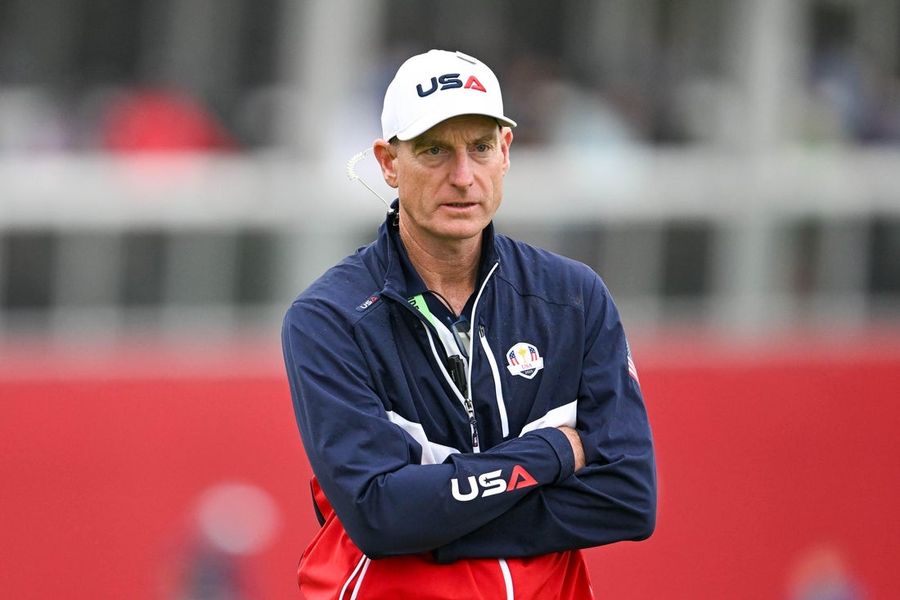
Deadspin | Report: Jim Furyk to captain 2027 U.S. Ryder Cup team  Sep 25, 2025; Bethpage, New York, USA; Jim Furyk coaches on the eighteenth green during a practice round of the Ryder Cup golf tournament at Bethpage Black. Mandatory Credit: Dennis Schneidler-Imagn Images   Jim Furyk will captain the United States Ryder Cup team at Adare Manor in Ireland in 2027, a PGA of America source confirmed Friday to Golf Digest.  This will be the second Ryder Cup captaincy for Furyk, 55. Tiger Woods was believed to be the frontrunner for the role, but he pulled out of consideration after his arrest on DUI charges last month and his subsequent decision to go to Europe for an inpatient rehabilitation program.  Furyk served as captain at the 2018 Ryder Cup at Le Golf National in France. Team Europe routed the Americans 17 1/2-10 1/2, and there were reports of infighting and at least one player, Patrick Reed, complaining about the pairings.  Since then, Furyk captained the 2024 U.S. Presidents Cup team, which handed the International Team an 18 1/2-11 1/2 loss at Royal Montreal Golf Club.  As a player, he was part of nine Ryder Cup teams, victorious on American soil in 1999 and 2008. He also appeared in seven Presidents Cups as a player and was a 17-time winner on the PGA Tour, including the 2003 U.S. Open.   The U.S. has not won a Ryder Cup in Europe since captain Tom Watson’s team won 15-13 at The Belfry in England in 1993. The players on that team included rookie Davis Love III, Fred Couples, Payne Stewart, Lanny Wadkins and 51-year-old Raymond Floyd.  Furyk succeeds Keegan Bradley as captain. Bradley had expressed an interest in taking another shot at the Europeans and captain Luke Donald, who will lead the team for the third time in 2027. Furyk was a vice-captain for the 2025 team.  Team Europe has won the past two Ryder Cup competitions. In 2025, the Americans fell behind on the first two days and mounted a furious comeback attempt on Sunday but fell short, losing 15-13 at Bethpage Black. In 2023, the Europeans defeated the Zach Johnson-led U.S. squad 16 1/2-11 1/2 at Marco Simone Golf & Country Club near Rome.  The next Ryder Cup is scheduled to be held Sept. 17-19, 2027.  –Field Level Media    #Deadspin #Report #Jim #Furyk #captain #U.S #Ryder #Cup #team
Deadspin | Report: Jim Furyk to captain 2027 U.S. Ryder Cup team
Deadspin | Report: Jim Furyk to captain 2027 U.S. Ryder Cup team  Sep 25, 2025; Bethpage, New York, USA; Jim Furyk coaches on the eighteenth green during a practice round of the Ryder Cup golf tournament at Bethpage Black. Mandatory Credit: Dennis Schneidler-Imagn Images   Jim Furyk will captain the United States Ryder Cup team at Adare Manor in Ireland in 2027, a PGA of America source confirmed Friday to Golf Digest.  This will be the second Ryder Cup captaincy for Furyk, 55. Tiger Woods was believed to be the frontrunner for the role, but he pulled out of consideration after his arrest on DUI charges last month and his subsequent decision to go to Europe for an inpatient rehabilitation program.  Furyk served as captain at the 2018 Ryder Cup at Le Golf National in France. Team Europe routed the Americans 17 1/2-10 1/2, and there were reports of infighting and at least one player, Patrick Reed, complaining about the pairings.  Since then, Furyk captained the 2024 U.S. Presidents Cup team, which handed the International Team an 18 1/2-11 1/2 loss at Royal Montreal Golf Club.  As a player, he was part of nine Ryder Cup teams, victorious on American soil in 1999 and 2008. He also appeared in seven Presidents Cups as a player and was a 17-time winner on the PGA Tour, including the 2003 U.S. Open.   The U.S. has not won a Ryder Cup in Europe since captain Tom Watson’s team won 15-13 at The Belfry in England in 1993. The players on that team included rookie Davis Love III, Fred Couples, Payne Stewart, Lanny Wadkins and 51-year-old Raymond Floyd.  Furyk succeeds Keegan Bradley as captain. Bradley had expressed an interest in taking another shot at the Europeans and captain Luke Donald, who will lead the team for the third time in 2027. Furyk was a vice-captain for the 2025 team.  Team Europe has won the past two Ryder Cup competitions. In 2025, the Americans fell behind on the first two days and mounted a furious comeback attempt on Sunday but fell short, losing 15-13 at Bethpage Black. In 2023, the Europeans defeated the Zach Johnson-led U.S. squad 16 1/2-11 1/2 at Marco Simone Golf & Country Club near Rome.  The next Ryder Cup is scheduled to be held Sept. 17-19, 2027.  –Field Level Media    #Deadspin #Report #Jim #Furyk #captain #U.S #Ryder #Cup #teamSep 25, 2025; Bethpage, New York, USA; Jim Furyk coaches on the eighteenth green during a practice round of the Ryder Cup golf tournament at Bethpage Black. Mandatory Credit: Dennis Schneidler-Imagn Images

Jim Furyk will captain the United States Ryder Cup team at Adare Manor in Ireland in 2027, a PGA of America source confirmed Friday to Golf Digest.

This will be the second Ryder Cup captaincy for Furyk, 55. Tiger Woods was believed to be the frontrunner for the role, but he pulled out of consideration after his arrest on DUI charges last month and his subsequent decision to go to Europe for an inpatient rehabilitation program.

Furyk served as captain at the 2018 Ryder Cup at Le Golf National in France. Team Europe routed the Americans 17 1/2-10 1/2, and there were reports of infighting and at least one player, Patrick Reed, complaining about the pairings.

Since then, Furyk captained the 2024 U.S. Presidents Cup team, which handed the International Team an 18 1/2-11 1/2 loss at Royal Montreal Golf Club.


As a player, he was part of nine Ryder Cup teams, victorious on American soil in 1999 and 2008. He also appeared in seven Presidents Cups as a player and was a 17-time winner on the PGA Tour, including the 2003 U.S. Open.

The U.S. has not won a Ryder Cup in Europe since captain Tom Watson’s team won 15-13 at The Belfry in England in 1993. The players on that team included rookie Davis Love III, Fred Couples, Payne Stewart, Lanny Wadkins and 51-year-old Raymond Floyd.

Furyk succeeds Keegan Bradley as captain. Bradley had expressed an interest in taking another shot at the Europeans and captain Luke Donald, who will lead the team for the third time in 2027. Furyk was a vice-captain for the 2025 team.

Team Europe has won the past two Ryder Cup competitions. In 2025, the Americans fell behind on the first two days and mounted a furious comeback attempt on Sunday but fell short, losing 15-13 at Bethpage Black. In 2023, the Europeans defeated the Zach Johnson-led U.S. squad 16 1/2-11 1/2 at Marco Simone Golf & Country Club near Rome.

The next Ryder Cup is scheduled to be held Sept. 17-19, 2027.


–Field Level Media

#Deadspin #Report #Jim #Furyk #captain #U.S #Ryder #Cup #team

Sep 25, 2025; Bethpage, New York, USA; Jim Furyk coaches on the eighteenth green during a practice round of the Ryder Cup golf tournament at Bethpage Black. Mandatory Credit: Dennis Schneidler-Imagn Images

Jim Furyk will captain the United States Ryder Cup team at Adare Manor in Ireland in 2027, a PGA of America source confirmed Friday to Golf Digest.

This will be the second Ryder Cup captaincy for Furyk, 55. Tiger Woods was believed to be the frontrunner for the role, but he pulled out of consideration after his arrest on DUI charges last month and his subsequent decision to go to Europe for an inpatient rehabilitation program.

Furyk served as captain at the 2018 Ryder Cup at Le Golf National in France. Team Europe routed the Americans 17 1/2-10 1/2, and there were reports of infighting and at least one player, Patrick Reed, complaining about the pairings.

Since then, Furyk captained the 2024 U.S. Presidents Cup team, which handed the International Team an 18 1/2-11 1/2 loss at Royal Montreal Golf Club.

As a player, he was part of nine Ryder Cup teams, victorious on American soil in 1999 and 2008. He also appeared in seven Presidents Cups as a player and was a 17-time winner on the PGA Tour, including the 2003 U.S. Open.

The U.S. has not won a Ryder Cup in Europe since captain Tom Watson’s team won 15-13 at The Belfry in England in 1993. The players on that team included rookie Davis Love III, Fred Couples, Payne Stewart, Lanny Wadkins and 51-year-old Raymond Floyd.

Furyk succeeds Keegan Bradley as captain. Bradley had expressed an interest in taking another shot at the Europeans and captain Luke Donald, who will lead the team for the third time in 2027. Furyk was a vice-captain for the 2025 team.

Team Europe has won the past two Ryder Cup competitions. In 2025, the Americans fell behind on the first two days and mounted a furious comeback attempt on Sunday but fell short, losing 15-13 at Bethpage Black. In 2023, the Europeans defeated the Zach Johnson-led U.S. squad 16 1/2-11 1/2 at Marco Simone Golf & Country Club near Rome.

The next Ryder Cup is scheduled to be held Sept. 17-19, 2027.

–Field Level Media

Source link
#Deadspin #Report #Jim #Furyk #captain #U.S #Ryder #Cup #team

Previous post

IPL 2026: Happy to bat higher up the order, says DC’s Stubbs <div id="content-body-70902325" itemprop="articleBody"><p>Too often in this Indian Premier League (IPL), Tristan Stubbs has had to come in to bat when Delhi Capitals has lost a spate of wickets. It has resulted in the South African having to rebuild rather than attack from the get-go, as indicated by a middling strike rate of 137.06 after six matches.</p><p>It prompted Venugopal Rao, Capitals’ Director of Cricket, to remark after their loss to Sunrisers Hyderabad that they could look to free up the 25-year-old by moving him to No. 3.</p><p><b>READ</b> | <b><a href="https://sportstar.thehindu.com/cricket/ipl/ipl-2026-news-delhi-capitals-vs-punjab-kings-preview-shreyas-iyer-ricky-ponting/article70902051.ece" target="_blank">Floundering Delhi faces visit from red-hot PBKS</a></b></p><p>“Being in the middle-order in general, you come into different situations all the time. You are sort of mentally prepared for that. I don’t really mind where I come in. If the team asks me to bat higher up the order, I will be more than happy to do it,” Stubbs said on Friday ahead of DC’s clash against Punjab Kings. “I have batted through my whole career from 3 to 6. It changes all the time. With (playing) Test cricket as well, it has allowed me to be able to try and change gears and do what I think is right out there.”</p><p>Stubbs doesn’t expect the surface for Saturday’s afternoon clash to be a batting featherbed. “From the T20 World Cup to now, we haven’t seen an absolute belter here. It will probably be really similar,” he stated, before adding partly in jest, “Hopefully it is really low, ragging and 120 plays 120. That will be great.”</p><p>PBKS, meanwhile, is a well-drilled outfit under Shreyas Iyer. Praising the skipper, Punjab’s spin-bowling coach Sairaj Bahutule said: “Shreyas’ leadership qualities are special. The rapport he has with each player, he knows how to get the best out of everyone.”</p><p class="publish-time" id="end-of-article">Published on Apr 24, 2026</p></div> #IPL #Happy #bat #higher #order #DCs #Stubbs

Next post

इंदौर टावर उपकरण चोरी केस में दिल्ली के सीलमपुर से मास्टरमाइंड गिरफ्तार, 8 करोड़ की हेराफेरी का खुलासा

Scotland’s time in the 2026 World Cup may have been short-lived, but the fans’ effect on Boston will live on for a long, long time. Visitors took over the city, integrated themselves to their hosts, and had an absolute ball during the group stage of the tournament. Now some of them are back, for the best reason imaginable.

A handful of Scotland fans have returned, with a traffic cone adorned in designs that honor Boston. It was created by a fan/artist who fell in love with scenes of Scottish fans in Boston, with the traffic cone becoming synonymous with the fanbase due to their penchant for playfully putting them on the heads of statues, most notably the Duke of Wellington’s statue in Glasgow.

This new iteration of the cone is going to be touring the city to raise money and awareness for mental health charities. Seen as a symbol of friendship, it’s designed to foster friendship between the cities which will hopefully last long past the World Cup.

#Scotland #fans #returning #Boston #reason">Scotland fans are returning to Boston for the best reason  Scotland’s time in the 2026 World Cup may have been short-lived, but the fans’ effect on Boston will live on for a long, long time. Visitors took over the city, integrated themselves to their hosts, and had an absolute ball during the group stage of the tournament. Now some of them are back, for the best reason imaginable. 


        View this post on Instagram            


A handful of Scotland fans have returned, with a traffic cone adorned in designs that honor Boston. It was created by a fan/artist who fell in love with scenes of Scottish fans in Boston, with the traffic cone becoming synonymous with the fanbase due to their penchant for playfully putting them on the heads of statues, most notably the Duke of Wellington’s statue in Glasgow.

This new iteration of the cone is going to be touring the city to raise money and awareness for mental health charities. Seen as a symbol of friendship, it’s designed to foster friendship between the cities which will hopefully last long past the World Cup.  #Scotland #fans #returning #Boston #reason

Visitors took over the city, integrated themselves to their hosts, and had an absolute ball during the group stage of the tournament. Now some of them are back, for the best reason imaginable.

A handful of Scotland fans have returned, with a traffic cone adorned in designs that honor Boston. It was created by a fan/artist who fell in love with scenes of Scottish fans in Boston, with the traffic cone becoming synonymous with the fanbase due to their penchant for playfully putting them on the heads of statues, most notably the Duke of Wellington’s statue in Glasgow.

This new iteration of the cone is going to be touring the city to raise money and awareness for mental health charities. Seen as a symbol of friendship, it’s designed to foster friendship between the cities which will hopefully last long past the World Cup.

#Scotland #fans #returning #Boston #reason">Scotland fans are returning to Boston for the best reason

Scotland’s time in the 2026 World Cup may have been short-lived, but the fans’ effect on Boston will live on for a long, long time. Visitors took over the city, integrated themselves to their hosts, and had an absolute ball during the group stage of the tournament. Now some of them are back, for the best reason imaginable.

A handful of Scotland fans have returned, with a traffic cone adorned in designs that honor Boston. It was created by a fan/artist who fell in love with scenes of Scottish fans in Boston, with the traffic cone becoming synonymous with the fanbase due to their penchant for playfully putting them on the heads of statues, most notably the Duke of Wellington’s statue in Glasgow.

This new iteration of the cone is going to be touring the city to raise money and awareness for mental health charities. Seen as a symbol of friendship, it’s designed to foster friendship between the cities which will hopefully last long past the World Cup.

#Scotland #fans #returning #Boston #reason

Antonio Rattin’s red card (1966 World Cup quarterfinal)

The rivalry’s first great flashpoint came at Wembley when Argentina captain Antonio Rattin was sent off for “violence of the tongue”, despite no common language existing between him and German referee Rudolf Kreitlein. Rattin refused to leave for nearly eight minutes, sat on the royal carpet and had to be escorted off. England won 1-0, but the aftermath proved equally explosive as England manager Alf Ramsey prevented his players from exchanging shirts with Argentina, later branding the visitors “animals”.

Diego Maradona’s “Hand of God” (1986 World Cup quarterfinal)

5 World Cup Controversies That Made England vs Argentina Legendary  Antonio Rattin’s red card (1966 World Cup quarterfinal)The rivalry’s first great flashpoint came at Wembley when Argentina captain Antonio Rattin was sent off for “violence of the tongue”, despite no common language existing between him and German referee Rudolf Kreitlein. Rattin refused to leave for nearly eight minutes, sat on the royal carpet and had to be escorted off. England won 1-0, but the aftermath proved equally explosive as England manager Alf Ramsey prevented his players from exchanging shirts with Argentina, later branding the visitors “animals”.Diego Maradona’s “Hand of God” (1986 World Cup quarterfinal) Diego Maradona punches home the infamous “Hand of God” goal past England goalkeeper Peter Shilton during the 1986 World Cup quarterfinal in Mexico City.
                                                            | Photo Credit: 
                                Getty Images
                            

                            Diego Maradona punches home the infamous “Hand of God” goal past England goalkeeper Peter Shilton during the 1986 World Cup quarterfinal in Mexico City.
                                                            | Photo Credit: 
                                Getty Images
                                                    Six minutes into the second half in Mexico City, Diego Maradona leapt with England goalkeeper Peter Shilton and punched the ball into the net with his left fist. The Tunisian referee Ali Bin Nasser and his assistants missed the infringement, allowing the goal to stand. Maradona later described it as being scored “a little with the head of Maradona and a little with the hand of God”. Argentina won 2-1, with Maradona also scoring the celebrated “Goal of the Century” minutes later.David Beckham’s red card (1998 World Cup Round of 16) David Beckham was sent off for kicking out at Argentina’s Diego Simeone early in the second half of their 1998 World Cup Round of 16 match.
                                                            | Photo Credit: 
                                Getty Images
                            

                            David Beckham was sent off for kicking out at Argentina’s Diego Simeone early in the second half of their 1998 World Cup Round of 16 match.
                                                            | Photo Credit: 
                                Getty Images
                                                    With the score at 2-2 in Saint-Etienne, England midfielder David Beckham was sent off early in the second half after kicking out at Diego Simeone following a foul. Referee Kim Milton Nielsen judged the retaliation worthy of a red card. Reduced to 10 men, England held on until penalties before losing the shootout. Beckham became a national villain overnight, while many England supporters accused Simeone of exaggerating the contact.Sol Campbell’s disallowed extra-time goal (1998 World Cup Round of 16) Sol Campbell of England celebrates scoring a goal, which is later disallowed due to Alan Shearer of England infringing Argentina goalkeeper Carlos Roa.
                                                            | Photo Credit: 
                                Getty Images
                            

                            Sol Campbell of England celebrates scoring a goal, which is later disallowed due to Alan Shearer of England infringing Argentina goalkeeper Carlos Roa.
                                                            | Photo Credit: 
                                Getty Images
                                                    The same 1998 tie produced another controversy. In extra time, Sol Campbell headed England into what appeared to be a golden-goal winner. Referee Kim Milton Nielsen, however, ruled the goal out for a foul by Alan Shearer on Argentine goalkeeper Carlos Roa. The match remained level and Argentina eventually prevailed in the penalty shootout (4-3).Michael Owen’s controversial penalty against Mauricio Pochettino (2002 World Cup group stage) England’s Michael Owen is fouled by Argentina’s Mauricio Pochettino which resulted in a penalty kick and England’s winning goal 
                                                            | Photo Credit: 
                                Getty Images
                            

                            England’s Michael Owen is fouled by Argentina’s Mauricio Pochettino which resulted in a penalty kick and England’s winning goal 
                                                            | Photo Credit: 
                                Getty Images
                                                    England’s only goal in its 1-0 victory over Argentina came from a penalty that has remained fiercely debated. Just before half-time, Michael Owen burst into the penalty area and went down after contact from defender Mauricio Pochettino. Referee Pierluigi Collina pointed to the spot, and David Beckham converted. While England argued Pochettino had clipped Owen, Argentina insisted the striker had exaggerated the contact. Years later, Owen admitted he could have stayed on his feet, keeping alive one of the rivalry’s most disputed refereeing decisions.Published on Jul 15, 2026  #World #Cup #Controversies #England #Argentina #Legendary

Diego Maradona punches home the infamous “Hand of God” goal past England goalkeeper Peter Shilton during the 1986 World Cup quarterfinal in Mexico City. | Photo Credit: Getty Images

lightbox-info

Diego Maradona punches home the infamous “Hand of God” goal past England goalkeeper Peter Shilton during the 1986 World Cup quarterfinal in Mexico City. | Photo Credit: Getty Images

Six minutes into the second half in Mexico City, Diego Maradona leapt with England goalkeeper Peter Shilton and punched the ball into the net with his left fist. The Tunisian referee Ali Bin Nasser and his assistants missed the infringement, allowing the goal to stand. Maradona later described it as being scored “a little with the head of Maradona and a little with the hand of God”. Argentina won 2-1, with Maradona also scoring the celebrated “Goal of the Century” minutes later.

David Beckham’s red card (1998 World Cup Round of 16)

David Beckham was sent off for kicking out at Argentina’s Diego Simeone early in the second half of their 1998 World Cup Round of 16 match.

David Beckham was sent off for kicking out at Argentina’s Diego Simeone early in the second half of their 1998 World Cup Round of 16 match. | Photo Credit: Getty Images

lightbox-info

David Beckham was sent off for kicking out at Argentina’s Diego Simeone early in the second half of their 1998 World Cup Round of 16 match. | Photo Credit: Getty Images

With the score at 2-2 in Saint-Etienne, England midfielder David Beckham was sent off early in the second half after kicking out at Diego Simeone following a foul. Referee Kim Milton Nielsen judged the retaliation worthy of a red card. Reduced to 10 men, England held on until penalties before losing the shootout. Beckham became a national villain overnight, while many England supporters accused Simeone of exaggerating the contact.

Sol Campbell’s disallowed extra-time goal (1998 World Cup Round of 16)

Sol Campbell of England celebrates scoring a goal, which is later disallowed due to Alan Shearer of England infringing Argentina goalkeeper Carlos Roa.

Sol Campbell of England celebrates scoring a goal, which is later disallowed due to Alan Shearer of England infringing Argentina goalkeeper Carlos Roa. | Photo Credit: Getty Images

lightbox-info

Sol Campbell of England celebrates scoring a goal, which is later disallowed due to Alan Shearer of England infringing Argentina goalkeeper Carlos Roa. | Photo Credit: Getty Images

The same 1998 tie produced another controversy. In extra time, Sol Campbell headed England into what appeared to be a golden-goal winner. Referee Kim Milton Nielsen, however, ruled the goal out for a foul by Alan Shearer on Argentine goalkeeper Carlos Roa. The match remained level and Argentina eventually prevailed in the penalty shootout (4-3).

Michael Owen’s controversial penalty against Mauricio Pochettino (2002 World Cup group stage)

England’s Michael Owen is fouled by Argentina’s Mauricio Pochettino which resulted in a penalty kick and England’s winning goal 

England’s Michael Owen is fouled by Argentina’s Mauricio Pochettino which resulted in a penalty kick and England’s winning goal  | Photo Credit: Getty Images

lightbox-info

England’s Michael Owen is fouled by Argentina’s Mauricio Pochettino which resulted in a penalty kick and England’s winning goal  | Photo Credit: Getty Images

England’s only goal in its 1-0 victory over Argentina came from a penalty that has remained fiercely debated. Just before half-time, Michael Owen burst into the penalty area and went down after contact from defender Mauricio Pochettino. Referee Pierluigi Collina pointed to the spot, and David Beckham converted. While England argued Pochettino had clipped Owen, Argentina insisted the striker had exaggerated the contact. Years later, Owen admitted he could have stayed on his feet, keeping alive one of the rivalry’s most disputed refereeing decisions.

Published on Jul 15, 2026

#World #Cup #Controversies #England #Argentina #Legendary">5 World Cup Controversies That Made England vs Argentina Legendary  Antonio Rattin’s red card (1966 World Cup quarterfinal)The rivalry’s first great flashpoint came at Wembley when Argentina captain Antonio Rattin was sent off for “violence of the tongue”, despite no common language existing between him and German referee Rudolf Kreitlein. Rattin refused to leave for nearly eight minutes, sat on the royal carpet and had to be escorted off. England won 1-0, but the aftermath proved equally explosive as England manager Alf Ramsey prevented his players from exchanging shirts with Argentina, later branding the visitors “animals”.Diego Maradona’s “Hand of God” (1986 World Cup quarterfinal) Diego Maradona punches home the infamous “Hand of God” goal past England goalkeeper Peter Shilton during the 1986 World Cup quarterfinal in Mexico City.
                                                            | Photo Credit: 
                                Getty Images
                            

                            Diego Maradona punches home the infamous “Hand of God” goal past England goalkeeper Peter Shilton during the 1986 World Cup quarterfinal in Mexico City.
                                                            | Photo Credit: 
                                Getty Images
                                                    Six minutes into the second half in Mexico City, Diego Maradona leapt with England goalkeeper Peter Shilton and punched the ball into the net with his left fist. The Tunisian referee Ali Bin Nasser and his assistants missed the infringement, allowing the goal to stand. Maradona later described it as being scored “a little with the head of Maradona and a little with the hand of God”. Argentina won 2-1, with Maradona also scoring the celebrated “Goal of the Century” minutes later.David Beckham’s red card (1998 World Cup Round of 16) David Beckham was sent off for kicking out at Argentina’s Diego Simeone early in the second half of their 1998 World Cup Round of 16 match.
                                                            | Photo Credit: 
                                Getty Images
                            

                            David Beckham was sent off for kicking out at Argentina’s Diego Simeone early in the second half of their 1998 World Cup Round of 16 match.
                                                            | Photo Credit: 
                                Getty Images
                                                    With the score at 2-2 in Saint-Etienne, England midfielder David Beckham was sent off early in the second half after kicking out at Diego Simeone following a foul. Referee Kim Milton Nielsen judged the retaliation worthy of a red card. Reduced to 10 men, England held on until penalties before losing the shootout. Beckham became a national villain overnight, while many England supporters accused Simeone of exaggerating the contact.Sol Campbell’s disallowed extra-time goal (1998 World Cup Round of 16) Sol Campbell of England celebrates scoring a goal, which is later disallowed due to Alan Shearer of England infringing Argentina goalkeeper Carlos Roa.
                                                            | Photo Credit: 
                                Getty Images
                            

                            Sol Campbell of England celebrates scoring a goal, which is later disallowed due to Alan Shearer of England infringing Argentina goalkeeper Carlos Roa.
                                                            | Photo Credit: 
                                Getty Images
                                                    The same 1998 tie produced another controversy. In extra time, Sol Campbell headed England into what appeared to be a golden-goal winner. Referee Kim Milton Nielsen, however, ruled the goal out for a foul by Alan Shearer on Argentine goalkeeper Carlos Roa. The match remained level and Argentina eventually prevailed in the penalty shootout (4-3).Michael Owen’s controversial penalty against Mauricio Pochettino (2002 World Cup group stage) England’s Michael Owen is fouled by Argentina’s Mauricio Pochettino which resulted in a penalty kick and England’s winning goal 
                                                            | Photo Credit: 
                                Getty Images
                            

                            England’s Michael Owen is fouled by Argentina’s Mauricio Pochettino which resulted in a penalty kick and England’s winning goal 
                                                            | Photo Credit: 
                                Getty Images
                                                    England’s only goal in its 1-0 victory over Argentina came from a penalty that has remained fiercely debated. Just before half-time, Michael Owen burst into the penalty area and went down after contact from defender Mauricio Pochettino. Referee Pierluigi Collina pointed to the spot, and David Beckham converted. While England argued Pochettino had clipped Owen, Argentina insisted the striker had exaggerated the contact. Years later, Owen admitted he could have stayed on his feet, keeping alive one of the rivalry’s most disputed refereeing decisions.Published on Jul 15, 2026  #World #Cup #Controversies #England #Argentina #Legendary

Post Comment