×
Deadspin | Sergio Garcia apologizes for meltdown at Masters  Apr 9, 2026; Augusta, Georgia, USA; Sergio Garcia lines up a putt on the second green during the first round of the Masters Tournament at Augusta National Golf Club. Mandatory Credit: Michael Madrid-Imagn Images   Sergio Garcia apologized on Tuesday for his behavior at the Masters, where he received a code of conduct warning following his meltdown at the second hole on Sunday.  Garcia, 46, had little to say to reporters following his final round at Augusta National before opting to open up on social media two days later.  “I want to apologize for my actions on Sunday at the Masters tournament. I respect and value everything that the Masters and Augusta National Golf Club is to Golf,” wrote Garcia, a 2017 Masters champion.  “I regret the way I acted and it has no place in our game. It doesn’t reflect the respect and appreciation I have for the Masters, the patrons, tournament officials and golf fans around the world.”   Having already absorbed a bogey on his first hole — the first of five on the day — Garcia lined up for his tee shot on No. 2, found the shot not to his liking as it made a beeline for the fairway bunker and promptly took two heavy swings at the turf in frustration.  Apparently not content until his driver had lost its head completely, the Spaniard swung the blunted instrument into a cooling stand a few moments later, then snapped the dangling head of the damaged driver off himself shortly after that.  Garcia ultimately finished with the third-highest score among players to make the cut, as his 3-over-par 75 left him at 8 over for the tournament. Only Rasmus Hojgaard of Denmark (10 over) and Charl Schwartzel of South Africa (12 over) were worse.  –Field Level Media    #Deadspin #Sergio #Garcia #apologizes #meltdown #Masters
Deadspin | Sergio Garcia apologizes for meltdown at Masters
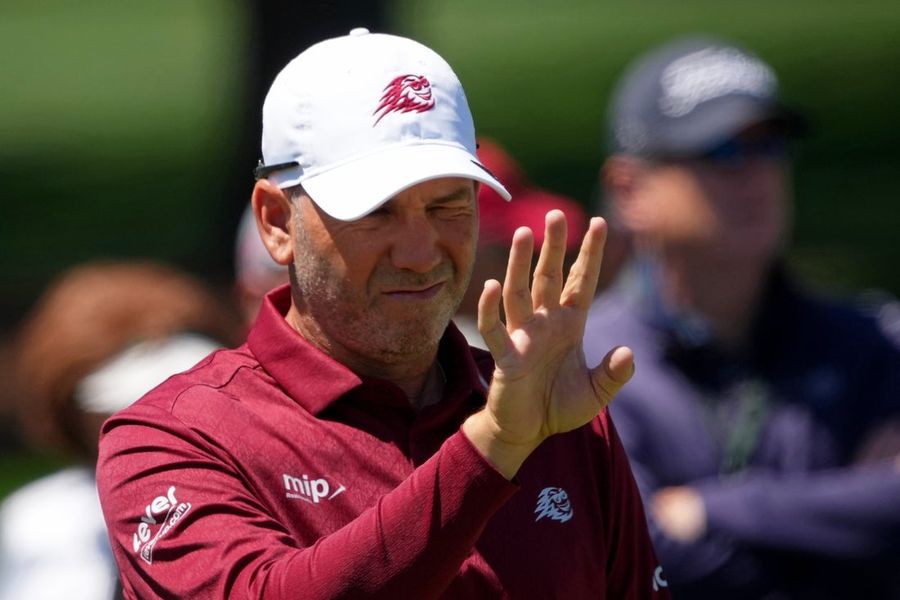
Deadspin | Sergio Garcia apologizes for meltdown at Masters  Apr 9, 2026; Augusta, Georgia, USA; Sergio Garcia lines up a putt on the second green during the first round of the Masters Tournament at Augusta National Golf Club. Mandatory Credit: Michael Madrid-Imagn Images   Sergio Garcia apologized on Tuesday for his behavior at the Masters, where he received a code of conduct warning following his meltdown at the second hole on Sunday.  Garcia, 46, had little to say to reporters following his final round at Augusta National before opting to open up on social media two days later.  “I want to apologize for my actions on Sunday at the Masters tournament. I respect and value everything that the Masters and Augusta National Golf Club is to Golf,” wrote Garcia, a 2017 Masters champion.  “I regret the way I acted and it has no place in our game. It doesn’t reflect the respect and appreciation I have for the Masters, the patrons, tournament officials and golf fans around the world.”   Having already absorbed a bogey on his first hole — the first of five on the day — Garcia lined up for his tee shot on No. 2, found the shot not to his liking as it made a beeline for the fairway bunker and promptly took two heavy swings at the turf in frustration.  Apparently not content until his driver had lost its head completely, the Spaniard swung the blunted instrument into a cooling stand a few moments later, then snapped the dangling head of the damaged driver off himself shortly after that.  Garcia ultimately finished with the third-highest score among players to make the cut, as his 3-over-par 75 left him at 8 over for the tournament. Only Rasmus Hojgaard of Denmark (10 over) and Charl Schwartzel of South Africa (12 over) were worse.  –Field Level Media    #Deadspin #Sergio #Garcia #apologizes #meltdown #MastersApr 9, 2026; Augusta, Georgia, USA; Sergio Garcia lines up a putt on the second green during the first round of the Masters Tournament at Augusta National Golf Club. Mandatory Credit: Michael Madrid-Imagn Images

Sergio Garcia apologized on Tuesday for his behavior at the Masters, where he received a code of conduct warning following his meltdown at the second hole on Sunday.

Garcia, 46, had little to say to reporters following his final round at Augusta National before opting to open up on social media two days later.

“I want to apologize for my actions on Sunday at the Masters tournament. I respect and value everything that the Masters and Augusta National Golf Club is to Golf,” wrote Garcia, a 2017 Masters champion.


“I regret the way I acted and it has no place in our game. It doesn’t reflect the respect and appreciation I have for the Masters, the patrons, tournament officials and golf fans around the world.”

Having already absorbed a bogey on his first hole — the first of five on the day — Garcia lined up for his tee shot on No. 2, found the shot not to his liking as it made a beeline for the fairway bunker and promptly took two heavy swings at the turf in frustration.

Apparently not content until his driver had lost its head completely, the Spaniard swung the blunted instrument into a cooling stand a few moments later, then snapped the dangling head of the damaged driver off himself shortly after that.

Garcia ultimately finished with the third-highest score among players to make the cut, as his 3-over-par 75 left him at 8 over for the tournament. Only Rasmus Hojgaard of Denmark (10 over) and Charl Schwartzel of South Africa (12 over) were worse.


–Field Level Media

#Deadspin #Sergio #Garcia #apologizes #meltdown #Masters

Apr 9, 2026; Augusta, Georgia, USA; Sergio Garcia lines up a putt on the second green during the first round of the Masters Tournament at Augusta National Golf Club. Mandatory Credit: Michael Madrid-Imagn Images

Sergio Garcia apologized on Tuesday for his behavior at the Masters, where he received a code of conduct warning following his meltdown at the second hole on Sunday.

Garcia, 46, had little to say to reporters following his final round at Augusta National before opting to open up on social media two days later.

“I want to apologize for my actions on Sunday at the Masters tournament. I respect and value everything that the Masters and Augusta National Golf Club is to Golf,” wrote Garcia, a 2017 Masters champion.

“I regret the way I acted and it has no place in our game. It doesn’t reflect the respect and appreciation I have for the Masters, the patrons, tournament officials and golf fans around the world.”

Having already absorbed a bogey on his first hole — the first of five on the day — Garcia lined up for his tee shot on No. 2, found the shot not to his liking as it made a beeline for the fairway bunker and promptly took two heavy swings at the turf in frustration.

Apparently not content until his driver had lost its head completely, the Spaniard swung the blunted instrument into a cooling stand a few moments later, then snapped the dangling head of the damaged driver off himself shortly after that.

Garcia ultimately finished with the third-highest score among players to make the cut, as his 3-over-par 75 left him at 8 over for the tournament. Only Rasmus Hojgaard of Denmark (10 over) and Charl Schwartzel of South Africa (12 over) were worse.

–Field Level Media

Source link
#Deadspin #Sergio #Garcia #apologizes #meltdown #Masters

Previous post

Eagles leak wild theory that could signal A.J. Brown trade <div id=""><p class="duet--article--dangerously-set-cms-markup _1teeyfa8 ls9zuh1">If A.J. Brown is traded, DeVonta Smith will immediately become the focal point of the passing offense. Smith is already something of a star receiver, even if he may not be viewed that way nationally. He has topped 1,000 yards in three of his four NFL seasons, while also catching the “dagger” in the Eagles’ second franchise Super Bowl win. Oh, and he also happens to own a Heisman Trophy and a couple of National Championship rings from his time at Alabama, including a game-winning walk-off TD reception in overtime in a National Championship game against Georgia. He is wired for this type of opportunity.</p><p class="duet--article--dangerously-set-cms-markup _1teeyfa8 ls9zuh1">He was also pretty clearly a better player than A.J. Brown in 2025.</p><p class="duet--article--dangerously-set-cms-markup _1teeyfa8 ls9zuh1">There are some within the Eagles’ organization who believe that if Brown were no longer with the team that Smith can have a similar jump in production that Jaxon Smith-Njigba had in Seattle once DK Metcalf was out of the way.</p></div> #Eagles #leak #wild #theory #signal #A.J #Brown #trade

Next post

FIFA could ask Trump to pause ICE raids during World Cup – reports <div id="content-body-70862622" itemprop="articleBody"><p>FIFA’s leadership discussed the possibility of its president, Gianni Infantino, asking United States President Donald Trump to pause ICE ​raids during this summer’s World Cup in North America, according to ‌a report from <i>The Athletic</i>.</p><p>Infantino was receptive to the ​idea and was planning a “president-to-president” request to ⁠Trump for ICE’s role surrounding the World Cup to be reduced, per the report. It has not yet been reported if Infantino has formally ‌made the request or how Trump and the U.S. administration would respond.</p><p>During Trump’s second term, ICE ‌has raided multiple U.S. cities in an effort to deliver ‌on ⁠the President’s message of mass deportation he ⁠campaigned on ahead of the 2024 election. In addition to deportations, these raids have led to conflicts with protestors, including the killings of Renee Good ​and Alex Pretti earlier this ‌year in Minneapolis.</p><p>Acting ICE (U.S. Immigrations and Customs Enforcement) director Todd Lyons previously said agents would be involved in security at matches for this summer’s event, the largest World Cup ‌in FIFA history with 48 teams.</p><p>Members of Congress ​have raised concerns about ICE’s presence surrounding the World Cup leading instead to immigration-enforcement raids. Los Angeles-based workers ⁠at SoFi Stadium — where the U.S. team will play two of its three group-stage games — threatened to strike last week ‌over similar concerns.</p><p><b>ALSO READ: <a href="https://sportstar.thehindu.com/football/matt-crocker-quits-as-us-soccer-federation-sporting-director-fifa-world-cup-2026/article70862267.ece" target="_self">Matt Crocker quits as US football federation sporting director just 2 months before World Cup</a></b></p><p>According to the report, a number of FIFA member federations, particularly in Europe, have shared their concerns about the presence of ICE agents around the event.</p><p>FIFA originally believed that limiting ICE activity in the 11 American cities that will be hosting matches would suffice. However, with travel ‌expanding well beyond those locations with teams setting up base camps across ​the country in cities that won’t be hosting matches, FIFA now desires a total suspension of all ICE ⁠raids during the entire World Cup, which is being held from ⁠June 11 through July 19.</p><p>Trump and Infantino have struck up a relationship which could pay off ‌with the request being honored. FIFA has an office in New York’s Trump Tower and the organization gave the ​President the inaugural FIFA Peace Prize in December during the World Cup draw event.</p><p class="publish-time" id="end-of-article">Published on Apr 14, 2026</p></div> #FIFA #Trump #pause #ICE #raids #World #Cup #reports

By breakfast, the World Cup semifinal had already begun. Hotel lobbies, elevators and street corners around downtown had become meeting points for two of football’s most passionate travelling nations. Argentinians, draped in sky blue and white, cradled their morning mate long before the first beer found its way into their hands. England supporters, wrapped in the white of the Three Lions, preferred to begin the day at the nearest pub, where breakfast arrived mostly in liquid form.

They exchanged smiles, songs and the occasional jab, but beneath the banter was the unmistakable tension that only England against Argentina can summon. This was never just another World Cup semifinal. It was a rivalry that had travelled from Antonio Rattín to Diego Maradona, from David Beckham to Lionel Messi, and was now in Atlanta for the latest battle.

Match Report –Argentina beats England to reach final

Argentina appeared to understand the emotional assignment from the opening whistle. There was an extra spring in every stride and greater force in every collision. Its players clattered into challenges, chased lost causes and celebrated tackles.

More than four decades have passed since the Falklands War, but in Argentina, the islands remain Las Malvinas, part of a national wound that has never completely healed. The 1982 conflict lasted from April 2 to June 14 and ended with Argentina’s surrender. Six hundred and forty-nine Argentine servicemen, 255 British personnel and three civilians were killed.

The dispute has endured across politics, public memory and football. For many Argentinians, an encounter with England cannot be separated entirely from the young men who left for the South Atlantic and never returned.

Maradona understood that instinctively. Four years after the war, he scored twice against England at the Azteca, first with the Hand of God and then with perhaps the greatest goal the World Cup has ever witnessed. Maradona would later describe the victory as revenge. For Argentina, those four minutes in 1986 are more than sporting history. They became part of the country’s mythology.

Malvinas, Maradona and Messi: Argentina draws strength from past and present to defeat England  By breakfast, the World Cup semifinal had already begun. Hotel lobbies, elevators and street corners around downtown had become meeting points for two of football’s most passionate travelling nations. Argentinians, draped in sky blue and white, cradled their morning mate long before the first beer found its way into their hands. England supporters, wrapped in the white of the Three Lions, preferred to begin the day at the nearest pub, where breakfast arrived mostly in liquid form.They exchanged smiles, songs and the occasional jab, but beneath the banter was the unmistakable tension that only England against Argentina can summon. This was never just another World Cup semifinal. It was a rivalry that had travelled from Antonio Rattín to Diego Maradona, from David Beckham to Lionel Messi, and was now in Atlanta for the latest battle.Match Report –Argentina beats England to reach finalArgentina appeared to understand the emotional assignment from the opening whistle. There was an extra spring in every stride and greater force in every collision. Its players clattered into challenges, chased lost causes and celebrated tackles.More than four decades have passed since the Falklands War, but in Argentina, the islands remain Las Malvinas, part of a national wound that has never completely healed. The 1982 conflict lasted from April 2 to June 14 and ended with Argentina’s surrender. Six hundred and forty-nine Argentine servicemen, 255 British personnel and three civilians were killed.The dispute has endured across politics, public memory and football. For many Argentinians, an encounter with England cannot be separated entirely from the young men who left for the South Atlantic and never returned.Maradona understood that instinctively. Four years after the war, he scored twice against England at the Azteca, first with the Hand of God and then with perhaps the greatest goal the World Cup has ever witnessed. Maradona would later describe the victory as revenge. For Argentina, those four minutes in 1986 are more than sporting history. They became part of the country’s mythology. Maradona gave Argentina one of football’s defining moments. Messi ensured the story would continue, not as a replay but as another chapter.
                                                            | Photo Credit: 
                                REUTERS
                            

                            Maradona gave Argentina one of football’s defining moments. Messi ensured the story would continue, not as a replay but as another chapter.
                                                            | Photo Credit: 
                                REUTERS
                                                    Maradona’s image has appeared across stadiums in the United States, along with those of Messi, the heir who eventually delivered the trophy Diego had once lifted. His name has been sung from Dallas to Atlanta, invoked not as a distant memory but as a continuing presence.After Argentina’s dramatic victory over Egypt in the round of 16, the players sang and danced in their dressing room to        La Cuarta Estrella (The Fourth Star), the anthem that has followed the team through its title defence.“I’m Argentine from the cradle to the grave,For Malvinas, for Diego, for Leo’s last one,Argentina, I want to see you become champions again.”The words place the Malvinas, Maradona and Messi within the same national story, where sacrifice, memory and football are intertwined.On Wednesday, Argentina played as though it all still mattered.And when the victory was finally secured, there was a connection between the past and present. Giovani Lo Celso and Nicolas Otamendi unfurled a banner reading: “       Las Malvinas son Argentinas”, or “The Malvinas (Falkland Islands) are Argentine.”It was neither an incidental gesture nor an improvised celebration. It was a message delivered after England was defeated again.Long after the final whistle, Argentina’s players and supporters remained united in celebration. The team stood facing the sky-blue-and-white end, singing and dancing with those who had followed it across cities, time zones and thousands of miles. Players drifted towards the tunnel only to return, lured back by another chorus from the stands.For Argentina, England has never been just another opponent. Forty-four years after the Falklands War and four decades after Maradona transformed this rivalry forever, another generation had carried that history into another World Cup final.Published on Jul 16, 2026  #Malvinas #Maradona #Messi #Argentina #draws #strength #present #defeat #England

Maradona gave Argentina one of football’s defining moments. Messi ensured the story would continue, not as a replay but as another chapter. | Photo Credit: REUTERS

lightbox-info

Maradona gave Argentina one of football’s defining moments. Messi ensured the story would continue, not as a replay but as another chapter. | Photo Credit: REUTERS

Maradona’s image has appeared across stadiums in the United States, along with those of Messi, the heir who eventually delivered the trophy Diego had once lifted. His name has been sung from Dallas to Atlanta, invoked not as a distant memory but as a continuing presence.

After Argentina’s dramatic victory over Egypt in the round of 16, the players sang and danced in their dressing room to La Cuarta Estrella (The Fourth Star), the anthem that has followed the team through its title defence.

“I’m Argentine from the cradle to the grave,

For Malvinas, for Diego, for Leo’s last one,

Argentina, I want to see you become champions again.”

The words place the Malvinas, Maradona and Messi within the same national story, where sacrifice, memory and football are intertwined.

On Wednesday, Argentina played as though it all still mattered.

And when the victory was finally secured, there was a connection between the past and present. Giovani Lo Celso and Nicolas Otamendi unfurled a banner reading: “ Las Malvinas son Argentinas”, or “The Malvinas (Falkland Islands) are Argentine.”

It was neither an incidental gesture nor an improvised celebration. It was a message delivered after England was defeated again.

Long after the final whistle, Argentina’s players and supporters remained united in celebration. The team stood facing the sky-blue-and-white end, singing and dancing with those who had followed it across cities, time zones and thousands of miles. Players drifted towards the tunnel only to return, lured back by another chorus from the stands.

For Argentina, England has never been just another opponent. Forty-four years after the Falklands War and four decades after Maradona transformed this rivalry forever, another generation had carried that history into another World Cup final.

Published on Jul 16, 2026

#Malvinas #Maradona #Messi #Argentina #draws #strength #present #defeat #England">Malvinas, Maradona and Messi: Argentina draws strength from past and present to defeat England  By breakfast, the World Cup semifinal had already begun. Hotel lobbies, elevators and street corners around downtown had become meeting points for two of football’s most passionate travelling nations. Argentinians, draped in sky blue and white, cradled their morning mate long before the first beer found its way into their hands. England supporters, wrapped in the white of the Three Lions, preferred to begin the day at the nearest pub, where breakfast arrived mostly in liquid form.They exchanged smiles, songs and the occasional jab, but beneath the banter was the unmistakable tension that only England against Argentina can summon. This was never just another World Cup semifinal. It was a rivalry that had travelled from Antonio Rattín to Diego Maradona, from David Beckham to Lionel Messi, and was now in Atlanta for the latest battle.Match Report –Argentina beats England to reach finalArgentina appeared to understand the emotional assignment from the opening whistle. There was an extra spring in every stride and greater force in every collision. Its players clattered into challenges, chased lost causes and celebrated tackles.More than four decades have passed since the Falklands War, but in Argentina, the islands remain Las Malvinas, part of a national wound that has never completely healed. The 1982 conflict lasted from April 2 to June 14 and ended with Argentina’s surrender. Six hundred and forty-nine Argentine servicemen, 255 British personnel and three civilians were killed.The dispute has endured across politics, public memory and football. For many Argentinians, an encounter with England cannot be separated entirely from the young men who left for the South Atlantic and never returned.Maradona understood that instinctively. Four years after the war, he scored twice against England at the Azteca, first with the Hand of God and then with perhaps the greatest goal the World Cup has ever witnessed. Maradona would later describe the victory as revenge. For Argentina, those four minutes in 1986 are more than sporting history. They became part of the country’s mythology. Maradona gave Argentina one of football’s defining moments. Messi ensured the story would continue, not as a replay but as another chapter.
                                                            | Photo Credit: 
                                REUTERS
                            

                            Maradona gave Argentina one of football’s defining moments. Messi ensured the story would continue, not as a replay but as another chapter.
                                                            | Photo Credit: 
                                REUTERS
                                                    Maradona’s image has appeared across stadiums in the United States, along with those of Messi, the heir who eventually delivered the trophy Diego had once lifted. His name has been sung from Dallas to Atlanta, invoked not as a distant memory but as a continuing presence.After Argentina’s dramatic victory over Egypt in the round of 16, the players sang and danced in their dressing room to        La Cuarta Estrella (The Fourth Star), the anthem that has followed the team through its title defence.“I’m Argentine from the cradle to the grave,For Malvinas, for Diego, for Leo’s last one,Argentina, I want to see you become champions again.”The words place the Malvinas, Maradona and Messi within the same national story, where sacrifice, memory and football are intertwined.On Wednesday, Argentina played as though it all still mattered.And when the victory was finally secured, there was a connection between the past and present. Giovani Lo Celso and Nicolas Otamendi unfurled a banner reading: “       Las Malvinas son Argentinas”, or “The Malvinas (Falkland Islands) are Argentine.”It was neither an incidental gesture nor an improvised celebration. It was a message delivered after England was defeated again.Long after the final whistle, Argentina’s players and supporters remained united in celebration. The team stood facing the sky-blue-and-white end, singing and dancing with those who had followed it across cities, time zones and thousands of miles. Players drifted towards the tunnel only to return, lured back by another chorus from the stands.For Argentina, England has never been just another opponent. Forty-four years after the Falklands War and four decades after Maradona transformed this rivalry forever, another generation had carried that history into another World Cup final.Published on Jul 16, 2026  #Malvinas #Maradona #Messi #Argentina #draws #strength #present #defeat #England

Argentina beats England to reach final

Argentina appeared to understand the emotional assignment from the opening whistle. There was an extra spring in every stride and greater force in every collision. Its players clattered into challenges, chased lost causes and celebrated tackles.

More than four decades have passed since the Falklands War, but in Argentina, the islands remain Las Malvinas, part of a national wound that has never completely healed. The 1982 conflict lasted from April 2 to June 14 and ended with Argentina’s surrender. Six hundred and forty-nine Argentine servicemen, 255 British personnel and three civilians were killed.

The dispute has endured across politics, public memory and football. For many Argentinians, an encounter with England cannot be separated entirely from the young men who left for the South Atlantic and never returned.

Maradona understood that instinctively. Four years after the war, he scored twice against England at the Azteca, first with the Hand of God and then with perhaps the greatest goal the World Cup has ever witnessed. Maradona would later describe the victory as revenge. For Argentina, those four minutes in 1986 are more than sporting history. They became part of the country’s mythology.

Malvinas, Maradona and Messi: Argentina draws strength from past and present to defeat England  By breakfast, the World Cup semifinal had already begun. Hotel lobbies, elevators and street corners around downtown had become meeting points for two of football’s most passionate travelling nations. Argentinians, draped in sky blue and white, cradled their morning mate long before the first beer found its way into their hands. England supporters, wrapped in the white of the Three Lions, preferred to begin the day at the nearest pub, where breakfast arrived mostly in liquid form.They exchanged smiles, songs and the occasional jab, but beneath the banter was the unmistakable tension that only England against Argentina can summon. This was never just another World Cup semifinal. It was a rivalry that had travelled from Antonio Rattín to Diego Maradona, from David Beckham to Lionel Messi, and was now in Atlanta for the latest battle.Match Report –Argentina beats England to reach finalArgentina appeared to understand the emotional assignment from the opening whistle. There was an extra spring in every stride and greater force in every collision. Its players clattered into challenges, chased lost causes and celebrated tackles.More than four decades have passed since the Falklands War, but in Argentina, the islands remain Las Malvinas, part of a national wound that has never completely healed. The 1982 conflict lasted from April 2 to June 14 and ended with Argentina’s surrender. Six hundred and forty-nine Argentine servicemen, 255 British personnel and three civilians were killed.The dispute has endured across politics, public memory and football. For many Argentinians, an encounter with England cannot be separated entirely from the young men who left for the South Atlantic and never returned.Maradona understood that instinctively. Four years after the war, he scored twice against England at the Azteca, first with the Hand of God and then with perhaps the greatest goal the World Cup has ever witnessed. Maradona would later describe the victory as revenge. For Argentina, those four minutes in 1986 are more than sporting history. They became part of the country’s mythology. Maradona gave Argentina one of football’s defining moments. Messi ensured the story would continue, not as a replay but as another chapter.
                                                            | Photo Credit: 
                                REUTERS
                            

                            Maradona gave Argentina one of football’s defining moments. Messi ensured the story would continue, not as a replay but as another chapter.
                                                            | Photo Credit: 
                                REUTERS
                                                    Maradona’s image has appeared across stadiums in the United States, along with those of Messi, the heir who eventually delivered the trophy Diego had once lifted. His name has been sung from Dallas to Atlanta, invoked not as a distant memory but as a continuing presence.After Argentina’s dramatic victory over Egypt in the round of 16, the players sang and danced in their dressing room to        La Cuarta Estrella (The Fourth Star), the anthem that has followed the team through its title defence.“I’m Argentine from the cradle to the grave,For Malvinas, for Diego, for Leo’s last one,Argentina, I want to see you become champions again.”The words place the Malvinas, Maradona and Messi within the same national story, where sacrifice, memory and football are intertwined.On Wednesday, Argentina played as though it all still mattered.And when the victory was finally secured, there was a connection between the past and present. Giovani Lo Celso and Nicolas Otamendi unfurled a banner reading: “       Las Malvinas son Argentinas”, or “The Malvinas (Falkland Islands) are Argentine.”It was neither an incidental gesture nor an improvised celebration. It was a message delivered after England was defeated again.Long after the final whistle, Argentina’s players and supporters remained united in celebration. The team stood facing the sky-blue-and-white end, singing and dancing with those who had followed it across cities, time zones and thousands of miles. Players drifted towards the tunnel only to return, lured back by another chorus from the stands.For Argentina, England has never been just another opponent. Forty-four years after the Falklands War and four decades after Maradona transformed this rivalry forever, another generation had carried that history into another World Cup final.Published on Jul 16, 2026  #Malvinas #Maradona #Messi #Argentina #draws #strength #present #defeat #England

Maradona gave Argentina one of football’s defining moments. Messi ensured the story would continue, not as a replay but as another chapter. | Photo Credit: REUTERS

lightbox-info

Maradona gave Argentina one of football’s defining moments. Messi ensured the story would continue, not as a replay but as another chapter. | Photo Credit: REUTERS

Maradona’s image has appeared across stadiums in the United States, along with those of Messi, the heir who eventually delivered the trophy Diego had once lifted. His name has been sung from Dallas to Atlanta, invoked not as a distant memory but as a continuing presence.

After Argentina’s dramatic victory over Egypt in the round of 16, the players sang and danced in their dressing room to La Cuarta Estrella (The Fourth Star), the anthem that has followed the team through its title defence.

“I’m Argentine from the cradle to the grave,

For Malvinas, for Diego, for Leo’s last one,

Argentina, I want to see you become champions again.”

The words place the Malvinas, Maradona and Messi within the same national story, where sacrifice, memory and football are intertwined.

On Wednesday, Argentina played as though it all still mattered.

And when the victory was finally secured, there was a connection between the past and present. Giovani Lo Celso and Nicolas Otamendi unfurled a banner reading: “ Las Malvinas son Argentinas”, or “The Malvinas (Falkland Islands) are Argentine.”

It was neither an incidental gesture nor an improvised celebration. It was a message delivered after England was defeated again.

Long after the final whistle, Argentina’s players and supporters remained united in celebration. The team stood facing the sky-blue-and-white end, singing and dancing with those who had followed it across cities, time zones and thousands of miles. Players drifted towards the tunnel only to return, lured back by another chorus from the stands.

For Argentina, England has never been just another opponent. Forty-four years after the Falklands War and four decades after Maradona transformed this rivalry forever, another generation had carried that history into another World Cup final.

Published on Jul 16, 2026

#Malvinas #Maradona #Messi #Argentina #draws #strength #present #defeat #England">Malvinas, Maradona and Messi: Argentina draws strength from past and present to defeat England

By breakfast, the World Cup semifinal had already begun. Hotel lobbies, elevators and street corners around downtown had become meeting points for two of football’s most passionate travelling nations. Argentinians, draped in sky blue and white, cradled their morning mate long before the first beer found its way into their hands. England supporters, wrapped in the white of the Three Lions, preferred to begin the day at the nearest pub, where breakfast arrived mostly in liquid form.

They exchanged smiles, songs and the occasional jab, but beneath the banter was the unmistakable tension that only England against Argentina can summon. This was never just another World Cup semifinal. It was a rivalry that had travelled from Antonio Rattín to Diego Maradona, from David Beckham to Lionel Messi, and was now in Atlanta for the latest battle.

Match Report –Argentina beats England to reach final

Argentina appeared to understand the emotional assignment from the opening whistle. There was an extra spring in every stride and greater force in every collision. Its players clattered into challenges, chased lost causes and celebrated tackles.

More than four decades have passed since the Falklands War, but in Argentina, the islands remain Las Malvinas, part of a national wound that has never completely healed. The 1982 conflict lasted from April 2 to June 14 and ended with Argentina’s surrender. Six hundred and forty-nine Argentine servicemen, 255 British personnel and three civilians were killed.

The dispute has endured across politics, public memory and football. For many Argentinians, an encounter with England cannot be separated entirely from the young men who left for the South Atlantic and never returned.

Maradona understood that instinctively. Four years after the war, he scored twice against England at the Azteca, first with the Hand of God and then with perhaps the greatest goal the World Cup has ever witnessed. Maradona would later describe the victory as revenge. For Argentina, those four minutes in 1986 are more than sporting history. They became part of the country’s mythology.

Malvinas, Maradona and Messi: Argentina draws strength from past and present to defeat England  By breakfast, the World Cup semifinal had already begun. Hotel lobbies, elevators and street corners around downtown had become meeting points for two of football’s most passionate travelling nations. Argentinians, draped in sky blue and white, cradled their morning mate long before the first beer found its way into their hands. England supporters, wrapped in the white of the Three Lions, preferred to begin the day at the nearest pub, where breakfast arrived mostly in liquid form.They exchanged smiles, songs and the occasional jab, but beneath the banter was the unmistakable tension that only England against Argentina can summon. This was never just another World Cup semifinal. It was a rivalry that had travelled from Antonio Rattín to Diego Maradona, from David Beckham to Lionel Messi, and was now in Atlanta for the latest battle.Match Report –Argentina beats England to reach finalArgentina appeared to understand the emotional assignment from the opening whistle. There was an extra spring in every stride and greater force in every collision. Its players clattered into challenges, chased lost causes and celebrated tackles.More than four decades have passed since the Falklands War, but in Argentina, the islands remain Las Malvinas, part of a national wound that has never completely healed. The 1982 conflict lasted from April 2 to June 14 and ended with Argentina’s surrender. Six hundred and forty-nine Argentine servicemen, 255 British personnel and three civilians were killed.The dispute has endured across politics, public memory and football. For many Argentinians, an encounter with England cannot be separated entirely from the young men who left for the South Atlantic and never returned.Maradona understood that instinctively. Four years after the war, he scored twice against England at the Azteca, first with the Hand of God and then with perhaps the greatest goal the World Cup has ever witnessed. Maradona would later describe the victory as revenge. For Argentina, those four minutes in 1986 are more than sporting history. They became part of the country’s mythology. Maradona gave Argentina one of football’s defining moments. Messi ensured the story would continue, not as a replay but as another chapter.
                                                            | Photo Credit: 
                                REUTERS
                            

                            Maradona gave Argentina one of football’s defining moments. Messi ensured the story would continue, not as a replay but as another chapter.
                                                            | Photo Credit: 
                                REUTERS
                                                    Maradona’s image has appeared across stadiums in the United States, along with those of Messi, the heir who eventually delivered the trophy Diego had once lifted. His name has been sung from Dallas to Atlanta, invoked not as a distant memory but as a continuing presence.After Argentina’s dramatic victory over Egypt in the round of 16, the players sang and danced in their dressing room to        La Cuarta Estrella (The Fourth Star), the anthem that has followed the team through its title defence.“I’m Argentine from the cradle to the grave,For Malvinas, for Diego, for Leo’s last one,Argentina, I want to see you become champions again.”The words place the Malvinas, Maradona and Messi within the same national story, where sacrifice, memory and football are intertwined.On Wednesday, Argentina played as though it all still mattered.And when the victory was finally secured, there was a connection between the past and present. Giovani Lo Celso and Nicolas Otamendi unfurled a banner reading: “       Las Malvinas son Argentinas”, or “The Malvinas (Falkland Islands) are Argentine.”It was neither an incidental gesture nor an improvised celebration. It was a message delivered after England was defeated again.Long after the final whistle, Argentina’s players and supporters remained united in celebration. The team stood facing the sky-blue-and-white end, singing and dancing with those who had followed it across cities, time zones and thousands of miles. Players drifted towards the tunnel only to return, lured back by another chorus from the stands.For Argentina, England has never been just another opponent. Forty-four years after the Falklands War and four decades after Maradona transformed this rivalry forever, another generation had carried that history into another World Cup final.Published on Jul 16, 2026  #Malvinas #Maradona #Messi #Argentina #draws #strength #present #defeat #England

Maradona gave Argentina one of football’s defining moments. Messi ensured the story would continue, not as a replay but as another chapter. | Photo Credit: REUTERS

lightbox-info

Maradona gave Argentina one of football’s defining moments. Messi ensured the story would continue, not as a replay but as another chapter. | Photo Credit: REUTERS

Maradona’s image has appeared across stadiums in the United States, along with those of Messi, the heir who eventually delivered the trophy Diego had once lifted. His name has been sung from Dallas to Atlanta, invoked not as a distant memory but as a continuing presence.

After Argentina’s dramatic victory over Egypt in the round of 16, the players sang and danced in their dressing room to La Cuarta Estrella (The Fourth Star), the anthem that has followed the team through its title defence.

“I’m Argentine from the cradle to the grave,

For Malvinas, for Diego, for Leo’s last one,

Argentina, I want to see you become champions again.”

The words place the Malvinas, Maradona and Messi within the same national story, where sacrifice, memory and football are intertwined.

On Wednesday, Argentina played as though it all still mattered.

And when the victory was finally secured, there was a connection between the past and present. Giovani Lo Celso and Nicolas Otamendi unfurled a banner reading: “ Las Malvinas son Argentinas”, or “The Malvinas (Falkland Islands) are Argentine.”

It was neither an incidental gesture nor an improvised celebration. It was a message delivered after England was defeated again.

Long after the final whistle, Argentina’s players and supporters remained united in celebration. The team stood facing the sky-blue-and-white end, singing and dancing with those who had followed it across cities, time zones and thousands of miles. Players drifted towards the tunnel only to return, lured back by another chorus from the stands.

For Argentina, England has never been just another opponent. Forty-four years after the Falklands War and four decades after Maradona transformed this rivalry forever, another generation had carried that history into another World Cup final.

Published on Jul 16, 2026

#Malvinas #Maradona #Messi #Argentina #draws #strength #present #defeat #England
Deadspin | Hawks F Mouhamed Gueye breaks foot during workout  Mar 21, 2026; Atlanta, Georgia, USA; Atlanta Hawks forward Mouhamed Gueye (18) reacts after a basket against the Golden State Warriors in the second quarter at State Farm Arena. Mandatory Credit: Brett Davis-Imagn Images
   Atlanta Hawks forward Mouhamed Gueye fractured his left foot during a workout on July 8, the team announced Wednesday.  Gueye, 23, underwent surgery Tuesday at the Emory Sports Medicine Complex in Atlanta to repair the fracture. He will be re-evaluated in three to four months, according to the Hawks, who start the preseason on Oct. 5 against the visiting Memphis Grizzlies.  Gueye played a career-high 77 games last regular season (eight starts) and averaged 4.4 points and 3.6 rebounds in 15.3 minutes per game. He averaged 1.7 points, 1.7 rebounds and 8.3 minutes as a reserve in six playoff games last season.   For his career, Gueye averages 4.9 points, 3.8 rebounds and 15.4 minutes over 116 games (36 starts) since his rookie season of 2023-24.  The Charlotte Hornets selected Gueye in the second round (39th overall) of the 2023 NBA Draft out of Washington State. Six days later, he was part of a three-team trade involving the Boston Celtics that landed him in Atlanta.  –Field Level Media    #Deadspin #Hawks #Mouhamed #Gueye #breaks #foot #workoutMar 21, 2026; Atlanta, Georgia, USA; Atlanta Hawks forward Mouhamed Gueye (18) reacts after a basket against the Golden State Warriors in the second quarter at State Farm Arena. Mandatory Credit: Brett Davis-Imagn Images

Atlanta Hawks forward Mouhamed Gueye fractured his left foot during a workout on July 8, the team announced Wednesday.

Gueye, 23, underwent surgery Tuesday at the Emory Sports Medicine Complex in Atlanta to repair the fracture. He will be re-evaluated in three to four months, according to the Hawks, who start the preseason on Oct. 5 against the visiting Memphis Grizzlies.


Gueye played a career-high 77 games last regular season (eight starts) and averaged 4.4 points and 3.6 rebounds in 15.3 minutes per game. He averaged 1.7 points, 1.7 rebounds and 8.3 minutes as a reserve in six playoff games last season.

For his career, Gueye averages 4.9 points, 3.8 rebounds and 15.4 minutes over 116 games (36 starts) since his rookie season of 2023-24.

The Charlotte Hornets selected Gueye in the second round (39th overall) of the 2023 NBA Draft out of Washington State. Six days later, he was part of a three-team trade involving the Boston Celtics that landed him in Atlanta.


–Field Level Media

#Deadspin #Hawks #Mouhamed #Gueye #breaks #foot #workout">Deadspin | Hawks F Mouhamed Gueye breaks foot during workout  Mar 21, 2026; Atlanta, Georgia, USA; Atlanta Hawks forward Mouhamed Gueye (18) reacts after a basket against the Golden State Warriors in the second quarter at State Farm Arena. Mandatory Credit: Brett Davis-Imagn Images
   Atlanta Hawks forward Mouhamed Gueye fractured his left foot during a workout on July 8, the team announced Wednesday.  Gueye, 23, underwent surgery Tuesday at the Emory Sports Medicine Complex in Atlanta to repair the fracture. He will be re-evaluated in three to four months, according to the Hawks, who start the preseason on Oct. 5 against the visiting Memphis Grizzlies.  Gueye played a career-high 77 games last regular season (eight starts) and averaged 4.4 points and 3.6 rebounds in 15.3 minutes per game. He averaged 1.7 points, 1.7 rebounds and 8.3 minutes as a reserve in six playoff games last season.   For his career, Gueye averages 4.9 points, 3.8 rebounds and 15.4 minutes over 116 games (36 starts) since his rookie season of 2023-24.  The Charlotte Hornets selected Gueye in the second round (39th overall) of the 2023 NBA Draft out of Washington State. Six days later, he was part of a three-team trade involving the Boston Celtics that landed him in Atlanta.  –Field Level Media    #Deadspin #Hawks #Mouhamed #Gueye #breaks #foot #workout

Post Comment