×
Deadspin | Twins pursue reversal of fortunes in series opener vs. Jays  Apr 29, 2026; Minneapolis, Minnesota, USA; Minnesota Twins right fielder James Outman (30) scores on an RBI single hit by catcher Victor Caratini (37) during the eighth inning at Target Field. Mandatory Credit: Matt Krohn-Imagn Images   The Minnesota Twins and Toronto Blue Jays are riding completely different streaks entering the opener of a four-game series on Thursday in Minneapolis.  The Twins took two of three games from the Blue Jays on April 10-12, part of a four-game winning streak.  Since the streak ended, they have since lost 11 of 13 games, including a 5-3 defeat to the visiting Seattle Mariners on Wednesday.  Minnesota had the chance to win the game and claim a victory in the three-game series after Victor Caratini’s pinch-hit single put the home team up 3-2 in the eighth inning. However, as has been a problem for most of the season, the bullpen could not close out a much-needed win.  Eric Orze allowed three runs in just one-third of an inning in the ninth while bidding for his second save of the season. The Twins’ bullpen earned run average now sits at 5.30, the fourth worst in the majors. Opponents are now hitting .280 against Minnesota relievers, the highest average of any bullpen in the majors.  “I think we’re just trying to figure out the right mix and match,” Twins manager Derek Shelton said after Wednesday’s loss. “We just haven’t had a lot of consistency down there, and guys filter into roles.”  Catcher Ryan Jeffers has been Minnesota’s best hitter of late. He went 2-for-4 Wednesday to extend his hitting streak to five games, during which he’s hitting .389 (7-for-18). His 18 RBIs lead the team.  The Blue Jays’ losses to the Twins earlier this month began a stretch in which the club dropped six of seven games. However, Toronto has won seven of its last 10 games, including an 8-1 thumping of the Boston Red Sox on Wednesday afternoon.   As the Blue Jays are getting hot, they also are getting healthier. Wednesday saw the return of designated hitter George Springer, who has been sidelined since breaking his left big toe during an at-bat against the Twins on April 11.  Springer did not start Wednesday, but he did pinch hit in the fifth and produced an RBI single to extend the Blue Jays’ lead to 6-1.  “It’s a big boost,” Toronto second baseman Ernie Clement told Sportsnet after the game. “He’s an unbelievable player and unbelievable leader, so it’s just great to have him back, and his energy is awesome.”  Thursday’s pitching matchup features Toronto’s Kevin Gausman (2-1, 2.57 ERA) going up against fellow right-hander Bailey Ober (2-1, 3.94) of Minnesota. Neither pitched in the earlier series.  Gausman has not fared well against Minnesota, going 1-5 with a 6.43 ERA in 14 starts.   Ober is 2-3 with a 3.96 ERA in seven starts versus Toronto.    –Field Level Media   #Deadspin #Twins #pursue #reversal #fortunes #series #opener #Jays
Deadspin | Twins pursue reversal of fortunes in series opener vs. Jays
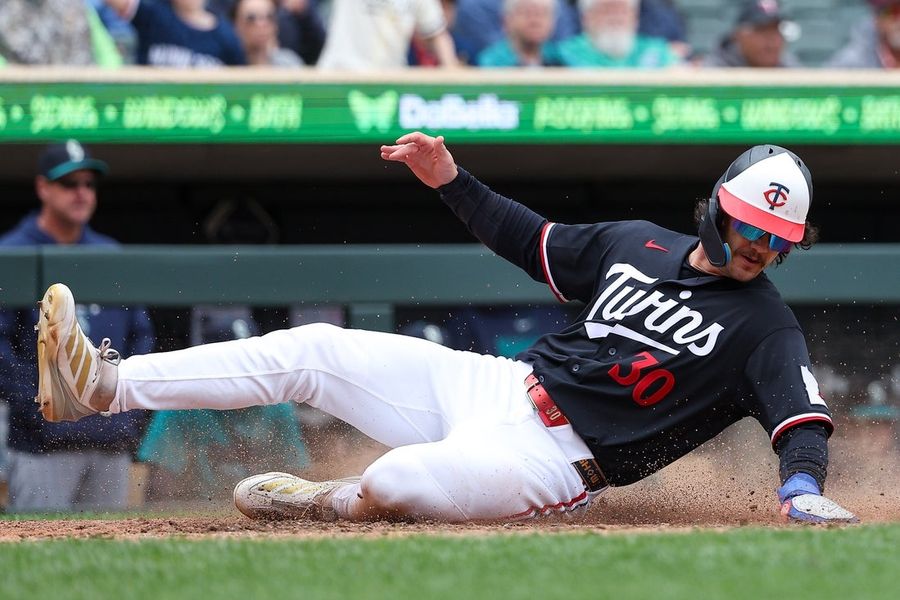
Deadspin | Twins pursue reversal of fortunes in series opener vs. Jays  Apr 29, 2026; Minneapolis, Minnesota, USA; Minnesota Twins right fielder James Outman (30) scores on an RBI single hit by catcher Victor Caratini (37) during the eighth inning at Target Field. Mandatory Credit: Matt Krohn-Imagn Images   The Minnesota Twins and Toronto Blue Jays are riding completely different streaks entering the opener of a four-game series on Thursday in Minneapolis.  The Twins took two of three games from the Blue Jays on April 10-12, part of a four-game winning streak.  Since the streak ended, they have since lost 11 of 13 games, including a 5-3 defeat to the visiting Seattle Mariners on Wednesday.  Minnesota had the chance to win the game and claim a victory in the three-game series after Victor Caratini’s pinch-hit single put the home team up 3-2 in the eighth inning. However, as has been a problem for most of the season, the bullpen could not close out a much-needed win.  Eric Orze allowed three runs in just one-third of an inning in the ninth while bidding for his second save of the season. The Twins’ bullpen earned run average now sits at 5.30, the fourth worst in the majors. Opponents are now hitting .280 against Minnesota relievers, the highest average of any bullpen in the majors.  “I think we’re just trying to figure out the right mix and match,” Twins manager Derek Shelton said after Wednesday’s loss. “We just haven’t had a lot of consistency down there, and guys filter into roles.”  Catcher Ryan Jeffers has been Minnesota’s best hitter of late. He went 2-for-4 Wednesday to extend his hitting streak to five games, during which he’s hitting .389 (7-for-18). His 18 RBIs lead the team.  The Blue Jays’ losses to the Twins earlier this month began a stretch in which the club dropped six of seven games. However, Toronto has won seven of its last 10 games, including an 8-1 thumping of the Boston Red Sox on Wednesday afternoon.   As the Blue Jays are getting hot, they also are getting healthier. Wednesday saw the return of designated hitter George Springer, who has been sidelined since breaking his left big toe during an at-bat against the Twins on April 11.  Springer did not start Wednesday, but he did pinch hit in the fifth and produced an RBI single to extend the Blue Jays’ lead to 6-1.  “It’s a big boost,” Toronto second baseman Ernie Clement told Sportsnet after the game. “He’s an unbelievable player and unbelievable leader, so it’s just great to have him back, and his energy is awesome.”  Thursday’s pitching matchup features Toronto’s Kevin Gausman (2-1, 2.57 ERA) going up against fellow right-hander Bailey Ober (2-1, 3.94) of Minnesota. Neither pitched in the earlier series.  Gausman has not fared well against Minnesota, going 1-5 with a 6.43 ERA in 14 starts.   Ober is 2-3 with a 3.96 ERA in seven starts versus Toronto.    –Field Level Media   #Deadspin #Twins #pursue #reversal #fortunes #series #opener #JaysApr 29, 2026; Minneapolis, Minnesota, USA; Minnesota Twins right fielder James Outman (30) scores on an RBI single hit by catcher Victor Caratini (37) during the eighth inning at Target Field. Mandatory Credit: Matt Krohn-Imagn Images

The Minnesota Twins and Toronto Blue Jays are riding completely different streaks entering the opener of a four-game series on Thursday in Minneapolis.

The Twins took two of three games from the Blue Jays on April 10-12, part of a four-game winning streak.

Since the streak ended, they have since lost 11 of 13 games, including a 5-3 defeat to the visiting Seattle Mariners on Wednesday.

Minnesota had the chance to win the game and claim a victory in the three-game series after Victor Caratini’s pinch-hit single put the home team up 3-2 in the eighth inning. However, as has been a problem for most of the season, the bullpen could not close out a much-needed win.

Eric Orze allowed three runs in just one-third of an inning in the ninth while bidding for his second save of the season. The Twins’ bullpen earned run average now sits at 5.30, the fourth worst in the majors. Opponents are now hitting .280 against Minnesota relievers, the highest average of any bullpen in the majors.

“I think we’re just trying to figure out the right mix and match,” Twins manager Derek Shelton said after Wednesday’s loss. “We just haven’t had a lot of consistency down there, and guys filter into roles.”

Catcher Ryan Jeffers has been Minnesota’s best hitter of late. He went 2-for-4 Wednesday to extend his hitting streak to five games, during which he’s hitting .389 (7-for-18). His 18 RBIs lead the team.


The Blue Jays’ losses to the Twins earlier this month began a stretch in which the club dropped six of seven games. However, Toronto has won seven of its last 10 games, including an 8-1 thumping of the Boston Red Sox on Wednesday afternoon.

As the Blue Jays are getting hot, they also are getting healthier. Wednesday saw the return of designated hitter George Springer, who has been sidelined since breaking his left big toe during an at-bat against the Twins on April 11.

Springer did not start Wednesday, but he did pinch hit in the fifth and produced an RBI single to extend the Blue Jays’ lead to 6-1.

“It’s a big boost,” Toronto second baseman Ernie Clement told Sportsnet after the game. “He’s an unbelievable player and unbelievable leader, so it’s just great to have him back, and his energy is awesome.”

Thursday’s pitching matchup features Toronto’s Kevin Gausman (2-1, 2.57 ERA) going up against fellow right-hander Bailey Ober (2-1, 3.94) of Minnesota. Neither pitched in the earlier series.

Gausman has not fared well against Minnesota, going 1-5 with a 6.43 ERA in 14 starts.

Ober is 2-3 with a 3.96 ERA in seven starts versus Toronto.

–Field Level Media

#Deadspin #Twins #pursue #reversal #fortunes #series #opener #Jays

Apr 29, 2026; Minneapolis, Minnesota, USA; Minnesota Twins right fielder James Outman (30) scores on an RBI single hit by catcher Victor Caratini (37) during the eighth inning at Target Field. Mandatory Credit: Matt Krohn-Imagn Images

The Minnesota Twins and Toronto Blue Jays are riding completely different streaks entering the opener of a four-game series on Thursday in Minneapolis.

The Twins took two of three games from the Blue Jays on April 10-12, part of a four-game winning streak.

Since the streak ended, they have since lost 11 of 13 games, including a 5-3 defeat to the visiting Seattle Mariners on Wednesday.

Minnesota had the chance to win the game and claim a victory in the three-game series after Victor Caratini’s pinch-hit single put the home team up 3-2 in the eighth inning. However, as has been a problem for most of the season, the bullpen could not close out a much-needed win.

Eric Orze allowed three runs in just one-third of an inning in the ninth while bidding for his second save of the season. The Twins’ bullpen earned run average now sits at 5.30, the fourth worst in the majors. Opponents are now hitting .280 against Minnesota relievers, the highest average of any bullpen in the majors.

“I think we’re just trying to figure out the right mix and match,” Twins manager Derek Shelton said after Wednesday’s loss. “We just haven’t had a lot of consistency down there, and guys filter into roles.”

Catcher Ryan Jeffers has been Minnesota’s best hitter of late. He went 2-for-4 Wednesday to extend his hitting streak to five games, during which he’s hitting .389 (7-for-18). His 18 RBIs lead the team.

The Blue Jays’ losses to the Twins earlier this month began a stretch in which the club dropped six of seven games. However, Toronto has won seven of its last 10 games, including an 8-1 thumping of the Boston Red Sox on Wednesday afternoon.

As the Blue Jays are getting hot, they also are getting healthier. Wednesday saw the return of designated hitter George Springer, who has been sidelined since breaking his left big toe during an at-bat against the Twins on April 11.

Springer did not start Wednesday, but he did pinch hit in the fifth and produced an RBI single to extend the Blue Jays’ lead to 6-1.

“It’s a big boost,” Toronto second baseman Ernie Clement told Sportsnet after the game. “He’s an unbelievable player and unbelievable leader, so it’s just great to have him back, and his energy is awesome.”

Thursday’s pitching matchup features Toronto’s Kevin Gausman (2-1, 2.57 ERA) going up against fellow right-hander Bailey Ober (2-1, 3.94) of Minnesota. Neither pitched in the earlier series.

Gausman has not fared well against Minnesota, going 1-5 with a 6.43 ERA in 14 starts.

Ober is 2-3 with a 3.96 ERA in seven starts versus Toronto.

–Field Level Media

Source link
#Deadspin #Twins #pursue #reversal #fortunes #series #opener #Jays

Previous post

College basketball men’s transfer portal’s 4 winners, 3 losers, and 1 wildcard <div id="zephr-anchor"><div class="duet--article--article-body-component"><p class="duet--article--dangerously-set-cms-markup duet--article--standard-paragraph _1nfb3k4i _16w9vov1 _16w9vov0 ls9zuh1">The reality of modern college basketball is that every player is a free agent at the end of each season. To compete for a national championship, it isn’t enough to <a href="https://www.sbnation.com/college-basketball/1109728/yaxel-lendeborg-michigan-journey-nba-draft-national-championship">simply out-bid the NBA to keep a star on campus</a>. A program also has to convince its best players to stay out of the transfer portal, and then <a href="https://www.sbnation.com/college-basketball/1110249/aday-mara-michigan-scouting-report-championship-run-nba-mock-draft">handpick the right pieces</a> to push its returning core to the next level. <a href="https://www.sbnation.com/college-basketball/1109873/in-the-end-michigan-basketball-was-too-big-to-fail">Michigan did it all flawlessly this past season</a> to cut down the nets, but every year is a new challenge with different kinds of talent available on the marketplace.</p></div><div class="duet--article--article-body-component"><p class="duet--article--dangerously-set-cms-markup duet--article--standard-paragraph _1nfb3k4i _16w9vov1 _16w9vov0 ls9zuh1">The transfer portal frenzy has mostly settled by now. The <a href="https://www.sbnation.com/college-basketball/24481294/college-basketball-transfer-portal-rankings-best-available">only impact players available are still testing the NBA Draft process</a>. At this point, we have a pretty good feel for what the rosters look like heading into next season, and there’s already a clear national hierarchy forming. <a href="https://www.sbnation.com/college-basketball/1112636/mens-college-basketball-rankings-2026-27-season-transfer-portal">Read our early top-25 rankings for next season</a>.</p></div><div class="duet--article--article-body-component"><p class="duet--article--dangerously-set-cms-markup duet--article--standard-paragraph _1nfb3k4i _16w9vov1 _16w9vov0 ls9zuh1">It’s time to name our winners and losers from the transfer portal. This is less about the schools who retained their top pieces like <a href="https://www.sbnation.com/college-basketball/1111974/thomas-haugh-florida-nil-payment-highest-paid-college-players-ever">Florida with Thomas Haugh</a>, <a href="https://www.sbnation.com/college-basketball/24481297/illinois-college-basketball-preseason-rankings-roster-retention-portal">Illinois with David Mirkovic and the Ivisic twins</a>, or UConn and Braylon Mullins, and more about the schools who are bringing in (or losing) the most top-end talent.</p></div><div class="duet--article--article-body-component"><p class="duet--article--dangerously-set-cms-markup duet--article--standard-paragraph _1nfb3k4i _16w9vov1 _16w9vov0 ls9zuh1">Gonzaga’s shot at making a deep NCAA tournament run ended last year the moment star forward Braden Huff suffered a dislocated kneecap during a Jan. practice. The Zags still won their March Madness opener before falling to Texas in the round of 32, but they didn’t look like the same team. Mark Few has now reloaded for next season after beating out St. John’s for star big man Massamba Diop, who comes over from Arizona State. Size is all the rage in college basketball these days, and almost no one is bigger than the 7’1 Diop. The big man is a stout rim protector, shows surprisingly good touch as a mid-range scorer, and has impressive movement skills for someone his size. Huff’s return should make this one of the best frontcourts in America, and there’s more talent where that came from. Davis Fogle returns after a fantastic close to his freshman year, and the 6’7 wing could be in line for a big sophomore leap. Former McDonald’s All-American guard Isiah Harwell transferred in from Houston to give the offense a shot in the arm, while Spanish guard Mario Saint-Supery also returns after hitting 40 percent of his threes and flashing impressive playmaking chops as a freshman. Add in German guard Jack Kayil, and Few looks like he could have a Final Four caliber team once again.</p></div><div class="duet--article--article-body-component"><p class="duet--article--dangerously-set-cms-markup duet--article--standard-paragraph _1nfb3k4i _16w9vov1 _16w9vov0 ls9zuh1">Mark Pope bet it all on Tyran Stokes, and went bust. The Kentucky coach reportedly <a href="https://x.com/KyleTuckerCBB/status/2049298822271037571">prioritized the No. 1 overall recruit over other bluechip freshmen he might have had a better shot at</a>, and after Stokes picked Kansas, the Wildcats are scrambling for answers. Kentucky brought in a couple solid guards in the portal in Washington’s Zoom Diallo and Furman’s Alex Wilkins, but both like to play with the ball in their hands and have limited shooting ability. I’m not convinced they’re a good fit together. Getting center Malachi Moreno back for his sophomore year will be critical, but he’s testing the NBA draft process right now. I was high on the addition of Kam Williams in the transfer portal a year ago, but he didn’t do much. Williams is back, and Pope will need to get a much better season out of him this year. Can Braydon Hawthorne be an instant impact freshman despite being ranked outside the top-30 for the incoming class? Can Pope throw a bag at Milan Momcilovic to convince him to abandon his NBA dreams and transfer in from Iowa State? Getting Momcilovic, arguably the best shooter in college basketball, would be a huge boon. Until then, Kentucky feels like it has an uphill battle just to make the NCAA tournament. <a href="https://www.sbnation.com/college-basketball/1111842/kentuckys-transfer-portal-struggles-put-more-heat-on-mark-pope-and-he-deserves-it">The pressure is on Mark Pope</a>, and I wouldn’t be surprised if this is his last year in Lexington.</p></div><div class="duet--article--article-body-component"><p class="duet--article--dangerously-set-cms-markup duet--article--standard-paragraph _1nfb3k4i _16w9vov1 _16w9vov0 ls9zuh1">As Kentucky foundered in the portal, their in-state rival hit the ground running with a plan, and executed it at a high level. <a href="https://www.sbnation.com/college-basketball/1110824/college-basketball-transfer-portal-team-rankings-for-9-best-mens-classes-in-2026-so-far">Louisville had the best transfer portal haul in the country</a> even before they brought in Iowa forward Alvaro Folgueiras. Folgueiras is a 6’10 stretch four with a good feel for the game who projects as a perfect match in the frontcourt next to the Cardinals’ priciest addition. Flory Bidunga felt ticketed for the 2026 NBA Draft as a borderline first-round pick, but <a href="https://www.sbnation.com/college-basketball/1110562/louisville-transfer-portal-flory-bidunga-shelstad-mens-college-basketball">Louisville out-bid the NBA to likely bring him back to college in the transfer portal</a>. He’s still testing the draft process but everyone expects him to play with the Cardinals next year. Louisville also landed shot-making Oregon guard Jackson Shelstad, athletic Arkansas Karter Knox, and retained guard Adrian Wooley Jr. I feel like this team could really use a pure point guard to set up the bouncy Bidunga for lobs around the basket, and that’s the only thing they’re missing. Otherwise, this team is stacked with veteran talent, and the pieces should fit well together. I’d expect nothing less than a second-weekend tournament run from the Cards, and they have the talent to go even deeper than that.</p></div><div class="duet--article--article-body-component"><p class="duet--article--dangerously-set-cms-markup duet--article--standard-paragraph _1nfb3k4i _16w9vov1 _16w9vov0 ls9zuh1">Yes, I know it’s weird to name Kentucky a loser for missing out on Stokes, and then also name Kansas a loser after they landed him. <a href="https://www.sbnation.com/nba/1112786/tyran-stokes-kansas-recruiting-rankings-2027-nba-draft">Stokes is the most talented freshman in the country</a> and should be the No. 1 pick in the 2027 NBA Draft. I’ve been a big fan for a long time. There are still some questions about how he translates to college, and I feel like he has more questions than Darryn Peterson did a year ago at this point, and we all know how that turned out. For as great as Stokes can be, this is mostly about Kansas’ lack of success in the portal. Losing Bidunga really hurts, and there’s no question the Jayhawks will be downgrading at center this year whether they’re starting Paul Mbiya or College of Charleston transfer Christian Reeves. Losing Bryson Tiller to Missouri is another big blow in my eyes, though he never graded out particularly well in the best metrics. The Jayhawks’ two other portal additions — 6’1 Toledo transfer Leroy Blyden and 6’9 Utah forward Keanu Dawes — are solid, but forgive me for expecting a little more from Kansas. I see this KU team as slightly worse than last year’s group that lost in the round of 32. Kansas can make me look dumb if Stokes looks like a top-10 player in the country, if Kohl Rosario takes a big sophomore leap, and if one of the bigs blossoms. I feel like it’s just going to take a lot to go right for it all to come together.</p></div><div class="duet--article--article-body-component"><p class="duet--article--dangerously-set-cms-markup duet--article--standard-paragraph _1nfb3k4i _16w9vov1 _16w9vov0 ls9zuh1">Texas’ Sweet 16 run this past season was a true stunner after entering Selection Sunday on the bubble. No one will be surprised if the Longhorns go even deeper next season. Sean Miller crushed the portal by landing impact talents across the positional spectrum, and it could set up his team to challenge for the SEC crown. After retaining 7-footer Matas Vokietaitis in the middle, Texas added a rugged frontcourt partner in David Punch who should help defensively, on the glass, and with his interior scoring. Isaiah Johnson comes over from Colorado to lead the front court after showing off three-level scoring ability in his freshman season, and Mikey Lewis joins from St. Mary’s to add more shooting next to him. Elyjah Freeman is a long, athletic wing bursting with upside after a solid season at Auburn after transferring in from D2, and should be a critical perimeter defender and transition scoring threat. Add in five-star freshman Austin Goosby in the backcourt, and Texas has a lottery-level talent on the team, too. The Longhorns have always been considered a sleeping giant, and Miller has them awake. Next season’s team is going to be very, very good.</p></div><div class="duet--article--article-body-component"><p class="duet--article--dangerously-set-cms-markup duet--article--standard-paragraph _1nfb3k4i _16w9vov1 _16w9vov0 ls9zuh1">Tennessee almost always has an elite defense with a slightly underwhelming offense under Rick Barnes, but the Vols have had more balance in recent years with three straight finishes in the top-31 of offensive efficiency. It’s no surprise that more scoring power has helped the Vols get to three straight Elite Eights, but now Barnes wants to take the next step. Tennessee’s six-man class adds shooting, ball handling, and should still have enough rim protection on defense. Terrence Hill Jr. was an electric sixth man at VCU last year who hit one of the biggest shots of the NCAA tournament, and he’s about to step into a primary scoring role at Tennessee, where he should blossom. Cal transfer Dai Dai Ames adds another ball handler and playmaker to take pressure off Hill, while Belmont transfer Tyler Lundblade adds an elite 43.5 percent three-point shooter on the wing. Jalen Haralson is a high-upside forward who needs to show more defensive grit than he did as a freshman at Notre Dame, but he could lead this team in scoring. Miles Rubin comes over from Loyola-Chicago as a rim protector and lob catcher. This team projects to be better at offense than defense, which never happens at Tennessee. If Barnes can coach them up on the defensive end, look out.</p></div><div class="duet--article--article-body-component"><p class="duet--article--dangerously-set-cms-markup duet--article--standard-paragraph _1nfb3k4i _16w9vov1 _16w9vov0 ls9zuh1">Micah Shrewsberry is on the hot seat after three seasons with three sub .500 finishes, and his work in the portal this year shouldn’t inspire much confidence that things will be better next season. Notre Dame lost its two most promising players in the portal when Haralson committed to Tennessee and Markus Burton left for Indiana. Shrewsberry rebounded with former Gonzaga guard Braeden Smith and 6’10 Winthrop transfer Logan Duncomb, but it feels like he doesn’t have enough talent to compete in an improved ACC. Notre Dame needs more investment in men’s basketball if they want to reach the heights of the Mike Brey era again, but it doesn’t look like it’s going to happen next season.</p></div><div class="duet--article--article-body-component"><p class="duet--article--dangerously-set-cms-markup duet--article--standard-paragraph _1nfb3k4i _16w9vov1 _16w9vov0 ls9zuh1">North Carolina shocked the college basketball world by hiring former Denver Nuggets coach Mike Malone. Malone brings championship credentials to Chapel Hill, but his transition to college basketball will be fascinating. UNC appears to have lost big man Henri Veesaar to the NBA Draft, and that one stings. The Tar Heels were also expected to have potential 2027 top-5 pick Dylan Mingo in the backcourt, but he left for Baylor after Malone was hired. Instead, this roster was entirely remade in the transfer portal, and I could see it going either way. Neoklis Avdalas looked like an NBA lottery pick at times during his freshman season at Virginia Tech last year, but he struggled against good competition and completely lost his NBA momentum. He’s a tantalizing talent as a 6’9 ball handler with pull-up shooting ability, but his scoring efficiency and defense were rough last time we saw him. Matt Able is a promising addition from NC State assuming he opts out of the NBA Draft, and he’ll add microwave scoring ability. Utah transfer Terrence Brown will be an important veteran guard, and retaining forward Jarin Stevenson was a good move, too. The real swing piece is Sayon Keita, a 6’11 big man who comes over from Barcelona. Keita is only 18 years old, but he would have been <a href="https://x.com/recruitsnews/status/2049662739686064165">the top center in the freshman class if international players counted</a>. Keita is a major talent with length, ground coverage, and finishing ability, but is he ready to make an instant impact? Avdalas probably has to make a star turn for this team to be really good, and Keita needs to pop, too. I could see it happening, but it doesn’t feel like a safe bet.</p></div></div> #College #basketball #mens #transfer #portals #winners #losers #wildcard

Next post

IWL 2025-26: East Bengal maintains perfect league record; Gokulam Kerala ends winless run with SESA win <div id="content-body-70925634" itemprop="articleBody"><p>East Bengal FC and Gokulam Kerala FC earned three points each against SETHU FC and SESA Football Academy, respectively, on Thursday, while the other two Indian Women’s League 2025-26 Phase 2 matches ended in draws.</p><p>East Bengal continued its winning run with a closely contested 1-0 victory against former IWL champion SETHU FC at the East Bengal Ground.</p><p>The decisive moment came shortly after the hour mark when Resty Nanziri combined with Fazila Ikwaput and Soumya Guguloth in a swift attacking move. Guguloth’s run on the right created space and, despite pressure from the goalkeeper, Ikwaput applied the finishing touch to give East Bengal a 1-0 lead.</p><p>The Moshal Girls defended the lead to maintain their perfect record, having won all eight of their matches. They sit firmly at the top of the table with 24 points. SETHU, second in the table, is eight points behind, having played the same number of games.</p><p>Gokulam Kerala FC ended its three-match winless run with a 3-0 victory against SESA Football Academy at the East Bengal Ground.</p><p>The Malabarians dominated possession against a disciplined SESA FA side and got the breakthrough in first-half stoppage time. Goalkeeper Keisham Melody Chanu initiated a move that saw Shubhangi Singh and Emueje Ogbiagbevha combine to release forward Roja Devi, who finished with a composed lofted effort from distance.</p><p><b>ALSO READ | <a href="https://sportstar.thehindu.com/football/india-afc-u17-womens-asian-cup-campaign-coach-pamela-conti-mantra-no-pressure-enjoy/article70923860.ece" target="_blank" rel="nofollow">‘No pressure’ is the mantra for Pamela Conti as India kicks off AFC U-17 Women’s Asian Cup campaign</a></b></p><p>In the 79th minute, Ogbiagbevha doubled the lead after linking up with winger Shilji Shaji, before the latter added the third in the 87th minute from a tight angle to complete a comprehensive win.</p><p>The result took Gokulam further away from the relegation zone as it moved up to sixth in the eight-team league with 10 points from eight matches. SESA remained at the bottom with one point.</p><p>Sribhumi FC came from two goals down to earn a 2-2 draw against Garhwal United FC at the AIFF National Centre of Excellence.</p><p>Earlier at the NCE, Nita Football Academy and Kickstart FC played out a 1-1 draw.</p><p class="publish-time" id="end-of-article">Published on Apr 30, 2026</p></div> #IWL #East #Bengal #maintains #perfect #league #record #Gokulam #Kerala #ends #winless #run #SESA #win

Bunting in Major League Baseball is the ultimate tool of confirmation bias, stretching from the most anti-analytics “he’s got a great swing” truthers to those who watch baseball on a spreadsheet — all of them can love the bunt.

Traditionalists will enjoy the old-school approach of bunting as a way to advance runners into scoring position. Some who hate the pitcher-dominant game will delight in the refusal to indulge the swing-and-miss world by just not swinging. Others, who love analytics and Moneyball, will point out that bunting in 2026 could be the ultimate edge in a world that has embraced strikeout-embracing power hitting. There’s something for everyone with the bunt.

But is that something actually there? With the 2026 MLB Bunting Revolution very much taking place, we must investigate if the success of the American League-leading Tampa Bay Rays is actually due to a statistically significant increase in bunts, or if the Buntassiance is actually a Bunt Mirage. In short: I’m team Bunt Mirage.

First, some rudimentary statistics about bunting in our postmodern society: bunting has increased overall this year, though it would be incorrect to say teams are bunting more across the board. Plenty of MLB teams have actually been bunting less than in 2025, including some powerhouses like the New York Yankees, Atlanta Braves and the sport’s hottest team: the Philadelphia Phillies. All three essentially never bunt. Meanwhile, the San Diego Padres, who were the MLB’s top bunting team last year at .30 sacrifice bunts per game, have cut that down by two-thirds amid their bid to win the National League West over the Los Angeles Dodgers. It is, however, true that the Tampa Bay Rays are bunting more than any team since pitchers stopped hitting in 2021 and the most period since the 2017 Colorado Rockies.

As of this writing, the Rays are 32-15, and hold a three game lead over the bunt-avoidant Yankees in the American League East. This has led to some discussions about if high-contact teams that skimp on power might be the next thing, and it has been heralded with much rejoicing by the bunt community. But I am supremely skeptical.

First and foremost, we are talking about 17 bunts here. Tampa Bay is fourth in the MLB in hits with 416, so right off the bat (pun moderately intended) we are hit with a sample size problem: any suggestion that bunts are correlated with wins relies on a problematically low number of events relative to other data we could be using. Saying “bunting” is why the Tampa Bay Rays are winning is like saying you and your neighbor’s lawn signs specifically swung the local school committee race. Like … maybe, but there were probably more powerful forces at work.

Using data that is sufficiently large, the Rays simply do not have the underlying analytics of the best team in the American League. Offensively, they have the largest positive difference between expected and actual average, slugging, and contact quality. Their pitching has enjoyed similar aberrations, with the best of those expected versus actual metrics from opposing hitters save for slugging, in which they are second-best.

That’s a mouthful, but all any of that really means is that the Rays have been hitting far better and their opponents have been hitting far worse than the data suggests they should be. In short, they’ve been lucky with whatever cosmic, intergalactic soup controls how baseballs fly on any given day. None of those metrics are influenced significantly by their 17 sacrifice bunts, which do not actually count against the hitters on base percentage for some completely unknown reason.

As for bunting itself, I’m not breaking new ground here when I tell you that bunting is almost-always bad for your baseball team. Using fancy-schmancy, albeit a tad-outmoded run-expectancy metrics, we find that all but the most specific sacrifice bunts reduce your chances of scoring runs. When Brad Pitt said “no bunting whatsoever” in Moneyball, that’s what he was talking about.

Using slightly more in-moded win probability metrics and this wonderful thing call the Game Strategy explorer on BaseballSavant.com, we discover that there are sacrifice bunts that increase your win probability, but only hyper specific ones: if there is a runner on second with zero outs and the game is tied in the bottom of the 8th, top of the 9th, bottom of the ninth or bottom of the 10th inning, a sacrifice bunt increases your probability of winning. That is it. It is literally never good when you are winning, it is literally never good if you are losing, it is literally never good anytime before the 8th inning or with more than zero outs, heck it is literally never good when the game is tied in the top of 10th inning. And all of that still implies that the bunt is successful, which is by no means a guarantee. Are you starting to see where I’m coming from?

Most notably, the beloved “bunt with a man on first with no outs” is never a good idea under any circumstances, but I think it’s better to unpack this one intuitively rather than just tell you it’s bad. Why would a manager bunt with a man on first? Because it puts a runner in scoring position roughly 65 percent of the time (the success rate of your average sac bunt attempt). Seems good right? Sure, but that also implies there is a radically better chance of getting an RBI hit in the next at bat rather than the current one, often why you see nine-hole hitters bunt to bring up the top of the order.

And perhaps there is, under extremely specific circumstances, an opportunity to raise your chances of an RBI hit by five to eight percent by bringing up a hitter with a better batting average. But it does not raise your chances of scoring a run, just that of an RBI hit in the next at-bat. And that is not, under any circumstances, worth an entire out. Bunting with a man on first with no outs is an effort by managers to control a game that often feels like a progression of random events. But no data or intuitive explanation supports that strategy.

Much has been written about the specific situations when bunting is good (tied, man on second, no outs, late innings), but just because those situations exist does not mean bunting is broadly a good strategy. In the big picture, laying down these ultra-specific bunts is too rare an occurrence to suggest they are the reasons for wins and losses. It’s just too small a data set and too specific an ask.

I concede that the Rays are constructed basically to ignore power hitting in favor of making contact to keep runners moving, but I do not concede that has anything to do with bunting now being a good idea. The argument for bunting put forth by Rays Manager Kevin Cash that “hitting is (bad word) hard” does not mean bunting has somehow gotten easier — sac bunt success rates has improved since pitchers stopped hitting, but only marginally.

There are specific instances when bunting is good, but I do not believe those instances are common enough nor statistically significant to suggest that bunting is somehow the great edge in Major League Baseball and everyone needs to follow the Rays to bunting Valhalla. It can be surprising and even effective if it results in a bunt-hit, but the skill set required to do that is so rare and esoteric that it is never worthwhile to invest in. I’d rather my hitters just swing the bat, which is cooler, more exciting and, wonderfully, just analytically better.

#MLBs #bunting #boom #mirage">Why MLB’s bunting boom is a mirage  Bunting in Major League Baseball is the ultimate tool of confirmation bias, stretching from the most anti-analytics “he’s got a great swing” truthers to those who watch baseball on a spreadsheet — all of them can love the bunt.Traditionalists will enjoy the old-school approach of bunting as a way to advance runners into scoring position. Some who hate the pitcher-dominant game will delight in the refusal to indulge the swing-and-miss world by just not swinging. Others, who love analytics and Moneyball, will point out that bunting in 2026 could be the ultimate edge in a world that has embraced strikeout-embracing power hitting. There’s something for everyone with the bunt.But is that something actually there? With the 2026 MLB Bunting Revolution very much taking place, we must investigate if the success of the American League-leading Tampa Bay Rays is actually due to a statistically significant increase in bunts, or if the Buntassiance is actually a Bunt Mirage. In short: I’m team Bunt Mirage.First, some rudimentary statistics about bunting in our postmodern society: bunting has increased overall this year, though it would be incorrect to say teams are bunting more across the board. Plenty of MLB teams have actually been bunting less than in 2025, including some powerhouses like the New York Yankees, Atlanta Braves and the sport’s hottest team: the Philadelphia Phillies. All three essentially never bunt. Meanwhile, the San Diego Padres, who were the MLB’s top bunting team last year at .30 sacrifice bunts per game, have cut that down by two-thirds amid their bid to win the National League West over the Los Angeles Dodgers. It is, however, true that the Tampa Bay Rays are bunting more than any team since pitchers stopped hitting in 2021 and the most period since the 2017 Colorado Rockies.As of this writing, the Rays are 32-15, and hold a three game lead over the bunt-avoidant Yankees in the American League East. This has led to some discussions about if high-contact teams that skimp on power might be the next thing, and it has been heralded with much rejoicing by the bunt community. But I am supremely skeptical.First and foremost, we are talking about 17 bunts here. Tampa Bay is fourth in the MLB in hits with 416, so right off the bat (pun moderately intended) we are hit with a sample size problem: any suggestion that bunts are correlated with wins relies on a problematically low number of events relative to other data we could be using. Saying “bunting” is why the Tampa Bay Rays are winning is like saying you and your neighbor’s lawn signs specifically swung the local school committee race. Like … maybe, but there were probably more powerful forces at work.Using data that is sufficiently large, the Rays simply do not have the underlying analytics of the best team in the American League. Offensively, they have the largest positive difference between expected and actual average, slugging, and contact quality. Their pitching has enjoyed similar aberrations, with the best of those expected versus actual metrics from opposing hitters save for slugging, in which they are second-best.That’s a mouthful, but all any of that really means is that the Rays have been hitting far better and their opponents have been hitting far worse than the data suggests they should be. In short, they’ve been lucky with whatever cosmic, intergalactic soup controls how baseballs fly on any given day. None of those metrics are influenced significantly by their 17 sacrifice bunts, which do not actually count against the hitters on base percentage for some completely unknown reason.As for bunting itself, I’m not breaking new ground here when I tell you that bunting is almost-always bad for your baseball team. Using fancy-schmancy, albeit a tad-outmoded run-expectancy metrics, we find that all but the most specific sacrifice bunts reduce your chances of scoring runs. When Brad Pitt said “no bunting whatsoever” in Moneyball, that’s what he was talking about.Using slightly more in-moded win probability metrics and this wonderful thing call the Game Strategy explorer on BaseballSavant.com, we discover that there are sacrifice bunts that increase your win probability, but only hyper specific ones: if there is a runner on second with zero outs and the game is tied in the bottom of the 8th, top of the 9th, bottom of the ninth or bottom of the 10th inning, a sacrifice bunt increases your probability of winning. That is it. It is literally never good when you are winning, it is literally never good if you are losing, it is literally never good anytime before the 8th inning or with more than zero outs, heck it is literally never good when the game is tied in the top of 10th inning. And all of that still implies that the bunt is successful, which is by no means a guarantee. Are you starting to see where I’m coming from?Most notably, the beloved “bunt with a man on first with no outs” is never a good idea under any circumstances, but I think it’s better to unpack this one intuitively rather than just tell you it’s bad. Why would a manager bunt with a man on first? Because it puts a runner in scoring position roughly 65 percent of the time (the success rate of your average sac bunt attempt). Seems good right? Sure, but that also implies there is a radically better chance of getting an RBI hit in the next at bat rather than the current one, often why you see nine-hole hitters bunt to bring up the top of the order.And perhaps there is, under extremely specific circumstances, an opportunity to raise your chances of an RBI hit by five to eight percent by bringing up a hitter with a better batting average. But it does not raise your chances of scoring a run, just that of an RBI hit in the next at-bat. And that is not, under any circumstances, worth an entire out. Bunting with a man on first with no outs is an effort by managers to control a game that often feels like a progression of random events. But no data or intuitive explanation supports that strategy.Much has been written about the specific situations when bunting is good (tied, man on second, no outs, late innings), but just because those situations exist does not mean bunting is broadly a good strategy. In the big picture, laying down these ultra-specific bunts is too rare an occurrence to suggest they are the reasons for wins and losses. It’s just too small a data set and too specific an ask.I concede that the Rays are constructed basically to ignore power hitting in favor of making contact to keep runners moving, but I do not concede that has anything to do with bunting now being a good idea. The argument for bunting put forth by Rays Manager Kevin Cash that “hitting is (bad word) hard” does not mean bunting has somehow gotten easier — sac bunt success rates has improved since pitchers stopped hitting, but only marginally. There are specific instances when bunting is good, but I do not believe those instances are common enough nor statistically significant to suggest that bunting is somehow the great edge in Major League Baseball and everyone needs to follow the Rays to bunting Valhalla. It can be surprising and even effective if it results in a bunt-hit, but the skill set required to do that is so rare and esoteric that it is never worthwhile to invest in. I’d rather my hitters just swing the bat, which is cooler, more exciting and, wonderfully, just analytically better.  #MLBs #bunting #boom #mirage

that bunting in 2026 could be the ultimate edge in a world that has embraced strikeout-embracing power hitting. There’s something for everyone with the bunt.

But is that something actually there? With the 2026 MLB Bunting Revolution very much taking place, we must investigate if the success of the American League-leading Tampa Bay Rays is actually due to a statistically significant increase in bunts, or if the Buntassiance is actually a Bunt Mirage. In short: I’m team Bunt Mirage.

First, some rudimentary statistics about bunting in our postmodern society: bunting has increased overall this year, though it would be incorrect to say teams are bunting more across the board. Plenty of MLB teams have actually been bunting less than in 2025, including some powerhouses like the New York Yankees, Atlanta Braves and the sport’s hottest team: the Philadelphia Phillies. All three essentially never bunt. Meanwhile, the San Diego Padres, who were the MLB’s top bunting team last year at .30 sacrifice bunts per game, have cut that down by two-thirds amid their bid to win the National League West over the Los Angeles Dodgers. It is, however, true that the Tampa Bay Rays are bunting more than any team since pitchers stopped hitting in 2021 and the most period since the 2017 Colorado Rockies.

As of this writing, the Rays are 32-15, and hold a three game lead over the bunt-avoidant Yankees in the American League East. This has led to some discussions about if high-contact teams that skimp on power might be the next thing, and it has been heralded with much rejoicing by the bunt community. But I am supremely skeptical.

First and foremost, we are talking about 17 bunts here. Tampa Bay is fourth in the MLB in hits with 416, so right off the bat (pun moderately intended) we are hit with a sample size problem: any suggestion that bunts are correlated with wins relies on a problematically low number of events relative to other data we could be using. Saying “bunting” is why the Tampa Bay Rays are winning is like saying you and your neighbor’s lawn signs specifically swung the local school committee race. Like … maybe, but there were probably more powerful forces at work.

Using data that is sufficiently large, the Rays simply do not have the underlying analytics of the best team in the American League. Offensively, they have the largest positive difference between expected and actual average, slugging, and contact quality. Their pitching has enjoyed similar aberrations, with the best of those expected versus actual metrics from opposing hitters save for slugging, in which they are second-best.

That’s a mouthful, but all any of that really means is that the Rays have been hitting far better and their opponents have been hitting far worse than the data suggests they should be. In short, they’ve been lucky with whatever cosmic, intergalactic soup controls how baseballs fly on any given day. None of those metrics are influenced significantly by their 17 sacrifice bunts, which do not actually count against the hitters on base percentage for some completely unknown reason.

As for bunting itself, I’m not breaking new ground here when I tell you that bunting is almost-always bad for your baseball team. Using fancy-schmancy, albeit a tad-outmoded run-expectancy metrics, we find that all but the most specific sacrifice bunts reduce your chances of scoring runs. When Brad Pitt said “no bunting whatsoever” in Moneyball, that’s what he was talking about.

Using slightly more in-moded win probability metrics and this wonderful thing call the Game Strategy explorer on BaseballSavant.com, we discover that there are sacrifice bunts that increase your win probability, but only hyper specific ones: if there is a runner on second with zero outs and the game is tied in the bottom of the 8th, top of the 9th, bottom of the ninth or bottom of the 10th inning, a sacrifice bunt increases your probability of winning. That is it. It is literally never good when you are winning, it is literally never good if you are losing, it is literally never good anytime before the 8th inning or with more than zero outs, heck it is literally never good when the game is tied in the top of 10th inning. And all of that still implies that the bunt is successful, which is by no means a guarantee. Are you starting to see where I’m coming from?

Most notably, the beloved “bunt with a man on first with no outs” is never a good idea under any circumstances, but I think it’s better to unpack this one intuitively rather than just tell you it’s bad. Why would a manager bunt with a man on first? Because it puts a runner in scoring position roughly 65 percent of the time (the success rate of your average sac bunt attempt). Seems good right? Sure, but that also implies there is a radically better chance of getting an RBI hit in the next at bat rather than the current one, often why you see nine-hole hitters bunt to bring up the top of the order.

And perhaps there is, under extremely specific circumstances, an opportunity to raise your chances of an RBI hit by five to eight percent by bringing up a hitter with a better batting average. But it does not raise your chances of scoring a run, just that of an RBI hit in the next at-bat. And that is not, under any circumstances, worth an entire out. Bunting with a man on first with no outs is an effort by managers to control a game that often feels like a progression of random events. But no data or intuitive explanation supports that strategy.

Much has been written about the specific situations when bunting is good (tied, man on second, no outs, late innings), but just because those situations exist does not mean bunting is broadly a good strategy. In the big picture, laying down these ultra-specific bunts is too rare an occurrence to suggest they are the reasons for wins and losses. It’s just too small a data set and too specific an ask.

I concede that the Rays are constructed basically to ignore power hitting in favor of making contact to keep runners moving, but I do not concede that has anything to do with bunting now being a good idea. The argument for bunting put forth by Rays Manager Kevin Cash that “hitting is (bad word) hard” does not mean bunting has somehow gotten easier — sac bunt success rates has improved since pitchers stopped hitting, but only marginally.

There are specific instances when bunting is good, but I do not believe those instances are common enough nor statistically significant to suggest that bunting is somehow the great edge in Major League Baseball and everyone needs to follow the Rays to bunting Valhalla. It can be surprising and even effective if it results in a bunt-hit, but the skill set required to do that is so rare and esoteric that it is never worthwhile to invest in. I’d rather my hitters just swing the bat, which is cooler, more exciting and, wonderfully, just analytically better.

#MLBs #bunting #boom #mirage">Why MLB’s bunting boom is a mirage

Bunting in Major League Baseball is the ultimate tool of confirmation bias, stretching from the most anti-analytics “he’s got a great swing” truthers to those who watch baseball on a spreadsheet — all of them can love the bunt.

Traditionalists will enjoy the old-school approach of bunting as a way to advance runners into scoring position. Some who hate the pitcher-dominant game will delight in the refusal to indulge the swing-and-miss world by just not swinging. Others, who love analytics and Moneyball, will point out that bunting in 2026 could be the ultimate edge in a world that has embraced strikeout-embracing power hitting. There’s something for everyone with the bunt.

But is that something actually there? With the 2026 MLB Bunting Revolution very much taking place, we must investigate if the success of the American League-leading Tampa Bay Rays is actually due to a statistically significant increase in bunts, or if the Buntassiance is actually a Bunt Mirage. In short: I’m team Bunt Mirage.

First, some rudimentary statistics about bunting in our postmodern society: bunting has increased overall this year, though it would be incorrect to say teams are bunting more across the board. Plenty of MLB teams have actually been bunting less than in 2025, including some powerhouses like the New York Yankees, Atlanta Braves and the sport’s hottest team: the Philadelphia Phillies. All three essentially never bunt. Meanwhile, the San Diego Padres, who were the MLB’s top bunting team last year at .30 sacrifice bunts per game, have cut that down by two-thirds amid their bid to win the National League West over the Los Angeles Dodgers. It is, however, true that the Tampa Bay Rays are bunting more than any team since pitchers stopped hitting in 2021 and the most period since the 2017 Colorado Rockies.

As of this writing, the Rays are 32-15, and hold a three game lead over the bunt-avoidant Yankees in the American League East. This has led to some discussions about if high-contact teams that skimp on power might be the next thing, and it has been heralded with much rejoicing by the bunt community. But I am supremely skeptical.

First and foremost, we are talking about 17 bunts here. Tampa Bay is fourth in the MLB in hits with 416, so right off the bat (pun moderately intended) we are hit with a sample size problem: any suggestion that bunts are correlated with wins relies on a problematically low number of events relative to other data we could be using. Saying “bunting” is why the Tampa Bay Rays are winning is like saying you and your neighbor’s lawn signs specifically swung the local school committee race. Like … maybe, but there were probably more powerful forces at work.

Using data that is sufficiently large, the Rays simply do not have the underlying analytics of the best team in the American League. Offensively, they have the largest positive difference between expected and actual average, slugging, and contact quality. Their pitching has enjoyed similar aberrations, with the best of those expected versus actual metrics from opposing hitters save for slugging, in which they are second-best.

That’s a mouthful, but all any of that really means is that the Rays have been hitting far better and their opponents have been hitting far worse than the data suggests they should be. In short, they’ve been lucky with whatever cosmic, intergalactic soup controls how baseballs fly on any given day. None of those metrics are influenced significantly by their 17 sacrifice bunts, which do not actually count against the hitters on base percentage for some completely unknown reason.

As for bunting itself, I’m not breaking new ground here when I tell you that bunting is almost-always bad for your baseball team. Using fancy-schmancy, albeit a tad-outmoded run-expectancy metrics, we find that all but the most specific sacrifice bunts reduce your chances of scoring runs. When Brad Pitt said “no bunting whatsoever” in Moneyball, that’s what he was talking about.

Using slightly more in-moded win probability metrics and this wonderful thing call the Game Strategy explorer on BaseballSavant.com, we discover that there are sacrifice bunts that increase your win probability, but only hyper specific ones: if there is a runner on second with zero outs and the game is tied in the bottom of the 8th, top of the 9th, bottom of the ninth or bottom of the 10th inning, a sacrifice bunt increases your probability of winning. That is it. It is literally never good when you are winning, it is literally never good if you are losing, it is literally never good anytime before the 8th inning or with more than zero outs, heck it is literally never good when the game is tied in the top of 10th inning. And all of that still implies that the bunt is successful, which is by no means a guarantee. Are you starting to see where I’m coming from?

Most notably, the beloved “bunt with a man on first with no outs” is never a good idea under any circumstances, but I think it’s better to unpack this one intuitively rather than just tell you it’s bad. Why would a manager bunt with a man on first? Because it puts a runner in scoring position roughly 65 percent of the time (the success rate of your average sac bunt attempt). Seems good right? Sure, but that also implies there is a radically better chance of getting an RBI hit in the next at bat rather than the current one, often why you see nine-hole hitters bunt to bring up the top of the order.

And perhaps there is, under extremely specific circumstances, an opportunity to raise your chances of an RBI hit by five to eight percent by bringing up a hitter with a better batting average. But it does not raise your chances of scoring a run, just that of an RBI hit in the next at-bat. And that is not, under any circumstances, worth an entire out. Bunting with a man on first with no outs is an effort by managers to control a game that often feels like a progression of random events. But no data or intuitive explanation supports that strategy.

Much has been written about the specific situations when bunting is good (tied, man on second, no outs, late innings), but just because those situations exist does not mean bunting is broadly a good strategy. In the big picture, laying down these ultra-specific bunts is too rare an occurrence to suggest they are the reasons for wins and losses. It’s just too small a data set and too specific an ask.

I concede that the Rays are constructed basically to ignore power hitting in favor of making contact to keep runners moving, but I do not concede that has anything to do with bunting now being a good idea. The argument for bunting put forth by Rays Manager Kevin Cash that “hitting is (bad word) hard” does not mean bunting has somehow gotten easier — sac bunt success rates has improved since pitchers stopped hitting, but only marginally.

There are specific instances when bunting is good, but I do not believe those instances are common enough nor statistically significant to suggest that bunting is somehow the great edge in Major League Baseball and everyone needs to follow the Rays to bunting Valhalla. It can be surprising and even effective if it results in a bunt-hit, but the skill set required to do that is so rare and esoteric that it is never worthwhile to invest in. I’d rather my hitters just swing the bat, which is cooler, more exciting and, wonderfully, just analytically better.

#MLBs #bunting #boom #mirage

Post Comment