×
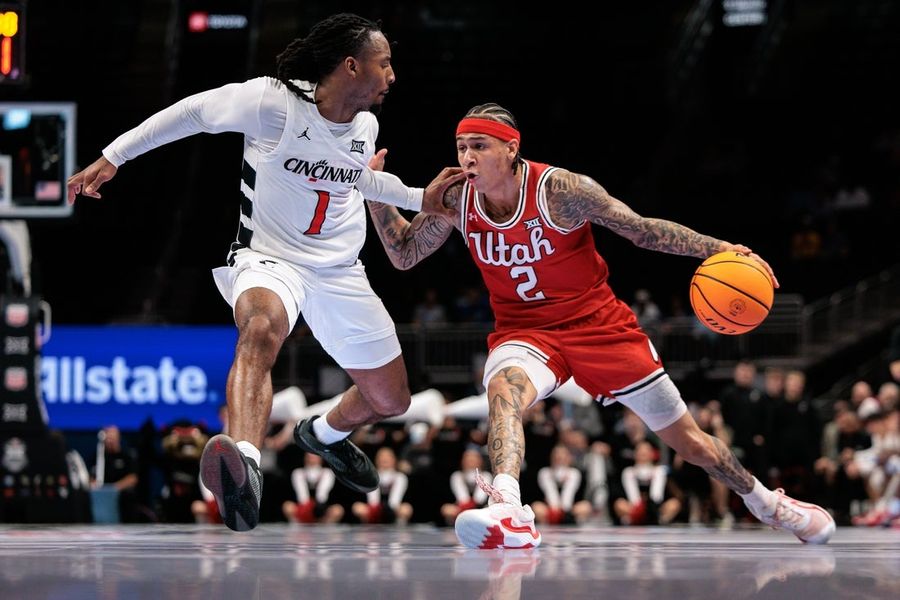
Deadspin | Utah’s Terrence Brown, NC State G Matthew Able commit to North Carolina  Mar 10, 2026; Kansas City, MO, USA; Utah Utes guard Terrence Brown (2) drives around Cincinnati Bearcats guard Day Day Thomas (1) during the second half at T-Mobile Center. Mandatory Credit: William Purnell-Imagn Images   Utah guard Terrence Brown and North Carolina State guard Matthew Able both pledged to join North Carolina on Tuesday.  Brown was third in the Big 12 with a 19.9 scoring average last season. Able averaged 8.8 points off the bench for the Wolfpack.  Brown has three years of college experience – two coming at Fairleigh Dickinson before playing for the Utes last season. He averaged 20.6 points in his second season at FDU.  The 6-foot-3 Brown also averaged 3.8 assists and 1.4 steals while starting all 32 games for the Utes in 2025-26. He shot 32.7% from 3-point range.  Able was a freshman and averaged 3.4 rebounds and 1.2 steals in 34 games for NC State. He shot 35.5% from behind the arc.   A highly acclaimed recruit, Able began looking at other options after Will Wade left as coach for the LSU gig.  North Carolina previously reeled in guard Neoklis Avdalas, who averaged 12.1 points, 4.6 assists and 3.1 rebounds as a freshman for Virginia Tech this season.  New coach Michael Malone is quickly trying to put together a roster after replacing the ousted Hubert Davis.  –Field Level Media   #Deadspin #Utahs #Terrence #Brown #State #Matthew #commit #North #Carolina
Deadspin | Utah’s Terrence Brown, NC State G Matthew Able commit to North Carolina
Deadspin | Utah’s Terrence Brown, NC State G Matthew Able commit to North Carolina  Mar 10, 2026; Kansas City, MO, USA; Utah Utes guard Terrence Brown (2) drives around Cincinnati Bearcats guard Day Day Thomas (1) during the second half at T-Mobile Center. Mandatory Credit: William Purnell-Imagn Images   Utah guard Terrence Brown and North Carolina State guard Matthew Able both pledged to join North Carolina on Tuesday.  Brown was third in the Big 12 with a 19.9 scoring average last season. Able averaged 8.8 points off the bench for the Wolfpack.  Brown has three years of college experience – two coming at Fairleigh Dickinson before playing for the Utes last season. He averaged 20.6 points in his second season at FDU.  The 6-foot-3 Brown also averaged 3.8 assists and 1.4 steals while starting all 32 games for the Utes in 2025-26. He shot 32.7% from 3-point range.  Able was a freshman and averaged 3.4 rebounds and 1.2 steals in 34 games for NC State. He shot 35.5% from behind the arc.   A highly acclaimed recruit, Able began looking at other options after Will Wade left as coach for the LSU gig.  North Carolina previously reeled in guard Neoklis Avdalas, who averaged 12.1 points, 4.6 assists and 3.1 rebounds as a freshman for Virginia Tech this season.  New coach Michael Malone is quickly trying to put together a roster after replacing the ousted Hubert Davis.  –Field Level Media   #Deadspin #Utahs #Terrence #Brown #State #Matthew #commit #North #CarolinaMar 10, 2026; Kansas City, MO, USA; Utah Utes guard Terrence Brown (2) drives around Cincinnati Bearcats guard Day Day Thomas (1) during the second half at T-Mobile Center. Mandatory Credit: William Purnell-Imagn Images

Utah guard Terrence Brown and North Carolina State guard Matthew Able both pledged to join North Carolina on Tuesday.

Brown was third in the Big 12 with a 19.9 scoring average last season. Able averaged 8.8 points off the bench for the Wolfpack.

Brown has three years of college experience – two coming at Fairleigh Dickinson before playing for the Utes last season. He averaged 20.6 points in his second season at FDU.

The 6-foot-3 Brown also averaged 3.8 assists and 1.4 steals while starting all 32 games for the Utes in 2025-26. He shot 32.7% from 3-point range.


Able was a freshman and averaged 3.4 rebounds and 1.2 steals in 34 games for NC State. He shot 35.5% from behind the arc.

A highly acclaimed recruit, Able began looking at other options after Will Wade left as coach for the LSU gig.

North Carolina previously reeled in guard Neoklis Avdalas, who averaged 12.1 points, 4.6 assists and 3.1 rebounds as a freshman for Virginia Tech this season.

New coach Michael Malone is quickly trying to put together a roster after replacing the ousted Hubert Davis.

–Field Level Media

#Deadspin #Utahs #Terrence #Brown #State #Matthew #commit #North #Carolina

Mar 10, 2026; Kansas City, MO, USA; Utah Utes guard Terrence Brown (2) drives around Cincinnati Bearcats guard Day Day Thomas (1) during the second half at T-Mobile Center. Mandatory Credit: William Purnell-Imagn Images

Utah guard Terrence Brown and North Carolina State guard Matthew Able both pledged to join North Carolina on Tuesday.

Brown was third in the Big 12 with a 19.9 scoring average last season. Able averaged 8.8 points off the bench for the Wolfpack.

Brown has three years of college experience – two coming at Fairleigh Dickinson before playing for the Utes last season. He averaged 20.6 points in his second season at FDU.

The 6-foot-3 Brown also averaged 3.8 assists and 1.4 steals while starting all 32 games for the Utes in 2025-26. He shot 32.7% from 3-point range.

Able was a freshman and averaged 3.4 rebounds and 1.2 steals in 34 games for NC State. He shot 35.5% from behind the arc.

A highly acclaimed recruit, Able began looking at other options after Will Wade left as coach for the LSU gig.

North Carolina previously reeled in guard Neoklis Avdalas, who averaged 12.1 points, 4.6 assists and 3.1 rebounds as a freshman for Virginia Tech this season.

New coach Michael Malone is quickly trying to put together a roster after replacing the ousted Hubert Davis.

–Field Level Media

Source link
#Deadspin #Utahs #Terrence #Brown #State #Matthew #commit #North #Carolina

Previous post

Deadspin | Duke lands coveted transfer guard John Blackwell <div id=""><section id="0" class=" w-full"><div class="xl:container mx-0 !px-4 py-0 pb-4 !mx-0 !px-0"><img src="https://images.deadspin.com/tr:w-900/28538967.jpg" srcset="https://images.deadspin.com/tr:w-900/28538967.jpg" alt="NCAA Basketball: NCAA Tournament First Round-High Point at Wisconsin" class="w-full" fetchpriority="high" loading="eager"/><span class="text-0.8 leading-tight">Mar 19, 2026; Portland, OR, USA; Wisconsin Badgers guard John Blackwell (25) drives to the basket against High Point Panthers guard Chase Johnston (99) during the second half of a first round game of the men’s 2026 NCAA Tournament at Moda Center. Mandatory Credit: Troy Wayrynen-Imagn Images<!-- --> <!-- --> </span></div></section><section id="section-1"> <p>Coveted Wisconsin transfer guard John Blackwell committed to Duke on Tuesday.</p> </section><section id="section-2"> <p>Blackwell announced the news on his social media accounts with the caption, “Committed! #TheBrotherhood.”</p> </section><section id="section-3"> <p>The rising senior, who’s ranked by 247Sports as the No. 1 guard and No. 3 overall player in the transfer portal class, has seen his production shoot up over each of his three seasons with the Badgers. The 6-foot-4 guard is coming off a season where he earned third-team All-Big 10 honors after averaging 19.1 points, 5.1 rebounds, 2.3 assists and 1.1 steals per game, shooting 43% from the floor and 38.9% from 3-point range.</p> </section><br/><section id="section-4"> <p>Blackwell averaged 15.8 points per game as a sophomore in 2024-25.</p> </section> <section id="section-5"> <p>He’s set to become a featured piece of Duke’s roster, filling the void left by national Player of the Year Cameron Boozer, who is off to the NBA after one season with the Blue Devils.</p> </section><section id="section-6"> <p>It continues a great week of news for Duke, which also announced Monday that center Patrick Ngongba II will return for his junior season.</p> </section><section id="section-7"> <p>–Field Level Media</p> </section></div> #Deadspin #Duke #lands #coveted #transfer #guard #John #Blackwell

Next post

Deadspin | Rafael Marquez will replace Javier Aguirre as Mexico manager after World Cup <div id=""><section id="0" class=" w-full"><div class="xl:container mx-0 !px-4 py-0 pb-4 !mx-0 !px-0"><img src="https://images.deadspin.com/tr:w-900/10086152.jpg" srcset="https://images.deadspin.com/tr:w-900/10086152.jpg" alt="Soccer: Republic of Ireland vs Mexico" class="w-full" fetchpriority="high" loading="eager"/><span class="text-0.8 leading-tight">Jun 1, 2017; East Rutherford, NJ, USA; Mexico defender Rafael Marquez (4) passes the ball during the second half of their game against the Republic of Ireland at MetLife Stadium. Mandatory Credit: Ed Mulholland-Imagn Images<!-- --> <!-- --> </span></div></section><section id="section-1"> <p>Rafael Marquez will replace Javier Aguirre as manager of Mexico’s national team after this summer’s World Cup, Mexico Football Federation sporting director Duilio Davino confirmed in an interview with Fox Sports Mexico on Monday.</p> </section><section id="section-2"> <p>Marquez, a legendary defender for FC Barcelona as well as the Mexican national team, has served as an assistant coach on Aguirre’s Mexican national team staff since July 2024, when the pair were both hired with a succession plan in place.</p> </section><section id="section-3"> <p>“His contract is signed and his staff is nearly 80% set,” Davino said of Marquez. “Andres (Guardado) is an option (to join Rafa’s staff). Off the pitch, Marquez is a (big) personality. On the pitch today, as both an assistant and a coach, Rafa is the way he was as a player. He transforms inside a dressing room.”</p> </section><section id="section-4"> <p>Mexico is hosting 13 matches — including all three of the country’s group-stage matches and three knockout round matches — in this summer’s World Cup, which it is co-hosting along with the U.S. and Canada.</p> </section><br/><section id="section-5"> <p>Marquez has minimal coaching appearance, previously coaching Alcala’s U15 team and the Barcelona B squad in Spain before joining Mexico’s coaching staff.</p> </section> <section id="section-6"> <p>However, he’s one of the most accomplished Mexican players in international history, captaining the country in five World Cups (2002, 2006, 2010, 2014 and 2018) and scoring 17 goals in 147 caps for Mexico from 1997-2018.</p> </section><section id="section-7"> <p>He also helped Barcelona win 10 trophies, including a pair of Champions League titles and four La Liga championships, during his time with the club from 2003-2010.</p> </section><section id="section-8"> <p>Aguirre’s third stint as Mexico’s manager will come to an end this summer. The Mexico City native previously led the national team from 2001-02 and 2009-10.</p> </section><section id="section-9"> <p>Mexico, which is in Group A of the World Cup, will play the opening match of the event on June 11 against South Africa in Mexico City.</p> </section><br/><section id="section-10"> <p>–Field Level Media</p> </section> </div> #Deadspin #Rafael #Marquez #replace #Javier #Aguirre #Mexico #manager #World #Cup

Deadspin | NC State-UVA opener moved from Brazil to Charlottesville  Sep 22, 2023; Charlottesville, Virginia, USA; Virginia Cavaliers quarterback Anthony Colandrea (10) scrambles from North Carolina State Wolfpack defensive lineman Noah Potter (97) during the fourth quarter at Scott Stadium. Mandatory Credit: Geoff Burke-Imagn Images   The season-opening football game between North Carolina State and Virginia will no longer be played in Brazil.  Both ACC schools announced Wednesday that the contest will be held on Aug. 29 in Charlottesville, Va.  Billed as the first college football game played in South America, it originally was scheduled to take place at Nilton Santos Stadium in Rio de Janeiro.  The decision to relocate came after an “extensive review with the operational partners and international stakeholders” involved in the game, according to a press release.   “This change follows communication from Athlete Advantage, which informed the ACC and participating schools that the event could not be conducted,” the release said.  Fans who purchased tickets or travel packages will receive refunds.  –Field Level Media   #Deadspin #StateUVA #opener #moved #Brazil #CharlottesvilleSep 22, 2023; Charlottesville, Virginia, USA; Virginia Cavaliers quarterback Anthony Colandrea (10) scrambles from North Carolina State Wolfpack defensive lineman Noah Potter (97) during the fourth quarter at Scott Stadium. Mandatory Credit: Geoff Burke-Imagn Images

The season-opening football game between North Carolina State and Virginia will no longer be played in Brazil.

Both ACC schools announced Wednesday that the contest will be held on Aug. 29 in Charlottesville, Va.

Billed as the first college football game played in South America, it originally was scheduled to take place at Nilton Santos Stadium in Rio de Janeiro.


The decision to relocate came after an “extensive review with the operational partners and international stakeholders” involved in the game, according to a press release.

“This change follows communication from Athlete Advantage, which informed the ACC and participating schools that the event could not be conducted,” the release said.

Fans who purchased tickets or travel packages will receive refunds.

–Field Level Media

#Deadspin #StateUVA #opener #moved #Brazil #Charlottesville">Deadspin | NC State-UVA opener moved from Brazil to Charlottesville  Sep 22, 2023; Charlottesville, Virginia, USA; Virginia Cavaliers quarterback Anthony Colandrea (10) scrambles from North Carolina State Wolfpack defensive lineman Noah Potter (97) during the fourth quarter at Scott Stadium. Mandatory Credit: Geoff Burke-Imagn Images   The season-opening football game between North Carolina State and Virginia will no longer be played in Brazil.  Both ACC schools announced Wednesday that the contest will be held on Aug. 29 in Charlottesville, Va.  Billed as the first college football game played in South America, it originally was scheduled to take place at Nilton Santos Stadium in Rio de Janeiro.  The decision to relocate came after an “extensive review with the operational partners and international stakeholders” involved in the game, according to a press release.   “This change follows communication from Athlete Advantage, which informed the ACC and participating schools that the event could not be conducted,” the release said.  Fans who purchased tickets or travel packages will receive refunds.  –Field Level Media   #Deadspin #StateUVA #opener #moved #Brazil #Charlottesville

For as unpredictable as the NBA can be, it doesn’t get many sea changes. That is, big, overhauling alterations to its topography or behavioral patterns – those things take more time. The 2025-2026 Playoffs have been mercurial, surprising, even enlightening, but it’s still not the basketball that’s brought about the most marked development.

It was clear something was different when the tenor of the NBA aggregator infographics changed. Early in the playoffs the images looked familiar, the usual contextless photos of athletes looking gassed or frustrated churned out with blunt, all-caps missives (OUT, ELIMINATED, CHOKED, BUILT DIFFERENT) from NBA media properties’ social platforms and aggregator sites alike. But then, following the first round, there was a blip.

After the Spurs beat the Blazers in a five-game series, Victor Wembanyama answered a postgame question from L’Equipe’s Maxime Aubin about the cliché that showing emotions signals weakness. As that game ended, Wembanyama visibly choked up on the Spurs bench.

“I think it’s first and foremost a fear of judgment,” Wembanyama told Aubin. “Like, this feeling that you have to act a certain way, social codes, I guess. Personally, I refuse to carry the burden of having to hide my emotions.”

In rapid succession, the quote was aggregated, but it wasn’t blunted. At most, the “personally” was lopped off, but infographics of all shapes and sizes (or just two, whatever the optimised dimensions are for Instagram and Twitter) stated, like an awkwardly short affirmation, “I refuse to carry the burden of having to hide my emotions.” There were photos of Wembanyama looking thoughtfully into the middle distance, photos of him screaming in triumph, lots of photos of him crying, face scrunched or buried into the shoulder of a teammate.

That was early May, when the stakes for the Spurs felt light and low. The team has since advanced through two more rounds, besting the Timberwolves in six and dumbfounding the Thunder in seven games of high-flying, arduous, gorgeous basketball. Throughout those 13 contests, Wembanyama’s emotional peaks and valleys have continued to be on prominent display: there have been more tears, more tension, more frustrations and more joy. In the month backdropping those games, the appreciation, even obsession, with Wembanyama’s expressiveness has also grown. Creators outside the traditional NBA media and fan ecosystem have latched on, touting Wembanyama for normalising vulnerability and bringing back demonstratively caring about things. Even within the typically contradictory and oftentimes dour NBA media space of which I am a part, he’s been similarly lauded.

But Wembanyama isn’t the first athlete to articulate how badly he wants to win and to ugly cry when he does. Nor is he the first to grapple with the juxtaposition of that desirousness against the appearance of cold control we still require of our stars. So, what is it about this moment that’s made Wembanyama resonate so deeply, well beyond the NBA? Why do we care so much about Wembanyama caring so much?

Loathe as we are to admit it, we’re creatures of the contemporary world; frogs boiling in whatever noxious soup du jour each new news cycle dumps more ingredients into. Against the backdrop of accumulating global conflicts and the warped language used by our leaders to justify them — “deescalate” into violent escalation, “winding down” that only serves to ramp up — the plain-spoken rejection of a convoluted and long-held status quo hits like a gulp of cold water. Wembanyama handed us the proverbial glass when he rejected the need to be responsible for other people’s discomfort with his emotions, and he’s topped the glass up each time he’s doubled down on being expressive.

There’s a two-fold distinction in Wembanyama’s direct and considered articulation. The first is that he has the perspective of an outsider, because he is one. Basketball is the common ground, a shared language as much as shorthand between him and a majority American NBA fanbase, but his clarity comes from a lifetime prior to now of looking in. The requisite distance needed to hold a place up like a prism and have it catch different streams of light. It was apparent this past winter, when he was one of just a few NBA players to speak up about ICE violently clamping down on people in Minneapolis.

“Every day I wake up and see the news and I’m horrified. It’s crazy that some people might make it sound like it’s acceptable, the murder of civilians. Every day I read the news and I’m asking very deep questions about my own life. But I’m conscious also that saying everything that’s on my mind that would have a cost that’s too great for me right now,” he told media. “I’m a foreigner, I live in this country, I am concerned.”

Asked to clarify if his hesitation to speak came from being a foreigner, Wembanyama said yes.

It was a glimpse into his thought process as a person navigating the delicate intersection he stood at as a French national and non U.S. citizen, as a high-profile athlete, arguably no longer an abstract “future face of the NBA” but the very one actively eclipsing the last generation, and as, foremost, a person who saw injustice and harm and was compelled to speak up. All athletes exist in something of a suspended state of personhood, expected to perform as their outward persona even when they’re off the court. International athletes — especially those in the U.S. in its current sociopolitical climate — exist in a much more temporal state of belonging and tend to keep below the radar.

His articulation has also been bodily. At his stature, his face is a little like a lighthouse. Whatever expression flashes there is impossible to miss. The difference between Wembanyama’s competitive expressiveness and, say, an athlete blowing up on court with vitriol, is that we’re almost more accustomed to the latter. To expressions of frustration and aggression: fights breaking out, equipment being smashed. We’re conditioned to think of these eruptions as part and parcel with the high-stakes and effort of pro sports, proof of concept. But it’s a little bit of crying that, traditionally, had the potential to send the whole system spiraling. At least it was, until a highly visible — 7’4, towering tears — athlete started doing it.

It’s this visibility of emotion, specifically the emotions we equate with sensitivity and vulnerability, that’s so unique when paired with Wembanyama’s expression of them. It reads as oversimplified, even rude (giant man has giant feelings), but when seemingly softer emotions are expressed at billboard-size scale, it’s almost like exposure therapy.

And it’s high-stakes exposure. Prime-time and now, entering the Finals, under the brightest lights and biggest production the NBA has to offer. There’s been a sense that, as the playoffs wore on and the Spurs gained experience, they’d mature, harden. Wembanyama as their leader perhaps most of all. There is, in some corners of fandom and analysis, even a thirst for this. For a young team like San Antonio to get the hope and all these softer expressions — aspiration, jitters, overwhelming joy — roughly knocked out of them.

But this is it. In a world where we’re told not to care, a mindset reinforced daily by the blithe destruction and ravaging of people, their humanity, far and close to home; where a social veer to aggressive, self-serving apathy is threatening to become — if not already — the norm, a demonstrative example of a person extolling the opposite is jarring. That initial jolt can be taken as a threat, or as an opportunity to recalibrate. To be a little more willing to put your own vulnerabilities on display in return.

My interpretation of Wembanyama being put up as face, or saviour, of the league is not that the NBA was lacking the hyper-unique, once-in-an-era skillset he has prior to this; it’s that he offers an alternative to the majority viewing experience of the world writ large right now. You can certainly watch to be entertained, but you can also watch to be infused with a wallop of emotion. The scale of those feelings is difficult to simply switch off with the game, chances are that they will flash over you in the days, months, and more to come. Against disorienting, intolerant darkness, Wembanyama is a roving light to borrow from or burn with.

#care #Victor #Wembanyama #cares">Why do we care so much that Victor Wembanyama cares so much?  For as unpredictable as the NBA can be, it doesn’t get many sea changes. That is, big, overhauling alterations to its topography or behavioral patterns – those things take more time. The 2025-2026 Playoffs have been mercurial, surprising, even enlightening, but it’s still not the basketball that’s brought about the most marked development.It was clear something was different when the tenor of the NBA aggregator infographics changed. Early in the playoffs the images looked familiar, the usual contextless photos of athletes looking gassed or frustrated churned out with blunt, all-caps missives (OUT, ELIMINATED, CHOKED, BUILT DIFFERENT) from NBA media properties’ social platforms and aggregator sites alike. But then, following the first round, there was a blip.After the Spurs beat the Blazers in a five-game series, Victor Wembanyama answered a postgame question from L’Equipe’s Maxime Aubin about the cliché that showing emotions signals weakness. As that game ended, Wembanyama visibly choked up on the Spurs bench.“I think it’s first and foremost a fear of judgment,” Wembanyama told Aubin. “Like, this feeling that you have to act a certain way, social codes, I guess. Personally, I refuse to carry the burden of having to hide my emotions.”In rapid succession, the quote was aggregated, but it wasn’t blunted. At most, the “personally” was lopped off, but infographics of all shapes and sizes (or just two, whatever the optimised dimensions are for Instagram and Twitter) stated, like an awkwardly short affirmation, “I refuse to carry the burden of having to hide my emotions.” There were photos of Wembanyama looking thoughtfully into the middle distance, photos of him screaming in triumph, lots of photos of him crying, face scrunched or buried into the shoulder of a teammate.That was early May, when the stakes for the Spurs felt light and low. The team has since advanced through two more rounds, besting the Timberwolves in six and dumbfounding the Thunder in seven games of high-flying, arduous, gorgeous basketball. Throughout those 13 contests, Wembanyama’s emotional peaks and valleys have continued to be on prominent display: there have been more tears, more tension, more frustrations and more joy. In the month backdropping those games, the appreciation, even obsession, with Wembanyama’s expressiveness has also grown. Creators outside the traditional NBA media and fan ecosystem have latched on, touting Wembanyama for normalising vulnerability and bringing back demonstratively caring about things. Even within the typically contradictory and oftentimes dour NBA media space of which I am a part, he’s been similarly lauded.But Wembanyama isn’t the first athlete to articulate how badly he wants to win and to ugly cry when he does. Nor is he the first to grapple with the juxtaposition of that desirousness against the appearance of cold control we still require of our stars. So, what is it about this moment that’s made Wembanyama resonate so deeply, well beyond the NBA? Why do we care so much about Wembanyama caring so much?Loathe as we are to admit it, we’re creatures of the contemporary world; frogs boiling in whatever noxious soup du jour each new news cycle dumps more ingredients into. Against the backdrop of accumulating global conflicts and the warped language used by our leaders to justify them — “deescalate” into violent escalation, “winding down” that only serves to ramp up — the plain-spoken rejection of a convoluted and long-held status quo hits like a gulp of cold water. Wembanyama handed us the proverbial glass when he rejected the need to be responsible for other people’s discomfort with his emotions, and he’s topped the glass up each time he’s doubled down on being expressive.There’s a two-fold distinction in Wembanyama’s direct and considered articulation. The first is that he has the perspective of an outsider, because he is one. Basketball is the common ground, a shared language as much as shorthand between him and a majority American NBA fanbase, but his clarity comes from a lifetime prior to now of looking in. The requisite distance needed to hold a place up like a prism and have it catch different streams of light. It was apparent this past winter, when he was one of just a few NBA players to speak up about ICE violently clamping down on people in Minneapolis.“Every day I wake up and see the news and I’m horrified. It’s crazy that some people might make it sound like it’s acceptable, the murder of civilians. Every day I read the news and I’m asking very deep questions about my own life. But I’m conscious also that saying everything that’s on my mind that would have a cost that’s too great for me right now,” he told media. “I’m a foreigner, I live in this country, I am concerned.”Asked to clarify if his hesitation to speak came from being a foreigner, Wembanyama said yes.It was a glimpse into his thought process as a person navigating the delicate intersection he stood at as a French national and non U.S. citizen, as a high-profile athlete, arguably no longer an abstract “future face of the NBA” but the very one actively eclipsing the last generation, and as, foremost, a person who saw injustice and harm and was compelled to speak up. All athletes exist in something of a suspended state of personhood, expected to perform as their outward persona even when they’re off the court. International athletes — especially those in the U.S. in its current sociopolitical climate — exist in a much more temporal state of belonging and tend to keep below the radar.His articulation has also been bodily. At his stature, his face is a little like a lighthouse. Whatever expression flashes there is impossible to miss. The difference between Wembanyama’s competitive expressiveness and, say, an athlete blowing up on court with vitriol, is that we’re almost more accustomed to the latter. To expressions of frustration and aggression: fights breaking out, equipment being smashed. We’re conditioned to think of these eruptions as part and parcel with the high-stakes and effort of pro sports, proof of concept. But it’s a little bit of crying that, traditionally, had the potential to send the whole system spiraling. At least it was, until a highly visible — 7’4, towering tears — athlete started doing it.It’s this visibility of emotion, specifically the emotions we equate with sensitivity and vulnerability, that’s so unique when paired with Wembanyama’s expression of them. It reads as oversimplified, even rude (giant man has giant feelings), but when seemingly softer emotions are expressed at billboard-size scale, it’s almost like exposure therapy.And it’s high-stakes exposure. Prime-time and now, entering the Finals, under the brightest lights and biggest production the NBA has to offer. There’s been a sense that, as the playoffs wore on and the Spurs gained experience, they’d mature, harden. Wembanyama as their leader perhaps most of all. There is, in some corners of fandom and analysis, even a thirst for this. For a young team like San Antonio to get the hope and all these softer expressions — aspiration, jitters, overwhelming joy — roughly knocked out of them.But this is it. In a world where we’re told not to care, a mindset reinforced daily by the blithe destruction and ravaging of people, their humanity, far and close to home; where a social veer to aggressive, self-serving apathy is threatening to become — if not already — the norm, a demonstrative example of a person extolling the opposite is jarring. That initial jolt can be taken as a threat, or as an opportunity to recalibrate. To be a little more willing to put your own vulnerabilities on display in return.My interpretation of Wembanyama being put up as face, or saviour, of the league is not that the NBA was lacking the hyper-unique, once-in-an-era skillset he has prior to this; it’s that he offers an alternative to the majority viewing experience of the world writ large right now. You can certainly watch to be entertained, but you can also watch to be infused with a wallop of emotion. The scale of those feelings is difficult to simply switch off with the game, chances are that they will flash over you in the days, months, and more to come. Against disorienting, intolerant darkness, Wembanyama is a roving light to borrow from or burn with.  #care #Victor #Wembanyama #cares

postgame question from L’Equipe’s Maxime Aubin about the cliché that showing emotions signals weakness. As that game ended, Wembanyama visibly choked up on the Spurs bench.

“I think it’s first and foremost a fear of judgment,” Wembanyama told Aubin. “Like, this feeling that you have to act a certain way, social codes, I guess. Personally, I refuse to carry the burden of having to hide my emotions.”

In rapid succession, the quote was aggregated, but it wasn’t blunted. At most, the “personally” was lopped off, but infographics of all shapes and sizes (or just two, whatever the optimised dimensions are for Instagram and Twitter) stated, like an awkwardly short affirmation, “I refuse to carry the burden of having to hide my emotions.” There were photos of Wembanyama looking thoughtfully into the middle distance, photos of him screaming in triumph, lots of photos of him crying, face scrunched or buried into the shoulder of a teammate.

That was early May, when the stakes for the Spurs felt light and low. The team has since advanced through two more rounds, besting the Timberwolves in six and dumbfounding the Thunder in seven games of high-flying, arduous, gorgeous basketball. Throughout those 13 contests, Wembanyama’s emotional peaks and valleys have continued to be on prominent display: there have been more tears, more tension, more frustrations and more joy. In the month backdropping those games, the appreciation, even obsession, with Wembanyama’s expressiveness has also grown. Creators outside the traditional NBA media and fan ecosystem have latched on, touting Wembanyama for normalising vulnerability and bringing back demonstratively caring about things. Even within the typically contradictory and oftentimes dour NBA media space of which I am a part, he’s been similarly lauded.

But Wembanyama isn’t the first athlete to articulate how badly he wants to win and to ugly cry when he does. Nor is he the first to grapple with the juxtaposition of that desirousness against the appearance of cold control we still require of our stars. So, what is it about this moment that’s made Wembanyama resonate so deeply, well beyond the NBA? Why do we care so much about Wembanyama caring so much?

Loathe as we are to admit it, we’re creatures of the contemporary world; frogs boiling in whatever noxious soup du jour each new news cycle dumps more ingredients into. Against the backdrop of accumulating global conflicts and the warped language used by our leaders to justify them — “deescalate” into violent escalation, “winding down” that only serves to ramp up — the plain-spoken rejection of a convoluted and long-held status quo hits like a gulp of cold water. Wembanyama handed us the proverbial glass when he rejected the need to be responsible for other people’s discomfort with his emotions, and he’s topped the glass up each time he’s doubled down on being expressive.

There’s a two-fold distinction in Wembanyama’s direct and considered articulation. The first is that he has the perspective of an outsider, because he is one. Basketball is the common ground, a shared language as much as shorthand between him and a majority American NBA fanbase, but his clarity comes from a lifetime prior to now of looking in. The requisite distance needed to hold a place up like a prism and have it catch different streams of light. It was apparent this past winter, when he was one of just a few NBA players to speak up about ICE violently clamping down on people in Minneapolis.

“Every day I wake up and see the news and I’m horrified. It’s crazy that some people might make it sound like it’s acceptable, the murder of civilians. Every day I read the news and I’m asking very deep questions about my own life. But I’m conscious also that saying everything that’s on my mind that would have a cost that’s too great for me right now,” he told media. “I’m a foreigner, I live in this country, I am concerned.”

Asked to clarify if his hesitation to speak came from being a foreigner, Wembanyama said yes.

It was a glimpse into his thought process as a person navigating the delicate intersection he stood at as a French national and non U.S. citizen, as a high-profile athlete, arguably no longer an abstract “future face of the NBA” but the very one actively eclipsing the last generation, and as, foremost, a person who saw injustice and harm and was compelled to speak up. All athletes exist in something of a suspended state of personhood, expected to perform as their outward persona even when they’re off the court. International athletes — especially those in the U.S. in its current sociopolitical climate — exist in a much more temporal state of belonging and tend to keep below the radar.

His articulation has also been bodily. At his stature, his face is a little like a lighthouse. Whatever expression flashes there is impossible to miss. The difference between Wembanyama’s competitive expressiveness and, say, an athlete blowing up on court with vitriol, is that we’re almost more accustomed to the latter. To expressions of frustration and aggression: fights breaking out, equipment being smashed. We’re conditioned to think of these eruptions as part and parcel with the high-stakes and effort of pro sports, proof of concept. But it’s a little bit of crying that, traditionally, had the potential to send the whole system spiraling. At least it was, until a highly visible — 7’4, towering tears — athlete started doing it.

It’s this visibility of emotion, specifically the emotions we equate with sensitivity and vulnerability, that’s so unique when paired with Wembanyama’s expression of them. It reads as oversimplified, even rude (giant man has giant feelings), but when seemingly softer emotions are expressed at billboard-size scale, it’s almost like exposure therapy.

And it’s high-stakes exposure. Prime-time and now, entering the Finals, under the brightest lights and biggest production the NBA has to offer. There’s been a sense that, as the playoffs wore on and the Spurs gained experience, they’d mature, harden. Wembanyama as their leader perhaps most of all. There is, in some corners of fandom and analysis, even a thirst for this. For a young team like San Antonio to get the hope and all these softer expressions — aspiration, jitters, overwhelming joy — roughly knocked out of them.

But this is it. In a world where we’re told not to care, a mindset reinforced daily by the blithe destruction and ravaging of people, their humanity, far and close to home; where a social veer to aggressive, self-serving apathy is threatening to become — if not already — the norm, a demonstrative example of a person extolling the opposite is jarring. That initial jolt can be taken as a threat, or as an opportunity to recalibrate. To be a little more willing to put your own vulnerabilities on display in return.

My interpretation of Wembanyama being put up as face, or saviour, of the league is not that the NBA was lacking the hyper-unique, once-in-an-era skillset he has prior to this; it’s that he offers an alternative to the majority viewing experience of the world writ large right now. You can certainly watch to be entertained, but you can also watch to be infused with a wallop of emotion. The scale of those feelings is difficult to simply switch off with the game, chances are that they will flash over you in the days, months, and more to come. Against disorienting, intolerant darkness, Wembanyama is a roving light to borrow from or burn with.

#care #Victor #Wembanyama #cares">Why do we care so much that Victor Wembanyama cares so much?

For as unpredictable as the NBA can be, it doesn’t get many sea changes. That is, big, overhauling alterations to its topography or behavioral patterns – those things take more time. The 2025-2026 Playoffs have been mercurial, surprising, even enlightening, but it’s still not the basketball that’s brought about the most marked development.

It was clear something was different when the tenor of the NBA aggregator infographics changed. Early in the playoffs the images looked familiar, the usual contextless photos of athletes looking gassed or frustrated churned out with blunt, all-caps missives (OUT, ELIMINATED, CHOKED, BUILT DIFFERENT) from NBA media properties’ social platforms and aggregator sites alike. But then, following the first round, there was a blip.

After the Spurs beat the Blazers in a five-game series, Victor Wembanyama answered a postgame question from L’Equipe’s Maxime Aubin about the cliché that showing emotions signals weakness. As that game ended, Wembanyama visibly choked up on the Spurs bench.

“I think it’s first and foremost a fear of judgment,” Wembanyama told Aubin. “Like, this feeling that you have to act a certain way, social codes, I guess. Personally, I refuse to carry the burden of having to hide my emotions.”

In rapid succession, the quote was aggregated, but it wasn’t blunted. At most, the “personally” was lopped off, but infographics of all shapes and sizes (or just two, whatever the optimised dimensions are for Instagram and Twitter) stated, like an awkwardly short affirmation, “I refuse to carry the burden of having to hide my emotions.” There were photos of Wembanyama looking thoughtfully into the middle distance, photos of him screaming in triumph, lots of photos of him crying, face scrunched or buried into the shoulder of a teammate.

That was early May, when the stakes for the Spurs felt light and low. The team has since advanced through two more rounds, besting the Timberwolves in six and dumbfounding the Thunder in seven games of high-flying, arduous, gorgeous basketball. Throughout those 13 contests, Wembanyama’s emotional peaks and valleys have continued to be on prominent display: there have been more tears, more tension, more frustrations and more joy. In the month backdropping those games, the appreciation, even obsession, with Wembanyama’s expressiveness has also grown. Creators outside the traditional NBA media and fan ecosystem have latched on, touting Wembanyama for normalising vulnerability and bringing back demonstratively caring about things. Even within the typically contradictory and oftentimes dour NBA media space of which I am a part, he’s been similarly lauded.

But Wembanyama isn’t the first athlete to articulate how badly he wants to win and to ugly cry when he does. Nor is he the first to grapple with the juxtaposition of that desirousness against the appearance of cold control we still require of our stars. So, what is it about this moment that’s made Wembanyama resonate so deeply, well beyond the NBA? Why do we care so much about Wembanyama caring so much?

Loathe as we are to admit it, we’re creatures of the contemporary world; frogs boiling in whatever noxious soup du jour each new news cycle dumps more ingredients into. Against the backdrop of accumulating global conflicts and the warped language used by our leaders to justify them — “deescalate” into violent escalation, “winding down” that only serves to ramp up — the plain-spoken rejection of a convoluted and long-held status quo hits like a gulp of cold water. Wembanyama handed us the proverbial glass when he rejected the need to be responsible for other people’s discomfort with his emotions, and he’s topped the glass up each time he’s doubled down on being expressive.

There’s a two-fold distinction in Wembanyama’s direct and considered articulation. The first is that he has the perspective of an outsider, because he is one. Basketball is the common ground, a shared language as much as shorthand between him and a majority American NBA fanbase, but his clarity comes from a lifetime prior to now of looking in. The requisite distance needed to hold a place up like a prism and have it catch different streams of light. It was apparent this past winter, when he was one of just a few NBA players to speak up about ICE violently clamping down on people in Minneapolis.

“Every day I wake up and see the news and I’m horrified. It’s crazy that some people might make it sound like it’s acceptable, the murder of civilians. Every day I read the news and I’m asking very deep questions about my own life. But I’m conscious also that saying everything that’s on my mind that would have a cost that’s too great for me right now,” he told media. “I’m a foreigner, I live in this country, I am concerned.”

Asked to clarify if his hesitation to speak came from being a foreigner, Wembanyama said yes.

It was a glimpse into his thought process as a person navigating the delicate intersection he stood at as a French national and non U.S. citizen, as a high-profile athlete, arguably no longer an abstract “future face of the NBA” but the very one actively eclipsing the last generation, and as, foremost, a person who saw injustice and harm and was compelled to speak up. All athletes exist in something of a suspended state of personhood, expected to perform as their outward persona even when they’re off the court. International athletes — especially those in the U.S. in its current sociopolitical climate — exist in a much more temporal state of belonging and tend to keep below the radar.

His articulation has also been bodily. At his stature, his face is a little like a lighthouse. Whatever expression flashes there is impossible to miss. The difference between Wembanyama’s competitive expressiveness and, say, an athlete blowing up on court with vitriol, is that we’re almost more accustomed to the latter. To expressions of frustration and aggression: fights breaking out, equipment being smashed. We’re conditioned to think of these eruptions as part and parcel with the high-stakes and effort of pro sports, proof of concept. But it’s a little bit of crying that, traditionally, had the potential to send the whole system spiraling. At least it was, until a highly visible — 7’4, towering tears — athlete started doing it.

It’s this visibility of emotion, specifically the emotions we equate with sensitivity and vulnerability, that’s so unique when paired with Wembanyama’s expression of them. It reads as oversimplified, even rude (giant man has giant feelings), but when seemingly softer emotions are expressed at billboard-size scale, it’s almost like exposure therapy.

And it’s high-stakes exposure. Prime-time and now, entering the Finals, under the brightest lights and biggest production the NBA has to offer. There’s been a sense that, as the playoffs wore on and the Spurs gained experience, they’d mature, harden. Wembanyama as their leader perhaps most of all. There is, in some corners of fandom and analysis, even a thirst for this. For a young team like San Antonio to get the hope and all these softer expressions — aspiration, jitters, overwhelming joy — roughly knocked out of them.

But this is it. In a world where we’re told not to care, a mindset reinforced daily by the blithe destruction and ravaging of people, their humanity, far and close to home; where a social veer to aggressive, self-serving apathy is threatening to become — if not already — the norm, a demonstrative example of a person extolling the opposite is jarring. That initial jolt can be taken as a threat, or as an opportunity to recalibrate. To be a little more willing to put your own vulnerabilities on display in return.

My interpretation of Wembanyama being put up as face, or saviour, of the league is not that the NBA was lacking the hyper-unique, once-in-an-era skillset he has prior to this; it’s that he offers an alternative to the majority viewing experience of the world writ large right now. You can certainly watch to be entertained, but you can also watch to be infused with a wallop of emotion. The scale of those feelings is difficult to simply switch off with the game, chances are that they will flash over you in the days, months, and more to come. Against disorienting, intolerant darkness, Wembanyama is a roving light to borrow from or burn with.

#care #Victor #Wembanyama #cares

Post Comment