×
Deadspin | Yankees’ Aaron Judge bids to continue power surge vs. Angels    Apr 13, 2026; Bronx, New York, USA; New York Yankees right fielder Aaron Judge (99) jogs to the dugout after the top of the second inning against the Los Angeles Angels at Yankee Stadium. Mandatory Credit: John Jones-Imagn Images   Aaron Judge’s best night of the season nearly went by the wayside because the New York Yankees struggled to get outs, especially against Mike Trout.  After surviving Trout’s two homers, the Yankees snapped their five-game skid with their wildest win of the early season. They hope to get a less stressful victory on Tuesday night when they host the Los Angeles Angels in the second contest of a four-game series.  New York’s past nine games have been decided by two runs or less. The Yankees improved to 3-6 in those games after Jose Caballero scored on a wild pitch by Jordan Romano in the ninth inning to record a wild 11-10 victory on Monday.  Judge hit a two-run homer in the first inning and a solo shot in the sixth to snap a 7-7 tie. He has three of his six homers in the past two games.  “Every good (team) goes through at least two big losing streaks,” said Judge, who is 11-for-36 in his past 10 games. “So hopefully we can get this one out of the way.”  Trent Grisham homered twice by belting a pinch-hit, three-run homer in the sixth inning and a tying two-run homer in the ninth before Caballero doubled and stole third ahead of the wild pitch.  Trout entered the series hitting .208 but felt encouraged by some of his at-bats in the series opener.  “He’s the greatest of all time,;he’s been fun to watch his whole career,” Judge said about Trout.  Trout launched a tying three-run homer off Jake Bird in the sixth inning immediately after Grisham’s first homer. Trout hit a two-run drive in the eighth off Camilo Doval to give the Angels an 10-8 lead.   “Honestly, you’ve been waiting for that because Mike’s been hitting the ball hard,” Los Angeles manager Kurt Suzuki said, “He’s been having some tough luck and putting some really good swings on the ball, and you’re kind of waiting for a game like this, and it was a good night to have it. Just tough luck coming on the losing end.”  Trout’s multi-homer game was achieved on a night in which the Angels collected 12 hits.   “It was definitely one of the better games,” said Trout, who has four homers and 12 RBIs this season. “Just a fun one to be a part of. Obviously the loss is disappointing, but throughout the whole game we battled back and had great at-bats the whole game. Sometimes they don’t go your way.”  After neither team saw their starter complete the fourth inning in the series opener, Ryan Weathers (0-1, 2.81 ERA) will look to do better on Tuesday for the Yankees when he opposes fellow left-hander Reid Detmers (0-1, 4.60).  After pitching a combined eight innings in no-decisions against the Seattle Mariners and Miami Marlins, Weathers allowed one run on seven hits in eight innings in a 1-0 loss to the Athletics on Thursday.  Weathers took the loss in his lone previous start against the Angels when he allowed three runs on four hits in three innings during a 10-2 defeat for the San Diego Padres on Sept. 28, 2021.  Detmers is 0-4 with an 8.36 ERA since his most recent win as a starter on Sept. 9, 2024, against the Minnesota Twins. He endured his worst start of his return to the rotation on Wednesday when he allowed six runs (five earned) in 4 1/3 innings of an 8-2 loss to the Atlanta Braves.  Detmers does not have a decision and has pitched 8 1/3 scoreless innings in five previous appearances against the Yankees.  –Field Level Media    #Deadspin #Yankees #Aaron #Judge #bids #continue #power #surge #Angels
Deadspin | Yankees’ Aaron Judge bids to continue power surge vs. Angels
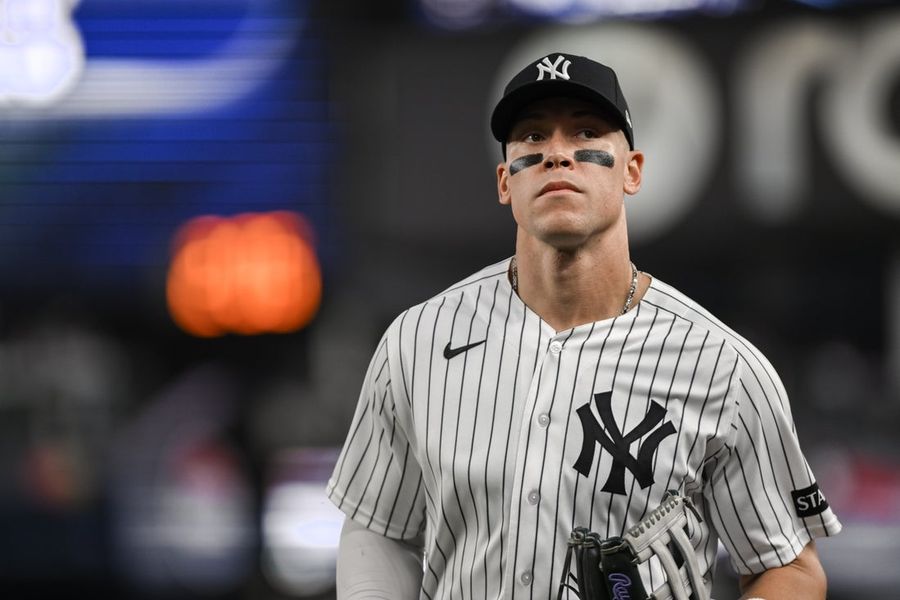
Deadspin | Yankees’ Aaron Judge bids to continue power surge vs. Angels    Apr 13, 2026; Bronx, New York, USA; New York Yankees right fielder Aaron Judge (99) jogs to the dugout after the top of the second inning against the Los Angeles Angels at Yankee Stadium. Mandatory Credit: John Jones-Imagn Images   Aaron Judge’s best night of the season nearly went by the wayside because the New York Yankees struggled to get outs, especially against Mike Trout.  After surviving Trout’s two homers, the Yankees snapped their five-game skid with their wildest win of the early season. They hope to get a less stressful victory on Tuesday night when they host the Los Angeles Angels in the second contest of a four-game series.  New York’s past nine games have been decided by two runs or less. The Yankees improved to 3-6 in those games after Jose Caballero scored on a wild pitch by Jordan Romano in the ninth inning to record a wild 11-10 victory on Monday.  Judge hit a two-run homer in the first inning and a solo shot in the sixth to snap a 7-7 tie. He has three of his six homers in the past two games.  “Every good (team) goes through at least two big losing streaks,” said Judge, who is 11-for-36 in his past 10 games. “So hopefully we can get this one out of the way.”  Trent Grisham homered twice by belting a pinch-hit, three-run homer in the sixth inning and a tying two-run homer in the ninth before Caballero doubled and stole third ahead of the wild pitch.  Trout entered the series hitting .208 but felt encouraged by some of his at-bats in the series opener.  “He’s the greatest of all time,;he’s been fun to watch his whole career,” Judge said about Trout.  Trout launched a tying three-run homer off Jake Bird in the sixth inning immediately after Grisham’s first homer. Trout hit a two-run drive in the eighth off Camilo Doval to give the Angels an 10-8 lead.   “Honestly, you’ve been waiting for that because Mike’s been hitting the ball hard,” Los Angeles manager Kurt Suzuki said, “He’s been having some tough luck and putting some really good swings on the ball, and you’re kind of waiting for a game like this, and it was a good night to have it. Just tough luck coming on the losing end.”  Trout’s multi-homer game was achieved on a night in which the Angels collected 12 hits.   “It was definitely one of the better games,” said Trout, who has four homers and 12 RBIs this season. “Just a fun one to be a part of. Obviously the loss is disappointing, but throughout the whole game we battled back and had great at-bats the whole game. Sometimes they don’t go your way.”  After neither team saw their starter complete the fourth inning in the series opener, Ryan Weathers (0-1, 2.81 ERA) will look to do better on Tuesday for the Yankees when he opposes fellow left-hander Reid Detmers (0-1, 4.60).  After pitching a combined eight innings in no-decisions against the Seattle Mariners and Miami Marlins, Weathers allowed one run on seven hits in eight innings in a 1-0 loss to the Athletics on Thursday.  Weathers took the loss in his lone previous start against the Angels when he allowed three runs on four hits in three innings during a 10-2 defeat for the San Diego Padres on Sept. 28, 2021.  Detmers is 0-4 with an 8.36 ERA since his most recent win as a starter on Sept. 9, 2024, against the Minnesota Twins. He endured his worst start of his return to the rotation on Wednesday when he allowed six runs (five earned) in 4 1/3 innings of an 8-2 loss to the Atlanta Braves.  Detmers does not have a decision and has pitched 8 1/3 scoreless innings in five previous appearances against the Yankees.  –Field Level Media    #Deadspin #Yankees #Aaron #Judge #bids #continue #power #surge #AngelsApr 13, 2026; Bronx, New York, USA; New York Yankees right fielder Aaron Judge (99) jogs to the dugout after the top of the second inning against the Los Angeles Angels at Yankee Stadium. Mandatory Credit: John Jones-Imagn Images

Aaron Judge’s best night of the season nearly went by the wayside because the New York Yankees struggled to get outs, especially against Mike Trout.

After surviving Trout’s two homers, the Yankees snapped their five-game skid with their wildest win of the early season. They hope to get a less stressful victory on Tuesday night when they host the Los Angeles Angels in the second contest of a four-game series.

New York’s past nine games have been decided by two runs or less. The Yankees improved to 3-6 in those games after Jose Caballero scored on a wild pitch by Jordan Romano in the ninth inning to record a wild 11-10 victory on Monday.

Judge hit a two-run homer in the first inning and a solo shot in the sixth to snap a 7-7 tie. He has three of his six homers in the past two games.

“Every good (team) goes through at least two big losing streaks,” said Judge, who is 11-for-36 in his past 10 games. “So hopefully we can get this one out of the way.”

Trent Grisham homered twice by belting a pinch-hit, three-run homer in the sixth inning and a tying two-run homer in the ninth before Caballero doubled and stole third ahead of the wild pitch.

Trout entered the series hitting .208 but felt encouraged by some of his at-bats in the series opener.

“He’s the greatest of all time,;he’s been fun to watch his whole career,” Judge said about Trout.


Trout launched a tying three-run homer off Jake Bird in the sixth inning immediately after Grisham’s first homer. Trout hit a two-run drive in the eighth off Camilo Doval to give the Angels an 10-8 lead.

“Honestly, you’ve been waiting for that because Mike’s been hitting the ball hard,” Los Angeles manager Kurt Suzuki said, “He’s been having some tough luck and putting some really good swings on the ball, and you’re kind of waiting for a game like this, and it was a good night to have it. Just tough luck coming on the losing end.”

Trout’s multi-homer game was achieved on a night in which the Angels collected 12 hits.

“It was definitely one of the better games,” said Trout, who has four homers and 12 RBIs this season. “Just a fun one to be a part of. Obviously the loss is disappointing, but throughout the whole game we battled back and had great at-bats the whole game. Sometimes they don’t go your way.”

After neither team saw their starter complete the fourth inning in the series opener, Ryan Weathers (0-1, 2.81 ERA) will look to do better on Tuesday for the Yankees when he opposes fellow left-hander Reid Detmers (0-1, 4.60).

After pitching a combined eight innings in no-decisions against the Seattle Mariners and Miami Marlins, Weathers allowed one run on seven hits in eight innings in a 1-0 loss to the Athletics on Thursday.

Weathers took the loss in his lone previous start against the Angels when he allowed three runs on four hits in three innings during a 10-2 defeat for the San Diego Padres on Sept. 28, 2021.

Detmers is 0-4 with an 8.36 ERA since his most recent win as a starter on Sept. 9, 2024, against the Minnesota Twins. He endured his worst start of his return to the rotation on Wednesday when he allowed six runs (five earned) in 4 1/3 innings of an 8-2 loss to the Atlanta Braves.

Detmers does not have a decision and has pitched 8 1/3 scoreless innings in five previous appearances against the Yankees.


–Field Level Media

#Deadspin #Yankees #Aaron #Judge #bids #continue #power #surge #Angels

Apr 13, 2026; Bronx, New York, USA; New York Yankees right fielder Aaron Judge (99) jogs to the dugout after the top of the second inning against the Los Angeles Angels at Yankee Stadium. Mandatory Credit: John Jones-Imagn Images

Aaron Judge’s best night of the season nearly went by the wayside because the New York Yankees struggled to get outs, especially against Mike Trout.

After surviving Trout’s two homers, the Yankees snapped their five-game skid with their wildest win of the early season. They hope to get a less stressful victory on Tuesday night when they host the Los Angeles Angels in the second contest of a four-game series.

New York’s past nine games have been decided by two runs or less. The Yankees improved to 3-6 in those games after Jose Caballero scored on a wild pitch by Jordan Romano in the ninth inning to record a wild 11-10 victory on Monday.

Judge hit a two-run homer in the first inning and a solo shot in the sixth to snap a 7-7 tie. He has three of his six homers in the past two games.

“Every good (team) goes through at least two big losing streaks,” said Judge, who is 11-for-36 in his past 10 games. “So hopefully we can get this one out of the way.”

Trent Grisham homered twice by belting a pinch-hit, three-run homer in the sixth inning and a tying two-run homer in the ninth before Caballero doubled and stole third ahead of the wild pitch.

Trout entered the series hitting .208 but felt encouraged by some of his at-bats in the series opener.

“He’s the greatest of all time,;he’s been fun to watch his whole career,” Judge said about Trout.

Trout launched a tying three-run homer off Jake Bird in the sixth inning immediately after Grisham’s first homer. Trout hit a two-run drive in the eighth off Camilo Doval to give the Angels an 10-8 lead.

“Honestly, you’ve been waiting for that because Mike’s been hitting the ball hard,” Los Angeles manager Kurt Suzuki said, “He’s been having some tough luck and putting some really good swings on the ball, and you’re kind of waiting for a game like this, and it was a good night to have it. Just tough luck coming on the losing end.”

Trout’s multi-homer game was achieved on a night in which the Angels collected 12 hits.

“It was definitely one of the better games,” said Trout, who has four homers and 12 RBIs this season. “Just a fun one to be a part of. Obviously the loss is disappointing, but throughout the whole game we battled back and had great at-bats the whole game. Sometimes they don’t go your way.”

After neither team saw their starter complete the fourth inning in the series opener, Ryan Weathers (0-1, 2.81 ERA) will look to do better on Tuesday for the Yankees when he opposes fellow left-hander Reid Detmers (0-1, 4.60).

After pitching a combined eight innings in no-decisions against the Seattle Mariners and Miami Marlins, Weathers allowed one run on seven hits in eight innings in a 1-0 loss to the Athletics on Thursday.

Weathers took the loss in his lone previous start against the Angels when he allowed three runs on four hits in three innings during a 10-2 defeat for the San Diego Padres on Sept. 28, 2021.

Detmers is 0-4 with an 8.36 ERA since his most recent win as a starter on Sept. 9, 2024, against the Minnesota Twins. He endured his worst start of his return to the rotation on Wednesday when he allowed six runs (five earned) in 4 1/3 innings of an 8-2 loss to the Atlanta Braves.

Detmers does not have a decision and has pitched 8 1/3 scoreless innings in five previous appearances against the Yankees.

–Field Level Media

Source link
#Deadspin #Yankees #Aaron #Judge #bids #continue #power #surge #Angels

Bunting in Major League Baseball is the ultimate tool of confirmation bias, stretching from the most anti-analytics “he’s got a great swing” truthers to those who watch baseball on a spreadsheet — all of them can love the bunt.

Traditionalists will enjoy the old-school approach of bunting as a way to advance runners into scoring position. Some who hate the pitcher-dominant game will delight in the refusal to indulge the swing-and-miss world by just not swinging. Others, who love analytics and Moneyball, will point out that bunting in 2026 could be the ultimate edge in a world that has embraced strikeout-embracing power hitting. There’s something for everyone with the bunt.

But is that something actually there? With the 2026 MLB Bunting Revolution very much taking place, we must investigate if the success of the American League-leading Tampa Bay Rays is actually due to a statistically significant increase in bunts, or if the Buntassiance is actually a Bunt Mirage. In short: I’m team Bunt Mirage.

First, some rudimentary statistics about bunting in our postmodern society: bunting has increased overall this year, though it would be incorrect to say teams are bunting more across the board. Plenty of MLB teams have actually been bunting less than in 2025, including some powerhouses like the New York Yankees, Atlanta Braves and the sport’s hottest team: the Philadelphia Phillies. All three essentially never bunt. Meanwhile, the San Diego Padres, who were the MLB’s top bunting team last year at .30 sacrifice bunts per game, have cut that down by two-thirds amid their bid to win the National League West over the Los Angeles Dodgers. It is, however, true that the Tampa Bay Rays are bunting more than any team since pitchers stopped hitting in 2021 and the most period since the 2017 Colorado Rockies.

As of this writing, the Rays are 32-15, and hold a three game lead over the bunt-avoidant Yankees in the American League East. This has led to some discussions about if high-contact teams that skimp on power might be the next thing, and it has been heralded with much rejoicing by the bunt community. But I am supremely skeptical.

First and foremost, we are talking about 17 bunts here. Tampa Bay is fourth in the MLB in hits with 416, so right off the bat (pun moderately intended) we are hit with a sample size problem: any suggestion that bunts are correlated with wins relies on a problematically low number of events relative to other data we could be using. Saying “bunting” is why the Tampa Bay Rays are winning is like saying you and your neighbor’s lawn signs specifically swung the local school committee race. Like … maybe, but there were probably more powerful forces at work.

Using data that is sufficiently large, the Rays simply do not have the underlying analytics of the best team in the American League. Offensively, they have the largest positive difference between expected and actual average, slugging, and contact quality. Their pitching has enjoyed similar aberrations, with the best of those expected versus actual metrics from opposing hitters save for slugging, in which they are second-best.

That’s a mouthful, but all any of that really means is that the Rays have been hitting far better and their opponents have been hitting far worse than the data suggests they should be. In short, they’ve been lucky with whatever cosmic, intergalactic soup controls how baseballs fly on any given day. None of those metrics are influenced significantly by their 17 sacrifice bunts, which do not actually count against the hitters on base percentage for some completely unknown reason.

As for bunting itself, I’m not breaking new ground here when I tell you that bunting is almost-always bad for your baseball team. Using fancy-schmancy, albeit a tad-outmoded run-expectancy metrics, we find that all but the most specific sacrifice bunts reduce your chances of scoring runs. When Brad Pitt said “no bunting whatsoever” in Moneyball, that’s what he was talking about.

Using slightly more in-moded win probability metrics and this wonderful thing call the Game Strategy explorer on BaseballSavant.com, we discover that there are sacrifice bunts that increase your win probability, but only hyper specific ones: if there is a runner on second with zero outs and the game is tied in the bottom of the 8th, top of the 9th, bottom of the ninth or bottom of the 10th inning, a sacrifice bunt increases your probability of winning. That is it. It is literally never good when you are winning, it is literally never good if you are losing, it is literally never good anytime before the 8th inning or with more than zero outs, heck it is literally never good when the game is tied in the top of 10th inning. And all of that still implies that the bunt is successful, which is by no means a guarantee. Are you starting to see where I’m coming from?

Most notably, the beloved “bunt with a man on first with no outs” is never a good idea under any circumstances, but I think it’s better to unpack this one intuitively rather than just tell you it’s bad. Why would a manager bunt with a man on first? Because it puts a runner in scoring position roughly 65 percent of the time (the success rate of your average sac bunt attempt). Seems good right? Sure, but that also implies there is a radically better chance of getting an RBI hit in the next at bat rather than the current one, often why you see nine-hole hitters bunt to bring up the top of the order.

And perhaps there is, under extremely specific circumstances, an opportunity to raise your chances of an RBI hit by five to eight percent by bringing up a hitter with a better batting average. But it does not raise your chances of scoring a run, just that of an RBI hit in the next at-bat. And that is not, under any circumstances, worth an entire out. Bunting with a man on first with no outs is an effort by managers to control a game that often feels like a progression of random events. But no data or intuitive explanation supports that strategy.

Much has been written about the specific situations when bunting is good (tied, man on second, no outs, late innings), but just because those situations exist does not mean bunting is broadly a good strategy. In the big picture, laying down these ultra-specific bunts is too rare an occurrence to suggest they are the reasons for wins and losses. It’s just too small a data set and too specific an ask.

I concede that the Rays are constructed basically to ignore power hitting in favor of making contact to keep runners moving, but I do not concede that has anything to do with bunting now being a good idea. The argument for bunting put forth by Rays Manager Kevin Cash that “hitting is (bad word) hard” does not mean bunting has somehow gotten easier — sac bunt success rates has improved since pitchers stopped hitting, but only marginally.

There are specific instances when bunting is good, but I do not believe those instances are common enough nor statistically significant to suggest that bunting is somehow the great edge in Major League Baseball and everyone needs to follow the Rays to bunting Valhalla. It can be surprising and even effective if it results in a bunt-hit, but the skill set required to do that is so rare and esoteric that it is never worthwhile to invest in. I’d rather my hitters just swing the bat, which is cooler, more exciting and, wonderfully, just analytically better.

#MLBs #bunting #boom #mirage">Why MLB’s bunting boom is a mirage  Bunting in Major League Baseball is the ultimate tool of confirmation bias, stretching from the most anti-analytics “he’s got a great swing” truthers to those who watch baseball on a spreadsheet — all of them can love the bunt.Traditionalists will enjoy the old-school approach of bunting as a way to advance runners into scoring position. Some who hate the pitcher-dominant game will delight in the refusal to indulge the swing-and-miss world by just not swinging. Others, who love analytics and Moneyball, will point out that bunting in 2026 could be the ultimate edge in a world that has embraced strikeout-embracing power hitting. There’s something for everyone with the bunt.But is that something actually there? With the 2026 MLB Bunting Revolution very much taking place, we must investigate if the success of the American League-leading Tampa Bay Rays is actually due to a statistically significant increase in bunts, or if the Buntassiance is actually a Bunt Mirage. In short: I’m team Bunt Mirage.First, some rudimentary statistics about bunting in our postmodern society: bunting has increased overall this year, though it would be incorrect to say teams are bunting more across the board. Plenty of MLB teams have actually been bunting less than in 2025, including some powerhouses like the New York Yankees, Atlanta Braves and the sport’s hottest team: the Philadelphia Phillies. All three essentially never bunt. Meanwhile, the San Diego Padres, who were the MLB’s top bunting team last year at .30 sacrifice bunts per game, have cut that down by two-thirds amid their bid to win the National League West over the Los Angeles Dodgers. It is, however, true that the Tampa Bay Rays are bunting more than any team since pitchers stopped hitting in 2021 and the most period since the 2017 Colorado Rockies.As of this writing, the Rays are 32-15, and hold a three game lead over the bunt-avoidant Yankees in the American League East. This has led to some discussions about if high-contact teams that skimp on power might be the next thing, and it has been heralded with much rejoicing by the bunt community. But I am supremely skeptical.First and foremost, we are talking about 17 bunts here. Tampa Bay is fourth in the MLB in hits with 416, so right off the bat (pun moderately intended) we are hit with a sample size problem: any suggestion that bunts are correlated with wins relies on a problematically low number of events relative to other data we could be using. Saying “bunting” is why the Tampa Bay Rays are winning is like saying you and your neighbor’s lawn signs specifically swung the local school committee race. Like … maybe, but there were probably more powerful forces at work.Using data that is sufficiently large, the Rays simply do not have the underlying analytics of the best team in the American League. Offensively, they have the largest positive difference between expected and actual average, slugging, and contact quality. Their pitching has enjoyed similar aberrations, with the best of those expected versus actual metrics from opposing hitters save for slugging, in which they are second-best.That’s a mouthful, but all any of that really means is that the Rays have been hitting far better and their opponents have been hitting far worse than the data suggests they should be. In short, they’ve been lucky with whatever cosmic, intergalactic soup controls how baseballs fly on any given day. None of those metrics are influenced significantly by their 17 sacrifice bunts, which do not actually count against the hitters on base percentage for some completely unknown reason.As for bunting itself, I’m not breaking new ground here when I tell you that bunting is almost-always bad for your baseball team. Using fancy-schmancy, albeit a tad-outmoded run-expectancy metrics, we find that all but the most specific sacrifice bunts reduce your chances of scoring runs. When Brad Pitt said “no bunting whatsoever” in Moneyball, that’s what he was talking about.Using slightly more in-moded win probability metrics and this wonderful thing call the Game Strategy explorer on BaseballSavant.com, we discover that there are sacrifice bunts that increase your win probability, but only hyper specific ones: if there is a runner on second with zero outs and the game is tied in the bottom of the 8th, top of the 9th, bottom of the ninth or bottom of the 10th inning, a sacrifice bunt increases your probability of winning. That is it. It is literally never good when you are winning, it is literally never good if you are losing, it is literally never good anytime before the 8th inning or with more than zero outs, heck it is literally never good when the game is tied in the top of 10th inning. And all of that still implies that the bunt is successful, which is by no means a guarantee. Are you starting to see where I’m coming from?Most notably, the beloved “bunt with a man on first with no outs” is never a good idea under any circumstances, but I think it’s better to unpack this one intuitively rather than just tell you it’s bad. Why would a manager bunt with a man on first? Because it puts a runner in scoring position roughly 65 percent of the time (the success rate of your average sac bunt attempt). Seems good right? Sure, but that also implies there is a radically better chance of getting an RBI hit in the next at bat rather than the current one, often why you see nine-hole hitters bunt to bring up the top of the order.And perhaps there is, under extremely specific circumstances, an opportunity to raise your chances of an RBI hit by five to eight percent by bringing up a hitter with a better batting average. But it does not raise your chances of scoring a run, just that of an RBI hit in the next at-bat. And that is not, under any circumstances, worth an entire out. Bunting with a man on first with no outs is an effort by managers to control a game that often feels like a progression of random events. But no data or intuitive explanation supports that strategy.Much has been written about the specific situations when bunting is good (tied, man on second, no outs, late innings), but just because those situations exist does not mean bunting is broadly a good strategy. In the big picture, laying down these ultra-specific bunts is too rare an occurrence to suggest they are the reasons for wins and losses. It’s just too small a data set and too specific an ask.I concede that the Rays are constructed basically to ignore power hitting in favor of making contact to keep runners moving, but I do not concede that has anything to do with bunting now being a good idea. The argument for bunting put forth by Rays Manager Kevin Cash that “hitting is (bad word) hard” does not mean bunting has somehow gotten easier — sac bunt success rates has improved since pitchers stopped hitting, but only marginally. There are specific instances when bunting is good, but I do not believe those instances are common enough nor statistically significant to suggest that bunting is somehow the great edge in Major League Baseball and everyone needs to follow the Rays to bunting Valhalla. It can be surprising and even effective if it results in a bunt-hit, but the skill set required to do that is so rare and esoteric that it is never worthwhile to invest in. I’d rather my hitters just swing the bat, which is cooler, more exciting and, wonderfully, just analytically better.  #MLBs #bunting #boom #mirage

that bunting in 2026 could be the ultimate edge in a world that has embraced strikeout-embracing power hitting. There’s something for everyone with the bunt.

But is that something actually there? With the 2026 MLB Bunting Revolution very much taking place, we must investigate if the success of the American League-leading Tampa Bay Rays is actually due to a statistically significant increase in bunts, or if the Buntassiance is actually a Bunt Mirage. In short: I’m team Bunt Mirage.

First, some rudimentary statistics about bunting in our postmodern society: bunting has increased overall this year, though it would be incorrect to say teams are bunting more across the board. Plenty of MLB teams have actually been bunting less than in 2025, including some powerhouses like the New York Yankees, Atlanta Braves and the sport’s hottest team: the Philadelphia Phillies. All three essentially never bunt. Meanwhile, the San Diego Padres, who were the MLB’s top bunting team last year at .30 sacrifice bunts per game, have cut that down by two-thirds amid their bid to win the National League West over the Los Angeles Dodgers. It is, however, true that the Tampa Bay Rays are bunting more than any team since pitchers stopped hitting in 2021 and the most period since the 2017 Colorado Rockies.

As of this writing, the Rays are 32-15, and hold a three game lead over the bunt-avoidant Yankees in the American League East. This has led to some discussions about if high-contact teams that skimp on power might be the next thing, and it has been heralded with much rejoicing by the bunt community. But I am supremely skeptical.

First and foremost, we are talking about 17 bunts here. Tampa Bay is fourth in the MLB in hits with 416, so right off the bat (pun moderately intended) we are hit with a sample size problem: any suggestion that bunts are correlated with wins relies on a problematically low number of events relative to other data we could be using. Saying “bunting” is why the Tampa Bay Rays are winning is like saying you and your neighbor’s lawn signs specifically swung the local school committee race. Like … maybe, but there were probably more powerful forces at work.

Using data that is sufficiently large, the Rays simply do not have the underlying analytics of the best team in the American League. Offensively, they have the largest positive difference between expected and actual average, slugging, and contact quality. Their pitching has enjoyed similar aberrations, with the best of those expected versus actual metrics from opposing hitters save for slugging, in which they are second-best.

That’s a mouthful, but all any of that really means is that the Rays have been hitting far better and their opponents have been hitting far worse than the data suggests they should be. In short, they’ve been lucky with whatever cosmic, intergalactic soup controls how baseballs fly on any given day. None of those metrics are influenced significantly by their 17 sacrifice bunts, which do not actually count against the hitters on base percentage for some completely unknown reason.

As for bunting itself, I’m not breaking new ground here when I tell you that bunting is almost-always bad for your baseball team. Using fancy-schmancy, albeit a tad-outmoded run-expectancy metrics, we find that all but the most specific sacrifice bunts reduce your chances of scoring runs. When Brad Pitt said “no bunting whatsoever” in Moneyball, that’s what he was talking about.

Using slightly more in-moded win probability metrics and this wonderful thing call the Game Strategy explorer on BaseballSavant.com, we discover that there are sacrifice bunts that increase your win probability, but only hyper specific ones: if there is a runner on second with zero outs and the game is tied in the bottom of the 8th, top of the 9th, bottom of the ninth or bottom of the 10th inning, a sacrifice bunt increases your probability of winning. That is it. It is literally never good when you are winning, it is literally never good if you are losing, it is literally never good anytime before the 8th inning or with more than zero outs, heck it is literally never good when the game is tied in the top of 10th inning. And all of that still implies that the bunt is successful, which is by no means a guarantee. Are you starting to see where I’m coming from?

Most notably, the beloved “bunt with a man on first with no outs” is never a good idea under any circumstances, but I think it’s better to unpack this one intuitively rather than just tell you it’s bad. Why would a manager bunt with a man on first? Because it puts a runner in scoring position roughly 65 percent of the time (the success rate of your average sac bunt attempt). Seems good right? Sure, but that also implies there is a radically better chance of getting an RBI hit in the next at bat rather than the current one, often why you see nine-hole hitters bunt to bring up the top of the order.

And perhaps there is, under extremely specific circumstances, an opportunity to raise your chances of an RBI hit by five to eight percent by bringing up a hitter with a better batting average. But it does not raise your chances of scoring a run, just that of an RBI hit in the next at-bat. And that is not, under any circumstances, worth an entire out. Bunting with a man on first with no outs is an effort by managers to control a game that often feels like a progression of random events. But no data or intuitive explanation supports that strategy.

Much has been written about the specific situations when bunting is good (tied, man on second, no outs, late innings), but just because those situations exist does not mean bunting is broadly a good strategy. In the big picture, laying down these ultra-specific bunts is too rare an occurrence to suggest they are the reasons for wins and losses. It’s just too small a data set and too specific an ask.

I concede that the Rays are constructed basically to ignore power hitting in favor of making contact to keep runners moving, but I do not concede that has anything to do with bunting now being a good idea. The argument for bunting put forth by Rays Manager Kevin Cash that “hitting is (bad word) hard” does not mean bunting has somehow gotten easier — sac bunt success rates has improved since pitchers stopped hitting, but only marginally.

There are specific instances when bunting is good, but I do not believe those instances are common enough nor statistically significant to suggest that bunting is somehow the great edge in Major League Baseball and everyone needs to follow the Rays to bunting Valhalla. It can be surprising and even effective if it results in a bunt-hit, but the skill set required to do that is so rare and esoteric that it is never worthwhile to invest in. I’d rather my hitters just swing the bat, which is cooler, more exciting and, wonderfully, just analytically better.

#MLBs #bunting #boom #mirage">Why MLB’s bunting boom is a mirage

Bunting in Major League Baseball is the ultimate tool of confirmation bias, stretching from the most anti-analytics “he’s got a great swing” truthers to those who watch baseball on a spreadsheet — all of them can love the bunt.

Traditionalists will enjoy the old-school approach of bunting as a way to advance runners into scoring position. Some who hate the pitcher-dominant game will delight in the refusal to indulge the swing-and-miss world by just not swinging. Others, who love analytics and Moneyball, will point out that bunting in 2026 could be the ultimate edge in a world that has embraced strikeout-embracing power hitting. There’s something for everyone with the bunt.

But is that something actually there? With the 2026 MLB Bunting Revolution very much taking place, we must investigate if the success of the American League-leading Tampa Bay Rays is actually due to a statistically significant increase in bunts, or if the Buntassiance is actually a Bunt Mirage. In short: I’m team Bunt Mirage.

First, some rudimentary statistics about bunting in our postmodern society: bunting has increased overall this year, though it would be incorrect to say teams are bunting more across the board. Plenty of MLB teams have actually been bunting less than in 2025, including some powerhouses like the New York Yankees, Atlanta Braves and the sport’s hottest team: the Philadelphia Phillies. All three essentially never bunt. Meanwhile, the San Diego Padres, who were the MLB’s top bunting team last year at .30 sacrifice bunts per game, have cut that down by two-thirds amid their bid to win the National League West over the Los Angeles Dodgers. It is, however, true that the Tampa Bay Rays are bunting more than any team since pitchers stopped hitting in 2021 and the most period since the 2017 Colorado Rockies.

As of this writing, the Rays are 32-15, and hold a three game lead over the bunt-avoidant Yankees in the American League East. This has led to some discussions about if high-contact teams that skimp on power might be the next thing, and it has been heralded with much rejoicing by the bunt community. But I am supremely skeptical.

First and foremost, we are talking about 17 bunts here. Tampa Bay is fourth in the MLB in hits with 416, so right off the bat (pun moderately intended) we are hit with a sample size problem: any suggestion that bunts are correlated with wins relies on a problematically low number of events relative to other data we could be using. Saying “bunting” is why the Tampa Bay Rays are winning is like saying you and your neighbor’s lawn signs specifically swung the local school committee race. Like … maybe, but there were probably more powerful forces at work.

Using data that is sufficiently large, the Rays simply do not have the underlying analytics of the best team in the American League. Offensively, they have the largest positive difference between expected and actual average, slugging, and contact quality. Their pitching has enjoyed similar aberrations, with the best of those expected versus actual metrics from opposing hitters save for slugging, in which they are second-best.

That’s a mouthful, but all any of that really means is that the Rays have been hitting far better and their opponents have been hitting far worse than the data suggests they should be. In short, they’ve been lucky with whatever cosmic, intergalactic soup controls how baseballs fly on any given day. None of those metrics are influenced significantly by their 17 sacrifice bunts, which do not actually count against the hitters on base percentage for some completely unknown reason.

As for bunting itself, I’m not breaking new ground here when I tell you that bunting is almost-always bad for your baseball team. Using fancy-schmancy, albeit a tad-outmoded run-expectancy metrics, we find that all but the most specific sacrifice bunts reduce your chances of scoring runs. When Brad Pitt said “no bunting whatsoever” in Moneyball, that’s what he was talking about.

Using slightly more in-moded win probability metrics and this wonderful thing call the Game Strategy explorer on BaseballSavant.com, we discover that there are sacrifice bunts that increase your win probability, but only hyper specific ones: if there is a runner on second with zero outs and the game is tied in the bottom of the 8th, top of the 9th, bottom of the ninth or bottom of the 10th inning, a sacrifice bunt increases your probability of winning. That is it. It is literally never good when you are winning, it is literally never good if you are losing, it is literally never good anytime before the 8th inning or with more than zero outs, heck it is literally never good when the game is tied in the top of 10th inning. And all of that still implies that the bunt is successful, which is by no means a guarantee. Are you starting to see where I’m coming from?

Most notably, the beloved “bunt with a man on first with no outs” is never a good idea under any circumstances, but I think it’s better to unpack this one intuitively rather than just tell you it’s bad. Why would a manager bunt with a man on first? Because it puts a runner in scoring position roughly 65 percent of the time (the success rate of your average sac bunt attempt). Seems good right? Sure, but that also implies there is a radically better chance of getting an RBI hit in the next at bat rather than the current one, often why you see nine-hole hitters bunt to bring up the top of the order.

And perhaps there is, under extremely specific circumstances, an opportunity to raise your chances of an RBI hit by five to eight percent by bringing up a hitter with a better batting average. But it does not raise your chances of scoring a run, just that of an RBI hit in the next at-bat. And that is not, under any circumstances, worth an entire out. Bunting with a man on first with no outs is an effort by managers to control a game that often feels like a progression of random events. But no data or intuitive explanation supports that strategy.

Much has been written about the specific situations when bunting is good (tied, man on second, no outs, late innings), but just because those situations exist does not mean bunting is broadly a good strategy. In the big picture, laying down these ultra-specific bunts is too rare an occurrence to suggest they are the reasons for wins and losses. It’s just too small a data set and too specific an ask.

I concede that the Rays are constructed basically to ignore power hitting in favor of making contact to keep runners moving, but I do not concede that has anything to do with bunting now being a good idea. The argument for bunting put forth by Rays Manager Kevin Cash that “hitting is (bad word) hard” does not mean bunting has somehow gotten easier — sac bunt success rates has improved since pitchers stopped hitting, but only marginally.

There are specific instances when bunting is good, but I do not believe those instances are common enough nor statistically significant to suggest that bunting is somehow the great edge in Major League Baseball and everyone needs to follow the Rays to bunting Valhalla. It can be surprising and even effective if it results in a bunt-hit, but the skill set required to do that is so rare and esoteric that it is never worthwhile to invest in. I’d rather my hitters just swing the bat, which is cooler, more exciting and, wonderfully, just analytically better.

#MLBs #bunting #boom #mirage

Post Comment