×
For Algorithms, Memory Is a Far More Powerful Resource Than Time

For Algorithms, Memory Is a Far More Powerful Resource Than Time

That classic result was a way to transform any algorithm with a given time budget into a new algorithm with a slightly smaller space budget. Williams saw that a simulation based on squishy pebbles would make the new algorithm’s space usage much smaller—roughly equal to the square root of the original algorithm’s time budget. That new space-efficient algorithm would also be much slower, so the simulation was not likely to have practical applications. But from a theoretical point of view, it was nothing short of revolutionary.

For 50 years, researchers had assumed it was impossible to improve Hopcroft, Paul and Valiant’s universal simulation. Williams’ idea—if it worked—wouldn’t just beat their record—it would demolish it.

“I thought about it, and I was like, ‘Well, that just simply can’t be true,’” Williams said. He set it aside and didn’t come back to it until that fateful day in July, when he tried to find the flaw in the argument and failed. After he realized that there was no flaw, he spent months writing and rewriting the proof to make it as clear as possible.

At the end of February, Williams finally put the finished paper online. Cook and Mertz were as surprised as everyone else. “I had to go take a long walk before doing anything else,” Mertz said.

Valiant got a sneak preview of Williams’ improvement on his decades-old result during his morning commute. For years, he’s taught at Harvard University, just down the road from Williams’ office at MIT. They’d met before, but they didn’t know they lived in the same neighborhood until they bumped into each other on the bus on a snowy February day, a few weeks before the result was public. Williams described his proof to the startled Valiant and promised to send along his paper.

“I was very, very impressed,” Valiant said. “If you get any mathematical result which is the best thing in 50 years, you must be doing something right.”

PSPACE: The Final Frontier

With his new simulation, Williams had proved a positive result about the computational power of space: Algorithms that use relatively little space can solve all problems that require a somewhat larger amount of time. Then, using just a few lines of math, he flipped that around and proved a negative result about the computational power of time: At least a few problems can’t be solved unless you use more time than space. That second, narrower result is in line with what researchers expected. The weird part is how Williams got there, by first proving a result that applies to all algorithms, no matter what problems they solve.

“I still have a hard time believing it,” Williams said. “It just seems too good to be true.”

Williams used Cook and Mertz’s technique to establish a stronger link between space and time—the first progress on that problem in 50 years.Photograph: Katherine Taylor for Quanta Magazine

Phrased in qualitative terms, Williams’ second result may sound like the long-sought solution to the P versus PSPACE problem. The difference is a matter of scale. P and PSPACE are very broad complexity classes, while Williams’ results work at a finer level. He established a quantitative gap between the power of space and the power of time, and to prove that PSPACE is larger than P, researchers will have to make that gap much, much wider.

That’s a daunting challenge, akin to prying apart a sidewalk crack with a crowbar until it’s as wide as the Grand Canyon. But it might be possible to get there by using a modified version of Williams’ simulation procedure that repeats the key step many times, saving a bit of space each time. It’s like a way to repeatedly ratchet up the length of your crowbar—make it big enough, and you can pry open anything. That repeated improvement doesn’t work with the current version of the algorithm, but researchers don’t know whether that’s a fundamental limitation.

“It could be an ultimate bottleneck, or it could be a 50-year bottleneck,” Valiant said. “Or it could be something which maybe someone can solve next week.”

If the problem is solved next week, Williams will be kicking himself. Before he wrote the paper, he spent months trying and failing to extend his result. But even if such an extension is not possible, Williams is confident that more space exploration is bound to lead somewhere interesting—perhaps progress on an entirely different problem.

“I can never prove precisely the things that I want to prove,” he said. “But often, the thing I prove is way better than what I wanted.”

Editor’s note: Scott Aaronson is a member of Quanta Magazine’s advisory board.


Original story reprinted with permission from Quanta Magazine, an editorially independent publication of the Simons Foundation whose mission is to enhance public understanding of science by covering research developments and trends in mathematics and the physical and life sciences.

Source link
#Algorithms #Memory #Powerful #Resource #Time

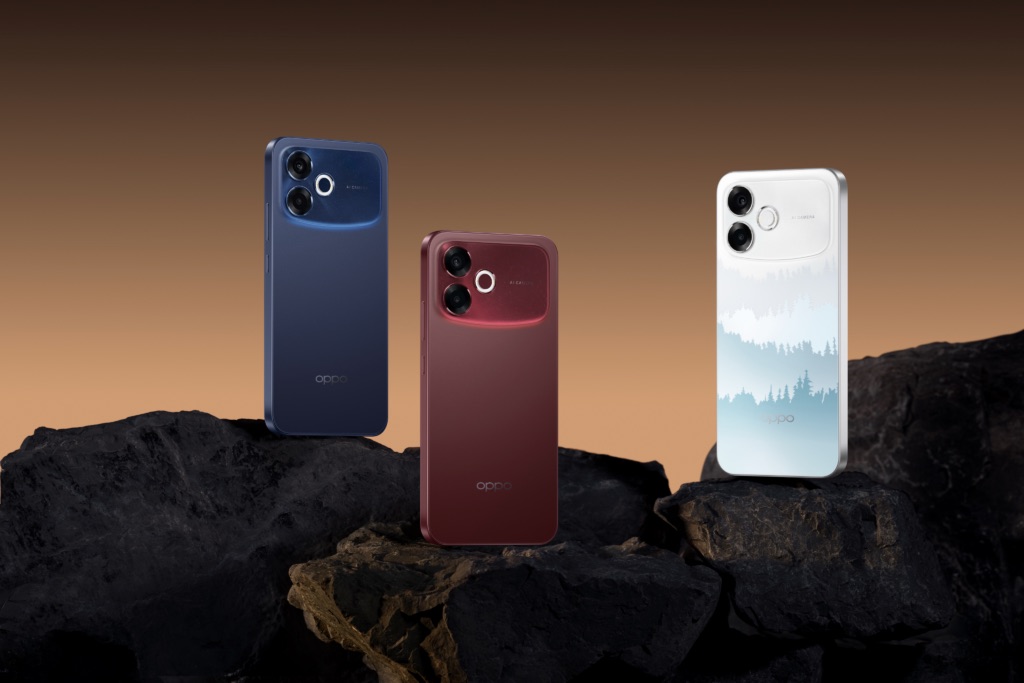
OPPO F-series has always focused on the durability side of things, with some of the toughest phones I’ve ever tested. With the new F33 series, the Chinese smartphone maker is bringing a new type of durability-focused smartphone to India. Based on details shared ahead of launch, the company is positioning the lineup as a solution to everyday smartphone problems like cracked screens, water damage, and battery anxiety.

Built for Indian Conditions

OPPO F33 Series to Launch With IP69K Rating and 7,000mAh Battery
	
The OPPO F-series has always focused on the durability side of things, with some of the toughest phones I’ve ever tested. With the new F33 series, the Chinese smartphone maker is bringing a new type of durability-focused smartphone to India. Based on details shared ahead of launch, the company is positioning the lineup as a solution to everyday smartphone problems like cracked screens, water damage, and battery anxiety.


Built for Indian Conditions


Durability seems to be the core focus here. The OPPO F33 series is said to come with IP69K certification, which is a step above the usual IP67 or IP68 ratings seen in most mid-range phones. In practical terms, this means the device can handle high-pressure, high-temperature water jets and provide complete dust protection. It’s designed to survive not just accidental splashes, but harsher environments like heavy rain, kitchens, or dusty outdoor conditions.


Beyond certifications, OPPO says the F33 series has undergone military-grade durability testing. This includes extreme temperature tests ranging from freezing cold to high heat, salt exposure for coastal conditions, and even simulations of strong winds and heavy rainfall. The devices are also tested for drops, with thousands of simulated falls and immersion tests to ensure real-world reliability.


Structurally, the phones feature a 360-degree armor body, built using an aerospace-grade aluminium frame, reinforced internals, and thicker protective materials for both the display and back panel. There’s also an internal cushioning system designed to absorb shocks during impact.


Long-Term Battery Health


Battery life is another major highlight of the F33 series. OPPO is introducing a 7,000mAh battery that’s designed to retain up to 80% of its capacity even after five years of usage.


The company is using a self-repairing electrolyte technology, which is said to help maintain battery health over time. Combined with 80W fast charging, reverse charging, and bypass charging support, the F33 series aims to reduce both charging time and long-term battery degradation.

#OPPO #F33 #Series #Launch #IP69K #Rating #7000mAh #BatteryOppo

Durability seems to be the core focus here. The OPPO F33 series is said to come with IP69K certification, which is a step above the usual IP67 or IP68 ratings seen in most mid-range phones. In practical terms, this means the device can handle high-pressure, high-temperature water jets and provide complete dust protection. It’s designed to survive not just accidental splashes, but harsher environments like heavy rain, kitchens, or dusty outdoor conditions.

Beyond certifications, OPPO says the F33 series has undergone military-grade durability testing. This includes extreme temperature tests ranging from freezing cold to high heat, salt exposure for coastal conditions, and even simulations of strong winds and heavy rainfall. The devices are also tested for drops, with thousands of simulated falls and immersion tests to ensure real-world reliability.

Structurally, the phones feature a 360-degree armor body, built using an aerospace-grade aluminium frame, reinforced internals, and thicker protective materials for both the display and back panel. There’s also an internal cushioning system designed to absorb shocks during impact.

Long-Term Battery Health

Battery life is another major highlight of the F33 series. OPPO is introducing a 7,000mAh battery that’s designed to retain up to 80% of its capacity even after five years of usage.

The company is using a self-repairing electrolyte technology, which is said to help maintain battery health over time. Combined with 80W fast charging, reverse charging, and bypass charging support, the F33 series aims to reduce both charging time and long-term battery degradation.

#OPPO #F33 #Series #Launch #IP69K #Rating #7000mAh #BatteryOppo">OPPO F33 Series to Launch With IP69K Rating and 7,000mAh Battery
	
The OPPO F-series has always focused on the durability side of things, with some of the toughest phones I’ve ever tested. With the new F33 series, the Chinese smartphone maker is bringing a new type of durability-focused smartphone to India. Based on details shared ahead of launch, the company is positioning the lineup as a solution to everyday smartphone problems like cracked screens, water damage, and battery anxiety.


Built for Indian Conditions


Durability seems to be the core focus here. The OPPO F33 series is said to come with IP69K certification, which is a step above the usual IP67 or IP68 ratings seen in most mid-range phones. In practical terms, this means the device can handle high-pressure, high-temperature water jets and provide complete dust protection. It’s designed to survive not just accidental splashes, but harsher environments like heavy rain, kitchens, or dusty outdoor conditions.


Beyond certifications, OPPO says the F33 series has undergone military-grade durability testing. This includes extreme temperature tests ranging from freezing cold to high heat, salt exposure for coastal conditions, and even simulations of strong winds and heavy rainfall. The devices are also tested for drops, with thousands of simulated falls and immersion tests to ensure real-world reliability.


Structurally, the phones feature a 360-degree armor body, built using an aerospace-grade aluminium frame, reinforced internals, and thicker protective materials for both the display and back panel. There’s also an internal cushioning system designed to absorb shocks during impact.


Long-Term Battery Health


Battery life is another major highlight of the F33 series. OPPO is introducing a 7,000mAh battery that’s designed to retain up to 80% of its capacity even after five years of usage.


The company is using a self-repairing electrolyte technology, which is said to help maintain battery health over time. Combined with 80W fast charging, reverse charging, and bypass charging support, the F33 series aims to reduce both charging time and long-term battery degradation.

#OPPO #F33 #Series #Launch #IP69K #Rating #7000mAh #BatteryOppo

has always focused on the durability side of things, with some of the toughest phones I’ve ever tested. With the new F33 series, the Chinese smartphone maker is bringing a new type of durability-focused smartphone to India. Based on details shared ahead of launch, the company is positioning the lineup as a solution to everyday smartphone problems like cracked screens, water damage, and battery anxiety.

Built for Indian Conditions

OPPO F33 Series to Launch With IP69K Rating and 7,000mAh Battery
	
The OPPO F-series has always focused on the durability side of things, with some of the toughest phones I’ve ever tested. With the new F33 series, the Chinese smartphone maker is bringing a new type of durability-focused smartphone to India. Based on details shared ahead of launch, the company is positioning the lineup as a solution to everyday smartphone problems like cracked screens, water damage, and battery anxiety.


Built for Indian Conditions


Durability seems to be the core focus here. The OPPO F33 series is said to come with IP69K certification, which is a step above the usual IP67 or IP68 ratings seen in most mid-range phones. In practical terms, this means the device can handle high-pressure, high-temperature water jets and provide complete dust protection. It’s designed to survive not just accidental splashes, but harsher environments like heavy rain, kitchens, or dusty outdoor conditions.


Beyond certifications, OPPO says the F33 series has undergone military-grade durability testing. This includes extreme temperature tests ranging from freezing cold to high heat, salt exposure for coastal conditions, and even simulations of strong winds and heavy rainfall. The devices are also tested for drops, with thousands of simulated falls and immersion tests to ensure real-world reliability.


Structurally, the phones feature a 360-degree armor body, built using an aerospace-grade aluminium frame, reinforced internals, and thicker protective materials for both the display and back panel. There’s also an internal cushioning system designed to absorb shocks during impact.


Long-Term Battery Health


Battery life is another major highlight of the F33 series. OPPO is introducing a 7,000mAh battery that’s designed to retain up to 80% of its capacity even after five years of usage.


The company is using a self-repairing electrolyte technology, which is said to help maintain battery health over time. Combined with 80W fast charging, reverse charging, and bypass charging support, the F33 series aims to reduce both charging time and long-term battery degradation.

#OPPO #F33 #Series #Launch #IP69K #Rating #7000mAh #BatteryOppo

Durability seems to be the core focus here. The OPPO F33 series is said to come with IP69K certification, which is a step above the usual IP67 or IP68 ratings seen in most mid-range phones. In practical terms, this means the device can handle high-pressure, high-temperature water jets and provide complete dust protection. It’s designed to survive not just accidental splashes, but harsher environments like heavy rain, kitchens, or dusty outdoor conditions.

Beyond certifications, OPPO says the F33 series has undergone military-grade durability testing. This includes extreme temperature tests ranging from freezing cold to high heat, salt exposure for coastal conditions, and even simulations of strong winds and heavy rainfall. The devices are also tested for drops, with thousands of simulated falls and immersion tests to ensure real-world reliability.

Structurally, the phones feature a 360-degree armor body, built using an aerospace-grade aluminium frame, reinforced internals, and thicker protective materials for both the display and back panel. There’s also an internal cushioning system designed to absorb shocks during impact.

Long-Term Battery Health

Battery life is another major highlight of the F33 series. OPPO is introducing a 7,000mAh battery that’s designed to retain up to 80% of its capacity even after five years of usage.

The company is using a self-repairing electrolyte technology, which is said to help maintain battery health over time. Combined with 80W fast charging, reverse charging, and bypass charging support, the F33 series aims to reduce both charging time and long-term battery degradation.

#OPPO #F33 #Series #Launch #IP69K #Rating #7000mAh #BatteryOppo">OPPO F33 Series to Launch With IP69K Rating and 7,000mAh Battery

The OPPO F-series has always focused on the durability side of things, with some of the toughest phones I’ve ever tested. With the new F33 series, the Chinese smartphone maker is bringing a new type of durability-focused smartphone to India. Based on details shared ahead of launch, the company is positioning the lineup as a solution to everyday smartphone problems like cracked screens, water damage, and battery anxiety.

Built for Indian Conditions

OPPO F33 Series to Launch With IP69K Rating and 7,000mAh Battery
	
The OPPO F-series has always focused on the durability side of things, with some of the toughest phones I’ve ever tested. With the new F33 series, the Chinese smartphone maker is bringing a new type of durability-focused smartphone to India. Based on details shared ahead of launch, the company is positioning the lineup as a solution to everyday smartphone problems like cracked screens, water damage, and battery anxiety.


Built for Indian Conditions


Durability seems to be the core focus here. The OPPO F33 series is said to come with IP69K certification, which is a step above the usual IP67 or IP68 ratings seen in most mid-range phones. In practical terms, this means the device can handle high-pressure, high-temperature water jets and provide complete dust protection. It’s designed to survive not just accidental splashes, but harsher environments like heavy rain, kitchens, or dusty outdoor conditions.


Beyond certifications, OPPO says the F33 series has undergone military-grade durability testing. This includes extreme temperature tests ranging from freezing cold to high heat, salt exposure for coastal conditions, and even simulations of strong winds and heavy rainfall. The devices are also tested for drops, with thousands of simulated falls and immersion tests to ensure real-world reliability.


Structurally, the phones feature a 360-degree armor body, built using an aerospace-grade aluminium frame, reinforced internals, and thicker protective materials for both the display and back panel. There’s also an internal cushioning system designed to absorb shocks during impact.


Long-Term Battery Health


Battery life is another major highlight of the F33 series. OPPO is introducing a 7,000mAh battery that’s designed to retain up to 80% of its capacity even after five years of usage.


The company is using a self-repairing electrolyte technology, which is said to help maintain battery health over time. Combined with 80W fast charging, reverse charging, and bypass charging support, the F33 series aims to reduce both charging time and long-term battery degradation.

#OPPO #F33 #Series #Launch #IP69K #Rating #7000mAh #BatteryOppo

Durability seems to be the core focus here. The OPPO F33 series is said to come with IP69K certification, which is a step above the usual IP67 or IP68 ratings seen in most mid-range phones. In practical terms, this means the device can handle high-pressure, high-temperature water jets and provide complete dust protection. It’s designed to survive not just accidental splashes, but harsher environments like heavy rain, kitchens, or dusty outdoor conditions.

Beyond certifications, OPPO says the F33 series has undergone military-grade durability testing. This includes extreme temperature tests ranging from freezing cold to high heat, salt exposure for coastal conditions, and even simulations of strong winds and heavy rainfall. The devices are also tested for drops, with thousands of simulated falls and immersion tests to ensure real-world reliability.

Structurally, the phones feature a 360-degree armor body, built using an aerospace-grade aluminium frame, reinforced internals, and thicker protective materials for both the display and back panel. There’s also an internal cushioning system designed to absorb shocks during impact.

Long-Term Battery Health

Battery life is another major highlight of the F33 series. OPPO is introducing a 7,000mAh battery that’s designed to retain up to 80% of its capacity even after five years of usage.

The company is using a self-repairing electrolyte technology, which is said to help maintain battery health over time. Combined with 80W fast charging, reverse charging, and bypass charging support, the F33 series aims to reduce both charging time and long-term battery degradation.

#OPPO #F33 #Series #Launch #IP69K #Rating #7000mAh #BatteryOppo

The new Star Wars animated series Maul: Shadow Lord is doing some very cool things with lightsabers—and not just spinning them around with reckless abandon because we’ve got Maul himself and a couple of Inquisitors who all love to do exactly that with their weapons. They look almost unlike any time we’ve seen the weapons in Lucasfilm’s past output: blades that flicker and snarl like their wielders do, living flames that carve paths of incandescent energy across the screen instead of that typically clean, minimalistic energy we see from them.

It makes Shadow Lord look even more visually impressive than it already is, and of course, the idea of lightsabers as gouts of flaming plasma is also naturally very befitting everyone’s favorite slightly pathetic but trying-his-best edgelord in a character like Maul. But it turns out Shadow Lord‘s lightsabers—Maul’s specifically—are going the extra edgelord mile. Because there’s screaming in the sound mix.

Not just any screaming either, but Sam Witwer’s own howls.

The delightfully silly factoid was revealed by the supervising sound editor for the show, David W. Collins, in a new featurette about the process of creating Shadow Lord, which also shows off Witwer performing some of his own moves for animation reference. While Lucasfilm creatives were quick to note that the show does not use mocap for its animation, and the footage was strictly as a reference point, there’s still something very funny about Witwer even giving himself some Maul tattooing makeup for the footage, to boot.

It’s long been clear that Witwer has put a lot of time and thought into his approach to Maul’s animated legacy over the past decade and a half, but now at least he’s put his vocals into it in a very different manner for Shadow Lord.

Want more io9 news? Check out when to expect the latest Marvel, Star Wars, and Star Trek releases, what’s next for the DC Universe on film and TV, and everything you need to know about the future of Doctor Who.

#Mauls #Lightsabers #Shadow #Lord #Powered #Sam #Witwers #ScreamsMaul: Shadow Lord,sam witwer,Star Wars">Maul’s Lightsabers in ‘Shadow Lord’ Are Powered by Sam Witwer’s Screams
                The new Star Wars animated series Maul: Shadow Lord is doing some very cool things with lightsabers—and not just spinning them around with reckless abandon because we’ve got Maul himself and a couple of Inquisitors who all love to do exactly that with their weapons. They look almost unlike any time we’ve seen the weapons in Lucasfilm’s past output: blades that flicker and snarl like their wielders do, living flames that carve paths of incandescent energy across the screen instead of that typically clean, minimalistic energy we see from them. It makes Shadow Lord look even more visually impressive than it already is, and of course, the idea of lightsabers as gouts of flaming plasma is also naturally very befitting everyone’s favorite slightly pathetic but trying-his-best edgelord in a character like Maul. But it turns out Shadow Lord‘s lightsabers—Maul’s specifically—are going the extra edgelord mile. Because there’s screaming in the sound mix.

 Not just any screaming either, but Sam Witwer’s own howls.  The delightfully silly factoid was revealed by the supervising sound editor for the show, David W. Collins, in a new featurette about the process of creating Shadow Lord, which also shows off Witwer performing some of his own moves for animation reference. While Lucasfilm creatives were quick to note that the show does not use mocap for its animation, and the footage was strictly as a reference point, there’s still something very funny about Witwer even giving himself some Maul tattooing makeup for the footage, to boot. It’s long been clear that Witwer has put a lot of time and thought into his approach to Maul’s animated legacy over the past decade and a half, but now at least he’s put his vocals into it in a very different manner for Shadow Lord.  Want more io9 news? Check out when to expect the latest Marvel, Star Wars, and Star Trek releases, what’s next for the DC Universe on film and TV, and everything you need to know about the future of Doctor Who.      #Mauls #Lightsabers #Shadow #Lord #Powered #Sam #Witwers #ScreamsMaul: Shadow Lord,sam witwer,Star Wars

Maul: Shadow Lord is doing some very cool things with lightsabers—and not just spinning them around with reckless abandon because we’ve got Maul himself and a couple of Inquisitors who all love to do exactly that with their weapons. They look almost unlike any time we’ve seen the weapons in Lucasfilm’s past output: blades that flicker and snarl like their wielders do, living flames that carve paths of incandescent energy across the screen instead of that typically clean, minimalistic energy we see from them.

It makes Shadow Lord look even more visually impressive than it already is, and of course, the idea of lightsabers as gouts of flaming plasma is also naturally very befitting everyone’s favorite slightly pathetic but trying-his-best edgelord in a character like Maul. But it turns out Shadow Lord‘s lightsabers—Maul’s specifically—are going the extra edgelord mile. Because there’s screaming in the sound mix.

Not just any screaming either, but Sam Witwer’s own howls.

The delightfully silly factoid was revealed by the supervising sound editor for the show, David W. Collins, in a new featurette about the process of creating Shadow Lord, which also shows off Witwer performing some of his own moves for animation reference. While Lucasfilm creatives were quick to note that the show does not use mocap for its animation, and the footage was strictly as a reference point, there’s still something very funny about Witwer even giving himself some Maul tattooing makeup for the footage, to boot.

It’s long been clear that Witwer has put a lot of time and thought into his approach to Maul’s animated legacy over the past decade and a half, but now at least he’s put his vocals into it in a very different manner for Shadow Lord.

Want more io9 news? Check out when to expect the latest Marvel, Star Wars, and Star Trek releases, what’s next for the DC Universe on film and TV, and everything you need to know about the future of Doctor Who.

#Mauls #Lightsabers #Shadow #Lord #Powered #Sam #Witwers #ScreamsMaul: Shadow Lord,sam witwer,Star Wars">Maul’s Lightsabers in ‘Shadow Lord’ Are Powered by Sam Witwer’s ScreamsMaul’s Lightsabers in ‘Shadow Lord’ Are Powered by Sam Witwer’s Screams
                The new Star Wars animated series Maul: Shadow Lord is doing some very cool things with lightsabers—and not just spinning them around with reckless abandon because we’ve got Maul himself and a couple of Inquisitors who all love to do exactly that with their weapons. They look almost unlike any time we’ve seen the weapons in Lucasfilm’s past output: blades that flicker and snarl like their wielders do, living flames that carve paths of incandescent energy across the screen instead of that typically clean, minimalistic energy we see from them. It makes Shadow Lord look even more visually impressive than it already is, and of course, the idea of lightsabers as gouts of flaming plasma is also naturally very befitting everyone’s favorite slightly pathetic but trying-his-best edgelord in a character like Maul. But it turns out Shadow Lord‘s lightsabers—Maul’s specifically—are going the extra edgelord mile. Because there’s screaming in the sound mix.

 Not just any screaming either, but Sam Witwer’s own howls.  The delightfully silly factoid was revealed by the supervising sound editor for the show, David W. Collins, in a new featurette about the process of creating Shadow Lord, which also shows off Witwer performing some of his own moves for animation reference. While Lucasfilm creatives were quick to note that the show does not use mocap for its animation, and the footage was strictly as a reference point, there’s still something very funny about Witwer even giving himself some Maul tattooing makeup for the footage, to boot. It’s long been clear that Witwer has put a lot of time and thought into his approach to Maul’s animated legacy over the past decade and a half, but now at least he’s put his vocals into it in a very different manner for Shadow Lord.  Want more io9 news? Check out when to expect the latest Marvel, Star Wars, and Star Trek releases, what’s next for the DC Universe on film and TV, and everything you need to know about the future of Doctor Who.      #Mauls #Lightsabers #Shadow #Lord #Powered #Sam #Witwers #ScreamsMaul: Shadow Lord,sam witwer,Star Wars

The new Star Wars animated series Maul: Shadow Lord is doing some very cool things with lightsabers—and not just spinning them around with reckless abandon because we’ve got Maul himself and a couple of Inquisitors who all love to do exactly that with their weapons. They look almost unlike any time we’ve seen the weapons in Lucasfilm’s past output: blades that flicker and snarl like their wielders do, living flames that carve paths of incandescent energy across the screen instead of that typically clean, minimalistic energy we see from them.

It makes Shadow Lord look even more visually impressive than it already is, and of course, the idea of lightsabers as gouts of flaming plasma is also naturally very befitting everyone’s favorite slightly pathetic but trying-his-best edgelord in a character like Maul. But it turns out Shadow Lord‘s lightsabers—Maul’s specifically—are going the extra edgelord mile. Because there’s screaming in the sound mix.

Not just any screaming either, but Sam Witwer’s own howls.

The delightfully silly factoid was revealed by the supervising sound editor for the show, David W. Collins, in a new featurette about the process of creating Shadow Lord, which also shows off Witwer performing some of his own moves for animation reference. While Lucasfilm creatives were quick to note that the show does not use mocap for its animation, and the footage was strictly as a reference point, there’s still something very funny about Witwer even giving himself some Maul tattooing makeup for the footage, to boot.

It’s long been clear that Witwer has put a lot of time and thought into his approach to Maul’s animated legacy over the past decade and a half, but now at least he’s put his vocals into it in a very different manner for Shadow Lord.

Want more io9 news? Check out when to expect the latest Marvel, Star Wars, and Star Trek releases, what’s next for the DC Universe on film and TV, and everything you need to know about the future of Doctor Who.

#Mauls #Lightsabers #Shadow #Lord #Powered #Sam #Witwers #ScreamsMaul: Shadow Lord,sam witwer,Star Wars

Post Comment