×
How to Protect Your iPhone or Android Device From Spyware

How to Protect Your iPhone or Android Device From Spyware

Infection usually starts through malicious links and fake apps, but it is also taking place via “more subtle methods,” says Richard LaTulip, a field CISO at security company Recorded Future, which collaborated with Google’s threat intelligence team on the Predator spyware findings.

LaTulip cites the example of recent research on malicious browser extensions affecting millions of users that shows “how seemingly harmless tools can become surveillance devices.”

These techniques, often developed by nation-state adversaries linked to governments, indicate a trend toward “more covert, persistent, and device-level compromises,” he says.

A Bigger Problem

Over the past few years, spyware has become a growing issue. Governments and the companies that make the malware say the surveillance tools are used to target only criminals and terrorists, or for national security purposes.

“But the truth is that human rights activists, journalists, and many others across the world have been unlawfully targeted with spyware,” Rebecca White, Amnesty International’s researcher on targeted surveillance, tells WIRED. “In this way, spyware can be used as a tool of repression—to silence people speaking truth to power.”

Thai activist Niraphorn Onnkhaow is a prime example. Between 2020 and 2021, at the height of Thailand’s pro-democracy protests, Onnkhaow was targeted 14 times by Pegasus spyware. Soon afterward, she decided to end her role in the protest movement amid fears that her private data could be weaponized against her.

“Data can be weaponized and lead to more abuse, online and offline—especially for people who already face discrimination based on their identity; for example, on the basis of gender or race,” White says.

Beyond activists, mobile spyware appears to be targeting a wider subset of people, often within a business environment. The malware is hitting “a wide range of society,” from government officials to financial IT workers, says iVerify’s Cole. “Increasingly, it’s used beyond intelligence gathering, to steal credentials for enterprise access.”

Signs You’ve Been Hit

Spyware is difficult to detect—especially sophisticated strains such as Pegasus and Predator, which are typically only discovered via forensic analysis. But you might notice some subtle signs, such as your device overheating or slowing down, or your camera or mic activating when they’re not supposed to be in use.

While advanced spyware may leave little to no visible trace, sudden drops in performance or changes in connectivity can serve as early warning signs, says LaTulip.

Source link
#Protect #iPhone #Android #Device #Spyware

Treasury Secretary Scott Bessent and Federal Reserve Chair Jerome Powell summoned bank executives for a meeting this week where they encouraged the executives to use Anthropic’s new Mythos model to detect vulnerabilities, according to Bloomberg

Indeed, while JPMorgan Chase was the only bank listed as one of the initial partner organizations with access to the model, Goldman Sachs, Citigroup, Bank of America, and Morgan Stanley are reportedly testing Mythos as well.

Anthropic announced the model this week but said it would be limiting access for now, in part because Mythos — despite not being trained specifically for cybersecurity — is too good at finding security vulnerabilities. (Others suggested this was hype or simply a smart enterprise sales strategy.)

The report is particularly surprising since Anthropic is currently battling the Trump administration in court over the Department of Defense’s designation of Anthropic as a supply-chain risk; that designation came after negotiations fell apart over the company’s efforts to limit how its AI models can be used by the government.

Meanwhile, the Financial Times reports that U.K. financial regulators are also discussing the risk posed by Mythos.

#Trump #officials #encouraging #banks #test #Anthropics #Mythos #model #TechCrunchAnthropic,jerome powell,Scott Bessent">Trump officials may be encouraging banks to test Anthropic’s Mythos model | TechCrunch
Treasury Secretary Scott Bessent and Federal Reserve Chair Jerome Powell summoned bank executives for a meeting this week where they encouraged the executives to use Anthropic’s new Mythos model to detect vulnerabilities, according to Bloomberg. 

Indeed, while JPMorgan Chase was the only bank listed as one of the initial partner organizations with access to the model, Goldman Sachs, Citigroup, Bank of America, and Morgan Stanley are reportedly testing Mythos as well.


Anthropic announced the model this week but said it would be limiting access for now, in part because Mythos — despite not being trained specifically for cybersecurity — is too good at finding security vulnerabilities. (Others suggested this was hype or simply a smart enterprise sales strategy.)

The report is particularly surprising since Anthropic is currently battling the Trump administration in court over the Department of Defense’s designation of Anthropic as a supply-chain risk; that designation came after negotiations fell apart over the company’s efforts to limit how its AI models can be used by the government.

Meanwhile, the Financial Times reports that U.K. financial regulators are also discussing the risk posed by Mythos.
#Trump #officials #encouraging #banks #test #Anthropics #Mythos #model #TechCrunchAnthropic,jerome powell,Scott Bessent

according to Bloomberg

Indeed, while JPMorgan Chase was the only bank listed as one of the initial partner organizations with access to the model, Goldman Sachs, Citigroup, Bank of America, and Morgan Stanley are reportedly testing Mythos as well.

Anthropic announced the model this week but said it would be limiting access for now, in part because Mythos — despite not being trained specifically for cybersecurity — is too good at finding security vulnerabilities. (Others suggested this was hype or simply a smart enterprise sales strategy.)

The report is particularly surprising since Anthropic is currently battling the Trump administration in court over the Department of Defense’s designation of Anthropic as a supply-chain risk; that designation came after negotiations fell apart over the company’s efforts to limit how its AI models can be used by the government.

Meanwhile, the Financial Times reports that U.K. financial regulators are also discussing the risk posed by Mythos.

#Trump #officials #encouraging #banks #test #Anthropics #Mythos #model #TechCrunchAnthropic,jerome powell,Scott Bessent">Trump officials may be encouraging banks to test Anthropic’s Mythos model | TechCrunch

Treasury Secretary Scott Bessent and Federal Reserve Chair Jerome Powell summoned bank executives for a meeting this week where they encouraged the executives to use Anthropic’s new Mythos model to detect vulnerabilities, according to Bloomberg

Indeed, while JPMorgan Chase was the only bank listed as one of the initial partner organizations with access to the model, Goldman Sachs, Citigroup, Bank of America, and Morgan Stanley are reportedly testing Mythos as well.

Anthropic announced the model this week but said it would be limiting access for now, in part because Mythos — despite not being trained specifically for cybersecurity — is too good at finding security vulnerabilities. (Others suggested this was hype or simply a smart enterprise sales strategy.)

The report is particularly surprising since Anthropic is currently battling the Trump administration in court over the Department of Defense’s designation of Anthropic as a supply-chain risk; that designation came after negotiations fell apart over the company’s efforts to limit how its AI models can be used by the government.

Meanwhile, the Financial Times reports that U.K. financial regulators are also discussing the risk posed by Mythos.

#Trump #officials #encouraging #banks #test #Anthropics #Mythos #model #TechCrunchAnthropic,jerome powell,Scott Bessent
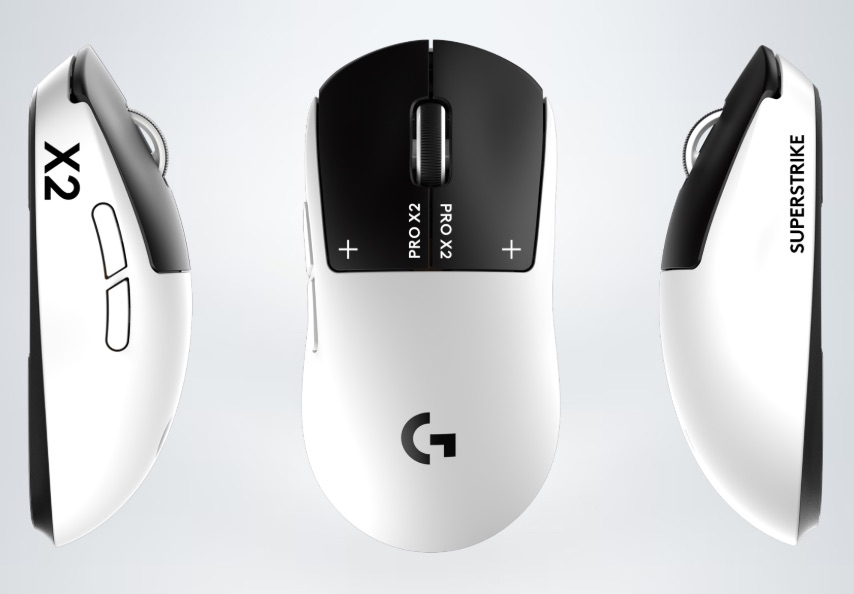
gaming mouse world has pretty much been the same for the last few years, with the only real improvement being weight savings. Now, Logitech has just introduced a new high-end gaming mouse in India, the Pro X2 Superstrike, and it’s bringing something genuinely new to the table. With it, the company is trying to rethink how mouse clicks work entirely, replacing traditional mechanical switches with a new system designed for faster response and better control. Here’s what you need to know about it.

A New Way to Click

The biggest highlight of the PRO X2 SUPERSTRIKE is its Haptic Inductive Trigger System (HITS), which ditches conventional microswitches in favor of inductive analog sensing paired with real-time haptic feedback.

In simpler terms, clicks aren’t just registered—they’re felt instantly. The system allows players to adjust the sensitivity of each click, with multiple actuation levels and reset points to suit their playstyle. Whether you prefer quick taps in FPS games or more deliberate clicks in strategy titles, the mouse can be tuned accordingly. Logitech claims this setup can reduce click latency by up to 30 milliseconds, and if this is true, it’ll reshape the landscape altogether. We have the Pro X2 for testing purposes, so keep an eye out for the full review dropping soon.

Beyond the click tech, the PRO X2 SUPERSTRIKE packs serious hardware. It features Logitech’s HERO 2 sensor with up to 44K DPI and supports an 8K polling rate, meaning it sends data to your PC every 0.125 milliseconds. The mouse is also capable of tracking extremely fast movements, with support for high acceleration and precise tracking even during rapid flicks. Despite all that, Logitech has kept the weight down to around 65 grams, making it suitable for long gaming sessions without fatigue. It also includes PTFE feet for smoother gliding and a battery life of up to 90 hours, which should easily last through extended sessions.

The Logitech G PRO X2 SUPERSTRIKE will be available in India in a Lunar Eclipse color option, priced at ₹23,995.

#Logitech #PRO #SUPERSTRIKE #Mouse #Debuts #Haptic #Click #System #44K #DPIlogitech,logitech g">Logitech PRO X2 SUPERSTRIKE Mouse Debuts With Haptic Click System, 44K DPI
	
The gaming mouse world has pretty much been the same for the last few years, with the only real improvement being weight savings. Now, Logitech has just introduced a new high-end gaming mouse in India, the Pro X2 Superstrike, and it’s bringing something genuinely new to the table. With it, the company is trying to rethink how mouse clicks work entirely, replacing traditional mechanical switches with a new system designed for faster response and better control. Here’s what you need to know about it. 


A New Way to Click


The biggest highlight of the PRO X2 SUPERSTRIKE is its Haptic Inductive Trigger System (HITS), which ditches conventional microswitches in favor of inductive analog sensing paired with real-time haptic feedback.


In simpler terms, clicks aren’t just registered—they’re felt instantly. The system allows players to adjust the sensitivity of each click, with multiple actuation levels and reset points to suit their playstyle. Whether you prefer quick taps in FPS games or more deliberate clicks in strategy titles, the mouse can be tuned accordingly. Logitech claims this setup can reduce click latency by up to 30 milliseconds, and if this is true, it’ll reshape the landscape altogether. We have the Pro X2 for testing purposes, so keep an eye out for the full review dropping soon. 


Beyond the click tech, the PRO X2 SUPERSTRIKE packs serious hardware. It features Logitech’s HERO 2 sensor with up to 44K DPI and supports an 8K polling rate, meaning it sends data to your PC every 0.125 milliseconds. The mouse is also capable of tracking extremely fast movements, with support for high acceleration and precise tracking even during rapid flicks. Despite all that, Logitech has kept the weight down to around 65 grams, making it suitable for long gaming sessions without fatigue. It also includes PTFE feet for smoother gliding and a battery life of up to 90 hours, which should easily last through extended sessions.


The Logitech G PRO X2 SUPERSTRIKE will be available in India in a Lunar Eclipse color option, priced at ₹23,995.


#Logitech #PRO #SUPERSTRIKE #Mouse #Debuts #Haptic #Click #System #44K #DPIlogitech,logitech g

world has pretty much been the same for the last few years, with the only real improvement being weight savings. Now, Logitech has just introduced a new high-end gaming mouse in India, the Pro X2 Superstrike, and it’s bringing something genuinely new to the table. With it, the company is trying to rethink how mouse clicks work entirely, replacing traditional mechanical switches with a new system designed for faster response and better control. Here’s what you need to know about it.

A New Way to Click

The biggest highlight of the PRO X2 SUPERSTRIKE is its Haptic Inductive Trigger System (HITS), which ditches conventional microswitches in favor of inductive analog sensing paired with real-time haptic feedback.

In simpler terms, clicks aren’t just registered—they’re felt instantly. The system allows players to adjust the sensitivity of each click, with multiple actuation levels and reset points to suit their playstyle. Whether you prefer quick taps in FPS games or more deliberate clicks in strategy titles, the mouse can be tuned accordingly. Logitech claims this setup can reduce click latency by up to 30 milliseconds, and if this is true, it’ll reshape the landscape altogether. We have the Pro X2 for testing purposes, so keep an eye out for the full review dropping soon.

Beyond the click tech, the PRO X2 SUPERSTRIKE packs serious hardware. It features Logitech’s HERO 2 sensor with up to 44K DPI and supports an 8K polling rate, meaning it sends data to your PC every 0.125 milliseconds. The mouse is also capable of tracking extremely fast movements, with support for high acceleration and precise tracking even during rapid flicks. Despite all that, Logitech has kept the weight down to around 65 grams, making it suitable for long gaming sessions without fatigue. It also includes PTFE feet for smoother gliding and a battery life of up to 90 hours, which should easily last through extended sessions.

The Logitech G PRO X2 SUPERSTRIKE will be available in India in a Lunar Eclipse color option, priced at ₹23,995.

#Logitech #PRO #SUPERSTRIKE #Mouse #Debuts #Haptic #Click #System #44K #DPIlogitech,logitech g">Logitech PRO X2 SUPERSTRIKE Mouse Debuts With Haptic Click System, 44K DPI

The gaming mouse world has pretty much been the same for the last few years, with the only real improvement being weight savings. Now, Logitech has just introduced a new high-end gaming mouse in India, the Pro X2 Superstrike, and it’s bringing something genuinely new to the table. With it, the company is trying to rethink how mouse clicks work entirely, replacing traditional mechanical switches with a new system designed for faster response and better control. Here’s what you need to know about it.

A New Way to Click

The biggest highlight of the PRO X2 SUPERSTRIKE is its Haptic Inductive Trigger System (HITS), which ditches conventional microswitches in favor of inductive analog sensing paired with real-time haptic feedback.

In simpler terms, clicks aren’t just registered—they’re felt instantly. The system allows players to adjust the sensitivity of each click, with multiple actuation levels and reset points to suit their playstyle. Whether you prefer quick taps in FPS games or more deliberate clicks in strategy titles, the mouse can be tuned accordingly. Logitech claims this setup can reduce click latency by up to 30 milliseconds, and if this is true, it’ll reshape the landscape altogether. We have the Pro X2 for testing purposes, so keep an eye out for the full review dropping soon.

Beyond the click tech, the PRO X2 SUPERSTRIKE packs serious hardware. It features Logitech’s HERO 2 sensor with up to 44K DPI and supports an 8K polling rate, meaning it sends data to your PC every 0.125 milliseconds. The mouse is also capable of tracking extremely fast movements, with support for high acceleration and precise tracking even during rapid flicks. Despite all that, Logitech has kept the weight down to around 65 grams, making it suitable for long gaming sessions without fatigue. It also includes PTFE feet for smoother gliding and a battery life of up to 90 hours, which should easily last through extended sessions.

The Logitech G PRO X2 SUPERSTRIKE will be available in India in a Lunar Eclipse color option, priced at ₹23,995.

#Logitech #PRO #SUPERSTRIKE #Mouse #Debuts #Haptic #Click #System #44K #DPIlogitech,logitech g

Post Comment