×
How Trump and Musk are intertwined despite falling out

How Trump and Musk are intertwined despite falling out

Watch: How Trump and Musk’s break-up played out in real time

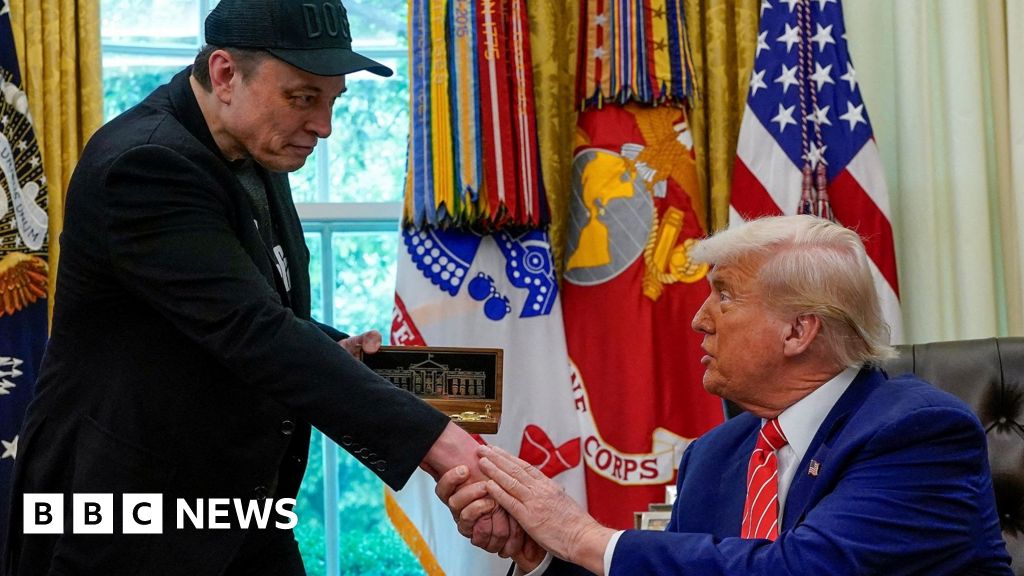
Even though observers have long speculated that Donald Trump and Elon Musk would eventually fall out, few predicted the speed and ferocity with which their social media feud erupted.

Since Musk pledged his full-throated support for the president following an assassination attempt in Pennsylvania less than a year ago, the political and business interests of the two men have become increasingly intertwined.

In several key areas – including political funding, government contracts and their personal relationships – the two men have come to rely on each other, meaning ending the alliance is likely to be messy.

That complicates the fallout from their rift and ensures that, wherever the row goes from here, they will continue to be linked – and have the potential to hurt each other in multiple ways.

Campaign funding

Over the course of the last year, Musk’s donations to Trump and other Republicans have been enormous – totalling $290m (£214m) according to the campaign finance tracking site Open Secrets.

Musk claimed on Thursday that the president won the election because of him, and complained about “ingratitude”.

There’s an obvious counterexample. Earlier this year Musk shovelled $20m into a key judicial race in Wisconsin, however, his chosen Republican candidate lost by 10 percentage points in a state Trump won last November.

Still, Musk’s donations are a huge chunk of money that Republicans will miss as they try to hold their congressional advantage in the midterm elections in November 2026.

It may have been a problem they were facing in any case. Musk has previously said he would contribute a “lot less” to campaigns in the future.

But could the bust-up with the White House prompt Musk not just to withdraw but throw his money behind opposition to Trump?

He hinted as such on Thursday when he posted a poll on X with the question: “Is it time to create a new political party in America that actually represents the 80% in the middle?”

Government contracts and investigations

Musk’s companies including SpaceX, its subsidiary Starlink and Tesla do a huge amount of business with the US government.

SpaceX alone has been awarded $20.9bn (£16.3 billion) in US government contracts since 2008, according to analysis by BBC Verify.

Trump realises this gives him leverage over the world’s richest man.

He posted on Truth Social on Thursday: “The easiest way to save money in our Budget, Billions and Billions of Dollars, is to terminate Elon’s Governmental Subsidies and Contracts. I was always surprised that Biden didn’t do it!”

Musk threatened to retaliate by decommissioning SpaceX’s Dragon, which ferries astronauts and supplies to the International Space Station. But he later backed down from that threat.

In practice, cancelling or withdrawing from government contracts would be a complicated and lengthy legal process, and for now and some time to come, the US government is likely to continue to do a significant amount of business with Musk’s companies.

No other company other than SpaceX can make Dragon and Falcon 9 rockets, and Nasa has committed to a number of space station and moon missions using SpaceX craft.

Despite those commercial partnerships, Musk and his companies also face investigations from a number of government agencies – more than 30, according to a February report by the New York Times – and regulatory issues such as approval for Tesla’s proposed driverless taxis.

People inside government and Silicon Valley

When Musk was given the task of setting up the cost-cutting Department of Government Efficiency (Doge) as one of Trump’s key drivers of change inside the US federal government, he was given broad scope to choose his own staff.

According to leaked lists of Doge employees, many of them previously worked for Musk’s companies. And even though Musk left Doge a week ago, many of the staff remain in their government jobs.

Some Doge employees also have deep ties to the Trump camp. Katie Miller – who worked in Trump’s first administration and is married to the current White House Deputy Chief of Staff Stephen Miller – was Doge’s spokesperson.

However, CNN reported that Mrs Miller also left the government last week and is now working “full time” for Musk.

There are others in the Trump administration whose loyalties may be tested by the feud. David Sacks, who Trump named as his top advisor on artificial intelligence and cryptocurrency, is close to Musk, having worked with the tycoon decades ago at PayPal.

On X, many Silicon Valley executives along with Maga-world influencers were picking sides and parsing each of the back-and-forth messages posted by the president and the world’s richest man.

Polling firm YouGov carried out a snap survey on Thursday asking people who they would side with. The results indicated 70% of Republican respondents said Trump, compared to less than 1 in 10 who chose Musk.

Source link
#Trump #Musk #intertwined #falling

Australia and Japan have signed contracts for the first three of 11 warships set to be delivered to the Australian navy under a landmark $7bn defence deal, as the two close US allies in the Asia Pacific region deepen defence cooperation.

Australia’s Defence Minister Richard Marles and Japanese Defence Minister Koizumi Shinjiro made the announcement in Melbourne on Saturday at the signing ceremony for the Mogami-class warships.

Recommended Stories

list of 4 itemsend of list

The “Mogami Memorandum” pledges to deepen military ties, including through “closer industrial cooperation” in defence.

Japan’s Mitsubishi Heavy Industries will build three of the stealth frigates in southern Nagasaki Prefecture, while Australia’s Austal will build eight in Western Australia.

The first of the Japanese-built warships is scheduled to be delivered in 2029 and enter service in 2030.

“Our surface fleet is more important than at any time in decades,” Marles said in a statement.

“These general-purpose frigates will help secure our maritime trade routes and northern approaches as part of a larger and more lethal surface combatant fleet.”

Shinjiro said closer defence coordination was becoming more important as Australia and Japan faced an “increasingly severe security environment”.

Australia’s government last year announced that it had chosen Mitsubishi Heavy Industries to build its fleet of next-generation warships, following a bidding war between the Tokyo-based firm and Germany’s Thyssenkrupp.

Australia has committed to a record $305bn in military spending over the next decade, as part of a widespread defence overhaul aimed at boosting the country’s naval power to levels not seen since World War II.

Under the plans, Canberra’s defence spending is set to rise to 3 percent of gross domestic product (GDP) by 3033, from about 2 percent now.

Australia and Japan, two of the United States’ closest allies, have ramped up military cooperation in recent years amid shared concerns about shifts in the regional security environment, particularly China’s rising influence. Tokyo and Canberra are also members of the Quad security bloc led by the US.

#Australia #Japan #sign #contracts #7bn #warships #dealEconomy, News, Business and Economy, Military, Asia Pacific, Australia">Australia and Japan sign contracts for bn warships dealDefence deal is latest example of deepening ties between Canberra and Tokyo amid shared concerns over China’s rise.Published On 19 Apr 202619 Apr 2026Australia and Japan have signed contracts for the first three of 11 warships set to be delivered to the Australian navy under a landmark bn defence deal, as the two close US allies in the Asia Pacific region deepen defence cooperation.Australia’s Defence Minister Richard Marles and Japanese Defence Minister Koizumi Shinjiro made the announcement in Melbourne on Saturday at the signing ceremony for the Mogami-class warships.Recommended Stories list of 4 itemsend of listThe “Mogami Memorandum” pledges to deepen military ties, including through “closer industrial cooperation” in defence.Japan’s Mitsubishi Heavy Industries will build three of the stealth frigates in southern Nagasaki Prefecture, while Australia’s Austal will build eight in Western Australia.The first of the Japanese-built warships is scheduled to be delivered in 2029 and enter service in 2030.“Our surface fleet is more important than at any time in decades,” Marles said in a statement.“These general-purpose frigates will help secure our maritime trade routes and northern approaches as part of a larger and more lethal surface combatant fleet.”Shinjiro said closer defence coordination was becoming more important as Australia and Japan faced an “increasingly severe security environment”.Australia’s government last year announced that it had chosen Mitsubishi Heavy Industries to build its fleet of next-generation warships, following a bidding war between the Tokyo-based firm and Germany’s Thyssenkrupp.Australia has committed to a record 5bn in military spending over the next decade, as part of a widespread defence overhaul aimed at boosting the country’s naval power to levels not seen since World War II.Under the plans, Canberra’s defence spending is set to rise to 3 percent of gross domestic product (GDP) by 3033, from about 2 percent now.Australia and Japan, two of the United States’ closest allies, have ramped up military cooperation in recent years amid shared concerns about shifts in the regional security environment, particularly China’s rising influence. Tokyo and Canberra are also members of the Quad security bloc led by the US.#Australia #Japan #sign #contracts #7bn #warships #dealEconomy, News, Business and Economy, Military, Asia Pacific, Australia

Australia and Japan have signed contracts for the first three of 11 warships set to be delivered to the Australian navy under a landmark $7bn defence deal, as the two close US allies in the Asia Pacific region deepen defence cooperation.

Australia’s Defence Minister Richard Marles and Japanese Defence Minister Koizumi Shinjiro made the announcement in Melbourne on Saturday at the signing ceremony for the Mogami-class warships.

Recommended Stories

list of 4 itemsend of list

The “Mogami Memorandum” pledges to deepen military ties, including through “closer industrial cooperation” in defence.

Japan’s Mitsubishi Heavy Industries will build three of the stealth frigates in southern Nagasaki Prefecture, while Australia’s Austal will build eight in Western Australia.

The first of the Japanese-built warships is scheduled to be delivered in 2029 and enter service in 2030.

“Our surface fleet is more important than at any time in decades,” Marles said in a statement.

“These general-purpose frigates will help secure our maritime trade routes and northern approaches as part of a larger and more lethal surface combatant fleet.”

Shinjiro said closer defence coordination was becoming more important as Australia and Japan faced an “increasingly severe security environment”.

Australia’s government last year announced that it had chosen Mitsubishi Heavy Industries to build its fleet of next-generation warships, following a bidding war between the Tokyo-based firm and Germany’s Thyssenkrupp.

Australia has committed to a record $305bn in military spending over the next decade, as part of a widespread defence overhaul aimed at boosting the country’s naval power to levels not seen since World War II.

Under the plans, Canberra’s defence spending is set to rise to 3 percent of gross domestic product (GDP) by 3033, from about 2 percent now.

Australia and Japan, two of the United States’ closest allies, have ramped up military cooperation in recent years amid shared concerns about shifts in the regional security environment, particularly China’s rising influence. Tokyo and Canberra are also members of the Quad security bloc led by the US.

#Australia #Japan #sign #contracts #7bn #warships #dealEconomy, News, Business and Economy, Military, Asia Pacific, Australia">Australia and Japan sign contracts for $7bn warships deal

Defence deal is latest example of deepening ties between Canberra and Tokyo amid shared concerns over China’s rise.

Australia and Japan have signed contracts for the first three of 11 warships set to be delivered to the Australian navy under a landmark $7bn defence deal, as the two close US allies in the Asia Pacific region deepen defence cooperation.

Australia’s Defence Minister Richard Marles and Japanese Defence Minister Koizumi Shinjiro made the announcement in Melbourne on Saturday at the signing ceremony for the Mogami-class warships.

Recommended Stories

list of 4 itemsend of list

The “Mogami Memorandum” pledges to deepen military ties, including through “closer industrial cooperation” in defence.

Japan’s Mitsubishi Heavy Industries will build three of the stealth frigates in southern Nagasaki Prefecture, while Australia’s Austal will build eight in Western Australia.

The first of the Japanese-built warships is scheduled to be delivered in 2029 and enter service in 2030.

“Our surface fleet is more important than at any time in decades,” Marles said in a statement.

“These general-purpose frigates will help secure our maritime trade routes and northern approaches as part of a larger and more lethal surface combatant fleet.”

Shinjiro said closer defence coordination was becoming more important as Australia and Japan faced an “increasingly severe security environment”.

Australia’s government last year announced that it had chosen Mitsubishi Heavy Industries to build its fleet of next-generation warships, following a bidding war between the Tokyo-based firm and Germany’s Thyssenkrupp.

Australia has committed to a record $305bn in military spending over the next decade, as part of a widespread defence overhaul aimed at boosting the country’s naval power to levels not seen since World War II.

Under the plans, Canberra’s defence spending is set to rise to 3 percent of gross domestic product (GDP) by 3033, from about 2 percent now.

Australia and Japan, two of the United States’ closest allies, have ramped up military cooperation in recent years amid shared concerns about shifts in the regional security environment, particularly China’s rising influence. Tokyo and Canberra are also members of the Quad security bloc led by the US.

#Australia #Japan #sign #contracts #7bn #warships #dealEconomy, News, Business and Economy, Military, Asia Pacific, Australia

Post Comment