×
In the end, Michigan basketball was too big to fail  On a night where they shot a season-worst 2-of-15 from three, where their injured star looked like a shell of himself, where they lost the rebounding battle and played a style and pace for more conducive to their opponent’s strengths, on a night where seemingly everything that needed to happen in order for Michigan to be once again deprived of its long-awaited second national championship … none of it mattered.To quote Ellis Pine, “you can’t stop what’s coming,” and Dusty May’s Wolverines have seemed like they’ve been coming for the top of the college basketball mountain since November.That statement is a far cry from the days of the not-so-distant past when no level of success felt like a certainty for the maize and blue.A little over 24 months ago, Michigan was at a crossroads. “Breaking point” might be a more accurate descriptor.The Wolverines had just gone 8-24 overall and 3-17 in the Big Ten, good for the worst season in the modern history of the program. Ann Arbor legend Juwan Howard was shown the door after five up-and-down seasons, and weeks later, Michigan beat out the likes of Louisville and Vanderbilt to hire May away from Florida Atlantic.Three Michigan players — Nimari Burnett, Will Tschetter and walk-on Harrison Hochberg — experienced every moment of the 8-win season and still chose to stick with the program through the transition. On Monday night, 741 days after May was hired, all three climbed the ladder inside Lucas Oil Stadium to cut down a piece of the national championship net.Of course loyalty, while an attractive subplot and an easy storyline to latch onto, might not be the central theme of the 2025-26 Michigan Wolverines. Not the team that just became the first in the history of college basketball to win a national championship with five starters who all transferred into the program.So what is the central theme?May’s potential to be one of the primary faces of the next wave of great college basketball coaches wasn’t exactly a secret in 2024. A year earlier he had taken Florida Atlantic all the way to the Final Four, and then proved it wasn’t a fluke by winning 25 games and earning an 8-seed in the NCAA Tournament a year later.In just six seasons as a Division-I head coach, May had already earned the reputation for pairing a remarkable basketball mind with an incredible knack for identifying talent. That combination made him the perfect hire for a power conference program looking for a quick turnaround after falling on hard times.Two such programs — Michigan and Louisville, both coming off of 8-24 seasons — came calling. Ultimately, UM athletic director Warde Manuel won the battle by selling May on the notion that we have more resources, more institutional support, and a better overall living arrangement for his family in Ann Arbor than anywhere else that might come calling.“Louisville is an unbelievable basketball school. But this was the right fit for me, my family, and it just felt right,” May said at the time.An agreement was made, and both sides got to work.NIL and the transfer portal have both opened the door for instant turnarounds to be more of a thing in college basketball than ever before.A decade ago, a coach brought in to take command of a Big Ten program that had just gone 3-17 in league play would have merely been expected to show an aptitude for the job and some tangible signs of progress in year one. Now, if you’ve got the bankroll, anything is possible, and it’s possible right away.May convinced Burnett and Tschetter to stick around, he brought big man Vlad Goldin with him from FAU, and he signed Tre Donaldson (Auburn), Danny Wolf (Yale), Roddy Gayle (Ohio State) and Sam Walters (Alabama) from the transfer portal to form the nucleus of a team that seemed on paper like they should have been able to compete right out of the gate. They did. Michigan won 27 games, captured the Big Ten Tournament title, and advanced to the Sweet 16 before falling to eventual semifinalist Auburn.With the bar raised, May used Michigan’s deep pockets to go to work again. While Gayle, Tschetter and Burnett all returned, each of UM’s five leading scorers in 2025-26 was a newcomer.UAB’s Yaxel Lendeborg was the highest-ranked transfer in the country according to most who rank that sort of thing. When Donaldson bolted for Miami, May simply replaced him with North Carolina floor general Elliot Cadeau. Everyone knew Morez Johnson was destined for a breakout sophomore season, and May made sure it happened at Michigan and not conference rival Illinois. And then there was Aday Mara, a 7-foot-2 center who had played sparingly over two seasons at UCLA before emerging as a star for the Wolverines this season.Identifying talent is still a skill that can pay off big in this brave, new world.A healthy chunk of May’s imports have fit a similar description: Big, long, athletic, versatile and active. He seeks out monsters who can control the paint on both ends of the court, and is especially fond of players who can effectively guard multiple positions.The results speak pretty loudly.Michigan will end this season ranked No. 1 in the country in adjusted defensive efficiency. They rank first in the country in effective field foal percentage defense, second in the country in two-point percentage defense, and third in the country in block percentage. Offensively, they were fourth in the country in overall efficiency and fifth in the country in two-percentage.In each of Michigan’s last four games of the NCAA Tournament, the Wolverines held their opponents — Alabama, Tennessee, Arizona and UConn — to their worst field goal shooting performance of the season.Michigan’s 2025-26 squad won’t just be remembered for its gaudy 37-3 final record, it’ll be remembered for the way in which it won a hefty chunk of those 37 games.In simpler terms, it’ll be remembered for just how severely it kicked the shit out of teams all season long.In its capturing of the Players Era Festival championship during Thanksgiving week, the Wolverines became the first team in the history of the AP poll to beat three straight ranked opponents all by 30 points or more. The last of those was a 101-61 championship game slaughtering of a Gonzaga team that, up until that point, had looked every bit as dominant as May’s team had.When the dust finally cleared on Monday night, Michigan had won 29 of its 37 games by double figures. It won an astounding 11 games by 30 points or more, and its seven wins by 40 points or more are the most by any team in the history of the Big Ten.From the jump, confidence was never lacking with this group. Nor should it have been.Lendeborg, the eventual First Team All-American and Big Ten Player of the Year, was the first to raise eyebrows with a public declaration.“I feel like we’re the best team in college basketball,” Lendeborg said after the Players Era Festival triumph in November. “We might be the best Michigan team ever. We’re going to try to go for that.”Instead of shying away from their star’s bravado, the rest of the Wolverines leaned into it.“We say it before every game when we step onto the court,” Morez Johnson said in February of Lendeborg’s initial proclamation. “Everybody truly believes that.”Yaxel laughed last on Monday night, telling a national TV audience:“We’re the best team in college basketball, and we want to go down as one of the greatest ever.”Despite the Big Ten’s perennial status as one of the two or three best conferences in college basketball, the league has been burdened for the past two and-a-half-decades with the stigma of having won zero national championships since Michigan State cut down the nets in 2000.From 2001-2025, Big Ten teams played in eight national championships and astoundingly lost them all. Michigan accounted for 25 percent of that total, falling to Louisville for the title in 2013 and getting blown out by Villanova on the first Monday in April five years later.No trend was too tall for this team. Neither was any opponent.In the end, Michigan was simply too big to fail.  #Michigan #basketball #big #fail

In the end, Michigan basketball was too big to fail

On a night where they shot a season-worst 2-of-15 from three, where their injured star looked like a shell of himself, where they lost the rebounding battle and played a style and pace for more conducive to their opponent’s strengths, on a night where seemingly everything that needed to happen in order for Michigan to be once again deprived of its long-awaited second national championship … none of it mattered.

To quote Ellis Pine, “you can’t stop what’s coming,” and Dusty May’s Wolverines have seemed like they’ve been coming for the top of the college basketball mountain since November.

That statement is a far cry from the days of the not-so-distant past when no level of success felt like a certainty for the maize and blue.

A little over 24 months ago, Michigan was at a crossroads. “Breaking point” might be a more accurate descriptor.

The Wolverines had just gone 8-24 overall and 3-17 in the Big Ten, good for the worst season in the modern history of the program. Ann Arbor legend Juwan Howard was shown the door after five up-and-down seasons, and weeks later, Michigan beat out the likes of Louisville and Vanderbilt to hire May away from Florida Atlantic.

Three Michigan players — Nimari Burnett, Will Tschetter and walk-on Harrison Hochberg — experienced every moment of the 8-win season and still chose to stick with the program through the transition. On Monday night, 741 days after May was hired, all three climbed the ladder inside Lucas Oil Stadium to cut down a piece of the national championship net.

Of course loyalty, while an attractive subplot and an easy storyline to latch onto, might not be the central theme of the 2025-26 Michigan Wolverines. Not the team that just became the first in the history of college basketball to win a national championship with five starters who all transferred into the program.

So what is the central theme?

May’s potential to be one of the primary faces of the next wave of great college basketball coaches wasn’t exactly a secret in 2024. A year earlier he had taken Florida Atlantic all the way to the Final Four, and then proved it wasn’t a fluke by winning 25 games and earning an 8-seed in the NCAA Tournament a year later.

In just six seasons as a Division-I head coach, May had already earned the reputation for pairing a remarkable basketball mind with an incredible knack for identifying talent. That combination made him the perfect hire for a power conference program looking for a quick turnaround after falling on hard times.

Two such programs — Michigan and Louisville, both coming off of 8-24 seasons — came calling. Ultimately, UM athletic director Warde Manuel won the battle by selling May on the notion that we have more resources, more institutional support, and a better overall living arrangement for his family in Ann Arbor than anywhere else that might come calling.

“Louisville is an unbelievable basketball school. But this was the right fit for me, my family, and it just felt right,” May said at the time.

An agreement was made, and both sides got to work.

NIL and the transfer portal have both opened the door for instant turnarounds to be more of a thing in college basketball than ever before.

A decade ago, a coach brought in to take command of a Big Ten program that had just gone 3-17 in league play would have merely been expected to show an aptitude for the job and some tangible signs of progress in year one. Now, if you’ve got the bankroll, anything is possible, and it’s possible right away.

May convinced Burnett and Tschetter to stick around, he brought big man Vlad Goldin with him from FAU, and he signed Tre Donaldson (Auburn), Danny Wolf (Yale), Roddy Gayle (Ohio State) and Sam Walters (Alabama) from the transfer portal to form the nucleus of a team that seemed on paper like they should have been able to compete right out of the gate. They did. Michigan won 27 games, captured the Big Ten Tournament title, and advanced to the Sweet 16 before falling to eventual semifinalist Auburn.

With the bar raised, May used Michigan’s deep pockets to go to work again. While Gayle, Tschetter and Burnett all returned, each of UM’s five leading scorers in 2025-26 was a newcomer.

UAB’s Yaxel Lendeborg was the highest-ranked transfer in the country according to most who rank that sort of thing. When Donaldson bolted for Miami, May simply replaced him with North Carolina floor general Elliot Cadeau. Everyone knew Morez Johnson was destined for a breakout sophomore season, and May made sure it happened at Michigan and not conference rival Illinois. And then there was Aday Mara, a 7-foot-2 center who had played sparingly over two seasons at UCLA before emerging as a star for the Wolverines this season.

Identifying talent is still a skill that can pay off big in this brave, new world.

A healthy chunk of May’s imports have fit a similar description: Big, long, athletic, versatile and active. He seeks out monsters who can control the paint on both ends of the court, and is especially fond of players who can effectively guard multiple positions.

The results speak pretty loudly.

Michigan will end this season ranked No. 1 in the country in adjusted defensive efficiency. They rank first in the country in effective field foal percentage defense, second in the country in two-point percentage defense, and third in the country in block percentage. Offensively, they were fourth in the country in overall efficiency and fifth in the country in two-percentage.

In each of Michigan’s last four games of the NCAA Tournament, the Wolverines held their opponents — Alabama, Tennessee, Arizona and UConn — to their worst field goal shooting performance of the season.

Michigan’s 2025-26 squad won’t just be remembered for its gaudy 37-3 final record, it’ll be remembered for the way in which it won a hefty chunk of those 37 games.

In simpler terms, it’ll be remembered for just how severely it kicked the shit out of teams all season long.

In its capturing of the Players Era Festival championship during Thanksgiving week, the Wolverines became the first team in the history of the AP poll to beat three straight ranked opponents all by 30 points or more. The last of those was a 101-61 championship game slaughtering of a Gonzaga team that, up until that point, had looked every bit as dominant as May’s team had.

When the dust finally cleared on Monday night, Michigan had won 29 of its 37 games by double figures. It won an astounding 11 games by 30 points or more, and its seven wins by 40 points or more are the most by any team in the history of the Big Ten.

From the jump, confidence was never lacking with this group. Nor should it have been.

Lendeborg, the eventual First Team All-American and Big Ten Player of the Year, was the first to raise eyebrows with a public declaration.

“I feel like we’re the best team in college basketball,” Lendeborg said after the Players Era Festival triumph in November. “We might be the best Michigan team ever. We’re going to try to go for that.”

Instead of shying away from their star’s bravado, the rest of the Wolverines leaned into it.

“We say it before every game when we step onto the court,” Morez Johnson said in February of Lendeborg’s initial proclamation. “Everybody truly believes that.”

Yaxel laughed last on Monday night, telling a national TV audience:

“We’re the best team in college basketball, and we want to go down as one of the greatest ever.”

Despite the Big Ten’s perennial status as one of the two or three best conferences in college basketball, the league has been burdened for the past two and-a-half-decades with the stigma of having won zero national championships since Michigan State cut down the nets in 2000.

From 2001-2025, Big Ten teams played in eight national championships and astoundingly lost them all. Michigan accounted for 25 percent of that total, falling to Louisville for the title in 2013 and getting blown out by Villanova on the first Monday in April five years later.

No trend was too tall for this team. Neither was any opponent.

In the end, Michigan was simply too big to fail.

#Michigan #basketball #big #fail

On a night where they shot a season-worst 2-of-15 from three, where their injured star looked like a shell of himself, where they lost the rebounding battle and played a style and pace for more conducive to their opponent’s strengths, on a night where seemingly everything that needed to happen in order for Michigan to be once again deprived of its long-awaited second national championship … none of it mattered.

To quote Ellis Pine, “you can’t stop what’s coming,” and Dusty May’s Wolverines have seemed like they’ve been coming for the top of the college basketball mountain since November.

That statement is a far cry from the days of the not-so-distant past when no level of success felt like a certainty for the maize and blue.

A little over 24 months ago, Michigan was at a crossroads. “Breaking point” might be a more accurate descriptor.

The Wolverines had just gone 8-24 overall and 3-17 in the Big Ten, good for the worst season in the modern history of the program. Ann Arbor legend Juwan Howard was shown the door after five up-and-down seasons, and weeks later, Michigan beat out the likes of Louisville and Vanderbilt to hire May away from Florida Atlantic.

Three Michigan players — Nimari Burnett, Will Tschetter and walk-on Harrison Hochberg — experienced every moment of the 8-win season and still chose to stick with the program through the transition. On Monday night, 741 days after May was hired, all three climbed the ladder inside Lucas Oil Stadium to cut down a piece of the national championship net.

Of course loyalty, while an attractive subplot and an easy storyline to latch onto, might not be the central theme of the 2025-26 Michigan Wolverines. Not the team that just became the first in the history of college basketball to win a national championship with five starters who all transferred into the program.

So what is the central theme?

May’s potential to be one of the primary faces of the next wave of great college basketball coaches wasn’t exactly a secret in 2024. A year earlier he had taken Florida Atlantic all the way to the Final Four, and then proved it wasn’t a fluke by winning 25 games and earning an 8-seed in the NCAA Tournament a year later.

In just six seasons as a Division-I head coach, May had already earned the reputation for pairing a remarkable basketball mind with an incredible knack for identifying talent. That combination made him the perfect hire for a power conference program looking for a quick turnaround after falling on hard times.

Two such programs — Michigan and Louisville, both coming off of 8-24 seasons — came calling. Ultimately, UM athletic director Warde Manuel won the battle by selling May on the notion that we have more resources, more institutional support, and a better overall living arrangement for his family in Ann Arbor than anywhere else that might come calling.

“Louisville is an unbelievable basketball school. But this was the right fit for me, my family, and it just felt right,” May said at the time.

An agreement was made, and both sides got to work.

NIL and the transfer portal have both opened the door for instant turnarounds to be more of a thing in college basketball than ever before.

A decade ago, a coach brought in to take command of a Big Ten program that had just gone 3-17 in league play would have merely been expected to show an aptitude for the job and some tangible signs of progress in year one. Now, if you’ve got the bankroll, anything is possible, and it’s possible right away.

May convinced Burnett and Tschetter to stick around, he brought big man Vlad Goldin with him from FAU, and he signed Tre Donaldson (Auburn), Danny Wolf (Yale), Roddy Gayle (Ohio State) and Sam Walters (Alabama) from the transfer portal to form the nucleus of a team that seemed on paper like they should have been able to compete right out of the gate. They did. Michigan won 27 games, captured the Big Ten Tournament title, and advanced to the Sweet 16 before falling to eventual semifinalist Auburn.

With the bar raised, May used Michigan’s deep pockets to go to work again. While Gayle, Tschetter and Burnett all returned, each of UM’s five leading scorers in 2025-26 was a newcomer.

UAB’s Yaxel Lendeborg was the highest-ranked transfer in the country according to most who rank that sort of thing. When Donaldson bolted for Miami, May simply replaced him with North Carolina floor general Elliot Cadeau. Everyone knew Morez Johnson was destined for a breakout sophomore season, and May made sure it happened at Michigan and not conference rival Illinois. And then there was Aday Mara, a 7-foot-2 center who had played sparingly over two seasons at UCLA before emerging as a star for the Wolverines this season.

Identifying talent is still a skill that can pay off big in this brave, new world.

A healthy chunk of May’s imports have fit a similar description: Big, long, athletic, versatile and active. He seeks out monsters who can control the paint on both ends of the court, and is especially fond of players who can effectively guard multiple positions.

The results speak pretty loudly.

Michigan will end this season ranked No. 1 in the country in adjusted defensive efficiency. They rank first in the country in effective field foal percentage defense, second in the country in two-point percentage defense, and third in the country in block percentage. Offensively, they were fourth in the country in overall efficiency and fifth in the country in two-percentage.

In each of Michigan’s last four games of the NCAA Tournament, the Wolverines held their opponents — Alabama, Tennessee, Arizona and UConn — to their worst field goal shooting performance of the season.

Michigan’s 2025-26 squad won’t just be remembered for its gaudy 37-3 final record, it’ll be remembered for the way in which it won a hefty chunk of those 37 games.

In simpler terms, it’ll be remembered for just how severely it kicked the shit out of teams all season long.

In its capturing of the Players Era Festival championship during Thanksgiving week, the Wolverines became the first team in the history of the AP poll to beat three straight ranked opponents all by 30 points or more. The last of those was a 101-61 championship game slaughtering of a Gonzaga team that, up until that point, had looked every bit as dominant as May’s team had.

When the dust finally cleared on Monday night, Michigan had won 29 of its 37 games by double figures. It won an astounding 11 games by 30 points or more, and its seven wins by 40 points or more are the most by any team in the history of the Big Ten.

From the jump, confidence was never lacking with this group. Nor should it have been.

Lendeborg, the eventual First Team All-American and Big Ten Player of the Year, was the first to raise eyebrows with a public declaration.

“I feel like we’re the best team in college basketball,” Lendeborg said after the Players Era Festival triumph in November. “We might be the best Michigan team ever. We’re going to try to go for that.”

Instead of shying away from their star’s bravado, the rest of the Wolverines leaned into it.

“We say it before every game when we step onto the court,” Morez Johnson said in February of Lendeborg’s initial proclamation. “Everybody truly believes that.”

Yaxel laughed last on Monday night, telling a national TV audience:

“We’re the best team in college basketball, and we want to go down as one of the greatest ever.”

Despite the Big Ten’s perennial status as one of the two or three best conferences in college basketball, the league has been burdened for the past two and-a-half-decades with the stigma of having won zero national championships since Michigan State cut down the nets in 2000.

From 2001-2025, Big Ten teams played in eight national championships and astoundingly lost them all. Michigan accounted for 25 percent of that total, falling to Louisville for the title in 2013 and getting blown out by Villanova on the first Monday in April five years later.

No trend was too tall for this team. Neither was any opponent.

In the end, Michigan was simply too big to fail.
Source link
#Michigan #basketball #big #fail

Previous post

AI startup Rocket offers vibe McKinsey-style reports at a fraction of the cost | TechCrunch<div> <p id="speakable-summary" class="wp-block-paragraph">Indian startup <a href="https://www.rocket.new/" target="_blank" rel="noreferrer noopener nofollow">Rocket</a> is betting that the next big opportunity is the part before vibe coding: having AI help people decide what to build. It has launched a platform that produces consulting-style product strategies.</p> <p class="wp-block-paragraph">The startup, based in Surat, India, on Tuesday launched its platform, Rocket 1.0, which connects research, product building, and competitive intelligence in a single workflow. The platform generates detailed product strategy documents — including pricing, unit economics, and go-to-market recommendations.</p> <p class="wp-block-paragraph">As AI-powered coding tools proliferate — from platforms like <a href="https://techcrunch.com/2026/03/05/cursor-is-rolling-out-a-new-system-for-agentic-coding/" target="_blank" rel="noreferrer noopener">Cursor</a>, <a href="https://techcrunch.com/2026/03/11/replit-snags-9b-valuation-6-months-after-hitting-3b/" target="_blank" rel="noreferrer noopener">Replit</a>, and <a href="https://techcrunch.com/2026/03/23/vibe-coding-startup-lovable-is-on-the-hunt-for-acquisitions/" target="_blank" rel="noreferrer noopener">Lovable</a> to features such as <a href="https://techcrunch.com/2026/03/28/anthropics-claude-popularity-with-paying-consumers-is-skyrocketing/" target="_blank" rel="noreferrer noopener">Claude Code</a> and <a href="https://techcrunch.com/2026/02/12/a-new-version-of-openais-codex-is-powered-by-a-new-dedicated-chip/" target="_blank" rel="noreferrer noopener">Codex</a> — writing code has become significantly easier and faster. “Everyone can generate the code now… it has become a commodity. But what to build is something which everyone is missing,” said Rocket co-founder and CEO Vishal Virani (pictured above), adding that “running a business and just building a codebase are two different things.”</p> <p class="wp-block-paragraph">TechCrunch briefly tested Rocket’s platform ahead of its launch and found that it generated product requirement documents in PDF format from simple prompts. These documents resemble consulting-style reports rather than vibe coding tools or chatbots, which largely focus on features and execution. </p> <p class="wp-block-paragraph">However, some of the analysis appeared to be synthesized from existing data — combining known pricing models, user behavior patterns, and competitive insights — rather than based on independently verifiable information. This suggests users may still need to validate outputs before making business decisions. Virani said the platform can offer human support when users encounter issues.</p> <figure class="wp-block-image aligncenter size-full"><img loading="lazy" decoding="async" width="1920" height="1085" src="https://techcrunch.com/wp-content/uploads/2026/04/rocket-consulting-style-report.jpg" alt="" class="wp-image-3109840" srcset="https://techcrunch.com/wp-content/uploads/2026/04/rocket-consulting-style-report.jpg 1920w, https://techcrunch.com/wp-content/uploads/2026/04/rocket-consulting-style-report.jpg?resize=150,85 150w, https://techcrunch.com/wp-content/uploads/2026/04/rocket-consulting-style-report.jpg?resize=300,170 300w, https://techcrunch.com/wp-content/uploads/2026/04/rocket-consulting-style-report.jpg?resize=768,434 768w, https://techcrunch.com/wp-content/uploads/2026/04/rocket-consulting-style-report.jpg?resize=680,384 680w, https://techcrunch.com/wp-content/uploads/2026/04/rocket-consulting-style-report.jpg?resize=1200,678 1200w, https://techcrunch.com/wp-content/uploads/2026/04/rocket-consulting-style-report.jpg?resize=1280,723 1280w, https://techcrunch.com/wp-content/uploads/2026/04/rocket-consulting-style-report.jpg?resize=430,243 430w, https://techcrunch.com/wp-content/uploads/2026/04/rocket-consulting-style-report.jpg?resize=720,407 720w, https://techcrunch.com/wp-content/uploads/2026/04/rocket-consulting-style-report.jpg?resize=900,509 900w, https://techcrunch.com/wp-content/uploads/2026/04/rocket-consulting-style-report.jpg?resize=800,452 800w, https://techcrunch.com/wp-content/uploads/2026/04/rocket-consulting-style-report.jpg?resize=1536,868 1536w, https://techcrunch.com/wp-content/uploads/2026/04/rocket-consulting-style-report.jpg?resize=668,377 668w, https://techcrunch.com/wp-content/uploads/2026/04/rocket-consulting-style-report.jpg?resize=664,375 664w, https://techcrunch.com/wp-content/uploads/2026/04/rocket-consulting-style-report.jpg?resize=1092,617 1092w, https://techcrunch.com/wp-content/uploads/2026/04/rocket-consulting-style-report.jpg?resize=708,400 708w, https://techcrunch.com/wp-content/uploads/2026/04/rocket-consulting-style-report.jpg?resize=50,28 50w" sizes="auto, (max-width: 1920px) 100vw, 1920px"/><figcaption class="wp-element-caption"><span class="wp-element-caption__text">Rocket’s platform generates consulting-style reports Based on text prompts given by users</span><span class="wp-block-image__credits"><strong>Image Credits:</strong>Rocket</span></figcaption></figure> <p class="wp-block-paragraph">The product can also track competitors, including changes to their websites and traffic trends. Rocket draws on more than 1,000 data sources for its analysis, including Meta’s ad libraries, Similarweb’s API, and its own crawlers, Virani said.</p> <p class="wp-block-paragraph">Rocket’s subscription plans range from $25 per month for building applications to $250 for strategy and research capabilities, and up to $350 for the full platform, including competitive intelligence.</p> <div class="wp-block-techcrunch-inline-cta"> <div class="inline-cta__wrapper"> <p>Techcrunch event</p> <div class="inline-cta__content"> <p> <span class="inline-cta__location">San Francisco, CA</span> <span class="inline-cta__separator">|</span> <span class="inline-cta__date">October 13-15, 2026</span> </p> </div> </div> </div> <p class="wp-block-paragraph">The $250 plan can generate two to three “McKinsey-grade” research reports alongside product builds, Virani told TechCrunch, positioning its higher-tier offerings as a lower-cost alternative to traditional consulting, which often costs thousands of dollars for similar strategy work.</p> <p class="wp-block-paragraph">Rocket raised a <a href="https://techcrunch.com/2025/09/22/rocket-new-one-of-indias-first-vibe-coding-startups-snags-15m-from-accel-salesforce-ventures/" target="_blank" rel="noreferrer noopener">$15 million seed round</a> in September from Accel, Salesforce Ventures, and Together Fund. Since then, the startup says it has grown from 400,000 to over 1.5 million users across 180 countries. It also reported an annualized average revenue per user in the ~$4,000 range, though it did not disclose detailed paying customer numbers. The startup said it operates at gross margins of over 50%, with 20–30% of its customers being small- and medium-sized businesses.</p> <p class="wp-block-paragraph">Rocket has a team of 57 employees and is headquartered in Surat, with operations in Palo Alto.</p> </div>#startup #Rocket #offers #vibe #McKinseystyle #reports #fraction #cost #TechCrunchrocket,vibe coding

Next post

Deadspin | Mets to retire Carlos Beltran’s No. 15 on Sept. 19 <div id=""><section id="0" class=" w-full"><div class="xl:container mx-0 !px-4 py-0 pb-4 !mx-0 !px-0"><img src="https://images.deadspin.com/tr:w-900/28492543.jpg" srcset="https://images.deadspin.com/tr:w-900/28492543.jpg" alt="Baseball: World Baseball Classic Quarterfinal-Puerto Rico at Italy" class="w-full" fetchpriority="high" loading="eager"/><span class="text-0.8 leading-tight">Mar 14, 2026; Houston, TX, United States; MLB former player Carlos Beltran talks with media before the game between Italy and Puerto Rico in a quarterfinal game of the 2026 World Baseball Classic at Daikin Park. Mandatory Credit: Troy Taormina-Imagn Images<!-- --> <!-- --> </span></div></section><section id="section-1"> <p>The New York Mets will retire Hall of Fame outfielder Carlos Beltran’s No. 15 jersey in a pregame ceremony at Citi Field on Sept. 19 before the team plays the rival Philadelphia Phillies.</p> </section><section id="section-2"> <p>Beltran was elected to the National Baseball Hall of Fame earlier this year, with the induction in Cooperstown set for July 26. In February, the Hall announced that Beltran chose to have a Mets cap on his plaque.</p> </section><section id="section-3"> <p>“I want to thank (owners) Steve and Alex Cohen for this tremendous honor — it’s the highest possible tribute, and I truly feel blessed,” Beltran said in a statement. “The Mets hold a special place in my heart. This summer will be incredibly meaningful, from my induction into the Baseball Hall of Fame to this Mets Hall of Fame honor, with the cherry on top being my number retirement. I’m deeply grateful.”</p> </section><br/><section id="section-4"> <p>Beltran played 839 of his 2,586 career games with the Mets across parts of seven seasons (2005-11). He earned five of his nine career All-Star selections while with New York. He played for six other clubs in a 20-year MLB career</p> </section> <section id="section-5"> <p>Beltran also remains in a front office role with the Mets, as special assistant to president of baseball operations David Stearns.</p> </section><section id="section-6"> <p>The Mets will make Beltran their ninth player to have his retired number, following Tom Seaver (41), Mike Piazza (31), Jerry Koosman (36), Keith Hernandez (17), Willie Mays (24), Dwight Gooden (16), Darryl Strawberry (18) and David Wright (5).</p> </section><section id="section-7"> <p>The Mets said that outfielder Tyrone Taylor, currently assigned the No. 15 jersey, will change to No. 28.</p> </section><br/><section id="section-8"> <p>–Field Level Media</p> </section> </div> #Deadspin #Mets #retire #Carlos #Beltrans #Sept

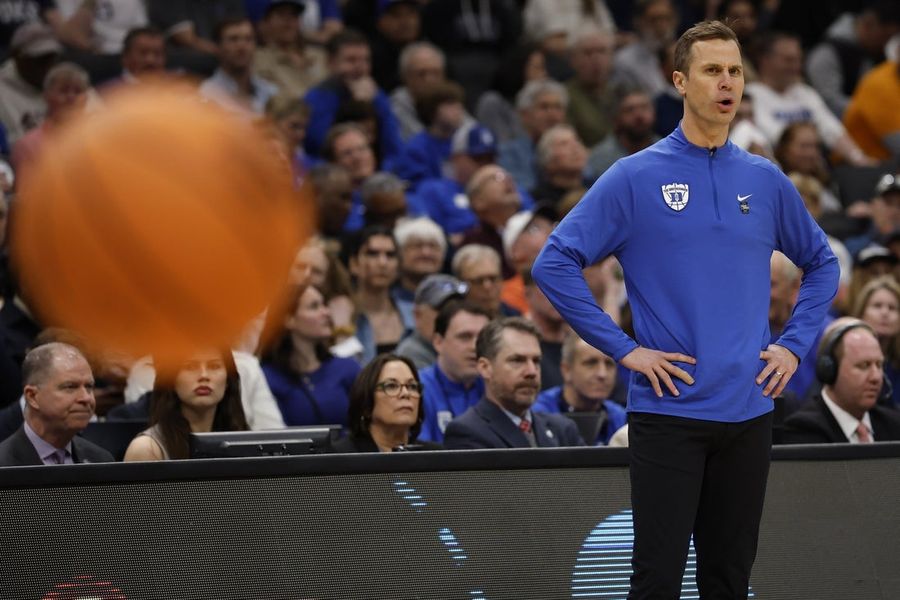
Deadspin | Duke early title favorite at 2027 Final Four in Detroit  Duke and head coach Jon Scheyer are the favorites to win it all in 2027. Mandatory Credit: Geoff Burke-Imagn Images   INDIANAPOLIS — A national championship game and Final Four replete with transfer and freshman-filled rosters opens the door for plenty of surprises before the 2027 Final Four tips off in Detroit next April.  Michigan restocked on the fly with transfers Yaxel Lendeborg (UAB), Elliot Cadeau (North Carolina), Morez Johnson Jr. (Illinois) and Aday Mara (UCLA) driving the Wolverines to an eighth national championship game appearance. Michigan also lured transfers in Nimari Burnett (Alabama, Texas Tech), Roddy Gayle Jr. (Ohio State) who played significant roles for the 2025-26 Wolverines.   Most Wolverines teammates thought he was crazy when Will Tschetter sent a group chat to tell teammates he had arranged to shoot at Michigan Stadium to prepare for the infamous cavernous backdrops at the Final Four. If Michigan can book a return trip to the 2027 Final Four, they might also be able to get a couple shots 42 minutes down the road in Detroit beforehand.  As the 2026 edition wraps, Michigan (+800) follows only Duke — +700 at FanDuel — in oddsmakers early projections for the next Final Four.  Lendeborg is a graduate student but the Wolverines are proven capable of competing at the championship level and head coach Dusty May has now been to a Final Four with two programs (FAU).   Free agency — well, the transfer portal — in college basketball isn’t going away, which means programs’ expectations and bookmaker projections carry a higher level of volatility.   Duke is expected to lose National Player of the Year Cam Boozer to the draft but has another stellar incoming recruiting class one year after on-and-done Cooper Flagg took the Blue Devils to the Final Four.    Arizona’s top freshmen, Koa Peat and Brayden Burries, are not locks to return and Big 12 Player of the Year Jaden Bradley is not easy to replace. But the Wildcats are third on the 2027 national title board at +1200 followed by 2025 national champion Florida (+1300) and 2025 runner-up Houston (+1400).   Michigan State coach Tom Izzo expects the core of his roster to remain intact. That has the Spartans at +1500 narrowly ahead of UConn and Kansas (+1600).  Maybe you aren’t quite ready to embrace the turnstile nature of roster-building in college basketball, but Michigan embraced the name tags required approach and put together an almost unbeatable team.   “The way we choose to look at it, we’re going to bring in really, really good guys that are high achievers, that want to do it the way we want to do it,” May said.  “And when the Oklahoma City Thunder won the championship last year and I’m friends with Coach (Mark) Daigneault and a lot of people in that organization. I wasn’t judging them because Shai Alexander was drafted by the Clippers or because they signed Isaiah Hartenstein as a free agent. I thought, “Wow, those guys played beautiful basketball, that’s a great team, that’s a real model for young players to watch, a group that obviously cared about each other, that played the game the right way, that represented their organization, their city, their families, their last name.’  “Whatever the rules are, we’re going to go at it, but our job is to put a competitive roster/team on the floor that represents Michigan the way we think they deserve to be represented.”  –Jeff Reynolds, Field Level Media    #Deadspin #Duke #early #title #favorite #Final #DetroitDuke and head coach Jon Scheyer are the favorites to win it all in 2027. Mandatory Credit: Geoff Burke-Imagn Images

INDIANAPOLIS — A national championship game and Final Four replete with transfer and freshman-filled rosters opens the door for plenty of surprises before the 2027 Final Four tips off in Detroit next April.

Michigan restocked on the fly with transfers Yaxel Lendeborg (UAB), Elliot Cadeau (North Carolina), Morez Johnson Jr. (Illinois) and Aday Mara (UCLA) driving the Wolverines to an eighth national championship game appearance. Michigan also lured transfers in Nimari Burnett (Alabama, Texas Tech), Roddy Gayle Jr. (Ohio State) who played significant roles for the 2025-26 Wolverines.

Most Wolverines teammates thought he was crazy when Will Tschetter sent a group chat to tell teammates he had arranged to shoot at Michigan Stadium to prepare for the infamous cavernous backdrops at the Final Four. If Michigan can book a return trip to the 2027 Final Four, they might also be able to get a couple shots 42 minutes down the road in Detroit beforehand.

As the 2026 edition wraps, Michigan (+800) follows only Duke — +700 at FanDuel — in oddsmakers early projections for the next Final Four.

Lendeborg is a graduate student but the Wolverines are proven capable of competing at the championship level and head coach Dusty May has now been to a Final Four with two programs (FAU).

Free agency — well, the transfer portal — in college basketball isn’t going away, which means programs’ expectations and bookmaker projections carry a higher level of volatility.


Duke is expected to lose National Player of the Year Cam Boozer to the draft but has another stellar incoming recruiting class one year after on-and-done Cooper Flagg took the Blue Devils to the Final Four.

Arizona’s top freshmen, Koa Peat and Brayden Burries, are not locks to return and Big 12 Player of the Year Jaden Bradley is not easy to replace. But the Wildcats are third on the 2027 national title board at +1200 followed by 2025 national champion Florida (+1300) and 2025 runner-up Houston (+1400).

Michigan State coach Tom Izzo expects the core of his roster to remain intact. That has the Spartans at +1500 narrowly ahead of UConn and Kansas (+1600).

Maybe you aren’t quite ready to embrace the turnstile nature of roster-building in college basketball, but Michigan embraced the name tags required approach and put together an almost unbeatable team.

“The way we choose to look at it, we’re going to bring in really, really good guys that are high achievers, that want to do it the way we want to do it,” May said.

“And when the Oklahoma City Thunder won the championship last year and I’m friends with Coach (Mark) Daigneault and a lot of people in that organization. I wasn’t judging them because Shai Alexander was drafted by the Clippers or because they signed Isaiah Hartenstein as a free agent. I thought, “Wow, those guys played beautiful basketball, that’s a great team, that’s a real model for young players to watch, a group that obviously cared about each other, that played the game the right way, that represented their organization, their city, their families, their last name.’

“Whatever the rules are, we’re going to go at it, but our job is to put a competitive roster/team on the floor that represents Michigan the way we think they deserve to be represented.”


–Jeff Reynolds, Field Level Media

#Deadspin #Duke #early #title #favorite #Final #Detroit">Deadspin | Duke early title favorite at 2027 Final Four in Detroit  Duke and head coach Jon Scheyer are the favorites to win it all in 2027. Mandatory Credit: Geoff Burke-Imagn Images   INDIANAPOLIS — A national championship game and Final Four replete with transfer and freshman-filled rosters opens the door for plenty of surprises before the 2027 Final Four tips off in Detroit next April.  Michigan restocked on the fly with transfers Yaxel Lendeborg (UAB), Elliot Cadeau (North Carolina), Morez Johnson Jr. (Illinois) and Aday Mara (UCLA) driving the Wolverines to an eighth national championship game appearance. Michigan also lured transfers in Nimari Burnett (Alabama, Texas Tech), Roddy Gayle Jr. (Ohio State) who played significant roles for the 2025-26 Wolverines.   Most Wolverines teammates thought he was crazy when Will Tschetter sent a group chat to tell teammates he had arranged to shoot at Michigan Stadium to prepare for the infamous cavernous backdrops at the Final Four. If Michigan can book a return trip to the 2027 Final Four, they might also be able to get a couple shots 42 minutes down the road in Detroit beforehand.  As the 2026 edition wraps, Michigan (+800) follows only Duke — +700 at FanDuel — in oddsmakers early projections for the next Final Four.  Lendeborg is a graduate student but the Wolverines are proven capable of competing at the championship level and head coach Dusty May has now been to a Final Four with two programs (FAU).   Free agency — well, the transfer portal — in college basketball isn’t going away, which means programs’ expectations and bookmaker projections carry a higher level of volatility.   Duke is expected to lose National Player of the Year Cam Boozer to the draft but has another stellar incoming recruiting class one year after on-and-done Cooper Flagg took the Blue Devils to the Final Four.    Arizona’s top freshmen, Koa Peat and Brayden Burries, are not locks to return and Big 12 Player of the Year Jaden Bradley is not easy to replace. But the Wildcats are third on the 2027 national title board at +1200 followed by 2025 national champion Florida (+1300) and 2025 runner-up Houston (+1400).   Michigan State coach Tom Izzo expects the core of his roster to remain intact. That has the Spartans at +1500 narrowly ahead of UConn and Kansas (+1600).  Maybe you aren’t quite ready to embrace the turnstile nature of roster-building in college basketball, but Michigan embraced the name tags required approach and put together an almost unbeatable team.   “The way we choose to look at it, we’re going to bring in really, really good guys that are high achievers, that want to do it the way we want to do it,” May said.  “And when the Oklahoma City Thunder won the championship last year and I’m friends with Coach (Mark) Daigneault and a lot of people in that organization. I wasn’t judging them because Shai Alexander was drafted by the Clippers or because they signed Isaiah Hartenstein as a free agent. I thought, “Wow, those guys played beautiful basketball, that’s a great team, that’s a real model for young players to watch, a group that obviously cared about each other, that played the game the right way, that represented their organization, their city, their families, their last name.’  “Whatever the rules are, we’re going to go at it, but our job is to put a competitive roster/team on the floor that represents Michigan the way we think they deserve to be represented.”  –Jeff Reynolds, Field Level Media    #Deadspin #Duke #early #title #favorite #Final #Detroit

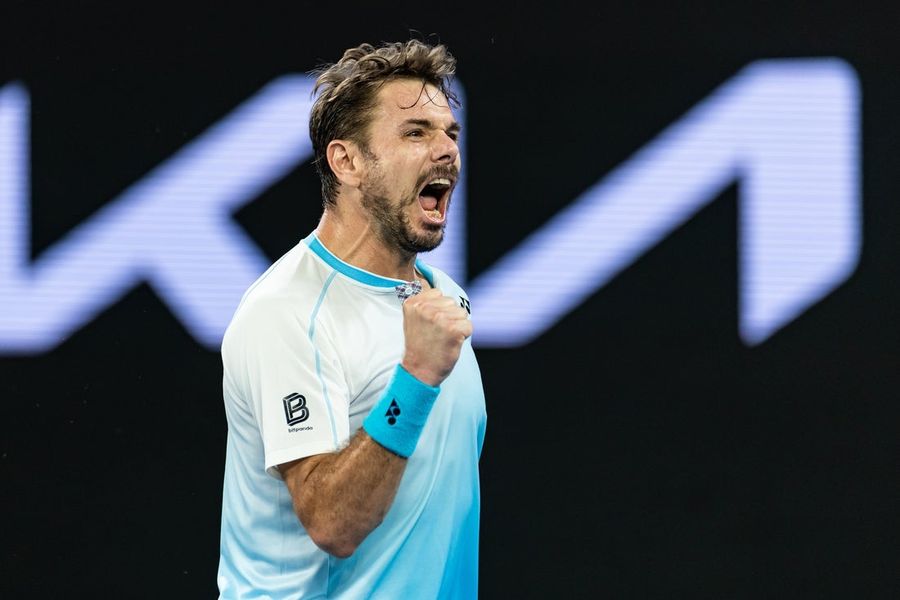
Deadspin | Stan Wawrinka bows out and says farewell to Monte Carlo  Jan 24, 2026; Melbourne, Victoria, Australia; Stan Wawrinka of Switzerland in action against Taylor Fritz of United States in the third round of the menís singles at the Australian Open at John Cain Arena in Melbourne Park. Mandatory Credit: Mike Frey-Imagn Images   At 41 years old, three-time major champion Stan Wawrinka is not interested in going on a ceremonial farewell tour.  As he demonstrated at the 2026 Australian Open, when he became the oldest man since 1978 to reach the third round, the second-ranked Swiss player of all-time is going to fight until the last point is won or lost.  On Monday, he lost a 7-5, 7-5 decision to Argentine Sebastian Baez in the Monte Carlo Masters and bid farewell to Monaco. He will retire at the end of the 2026 ATP season.  Wawrinka won his only ATP 1000 title over countryman Roger Federer on the clay in Monaco a dozen years ago.  “Of course these days and weeks are really, really difficult, but in the end it’s worth it,” Wawrinka said after the setback. “I’m passionate about the sport. I love what I do. I know it’s my last year trying to do the best I can. Hopefully I can win a few matches this year to enjoy that feeling of winning.  “I managed at one point in my career to really reach the maximum I could by winning for four years, winning Grand Slams, winning Masters 1000s, winning other tournaments. But in the end, for me, it’s the love of the game and the passion that allowed me to do that every day consistently and have a goal.”   Wawrinka got out to a 4-1 first-set lead, but dropped two of his next three service games and the opening set. He fell behind 5-1 in the second set, but, in typical fashion, did not give up, breaking Baez twice to even the proceedings. But the Argentine countered with a break and wrapped up the match on his serve.  Four of the five seeded players in action on Monday advanced to the second round. Only 12th-seeded Russian Karen Khachanov fell, dropping a 7-5, 6-2 decision to France’s Arthur Rinderknech.  Tenth-seeded Flavio Cobolli of Italy outlasted Argentine Francisco Comesana, 7-5, 2-6, 6-3; No. 11 Jiri Lehecka of the Czech Republic got past Emilio Nava, 7-6 (1), 6-7 (8), 6-2; No. 13 Russian Andrey Rublev edged Portugal’s Nuno Borges, 6-4, 1-6, 6-1 and 16th-seeded Argentine Francisco Cerundolo knocked off Greece’s Stefanos Tsitsipas, 7-5, 6-4.  In other first round matches, Belgium’s Zizou Bergs defeated France’s Adrian Mannarino, 6-4, 6-3; Chile’s Cristian Garin overwhelmed Italy’s Matteo Arnaldi, 6-2, 6-4; Tomas Machac of the Czech Republic prevailed over Germany’s Daniel Altmaier, 6-4, 1-6, 6-3, qualifier Alexander Blockx of Belgium upset Canada’s Denis Shapavalov, 6-4, 4-6, 6-3; Brazilian phenom Joao Fonseca dismissed Canada’s Gabriel Diallo, 6-2, 6-3 and Poland’s Valentin Vacherot rallied past Argentina’s Juan Manuel Cerundolo, 5-7, 6-2, 6-1.  –Field Level Media   #Deadspin #Stan #Wawrinka #bows #farewell #Monte #CarloJan 24, 2026; Melbourne, Victoria, Australia; Stan Wawrinka of Switzerland in action against Taylor Fritz of United States in the third round of the menís singles at the Australian Open at John Cain Arena in Melbourne Park. Mandatory Credit: Mike Frey-Imagn Images

At 41 years old, three-time major champion Stan Wawrinka is not interested in going on a ceremonial farewell tour.

As he demonstrated at the 2026 Australian Open, when he became the oldest man since 1978 to reach the third round, the second-ranked Swiss player of all-time is going to fight until the last point is won or lost.

On Monday, he lost a 7-5, 7-5 decision to Argentine Sebastian Baez in the Monte Carlo Masters and bid farewell to Monaco. He will retire at the end of the 2026 ATP season.

Wawrinka won his only ATP 1000 title over countryman Roger Federer on the clay in Monaco a dozen years ago.

“Of course these days and weeks are really, really difficult, but in the end it’s worth it,” Wawrinka said after the setback. “I’m passionate about the sport. I love what I do. I know it’s my last year trying to do the best I can. Hopefully I can win a few matches this year to enjoy that feeling of winning.


“I managed at one point in my career to really reach the maximum I could by winning for four years, winning Grand Slams, winning Masters 1000s, winning other tournaments. But in the end, for me, it’s the love of the game and the passion that allowed me to do that every day consistently and have a goal.”

Wawrinka got out to a 4-1 first-set lead, but dropped two of his next three service games and the opening set. He fell behind 5-1 in the second set, but, in typical fashion, did not give up, breaking Baez twice to even the proceedings. But the Argentine countered with a break and wrapped up the match on his serve.

Four of the five seeded players in action on Monday advanced to the second round. Only 12th-seeded Russian Karen Khachanov fell, dropping a 7-5, 6-2 decision to France’s Arthur Rinderknech.

Tenth-seeded Flavio Cobolli of Italy outlasted Argentine Francisco Comesana, 7-5, 2-6, 6-3; No. 11 Jiri Lehecka of the Czech Republic got past Emilio Nava, 7-6 (1), 6-7 (8), 6-2; No. 13 Russian Andrey Rublev edged Portugal’s Nuno Borges, 6-4, 1-6, 6-1 and 16th-seeded Argentine Francisco Cerundolo knocked off Greece’s Stefanos Tsitsipas, 7-5, 6-4.

In other first round matches, Belgium’s Zizou Bergs defeated France’s Adrian Mannarino, 6-4, 6-3; Chile’s Cristian Garin overwhelmed Italy’s Matteo Arnaldi, 6-2, 6-4; Tomas Machac of the Czech Republic prevailed over Germany’s Daniel Altmaier, 6-4, 1-6, 6-3, qualifier Alexander Blockx of Belgium upset Canada’s Denis Shapavalov, 6-4, 4-6, 6-3; Brazilian phenom Joao Fonseca dismissed Canada’s Gabriel Diallo, 6-2, 6-3 and Poland’s Valentin Vacherot rallied past Argentina’s Juan Manuel Cerundolo, 5-7, 6-2, 6-1.

–Field Level Media

#Deadspin #Stan #Wawrinka #bows #farewell #Monte #Carlo">Deadspin | Stan Wawrinka bows out and says farewell to Monte Carlo  Jan 24, 2026; Melbourne, Victoria, Australia; Stan Wawrinka of Switzerland in action against Taylor Fritz of United States in the third round of the menís singles at the Australian Open at John Cain Arena in Melbourne Park. Mandatory Credit: Mike Frey-Imagn Images   At 41 years old, three-time major champion Stan Wawrinka is not interested in going on a ceremonial farewell tour.  As he demonstrated at the 2026 Australian Open, when he became the oldest man since 1978 to reach the third round, the second-ranked Swiss player of all-time is going to fight until the last point is won or lost.  On Monday, he lost a 7-5, 7-5 decision to Argentine Sebastian Baez in the Monte Carlo Masters and bid farewell to Monaco. He will retire at the end of the 2026 ATP season.  Wawrinka won his only ATP 1000 title over countryman Roger Federer on the clay in Monaco a dozen years ago.  “Of course these days and weeks are really, really difficult, but in the end it’s worth it,” Wawrinka said after the setback. “I’m passionate about the sport. I love what I do. I know it’s my last year trying to do the best I can. Hopefully I can win a few matches this year to enjoy that feeling of winning.  “I managed at one point in my career to really reach the maximum I could by winning for four years, winning Grand Slams, winning Masters 1000s, winning other tournaments. But in the end, for me, it’s the love of the game and the passion that allowed me to do that every day consistently and have a goal.”   Wawrinka got out to a 4-1 first-set lead, but dropped two of his next three service games and the opening set. He fell behind 5-1 in the second set, but, in typical fashion, did not give up, breaking Baez twice to even the proceedings. But the Argentine countered with a break and wrapped up the match on his serve.  Four of the five seeded players in action on Monday advanced to the second round. Only 12th-seeded Russian Karen Khachanov fell, dropping a 7-5, 6-2 decision to France’s Arthur Rinderknech.  Tenth-seeded Flavio Cobolli of Italy outlasted Argentine Francisco Comesana, 7-5, 2-6, 6-3; No. 11 Jiri Lehecka of the Czech Republic got past Emilio Nava, 7-6 (1), 6-7 (8), 6-2; No. 13 Russian Andrey Rublev edged Portugal’s Nuno Borges, 6-4, 1-6, 6-1 and 16th-seeded Argentine Francisco Cerundolo knocked off Greece’s Stefanos Tsitsipas, 7-5, 6-4.  In other first round matches, Belgium’s Zizou Bergs defeated France’s Adrian Mannarino, 6-4, 6-3; Chile’s Cristian Garin overwhelmed Italy’s Matteo Arnaldi, 6-2, 6-4; Tomas Machac of the Czech Republic prevailed over Germany’s Daniel Altmaier, 6-4, 1-6, 6-3, qualifier Alexander Blockx of Belgium upset Canada’s Denis Shapavalov, 6-4, 4-6, 6-3; Brazilian phenom Joao Fonseca dismissed Canada’s Gabriel Diallo, 6-2, 6-3 and Poland’s Valentin Vacherot rallied past Argentina’s Juan Manuel Cerundolo, 5-7, 6-2, 6-1.  –Field Level Media   #Deadspin #Stan #Wawrinka #bows #farewell #Monte #Carlo

Post Comment