Let’s re-draft the 2021 NFL Draft after 5 years
JACKSONVILLE, FLORIDA – JANUARY 11: Trevor Lawrence #16 of the Jacksonville Jaguars runs out prior to the AFC Wild Card Playoff game between the Jacksonville Jaguars and the Buffalo Bills at EverBank Stadium on January 11, 2026 in Jacksonville, Florida. (Photo by Mike Carlson/Getty Images) | Getty Images
Five years is plenty of time to evaluate a draft class, and hoo boy is there a lot of room to correct what happened in 2021. It was a year of desperate quarterback reaches, mammoth busts at a variety of positions, and a plethora of teams that simply screwed up the process — but also gave us some of the best talent in all of the NFL.
Now’s our chance to right the wrongs of the past and re-draft the first round from 2021.
Pick
Team
Original Pick
Position
New Pick
Position
1
Jacksonville Jaguars
Trevor Lawrence
QB
Trevor Lawrence
QB
2
New York Jets
Zach Wilson
QB
Micah Parsons
EDGE
3
San Francisco 49ers
Trey Lance
QB
Patrick Surtain II
CB
4
Atlanta Falcons
Kyle Pitts
TE
Ja’Marr Chase
WR
5
Cincinnati Bengals
Ja’Marr Chase
WR
Penei Sewell
OT
6
Miami Dolphins
Jaylen Waddle
WR
Amon-Ra St. Brown
WR
7
Detroit Lions
Penei Sewell
OT
Jaylen Waddle
WR
8
Carolina Panthers
Jaycee Horn
CB
Landon Dickerson
OT
9
Denver Broncos
Patrick Surtain II
CB
Jaelan Phillips
EDGE
10
Philadelphia Eagles
DeVonta Smith
WR
Trey Smith
OL
11
Chicago Bears
Justin Fields
QB
Rashawn Slater
OT
12
Dallas Cowboys
Micah Parsons
EDGE
Travis Etienne
RB
13
Los Angeles Chargers
Rashawn Slater
OT
Creed Humphrey
OL
14
New York Jets
Alijah Vera-Tucker
OL
Spencer Brown
OL
15
New England Patriots
Mac Jones
QB
Gregory Rousseau
EDGE
16
Arizona Cardinals
Zaven Collins
LB
Kwity Paye
EDGE
17
Las Vegas Raiders
Alex Leatherwood
OT
Nico Collins
WR
18
Miami Dolphins
Jaelan Phillips
EDGE
Jonathon Cooper
EDGE
19
Washington Commanders
Jamin Davis
LB
Nick Bolton
LB
20
New York Giants
Kadarius Toney
WR
Kyle Pitts
TE
21
Indianapolis Colts
Kwity Paye
EDGE
Azeez Ojulari
LB
22
Tennessee Titans
Caleb Farley
CB
Jaycee Horn
CB
23
Minnesota Vikings
Christian Darrisaw
OT
Christian Darrisaw
OT
24
Pittsburgh Steelers
Najee Harris
RB
Najee Harris
RB
25
Jacksonville Jaguars
Trevor Etienne
RB
Chuba Hubbard
RB
26
Cleveland Browns
Greg Newsome II
CB
Pete Werner
LB
27
Baltimore Ravens
Rashod Bateman
WR
Quinn Meinerz
CB
28
New Orleans Saints
Payton Turner
EDGE
Dan Moore
OL
29
Green Bay Packers
Eric Stokes
CB
Rhamondre Stevenson
RB
30
Buffalo Bills
Gregory Rousseau
EDGE
Talanoa Hufanga
S
31
Balitmore Ravens
Odafe Oweh
EDGE
Christian Barmore
DT
32
Tampa Bay Buccaneers
Joe Tryon-Shoyinka
LB
Odafe Oweh
EDGE
We went from four first round quarterbacks to one. Regardless of how great the other players in this class were, I still think the Jaguars go with Lawrence here to find their franchise QB.
In total we had 15 players fall out of the first round who were originally first round picks.
The biggest riser in the 2021 class was OL Trey Smith, who moves from pick No. 226 to No. 10.
The biggest conceivable fall in the redraft would be OL Alex Leatherwood, who was the No. 17 pick, but out of the NFL in two years. He would fall to UDFA.
JACKSONVILLE, FLORIDA – JANUARY 11: Trevor Lawrence #16 of the Jacksonville Jaguars runs out prior to the AFC Wild Card Playoff game between the Jacksonville Jaguars and the Buffalo Bills at EverBank Stadium on January 11, 2026 in Jacksonville, Florida. (Photo by Mike Carlson/Getty Images) | Getty Images
Five years is plenty of time to evaluate a draft class, and hoo boy is there a lot of room to correct what happened in 2021. It was a year of desperate quarterback reaches, mammoth busts at a variety of positions, and a plethora of teams that simply screwed up the process — but also gave us some of the best talent in all of the NFL.
Now’s our chance to right the wrongs of the past and re-draft the first round from 2021.
Pick
Team
Original Pick
Position
New Pick
Position
1
Jacksonville Jaguars
Trevor Lawrence
QB
Trevor Lawrence
QB
2
New York Jets
Zach Wilson
QB
Micah Parsons
EDGE
3
San Francisco 49ers
Trey Lance
QB
Patrick Surtain II
CB
4
Atlanta Falcons
Kyle Pitts
TE
Ja’Marr Chase
WR
5
Cincinnati Bengals
Ja’Marr Chase
WR
Penei Sewell
OT
6
Miami Dolphins
Jaylen Waddle
WR
Amon-Ra St. Brown
WR
7
Detroit Lions
Penei Sewell
OT
Jaylen Waddle
WR
8
Carolina Panthers
Jaycee Horn
CB
Landon Dickerson
OT
9
Denver Broncos
Patrick Surtain II
CB
Jaelan Phillips
EDGE
10
Philadelphia Eagles
DeVonta Smith
WR
Trey Smith
OL
11
Chicago Bears
Justin Fields
QB
Rashawn Slater
OT
12
Dallas Cowboys
Micah Parsons
EDGE
Travis Etienne
RB
13
Los Angeles Chargers
Rashawn Slater
OT
Creed Humphrey
OL
14
New York Jets
Alijah Vera-Tucker
OL
Spencer Brown
OL
15
New England Patriots
Mac Jones
QB
Gregory Rousseau
EDGE
16
Arizona Cardinals
Zaven Collins
LB
Kwity Paye
EDGE
17
Las Vegas Raiders
Alex Leatherwood
OT
Nico Collins
WR
18
Miami Dolphins
Jaelan Phillips
EDGE
Jonathon Cooper
EDGE
19
Washington Commanders
Jamin Davis
LB
Nick Bolton
LB
20
New York Giants
Kadarius Toney
WR
Kyle Pitts
TE
21
Indianapolis Colts
Kwity Paye
EDGE
Azeez Ojulari
LB
22
Tennessee Titans
Caleb Farley
CB
Jaycee Horn
CB
23
Minnesota Vikings
Christian Darrisaw
OT
Christian Darrisaw
OT
24
Pittsburgh Steelers
Najee Harris
RB
Najee Harris
RB
25
Jacksonville Jaguars
Trevor Etienne
RB
Chuba Hubbard
RB
26
Cleveland Browns
Greg Newsome II
CB
Pete Werner
LB
27
Baltimore Ravens
Rashod Bateman
WR
Quinn Meinerz
CB
28
New Orleans Saints
Payton Turner
EDGE
Dan Moore
OL
29
Green Bay Packers
Eric Stokes
CB
Rhamondre Stevenson
RB
30
Buffalo Bills
Gregory Rousseau
EDGE
Talanoa Hufanga
S
31
Balitmore Ravens
Odafe Oweh
EDGE
Christian Barmore
DT
32
Tampa Bay Buccaneers
Joe Tryon-Shoyinka
LB
Odafe Oweh
EDGE
We went from four first round quarterbacks to one. Regardless of how great the other players in this class were, I still think the Jaguars go with Lawrence here to find their franchise QB.
In total we had 15 players fall out of the first round who were originally first round picks.
The biggest riser in the 2021 class was OL Trey Smith, who moves from pick No. 226 to No. 10.
The biggest conceivable fall in the redraft would be OL Alex Leatherwood, who was the No. 17 pick, but out of the NFL in two years. He would fall to UDFA.
The Drew Brees story takes its next step in Ohio on Saturday with his induction into the Pro Football Hall of Fame. Brees’s story is one of overcoming, and overcoming on his way to great success.
While “everything is bigger in Texas,” Brees’s home state, that wasn’t true of the soon-to-be gold jacket wearer, who stood at just six feet tall and just over 200 pounds in a time when quarterbacks were always 6’3” or taller with more girth. In a state where football is closer to a religion than a sport, in high school, Brees once thought about quitting football and focusing on baseball as his path forward.
Instead of giving up the sport, an injury to the starting quarterback led him to high levels of success before another hurdle: a torn ACL and MCL late in his junior season. Brees was able to return for his senior season, winning a state title and the biggest awards, but his size and injury led him to be recruited by just two schools, Purdue and Kentucky, despite all of his success.
Not exactly college football powerhouses, but even that was fitting for the Brees story.
Brees chose the Boilermakers as a part of Joe Tiller’s first recruiting class in 1997. Heading into that season, Purdue had 12 straight seasons of losing records. Not only losing records, but only one of those years did the Boilermakers win at least five games. During Brees’ four-year tenure, three as the full-time starter, Purdue strung together four straight winning seasons, with four bowl game appearances, including two Alamo Bowl victories and a Rose Bowl appearance.
In a different era than we see today, Brees was lighting up the box score in the Big 10 like a pinball machine. In three years as the starter, Brees completed over 60% of his passes (leading the conference twice), while throwing for over 3,300 yards each year (leading the conference all three seasons). Tossing (a lot) of touchdown passes to guys named Vinny Sutherland, John Standeford, Chris Daniels, Tim Stratton, and Isaac Jones, Brees was the engine that made things work at Purdue.
Unknown date 1998; West Layfayette, IN, USA; FILE PHOTO; Purdue Boilermakers quarterback Drew Brees (15) in action against Central Florida at Ross-Ade Stadium. Mandatory Credit: Photo By USA TODAY Sports IMAGN IMAGES via Reuters Connect
Despite his unusually small size for the position, Brees’ success led him to the then-San Diego Chargers, being selected with the top pick in the second round of the 2001 NFL draft.
While some fans only remember Brees as a part of the New Orleans Saints franchise, his four years as a starter in five seasons in San Diego saw a lot of success. After an 8-8 record in his first year as a starter, Brees led the Chargers to two winning seasons in his final three, throwing for over 12,000 yards as a part of the San Diego franchise.
In those four years, Brees proved that he could overcome his limited height and size to become a successful NFL quarterback. Then, in the 2005 regular season finale, this play led to a dislocated shoulder, a 360-degree tear of his labrum, and the most shoulder anchors ever used in a surgery at that time.
With another obstacle to overcome, Brees entered NFL free agency after having his throwing shoulder put back together with a major surgery. Much like his college recruitment, despite a proven track record, Brees was back to having only a few options for where to play.
Infamously, at least down in South Florida, the Miami Dolphins backed away from their pursuit of Brees due to their concerns about his shoulder’s health. That is when the Saints swooped in, with the backdrop of the devastation of Hurricane Katrina, to recruit Brees to help lift their downtrodden franchise in the same way he did Purdue.
The Saints’ 2006 return to New Orleans and Brees’ first home game for his new team, after playing away from the city the previous year, was an emotional one for everyone.
The rest, as they say, is history. Impressive history, at that.
As Brees did with the Boilermakers, the Saints started winning football games with a league-leading quarterback. Brees led the NFL in completions, completion percentage, passing yards, and passing touchdowns in multiple seasons. New Orleans had seven seasons of double-digit wins, multiple playoff appearances, and, of course, the 2009 Super Bowl championship.
MIAMI GARDENS, FL – FEBRUARY 07: Drew Brees #9 of the New Orleans Saints holds up the Vince Lombardi Trophy on the podium as head coach Sean Payton looks on after defeating the Indianapolis Colts in Super Bowl XLIV on February 7, 2010 at Sun Life Stadium in Miami Gardens, Florida. (Photo by Rob Tringali/Sportschrome/Getty Images) Getty Images
Now, in the birthplace of football, Brees enters the Hall of Fame. Overcoming major injuries, his limited size, being lightly recruited, having to lift struggling teams on his shoulders (one that he now cannot even use to throw a football), and helping the City of New Orleans move forward after the devastation of Katrina, Brees cannot help but get emotional when he looks back.
In an event in Canton, Ohio, the day before he is to be enshrined, Brees talked at a Raising Cane’s restaurant about his emotions as he looks back at his career:
Brees noted to those in attendance that he’s cried no less than 50 times while writing his Hall of Fame speech, one that he promises will go longer than his allotted time. Brees started to tear up as he talked about some of the different people he would be mentioning in his speech.
Showing off his impressive memory as well as his emotional connection to his career, Brees was asked about a favorite play that he remembers well. Brees said he remembers them all. Brees then shared what one of those plays would sound like when he called it in the huddle:
Did you get all of that? Me neither.
While Brees’ story has been one of overcoming, his former head coach, Sean Payton, saw greatness in the future for a Saints team that didn’t have a lot of it. Talking about playing in the Hall of Fame game in 2007, Brees recounted Payton’s message to the team and promise of more gold jackets for players on a team whose primary color is gold:
Despite the shoulder surgery, Brees, along with fellow greats like Tom Brady and Aaron Rodgers, was able to compete at a high level into his 40s. While trying to patiently wait to eat some of the Cane’s chicken in front of him, Brees noted how experience was such an advantage and recounted how he’s told Los Angeles Rams QB Matthew Stafford that his best years could still be in front of him:
On Saturday, Brees enters the Hall of Football Immortals in Canton. Beyond that, Brees is still around football as a commentator and coaching his kids on the game. While overcoming obstacles has been a big part of the Brees story, perhaps he’s ready for a smooth ride for a bit. Given his history, if obstacles do pop up, we’d bet on Brees to take them on with all he has.
As for Saturday, we can expect tears and maybe lots of them:
The Drew Brees story takes its next step in Ohio on Saturday with his induction into the Pro Football Hall of Fame. Brees’s story is one of overcoming, and overcoming on his way to great success.
While “everything is bigger in Texas,” Brees’s home state, that wasn’t true of the soon-to-be gold jacket wearer, who stood at just six feet tall and just over 200 pounds in a time when quarterbacks were always 6’3” or taller with more girth. In a state where football is closer to a religion than a sport, in high school, Brees once thought about quitting football and focusing on baseball as his path forward.
Instead of giving up the sport, an injury to the starting quarterback led him to high levels of success before another hurdle: a torn ACL and MCL late in his junior season. Brees was able to return for his senior season, winning a state title and the biggest awards, but his size and injury led him to be recruited by just two schools, Purdue and Kentucky, despite all of his success.
Not exactly college football powerhouses, but even that was fitting for the Brees story.
Brees chose the Boilermakers as a part of Joe Tiller’s first recruiting class in 1997. Heading into that season, Purdue had 12 straight seasons of losing records. Not only losing records, but only one of those years did the Boilermakers win at least five games. During Brees’ four-year tenure, three as the full-time starter, Purdue strung together four straight winning seasons, with four bowl game appearances, including two Alamo Bowl victories and a Rose Bowl appearance.
In a different era than we see today, Brees was lighting up the box score in the Big 10 like a pinball machine. In three years as the starter, Brees completed over 60% of his passes (leading the conference twice), while throwing for over 3,300 yards each year (leading the conference all three seasons). Tossing (a lot) of touchdown passes to guys named Vinny Sutherland, John Standeford, Chris Daniels, Tim Stratton, and Isaac Jones, Brees was the engine that made things work at Purdue.
Unknown date 1998; West Layfayette, IN, USA; FILE PHOTO; Purdue Boilermakers quarterback Drew Brees (15) in action against Central Florida at Ross-Ade Stadium. Mandatory Credit: Photo By USA TODAY Sports IMAGN IMAGES via Reuters Connect
Despite his unusually small size for the position, Brees’ success led him to the then-San Diego Chargers, being selected with the top pick in the second round of the 2001 NFL draft.
While some fans only remember Brees as a part of the New Orleans Saints franchise, his four years as a starter in five seasons in San Diego saw a lot of success. After an 8-8 record in his first year as a starter, Brees led the Chargers to two winning seasons in his final three, throwing for over 12,000 yards as a part of the San Diego franchise.
In those four years, Brees proved that he could overcome his limited height and size to become a successful NFL quarterback. Then, in the 2005 regular season finale, this play led to a dislocated shoulder, a 360-degree tear of his labrum, and the most shoulder anchors ever used in a surgery at that time.
With another obstacle to overcome, Brees entered NFL free agency after having his throwing shoulder put back together with a major surgery. Much like his college recruitment, despite a proven track record, Brees was back to having only a few options for where to play.
Infamously, at least down in South Florida, the Miami Dolphins backed away from their pursuit of Brees due to their concerns about his shoulder’s health. That is when the Saints swooped in, with the backdrop of the devastation of Hurricane Katrina, to recruit Brees to help lift their downtrodden franchise in the same way he did Purdue.
The Saints’ 2006 return to New Orleans and Brees’ first home game for his new team, after playing away from the city the previous year, was an emotional one for everyone.
The rest, as they say, is history. Impressive history, at that.
As Brees did with the Boilermakers, the Saints started winning football games with a league-leading quarterback. Brees led the NFL in completions, completion percentage, passing yards, and passing touchdowns in multiple seasons. New Orleans had seven seasons of double-digit wins, multiple playoff appearances, and, of course, the 2009 Super Bowl championship.
MIAMI GARDENS, FL – FEBRUARY 07: Drew Brees #9 of the New Orleans Saints holds up the Vince Lombardi Trophy on the podium as head coach Sean Payton looks on after defeating the Indianapolis Colts in Super Bowl XLIV on February 7, 2010 at Sun Life Stadium in Miami Gardens, Florida. (Photo by Rob Tringali/Sportschrome/Getty Images) Getty Images
Now, in the birthplace of football, Brees enters the Hall of Fame. Overcoming major injuries, his limited size, being lightly recruited, having to lift struggling teams on his shoulders (one that he now cannot even use to throw a football), and helping the City of New Orleans move forward after the devastation of Katrina, Brees cannot help but get emotional when he looks back.
In an event in Canton, Ohio, the day before he is to be enshrined, Brees talked at a Raising Cane’s restaurant about his emotions as he looks back at his career:
Brees noted to those in attendance that he’s cried no less than 50 times while writing his Hall of Fame speech, one that he promises will go longer than his allotted time. Brees started to tear up as he talked about some of the different people he would be mentioning in his speech.
Showing off his impressive memory as well as his emotional connection to his career, Brees was asked about a favorite play that he remembers well. Brees said he remembers them all. Brees then shared what one of those plays would sound like when he called it in the huddle:
Did you get all of that? Me neither.
While Brees’ story has been one of overcoming, his former head coach, Sean Payton, saw greatness in the future for a Saints team that didn’t have a lot of it. Talking about playing in the Hall of Fame game in 2007, Brees recounted Payton’s message to the team and promise of more gold jackets for players on a team whose primary color is gold:
Despite the shoulder surgery, Brees, along with fellow greats like Tom Brady and Aaron Rodgers, was able to compete at a high level into his 40s. While trying to patiently wait to eat some of the Cane’s chicken in front of him, Brees noted how experience was such an advantage and recounted how he’s told Los Angeles Rams QB Matthew Stafford that his best years could still be in front of him:
On Saturday, Brees enters the Hall of Football Immortals in Canton. Beyond that, Brees is still around football as a commentator and coaching his kids on the game. While overcoming obstacles has been a big part of the Brees story, perhaps he’s ready for a smooth ride for a bit. Given his history, if obstacles do pop up, we’d bet on Brees to take them on with all he has.
As for Saturday, we can expect tears and maybe lots of them:
#Drew #Brees #emotional #career #heads #Hall #Fame">Drew Brees is emotional looking back on his career as he heads into the Hall of Fame
The Drew Brees story takes its next step in Ohio on Saturday with his induction into the Pro Football Hall of Fame. Brees’s story is one of overcoming, and overcoming on his way to great success.
While “everything is bigger in Texas,” Brees’s home state, that wasn’t true of the soon-to-be gold jacket wearer, who stood at just six feet tall and just over 200 pounds in a time when quarterbacks were always 6’3” or taller with more girth. In a state where football is closer to a religion than a sport, in high school, Brees once thought about quitting football and focusing on baseball as his path forward.
Instead of giving up the sport, an injury to the starting quarterback led him to high levels of success before another hurdle: a torn ACL and MCL late in his junior season. Brees was able to return for his senior season, winning a state title and the biggest awards, but his size and injury led him to be recruited by just two schools, Purdue and Kentucky, despite all of his success.
Not exactly college football powerhouses, but even that was fitting for the Brees story.
Brees chose the Boilermakers as a part of Joe Tiller’s first recruiting class in 1997. Heading into that season, Purdue had 12 straight seasons of losing records. Not only losing records, but only one of those years did the Boilermakers win at least five games. During Brees’ four-year tenure, three as the full-time starter, Purdue strung together four straight winning seasons, with four bowl game appearances, including two Alamo Bowl victories and a Rose Bowl appearance.
In a different era than we see today, Brees was lighting up the box score in the Big 10 like a pinball machine. In three years as the starter, Brees completed over 60% of his passes (leading the conference twice), while throwing for over 3,300 yards each year (leading the conference all three seasons). Tossing (a lot) of touchdown passes to guys named Vinny Sutherland, John Standeford, Chris Daniels, Tim Stratton, and Isaac Jones, Brees was the engine that made things work at Purdue.
Unknown date 1998; West Layfayette, IN, USA; FILE PHOTO; Purdue Boilermakers quarterback Drew Brees (15) in action against Central Florida at Ross-Ade Stadium. Mandatory Credit: Photo By USA TODAY Sports IMAGN IMAGES via Reuters Connect
Despite his unusually small size for the position, Brees’ success led him to the then-San Diego Chargers, being selected with the top pick in the second round of the 2001 NFL draft.
While some fans only remember Brees as a part of the New Orleans Saints franchise, his four years as a starter in five seasons in San Diego saw a lot of success. After an 8-8 record in his first year as a starter, Brees led the Chargers to two winning seasons in his final three, throwing for over 12,000 yards as a part of the San Diego franchise.
In those four years, Brees proved that he could overcome his limited height and size to become a successful NFL quarterback. Then, in the 2005 regular season finale, this play led to a dislocated shoulder, a 360-degree tear of his labrum, and the most shoulder anchors ever used in a surgery at that time.
With another obstacle to overcome, Brees entered NFL free agency after having his throwing shoulder put back together with a major surgery. Much like his college recruitment, despite a proven track record, Brees was back to having only a few options for where to play.
Infamously, at least down in South Florida, the Miami Dolphins backed away from their pursuit of Brees due to their concerns about his shoulder’s health. That is when the Saints swooped in, with the backdrop of the devastation of Hurricane Katrina, to recruit Brees to help lift their downtrodden franchise in the same way he did Purdue.
The Saints’ 2006 return to New Orleans and Brees’ first home game for his new team, after playing away from the city the previous year, was an emotional one for everyone.
The rest, as they say, is history. Impressive history, at that.
As Brees did with the Boilermakers, the Saints started winning football games with a league-leading quarterback. Brees led the NFL in completions, completion percentage, passing yards, and passing touchdowns in multiple seasons. New Orleans had seven seasons of double-digit wins, multiple playoff appearances, and, of course, the 2009 Super Bowl championship.
MIAMI GARDENS, FL – FEBRUARY 07: Drew Brees #9 of the New Orleans Saints holds up the Vince Lombardi Trophy on the podium as head coach Sean Payton looks on after defeating the Indianapolis Colts in Super Bowl XLIV on February 7, 2010 at Sun Life Stadium in Miami Gardens, Florida. (Photo by Rob Tringali/Sportschrome/Getty Images) Getty Images
Now, in the birthplace of football, Brees enters the Hall of Fame. Overcoming major injuries, his limited size, being lightly recruited, having to lift struggling teams on his shoulders (one that he now cannot even use to throw a football), and helping the City of New Orleans move forward after the devastation of Katrina, Brees cannot help but get emotional when he looks back.
In an event in Canton, Ohio, the day before he is to be enshrined, Brees talked at a Raising Cane’s restaurant about his emotions as he looks back at his career:
Brees noted to those in attendance that he’s cried no less than 50 times while writing his Hall of Fame speech, one that he promises will go longer than his allotted time. Brees started to tear up as he talked about some of the different people he would be mentioning in his speech.
Showing off his impressive memory as well as his emotional connection to his career, Brees was asked about a favorite play that he remembers well. Brees said he remembers them all. Brees then shared what one of those plays would sound like when he called it in the huddle:
Did you get all of that? Me neither.
While Brees’ story has been one of overcoming, his former head coach, Sean Payton, saw greatness in the future for a Saints team that didn’t have a lot of it. Talking about playing in the Hall of Fame game in 2007, Brees recounted Payton’s message to the team and promise of more gold jackets for players on a team whose primary color is gold:
Despite the shoulder surgery, Brees, along with fellow greats like Tom Brady and Aaron Rodgers, was able to compete at a high level into his 40s. While trying to patiently wait to eat some of the Cane’s chicken in front of him, Brees noted how experience was such an advantage and recounted how he’s told Los Angeles Rams QB Matthew Stafford that his best years could still be in front of him:
On Saturday, Brees enters the Hall of Football Immortals in Canton. Beyond that, Brees is still around football as a commentator and coaching his kids on the game. While overcoming obstacles has been a big part of the Brees story, perhaps he’s ready for a smooth ride for a bit. Given his history, if obstacles do pop up, we’d bet on Brees to take them on with all he has.
As for Saturday, we can expect tears and maybe lots of them:
#India #Sri #Lanka #LIVE #Score #Tour #match #Day #updates #SLC #Gurnoor #Siraj #Prasidh #pick #wickets">India vs Sri Lanka XI LIVE Score, Tour match Day 3 updates: SLC XI 107/3; Gurnoor, Siraj, Prasidh pick wickets
IND vs SLC XI Live Score: Catch the scores, updates and highlights from Day 3 of the Tour match between India and Sri Lanka Cricket XI at the Nondescripts Cricket Club Ground, Colombo, on Sunday.
Updated : Aug 09, 2026 12:46 IST
Devdutt Padikka scored a hundred on Day 2 of the warm-up encounter against Sri Lanka Cricket XI.
| Photo Credit:
BCCI@X
Devdutt Padikka scored a hundred on Day 2 of the warm-up encounter against Sri Lanka Cricket XI.
| Photo Credit:
BCCI@X
elcome to Sportstar’s live coverage from Day 3 of the Tour match between India and Sri Lanka Cricket XI at the Nondescripts Cricket Club Ground, Colombo.
Despite Shubman Gill’s injury, the Indian batting order, led by Devdutt Padikkal’s century, has managed to match the effort of the host in the first innings.
India will look to make the most of the deteriorating pitch to display its spin pedigree against the SLC XI. Stay tuned for live updates.
Nishan Madushka has retired. Nipun Dhananjaya has come out to bat after the Lunch. Prasidh begins proceedings after the break.
SLC XI 106/3 at Lunch
Lunch has been taken. Both teams had their moments. India picked up three wickets — all by pacers. Only three overs of spin in this session. Auqib Nabi had his first outing today. He conceded 27 runs in his five overs without picking a wicket. For Sri Lanka, opener Nishan Madushka has looked good.
SLC XI 105/3
So, spinners are here. Saransh Jain and Manav Suthar have been introduced into the attack. At least one of them will be playing in the first Test. Manav had a great debut Test, and he is most likely to be spinner that plays.
SLC 87/3
Nishan Madushka has scored his fifty at almost run-a-ball! Really good batting, trying to be proactive from the ball one. Found the gaps consistently.
SLC XI 81/3
Gurnoor Brar picks up his first wicket. Pavan Rathnayake tries to take on Brar but is caught in the outfield. He falls after scoring 16 off 32 balls. Brar has been really impressive, bowling consistent lines.
SLC XI 62/2
The pacers haven’t got much support off the wicket. The runs are coming rather easily for Sri Lankans. Auqib Nabi bowling in early 130s but not much movement for him.
SLC 43/2
Auqib Nabi has come out to bowl for the first time in this match. He concedes one boundary towards the square region in his first over.
SLC XI 26/2
Prasidh Krishna strikes! Straight, full and Pasindu completely misses line of the delivery, leaving the middle stump cartwheeling. Pasindu four off seven balls.
Siraj strikes!!
First wicket down for Sri Lanka! Big appeal for lbw as the ball moves in a touch from good length. Height may have been an issue but the umpire raises his finger.
SLC XI 9/1 in 4.5 overs
No sign of Nabi
Mohammed Siraj and Prasidh Krishna return to take the new ball. The wait continues for Auqib Nabi, the injury replacement for Jasprit Bumrah. He is yet to deliver a ball in this warm-up contest.
Good morning!
India has declared at the overnight score of 357/6 against Sri Lanka Cricket XI. Nishan Fernando and Ravindu Rasantha walk out to open in the second innings.
#Deadspin #Joaquin #Niemann #cools #holds #LIV #Golf #York #lead">Deadspin | Joaquin Niemann cools off, but holds on to LIV Golf New York lead
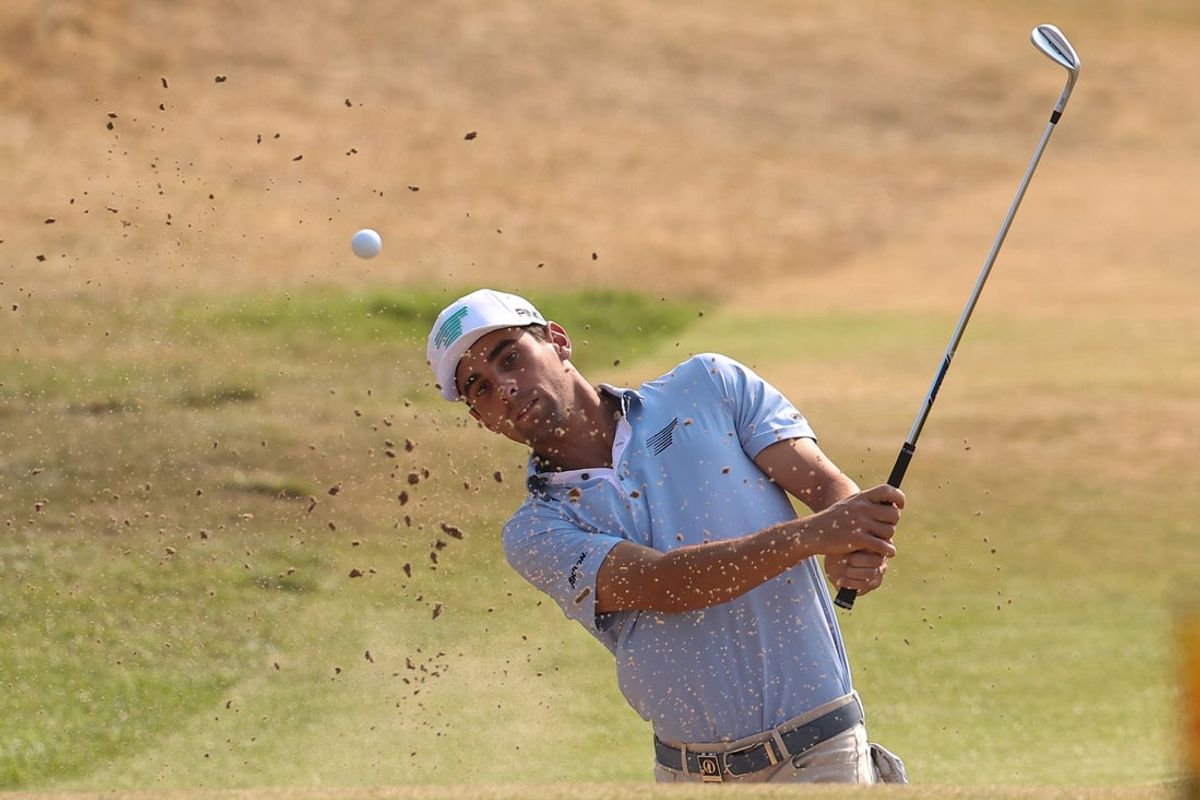
Jul 17, 2026; Southport, ENG; Joaquin Niemann plays his shot from a bunker by the tenth green during the second round of The Open Championship golf tournament at Royal Birkdale. Mandatory Credit: Bill Streicher-Imagn Images
After a pair of blistering rounds, Joaquin Niemann cooled off on Saturday yet clung to a two-stroke lead after three rounds of the LIV Golf New York event in Bedminster, N.J.
The Chilean stands at 14-under-par 199 after his third-round 70, but his lead shrank from five strokes to two during the third round as Harold Varner III vaulted up the leaderboard with a 65 at Trump National Golf Club.
Englishman Lee Westwood duplicated his Thursday round of 2-under 69 to drop into solo third at 10 under par. Westwood is three shots clear of Northern Ireland’s Tom McKibbin (70), while Spain’s Sergio Garcia (72) dropped eight shots off the pace.
The team scores took a beating in the windy conditions. Niemann’s Torque GC is the lone team under par at 1-under after amassing an 8-over score on Saturday. McKibbin’s Legion XIII side lapped the field with a 4-under round and closed to within two strokes.
Niemann, who played bogey-free golf through 36 holes while posting rounds of 64 and 65, opened with a double-bogey 6 after his drive on the 514-yard par 4 went out of bounds to the right.
He shot 36 on the front nine after solving the outward half in 30 on Thursday and Friday.
Niemann, looking for his ninth LIV Golf individual title, steadied himself on the inward half. He made birdies at Nos. 12 and 15, but another wayward drive cost him an opportunity for birdie on the finishing hole, a 580-yard par 5.
“I mean, it was a pretty good last 17 holes,” Niemann said. “Obviously not the best start. But pretty proud and happy the way I played today, especially coming into the end of the round.”
Varner started the day tied with McKibbin for fourth place, seven shots behind Niemann. He posted the lowest round of the day by a margin of three shots, making four birdies on the front nine on the way to a bogey-free round.
“Yeah, obviously it suits my game,” said Varner about the Bedminster layout. “It’s playing really long right now. Obviously it’s — I don’t know how long it is, but it’s an advantage for me. It’s a great opportunity to do something well.
“I feel like I’ve been playing well, and tomorrow is going to be a great chance.”
Westwood admitted to some fatigue coming down the stretch on a blustery day. He was at 12 under through 12 holes, but took a double bogey on No. 14 and a bogey at 16.
“I’m just pleased to be in good enough shape, my game still be at an elite level where I can compete with these guys that are some of the best in the world,” Westwood said. “Joaco is one of the best players in the world, in my eyes. You’ve got Jon Rahm and Bryson and Tyrrell, and they’re not even in contention this week.
“At 53 years of age, I think it’s quite an achievement to still be mixing it with the youngsters. If you go out there and watch us all playing, I’m giving up quite an advantage off the tee. Not all the time, I get the occasional one out there, but in general, I’m playing a different golf course, really.”
Niemann plans to carry an admirable attitude into the final round.
“I mean, just be grateful,” Niemann said. “I feel like if I just remember the good things that I have around me and the people around me, it’s just easy to go back to sleep. I have a good life.”



Post Comment