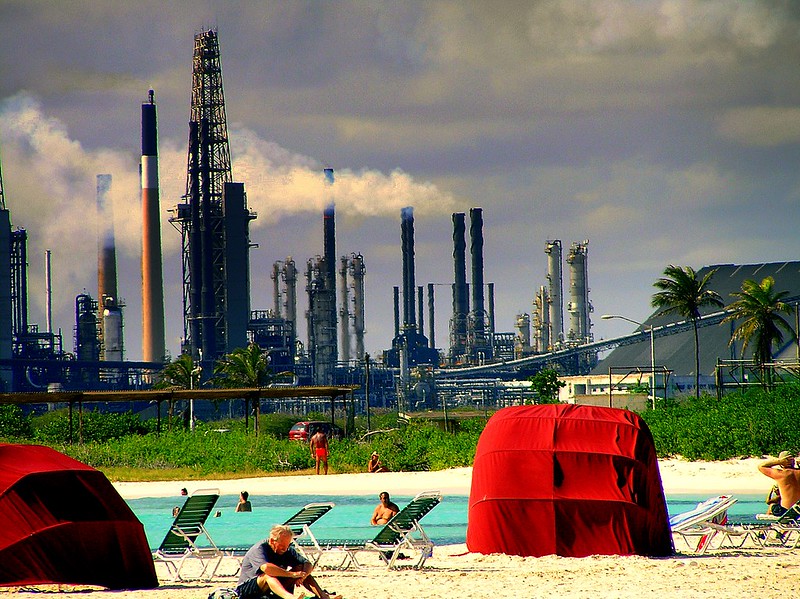
SACRAMENTO, US & NEW DELHI, India:, Jun 09 (IPS) – A newly released report by Earth Insight in collaboration with 16 environmental organizations has sounded a global alarm on the unchecked expansion of offshore oil and gas projects into some of the most biologically rich and ecologically sensitive marine environments on the planet.
Titled Ocean Frontiers at Risk: Fossil Fuel Expansion Threats to Biodiversity Hotspots and Climate Stability, the report documents how 2.7 million square kilometers of ocean territory—an area nearly the size of India—has been opened to oil and gas exploration, much of it within or adjacent to protected areas and biodiversity hotspots.
The findings are based on a detailed spatial analysis of 11 case study regions, with data drawn from government ministries, investor briefings, and independent mapping efforts. The report was released ahead of the 3rd UN Ocean Conference (UNOC3) taking place in Nice, France, this week.
Tyson Miller, Executive Director of Earth Insight, described the process in an exclusive interview with Inter Press Service (IPS).
“Our research unit selected 11 frontier regions out of many and built a dataset with a mix of publicly available data and digitized information where government data was lacking,” Miller said. “It was shocking to see the scale of planned oil and gas expansion and LNG development, knowing that fossil fuel expansion shouldn’t be happening—let alone in some of the world’s most sensitive ecosystems.”
‘Overlap between oil blocks and critical habitats deeply troubling’
The report warns of massive ecological consequences as oil and gas activities encroach on coral reefs, mangroves, seagrass meadows, and Important Marine Mammal Areas (IMMA). Many of these zones fall within existing or proposed Marine Protected Areas (MPAs) and Key Biodiversity Areas (KBAs), which the international community has pledged to safeguard under initiatives like the 30×30 goal—protecting 30% of land and sea by 2030.
“Expanding marine protected areas is essential,” said Miller. “Safeguarding protected areas from oil and gas expansion and industrial development should go without saying. Yet, the extent of overlap between oil blocks and critical habitats is deeply troubling.”
In regions like the Gulf of California—also known as “the world’s aquarium”—LNG projects are already threatening a marine ecosystem that supports 39 percent of all marine mammal species and sustains hundreds of millions of dollars in fisheries. Despite local opposition and delayed environmental impact assessments, the area remains under active threat from fossil fuel expansion.
Meanwhile, off the coasts of Seychelles and Mauritius, the Saya de Malha Bank—a massive seagrass meadow that stores up to 10 percent of the ocean’s annual carbon despite covering just 0.2 percent of its surface—is now 98 percent overlapped by oil and gas blocks.
“There are important efforts underway to support the creation of a Marine Protected Area in the region—and if an exclusion of oil and gas and industrial activity in the area accompanied that, that would be a real positive step in the right direction,” Miller said.
Another key theme of the report is the outsized pressure placed on countries in the Global South to become new frontiers for fossil fuel extraction, even as they face increasing debt and climate vulnerability. Governments facing financial strain are often courted by foreign energy firms with promises of investment, job creation, and energy independence. However, the long-term consequences—both ecological and financial—are far more complex.
“Many countries in the Global South face high external debt and economic development pressures,” Miller explained. “Perhaps debt relief and payments for ecosystem services can become effective levers to help safeguard coastlines. Without this support, elected officials may greenlight projects that ultimately cost far more in the form of pollution, habitat destruction, and cleanup efforts.”
Indeed, the Ocean Protection Gap Report, also referenced in Earth Insight’s study, identifies billions of dollars in promised—but yet to be delivered—financing for marine conservation and climate resilience in low-income nations.
Incredible Work by Frontline and Indigenous Communities
Despite facing immense challenges, Indigenous and coastal communities are leading grassroots resistance movements in many of the threatened regions. In Mexico’s Gulf of California, local activism has successfully delayed LNG terminal approvals due to the absence of proper environmental reviews. In the Philippines, Papua New Guinea, Mozambique, and elsewhere, community-led campaigns continue to demand transparency, ecological justice, and a halt to extractive projects.
“Frontline and Indigenous communities are doing incredible work to oppose fossil fuel expansion, often with limited resources and at great personal risk,” said Miller. “They need more direct support and more visible platforms to champion their vision for the future.”
Yet these communities, according to the report, are frequently up against entrenched corporate and political interests, making their fight not just environmental but also a struggle for democratic participation, land rights, and long-term sovereignty over natural resources.
Policy Roadmap
The report has pitched a policy roadmap for global leaders, particularly in the lead-up to high-stakes forums like COP and the UN Ocean Conference (UNOC). These include:
- Halting all new coastal and offshore fossil fuel developments, especially in environmentally sensitive regions.
- Removing unassigned oil and gas blocks and stopping the approval of new exploration licenses and permits.
- Ending financial support—including investments, insurance, and financing—for planned offshore fossil fuel projects.
- Shifting public and private capital to renewable energy, including offshore wind and solar.
- Ensuring a just transition that includes full decommissioning of abandoned offshore infrastructure and stakeholder inclusion.
- Undertaking habitat restoration where damage from fossil fuel operations has already occurred.
- Strengthening global legal frameworks, including support for treaties like the Fossil Fuel Non-Proliferation Treaty to prevent new coastal and offshore oil expansion.
“It’s time for global leaders to take bold, enforceable actions,” said Miller. “If the UN Ocean Conference wants to be taken seriously, it must directly address the growing threat of fossil fuel industrialization on coastlines and oceans.”
IPS UN Bureau Report
Follow @IPSNewsUNBureau
Follow IPS News UN Bureau on Instagram
© Inter Press Service (2025) — All Rights Reserved. Original source: Inter Press Service
Source link
#Oceans #Risk #Report #Warns #Global #Fossil #Fuel #Expansion #Threatens #Marine #Biodiversity


Post Comment