Film School Rejects is for sale. After more than 17 years of being owned and…
#Deadspin #Kyle #Tuckers #walkoff #single #caps #Dodgers #rally #Marlins">Deadspin | Kyle Tucker’s walk-off single caps Dodgers’ rally past Marlins
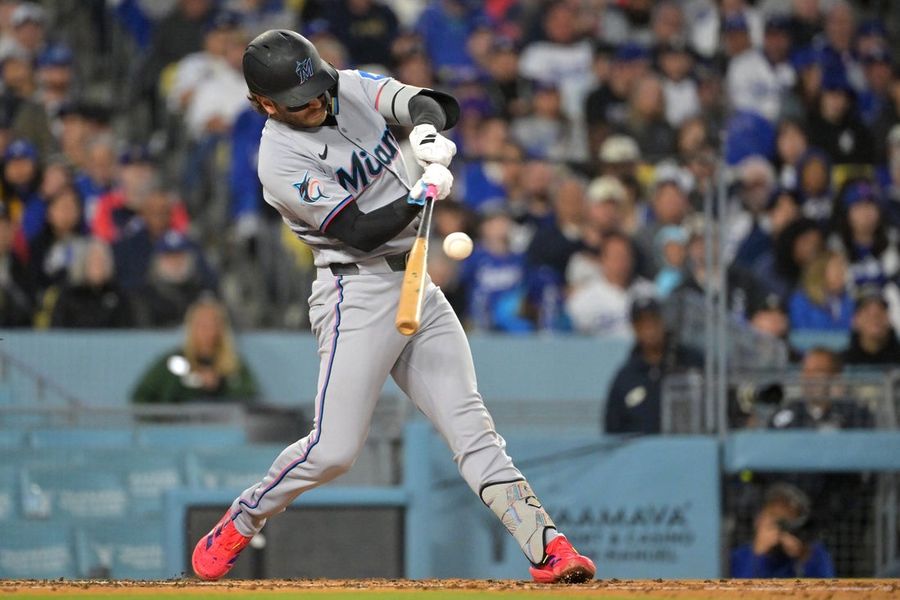
Apr 27, 2026; Los Angeles, California, USA; Miami Marlins third baseman Connor Norby (1) hits a single against the Los Angeles Dodgers in the third inning at Dodger Stadium. Mandatory Credit: Jayne Kamin-Oncea-Imagn Images
Kyle Tucker delivered a game-ending two-run single to cap a three-run bottom of the ninth as the Los Angeles Dodgers rallied for a 5-4 victory over the visiting Miami Marlins on Monday to open a three-game series.
Shohei Ohtani (3-for-5) added an RBI ground-rule double in the ninth and scored the decisive run as the Dodgers won their third consecutive game and prevailed for the sixth time in their past seven home contests.
Teoscar Hernandez had a two-run single and four Los Angeles relievers held Miami scoreless over the final four innings. Jake Eder (1-0) pitched a scoreless ninth inning for his first major league win.
Liam Hicks hit a three-run home run in the fifth inning for the Marlins. Right-hander Pete Fairbanks (0-2) was charged with three runs in the ninth, and he departed with a thumb injury. Miami manager Clayton McCullough said Fairbanks would be re-evaluated before the team decides on his status.
Jakob Marsee had two hits for Miami.
The Dodgers opened the ninth inning with consecutive walks from Andy Pages and pinch hitter Dalton Rushing against Fairbanks. Miguel Rojas popped up a bunt attempt before Ohtani delivered a ground-rule double to right to pull Los Angeles within 4-3.
After an intentional walk to Freddie Freeman loaded the bases, Fairbanks departed. Right-hander Tyler Phillips struck out Will Smith before Tucker hit an 0-1 splitter into center field for the game-winning runs.
Los Angeles got off to a fast start when Ohtani and Freeman opened the bottom of the first inning with consecutive singles. Hernandez came through with a two-out two-run single for the early lead.
The Marlins cut the deficit in half in the fourth inning when Dodgers shortstop Hyeseong Kim committed an error on a ground ball from Javier Sanoja that allowed Otto Lopez to score.
After Los Angeles starter Yoshinobu Yamamoto walked both Marsee and Xavier Edwards in the fifth, Hicks hit a two-strike splitter for a three-run homer down the right-field line for a 4-2 lead.
The Dodgers threatened in the seventh by loading the bases with two outs against right-hander Michael Petersen and then left-hander Andrew Nardi before Smith grounded out to second base to end the inning.
Ohtani had three hits for his second consecutive game after collecting just three total hits over his previous six contests.
While snap grades often examine the process employed by each team when making their selections, ultimately the real grades will come from the teams and the players themselves. While we can sit here and forecast how teams will use their new players, it is up to each coaching staff to put their incoming draft picks in a position to succeed through scheme, coaching, and development. As for the players themselves? They’re facing the adjustment from life in college, to life as a professional. How they adapt will go a long way towards the ultimate grade, if you will.
But let’s look forward a bit. Which of these drafts could spin the other way once the players hit the field?
How the Jets’ 2026 Draft class could ultimately be an F
Opinions on the Jets’ 2026 Draft class are mixed.
Which is why they make sense in this category.
New York unofficially kicked off the 2026 NFL Draft when the organization was on the clock with the second-overall selection. With the Las Vegas Raiders locked into drafting Fernando Mendoza, the Jets faced the first true decision of the draft: Texas Tech pass rusher David Bailey, or Ohio State hybrid defender Arvell Reese?
While many viewed Reese as the better prospect, the Jets opted for Bailey, the more experienced pass rusher off the edge. It was looked at as a “safer” pick, with Reese still needing time to adjust to life on the edge after playing in an off-ball role for most of his time at Ohio State.
Where the Jets’ true plans for 2026 and beyond came into focus was through their next two selections. Many believed the Jets would add another receiver with their second pick in the first round, at No. 16, with Indiana’s Omar Cooper Jr. a popular selection for the team in mock drafts. General manager Darren Mougey indeed added a pass catcher for free agent quarterback Geno Smith, drafting Oregon tight end Kenyon Sadiq.
That selection left some scratching their heads, after the team added LSU’s Mason Taylor in the second round a year ago.
But the plan came into clear focus when the Jets moved back into the first round, executing a trade with the Miami Dolphins to pick up the selection at No. 30. The pick in that spot? None other than Cooper.
That plan? An offense that leans into 12 personnel — two tight ends on the field in Taylor and Sadiq — with Garrett Wilson and Cooper as their main wide receivers in that package.
It could work, and here is why: We know that football is a cyclical game, and after years of the passing game driving offenses (and defenses responding by getting lighter and faster with their personnel packages) the worm may be turning. The Los Angeles Rams leaned heavily into bigger personnel packages last year, using 13 personnel (three tight ends) on more than 30% of their offensive snaps during 2025. When the Rams threw out of that package, they recorded an Expected Points Added per Pass of 0.50, which was higher than the 0.17 EPA/Pass they notched when throwing out of 11 personnel.
The Seattle Seahawks, who won Super Bowl LX, used 12 personnel on just under 30% of their offensive snaps, and when Seattle threw out of that package, they produced an EPA/Pass of 0.37, the best in the league out of 12 personnel and well above the EPA/Pass of 0.04 recorded when Seattle threw out of 11 personnel.
So the bet from the Jets is this: This trend of getting bigger on offense will continue, and with this draft class they will be ahead of the curve.
There are two potential problems.
One, that trend might not continue. Defenses around the league are not going to stop innovating, and if defensive coordinators figure out ways to slow down offenses that are trying to throw out of bigger personnel packages, this bet from the Jets might not pan out.
Two? Geno Smith might be an upgrade over New York’s quarterback room of 2025, but the Smith we saw a season ago was not the QB we saw during his run in Seattle. While the Jets added Cade Klubnik on Day 3, he might not be the team’s long-term answer at quarterback. Meaning New York might be back to the quarterback drawing board next year, and while that class looks good right now … there is a long way to go until the next draft class sees the field.
On paper, you can see the plan from New York.
But ultimately, plans sometimes fail.
#NFL #Draft #grades #teams #turn">NFL Draft grades: 9 teams got an A for 2026, but this one could turn into an F
Springtime is for grading.
Not only in the real world, as students across the country are dreaming about final exams — and a long-awaited summer break — but also in the NFL. Now that the 2026 NFL Draft is in the books, analysts are handing out grades, fans are weighing in, and everyone seems to be debating consensus big boards.
While snap grades often examine the process employed by each team when making their selections, ultimately the real grades will come from the teams and the players themselves. While we can sit here and forecast how teams will use their new players, it is up to each coaching staff to put their incoming draft picks in a position to succeed through scheme, coaching, and development. As for the players themselves? They’re facing the adjustment from life in college, to life as a professional. How they adapt will go a long way towards the ultimate grade, if you will.
But let’s look forward a bit. Which of these drafts could spin the other way once the players hit the field?
How the Jets’ 2026 Draft class could ultimately be an F
Opinions on the Jets’ 2026 Draft class are mixed.
Which is why they make sense in this category.
New York unofficially kicked off the 2026 NFL Draft when the organization was on the clock with the second-overall selection. With the Las Vegas Raiders locked into drafting Fernando Mendoza, the Jets faced the first true decision of the draft: Texas Tech pass rusher David Bailey, or Ohio State hybrid defender Arvell Reese?
While many viewed Reese as the better prospect, the Jets opted for Bailey, the more experienced pass rusher off the edge. It was looked at as a “safer” pick, with Reese still needing time to adjust to life on the edge after playing in an off-ball role for most of his time at Ohio State.
Where the Jets’ true plans for 2026 and beyond came into focus was through their next two selections. Many believed the Jets would add another receiver with their second pick in the first round, at No. 16, with Indiana’s Omar Cooper Jr. a popular selection for the team in mock drafts. General manager Darren Mougey indeed added a pass catcher for free agent quarterback Geno Smith, drafting Oregon tight end Kenyon Sadiq.
That selection left some scratching their heads, after the team added LSU’s Mason Taylor in the second round a year ago.
But the plan came into clear focus when the Jets moved back into the first round, executing a trade with the Miami Dolphins to pick up the selection at No. 30. The pick in that spot? None other than Cooper.
That plan? An offense that leans into 12 personnel — two tight ends on the field in Taylor and Sadiq — with Garrett Wilson and Cooper as their main wide receivers in that package.
It could work, and here is why: We know that football is a cyclical game, and after years of the passing game driving offenses (and defenses responding by getting lighter and faster with their personnel packages) the worm may be turning. The Los Angeles Rams leaned heavily into bigger personnel packages last year, using 13 personnel (three tight ends) on more than 30% of their offensive snaps during 2025. When the Rams threw out of that package, they recorded an Expected Points Added per Pass of 0.50, which was higher than the 0.17 EPA/Pass they notched when throwing out of 11 personnel.
The Seattle Seahawks, who won Super Bowl LX, used 12 personnel on just under 30% of their offensive snaps, and when Seattle threw out of that package, they produced an EPA/Pass of 0.37, the best in the league out of 12 personnel and well above the EPA/Pass of 0.04 recorded when Seattle threw out of 11 personnel.
So the bet from the Jets is this: This trend of getting bigger on offense will continue, and with this draft class they will be ahead of the curve.
There are two potential problems.
One, that trend might not continue. Defenses around the league are not going to stop innovating, and if defensive coordinators figure out ways to slow down offenses that are trying to throw out of bigger personnel packages, this bet from the Jets might not pan out.
Two? Geno Smith might be an upgrade over New York’s quarterback room of 2025, but the Smith we saw a season ago was not the QB we saw during his run in Seattle. While the Jets added Cade Klubnik on Day 3, he might not be the team’s long-term answer at quarterback. Meaning New York might be back to the quarterback drawing board next year, and while that class looks good right now … there is a long way to go until the next draft class sees the field.
#Deadspin #World #Series #star #Trey #Yesavage #rejoins #Blue #Jays #face #Red #Sox">Deadspin | World Series star Trey Yesavage rejoins Blue Jays to face Red Sox
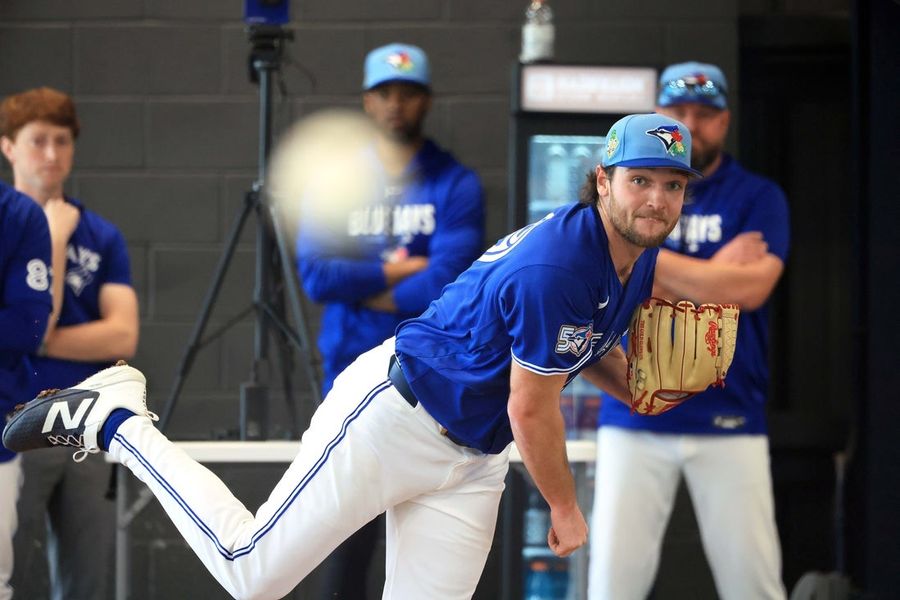
Feb 11, 2026; Dunedin, FL, USA; Toronto Blue Jays pitcher Trey Yesavage (39) throws a bullpen session for spring training practice at Blue Jays Player Development Complex. Mandatory Credit: Kim Klement Neitzel-Imagn Images
Toronto Blue Jays right-hander Trey Yesavage will try to duplicate his magic from late in 2025 when he makes his season debut Tuesday night against the visiting Boston Red Sox.
The Blue Jays dropped the opener of the three-game series against Boston 5-0 on Monday when they were held to two hits.
Yesavage began the season on the injured list with impingement in his right shoulder. He completed a minor league rehabilitation assignment, splitting four games (three starts) between Class-A Dunedin and Triple-A Buffalo, going 0-1 with a 7.50 ERA.
“He checked all of the boxes that we had hoped for,” Blue Jays manager John Schneider said. “I wasn’t really looking at results, more looking at his stuff and the plan we had laid out since spring training.”
Yesavage went from Class-A to the majors in one swoop last season. He found himself back in the minors to start this season while working his way back to health, but this time he knew he would soon be back with Toronto.
“I think I’ve handled it well,” Yesavage told Sportsnet. “My mindset was kind of like how I was in the minors, play so they have to bring you up here and whatnot, so just still having that competitive nature and being able to prove that I should be here. The toughest part is it’s kind of slow. I wish I could have been up here sooner.”
In three regular-season starts in 2025, Yesavage went 1-0 with a 3.21 and 16 strikeouts in 12 innings. In the postseason, he posted a 3-1 mark with a 3.58 ERA in six games (five starts), including a 1-0 record and a 2.08 ERA in the World Series, when he struck out 12 and walked one in 8 2/3 innings.
Yesavage has not faced the Red Sox, who will start Payton Tolle (0-0, 1.50 ERA). The left-hander allowed one run in one inning in relief in his only appearance against Toronto, last Sept. 24.
Boston has won three straight for the first time this season, the past two for interim manager Chad Tracy, who replaced the fired Alex Cora.
Red Sox left-hander Ranger Suarez allowed one hit and one walk with a season-best 10 strikeouts in eight shutout innings on Monday. In three career appearances (two starts) against Toronto, he is 2-0 with a 0.00 ERA in 17 1/3 innings.
“Today is who he is,” said Boston catcher Carlos Narvaez, who homered in the eighth inning. “That’s who has been the last five, six, seven years. We used all pitches, all locations, so that is fun.”
The Red Sox continued the process of reorganizing the coaching staff after six were let go with Cora’s departure.
One of the moves was shifting Jose David Flores from first base coach to bench coach, a position he held from 2022-24 at Triple-A Worcester, where Tracy was the manager.
“One of our most experienced guys left here as far as baseball knowledge,” Tracy said before the game on Monday. “So having him with me, next to me, as well as (pitching coach) Andrew Bailey in there, is important. He’s a great baseball man and one of my closest friends, so the combination of those two and having him by my side is huge.”
Pablo Cabrera will take over as first base coach and Jack Simonetty will become an assistant hitting coach.
Toronto put starter Max Scherzer on the injured list on Monday due to right forearm tendinitis and left ankle inflammation.
“Doctor’s order was just get rest,” Scherzer said on Monday. “There’s nothing structurally wrong.”
Chase Lee was recalled from Triple-A Buffalo, and he allowed the homer to Narvaez in a 1 1/3-inning outing during his Toronto debut.