×
PBKS vs SRH, IPL 2026: Will Shreyas Iyer be banned if Punjab Kings is found guilty of slow over-rate again?  Punjab Kings is in danger of being hauled up for slow over-rate again after Arshdeep Singh delivered a 10-ball long over in its IPL 2026 match against Sunrisers Hyderabad at the Maharaja Yadvindra Singh PCA Stadium in New Chandigarh on April 11.PBKS has been guilty of exceeding the time limit in both of its two completed matches so far, and skipper Shreyas Iyer was fined Rs. 24 lakh after its match against Chennai Super Kings.Will Shreyas Iyer be banned if Punjab Kings is found guilty of slow over-rate again?However, if PBKS is guilty of slow over-rates again, Shreyas will not be facing a ban as he would be according to old regulations.The IPL has quietly rewritten how it polices over-rate offences.In previous seasons, captains faced a one-match ban after three slow over-rate violations. That rule is now gone. Instead, the league has moved towards a system that prioritises financial penalties and in-game disadvantages over outright suspensions.The shift mirrors the International Cricket Council’s approach, with the introduction of demerit points. Every sanction imposed by the match referee adds to a player’s or official’s tally, and those points stay on record for 36 months. The threat, then, is less immediate but more cumulative, a slow burn rather than a sudden hit.It is not just the captain who pays.Under Article 2.22 of the IPL Code of Conduct:The captain is fined Rs. 24 lakh for a second offenceEvery other member of the playing XI, including the Impact Player, is fined Rs. 6 lakh or 25% of their match fee (whichever is lower)There is also the possibility of in-match fielding restrictions, which can be far more damaging in tight contests than any post-match fine.Published on Apr 11, 2026  #PBKS #SRH #IPL #Shreyas #Iyer #banned #Punjab #Kings #guilty #slow #overrate

PBKS vs SRH, IPL 2026: Will Shreyas Iyer be banned if Punjab Kings is found guilty of slow over-rate again?

Punjab Kings is in danger of being hauled up for slow over-rate again after Arshdeep Singh delivered a 10-ball long over in its IPL 2026 match against Sunrisers Hyderabad at the Maharaja Yadvindra Singh PCA Stadium in New Chandigarh on April 11.

PBKS has been guilty of exceeding the time limit in both of its two completed matches so far, and skipper Shreyas Iyer was fined Rs. 24 lakh after its match against Chennai Super Kings.

Will Shreyas Iyer be banned if Punjab Kings is found guilty of slow over-rate again?

However, if PBKS is guilty of slow over-rates again, Shreyas will not be facing a ban as he would be according to old regulations.

The IPL has quietly rewritten how it polices over-rate offences.

In previous seasons, captains faced a one-match ban after three slow over-rate violations. That rule is now gone. Instead, the league has moved towards a system that prioritises financial penalties and in-game disadvantages over outright suspensions.

The shift mirrors the International Cricket Council’s approach, with the introduction of demerit points. Every sanction imposed by the match referee adds to a player’s or official’s tally, and those points stay on record for 36 months. The threat, then, is less immediate but more cumulative, a slow burn rather than a sudden hit.

It is not just the captain who pays.

Under Article 2.22 of the IPL Code of Conduct:

The captain is fined Rs. 24 lakh for a second offence

Every other member of the playing XI, including the Impact Player, is fined Rs. 6 lakh or 25% of their match fee (whichever is lower)

There is also the possibility of in-match fielding restrictions, which can be far more damaging in tight contests than any post-match fine.

Published on Apr 11, 2026

#PBKS #SRH #IPL #Shreyas #Iyer #banned #Punjab #Kings #guilty #slow #overrate

Punjab Kings is in danger of being hauled up for slow over-rate again after Arshdeep Singh delivered a 10-ball long over in its IPL 2026 match against Sunrisers Hyderabad at the Maharaja Yadvindra Singh PCA Stadium in New Chandigarh on April 11.

PBKS has been guilty of exceeding the time limit in both of its two completed matches so far, and skipper Shreyas Iyer was fined Rs. 24 lakh after its match against Chennai Super Kings.

Will Shreyas Iyer be banned if Punjab Kings is found guilty of slow over-rate again?

However, if PBKS is guilty of slow over-rates again, Shreyas will not be facing a ban as he would be according to old regulations.

The IPL has quietly rewritten how it polices over-rate offences.

In previous seasons, captains faced a one-match ban after three slow over-rate violations. That rule is now gone. Instead, the league has moved towards a system that prioritises financial penalties and in-game disadvantages over outright suspensions.

The shift mirrors the International Cricket Council’s approach, with the introduction of demerit points. Every sanction imposed by the match referee adds to a player’s or official’s tally, and those points stay on record for 36 months. The threat, then, is less immediate but more cumulative, a slow burn rather than a sudden hit.

It is not just the captain who pays.

Under Article 2.22 of the IPL Code of Conduct:

The captain is fined Rs. 24 lakh for a second offence

Every other member of the playing XI, including the Impact Player, is fined Rs. 6 lakh or 25% of their match fee (whichever is lower)

There is also the possibility of in-match fielding restrictions, which can be far more damaging in tight contests than any post-match fine.

Published on Apr 11, 2026
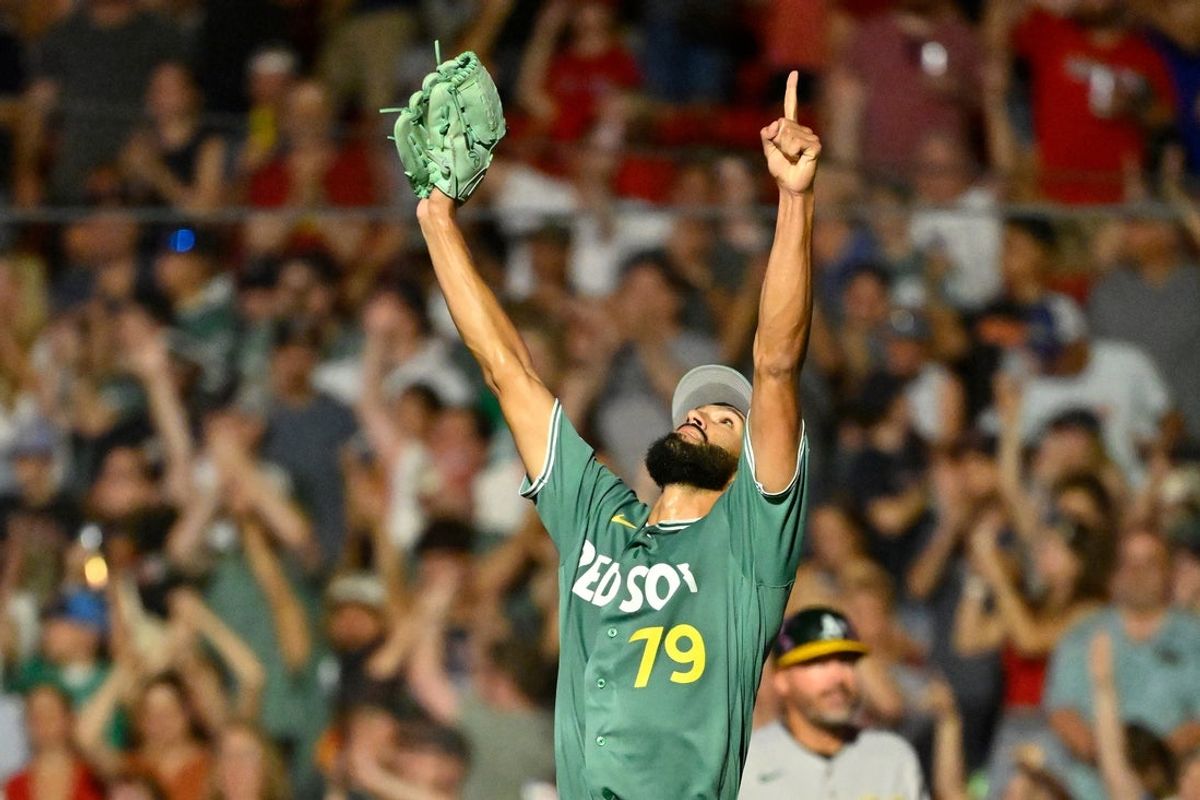
Source link
#PBKS #SRH #IPL #Shreyas #Iyer #banned #Punjab #Kings #guilty #slow #overrate

Previous post

Indore News: किसानों के लिए नया फरमान, अब मोबाइल और आधार नंबर के बिना नहीं बिकेगी फसल

Next post

Deadspin | Linus Ullmark, Senators blank sinking Islanders <div id=""><section id="0" class=" w-full"><div class="xl:container mx-0 !px-4 py-0 pb-4 !mx-0 !px-0"><img src="https://images.deadspin.com/tr:w-900/28707771.jpg" srcset="https://images.deadspin.com/tr:w-900/28707771.jpg" alt="NHL: Ottawa Senators at New York Islanders" class="w-full" fetchpriority="high" loading="eager"/><span class="text-0.8 leading-tight">Apr 11, 2026; Elmont, New York, USA; New York Islanders center Calum Ritchie (64) stands in front of Ottawa Senators goaltender Linus Ullmark (35) in the second period at UBS Arena. Mandatory Credit: Alexander Wohl-Imagn Images<!-- --> <!-- --> </span></div></section><section id="section-1"> <p>Ridly Greig scored a short-handed goal in the first period and Jake Sanderson added a power-play goal in the third, lifting the Ottawa Senators to a 3-0 victory over the New York Islanders on Saturday afternoon in Elmont, N.Y.</p> </section><section id="section-2"> <p>Michael Amadio added an empty-net goal late in the third and Linus Ullmark stopped all 23 shots he faced for the Senators (43-27-10, 96 points), who won their fourth straight game.</p> </section><section id="section-3"> <p>They can clinch a playoff berth for the second consecutive season if the New Jersey Devils defeat the Detroit Red Wings later on Saturday.</p> </section><section id="section-4"> <p>The Senators and Boston Bruins (43-27-10, 96 points) are tied atop the wild-card standings. </p> </section><section id="section-5"> <p>Ilya Sorokin recorded 13 saves for the Islanders (43-32-5, 91 points), who went 0-for-5 on the power play. They fell to 1-1-0 under Peter DeBoer and lost for the fifth time in six games overall.</p> </section><br/><section id="section-6"> <p>New York’s only path to the playoffs is outlasting the Philadelphia Flyers for the third and final postseason spot in the Metropolitan Division. The Islanders entered Saturday one point behind the Flyers (40-27-12, 92 points), who are scheduled to visit the Winnipeg Jets later Saturday.</p> </section> <section id="section-7"> <p>The Islanders were in the midst of their first scoreless power play when the Senators notched the only goal they’d need.</p> </section><section id="section-8"> <p>Greig pestered Pageau and forced the puck loose in the Ottawa zone, where Amadio got a stick on the puck just before New York defenseman Tony DeAngelo. Amadio chased down the puck and dished a backhanded pass between Lee’s legs to Greig, who managed to flick a shot past Sorokin’s glove with Pageau in pursuit.</p> </section><section id="section-9"> <p>Defenseman Carson Soucy and Ryan Pulock were whistled for tripping 34 seconds apart to set up the 5-on-3 that led to the Senators’ second goal with 7:24 left. Dylan Cozens’ shot from the left faceoff circle glanced off Sorokin, who couldn’t smother the puck before Sanderson surged past Matthew Schaefer and buried the rebound.</p> </section><section id="section-10"> <p>Sorokin was pulled with more than five minutes left but the Islanders didn’t mount a serious threat before Amadio iced the win with 2:31 remaining.</p> </section><section id="section-11"> <p>–Field Level Media</p> </section></div> #Deadspin #Linus #Ullmark #Senators #blank #sinking #Islanders

Soccer Meets America focuses around the meteoric rise in popularity, from the North American Soccer League days of the 1970s and 1980s to the 1984 Olympics, leading up to the 1994 World Cup. At the center of that history was Alan Rothenberg, who served as soccer commissioner for the 1984 Olympics, the president of the U.S. Soccer Federation from 1990 to 1998, and the CEO of the 1994 World Cup. He also had a hand in the start of Major League Soccer, adding women’s soccer to the Olympic program in 1996, and bringing the 1999 Women’s World Cup to the United States.

Rothenberg recently released a new book entitled The Big Bounce: The Surge that Shaped the Future of U.S. Soccer. In the book, Rothenberg gives an inside account at how American soccer went from the days where leagues were not organized and fizzled quickly to some of the success we have today with leagues like Major League Soccer, the National Women’s Soccer League, and the United Soccer Leagues. He details his firsthand knowledge of what it took for the United States to host a successful soccer tournament at the 1984 Olympics, how the nation won the bid to host the 1994 World Cup, and how he was able to organize the federation to get everything done and push the game forward. He recently sat down for an interview on the USA Soccercast, and in that interview, he mentioned that the rise in popularity of the game wasn’t based on one big moment, but a sustained buildup of momentum.

“[American soccer] sort of grew when I was starting in 1990,” Alan Rothenberg, former U.S. Soccer president and CEO of the 1994 World Cup, said in an interview for the USA Soccercast. “I had a glimpse of it back in the 70s when we had a team in Los Angeles ,and obviously the Cosmos set the world on fire at that time with Pelé and [Franz] Beckebauer…you had Giants Stadium. So there were those glimpses of what the future could hold. But as we started to build the soccer federation, our [1994] World cup team and the World cup organization, it just started to accelerate. So there wasn’t one ‘a ha!’ moment.”

Soccer Meets America takes the unique yet unexpected path of professional soccer in the United States andn gives the story some definition. Through people like Rothenberg, we see that the history is shaped by chance, persistence, and communities that kept the game alive long before it found mainstream recognition. Starting with the sport’s deep roots in immigrant communities in the 1920s, each episode of the docuseries explores soccer on a personal and professional level. Both nostalgic and forward-facing, the series features a variety of influential figures in American soccer and aims to resonate with new and old fans of the sport alike.

But there’s also the legacy of the 2026 World Cup, which will be different from what it was in 1994. “Well, obviously we’re starting from a different baseline,” Rothenberg said. “We started at virtually zero back in [1990], and now we’re starting from level 60 or 75…so the dramatic consequences will not be the same as they were after 94, but I think it’s going to be a huge spike in interest in the sport at all levels.”

To grow the history, you must learn from it. And Soccer Meets America gives you a review of America’s soccer history and strengthes the foundations from which the sport’s culture and passion were created. As we approach the World Cup, that knowledge will be essential to craft the legacy that will carry long after the tournament ends.

#Vox #Creative #Roku #debut #docuseries #history #American #soccer">Vox Creative, Roku debut new docuseries on history of American soccer  The history of American soccer has spanned well over 120 years, and to date there hasn’t been many opportunities to look back at that history. With the 2026 World Cup about a month away, we now have a chance to do just that. Yesterday, SB Nation collaborated with Vox Creative and Roku to release Soccer Meets America, a 3-part docuseries that focuses on the rise of soccer in the United States.Soccer Meets America focuses around the meteoric rise in popularity, from the North American Soccer League days of the 1970s and 1980s to the 1984 Olympics, leading up to the 1994 World Cup. At the center of that history was Alan Rothenberg, who served as soccer commissioner for the 1984 Olympics, the president of the U.S. Soccer Federation from 1990 to 1998, and the CEO of the 1994 World Cup. He also had a hand in the start of Major League Soccer, adding women’s soccer to the Olympic program in 1996, and bringing the 1999 Women’s World Cup to the United States.Rothenberg recently released a new book entitled The Big Bounce: The Surge that Shaped the Future of U.S. Soccer. In the book, Rothenberg gives an inside account at how American soccer went from the days where leagues were not organized and fizzled quickly to some of the success we have today with leagues like Major League Soccer, the National Women’s Soccer League, and the United Soccer Leagues. He details his firsthand knowledge of what it took for the United States to host a successful soccer tournament at the 1984 Olympics, how the nation won the bid to host the 1994 World Cup, and how he was able to organize the federation to get everything done and push the game forward. He recently sat down for an interview on the USA Soccercast, and in that interview, he mentioned that the rise in popularity of the game wasn’t based on one big moment, but a sustained buildup of momentum.“[American soccer] sort of grew when I was starting in 1990,” Alan Rothenberg, former U.S. Soccer president and CEO of the 1994 World Cup, said in an interview for the USA Soccercast. “I had a glimpse of it back in the 70s when we had a team in Los Angeles ,and obviously the Cosmos set the world on fire at that time with Pelé and [Franz] Beckebauer…you had Giants Stadium. So there were those glimpses of what the future could hold. But as we started to build the soccer federation, our [1994] World cup team and the World cup organization, it just started to accelerate. So there wasn’t one ‘a ha!’ moment.”Soccer Meets America takes the unique yet unexpected path of professional soccer in the United States andn gives the story some definition. Through people like Rothenberg, we see that the history is shaped by chance, persistence, and communities that kept the game alive long before it found mainstream recognition. Starting with the sport’s deep roots in immigrant communities in the 1920s, each episode of the docuseries explores soccer on a personal and professional level. Both nostalgic and forward-facing, the series features a variety of influential figures in American soccer and aims to resonate with new and old fans of the sport alike.But there’s also the legacy of the 2026 World Cup, which will be different from what it was in 1994. “Well, obviously we’re starting from a different baseline,” Rothenberg said. “We started at virtually zero back in [1990], and now we’re starting from level 60 or 75…so the dramatic consequences will not be the same as they were after 94, but I think it’s going to be a huge spike in interest in the sport at all levels.”To grow the history, you must learn from it. And Soccer Meets America gives you a review of America’s soccer history and strengthes the foundations from which the sport’s culture and passion were created. As we approach the World Cup, that knowledge will be essential to craft the legacy that will carry long after the tournament ends.  #Vox #Creative #Roku #debut #docuseries #history #American #soccer

Soccer Meets America, a 3-part docuseries that focuses on the rise of soccer in the United States.

Soccer Meets America focuses around the meteoric rise in popularity, from the North American Soccer League days of the 1970s and 1980s to the 1984 Olympics, leading up to the 1994 World Cup. At the center of that history was Alan Rothenberg, who served as soccer commissioner for the 1984 Olympics, the president of the U.S. Soccer Federation from 1990 to 1998, and the CEO of the 1994 World Cup. He also had a hand in the start of Major League Soccer, adding women’s soccer to the Olympic program in 1996, and bringing the 1999 Women’s World Cup to the United States.

Rothenberg recently released a new book entitled The Big Bounce: The Surge that Shaped the Future of U.S. Soccer. In the book, Rothenberg gives an inside account at how American soccer went from the days where leagues were not organized and fizzled quickly to some of the success we have today with leagues like Major League Soccer, the National Women’s Soccer League, and the United Soccer Leagues. He details his firsthand knowledge of what it took for the United States to host a successful soccer tournament at the 1984 Olympics, how the nation won the bid to host the 1994 World Cup, and how he was able to organize the federation to get everything done and push the game forward. He recently sat down for an interview on the USA Soccercast, and in that interview, he mentioned that the rise in popularity of the game wasn’t based on one big moment, but a sustained buildup of momentum.

“[American soccer] sort of grew when I was starting in 1990,” Alan Rothenberg, former U.S. Soccer president and CEO of the 1994 World Cup, said in an interview for the USA Soccercast. “I had a glimpse of it back in the 70s when we had a team in Los Angeles ,and obviously the Cosmos set the world on fire at that time with Pelé and [Franz] Beckebauer…you had Giants Stadium. So there were those glimpses of what the future could hold. But as we started to build the soccer federation, our [1994] World cup team and the World cup organization, it just started to accelerate. So there wasn’t one ‘a ha!’ moment.”

Soccer Meets America takes the unique yet unexpected path of professional soccer in the United States andn gives the story some definition. Through people like Rothenberg, we see that the history is shaped by chance, persistence, and communities that kept the game alive long before it found mainstream recognition. Starting with the sport’s deep roots in immigrant communities in the 1920s, each episode of the docuseries explores soccer on a personal and professional level. Both nostalgic and forward-facing, the series features a variety of influential figures in American soccer and aims to resonate with new and old fans of the sport alike.

But there’s also the legacy of the 2026 World Cup, which will be different from what it was in 1994. “Well, obviously we’re starting from a different baseline,” Rothenberg said. “We started at virtually zero back in [1990], and now we’re starting from level 60 or 75…so the dramatic consequences will not be the same as they were after 94, but I think it’s going to be a huge spike in interest in the sport at all levels.”

To grow the history, you must learn from it. And Soccer Meets America gives you a review of America’s soccer history and strengthes the foundations from which the sport’s culture and passion were created. As we approach the World Cup, that knowledge will be essential to craft the legacy that will carry long after the tournament ends.

#Vox #Creative #Roku #debut #docuseries #history #American #soccer">Vox Creative, Roku debut new docuseries on history of American soccer

The history of American soccer has spanned well over 120 years, and to date there hasn’t been many opportunities to look back at that history. With the 2026 World Cup about a month away, we now have a chance to do just that. Yesterday, SB Nation collaborated with Vox Creative and Roku to release Soccer Meets America, a 3-part docuseries that focuses on the rise of soccer in the United States.

Soccer Meets America focuses around the meteoric rise in popularity, from the North American Soccer League days of the 1970s and 1980s to the 1984 Olympics, leading up to the 1994 World Cup. At the center of that history was Alan Rothenberg, who served as soccer commissioner for the 1984 Olympics, the president of the U.S. Soccer Federation from 1990 to 1998, and the CEO of the 1994 World Cup. He also had a hand in the start of Major League Soccer, adding women’s soccer to the Olympic program in 1996, and bringing the 1999 Women’s World Cup to the United States.

Rothenberg recently released a new book entitled The Big Bounce: The Surge that Shaped the Future of U.S. Soccer. In the book, Rothenberg gives an inside account at how American soccer went from the days where leagues were not organized and fizzled quickly to some of the success we have today with leagues like Major League Soccer, the National Women’s Soccer League, and the United Soccer Leagues. He details his firsthand knowledge of what it took for the United States to host a successful soccer tournament at the 1984 Olympics, how the nation won the bid to host the 1994 World Cup, and how he was able to organize the federation to get everything done and push the game forward. He recently sat down for an interview on the USA Soccercast, and in that interview, he mentioned that the rise in popularity of the game wasn’t based on one big moment, but a sustained buildup of momentum.

“[American soccer] sort of grew when I was starting in 1990,” Alan Rothenberg, former U.S. Soccer president and CEO of the 1994 World Cup, said in an interview for the USA Soccercast. “I had a glimpse of it back in the 70s when we had a team in Los Angeles ,and obviously the Cosmos set the world on fire at that time with Pelé and [Franz] Beckebauer…you had Giants Stadium. So there were those glimpses of what the future could hold. But as we started to build the soccer federation, our [1994] World cup team and the World cup organization, it just started to accelerate. So there wasn’t one ‘a ha!’ moment.”

Soccer Meets America takes the unique yet unexpected path of professional soccer in the United States andn gives the story some definition. Through people like Rothenberg, we see that the history is shaped by chance, persistence, and communities that kept the game alive long before it found mainstream recognition. Starting with the sport’s deep roots in immigrant communities in the 1920s, each episode of the docuseries explores soccer on a personal and professional level. Both nostalgic and forward-facing, the series features a variety of influential figures in American soccer and aims to resonate with new and old fans of the sport alike.

But there’s also the legacy of the 2026 World Cup, which will be different from what it was in 1994. “Well, obviously we’re starting from a different baseline,” Rothenberg said. “We started at virtually zero back in [1990], and now we’re starting from level 60 or 75…so the dramatic consequences will not be the same as they were after 94, but I think it’s going to be a huge spike in interest in the sport at all levels.”

To grow the history, you must learn from it. And Soccer Meets America gives you a review of America’s soccer history and strengthes the foundations from which the sport’s culture and passion were created. As we approach the World Cup, that knowledge will be essential to craft the legacy that will carry long after the tournament ends.

#Vox #Creative #Roku #debut #docuseries #history #American #soccer

Delhi Capitals will host Chennai Super Kings at the Arun Jaitley Stadium in Delhi on Wednesday. Both teams have won four out of the nine games they have played.

In the reverse fixture, CSK beat DC by 23 runs in Chennai.

Here are the complete stats and head-to-head numbers you need to know before the teams face off:

DC vs CSK Head-to-Head Record in IPL

Matches Played: 32

Delhi Capitals: 12

Chennai Super Kings: 20

MOST RUNS IN DC vs CSK IPL MATCHES

Batter Innings Runs Average Strike Rate HS
MS Dhoni 29 696 38.66 142.04 63*
Suresh Raina 22 552 29.05 132.05 59
Shikhar Dhawan 10 433 54.12 136.16 101*
Rishabh Pant 11 375 46.87 156.9 79
Murali Vijay 12 346 34.6 136.22 113

MOST WICKETS IN DC vs CSK IPL MATCHES

Bowler Innings Wickets Economy Average BBI
Ravichandran Ashwin 17 19 6.52 21 3/23
Dwayne Bravo 17 19 8.06 22.42 3/33
Ravindra Jadeja 20 19 7.75 25.78 3/9
Deepak Chahar 12 13 8.06 26.69 3/22
Albie Morkel 14 13 8.29 29.76 3/32

Published on May 04, 2026

#CSK #headtohead #record #IPL #Delhi #Capitals #Chennai #Super #Kings #stats #runs #wickets">DC vs CSK head-to-head record, IPL 2026: Delhi Capitals vs Chennai Super Kings stats, runs, wickets  Delhi Capitals will host Chennai Super Kings at the Arun Jaitley Stadium in Delhi on Wednesday. Both teams have won four out of the nine games they have played.In the reverse fixture, CSK beat DC by 23 runs in Chennai.Here are the complete stats and head-to-head numbers you need to know before the teams face off:
DC vs CSK Head-to-Head Record in IPL

Matches Played: 32

Delhi Capitals: 12

Chennai Super Kings: 20
MOST RUNS IN DC vs CSK IPL MATCHES  Batter  Innings  Runs  Average  Strike Rate  HS   MS Dhoni  29  696  38.66  142.04  63*  Suresh Raina  22  552  29.05  132.05  59  Shikhar Dhawan  10  433  54.12  136.16  101*  Rishabh Pant  11  375  46.87  156.9  79  Murali Vijay  12  346  34.6  136.22  113MOST WICKETS IN DC vs CSK IPL MATCHES  Bowler  Innings  Wickets  Economy  Average  BBI  Ravichandran Ashwin  17  19  6.52  21  3/23  Dwayne Bravo  17  19  8.06  22.42  3/33  Ravindra Jadeja  20  19  7.75  25.78  3/9  Deepak Chahar  12  13  8.06  26.69  3/22  Albie Morkel  14  13  8.29  29.76  3/32Published on May 04, 2026  #CSK #headtohead #record #IPL #Delhi #Capitals #Chennai #Super #Kings #stats #runs #wickets

Post Comment