×
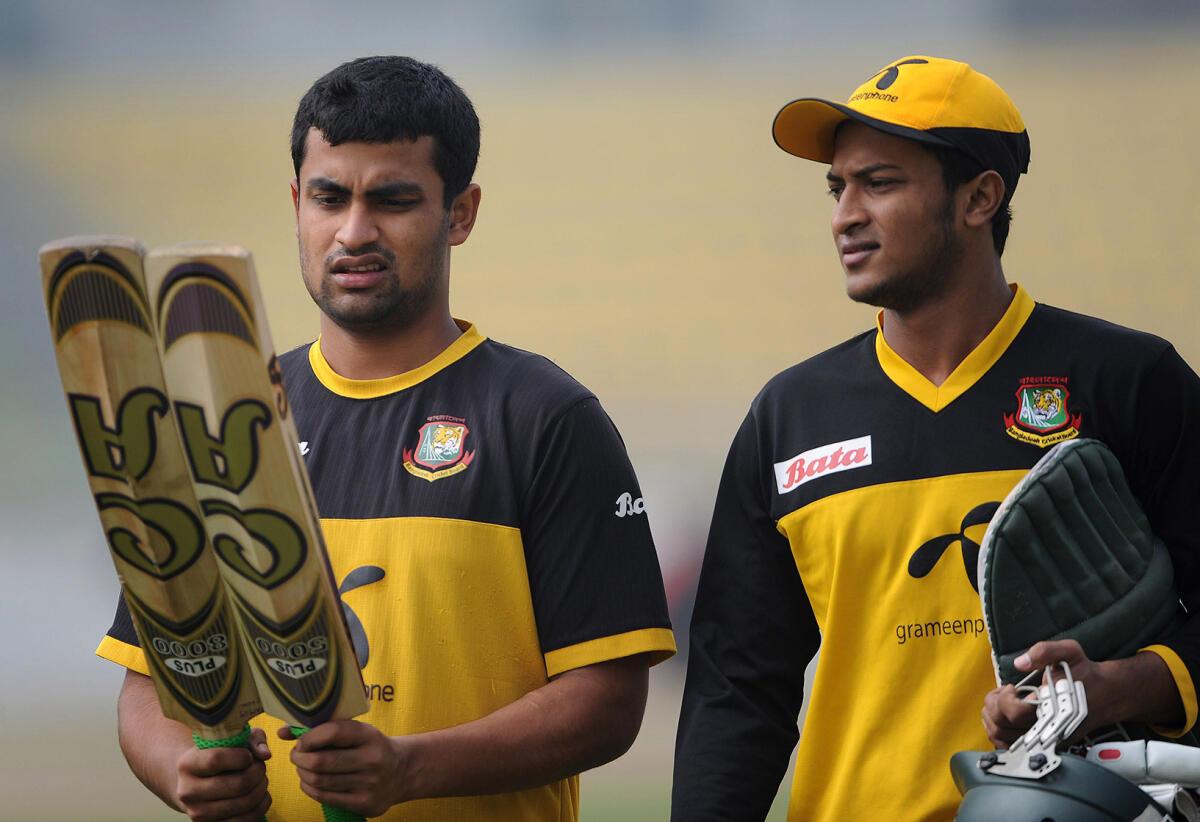
Shakib Al Hasan: I remain optimistic that I’ll return to Bangladesh by the end of the year  Shakib Al Hasan — Bangladesh cricket’s biggest superstar, a name long associated with consistency, control and quiet authority.But over the last couple of years, his journey has taken a different course. Away from home, and from the familiar roar of the Sher-e-Bangla crowd, Shakib has been living in the United States following the August 2024 political shift. Facing legal challenges and security concerns linked to his association with the Awami League regime, he has settled into a relatively low-key life with his wife and children in and around New York.He continues to travel and compete, with franchise leagues across the world keeping him busy. Yet, the green and red has remained out of reach. For nearly two years, Shakib has been absent from international cricket — a gap that has only sharpened focus on his absence.Still, the ambition remains intact. A return. A homecoming. Perhaps one final stint in national colours.Speaking to        Sportstar at a plush South Mumbai hotel on Wednesday, the cricketer-turned-politician spoke candidly about Bangladesh cricket, his own journey, and the pull of home.During the conversation, he made a significant remark: he hopes to move back to Bangladesh by the end of this year.Q: You haven’t played international cricket since October 2024. What, in your view, is the realistic possibility of you wearing the Bangladesh colours again?The thing is, the situation in Bangladesh can change all of a sudden. You never know what will happen tomorrow, so that’s why I’m still hopeful. I don’t think too much about what will happen. Every day, I’m trying to move forward in a new way with my family. As and when I get a chance to play the game, I am grabbing those opportunities. But as far as making it back to the Bangladesh team is concerned, I don’t think it’s in my control. But, I’m trying to find a solution.Q: Over the last year and a half, Bangladesh’s political landscape has shifted rapidly, with the ripple effects felt within the cricket board as well. Now, with your long-time teammate Tamim Iqbal stepping in as the interim president of the Bangladesh Cricket Board, have the two of you had any discussions about your future?Actually, we haven’t spoken about any plans. Or, for that matter, anything of that sort. To be honest, there have been no discussions on that front, so at this point, I don’t have a clear picture. But with Bangladesh cricket, you never quite know — things can move quickly. We might talk over a couple of days and then sit down to see if there’s a solution. I remain hopeful, for sure. But realistically, it’s difficult for me to predict what the future holds. FILE PHOTO: Shakib Al Hasan (right) and teammate Tamim Iqbal.
                                                            | Photo Credit: 
                                AFP
                            

                            FILE PHOTO: Shakib Al Hasan (right) and teammate Tamim Iqbal.
                                                            | Photo Credit: 
                                AFP
                                                    Not long ago, there was a growing call for former cricketers to move into administration. Yet, over the last couple of years, the Bangladesh Cricket Board has gone through a turbulent phase, with two former captains — Faruque Ahmed and Aminul Islam Bulbul — at the helm. Do you think Bangladesh’s eventual withdrawal from the ICC Men’s T20 World Cup stands out as a major setback during Bulbul’s tenure?In the end, it was the players who suffered — and that’s simply not acceptable. It was a very poor decision by the then-interim government. At the same time, the Bangladesh Cricket Board also went along with it. There wasn’t enough effort to push back or convince the authorities that the team should participate in the tournament regardless. Instead, multiple conditions were put in place. And let’s be honest, you can’t really find solutions when you start with too many conditions.Look, the Indian Premier League is a domestic tournament run by the Board of Control for Cricket in India, and ultimately, it’s their call on who they pick or leave out. That said, I do feel the Mustafizur Rahman situation could have been handled much better, ideally through back-channel discussions involving the BCB and the franchise.These things aren’t new in franchise cricket. I’ve had a similar experience myself. I was once picked by an IPL team but had to pull out because I wasn’t available for the full season. The franchise and I spoke, reached a mutual understanding, and they compensated me. It was handled smoothly. The Mustafizur situation could have followed a similar path, but it didn’t.But even then, one incident shouldn’t derail everything. If there were issues between the BCB and the BCCI, they should have been resolved internally — not by escalating matters to the point of straining ties with the International Cricket Council (ICC). That, in my view, was a serious misstep.It wasn’t the right approach. I felt that those in power capitalised on public sentiment, amplified it, and ended up taking a decision that wasn’t in the best interest of the game. It was a clear blunder. While the BCB failed to convince them, responsibility also lies with those running the interim government.From a distance, it seemed like there was little done for the broader good of the country during that period. Perhaps there were attempts, perhaps some positive steps, but I, for one, couldn’t really see any tangible impact.Q: Traditionally, the BCCI and the BCB have shared a cordial relationship. Do you think the two boards could have handled the Mustafizur issue better through clearer communication and a more amicable approach, instead of allowing it to escalate?For sure. The boards should have kept their lines of communication open and clearly explained the situation, especially if a player couldn’t be accommodated due to political circumstances. At the same time, the other side needed to acknowledge those constraints and work towards an amicable solution. That would have made things much easier for Mustafizur as well.I’m not sure why the BCCI or the franchise didn’t initiate back-channel discussions. From what I’ve heard, communication between the BCCI and the Bangladesh Cricket Board had broken down, which is quite unfortunate.ALSO READ |        Sport is a bridge that no longer reaches both sidesIf that was indeed the case, then there were shortcomings on both sides. But at the end of the day, these are largely hearsay — and it’s unlikely that either party would openly acknowledge where things went wrong.Q: Now, when you look back, do you feel entering politics was the right decision, or do you think it might have been better to step into it after your playing career?Looking back, maybe it would have been better to enter politics after retirement — that might have been the ideal scenario. But when I decided to contest the elections in December 2023, I was clear in my mind that the 2025 Champions Trophy would be my last appearance for Bangladesh. In that sense, I saw it as a post-retirement plan anyway. That’s why the timing felt right to me.People from different walks of life try to make an impact in politics through their work. A doctor, for instance, earns goodwill through service, helping people, offering treatment, and building trust. Similarly, individuals from other professions connect with people in their own ways. In my case, I used my cricketing career and popularity to reach out to people. I don’t think the approach was wrong, but of course, people are entitled to see it differently.Q: There’s often a perception that good people stay away from politics. When someone like you, with your stature and achievements, chooses to enter that space, do you think it can inspire more like-minded individuals to come forward and get involved?That thought was definitely there at the back of my mind. I’ve always felt that when good people stay away from politics, it creates space for the wrong kind of people to step in. So, before I took that decision, it was something I genuinely reflected on.At one level, anyone can enter politics, and it’s up to the public to decide who they want as their representative. That’s how I initially looked at it. But with time, I’ve realised it’s not that simple. It’s not always black and white.When I was growing up, not many people chose cricket as a profession. Today, that perception has changed as parents actively encourage their children to take up the sport. In a similar way, I felt that why shouldn’t an honest, disciplined, self-made individual step into politics and try to contribute to the country? That was the idea behind my decision.Q: When Bangladesh went through political turmoil in July–August 2024, you were away with the team at the T20 World Cup. As the situation unfolded back home and you were directly affected, including reports of attacks on your property, how did you deal with that phase? For someone of your stature, it must have been a particularly challenging time to navigate…It was a very difficult phase. Honestly, I didn’t quite know how to react at the time — I was more shocked than anything else. I had never experienced anything like that in my life, so it was completely beyond my imagination.The support from my family meant a lot, and I tried to keep myself occupied with cricket. I was playing a franchise tournament in Canada then, and it wasn’t easy to block out the noise and just focus on the game.There were moments, even in Canada, when a few spectators questioned what I had done for Bangladesh. After representing my country for nearly two decades, I didn’t quite know how to respond to that. Looking back, I think those were staged protests.After that, I played the series in Pakistan and then toured India. I was advised, for the time being, to continue playing overseas and avoid returning home. It wasn’t an easy situation, and things clearly weren’t ideal.But over time, I’ve come to believe that things do settle. Time has a way of healing. So, for now, I’m trying to stay patient and hopeful that things will eventually change.Q: You had hoped to retire from international cricket on home soil, but due to security concerns, that wasn’t possible at the time. Do you still hold on to the dream of playing in front of your home crowd again?Definitely. It’s not that I want to play just one more match and then walk away. I’m still physically fit, and I believe I still have something to offer. By the Almighty’s grace, I’ve performed well in the matches I’ve played recently, so that confidence is still there.I don’t want to be in a position where I become a burden on the team just for the sake of a farewell game. As long as I feel I’m contributing, I would want to continue. I believe I still have that in me.It would probably take me about a month to get back to peak fitness, but yes, the desire to play at home again, that’s always going to be there.Q: With Tamim stepping in as the interim chief of the BCB, how crucial do you think this phase is for Bangladesh cricket? And do you see him as the right person to stabilise things and rebuild relationships with the ICC and the BCCI?Now that Tamim is at the helm, I’m sure he will do everything possible to mend relationships with the ICC and, of course, the BCCI.I genuinely believe that one or two isolated incidents shouldn’t be enough to damage ties between boards so easily. And knowing Tamim, I’m confident he will give it his best. I don’t see any reason why he can’t be successful in that.Q: Since you feature in several T20 leagues, do you feel all-rounders are gradually losing their relevance in the shorter format?No, I don’t think that’s a global trend. It’s more specific to the IPL, and largely because of the Impact Player rule.With that rule in place, teams don’t necessarily need an all-rounder. They can go in with specialists — either a proper batter or a proper bowler — and adjust as the game progresses. You can effectively field up to eight batters or play as many as six bowling options, so the need for someone who contributes a bit in both departments has reduced.That’s why, with higher scores becoming the norm, all-rounders have perhaps lost some of their market value in the IPL. But that’s not the case elsewhere.In international cricket and most other overseas leagues, where there’s no Impact Player rule, there is still a strong demand for quality all-rounders. Their balance and flexibility remain very important in those formats.Q: What are your views on the Impact Player rule?If I remember correctly, there was a similar concept when we played the Under-19 World Cup in 2006, but it didn’t quite work out. That’s probably one of the reasons why the ICC hasn’t implemented something like the Impact Player rule at the global level.Q: What, in your view, are the key changes in the dynamics of T20 cricket in recent years?It’s getting faster with each passing year. The emphasis now is clearly on scoring, as fans want to see runs, and conditions are increasingly being tailored to favour batters. That’s why we’re witnessing so many high-scoring games.When we started in the IPL, a winning total used to be around 140–160. Then it moved to 180, then 200. Now, teams are comfortably chasing 220, 230, even 250. The game is evolving constantly, but perhaps it would be better if there was a bit more balance between bat and ball.Q: In this edition of the IPL, teams have clearly taken Powerplay scoring to another level…Yes, totals of 80, 90, or even 100 in the first six overs are no longer surprising. Not long ago, 42 or 45 was considered an ideal return in that phase. But the game has evolved with audience demand — fans want to see sixes, and teams have responded by attacking from ball one. Earlier, only a few sides had the firepower to do this consistently; now, it’s become a universal approach, with every team capable of going hard right from the start.Q: Why do you think Bangladesh cricket has been going through such a prolonged transition phase?The prolonged transition has largely been the result of a lack of long-term planning. Those in charge never clearly mapped out how to navigate this phase or identified which young players needed to be groomed for the future. There was little foresight about the inevitable vacuum that would be created once the senior players moved on, or how to manage that shift. The focus remained on short-term results rather than building continuity, and that is why the team finds itself in this position today.Q: Do you think the multiple regime changes within the BCB over the past year and a half have also contributed to this situation?It has certainly had an impact. People may argue that performance is independent of who heads the BCB, but in reality, frequent changes at the top create instability. In such a turbulent environment, neither the board nor the players are able to plan effectively. There has to be a clear vision, and constant leadership changes disrupt that process. If a president is unsure about the length of their tenure, it becomes difficult to take long-term decisions or implement a structured roadmap.This uncertainty inevitably affects the players as well. However, there is hope that things will stabilise after the upcoming BCB elections in the next couple of months. If the new president is able to serve a full four-year term, it should bring much-needed continuity and direction, which can only benefit Bangladesh cricket going forward.Q: A few months back, there were reports that the BCB was working towards facilitating your return. What really happened there?The previous Board did express their intent to bring me back, but there’s often a big difference between saying something and actually following through on it. Even now, I hear that everyone wants me to return, but the irony is that no one has really taken the initiative to make it happen (laughs).Q: Have you given any thought about life after cricket?There are quite a few options. Coaching is certainly one of them, but I haven’t really made up my mind yet. To be honest, I don’t have a strong urge to stay involved with cricket after retirement. If I do decide to remain connected to the game, then coaching or even becoming a match referee could be possibilities. Otherwise, I might look at business opportunities, and of course, there is politics.Q: So, is politics something you would like to pursue seriously on a full-time basis?I’ve already been involved in politics, so with more time on my hands now, I would like to pursue it as a full-time option.Q: Do you see yourself taking up a role in cricket administration in the future?Not really. As I mentioned earlier, I don’t see myself staying involved with cricket after retirement — that has always been my thinking. Of course, you can’t predict what might happen years down the line, but as of now, I don’t have any plans to move into cricket administration.Q: When you started your career, you had several players to look up to. Do you think the current generation of Bangladeshi cricketers have similar figures they can draw inspiration from?I think rather than following one particular player, youngsters should look to draw inspiration from multiple cricketers based on their specific skills. For example, if you’re a fast bowler, it makes more sense to learn from the top five fast bowlers in the world instead of idolising just one. This approach allows you to pick up different strengths, understand various methods, and even learn from others’ weaknesses. In the long run, it helps in building a more complete and adaptable game.Q: What lies ahead for you? How do you see the road ahead?I haven’t really thought it through yet, but I’m hopeful that things will be sorted by the end of the year. For now, I’m just keeping my fingers crossed. One thing is certain — I will have to return to Bangladesh. The only question is how soon that can happen. But I remain optimistic that I’ll be back by the end of the year. I don’t know exactly how it will happen, but I’m genuinely hopeful.Published on Apr 30, 2026  #Shakib #Hasan #remain #optimistic #thatIll #return #toBangladeshby #year

Shakib Al Hasan: I remain optimistic that I’ll return to Bangladesh by the end of the year

Shakib Al Hasan — Bangladesh cricket’s biggest superstar, a name long associated with consistency, control and quiet authority.

But over the last couple of years, his journey has taken a different course. Away from home, and from the familiar roar of the Sher-e-Bangla crowd, Shakib has been living in the United States following the August 2024 political shift. Facing legal challenges and security concerns linked to his association with the Awami League regime, he has settled into a relatively low-key life with his wife and children in and around New York.

He continues to travel and compete, with franchise leagues across the world keeping him busy. Yet, the green and red has remained out of reach. For nearly two years, Shakib has been absent from international cricket — a gap that has only sharpened focus on his absence.

Still, the ambition remains intact. A return. A homecoming. Perhaps one final stint in national colours.

Speaking to Sportstar at a plush South Mumbai hotel on Wednesday, the cricketer-turned-politician spoke candidly about Bangladesh cricket, his own journey, and the pull of home.

During the conversation, he made a significant remark: he hopes to move back to Bangladesh by the end of this year.

Q: You haven’t played international cricket since October 2024. What, in your view, is the realistic possibility of you wearing the Bangladesh colours again?

The thing is, the situation in Bangladesh can change all of a sudden. You never know what will happen tomorrow, so that’s why I’m still hopeful. I don’t think too much about what will happen. Every day, I’m trying to move forward in a new way with my family. As and when I get a chance to play the game, I am grabbing those opportunities. But as far as making it back to the Bangladesh team is concerned, I don’t think it’s in my control. But, I’m trying to find a solution.

Q: Over the last year and a half, Bangladesh’s political landscape has shifted rapidly, with the ripple effects felt within the cricket board as well. Now, with your long-time teammate Tamim Iqbal stepping in as the interim president of the Bangladesh Cricket Board, have the two of you had any discussions about your future?

Actually, we haven’t spoken about any plans. Or, for that matter, anything of that sort. To be honest, there have been no discussions on that front, so at this point, I don’t have a clear picture. But with Bangladesh cricket, you never quite know — things can move quickly. We might talk over a couple of days and then sit down to see if there’s a solution. I remain hopeful, for sure. But realistically, it’s difficult for me to predict what the future holds.
Shakib Al Hasan: I remain optimistic that I’ll return to Bangladesh by the end of the year  Shakib Al Hasan — Bangladesh cricket’s biggest superstar, a name long associated with consistency, control and quiet authority.But over the last couple of years, his journey has taken a different course. Away from home, and from the familiar roar of the Sher-e-Bangla crowd, Shakib has been living in the United States following the August 2024 political shift. Facing legal challenges and security concerns linked to his association with the Awami League regime, he has settled into a relatively low-key life with his wife and children in and around New York.He continues to travel and compete, with franchise leagues across the world keeping him busy. Yet, the green and red has remained out of reach. For nearly two years, Shakib has been absent from international cricket — a gap that has only sharpened focus on his absence.Still, the ambition remains intact. A return. A homecoming. Perhaps one final stint in national colours.Speaking to        Sportstar at a plush South Mumbai hotel on Wednesday, the cricketer-turned-politician spoke candidly about Bangladesh cricket, his own journey, and the pull of home.During the conversation, he made a significant remark: he hopes to move back to Bangladesh by the end of this year.Q: You haven’t played international cricket since October 2024. What, in your view, is the realistic possibility of you wearing the Bangladesh colours again?The thing is, the situation in Bangladesh can change all of a sudden. You never know what will happen tomorrow, so that’s why I’m still hopeful. I don’t think too much about what will happen. Every day, I’m trying to move forward in a new way with my family. As and when I get a chance to play the game, I am grabbing those opportunities. But as far as making it back to the Bangladesh team is concerned, I don’t think it’s in my control. But, I’m trying to find a solution.Q: Over the last year and a half, Bangladesh’s political landscape has shifted rapidly, with the ripple effects felt within the cricket board as well. Now, with your long-time teammate Tamim Iqbal stepping in as the interim president of the Bangladesh Cricket Board, have the two of you had any discussions about your future?Actually, we haven’t spoken about any plans. Or, for that matter, anything of that sort. To be honest, there have been no discussions on that front, so at this point, I don’t have a clear picture. But with Bangladesh cricket, you never quite know — things can move quickly. We might talk over a couple of days and then sit down to see if there’s a solution. I remain hopeful, for sure. But realistically, it’s difficult for me to predict what the future holds. FILE PHOTO: Shakib Al Hasan (right) and teammate Tamim Iqbal.
                                                            | Photo Credit: 
                                AFP
                            

                            FILE PHOTO: Shakib Al Hasan (right) and teammate Tamim Iqbal.
                                                            | Photo Credit: 
                                AFP
                                                    Not long ago, there was a growing call for former cricketers to move into administration. Yet, over the last couple of years, the Bangladesh Cricket Board has gone through a turbulent phase, with two former captains — Faruque Ahmed and Aminul Islam Bulbul — at the helm. Do you think Bangladesh’s eventual withdrawal from the ICC Men’s T20 World Cup stands out as a major setback during Bulbul’s tenure?In the end, it was the players who suffered — and that’s simply not acceptable. It was a very poor decision by the then-interim government. At the same time, the Bangladesh Cricket Board also went along with it. There wasn’t enough effort to push back or convince the authorities that the team should participate in the tournament regardless. Instead, multiple conditions were put in place. And let’s be honest, you can’t really find solutions when you start with too many conditions.Look, the Indian Premier League is a domestic tournament run by the Board of Control for Cricket in India, and ultimately, it’s their call on who they pick or leave out. That said, I do feel the Mustafizur Rahman situation could have been handled much better, ideally through back-channel discussions involving the BCB and the franchise.These things aren’t new in franchise cricket. I’ve had a similar experience myself. I was once picked by an IPL team but had to pull out because I wasn’t available for the full season. The franchise and I spoke, reached a mutual understanding, and they compensated me. It was handled smoothly. The Mustafizur situation could have followed a similar path, but it didn’t.But even then, one incident shouldn’t derail everything. If there were issues between the BCB and the BCCI, they should have been resolved internally — not by escalating matters to the point of straining ties with the International Cricket Council (ICC). That, in my view, was a serious misstep.It wasn’t the right approach. I felt that those in power capitalised on public sentiment, amplified it, and ended up taking a decision that wasn’t in the best interest of the game. It was a clear blunder. While the BCB failed to convince them, responsibility also lies with those running the interim government.From a distance, it seemed like there was little done for the broader good of the country during that period. Perhaps there were attempts, perhaps some positive steps, but I, for one, couldn’t really see any tangible impact.Q: Traditionally, the BCCI and the BCB have shared a cordial relationship. Do you think the two boards could have handled the Mustafizur issue better through clearer communication and a more amicable approach, instead of allowing it to escalate?For sure. The boards should have kept their lines of communication open and clearly explained the situation, especially if a player couldn’t be accommodated due to political circumstances. At the same time, the other side needed to acknowledge those constraints and work towards an amicable solution. That would have made things much easier for Mustafizur as well.I’m not sure why the BCCI or the franchise didn’t initiate back-channel discussions. From what I’ve heard, communication between the BCCI and the Bangladesh Cricket Board had broken down, which is quite unfortunate.ALSO READ |        Sport is a bridge that no longer reaches both sidesIf that was indeed the case, then there were shortcomings on both sides. But at the end of the day, these are largely hearsay — and it’s unlikely that either party would openly acknowledge where things went wrong.Q: Now, when you look back, do you feel entering politics was the right decision, or do you think it might have been better to step into it after your playing career?Looking back, maybe it would have been better to enter politics after retirement — that might have been the ideal scenario. But when I decided to contest the elections in December 2023, I was clear in my mind that the 2025 Champions Trophy would be my last appearance for Bangladesh. In that sense, I saw it as a post-retirement plan anyway. That’s why the timing felt right to me.People from different walks of life try to make an impact in politics through their work. A doctor, for instance, earns goodwill through service, helping people, offering treatment, and building trust. Similarly, individuals from other professions connect with people in their own ways. In my case, I used my cricketing career and popularity to reach out to people. I don’t think the approach was wrong, but of course, people are entitled to see it differently.Q: There’s often a perception that good people stay away from politics. When someone like you, with your stature and achievements, chooses to enter that space, do you think it can inspire more like-minded individuals to come forward and get involved?That thought was definitely there at the back of my mind. I’ve always felt that when good people stay away from politics, it creates space for the wrong kind of people to step in. So, before I took that decision, it was something I genuinely reflected on.At one level, anyone can enter politics, and it’s up to the public to decide who they want as their representative. That’s how I initially looked at it. But with time, I’ve realised it’s not that simple. It’s not always black and white.When I was growing up, not many people chose cricket as a profession. Today, that perception has changed as parents actively encourage their children to take up the sport. In a similar way, I felt that why shouldn’t an honest, disciplined, self-made individual step into politics and try to contribute to the country? That was the idea behind my decision.Q: When Bangladesh went through political turmoil in July–August 2024, you were away with the team at the T20 World Cup. As the situation unfolded back home and you were directly affected, including reports of attacks on your property, how did you deal with that phase? For someone of your stature, it must have been a particularly challenging time to navigate…It was a very difficult phase. Honestly, I didn’t quite know how to react at the time — I was more shocked than anything else. I had never experienced anything like that in my life, so it was completely beyond my imagination.The support from my family meant a lot, and I tried to keep myself occupied with cricket. I was playing a franchise tournament in Canada then, and it wasn’t easy to block out the noise and just focus on the game.There were moments, even in Canada, when a few spectators questioned what I had done for Bangladesh. After representing my country for nearly two decades, I didn’t quite know how to respond to that. Looking back, I think those were staged protests.After that, I played the series in Pakistan and then toured India. I was advised, for the time being, to continue playing overseas and avoid returning home. It wasn’t an easy situation, and things clearly weren’t ideal.But over time, I’ve come to believe that things do settle. Time has a way of healing. So, for now, I’m trying to stay patient and hopeful that things will eventually change.Q: You had hoped to retire from international cricket on home soil, but due to security concerns, that wasn’t possible at the time. Do you still hold on to the dream of playing in front of your home crowd again?Definitely. It’s not that I want to play just one more match and then walk away. I’m still physically fit, and I believe I still have something to offer. By the Almighty’s grace, I’ve performed well in the matches I’ve played recently, so that confidence is still there.I don’t want to be in a position where I become a burden on the team just for the sake of a farewell game. As long as I feel I’m contributing, I would want to continue. I believe I still have that in me.It would probably take me about a month to get back to peak fitness, but yes, the desire to play at home again, that’s always going to be there.Q: With Tamim stepping in as the interim chief of the BCB, how crucial do you think this phase is for Bangladesh cricket? And do you see him as the right person to stabilise things and rebuild relationships with the ICC and the BCCI?Now that Tamim is at the helm, I’m sure he will do everything possible to mend relationships with the ICC and, of course, the BCCI.I genuinely believe that one or two isolated incidents shouldn’t be enough to damage ties between boards so easily. And knowing Tamim, I’m confident he will give it his best. I don’t see any reason why he can’t be successful in that.Q: Since you feature in several T20 leagues, do you feel all-rounders are gradually losing their relevance in the shorter format?No, I don’t think that’s a global trend. It’s more specific to the IPL, and largely because of the Impact Player rule.With that rule in place, teams don’t necessarily need an all-rounder. They can go in with specialists — either a proper batter or a proper bowler — and adjust as the game progresses. You can effectively field up to eight batters or play as many as six bowling options, so the need for someone who contributes a bit in both departments has reduced.That’s why, with higher scores becoming the norm, all-rounders have perhaps lost some of their market value in the IPL. But that’s not the case elsewhere.In international cricket and most other overseas leagues, where there’s no Impact Player rule, there is still a strong demand for quality all-rounders. Their balance and flexibility remain very important in those formats.Q: What are your views on the Impact Player rule?If I remember correctly, there was a similar concept when we played the Under-19 World Cup in 2006, but it didn’t quite work out. That’s probably one of the reasons why the ICC hasn’t implemented something like the Impact Player rule at the global level.Q: What, in your view, are the key changes in the dynamics of T20 cricket in recent years?It’s getting faster with each passing year. The emphasis now is clearly on scoring, as fans want to see runs, and conditions are increasingly being tailored to favour batters. That’s why we’re witnessing so many high-scoring games.When we started in the IPL, a winning total used to be around 140–160. Then it moved to 180, then 200. Now, teams are comfortably chasing 220, 230, even 250. The game is evolving constantly, but perhaps it would be better if there was a bit more balance between bat and ball.Q: In this edition of the IPL, teams have clearly taken Powerplay scoring to another level…Yes, totals of 80, 90, or even 100 in the first six overs are no longer surprising. Not long ago, 42 or 45 was considered an ideal return in that phase. But the game has evolved with audience demand — fans want to see sixes, and teams have responded by attacking from ball one. Earlier, only a few sides had the firepower to do this consistently; now, it’s become a universal approach, with every team capable of going hard right from the start.Q: Why do you think Bangladesh cricket has been going through such a prolonged transition phase?The prolonged transition has largely been the result of a lack of long-term planning. Those in charge never clearly mapped out how to navigate this phase or identified which young players needed to be groomed for the future. There was little foresight about the inevitable vacuum that would be created once the senior players moved on, or how to manage that shift. The focus remained on short-term results rather than building continuity, and that is why the team finds itself in this position today.Q: Do you think the multiple regime changes within the BCB over the past year and a half have also contributed to this situation?It has certainly had an impact. People may argue that performance is independent of who heads the BCB, but in reality, frequent changes at the top create instability. In such a turbulent environment, neither the board nor the players are able to plan effectively. There has to be a clear vision, and constant leadership changes disrupt that process. If a president is unsure about the length of their tenure, it becomes difficult to take long-term decisions or implement a structured roadmap.This uncertainty inevitably affects the players as well. However, there is hope that things will stabilise after the upcoming BCB elections in the next couple of months. If the new president is able to serve a full four-year term, it should bring much-needed continuity and direction, which can only benefit Bangladesh cricket going forward.Q: A few months back, there were reports that the BCB was working towards facilitating your return. What really happened there?The previous Board did express their intent to bring me back, but there’s often a big difference between saying something and actually following through on it. Even now, I hear that everyone wants me to return, but the irony is that no one has really taken the initiative to make it happen (laughs).Q: Have you given any thought about life after cricket?There are quite a few options. Coaching is certainly one of them, but I haven’t really made up my mind yet. To be honest, I don’t have a strong urge to stay involved with cricket after retirement. If I do decide to remain connected to the game, then coaching or even becoming a match referee could be possibilities. Otherwise, I might look at business opportunities, and of course, there is politics.Q: So, is politics something you would like to pursue seriously on a full-time basis?I’ve already been involved in politics, so with more time on my hands now, I would like to pursue it as a full-time option.Q: Do you see yourself taking up a role in cricket administration in the future?Not really. As I mentioned earlier, I don’t see myself staying involved with cricket after retirement — that has always been my thinking. Of course, you can’t predict what might happen years down the line, but as of now, I don’t have any plans to move into cricket administration.Q: When you started your career, you had several players to look up to. Do you think the current generation of Bangladeshi cricketers have similar figures they can draw inspiration from?I think rather than following one particular player, youngsters should look to draw inspiration from multiple cricketers based on their specific skills. For example, if you’re a fast bowler, it makes more sense to learn from the top five fast bowlers in the world instead of idolising just one. This approach allows you to pick up different strengths, understand various methods, and even learn from others’ weaknesses. In the long run, it helps in building a more complete and adaptable game.Q: What lies ahead for you? How do you see the road ahead?I haven’t really thought it through yet, but I’m hopeful that things will be sorted by the end of the year. For now, I’m just keeping my fingers crossed. One thing is certain — I will have to return to Bangladesh. The only question is how soon that can happen. But I remain optimistic that I’ll be back by the end of the year. I don’t know exactly how it will happen, but I’m genuinely hopeful.Published on Apr 30, 2026  #Shakib #Hasan #remain #optimistic #thatIll #return #toBangladeshby #year

FILE PHOTO: Shakib Al Hasan (right) and teammate Tamim Iqbal. | Photo Credit: AFP

lightbox-info

FILE PHOTO: Shakib Al Hasan (right) and teammate Tamim Iqbal. | Photo Credit: AFP

Not long ago, there was a growing call for former cricketers to move into administration. Yet, over the last couple of years, the Bangladesh Cricket Board has gone through a turbulent phase, with two former captains — Faruque Ahmed and Aminul Islam Bulbul — at the helm. Do you think Bangladesh’s eventual withdrawal from the ICC Men’s T20 World Cup stands out as a major setback during Bulbul’s tenure?

In the end, it was the players who suffered — and that’s simply not acceptable. It was a very poor decision by the then-interim government. At the same time, the Bangladesh Cricket Board also went along with it. There wasn’t enough effort to push back or convince the authorities that the team should participate in the tournament regardless. Instead, multiple conditions were put in place. And let’s be honest, you can’t really find solutions when you start with too many conditions.

Look, the Indian Premier League is a domestic tournament run by the Board of Control for Cricket in India, and ultimately, it’s their call on who they pick or leave out. That said, I do feel the Mustafizur Rahman situation could have been handled much better, ideally through back-channel discussions involving the BCB and the franchise.

These things aren’t new in franchise cricket. I’ve had a similar experience myself. I was once picked by an IPL team but had to pull out because I wasn’t available for the full season. The franchise and I spoke, reached a mutual understanding, and they compensated me. It was handled smoothly. The Mustafizur situation could have followed a similar path, but it didn’t.

But even then, one incident shouldn’t derail everything. If there were issues between the BCB and the BCCI, they should have been resolved internally — not by escalating matters to the point of straining ties with the International Cricket Council (ICC). That, in my view, was a serious misstep.

It wasn’t the right approach. I felt that those in power capitalised on public sentiment, amplified it, and ended up taking a decision that wasn’t in the best interest of the game. It was a clear blunder. While the BCB failed to convince them, responsibility also lies with those running the interim government.

From a distance, it seemed like there was little done for the broader good of the country during that period. Perhaps there were attempts, perhaps some positive steps, but I, for one, couldn’t really see any tangible impact.

Q: Traditionally, the BCCI and the BCB have shared a cordial relationship. Do you think the two boards could have handled the Mustafizur issue better through clearer communication and a more amicable approach, instead of allowing it to escalate?

For sure. The boards should have kept their lines of communication open and clearly explained the situation, especially if a player couldn’t be accommodated due to political circumstances. At the same time, the other side needed to acknowledge those constraints and work towards an amicable solution. That would have made things much easier for Mustafizur as well.

I’m not sure why the BCCI or the franchise didn’t initiate back-channel discussions. From what I’ve heard, communication between the BCCI and the Bangladesh Cricket Board had broken down, which is quite unfortunate.

ALSO READ | Sport is a bridge that no longer reaches both sides

If that was indeed the case, then there were shortcomings on both sides. But at the end of the day, these are largely hearsay — and it’s unlikely that either party would openly acknowledge where things went wrong.

Q: Now, when you look back, do you feel entering politics was the right decision, or do you think it might have been better to step into it after your playing career?

Looking back, maybe it would have been better to enter politics after retirement — that might have been the ideal scenario. But when I decided to contest the elections in December 2023, I was clear in my mind that the 2025 Champions Trophy would be my last appearance for Bangladesh. In that sense, I saw it as a post-retirement plan anyway. That’s why the timing felt right to me.

People from different walks of life try to make an impact in politics through their work. A doctor, for instance, earns goodwill through service, helping people, offering treatment, and building trust. Similarly, individuals from other professions connect with people in their own ways. In my case, I used my cricketing career and popularity to reach out to people. I don’t think the approach was wrong, but of course, people are entitled to see it differently.

Q: There’s often a perception that good people stay away from politics. When someone like you, with your stature and achievements, chooses to enter that space, do you think it can inspire more like-minded individuals to come forward and get involved?

That thought was definitely there at the back of my mind. I’ve always felt that when good people stay away from politics, it creates space for the wrong kind of people to step in. So, before I took that decision, it was something I genuinely reflected on.

At one level, anyone can enter politics, and it’s up to the public to decide who they want as their representative. That’s how I initially looked at it. But with time, I’ve realised it’s not that simple. It’s not always black and white.

When I was growing up, not many people chose cricket as a profession. Today, that perception has changed as parents actively encourage their children to take up the sport. In a similar way, I felt that why shouldn’t an honest, disciplined, self-made individual step into politics and try to contribute to the country? That was the idea behind my decision.

Q: When Bangladesh went through political turmoil in July–August 2024, you were away with the team at the T20 World Cup. As the situation unfolded back home and you were directly affected, including reports of attacks on your property, how did you deal with that phase? For someone of your stature, it must have been a particularly challenging time to navigate…

It was a very difficult phase. Honestly, I didn’t quite know how to react at the time — I was more shocked than anything else. I had never experienced anything like that in my life, so it was completely beyond my imagination.

The support from my family meant a lot, and I tried to keep myself occupied with cricket. I was playing a franchise tournament in Canada then, and it wasn’t easy to block out the noise and just focus on the game.

There were moments, even in Canada, when a few spectators questioned what I had done for Bangladesh. After representing my country for nearly two decades, I didn’t quite know how to respond to that. Looking back, I think those were staged protests.

After that, I played the series in Pakistan and then toured India. I was advised, for the time being, to continue playing overseas and avoid returning home. It wasn’t an easy situation, and things clearly weren’t ideal.

But over time, I’ve come to believe that things do settle. Time has a way of healing. So, for now, I’m trying to stay patient and hopeful that things will eventually change.

Q: You had hoped to retire from international cricket on home soil, but due to security concerns, that wasn’t possible at the time. Do you still hold on to the dream of playing in front of your home crowd again?

Definitely. It’s not that I want to play just one more match and then walk away. I’m still physically fit, and I believe I still have something to offer. By the Almighty’s grace, I’ve performed well in the matches I’ve played recently, so that confidence is still there.

I don’t want to be in a position where I become a burden on the team just for the sake of a farewell game. As long as I feel I’m contributing, I would want to continue. I believe I still have that in me.

It would probably take me about a month to get back to peak fitness, but yes, the desire to play at home again, that’s always going to be there.

Q: With Tamim stepping in as the interim chief of the BCB, how crucial do you think this phase is for Bangladesh cricket? And do you see him as the right person to stabilise things and rebuild relationships with the ICC and the BCCI?

Now that Tamim is at the helm, I’m sure he will do everything possible to mend relationships with the ICC and, of course, the BCCI.

I genuinely believe that one or two isolated incidents shouldn’t be enough to damage ties between boards so easily. And knowing Tamim, I’m confident he will give it his best. I don’t see any reason why he can’t be successful in that.

Q: Since you feature in several T20 leagues, do you feel all-rounders are gradually losing their relevance in the shorter format?

No, I don’t think that’s a global trend. It’s more specific to the IPL, and largely because of the Impact Player rule.

With that rule in place, teams don’t necessarily need an all-rounder. They can go in with specialists — either a proper batter or a proper bowler — and adjust as the game progresses. You can effectively field up to eight batters or play as many as six bowling options, so the need for someone who contributes a bit in both departments has reduced.

That’s why, with higher scores becoming the norm, all-rounders have perhaps lost some of their market value in the IPL. But that’s not the case elsewhere.

In international cricket and most other overseas leagues, where there’s no Impact Player rule, there is still a strong demand for quality all-rounders. Their balance and flexibility remain very important in those formats.

Q: What are your views on the Impact Player rule?

If I remember correctly, there was a similar concept when we played the Under-19 World Cup in 2006, but it didn’t quite work out. That’s probably one of the reasons why the ICC hasn’t implemented something like the Impact Player rule at the global level.

Q: What, in your view, are the key changes in the dynamics of T20 cricket in recent years?

It’s getting faster with each passing year. The emphasis now is clearly on scoring, as fans want to see runs, and conditions are increasingly being tailored to favour batters. That’s why we’re witnessing so many high-scoring games.

When we started in the IPL, a winning total used to be around 140–160. Then it moved to 180, then 200. Now, teams are comfortably chasing 220, 230, even 250. The game is evolving constantly, but perhaps it would be better if there was a bit more balance between bat and ball.

Q: In this edition of the IPL, teams have clearly taken Powerplay scoring to another level…

Yes, totals of 80, 90, or even 100 in the first six overs are no longer surprising. Not long ago, 42 or 45 was considered an ideal return in that phase. But the game has evolved with audience demand — fans want to see sixes, and teams have responded by attacking from ball one. Earlier, only a few sides had the firepower to do this consistently; now, it’s become a universal approach, with every team capable of going hard right from the start.

Q: Why do you think Bangladesh cricket has been going through such a prolonged transition phase?

The prolonged transition has largely been the result of a lack of long-term planning. Those in charge never clearly mapped out how to navigate this phase or identified which young players needed to be groomed for the future. There was little foresight about the inevitable vacuum that would be created once the senior players moved on, or how to manage that shift. The focus remained on short-term results rather than building continuity, and that is why the team finds itself in this position today.

Q: Do you think the multiple regime changes within the BCB over the past year and a half have also contributed to this situation?

It has certainly had an impact. People may argue that performance is independent of who heads the BCB, but in reality, frequent changes at the top create instability. In such a turbulent environment, neither the board nor the players are able to plan effectively. There has to be a clear vision, and constant leadership changes disrupt that process. If a president is unsure about the length of their tenure, it becomes difficult to take long-term decisions or implement a structured roadmap.

This uncertainty inevitably affects the players as well. However, there is hope that things will stabilise after the upcoming BCB elections in the next couple of months. If the new president is able to serve a full four-year term, it should bring much-needed continuity and direction, which can only benefit Bangladesh cricket going forward.

Q: A few months back, there were reports that the BCB was working towards facilitating your return. What really happened there?

The previous Board did express their intent to bring me back, but there’s often a big difference between saying something and actually following through on it. Even now, I hear that everyone wants me to return, but the irony is that no one has really taken the initiative to make it happen (laughs).

Q: Have you given any thought about life after cricket?

There are quite a few options. Coaching is certainly one of them, but I haven’t really made up my mind yet. To be honest, I don’t have a strong urge to stay involved with cricket after retirement. If I do decide to remain connected to the game, then coaching or even becoming a match referee could be possibilities. Otherwise, I might look at business opportunities, and of course, there is politics.

Q: So, is politics something you would like to pursue seriously on a full-time basis?

I’ve already been involved in politics, so with more time on my hands now, I would like to pursue it as a full-time option.

Q: Do you see yourself taking up a role in cricket administration in the future?

Not really. As I mentioned earlier, I don’t see myself staying involved with cricket after retirement — that has always been my thinking. Of course, you can’t predict what might happen years down the line, but as of now, I don’t have any plans to move into cricket administration.

Q: When you started your career, you had several players to look up to. Do you think the current generation of Bangladeshi cricketers have similar figures they can draw inspiration from?

I think rather than following one particular player, youngsters should look to draw inspiration from multiple cricketers based on their specific skills. For example, if you’re a fast bowler, it makes more sense to learn from the top five fast bowlers in the world instead of idolising just one. This approach allows you to pick up different strengths, understand various methods, and even learn from others’ weaknesses. In the long run, it helps in building a more complete and adaptable game.

Q: What lies ahead for you? How do you see the road ahead?

I haven’t really thought it through yet, but I’m hopeful that things will be sorted by the end of the year. For now, I’m just keeping my fingers crossed. One thing is certain — I will have to return to Bangladesh. The only question is how soon that can happen. But I remain optimistic that I’ll be back by the end of the year. I don’t know exactly how it will happen, but I’m genuinely hopeful.

Published on Apr 30, 2026
#Shakib #Hasan #remain #optimistic #thatIll #return #toBangladeshby #year

Shakib Al Hasan — Bangladesh cricket’s biggest superstar, a name long associated with consistency, control and quiet authority.

But over the last couple of years, his journey has taken a different course. Away from home, and from the familiar roar of the Sher-e-Bangla crowd, Shakib has been living in the United States following the August 2024 political shift. Facing legal challenges and security concerns linked to his association with the Awami League regime, he has settled into a relatively low-key life with his wife and children in and around New York.

He continues to travel and compete, with franchise leagues across the world keeping him busy. Yet, the green and red has remained out of reach. For nearly two years, Shakib has been absent from international cricket — a gap that has only sharpened focus on his absence.

Still, the ambition remains intact. A return. A homecoming. Perhaps one final stint in national colours.

Speaking to Sportstar at a plush South Mumbai hotel on Wednesday, the cricketer-turned-politician spoke candidly about Bangladesh cricket, his own journey, and the pull of home.

During the conversation, he made a significant remark: he hopes to move back to Bangladesh by the end of this year.

Q: You haven’t played international cricket since October 2024. What, in your view, is the realistic possibility of you wearing the Bangladesh colours again?

The thing is, the situation in Bangladesh can change all of a sudden. You never know what will happen tomorrow, so that’s why I’m still hopeful. I don’t think too much about what will happen. Every day, I’m trying to move forward in a new way with my family. As and when I get a chance to play the game, I am grabbing those opportunities. But as far as making it back to the Bangladesh team is concerned, I don’t think it’s in my control. But, I’m trying to find a solution.

Q: Over the last year and a half, Bangladesh’s political landscape has shifted rapidly, with the ripple effects felt within the cricket board as well. Now, with your long-time teammate Tamim Iqbal stepping in as the interim president of the Bangladesh Cricket Board, have the two of you had any discussions about your future?

Actually, we haven’t spoken about any plans. Or, for that matter, anything of that sort. To be honest, there have been no discussions on that front, so at this point, I don’t have a clear picture. But with Bangladesh cricket, you never quite know — things can move quickly. We might talk over a couple of days and then sit down to see if there’s a solution. I remain hopeful, for sure. But realistically, it’s difficult for me to predict what the future holds.

FILE PHOTO: Shakib Al Hasan (right) and teammate Tamim Iqbal.
| Photo Credit:
AFP

lightbox-info

FILE PHOTO: Shakib Al Hasan (right) and teammate Tamim Iqbal.
| Photo Credit:
AFP

Not long ago, there was a growing call for former cricketers to move into administration. Yet, over the last couple of years, the Bangladesh Cricket Board has gone through a turbulent phase, with two former captains — Faruque Ahmed and Aminul Islam Bulbul — at the helm. Do you think Bangladesh’s eventual withdrawal from the ICC Men’s T20 World Cup stands out as a major setback during Bulbul’s tenure?

In the end, it was the players who suffered — and that’s simply not acceptable. It was a very poor decision by the then-interim government. At the same time, the Bangladesh Cricket Board also went along with it. There wasn’t enough effort to push back or convince the authorities that the team should participate in the tournament regardless. Instead, multiple conditions were put in place. And let’s be honest, you can’t really find solutions when you start with too many conditions.

Look, the Indian Premier League is a domestic tournament run by the Board of Control for Cricket in India, and ultimately, it’s their call on who they pick or leave out. That said, I do feel the Mustafizur Rahman situation could have been handled much better, ideally through back-channel discussions involving the BCB and the franchise.

These things aren’t new in franchise cricket. I’ve had a similar experience myself. I was once picked by an IPL team but had to pull out because I wasn’t available for the full season. The franchise and I spoke, reached a mutual understanding, and they compensated me. It was handled smoothly. The Mustafizur situation could have followed a similar path, but it didn’t.

But even then, one incident shouldn’t derail everything. If there were issues between the BCB and the BCCI, they should have been resolved internally — not by escalating matters to the point of straining ties with the International Cricket Council (ICC). That, in my view, was a serious misstep.

It wasn’t the right approach. I felt that those in power capitalised on public sentiment, amplified it, and ended up taking a decision that wasn’t in the best interest of the game. It was a clear blunder. While the BCB failed to convince them, responsibility also lies with those running the interim government.

From a distance, it seemed like there was little done for the broader good of the country during that period. Perhaps there were attempts, perhaps some positive steps, but I, for one, couldn’t really see any tangible impact.

Q: Traditionally, the BCCI and the BCB have shared a cordial relationship. Do you think the two boards could have handled the Mustafizur issue better through clearer communication and a more amicable approach, instead of allowing it to escalate?

For sure. The boards should have kept their lines of communication open and clearly explained the situation, especially if a player couldn’t be accommodated due to political circumstances. At the same time, the other side needed to acknowledge those constraints and work towards an amicable solution. That would have made things much easier for Mustafizur as well.

I’m not sure why the BCCI or the franchise didn’t initiate back-channel discussions. From what I’ve heard, communication between the BCCI and the Bangladesh Cricket Board had broken down, which is quite unfortunate.

ALSO READ | Sport is a bridge that no longer reaches both sides

If that was indeed the case, then there were shortcomings on both sides. But at the end of the day, these are largely hearsay — and it’s unlikely that either party would openly acknowledge where things went wrong.

Q: Now, when you look back, do you feel entering politics was the right decision, or do you think it might have been better to step into it after your playing career?

Looking back, maybe it would have been better to enter politics after retirement — that might have been the ideal scenario. But when I decided to contest the elections in December 2023, I was clear in my mind that the 2025 Champions Trophy would be my last appearance for Bangladesh. In that sense, I saw it as a post-retirement plan anyway. That’s why the timing felt right to me.

People from different walks of life try to make an impact in politics through their work. A doctor, for instance, earns goodwill through service, helping people, offering treatment, and building trust. Similarly, individuals from other professions connect with people in their own ways. In my case, I used my cricketing career and popularity to reach out to people. I don’t think the approach was wrong, but of course, people are entitled to see it differently.

Q: There’s often a perception that good people stay away from politics. When someone like you, with your stature and achievements, chooses to enter that space, do you think it can inspire more like-minded individuals to come forward and get involved?

That thought was definitely there at the back of my mind. I’ve always felt that when good people stay away from politics, it creates space for the wrong kind of people to step in. So, before I took that decision, it was something I genuinely reflected on.

At one level, anyone can enter politics, and it’s up to the public to decide who they want as their representative. That’s how I initially looked at it. But with time, I’ve realised it’s not that simple. It’s not always black and white.

When I was growing up, not many people chose cricket as a profession. Today, that perception has changed as parents actively encourage their children to take up the sport. In a similar way, I felt that why shouldn’t an honest, disciplined, self-made individual step into politics and try to contribute to the country? That was the idea behind my decision.

Q: When Bangladesh went through political turmoil in July–August 2024, you were away with the team at the T20 World Cup. As the situation unfolded back home and you were directly affected, including reports of attacks on your property, how did you deal with that phase? For someone of your stature, it must have been a particularly challenging time to navigate…

It was a very difficult phase. Honestly, I didn’t quite know how to react at the time — I was more shocked than anything else. I had never experienced anything like that in my life, so it was completely beyond my imagination.

The support from my family meant a lot, and I tried to keep myself occupied with cricket. I was playing a franchise tournament in Canada then, and it wasn’t easy to block out the noise and just focus on the game.

There were moments, even in Canada, when a few spectators questioned what I had done for Bangladesh. After representing my country for nearly two decades, I didn’t quite know how to respond to that. Looking back, I think those were staged protests.

After that, I played the series in Pakistan and then toured India. I was advised, for the time being, to continue playing overseas and avoid returning home. It wasn’t an easy situation, and things clearly weren’t ideal.

But over time, I’ve come to believe that things do settle. Time has a way of healing. So, for now, I’m trying to stay patient and hopeful that things will eventually change.

Q: You had hoped to retire from international cricket on home soil, but due to security concerns, that wasn’t possible at the time. Do you still hold on to the dream of playing in front of your home crowd again?

Definitely. It’s not that I want to play just one more match and then walk away. I’m still physically fit, and I believe I still have something to offer. By the Almighty’s grace, I’ve performed well in the matches I’ve played recently, so that confidence is still there.

I don’t want to be in a position where I become a burden on the team just for the sake of a farewell game. As long as I feel I’m contributing, I would want to continue. I believe I still have that in me.

It would probably take me about a month to get back to peak fitness, but yes, the desire to play at home again, that’s always going to be there.

Q: With Tamim stepping in as the interim chief of the BCB, how crucial do you think this phase is for Bangladesh cricket? And do you see him as the right person to stabilise things and rebuild relationships with the ICC and the BCCI?

Now that Tamim is at the helm, I’m sure he will do everything possible to mend relationships with the ICC and, of course, the BCCI.

I genuinely believe that one or two isolated incidents shouldn’t be enough to damage ties between boards so easily. And knowing Tamim, I’m confident he will give it his best. I don’t see any reason why he can’t be successful in that.

Q: Since you feature in several T20 leagues, do you feel all-rounders are gradually losing their relevance in the shorter format?

No, I don’t think that’s a global trend. It’s more specific to the IPL, and largely because of the Impact Player rule.

With that rule in place, teams don’t necessarily need an all-rounder. They can go in with specialists — either a proper batter or a proper bowler — and adjust as the game progresses. You can effectively field up to eight batters or play as many as six bowling options, so the need for someone who contributes a bit in both departments has reduced.

That’s why, with higher scores becoming the norm, all-rounders have perhaps lost some of their market value in the IPL. But that’s not the case elsewhere.

In international cricket and most other overseas leagues, where there’s no Impact Player rule, there is still a strong demand for quality all-rounders. Their balance and flexibility remain very important in those formats.

Q: What are your views on the Impact Player rule?

If I remember correctly, there was a similar concept when we played the Under-19 World Cup in 2006, but it didn’t quite work out. That’s probably one of the reasons why the ICC hasn’t implemented something like the Impact Player rule at the global level.

Q: What, in your view, are the key changes in the dynamics of T20 cricket in recent years?

It’s getting faster with each passing year. The emphasis now is clearly on scoring, as fans want to see runs, and conditions are increasingly being tailored to favour batters. That’s why we’re witnessing so many high-scoring games.

When we started in the IPL, a winning total used to be around 140–160. Then it moved to 180, then 200. Now, teams are comfortably chasing 220, 230, even 250. The game is evolving constantly, but perhaps it would be better if there was a bit more balance between bat and ball.

Q: In this edition of the IPL, teams have clearly taken Powerplay scoring to another level…

Yes, totals of 80, 90, or even 100 in the first six overs are no longer surprising. Not long ago, 42 or 45 was considered an ideal return in that phase. But the game has evolved with audience demand — fans want to see sixes, and teams have responded by attacking from ball one. Earlier, only a few sides had the firepower to do this consistently; now, it’s become a universal approach, with every team capable of going hard right from the start.

Q: Why do you think Bangladesh cricket has been going through such a prolonged transition phase?

The prolonged transition has largely been the result of a lack of long-term planning. Those in charge never clearly mapped out how to navigate this phase or identified which young players needed to be groomed for the future. There was little foresight about the inevitable vacuum that would be created once the senior players moved on, or how to manage that shift. The focus remained on short-term results rather than building continuity, and that is why the team finds itself in this position today.

Q: Do you think the multiple regime changes within the BCB over the past year and a half have also contributed to this situation?

It has certainly had an impact. People may argue that performance is independent of who heads the BCB, but in reality, frequent changes at the top create instability. In such a turbulent environment, neither the board nor the players are able to plan effectively. There has to be a clear vision, and constant leadership changes disrupt that process. If a president is unsure about the length of their tenure, it becomes difficult to take long-term decisions or implement a structured roadmap.

This uncertainty inevitably affects the players as well. However, there is hope that things will stabilise after the upcoming BCB elections in the next couple of months. If the new president is able to serve a full four-year term, it should bring much-needed continuity and direction, which can only benefit Bangladesh cricket going forward.

Q: A few months back, there were reports that the BCB was working towards facilitating your return. What really happened there?

The previous Board did express their intent to bring me back, but there’s often a big difference between saying something and actually following through on it. Even now, I hear that everyone wants me to return, but the irony is that no one has really taken the initiative to make it happen (laughs).

Q: Have you given any thought about life after cricket?

There are quite a few options. Coaching is certainly one of them, but I haven’t really made up my mind yet. To be honest, I don’t have a strong urge to stay involved with cricket after retirement. If I do decide to remain connected to the game, then coaching or even becoming a match referee could be possibilities. Otherwise, I might look at business opportunities, and of course, there is politics.

Q: So, is politics something you would like to pursue seriously on a full-time basis?

I’ve already been involved in politics, so with more time on my hands now, I would like to pursue it as a full-time option.

Q: Do you see yourself taking up a role in cricket administration in the future?

Not really. As I mentioned earlier, I don’t see myself staying involved with cricket after retirement — that has always been my thinking. Of course, you can’t predict what might happen years down the line, but as of now, I don’t have any plans to move into cricket administration.

Q: When you started your career, you had several players to look up to. Do you think the current generation of Bangladeshi cricketers have similar figures they can draw inspiration from?

I think rather than following one particular player, youngsters should look to draw inspiration from multiple cricketers based on their specific skills. For example, if you’re a fast bowler, it makes more sense to learn from the top five fast bowlers in the world instead of idolising just one. This approach allows you to pick up different strengths, understand various methods, and even learn from others’ weaknesses. In the long run, it helps in building a more complete and adaptable game.

Q: What lies ahead for you? How do you see the road ahead?

I haven’t really thought it through yet, but I’m hopeful that things will be sorted by the end of the year. For now, I’m just keeping my fingers crossed. One thing is certain — I will have to return to Bangladesh. The only question is how soon that can happen. But I remain optimistic that I’ll be back by the end of the year. I don’t know exactly how it will happen, but I’m genuinely hopeful.

Published on Apr 30, 2026

Source link
#Shakib #Hasan #remain #optimistic #thatIll #return #toBangladeshby #year

Complete squad lists for each team:

Men’s Squads

Chennai Bulls:

Internationals – Joseva Talacolo (FIJ, Retained), Filipe Sauturaga (FIJ, Retained), Santiago Alvarez (ARG), Sunni Jardine (GBR), Tobias Sanz-Trapaga (ESP), Ethan Turner (CAN), Taualai Panoa (SAM), Tusitafu Toilolo (SAM), Hidayat Jerffrydin (SGP)

Indians – Mohit Khatri (HAR, 3.5L), Jugal Kishore Majhi (ODI, 1.25L), Karan Rajbhar (WB, 1.25L), Pranav Patil (MAH, 50k), Harpreet Singh Kamboj (PUN, 50k)

Bengaluru Bravehearts:

Internationals – Akuila Rokolisoa (NZL, Retained), Philip Wokorach (UGA, Retained), Henry Hutchison (AUS), Ngarohi McGarvey Black (NZL), Shilton Van Wyk (RSA), Ryan Apps (GBR), Denis Etwau (UGA), Motu Opetai (SAM), Michael Coverdale (HKG)

Indians – Rajdeep Saha (WB, 1.25L), Devendra Raju Padir (MAH, 1.5L), Ganesh Dhangada Majhi (ODI, 90k), Akash Balmiki (WB, 50k), Arpan Chetri (WB, 1.25L)

Delhi Redz:

Internationals – Patrick Odongo Okongo (KEN, Retained), Luciano Gonzalez (ARG), Pol Pla (ESP), Josep Serres (ESP), Nygel Pettersen Amaitsa (KEN), Elias Hancock (CAN), Samuel Mosirori Asati (KEN), Jon Okoth Okeyo (KEN), Lennox Wiese (GER)

Indians – Vinay A (KAR, 50k), Javed Hussein (DEL, 2L), Hitesh Dagar (HAR, 1.25L), Deepak Kumar Punia (HAR, 2.75L), Shridhar Shrikant Nigade (MAH, 1L)

Hyderabad Heroes:

Internationals – Manuel Moreno Asensi (ESP, Retained), Kevin Wekesa (KEN, Retained), Maurice Longbottom (AUS), Regan Ware (NZL), Francisco Cosculluela (ESP), Diego Ardao (URU), Dante Sotonida (URU), Ravuama Seruvakula (SAM), Wolfram Hacker (GER)

Indians – Shivam Shukla (DEL, 1.25L), Sumit Kumar Roy (WB, 3.75L), Muhammed Anes K (KER, 70k), Sambit Pradhan (ODI, 1L), Rajan Rawat (RAJ, 50k)

Mumbai Dreamers:

Internationals – Ben Lasiel (PNG, Retained), James Turner (AUS), Santino Zangara (ARG), Lucas Mignot (FRA), Tristan Leyds (RSA), Guillaume Bouche (FRA), Nabo Sakoyi (RSA), Liam Poulton (CAN), Demetri Patterson (CAN)

Indians – Sukumar Hembrom (WB, 1.25L), Prince Khatri (HAR, 2L), Asis Sabar (ODI, 50k), Vikas Khatri (HAR, 50k), Neeraj Khatri (HAR, Retained)

Kolkata Banga Tigers:

Internationals – Vuiviwa Naduvalo (FIJ), Thibaud Mazzoleni (FRA), Brady Rush (NZL), Ricardo Duartee (RSA), Lucas Lacamp (USA), Aaron Cummings (USA), Adrian Kasito (UGA), Niue Owen (SAM), Shotaro Tsuoka (JPN)

Indians – Ajay Deswal (HAR, 1.5L), Prashant Arvind Pratap Singh (MAH, 2.75L), Shanawaz Ahmed (ODI, 1.25L), Deshraj Rathore (RAJ, 90k), Sanjay Kisan (ODI, 50k)

Women’s Squads
Chennai Bulls:

Internationals – Ana Maria Naimasi (FIJ), Chantelle Miell (GBR), Carmen Izyk (CAN), Lara Wright (CAN), Liske Lategan (RSA), Sheilla Chajira (KEN)

Indians – Tarulata Naik (ODI, 80k), Sandhyarani Tudu (ODI, 1.4L), Amandeep Kaur (PUN, 1.6L), Sandhya Rai (WB, 1.2L), Sapna Kumari (Bihar, 50k), Muskan Piploda (RAJ, 50k)

Delhi Redz:

Internationals – Camilla Carvalho (BRA), Isadora Lopes (BRA), Reapi Ulunisau (FIJ), Silika Qalo (FIJ), Eden Kilgour (CAN), Zintle Mpupha (RSA)

Indians – Guriya Kumari (Bihar, 1.1L), Shikha Yadav (DEL, 2.4L), Vaishnavi Patel (MAH, 90k), Dumuni Marndi (ODI, 60k), Rima Oraon (WB, 50k), Saloni Kumari (Bihar, 50k)

Mumbai Dreamers:

Internationals – Yasmim Soares (BRA), Abigail Brown (GBR), Grace Okulu (KEN), Marienela Escalante (ARG), Carmen Miranda Miralles (ESP), Abril Camacho Ruiz (ESP)

Indians – Arti Kumari (Bihar, 1.6L), Mama Naik (ODI, 50k), Hupi Majhi (ODI, 50k), Bhumika Shukla (RAJ, 2.2L), Lachmi Oraon (WB, 50k), Sunita Hansdah (ODI, 50k)

Kolkata Banga Tigers:

Internationals – Nia Toliver (USA), Shiniqwa Lamprecht (RSA), Vianca Boer (RSA), Ronja Hinterding (GER), Sarah Gossman (GER), Sofia Gonzalez (ARG)

Indians – Gomti Thakur (DEL, 50k), Ujjwala Ghuge (MAH, 1L), Kalyani Patil (MAH, 90k), Nirmalya Rout (ODI, 1.6L), Kyra Bianca Vincent (MAH, 60k), Parbati Hansdah (ODI, 70k)

#Rugby #Premier #League #Season #squads #finalised #womens #league #set #historic #debut">Rugby Premier League Season 2 squads finalised; women’s league set for historic debut  Building on the momentum of a successful inaugural season in 2025, GMR Sports, along with Rugby India, concluded the Season 2 Player Auction and Draft for the Rugby Premier League in Hyderabad on Thursday.In a landmark moment for Indian rugby, the women’s franchises also took part in the Auction and Draft, with Chennai Bulls, Mumbai Dreamers, Kolkata Banga Tigers and Delhi Redz building their inaugural squads.Both the men’s and women’s competitions will be held at the Gachibowli Stadium in Hyderabad from June 16 to 28, 2026.The Auction and Draft marked a significant step forward for the league, with six men’s and four women’s franchises building balanced squads featuring a mix of experienced internationals and emerging Indian talent.The men’s franchises, Delhi Redz, Hyderabad Heroes, Kolkata Banga Tigers, Chennai Bulls, Mumbai Dreamers and Bengaluru Bravehearts, made their picks, with West Bengal’s Sumit Kumar Roy emerging as the highest-paid Indian player at Rs 3.75 lakh for Hyderabad Heroes.Mohit Khatri was picked up for Rs 3.5 lakh by Chennai Bulls, while Deepak Kumar Punia and Prashant Arvind Pratap Singh were signed for Rs 2.75 lakh by Delhi Redz and Kolkata Banga Tigers, respectively.The Women’s Auction and Draft saw Chennai Bulls, Mumbai Dreamers, Kolkata Banga Tigers and Delhi Redz build their first squads, further expanding the competitive landscape of the Rugby Premier League.Delhi’s Shikha Yadav led the Indian signings as the highest-paid player at Rs 2.4 lakh for Delhi Redz, followed by Bhumika Shukla, who was signed for Rs 2.2 lakh by Mumbai Dreamers. Nirmalya Rout and Amandeep Kaur were secured for Rs 1.6 lakh by Kolkata Banga Tigers and Chennai Bulls, respectively.“The introduction of the women’s league is a landmark moment for the HSBC Rugby Premier League. Today’s draft reflects a strong commitment from franchises and GMR Sports to invest in and build competitive women’s teams, which is critical to driving long-term growth and creating meaningful pathways for athletes in Indian rugby,” said Sujoy Ganguly, CMO, GMR Sports.
Complete squad lists for each team:
Men’s SquadsChennai Bulls:
Internationals – Joseva Talacolo (FIJ, Retained), Filipe Sauturaga (FIJ, Retained), Santiago Alvarez (ARG), Sunni Jardine (GBR), Tobias Sanz-Trapaga (ESP), Ethan Turner (CAN), Taualai Panoa (SAM), Tusitafu Toilolo (SAM), Hidayat Jerffrydin (SGP)

Indians – Mohit Khatri (HAR, 3.5L), Jugal Kishore Majhi (ODI, 1.25L), Karan Rajbhar (WB, 1.25L), Pranav Patil (MAH, 50k), Harpreet Singh Kamboj (PUN, 50k)
Bengaluru Bravehearts:
Internationals – Akuila Rokolisoa (NZL, Retained), Philip Wokorach (UGA, Retained), Henry Hutchison (AUS), Ngarohi McGarvey Black (NZL), Shilton Van Wyk (RSA), Ryan Apps (GBR), Denis Etwau (UGA), Motu Opetai (SAM), Michael Coverdale (HKG)

Indians – Rajdeep Saha (WB, 1.25L), Devendra Raju Padir (MAH, 1.5L), Ganesh Dhangada Majhi (ODI, 90k), Akash Balmiki (WB, 50k), Arpan Chetri (WB, 1.25L)
Delhi Redz:
Internationals – Patrick Odongo Okongo (KEN, Retained), Luciano Gonzalez (ARG), Pol Pla (ESP), Josep Serres (ESP), Nygel Pettersen Amaitsa (KEN), Elias Hancock (CAN), Samuel Mosirori Asati (KEN), Jon Okoth Okeyo (KEN), Lennox Wiese (GER)

Indians – Vinay A (KAR, 50k), Javed Hussein (DEL, 2L), Hitesh Dagar (HAR, 1.25L), Deepak Kumar Punia (HAR, 2.75L), Shridhar Shrikant Nigade (MAH, 1L)
Hyderabad Heroes:
Internationals – Manuel Moreno Asensi (ESP, Retained), Kevin Wekesa (KEN, Retained), Maurice Longbottom (AUS), Regan Ware (NZL), Francisco Cosculluela (ESP), Diego Ardao (URU), Dante Sotonida (URU), Ravuama Seruvakula (SAM), Wolfram Hacker (GER)

Indians – Shivam Shukla (DEL, 1.25L), Sumit Kumar Roy (WB, 3.75L), Muhammed Anes K (KER, 70k), Sambit Pradhan (ODI, 1L), Rajan Rawat (RAJ, 50k)
Mumbai Dreamers:
Internationals – Ben Lasiel (PNG, Retained), James Turner (AUS), Santino Zangara (ARG), Lucas Mignot (FRA), Tristan Leyds (RSA), Guillaume Bouche (FRA), Nabo Sakoyi (RSA), Liam Poulton (CAN), Demetri Patterson (CAN)

Indians – Sukumar Hembrom (WB, 1.25L), Prince Khatri (HAR, 2L), Asis Sabar (ODI, 50k), Vikas Khatri (HAR, 50k), Neeraj Khatri (HAR, Retained)
Kolkata Banga Tigers:
Internationals – Vuiviwa Naduvalo (FIJ), Thibaud Mazzoleni (FRA), Brady Rush (NZL), Ricardo Duartee (RSA), Lucas Lacamp (USA), Aaron Cummings (USA), Adrian Kasito (UGA), Niue Owen (SAM), Shotaro Tsuoka (JPN)

Indians – Ajay Deswal (HAR, 1.5L), Prashant Arvind Pratap Singh (MAH, 2.75L), Shanawaz Ahmed (ODI, 1.25L), Deshraj Rathore (RAJ, 90k), Sanjay Kisan (ODI, 50k)

Women’s Squads
Chennai Bulls:
Internationals – Ana Maria Naimasi (FIJ), Chantelle Miell (GBR), Carmen Izyk (CAN), Lara Wright (CAN), Liske Lategan (RSA), Sheilla Chajira (KEN)

Indians – Tarulata Naik (ODI, 80k), Sandhyarani Tudu (ODI, 1.4L), Amandeep Kaur (PUN, 1.6L), Sandhya Rai (WB, 1.2L), Sapna Kumari (Bihar, 50k), Muskan Piploda (RAJ, 50k)
Delhi Redz:
Internationals – Camilla Carvalho (BRA), Isadora Lopes (BRA), Reapi Ulunisau (FIJ), Silika Qalo (FIJ), Eden Kilgour (CAN), Zintle Mpupha (RSA)

Indians – Guriya Kumari (Bihar, 1.1L), Shikha Yadav (DEL, 2.4L), Vaishnavi Patel (MAH, 90k), Dumuni Marndi (ODI, 60k), Rima Oraon (WB, 50k), Saloni Kumari (Bihar, 50k)
Mumbai Dreamers:
Internationals – Yasmim Soares (BRA), Abigail Brown (GBR), Grace Okulu (KEN), Marienela Escalante (ARG), Carmen Miranda Miralles (ESP), Abril Camacho Ruiz (ESP)

Indians – Arti Kumari (Bihar, 1.6L), Mama Naik (ODI, 50k), Hupi Majhi (ODI, 50k), Bhumika Shukla (RAJ, 2.2L), Lachmi Oraon (WB, 50k), Sunita Hansdah (ODI, 50k)
Kolkata Banga Tigers:
Internationals – Nia Toliver (USA), Shiniqwa Lamprecht (RSA), Vianca Boer (RSA), Ronja Hinterding (GER), Sarah Gossman (GER), Sofia Gonzalez (ARG)

Indians – Gomti Thakur (DEL, 50k), Ujjwala Ghuge (MAH, 1L), Kalyani Patil (MAH, 90k), Nirmalya Rout (ODI, 1.6L), Kyra Bianca Vincent (MAH, 60k), Parbati Hansdah (ODI, 70k)
  #Rugby #Premier #League #Season #squads #finalised #womens #league #set #historic #debut

Deadspin | Undermanned Wolves try to eliminate balanced Nuggets in Game 6   Apr 23, 2026; Minneapolis, Minnesota, USA; Denver Nuggets guard Jamal Murray (27) goes to the basket past Minnesota Timberwolves forward Jaden McDaniels (3) in the fourth quarter at Target Center. Mandatory Credit: Bruce Kluckhohn-Imagn Images   Faced with key injuries, the Minnesota Timberwolves will try to close out their Western Conference first-round playoff series against the Denver Nuggets in Game 6 on Thursday in Minneapolis.   Minnesota successfully managed Game 4 despite losing star Anthony Edwards and his starting backcourt mate, Donte DiVincenzo, early. But with Edwards sidelined due to a bone bruise and hyperextension in his left knee and DiVincenzo gone with a torn right Achilles tendon, the Timberwolves dropped a close-out opportunity on Monday in Denver, 125-113.   Edwards and DiVincenzo were both catalysts as Minnesota gained the early advantage in the series, with Edwards going for 30 points and 10 rebounds in Game 2. DiVincenzo scored a total of 31 points in Games 2 and 3, both Timberwolves victories.   With the two perimeter playmakers out Monday, Minnesota committed 25 turnovers — two more than the Timberwolves lost in their previous two games combined, and a team-high dating back to before the All-Star break.   “A lot of silly, forced play by guys trying to make something out of nothing,” Minnesota coach Chris Finch said of the Game 5 turnover woes.   Finch also pointed to Denver’s defensive adjustments, noting that the Nuggets “put two (defenders)” on Ayo Dosunmu for the first time in the series.   Dosunmu, a late-season acquisition via trade from Chicago, emerged as the hero in Game 4 after Edwards and DiVincenzo exited. He scored 43 points, bookended by performances of 25 and 18 points, respectively, in Games 3 and 5.   Aside from Julius Randle’s 27 points, however, no other Minnesota player managed more than 13 in Monday’s loss.   Denver, meanwhile, got 18-plus points from four of its five starters in the elimination contest. Among the quartet was forward Spencer Jones, who has seen a significant uptick in minutes with Aaron Gordon dealing with a calf injury.   Jones, who scored 11 total points in the series’ first four games, went for 20 in Game 5. Gordon, who averaged 16.2 points per game in the regular season, played limited minutes in Game 4, but missed both Games 3 and 5 and is listed as questionable for Thursday.   Jones, who averaged just 5.5 points per game in the regular season, delivered his highest-scoring performance since Dec. 1 (28 points) at an opportune time.   “It’s something that happened throughout the season, guys going down and me getting an opportunity to start,” Jones said. “I’ll get more minutes, but the role is still the same, the duties are still the same.”   Building on the momentum from his making four 3-pointers Monday, Jones could play a role in Denver’s key perimeter scorer, Jamal Murray, finding cleaner looks from beyond the arc.   Murray has scored 30 points three times in the series, and with his 24 in Game 5, he is up to 26.0 points per game through the five contests. That’s a team-high, outpacing three-time league Most Valuable Player Nikola Jokic’s 25.4 ppg.   However, Murray has gone 0-for from deep twice, including the Game 3 loss.   Jokic, meanwhile, had his best game of the series Monday, finishing as a plus-18 with 27 points, 16 assists and 12 rebounds. He was a plus-one, minus-21 and minus-12 in Denver’s three losses.  –Field Level Media   #Deadspin #Undermanned #Wolves #eliminate #balanced #Nuggets #GameApr 23, 2026; Minneapolis, Minnesota, USA; Denver Nuggets guard Jamal Murray (27) goes to the basket past Minnesota Timberwolves forward Jaden McDaniels (3) in the fourth quarter at Target Center. Mandatory Credit: Bruce Kluckhohn-Imagn Images

Faced with key injuries, the Minnesota Timberwolves will try to close out their Western Conference first-round playoff series against the Denver Nuggets in Game 6 on Thursday in Minneapolis.

Minnesota successfully managed Game 4 despite losing star Anthony Edwards and his starting backcourt mate, Donte DiVincenzo, early. But with Edwards sidelined due to a bone bruise and hyperextension in his left knee and DiVincenzo gone with a torn right Achilles tendon, the Timberwolves dropped a close-out opportunity on Monday in Denver, 125-113.

Edwards and DiVincenzo were both catalysts as Minnesota gained the early advantage in the series, with Edwards going for 30 points and 10 rebounds in Game 2. DiVincenzo scored a total of 31 points in Games 2 and 3, both Timberwolves victories.

With the two perimeter playmakers out Monday, Minnesota committed 25 turnovers — two more than the Timberwolves lost in their previous two games combined, and a team-high dating back to before the All-Star break.

“A lot of silly, forced play by guys trying to make something out of nothing,” Minnesota coach Chris Finch said of the Game 5 turnover woes.

Finch also pointed to Denver’s defensive adjustments, noting that the Nuggets “put two (defenders)” on Ayo Dosunmu for the first time in the series.

Dosunmu, a late-season acquisition via trade from Chicago, emerged as the hero in Game 4 after Edwards and DiVincenzo exited. He scored 43 points, bookended by performances of 25 and 18 points, respectively, in Games 3 and 5.

Aside from Julius Randle’s 27 points, however, no other Minnesota player managed more than 13 in Monday’s loss.


Denver, meanwhile, got 18-plus points from four of its five starters in the elimination contest. Among the quartet was forward Spencer Jones, who has seen a significant uptick in minutes with Aaron Gordon dealing with a calf injury.

Jones, who scored 11 total points in the series’ first four games, went for 20 in Game 5. Gordon, who averaged 16.2 points per game in the regular season, played limited minutes in Game 4, but missed both Games 3 and 5 and is listed as questionable for Thursday.

Jones, who averaged just 5.5 points per game in the regular season, delivered his highest-scoring performance since Dec. 1 (28 points) at an opportune time.

“It’s something that happened throughout the season, guys going down and me getting an opportunity to start,” Jones said. “I’ll get more minutes, but the role is still the same, the duties are still the same.”

Building on the momentum from his making four 3-pointers Monday, Jones could play a role in Denver’s key perimeter scorer, Jamal Murray, finding cleaner looks from beyond the arc.

Murray has scored 30 points three times in the series, and with his 24 in Game 5, he is up to 26.0 points per game through the five contests. That’s a team-high, outpacing three-time league Most Valuable Player Nikola Jokic’s 25.4 ppg.

However, Murray has gone 0-for from deep twice, including the Game 3 loss.

Jokic, meanwhile, had his best game of the series Monday, finishing as a plus-18 with 27 points, 16 assists and 12 rebounds. He was a plus-one, minus-21 and minus-12 in Denver’s three losses.

–Field Level Media

#Deadspin #Undermanned #Wolves #eliminate #balanced #Nuggets #Game">Deadspin | Undermanned Wolves try to eliminate balanced Nuggets in Game 6   Apr 23, 2026; Minneapolis, Minnesota, USA; Denver Nuggets guard Jamal Murray (27) goes to the basket past Minnesota Timberwolves forward Jaden McDaniels (3) in the fourth quarter at Target Center. Mandatory Credit: Bruce Kluckhohn-Imagn Images   Faced with key injuries, the Minnesota Timberwolves will try to close out their Western Conference first-round playoff series against the Denver Nuggets in Game 6 on Thursday in Minneapolis.   Minnesota successfully managed Game 4 despite losing star Anthony Edwards and his starting backcourt mate, Donte DiVincenzo, early. But with Edwards sidelined due to a bone bruise and hyperextension in his left knee and DiVincenzo gone with a torn right Achilles tendon, the Timberwolves dropped a close-out opportunity on Monday in Denver, 125-113.   Edwards and DiVincenzo were both catalysts as Minnesota gained the early advantage in the series, with Edwards going for 30 points and 10 rebounds in Game 2. DiVincenzo scored a total of 31 points in Games 2 and 3, both Timberwolves victories.   With the two perimeter playmakers out Monday, Minnesota committed 25 turnovers — two more than the Timberwolves lost in their previous two games combined, and a team-high dating back to before the All-Star break.   “A lot of silly, forced play by guys trying to make something out of nothing,” Minnesota coach Chris Finch said of the Game 5 turnover woes.   Finch also pointed to Denver’s defensive adjustments, noting that the Nuggets “put two (defenders)” on Ayo Dosunmu for the first time in the series.   Dosunmu, a late-season acquisition via trade from Chicago, emerged as the hero in Game 4 after Edwards and DiVincenzo exited. He scored 43 points, bookended by performances of 25 and 18 points, respectively, in Games 3 and 5.   Aside from Julius Randle’s 27 points, however, no other Minnesota player managed more than 13 in Monday’s loss.   Denver, meanwhile, got 18-plus points from four of its five starters in the elimination contest. Among the quartet was forward Spencer Jones, who has seen a significant uptick in minutes with Aaron Gordon dealing with a calf injury.   Jones, who scored 11 total points in the series’ first four games, went for 20 in Game 5. Gordon, who averaged 16.2 points per game in the regular season, played limited minutes in Game 4, but missed both Games 3 and 5 and is listed as questionable for Thursday.   Jones, who averaged just 5.5 points per game in the regular season, delivered his highest-scoring performance since Dec. 1 (28 points) at an opportune time.   “It’s something that happened throughout the season, guys going down and me getting an opportunity to start,” Jones said. “I’ll get more minutes, but the role is still the same, the duties are still the same.”   Building on the momentum from his making four 3-pointers Monday, Jones could play a role in Denver’s key perimeter scorer, Jamal Murray, finding cleaner looks from beyond the arc.   Murray has scored 30 points three times in the series, and with his 24 in Game 5, he is up to 26.0 points per game through the five contests. That’s a team-high, outpacing three-time league Most Valuable Player Nikola Jokic’s 25.4 ppg.   However, Murray has gone 0-for from deep twice, including the Game 3 loss.   Jokic, meanwhile, had his best game of the series Monday, finishing as a plus-18 with 27 points, 16 assists and 12 rebounds. He was a plus-one, minus-21 and minus-12 in Denver’s three losses.  –Field Level Media   #Deadspin #Undermanned #Wolves #eliminate #balanced #Nuggets #Game

Post Comment