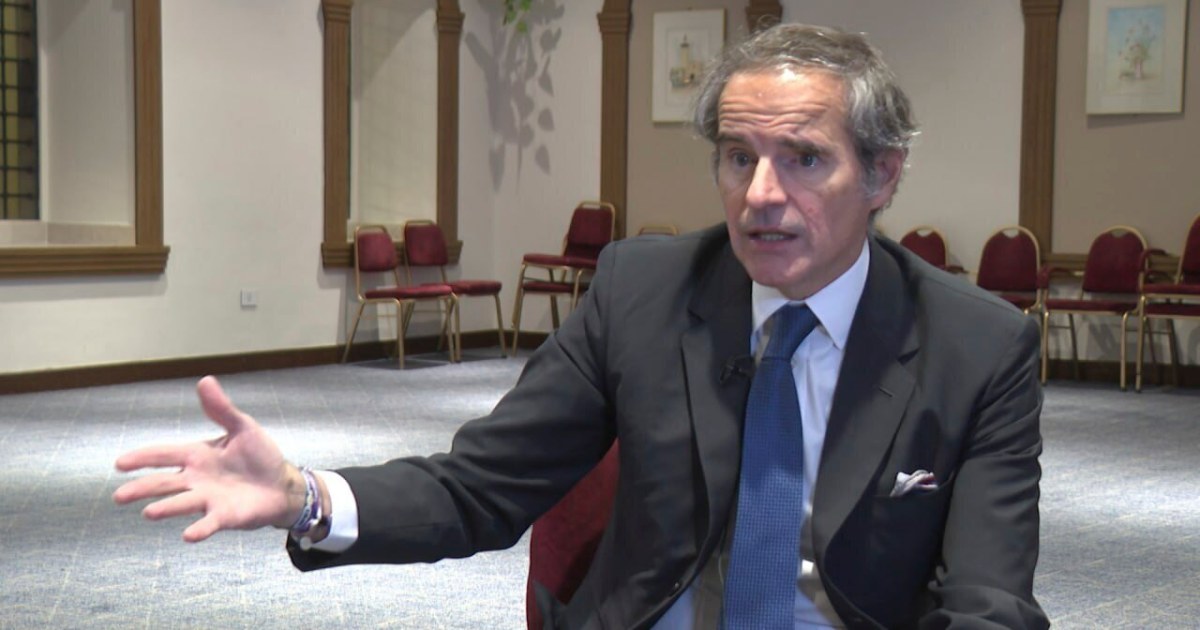
IAEA head Grossi describes the new government as ‘committed to opening up to the world, to international cooperation’.
Syria’s new government has agreed to give inspectors from the International Atomic Energy Agency (IAEA) access to suspected former nuclear sites immediately, according to the agency’s chief, as Damascus makes further inroads to rejoining the international fold.
Rafael Grossi, the United Nations’ nuclear watchdog’s director-general, was speaking Wednesday to The Associated Press news agency in Damascus, where he met with President Ahmed al-Sharaa and other officials.
The visit was a key part of the IAEA’s efforts to restore access to sites associated with Syria’s nuclear programme since the ouster of President Bashar al-Assad in December.
The agency’s aim is “to bring total clarity over certain activities that took place in the past that were, in the judgement of the agency, probably related to nuclear weapons”, Grossi said. He described the new government as “committed to opening up to the world, to international cooperation” and said he is hopeful of finishing the inspection process within months.
Grossi’s visit also marks another step towards international acceptance of Syria’s new government after the United States and European Union lifted sanctions on the country last month. Israel has taken an opposite approach to its Western allies, launching more than 200 air, drone or artillery attacks across Syria over the past six months, despite the two countries holding indirect talks in early May.
An IAEA team visited some sites of interest last year. Syria under al-Assad is believed to have operated an extensive clandestine nuclear programme, which included an undeclared nuclear reactor built by North Korea in eastern Deir ez-Zor province.
The IAEA described the reactor as being “not configured to produce electricity” — raising the concern that Damascus sought a nuclear weapon there by producing weapons-grade plutonium.
The reactor site only became public knowledge after Israel, the region’s only nuclear power, launched air strikes in 2007, destroying the facility. Syria later levelled the site and never responded fully to the IAEA’s questions.
Grossi said inspectors plan to return to the reactor in Deir az Zor and three other related sites. Other sites under IAEA safeguards include a miniature neutron source reactor in Damascus and a facility in Homs that can process yellow-cake uranium.
While there are no indications that there have been releases of radiation from the sites, Grossi said, the watchdog is concerned that “enriched uranium can be lying somewhere and could be reused, could be smuggled, could be trafficked”.
He said al-Sharaa had shown a “very positive disposition to talk to us and to allow us to carry out the activities we need to”.
Grossi revealed that the IAEA is also prepared to transfer equipment for nuclear medicine and help rebuild the radiotherapy, nuclear medicine and oncology infrastructure in a health system severely weakened by nearly 14 years of civil war.
“And the president has expressed to me he’s interested in exploring, in the future, nuclear energy as well,” Grossi added.
A number of other countries in the region, including Saudi Arabia, the United Arab Emirates, Egypt and Jordan, are pursuing nuclear energy in some form.
Source link
#Syria #give #IAEA #access #suspected #nuclear #sites #Report


![Russian Memorial human rights NGO labeled ‘extremist’Russia’s Supreme Court announced on Telegram on April 9 that the activities of human rights organization Memorial were now banned throughout the country. This came after a closed-door hearing that was treated as “top secret.” Media representatives and diplomats from Germany, Sweden, the Czech Republic and France were only allowed to attend the announcement of the ruling, which sparked strong reactions internationally.
The Nobel Committee, which awarded the 2022 Nobel Peace Prize to Memorial, condemned the court’s decision. The European Union delegation to Russia described the ruling as a “politically motivated blow to civil society in Russia.” The diplomats pointed out that the Russian state itself had “not only officially recognized Memorial’s merits but also provided direct support, and members of the organization served on the Human Rights Council for many years.”The Supreme Court hearing took place behind closed doorsImage: Alexander Zemlianichenko/AP Photo/picture alliance
Russian Supreme Court keeps wording deliberately vague
Lawyers for Memorial pointed out that the Supreme Court had classified the “International Public Movement Memorial” as “extremist,” but they pointed out that no organization of this name existed and had not been registered either in Russia or elsewhere.
They told DW that the wording had probably been kept deliberately vague to create a legal basis for potential repression against any Memorial structures, as well as their members and supporters. “The Justice Ministry’s action itself remained secret, and the organization’s representatives were barred from attending the hearing,” Sergei Davidis, the head of Memorial’s political prisoners support program, told DW.
He also stressed that in light of growing public dissatisfaction with the Russian government, the state was attempting to eliminate independent and reputable sources of information that could foster solidarity and networking in Russian society.
Memorial documents Soviet repression and the Gulag system
The international society Memorial was founded in 1987 and went on to become the leading independent organization dedicated to documenting Soviet-era repression in Russia. Its archives contain tens of thousands of documents about the victims of Soviet repression, including thousands of memoirs, hundreds of personal collections, as well as a wealth of material from researchers on the history of the gulags, the system of labor camps that was a major instrument of political repression in the Soviet era, and other human rights violations.
According to the independent online media outlet Mediazona, the authorities could now lay claim to the archive as the “property of an extremist organization.” In 2023, the head of the Perm NGO Center of Historical Memory, Aleksandr Chernyshov, was arrested after allegedly trying to smuggle archival documents from Russia to Germany.
The persecution of the Russian branch of Memorial began in 2014 when it was placed on a list of “foreign agents” by the Russian Justice Ministry. This status was later extended to the organization’s international branch, which required all publications and reports to be labeled accordingly. In case of non-compliance, there were fines and restrictions on Memorial’s activities.
In 2021, the Supreme Court ordered the dissolution of Memorial International for “repeated” and “gross” violations of Russia’s foreign agent laws. Memorial was also accused of depicting a false image of the Soviet Union.
Pressure continued to mount in March 2023, when the homes and offices of nine Memorial staff members, including Oleg Orlov and Yan Rachinsky, were subjected to searches as part of a targeted campaign against independent human rights organizations. The same year, Orlov was sentenced to two and a half years in prison for “discrediting” the army. He was released with other political prisoners as part of a prisoner exchange in August 2024 and has since been living in Germany.
Memorial will continue its human rights activities
Since this year’s ruling on April 9, Memorial has announced that it will have to suspend all activities in Russia but will continue its activities abroad. It has blocked the sharing and commenting of posts on social media. All supporters in Russia have been urged to follow the safety guidelines published on Memorial’s website.
Although the court has used the term “international social movement” to describe Memorial and this does not actually exist as such, all people, associations and organizations associated with the NGO could now be at risk. Memorial has called on people in Russia to not make any donations, to remove any logos and links on social media, and to delete any compromising content on all digital devices. It warned that people could draw attention from law enforcement agencies even by subscribing to Memorial channels.
It also said that though the risks outside Russia were not as high, people could still be subject to persecution abroad. Nonetheless, it said it would continue its work to protect human rights and preserve historical memory. Politzek — voices that defy the KremlinTo view this video please enable JavaScript, and consider upgrading to a web browser that supports HTML5 video
Nobel Committee: ‘Affront to fundamental values of human dignity’
Earlier this week, the chair of the Norwegian Nobel Committee Jorgen Watne Frydnes said that to designate Memorial as “extremist” was “an affront to the fundamental values of human dignity and freedom of expression.”
On his Telegram channel, the Russian political scientist Aleksandr Kynev wrote that the persecution of Memorial marked a new level of repression in Russia. He added that the new status of the organization would allow the authorities to target even ordinary employees.
Davidis pointed out that Memorial did not have a unified, centralized structure, but constituted a broad network of different groups. He said that people continued to be interested in political repression, both in the past and today. He said that the work of human rights activists had to continue despite the more difficult and risky circumstances.
Russian government strategy to suppress memory of Soviet crimes
According to Irina Sherbakova, a co-founding member of Memorial, the latest move against the organization is part of the Russian government’s overall strategy. She explained that it was in keeping with the closure of the Moscow-based Gulag History Museum in 2024, the systematic removal of commemorative plaques installed by the Last Address memorial project, the restrictions on access to official archives and the amendment to the official concept for commemorating victims of political repression, from which the mention of mass repression and later mass rehabilitation has been removed.Irina Sherbakova co-founded Memorial. She now lives in GermanyImage: dts-Agentur/picture alliance
Sherbakova said that these measures were all aimed at controlling the collective memory of Soviet repression and human rights work today: “This is part of [Russian President Vladimir] Putin’s ideology, which is becoming increasingly ultranationalist.”
Human rights activist Anna Karetnikova agreed, and pointed out that the initiative to persecute Memorial went back to the Russian Federal Security Service (FSB), which succeeded the Soviet secret service, the KGB, itself preceded by the NKVD. She said that the FSB viewed Memorial’s efforts to preserve the memory of Soviet repression and support of political prisoners today as a thorn in its side. She said that Memorial’s new status would lay the path for more criminal proceedings and increase pressure on civil society.
This article was originally published in Russian.
What’s really behind ‘foreign agent’ laws? To view this video please enable JavaScript, and consider upgrading to a web browser that supports HTML5 video
#Russian #Memorial #human #rights #NGO #labeled #extremist](https://i1.wp.com/static.dw.com/image/76090686_6.jpg?ssl=1 "Russian Memorial human rights NGO labeled ‘extremist’Russia’s Supreme Court announced on Telegram on April 9 that the activities of human rights organization Memorial were now banned throughout the country. This came after a closed-door hearing that was treated as “top secret.” Media representatives and diplomats from Germany, Sweden, the Czech Republic and France were only allowed to attend the announcement of the ruling, which sparked strong reactions internationally.
The Nobel Committee, which awarded the 2022 Nobel Peace Prize to Memorial, condemned the court’s decision. The European Union delegation to Russia described the ruling as a “politically motivated blow to civil society in Russia.” The diplomats pointed out that the Russian state itself had “not only officially recognized Memorial’s merits but also provided direct support, and members of the organization served on the Human Rights Council for many years.”The Supreme Court hearing took place behind closed doorsImage: Alexander Zemlianichenko/AP Photo/picture alliance
Russian Supreme Court keeps wording deliberately vague
Lawyers for Memorial pointed out that the Supreme Court had classified the “International Public Movement Memorial” as “extremist,” but they pointed out that no organization of this name existed and had not been registered either in Russia or elsewhere.
They told DW that the wording had probably been kept deliberately vague to create a legal basis for potential repression against any Memorial structures, as well as their members and supporters. “The Justice Ministry’s action itself remained secret, and the organization’s representatives were barred from attending the hearing,” Sergei Davidis, the head of Memorial’s political prisoners support program, told DW.
He also stressed that in light of growing public dissatisfaction with the Russian government, the state was attempting to eliminate independent and reputable sources of information that could foster solidarity and networking in Russian society.
Memorial documents Soviet repression and the Gulag system
The international society Memorial was founded in 1987 and went on to become the leading independent organization dedicated to documenting Soviet-era repression in Russia. Its archives contain tens of thousands of documents about the victims of Soviet repression, including thousands of memoirs, hundreds of personal collections, as well as a wealth of material from researchers on the history of the gulags, the system of labor camps that was a major instrument of political repression in the Soviet era, and other human rights violations.
According to the independent online media outlet Mediazona, the authorities could now lay claim to the archive as the “property of an extremist organization.” In 2023, the head of the Perm NGO Center of Historical Memory, Aleksandr Chernyshov, was arrested after allegedly trying to smuggle archival documents from Russia to Germany.
The persecution of the Russian branch of Memorial began in 2014 when it was placed on a list of “foreign agents” by the Russian Justice Ministry. This status was later extended to the organization’s international branch, which required all publications and reports to be labeled accordingly. In case of non-compliance, there were fines and restrictions on Memorial’s activities.
In 2021, the Supreme Court ordered the dissolution of Memorial International for “repeated” and “gross” violations of Russia’s foreign agent laws. Memorial was also accused of depicting a false image of the Soviet Union.
Pressure continued to mount in March 2023, when the homes and offices of nine Memorial staff members, including Oleg Orlov and Yan Rachinsky, were subjected to searches as part of a targeted campaign against independent human rights organizations. The same year, Orlov was sentenced to two and a half years in prison for “discrediting” the army. He was released with other political prisoners as part of a prisoner exchange in August 2024 and has since been living in Germany.
Memorial will continue its human rights activities
Since this year’s ruling on April 9, Memorial has announced that it will have to suspend all activities in Russia but will continue its activities abroad. It has blocked the sharing and commenting of posts on social media. All supporters in Russia have been urged to follow the safety guidelines published on Memorial’s website.
Although the court has used the term “international social movement” to describe Memorial and this does not actually exist as such, all people, associations and organizations associated with the NGO could now be at risk. Memorial has called on people in Russia to not make any donations, to remove any logos and links on social media, and to delete any compromising content on all digital devices. It warned that people could draw attention from law enforcement agencies even by subscribing to Memorial channels.
It also said that though the risks outside Russia were not as high, people could still be subject to persecution abroad. Nonetheless, it said it would continue its work to protect human rights and preserve historical memory. Politzek — voices that defy the KremlinTo view this video please enable JavaScript, and consider upgrading to a web browser that supports HTML5 video
Nobel Committee: ‘Affront to fundamental values of human dignity’
Earlier this week, the chair of the Norwegian Nobel Committee Jorgen Watne Frydnes said that to designate Memorial as “extremist” was “an affront to the fundamental values of human dignity and freedom of expression.”
On his Telegram channel, the Russian political scientist Aleksandr Kynev wrote that the persecution of Memorial marked a new level of repression in Russia. He added that the new status of the organization would allow the authorities to target even ordinary employees.
Davidis pointed out that Memorial did not have a unified, centralized structure, but constituted a broad network of different groups. He said that people continued to be interested in political repression, both in the past and today. He said that the work of human rights activists had to continue despite the more difficult and risky circumstances.
Russian government strategy to suppress memory of Soviet crimes
According to Irina Sherbakova, a co-founding member of Memorial, the latest move against the organization is part of the Russian government’s overall strategy. She explained that it was in keeping with the closure of the Moscow-based Gulag History Museum in 2024, the systematic removal of commemorative plaques installed by the Last Address memorial project, the restrictions on access to official archives and the amendment to the official concept for commemorating victims of political repression, from which the mention of mass repression and later mass rehabilitation has been removed.Irina Sherbakova co-founded Memorial. She now lives in GermanyImage: dts-Agentur/picture alliance
Sherbakova said that these measures were all aimed at controlling the collective memory of Soviet repression and human rights work today: “This is part of [Russian President Vladimir] Putin’s ideology, which is becoming increasingly ultranationalist.”
Human rights activist Anna Karetnikova agreed, and pointed out that the initiative to persecute Memorial went back to the Russian Federal Security Service (FSB), which succeeded the Soviet secret service, the KGB, itself preceded by the NKVD. She said that the FSB viewed Memorial’s efforts to preserve the memory of Soviet repression and support of political prisoners today as a thorn in its side. She said that Memorial’s new status would lay the path for more criminal proceedings and increase pressure on civil society.
This article was originally published in Russian.
What’s really behind ‘foreign agent’ laws? To view this video please enable JavaScript, and consider upgrading to a web browser that supports HTML5 video
#Russian #Memorial #human #rights #NGO #labeled #extremist")
Post Comment