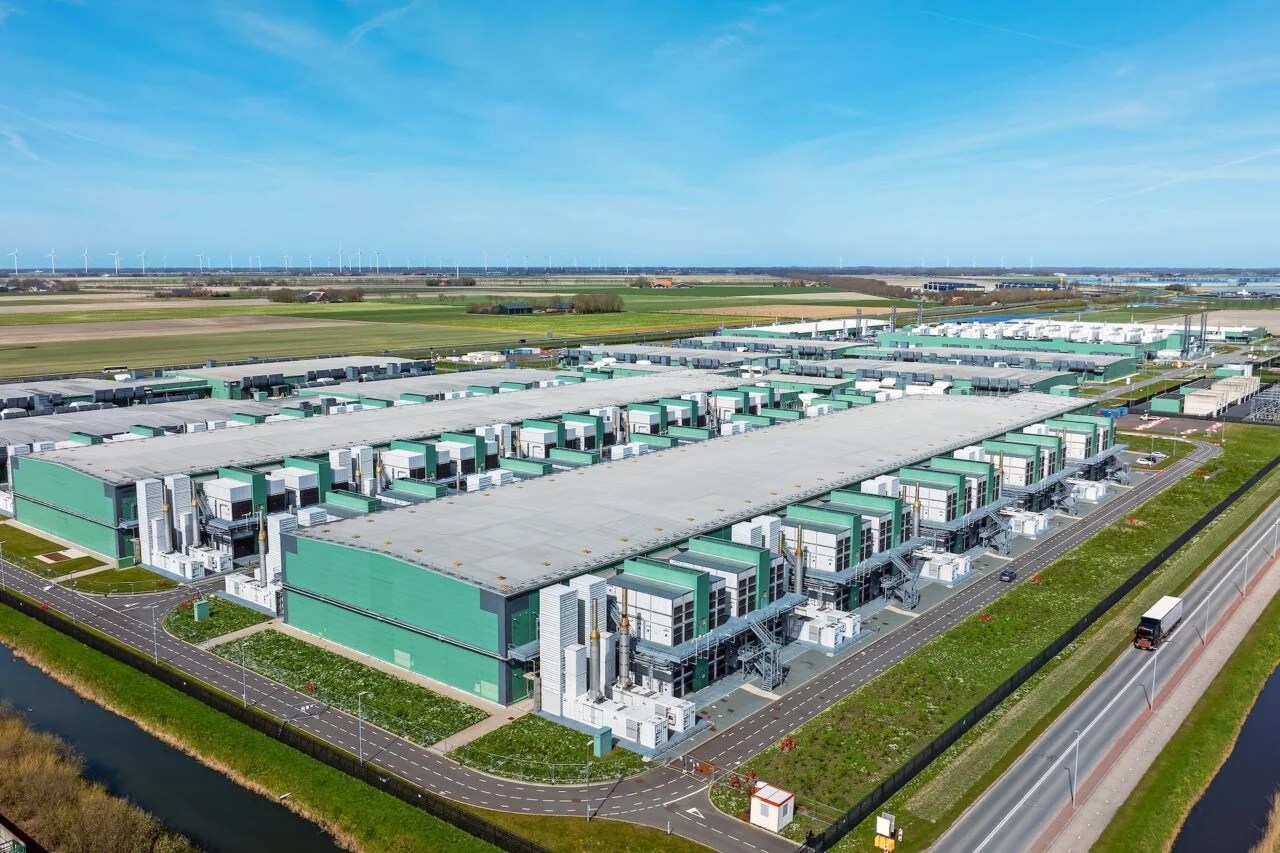
Like it or not, data centers are now intrinsic to our modern lives, supporting not just the AI boom but healthcare, banking, government services, and other essential sectors. Reliable data center operation depends on effective cooling, which is already a major challenge as many methods require huge inputs of water or energy. To make matters worse, new research suggests that one of our cheapest, most efficient cooling strategies could stop working in a warmer world.
The findings, published Monday in the journal Scientific Reports, show that rising temperatures and humidity levels threaten the viability of direct air free cooling, an energy-efficient, waterless technique that pulls outside air in to cool data center servers. Over the past 45 years, weather conditions that limit direct air cooling have become significantly more common, particularly across the tropics and the southeastern United States, according to the study. As the global temperature continues to rise, this problem is only going to get worse.
“We found that periods of time when temperature and humidity exceed recommended operating thresholds for direct air free cooling are becoming more frequent and lasting longer in many regions,” lead author Christina Karamperidou, a professor of atmospheric sciences professor at the University of Hawaii at Mānoa, said in a statement. “This will reduce the availability of air free cooling for a growing number of data centers globally.”
Climate-driven cooling constraints
For direct air free cooling, the American Society of Heating, Refrigerating and Air-Conditioning Engineers recommends keeping the air entering a data center between 64 and 81 degrees Fahrenheit (18 and 27 degrees Celsius), with 10% to 70% relative humidity and a dew point below 59 degrees F (15 degrees C). Air that is hotter and more humid than this won’t cool the servers effectively and could corrode metal components.
To investigate how this cooling method will function in a warmer, wetter world, Karamperidou and her colleagues used a combination of high-resolution hourly weather observations, climate model simulations, and global records of data center locations. With this data, they evaluated how often environmental conditions exceeded recommended operating limits for direct air free cooling over the past 45 years and in future climate scenarios.
The researchers found that the prevalence of weather conditions that limit direct air free cooling has increased significantly in recent decades. Even regions that have only seen modest long-term increases in heat and humidity are experiencing longer daily exceedance events, and the share of data centers exposed to conditions that limit direct air free cooling availability for at least one quarter of the year is rising.
Interestingly, the findings suggest that the hottest, most humid days are intensifying faster than average days, indicating that environmental stress on direct air free cooling systems is become more and more concentrated in rare, highly consequential events.
“From an operational perspective, those worst-day conditions often drive contingency planning, system overrides, redundancy requirements, and reliability decisions,” Karamperidou said. “This suggests that infrastructure planning may need to account not only for average environmental conditions but also for how the most stressful days are changing over time.”
By 2050, the number of hours that exceed temperature and humidity limits for direct air free cooling is protected to increase under high greenhouse gas emissions scenarios, according to the researchers. In most regions globally, the average number of hours per day during which this cooling strategy is constrained increases by more than two hours per day, the findings show.
A troubling feedback loop
While this study focuses on how weather can influence data centers, it’s important to remember that data centers can influence local weather too. These facilities dissipate a lot of heat, and research has shown that they can actually create heat islands within a 6-mile radius of themselves.
Karamperidou and her colleagues did not account for this effect, so the direct air free cooling constraints they identified may be conservative, they write in their report. Still, they emphasize that their findings do not mean that this cooling strategy is necessarily infeasible in warm, humid regions. Rather, the study shows that the window of feasibility for direct air free cooling is narrowing due to climate change.
“Alternative strategies—including indirect evaporative cooling, liquid cooling, and hybrid architectures—can partially offset these constraints, albeit with distinct trade-offs in water use, system complexity, and operational design,” the researchers write.
Indeed, as one of the simplest, cheapest, and most efficient cooling strategies becomes increasingly unreliable, data center operators may be forced to turn to more energy- and water-intensive methods. This, in turn, could put added strain on electric grids and water resources that are themselves strained by climate change. Adapting data centers to a warming world without exacerbating the impacts of rising global temperatures will require innovative solutions.
#Cheapest #Cool #Data #Centers #Wont #Work #Warmer #WorldAI,data centers,extreme heat,Global warming">The Cheapest Way to Cool Data Centers Won’t Work in a Warmer World 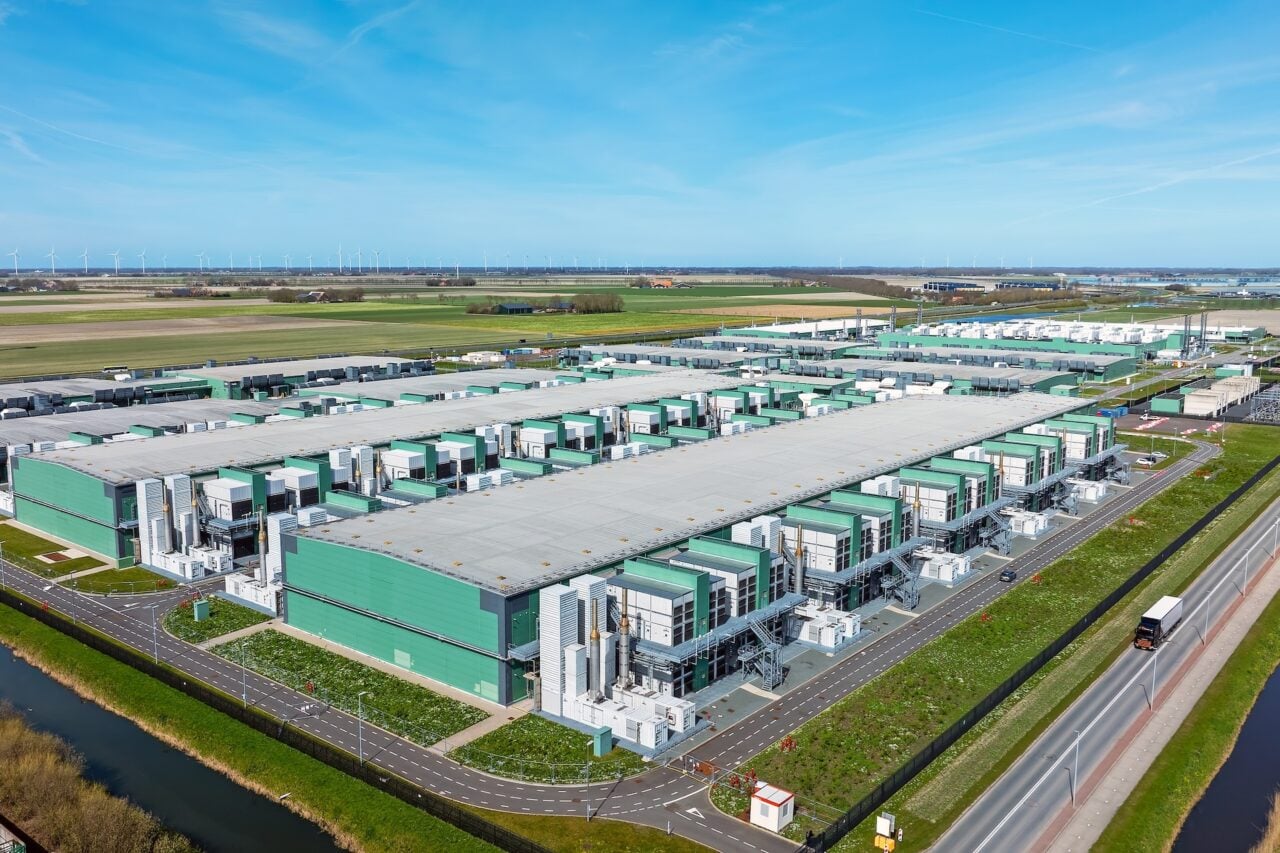
Like it or not, data centers are now intrinsic to our modern lives, supporting not just the AI boom but healthcare, banking, government services, and other essential sectors. Reliable data center operation depends on effective cooling, which is already a major challenge as many methods require huge inputs of water or energy. To make matters worse, new research suggests that one of our cheapest, most efficient cooling strategies could stop working in a warmer world.
The findings, published Monday in the journal Scientific Reports, show that rising temperatures and humidity levels threaten the viability of direct air free cooling, an energy-efficient, waterless technique that pulls outside air in to cool data center servers. Over the past 45 years, weather conditions that limit direct air cooling have become significantly more common, particularly across the tropics and the southeastern United States, according to the study. As the global temperature continues to rise, this problem is only going to get worse.
“We found that periods of time when temperature and humidity exceed recommended operating thresholds for direct air free cooling are becoming more frequent and lasting longer in many regions,” lead author Christina Karamperidou, a professor of atmospheric sciences professor at the University of Hawaii at Mānoa, said in a statement. “This will reduce the availability of air free cooling for a growing number of data centers globally.”
Climate-driven cooling constraints
For direct air free cooling, the American Society of Heating, Refrigerating and Air-Conditioning Engineers recommends keeping the air entering a data center between 64 and 81 degrees Fahrenheit (18 and 27 degrees Celsius), with 10% to 70% relative humidity and a dew point below 59 degrees F (15 degrees C). Air that is hotter and more humid than this won’t cool the servers effectively and could corrode metal components.
To investigate how this cooling method will function in a warmer, wetter world, Karamperidou and her colleagues used a combination of high-resolution hourly weather observations, climate model simulations, and global records of data center locations. With this data, they evaluated how often environmental conditions exceeded recommended operating limits for direct air free cooling over the past 45 years and in future climate scenarios.
The researchers found that the prevalence of weather conditions that limit direct air free cooling has increased significantly in recent decades. Even regions that have only seen modest long-term increases in heat and humidity are experiencing longer daily exceedance events, and the share of data centers exposed to conditions that limit direct air free cooling availability for at least one quarter of the year is rising.
Interestingly, the findings suggest that the hottest, most humid days are intensifying faster than average days, indicating that environmental stress on direct air free cooling systems is become more and more concentrated in rare, highly consequential events.
“From an operational perspective, those worst-day conditions often drive contingency planning, system overrides, redundancy requirements, and reliability decisions,” Karamperidou said. “This suggests that infrastructure planning may need to account not only for average environmental conditions but also for how the most stressful days are changing over time.”
By 2050, the number of hours that exceed temperature and humidity limits for direct air free cooling is protected to increase under high greenhouse gas emissions scenarios, according to the researchers. In most regions globally, the average number of hours per day during which this cooling strategy is constrained increases by more than two hours per day, the findings show.
A troubling feedback loop
While this study focuses on how weather can influence data centers, it’s important to remember that data centers can influence local weather too. These facilities dissipate a lot of heat, and research has shown that they can actually create heat islands within a 6-mile radius of themselves.
Karamperidou and her colleagues did not account for this effect, so the direct air free cooling constraints they identified may be conservative, they write in their report. Still, they emphasize that their findings do not mean that this cooling strategy is necessarily infeasible in warm, humid regions. Rather, the study shows that the window of feasibility for direct air free cooling is narrowing due to climate change.
“Alternative strategies—including indirect evaporative cooling, liquid cooling, and hybrid architectures—can partially offset these constraints, albeit with distinct trade-offs in water use, system complexity, and operational design,” the researchers write.
Indeed, as one of the simplest, cheapest, and most efficient cooling strategies becomes increasingly unreliable, data center operators may be forced to turn to more energy- and water-intensive methods. This, in turn, could put added strain on electric grids and water resources that are themselves strained by climate change. Adapting data centers to a warming world without exacerbating the impacts of rising global temperatures will require innovative solutions.
#Cheapest #Cool #Data #Centers #Wont #Work #Warmer #WorldAI,data centers,extreme heat,Global warming
Like it or not, data centers are now intrinsic to our modern lives, supporting not just the AI boom but healthcare, banking, government services, and other essential sectors. Reliable data center operation depends on effective cooling, which is already a major challenge as many methods require huge inputs of water or energy. To make matters worse, new research suggests that one of our cheapest, most efficient cooling strategies could stop working in a warmer world.
The findings, published Monday in the journal Scientific Reports, show that rising temperatures and humidity levels threaten the viability of direct air free cooling, an energy-efficient, waterless technique that pulls outside air in to cool data center servers. Over the past 45 years, weather conditions that limit direct air cooling have become significantly more common, particularly across the tropics and the southeastern United States, according to the study. As the global temperature continues to rise, this problem is only going to get worse.
“We found that periods of time when temperature and humidity exceed recommended operating thresholds for direct air free cooling are becoming more frequent and lasting longer in many regions,” lead author Christina Karamperidou, a professor of atmospheric sciences professor at the University of Hawaii at Mānoa, said in a statement. “This will reduce the availability of air free cooling for a growing number of data centers globally.”
Climate-driven cooling constraints
For direct air free cooling, the American Society of Heating, Refrigerating and Air-Conditioning Engineers recommends keeping the air entering a data center between 64 and 81 degrees Fahrenheit (18 and 27 degrees Celsius), with 10% to 70% relative humidity and a dew point below 59 degrees F (15 degrees C). Air that is hotter and more humid than this won’t cool the servers effectively and could corrode metal components.
To investigate how this cooling method will function in a warmer, wetter world, Karamperidou and her colleagues used a combination of high-resolution hourly weather observations, climate model simulations, and global records of data center locations. With this data, they evaluated how often environmental conditions exceeded recommended operating limits for direct air free cooling over the past 45 years and in future climate scenarios.
The researchers found that the prevalence of weather conditions that limit direct air free cooling has increased significantly in recent decades. Even regions that have only seen modest long-term increases in heat and humidity are experiencing longer daily exceedance events, and the share of data centers exposed to conditions that limit direct air free cooling availability for at least one quarter of the year is rising.
Interestingly, the findings suggest that the hottest, most humid days are intensifying faster than average days, indicating that environmental stress on direct air free cooling systems is become more and more concentrated in rare, highly consequential events.
“From an operational perspective, those worst-day conditions often drive contingency planning, system overrides, redundancy requirements, and reliability decisions,” Karamperidou said. “This suggests that infrastructure planning may need to account not only for average environmental conditions but also for how the most stressful days are changing over time.”
By 2050, the number of hours that exceed temperature and humidity limits for direct air free cooling is protected to increase under high greenhouse gas emissions scenarios, according to the researchers. In most regions globally, the average number of hours per day during which this cooling strategy is constrained increases by more than two hours per day, the findings show.
A troubling feedback loop
While this study focuses on how weather can influence data centers, it’s important to remember that data centers can influence local weather too. These facilities dissipate a lot of heat, and research has shown that they can actually create heat islands within a 6-mile radius of themselves.
Karamperidou and her colleagues did not account for this effect, so the direct air free cooling constraints they identified may be conservative, they write in their report. Still, they emphasize that their findings do not mean that this cooling strategy is necessarily infeasible in warm, humid regions. Rather, the study shows that the window of feasibility for direct air free cooling is narrowing due to climate change.
“Alternative strategies—including indirect evaporative cooling, liquid cooling, and hybrid architectures—can partially offset these constraints, albeit with distinct trade-offs in water use, system complexity, and operational design,” the researchers write.
Indeed, as one of the simplest, cheapest, and most efficient cooling strategies becomes increasingly unreliable, data center operators may be forced to turn to more energy- and water-intensive methods. This, in turn, could put added strain on electric grids and water resources that are themselves strained by climate change. Adapting data centers to a warming world without exacerbating the impacts of rising global temperatures will require innovative solutions.
Like it or not, data centers are now intrinsic to our modern lives, supporting not just the AI boom but healthcare, banking, government services, and other essential sectors. Reliable data center operation depends on effective cooling, which is already a major challenge as many methods require huge inputs of water or energy. To make matters worse, new research suggests that one of our cheapest, most efficient cooling strategies could stop working in a warmer world.
The findings, published Monday in the journal Scientific Reports, show that rising temperatures and humidity levels threaten the viability of direct air free cooling, an energy-efficient, waterless technique that pulls outside air in to cool data center servers. Over the past 45 years, weather conditions that limit direct air cooling have become significantly more common, particularly across the tropics and the southeastern United States, according to the study. As the global temperature continues to rise, this problem is only going to get worse.
“We found that periods of time when temperature and humidity exceed recommended operating thresholds for direct air free cooling are becoming more frequent and lasting longer in many regions,” lead author Christina Karamperidou, a professor of atmospheric sciences professor at the University of Hawaii at Mānoa, said in a statement. “This will reduce the availability of air free cooling for a growing number of data centers globally.”
Climate-driven cooling constraints
For direct air free cooling, the American Society of Heating, Refrigerating and Air-Conditioning Engineers recommends keeping the air entering a data center between 64 and 81 degrees Fahrenheit (18 and 27 degrees Celsius), with 10% to 70% relative humidity and a dew point below 59 degrees F (15 degrees C). Air that is hotter and more humid than this won’t cool the servers effectively and could corrode metal components.
To investigate how this cooling method will function in a warmer, wetter world, Karamperidou and her colleagues used a combination of high-resolution hourly weather observations, climate model simulations, and global records of data center locations. With this data, they evaluated how often environmental conditions exceeded recommended operating limits for direct air free cooling over the past 45 years and in future climate scenarios.
The researchers found that the prevalence of weather conditions that limit direct air free cooling has increased significantly in recent decades. Even regions that have only seen modest long-term increases in heat and humidity are experiencing longer daily exceedance events, and the share of data centers exposed to conditions that limit direct air free cooling availability for at least one quarter of the year is rising.
Interestingly, the findings suggest that the hottest, most humid days are intensifying faster than average days, indicating that environmental stress on direct air free cooling systems is become more and more concentrated in rare, highly consequential events.
“From an operational perspective, those worst-day conditions often drive contingency planning, system overrides, redundancy requirements, and reliability decisions,” Karamperidou said. “This suggests that infrastructure planning may need to account not only for average environmental conditions but also for how the most stressful days are changing over time.”
By 2050, the number of hours that exceed temperature and humidity limits for direct air free cooling is protected to increase under high greenhouse gas emissions scenarios, according to the researchers. In most regions globally, the average number of hours per day during which this cooling strategy is constrained increases by more than two hours per day, the findings show.
A troubling feedback loop
While this study focuses on how weather can influence data centers, it’s important to remember that data centers can influence local weather too. These facilities dissipate a lot of heat, and research has shown that they can actually create heat islands within a 6-mile radius of themselves.
Karamperidou and her colleagues did not account for this effect, so the direct air free cooling constraints they identified may be conservative, they write in their report. Still, they emphasize that their findings do not mean that this cooling strategy is necessarily infeasible in warm, humid regions. Rather, the study shows that the window of feasibility for direct air free cooling is narrowing due to climate change.
“Alternative strategies—including indirect evaporative cooling, liquid cooling, and hybrid architectures—can partially offset these constraints, albeit with distinct trade-offs in water use, system complexity, and operational design,” the researchers write.
Indeed, as one of the simplest, cheapest, and most efficient cooling strategies becomes increasingly unreliable, data center operators may be forced to turn to more energy- and water-intensive methods. This, in turn, could put added strain on electric grids and water resources that are themselves strained by climate change. Adapting data centers to a warming world without exacerbating the impacts of rising global temperatures will require innovative solutions.
Like it or not, data centers are now intrinsic to our modern lives, supporting not…


