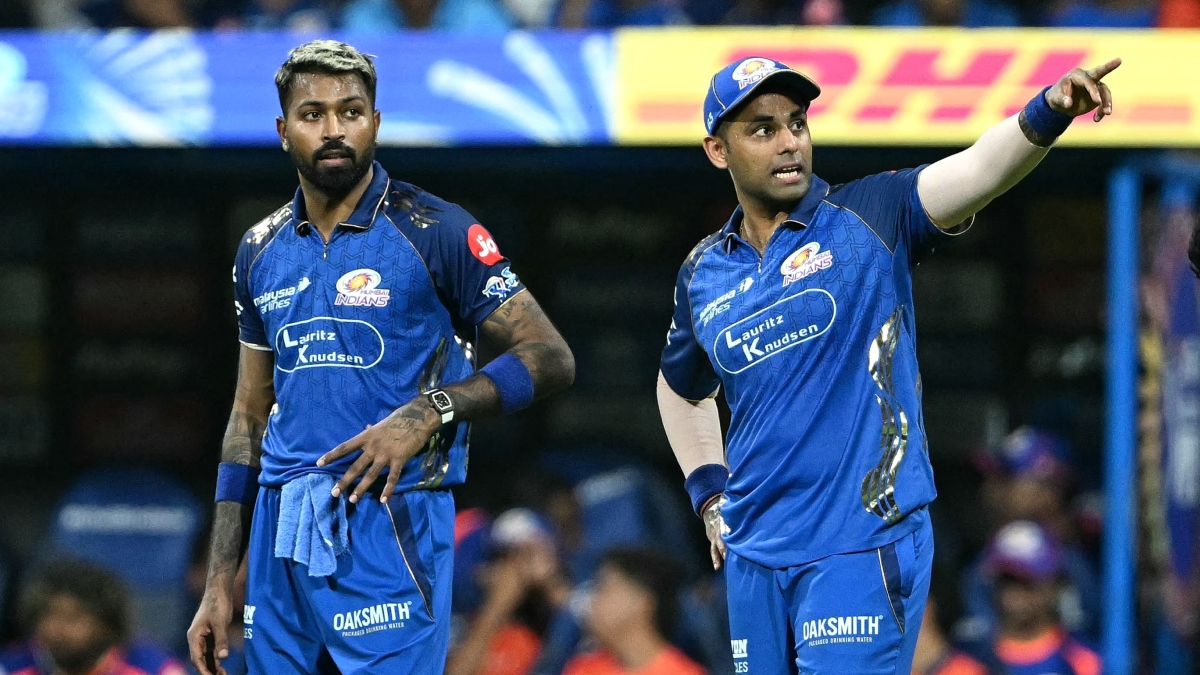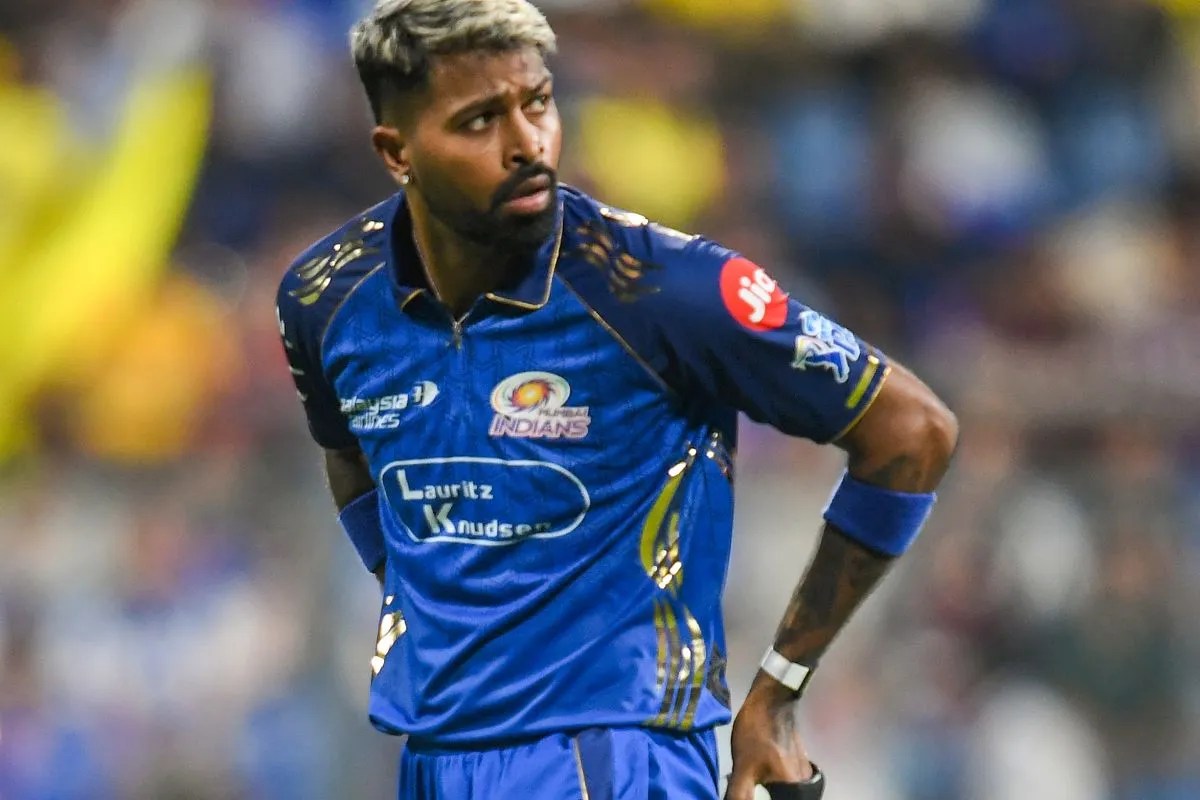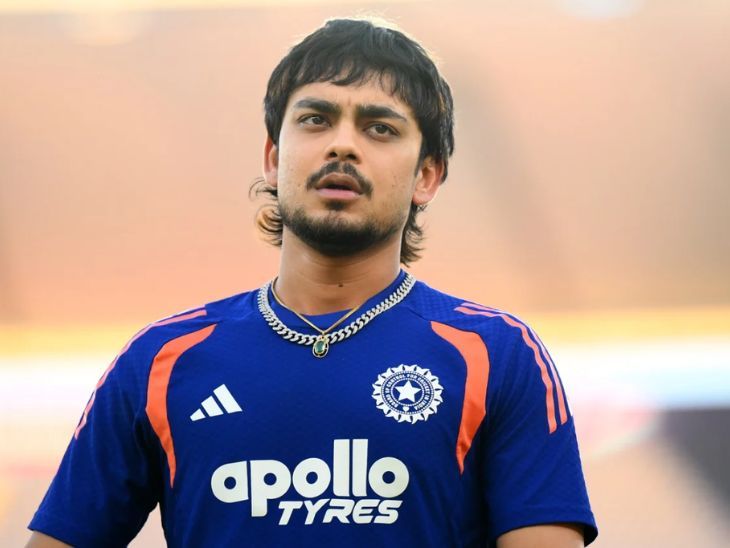
अफगानिस्तान सीरीज के लिए भारतीय वनडे-टेस्ट टीम का ऐलान:बुमराह-जडेजा को आराम, वनडे में ईशान की वापसी; सुथार, बरार और हर्ष को पहली बार मौका
अफगानिस्तान के खिलाफ होने वाली टेस्ट और वनडे सीरीज के लिए भारतीय टीम का ऐलान…
अफगानिस्तान के खिलाफ होने वाली टेस्ट और वनडे सीरीज के लिए भारतीय टीम का ऐलान…
नवंबर 2025 में हार्दिक ने इंस्टाग्राम पर कुछ तस्वीरें शेयर की थीं। इसमें वो और…

In sport, memory lives in numbers and often dominates discussions across eras. Scorecards eventually become history, though for many fans, they are much more.
Ardent baseball fans treat scorecards as precious collectibles, while cricket enthusiasts can swear by a legendary “ton” or a definitive “five-fer” in a specific Test match. Yet, truth often slips through the gaps, much like a cover drive imperiously threaded between point and mid-off.
Baseball offers a clinical verdict: a batter is retired, and the scorecard records the outcome with total indifference. It matters little whether a fielder hauls in the ball at full stretch in right field or if it settles comfortably into a waiting glove in centre. The act is completed, the moment fades, and the numbers move on—offering no room for the artistry of the effort.
Basketball has always had an answer to this conundrum. For the Los Angeles Lakers, whenever Earvin “Magic” Johnson threaded a pass to Kareem Abdul-Jabbar, the finish was only half the act. The assist carried weight, etched into the record books as a vital statistic.
In basketball, the creator and the completer share the spotlight, ensuring that fans and history books alike acknowledge the setup as much as the score.
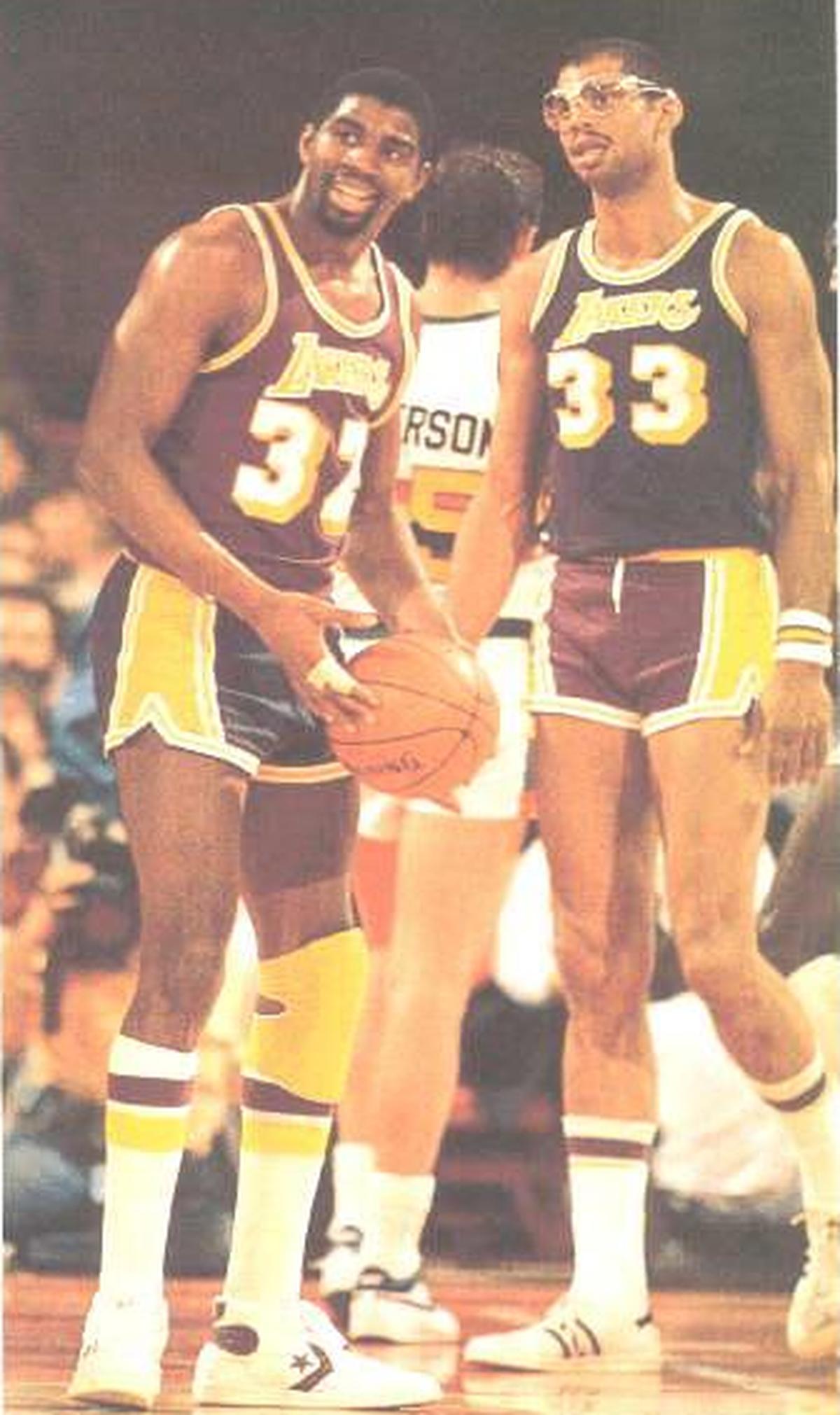
Brothers of destruction: Magic Johnson and Kareem Abdul-Jabbar formed one of the deadliest combinations in NBA, leading the attack for Los Angeles Lakers. | Photo Credit: The Hindu Photo Library

Brothers of destruction: Magic Johnson and Kareem Abdul-Jabbar formed one of the deadliest combinations in NBA, leading the attack for Los Angeles Lakers. | Photo Credit: The Hindu Photo Library
Statisticians in cricket seemingly had a different idea. Perhaps pioneers like Bill Frindall, B.B. Mama, Anandji Dossa, and Sudhir Vaidya never anticipated the acrobatic artistry of a Suryakumar Yadav at the Kensington Oval in 2024 or a Shreyas Iyer in 2026.
Cricket commentary celebrates the late swing and the diving stop; it applauds fielding brilliance with roars and endless replays. Yet, when the dust settles, the record often ignores this evolving dimension of the game. During a telecast, we are now accustomed to wagon wheels, Manhattan charts, and “the worm”—visual aids that add spice to an already well-made biryani—but the scorecard remains stubbornly static.
A recent night at the Wankhede Stadium during the 2026 Indian Premier League (IPL) season provided a jarring reminder of this oversight. In the 24th match between the Punjab Kings and Mumbai Indians, the ball sailed toward the boundary in the 18th over. Shreyas Iyer produced a moment of pure theatre.
Stationed at long-on, he sprinted to his left, launched himself into the air, and plucked the ball from the sky. Mid-flight, as gravity pulled him toward the rope, instinct took over. He flicked the ball back into play just as he crossed the boundary, where Xavier Bartlett completed the relay. Hardik Pandya was sent on his way, and the stadium erupted.
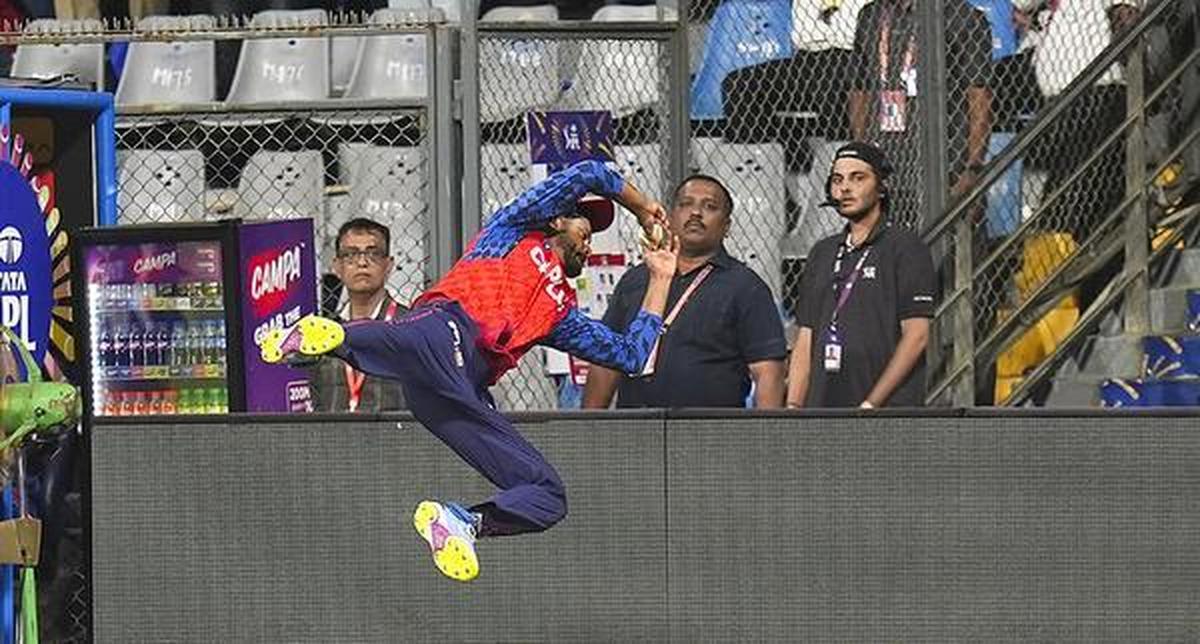
Key architect: Shreyas Iyer did not really take the catch of Hardik Pandya, but he played the most significant role in the dismissal. | Photo Credit: PTI
Key architect: Shreyas Iyer did not really take the catch of Hardik Pandya, but he played the most significant role in the dismissal. | Photo Credit: PTI
Ask anyone who “took” that catch, and the name they say will be Iyer. Yet, look at the scorecard, and Iyer’s name is nowhere to be found. In the history books, he doesn’t even receive an asterisk for this breathtaking fusion of athleticism, awareness, and timing.
Similarly, when a catch bursts from the grasp of a diving first-slip fielder and is safely completed by a teammate at second slip, the scorecard credits only the finisher, leaving the initial effort, often the defining act, without even a mention.
The typical line on a scorecard reads: “c Fielder b Bowler.” Even if a substitute or an “Impact Player” takes the catch, their name is recognised. But in a relay situation, the player who does the heavy lifting—the “creator”—is erased from the official narrative.
Cricket has evolved in almost every other dimension. Technology provides mountains of data for batters, bowlers, and coaches, yet we lack the statistical language to preserve teamwork in motion. The boundary relay catch is the purest example of a collaborative effort; without the first player, the second does not exist.
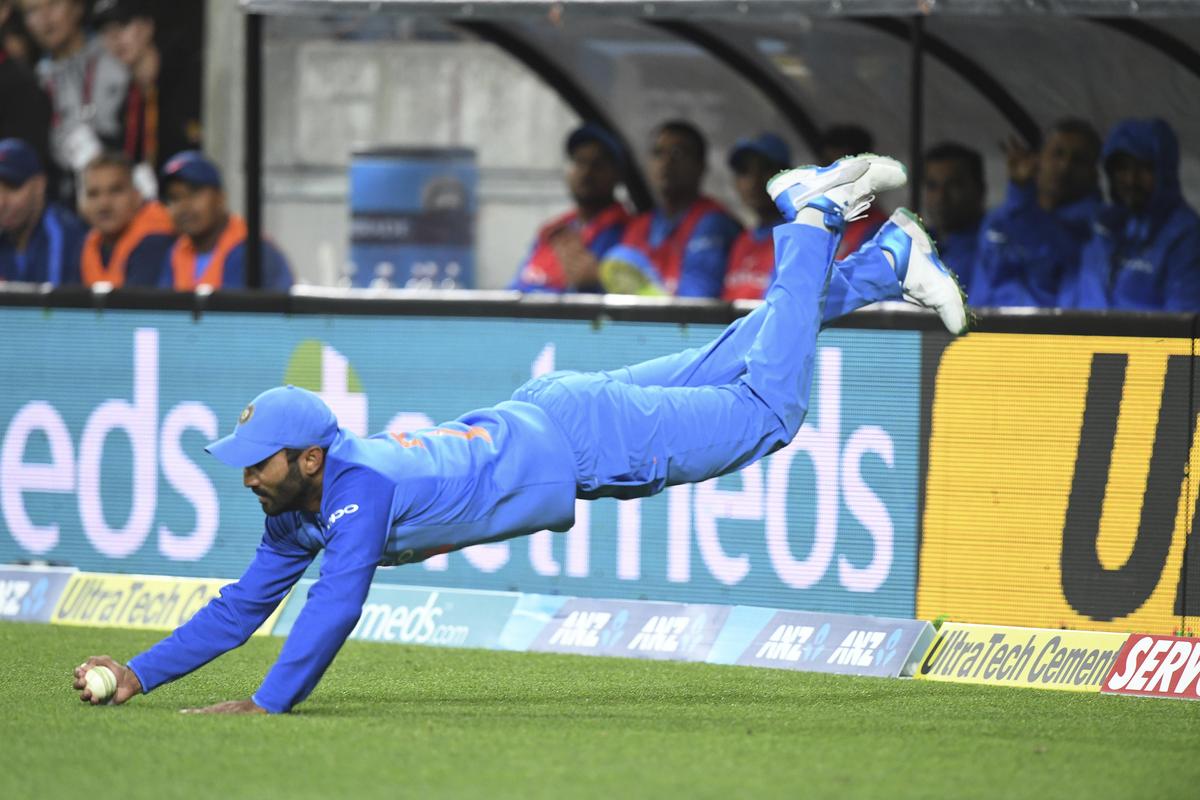
Cricket doesn’t lack appreciation for fielding; it lacks the language to preserve it. An assist column would change that. | Photo Credit: AP
Cricket doesn’t lack appreciation for fielding; it lacks the language to preserve it. An assist column would change that. | Photo Credit: AP
Imagine a child twenty years from now speaking about their father’s legendary catch. They pull up the scorecard to prove it, only to find a name that isn’t his. What do they point to? The video might survive in fragments, but the numbers—sport’s most trusted storytellers—will remain silent.
Cricket doesn’t lack appreciation for fielding; it lacks the language to preserve it. An assist column wouldn’t just change a statistic; it would honour the invisible hand that shapes the game’s most defining moments. In a sport that prides itself on detail, this is one detail that has waited long enough to be seen.
Published on May 12, 2026
In sport, memory lives in numbers and often dominates discussions across eras. Scorecards eventually become history, though for many fans, they are much more.
Ardent baseball fans treat scorecards as precious collectibles, while cricket enthusiasts can swear by a legendary “ton” or a definitive “five-fer” in a specific Test match. Yet, truth often slips through the gaps, much like a cover drive imperiously threaded between point and mid-off.
Baseball offers a clinical verdict: a batter is retired, and the scorecard records the outcome with total indifference. It matters little whether a fielder hauls in the ball at full stretch in right field or if it settles comfortably into a waiting glove in centre. The act is completed, the moment fades, and the numbers move on—offering no room for the artistry of the effort.
Basketball has always had an answer to this conundrum. For the Los Angeles Lakers, whenever Earvin “Magic” Johnson threaded a pass to Kareem Abdul-Jabbar, the finish was only half the act. The assist carried weight, etched into the record books as a vital statistic.
In basketball, the creator and the completer share the spotlight, ensuring that fans and history books alike acknowledge the setup as much as the score.
Brothers of destruction: Magic Johnson and Kareem Abdul-Jabbar formed one of the deadliest combinations in NBA, leading the attack for Los Angeles Lakers. | Photo Credit: The Hindu Photo Library
Brothers of destruction: Magic Johnson and Kareem Abdul-Jabbar formed one of the deadliest combinations in NBA, leading the attack for Los Angeles Lakers. | Photo Credit: The Hindu Photo Library
Statisticians in cricket seemingly had a different idea. Perhaps pioneers like Bill Frindall, B.B. Mama, Anandji Dossa, and Sudhir Vaidya never anticipated the acrobatic artistry of a Suryakumar Yadav at the Kensington Oval in 2024 or a Shreyas Iyer in 2026.
Cricket commentary celebrates the late swing and the diving stop; it applauds fielding brilliance with roars and endless replays. Yet, when the dust settles, the record often ignores this evolving dimension of the game. During a telecast, we are now accustomed to wagon wheels, Manhattan charts, and “the worm”—visual aids that add spice to an already well-made biryani—but the scorecard remains stubbornly static.
A recent night at the Wankhede Stadium during the 2026 Indian Premier League (IPL) season provided a jarring reminder of this oversight. In the 24th match between the Punjab Kings and Mumbai Indians, the ball sailed toward the boundary in the 18th over. Shreyas Iyer produced a moment of pure theatre.
Stationed at long-on, he sprinted to his left, launched himself into the air, and plucked the ball from the sky. Mid-flight, as gravity pulled him toward the rope, instinct took over. He flicked the ball back into play just as he crossed the boundary, where Xavier Bartlett completed the relay. Hardik Pandya was sent on his way, and the stadium erupted.
Key architect: Shreyas Iyer did not really take the catch of Hardik Pandya, but he played the most significant role in the dismissal. | Photo Credit: PTI
Key architect: Shreyas Iyer did not really take the catch of Hardik Pandya, but he played the most significant role in the dismissal. | Photo Credit: PTI
Ask anyone who “took” that catch, and the name they say will be Iyer. Yet, look at the scorecard, and Iyer’s name is nowhere to be found. In the history books, he doesn’t even receive an asterisk for this breathtaking fusion of athleticism, awareness, and timing.
Similarly, when a catch bursts from the grasp of a diving first-slip fielder and is safely completed by a teammate at second slip, the scorecard credits only the finisher, leaving the initial effort, often the defining act, without even a mention.
The typical line on a scorecard reads: “c Fielder b Bowler.” Even if a substitute or an “Impact Player” takes the catch, their name is recognised. But in a relay situation, the player who does the heavy lifting—the “creator”—is erased from the official narrative.
Cricket has evolved in almost every other dimension. Technology provides mountains of data for batters, bowlers, and coaches, yet we lack the statistical language to preserve teamwork in motion. The boundary relay catch is the purest example of a collaborative effort; without the first player, the second does not exist.
Cricket doesn’t lack appreciation for fielding; it lacks the language to preserve it. An assist column would change that. | Photo Credit: AP
Cricket doesn’t lack appreciation for fielding; it lacks the language to preserve it. An assist column would change that. | Photo Credit: AP
Imagine a child twenty years from now speaking about their father’s legendary catch. They pull up the scorecard to prove it, only to find a name that isn’t his. What do they point to? The video might survive in fragments, but the numbers—sport’s most trusted storytellers—will remain silent.
Cricket doesn’t lack appreciation for fielding; it lacks the language to preserve it. An assist column wouldn’t just change a statistic; it would honour the invisible hand that shapes the game’s most defining moments. In a sport that prides itself on detail, this is one detail that has waited long enough to be seen.
Published on May 12, 2026
In sport, memory lives in numbers and often dominates discussions across eras. Scorecards eventually become…
इंडियन प्रीमियर लीग के 19वें सीजन का 54वां लीग मुकाबला रायपुर के शहीद वीर नारायण…
हार्दिक पंड्या (कप्तान), रोहित शर्मा, सूर्यकुमार यादव, रॉबिन मिंज, रयान रिकेल्टन (विकेटकीपर), श्रीजीत कृष्णन (विकेटकीपर),…
सूर्यकुमार यादव 12 गेंदों में 21 रन बनाकर आउट हुए। इसके बाद कप्तान हार्दिक पंड्या…

Mumbai Indians’ bowlers are under scrutiny after failing to defend their highest first-innings total in the Indian Premier League (IPL) on Wednesday, but captain Hardik Pandya refused to single them out for blame and said the whole team was accountable.
Five-time champion Mumbai is enduring a wretched season and is ninth in the 10-team standings with just two wins from eight matches.
Its much-vaunted bowling unit, spearheaded by India paceman Jasprit Bumrah, has struggled mightily with conditions in the IPL heavily favouring batters.
Mumbai posted 243 for five against Sunrisers Hyderabad at the Wankhede Stadium on Wednesday, only for the visitor to chase it down comfortably in a six-wicket win with eight balls to spare.
Bumrah, widely regarded as the world’s premier fast bowler, went wicketless once again while conceding 54 runs in four overs. He remains stuck on two wickets in eight matches.
Speaking at the post-match presentation, Pandya said there was lots of blame to go around for the defeat.
“I won’t put my bowlers under the bus. I think as an overall unit, we have not been able to do what exactly Mumbai Indians stands for,” he said.
Mumbai, which has used 22 players this season, more than any other side, just needed a slice of luck to turn things around, Pandya added.
“It’s been that kind of season. When you get a couple of chances, you grab them, that’s when luck and momentum changes,” he said.
“If you don’t, it kind of hurts you, but it’s still fine, all the boys tried really well.”
Mumbai next faces Chennai Super Kings on Saturday.
Published on Apr 30, 2026
Mumbai Indians’ bowlers are under scrutiny after failing to defend their highest first-innings total in the Indian Premier League (IPL) on Wednesday, but captain Hardik Pandya refused to single them out for blame and said the whole team was accountable.
Five-time champion Mumbai is enduring a wretched season and is ninth in the 10-team standings with just two wins from eight matches.
Its much-vaunted bowling unit, spearheaded by India paceman Jasprit Bumrah, has struggled mightily with conditions in the IPL heavily favouring batters.
Mumbai posted 243 for five against Sunrisers Hyderabad at the Wankhede Stadium on Wednesday, only for the visitor to chase it down comfortably in a six-wicket win with eight balls to spare.
Bumrah, widely regarded as the world’s premier fast bowler, went wicketless once again while conceding 54 runs in four overs. He remains stuck on two wickets in eight matches.
Speaking at the post-match presentation, Pandya said there was lots of blame to go around for the defeat.
“I won’t put my bowlers under the bus. I think as an overall unit, we have not been able to do what exactly Mumbai Indians stands for,” he said.
Mumbai, which has used 22 players this season, more than any other side, just needed a slice of luck to turn things around, Pandya added.
“It’s been that kind of season. When you get a couple of chances, you grab them, that’s when luck and momentum changes,” he said.
“If you don’t, it kind of hurts you, but it’s still fine, all the boys tried really well.”
Mumbai next faces Chennai Super Kings on Saturday.
Published on Apr 30, 2026
Mumbai Indians’ bowlers are under scrutiny after failing to defend their highest first-innings total in…

Mumbai Indians suffered its biggest defeat in Indian Premier League (IPL) history after its 103-run loss to archrival Chennai Super Kings at the Wankhede Stadium on Thursday.
After putting CSK into bat, Mumbai conceded 207/6 with visiting batter Sanju Samson scoring an unbeaten 101 off 54 balls.
But Hardik Pandya’s men faltered in the chase early on before being bowled out for 104 with CSK spinners Akeal Hosein (4/17) and Noor Ahmad (2/23) wreaking havoc.
Mumbai’s margin of defeat is the 12th heaviest in the league history.
103 runs vs Chennai Super Kings, 2026 at Wankhede Stadium
87 runs vs Rajasthan Royals, 2013 at Sawai Mansingh Stadium
85 runs vs Sunrisers Hyderabad, 2016 at ACA-VDCA Stadium
76 runs vs Punjab Kings, 2011 at IS Bindra Cricket Stadium
66 runs vs Punjab Kings, 2008 at IS Bindra Cricket Stadium
Published on Apr 23, 2026
Mumbai Indians suffered its biggest defeat in Indian Premier League (IPL) history after its 103-run loss to archrival Chennai Super Kings at the Wankhede Stadium on Thursday.
After putting CSK into bat, Mumbai conceded 207/6 with visiting batter Sanju Samson scoring an unbeaten 101 off 54 balls.
But Hardik Pandya’s men faltered in the chase early on before being bowled out for 104 with CSK spinners Akeal Hosein (4/17) and Noor Ahmad (2/23) wreaking havoc.
Mumbai’s margin of defeat is the 12th heaviest in the league history.
103 runs vs Chennai Super Kings, 2026 at Wankhede Stadium
87 runs vs Rajasthan Royals, 2013 at Sawai Mansingh Stadium
85 runs vs Sunrisers Hyderabad, 2016 at ACA-VDCA Stadium
76 runs vs Punjab Kings, 2011 at IS Bindra Cricket Stadium
66 runs vs Punjab Kings, 2008 at IS Bindra Cricket Stadium
Published on Apr 23, 2026
Mumbai Indians suffered its biggest defeat in Indian Premier League (IPL) history after its 103-run…

It is billed as the biggest rivalry of the Indian Premier League — not merely for the weight of silverware carried by the men in blue and gold and those in yellow, but also for the vast, global fanbases the two franchises have cultivated over the years.
And yet, in IPL 2026, both Mumbai Indians and Chennai Super Kings have spent much of the first half languishing near the bottom of the table. The paradox, however, does little to dilute the occasion. Legacy ensures that interest remains undiminished, with loyalties split across households when the two sides meet at the Wankhede Stadium on Thursday night.
Both teams are searching for rhythm, but it is CSK that arrives with more immediate concerns. A faltering chase of a 190-plus target in Hyderabad over the weekend exposed their fragility, and the absence of Ayush Mhatre — its leading run-scorer this season — due to a hamstring injury only compounds the challenge.
The void at the top will necessitate a reshuffle. Whether the management gives rookie Kartik Sharma another go remains to be seen. There is also lingering uncertainty around the availability of MS Dhoni, adding another layer of intrigue to CSK’s composition.
Also read | Sarfaraz vs Suryakumar: A battle within a battle as Chennai Super Kings visits Mumbai Indians
Mumbai Indians, too, has fitness concerns. Rohit Sharma has missed the last two games with a hamstring issue sustained on April 12, and his availability will hinge on a late assessment. There is, however, a boost in the form of Will Jacks, who is set to be available for selection for the first time this season.
MI will also look towards Suryakumar Yadav to rediscover his touch, much like Tilak Varma did in Ahmedabad on Monday, and provide impetus to a batting unit that has blown hot and cold.
Conditions could tilt the balance. Having chased down a 220-plus target against Kolkata Knight Riders on this very surface in its tournament-opener, Mumbai Indians will expect another high-scoring contest. Fresh off a win over Gujarat Titans on a black-soil pitch in Ahmedabad, it will look to translate that confidence into a sustained run — even as a familiar rivalry seeks new relevance this season.
Published on Apr 22, 2026
It is billed as the biggest rivalry of the Indian Premier League — not merely for the weight of silverware carried by the men in blue and gold and those in yellow, but also for the vast, global fanbases the two franchises have cultivated over the years.
And yet, in IPL 2026, both Mumbai Indians and Chennai Super Kings have spent much of the first half languishing near the bottom of the table. The paradox, however, does little to dilute the occasion. Legacy ensures that interest remains undiminished, with loyalties split across households when the two sides meet at the Wankhede Stadium on Thursday night.
Both teams are searching for rhythm, but it is CSK that arrives with more immediate concerns. A faltering chase of a 190-plus target in Hyderabad over the weekend exposed their fragility, and the absence of Ayush Mhatre — its leading run-scorer this season — due to a hamstring injury only compounds the challenge.
The void at the top will necessitate a reshuffle. Whether the management gives rookie Kartik Sharma another go remains to be seen. There is also lingering uncertainty around the availability of MS Dhoni, adding another layer of intrigue to CSK’s composition.
Also read | Sarfaraz vs Suryakumar: A battle within a battle as Chennai Super Kings visits Mumbai Indians
Mumbai Indians, too, has fitness concerns. Rohit Sharma has missed the last two games with a hamstring issue sustained on April 12, and his availability will hinge on a late assessment. There is, however, a boost in the form of Will Jacks, who is set to be available for selection for the first time this season.
MI will also look towards Suryakumar Yadav to rediscover his touch, much like Tilak Varma did in Ahmedabad on Monday, and provide impetus to a batting unit that has blown hot and cold.
Conditions could tilt the balance. Having chased down a 220-plus target against Kolkata Knight Riders on this very surface in its tournament-opener, Mumbai Indians will expect another high-scoring contest. Fresh off a win over Gujarat Titans on a black-soil pitch in Ahmedabad, it will look to translate that confidence into a sustained run — even as a familiar rivalry seeks new relevance this season.
Published on Apr 22, 2026
It is billed as the biggest rivalry of the Indian Premier League — not merely…

In a major relief to Mumbai Indians, Rohit Sharma had a long batting session in the nets at the Narendra Modi Stadium, with bowling coach Paras Mhambrey admitting that he is ‘fit’. However, a call on his availability for the must-win IPL 2026 fixture against Gujarat Titans will be taken at the toss on Monday.
It has been a forgettable start for the five-time champion so far, with just a solitary win in five games, and as the team gears up against a high-flying Titans outfit on a black soil surface, the focus will firmly be on getting its campaign back on track.
“It’s important to acknowledge the fact that we are in this situation. And we need to work as a unit to come out of this,” Mhambrey said. “I can assure you that we are working on it. There is no panic in the team. It’s a tough format. If you don’t turn up and play your best cricket, you are not going to win.”
Also read | Rinku, Anukul take Knight Riders to first win after spinners shine
While Quinton de Kock stepped in for Rohit and scored a ton, Suryakumar Yadav and Tilak Varma have been inconsistent so far. In a must-win situation, the team management, as suggested by captain Hardik Pandya, may need tough calls. Mhambrey, however, did not elaborate on the possible changes.
Bowling remains a concern, with none of the star recruits making a telling impact so far in the competition. Mitchell Santner is fit and expected to return against the Titans. “Santner is fit. Unlucky we missed him last game. He picked up a bug,” Mhambrey said.
With five wins from eight games, Titans hold the edge. Shubman Gill has led from the front with consistent runs, while Jos Buttler has chipped in with key fifties. Rashid Khan and Prasidh Krishna have impressed in the middle overs and will look to exploit MI’s struggles.
Published on Apr 19, 2026
In a major relief to Mumbai Indians, Rohit Sharma had a long batting session in the nets at the Narendra Modi Stadium, with bowling coach Paras Mhambrey admitting that he is ‘fit’. However, a call on his availability for the must-win IPL 2026 fixture against Gujarat Titans will be taken at the toss on Monday.
It has been a forgettable start for the five-time champion so far, with just a solitary win in five games, and as the team gears up against a high-flying Titans outfit on a black soil surface, the focus will firmly be on getting its campaign back on track.
“It’s important to acknowledge the fact that we are in this situation. And we need to work as a unit to come out of this,” Mhambrey said. “I can assure you that we are working on it. There is no panic in the team. It’s a tough format. If you don’t turn up and play your best cricket, you are not going to win.”
Also read | Rinku, Anukul take Knight Riders to first win after spinners shine
While Quinton de Kock stepped in for Rohit and scored a ton, Suryakumar Yadav and Tilak Varma have been inconsistent so far. In a must-win situation, the team management, as suggested by captain Hardik Pandya, may need tough calls. Mhambrey, however, did not elaborate on the possible changes.
Bowling remains a concern, with none of the star recruits making a telling impact so far in the competition. Mitchell Santner is fit and expected to return against the Titans. “Santner is fit. Unlucky we missed him last game. He picked up a bug,” Mhambrey said.
With five wins from eight games, Titans hold the edge. Shubman Gill has led from the front with consistent runs, while Jos Buttler has chipped in with key fifties. Rashid Khan and Prasidh Krishna have impressed in the middle overs and will look to exploit MI’s struggles.
Published on Apr 19, 2026
In a major relief to Mumbai Indians, Rohit Sharma had a long batting session in…