Olivier Rousteing first became aware of Paco Rabanne when he was about 12 years old…
Back in 2015, the two-person studio Metanet released N++, a brutally hard 2D platformer that was a decade in the making, building off of previous releases dating back to the freeware Flash title N. At the time, cofounder Raigan Burns issued some famous last words: “We hope it’s not another 10 years before we come up with a game.” But now here we are, more than a decade later, and N is getting another sequel. And this time the focus is on multiplayer.
The new game is called, absurdly, N Plus Infinity Times Two. Whereas N++ was meant to be the ultimate single-player version of the N concept, this game is described as “the ultimate virtual couch party game with a low skill floor and no skill ceiling.” That means the same slick, acrobatic platforming action and gorgeous graphic design-inspired visuals, but now built around playing competitively or cooperatively with pals across a handful of different modes. It’s launching on the PS5, Xbox, Switch 2, and PC at some point in 2027.
The duo at Metanet was up to a few different things over the last 11 years. In addition to uprooting from Toronto to Montreal, they’ve been prototyping ideas for a few potentially bigger projects, and last year released a 10-year anniversary update for N++. But then, “We started getting the ‘let’s take another crack at it’ bug in 2022,” Burns tells The Verge.
The studio operates in an unusual way, at least compared to most of the game industry. Despite having two hits in N+ and N++, Metanet hasn’t grown or scaled up in any way. And the reason comes down to the way they make games: It simply takes a lot of time to find a game idea that’s worth pursuing as a commercial project. “We’ve resisted doing something that would compromise our ability to keep iterating and prototyping until something good shows up,” says Burns.
“It’s important to feel that magic,” cofounder Mare Sheppard adds. “That’s what’s compelling about making games. That’s when we know that we’re doing it in a way that’s right for us.” Burns has a clear analogy for how they work: “We like being in a band. That’s fun. Being in a lot of meetings and doing a lot of managing: not fun.” This philosophy seems especially prescient given the state of the games industry, where even the biggest hits operate in a way that’s clearly unsustainable.
“We like being in a band. That’s fun. Being in a lot of meetings and doing a lot of managing: not fun.”
In the case of N Plus Infinity Times Two — unfortunately I can’t think of a good way to shorten that title — the spark came in part from watching how younger players interact with games. Even when they’re playing solo, kids are typically still chatting with friends on their phones, essentially turning everything into a multiplayer experience. Burns and Sheppard wanted to find a way to marry that idea with the couch co-op experiences they grew up on, which led to revisiting the N concept but with a multiplayer spin.
The two describe making N++ as a grueling experience. If you think the game’s levels are hard, just imagine having to playtest them over and over. Part of the excitement about N Plus Infinity Times Two wasn’t just finding a spin on the formula that would be fun to play, but also to develop. “This one really feels like we’re having fun,” says Burns. “We’re really fluent in this one instrument. So now the fun challenge becomes playing new styles of music we’ve never played before, but with this thing we’re really comfortable with.”
Image: Metanet Software
As creative industries from games to Hollywood become increasingly homogenous, Burns also believes that there’s something important about doing work that’s distinct, even if it means revisiting a previous idea, like through the multiple versions of N. It’s similar to titles like Hades II and Silksong: indie-developed sequels that iterated a core concept, but with a fresh angle that made them more than a by-the-numbers follow-up. “Being yourself is more fun and exciting anyways,” Burns explains. “But I honestly think it’s more commercially viable to do something only you can do, because then you have no competition.”
As for what’s next after N Plus Infinity Times Two, the pair obviously aren’t revealing anything just yet. There are a few bigger 3D game ideas kicking around, but those would necessitate some of that scaling up that the studio has so far avoided. What they won’t close the door on, however, is coming back to the idea of N again at some point in the future.
“If we can do something that expresses something new, or lets us see things in a different way, or we get a different perspective on what this game is or how to play it, that’s exciting,” says Sheppard. “I think we no longer think this is definitively going to be the last one. We’ve abandoned that idea. It doesn’t have to be.”
Follow topics and authors from this story to see more like this in your personalized homepage feed and to receive email updates.
Back in 2015, the two-person studio Metanet released N++, a brutally hard 2D platformer that was a decade in the making, building off of previous releases dating back to the freeware Flash title N. At the time, cofounder Raigan Burns issued some famous last words: “We hope it’s not another 10 years before we come up with a game.” But now here we are, more than a decade later, and N is getting another sequel. And this time the focus is on multiplayer.
The new game is called, absurdly, N Plus Infinity Times Two. Whereas N++ was meant to be the ultimate single-player version of the N concept, this game is described as “the ultimate virtual couch party game with a low skill floor and no skill ceiling.” That means the same slick, acrobatic platforming action and gorgeous graphic design-inspired visuals, but now built around playing competitively or cooperatively with pals across a handful of different modes. It’s launching on the PS5, Xbox, Switch 2, and PC at some point in 2027.
The duo at Metanet was up to a few different things over the last 11 years. In addition to uprooting from Toronto to Montreal, they’ve been prototyping ideas for a few potentially bigger projects, and last year released a 10-year anniversary update for N++. But then, “We started getting the ‘let’s take another crack at it’ bug in 2022,” Burns tells The Verge.
The studio operates in an unusual way, at least compared to most of the game industry. Despite having two hits in N+ and N++, Metanet hasn’t grown or scaled up in any way. And the reason comes down to the way they make games: It simply takes a lot of time to find a game idea that’s worth pursuing as a commercial project. “We’ve resisted doing something that would compromise our ability to keep iterating and prototyping until something good shows up,” says Burns.
“It’s important to feel that magic,” cofounder Mare Sheppard adds. “That’s what’s compelling about making games. That’s when we know that we’re doing it in a way that’s right for us.” Burns has a clear analogy for how they work: “We like being in a band. That’s fun. Being in a lot of meetings and doing a lot of managing: not fun.” This philosophy seems especially prescient given the state of the games industry, where even the biggest hits operate in a way that’s clearly unsustainable.
“We like being in a band. That’s fun. Being in a lot of meetings and doing a lot of managing: not fun.”
In the case of N Plus Infinity Times Two — unfortunately I can’t think of a good way to shorten that title — the spark came in part from watching how younger players interact with games. Even when they’re playing solo, kids are typically still chatting with friends on their phones, essentially turning everything into a multiplayer experience. Burns and Sheppard wanted to find a way to marry that idea with the couch co-op experiences they grew up on, which led to revisiting the N concept but with a multiplayer spin.
The two describe making N++ as a grueling experience. If you think the game’s levels are hard, just imagine having to playtest them over and over. Part of the excitement about N Plus Infinity Times Two wasn’t just finding a spin on the formula that would be fun to play, but also to develop. “This one really feels like we’re having fun,” says Burns. “We’re really fluent in this one instrument. So now the fun challenge becomes playing new styles of music we’ve never played before, but with this thing we’re really comfortable with.”
Image: Metanet Software
As creative industries from games to Hollywood become increasingly homogenous, Burns also believes that there’s something important about doing work that’s distinct, even if it means revisiting a previous idea, like through the multiple versions of N. It’s similar to titles like Hades II and Silksong: indie-developed sequels that iterated a core concept, but with a fresh angle that made them more than a by-the-numbers follow-up. “Being yourself is more fun and exciting anyways,” Burns explains. “But I honestly think it’s more commercially viable to do something only you can do, because then you have no competition.”
As for what’s next after N Plus Infinity Times Two, the pair obviously aren’t revealing anything just yet. There are a few bigger 3D game ideas kicking around, but those would necessitate some of that scaling up that the studio has so far avoided. What they won’t close the door on, however, is coming back to the idea of N again at some point in the future.
“If we can do something that expresses something new, or lets us see things in a different way, or we get a different perspective on what this game is or how to play it, that’s exciting,” says Sheppard. “I think we no longer think this is definitively going to be the last one. We’ve abandoned that idea. It doesn’t have to be.”
Follow topics and authors from this story to see more like this in your personalized homepage feed and to receive email updates.
Andrew Webster
#decade #team #multiplayer #sequelEntertainment,Gaming,Interview,Report">More than a decade later, the team behind N++ is back with a multiplayer sequel
Back in 2015, the two-person studio Metanet released N++, a brutally hard 2D platformer that was a decade in the making, building off of previous releases dating back to the freeware Flash title N. At the time, cofounder Raigan Burns issued some famous last words: “We hope it’s not another 10 years before we come up with a game.” But now here we are, more than a decade later, and N is getting another sequel. And this time the focus is on multiplayer.
The new game is called, absurdly, N Plus Infinity Times Two. Whereas N++ was meant to be the ultimate single-player version of the N concept, this game is described as “the ultimate virtual couch party game with a low skill floor and no skill ceiling.” That means the same slick, acrobatic platforming action and gorgeous graphic design-inspired visuals, but now built around playing competitively or cooperatively with pals across a handful of different modes. It’s launching on the PS5, Xbox, Switch 2, and PC at some point in 2027.
The duo at Metanet was up to a few different things over the last 11 years. In addition to uprooting from Toronto to Montreal, they’ve been prototyping ideas for a few potentially bigger projects, and last year released a 10-year anniversary update for N++. But then, “We started getting the ‘let’s take another crack at it’ bug in 2022,” Burns tells The Verge.
The studio operates in an unusual way, at least compared to most of the game industry. Despite having two hits in N+ and N++, Metanet hasn’t grown or scaled up in any way. And the reason comes down to the way they make games: It simply takes a lot of time to find a game idea that’s worth pursuing as a commercial project. “We’ve resisted doing something that would compromise our ability to keep iterating and prototyping until something good shows up,” says Burns.
“It’s important to feel that magic,” cofounder Mare Sheppard adds. “That’s what’s compelling about making games. That’s when we know that we’re doing it in a way that’s right for us.” Burns has a clear analogy for how they work: “We like being in a band. That’s fun. Being in a lot of meetings and doing a lot of managing: not fun.” This philosophy seems especially prescient given the state of the games industry, where even the biggest hits operate in a way that’s clearly unsustainable.
“We like being in a band. That’s fun. Being in a lot of meetings and doing a lot of managing: not fun.”
In the case of N Plus Infinity Times Two — unfortunately I can’t think of a good way to shorten that title — the spark came in part from watching how younger players interact with games. Even when they’re playing solo, kids are typically still chatting with friends on their phones, essentially turning everything into a multiplayer experience. Burns and Sheppard wanted to find a way to marry that idea with the couch co-op experiences they grew up on, which led to revisiting the N concept but with a multiplayer spin.
The two describe making N++ as a grueling experience. If you think the game’s levels are hard, just imagine having to playtest them over and over. Part of the excitement about N Plus Infinity Times Two wasn’t just finding a spin on the formula that would be fun to play, but also to develop. “This one really feels like we’re having fun,” says Burns. “We’re really fluent in this one instrument. So now the fun challenge becomes playing new styles of music we’ve never played before, but with this thing we’re really comfortable with.”
Image: Metanet Software
As creative industries from games to Hollywood become increasingly homogenous, Burns also believes that there’s something important about doing work that’s distinct, even if it means revisiting a previous idea, like through the multiple versions of N. It’s similar to titles like Hades II and Silksong: indie-developed sequels that iterated a core concept, but with a fresh angle that made them more than a by-the-numbers follow-up. “Being yourself is more fun and exciting anyways,” Burns explains. “But I honestly think it’s more commercially viable to do something only you can do, because then you have no competition.”
As for what’s next after N Plus Infinity Times Two, the pair obviously aren’t revealing anything just yet. There are a few bigger 3D game ideas kicking around, but those would necessitate some of that scaling up that the studio has so far avoided. What they won’t close the door on, however, is coming back to the idea of N again at some point in the future.
“If we can do something that expresses something new, or lets us see things in a different way, or we get a different perspective on what this game is or how to play it, that’s exciting,” says Sheppard. “I think we no longer think this is definitively going to be the last one. We’ve abandoned that idea. It doesn’t have to be.”
Follow topics and authors from this story to see more like this in your personalized homepage feed and to receive email updates.
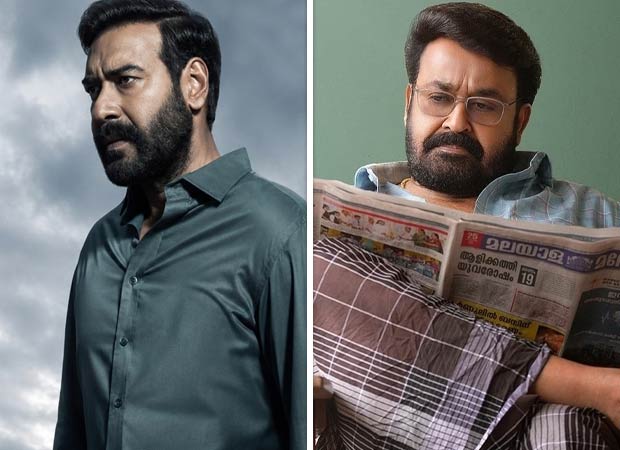
A few days ago, news came in that the shoot of the Hindi version of Drishyam 3 was completed, and now the team of the film is gearing up for its October 2 release. The original Malayalam version was released last month, on May 21, and many are wondering whether the Hindi version will be similar to it.
EXCLUSIVE: Ajay Devgn’s Drishyam 3 won’t mirror Malayalam version; Ravi Basrur joins Ajay Devgn’s October 2 release
A trade source told Bollywood Hungama, “Drishyam (2015) and Drishyam 2 (2022) in Hindi were quite similar to the original films. But the Hindi Drishyam 3 will be an exception. The makers have drastically altered the plot and twists. At the same time, they have made sure that it does justice to the world of Drishyam.”
The source also said, “The makers are also excited with the new additions. It is said that Jaideep Ahlawat and Prakash Raj have put up great acts. At the same time, Ajay Devgn, Tabu, Shriya Saran and others have once again delivered fine performances.”
In a recent exclusive interview with Bollywood Hungama, director Abhishek Pathak had revealed that while both versions of Drishyam 3 will retain the same emotional core, the Hindi version has been developed differently to suit its audience. “The Malayalam film is an emotional family drama, while ours is a family thriller,” Pathak had said.
The other interesting information from the film is that this time, the music has been given by Ravi Basrur of KGF, Salaar, Marco and Toxic fame. Interestingly, Ajay Devgn had worked with him in Bholaa (2023) and Singham Again (2024).
All three versions of Drishyam 3 in Hindi have had different music composers. Vishal Bhardwaj composed the songs in part 1, while Devi Sri Prasad took over in Drishyam 2.
Presented by Star Studio18, the Panorama Studios production is directed by Abhishek Pathak and written by Abhishek Pathak, Aamil Keeyan Khan and Parveez Shaikh. Produced by Alok Jain, Ajit Andhare, Kumar Mangat Pathak and Abhishek Pathak, Drishyam 3 is all set to release theatrically on October 2, 2026.