×
The Bears Are Here, Caleb Williams Is Ready, and the NFC Isn’t Prepared | Deadspin.com

The Bears Are Here, Caleb Williams Is Ready, and the NFC Isn’t Prepared | Deadspin.com

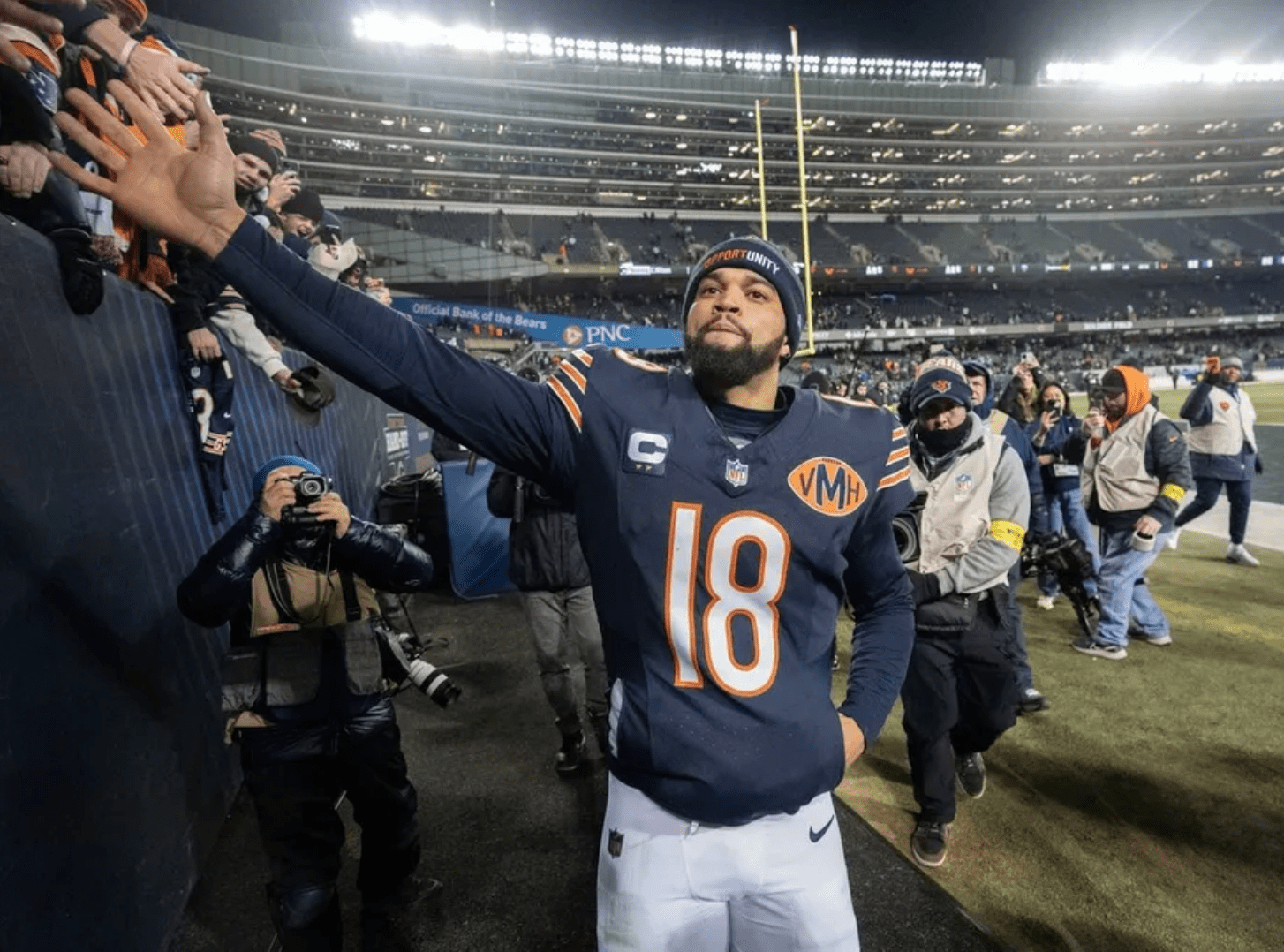
For most of the 2025 season, it was easy to double down on doubting the Bears.

Here they are, locked into a top-3 conference seed and raising the NFC North champion flag, squaring up with the most dominant team in the NFC this decade Sunday night and I still can’t.

Can’t get past the defense that couldn’t protect a two-score lead against J.J. McCarthy.

Can’t get past the feeling the Packers will win a possible third meeting.

Can’t dismiss the idea that it might not matter how many points the Bears give up if this is the Caleb Williams we experience in his first NFL postseason.

For four quarters at San Francisco, Williams largely looked like the next Mahomes, Josh Allen, Aaron Rodgers or some combination therein.

We know Matthew Stafford and the Rams are not a team you’d invite for wild-card weekend. But if you are stack-ranking quarterbacks in the conference playoffs as of this morning, who has it better than the Bears in the NFC?

We’ll wait.

Don’t sell us Jalen Hurts. Did you watch the continued trend of toe-dragging offense from Philadelphia in the second half at Buffalo?

Only the bizarre and unfortunate call to go for the win at home after dominating the Eagles in the second half by Bills coach Sean McDermott saved Hurts from being roasted in the postgame scrum.

As of this writing, Jordan Love isn’t even OK’d to participate in a playoff game. And if his line remains ragtag going on the road in two weeks, this is a difficult sell.

Baker Mayfield? Pfft. Check that fourth-quarter completion chart against the Miami Dolphins on Sunday.

Panthers QB Bryce Young hasn’t graduated from the kid’s table. Fifty-four passing yards on Sunday in a possible hat-t-shirt-and-trophy game is embarrassing.

If Seattle has to win on the road to reach the Super Bowl, g’luck to the Seahawks’ defense trying to keep up. We know by now Sam Darnold better be at home for the biggest games of the year or Seattle is cooked. We can rewind to Sunday at Carolina, when Darnold stepped in it with both feet and had the Panthers on the verge of fielding a punt down 17-10 before Jaycee Horn’s brutal facemask penalty flipped the entire fourth quarter.

This isn’t the first rodeo with Sam, He’s Not.

Did you see Darnold in the Week 18 regular-season finale last season? The Lions whiplashed Darnold and the Vikings and his 43.9 completion percentage in that loss sent Minnesota to play the Rams (in Arizona due to wildfires) in the wild-card round. Darnold was sacked nine times, intercepted once and the Vikings never invited him back because of it.

We are open to the possibility that Brock Purdy, aided by the crutch that is Christian McCaffrey, is the best of the passers still going in the NFC. He had more than 295 passing yards for the third game in a row and accounted for five total touchdowns for the second consecutive game.

He’s doing it without a legitimate No. 1 wide receiver. Tight end George Kittle didn’t play Sunday night.

And Purdy has been Super Bowl good before.

For the first time since 1998, the playoffs are set to begin in two weeks with no Manning, Tom Brady or Mahomes.

Maybe at long last it’s Allen’s time.

Or are we about to see the days gone by pantheon of NFL quarterbacks re-racked with the dawn of a new era?

We. Can’t. Wait.

Source link
#Bears #Caleb #Williams #Ready #NFC #Isnt #Prepared #Deadspin.com
The United States is moving on to the Round of 16 at the 2026 FIFA World Cup.

Folarin Balogun’s goal in the 45th minute proved to be enough, as the United States knocked off Bosnia and Herzegovina 2-0 Wednesday night.

So, what is up next for the United States at the World Cup?

A match against Belgium, one of the top ten teams in the world prior to the start of the tournament. Belgium booked a spot in the Round of 16 with a dramatic, comeback win against Senegal, and now await the United States in the Round of 16.

Here’s what you need to know about Belgium ahead of Monday’s matchup.

Belgium’s run to the Round of 16

Belgium accomplished something we have not seen since, well, the United States during the 2010 World Cup.

Winning the group despite not winning either of their first two matches.

After a pair of punchless performances in group play – a 1-1 draw with Egypt followed by a 0-0 draw with Iran, with the lone goal an own goal from Egyptian defender Mohamed Hany – Belgium clinched the top spot in Group G with a 5-1 victory over New Zealand, booking a match in the Round of 32 against Senegal.

In that match against New Zealand a pair of goals from Leandro Trossard, the first in the 28th minute and the second in the 50th minute, were enough for Belgium to move on. But Rudi Garcia’s side added three more for good measure, as Romelu Lukaku, Alexis Saelemaekers, and Kevin De Bruyne all scored. De Bruyne’s strike, coming outside the box, was in particular a stunning moment.

Then came the match against Senegal in the Round of 32, which almost mirrored Belgium’s run to the knockout stage of the World Cup. The first 85 minutes or so were all Senegal, as the African side built a 2-0 lead and looked to be moving on to the Round of 16 themselves.

Everything then changed in the closing minutes of ordinary time.

First it was Lukaku, who came on as a substitute and pulled one back for Belgium in the 86th minute:

Then just minutes later Youri Tielemans somehow got to this ball into the box, and his header pulled Belgium level:

The match advanced to extra time, and in the second 15 minutes, it was again Tielemans calling for the ball in the box, only this time he was chopped down to the turf.

After a video review, a penalty was awarded. Tielemans stepped to the spot, buried his shot, and all but sent Belgium through to the Round of 16:

Moments later that was official, as the final whistle blew.

The Napoli midfielder earned his 123rd cap for Belgium against Senegal, and his moment of brilliance against New Zealand illustrates what the former Manchester City player is capable of:

That goal, coming days ahead of his 35th birthday, was his 38th international goal for Belgium. He was also a critical piece for Belgium during the team’s run to a third-place finish at the 2018 World Cup, as he finished the tournament with a goal and a pair of assists.

The imposing striker, used as more of a super sub at this point in his career, can still impact a match. Coming off the bench against Egypt in Belgium’s opening match of group play, his side equalized mere seconds after he came onto the pitch, with his presence in front impacting the flow of play.

And it was his goal against Senegal late in the match that pulled Belgium back into the contest:

Lukaku appeared in just five matches for Napoli this past year, scoring once, but seems to be nearing full fitness at this point in the World Cup. And that comes at a dangerous time for the United States defenders.

The midfielder was a key part of Arsenal’s run to the Premier League title, as he scored six goals and added six assists during the EPL season. His brace against New Zealand was a big reason Belgium won the group, and this goal highlights his skill and quality:

Not only do you see the lovely touch and turn, but the reaction skills to play the ball to his foot off the deflection and finish are top notch.

The Real Madrid keeper remains one of the best to ever do it.

While Thibaut Courtois may retire from the international stage following this World Cup, he remains a hulking presence in goal, his 6’7 frame sending shivers down the spine of many a striker. Courtois won the Golden Glove at the 2018 World Cup, recording 27 saves while keeping three clean sheets over seven matches, and conceding just six times.

While he has battled injuries in recent years, including missing the entire 2023-24 season with a torn ACL, he has conceded just twice ahead of the Round of 16.

He also set a new national record in the match against New Zealand, as it was his 18th World Cup tie for Belgium.

The Manchester City forward has yet to score at the 2026 World Cup, with a pair of assists to his credit, and was subbed off the pitch in the second half against Senegal. Doku also missed the match against Iraq due to a respiratory infection, and did briefly return home to be with his wife Shireen as the couple celebrated the birth of their first child, Praise.

While he has yet to open his account in the 2026 World Cup, he remains a threat that the USMNT will have to monitor when he is on the pitch.

#United #States #play #World #Cup">Who does the United States play in the World Cup Round of 16?  The United States is moving on to the Round of 16 at the 2026 FIFA World Cup.Folarin Balogun’s goal in the 45th minute proved to be enough, as the United States knocked off Bosnia and Herzegovina 2-0 Wednesday night.So, what is up next for the United States at the World Cup?A match against Belgium, one of the top ten teams in the world prior to the start of the tournament. Belgium booked a spot in the Round of 16 with a dramatic, comeback win against Senegal, and now await the United States in the Round of 16.Here’s what you need to know about Belgium ahead of Monday’s matchup.Belgium’s run to the Round of 16Belgium accomplished something we have not seen since, well, the United States during the 2010 World Cup.Winning the group despite not winning either of their first two matches.After a pair of punchless performances in group play – a 1-1 draw with Egypt followed by a 0-0 draw with Iran, with the lone goal an own goal from Egyptian defender Mohamed Hany – Belgium clinched the top spot in Group G with a 5-1 victory over New Zealand, booking a match in the Round of 32 against Senegal.In that match against New Zealand a pair of goals from Leandro Trossard, the first in the 28th minute and the second in the 50th minute, were enough for Belgium to move on. But Rudi Garcia’s side added three more for good measure, as Romelu Lukaku, Alexis Saelemaekers, and Kevin De Bruyne all scored. De Bruyne’s strike, coming outside the box, was in particular a stunning moment.Then came the match against Senegal in the Round of 32, which almost mirrored Belgium’s run to the knockout stage of the World Cup. The first 85 minutes or so were all Senegal, as the African side built a 2-0 lead and looked to be moving on to the Round of 16 themselves.Everything then changed in the closing minutes of ordinary time.First it was Lukaku, who came on as a substitute and pulled one back for Belgium in the 86th minute:Then just minutes later Youri Tielemans somehow got to this ball into the box, and his header pulled Belgium level:The match advanced to extra time, and in the second 15 minutes, it was again Tielemans calling for the ball in the box, only this time he was chopped down to the turf.After a video review, a penalty was awarded. Tielemans stepped to the spot, buried his shot, and all but sent Belgium through to the Round of 16:Moments later that was official, as the final whistle blew.The Napoli midfielder earned his 123rd cap for Belgium against Senegal, and his moment of brilliance against New Zealand illustrates what the former Manchester City player is capable of:That goal, coming days ahead of his 35th birthday, was his 38th international goal for Belgium. He was also a critical piece for Belgium during the team’s run to a third-place finish at the 2018 World Cup, as he finished the tournament with a goal and a pair of assists.The imposing striker, used as more of a super sub at this point in his career, can still impact a match. Coming off the bench against Egypt in Belgium’s opening match of group play, his side equalized mere seconds after he came onto the pitch, with his presence in front impacting the flow of play.And it was his goal against Senegal late in the match that pulled Belgium back into the contest:Lukaku appeared in just five matches for Napoli this past year, scoring once, but seems to be nearing full fitness at this point in the World Cup. And that comes at a dangerous time for the United States defenders.The midfielder was a key part of Arsenal’s run to the Premier League title, as he scored six goals and added six assists during the EPL season. His brace against New Zealand was a big reason Belgium won the group, and this goal highlights his skill and quality:Not only do you see the lovely touch and turn, but the reaction skills to play the ball to his foot off the deflection and finish are top notch.The Real Madrid keeper remains one of the best to ever do it.While Thibaut Courtois may retire from the international stage following this World Cup, he remains a hulking presence in goal, his 6’7 frame sending shivers down the spine of many a striker. Courtois won the Golden Glove at the 2018 World Cup, recording 27 saves while keeping three clean sheets over seven matches, and conceding just six times.While he has battled injuries in recent years, including missing the entire 2023-24 season with a torn ACL, he has conceded just twice ahead of the Round of 16.He also set a new national record in the match against New Zealand, as it was his 18th World Cup tie for Belgium.The Manchester City forward has yet to score at the 2026 World Cup, with a pair of assists to his credit, and was subbed off the pitch in the second half against Senegal. Doku also missed the match against Iraq due to a respiratory infection, and did briefly return home to be with his wife Shireen as the couple celebrated the birth of their first child, Praise.While he has yet to open his account in the 2026 World Cup, he remains a threat that the USMNT will have to monitor when he is on the pitch.  #United #States #play #World #Cup

For 90 minutes in Philadelphia, Haitians were home again.

Outside Lincoln Financial Field, vendors sold griot and patties from food trucks while Creole floated through the humid afternoon air. Families arrived wrapped in blue and red flags. Children who had never lived in Haiti knew every word of ‘La Dessalinienne’, the national anthem.

The team eventually lost to Brazil, but the result almost felt beside the point.

For a country that has endured political violence, earthquakes and humanitarian crises, simply returning to the World Cup had become a celebration of survival. Many of those in the stands had travelled not from Port-au-Prince but from Brooklyn, Miami, Boston and Montreal. They carried two homes with them: one they had left behind and one they had built in the United States of America.

The expanded 48-team World Cup has not just introduced new footballing nations, but also reunited immigrant communities scattered across North America. Every match has become a family reunion of sorts, with flags stored away for years reappearing.

Dallas, home to one of the largest and most active West African populations in the United States, welcomed the Ivory Coast team with the Abidjan Farot Welcome Party on the eve of its round-of-32 clash. “My son has never been to Abidjan or anywhere in Ivory Coast. So, I brought him here so that he could feel to be part of the nation. We are incredibly proud of our team who has connected us in this World Cup,” said N’Guessan, who had travelled from Atlanta with his four-year-old son and was frantically waving a ‘Welcome to Dallas’ sign as the likes of Amad Diallo and Yan Diamonde happily posed for selfies and signed autographs.

Tanya Marie surprised her mother, Chilemb Munung, with World Cup tickets to watch the Democratic Republic of Congo play Portugal at Houston Stadium. “To go to that and represent my country to be seen. It was just… I can’t even express to myself what I was feeling there, but it was like oh my God,” Chilemb said after the match.

For 90 minutes, football dissolved the distance between where these communities came from and where they live now.

But some supporters never reached the stadiums.

Many fans were denied visas, while teams and officials from countries such as Iran and Iraq faced entry complications. Iran spent much of the tournament preparing across the border in Tijuana before hopping over on matchdays because of complications in entering and staying in the United States. Omar Artan, a referee from Somalia, was sent home from Miami Airport even before the World Cup began, while Iraq player Aymen Hussein was detained and questioned for nearly seven hours by U.S. Customs and Border Protection at Chicago O’Hare International Airport.

On June 25, the U.S. Supreme Court allowed the Trump administration to move ahead with ending Temporary Protected Status for Haiti and Syria, opening the door to the loss of legal protection for thousands of people. The programme, introduced by Congress in 1990, has allowed people from countries facing war, political instability or natural disasters to remain in the United States.

For many Haitian supporters, the timing could hardly have been worse.

Days after their country had stood shoulder to shoulder with Brazil, families who had lived in the United States for many years were confronted with fresh uncertainty.

“The injustice of the justice system impacts over 375,000 Haitians and 6,000 Syrians who have been living in the United States for the past 3, 5, 10, 15 years. They are the people who came here in search of safety and protection due to extreme conditions that have plagued Haiti for a very long time since after the earthquake that happened in 2010, killing over 250,000 people and leaving the country in complete chaos,” said Guerline Jozef, executive director of the Haitian Bridge Alliance.

While the U.S. Supreme Court’s June 30 order blocking President Donald Trump’s attempt to end birthright citizenship for children born to people in the United States illegally or temporarily offered reassurance to U.S.-born children, it did nothing to ease the uncertainty facing Haitian parents confronting the possible loss of Temporary Protected Status.

This World Cup has given the diaspora a rare public stage to celebrate where it comes from. Now, many within those same communities are being forced to defend their place in the country where they have built new lives.

Published on Jul 02, 2026

#FIFA #World #Cup #Flags #families #fragile #belonging">FIFA World Cup 2026: Flags, families and fragile belonging  For 90 minutes in Philadelphia, Haitians were home again.Outside Lincoln Financial Field, vendors sold griot and patties from food trucks while Creole floated through the humid afternoon air. Families arrived wrapped in blue and red flags. Children who had never lived in Haiti knew every word of ‘La Dessalinienne’, the national anthem.The team eventually lost to Brazil, but the result almost felt beside the point.For a country that has endured political violence, earthquakes and humanitarian crises, simply returning to the World Cup had become a celebration of survival. Many of those in the stands had travelled not from Port-au-Prince but from Brooklyn, Miami, Boston and Montreal. They carried two homes with them: one they had left behind and one they had built in the United States of America.The expanded 48-team World Cup has not just introduced new footballing nations, but also reunited immigrant communities scattered across North America. Every match has become a family reunion of sorts, with flags stored away for years reappearing.Dallas, home to one of the largest and most active West African populations in the United States, welcomed the Ivory Coast team with the Abidjan Farot Welcome Party on the eve of its round-of-32 clash. “My son has never been to Abidjan or anywhere in Ivory Coast. So, I brought him here so that he could feel to be part of the nation. We are incredibly proud of our team who has connected us in this World Cup,” said N’Guessan, who had travelled from Atlanta with his four-year-old son and was frantically waving a ‘Welcome to Dallas’ sign as the likes of Amad Diallo and Yan Diamonde happily posed for selfies and signed autographs.Tanya Marie surprised her mother, Chilemb Munung, with World Cup tickets to watch the Democratic Republic of Congo play Portugal at Houston Stadium. “To go to that and represent my country to be seen. It was just… I can’t even express to myself what I was feeling there, but it was like oh my God,” Chilemb said after the match.For 90 minutes, football dissolved the distance between where these communities came from and where they live now.But some supporters never reached the stadiums.Many fans were denied visas, while teams and officials from countries such as Iran and Iraq faced entry complications. Iran spent much of the tournament preparing across the border in Tijuana before hopping over on matchdays because of complications in entering and staying in the United States. Omar Artan, a referee from Somalia, was sent home from Miami Airport even before the World Cup began, while Iraq player Aymen Hussein was detained and questioned for nearly seven hours by U.S. Customs and Border Protection at Chicago O’Hare International Airport.On June 25, the U.S. Supreme Court allowed the Trump administration to move ahead with ending Temporary Protected Status for Haiti and Syria, opening the door to the loss of legal protection for thousands of people. The programme, introduced by Congress in 1990, has allowed people from countries facing war, political instability or natural disasters to remain in the United States.For many Haitian supporters, the timing could hardly have been worse.Days after their country had stood shoulder to shoulder with Brazil, families who had lived in the United States for many years were confronted with fresh uncertainty.“The injustice of the justice system impacts over 375,000 Haitians and 6,000 Syrians who have been living in the United States for the past 3, 5, 10, 15 years. They are the people who came here in search of safety and protection due to extreme conditions that have plagued Haiti for a very long time since after the earthquake that happened in 2010, killing over 250,000 people and leaving the country in complete chaos,” said Guerline Jozef, executive director of the Haitian Bridge Alliance.While the U.S. Supreme Court’s June 30 order blocking President Donald Trump’s attempt to end birthright citizenship for children born to people in the United States illegally or temporarily offered reassurance to U.S.-born children, it did nothing to ease the uncertainty facing Haitian parents confronting the possible loss of Temporary Protected Status.This World Cup has given the diaspora a rare public stage to celebrate where it comes from. Now, many within those same communities are being forced to defend their place in the country where they have built new lives.Published on Jul 02, 2026  #FIFA #World #Cup #Flags #families #fragile #belonging

Post Comment