×
The Best Floodlight Security Cameras for Your Home

The Best Floodlight Security Cameras for Your Home

Consider These Floodlight Cameras

Photograph: Simon Hill

Reolink Elite Floodlight WiFi (Wired) for $230: Similar to our Reolink pick above, the difference with the Elite Floodlight is that it’s a fixed dual-lens camera designed to give you a wide 180-degree view (59 degrees vertically), rather than a pan-and-tilt camera. If you want a fixed camera to cover the entire side of a property, this could be a solid pick. It records up to 4K video at up to 20 frames per second, has a 105-decibel alarm, and supports dual-band Wi-Fi 6. The rest of the specs, including the two-panel, 3,000-lumen, adjustable temperature floodlight, match the TrackFlex above.

Google Nest Cam With Floodlight (Wired) for $280: This aging floodlight security camera might still be your best bet if you prefer Google Home and have a Nest doorbell. The limited 1080p resolution is mitigated by the high frame rate (30 fps), HDR, and decent 6X digital zoom. The two-panel floodlight can put out up to 2,400 lumens of warm (4,000K) light, and brightness is adjustable. Google’s AI detection is perhaps the smartest in the business, and this is a very reliable camera, but you must subscribe to make it worthwhile, as there’s no local recording option. Google Home Premium starts at $10 per month or $100 per year, but that covers all your devices. It might be best to wait, as Google recently released 2K Nest cameras, and there’s a decent chance it will update its floodlight camera soon.

Image may contain Brick Computer Electronics and Tablet Computer

Photograph: Simon Hill

Philips Hue Secure Camera for $130 and Discover Floodlight (Wired) for $160: Strictly speaking, these are two separate devices, but I used this setup at my old house, and it worked very well. If you’re invested in Hue lighting, the Discover Floodlight is one of my favorite outdoor lights and a versatile way to light up your space. It can put out 2,300 lumens, and you can tweak the temperature, color, and brightness easily in the Hue app, which also allows scheduling and animated scenes. Add a Philips Hue Secure Wired Camera and you can have it trigger the floodlight and any other Hue lights you have. It is only 1080p, but the wired camera worked well for me, triggering reliably, and Philips Hue now offers 24 hours of video history for free. But if you want the AI detection, back-to-back recording, activity zones, and 30 days of video history, you must subscribe for $40 a year for a single camera.

Arlo Pro 3 Floodlight Camera (Battery) for $250: An obvious pick for folks with an Arlo system, this battery-powered camera allows for a wireless install, though you will need to charge it. It offers up to 2K footage with HDR and Arlo’s excellent app and alert system, though you need an Arlo Secure plan ($10 per month or $96 a year for a single camera, $20 per month or $216 a year for unlimited cameras). The floodlight is a single panel that flanks the face of the camera and delivers up to 2,000 lumens. You can boost the brightness to 3,000 lumens and eliminate event recording delays with the Arlo Outdoor Charging Cable ($50), though you’ll need to run it to an outlet. Arlo has a newer, wired floodlight camera that I plan to test soon.

Eve Outdoor Cam (Wired) for $249: This stylish floodlight camera can replace an outdoor light to give you a motion-activated light (up to 1,500 lumens), 1080p video (157-degree field of view), and two-way audio. As a HomeKit camera, you will need an Apple HomeKit hub (Apple TV, HomePod, or iPad) and an iCloud+ storage plan. Sadly, the video and sound quality are only average. This camera also only works on 2.4-GHz Wi-Fi, and there’s no Android support.

Floodlight Cameras We Don’t Recommend

Toucan Security Floodlight Camera (Wired) for $80: You can plug this camera into an outlet, and it comes with an 8-meter waterproof cable. It has a motion-activated light (1,200 lumens), records 1080p video, and supports two-way audio. I found the footage quite detailed, but it struggled with direct sunlight. You can record locally on a microSD card (sold separately) and get 24 hours of free cloud storage, but it has limitations. Plans start from $3 per month. Even with motion detection set to the lowest sensitivity, this camera triggered too often during testing, and there’s no way to filter for people, so I got frequent false positives (blowing leaves, moths, and birds all triggered alerts).


Power up with unlimited access to WIRED. Get best-in-class reporting and exclusive subscriber content that’s too important to ignore. Subscribe Today.

Source link
#Floodlight #Security #Cameras #Home

Treasury Secretary Scott Bessent and Federal Reserve Chair Jerome Powell summoned bank executives for a meeting this week where they encouraged the executives to use Anthropic’s new Mythos model to detect vulnerabilities, according to Bloomberg

Indeed, while JPMorgan Chase was the only bank listed as one of the initial partner organizations with access to the model, Goldman Sachs, Citigroup, Bank of America, and Morgan Stanley are reportedly testing Mythos as well.

Anthropic announced the model this week but said it would be limiting access for now, in part because Mythos — despite not being trained specifically for cybersecurity — is too good at finding security vulnerabilities. (Others suggested this was hype or simply a smart enterprise sales strategy.)

The report is particularly surprising since Anthropic is currently battling the Trump administration in court over the Department of Defense’s designation of Anthropic as a supply-chain risk; that designation came after negotiations fell apart over the company’s efforts to limit how its AI models can be used by the government.

Meanwhile, the Financial Times reports that U.K. financial regulators are also discussing the risk posed by Mythos.

#Trump #officials #encouraging #banks #test #Anthropics #Mythos #model #TechCrunchAnthropic,jerome powell,Scott Bessent">Trump officials may be encouraging banks to test Anthropic’s Mythos model | TechCrunch
Treasury Secretary Scott Bessent and Federal Reserve Chair Jerome Powell summoned bank executives for a meeting this week where they encouraged the executives to use Anthropic’s new Mythos model to detect vulnerabilities, according to Bloomberg. 

Indeed, while JPMorgan Chase was the only bank listed as one of the initial partner organizations with access to the model, Goldman Sachs, Citigroup, Bank of America, and Morgan Stanley are reportedly testing Mythos as well.


Anthropic announced the model this week but said it would be limiting access for now, in part because Mythos — despite not being trained specifically for cybersecurity — is too good at finding security vulnerabilities. (Others suggested this was hype or simply a smart enterprise sales strategy.)

The report is particularly surprising since Anthropic is currently battling the Trump administration in court over the Department of Defense’s designation of Anthropic as a supply-chain risk; that designation came after negotiations fell apart over the company’s efforts to limit how its AI models can be used by the government.

Meanwhile, the Financial Times reports that U.K. financial regulators are also discussing the risk posed by Mythos.
#Trump #officials #encouraging #banks #test #Anthropics #Mythos #model #TechCrunchAnthropic,jerome powell,Scott Bessent

according to Bloomberg

Indeed, while JPMorgan Chase was the only bank listed as one of the initial partner organizations with access to the model, Goldman Sachs, Citigroup, Bank of America, and Morgan Stanley are reportedly testing Mythos as well.

Anthropic announced the model this week but said it would be limiting access for now, in part because Mythos — despite not being trained specifically for cybersecurity — is too good at finding security vulnerabilities. (Others suggested this was hype or simply a smart enterprise sales strategy.)

The report is particularly surprising since Anthropic is currently battling the Trump administration in court over the Department of Defense’s designation of Anthropic as a supply-chain risk; that designation came after negotiations fell apart over the company’s efforts to limit how its AI models can be used by the government.

Meanwhile, the Financial Times reports that U.K. financial regulators are also discussing the risk posed by Mythos.

#Trump #officials #encouraging #banks #test #Anthropics #Mythos #model #TechCrunchAnthropic,jerome powell,Scott Bessent">Trump officials may be encouraging banks to test Anthropic’s Mythos model | TechCrunch

Treasury Secretary Scott Bessent and Federal Reserve Chair Jerome Powell summoned bank executives for a meeting this week where they encouraged the executives to use Anthropic’s new Mythos model to detect vulnerabilities, according to Bloomberg

Indeed, while JPMorgan Chase was the only bank listed as one of the initial partner organizations with access to the model, Goldman Sachs, Citigroup, Bank of America, and Morgan Stanley are reportedly testing Mythos as well.

Anthropic announced the model this week but said it would be limiting access for now, in part because Mythos — despite not being trained specifically for cybersecurity — is too good at finding security vulnerabilities. (Others suggested this was hype or simply a smart enterprise sales strategy.)

The report is particularly surprising since Anthropic is currently battling the Trump administration in court over the Department of Defense’s designation of Anthropic as a supply-chain risk; that designation came after negotiations fell apart over the company’s efforts to limit how its AI models can be used by the government.

Meanwhile, the Financial Times reports that U.K. financial regulators are also discussing the risk posed by Mythos.

#Trump #officials #encouraging #banks #test #Anthropics #Mythos #model #TechCrunchAnthropic,jerome powell,Scott Bessent
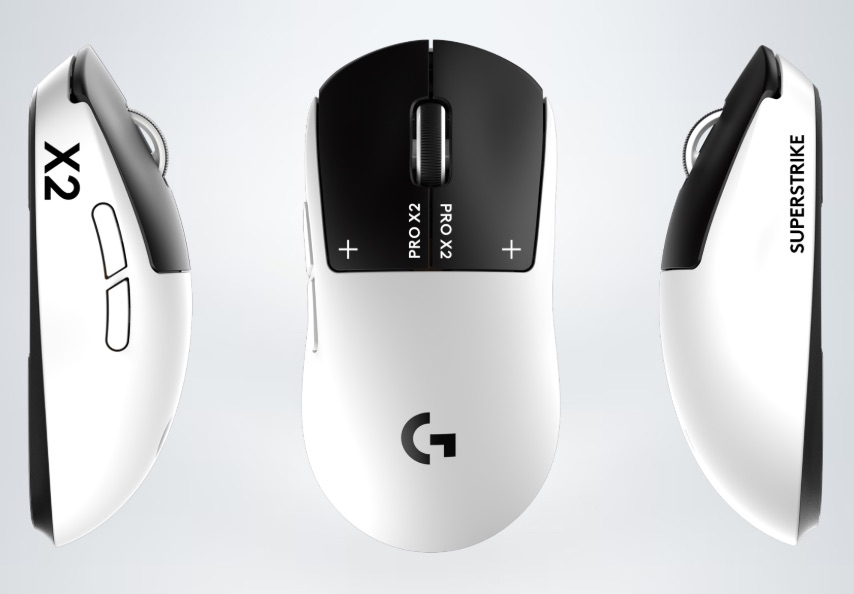
gaming mouse world has pretty much been the same for the last few years, with the only real improvement being weight savings. Now, Logitech has just introduced a new high-end gaming mouse in India, the Pro X2 Superstrike, and it’s bringing something genuinely new to the table. With it, the company is trying to rethink how mouse clicks work entirely, replacing traditional mechanical switches with a new system designed for faster response and better control. Here’s what you need to know about it.

A New Way to Click

The biggest highlight of the PRO X2 SUPERSTRIKE is its Haptic Inductive Trigger System (HITS), which ditches conventional microswitches in favor of inductive analog sensing paired with real-time haptic feedback.

In simpler terms, clicks aren’t just registered—they’re felt instantly. The system allows players to adjust the sensitivity of each click, with multiple actuation levels and reset points to suit their playstyle. Whether you prefer quick taps in FPS games or more deliberate clicks in strategy titles, the mouse can be tuned accordingly. Logitech claims this setup can reduce click latency by up to 30 milliseconds, and if this is true, it’ll reshape the landscape altogether. We have the Pro X2 for testing purposes, so keep an eye out for the full review dropping soon.

Beyond the click tech, the PRO X2 SUPERSTRIKE packs serious hardware. It features Logitech’s HERO 2 sensor with up to 44K DPI and supports an 8K polling rate, meaning it sends data to your PC every 0.125 milliseconds. The mouse is also capable of tracking extremely fast movements, with support for high acceleration and precise tracking even during rapid flicks. Despite all that, Logitech has kept the weight down to around 65 grams, making it suitable for long gaming sessions without fatigue. It also includes PTFE feet for smoother gliding and a battery life of up to 90 hours, which should easily last through extended sessions.

The Logitech G PRO X2 SUPERSTRIKE will be available in India in a Lunar Eclipse color option, priced at ₹23,995.

#Logitech #PRO #SUPERSTRIKE #Mouse #Debuts #Haptic #Click #System #44K #DPIlogitech,logitech g">Logitech PRO X2 SUPERSTRIKE Mouse Debuts With Haptic Click System, 44K DPI
	
The gaming mouse world has pretty much been the same for the last few years, with the only real improvement being weight savings. Now, Logitech has just introduced a new high-end gaming mouse in India, the Pro X2 Superstrike, and it’s bringing something genuinely new to the table. With it, the company is trying to rethink how mouse clicks work entirely, replacing traditional mechanical switches with a new system designed for faster response and better control. Here’s what you need to know about it. 


A New Way to Click


The biggest highlight of the PRO X2 SUPERSTRIKE is its Haptic Inductive Trigger System (HITS), which ditches conventional microswitches in favor of inductive analog sensing paired with real-time haptic feedback.


In simpler terms, clicks aren’t just registered—they’re felt instantly. The system allows players to adjust the sensitivity of each click, with multiple actuation levels and reset points to suit their playstyle. Whether you prefer quick taps in FPS games or more deliberate clicks in strategy titles, the mouse can be tuned accordingly. Logitech claims this setup can reduce click latency by up to 30 milliseconds, and if this is true, it’ll reshape the landscape altogether. We have the Pro X2 for testing purposes, so keep an eye out for the full review dropping soon. 


Beyond the click tech, the PRO X2 SUPERSTRIKE packs serious hardware. It features Logitech’s HERO 2 sensor with up to 44K DPI and supports an 8K polling rate, meaning it sends data to your PC every 0.125 milliseconds. The mouse is also capable of tracking extremely fast movements, with support for high acceleration and precise tracking even during rapid flicks. Despite all that, Logitech has kept the weight down to around 65 grams, making it suitable for long gaming sessions without fatigue. It also includes PTFE feet for smoother gliding and a battery life of up to 90 hours, which should easily last through extended sessions.


The Logitech G PRO X2 SUPERSTRIKE will be available in India in a Lunar Eclipse color option, priced at ₹23,995.


#Logitech #PRO #SUPERSTRIKE #Mouse #Debuts #Haptic #Click #System #44K #DPIlogitech,logitech g

world has pretty much been the same for the last few years, with the only real improvement being weight savings. Now, Logitech has just introduced a new high-end gaming mouse in India, the Pro X2 Superstrike, and it’s bringing something genuinely new to the table. With it, the company is trying to rethink how mouse clicks work entirely, replacing traditional mechanical switches with a new system designed for faster response and better control. Here’s what you need to know about it.

A New Way to Click

The biggest highlight of the PRO X2 SUPERSTRIKE is its Haptic Inductive Trigger System (HITS), which ditches conventional microswitches in favor of inductive analog sensing paired with real-time haptic feedback.

In simpler terms, clicks aren’t just registered—they’re felt instantly. The system allows players to adjust the sensitivity of each click, with multiple actuation levels and reset points to suit their playstyle. Whether you prefer quick taps in FPS games or more deliberate clicks in strategy titles, the mouse can be tuned accordingly. Logitech claims this setup can reduce click latency by up to 30 milliseconds, and if this is true, it’ll reshape the landscape altogether. We have the Pro X2 for testing purposes, so keep an eye out for the full review dropping soon.

Beyond the click tech, the PRO X2 SUPERSTRIKE packs serious hardware. It features Logitech’s HERO 2 sensor with up to 44K DPI and supports an 8K polling rate, meaning it sends data to your PC every 0.125 milliseconds. The mouse is also capable of tracking extremely fast movements, with support for high acceleration and precise tracking even during rapid flicks. Despite all that, Logitech has kept the weight down to around 65 grams, making it suitable for long gaming sessions without fatigue. It also includes PTFE feet for smoother gliding and a battery life of up to 90 hours, which should easily last through extended sessions.

The Logitech G PRO X2 SUPERSTRIKE will be available in India in a Lunar Eclipse color option, priced at ₹23,995.

#Logitech #PRO #SUPERSTRIKE #Mouse #Debuts #Haptic #Click #System #44K #DPIlogitech,logitech g">Logitech PRO X2 SUPERSTRIKE Mouse Debuts With Haptic Click System, 44K DPI

The gaming mouse world has pretty much been the same for the last few years, with the only real improvement being weight savings. Now, Logitech has just introduced a new high-end gaming mouse in India, the Pro X2 Superstrike, and it’s bringing something genuinely new to the table. With it, the company is trying to rethink how mouse clicks work entirely, replacing traditional mechanical switches with a new system designed for faster response and better control. Here’s what you need to know about it.

A New Way to Click

The biggest highlight of the PRO X2 SUPERSTRIKE is its Haptic Inductive Trigger System (HITS), which ditches conventional microswitches in favor of inductive analog sensing paired with real-time haptic feedback.

In simpler terms, clicks aren’t just registered—they’re felt instantly. The system allows players to adjust the sensitivity of each click, with multiple actuation levels and reset points to suit their playstyle. Whether you prefer quick taps in FPS games or more deliberate clicks in strategy titles, the mouse can be tuned accordingly. Logitech claims this setup can reduce click latency by up to 30 milliseconds, and if this is true, it’ll reshape the landscape altogether. We have the Pro X2 for testing purposes, so keep an eye out for the full review dropping soon.

Beyond the click tech, the PRO X2 SUPERSTRIKE packs serious hardware. It features Logitech’s HERO 2 sensor with up to 44K DPI and supports an 8K polling rate, meaning it sends data to your PC every 0.125 milliseconds. The mouse is also capable of tracking extremely fast movements, with support for high acceleration and precise tracking even during rapid flicks. Despite all that, Logitech has kept the weight down to around 65 grams, making it suitable for long gaming sessions without fatigue. It also includes PTFE feet for smoother gliding and a battery life of up to 90 hours, which should easily last through extended sessions.

The Logitech G PRO X2 SUPERSTRIKE will be available in India in a Lunar Eclipse color option, priced at ₹23,995.

#Logitech #PRO #SUPERSTRIKE #Mouse #Debuts #Haptic #Click #System #44K #DPIlogitech,logitech g

Post Comment