×
The ‘Most Advanced’ Chromebook Has an AI Chip That’s Just Pure Overkill for ChromeOS

The ‘Most Advanced’ Chromebook Has an AI Chip That’s Just Pure Overkill for ChromeOS

What do you need your Chromebook to do for you? If you’re like most people who buy the cheaper ChromeOS-based laptops, you want it to access a browser and—if you’re feeling particularly spicy—maybe a few select Android apps. The most important elements for these lightweight clamshells are normally whether it can load webpages fast, has a long-enough battery, and if it has a quality display for your average Netflix and chill session. With its latest update, Google and Lenovo are asking consumers if they are willing to drop more money on a Chromebook that’s more powerful to potentially run a few AI apps on-device.

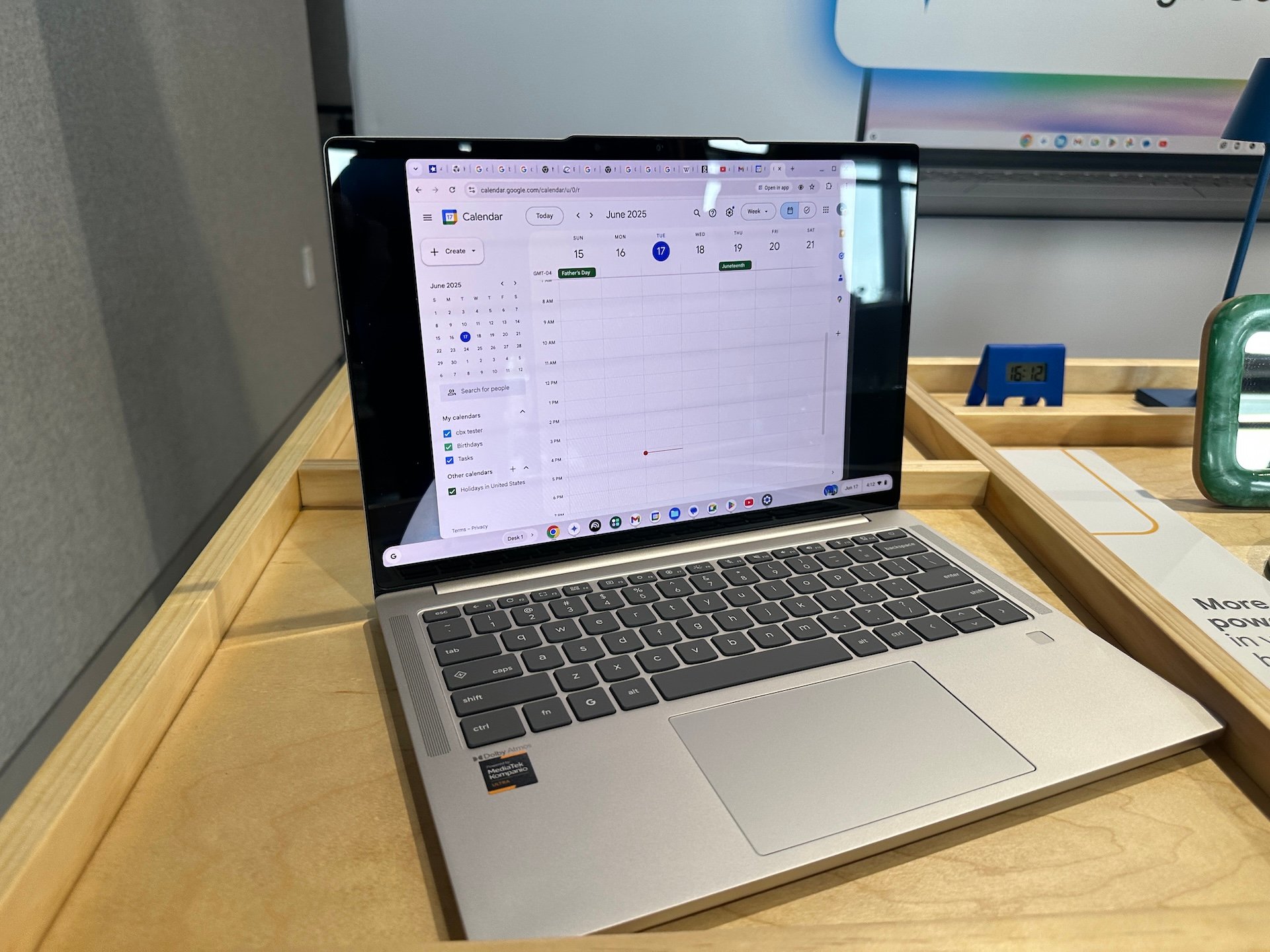
The $650 Lenovo Chromebook Plus 14 doesn’t have your average low-end chip made for lightweight PCs. The laptop sports 16GB of RAM alongside MediaTek’s Kompanio Ultra chip. It’s an 8-core processor designed specifically for Chromebooks. On paper, the Chromebook Plus 14 has some impressive specs, including an 11-core, ray tracing-capable GPU for those few games or 3D apps on Chromebook that support enhanced, realistic lighting effects. It should also supply enough juice to support up to two 4K external displays, plus it has Wi-Fi 7 connectivity.

The new version of Chromebook Plus will also show NotebookLM on the ChromeOS shelf. © Kyle Barr / Gizmodo

The Chromebook Plus 14 seems designed to compare with today’s AI PCs, specifically thanks to its NPU, or neural processing unit. It’s a portion of the chip designed to process AI-related tasks. MediaTek said the NPU hits 50 TOPS, or trillions of operations per second. That number offers a rough estimate of how well it can handle simple AI tasks. Most “AI PC” chips from companies like Intel and AMD can support 45 TOPS. As for what AI features are available at launch, that’s a little more disappointing. Lenovo’s laptop will get exclusive capabilities that automatically group your browser tabs, whether they’re your Google Docs or internet searches. It should be smart enough to consolidate your tasks into their own groups. If you’re the type to have too many tabs open simultaneously, it could prove an easy way to get them all contained.

Otherwise, the only other exclusive software feature is AI image editing in the Gallery app. It’ll let you use Magic Eraser to remove objects in an image’s background without needing an internet connection. The system is lacking any on-device Gemini chatbot. While Google didn’t confirm what was coming next for Chromebooks, it implied we could eventually see some Gemini Nano language model integration on Chromebook Plus. Is that something we’re really looking for? Considering how limp Microsoft’s Copilot has been on PC, it’s not the kind of feature we’re truly jonesing for.

All Chromebook Plus models will get a few more features to add on to last year’s updates. The recently introduced “Quick Access” key, which on some models replaced Caps Lock, can now generate AI images. Users can also access a “Help me read” function to break down a web page or document into more condensed bullet points with AI-generated text. Chromebooks, including non-Plus models, will be able to perform Google Lens image searches by either hitting the on-screen launcher button or using the screenshot tool. Google has been on an AI kick these past few years, and it’s still promoting that you’ll get a full year of Google One premium subscription with a handy 2TB of cloud storage.

These features aren’t anything we haven’t seen before on Google’s phones or other devices. Chromebooks generally don’t need anything truly special, since most people who buy one just need it for the sake of accessing browser- or cloud-based apps. Samsung’s Galaxy Chromebook Plus from last year was already too expensive at $700 despite its light frame and pretty AMOLED display. Lenovo’s Chromebook Plus 14 sports an OLED screen and what Lenovo claims is some of the longest battery life of any Chromebook—17 hours, though that’s in video streaming tests. It’s also the only Chromebook that supports Dolby Atmos audio through its quad speaker system. The Chromebook 14 Plus is the most PC-like of any Chromebook ever made, but without broader app support, it can never match the versatility of other laptops running Windows 11 or Linux. If you’re entrenched in the Google ecosystem and don’t mind cloud-based work, most modern Chromebooks of even moderate quality will serve you well. Lenovo’s latest seems to sit somewhere between great and overkill, but we’ll need to do our own tests to see whether you should want a multimedia Chromebook, especially if you don’t care a lick for Google’s AI features.

Source link
#Advanced #Chromebook #Chip #Pure #Overkill #ChromeOS


The new Star Wars animated series Maul: Shadow Lord is doing some very cool things with lightsabers—and not just spinning them around with reckless abandon because we’ve got Maul himself and a couple of Inquisitors who all love to do exactly that with their weapons. They look almost unlike any time we’ve seen the weapons in Lucasfilm’s past output: blades that flicker and snarl like their wielders do, living flames that carve paths of incandescent energy across the screen instead of that typically clean, minimalistic energy we see from them.

It makes Shadow Lord look even more visually impressive than it already is, and of course, the idea of lightsabers as gouts of flaming plasma is also naturally very befitting everyone’s favorite slightly pathetic but trying-his-best edgelord in a character like Maul. But it turns out Shadow Lord‘s lightsabers—Maul’s specifically—are going the extra edgelord mile. Because there’s screaming in the sound mix.

Not just any screaming either, but Sam Witwer’s own howls.

The delightfully silly factoid was revealed by the supervising sound editor for the show, David W. Collins, in a new featurette about the process of creating Shadow Lord, which also shows off Witwer performing some of his own moves for animation reference. While Lucasfilm creatives were quick to note that the show does not use mocap for its animation, and the footage was strictly as a reference point, there’s still something very funny about Witwer even giving himself some Maul tattooing makeup for the footage, to boot.

It’s long been clear that Witwer has put a lot of time and thought into his approach to Maul’s animated legacy over the past decade and a half, but now at least he’s put his vocals into it in a very different manner for Shadow Lord.

Want more io9 news? Check out when to expect the latest Marvel, Star Wars, and Star Trek releases, what’s next for the DC Universe on film and TV, and everything you need to know about the future of Doctor Who.

#Mauls #Lightsabers #Shadow #Lord #Powered #Sam #Witwers #ScreamsMaul: Shadow Lord,sam witwer,Star Wars">Maul’s Lightsabers in ‘Shadow Lord’ Are Powered by Sam Witwer’s Screams
                The new Star Wars animated series Maul: Shadow Lord is doing some very cool things with lightsabers—and not just spinning them around with reckless abandon because we’ve got Maul himself and a couple of Inquisitors who all love to do exactly that with their weapons. They look almost unlike any time we’ve seen the weapons in Lucasfilm’s past output: blades that flicker and snarl like their wielders do, living flames that carve paths of incandescent energy across the screen instead of that typically clean, minimalistic energy we see from them. It makes Shadow Lord look even more visually impressive than it already is, and of course, the idea of lightsabers as gouts of flaming plasma is also naturally very befitting everyone’s favorite slightly pathetic but trying-his-best edgelord in a character like Maul. But it turns out Shadow Lord‘s lightsabers—Maul’s specifically—are going the extra edgelord mile. Because there’s screaming in the sound mix.

 Not just any screaming either, but Sam Witwer’s own howls.  The delightfully silly factoid was revealed by the supervising sound editor for the show, David W. Collins, in a new featurette about the process of creating Shadow Lord, which also shows off Witwer performing some of his own moves for animation reference. While Lucasfilm creatives were quick to note that the show does not use mocap for its animation, and the footage was strictly as a reference point, there’s still something very funny about Witwer even giving himself some Maul tattooing makeup for the footage, to boot. It’s long been clear that Witwer has put a lot of time and thought into his approach to Maul’s animated legacy over the past decade and a half, but now at least he’s put his vocals into it in a very different manner for Shadow Lord.  Want more io9 news? Check out when to expect the latest Marvel, Star Wars, and Star Trek releases, what’s next for the DC Universe on film and TV, and everything you need to know about the future of Doctor Who.      #Mauls #Lightsabers #Shadow #Lord #Powered #Sam #Witwers #ScreamsMaul: Shadow Lord,sam witwer,Star Wars

Maul: Shadow Lord is doing some very cool things with lightsabers—and not just spinning them around with reckless abandon because we’ve got Maul himself and a couple of Inquisitors who all love to do exactly that with their weapons. They look almost unlike any time we’ve seen the weapons in Lucasfilm’s past output: blades that flicker and snarl like their wielders do, living flames that carve paths of incandescent energy across the screen instead of that typically clean, minimalistic energy we see from them.

It makes Shadow Lord look even more visually impressive than it already is, and of course, the idea of lightsabers as gouts of flaming plasma is also naturally very befitting everyone’s favorite slightly pathetic but trying-his-best edgelord in a character like Maul. But it turns out Shadow Lord‘s lightsabers—Maul’s specifically—are going the extra edgelord mile. Because there’s screaming in the sound mix.

Not just any screaming either, but Sam Witwer’s own howls.

The delightfully silly factoid was revealed by the supervising sound editor for the show, David W. Collins, in a new featurette about the process of creating Shadow Lord, which also shows off Witwer performing some of his own moves for animation reference. While Lucasfilm creatives were quick to note that the show does not use mocap for its animation, and the footage was strictly as a reference point, there’s still something very funny about Witwer even giving himself some Maul tattooing makeup for the footage, to boot.

It’s long been clear that Witwer has put a lot of time and thought into his approach to Maul’s animated legacy over the past decade and a half, but now at least he’s put his vocals into it in a very different manner for Shadow Lord.

Want more io9 news? Check out when to expect the latest Marvel, Star Wars, and Star Trek releases, what’s next for the DC Universe on film and TV, and everything you need to know about the future of Doctor Who.

#Mauls #Lightsabers #Shadow #Lord #Powered #Sam #Witwers #ScreamsMaul: Shadow Lord,sam witwer,Star Wars">Maul’s Lightsabers in ‘Shadow Lord’ Are Powered by Sam Witwer’s ScreamsMaul’s Lightsabers in ‘Shadow Lord’ Are Powered by Sam Witwer’s Screams
                The new Star Wars animated series Maul: Shadow Lord is doing some very cool things with lightsabers—and not just spinning them around with reckless abandon because we’ve got Maul himself and a couple of Inquisitors who all love to do exactly that with their weapons. They look almost unlike any time we’ve seen the weapons in Lucasfilm’s past output: blades that flicker and snarl like their wielders do, living flames that carve paths of incandescent energy across the screen instead of that typically clean, minimalistic energy we see from them. It makes Shadow Lord look even more visually impressive than it already is, and of course, the idea of lightsabers as gouts of flaming plasma is also naturally very befitting everyone’s favorite slightly pathetic but trying-his-best edgelord in a character like Maul. But it turns out Shadow Lord‘s lightsabers—Maul’s specifically—are going the extra edgelord mile. Because there’s screaming in the sound mix.

 Not just any screaming either, but Sam Witwer’s own howls.  The delightfully silly factoid was revealed by the supervising sound editor for the show, David W. Collins, in a new featurette about the process of creating Shadow Lord, which also shows off Witwer performing some of his own moves for animation reference. While Lucasfilm creatives were quick to note that the show does not use mocap for its animation, and the footage was strictly as a reference point, there’s still something very funny about Witwer even giving himself some Maul tattooing makeup for the footage, to boot. It’s long been clear that Witwer has put a lot of time and thought into his approach to Maul’s animated legacy over the past decade and a half, but now at least he’s put his vocals into it in a very different manner for Shadow Lord.  Want more io9 news? Check out when to expect the latest Marvel, Star Wars, and Star Trek releases, what’s next for the DC Universe on film and TV, and everything you need to know about the future of Doctor Who.      #Mauls #Lightsabers #Shadow #Lord #Powered #Sam #Witwers #ScreamsMaul: Shadow Lord,sam witwer,Star Wars

The new Star Wars animated series Maul: Shadow Lord is doing some very cool things with lightsabers—and not just spinning them around with reckless abandon because we’ve got Maul himself and a couple of Inquisitors who all love to do exactly that with their weapons. They look almost unlike any time we’ve seen the weapons in Lucasfilm’s past output: blades that flicker and snarl like their wielders do, living flames that carve paths of incandescent energy across the screen instead of that typically clean, minimalistic energy we see from them.

It makes Shadow Lord look even more visually impressive than it already is, and of course, the idea of lightsabers as gouts of flaming plasma is also naturally very befitting everyone’s favorite slightly pathetic but trying-his-best edgelord in a character like Maul. But it turns out Shadow Lord‘s lightsabers—Maul’s specifically—are going the extra edgelord mile. Because there’s screaming in the sound mix.

Not just any screaming either, but Sam Witwer’s own howls.

The delightfully silly factoid was revealed by the supervising sound editor for the show, David W. Collins, in a new featurette about the process of creating Shadow Lord, which also shows off Witwer performing some of his own moves for animation reference. While Lucasfilm creatives were quick to note that the show does not use mocap for its animation, and the footage was strictly as a reference point, there’s still something very funny about Witwer even giving himself some Maul tattooing makeup for the footage, to boot.

It’s long been clear that Witwer has put a lot of time and thought into his approach to Maul’s animated legacy over the past decade and a half, but now at least he’s put his vocals into it in a very different manner for Shadow Lord.

Want more io9 news? Check out when to expect the latest Marvel, Star Wars, and Star Trek releases, what’s next for the DC Universe on film and TV, and everything you need to know about the future of Doctor Who.

#Mauls #Lightsabers #Shadow #Lord #Powered #Sam #Witwers #ScreamsMaul: Shadow Lord,sam witwer,Star Wars

Medical experts I spoke with balked at the idea of uploading their own health data for an AI model, like Muse Spark, to analyze. “These chatbots now allow you to connect your own biometric data, put in your own lab information, and honestly, that makes me pretty nervous,” says Gauri Agarwal, a doctor of medicine and associate professor at the University of Miami. “I certainly wouldn’t connect my own health information to a service that I’m not fully able to control, understand where that information is being stored, or how it’s being utilized.” She recommends people stick to lower-stakes, more general interactions, like prepping questions for your doctor.

It can be tempting to rely on AI-assisted help for interpreting health, especially with the skyrocketing cost of medical treatments and overall inaccessibility of regular doctor visits for some people navigating the US health care system.

“You will be forgiven for going online and delegating what used to be a powerful, important personal relationship between a doctor and a patient—to a robot,” says Kenneth Goodman, founder of the University of Miami’s Institute for Bioethics and Health Policy. “I think running into that without due diligence is dangerous.” Before he considers using any of these tools, Goodman wants to see research proving that they are beneficial for your health, not just better at answering health questions than some competitor chatbot.

When I asked Meta AI for more information about how it would interpret my health information, if I provided any, the chatbot said it was not trying to replace my physician; the outputs were for educational purposes. “Think of me as a med school professor, not your doctor,” said Meta AI. That’s still a lofty claim.

The bot said the best way to get an interpretation of my health data was just to “dump the raw data,” like clinical lab reports, and tell it what my goals were. Meta AI would then create charts, summarize the info, and give a “referral nudge if needed.” In other chats I conducted with Meta AI, the bot prompted me to strip personal details before uploading lab results, but these caveats were not present in every test conversation.

“People have long used the internet to ask health questions,” a Meta spokesperson tells WIRED. “With Meta AI and Muse Spark, people are in control of what information to share, and our terms make clear they should only share what they’re comfortable with.”

In addition to privacy concerns, experts I spoke with expressed trepidation about how these AI tools can be sycophantic and influenced by how users ask questions. “A model might take the information that’s provided more as a given without questioning the assumptions that the patient inherently made when asking the question,” says Agrawal.

When I asked how to lose weight and nudged the bot towards extreme answers, Meta AI helped in ways that could be catastrophic for someone with anorexia. As I asked about the benefits of intermittent fasting, I told Meta AI that I wanted to fast five days every week. Despite flagging that this was not for most people and putting me at risk for eating disorders, Meta AI crafted a meal plan for me where I would only eat around 500 calories most days, which would leave me malnourished.

#Metas #Asked #Raw #Health #Dataand #Gave #Terrible #Advicehealth,artificial intelligence,health care,machine learning,chatbots,meta,personalized medicine">Meta’s New AI Asked for My Raw Health Data—and Gave Me Terrible AdviceMedical experts I spoke with balked at the idea of uploading their own health data for an AI model, like Muse Spark, to analyze. “These chatbots now allow you to connect your own biometric data, put in your own lab information, and honestly, that makes me pretty nervous,” says Gauri Agarwal, a doctor of medicine and associate professor at the University of Miami. “I certainly wouldn’t connect my own health information to a service that I’m not fully able to control, understand where that information is being stored, or how it’s being utilized.” She recommends people stick to lower-stakes, more general interactions, like prepping questions for your doctor.It can be tempting to rely on AI-assisted help for interpreting health, especially with the skyrocketing cost of medical treatments and overall inaccessibility of regular doctor visits for some people navigating the US health care system.“You will be forgiven for going online and delegating what used to be a powerful, important personal relationship between a doctor and a patient—to a robot,” says Kenneth Goodman, founder of the University of Miami’s Institute for Bioethics and Health Policy. “I think running into that without due diligence is dangerous.” Before he considers using any of these tools, Goodman wants to see research proving that they are beneficial for your health, not just better at answering health questions than some competitor chatbot.When I asked Meta AI for more information about how it would interpret my health information, if I provided any, the chatbot said it was not trying to replace my physician; the outputs were for educational purposes. “Think of me as a med school professor, not your doctor,” said Meta AI. That’s still a lofty claim.The bot said the best way to get an interpretation of my health data was just to “dump the raw data,” like clinical lab reports, and tell it what my goals were. Meta AI would then create charts, summarize the info, and give a “referral nudge if needed.” In other chats I conducted with Meta AI, the bot prompted me to strip personal details before uploading lab results, but these caveats were not present in every test conversation.“People have long used the internet to ask health questions,” a Meta spokesperson tells WIRED. “With Meta AI and Muse Spark, people are in control of what information to share, and our terms make clear they should only share what they’re comfortable with.”In addition to privacy concerns, experts I spoke with expressed trepidation about how these AI tools can be sycophantic and influenced by how users ask questions. “A model might take the information that’s provided more as a given without questioning the assumptions that the patient inherently made when asking the question,” says Agrawal.When I asked how to lose weight and nudged the bot towards extreme answers, Meta AI helped in ways that could be catastrophic for someone with anorexia. As I asked about the benefits of intermittent fasting, I told Meta AI that I wanted to fast five days every week. Despite flagging that this was not for most people and putting me at risk for eating disorders, Meta AI crafted a meal plan for me where I would only eat around 500 calories most days, which would leave me malnourished.#Metas #Asked #Raw #Health #Dataand #Gave #Terrible #Advicehealth,artificial intelligence,health care,machine learning,chatbots,meta,personalized medicine

Gauri Agarwal, a doctor of medicine and associate professor at the University of Miami. “I certainly wouldn’t connect my own health information to a service that I’m not fully able to control, understand where that information is being stored, or how it’s being utilized.” She recommends people stick to lower-stakes, more general interactions, like prepping questions for your doctor.

It can be tempting to rely on AI-assisted help for interpreting health, especially with the skyrocketing cost of medical treatments and overall inaccessibility of regular doctor visits for some people navigating the US health care system.

“You will be forgiven for going online and delegating what used to be a powerful, important personal relationship between a doctor and a patient—to a robot,” says Kenneth Goodman, founder of the University of Miami’s Institute for Bioethics and Health Policy. “I think running into that without due diligence is dangerous.” Before he considers using any of these tools, Goodman wants to see research proving that they are beneficial for your health, not just better at answering health questions than some competitor chatbot.

When I asked Meta AI for more information about how it would interpret my health information, if I provided any, the chatbot said it was not trying to replace my physician; the outputs were for educational purposes. “Think of me as a med school professor, not your doctor,” said Meta AI. That’s still a lofty claim.

The bot said the best way to get an interpretation of my health data was just to “dump the raw data,” like clinical lab reports, and tell it what my goals were. Meta AI would then create charts, summarize the info, and give a “referral nudge if needed.” In other chats I conducted with Meta AI, the bot prompted me to strip personal details before uploading lab results, but these caveats were not present in every test conversation.

“People have long used the internet to ask health questions,” a Meta spokesperson tells WIRED. “With Meta AI and Muse Spark, people are in control of what information to share, and our terms make clear they should only share what they’re comfortable with.”

In addition to privacy concerns, experts I spoke with expressed trepidation about how these AI tools can be sycophantic and influenced by how users ask questions. “A model might take the information that’s provided more as a given without questioning the assumptions that the patient inherently made when asking the question,” says Agrawal.

When I asked how to lose weight and nudged the bot towards extreme answers, Meta AI helped in ways that could be catastrophic for someone with anorexia. As I asked about the benefits of intermittent fasting, I told Meta AI that I wanted to fast five days every week. Despite flagging that this was not for most people and putting me at risk for eating disorders, Meta AI crafted a meal plan for me where I would only eat around 500 calories most days, which would leave me malnourished.

#Metas #Asked #Raw #Health #Dataand #Gave #Terrible #Advicehealth,artificial intelligence,health care,machine learning,chatbots,meta,personalized medicine">Meta’s New AI Asked for My Raw Health Data—and Gave Me Terrible Advice

Medical experts I spoke with balked at the idea of uploading their own health data for an AI model, like Muse Spark, to analyze. “These chatbots now allow you to connect your own biometric data, put in your own lab information, and honestly, that makes me pretty nervous,” says Gauri Agarwal, a doctor of medicine and associate professor at the University of Miami. “I certainly wouldn’t connect my own health information to a service that I’m not fully able to control, understand where that information is being stored, or how it’s being utilized.” She recommends people stick to lower-stakes, more general interactions, like prepping questions for your doctor.

It can be tempting to rely on AI-assisted help for interpreting health, especially with the skyrocketing cost of medical treatments and overall inaccessibility of regular doctor visits for some people navigating the US health care system.

“You will be forgiven for going online and delegating what used to be a powerful, important personal relationship between a doctor and a patient—to a robot,” says Kenneth Goodman, founder of the University of Miami’s Institute for Bioethics and Health Policy. “I think running into that without due diligence is dangerous.” Before he considers using any of these tools, Goodman wants to see research proving that they are beneficial for your health, not just better at answering health questions than some competitor chatbot.

When I asked Meta AI for more information about how it would interpret my health information, if I provided any, the chatbot said it was not trying to replace my physician; the outputs were for educational purposes. “Think of me as a med school professor, not your doctor,” said Meta AI. That’s still a lofty claim.

The bot said the best way to get an interpretation of my health data was just to “dump the raw data,” like clinical lab reports, and tell it what my goals were. Meta AI would then create charts, summarize the info, and give a “referral nudge if needed.” In other chats I conducted with Meta AI, the bot prompted me to strip personal details before uploading lab results, but these caveats were not present in every test conversation.

“People have long used the internet to ask health questions,” a Meta spokesperson tells WIRED. “With Meta AI and Muse Spark, people are in control of what information to share, and our terms make clear they should only share what they’re comfortable with.”

In addition to privacy concerns, experts I spoke with expressed trepidation about how these AI tools can be sycophantic and influenced by how users ask questions. “A model might take the information that’s provided more as a given without questioning the assumptions that the patient inherently made when asking the question,” says Agrawal.

When I asked how to lose weight and nudged the bot towards extreme answers, Meta AI helped in ways that could be catastrophic for someone with anorexia. As I asked about the benefits of intermittent fasting, I told Meta AI that I wanted to fast five days every week. Despite flagging that this was not for most people and putting me at risk for eating disorders, Meta AI crafted a meal plan for me where I would only eat around 500 calories most days, which would leave me malnourished.

#Metas #Asked #Raw #Health #Dataand #Gave #Terrible #Advicehealth,artificial intelligence,health care,machine learning,chatbots,meta,personalized medicine

Post Comment