×
Traces of Leonardo da Vinci’s DNA May Have Been Discovered on a Red Chalk Drawing Called ‘Holy Child’

Traces of Leonardo da Vinci’s DNA May Have Been Discovered on a Red Chalk Drawing Called ‘Holy Child’

Researchers from the Leonardo da Vinci DNA Project (LDVP) report that by analyzing the drawing of Holy Child and other Renaissance artifacts, such as letters written by a da Vinci relative, they have recovered some Y chromosome DNA sequences that appear to belong to a genetic group of people with common ancestors in Tuscany, where the genius and Renaissance master was born in 1452. The findings, first reported in Science, could be the first time scientists have identified DNA from da Vinci himself.

The DNA

Historical artifacts can accumulate DNA from the environment and potentially offer useful information about the people who created and handled them. Gathering that material on such precious objects without damaging or contaminating them, though, is a complex challenge. Today, decisions about the authorship of a work depend on expert opinion—for example, on how a brushstroke was created.

The LDVP researchers therefore used an extremely gentle swabbing method to attempt to collect biological material. They then extracted small amounts of DNA, which provided useful information. “We recovered heterogeneous mixtures of nonhuman DNA, states the study, published in the preprint journal bioRxiv, “and, in a subset of samples, sparse male-specific human DNA signals.”

The da Vinci Clue

From the analysis the researchers concluded that they found the closest match within the broad E1b1b lineage on the Y chromosome (whose sections are passed on almost unchanged from father to son) that is now commonly found in southern Europe, Africa, and parts of the Middle East. Some of the DNA, they say, may have come from Leonardo da Vinci himself.

“Across multiple independent swabs from Leonardo da Vinci–associated items, the obtained Y chromosome marker data suggested assignments within the broader E1b1/E1b1b clade,” the study reads. The results also indicate mixed DNA contributions associated with the source materials, though, consistent with modern handling.

“Together, these data demonstrate the feasibility as well as limitations of combining metagenomics and human DNA marker analysis for cultural heritage science,” the paper reads, “providing a baseline workflow for future conservation science studies and hypothesis-driven investigations of provenance, authentication and handling history.”

Further Investigation

While the researches have demonstrated an innovative approach, they acknowledge that they didn’t come back with conclusive evidence. Although the data suggest that the DNA could be da Vinci’s, asserting that any trace of DNA in the artifacts actually belongs to him is very complicated. “Establishing an unequivocal identity … is extremely complex,” David Caramelli, an anthropologist at the University of Florence and LDVP member, told Science.

This is because scientists cannot verify the genetic sequences of the artifacts by comparing them with DNA known to have been taken from Leonardo da Vinci himself; there are still no confirmed samples. Moreover, da Vinci had no known direct descendants, and his burial site was breached in the early 19th century. Encouraged by the first clue about da Vinci’s DNA, LDVP scientists now hope to convince the custodians of Leonardo’s works and notebooks to allow them further sampling that could solve the case.

This story originally appeared in WIRED Italia and has been translated from Italian.

Source link
#Traces #Leonardo #Vincis #DNA #Discovered #Red #Chalk #Drawing #Called #Holy #Child

Treasury Secretary Scott Bessent and Federal Reserve Chair Jerome Powell summoned bank executives for a meeting this week where they encouraged the executives to use Anthropic’s new Mythos model to detect vulnerabilities, according to Bloomberg

Indeed, while JPMorgan Chase was the only bank listed as one of the initial partner organizations with access to the model, Goldman Sachs, Citigroup, Bank of America, and Morgan Stanley are reportedly testing Mythos as well.

Anthropic announced the model this week but said it would be limiting access for now, in part because Mythos — despite not being trained specifically for cybersecurity — is too good at finding security vulnerabilities. (Others suggested this was hype or simply a smart enterprise sales strategy.)

The report is particularly surprising since Anthropic is currently battling the Trump administration in court over the Department of Defense’s designation of Anthropic as a supply-chain risk; that designation came after negotiations fell apart over the company’s efforts to limit how its AI models can be used by the government.

Meanwhile, the Financial Times reports that U.K. financial regulators are also discussing the risk posed by Mythos.

#Trump #officials #encouraging #banks #test #Anthropics #Mythos #model #TechCrunchAnthropic,jerome powell,Scott Bessent">Trump officials may be encouraging banks to test Anthropic’s Mythos model | TechCrunch
Treasury Secretary Scott Bessent and Federal Reserve Chair Jerome Powell summoned bank executives for a meeting this week where they encouraged the executives to use Anthropic’s new Mythos model to detect vulnerabilities, according to Bloomberg. 

Indeed, while JPMorgan Chase was the only bank listed as one of the initial partner organizations with access to the model, Goldman Sachs, Citigroup, Bank of America, and Morgan Stanley are reportedly testing Mythos as well.


Anthropic announced the model this week but said it would be limiting access for now, in part because Mythos — despite not being trained specifically for cybersecurity — is too good at finding security vulnerabilities. (Others suggested this was hype or simply a smart enterprise sales strategy.)

The report is particularly surprising since Anthropic is currently battling the Trump administration in court over the Department of Defense’s designation of Anthropic as a supply-chain risk; that designation came after negotiations fell apart over the company’s efforts to limit how its AI models can be used by the government.

Meanwhile, the Financial Times reports that U.K. financial regulators are also discussing the risk posed by Mythos.
#Trump #officials #encouraging #banks #test #Anthropics #Mythos #model #TechCrunchAnthropic,jerome powell,Scott Bessent

according to Bloomberg

Indeed, while JPMorgan Chase was the only bank listed as one of the initial partner organizations with access to the model, Goldman Sachs, Citigroup, Bank of America, and Morgan Stanley are reportedly testing Mythos as well.

Anthropic announced the model this week but said it would be limiting access for now, in part because Mythos — despite not being trained specifically for cybersecurity — is too good at finding security vulnerabilities. (Others suggested this was hype or simply a smart enterprise sales strategy.)

The report is particularly surprising since Anthropic is currently battling the Trump administration in court over the Department of Defense’s designation of Anthropic as a supply-chain risk; that designation came after negotiations fell apart over the company’s efforts to limit how its AI models can be used by the government.

Meanwhile, the Financial Times reports that U.K. financial regulators are also discussing the risk posed by Mythos.

#Trump #officials #encouraging #banks #test #Anthropics #Mythos #model #TechCrunchAnthropic,jerome powell,Scott Bessent">Trump officials may be encouraging banks to test Anthropic’s Mythos model | TechCrunch

Treasury Secretary Scott Bessent and Federal Reserve Chair Jerome Powell summoned bank executives for a meeting this week where they encouraged the executives to use Anthropic’s new Mythos model to detect vulnerabilities, according to Bloomberg

Indeed, while JPMorgan Chase was the only bank listed as one of the initial partner organizations with access to the model, Goldman Sachs, Citigroup, Bank of America, and Morgan Stanley are reportedly testing Mythos as well.

Anthropic announced the model this week but said it would be limiting access for now, in part because Mythos — despite not being trained specifically for cybersecurity — is too good at finding security vulnerabilities. (Others suggested this was hype or simply a smart enterprise sales strategy.)

The report is particularly surprising since Anthropic is currently battling the Trump administration in court over the Department of Defense’s designation of Anthropic as a supply-chain risk; that designation came after negotiations fell apart over the company’s efforts to limit how its AI models can be used by the government.

Meanwhile, the Financial Times reports that U.K. financial regulators are also discussing the risk posed by Mythos.

#Trump #officials #encouraging #banks #test #Anthropics #Mythos #model #TechCrunchAnthropic,jerome powell,Scott Bessent
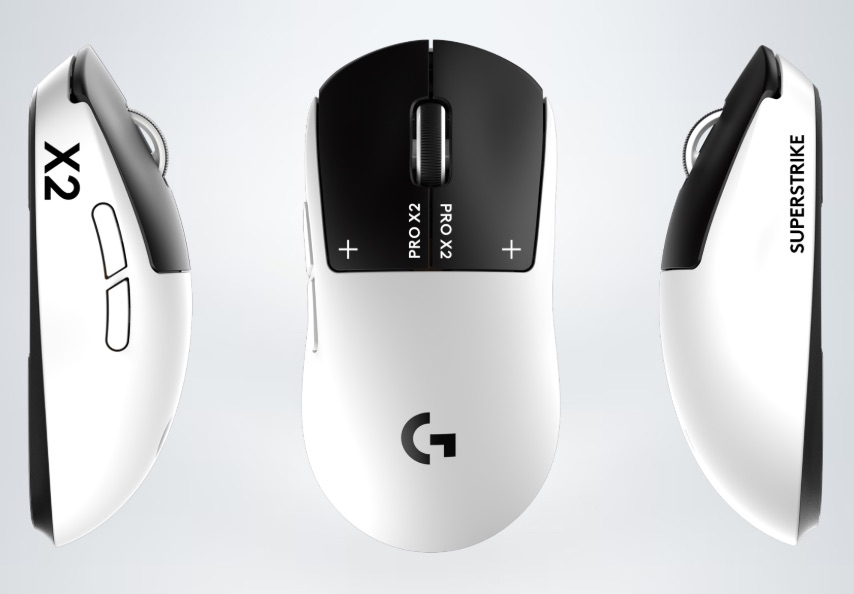
gaming mouse world has pretty much been the same for the last few years, with the only real improvement being weight savings. Now, Logitech has just introduced a new high-end gaming mouse in India, the Pro X2 Superstrike, and it’s bringing something genuinely new to the table. With it, the company is trying to rethink how mouse clicks work entirely, replacing traditional mechanical switches with a new system designed for faster response and better control. Here’s what you need to know about it.

A New Way to Click

The biggest highlight of the PRO X2 SUPERSTRIKE is its Haptic Inductive Trigger System (HITS), which ditches conventional microswitches in favor of inductive analog sensing paired with real-time haptic feedback.

In simpler terms, clicks aren’t just registered—they’re felt instantly. The system allows players to adjust the sensitivity of each click, with multiple actuation levels and reset points to suit their playstyle. Whether you prefer quick taps in FPS games or more deliberate clicks in strategy titles, the mouse can be tuned accordingly. Logitech claims this setup can reduce click latency by up to 30 milliseconds, and if this is true, it’ll reshape the landscape altogether. We have the Pro X2 for testing purposes, so keep an eye out for the full review dropping soon.

Beyond the click tech, the PRO X2 SUPERSTRIKE packs serious hardware. It features Logitech’s HERO 2 sensor with up to 44K DPI and supports an 8K polling rate, meaning it sends data to your PC every 0.125 milliseconds. The mouse is also capable of tracking extremely fast movements, with support for high acceleration and precise tracking even during rapid flicks. Despite all that, Logitech has kept the weight down to around 65 grams, making it suitable for long gaming sessions without fatigue. It also includes PTFE feet for smoother gliding and a battery life of up to 90 hours, which should easily last through extended sessions.

The Logitech G PRO X2 SUPERSTRIKE will be available in India in a Lunar Eclipse color option, priced at ₹23,995.

#Logitech #PRO #SUPERSTRIKE #Mouse #Debuts #Haptic #Click #System #44K #DPIlogitech,logitech g">Logitech PRO X2 SUPERSTRIKE Mouse Debuts With Haptic Click System, 44K DPI
	
The gaming mouse world has pretty much been the same for the last few years, with the only real improvement being weight savings. Now, Logitech has just introduced a new high-end gaming mouse in India, the Pro X2 Superstrike, and it’s bringing something genuinely new to the table. With it, the company is trying to rethink how mouse clicks work entirely, replacing traditional mechanical switches with a new system designed for faster response and better control. Here’s what you need to know about it. 


A New Way to Click


The biggest highlight of the PRO X2 SUPERSTRIKE is its Haptic Inductive Trigger System (HITS), which ditches conventional microswitches in favor of inductive analog sensing paired with real-time haptic feedback.


In simpler terms, clicks aren’t just registered—they’re felt instantly. The system allows players to adjust the sensitivity of each click, with multiple actuation levels and reset points to suit their playstyle. Whether you prefer quick taps in FPS games or more deliberate clicks in strategy titles, the mouse can be tuned accordingly. Logitech claims this setup can reduce click latency by up to 30 milliseconds, and if this is true, it’ll reshape the landscape altogether. We have the Pro X2 for testing purposes, so keep an eye out for the full review dropping soon. 


Beyond the click tech, the PRO X2 SUPERSTRIKE packs serious hardware. It features Logitech’s HERO 2 sensor with up to 44K DPI and supports an 8K polling rate, meaning it sends data to your PC every 0.125 milliseconds. The mouse is also capable of tracking extremely fast movements, with support for high acceleration and precise tracking even during rapid flicks. Despite all that, Logitech has kept the weight down to around 65 grams, making it suitable for long gaming sessions without fatigue. It also includes PTFE feet for smoother gliding and a battery life of up to 90 hours, which should easily last through extended sessions.


The Logitech G PRO X2 SUPERSTRIKE will be available in India in a Lunar Eclipse color option, priced at ₹23,995.


#Logitech #PRO #SUPERSTRIKE #Mouse #Debuts #Haptic #Click #System #44K #DPIlogitech,logitech g

world has pretty much been the same for the last few years, with the only real improvement being weight savings. Now, Logitech has just introduced a new high-end gaming mouse in India, the Pro X2 Superstrike, and it’s bringing something genuinely new to the table. With it, the company is trying to rethink how mouse clicks work entirely, replacing traditional mechanical switches with a new system designed for faster response and better control. Here’s what you need to know about it.

A New Way to Click

The biggest highlight of the PRO X2 SUPERSTRIKE is its Haptic Inductive Trigger System (HITS), which ditches conventional microswitches in favor of inductive analog sensing paired with real-time haptic feedback.

In simpler terms, clicks aren’t just registered—they’re felt instantly. The system allows players to adjust the sensitivity of each click, with multiple actuation levels and reset points to suit their playstyle. Whether you prefer quick taps in FPS games or more deliberate clicks in strategy titles, the mouse can be tuned accordingly. Logitech claims this setup can reduce click latency by up to 30 milliseconds, and if this is true, it’ll reshape the landscape altogether. We have the Pro X2 for testing purposes, so keep an eye out for the full review dropping soon.

Beyond the click tech, the PRO X2 SUPERSTRIKE packs serious hardware. It features Logitech’s HERO 2 sensor with up to 44K DPI and supports an 8K polling rate, meaning it sends data to your PC every 0.125 milliseconds. The mouse is also capable of tracking extremely fast movements, with support for high acceleration and precise tracking even during rapid flicks. Despite all that, Logitech has kept the weight down to around 65 grams, making it suitable for long gaming sessions without fatigue. It also includes PTFE feet for smoother gliding and a battery life of up to 90 hours, which should easily last through extended sessions.

The Logitech G PRO X2 SUPERSTRIKE will be available in India in a Lunar Eclipse color option, priced at ₹23,995.

#Logitech #PRO #SUPERSTRIKE #Mouse #Debuts #Haptic #Click #System #44K #DPIlogitech,logitech g">Logitech PRO X2 SUPERSTRIKE Mouse Debuts With Haptic Click System, 44K DPI

The gaming mouse world has pretty much been the same for the last few years, with the only real improvement being weight savings. Now, Logitech has just introduced a new high-end gaming mouse in India, the Pro X2 Superstrike, and it’s bringing something genuinely new to the table. With it, the company is trying to rethink how mouse clicks work entirely, replacing traditional mechanical switches with a new system designed for faster response and better control. Here’s what you need to know about it.

A New Way to Click

The biggest highlight of the PRO X2 SUPERSTRIKE is its Haptic Inductive Trigger System (HITS), which ditches conventional microswitches in favor of inductive analog sensing paired with real-time haptic feedback.

In simpler terms, clicks aren’t just registered—they’re felt instantly. The system allows players to adjust the sensitivity of each click, with multiple actuation levels and reset points to suit their playstyle. Whether you prefer quick taps in FPS games or more deliberate clicks in strategy titles, the mouse can be tuned accordingly. Logitech claims this setup can reduce click latency by up to 30 milliseconds, and if this is true, it’ll reshape the landscape altogether. We have the Pro X2 for testing purposes, so keep an eye out for the full review dropping soon.

Beyond the click tech, the PRO X2 SUPERSTRIKE packs serious hardware. It features Logitech’s HERO 2 sensor with up to 44K DPI and supports an 8K polling rate, meaning it sends data to your PC every 0.125 milliseconds. The mouse is also capable of tracking extremely fast movements, with support for high acceleration and precise tracking even during rapid flicks. Despite all that, Logitech has kept the weight down to around 65 grams, making it suitable for long gaming sessions without fatigue. It also includes PTFE feet for smoother gliding and a battery life of up to 90 hours, which should easily last through extended sessions.

The Logitech G PRO X2 SUPERSTRIKE will be available in India in a Lunar Eclipse color option, priced at ₹23,995.

#Logitech #PRO #SUPERSTRIKE #Mouse #Debuts #Haptic #Click #System #44K #DPIlogitech,logitech g

Post Comment