×
Train smarter, not harder — Ramji Srinivasan decodes how IPL’s OG superstars can stave off injuries  They say age comes for everyone eventually, and the 2026 edition of the Indian Premier League is proving that to be ruthlessly true. Rohit Sharma will miss Mumbai Indians’ clash against Punjab Kings at the Wankhede Stadium, marking a rare occasion that the 38-year-old will be absent from the five-time champion’s top-order.Rohit is not the only one facing time on the sidelines. The seemingly untiring Virat Kohli was forced to play as an Impact Player in Royal Challengers Bengaluru’s match against Lucknow Super Giants, while M.S. Dhoni – the famed lynchpin of Chennai Super Kings’ middle-order – has missed the side’s first five matches of the season.The stalwarts of a generation of the IPL are now being confronted with the realities of playing the tournament while not riding the conveyor belt of international cricket year-round.According to Ramji Srinivasan, former India and Mumbai Indians strength and conditioning coach, the physical challenge of the IPL is primarily about rest and recovery. “The challenge is more on recovery than the fitness aspect,” he told        Sportstar. “The fitness aspect is more about tiring and traveling from one place to another. Virat Kohli played as an Impact Player due to a kneeinjury during RCB’s match against LSG.
                                                            | Photo Credit: 
                                K. Murali Kumar
                            

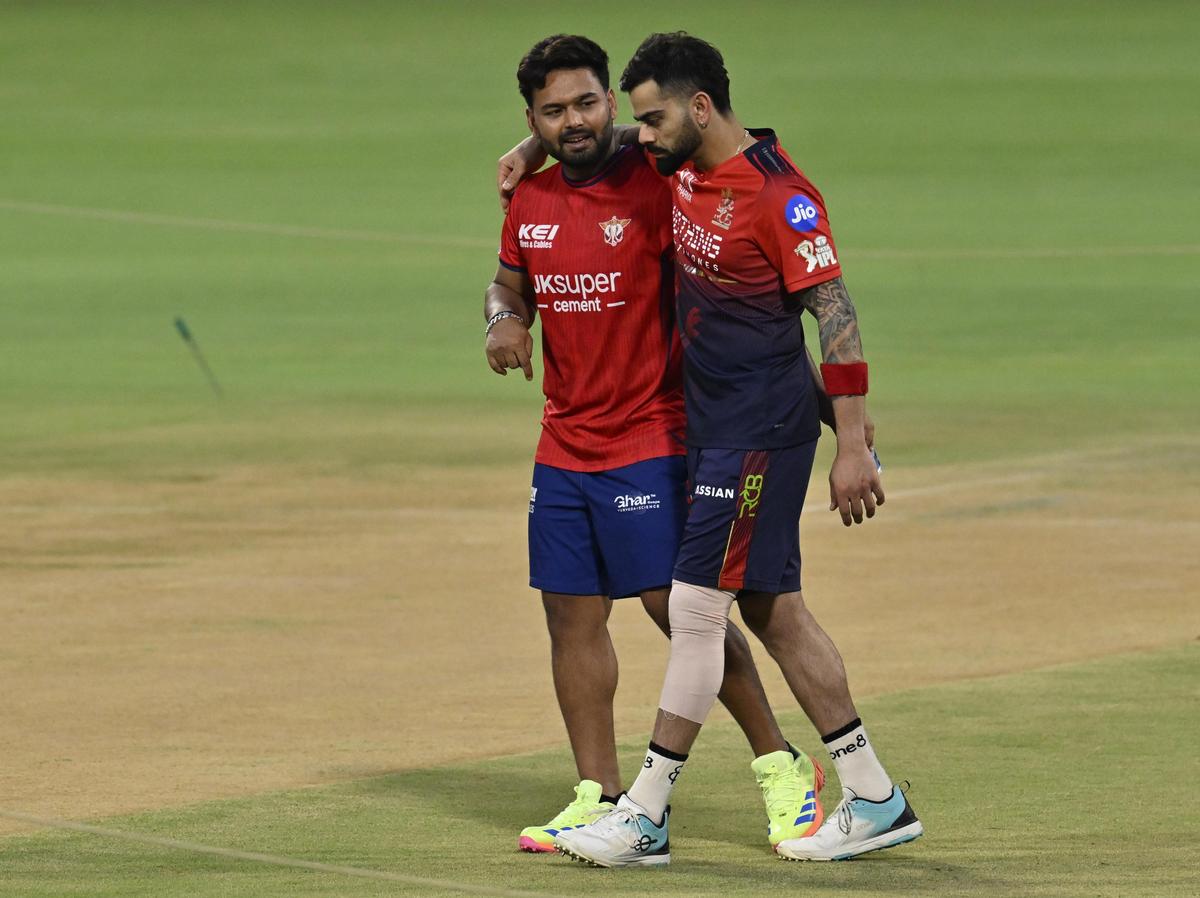
                            Virat Kohli played as an Impact Player due to a kneeinjury during RCB’s match against LSG.
                                                            | Photo Credit: 
                                K. Murali Kumar
                                                    “The matches finish by 11:00-11:30PM, by the time they start from the ground, it will be around 12.30-1:00AM. The next morning, if they have to travel again, everything changes again. It’s about how you manage your body with proper recovery and nutrition,” Srinivasan said.The challenge of dealing with a hectic schedule is one that becomes tougher with age. “After 30 and beyond, the body starts to slow down physiologically. It is natural. So, what they need to do is train smart rather than train hard,” Srinivasan said.According to Srinivasan, age does have some benefit to doing so. “By this time you know your body better, when you need to push, when you need to pull yourself back, when you need to recover, what type of recovery you need to adhere to.“What you are adhering to when you are in your 20s and early 30s may not be as pertinent now, you know. Your body is changing every year, and you need to adapt to a particular stimulus,” he explained.
    “You need to be very specialised according to the individual. What suits Virat will not suit Rohit or MS. So, it has to be highly bespoke, just because it is successful with one player need not be successful with any other players.”Ramji SrinivasanSrinivasan suggested a focus on cognitive and neuromuscular training, an approach he likens to that of a Formula One driver, which focuses on training the cognitive skills of the player.“It’s all about the neural training pathway because cognition is what your eye perceives, and how your body reacts. For example, you see a ball trajectory coming in, how your body reacts to that particular impulse. It can be reactive or it can be proactive.“You focus on how you train those muscle groups, the smaller and the finer muscle rather than the gross muscles. That is how you get precision, and they are the thing which loses the neural response in the long run if you don’t train them.”An inevitable part of aging as a player is the arrival of injuries, as the likes of Rohit and Kohli are experiencing now. While niggles are unavoidable for top-level athletes, the focus, Srinivasan said, should be on being proactive about identifying the underlying causes and treating them quickly.“The idea is that preventive medicine is better than curative, and if you cannot prevent it, your curative measure has to be quicker,” he said.“Any sportsperson will have niggles, but you have to identify the contributing factors. When you are doing.your assessment and screening you will know there are probabilities, especially as you get older. So if it is a hamstring injury, why has it happened, is it because of dehydration, or because of lack of fitness, or because of overstretching?”He also emphasised that there is no one-size-fits-all approach. The training methodology for players like Kohli or Rohit, who have recently stepped off the Test and T20I bandwagons but still play a single format, will have a different approach to a player like Dhoni, for whom IPL is the only remaining form of professional cricket. Rohit Sharma suffered an injury to his left hamstring that ruled him out of the match against PBKS.
                                                            | Photo Credit: 
                                Emmanual Yogini
                            

                            Rohit Sharma suffered an injury to his left hamstring that ruled him out of the match against PBKS.
                                                            | Photo Credit: 
                                Emmanual Yogini
                                                    “When you are young and robust, if you eat iron you will be able to digest it. In the thirties even if you eat food it won’t digest,” he explained with a laugh. “So you need to be very specialised according to the individual. What suits Virat will not suit Rohit or MS. So, it has to be highly bespoke, just because it is successful with one player need not be successful with any other players.“There has to be progression in anything. Suddenly coming and sprinting it’s not going to help you however fit you are. When you are in a competition your body and mind responds differently to when you are training.“The essence is that the professional needs to understand when you are in a competition there are a lot of things happening which are not happening during your training. So, the idea is to prepare yourself through the training, it’s a simulation.“You cannot do that because there are so many variables. But being very close to the reality in your training module really helps. For example, when you are in your 20s, you may take two weeks to get into the groove. When you are in your 30s, it may take three weeks. When you are in your 40s, it may take a month and a half.”Published on Apr 16, 2026  #Train #smarter #harder #Ramji #Srinivasan #decodes #IPLs #superstars #stave #injuries

Train smarter, not harder — Ramji Srinivasan decodes how IPL’s OG superstars can stave off injuries

They say age comes for everyone eventually, and the 2026 edition of the Indian Premier League is proving that to be ruthlessly true. Rohit Sharma will miss Mumbai Indians’ clash against Punjab Kings at the Wankhede Stadium, marking a rare occasion that the 38-year-old will be absent from the five-time champion’s top-order.

Rohit is not the only one facing time on the sidelines. The seemingly untiring Virat Kohli was forced to play as an Impact Player in Royal Challengers Bengaluru’s match against Lucknow Super Giants, while M.S. Dhoni – the famed lynchpin of Chennai Super Kings’ middle-order – has missed the side’s first five matches of the season.

The stalwarts of a generation of the IPL are now being confronted with the realities of playing the tournament while not riding the conveyor belt of international cricket year-round.

According to Ramji Srinivasan, former India and Mumbai Indians strength and conditioning coach, the physical challenge of the IPL is primarily about rest and recovery. “The challenge is more on recovery than the fitness aspect,” he told  Sportstar. “The fitness aspect is more about tiring and traveling from one place to another.

Train smarter, not harder — Ramji Srinivasan decodes how IPL’s OG superstars can stave off injuries  They say age comes for everyone eventually, and the 2026 edition of the Indian Premier League is proving that to be ruthlessly true. Rohit Sharma will miss Mumbai Indians’ clash against Punjab Kings at the Wankhede Stadium, marking a rare occasion that the 38-year-old will be absent from the five-time champion’s top-order.Rohit is not the only one facing time on the sidelines. The seemingly untiring Virat Kohli was forced to play as an Impact Player in Royal Challengers Bengaluru’s match against Lucknow Super Giants, while M.S. Dhoni – the famed lynchpin of Chennai Super Kings’ middle-order – has missed the side’s first five matches of the season.The stalwarts of a generation of the IPL are now being confronted with the realities of playing the tournament while not riding the conveyor belt of international cricket year-round.According to Ramji Srinivasan, former India and Mumbai Indians strength and conditioning coach, the physical challenge of the IPL is primarily about rest and recovery. “The challenge is more on recovery than the fitness aspect,” he told        Sportstar. “The fitness aspect is more about tiring and traveling from one place to another. Virat Kohli played as an Impact Player due to a kneeinjury during RCB’s match against LSG.
                                                            | Photo Credit: 
                                K. Murali Kumar
                            

                            Virat Kohli played as an Impact Player due to a kneeinjury during RCB’s match against LSG.
                                                            | Photo Credit: 
                                K. Murali Kumar
                                                    “The matches finish by 11:00-11:30PM, by the time they start from the ground, it will be around 12.30-1:00AM. The next morning, if they have to travel again, everything changes again. It’s about how you manage your body with proper recovery and nutrition,” Srinivasan said.The challenge of dealing with a hectic schedule is one that becomes tougher with age. “After 30 and beyond, the body starts to slow down physiologically. It is natural. So, what they need to do is train smart rather than train hard,” Srinivasan said.According to Srinivasan, age does have some benefit to doing so. “By this time you know your body better, when you need to push, when you need to pull yourself back, when you need to recover, what type of recovery you need to adhere to.“What you are adhering to when you are in your 20s and early 30s may not be as pertinent now, you know. Your body is changing every year, and you need to adapt to a particular stimulus,” he explained.
    “You need to be very specialised according to the individual. What suits Virat will not suit Rohit or MS. So, it has to be highly bespoke, just because it is successful with one player need not be successful with any other players.”Ramji SrinivasanSrinivasan suggested a focus on cognitive and neuromuscular training, an approach he likens to that of a Formula One driver, which focuses on training the cognitive skills of the player.“It’s all about the neural training pathway because cognition is what your eye perceives, and how your body reacts. For example, you see a ball trajectory coming in, how your body reacts to that particular impulse. It can be reactive or it can be proactive.“You focus on how you train those muscle groups, the smaller and the finer muscle rather than the gross muscles. That is how you get precision, and they are the thing which loses the neural response in the long run if you don’t train them.”An inevitable part of aging as a player is the arrival of injuries, as the likes of Rohit and Kohli are experiencing now. While niggles are unavoidable for top-level athletes, the focus, Srinivasan said, should be on being proactive about identifying the underlying causes and treating them quickly.“The idea is that preventive medicine is better than curative, and if you cannot prevent it, your curative measure has to be quicker,” he said.“Any sportsperson will have niggles, but you have to identify the contributing factors. When you are doing.your assessment and screening you will know there are probabilities, especially as you get older. So if it is a hamstring injury, why has it happened, is it because of dehydration, or because of lack of fitness, or because of overstretching?”He also emphasised that there is no one-size-fits-all approach. The training methodology for players like Kohli or Rohit, who have recently stepped off the Test and T20I bandwagons but still play a single format, will have a different approach to a player like Dhoni, for whom IPL is the only remaining form of professional cricket. Rohit Sharma suffered an injury to his left hamstring that ruled him out of the match against PBKS.
                                                            | Photo Credit: 
                                Emmanual Yogini
                            

                            Rohit Sharma suffered an injury to his left hamstring that ruled him out of the match against PBKS.
                                                            | Photo Credit: 
                                Emmanual Yogini
                                                    “When you are young and robust, if you eat iron you will be able to digest it. In the thirties even if you eat food it won’t digest,” he explained with a laugh. “So you need to be very specialised according to the individual. What suits Virat will not suit Rohit or MS. So, it has to be highly bespoke, just because it is successful with one player need not be successful with any other players.“There has to be progression in anything. Suddenly coming and sprinting it’s not going to help you however fit you are. When you are in a competition your body and mind responds differently to when you are training.“The essence is that the professional needs to understand when you are in a competition there are a lot of things happening which are not happening during your training. So, the idea is to prepare yourself through the training, it’s a simulation.“You cannot do that because there are so many variables. But being very close to the reality in your training module really helps. For example, when you are in your 20s, you may take two weeks to get into the groove. When you are in your 30s, it may take three weeks. When you are in your 40s, it may take a month and a half.”Published on Apr 16, 2026  #Train #smarter #harder #Ramji #Srinivasan #decodes #IPLs #superstars #stave #injuries

Virat Kohli played as an Impact Player due to a kneeinjury during RCB’s match against LSG. | Photo Credit: K. Murali Kumar

lightbox-info

Virat Kohli played as an Impact Player due to a kneeinjury during RCB’s match against LSG. | Photo Credit: K. Murali Kumar

“The matches finish by 11:00-11:30PM, by the time they start from the ground, it will be around 12.30-1:00AM. The next morning, if they have to travel again, everything changes again. It’s about how you manage your body with proper recovery and nutrition,” Srinivasan said.

The challenge of dealing with a hectic schedule is one that becomes tougher with age. “After 30 and beyond, the body starts to slow down physiologically. It is natural. So, what they need to do is train smart rather than train hard,” Srinivasan said.

According to Srinivasan, age does have some benefit to doing so. “By this time you know your body better, when you need to push, when you need to pull yourself back, when you need to recover, what type of recovery you need to adhere to.

“What you are adhering to when you are in your 20s and early 30s may not be as pertinent now, you know. Your body is changing every year, and you need to adapt to a particular stimulus,” he explained.

“You need to be very specialised according to the individual. What suits Virat will not suit Rohit or MS. So, it has to be highly bespoke, just because it is successful with one player need not be successful with any other players.”Ramji Srinivasan

Srinivasan suggested a focus on cognitive and neuromuscular training, an approach he likens to that of a Formula One driver, which focuses on training the cognitive skills of the player.

“It’s all about the neural training pathway because cognition is what your eye perceives, and how your body reacts. For example, you see a ball trajectory coming in, how your body reacts to that particular impulse. It can be reactive or it can be proactive.

“You focus on how you train those muscle groups, the smaller and the finer muscle rather than the gross muscles. That is how you get precision, and they are the thing which loses the neural response in the long run if you don’t train them.”

An inevitable part of aging as a player is the arrival of injuries, as the likes of Rohit and Kohli are experiencing now. While niggles are unavoidable for top-level athletes, the focus, Srinivasan said, should be on being proactive about identifying the underlying causes and treating them quickly.

“The idea is that preventive medicine is better than curative, and if you cannot prevent it, your curative measure has to be quicker,” he said.

“Any sportsperson will have niggles, but you have to identify the contributing factors. When you are doing.your assessment and screening you will know there are probabilities, especially as you get older. So if it is a hamstring injury, why has it happened, is it because of dehydration, or because of lack of fitness, or because of overstretching?”

He also emphasised that there is no one-size-fits-all approach. The training methodology for players like Kohli or Rohit, who have recently stepped off the Test and T20I bandwagons but still play a single format, will have a different approach to a player like Dhoni, for whom IPL is the only remaining form of professional cricket.

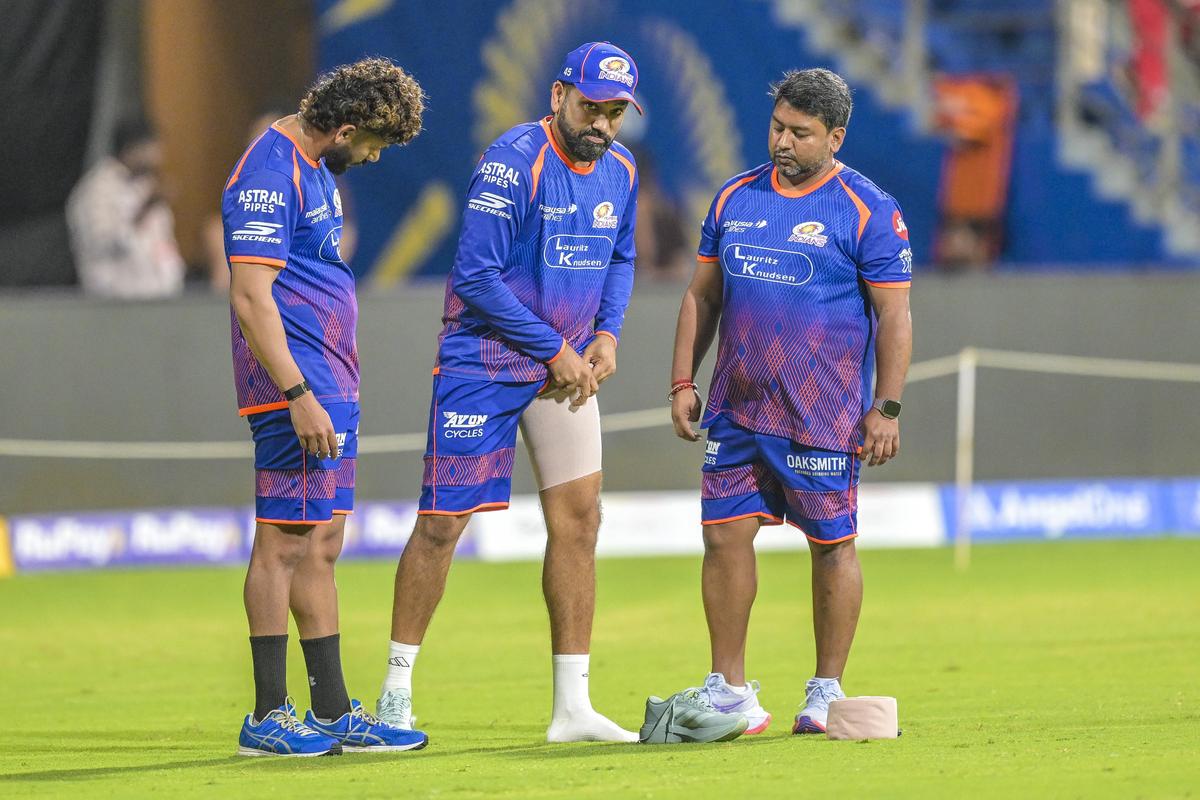
Rohit Sharma suffered an injury to his left hamstring that ruled him out of the match against PBKS.

Rohit Sharma suffered an injury to his left hamstring that ruled him out of the match against PBKS. | Photo Credit: Emmanual Yogini

lightbox-info

Rohit Sharma suffered an injury to his left hamstring that ruled him out of the match against PBKS. | Photo Credit: Emmanual Yogini

“When you are young and robust, if you eat iron you will be able to digest it. In the thirties even if you eat food it won’t digest,” he explained with a laugh. “So you need to be very specialised according to the individual. What suits Virat will not suit Rohit or MS. So, it has to be highly bespoke, just because it is successful with one player need not be successful with any other players.

“There has to be progression in anything. Suddenly coming and sprinting it’s not going to help you however fit you are. When you are in a competition your body and mind responds differently to when you are training.

“The essence is that the professional needs to understand when you are in a competition there are a lot of things happening which are not happening during your training. So, the idea is to prepare yourself through the training, it’s a simulation.

“You cannot do that because there are so many variables. But being very close to the reality in your training module really helps. For example, when you are in your 20s, you may take two weeks to get into the groove. When you are in your 30s, it may take three weeks. When you are in your 40s, it may take a month and a half.”

Published on Apr 16, 2026

#Train #smarter #harder #Ramji #Srinivasan #decodes #IPLs #superstars #stave #injuries

They say age comes for everyone eventually, and the 2026 edition of the Indian Premier League is proving that to be ruthlessly true. Rohit Sharma will miss Mumbai Indians’ clash against Punjab Kings at the Wankhede Stadium, marking a rare occasion that the 38-year-old will be absent from the five-time champion’s top-order.

Rohit is not the only one facing time on the sidelines. The seemingly untiring Virat Kohli was forced to play as an Impact Player in Royal Challengers Bengaluru’s match against Lucknow Super Giants, while M.S. Dhoni – the famed lynchpin of Chennai Super Kings’ middle-order – has missed the side’s first five matches of the season.

The stalwarts of a generation of the IPL are now being confronted with the realities of playing the tournament while not riding the conveyor belt of international cricket year-round.

According to Ramji Srinivasan, former India and Mumbai Indians strength and conditioning coach, the physical challenge of the IPL is primarily about rest and recovery. “The challenge is more on recovery than the fitness aspect,” he told  Sportstar. “The fitness aspect is more about tiring and traveling from one place to another.

Virat Kohli played as an Impact Player due to a kneeinjury during RCB’s match against LSG.
| Photo Credit:
K. Murali Kumar

lightbox-info

Virat Kohli played as an Impact Player due to a kneeinjury during RCB’s match against LSG.
| Photo Credit:
K. Murali Kumar

“The matches finish by 11:00-11:30PM, by the time they start from the ground, it will be around 12.30-1:00AM. The next morning, if they have to travel again, everything changes again. It’s about how you manage your body with proper recovery and nutrition,” Srinivasan said.

The challenge of dealing with a hectic schedule is one that becomes tougher with age. “After 30 and beyond, the body starts to slow down physiologically. It is natural. So, what they need to do is train smart rather than train hard,” Srinivasan said.

According to Srinivasan, age does have some benefit to doing so. “By this time you know your body better, when you need to push, when you need to pull yourself back, when you need to recover, what type of recovery you need to adhere to.

“What you are adhering to when you are in your 20s and early 30s may not be as pertinent now, you know. Your body is changing every year, and you need to adapt to a particular stimulus,” he explained.

“You need to be very specialised according to the individual. What suits Virat will not suit Rohit or MS. So, it has to be highly bespoke, just because it is successful with one player need not be successful with any other players.”Ramji Srinivasan

Srinivasan suggested a focus on cognitive and neuromuscular training, an approach he likens to that of a Formula One driver, which focuses on training the cognitive skills of the player.

“It’s all about the neural training pathway because cognition is what your eye perceives, and how your body reacts. For example, you see a ball trajectory coming in, how your body reacts to that particular impulse. It can be reactive or it can be proactive.

“You focus on how you train those muscle groups, the smaller and the finer muscle rather than the gross muscles. That is how you get precision, and they are the thing which loses the neural response in the long run if you don’t train them.”

An inevitable part of aging as a player is the arrival of injuries, as the likes of Rohit and Kohli are experiencing now. While niggles are unavoidable for top-level athletes, the focus, Srinivasan said, should be on being proactive about identifying the underlying causes and treating them quickly.

“The idea is that preventive medicine is better than curative, and if you cannot prevent it, your curative measure has to be quicker,” he said.

“Any sportsperson will have niggles, but you have to identify the contributing factors. When you are doing.your assessment and screening you will know there are probabilities, especially as you get older. So if it is a hamstring injury, why has it happened, is it because of dehydration, or because of lack of fitness, or because of overstretching?”

He also emphasised that there is no one-size-fits-all approach. The training methodology for players like Kohli or Rohit, who have recently stepped off the Test and T20I bandwagons but still play a single format, will have a different approach to a player like Dhoni, for whom IPL is the only remaining form of professional cricket.
Rohit Sharma suffered an injury to his left hamstring that ruled him out of the match against PBKS.

Rohit Sharma suffered an injury to his left hamstring that ruled him out of the match against PBKS.
| Photo Credit:
Emmanual Yogini

lightbox-info

Rohit Sharma suffered an injury to his left hamstring that ruled him out of the match against PBKS.
| Photo Credit:
Emmanual Yogini

“When you are young and robust, if you eat iron you will be able to digest it. In the thirties even if you eat food it won’t digest,” he explained with a laugh. “So you need to be very specialised according to the individual. What suits Virat will not suit Rohit or MS. So, it has to be highly bespoke, just because it is successful with one player need not be successful with any other players.

“There has to be progression in anything. Suddenly coming and sprinting it’s not going to help you however fit you are. When you are in a competition your body and mind responds differently to when you are training.

“The essence is that the professional needs to understand when you are in a competition there are a lot of things happening which are not happening during your training. So, the idea is to prepare yourself through the training, it’s a simulation.

“You cannot do that because there are so many variables. But being very close to the reality in your training module really helps. For example, when you are in your 20s, you may take two weeks to get into the groove. When you are in your 30s, it may take three weeks. When you are in your 40s, it may take a month and a half.”

Published on Apr 16, 2026
Source link
#Train #smarter #harder #Ramji #Srinivasan #decodes #IPLs #superstars #stave #injuries

Previous post

Every Situation Where I Would Literally Say, “That’s the Way the Cookie Crumbles”

Next post

Deadspin | Reports: Jorge Soler’s suspension reduced from 7 to 4 games <div id=""><section id="0" class=" w-full"><div class="xl:container mx-0 !px-4 py-0 pb-4 !mx-0 !px-0"><img src="https://images.deadspin.com/tr:w-900/28728209.jpg" srcset="https://images.deadspin.com/tr:w-900/28728209.jpg" alt="MLB: Los Angeles Angels at New York Yankees" class="w-full" fetchpriority="high" loading="eager"/><span class="text-0.8 leading-tight">Apr 14, 2026; Bronx, New York, USA; Los Angeles Angels designated hitter Jorge Soler (12) hits a solo home run in the first inning against the New York Yankees at Yankee Stadium. Mandatory Credit: Wendell Cruz-Imagn Images<!-- --> <!-- --> </span></div></section><section id="section-1"> <p>Los Angeles Angels outfielder Jorge Soler’s suspension was reduced from seven to four games by Major League Baseball following his appeal, multiple media outlets reported on Wednesday.</p> </section><section id="section-2"> <p>Soler, 34, reportedly will begin serving his ban on Wednesday as Los Angeles plays the third contest of its four-game series against the host New York Yankees. He will remain out until Sunday when the Angels conclude a three-game set versus the visiting San Diego Padres. </p> </section><section id="section-3"> <p>Soler was suspended following a benches-clearing incident involving multiple players from the Atlanta Braves and Angels during their game on April 7. </p> </section><section id="section-4"> <p>Soler belted a two-run homer off Reynaldo Lopez in his first at-bat before the latter hit him with a pitch on his left hand in his next trip to the plate. Soler then took exception to a high and inside fifth-inning fastball that glanced off the glove of catcher Jonah Heim and bounced to the backstop.</p> </section><br/><section id="section-5"> <p>Soler stared at Lopez for several seconds before jogging to the mound. Both players then squared up and began throwing punches, none of which appeared to land squarely, as players from both teams rushed in. Lopez fended Soler off with his glove and threw punches with his right hand, which still held the baseball.</p> </section> <section id="section-6"> <p>Braves manager Walt Weiss ended up tackling Soler on the first base line to help break up the fracas.</p> </section><section id="section-7"> <p>Soler was the 2021 World Series MVP for the Braves and is now on his third different team since that brief stint, plus a return to Atlanta in 2024.</p> </section><section id="section-8"> <p>Lopez reached a settlement with MLB, reducing his suspension to five games.</p> </section><section id="section-9"> <p>–Field Level Media</p> </section></div> #Deadspin #Reports #Jorge #Solers #suspension #reduced #games

IPL 2026 has been a double whammy for Venkatesh Iyer. So strong is the Royal Challengers Bengaluru squad that he has featured in just one of six games.

And in that match, because of the Impact Player rule, the all-rounder could only showcase one of his two skills.

But the 31-year-old, who played leading roles in Kolkata Knight Riders’ title dash in 2024 and the runner-up finish in 2021, remains upbeat.

“I am not used to sitting out, but as someone who places the team above everything else, it’s my duty to adhere to the environment,” Venkatesh, who was signed for Rs. 7 crore, told reporters on Wednesday. “RCB is the defending champion. To tinker with a winning combination is not always the smartest move.

“Sitting in the wings doesn’t mean that I am not part of the plan. I got one opportunity and I was extremely delighted that I scored (29 n.o., from 15 balls versus Rajasthan Royals). Right now, I am backing the boys 100 per cent to do the job.”

Interestingly, from the 2023 season when the Impact Player rule was introduced, Venkatesh has bowled all of six balls in 41 outings.

“Impact Player [rule] never stopped a Hardik [Pandya] or a [Andre] Russell or a [Sunil] Narine from bowling four overs,” Venkatesh opined. “It’s not stopping Nitish Reddy either. It actually pushes you to be the best all-rounder version that you can be.

“But it does curtail the opportunity for the one- and two-over bowlers. If I am the captain, I need to figure out how to use my five [specialist] bowlers and how to give my sixth [part-time] bowler a go. But here, your sixth bowler is also a specialist bowler. So there is cushion for strategising.”

Venkatesh, though, is not giving up on his bowling.

“I know that I won’t be bowling four overs [in white-ball cricket]. So I try to identify someone who has played a lot of red-ball cricket.

“I had Mitchell Starc [at KKR in 2024]. This year, I have Josh Hazlewood. I make it a point to have conversations because I want to win Madhya Pradesh the Ranji Trophy once again. And I know that I can do it with a ball in hand.”

Published on Apr 22, 2026

#IPL #Venkatesh #Iyer #limited #chances #RCB #Sitting #wings #doesnt #part #plan">IPL 2026: Venkatesh Iyer on limited chances at RCB — Sitting in the wings doesn’t mean I am not part of the plan  IPL 2026 has been a double whammy for Venkatesh Iyer. So strong is the Royal Challengers Bengaluru squad that he has featured in just one of six games.And in that match, because of the Impact Player rule, the all-rounder could only showcase one of his two skills.But the 31-year-old, who played leading roles in Kolkata Knight Riders’ title dash in 2024 and the runner-up finish in 2021, remains upbeat.“I am not used to sitting out, but as someone who places the team above everything else, it’s my duty to adhere to the environment,” Venkatesh, who was signed for Rs. 7 crore, told reporters on Wednesday. “RCB is the defending champion. To tinker with a winning combination is not always the smartest move.“Sitting in the wings doesn’t mean that I am not part of the plan. I got one opportunity and I was extremely delighted that I scored (29 n.o., from 15 balls versus Rajasthan Royals). Right now, I am backing the boys 100 per cent to do the job.”Interestingly, from the 2023 season when the Impact Player rule was introduced, Venkatesh has bowled all of six balls in 41 outings.“Impact Player [rule] never stopped a Hardik [Pandya] or a [Andre] Russell or a [Sunil] Narine from bowling four overs,” Venkatesh opined. “It’s not stopping Nitish Reddy either. It actually pushes you to be the best all-rounder version that you can be.“But it does curtail the opportunity for the one- and two-over bowlers. If I am the captain, I need to figure out how to use my five [specialist] bowlers and how to give my sixth [part-time] bowler a go. But here, your sixth bowler is also a specialist bowler. So there is cushion for strategising.”Venkatesh, though, is not giving up on his bowling.“I know that I won’t be bowling four overs [in white-ball cricket]. So I try to identify someone who has played a lot of red-ball cricket.“I had Mitchell Starc [at KKR in 2024]. This year, I have Josh Hazlewood. I make it a point to have conversations because I want to win Madhya Pradesh the Ranji Trophy once again. And I know that I can do it with a ball in hand.”Published on Apr 22, 2026  #IPL #Venkatesh #Iyer #limited #chances #RCB #Sitting #wings #doesnt #part #plan

Deadspin | NHL roundup: Lightning rally, beat Canadiens in OT to even series  Apr 21, 2026; Tampa, Florida, USA; Tampa Bay Lightning defenseman J.J. Moser (90) and defenseman Darren Raddysh (43) react after beating the Montreal Canadiens in overtime during game two of the first round of the 2026 Stanley Cup Playoffs at Benchmark International Arena. Mandatory Credit: Nathan Ray Seebeck-Imagn Images   J.J. Moser scored 12:48 into overtime, giving the host Tampa Bay Lightning a 3-2 comeback victory over the Montreal Canadiens on Tuesday and evening their first-round Eastern Conference playoff series at one win each.  Tampa Bay fully controlled the game in the extra period and was rewarded when Moser found the net. He gained the puck off a faceoff win in the offensive zone, worked his way to a shooting position at the top of the right circle and wired a top-corner shot for his first career playoff tally.  Montreal, which won Game 1 in overtime, was outshot 9-0 in overtime of Game 2. The series shifts to Montreal for Game 3 on Friday.  Tampa Bay’s Brandon Hagel collected a goal and an assist. Nikita Kucherov tallied once, Anthony Cirelli collected two assists and goaltender Andrei Vasilevskiy made 25 saves for Tampa Bay, which snapped a collection of playoff swoons.  Avalanche 2, Kings 1 (OT)  Nicolas Roy scored at 7:44 of overtime to lift Colorado to a win against Los Angeles in Denver, giving the Avalanche a 2-0 lead in a Western Conference first-round playoff series.  Gabriel Landeskog scored the tying goal late in regulation and Scott Wedgewood made 24 saves for the Avalanche. During the regular season, Wedgewood led the NHL in goals-against average (2.02) and save percentage (.921).  Anton Forsberg made 34 saves for the Kings in his second career postseason start, both in the current series. He has allowed two goals or fewer in eight of his past nine starts.  Bruins 4, Sabres 2   Visiting Boston scored three second-period goals and held off a late Buffalo rally to even the teams’ Eastern Conference quarterfinal playoff series at one victory apiece.  Viktor Arvidsson scored in the last two periods, giving the Bruins 1-0 and 4-0 leads. Morgan Geekie and Pavel Zacha also lit the lamp for Boston, which heads home for Game 3 of the best-of-seven series on Thursday. Jeremy Swayman made 34 saves.  Bowen Byram and Peyton Krebs scored as Buffalo climbed within 4-2 in the closing minutes. Sabres goalie Ukko-Pekka Luukkonen allowed four goals on 19 shots before Alex Lyon entered in relief following Arvidsson’s second marker, which came just 16 seconds into the third period.  Mammoth 3, Golden Knights 2  Logan Cooley scored the go-ahead goal on a rebound with six minutes remaining to give Utah its first playoff win in franchise history over Vegas in Game 2 of their best-of-seven Western Conference first-round series in Las Vegas.  Cooley buried a rebound of a Dylan Guenther shot, evening the best-of-seven series at one victory apiece. Guenther had a goal and an assist, Kailer Yamamoto had two assists and MacKenzie Weegar also scored. Karel Vejmelka made 19 saves, including a close-in shot by Mark Stone from the left side of the net with five seconds left to seal the win.  Stone and Ivan Barbashev each scored a goal and Jack Eichel had two assists for Vegas, which lost for the first time in regulation in 10 games (8-1-1) under coach John Tortorella. Carter Hart finished with 27 saves. Game 3 is Friday in Salt Lake City.  –Field Level Media   #Deadspin #NHL #roundup #Lightning #rally #beat #Canadiens #seriesApr 21, 2026; Tampa, Florida, USA; Tampa Bay Lightning defenseman J.J. Moser (90) and defenseman Darren Raddysh (43) react after beating the Montreal Canadiens in overtime during game two of the first round of the 2026 Stanley Cup Playoffs at Benchmark International Arena. Mandatory Credit: Nathan Ray Seebeck-Imagn Images

J.J. Moser scored 12:48 into overtime, giving the host Tampa Bay Lightning a 3-2 comeback victory over the Montreal Canadiens on Tuesday and evening their first-round Eastern Conference playoff series at one win each.

Tampa Bay fully controlled the game in the extra period and was rewarded when Moser found the net. He gained the puck off a faceoff win in the offensive zone, worked his way to a shooting position at the top of the right circle and wired a top-corner shot for his first career playoff tally.

Montreal, which won Game 1 in overtime, was outshot 9-0 in overtime of Game 2. The series shifts to Montreal for Game 3 on Friday.

Tampa Bay’s Brandon Hagel collected a goal and an assist. Nikita Kucherov tallied once, Anthony Cirelli collected two assists and goaltender Andrei Vasilevskiy made 25 saves for Tampa Bay, which snapped a collection of playoff swoons.

Avalanche 2, Kings 1 (OT)

Nicolas Roy scored at 7:44 of overtime to lift Colorado to a win against Los Angeles in Denver, giving the Avalanche a 2-0 lead in a Western Conference first-round playoff series.

Gabriel Landeskog scored the tying goal late in regulation and Scott Wedgewood made 24 saves for the Avalanche. During the regular season, Wedgewood led the NHL in goals-against average (2.02) and save percentage (.921).

Anton Forsberg made 34 saves for the Kings in his second career postseason start, both in the current series. He has allowed two goals or fewer in eight of his past nine starts.


Bruins 4, Sabres 2

Visiting Boston scored three second-period goals and held off a late Buffalo rally to even the teams’ Eastern Conference quarterfinal playoff series at one victory apiece.

Viktor Arvidsson scored in the last two periods, giving the Bruins 1-0 and 4-0 leads. Morgan Geekie and Pavel Zacha also lit the lamp for Boston, which heads home for Game 3 of the best-of-seven series on Thursday. Jeremy Swayman made 34 saves.

Bowen Byram and Peyton Krebs scored as Buffalo climbed within 4-2 in the closing minutes. Sabres goalie Ukko-Pekka Luukkonen allowed four goals on 19 shots before Alex Lyon entered in relief following Arvidsson’s second marker, which came just 16 seconds into the third period.

Mammoth 3, Golden Knights 2

Logan Cooley scored the go-ahead goal on a rebound with six minutes remaining to give Utah its first playoff win in franchise history over Vegas in Game 2 of their best-of-seven Western Conference first-round series in Las Vegas.

Cooley buried a rebound of a Dylan Guenther shot, evening the best-of-seven series at one victory apiece. Guenther had a goal and an assist, Kailer Yamamoto had two assists and MacKenzie Weegar also scored. Karel Vejmelka made 19 saves, including a close-in shot by Mark Stone from the left side of the net with five seconds left to seal the win.

Stone and Ivan Barbashev each scored a goal and Jack Eichel had two assists for Vegas, which lost for the first time in regulation in 10 games (8-1-1) under coach John Tortorella. Carter Hart finished with 27 saves. Game 3 is Friday in Salt Lake City.

–Field Level Media

#Deadspin #NHL #roundup #Lightning #rally #beat #Canadiens #series">Deadspin | NHL roundup: Lightning rally, beat Canadiens in OT to even series  Apr 21, 2026; Tampa, Florida, USA; Tampa Bay Lightning defenseman J.J. Moser (90) and defenseman Darren Raddysh (43) react after beating the Montreal Canadiens in overtime during game two of the first round of the 2026 Stanley Cup Playoffs at Benchmark International Arena. Mandatory Credit: Nathan Ray Seebeck-Imagn Images   J.J. Moser scored 12:48 into overtime, giving the host Tampa Bay Lightning a 3-2 comeback victory over the Montreal Canadiens on Tuesday and evening their first-round Eastern Conference playoff series at one win each.  Tampa Bay fully controlled the game in the extra period and was rewarded when Moser found the net. He gained the puck off a faceoff win in the offensive zone, worked his way to a shooting position at the top of the right circle and wired a top-corner shot for his first career playoff tally.  Montreal, which won Game 1 in overtime, was outshot 9-0 in overtime of Game 2. The series shifts to Montreal for Game 3 on Friday.  Tampa Bay’s Brandon Hagel collected a goal and an assist. Nikita Kucherov tallied once, Anthony Cirelli collected two assists and goaltender Andrei Vasilevskiy made 25 saves for Tampa Bay, which snapped a collection of playoff swoons.  Avalanche 2, Kings 1 (OT)  Nicolas Roy scored at 7:44 of overtime to lift Colorado to a win against Los Angeles in Denver, giving the Avalanche a 2-0 lead in a Western Conference first-round playoff series.  Gabriel Landeskog scored the tying goal late in regulation and Scott Wedgewood made 24 saves for the Avalanche. During the regular season, Wedgewood led the NHL in goals-against average (2.02) and save percentage (.921).  Anton Forsberg made 34 saves for the Kings in his second career postseason start, both in the current series. He has allowed two goals or fewer in eight of his past nine starts.  Bruins 4, Sabres 2   Visiting Boston scored three second-period goals and held off a late Buffalo rally to even the teams’ Eastern Conference quarterfinal playoff series at one victory apiece.  Viktor Arvidsson scored in the last two periods, giving the Bruins 1-0 and 4-0 leads. Morgan Geekie and Pavel Zacha also lit the lamp for Boston, which heads home for Game 3 of the best-of-seven series on Thursday. Jeremy Swayman made 34 saves.  Bowen Byram and Peyton Krebs scored as Buffalo climbed within 4-2 in the closing minutes. Sabres goalie Ukko-Pekka Luukkonen allowed four goals on 19 shots before Alex Lyon entered in relief following Arvidsson’s second marker, which came just 16 seconds into the third period.  Mammoth 3, Golden Knights 2  Logan Cooley scored the go-ahead goal on a rebound with six minutes remaining to give Utah its first playoff win in franchise history over Vegas in Game 2 of their best-of-seven Western Conference first-round series in Las Vegas.  Cooley buried a rebound of a Dylan Guenther shot, evening the best-of-seven series at one victory apiece. Guenther had a goal and an assist, Kailer Yamamoto had two assists and MacKenzie Weegar also scored. Karel Vejmelka made 19 saves, including a close-in shot by Mark Stone from the left side of the net with five seconds left to seal the win.  Stone and Ivan Barbashev each scored a goal and Jack Eichel had two assists for Vegas, which lost for the first time in regulation in 10 games (8-1-1) under coach John Tortorella. Carter Hart finished with 27 saves. Game 3 is Friday in Salt Lake City.  –Field Level Media   #Deadspin #NHL #roundup #Lightning #rally #beat #Canadiens #series

Post Comment