×
Venezuelan fishermen in fear after US strikes on boats in the Caribbean

Venezuelan fishermen in fear after US strikes on boats in the Caribbean

Gustavo Ocando AlexReporting from Maracaibo, Venezuela for BBC News Mundo
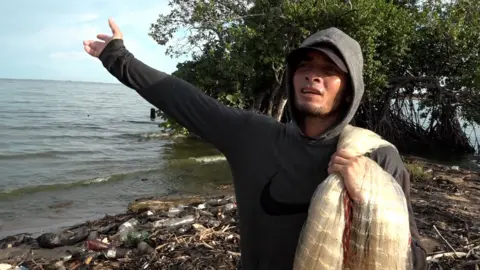
Gustavo Ocando Alex Wilder wears a grey hoodie while standing on a beach littered with bottles and branches. He has pulled the hood over a black baseball cap. Draped over his left shoulder is a fishing net. With his right arm he points towards the seaGustavo Ocando Alex

Wilder Fernández is a young fisherman in the west of Venezuela who is concerned by the US military presence in the Caribbean

Wilder Fernández has caught four good-sized fish in the murky waters of a small bay north of Lake Maracaibo.

The contents of his net will serve as dinner for his small team before they set out to go fishing again in the evening.

But this daily task is a job he has recently become scared of doing.

After 13 years as a fisherman, Mr Fernández confesses that he now fears his job could turn lethal.

He is afraid he could die in these waters not at the hands of a night-time attacker – a threat fishermen like him encountered in the past – but rather, killed in a strike launched by a foreign power.

“It’s crazy, man,” he says of the deployment of US warships, fighter jets, a submarine and thousands of US troops in waters north of Venezuela’s coast.

The US force patrolling in the Caribbean is part of a military operation targeting suspected “narco-terrorists”, which according to the White House have links to the Venezuelan government led by Nicolás Maduro.

Since last month, the US has conducted at least six strikes on suspected drug-carrying boats in the Caribbean, with the latest being carried out on Thursday.

At least 27 people have been killed, but Thursday’s strike appeared to be the first to have survivors aboard the boat.

The US has accused those killed of smuggling drugs but has so far not presented any evidence. Experts have suggested the strikes could be illegal under international law.

Tensions between the US and Venezuela escalated further on Wednesday when US President Donald Trump said that he was considering strikes on Venezuelan soil.

He also confirmed that he had authorised the CIA to carry out covert operations inside Venezuela.

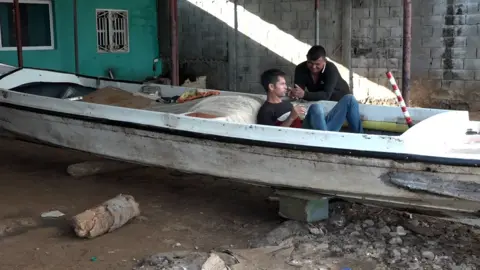
Gustavo Ocando Alex A man sits inside a small boat propped up on dry land while another leans on the boat to speak to himGustavo Ocando Alex

Many fishermen are wary of going out to sea given the new risks

Mr Fernández is across the latest news.

Even though the strikes are said by the US to have happened thousands of kilometres from where he fishes, his wife has been trying to convince him to leave Lake Maracaibo.

Every day she begs him to leave his fishing job. “She tells me to look for another job, but there’s nowhere to go,” he explains.

He does not rule out that his boat could be hit “by mistake”.

“Of course it worries me, you never know. I think about it every day, man,” the father of three says.

One day after BBC Mundo spoke to Mr Fernández, Trump announced that “six narco-terrorists” had been killed in a US strike in international waters off the Venezuelan coast.

Trump added that “intelligence confirmed the vessel was trafficking narcotics, was associated with illicit narcoterrorist networks”.
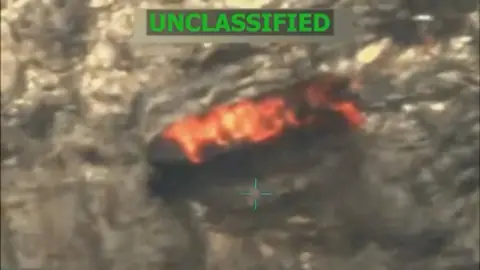
Reuters Image shows an explosion on board of one of the boats attacked by the US in international waters in the CaribbeanReuters

The US government has shared images of the boats it has attacked, saying that they originated in Venezuela

The Trump administration accuses Maduro of leading the Cartel of the Suns drug trafficking gang and is offering a $50m (£37m) reward for information leading to his capture.

Maduro, whose legitimacy as Venezuela’s president is internationally contested after disputed elections last year, has denied the cartel accusations. He has dismissed them as an attempt by the White House to oust him from office.

In his second televised address railing against the US in as many days, Venezuela’s president said on Thursday: “We will never be an American colony.”

Maduro also alleged the CIA had long been active in Venezuela.

Meanwhile, Venezuela’s Defence Minister General Vladimir Padrino has warned Venezuelans to prepare “for the worst”.

Speaking after the incursion on 2 October of five F-35 fighter jets in Venezuelan airspace, Gen Padrino said that his nation was facing a “serious threat”, which he warned could involve “aerial bombings, naval blockades, undercover commandos landing on Venezuelan beaches or in the Venezuelan jungle, swarms of drones, sabotage, and targeted killings of leaders”.

Venezuela also denounced the “mounting threats” from the US at the United Nations Security Council last week.

In response, the US representative at the UN meeting, John Kelley, stressed that his country “will not waver in our action to protect our nation from narcoterrorists”.
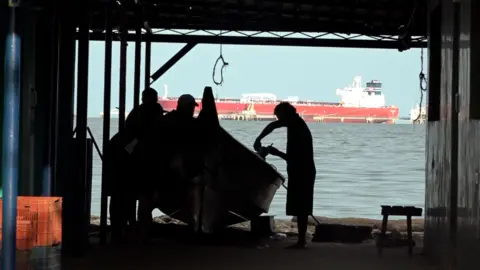
Gustavo Ocando Alex Four silhouetted men next to a boat in a covered space facing the sea
Gustavo Ocando Alex

The US government claims the attacked Venezuelan ships were transporting drugs, but has not presented evidence

Meanwhile, the attacks in the Caribbean have undermined the security of the fishermen in Venezuela, laments Jennifer Nava, spokeswoman for the Council of Fishermen in El Bajo, in Venezuela’s Zulia state.

Ms Nava tells BBC Mundo that people employed in the fishing industry fear being hit in the crossfire between US forces and alleged drug traffickers.
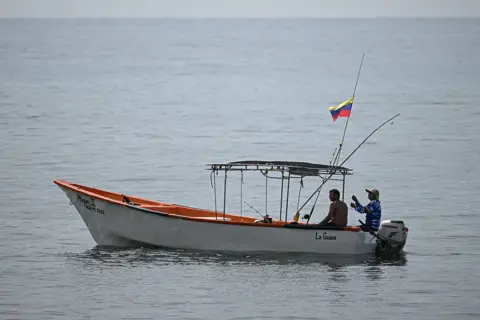
AFP vía Getty Images Two fishermen sit in a small boat, A Venezuelan flag flies above them and a fishing rod can be made outAFP vía Getty Images

There are more than 115,000 people employed in the fishing sector in Venezuela

Ms Nava argues that the added risks fishermen are facing could drive some of them into the arms of drug and arms smugglers looking to recruit people to transport their illicit shipments.

“Some of these guys are approached by traffickers,” she explains, adding that a downturn in the fishing industry could leave fishermen more vulnerable to those approaches.

There is certainly a sense of nervousness among the fishermen of Lake Maracaibo.

Most of the crew of two small fishing boats owned by Usbaldo Albornoz refused to work when news of the US strikes broke.

Mr Albornoz, who has been in the fishing business for 32 years, describes the situation as “worrying”.

“The guys didn’t want to go out to sea to fish,” he told BBC Mundo on the beach in San Francisco de Zulia, which sits at the northern shore of Lake Maracaibo where it meets the Gulf of Venezuela.
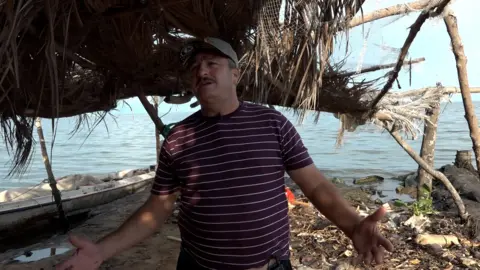
Gustavo Ocando Alex Usbaldo Albornoz gestures as he stands on the beach underneath a make-shift roof Gustavo Ocando Alex

Usbaldo Albornoz says his employees have refused to go out and fish

The fear of being hit by a US strike is the latest of a long list of risks he and his men face, including pirates, oil spills and a decline in earnings in recent years, Mr Albornoz explains.

In a leaked memo recently sent to US lawmakers, the Trump administration said it had determined it was involved in a “non-international armed conflict” with drug-trafficking organisations.

The White House described the attacks on the boats in the Caribbean as “self-defence” in response to criticism by legal experts who said they were illegal.
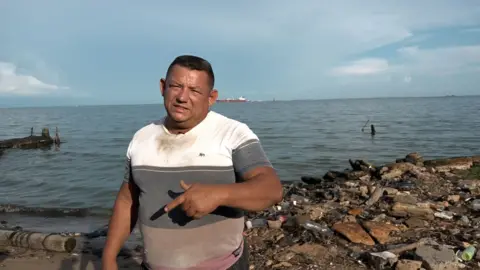
Gustavo Ocando Alex José Luzardo gestures as he stands by the shore of the Venezuelan gulf. Gustavo Ocando Alex

José Luzardo is defiant in the face of the US deployment

But beyond the fear many are experiencing, there is also a feeling of defiance.

At the end of September, hundreds of fishermen on dozens of boats took to Lake Maracaibo in a show of support for the Maduro government and in protest at the US military deployment.

José Luzardo was one of them. A spokesman for the fishermen of El Bajo, he has been fishing for almost 40 years and accuses the US of “pointing its cannons towards our Venezuela”.

He says he is not afraid and would give his life to defend his homeland.
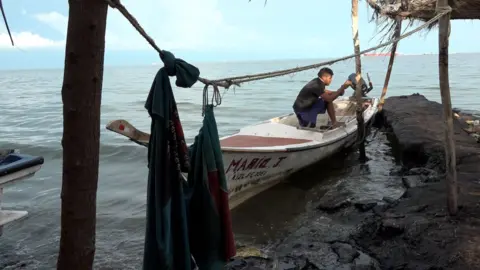
Gustavo Ocando Alex Un joven en una lancha blanca amarrada en un muelle.Gustavo Ocando Alex

Fear of US strikes is just one of the issues threatening the fishing industry

“The Trump administration has us cornered. If we have to lay down our lives to defend the government, then we’ll do it, so that this whole shebang is over,” he says.

He insists that what the fishermen want is “peace and work”, not war, but gets visibly angry when he refers to the “military barrier” he says the US has deployed in the Caribbean.

Last month, the Venezuelan government mobilised members of the militia and called on those who had not signed up to the civilian force to do so.

More than 16,000 fishermen followed his call, according to fisheries minister Juan Carlos Loyo.

Luzardo, who has been fishing since he was 11 years old says he will “be ready for battle, wherever needed”.

“If they [the US] want to kill us, then so be it, but we’re not afraid.”

Source link
#Venezuelan #fishermen #fear #strikes #boats #Caribbean

Australia and Japan have signed contracts for the first three of 11 warships set to be delivered to the Australian navy under a landmark $7bn defence deal, as the two close US allies in the Asia Pacific region deepen defence cooperation.

Australia’s Defence Minister Richard Marles and Japanese Defence Minister Koizumi Shinjiro made the announcement in Melbourne on Saturday at the signing ceremony for the Mogami-class warships.

Recommended Stories

list of 4 itemsend of list

The “Mogami Memorandum” pledges to deepen military ties, including through “closer industrial cooperation” in defence.

Japan’s Mitsubishi Heavy Industries will build three of the stealth frigates in southern Nagasaki Prefecture, while Australia’s Austal will build eight in Western Australia.

The first of the Japanese-built warships is scheduled to be delivered in 2029 and enter service in 2030.

“Our surface fleet is more important than at any time in decades,” Marles said in a statement.

“These general-purpose frigates will help secure our maritime trade routes and northern approaches as part of a larger and more lethal surface combatant fleet.”

Shinjiro said closer defence coordination was becoming more important as Australia and Japan faced an “increasingly severe security environment”.

Australia’s government last year announced that it had chosen Mitsubishi Heavy Industries to build its fleet of next-generation warships, following a bidding war between the Tokyo-based firm and Germany’s Thyssenkrupp.

Australia has committed to a record $305bn in military spending over the next decade, as part of a widespread defence overhaul aimed at boosting the country’s naval power to levels not seen since World War II.

Under the plans, Canberra’s defence spending is set to rise to 3 percent of gross domestic product (GDP) by 3033, from about 2 percent now.

Australia and Japan, two of the United States’ closest allies, have ramped up military cooperation in recent years amid shared concerns about shifts in the regional security environment, particularly China’s rising influence. Tokyo and Canberra are also members of the Quad security bloc led by the US.

#Australia #Japan #sign #contracts #7bn #warships #dealEconomy, News, Business and Economy, Military, Asia Pacific, Australia">Australia and Japan sign contracts for bn warships dealDefence deal is latest example of deepening ties between Canberra and Tokyo amid shared concerns over China’s rise.Published On 19 Apr 202619 Apr 2026Australia and Japan have signed contracts for the first three of 11 warships set to be delivered to the Australian navy under a landmark bn defence deal, as the two close US allies in the Asia Pacific region deepen defence cooperation.Australia’s Defence Minister Richard Marles and Japanese Defence Minister Koizumi Shinjiro made the announcement in Melbourne on Saturday at the signing ceremony for the Mogami-class warships.Recommended Stories list of 4 itemsend of listThe “Mogami Memorandum” pledges to deepen military ties, including through “closer industrial cooperation” in defence.Japan’s Mitsubishi Heavy Industries will build three of the stealth frigates in southern Nagasaki Prefecture, while Australia’s Austal will build eight in Western Australia.The first of the Japanese-built warships is scheduled to be delivered in 2029 and enter service in 2030.“Our surface fleet is more important than at any time in decades,” Marles said in a statement.“These general-purpose frigates will help secure our maritime trade routes and northern approaches as part of a larger and more lethal surface combatant fleet.”Shinjiro said closer defence coordination was becoming more important as Australia and Japan faced an “increasingly severe security environment”.Australia’s government last year announced that it had chosen Mitsubishi Heavy Industries to build its fleet of next-generation warships, following a bidding war between the Tokyo-based firm and Germany’s Thyssenkrupp.Australia has committed to a record 5bn in military spending over the next decade, as part of a widespread defence overhaul aimed at boosting the country’s naval power to levels not seen since World War II.Under the plans, Canberra’s defence spending is set to rise to 3 percent of gross domestic product (GDP) by 3033, from about 2 percent now.Australia and Japan, two of the United States’ closest allies, have ramped up military cooperation in recent years amid shared concerns about shifts in the regional security environment, particularly China’s rising influence. Tokyo and Canberra are also members of the Quad security bloc led by the US.#Australia #Japan #sign #contracts #7bn #warships #dealEconomy, News, Business and Economy, Military, Asia Pacific, Australia

Australia and Japan have signed contracts for the first three of 11 warships set to be delivered to the Australian navy under a landmark $7bn defence deal, as the two close US allies in the Asia Pacific region deepen defence cooperation.

Australia’s Defence Minister Richard Marles and Japanese Defence Minister Koizumi Shinjiro made the announcement in Melbourne on Saturday at the signing ceremony for the Mogami-class warships.

Recommended Stories

list of 4 itemsend of list

The “Mogami Memorandum” pledges to deepen military ties, including through “closer industrial cooperation” in defence.

Japan’s Mitsubishi Heavy Industries will build three of the stealth frigates in southern Nagasaki Prefecture, while Australia’s Austal will build eight in Western Australia.

The first of the Japanese-built warships is scheduled to be delivered in 2029 and enter service in 2030.

“Our surface fleet is more important than at any time in decades,” Marles said in a statement.

“These general-purpose frigates will help secure our maritime trade routes and northern approaches as part of a larger and more lethal surface combatant fleet.”

Shinjiro said closer defence coordination was becoming more important as Australia and Japan faced an “increasingly severe security environment”.

Australia’s government last year announced that it had chosen Mitsubishi Heavy Industries to build its fleet of next-generation warships, following a bidding war between the Tokyo-based firm and Germany’s Thyssenkrupp.

Australia has committed to a record $305bn in military spending over the next decade, as part of a widespread defence overhaul aimed at boosting the country’s naval power to levels not seen since World War II.

Under the plans, Canberra’s defence spending is set to rise to 3 percent of gross domestic product (GDP) by 3033, from about 2 percent now.

Australia and Japan, two of the United States’ closest allies, have ramped up military cooperation in recent years amid shared concerns about shifts in the regional security environment, particularly China’s rising influence. Tokyo and Canberra are also members of the Quad security bloc led by the US.

#Australia #Japan #sign #contracts #7bn #warships #dealEconomy, News, Business and Economy, Military, Asia Pacific, Australia">Australia and Japan sign contracts for $7bn warships deal

Defence deal is latest example of deepening ties between Canberra and Tokyo amid shared concerns over China’s rise.

Australia and Japan have signed contracts for the first three of 11 warships set to be delivered to the Australian navy under a landmark $7bn defence deal, as the two close US allies in the Asia Pacific region deepen defence cooperation.

Australia’s Defence Minister Richard Marles and Japanese Defence Minister Koizumi Shinjiro made the announcement in Melbourne on Saturday at the signing ceremony for the Mogami-class warships.

Recommended Stories

list of 4 itemsend of list

The “Mogami Memorandum” pledges to deepen military ties, including through “closer industrial cooperation” in defence.

Japan’s Mitsubishi Heavy Industries will build three of the stealth frigates in southern Nagasaki Prefecture, while Australia’s Austal will build eight in Western Australia.

The first of the Japanese-built warships is scheduled to be delivered in 2029 and enter service in 2030.

“Our surface fleet is more important than at any time in decades,” Marles said in a statement.

“These general-purpose frigates will help secure our maritime trade routes and northern approaches as part of a larger and more lethal surface combatant fleet.”

Shinjiro said closer defence coordination was becoming more important as Australia and Japan faced an “increasingly severe security environment”.

Australia’s government last year announced that it had chosen Mitsubishi Heavy Industries to build its fleet of next-generation warships, following a bidding war between the Tokyo-based firm and Germany’s Thyssenkrupp.

Australia has committed to a record $305bn in military spending over the next decade, as part of a widespread defence overhaul aimed at boosting the country’s naval power to levels not seen since World War II.

Under the plans, Canberra’s defence spending is set to rise to 3 percent of gross domestic product (GDP) by 3033, from about 2 percent now.

Australia and Japan, two of the United States’ closest allies, have ramped up military cooperation in recent years amid shared concerns about shifts in the regional security environment, particularly China’s rising influence. Tokyo and Canberra are also members of the Quad security bloc led by the US.

#Australia #Japan #sign #contracts #7bn #warships #dealEconomy, News, Business and Economy, Military, Asia Pacific, Australia

Post Comment