
Watching and Learning: Arshad Khan on Gujarat Titans’ star-studded pace attack The IPL rewards immediate impact. Players finetune themselves for explosive performances that benefit their teams and also bring them a share of the limelight. For those on the sidelines, however, the season goes about differently.
For Gujarat Titans’ Arshad Khan, that would mean learning how to wait. “Even if I’m not playing, my preparation is always for the match, my plans for bowling and how I read the pitch,” says Arshad in an online interview with Sportstar.
That preparation has been shaped by two seasons under Ashish Nehra, Gujarat Titans Head Coach, also a left-arm seamer. The focus, Arshad explains, is on anticipating match situations and securing a clarity on his role.
At GT, Arshad finds himself low in the pace-bowling pecking order, thanks to the presence of Kagiso Rabada, Mohammed Siraj and Prasidh Krishna. For a younger player, being on the bench can easily turn into a mental barrier. Arshad sees it from a different angle.
“You can’t put yourself ahead of players like Rabada, Siraj or Prasidh. They are international players. Ashok (Ashok Sharma) is on an extraordinary run. So the focus shifts to preparation.” he adds.
Arshad’s approach is pragmatic rather than emotional. For the 28-year-old, the time off the field has been channeled into observing and learning from the Titans’ pace trio.
“You learn a lot by watching how they prepare for matches, how they train, how they recover,” Arshad says.
Bowling to an ultra-aggressive batting approach
The current IPL cycle has seen a surge in scoring rates. But Arshad resists the idea that bowlers are left with nothing on offer.
“It’s not like every match is 230 or 240. In Gujarat’s matches up until now, we haven’t conceded such big totals. If the conditions offer even a little help, scores come down quickly. If you take wickets early, you can restrict teams to 150 or 160.
“Matches are still won by bowlers. The value of bowlers is high even in the present. The bowling unit which is capable of beating any team still wins the tournament,” he says.
Having been part of the IPL since 2022, Arshad, explains the difference when moving back to domestic competitions.
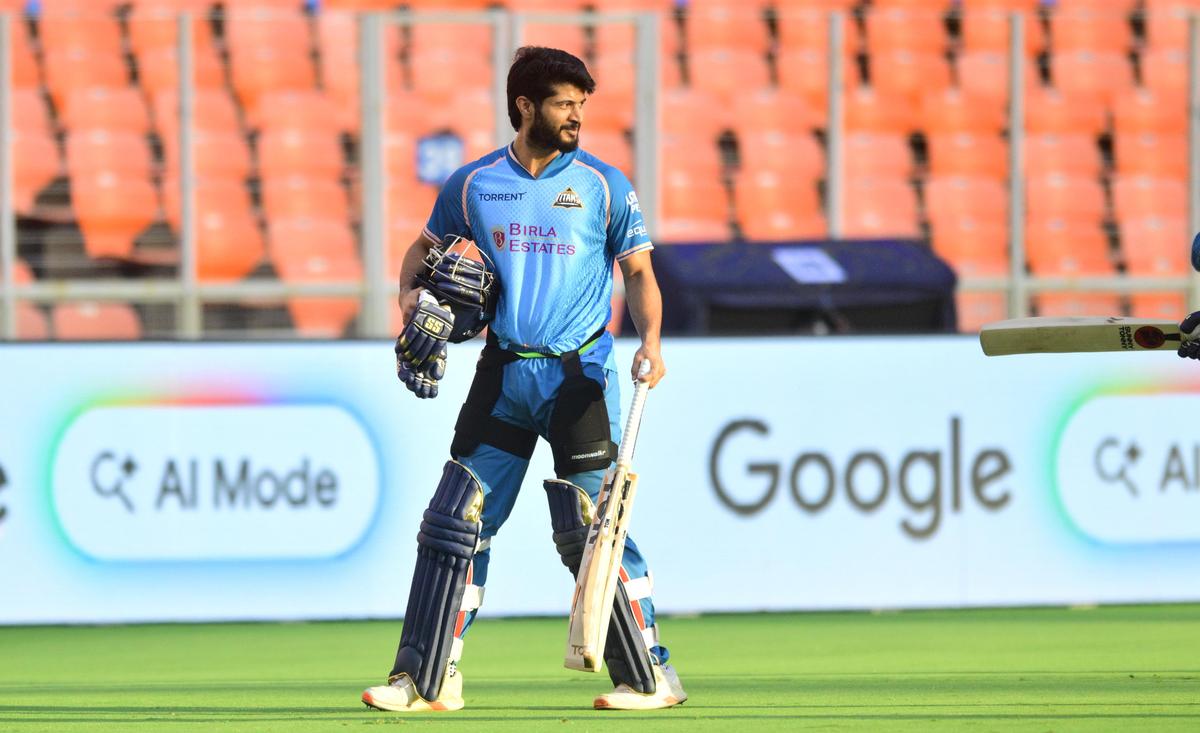
Gujarat Titans’ Arshad Khan during a practice session in IPL 2026.
| Photo Credit:
VIJAY SONEJI

Gujarat Titans’ Arshad Khan during a practice session in IPL 2026.
| Photo Credit:
VIJAY SONEJI
“IPL is different in terms of pressure and quality. But domestic cricket has its own challenges,” says Arshad, who represents Madhya Pradesh in the domestic circuit.
“While Syed Mustaq Ali Trophy can be touted as a good platform for IPL, there is a change in approach when it comes to red-ball or 50-overs. There is always a shadow of doubt over the pitch and playing conditions when it comes to domestic cricket, posing a different challenge,” he suggests.
Beyond the field, IPL’s franchise ecosystem plays a crucial role in a player’s financial and social development.
“Cricket involves a lot of expenses like diet, equipment, training among others. When a player gets a good contract, it helps in managing them and lets him focus on improving. After a point, you understand what to do and what not to do.” Arshad says.
For players outside the regular XII, the IPL is not a pause. The work shifts away from game time to preparation and observation. Arshad’s season sits in that space, for now.
Published on Apr 20, 2026
#Watching #Learning #Arshad #Khan #Gujarat #Titans #starstudded #pace #attack
The IPL rewards immediate impact. Players finetune themselves for explosive performances that benefit their teams and also bring them a share of the limelight. For those on the sidelines, however, the season goes about differently.
For Gujarat Titans’ Arshad Khan, that would mean learning how to wait. “Even if I’m not playing, my preparation is always for the match, my plans for bowling and how I read the pitch,” says Arshad in an online interview with Sportstar.
That preparation has been shaped by two seasons under Ashish Nehra, Gujarat Titans Head Coach, also a left-arm seamer. The focus, Arshad explains, is on anticipating match situations and securing a clarity on his role.
At GT, Arshad finds himself low in the pace-bowling pecking order, thanks to the presence of Kagiso Rabada, Mohammed Siraj and Prasidh Krishna. For a younger player, being on the bench can easily turn into a mental barrier. Arshad sees it from a different angle.
“You can’t put yourself ahead of players like Rabada, Siraj or Prasidh. They are international players. Ashok (Ashok Sharma) is on an extraordinary run. So the focus shifts to preparation.” he adds.
Arshad’s approach is pragmatic rather than emotional. For the 28-year-old, the time off the field has been channeled into observing and learning from the Titans’ pace trio.
“You learn a lot by watching how they prepare for matches, how they train, how they recover,” Arshad says.
Bowling to an ultra-aggressive batting approach
The current IPL cycle has seen a surge in scoring rates. But Arshad resists the idea that bowlers are left with nothing on offer.
“It’s not like every match is 230 or 240. In Gujarat’s matches up until now, we haven’t conceded such big totals. If the conditions offer even a little help, scores come down quickly. If you take wickets early, you can restrict teams to 150 or 160.
“Matches are still won by bowlers. The value of bowlers is high even in the present. The bowling unit which is capable of beating any team still wins the tournament,” he says.
Having been part of the IPL since 2022, Arshad, explains the difference when moving back to domestic competitions.
Gujarat Titans’ Arshad Khan during a practice session in IPL 2026. | Photo Credit: VIJAY SONEJI
Gujarat Titans’ Arshad Khan during a practice session in IPL 2026. | Photo Credit: VIJAY SONEJI
“IPL is different in terms of pressure and quality. But domestic cricket has its own challenges,” says Arshad, who represents Madhya Pradesh in the domestic circuit.
“While Syed Mustaq Ali Trophy can be touted as a good platform for IPL, there is a change in approach when it comes to red-ball or 50-overs. There is always a shadow of doubt over the pitch and playing conditions when it comes to domestic cricket, posing a different challenge,” he suggests.
Beyond the field, IPL’s franchise ecosystem plays a crucial role in a player’s financial and social development.
“Cricket involves a lot of expenses like diet, equipment, training among others. When a player gets a good contract, it helps in managing them and lets him focus on improving. After a point, you understand what to do and what not to do.” Arshad says.
For players outside the regular XII, the IPL is not a pause. The work shifts away from game time to preparation and observation. Arshad’s season sits in that space, for now.
Published on Apr 20, 2026



Post Comment