×
What’s on your desk, Dominic Preston?

What’s on your desk, Dominic Preston?

Not all of The Verge’s staff live in the US. For example, news editor Dominic Preston is based in London and is, as he says, “responsible for keeping our news coverage ticking over in UK mornings before the US team comes online.” He also curates our new Verge Daily newsletter and covers Android phones, especially all the models that don’t launch in the US.

And outside of work? “I’m a bit of a food obsessive,” he says, “and run a newsletter called Braise where I review London restaurants and cookbooks, and occasionally try my own hand at recipe writing. That means I spend most of my free time cooking, eating, or thinking about food, and so also a decent amount of time in the gym trying to make up for that.”

Where is your workspace located?

This is an office that I share with my partner in our flat in London. It used to be a second bedroom, but now we’ve kitted it out with two desks and a sofa bed for the occasional times we actually have guests to stay. My partner is a PhD student, so her working hours are a bit unpredictable, and split between here and school — which means that 90 percent of the time I’ve got the office to myself.

A shared office with two desks, two chairs, and a cat.

Could you tell us about your desk(s)?

We both have standing desks. Mine is an Autonomous SmartDesk 2 that’s electronic and automatic, hers an old pneumatic model by Bakker Elkhuizen that they don’t make anymore, which annoys her because it requires a bit of effort to shift up and down. They’re both decorated with self-healing cutting mats, which are still occasionally used for arts and crafts (or as the backdrop for my product photos) but mostly double as giant mouse mats.

You have both a chair and a walking station. What are they, and how well do they work for you?

The chair is a secondhand Herman Miller. It actually used to be my partner’s, while I sat in a big Duelhawk Jet Black PU gaming chair (also no longer available), until we each realized we preferred the other’s seat and swapped. I’m old enough, and sore enough, to be willing to invest a little in the chair I’ll be using every day anyway.

The walking pad is a pretty cheap one from Mobvoi. I actually bought it immediately after reading a piece by my colleague Victoria Song on a different Mobvoi model, and following her advice I’ve made no attempt to touch its smart features or track my workouts; so far it’s served me well. I just use it as slow as it goes, and try to spend as much of every morning walking on it as possible — on a good day I’ll rack up two or three hours of steady walking time; on a bad day I’ll keep putting it off until the coffee hits and never quite get going. Either way, I let myself sit down for the afternoon, which is more likely to be concentrated writing time — I find it hard to do anything too creative or complicated while walking at the same time.

(I know, I know, my cable management isn’t great. I tend to be very tidy, but cables are one of the few things I absolutely don’t have the patience to organize. Sadly, having a standing desk really lays bare those sins, so I may have to force myself to get better about it.)

A walking pad helps with fitness.
Photo by Dominic Preston / The Verge

Cable management can be a problem.
Photo by Dominic Preston / The Verge

Here’s the long one: tell us about the various tech devices you’re using.

My current setup is slightly awkwardly trapped between my work and personal computers, though I have some plans in the works to improve it.

My work machine is an M2 MacBook Air, which lives propped up on a Ugreen laptop stand. It’s connected to the monitor on the right, a cheap 24-inch QHD Philips model that I bought in 2020.

The confusing part of my setup is that second monitor, an embarrassingly old Acer one. That’s because I’ve also got a desktop PC that I use outside of work, and that connects to both monitors. At the end of the work day I can flip the MacBook shut, and my personal setup is good to go. It’s all unnecessarily cluttered, though, especially since the MacBook can’t support both external monitors at once, so this year’s big upgrade will probably be a 32-inch 4K monitor to replace the pair of them. I’ll happily take any recommendations from the comments!

My keyboard is the Logitech MX Keys S, which I love. I’m as much of a sucker for a good mechanical board as the next guy, but I love low-profile, full-size keyboards, and good mechanical options in that space are few and far between. I used to use a Hexgears Venture, but I ran it into the ground eventually, and this has served me well since.

Keyboard in front of three monitorsKeyboard in front of three monitors

The mouse is also Logitech, though it isn’t my usual one. I picked up this MX Anywhere 3S a while back to use when I’m traveling to trade shows and product launches, and usually have the larger MX Master 3S on my desk. Sadly the left button on that has given up the ghost, and I’m holding off on replacing it in the hopes that the long-rumored MX Master 4 is about to launch.

Continuing the Logitech theme (I’m just now realizing quite how much of my desk setup was built by them), I have an old Z337 2.1 speaker system that just barely fits on the desk right now (another reason I need to switch to a single monitor), and a Brio 500 webcam that I mostly like for how easy it is to flip the built-in privacy shutter.

Everything connects up through an Anker Prime USB hub that’s almost certainly more powerful than I need it to be, but has lots of front-facing USB ports for charging my array of phones, helped by a Xiaomi 50W wireless charging stand, which made more sense when I was using a Xiaomi 14 Ultra as my main phone, but is slightly wasted now — other phones don’t hit that max charging speed.

Docking station with cable halfway out of photoDocking station with cable halfway out of photo

I tend to have a rotating cast of phones floating around my desk, though this is relatively tidy for me — on messy days I can have up to five or six handsets taking up space. Beyond the Vivo X200 Ultra I used to take these photos, you can see the Fairphone 6 and Huawei Pura X, the two phones I’ve most recently been testing for reviews.

Tell us about your camera collection.

I decided I wanted to try out film photography back in 2019, because I was spending a lot more time writing about cameras as part of my phone reviews and using cameras as part of my job. I figured film would be a good way to make myself learn more about the core principles.

I picked up this Canon EF on eBay. It’s a ’70s SLR with a metal body, which means it’s heavy but is built like a tank — I suspect it will outlast me. It came with a Canon 50mm lens, and I’ve gradually picked up a few cheap options to go with it: a 28mm wide-angle, a 35-70mm for when I want flexibility, and a 70-210mm telephoto I bought specifically for a safari in Kenya a couple years back. I always tell myself I’ll buy better-quality lenses when I’m a good enough photographer to get the most out of them, but I’ll probably just have to bite the bullet eventually.

The microphone living alongside them all is the Rode NT-USB, which I use for podcasts and videos, though I’d like to get a boom arm for it so I can store it around the desk.

A camera with several lenses, a microphone, and a plant on a small table.

A Canon film camera with its several lenses.

You’ve got a lot of toys and games on those shelves! How long have you been collecting them?

This is a really motley assortment of things I’ve collected over the years — some bought, some gifted, some acquired from an old office clearout. There’s more dotted around the rest of my apartment, though my girlfriend is on an (understandable) mission to concentrate it all in the office.

Do you have any favorites?

I’m an absolute Alien obsessive, and I actually have two full-size facehuggers, one plushie and one vinyl, which I adore. There’s also a (sadly not full-size) power loader from Aliens, which I can’t get enough of. Elsewhere in the apartment I have a few original ’90s Street Sharks and Small Soldiers action figures, which are still waiting for the right shelf to display them on.

The board game collection is small but steadily growing. I’ve been playing a lot of Gloomhaven over the last year or so, though Betrayal at House on the Hill is probably the game that gets broken out most often. I’ve also got a healthy collection of D&D 5e and Alien RPG sourcebooks — I can strongly recommend the latter, and that’s not just the fanboy in me speaking!

Okay, tell us about that beautiful cat.

That’s Noodle, one of our two cats (the other is Loaf, and yes, of course they have an Instagram account).

She’s actually a recent addition to my desk. We’ve had the cats for a couple of years, but in the last few months Noodle has decided she really wants to hang out with me while I work, and will happily lie down on my keyboard to do so. We set her up with a little blanket bed instead, which she now sleeps in about half the day, though she still isn’t above a keyboard nap when the mood strikes. The biggest surprise to me is that she doesn’t seem to mind the standing desk going up or down while she’s on it, which I expected would cause a bit of panic.

Photographs by Dominic Preston / The Verge

13 Comments

Follow topics and authors from this story to see more like this in your personalized homepage feed and to receive email updates.


Source link
#Whats #desk #Dominic #Preston
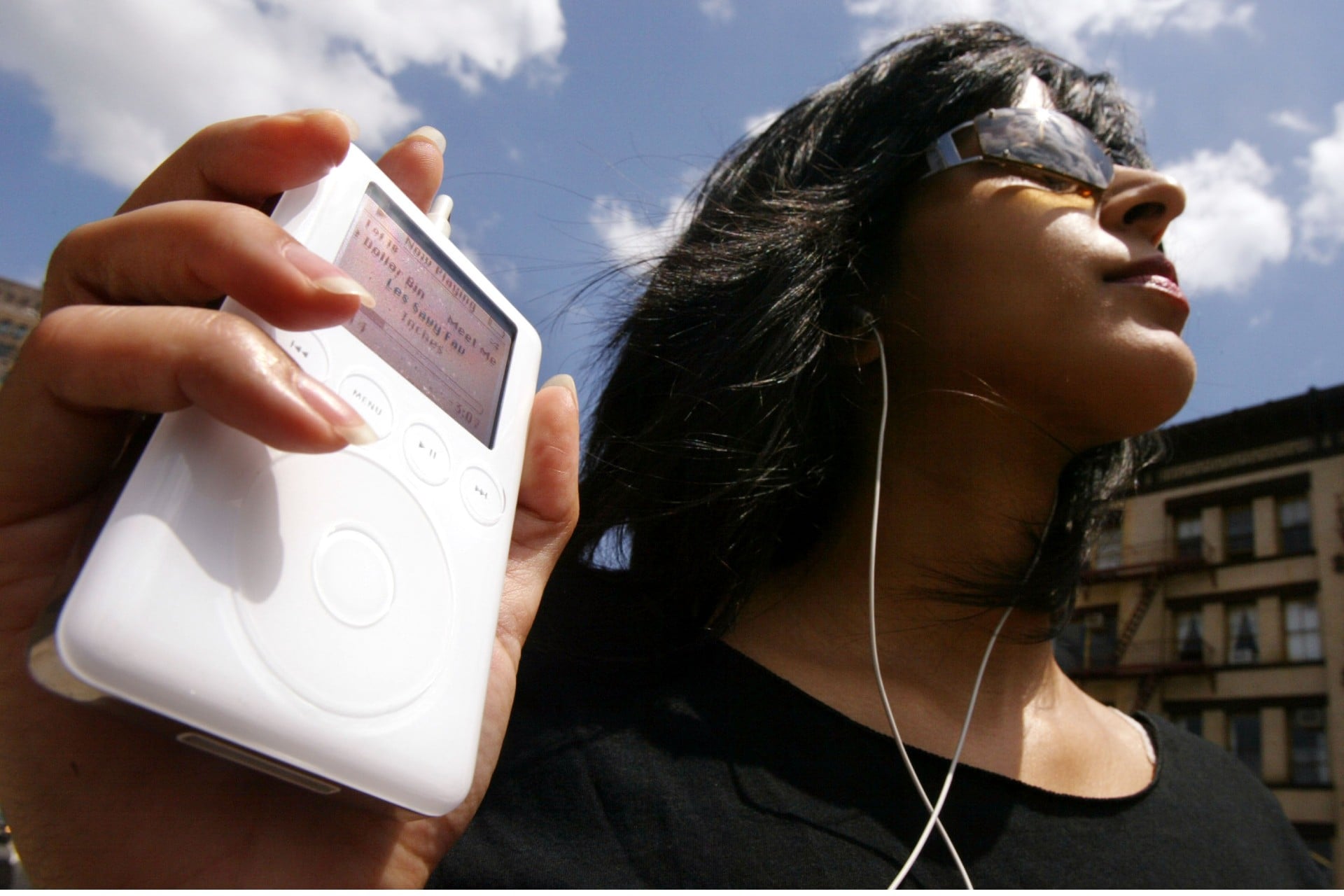
wired earbuds enjoying all of the shine. A yearning for wired audio is bringing its good friend along for the ride: the king of all things MP3. The one, the only, the iPod.

That’s right, the iPod is f*cking back. Not in an official sense, of course—it was discontinued officially in 2022—but it’s back in a very unofficial capacity. By nostalgia’s standards, the iPod is relevant once more, and you’ve probably got your phone (or the icky apps in it) to thank for that.

Okay, but how “back” is it?

The iPod is pretty back, to be honest. As the AP notes, secondhand sites like eBay are basically loaded with listings for used iPods, and on a more empirical level, Back Market, which also sells used and refurbished electronics, tells the AP that used iPod sales jumped 48% since 2024.

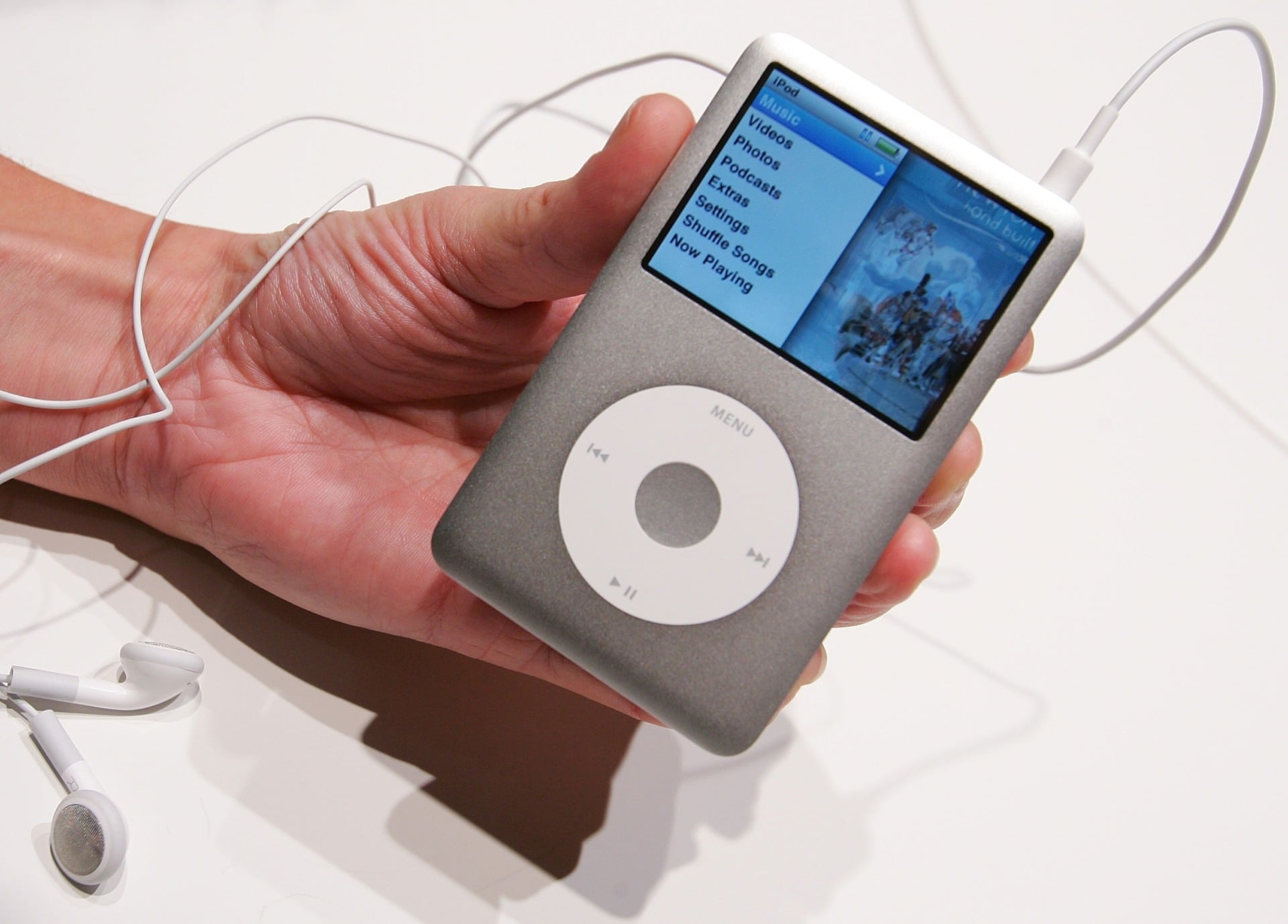
Anecdotally, I’ve been seeing the iPod everywhere, not just in a literal sense, but in a spiritual one. As I’ve written about before, digital audio players (DAPs) are seemingly a real category again, and new DAPs come in all shapes and sizes. There are DAPs shaped like cassette players, big utilitarian rectangles, and tiny little MP3-playing hunks of plastic. None of them has the iPod’s iconic click wheel, of course, but the spirit that the iPod helped popularize is still there. It’s a dedicated device that carries your music and almost nothing more.

The World Is Basically Begging for Another iPod
                Audio nostalgia is a thing right now, and it’s not just wired earbuds enjoying all of the shine. A yearning for wired audio is bringing its good friend along for the ride: the king of all things MP3. The one, the only, the iPod. That’s right, the iPod is f*cking back. Not in an official sense, of course—it was discontinued officially in 2022—but it’s back in a very unofficial capacity. By nostalgia’s standards, the iPod is relevant once more, and you’ve probably got your phone (or the icky apps in it) to thank for that.

 Okay, but how “back” is it? The iPod is pretty back, to be honest. As the AP notes, secondhand sites like eBay are basically loaded with listings for used iPods, and on a more empirical level, Back Market, which also sells used and refurbished electronics, tells the AP that used iPod sales jumped 48% since 2024. Anecdotally, I’ve been seeing the iPod everywhere, not just in a literal sense, but in a spiritual one. As I’ve written about before, digital audio players (DAPs) are seemingly a real category again, and new DAPs come in all shapes and sizes. There are DAPs shaped like cassette players, big utilitarian rectangles, and tiny little MP3-playing hunks of plastic. None of them has the iPod’s iconic click wheel, of course, but the spirit that the iPod helped popularize is still there. It’s a dedicated device that carries your music and almost nothing more. © Mario Tama / Getty Images On a more iPod-specific note, there are also people trying to replicate the iPod experience on your phone, like this guy building an iPod maker. Or how about people marrying AirPods Max with an iPod—wires and all. It’s even inspiring new products, like this upcoming AI gadget from two ex-Apple employees who tell Wired that the iPod Shuffle was a big inspiration design-wise. Those are all just window dressing, though, compared to the loads of people who actually bother to refurbish iPods, whether for personal use, resale, or because they’re nostalgic about the days when you could walk around listening to music without your phone delivering stress-inducing emails.

 None of this interest in iPods is brand new, by any means—people have been modding iPods or selling them secondhand for a while now, but it feels as though it’s reached a tipping point. It’s hard to pinpoint why exactly iPods feel more relevant than ever, but nostalgia doesn’t quite cover it.

 There’s also the Spotify of it all. Remember owning stuff? There’s no denying that nostalgia is a driving force in the iPod’s renewed relevance. Gen Z in particular has zeroed in on the early-2000s for inspiration, whether in fashion or tech, and there’s not a more iconic gadget from the early aughts than the iPod. According to Anshel Sag, a tech analyst for Moor Insights & Strategy, renewed interest in the iPod has been a long time coming. For one, Sag says there’s a resurgence in interest in wired earbuds, specifically EarPods, Apple’s wired earbuds that predate AirPods. Not only are they cheap, but they also deliver much higher fidelity than lots of wireless earbuds you can buy, even in the midrange.

 Then there’s the comeback of formats like vinyl and CDs, which have helped to create more interest in the idea of owning music as opposed to just borrowing it through a streaming service. Owning things! Remember that? It’s that last part, streaming, that feels particularly potent, though. As convenient as streaming music is, people have felt the slow creep of subscriptions on their wallets, and Spotify is a part of that. In January, Spotify raised its prices once again, this time reaching  a month. For context, in 2023, subscription fees rose from .99 to .99, and again in 2024 from .99 to .99. Apple Music is more affordable, but not by much at  per month.

 It’s been a slow turn of the dial, but coupled with the weight of other streaming services, the burden is palpable. And how does one deal with that burden? By opting out, of course. © Cate Gillon / Staff “I think people are evaluating all their streaming services, whether it’s music or TV or movies…because the price has ballooned,” Sag told Gizmodo. “Every time a service goes up in price, they become hyperaware of all the streaming services they’re paying for, and that includes music.

 Sag also says that the younger generation is also more aware of how artists make money and how much of a cut they get from streaming services. “They might not want to actually pay for the streaming service because they don’t think the artists are getting what they deserve and might otherwise just pay for the music directly from the artist and put it on their iPod, or whatever their choice of music player is.” As others have covered, it’s impossible to discount the ripple effects from the backlash against phones when it comes to nostalgic gadgets like iPods. There’s a yearning for phone-free experiences, and iPods deliver that. Sag notes that there’s also independence with gadgets like iPods or CDs and vinyl that appeals to those (particularly Gen Z) who feel bereft of things to hold onto. “There’s a demand for something that isn’t tied to a streaming connection that always sounds good, no matter where you are—and you’re in control of the experience,” Sag says. “And that’s why I think stuff like iPods is having a bit of a comeback.”

 Mostly, it’s what Sag calls “a perfect storm.” There’s no one answer to why iPods are back, and whether our love of them ever left is debatable, but somehow they do feel magnetic again. We’ll probably not live to see the day when new iPods exist, getting churned out of Foxconn like the next iPhone, but that’s for the best. They’d probably just have Apple Music on them anyway.      #World #Basically #Begging #iPodApple,audio,iPod
© Mario Tama / Getty Images

On a more iPod-specific note, there are also people trying to replicate the iPod experience on your phone, like this guy building an iPod maker. Or how about people marrying AirPods Max with an iPod—wires and all. It’s even inspiring new products, like this upcoming AI gadget from two ex-Apple employees who tell Wired that the iPod Shuffle was a big inspiration design-wise. Those are all just window dressing, though, compared to the loads of people who actually bother to refurbish iPods, whether for personal use, resale, or because they’re nostalgic about the days when you could walk around listening to music without your phone delivering stress-inducing emails.

None of this interest in iPods is brand new, by any means—people have been modding iPods or selling them secondhand for a while now, but it feels as though it’s reached a tipping point. It’s hard to pinpoint why exactly iPods feel more relevant than ever, but nostalgia doesn’t quite cover it.

There’s also the Spotify of it all.

Remember owning stuff?

There’s no denying that nostalgia is a driving force in the iPod’s renewed relevance. Gen Z in particular has zeroed in on the early-2000s for inspiration, whether in fashion or tech, and there’s not a more iconic gadget from the early aughts than the iPod.

According to Anshel Sag, a tech analyst for Moor Insights & Strategy, renewed interest in the iPod has been a long time coming. For one, Sag says there’s a resurgence in interest in wired earbuds, specifically EarPods, Apple’s wired earbuds that predate AirPods. Not only are they cheap, but they also deliver much higher fidelity than lots of wireless earbuds you can buy, even in the midrange.

Then there’s the comeback of formats like vinyl and CDs, which have helped to create more interest in the idea of owning music as opposed to just borrowing it through a streaming service. Owning things! Remember that?

It’s that last part, streaming, that feels particularly potent, though. As convenient as streaming music is, people have felt the slow creep of subscriptions on their wallets, and Spotify is a part of that. In January, Spotify raised its prices once again, this time reaching $13 a month. For context, in 2023, subscription fees rose from $9.99 to $10.99, and again in 2024 from $10.99 to $11.99. Apple Music is more affordable, but not by much at $11 per month.

It’s been a slow turn of the dial, but coupled with the weight of other streaming services, the burden is palpable. And how does one deal with that burden? By opting out, of course.

New Ipod Launch
© Cate Gillon / Staff

“I think people are evaluating all their streaming services, whether it’s music or TV or movies…because the price has ballooned,” Sag told Gizmodo. “Every time a service goes up in price, they become hyperaware of all the streaming services they’re paying for, and that includes music.

Sag also says that the younger generation is also more aware of how artists make money and how much of a cut they get from streaming services. “They might not want to actually pay for the streaming service because they don’t think the artists are getting what they deserve and might otherwise just pay for the music directly from the artist and put it on their iPod, or whatever their choice of music player is.”

As others have covered, it’s impossible to discount the ripple effects from the backlash against phones when it comes to nostalgic gadgets like iPods. There’s a yearning for phone-free experiences, and iPods deliver that. Sag notes that there’s also independence with gadgets like iPods or CDs and vinyl that appeals to those (particularly Gen Z) who feel bereft of things to hold onto.

“There’s a demand for something that isn’t tied to a streaming connection that always sounds good, no matter where you are—and you’re in control of the experience,” Sag says. “And that’s why I think stuff like iPods is having a bit of a comeback.”

Mostly, it’s what Sag calls “a perfect storm.” There’s no one answer to why iPods are back, and whether our love of them ever left is debatable, but somehow they do feel magnetic again. We’ll probably not live to see the day when new iPods exist, getting churned out of Foxconn like the next iPhone, but that’s for the best. They’d probably just have Apple Music on them anyway.

#World #Basically #Begging #iPodApple,audio,iPod">The World Is Basically Begging for Another iPod
                Audio nostalgia is a thing right now, and it’s not just wired earbuds enjoying all of the shine. A yearning for wired audio is bringing its good friend along for the ride: the king of all things MP3. The one, the only, the iPod. That’s right, the iPod is f*cking back. Not in an official sense, of course—it was discontinued officially in 2022—but it’s back in a very unofficial capacity. By nostalgia’s standards, the iPod is relevant once more, and you’ve probably got your phone (or the icky apps in it) to thank for that.

 Okay, but how “back” is it? The iPod is pretty back, to be honest. As the AP notes, secondhand sites like eBay are basically loaded with listings for used iPods, and on a more empirical level, Back Market, which also sells used and refurbished electronics, tells the AP that used iPod sales jumped 48% since 2024. Anecdotally, I’ve been seeing the iPod everywhere, not just in a literal sense, but in a spiritual one. As I’ve written about before, digital audio players (DAPs) are seemingly a real category again, and new DAPs come in all shapes and sizes. There are DAPs shaped like cassette players, big utilitarian rectangles, and tiny little MP3-playing hunks of plastic. None of them has the iPod’s iconic click wheel, of course, but the spirit that the iPod helped popularize is still there. It’s a dedicated device that carries your music and almost nothing more. © Mario Tama / Getty Images On a more iPod-specific note, there are also people trying to replicate the iPod experience on your phone, like this guy building an iPod maker. Or how about people marrying AirPods Max with an iPod—wires and all. It’s even inspiring new products, like this upcoming AI gadget from two ex-Apple employees who tell Wired that the iPod Shuffle was a big inspiration design-wise. Those are all just window dressing, though, compared to the loads of people who actually bother to refurbish iPods, whether for personal use, resale, or because they’re nostalgic about the days when you could walk around listening to music without your phone delivering stress-inducing emails.

 None of this interest in iPods is brand new, by any means—people have been modding iPods or selling them secondhand for a while now, but it feels as though it’s reached a tipping point. It’s hard to pinpoint why exactly iPods feel more relevant than ever, but nostalgia doesn’t quite cover it.

 There’s also the Spotify of it all. Remember owning stuff? There’s no denying that nostalgia is a driving force in the iPod’s renewed relevance. Gen Z in particular has zeroed in on the early-2000s for inspiration, whether in fashion or tech, and there’s not a more iconic gadget from the early aughts than the iPod. According to Anshel Sag, a tech analyst for Moor Insights & Strategy, renewed interest in the iPod has been a long time coming. For one, Sag says there’s a resurgence in interest in wired earbuds, specifically EarPods, Apple’s wired earbuds that predate AirPods. Not only are they cheap, but they also deliver much higher fidelity than lots of wireless earbuds you can buy, even in the midrange.

 Then there’s the comeback of formats like vinyl and CDs, which have helped to create more interest in the idea of owning music as opposed to just borrowing it through a streaming service. Owning things! Remember that? It’s that last part, streaming, that feels particularly potent, though. As convenient as streaming music is, people have felt the slow creep of subscriptions on their wallets, and Spotify is a part of that. In January, Spotify raised its prices once again, this time reaching  a month. For context, in 2023, subscription fees rose from .99 to .99, and again in 2024 from .99 to .99. Apple Music is more affordable, but not by much at  per month.

 It’s been a slow turn of the dial, but coupled with the weight of other streaming services, the burden is palpable. And how does one deal with that burden? By opting out, of course. © Cate Gillon / Staff “I think people are evaluating all their streaming services, whether it’s music or TV or movies…because the price has ballooned,” Sag told Gizmodo. “Every time a service goes up in price, they become hyperaware of all the streaming services they’re paying for, and that includes music.

 Sag also says that the younger generation is also more aware of how artists make money and how much of a cut they get from streaming services. “They might not want to actually pay for the streaming service because they don’t think the artists are getting what they deserve and might otherwise just pay for the music directly from the artist and put it on their iPod, or whatever their choice of music player is.” As others have covered, it’s impossible to discount the ripple effects from the backlash against phones when it comes to nostalgic gadgets like iPods. There’s a yearning for phone-free experiences, and iPods deliver that. Sag notes that there’s also independence with gadgets like iPods or CDs and vinyl that appeals to those (particularly Gen Z) who feel bereft of things to hold onto. “There’s a demand for something that isn’t tied to a streaming connection that always sounds good, no matter where you are—and you’re in control of the experience,” Sag says. “And that’s why I think stuff like iPods is having a bit of a comeback.”

 Mostly, it’s what Sag calls “a perfect storm.” There’s no one answer to why iPods are back, and whether our love of them ever left is debatable, but somehow they do feel magnetic again. We’ll probably not live to see the day when new iPods exist, getting churned out of Foxconn like the next iPhone, but that’s for the best. They’d probably just have Apple Music on them anyway.      #World #Basically #Begging #iPodApple,audio,iPod

enjoying all of the shine. A yearning for wired audio is bringing its good friend along for the ride: the king of all things MP3. The one, the only, the iPod.

That’s right, the iPod is f*cking back. Not in an official sense, of course—it was discontinued officially in 2022—but it’s back in a very unofficial capacity. By nostalgia’s standards, the iPod is relevant once more, and you’ve probably got your phone (or the icky apps in it) to thank for that.

Okay, but how “back” is it?

The iPod is pretty back, to be honest. As the AP notes, secondhand sites like eBay are basically loaded with listings for used iPods, and on a more empirical level, Back Market, which also sells used and refurbished electronics, tells the AP that used iPod sales jumped 48% since 2024.

Anecdotally, I’ve been seeing the iPod everywhere, not just in a literal sense, but in a spiritual one. As I’ve written about before, digital audio players (DAPs) are seemingly a real category again, and new DAPs come in all shapes and sizes. There are DAPs shaped like cassette players, big utilitarian rectangles, and tiny little MP3-playing hunks of plastic. None of them has the iPod’s iconic click wheel, of course, but the spirit that the iPod helped popularize is still there. It’s a dedicated device that carries your music and almost nothing more.

The World Is Basically Begging for Another iPod
                Audio nostalgia is a thing right now, and it’s not just wired earbuds enjoying all of the shine. A yearning for wired audio is bringing its good friend along for the ride: the king of all things MP3. The one, the only, the iPod. That’s right, the iPod is f*cking back. Not in an official sense, of course—it was discontinued officially in 2022—but it’s back in a very unofficial capacity. By nostalgia’s standards, the iPod is relevant once more, and you’ve probably got your phone (or the icky apps in it) to thank for that.

 Okay, but how “back” is it? The iPod is pretty back, to be honest. As the AP notes, secondhand sites like eBay are basically loaded with listings for used iPods, and on a more empirical level, Back Market, which also sells used and refurbished electronics, tells the AP that used iPod sales jumped 48% since 2024. Anecdotally, I’ve been seeing the iPod everywhere, not just in a literal sense, but in a spiritual one. As I’ve written about before, digital audio players (DAPs) are seemingly a real category again, and new DAPs come in all shapes and sizes. There are DAPs shaped like cassette players, big utilitarian rectangles, and tiny little MP3-playing hunks of plastic. None of them has the iPod’s iconic click wheel, of course, but the spirit that the iPod helped popularize is still there. It’s a dedicated device that carries your music and almost nothing more. © Mario Tama / Getty Images On a more iPod-specific note, there are also people trying to replicate the iPod experience on your phone, like this guy building an iPod maker. Or how about people marrying AirPods Max with an iPod—wires and all. It’s even inspiring new products, like this upcoming AI gadget from two ex-Apple employees who tell Wired that the iPod Shuffle was a big inspiration design-wise. Those are all just window dressing, though, compared to the loads of people who actually bother to refurbish iPods, whether for personal use, resale, or because they’re nostalgic about the days when you could walk around listening to music without your phone delivering stress-inducing emails.

 None of this interest in iPods is brand new, by any means—people have been modding iPods or selling them secondhand for a while now, but it feels as though it’s reached a tipping point. It’s hard to pinpoint why exactly iPods feel more relevant than ever, but nostalgia doesn’t quite cover it.

 There’s also the Spotify of it all. Remember owning stuff? There’s no denying that nostalgia is a driving force in the iPod’s renewed relevance. Gen Z in particular has zeroed in on the early-2000s for inspiration, whether in fashion or tech, and there’s not a more iconic gadget from the early aughts than the iPod. According to Anshel Sag, a tech analyst for Moor Insights & Strategy, renewed interest in the iPod has been a long time coming. For one, Sag says there’s a resurgence in interest in wired earbuds, specifically EarPods, Apple’s wired earbuds that predate AirPods. Not only are they cheap, but they also deliver much higher fidelity than lots of wireless earbuds you can buy, even in the midrange.

 Then there’s the comeback of formats like vinyl and CDs, which have helped to create more interest in the idea of owning music as opposed to just borrowing it through a streaming service. Owning things! Remember that? It’s that last part, streaming, that feels particularly potent, though. As convenient as streaming music is, people have felt the slow creep of subscriptions on their wallets, and Spotify is a part of that. In January, Spotify raised its prices once again, this time reaching  a month. For context, in 2023, subscription fees rose from .99 to .99, and again in 2024 from .99 to .99. Apple Music is more affordable, but not by much at  per month.

 It’s been a slow turn of the dial, but coupled with the weight of other streaming services, the burden is palpable. And how does one deal with that burden? By opting out, of course. © Cate Gillon / Staff “I think people are evaluating all their streaming services, whether it’s music or TV or movies…because the price has ballooned,” Sag told Gizmodo. “Every time a service goes up in price, they become hyperaware of all the streaming services they’re paying for, and that includes music.

 Sag also says that the younger generation is also more aware of how artists make money and how much of a cut they get from streaming services. “They might not want to actually pay for the streaming service because they don’t think the artists are getting what they deserve and might otherwise just pay for the music directly from the artist and put it on their iPod, or whatever their choice of music player is.” As others have covered, it’s impossible to discount the ripple effects from the backlash against phones when it comes to nostalgic gadgets like iPods. There’s a yearning for phone-free experiences, and iPods deliver that. Sag notes that there’s also independence with gadgets like iPods or CDs and vinyl that appeals to those (particularly Gen Z) who feel bereft of things to hold onto. “There’s a demand for something that isn’t tied to a streaming connection that always sounds good, no matter where you are—and you’re in control of the experience,” Sag says. “And that’s why I think stuff like iPods is having a bit of a comeback.”

 Mostly, it’s what Sag calls “a perfect storm.” There’s no one answer to why iPods are back, and whether our love of them ever left is debatable, but somehow they do feel magnetic again. We’ll probably not live to see the day when new iPods exist, getting churned out of Foxconn like the next iPhone, but that’s for the best. They’d probably just have Apple Music on them anyway.      #World #Basically #Begging #iPodApple,audio,iPod
© Mario Tama / Getty Images

On a more iPod-specific note, there are also people trying to replicate the iPod experience on your phone, like this guy building an iPod maker. Or how about people marrying AirPods Max with an iPod—wires and all. It’s even inspiring new products, like this upcoming AI gadget from two ex-Apple employees who tell Wired that the iPod Shuffle was a big inspiration design-wise. Those are all just window dressing, though, compared to the loads of people who actually bother to refurbish iPods, whether for personal use, resale, or because they’re nostalgic about the days when you could walk around listening to music without your phone delivering stress-inducing emails.

None of this interest in iPods is brand new, by any means—people have been modding iPods or selling them secondhand for a while now, but it feels as though it’s reached a tipping point. It’s hard to pinpoint why exactly iPods feel more relevant than ever, but nostalgia doesn’t quite cover it.

There’s also the Spotify of it all.

Remember owning stuff?

There’s no denying that nostalgia is a driving force in the iPod’s renewed relevance. Gen Z in particular has zeroed in on the early-2000s for inspiration, whether in fashion or tech, and there’s not a more iconic gadget from the early aughts than the iPod.

According to Anshel Sag, a tech analyst for Moor Insights & Strategy, renewed interest in the iPod has been a long time coming. For one, Sag says there’s a resurgence in interest in wired earbuds, specifically EarPods, Apple’s wired earbuds that predate AirPods. Not only are they cheap, but they also deliver much higher fidelity than lots of wireless earbuds you can buy, even in the midrange.

Then there’s the comeback of formats like vinyl and CDs, which have helped to create more interest in the idea of owning music as opposed to just borrowing it through a streaming service. Owning things! Remember that?

It’s that last part, streaming, that feels particularly potent, though. As convenient as streaming music is, people have felt the slow creep of subscriptions on their wallets, and Spotify is a part of that. In January, Spotify raised its prices once again, this time reaching $13 a month. For context, in 2023, subscription fees rose from $9.99 to $10.99, and again in 2024 from $10.99 to $11.99. Apple Music is more affordable, but not by much at $11 per month.

It’s been a slow turn of the dial, but coupled with the weight of other streaming services, the burden is palpable. And how does one deal with that burden? By opting out, of course.

New Ipod Launch
© Cate Gillon / Staff

“I think people are evaluating all their streaming services, whether it’s music or TV or movies…because the price has ballooned,” Sag told Gizmodo. “Every time a service goes up in price, they become hyperaware of all the streaming services they’re paying for, and that includes music.

Sag also says that the younger generation is also more aware of how artists make money and how much of a cut they get from streaming services. “They might not want to actually pay for the streaming service because they don’t think the artists are getting what they deserve and might otherwise just pay for the music directly from the artist and put it on their iPod, or whatever their choice of music player is.”

As others have covered, it’s impossible to discount the ripple effects from the backlash against phones when it comes to nostalgic gadgets like iPods. There’s a yearning for phone-free experiences, and iPods deliver that. Sag notes that there’s also independence with gadgets like iPods or CDs and vinyl that appeals to those (particularly Gen Z) who feel bereft of things to hold onto.

“There’s a demand for something that isn’t tied to a streaming connection that always sounds good, no matter where you are—and you’re in control of the experience,” Sag says. “And that’s why I think stuff like iPods is having a bit of a comeback.”

Mostly, it’s what Sag calls “a perfect storm.” There’s no one answer to why iPods are back, and whether our love of them ever left is debatable, but somehow they do feel magnetic again. We’ll probably not live to see the day when new iPods exist, getting churned out of Foxconn like the next iPhone, but that’s for the best. They’d probably just have Apple Music on them anyway.

#World #Basically #Begging #iPodApple,audio,iPod">The World Is Basically Begging for Another iPod

Audio nostalgia is a thing right now, and it’s not just wired earbuds enjoying all of the shine. A yearning for wired audio is bringing its good friend along for the ride: the king of all things MP3. The one, the only, the iPod.

That’s right, the iPod is f*cking back. Not in an official sense, of course—it was discontinued officially in 2022—but it’s back in a very unofficial capacity. By nostalgia’s standards, the iPod is relevant once more, and you’ve probably got your phone (or the icky apps in it) to thank for that.

Okay, but how “back” is it?

The iPod is pretty back, to be honest. As the AP notes, secondhand sites like eBay are basically loaded with listings for used iPods, and on a more empirical level, Back Market, which also sells used and refurbished electronics, tells the AP that used iPod sales jumped 48% since 2024.

Anecdotally, I’ve been seeing the iPod everywhere, not just in a literal sense, but in a spiritual one. As I’ve written about before, digital audio players (DAPs) are seemingly a real category again, and new DAPs come in all shapes and sizes. There are DAPs shaped like cassette players, big utilitarian rectangles, and tiny little MP3-playing hunks of plastic. None of them has the iPod’s iconic click wheel, of course, but the spirit that the iPod helped popularize is still there. It’s a dedicated device that carries your music and almost nothing more.

The World Is Basically Begging for Another iPod
                Audio nostalgia is a thing right now, and it’s not just wired earbuds enjoying all of the shine. A yearning for wired audio is bringing its good friend along for the ride: the king of all things MP3. The one, the only, the iPod. That’s right, the iPod is f*cking back. Not in an official sense, of course—it was discontinued officially in 2022—but it’s back in a very unofficial capacity. By nostalgia’s standards, the iPod is relevant once more, and you’ve probably got your phone (or the icky apps in it) to thank for that.

 Okay, but how “back” is it? The iPod is pretty back, to be honest. As the AP notes, secondhand sites like eBay are basically loaded with listings for used iPods, and on a more empirical level, Back Market, which also sells used and refurbished electronics, tells the AP that used iPod sales jumped 48% since 2024. Anecdotally, I’ve been seeing the iPod everywhere, not just in a literal sense, but in a spiritual one. As I’ve written about before, digital audio players (DAPs) are seemingly a real category again, and new DAPs come in all shapes and sizes. There are DAPs shaped like cassette players, big utilitarian rectangles, and tiny little MP3-playing hunks of plastic. None of them has the iPod’s iconic click wheel, of course, but the spirit that the iPod helped popularize is still there. It’s a dedicated device that carries your music and almost nothing more. © Mario Tama / Getty Images On a more iPod-specific note, there are also people trying to replicate the iPod experience on your phone, like this guy building an iPod maker. Or how about people marrying AirPods Max with an iPod—wires and all. It’s even inspiring new products, like this upcoming AI gadget from two ex-Apple employees who tell Wired that the iPod Shuffle was a big inspiration design-wise. Those are all just window dressing, though, compared to the loads of people who actually bother to refurbish iPods, whether for personal use, resale, or because they’re nostalgic about the days when you could walk around listening to music without your phone delivering stress-inducing emails.

 None of this interest in iPods is brand new, by any means—people have been modding iPods or selling them secondhand for a while now, but it feels as though it’s reached a tipping point. It’s hard to pinpoint why exactly iPods feel more relevant than ever, but nostalgia doesn’t quite cover it.

 There’s also the Spotify of it all. Remember owning stuff? There’s no denying that nostalgia is a driving force in the iPod’s renewed relevance. Gen Z in particular has zeroed in on the early-2000s for inspiration, whether in fashion or tech, and there’s not a more iconic gadget from the early aughts than the iPod. According to Anshel Sag, a tech analyst for Moor Insights & Strategy, renewed interest in the iPod has been a long time coming. For one, Sag says there’s a resurgence in interest in wired earbuds, specifically EarPods, Apple’s wired earbuds that predate AirPods. Not only are they cheap, but they also deliver much higher fidelity than lots of wireless earbuds you can buy, even in the midrange.

 Then there’s the comeback of formats like vinyl and CDs, which have helped to create more interest in the idea of owning music as opposed to just borrowing it through a streaming service. Owning things! Remember that? It’s that last part, streaming, that feels particularly potent, though. As convenient as streaming music is, people have felt the slow creep of subscriptions on their wallets, and Spotify is a part of that. In January, Spotify raised its prices once again, this time reaching  a month. For context, in 2023, subscription fees rose from .99 to .99, and again in 2024 from .99 to .99. Apple Music is more affordable, but not by much at  per month.

 It’s been a slow turn of the dial, but coupled with the weight of other streaming services, the burden is palpable. And how does one deal with that burden? By opting out, of course. © Cate Gillon / Staff “I think people are evaluating all their streaming services, whether it’s music or TV or movies…because the price has ballooned,” Sag told Gizmodo. “Every time a service goes up in price, they become hyperaware of all the streaming services they’re paying for, and that includes music.

 Sag also says that the younger generation is also more aware of how artists make money and how much of a cut they get from streaming services. “They might not want to actually pay for the streaming service because they don’t think the artists are getting what they deserve and might otherwise just pay for the music directly from the artist and put it on their iPod, or whatever their choice of music player is.” As others have covered, it’s impossible to discount the ripple effects from the backlash against phones when it comes to nostalgic gadgets like iPods. There’s a yearning for phone-free experiences, and iPods deliver that. Sag notes that there’s also independence with gadgets like iPods or CDs and vinyl that appeals to those (particularly Gen Z) who feel bereft of things to hold onto. “There’s a demand for something that isn’t tied to a streaming connection that always sounds good, no matter where you are—and you’re in control of the experience,” Sag says. “And that’s why I think stuff like iPods is having a bit of a comeback.”

 Mostly, it’s what Sag calls “a perfect storm.” There’s no one answer to why iPods are back, and whether our love of them ever left is debatable, but somehow they do feel magnetic again. We’ll probably not live to see the day when new iPods exist, getting churned out of Foxconn like the next iPhone, but that’s for the best. They’d probably just have Apple Music on them anyway.      #World #Basically #Begging #iPodApple,audio,iPod
© Mario Tama / Getty Images

On a more iPod-specific note, there are also people trying to replicate the iPod experience on your phone, like this guy building an iPod maker. Or how about people marrying AirPods Max with an iPod—wires and all. It’s even inspiring new products, like this upcoming AI gadget from two ex-Apple employees who tell Wired that the iPod Shuffle was a big inspiration design-wise. Those are all just window dressing, though, compared to the loads of people who actually bother to refurbish iPods, whether for personal use, resale, or because they’re nostalgic about the days when you could walk around listening to music without your phone delivering stress-inducing emails.

None of this interest in iPods is brand new, by any means—people have been modding iPods or selling them secondhand for a while now, but it feels as though it’s reached a tipping point. It’s hard to pinpoint why exactly iPods feel more relevant than ever, but nostalgia doesn’t quite cover it.

There’s also the Spotify of it all.

Remember owning stuff?

There’s no denying that nostalgia is a driving force in the iPod’s renewed relevance. Gen Z in particular has zeroed in on the early-2000s for inspiration, whether in fashion or tech, and there’s not a more iconic gadget from the early aughts than the iPod.

According to Anshel Sag, a tech analyst for Moor Insights & Strategy, renewed interest in the iPod has been a long time coming. For one, Sag says there’s a resurgence in interest in wired earbuds, specifically EarPods, Apple’s wired earbuds that predate AirPods. Not only are they cheap, but they also deliver much higher fidelity than lots of wireless earbuds you can buy, even in the midrange.

Then there’s the comeback of formats like vinyl and CDs, which have helped to create more interest in the idea of owning music as opposed to just borrowing it through a streaming service. Owning things! Remember that?

It’s that last part, streaming, that feels particularly potent, though. As convenient as streaming music is, people have felt the slow creep of subscriptions on their wallets, and Spotify is a part of that. In January, Spotify raised its prices once again, this time reaching $13 a month. For context, in 2023, subscription fees rose from $9.99 to $10.99, and again in 2024 from $10.99 to $11.99. Apple Music is more affordable, but not by much at $11 per month.

It’s been a slow turn of the dial, but coupled with the weight of other streaming services, the burden is palpable. And how does one deal with that burden? By opting out, of course.

New Ipod Launch
© Cate Gillon / Staff

“I think people are evaluating all their streaming services, whether it’s music or TV or movies…because the price has ballooned,” Sag told Gizmodo. “Every time a service goes up in price, they become hyperaware of all the streaming services they’re paying for, and that includes music.

Sag also says that the younger generation is also more aware of how artists make money and how much of a cut they get from streaming services. “They might not want to actually pay for the streaming service because they don’t think the artists are getting what they deserve and might otherwise just pay for the music directly from the artist and put it on their iPod, or whatever their choice of music player is.”

As others have covered, it’s impossible to discount the ripple effects from the backlash against phones when it comes to nostalgic gadgets like iPods. There’s a yearning for phone-free experiences, and iPods deliver that. Sag notes that there’s also independence with gadgets like iPods or CDs and vinyl that appeals to those (particularly Gen Z) who feel bereft of things to hold onto.

“There’s a demand for something that isn’t tied to a streaming connection that always sounds good, no matter where you are—and you’re in control of the experience,” Sag says. “And that’s why I think stuff like iPods is having a bit of a comeback.”

Mostly, it’s what Sag calls “a perfect storm.” There’s no one answer to why iPods are back, and whether our love of them ever left is debatable, but somehow they do feel magnetic again. We’ll probably not live to see the day when new iPods exist, getting churned out of Foxconn like the next iPhone, but that’s for the best. They’d probably just have Apple Music on them anyway.

#World #Basically #Begging #iPodApple,audio,iPod
A lot of these travel mugs tend to take the form of a sippy cup. But when sitting at home, my ideal pick is the Fellow Carter, which sips like a normal drinking vessel and is stainless steel—not plastic. It’s ceramic-lined on its interior to avoid coffee-oil buildup or any hint of metallic tang. If you like sippy cups, Fellow also offers a nice 3-in-1 lid system ($57) with straw and slider lids.

What I tend to do is drop a four-cup batch of coffee into the Carter, and screw the lid off and on when I take a sip. Sixteen ounces of coffee can stay warm for hours without introducing a lot of oxidation or heat. The coffee in a thermal-insulated drinking container tends to taste better, longer, than any coffee that’s been subjected to the heat and air of a coffee warmer.

This said, while the Carter is prettier than most travel mugs, it’s never going to be my favorite mug (which, for the record, is a Grinderman tour mug from 2010.) The Carter also doesn’t release aromatics quite as well as a more open-topped mug. I could, technically, keep coffee warm in the Carter and then pour it into another mug I am more sentimental about. But in practice, I don’t. I just drink out of the Carter. It’s still a good morning.

Other Coffee Mug Warmers We Recommend

Ember Mug 2 for $150: Oh, the Ember. It is likely the most sophisticated and technologically advanced of self-warming mugs. It has an app. It’ll light up a little LED or even notify your phone when your coffee is ready to drink. Honestly, one can go back and forth on its virtues and excesses. It’ll “wake up” when you pour coffee in. It’ll go to sleep when you’re not around. And unlike other picks here, it’s a true self-heating mug with a battery, and it can travel with you on your dog walk. But after using the Ember for years, WIRED reviewer Simon Hill turned instead to the Ohom Ui 3. Why? In part, it’s that the Ember only works with a proprietary mug that’s not dishwasher-safe or dunk-proof. Replacement mugs and heating elements are expensive. But mostly it was a yen for simplicity: Not everything needs an app, and thermal mugs are now good enough that I sort of prefer them while on the go. Still, the Ember mug has had fervent fans at WIRED, it’s a nifty device, and its makers are continually working to improve it. Arguably, the people at Ember are thinking harder about coffee warming than anyone alive, and I’ll always happily test the next and the next version to see what’s up their sleeve.

Bestinnkits Mug Warmer for $26: This utilitarian little mug warmer turns on when you have a mug atop it, and turns off when you don’t. The scale is its only “smart” feature. No Alexa, no Siri, no app. This is a nice feature, and great for safety. This said, it does mean the warmer doesn’t start warming till your cup’s atop it, vs a warmer like the Cosori or Mr. Coffee that can preheat before your cup is there and thus keep temp immediately. It’s a decision, and it’s yours to make. The cost difference is somewhat negligible among them all.

#Dont #Drink #Lukewarm #Coffee #Warmershopping,kitchen,buying guides,food and drink,coffee">You Don’t Have to Drink Lukewarm Coffee Ever Again. Get a WarmerA lot of these travel mugs tend to take the form of a sippy cup. But when sitting at home, my ideal pick is the Fellow Carter, which sips like a normal drinking vessel and is stainless steel—not plastic. It’s ceramic-lined on its interior to avoid coffee-oil buildup or any hint of metallic tang. If you like sippy cups, Fellow also offers a nice 3-in-1 lid system () with straw and slider lids.What I tend to do is drop a four-cup batch of coffee into the Carter, and screw the lid off and on when I take a sip. Sixteen ounces of coffee can stay warm for hours without introducing a lot of oxidation or heat. The coffee in a thermal-insulated drinking container tends to taste better, longer, than any coffee that’s been subjected to the heat and air of a coffee warmer.This said, while the Carter is prettier than most travel mugs, it’s never going to be my favorite mug (which, for the record, is a Grinderman tour mug from 2010.) The Carter also doesn’t release aromatics quite as well as a more open-topped mug. I could, technically, keep coffee warm in the Carter and then pour it into another mug I am more sentimental about. But in practice, I don’t. I just drink out of the Carter. It’s still a good morning.Other Coffee Mug Warmers We RecommendEmber Mug 2 for 0: Oh, the Ember. It is likely the most sophisticated and technologically advanced of self-warming mugs. It has an app. It’ll light up a little LED or even notify your phone when your coffee is ready to drink. Honestly, one can go back and forth on its virtues and excesses. It’ll “wake up” when you pour coffee in. It’ll go to sleep when you’re not around. And unlike other picks here, it’s a true self-heating mug with a battery, and it can travel with you on your dog walk. But after using the Ember for years, WIRED reviewer Simon Hill turned instead to the Ohom Ui 3. Why? In part, it’s that the Ember only works with a proprietary mug that’s not dishwasher-safe or dunk-proof. Replacement mugs and heating elements are expensive. But mostly it was a yen for simplicity: Not everything needs an app, and thermal mugs are now good enough that I sort of prefer them while on the go. Still, the Ember mug has had fervent fans at WIRED, it’s a nifty device, and its makers are continually working to improve it. Arguably, the people at Ember are thinking harder about coffee warming than anyone alive, and I’ll always happily test the next and the next version to see what’s up their sleeve.Bestinnkits Mug Warmer for : This utilitarian little mug warmer turns on when you have a mug atop it, and turns off when you don’t. The scale is its only “smart” feature. No Alexa, no Siri, no app. This is a nice feature, and great for safety. This said, it does mean the warmer doesn’t start warming till your cup’s atop it, vs a warmer like the Cosori or Mr. Coffee that can preheat before your cup is there and thus keep temp immediately. It’s a decision, and it’s yours to make. The cost difference is somewhat negligible among them all.#Dont #Drink #Lukewarm #Coffee #Warmershopping,kitchen,buying guides,food and drink,coffee

3-in-1 lid system ($57) with straw and slider lids.

What I tend to do is drop a four-cup batch of coffee into the Carter, and screw the lid off and on when I take a sip. Sixteen ounces of coffee can stay warm for hours without introducing a lot of oxidation or heat. The coffee in a thermal-insulated drinking container tends to taste better, longer, than any coffee that’s been subjected to the heat and air of a coffee warmer.

This said, while the Carter is prettier than most travel mugs, it’s never going to be my favorite mug (which, for the record, is a Grinderman tour mug from 2010.) The Carter also doesn’t release aromatics quite as well as a more open-topped mug. I could, technically, keep coffee warm in the Carter and then pour it into another mug I am more sentimental about. But in practice, I don’t. I just drink out of the Carter. It’s still a good morning.

Other Coffee Mug Warmers We Recommend

Ember Mug 2 for $150: Oh, the Ember. It is likely the most sophisticated and technologically advanced of self-warming mugs. It has an app. It’ll light up a little LED or even notify your phone when your coffee is ready to drink. Honestly, one can go back and forth on its virtues and excesses. It’ll “wake up” when you pour coffee in. It’ll go to sleep when you’re not around. And unlike other picks here, it’s a true self-heating mug with a battery, and it can travel with you on your dog walk. But after using the Ember for years, WIRED reviewer Simon Hill turned instead to the Ohom Ui 3. Why? In part, it’s that the Ember only works with a proprietary mug that’s not dishwasher-safe or dunk-proof. Replacement mugs and heating elements are expensive. But mostly it was a yen for simplicity: Not everything needs an app, and thermal mugs are now good enough that I sort of prefer them while on the go. Still, the Ember mug has had fervent fans at WIRED, it’s a nifty device, and its makers are continually working to improve it. Arguably, the people at Ember are thinking harder about coffee warming than anyone alive, and I’ll always happily test the next and the next version to see what’s up their sleeve.

Bestinnkits Mug Warmer for $26: This utilitarian little mug warmer turns on when you have a mug atop it, and turns off when you don’t. The scale is its only “smart” feature. No Alexa, no Siri, no app. This is a nice feature, and great for safety. This said, it does mean the warmer doesn’t start warming till your cup’s atop it, vs a warmer like the Cosori or Mr. Coffee that can preheat before your cup is there and thus keep temp immediately. It’s a decision, and it’s yours to make. The cost difference is somewhat negligible among them all.

#Dont #Drink #Lukewarm #Coffee #Warmershopping,kitchen,buying guides,food and drink,coffee">You Don’t Have to Drink Lukewarm Coffee Ever Again. Get a Warmer

A lot of these travel mugs tend to take the form of a sippy cup. But when sitting at home, my ideal pick is the Fellow Carter, which sips like a normal drinking vessel and is stainless steel—not plastic. It’s ceramic-lined on its interior to avoid coffee-oil buildup or any hint of metallic tang. If you like sippy cups, Fellow also offers a nice 3-in-1 lid system ($57) with straw and slider lids.

What I tend to do is drop a four-cup batch of coffee into the Carter, and screw the lid off and on when I take a sip. Sixteen ounces of coffee can stay warm for hours without introducing a lot of oxidation or heat. The coffee in a thermal-insulated drinking container tends to taste better, longer, than any coffee that’s been subjected to the heat and air of a coffee warmer.

This said, while the Carter is prettier than most travel mugs, it’s never going to be my favorite mug (which, for the record, is a Grinderman tour mug from 2010.) The Carter also doesn’t release aromatics quite as well as a more open-topped mug. I could, technically, keep coffee warm in the Carter and then pour it into another mug I am more sentimental about. But in practice, I don’t. I just drink out of the Carter. It’s still a good morning.

Other Coffee Mug Warmers We Recommend

Ember Mug 2 for $150: Oh, the Ember. It is likely the most sophisticated and technologically advanced of self-warming mugs. It has an app. It’ll light up a little LED or even notify your phone when your coffee is ready to drink. Honestly, one can go back and forth on its virtues and excesses. It’ll “wake up” when you pour coffee in. It’ll go to sleep when you’re not around. And unlike other picks here, it’s a true self-heating mug with a battery, and it can travel with you on your dog walk. But after using the Ember for years, WIRED reviewer Simon Hill turned instead to the Ohom Ui 3. Why? In part, it’s that the Ember only works with a proprietary mug that’s not dishwasher-safe or dunk-proof. Replacement mugs and heating elements are expensive. But mostly it was a yen for simplicity: Not everything needs an app, and thermal mugs are now good enough that I sort of prefer them while on the go. Still, the Ember mug has had fervent fans at WIRED, it’s a nifty device, and its makers are continually working to improve it. Arguably, the people at Ember are thinking harder about coffee warming than anyone alive, and I’ll always happily test the next and the next version to see what’s up their sleeve.

Bestinnkits Mug Warmer for $26: This utilitarian little mug warmer turns on when you have a mug atop it, and turns off when you don’t. The scale is its only “smart” feature. No Alexa, no Siri, no app. This is a nice feature, and great for safety. This said, it does mean the warmer doesn’t start warming till your cup’s atop it, vs a warmer like the Cosori or Mr. Coffee that can preheat before your cup is there and thus keep temp immediately. It’s a decision, and it’s yours to make. The cost difference is somewhat negligible among them all.

#Dont #Drink #Lukewarm #Coffee #Warmershopping,kitchen,buying guides,food and drink,coffee

Post Comment