Among the various games we have played, puzzle games have been a part of our childhood, and we all have loved the way such games acted as brain teasers and helped stimulate our nervous system.
As we grow up, we need such mind-teasing games for the healthy working of our brain cells. And as most of our time is spent online, why not make room for online puzzles and keep our brains refreshed? Therefore, my new list will include the best puzzle games you should consider downloading on your device for all the perplexity you need.
15 Best Puzzle Games For Android and iOS
1. Worldle91
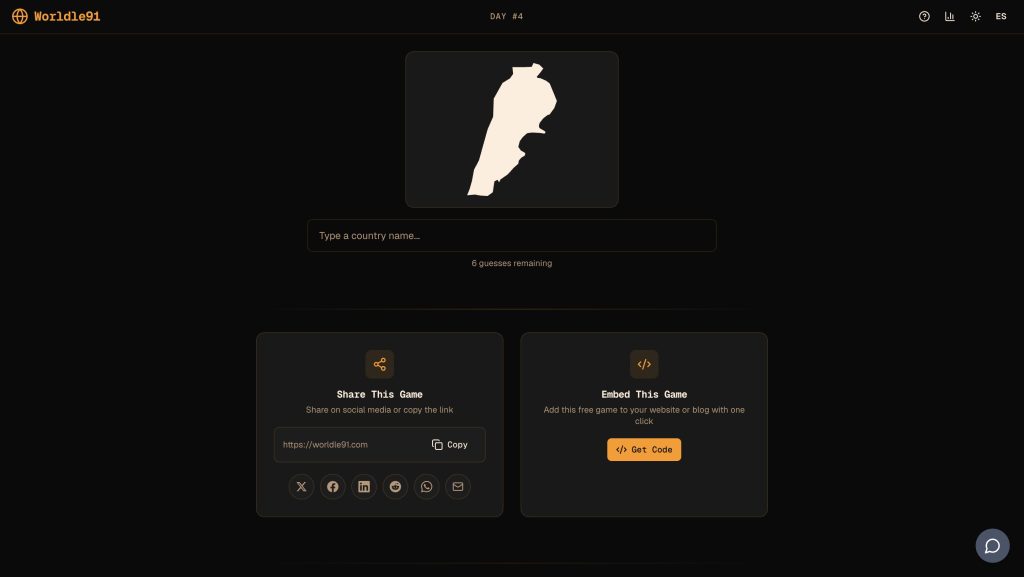
The popular NYT word guessing game Wordle isn’t a secret to anyone. In fact, it’s the most popular game today, which has kick-started a whole world of online games, and the latest addition is Worldle91. It’s for geography nerds who need to guess countries from their silhouettes.
The game shows you a country outline, and your job is to guess which country it is. After each guess, the game provides helpful clues such as distance, direction, and proximity to the correct answer. Using those hints, you have six attempts to figure out the right country.
- Pros: Unique geography-based puzzle, great learning tool
- Cons: Can get tricky if your geography knowledge is limited
- Availability: Web / Mobile browsers
2. Mineweeper91
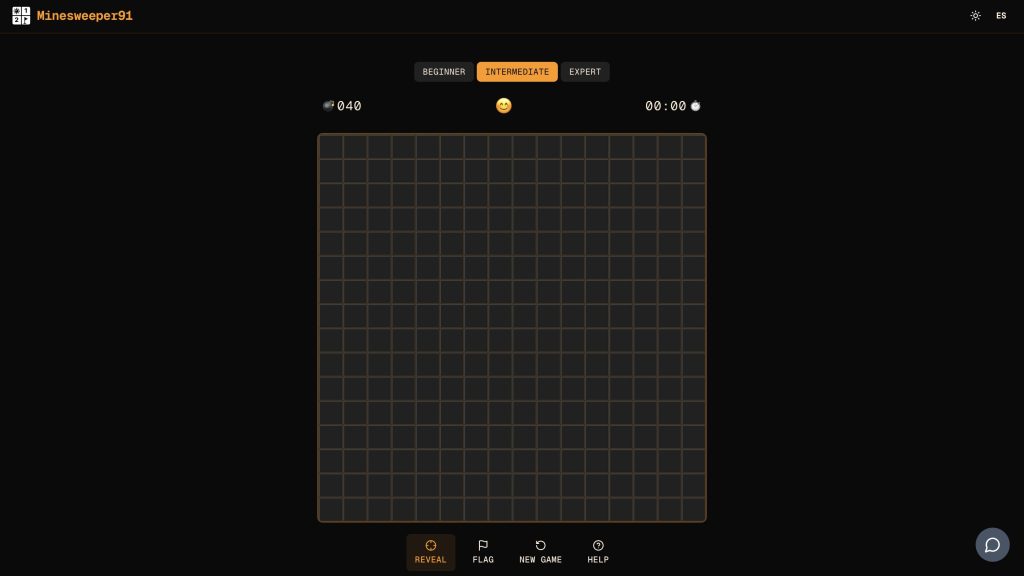
If you’ve ever used a Windows PC in the early 2000s, chances are you’ve already played Minesweeper. Minesweeper91 is the modern version of the classic game, where the goal is actually quite simple. You need to reveal all the safe cells without triggering a hidden mine.
Each revealed tile displays a number indicating how many mines are in the surrounding eight cells. Using logic and deduction, you mark suspected mines and clear the rest of the board.
- Pros: Classic logic puzzle, easy to learn but hard to master
- Cons: Can feel punishing if you make one wrong guess
- Availability: Web / Mobile browsers
3. Sudoku91
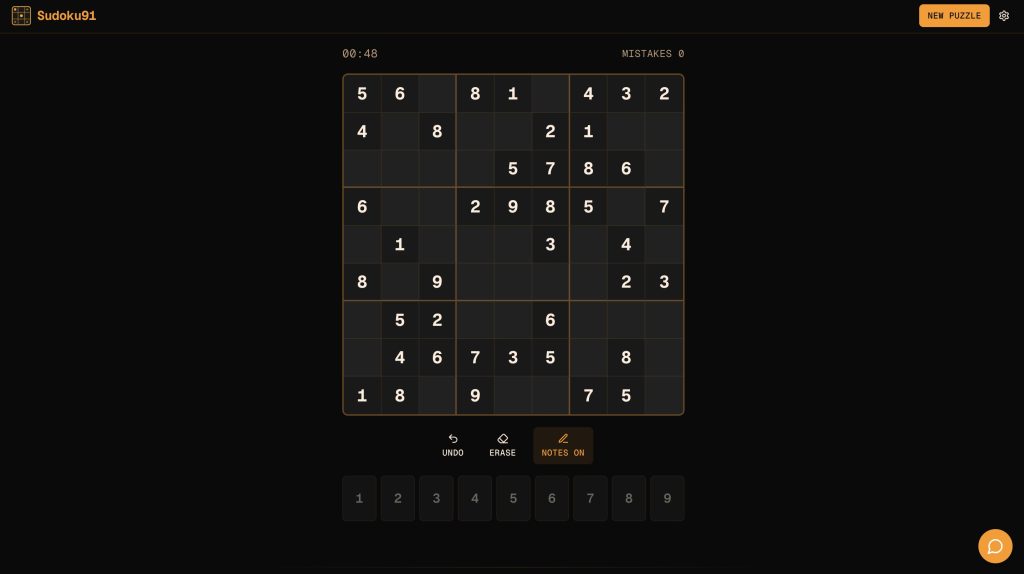
Sudoku91 takes the classic Sudoku puzzle and improves it with a cleaner interface and several customization options. The basic rule remains the same: fill the 9×9 grid with numbers from 1 to 9 without repeating them in rows, columns, or 3×3 sections. However, Sudoku91 adds multiple difficulty levels ranging from Easy all the way to Evil for players who want a real challenge.
What makes it stand out is the flexibility. You can customize the theme, highlight conflicts, toggle notes, and even use keyboard shortcuts for faster gameplay.
- Pros: Clean UI, multiple difficulty levels, customization options
- Cons: Advanced levels can be extremely challenging
- Availability: Web / Mobile browsers
4. Hocus
Hocus is a mind-bending perspective puzzle game. It is currently one of the top-rated puzzle games on the Play Store right now. In this game, your goal is to get a cube to the red finish marker as fast and efficiently as possible. It might look easy to play but can be pretty challenging.
One of the most incredible things about this game is that it lets you create and play other user-created puzzles. With over 100 puzzles, you can easily play this game for a few hours whenever you are bored.
- Pros: Pick up and play game, easy to learn
- Cons: Can get repetitive
- Availability: Android and iOS
5. Threes
Amid all the available puzzle games online, Threes has a similar concept of sliding tiles to form a particular number, in this case, three and its multiples. When you start playing the game, it will give you a walk-through on how to play it so that it gets easier for you.

It follows a simple drill of sliding the tiles and joining them to add the two titles. Even though it is an easy process, it will still take a while to join the tiles. It starts with making a three, followed by other multiples of three. Each step expects you to make one, and you have to use your brain while sliding to form the desired number.
The game has ease of flow, and once you start playing it often, you will enjoy it, and sliding tiles to form numbers will be your everyday goal.
- Pros: Addictive in a good way
- Cons: Can stutter sometimes
- Availability: Android and iOS
6. Mekorama
Mekorama is an adorable 3D puzzle game just like Treasure Tracker and Monument Valley. In this game, you control a cute little robot and navigate it through different puzzle rooms, each with different mechanics. Due to the variety in obstacles, the game keeps being fresh.
Whenever you finish a level, you unlock five more. So you won’t ever feel stuck, and the progression will be pretty open-ended. With over 50 levels to unlock, the game is quite a delight for those who like a challenge but want a laid-back experience.
- Pros: Looks quite good considering its a mobile game
- Cons: Might not run properly on older phones
- Availability: Android and iOS
7. Chess light – Puzzle Game
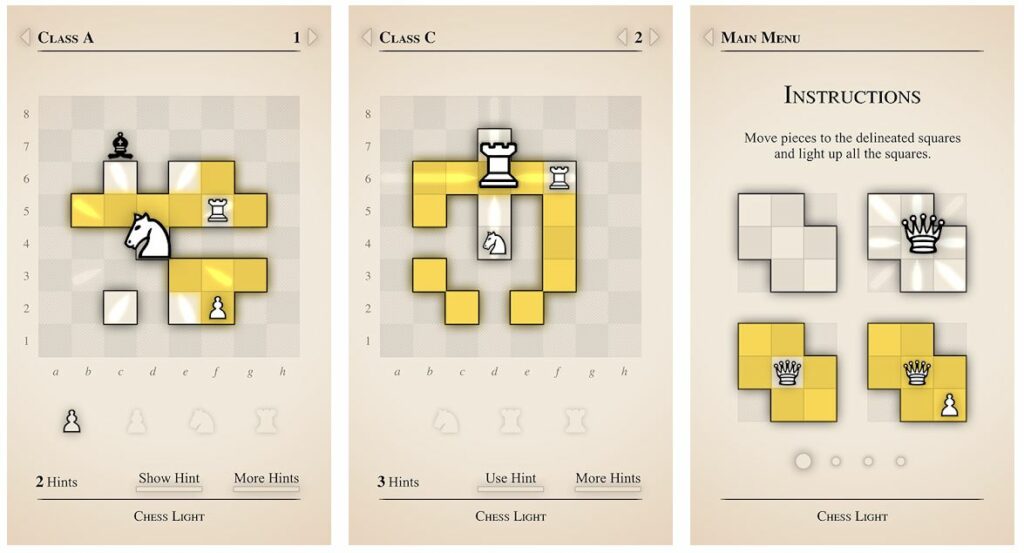
Chess light is a puzzle game based on, you guessed it, “Chess!”. The game puts you in over 180 different chess scenarios where you have to find a way to win. The game is free and comes with no ads, which is rare for games these days.
There are even six different difficulty options if you find the game is hard or too easy. You can even receive a hint if you feel like you are stuck. Fans of chess will definitely want to check this game out.
- Pros: Huge variety of puzzle combinations
- Cons: Have to know the basic rules of chess
- Availability: Android and iOS
8. Brain It On

Brain It On is an apt puzzle app to use when you want to challenge your brain. When I used the app, I could not help but scratch my head into how exactly can I play the simplest-looking game. The game works in a horizontal format and has a number of levels to reach.
You have to begin playing without doing much; open up the app, and select the first level (the first few levels are unlocked while others are locked), and start puzzling. Before you start, you have to make any shape of your choice on a plain canvas, beginning the main way of playing the game.
This means that the app needs you to do something on the canvas to execute a particular task. For instance, there will be a situation wherein you have to make something so that a glass kept on the canvas falls on the ground.
As the levels increase, the difficulty of the puzzle increases, which makes Brain It On one of the best Android puzzle games as well as on iOS. Furthermore, you can upgrade the app to get rid of ads.
- Pros: Simple UI
- Cons: Need to watch ads for hints
- Availability: Android and iOS
9. Monuments Valley
Monuments Valley is a puzzle video game wherein you are required to use your brain and help the character reach the destination. Anyone talking about puzzle games ought to mention Monument Valley. Hence, it had to make an entry on my list of best puzzle games.

While in the game, you have to play to puzzle to start playing the actual. The game is interesting as it has a 3D setting, and it is pretty fun to play.
The only drawback of the game is that it is a paid app, which slightly gets disappointing. Nonetheless, if spending money on apps is not a problem for you, Monuments Valley 1 and 2 are must-have puzzle games.
- Pros: Intriguing concept
- Cons: Paid app
- Availability: Android and iOS
10. Empty

Empty is a puzzle game similar to Monuments Valley, at least in terms of its artistic design. It’s a very zen-like puzzle game with a laid-back approach. Meaning you can play the game and not feel frustrated but rather healed.
The gameplay is quite simple, where you have to clear the room by rotating it. The game aims to teach us the value of simplicity in life with each level. It is entirely free and comes without any ads, which is quite rare for a game nowadays.
- Pros: Relaxing music and style
- Cons: Simplistic gameplay
- Availability: Android and iOS
11. Two Dots
The Two Dots Puzzle game moves around the two dots present on the app. You have to connect the dots in a way they meet each other, and a connection between the two is formed.
When you open up the app, the app will give a gist of how to play the game by letting you connect the two dots available on the screen. Once the process gets completed, you can start with the first level of the game, which will eventually take you up the hill of the more and more levels (with new ways of playing).
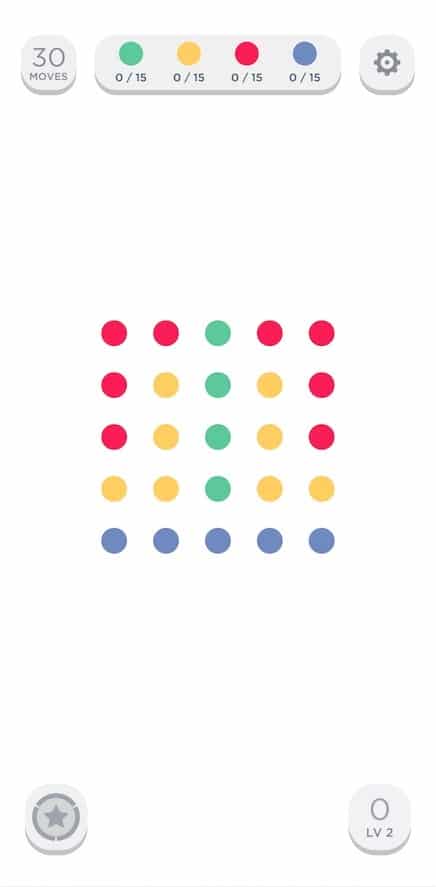
Keep in mind that you can connect the dots horizontally, vertically, or form a right-angle but can’t connect them diagonally. Additionally, you get limited moves, so you have to hurry up and use your brain before you make a move.
When you are at a particular level, you will be given some targets to make you cross the level. The initial levels are pretty straightforward, and you will feel like a pro until you reach more levels and realize it’s not as easy as it appeared.
- Pros: Engaging
- Cons: Can lag sometimes
- Availability: Android and iOS
12. Escape Puzzle Game

Escape Room is one of the puzzle types wherein you have to look for objects smartly. The game has a storyline where a girl introduces you to the game’s concept, following which you can start playing.
With a medieval backdrop, the game also provides you with a limited number of hints so that you move ahead with ease in situations when you get stuck.
The game begins with the first level (and moves up more levels), wherein you have to find a given number of objects and use them in the scene itself. You will have to tap on the various things placed and find the hidden things or combine two things to repair an item — the possibilities of proceeding ahead are many.
While the Escape Room is intriguing, the difficulty level makes it one of the well-suited puzzles for adults. However, kids can also play it to sharpen their brains.
- Pros: Story format
- Cons: Adverts
- Availability: Android
13. Move The Block
Move The Block is one of the classic sliding puzzles (among free puzzles) where you are required to slide the objects (in this case, blocks) to win the puzzle. The puzzle game has a number of levels under Basic, Premium, and Old categories (eight to be precise), with each level coming with sub-levels.

When you start with the first level, you will be guided around the game and the options available for you to use and play with ease. The game is an interesting one, and as you move forward, you won’t even realize how addictive the game will get, and you will end up playing it more than the allotted time period.
Of course, as you move up the levels, the levels will get difficult, and you might need the help of the hints available at your disposal. This is where the game’s drawback appears; to get each clue, you have to watch an ad video that makes it annoying.
- Pros: Daily Rewards
- Cons: Mid-gameplay ads
- Availability: Android and iOS
14. Jigsaw Puzzles Real
If you haven’t played a jigsaw puzzle, have you ever played a puzzle at all? One of the classic puzzle games of all time, the game’s name is enough to be one of the best free online jigsaw puzzles.
The game follows the simple process of joining the puzzle pieces and forming a single picture. The app provides you with various options to choose from: be it pictures related to nature, animals, aerial, and many more, and you can pick the ones you like and arrange the jigsaw puzzle.

Before the pieces are spread around, you will be given a small glimpse of the whole picture to start playing. You can further view the image again and again to get a better idea.
The game makes sure it twists your brain and acts as an element of nostalgia when jigsaw puzzles are actual board games.
- Pros: Various Puzzle options
- Cons: Ads, ads, ads
- Availability: Android and iOS
15. Skillz
Skillz is one of the mobile puzzle games that tease your brain and puts your brain to some good use.
The app lets you decide if you want to play as a single-player or play a multi-player game. Upon choosing, there will be a number of levels, and you will be taken to the first level. As a reminder, other levels will be locked until you pass the initial ones. Hence, skipping levels is not an option. In addition to this, there is an option to replay the game if you weren’t satisfied with your previous performance.
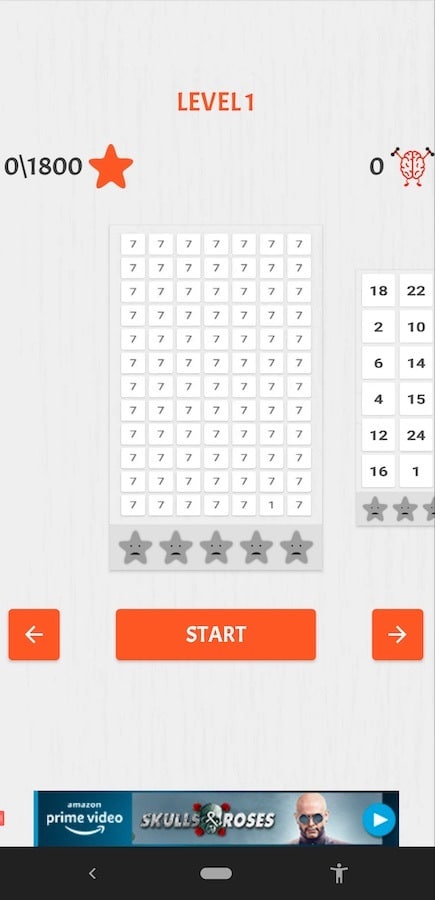
The levels include searching for a particular number or letter among the same numbers or letters, thus testing your brainpower and speed. The game proves pretty addictive as the urge to cross all the levels takes over once you start playing it. However, the presence of ads is a problem.
- Pros: Single/Multi-Player option
- Cons: Time-based gameplay
- Availability: Android and iOS
Types Of Puzzles
For those who think that puzzles are all about finding the puzzle pieces and completing a jigsaw, you need to know that there are many kinds of puzzles available for us to play with. These include riddles, trivia puzzles, math puzzles, pattern guessing, logic puzzles, and many more. This list contains puzzles such as trivia, sliding, logic, paper-and-pencil puzzles, among its various types. Hence, read on for more:
Frequently Asked Questions
1. Are puzzle games good for you?
Online puzzle games keep your mind sharp. Just as we need a physical workout to maintain our fitness, we need mind exercises (in the form of puzzles and more) for brain fitness. I hope my list of best free Android puzzle games (iOS too) acts as a helping tool to keep you busy in something productive other than just social media.
2. Do puzzle games help with problem solving?
It’s a well-known fact that video games improve problem-solving skills. One research even says that children’s creativity is enhanced by playing any kind of video game, including violent games. However, that’s not the case when the children use other forms of technology, such as a computer or cell phone.
Do let me know which games from our best puzzle games list you liked the most. If you have more suggestions to make, I will take them and add the best ones to my list.
Until then, keep on puzzling your brain and make it fitter and better!
Also Read: Best Android Games To Enjoy Mobile Gaming
Source link
#Puzzle #Games #Android #iOS

![This former notorious red-light district is now one of the world’s top AI hubs | TechCrunch
What every U.K. AI startup wants to know these days is, how can I get office space in King’s Cross?
The area is so hot that a VC firm allegedly recently won a deal by promising a founder office space in the neighborhood. “We stop at nothing to win deals [for] and to support” founders, “including helping them source office space when needed,” the firm told me when asked about the rumor, declining to confirm or deny any details.
The neighborhood’s popularity began back in 2016 when DeepMind — then newly acquired by Google — moved in. Soon after, a flood of AI startups followed, wanting to be around the Google DeepMind magic. Today, they hope to take advantage of the cluster of AI talent there.
This has transformed King’s Cross into one of the world’s top AI hubs, rivaled only by San Francisco and Beijing. Around London, it’s known by the sobriquet “Knowledge Quarter,” as it’s home to names like OpenAI, Meta, Isomorphic Labs, Cusp AI, Wayne, Recursive, and, a little farther down the road, Synthesia and Anthropic. The European Technology Network (ETN) just moved into a glossy new office nearby, while University College London sits around the corner.
Mixed in with the new developments are trendy food spots like Hoppers and BAO. Hop a train from King’s Cross, and founders can be in Cambridge in 45 minutes to source talent or can be in Paris in two hours to strike a deal.
Who would have guessed that a little more than 20 years ago, this was one of the seediest areas in London?
“In the ’80s, crack and heroin made the area a major narcotics market,” Hussein Kanji, an investor at Hoxton Ventures, said, recalling syringes in tree trunks and gangs patrolling the streets. “In 1982, the local church was occupied by the English Collective of Prostitutes for 12 straight days.” Then, in the early 2000s, a real estate developer had a dream and, well, “now it is the AI hotbed of the United Kingdom,” Kanji said. “What a change.” Around 18 months ago, his portfolio company BioCorteX moved from the neighborhood Holborn to the Jellicoe building in King’s Cross, hoping to be near the action. “Lots going on in London right now,” Nik Sharma, co-founder of BioCorteX, told me. “Lots of hyperscalers moving in.” That includes, reportedly, Jeff Bezos’ AI company Prometheus, which is also said to be in talks to move into the Jellicoe.
There are around 3,600 AI startups in London, which, together, have raised around .1 billion out of the .8 billion raised in the city since late July, according to Dealroom. Since the start of June, AI-related startups have leased more than 1 million square feet of office space in London, according to the real estate firm Knight Frank. With that, prime rents in King’s Cross have risen 18% over the past three years, Chris Dunn, a commercial insight associate at the firm, told me. That percentage represents only the largest leases encompassing at least 10,000 square feet, like the ones OpenAI and Prometheus are signing. The shorter deals go for even more, he said, and now the vacancy rate for conventional office space is just 0.9%. “Demand has outstripped supply,” he continued.
Today, one of the big topics of the area is sovereignty. It was a wake-up call for many when Anthropic shut off access to Mythos and Fable this summer, leaving some in the ecosystem to conclude: “We’d better look after ourselves,” Saul Klein, co-founder of the VC firm Phoenix Court, told me.
Phoenix Court is located in the King’s Cross area and has three portfolio companies in the vicinity, including Olix (which just announced a .3 billion valuation), Early Health and CoMind. Robin Klein, co-founder of the firm, said the shutdown of Fable and Mythos access was a “small but sharp reminder that Europe can’t simply rent its AI capabilities and capacity; it needs to build and hold some of its own.” King’s Cross, he said, is where much of this building is actually happening.
“The bigger question,” he continued, “is whether the U.K. builds the infrastructure, compute, energy, capital, to make this self-reliance durable, rather than just hosting outposts of U.S. labs.”
Image Credits:Phoenix Court
Top founders want to stay
Simon Kohl, founder of Latent Labs, has offices in King’s Cross and San Francisco. The London office, at the moment, is growing faster, and he’s more bullish than ever on the ecosystem, he said. “The mood right now feels less like London trying to catch up and more like London becoming one of the default places to start a serious AI company,” he said. Look around and you are likely to see Wayve testing its autonomous cars. Founded in 2017 by co-founder Alex Kendall, the unicorn is one of London’s biggest success stories.
“Ten years ago, building a frontier AI company from London felt like an unusual choice,” Kendall told me. “Now it feels like an obvious one.” Wayve moved into King’s Cross in 2018 looking for a space that could double as a garage — “a rare combination in Central London,” Kendall said. He has watched the ecosystem mature around him — and it’s now evident that a startup can stay in London, raise serious capital, hire world-class AI talent, and remain globally competitive, he said. Down the street from Anthropic’s new 158,000-square-foot office is the AI agent builder Sierra and the AI video platform Synthesia.
Laura Gonzalez Florez, Synthesia’s chief of staff and head of people, says the company moved into its glossy new office building a year ago to accommodate its growing team. They were drawn to the area for the same reason as everyone else: “It’s very close to the airport … very close to where a lot of investors are,” she said.
Image Credits:Synthesia
Around two-thirds of Synthesia’s engineers are remote, Gonzalez Florez said, letting the company tap into an affordable, international, and diverse talent pool and helping it scale faster. “From London, we can hire and work, without any problem, people from anywhere, from Slovenia to Portugal,” she said.
Unsurprisingly, London’s AI boom is also causing a talent war.U.K. AI job postings have skyrocketed in the past few years, per data from PwC. When Anthropic announced it moved into town earlier this year, it listed, for example, a salary range of £260,000 to £630,000 for a machine learning research engineer when the average salary in London for the same role is around £102,000. Some founders in the U.K., like those in Silicon Valley, are being forced to raise more and bigger rounds to keep up.
“The real test is whether more globally significant AI companies are founded, funded, and scaled from the U.K., while continuing to attract the world’s best talent to build them here,” Zain Ali, founder of the King’s Cross-based AI legal firm Centuro, told me. “If that continues to happen, King’s Cross won’t just be an AI hub. It’ll become one of the U.K.’s most important strategic assets.”
When you purchase through links in our articles, we may earn a small commission. This doesn’t affect our editorial independence.#Thisformernotorious #redlight #districtis #nowone #worlds #top #hubs #TechCrunchUK](https://techcrunch.com/wp-content/uploads/2026/08/DM9A2852.jpg?w=680 "This former notorious red-light district is now one of the world’s top AI hubs | TechCrunch
What every U.K. AI startup wants to know these days is, how can I get office space in King’s Cross?
The area is so hot that a VC firm allegedly recently won a deal by promising a founder office space in the neighborhood. “We stop at nothing to win deals [for] and to support” founders, “including helping them source office space when needed,” the firm told me when asked about the rumor, declining to confirm or deny any details.
The neighborhood’s popularity began back in 2016 when DeepMind — then newly acquired by Google — moved in. Soon after, a flood of AI startups followed, wanting to be around the Google DeepMind magic. Today, they hope to take advantage of the cluster of AI talent there.
This has transformed King’s Cross into one of the world’s top AI hubs, rivaled only by San Francisco and Beijing. Around London, it’s known by the sobriquet “Knowledge Quarter,” as it’s home to names like OpenAI, Meta, Isomorphic Labs, Cusp AI, Wayne, Recursive, and, a little farther down the road, Synthesia and Anthropic. The European Technology Network (ETN) just moved into a glossy new office nearby, while University College London sits around the corner.
Mixed in with the new developments are trendy food spots like Hoppers and BAO. Hop a train from King’s Cross, and founders can be in Cambridge in 45 minutes to source talent or can be in Paris in two hours to strike a deal.
Who would have guessed that a little more than 20 years ago, this was one of the seediest areas in London?
“In the ’80s, crack and heroin made the area a major narcotics market,” Hussein Kanji, an investor at Hoxton Ventures, said, recalling syringes in tree trunks and gangs patrolling the streets. “In 1982, the local church was occupied by the English Collective of Prostitutes for 12 straight days.” Then, in the early 2000s, a real estate developer had a dream and, well, “now it is the AI hotbed of the United Kingdom,” Kanji said. “What a change.” Around 18 months ago, his portfolio company BioCorteX moved from the neighborhood Holborn to the Jellicoe building in King’s Cross, hoping to be near the action. “Lots going on in London right now,” Nik Sharma, co-founder of BioCorteX, told me. “Lots of hyperscalers moving in.” That includes, reportedly, Jeff Bezos’ AI company Prometheus, which is also said to be in talks to move into the Jellicoe.
There are around 3,600 AI startups in London, which, together, have raised around .1 billion out of the .8 billion raised in the city since late July, according to Dealroom. Since the start of June, AI-related startups have leased more than 1 million square feet of office space in London, according to the real estate firm Knight Frank. With that, prime rents in King’s Cross have risen 18% over the past three years, Chris Dunn, a commercial insight associate at the firm, told me. That percentage represents only the largest leases encompassing at least 10,000 square feet, like the ones OpenAI and Prometheus are signing. The shorter deals go for even more, he said, and now the vacancy rate for conventional office space is just 0.9%. “Demand has outstripped supply,” he continued.
Today, one of the big topics of the area is sovereignty. It was a wake-up call for many when Anthropic shut off access to Mythos and Fable this summer, leaving some in the ecosystem to conclude: “We’d better look after ourselves,” Saul Klein, co-founder of the VC firm Phoenix Court, told me.
Phoenix Court is located in the King’s Cross area and has three portfolio companies in the vicinity, including Olix (which just announced a .3 billion valuation), Early Health and CoMind. Robin Klein, co-founder of the firm, said the shutdown of Fable and Mythos access was a “small but sharp reminder that Europe can’t simply rent its AI capabilities and capacity; it needs to build and hold some of its own.” King’s Cross, he said, is where much of this building is actually happening.
“The bigger question,” he continued, “is whether the U.K. builds the infrastructure, compute, energy, capital, to make this self-reliance durable, rather than just hosting outposts of U.S. labs.”
Image Credits:Phoenix Court
Top founders want to stay
Simon Kohl, founder of Latent Labs, has offices in King’s Cross and San Francisco. The London office, at the moment, is growing faster, and he’s more bullish than ever on the ecosystem, he said. “The mood right now feels less like London trying to catch up and more like London becoming one of the default places to start a serious AI company,” he said. Look around and you are likely to see Wayve testing its autonomous cars. Founded in 2017 by co-founder Alex Kendall, the unicorn is one of London’s biggest success stories.
“Ten years ago, building a frontier AI company from London felt like an unusual choice,” Kendall told me. “Now it feels like an obvious one.” Wayve moved into King’s Cross in 2018 looking for a space that could double as a garage — “a rare combination in Central London,” Kendall said. He has watched the ecosystem mature around him — and it’s now evident that a startup can stay in London, raise serious capital, hire world-class AI talent, and remain globally competitive, he said. Down the street from Anthropic’s new 158,000-square-foot office is the AI agent builder Sierra and the AI video platform Synthesia.
Laura Gonzalez Florez, Synthesia’s chief of staff and head of people, says the company moved into its glossy new office building a year ago to accommodate its growing team. They were drawn to the area for the same reason as everyone else: “It’s very close to the airport … very close to where a lot of investors are,” she said.
Image Credits:Synthesia
Around two-thirds of Synthesia’s engineers are remote, Gonzalez Florez said, letting the company tap into an affordable, international, and diverse talent pool and helping it scale faster. “From London, we can hire and work, without any problem, people from anywhere, from Slovenia to Portugal,” she said.
Unsurprisingly, London’s AI boom is also causing a talent war.U.K. AI job postings have skyrocketed in the past few years, per data from PwC. When Anthropic announced it moved into town earlier this year, it listed, for example, a salary range of £260,000 to £630,000 for a machine learning research engineer when the average salary in London for the same role is around £102,000. Some founders in the U.K., like those in Silicon Valley, are being forced to raise more and bigger rounds to keep up.
“The real test is whether more globally significant AI companies are founded, funded, and scaled from the U.K., while continuing to attract the world’s best talent to build them here,” Zain Ali, founder of the King’s Cross-based AI legal firm Centuro, told me. “If that continues to happen, King’s Cross won’t just be an AI hub. It’ll become one of the U.K.’s most important strategic assets.”
When you purchase through links in our articles, we may earn a small commission. This doesn’t affect our editorial independence.#Thisformernotorious #redlight #districtis #nowone #worlds #top #hubs #TechCrunchUK")

![This former notorious red-light district is now one of the world’s top AI hubs | TechCrunch
What every U.K. AI startup wants to know these days is, how can I get office space in King’s Cross?
The area is so hot that a VC firm allegedly recently won a deal by promising a founder office space in the neighborhood. “We stop at nothing to win deals [for] and to support” founders, “including helping them source office space when needed,” the firm told me when asked about the rumor, declining to confirm or deny any details.
The neighborhood’s popularity began back in 2016 when DeepMind — then newly acquired by Google — moved in. Soon after, a flood of AI startups followed, wanting to be around the Google DeepMind magic. Today, they hope to take advantage of the cluster of AI talent there.
This has transformed King’s Cross into one of the world’s top AI hubs, rivaled only by San Francisco and Beijing. Around London, it’s known by the sobriquet “Knowledge Quarter,” as it’s home to names like OpenAI, Meta, Isomorphic Labs, Cusp AI, Wayne, Recursive, and, a little farther down the road, Synthesia and Anthropic. The European Technology Network (ETN) just moved into a glossy new office nearby, while University College London sits around the corner.
Mixed in with the new developments are trendy food spots like Hoppers and BAO. Hop a train from King’s Cross, and founders can be in Cambridge in 45 minutes to source talent or can be in Paris in two hours to strike a deal.
Who would have guessed that a little more than 20 years ago, this was one of the seediest areas in London?
“In the ’80s, crack and heroin made the area a major narcotics market,” Hussein Kanji, an investor at Hoxton Ventures, said, recalling syringes in tree trunks and gangs patrolling the streets. “In 1982, the local church was occupied by the English Collective of Prostitutes for 12 straight days.” Then, in the early 2000s, a real estate developer had a dream and, well, “now it is the AI hotbed of the United Kingdom,” Kanji said. “What a change.” Around 18 months ago, his portfolio company BioCorteX moved from the neighborhood Holborn to the Jellicoe building in King’s Cross, hoping to be near the action. “Lots going on in London right now,” Nik Sharma, co-founder of BioCorteX, told me. “Lots of hyperscalers moving in.” That includes, reportedly, Jeff Bezos’ AI company Prometheus, which is also said to be in talks to move into the Jellicoe.
There are around 3,600 AI startups in London, which, together, have raised around .1 billion out of the .8 billion raised in the city since late July, according to Dealroom. Since the start of June, AI-related startups have leased more than 1 million square feet of office space in London, according to the real estate firm Knight Frank. With that, prime rents in King’s Cross have risen 18% over the past three years, Chris Dunn, a commercial insight associate at the firm, told me. That percentage represents only the largest leases encompassing at least 10,000 square feet, like the ones OpenAI and Prometheus are signing. The shorter deals go for even more, he said, and now the vacancy rate for conventional office space is just 0.9%. “Demand has outstripped supply,” he continued.
Today, one of the big topics of the area is sovereignty. It was a wake-up call for many when Anthropic shut off access to Mythos and Fable this summer, leaving some in the ecosystem to conclude: “We’d better look after ourselves,” Saul Klein, co-founder of the VC firm Phoenix Court, told me.
Phoenix Court is located in the King’s Cross area and has three portfolio companies in the vicinity, including Olix (which just announced a .3 billion valuation), Early Health and CoMind. Robin Klein, co-founder of the firm, said the shutdown of Fable and Mythos access was a “small but sharp reminder that Europe can’t simply rent its AI capabilities and capacity; it needs to build and hold some of its own.” King’s Cross, he said, is where much of this building is actually happening.
“The bigger question,” he continued, “is whether the U.K. builds the infrastructure, compute, energy, capital, to make this self-reliance durable, rather than just hosting outposts of U.S. labs.”
Image Credits:Phoenix Court
Top founders want to stay
Simon Kohl, founder of Latent Labs, has offices in King’s Cross and San Francisco. The London office, at the moment, is growing faster, and he’s more bullish than ever on the ecosystem, he said. “The mood right now feels less like London trying to catch up and more like London becoming one of the default places to start a serious AI company,” he said. Look around and you are likely to see Wayve testing its autonomous cars. Founded in 2017 by co-founder Alex Kendall, the unicorn is one of London’s biggest success stories.
“Ten years ago, building a frontier AI company from London felt like an unusual choice,” Kendall told me. “Now it feels like an obvious one.” Wayve moved into King’s Cross in 2018 looking for a space that could double as a garage — “a rare combination in Central London,” Kendall said. He has watched the ecosystem mature around him — and it’s now evident that a startup can stay in London, raise serious capital, hire world-class AI talent, and remain globally competitive, he said. Down the street from Anthropic’s new 158,000-square-foot office is the AI agent builder Sierra and the AI video platform Synthesia.
Laura Gonzalez Florez, Synthesia’s chief of staff and head of people, says the company moved into its glossy new office building a year ago to accommodate its growing team. They were drawn to the area for the same reason as everyone else: “It’s very close to the airport … very close to where a lot of investors are,” she said.
Image Credits:Synthesia
Around two-thirds of Synthesia’s engineers are remote, Gonzalez Florez said, letting the company tap into an affordable, international, and diverse talent pool and helping it scale faster. “From London, we can hire and work, without any problem, people from anywhere, from Slovenia to Portugal,” she said.
Unsurprisingly, London’s AI boom is also causing a talent war.U.K. AI job postings have skyrocketed in the past few years, per data from PwC. When Anthropic announced it moved into town earlier this year, it listed, for example, a salary range of £260,000 to £630,000 for a machine learning research engineer when the average salary in London for the same role is around £102,000. Some founders in the U.K., like those in Silicon Valley, are being forced to raise more and bigger rounds to keep up.
“The real test is whether more globally significant AI companies are founded, funded, and scaled from the U.K., while continuing to attract the world’s best talent to build them here,” Zain Ali, founder of the King’s Cross-based AI legal firm Centuro, told me. “If that continues to happen, King’s Cross won’t just be an AI hub. It’ll become one of the U.K.’s most important strategic assets.”
When you purchase through links in our articles, we may earn a small commission. This doesn’t affect our editorial independence.#Thisformernotorious #redlight #districtis #nowone #worlds #top #hubs #TechCrunchUK](https://i0.wp.com/techcrunch.com/wp-content/uploads/2026/08/DM9A2852.jpg?w=680&ssl=1 "This former notorious red-light district is now one of the world’s top AI hubs | TechCrunch
What every U.K. AI startup wants to know these days is, how can I get office space in King’s Cross?
The area is so hot that a VC firm allegedly recently won a deal by promising a founder office space in the neighborhood. “We stop at nothing to win deals [for] and to support” founders, “including helping them source office space when needed,” the firm told me when asked about the rumor, declining to confirm or deny any details.
The neighborhood’s popularity began back in 2016 when DeepMind — then newly acquired by Google — moved in. Soon after, a flood of AI startups followed, wanting to be around the Google DeepMind magic. Today, they hope to take advantage of the cluster of AI talent there.
This has transformed King’s Cross into one of the world’s top AI hubs, rivaled only by San Francisco and Beijing. Around London, it’s known by the sobriquet “Knowledge Quarter,” as it’s home to names like OpenAI, Meta, Isomorphic Labs, Cusp AI, Wayne, Recursive, and, a little farther down the road, Synthesia and Anthropic. The European Technology Network (ETN) just moved into a glossy new office nearby, while University College London sits around the corner.
Mixed in with the new developments are trendy food spots like Hoppers and BAO. Hop a train from King’s Cross, and founders can be in Cambridge in 45 minutes to source talent or can be in Paris in two hours to strike a deal.
Who would have guessed that a little more than 20 years ago, this was one of the seediest areas in London?
“In the ’80s, crack and heroin made the area a major narcotics market,” Hussein Kanji, an investor at Hoxton Ventures, said, recalling syringes in tree trunks and gangs patrolling the streets. “In 1982, the local church was occupied by the English Collective of Prostitutes for 12 straight days.” Then, in the early 2000s, a real estate developer had a dream and, well, “now it is the AI hotbed of the United Kingdom,” Kanji said. “What a change.” Around 18 months ago, his portfolio company BioCorteX moved from the neighborhood Holborn to the Jellicoe building in King’s Cross, hoping to be near the action. “Lots going on in London right now,” Nik Sharma, co-founder of BioCorteX, told me. “Lots of hyperscalers moving in.” That includes, reportedly, Jeff Bezos’ AI company Prometheus, which is also said to be in talks to move into the Jellicoe.
There are around 3,600 AI startups in London, which, together, have raised around .1 billion out of the .8 billion raised in the city since late July, according to Dealroom. Since the start of June, AI-related startups have leased more than 1 million square feet of office space in London, according to the real estate firm Knight Frank. With that, prime rents in King’s Cross have risen 18% over the past three years, Chris Dunn, a commercial insight associate at the firm, told me. That percentage represents only the largest leases encompassing at least 10,000 square feet, like the ones OpenAI and Prometheus are signing. The shorter deals go for even more, he said, and now the vacancy rate for conventional office space is just 0.9%. “Demand has outstripped supply,” he continued.
Today, one of the big topics of the area is sovereignty. It was a wake-up call for many when Anthropic shut off access to Mythos and Fable this summer, leaving some in the ecosystem to conclude: “We’d better look after ourselves,” Saul Klein, co-founder of the VC firm Phoenix Court, told me.
Phoenix Court is located in the King’s Cross area and has three portfolio companies in the vicinity, including Olix (which just announced a .3 billion valuation), Early Health and CoMind. Robin Klein, co-founder of the firm, said the shutdown of Fable and Mythos access was a “small but sharp reminder that Europe can’t simply rent its AI capabilities and capacity; it needs to build and hold some of its own.” King’s Cross, he said, is where much of this building is actually happening.
“The bigger question,” he continued, “is whether the U.K. builds the infrastructure, compute, energy, capital, to make this self-reliance durable, rather than just hosting outposts of U.S. labs.”
Image Credits:Phoenix Court
Top founders want to stay
Simon Kohl, founder of Latent Labs, has offices in King’s Cross and San Francisco. The London office, at the moment, is growing faster, and he’s more bullish than ever on the ecosystem, he said. “The mood right now feels less like London trying to catch up and more like London becoming one of the default places to start a serious AI company,” he said. Look around and you are likely to see Wayve testing its autonomous cars. Founded in 2017 by co-founder Alex Kendall, the unicorn is one of London’s biggest success stories.
“Ten years ago, building a frontier AI company from London felt like an unusual choice,” Kendall told me. “Now it feels like an obvious one.” Wayve moved into King’s Cross in 2018 looking for a space that could double as a garage — “a rare combination in Central London,” Kendall said. He has watched the ecosystem mature around him — and it’s now evident that a startup can stay in London, raise serious capital, hire world-class AI talent, and remain globally competitive, he said. Down the street from Anthropic’s new 158,000-square-foot office is the AI agent builder Sierra and the AI video platform Synthesia.
Laura Gonzalez Florez, Synthesia’s chief of staff and head of people, says the company moved into its glossy new office building a year ago to accommodate its growing team. They were drawn to the area for the same reason as everyone else: “It’s very close to the airport … very close to where a lot of investors are,” she said.
Image Credits:Synthesia
Around two-thirds of Synthesia’s engineers are remote, Gonzalez Florez said, letting the company tap into an affordable, international, and diverse talent pool and helping it scale faster. “From London, we can hire and work, without any problem, people from anywhere, from Slovenia to Portugal,” she said.
Unsurprisingly, London’s AI boom is also causing a talent war.U.K. AI job postings have skyrocketed in the past few years, per data from PwC. When Anthropic announced it moved into town earlier this year, it listed, for example, a salary range of £260,000 to £630,000 for a machine learning research engineer when the average salary in London for the same role is around £102,000. Some founders in the U.K., like those in Silicon Valley, are being forced to raise more and bigger rounds to keep up.
“The real test is whether more globally significant AI companies are founded, funded, and scaled from the U.K., while continuing to attract the world’s best talent to build them here,” Zain Ali, founder of the King’s Cross-based AI legal firm Centuro, told me. “If that continues to happen, King’s Cross won’t just be an AI hub. It’ll become one of the U.K.’s most important strategic assets.”
When you purchase through links in our articles, we may earn a small commission. This doesn’t affect our editorial independence.#Thisformernotorious #redlight #districtis #nowone #worlds #top #hubs #TechCrunchUK")

Post Comment